In this guide
- 01Why Do Hagi's Famous White Walls Still Survive Today?
- 02How The Earthen Walls Took Their Present Mixed-Stone Form
- 03Is Natsumikan Actually A Summer Fruit? A Honest Correction
- 04How The Castle Town Was Laid Out By Rank
- 05The Small Schoolroom That Built Modern Japan
- 06What Japan Royal Service Arranges In Hagi
- 07Frequently Asked Questions
- 08Why Choose Japan Royal Service
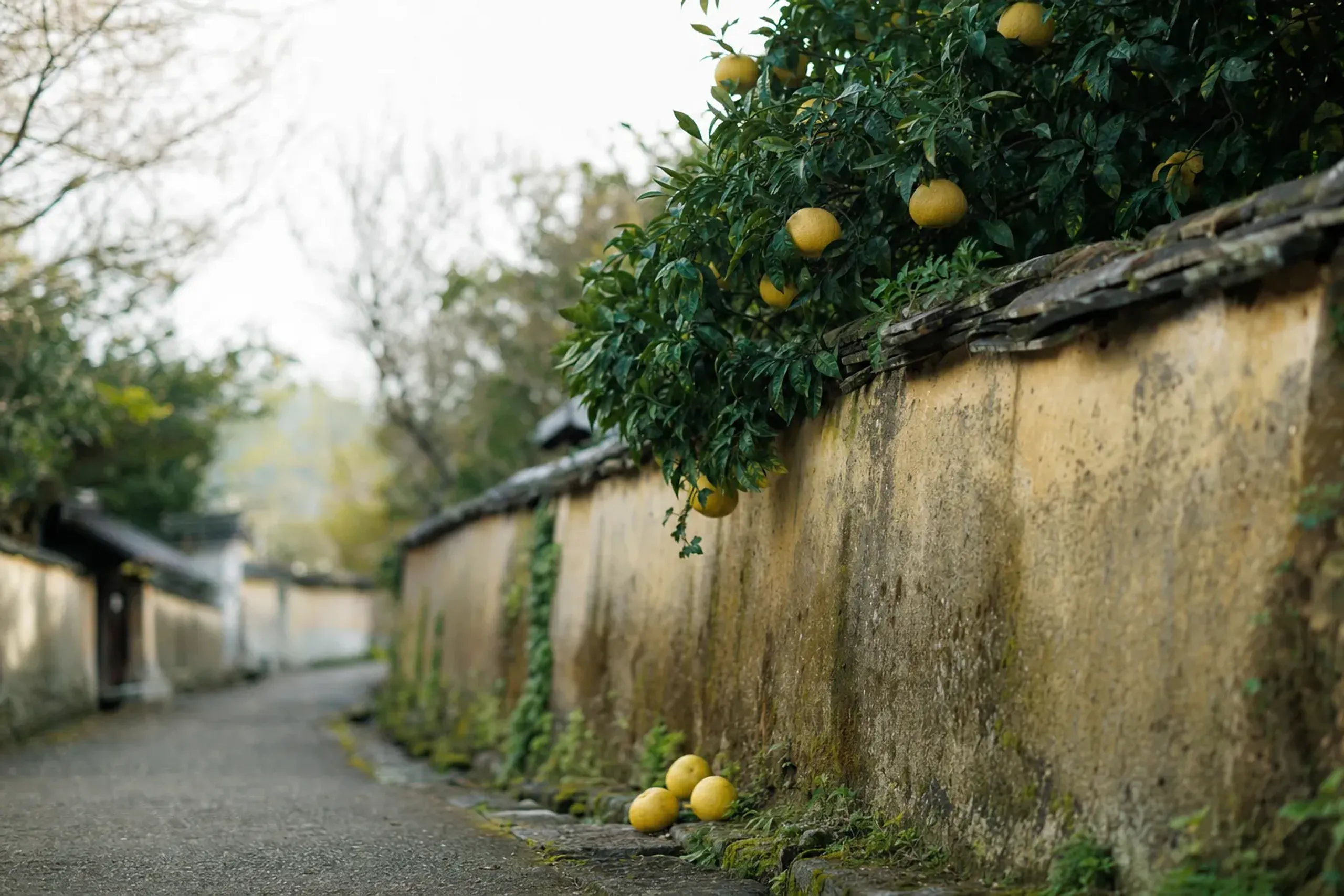
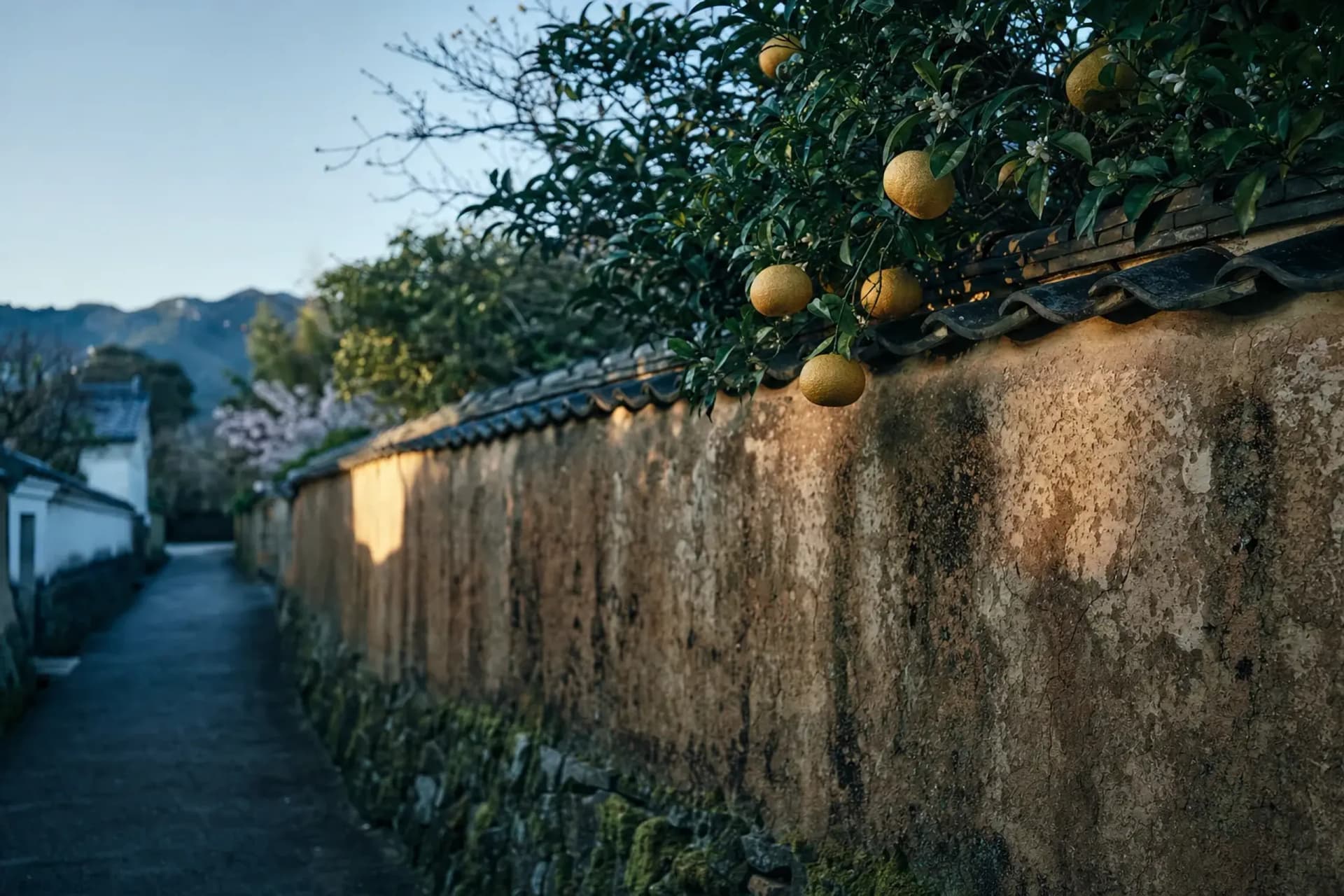
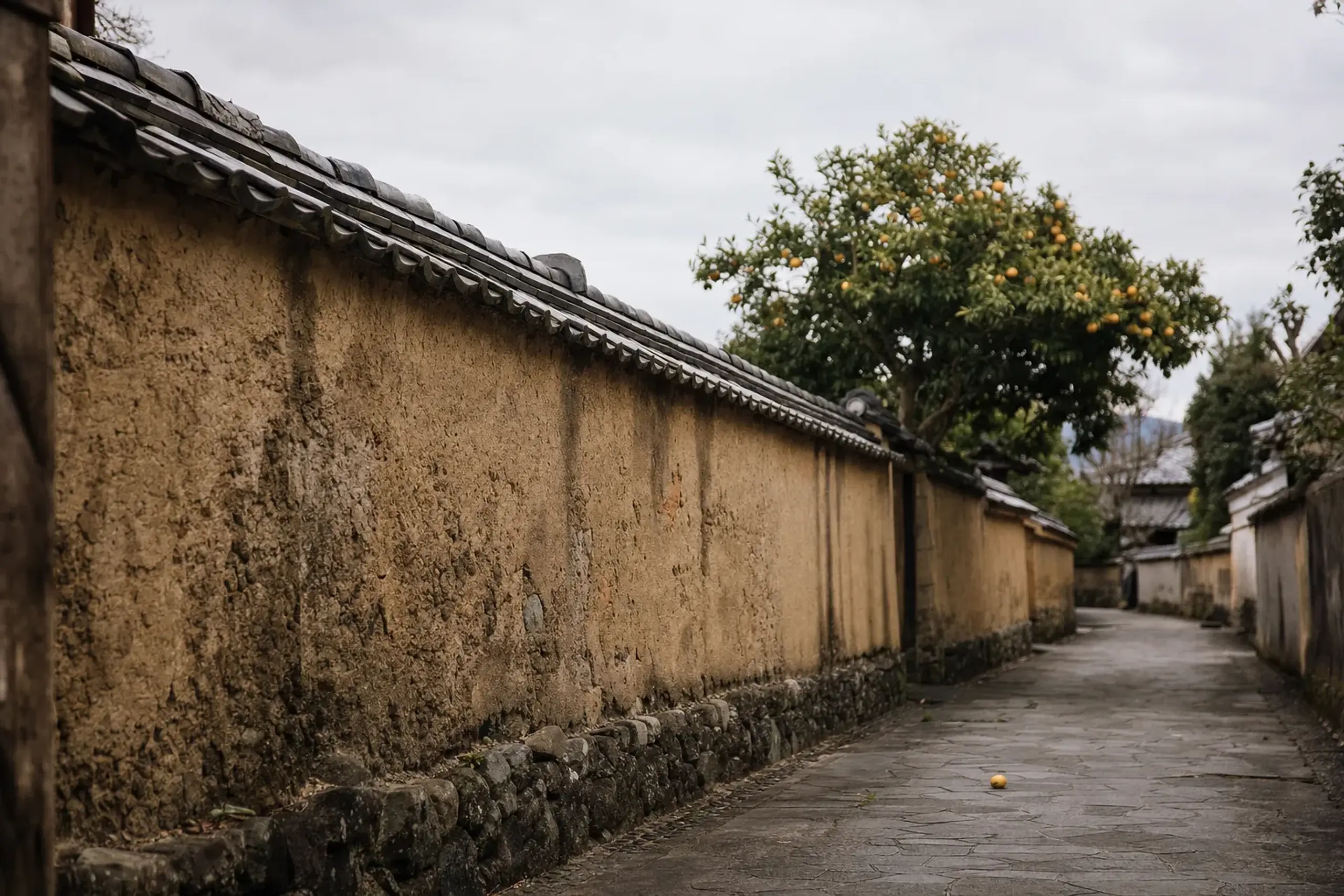
Walk the streets of Hagi's old samurai quarter on a morning in late March, and two things frame every view. White earthen walls, long and low, following the lanes like a tide line. And rising just behind them, dark glossy leaves hung with round orange fruit — natsumikan citrus, catching the first light.
Most visitors read the walls as heritage. Preserved history. Something a town decided was worth keeping. That is the gentle version. The fuller story is more specific, and far more human. These walls still stand because somebody, more than a century ago, needed to protect a fruit tree from the sea wind.
At Japan Royal Service, we return to Hagi because its surface charm hides a chain of cause and effect you can walk through, street by street. Let us tell you why the walls are really here.
Why Do Hagi's Famous White Walls Still Survive Today?
Hagi's earthen walls survive because displaced samurai planted natsumikan citrus trees behind them after 1868, and kept the walls standing to shield those trees from coastal salt wind — not for heritage's sake.
The chain begins with collapse. When the Meiji Restoration abolished the old domain system, Hagi's samurai lost their stipends almost overnight. These were families who had held rank for generations. Suddenly the stipend was gone. Their large residence compounds — walled, gardened, built for a class that no longer officially existed — stood half-empty and crumbling.
Into that opening came Obata Takamasa. A former Hagi domain samurai, he had risen to a senior post in the new Meiji government.
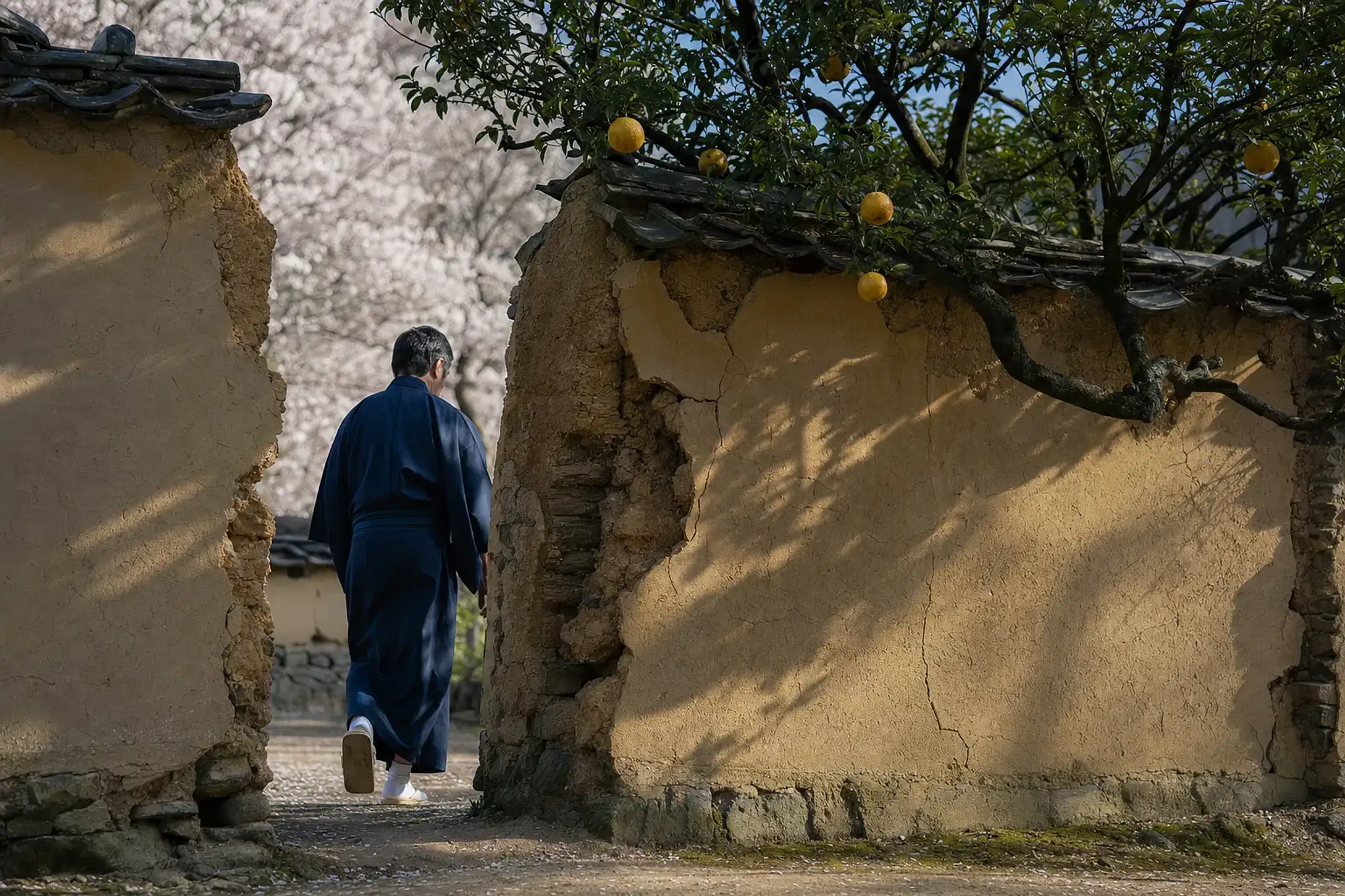
He came home. And rather than preach thrift, he planted. Across the abandoned samurai grounds he sowed natsumikan seeds, then distributed roughly 10,000 seedlings to the displaced families around him — a new livelihood, handed out tree by tree.
The citrus took. It became the district's economic lifeline. But the young trees were vulnerable to the salt wind coming off the Sea of Japan, and the thing that sheltered them was already there: those old estate walls. So the walls were kept. Patched, propped, carried forward — because they guarded the groves. The photogenic streetscape travellers frame today is the by-product of a relief program for impoverished samurai. That is the reveal worth carrying with you.
How The Earthen Walls Took Their Present Mixed-Stone Form
Look closely at the walls as you pass, and they stop being uniform. The masonry changes. Smooth earthen render in places, rough stone patchwork in others, sometimes both within a single span. This is not decay you are seeing. It is improvisation, recorded.
As the walls gradually wore down, the families repaired them with whatever lay to hand. Stone was scavenged from unused structures inside the samurai compounds themselves. More came quarried from nearby Mount Kasayama. The two sources combined into the visibly mixed masonry you trace along these lanes — practical, unmatched, honest.
There is a second tell. Where original estate gatehouses stood too wide for the new citrus plantings, they were simply filled in with the same patchwork stone. A grand entrance, bricked shut to make room for fruit. Each of these seams is a small decision made by a family doing arithmetic — how much garden, how much grove, how much wall.
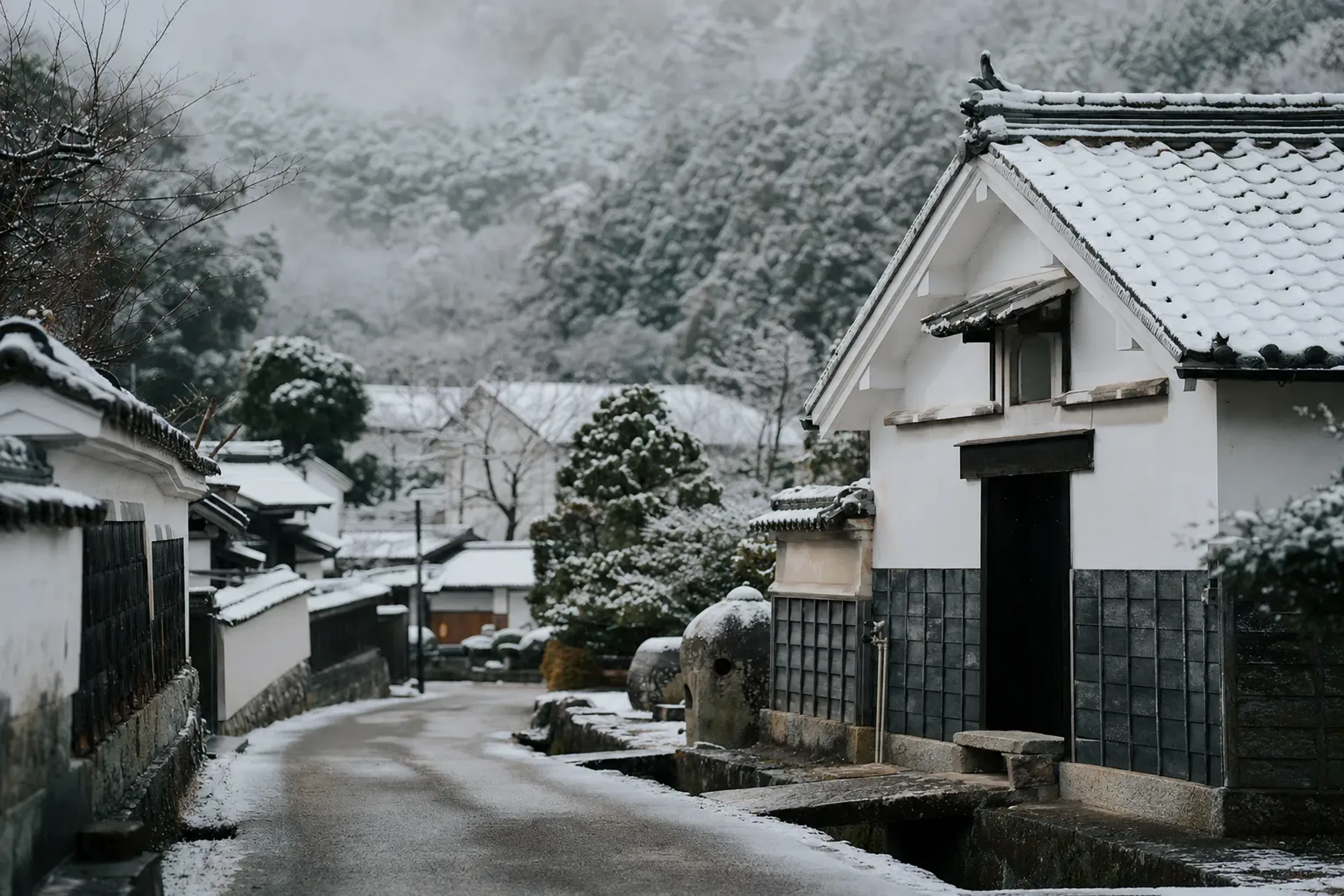
A private guide can read these junctions for you. Without one, they slide past as mere texture.
Is Natsumikan Actually A Summer Fruit? A Honest Correction
No. Despite the name natsumikan meaning "summer mikan," its true eating season is spring. The fruit ripens earlier but stays too sour, and only mellows into genuine sweetness by early spring.
The story behind the sourness is the good part. When first ripe, the fruit was nearly inedible — so tart that locals used it as a vinegar substitute rather than eating it. Only later did someone discover that leaving it on the tree until early spring softened the acidity into real sweetness. The fruit you can finally enjoy is the one that waited.
The name is a marketing accident. Osaka produce wholesalers, once the fruit began shipping commercially to their market, requested the "summer" branding. It stuck, and it has been quietly misleading people ever since.
The variety itself predates Hagi's citrus economy by about a century. It traces to the mid-Edo period, when citrus seeds washed ashore at a Hagi beach and were planted and raised by a local resident named Nishimoto Chō — a named origin point, an actual person, roughly a hundred years before Obata's seedlings reshaped the town. In 1919 the fruit was formally classified as a distinct variety. In 1927 the original mother tree was designated a National Historic Site and Natural Monument. So when you visit in spring and smell citrus blossom drifting over the walls, you are standing inside the fruit's correct season — the one its name forgot to mention.
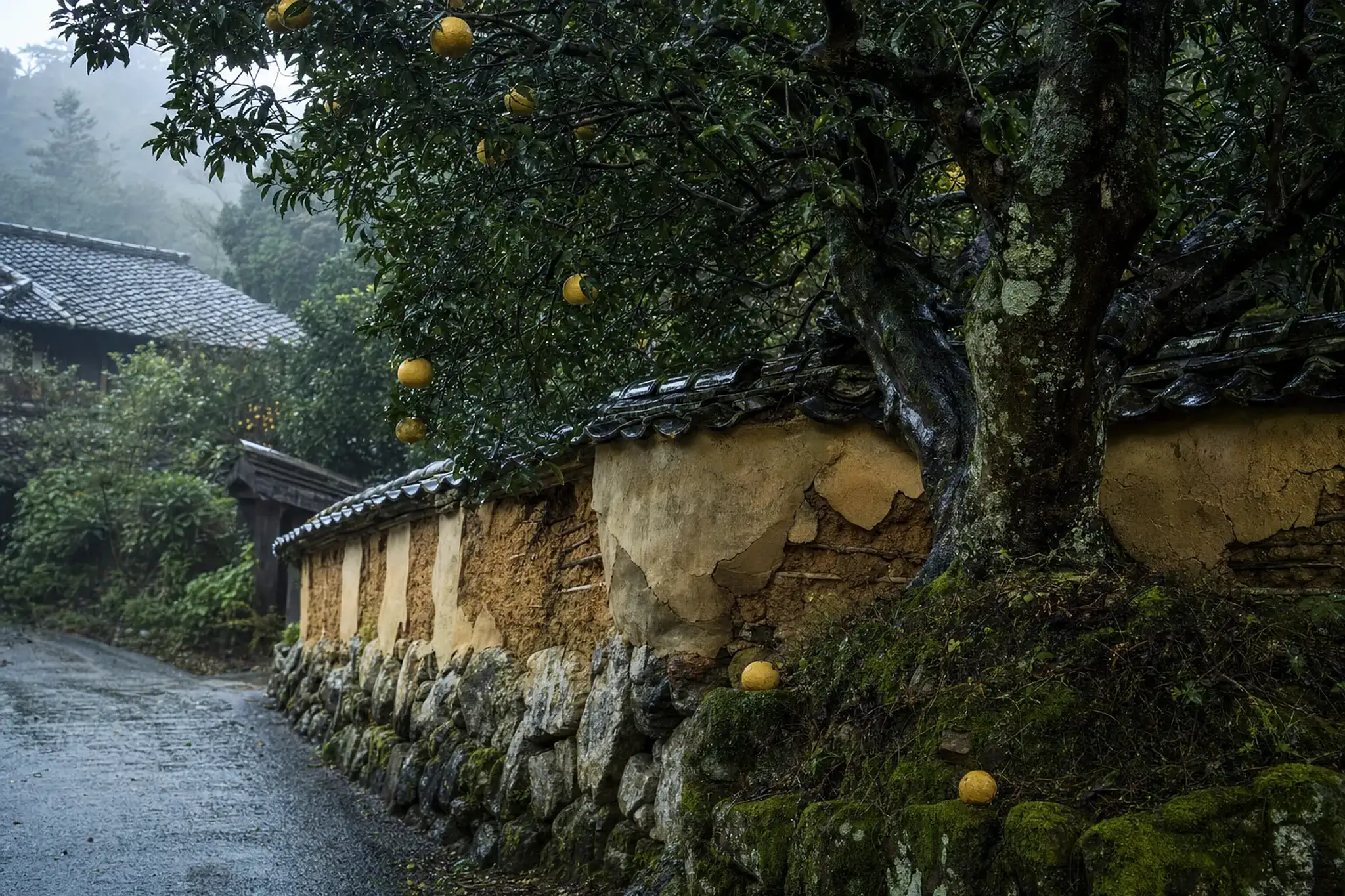
Key fact: Natsumikan reaches its sweetest, best eating season in spring — not summer, despite the name. Visit Hagi from late March into April and you catch both the ripe fruit and the cherry bloom at once.
How The Castle Town Was Laid Out By Rank
Hagi's streets still carry their old social order, if you know how to read the map. The town was built as a strict hierarchy, and that hierarchy remains legible in the preserved streetscape.
Senior-retainer residences sat directly around the castle, closest to power. Mid- and lower-ranking samurai were placed to the south. Merchants and commoners lived to the east. Distance from the castle measured status almost literally. Walking inward from the commoner quarter toward the castle ruins, you are moving up the old ladder of rank, street by street.
In spring this structure gains its finest frame. At Shizuki Park, the site of Hagi Castle, around 600 Yoshino cherry trees bloom from late March into early April, their blossom falling against the old stone walls and moats. Among them grows a single Midori-Yoshino — a rare cherry with unusual snow-white blossoms that is a Hagi-only sight, designated a prefectural natural monument. It is the kind of detail that rewards a quiet, early-morning visit before the day's visitors arrive. Hagi's waterways, too, offer a spring cherry-blossom course by sightseeing boat, a low-effort way to read the castle town from the water.
The Small Schoolroom That Built Modern Japan
A short distance from the walls stands a modest wooden schoolhouse.
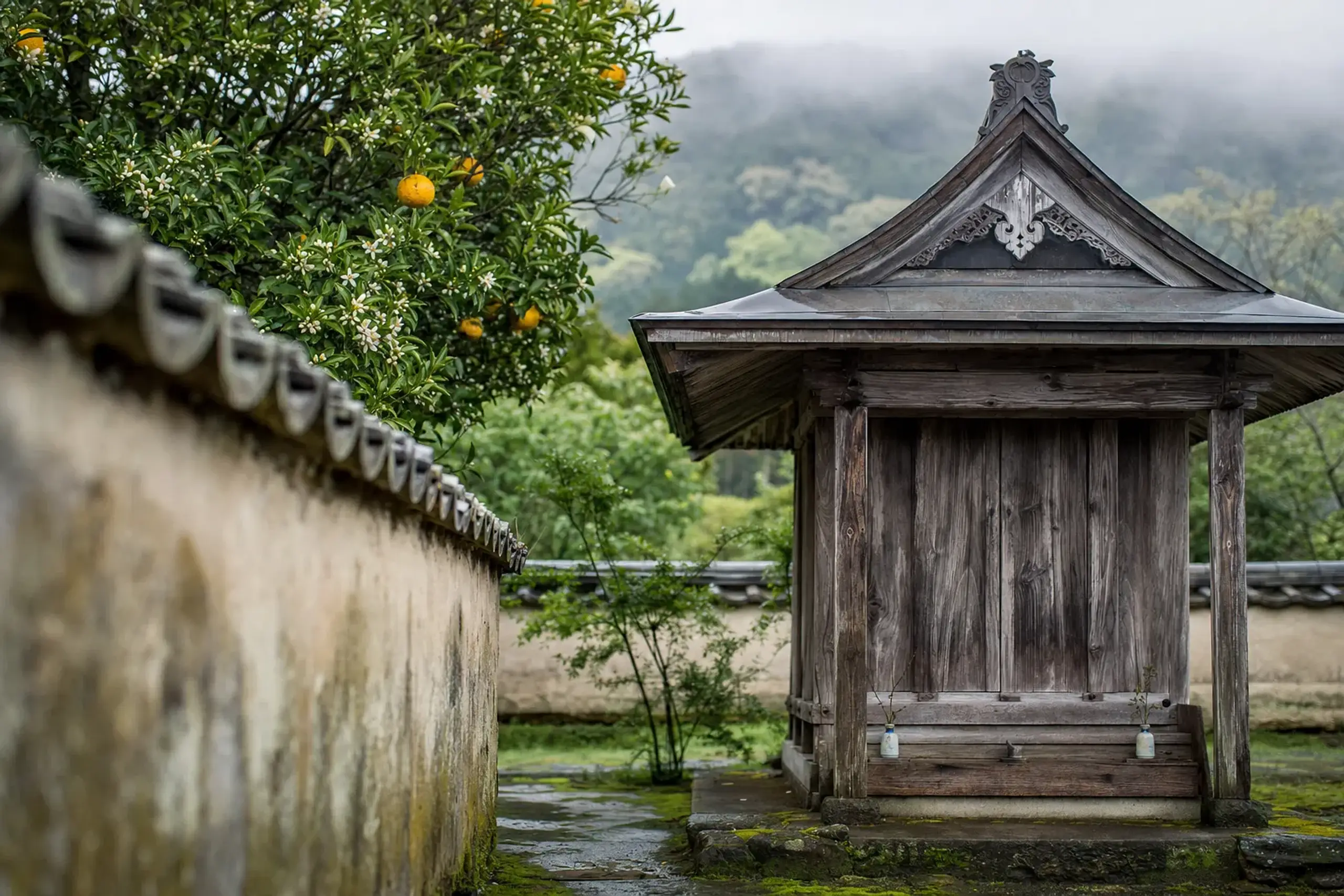
It is small. Plain. You could pass it without a second look. And yet from this one room came an outsized share of the people who built the Japanese state.
The school was Shōka Sonjuku, founded by Yoshida Shōin's uncle. Shōin took over the teaching from 1856 — for just over two years. His pupils were children of lower-samurai and commoner families, not the elite. That brief window produced an extraordinary roster: Itō Hirobumi, Japan's first prime minister; Yamagata Aritomo; Takasugi Shinsaku; Kusaka Genzui. An astonishing concentration of future Meiji leaders, from one short-lived private school in a provincial castle town.
Shōin himself did not live to see what his students became. He was executed in a political purge in 1859, at the age of thirty. The schoolhouse survives physically today, both a National Historic Site and part of Japan's UNESCO World Heritage designation for the sites of its Meiji industrial revolution. Standing inside it, the scale is almost comic — a room too small for its consequences. We find guests linger here longest. Not for grandeur. For the arithmetic of it: this room, those names.
Hagi pairs naturally with Yamaguchi Prefecture's other quiet landmarks, from the five-arched span at spring journeys we have chronicled elsewhere to the vast limestone chambers of Akiyoshidō. Each tells a different, unoverlapping story of this under-visited corner of western Honshū.
What Japan Royal Service Arranges In Hagi
Our role in Hagi is deliberately simple to state. We arrange private guiding — a bilingual historian who can read the wall seams, the rank-order streets, and the citrus history for you — and we arrange private chauffeured transport throughout.
Hagi sits roughly 90 minutes by road from Shin-Yamaguchi Station, and most itineraries reach it by a chauffeured transfer rather than public bus. Many travel operators treat Hagi as a rushed day trip. We prefer a slower rhythm, often pairing a full castle-town day with a premium ryokan stay in the nearby Nagato area. For the pacing, routing, and overnight base, our concierge builds a tailor-made itinerary around your dates and interests.
Spring programming can also be timed to Hagi's 2026 "Kimono Year in spring" (February 28 to March 29, 2026), which layers kimono experiences, plum and camellia viewing, and a citywide display of some 1,400 hina dolls across fifteen venues — a photogenic, experience-led window that rewards careful scheduling.
Frequently Asked Questions
When is the best time to see cherry blossoms at Shizuki Park in Hagi?
Late March to early April is the best window for Shizuki Park's roughly 600 Yoshino cherry trees, which bloom against Hagi Castle's old stone walls and moats. Exact peak shifts yearly with weather.
Why is natsumikan called a summer fruit if it tastes best in spring?
The "summer" name came from Osaka produce wholesalers who requested it for marketing once the fruit shipped commercially. In reality natsumikan only turns genuinely sweet by early spring, after its initial sourness mellows on the tree.
Is Hagi worth visiting over the more famous cherry blossom spots in Kyoto?
For travellers who prize quiet, Hagi offers a far less crowded hanami inside a preserved samurai castle town, plus the Hagi-only Midori-Yoshino cherry.
It suits those seeking history and calm over famous-name density.
How long should I spend in Hagi to see the samurai district and Shōka Sonjuku?
A full unhurried day covers the white-walled samurai quarter, Shizuki Park, and the Shōka Sonjuku schoolhouse. Many of our guests prefer two nights with a nearby ryokan base to slow the pace and add artisan or tea encounters.
What makes Hagi's white earthen walls historically significant?
Hagi's walls were kept standing after 1868 specifically to shelter natsumikan citrus trees planted to support impoverished samurai families — a practical economic decision, not pure heritage preservation, that accidentally saved one of Japan's finest castle-town streetscapes.
Why Choose Japan Royal Service
Hagi hides its best stories in plain sight. The wall seams, the filled-in gatehouses, the room too small for the names it produced — none of it announces itself. It needs reading.
That is the work our team at Japan Royal Service does. We pair you with a historian who knows which junction in the masonry marks a family's decision, which tree stands in a vanished garden, and when the Midori-Yoshino opens before the crowds. Our chauffeured fleet handles every transfer with discretion, and our concierge keeps your name and itinerary entirely confidential. In our experience, the difference between seeing Hagi and understanding it is simply who walks beside you.
To plan a private spring journey through Hagi's citrus-sheltered streets, reach our team privately via WhatsApp or LINE, or contact us here.