In this guide
- 01Why Most Of Hokkaido Disappoints In April
- 02Why Does Hakodate Bloom Before The Rest Of Hokkaido?
- 03Goryōkaku Park And The Timing Of The Bloom
- 04Hours And Access — And The Tower's Own Seasonal Extension
- 05The Moat Walk And The Tower Are Two Different Experiences
- 06Hanaikada: The Sight That Comes After The Bloom
- 07A Note On 2026: An Unusual Year
- 08Mount Hakodate, The Night View, And One Rule That Changes Your Evening
- 09The Market And Motomachi, Briefly
- 10Frequently Asked Questions
- 11Why Choose Japan Royal Service
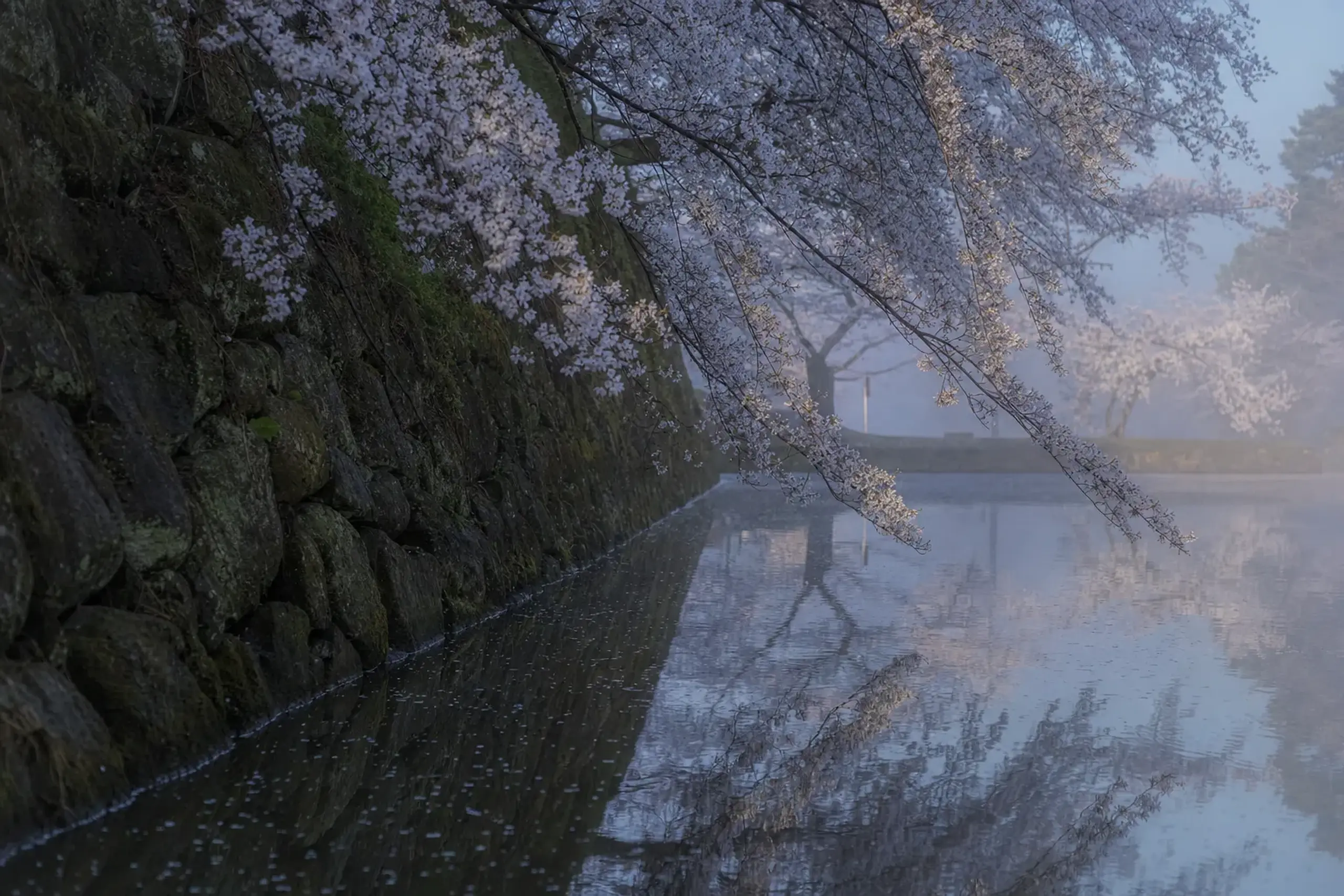
Stand on the moat path at Goryōkaku in the last days of April, and the water beside you is edged in white. Somei-Yoshino, hundreds of them, lean over the old fortifications. It is quiet in a way Kyoto in April never is. The blossom is here, and almost nobody has told the rest of the world.
That silence is not an accident. Most of Hokkaido has little to offer in April, and Hakodate is the sharp exception. This is a guide to why the timing works, where to look, and the two or three practical details that decide whether the day goes well or falls flat. At Japan Royal Service, we arrange the guiding, the transfers, and the accommodation for this window — and we spend most of our energy on the timing, because timing is the whole argument.
Why Most Of Hokkaido Disappoints In April
Here is the honest version. April is a hard month across most of the island. Ski season is closing. The lifts wind down, the snow softens, and the private-chalet rhythm we describe in our Niseko ski post is already fading by mid-month.
And nothing has replaced it yet. The famous lavender and flower fields of Furano are months away — high summer, not spring. Sapporo and the interior have not turned green. The land is between seasons: too late for snow, too early for colour. A client who flies to central Hokkaido in April usually finds a landscape waiting for something that hasn't arrived.
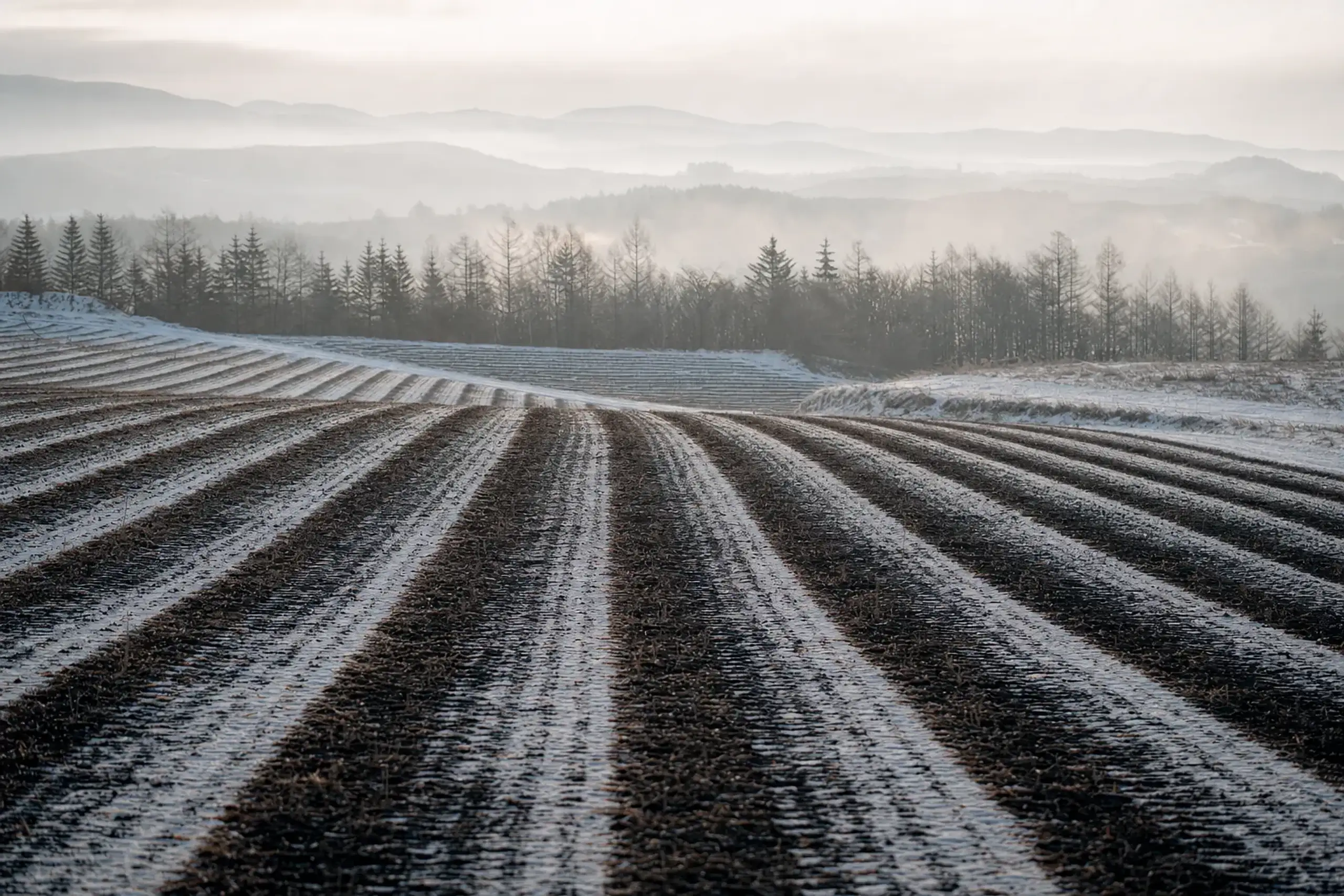
So the useful thing this article can do is tell you where not to go as much as where to go. Skip the interior. Go south.
Why Does Hakodate Bloom Before The Rest Of Hokkaido?
Hakodate blooms first because it sits at Hokkaido's southern tip with a maritime climate closer to northern Tōhoku than to Sapporo. The surrounding sea moderates the cold, so spring reaches the coast weeks before the interior.
That is the mechanism, and it matters more than the shorthand "further south." The Tsugaru Strait and the bay on either side of the city hold heat and release it slowly. Winters here bite less hard than at the same latitude inland. When spring pushes north up the Japanese archipelago, chasing the blossom, Hakodate is where that front finally crosses onto the island.
There is a second reason April matters here, and it has nothing to do with flowers. Mount Hakodate's summit road closes to vehicles every winter and reopens each spring on a fixed date. In the 2026 cycle, that road was closed from 9 November through 13 April. So April is very close to the moment the mountain itself becomes fully accessible again — at the same time the cherry trees begin. Two separate seasonal thresholds, blossom and the reopening of the summit, landing in one month. That overlap is unusual, and worth planning around.
Goryōkaku Park And The Timing Of The Bloom
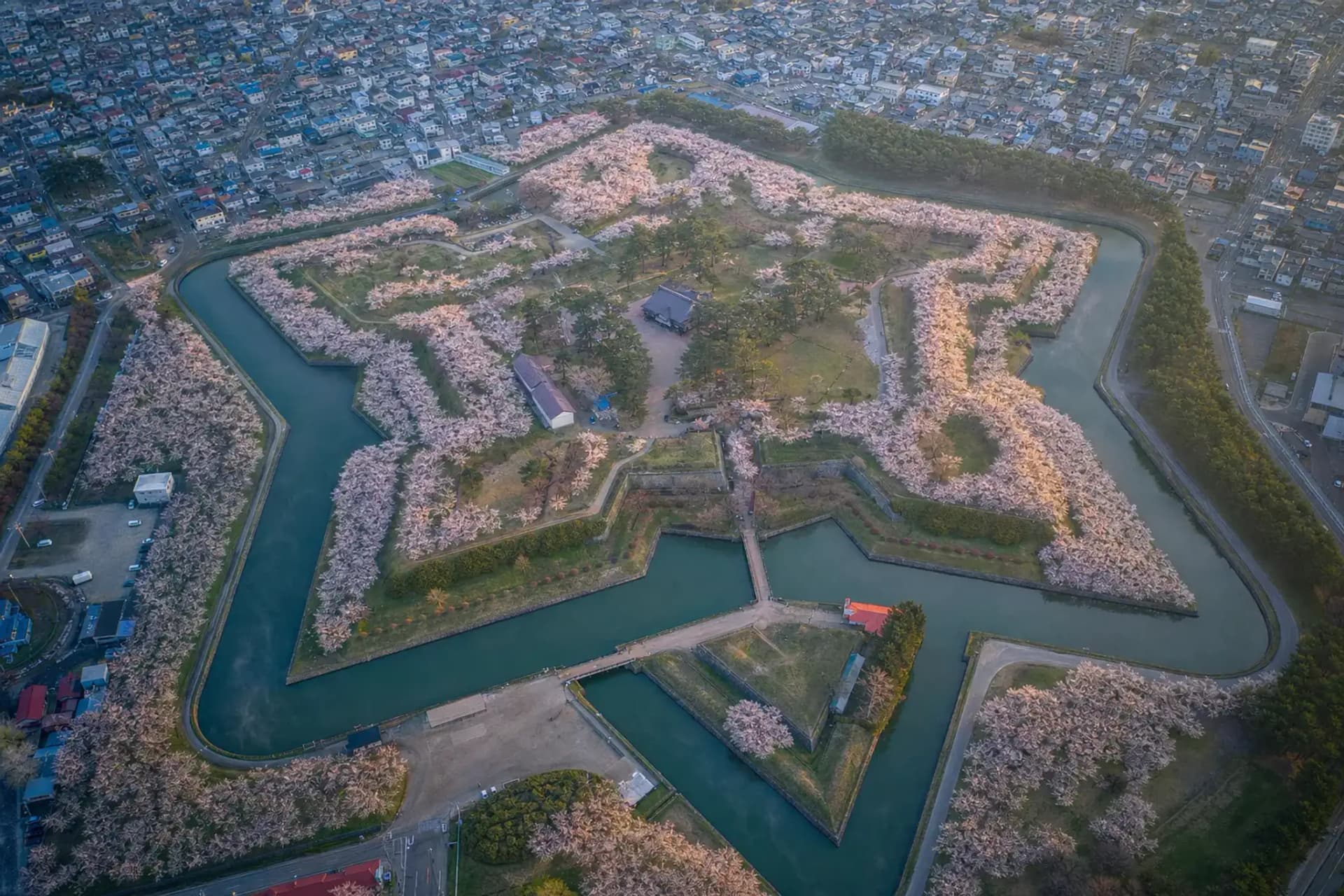
Goryōkaku Park is the reason to come. Around 1,500 to 1,600 cherry trees ring the moat and fill the grounds of the old fort — mostly Somei-Yoshino, with some later-flowering Yaezakura mixed in. When they open, the whole star-shaped moat is drawn in pink.
The normal bloom window runs from late April into early May. Treat that as the range, not a promise. Hokkaido's blossom arrives a little later than Honshu's, which is exactly why Hakodate is the tail end of the sakura front — the place to chase the last of the season after Tokyo and Kyoto have gone green.
Plan for a range, not a date: Cherry blossom timing shifts every year with wind and temperature. Confirm the current season's forecast a week or two before travel — never lock a single day months out.
Hours And Access — And The Tower's Own Seasonal Extension
The interior of the moat is free to enter, open every day, 5:00–19:00 from April through October. There are no closed days. You can walk the ramparts and the water's edge at dawn if you want the light to yourself.
Inside the grounds, the reconstructed Hakodate Magistrate's Office (Hakodate Bugyōsho) keeps separate paid hours, 9:00–18:00 from April to October, with last entry fifteen minutes before close. It is a fine reconstruction of the Edo-period administrative building, though it is not the reason most people come.
The reason most people come is the tower. And here is the telling detail. Goryōkaku Tower's standard hours are 9:00–18:00, year-round. But during blossom season the tower deliberately extends them. For the 2026 season, from 18 April to 6 May, it opened 8:00–19:00 with last tickets at 18:50 — covering both the early-morning blossom light and the evening illumination. The tower notes this window shifts with actual bloom timing each year.
Read that again. The attraction itself changes its hours specifically for this period. That is external confirmation, not our opinion, that this is the window worth choosing.
A lantern illumination typically runs from around 19 April into early May, roughly 19:00 to 21:00, with the city setting exact dates annually. Rowboats operate on the moat from late April to late October, 9:00 to 17:00. Our concierge team confirms all of these each season, since they move slightly year to year.
The Moat Walk And The Tower Are Two Different Experiences
This is the single most important practical point in the article, so we will be plain about it. The five-pointed star shape cannot be seen from the ground.
Walk the moat, and you get trees, water, ramparts, the low earthworks of Japan's first Western-style star fort. It is lovely. But you never see the star. The geometry only resolves from above — and the only place to get above it is Goryōkaku Tower's observation deck, right beside the park.
So the day has two halves. Down at moat level, you're inside the blossom, close to the petals and the water. Up in the tower, the fort reveals what it actually is: a perfect five-pointed star, the moat traced in cherry blossom, the whole design laid out beneath you.
A client who does the moat walk and skips the tower has, quite literally, missed the reason Goryōkaku is famous. Do both.
The fort has weight beyond its shape. Completed in the closing years of the Edo period, it became the site of the last stand of the Boshin War — where forces under Enomoto Takeaki and Hijikata Toshizō held out against the new Meiji government in 1869. You stand on the ground where the old order ended.
Hanaikada: The Sight That Comes After The Bloom
There is a second, later picture most visitors never plan for. As the blossoms fall, the petals settle across the surface of the moat and drift into sheets of pink. This is hanaikada — "flower raft."
It is a distinct sight from peak bloom, and it arrives after it. If you time a trip to the very tail of the window, you may miss the trees at their fullest but catch the moat carpeted in fallen petals instead. Some travellers prefer it. It is quieter, stranger, and almost no photograph does it justice.
A Note On 2026: An Unusual Year
2026 was early — nationally, and here. The Hakodate Local Meteorological Observatory confirmed the official opening at Goryōkaku on 18 April, with full bloom declared around 20 April. Sapporo approached full bloom by 22 April, described as the earliest on record.
Do not use 2026 as your baseline. It was an outlier. In a normal year, expect that late-April-into-early-May range, and check the current season's forecast as your travel dates approach.
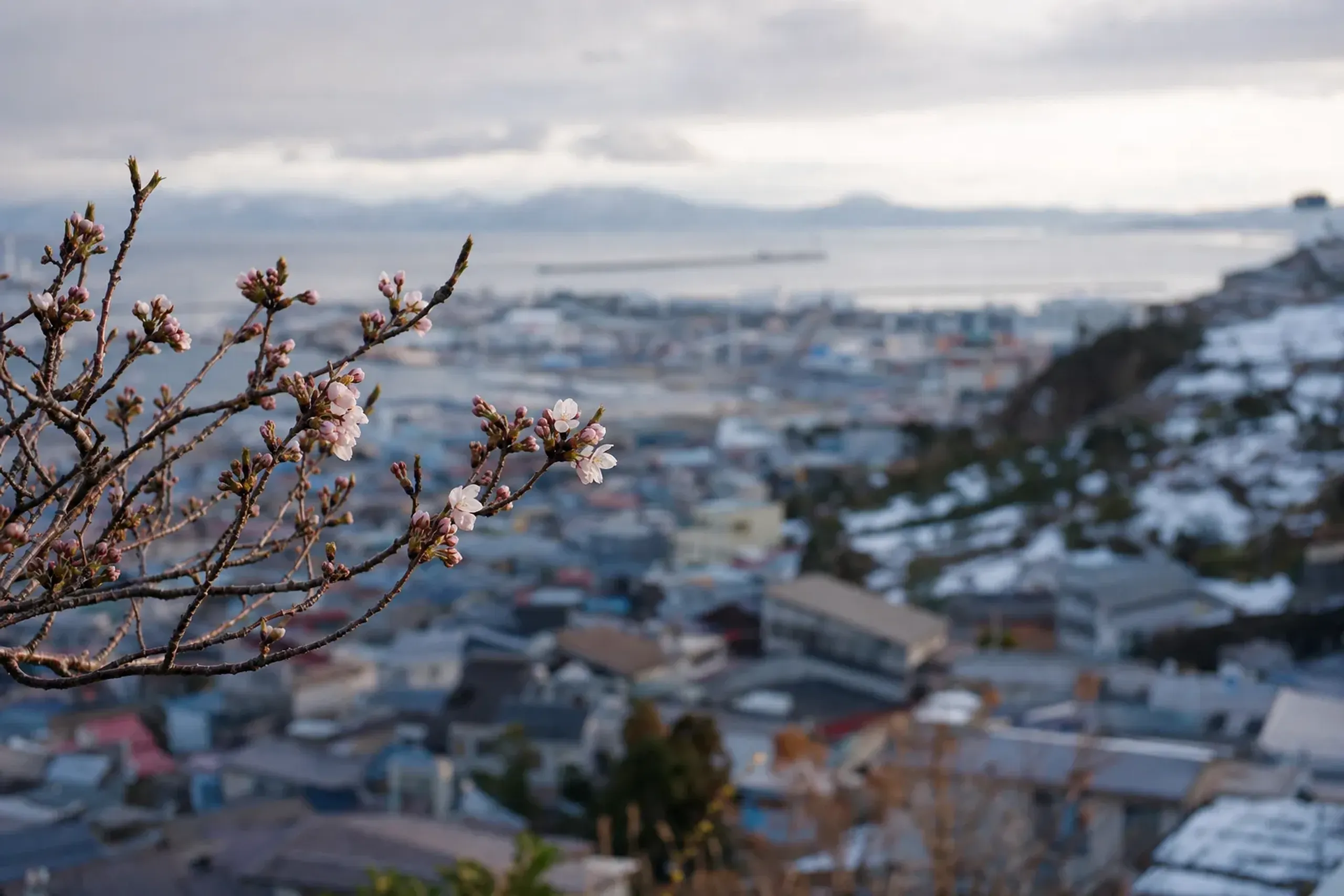
We flag this because a reader planning around 2026's dates in an ordinary year would arrive to bare branches.
Mount Hakodate, The Night View, And One Rule That Changes Your Evening
Pair the blossom by day with the night view after dark, and you have a full day worth flying for. Mount Hakodate rises to 334 metres above the isthmus, and the Michelin Green Guide Japon awarded the view from its summit three stars.
What makes it particular is the geography. The city sits on a narrow neck of land, sea visible on both sides. From the summit, that shape reads clearly — a bright web of streetlights pinched between two dark expanses of water, the bay on one side and the strait on the other. Day or night, but at night it is unforgettable.
Now the rule that catches people out. A private and rental-car evening restriction applies on the summit road for much of the year, roughly mid-April through early November. During those evening hours you cannot drive or park a car at the summit. The ropeway, a bus, or a taxi is required for an evening visit.
Do not rely on a rental car for the night view: During the evening restriction, cars are turned back from the summit road. Plan the ropeway, a taxi, or private chauffeured transport for after dark instead.
The ropeway itself runs year-round regardless of the road closure.
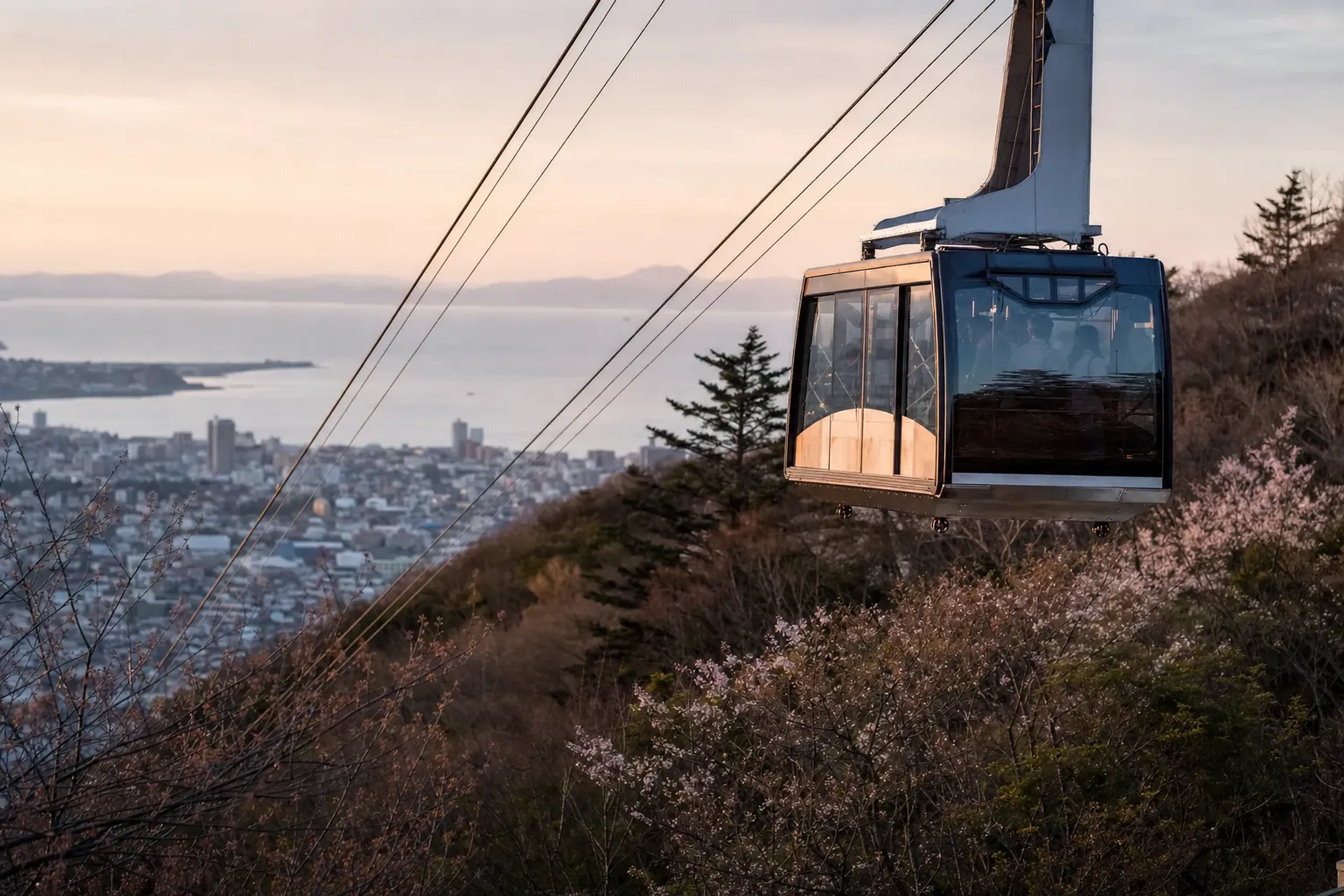
Its hours are seasonal — roughly 10:00–21:00 from mid-October to late April, extending to 10:00–22:00 from late April into mid-October. So an April evening sits right at the changeover, which is one more reason to confirm the current schedule before you go. Our private chauffeured transport handles the summit-road restriction cleanly, so the evening plan never depends on a rental you'll be turned away in.
The Market And Motomachi, Briefly
Two more things fill out a day in the city. Hakodate's morning market, near the station, is a working market year-round — not a seasonal draw, but a good early stop for the freshness of a port town at breakfast.
And the Motomachi district, on the slope below Mount Hakodate, holds Western-influenced architecture from Hakodate's period as one of the first Japanese ports opened to foreign trade in the 1850s. Churches, consulates, sloping streets down to the water. An hour there is enough to feel how differently this city grew from the rest of Hokkaido.
Frequently Asked Questions
When do the cherry blossoms bloom at Goryōkaku Park in Hakodate?
Goryōkaku Park's cherry blossoms typically bloom from late April into early May, with peak around the end of April. Timing shifts yearly with weather, so confirm the current season's forecast before travel.
Can you see the star shape of Goryōkaku from the ground?
No. The five-pointed star cannot be seen from the moat path — only trees, water, and earthworks are visible at ground level. The star shape resolves only from Goryōkaku Tower's observation deck beside the park.
Why visit Hakodate rather than the rest of Hokkaido in April?
Hakodate's southern, maritime location makes it Hokkaido's earliest bloom while ski season closes and the interior stays bare. April also brings the spring reopening of Mount Hakodate's summit road, adding a second reason to come.
Can I drive a rental car up Mount Hakodate for the night view in April?
Not in the evening. A car restriction on the summit road runs roughly mid-April through early November during evening hours. Use the ropeway, a taxi, or private chauffeured transport for the night view instead.
What is hanaikada at Goryōkaku?
Hanaikada, "flower raft," is the sheet of fallen cherry petals that covers the moat's surface after the bloom peaks. It appears later than full bloom and is a distinct, quieter sight worth timing for.
Why Choose Japan Royal Service
The value of a Hakodate April trip lives entirely in the timing, and the timing is genuinely hard to call. Bloom windows move. The tower's extended hours shift with the flowers. The summit road reopens on a set date, the ropeway changes schedule at the same moment, and the evening car restriction sits ready to derail an unprepared plan. Our team at Japan Royal Service watches these thresholds every season so a guest doesn't have to.