In this guide
- 01The Meaning of Tsukimi
- 02Imperial Settings: What Is Truly Possible In 2026
- 03An Evening Under The Moon
- 04Seasonal Cuisine For A Moon-Viewing Night
- 05A Tokyo Alternative: Moon Over The Palace Gardens
- 06Practical Notes: Timing, Weather, Dress, And Etiquette
- 07Frequently Asked Questions
- 08Why Choose Japan Royal Service
The garden is quiet. A single lantern glows against dark pines, and the surface of a still pond holds the reflection of a full moon. Susuki grasses lean in the night air. On a low lacquer table sit round white dumplings, a small cup of cool sake, and a plate of seasonal wagashi shaped like a rabbit. Somewhere, very faintly, a reed flute breathes a slow phrase and falls silent.
This is tsukimi. Moon-viewing. A custom older than most of the world's grand hotels, and one that has almost nothing to do with spectacle.
For the traveler who has already seen the famous temples and stood in the famous gardens by daylight, tsukimi offers something rarer. A pause. In our experience at Japan Royal Service, the guests who remember Japan most fondly are not the ones who saw the most. They are the ones who sat still under an autumn moon and, for one evening, needed nothing more.
In 2026, the harvest moon (Jūgoya) falls on September 25. Below is a considered guide to the meaning of tsukimi, how a private moon-viewing evening can unfold, and — importantly — what is genuinely possible in imperial-connected settings without overpromising.
The Meaning of Tsukimi
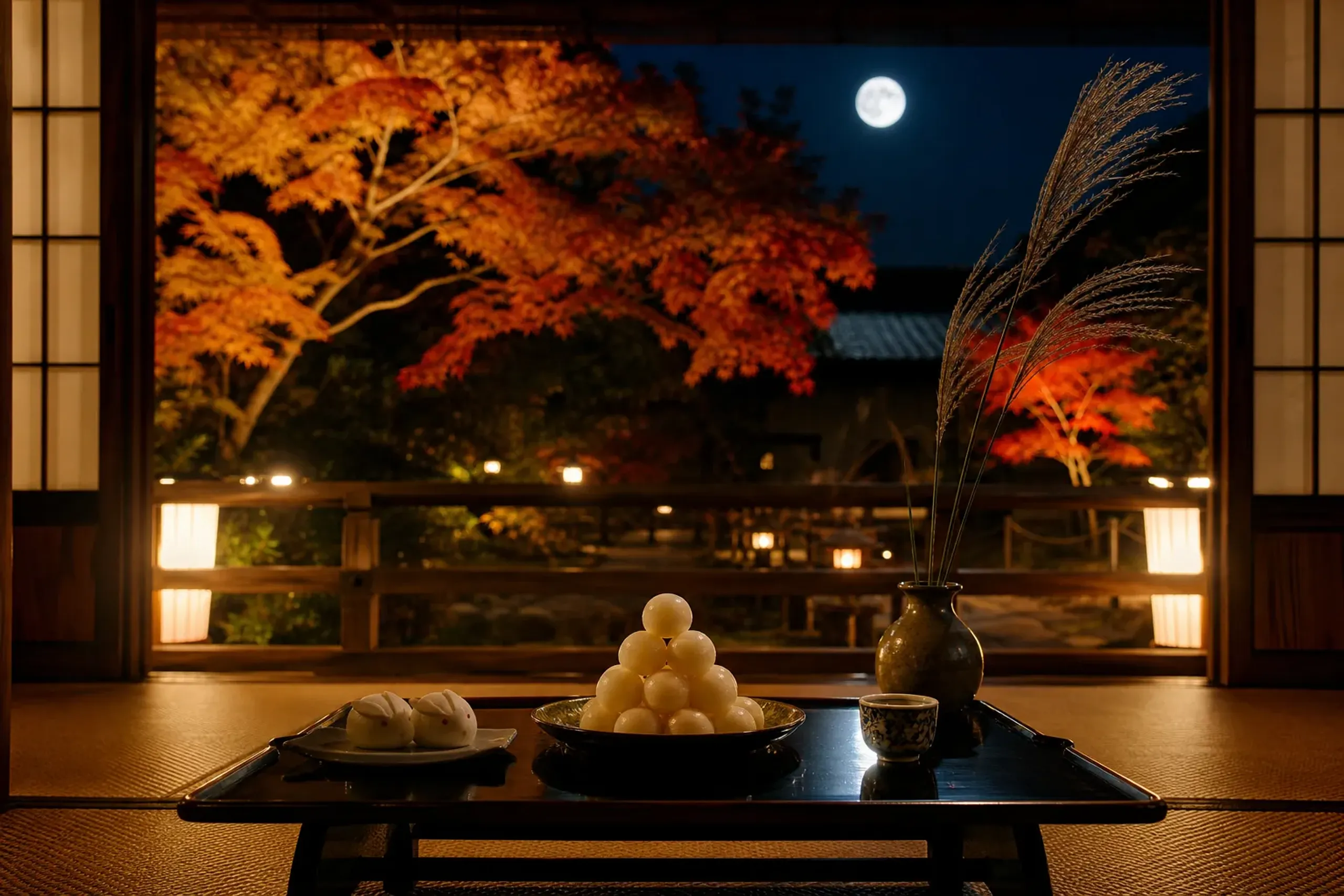
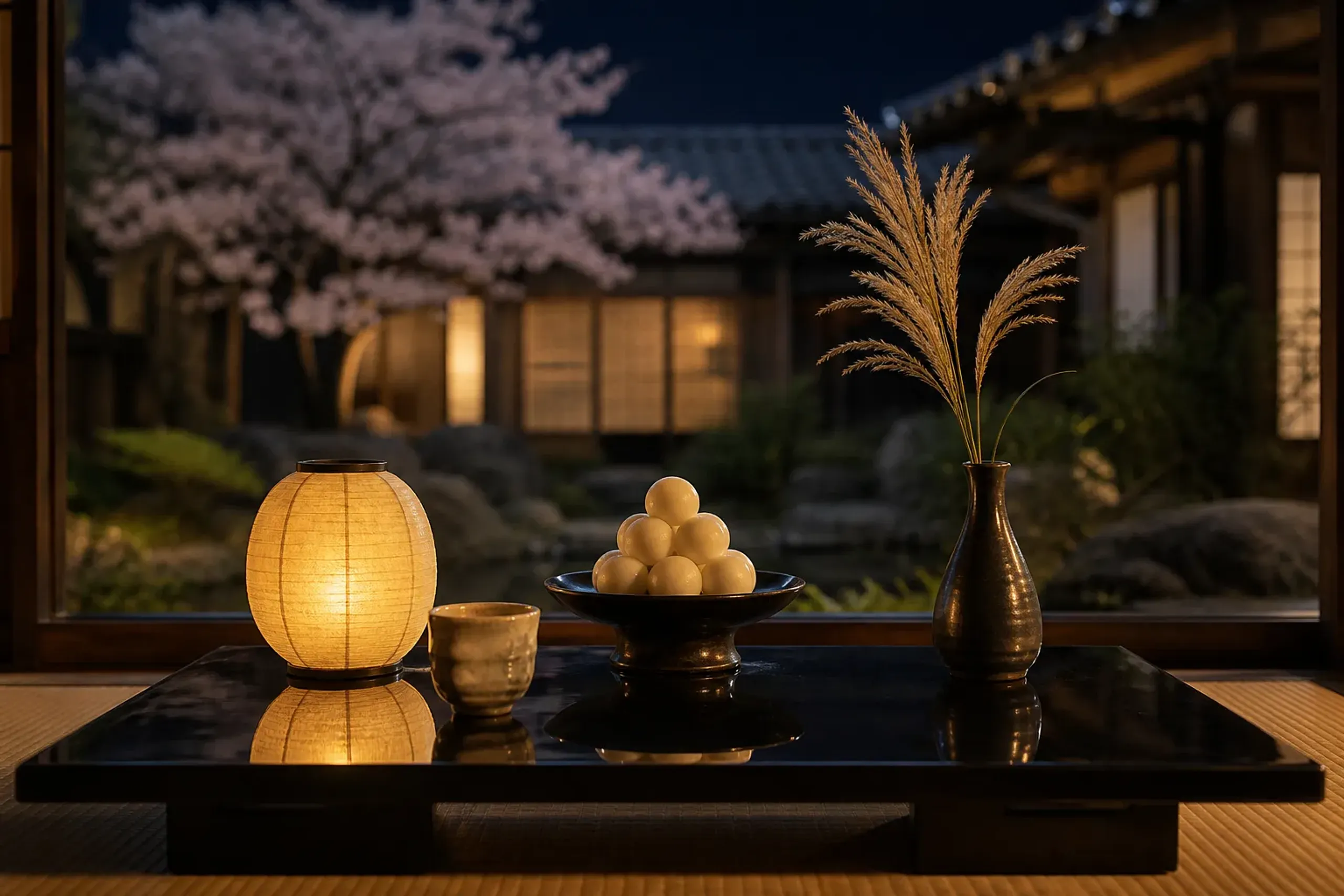
The classic tsukimi offering: round dumplings for the full moon, susuki grass for the harvest, and sake to catch the reflection.
Tsukimi simply means "looking at the moon." The custom arrived from China during the Heian period and was refined at the imperial court, where nobles would not stare at the moon directly. They watched its reflection instead — in a pond, in a lacquer tray of water, in a cup of sake. To view the moon obliquely was thought more elegant than to seize it.
The most storied example survives at Daikaku-ji in western Kyoto. The temple tells that Emperor Saga floated a boat on Ōsawa Pond on the night of the harvest moon, watching the reflection drift on the water. That single image — a sovereign, a boat, a mirrored moon — is the taproot of nearly everything tsukimi has become.
The symbolism is gentle and specific. Susuki grass (Japanese pampas grass) is displayed because its plume resembles ripening rice and invites a good harvest. Round tsukimi dango dumplings echo the full moon and offer thanks. And the moon-rabbit — the shadow Japanese eyes have long read on the lunar surface — appears again and again in the sweets, the poetry, and the quiet jokes of the season.
There is no fireworks logic here. Tsukimi rewards restraint. It is a wabi-sabi holiday: incomplete on purpose, better for a passing cloud, more moving for the cold that eventually sends you indoors.
Imperial Settings: What Is Truly Possible In 2026
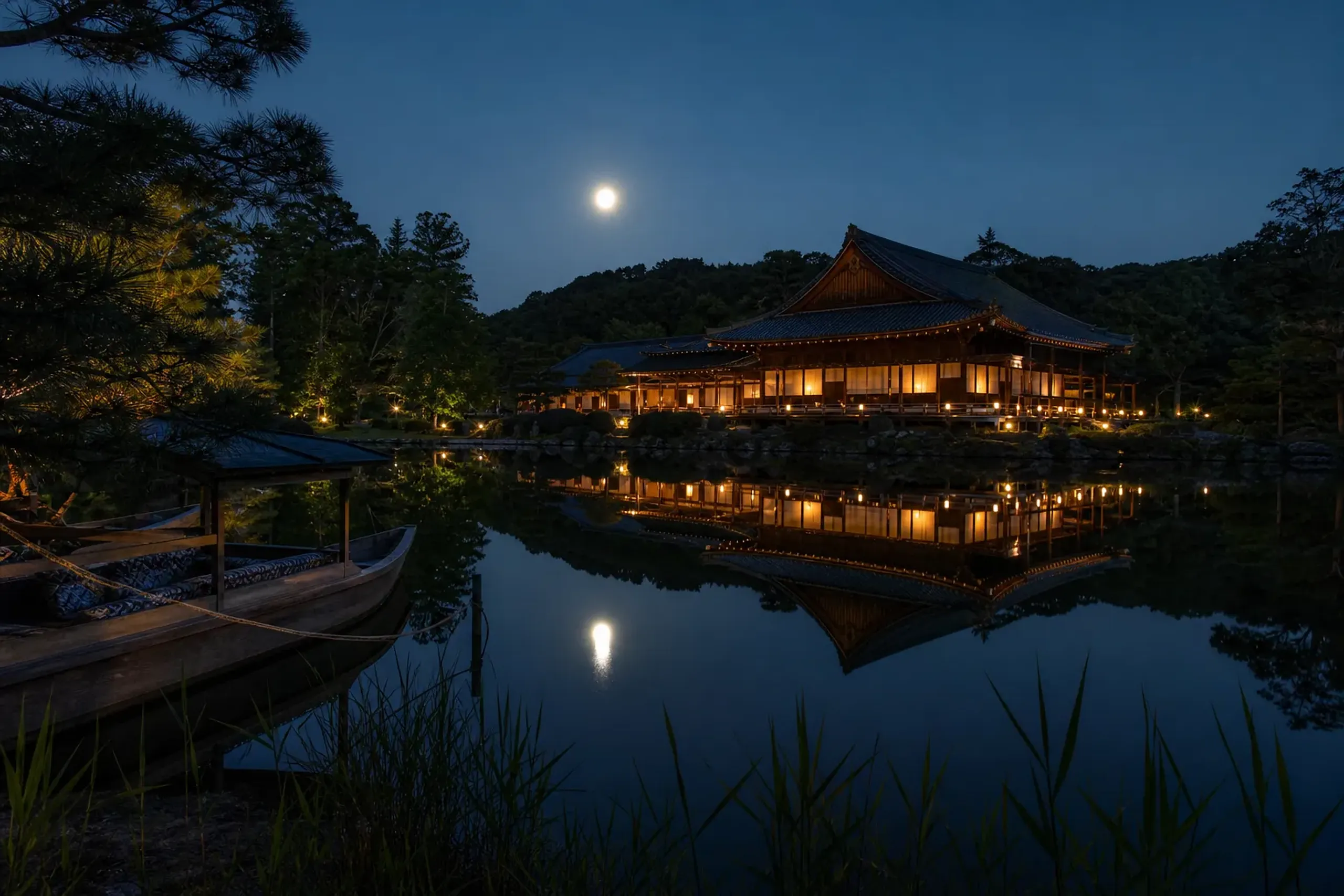
Ōsawa Pond at Daikaku-ji — the water where Emperor Saga is said to have watched the harvest moon by boat.
"Imperial" is a word that gets stretched. We prefer to be precise, because precision is part of discretion — and because promising night access to restricted Imperial grounds would be false.
Here is the honest landscape for autumn 2026.
Key distinction: Court heritage and court culture are accessible to visitors on specific public dates. Private Imperial Household events are not. Genuine luxury lives in how you approach the accessible ones — arrival, timing, briefing, comfort — not in claiming what cannot be claimed.
Daikaku-ji's Kangetsu-no-Yūbe (Kyoto)
This is the clearest path to an imperial-origin moon-viewing evening you can actually attend. Daikaku-ji holds Kangetsu-no-Yūbe — the "Evening of Gazing at the Moon" — over the harvest-moon nights. In 2026 the temple's schedule is listed as September 25–27, roughly 17:30 to 21:00, with last entry around 20:30. An altar is set, and a Buddhist service is held under the moon in the early evening. The temple may cap the number of participants, and an admission surcharge applies on top of general entry.
The setting is Ōsawa Pond itself — the same water Emperor Saga is said to have crossed by boat. Few tsukimi experiences carry a lineage this direct.
Kyoto Imperial Palace: Introduction to Court Culture
Kyoto City's official tourism listing schedules a special program, "Kyoto Imperial Palace: Introduction to Court Culture," for October 8–12, 2026. This is a rare window to encounter court aesthetics on the grounds where the court once lived. It falls shortly after the harvest moon — which makes it a natural second act for a moon-themed autumn journey rather than a same-night event.
Gagaku: The Court's Own Music
Gagaku is Japanese Imperial court music and dance, performed at certain court functions. The Imperial Household Agency notes that biannual spring and autumn Gagaku recitals were established in 1956 to open this ancient art to wider audiences. Woven into a tsukimi evening — even as recorded music or as context from a knowledgeable cultural guide — Gagaku gives the night an authentically imperial register without any false claim of private palace access.
An Evening Under The Moon
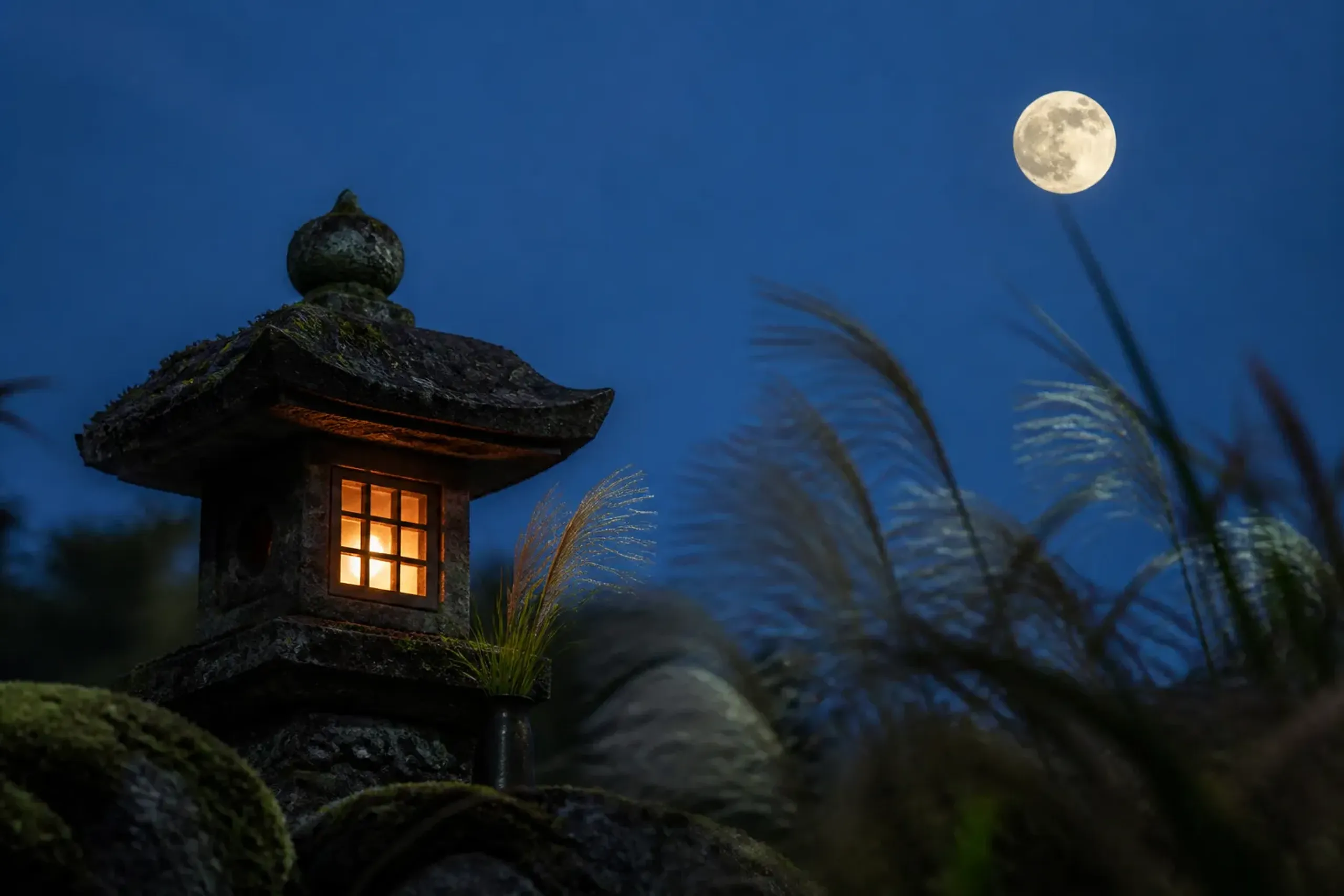
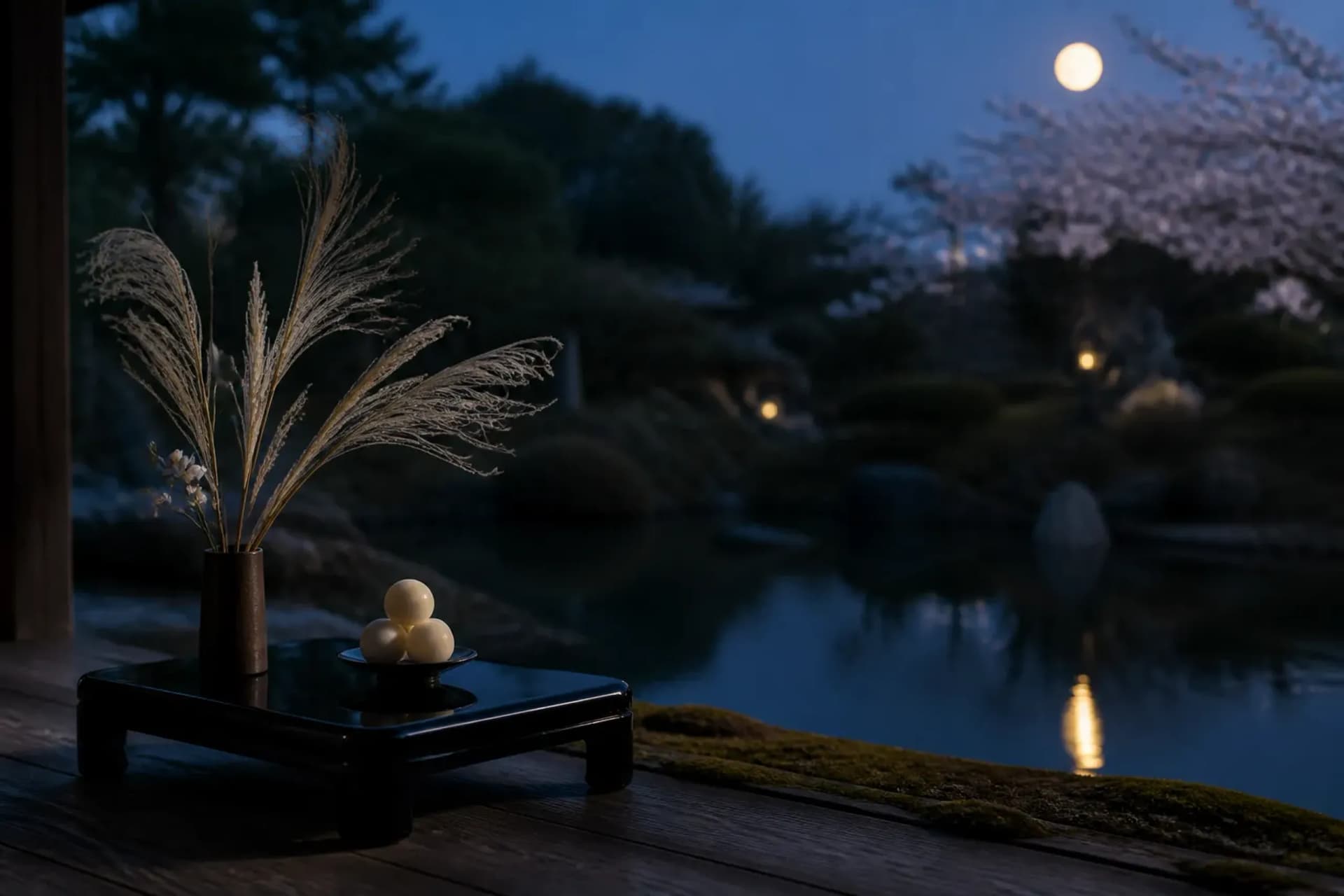
The moment tsukimi protects: moonrise over a silent garden, conversation falling to nothing.
So how might a private tsukimi evening actually unfold? Here is one shape it can take. Consider it a sketch, not a script — every detail bends to the guest.
Late afternoon. A chauffeur collects you well before dusk, avoiding the tightening evening traffic. Our private chauffeured transport is staged so you arrive unhurried, never circling for parking, never rushed by a departure clock. Small thing. It changes the entire mood.
The cultural briefing. Before the moon rises, a specialist guide sits with you over tea. Not a lecture — a conversation. Why nobles watched the reflection. What the susuki and the dango mean. A Heian poem or two, read aloud. When you finally step out beneath the sky, you are not a spectator. You understand what you are looking at.
Moonrise. The lanterns are lit. Autumn grasses catch the last grey light, then the first silver. Conversation drops to a murmur, then to nothing. This is the part no itinerary can manufacture and every good one protects: silence, held on purpose.
The meal. A seasonal dinner — private, unhurried, paced to the moon rather than to the kitchen. More on the food below.
Final tea. As the cold arrives, a last bowl of tea indoors. Warm hands around warm ceramic. Then the car, waiting exactly where it was left.
Seasonal Cuisine For A Moon-Viewing Night
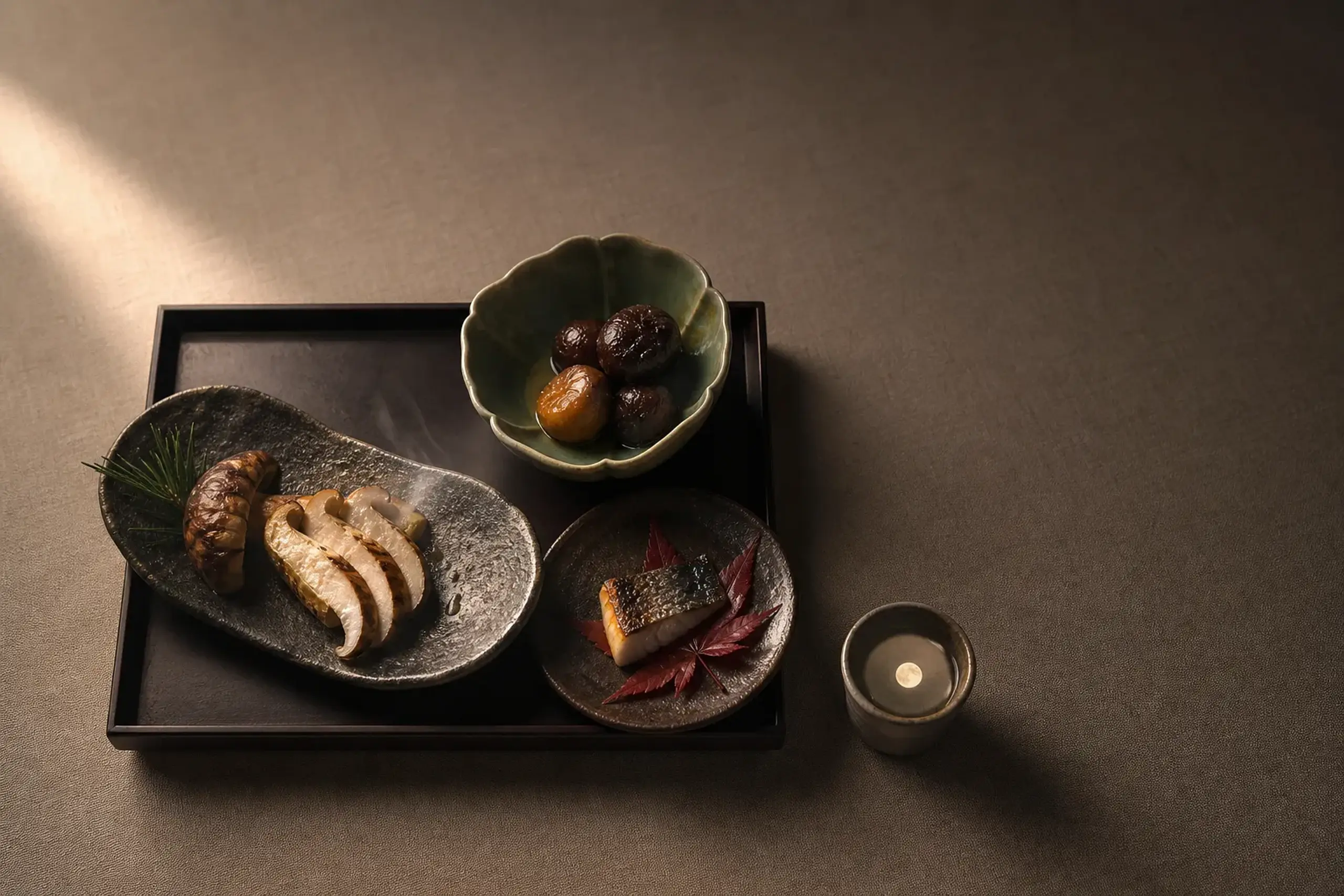
A late-September kaiseki built on shun — timed so exactly it could not be served a week earlier or later.
Tsukimi cooking follows the round-and-full logic of the moon. The classics are humble on purpose.
- Tsukimi dango: plain rice dumplings stacked in a small pyramid, echoing the full moon and offered in gratitude.
- Wagashi: seasonal sweets shaped as moons, rabbits, and autumn grasses — small edible poems, changed by the confectioner to match the exact week.
- Sake: served cool early in the evening, then warmed as the night turns. The cup itself is a viewing vessel: catch the moon in it before you drink.
- An egg "moon": in everyday Japanese cooking a raw yolk atop a dish is called tsukimi for its resemblance to the moon — a wink that runs from noodle shops to refined kaiseki.
For a private evening we favour a full kaiseki progression, built around the shun of late September — the first chestnuts, matsutake if the season obliges, hamo giving way to autumn fish. The point is not abundance. It is timing so exact that the meal could not have been served a week earlier or a week later.
A Tokyo Alternative: Moon Over The Palace Gardens
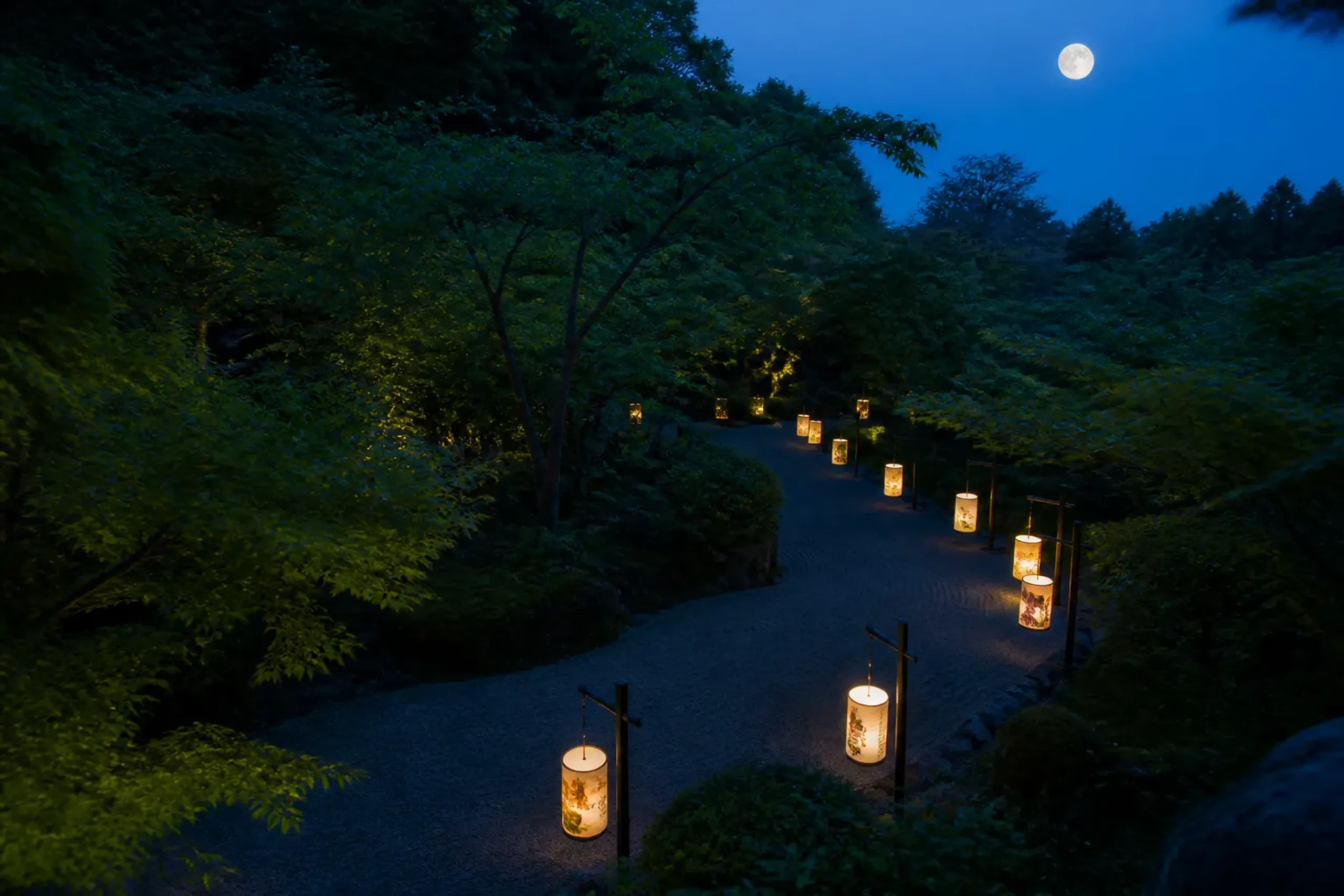
Tokyo's own moon: hand-painted lanterns light Mukōjima-Hyakkaen for its Edo-rooted Tsukimi no Kai.
Not every guest is Kyoto-bound. Tokyo offers its own imperial-adjacent moon.
Mukōjima-Hyakkaen Garden in Sumida Ward hosts a moon-viewing gathering, Tsukimi no Kai, a tradition reaching back to the Edo period. For the event the garden extends its hours into the evening and lights hand-painted lanterns along its paths — an atmospheric, historically-rooted setting well away from the tourist core.
For those who want the Imperial Palace itself in view, the luxury district of Marunouchi sits directly beside the palace gardens; hotels there have historically framed autumn nights around that outlook. We arrange the surrounding experience — the seasonal briefing, the sake and wagashi, the discreet logistics — while treating the palace strictly as a distant, publicly visible backdrop, never as private night access.
Practical Notes: Timing, Weather, Dress, And Etiquette
Timing
The 2026 harvest moon is September 25. Daikaku-ji's event runs September 25–27. The Kyoto Imperial Palace court-culture program is scheduled for October 8–12, 2026. Because temple participant caps and official schedules can shift, treat dates as expected until confirmed by each venue's own release — something our concierge team monitors closely.
Weather
The moon does not always cooperate. Autumn skies cloud over; sometimes it rains. Japanese tradition has a graceful answer: even mugetsu (no moon) and ugetsu (rain moon) are considered their own kinds of beauty. Still, for guests we always hold a warm, sheltered indoor setting in reserve, so a hidden moon becomes an intimate evening rather than a disappointment.
Dress
Evenings in late September turn cool, particularly in gardens and near water. Layers, a light wrap, and comfortable shoes for gravel paths serve better than formal footwear. At temples and sacred grounds, modest, quiet dress is the respectful choice.
Etiquette
- Keep voices low, especially during any Buddhist service or performance.
- Photograph discreetly and never with flash during ceremonies.
- At the pond, resist the urge to reach for the perfect shot at the water's edge — watch the reflection the old way.
- Follow your guide's lead on when to move and when to simply stay.
Frequently Asked Questions
When is Tsukimi in 2026?
The harvest moon (Jūgoya) falls on September 25, 2026. Daikaku-ji's Kangetsu-no-Yūbe moon-viewing evenings are scheduled for September 25–27.
Can I attend a moon-viewing event with imperial origins?
Yes. Daikaku-ji's Kangetsu-no-Yūbe traces directly to Emperor Saga and is open to visitors on set nights, with a possible participant cap and an admission surcharge. It is the most authentic imperial-origin tsukimi event a visitor can attend.
Can Japan Royal Service arrange private access to the Imperial Palace at night?
No, and any company claiming to would be misleading you. Restricted Imperial Household events are not privately accessible. What we do is help guests approach the genuinely public imperial-heritage experiences — Daikaku-ji's evening, the Kyoto Imperial Palace court-culture program — with private dining, an expert cultural briefing, and unhurried chauffeured logistics around them.
What happens if it rains or the moon is hidden?
Tradition honours the clouded moon as its own quiet beauty. Practically, we keep a warm indoor setting in reserve so the evening continues gracefully regardless of the sky.
Why Choose Japan Royal Service
Anyone can look up the date of the harvest moon. What our guests come to us for is everything around it.
We work in specifics, not superlatives. Our concierge tracks each venue's confirmed 2026 schedule and participant limits. Our coordinators design the tailor-made itinerary so the cultural briefing, the seasonal meal, and the moment of moonrise fall into place without a single visible seam. And our chauffeurs stage the evening so you are never rushed, never searching for a car in the dark.
Two commitments sit above the rest. First, honesty: we describe imperial-heritage settings as they truly are — publicly accessible court culture, approached with private comfort — never as false palace access. Second, discretion: your name, your party, and your movements stay confidential. Always.
Because the real luxury of a tsukimi evening was never the spectacle. It is silence, season, and the rare privilege of sitting still under a full moon while someone quietly ensures nothing intrudes.
To explore a private moon-viewing evening for the 2026 harvest moon, reach our team directly via WhatsApp or LINE, or contact us here.