In this guide
- 01The Name, And The Planting Story Behind The Riverbank
- 02What Is Hitome Senbonzakura, And Where Exactly Is It?
- 03How Do You See Hitome Senbonzakura Without Missing The Best Angles?
- 04A Day Trip From Sendai: A Calm Route That Uses The Three Viewpoints
- 05When Is The Best Time To See Hitome Senbonzakura In Full Bloom?
- 06Evening Illumination: How To Do Night Sakura Without The Usual Stress
- 07Timing And Crowds: The Quiet Tricks That Matter More Than Any Camera
- 08How Japan Royal Service Plans A Hitome Senbonzakura Day Differently
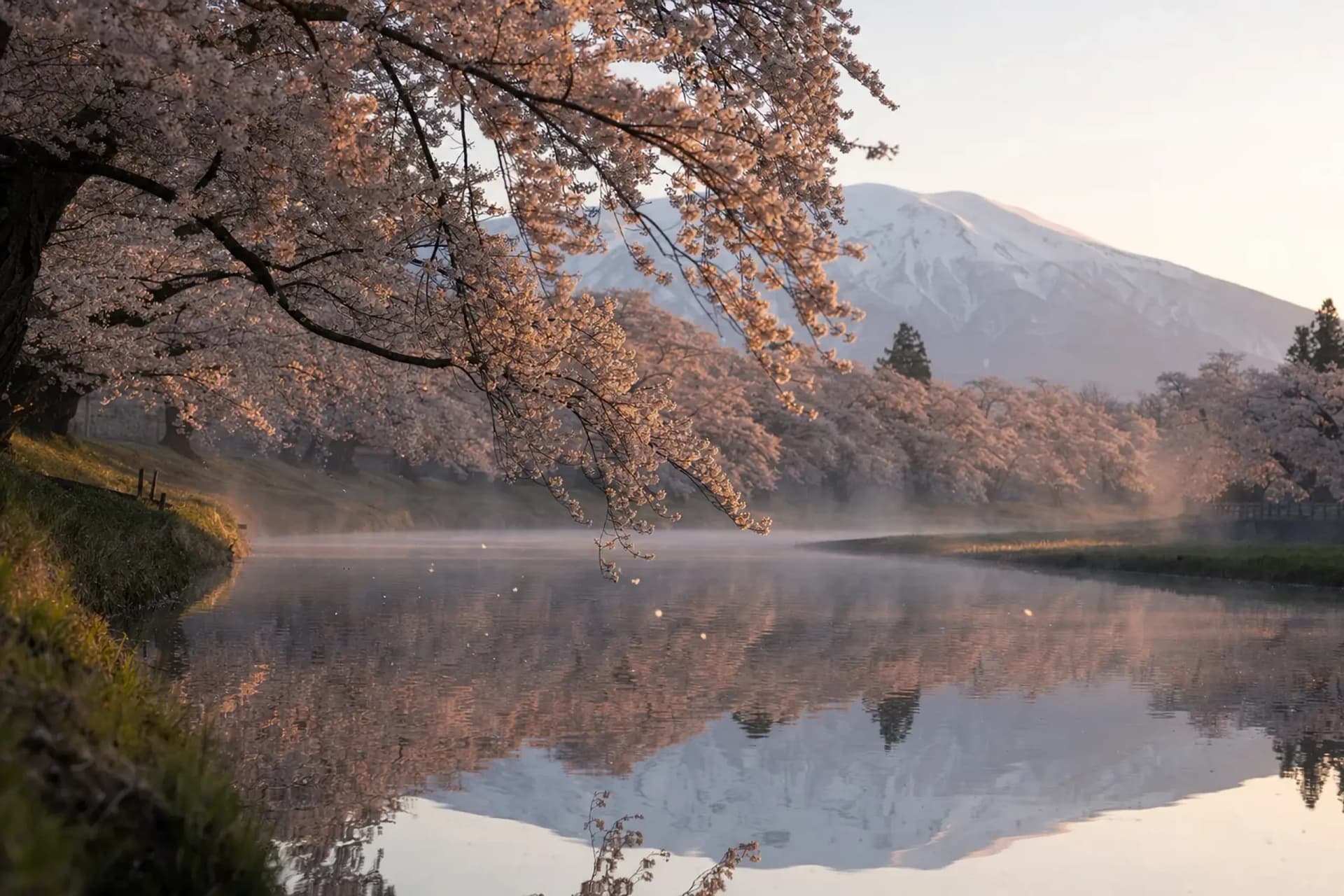
You step down onto the Shiroishi Riverbank and the view clicks into place at once: a pale ribbon of blossoms running for kilometers, the river gliding below, the railway resting quietly beside the trees, and Mt. Zao often still snow-capped in the distance. There is a stillness to it, even with people around. The name makes perfect sense here.
Hitome Senbonzakura is best known as “a thousand cherry trees seen at a glance,” yet most visits rush a single photo stop and leave. That is a quiet mistake. This stretch rewards a slower, three-part day: river level for texture and scent, canopy height on Senzakura Bridge, then a higher, wider look from Funaoka Castle Ruins Park. Each level reveals something the last one hid.
Our team at Japan Royal Service plans this visit like a small story told in chapters. You walk. You pause. You arrive at each viewpoint at precisely the right light, then slip away before the crowd thickens again. It feels deliberate, considered, and entirely yours — never frantic.
The Name, And The Planting Story Behind The Riverbank
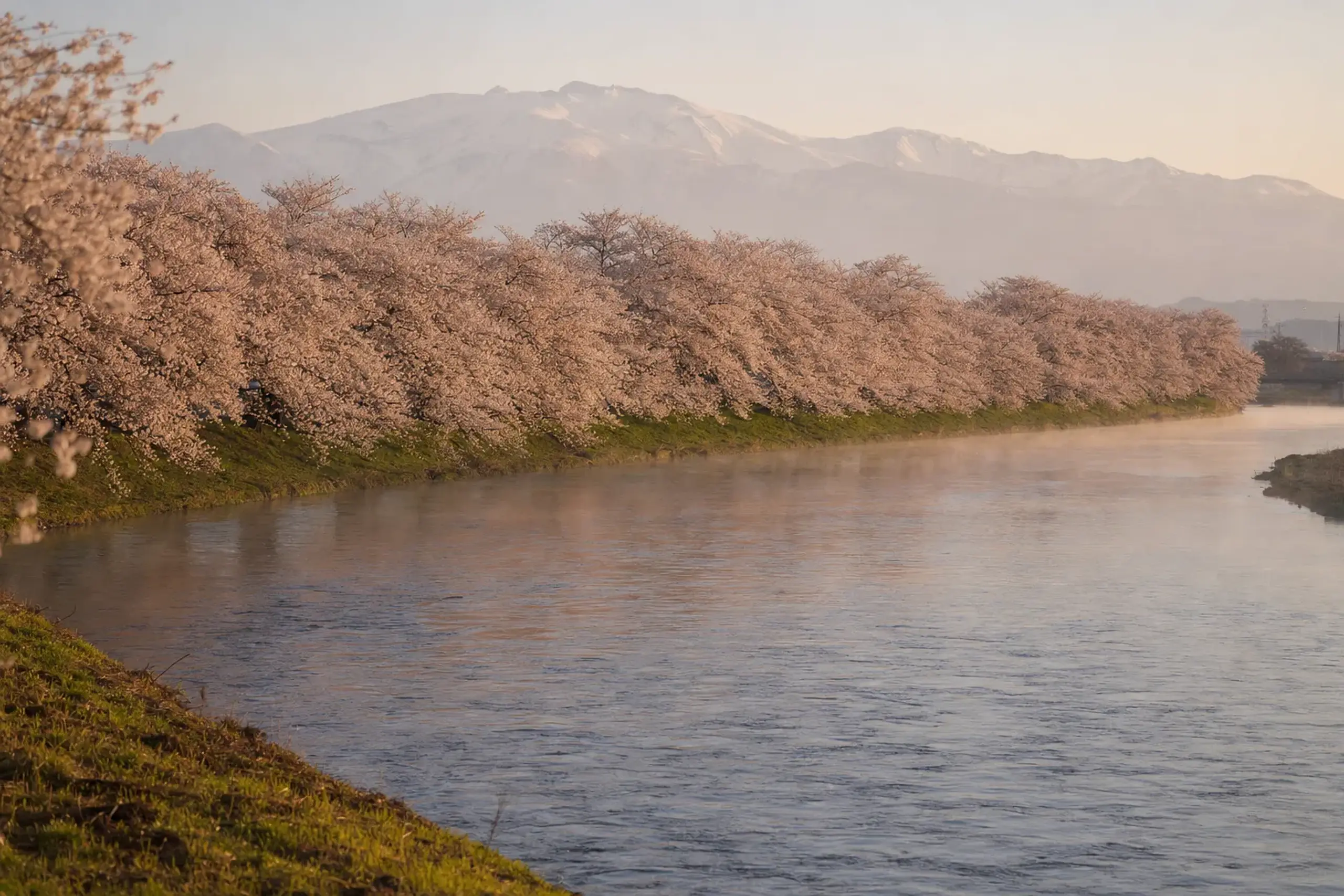
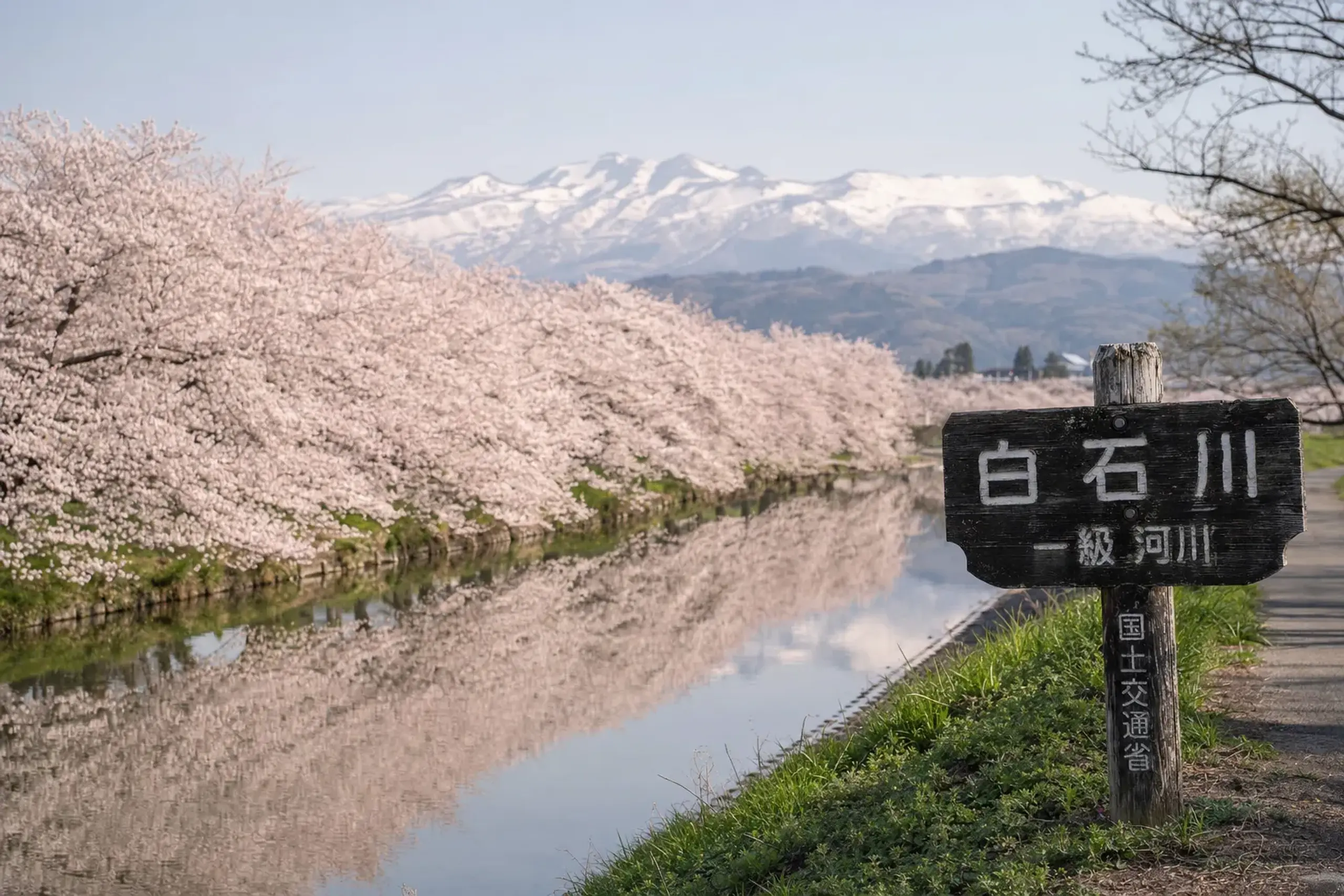
Hitome Senbonzakura refers to an approximately 8 km stretch of cherry trees along the Shiroishi River in Miyagi Prefecture, running through the towns of Ogawara and Shibata. About 1,200 cherry trees line the embankment, mainly Somei-Yoshino. The effect is continuous rather than scattered — one long, unbroken gesture of blossom following the water.
According to local accounts on Ogawara’s official site, the planting began with donations in 1923 and continued in 1927, associated with Takayama Kaijiro, a businessman born in Ogawara.
Not every tree you see today dates from that era. Many have been replaced over the decades, while the original landscape idea — an extended river avenue — has remained perfectly intact. It is a quietly moving thing, this century-old intention, still fulfilling itself each spring.
This is also a nationally recognized cherry spot. Ogawara’s official information notes that it was selected by the Japan Cherry Blossom Association as one of the “100 Best Cherry Blossom Spots” in 1990. Worth knowing — not because it changes the view, but because it explains why the banks draw more than 200,000 visitors a year, and why timing and pacing become the real luxury here.
What Is Hitome Senbonzakura, And Where Exactly Is It?
Hitome Senbonzakura is an approximately 8 km cherry-lined levee on the Shiroishi River between the areas near JR Ogawara Station and JR Funaoka Station on the JR Tohoku Main Line.
The place is not a single park gate or fixed viewpoint. It is a long, walkable embankment with multiple “best moments,” each depending on the time of day and how you move through it. You will also notice the railway almost immediately. Trains run right beside the trees, which is part of the scenery rather than an intrusion — a slow, rhythmic punctuation across the blossom.
Two names help you orient your day. “Shiroishi River Park (白石川公園)” is commonly used around the Ogawara side.
“Funaoka” points you toward Shibata and the approach to Funaoka Castle Ruins Park, a separate cherry site rising above the town.
How Do You See Hitome Senbonzakura Without Missing The Best Angles?
See it from three levels — riverbank, Senzakura Bridge, and Funaoka Castle Ruins Park — then walk between them for shifting perspectives, instead of treating the whole thing as a single photo stop.
This is the difference between “I went” and “I remember it.” The riverbank gives you the most intimate view: blossoms overhead, petals gathering along the path, and the steady movement of people passing like a slow procession. The bridge gives you height. The hill gives you distance and geography. Together they compose a day, not a snapshot.
In our experience, the three viewpoints also spread the crowds across time. You never fight for one perfect frame at the same moment as everyone else. You rotate. You breathe. You let the scene change around you — which, in a place this celebrated, is a genuine privilege.
Viewpoint 1: River Level On The Embankment (The Long Walk)
The embankment is where the scale becomes physical. You can walk a modest section or commit to a longer stretch, but either way you should spend your first time at river level. It lets your eyes settle into the repeating rhythm of dark trunks and pale blossoms before you ever reach for a camera.
Look for the Sanren Sakura.
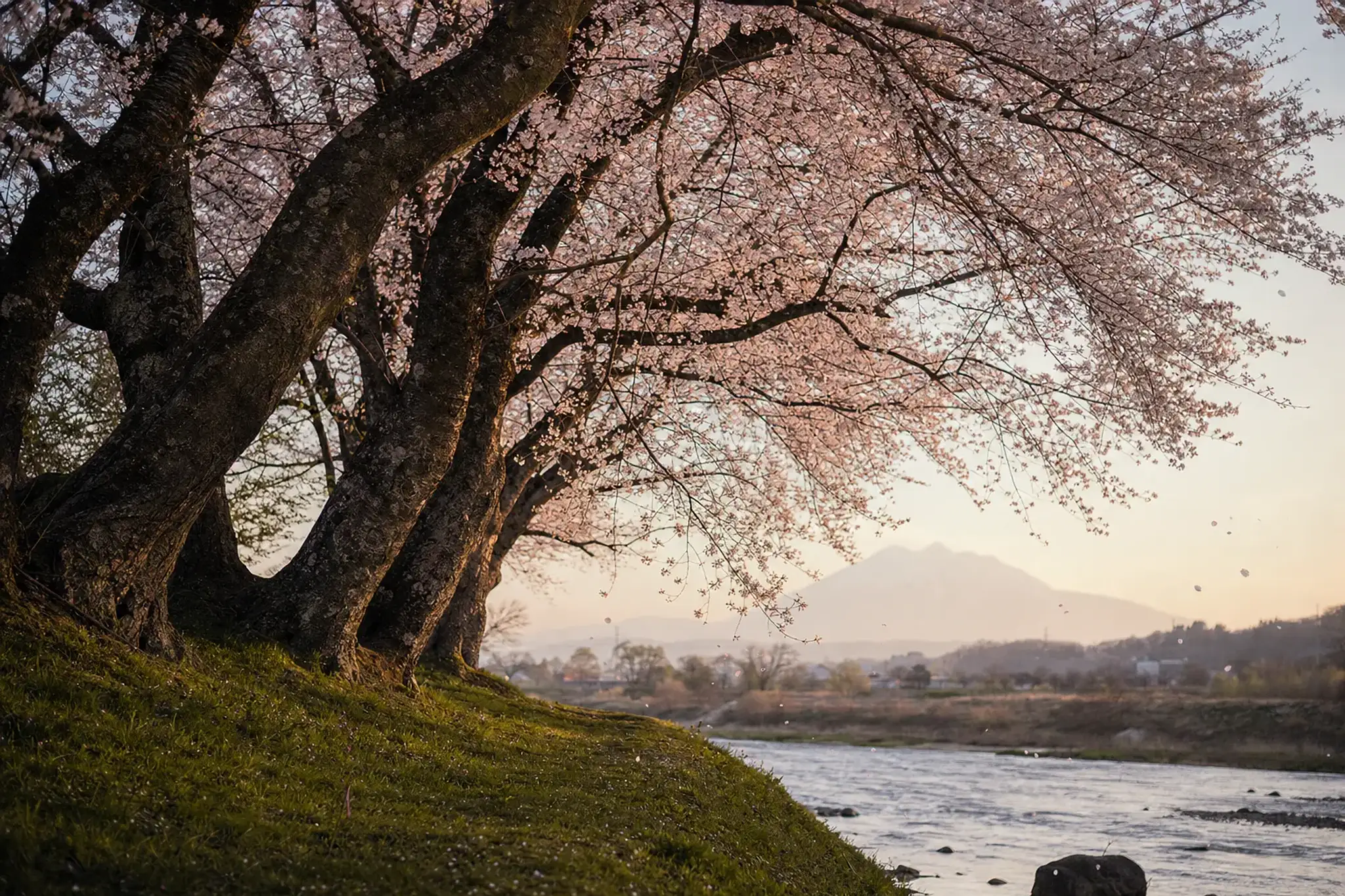
It is known as the only three-row cherry avenue along the embankment, and it changes the feeling at once — denser, more enclosed, almost as if you have stepped into a corridor of flowers that closes gently overhead.
Photographs happen here without being forced. A branch at shoulder height. A train sliding by beyond the blossoms. The river pulling light under the trees. These are the moments our guests tend to remember most vividly, precisely because they were unhurried.
Viewpoint 2: Senzakura Bridge (Canopy Height)
Senzakura Bridge (千桜橋) is a pedestrian bridge completed in 2015, standing about 12 meters high. That number matters. It places you roughly at canopy level, so the “tunnel” effect of the riverbank opens into a broad surface of blossoms — a floating plain rather than a ceiling.
From up here, the river and the line of trees read as one long composition. You can take in the railway beside the avenue and, on clear days, Mt. Zao beyond — often still snow-capped in early April, though never guaranteed. Stay a while. Small shifts in light make an outsized difference, and the bridge rewards patience more than it rewards speed.
Viewpoint 3: Funaoka Castle Ruins Park (The Wide View)
Funaoka Castle Ruins Park is separate from the riverbank, and that separation is precisely what makes it useful. It gives you a reset. The park holds more than a thousand cherry trees, and together with the riverbanks the broader area totals around 2,500.
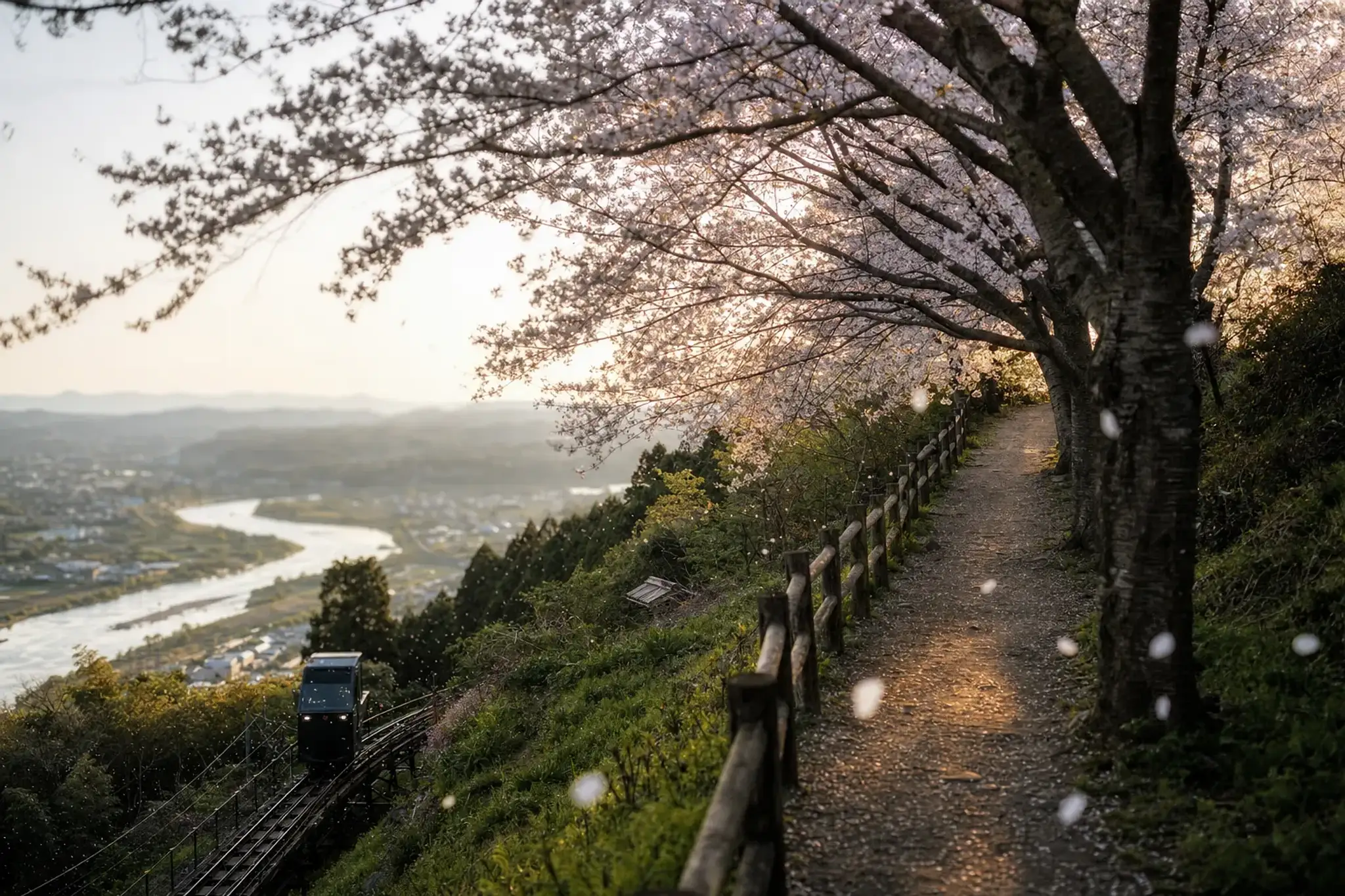
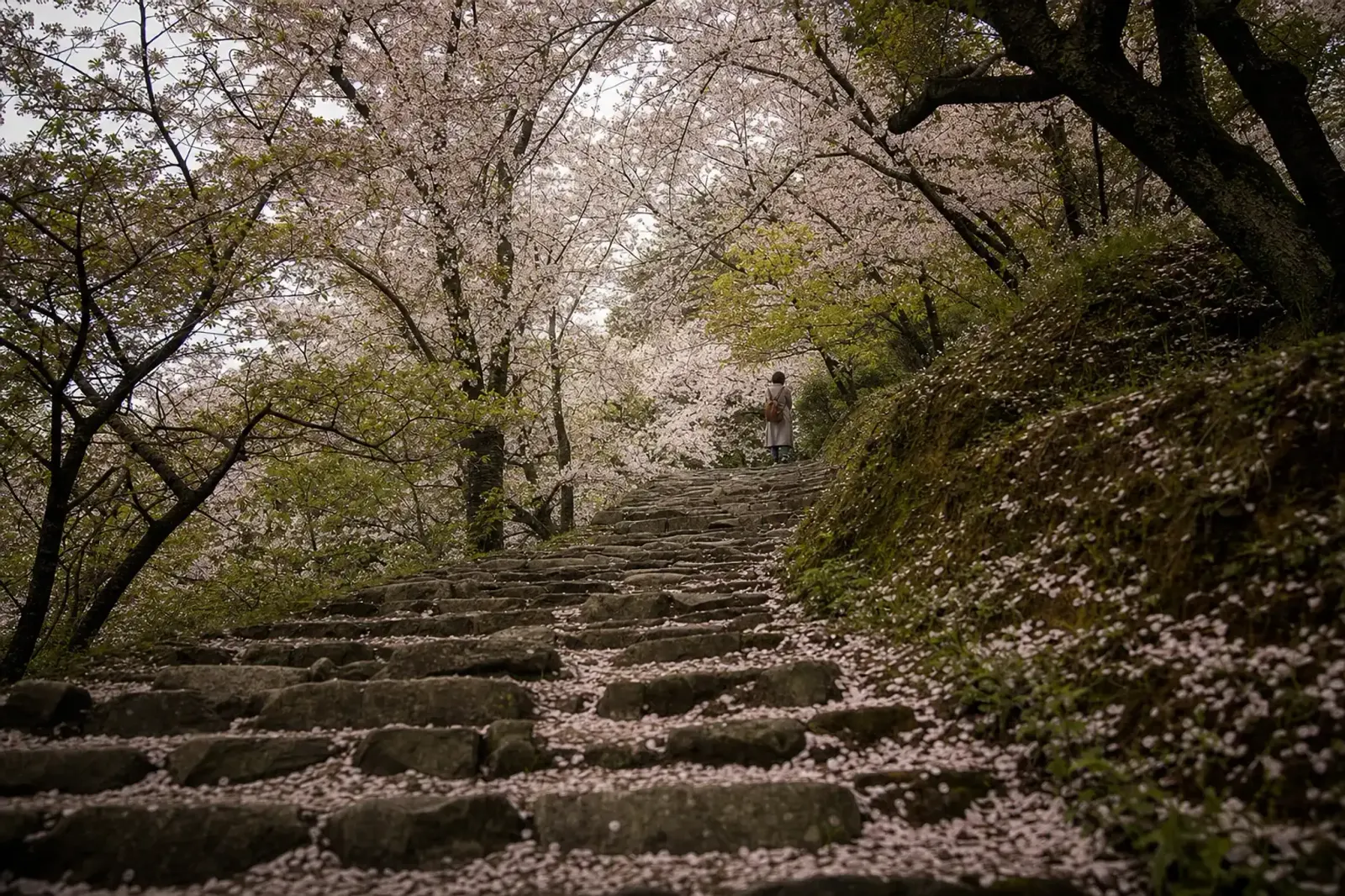
The summit rises to about 136 meters, with the Pacific Ocean to the east and the Zao range to the west. The walk up typically takes 15 to 20 minutes. Bring comfortable shoes. The slope car has been suspended since September 2024, and a restart has not been confirmed for the coming bloom, so plan to ascend on foot.
The park is open 24 hours and free to enter. Near the top stands the Peace Kannon, about 24 meters tall, built in 1975. You do not need to “do” anything here. Simply look, and let the river you walked at dawn resolve into a single quiet line across the landscape below — the whole day gathered into one view.
A Day Trip From Sendai: A Calm Route That Uses The Three Viewpoints
For a balanced day, depart Sendai in the morning, begin on the riverbank, cross Senzakura Bridge near midday, climb Funaoka Castle Ruins Park for the wide view, then return for the evening illumination if the dates align.
This outline stays flexible whether you prefer rail or a private car. It also respects what blossoms genuinely demand: light, patience, and enough time for your eyes to stop rushing. Try to “cover” everything too quickly and the place flattens into a checklist — the very opposite of why one comes here.
Option A: Train-First Day (Simple, Predictable)
Rail can be the most stable choice at peak bloom. You avoid parking uncertainty and road slowdowns around festival hours, and you earn the classic visual pairing: trees and railway, seen from both sides.
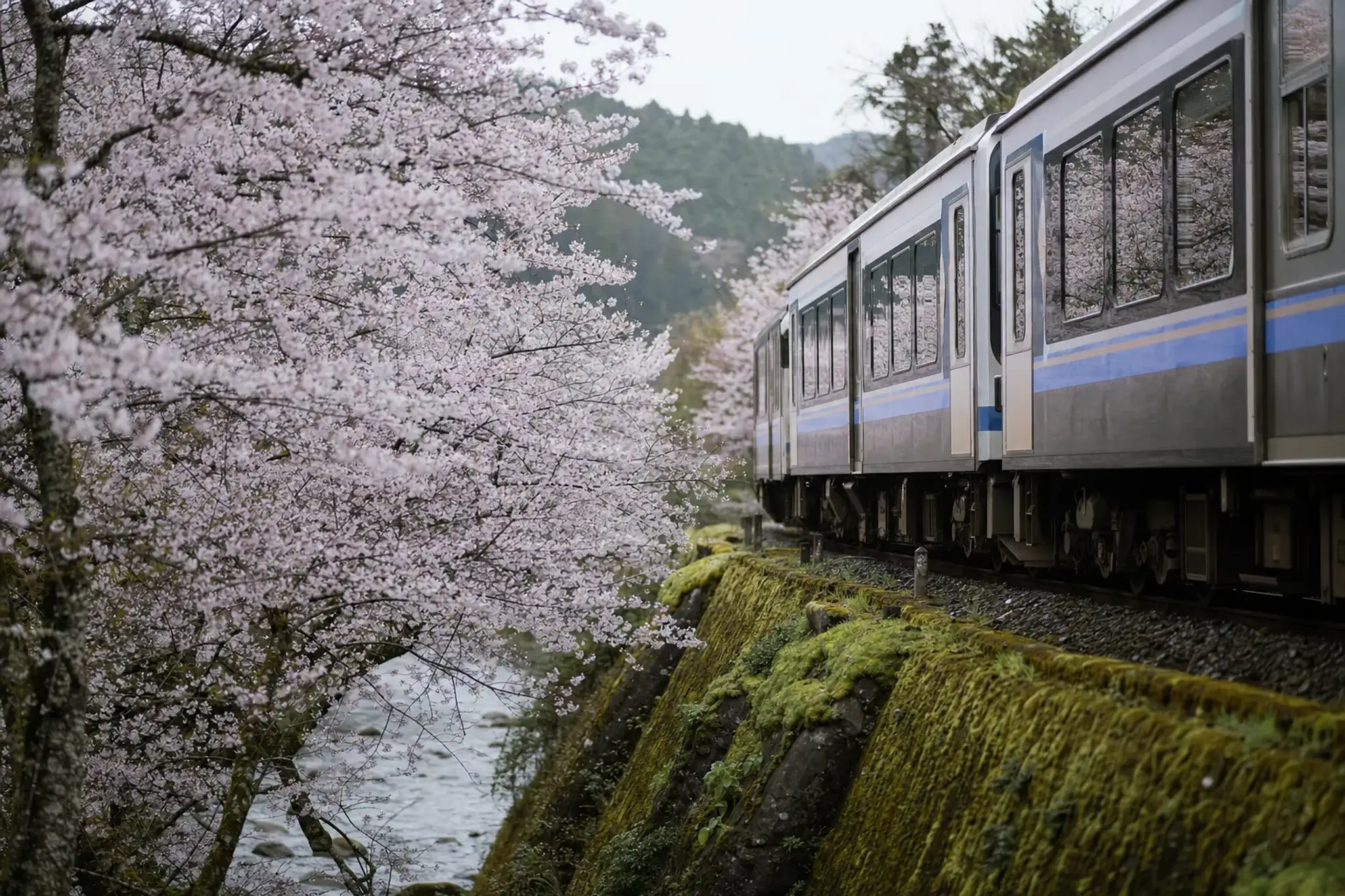
- Tokyo → Sendai: About 1.5 hours by Shinkansen.
- Sendai → Funaoka: About 30 minutes on the JR Tohoku Main Line.
- Sendai → Ogawara: About 35 minutes on the JR Tohoku Main Line.
- Ogawara Station → Shiroishi River Park area: About a 3-minute walk.
- Funaoka Station → Embankment: A few minutes on foot.
- Funaoka Station → Funaoka Castle Ruins Park: About a 15-minute walk to the park area, then 15–20 minutes up to the summit.
JR operations can vary during sakura season. In April 2026, JR East ran special trains and slowed some regular services between Funaoka and Ogawara; announcements for slow-running trains in later seasons are made each year. Useful context — not a promise.
Option B: Private Car Day (More Control Over Pace)
A private chauffeur day is about tempo, not speed. It lets you arrive early, pause when the light turns golden, and leave a crowded area without ever having to “wait for the next train.”
The drive from Sendai to Funaoka is about 40 minutes by car. During festival peaks, that estimate can stretch. Our concierge team verifies traffic-regulation updates and parking arrangements on your behalf ahead of the visit, then plans a route that keeps the walking pleasant rather than stressful — the kind of silent, anticipatory care you simply cannot arrange from a guidebook.
When we discuss private transportation, we mean a partner-fleet vehicle matched to your party size and the shape of your day.
We never combine the driver and guide into a single role. If you would like interpretation on the riverbank and on the hill, we arrange a separate English-speaking cultural interpreter guide, so neither the driving nor the storytelling is ever compromised.
A Sample “Three Viewpoints” Timeline (Works Best On A Weekday)
You can adjust this to your own pace, but a structure helps. Without one, the day tends to get swallowed by crowds and indecision.
- 09:30–10:30: Arrive and walk the embankment at river level while the light is still soft.
- 10:30–11:30: Seek out the Sanren Sakura section for the denser, three-row avenue feel.
- 11:30–12:00: Step up to Senzakura Bridge for canopy-height views and the Zao backdrop.
- 12:30–14:00: A calm lunch break away from the tightest pedestrian flow.
- 14:00–15:30: Walk up to the Funaoka Castle Ruins Park summit for the wide landscape view.
- Evening: Return for illumination if it is running that night (times vary by year and source, often until about 21:00).
A small but essential detail: build in “empty time.” Ten minutes to stand still and listen to the river. Five minutes to watch trains pass. Those unscripted pauses are the true luxury here — the restraint of doing nothing, deliberately.
When Is The Best Time To See Hitome Senbonzakura In Full Bloom?
Hitome Senbonzakura typically blooms within a few days of Sendai’s cherry blossoms, with peak viewing often in early April, depending on the weather.
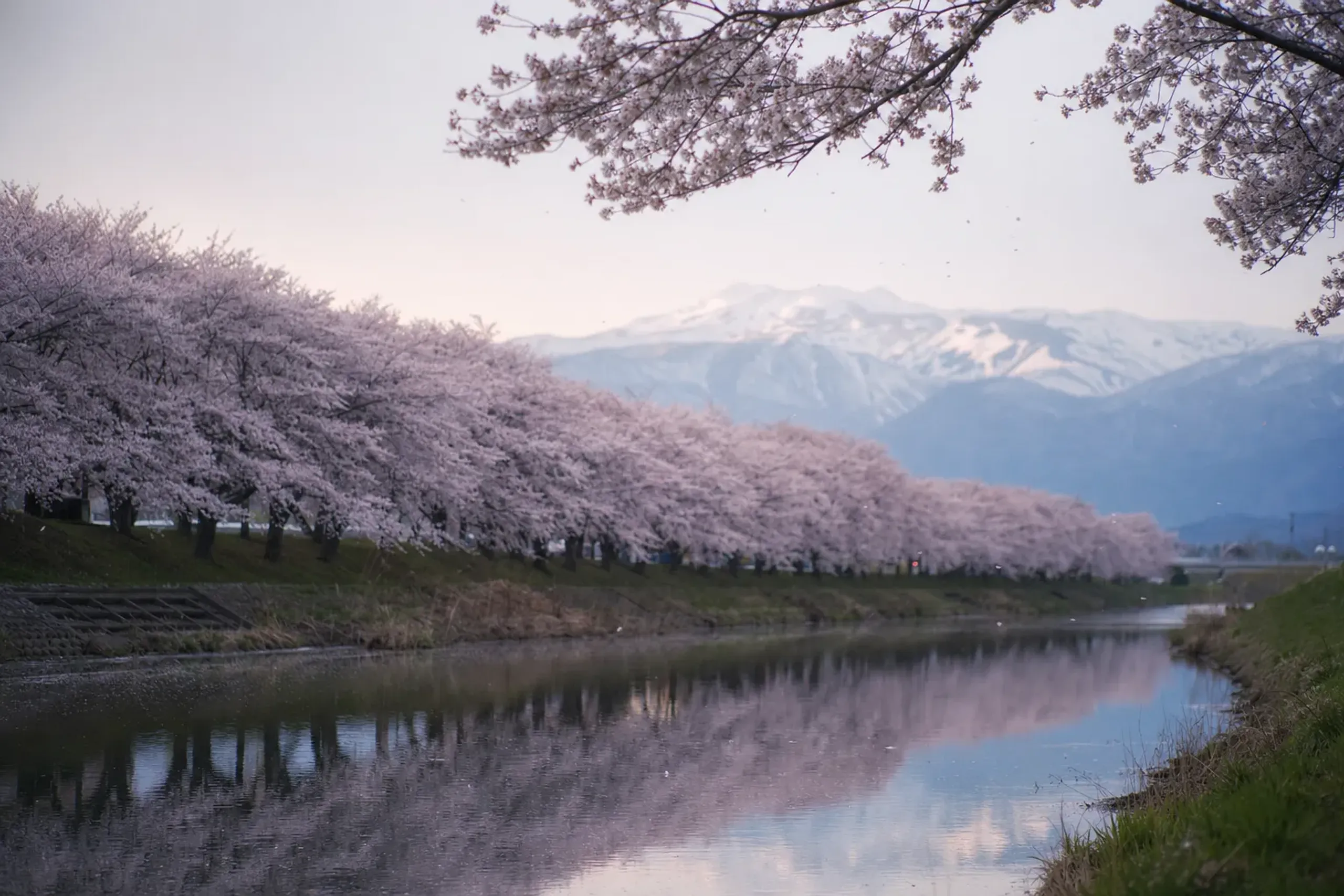
For planning, we rely on official regional indicators rather than guesswork. As an example, the Japan Meteorological Agency reported Sendai’s first bloom on 31 March and full bloom on 4 April in the 2026 season; the Shiroishi Riverbanks often follow within days. Close — but not identical. This narrow window of perfect seasonality is exactly what careful planning is meant to capture.
The festivals are a clue, not a guarantee. In the 2026 season, Ogawara Sakura Matsuri ran April 1–April 14, and Shibata’s festival window was April 3–April 16. Each town sets its festival dates every year to match the expected bloom, publishing updates as the season approaches.
Key fact: Snow on Mt. Zao is common at bloom time, but it is not guaranteed; plan for the possibility, not as a certainty.
Evening Illumination: How To Do Night Sakura Without The Usual Stress
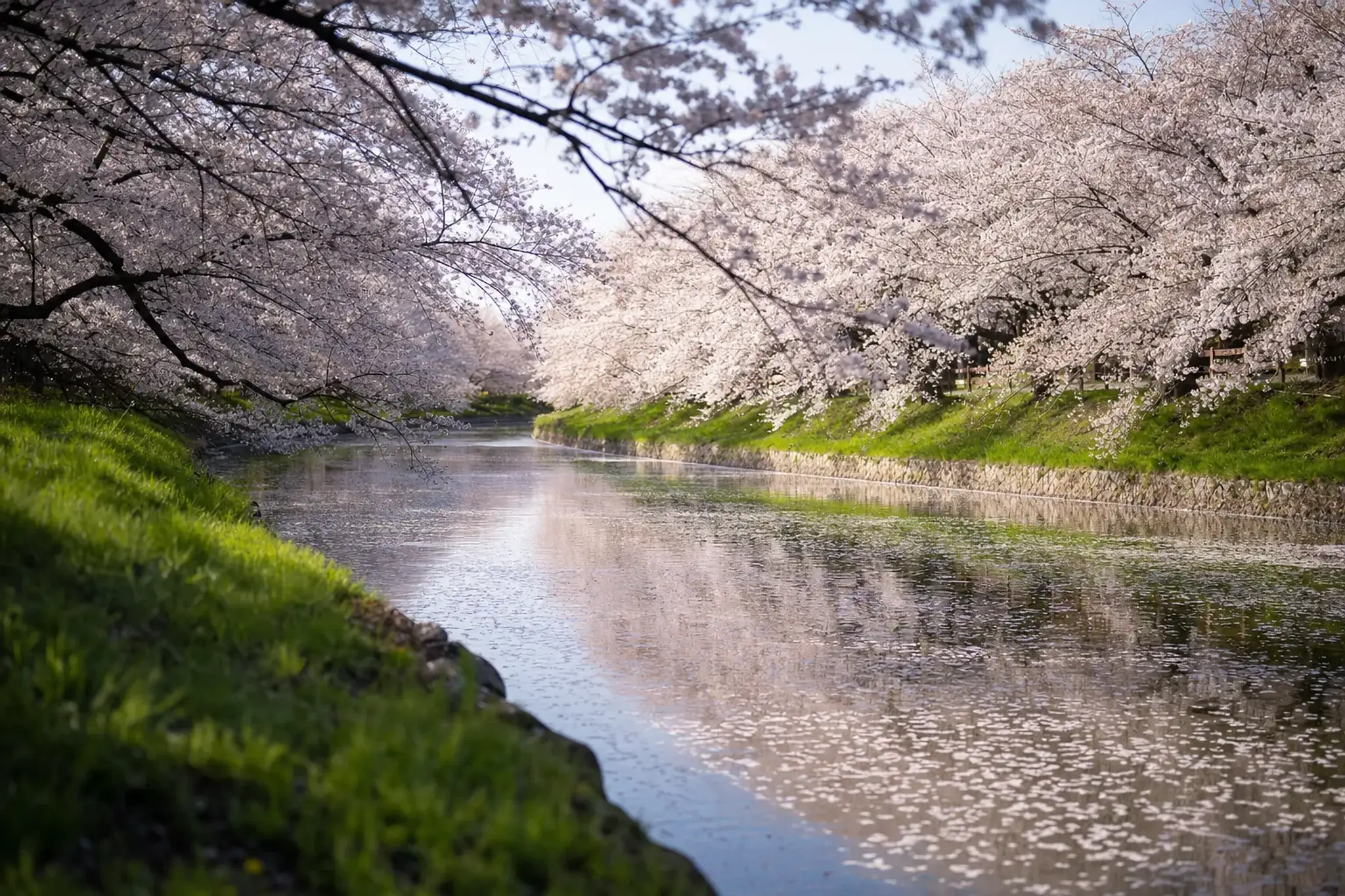
Evening illumination transforms the riverbank from scenic to theatrical. The blossoms become a ceiling of reflected light, and the river turns into a dark mirror. People slow down. Voices soften. There is a hush to it that daytime never quite achieves.
In the 2026 season, Shibata’s local tourism association stated that the night sakura illumination began from April 3 (a Friday). Ogawara’s festival period in 2026 began earlier, from April 1, and both towns typically run illumination until about 21:00, with hours varying by year and source.
Two practical choices reduce friction.
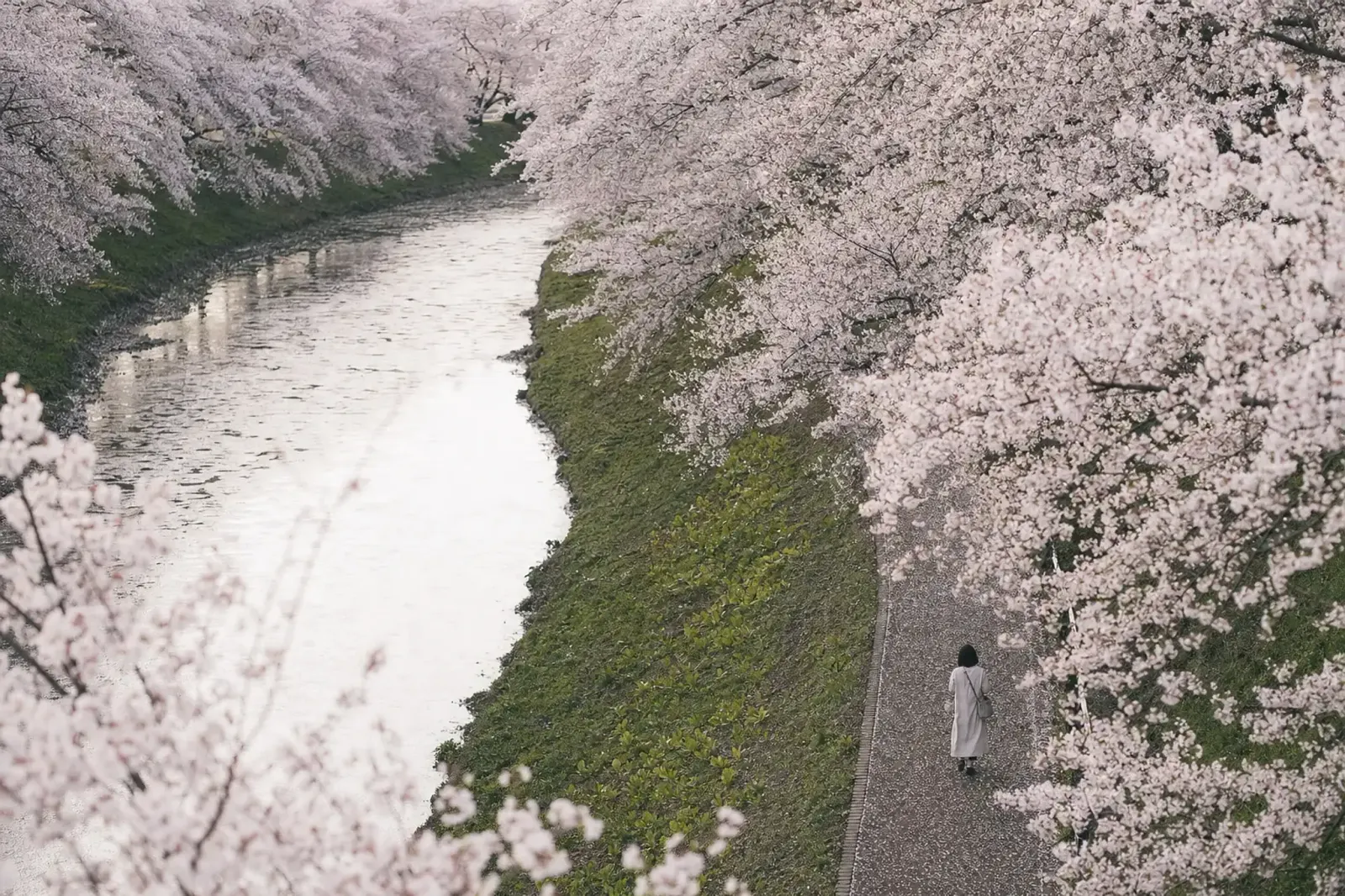
First, go on a weekday. Second, avoid arriving right at the most obvious “after-dinner” hour, when many visitors converge at once. If your base is Sendai, a private car return can make the late-evening exit feel composed rather than cramped.
We design the day so night sakura feels like a final scene, not a second shift. Eat earlier. Rest your feet. Return with purpose, and let the illuminated blossoms close the day the way a well-chosen last course closes a kaiseki meal.
Timing And Crowds: The Quiet Tricks That Matter More Than Any Camera
Weekends at full bloom are extremely crowded, and the site draws more than 200,000 visitors per year, so the simplest luxury is choosing a weekday and arriving early.
The embankment is long, but crowd pressure concentrates near the easy access points and festival areas. Walk beyond the first clusters. Ten minutes can be enough to find space. Another ten can be the difference between shoulder-to-shoulder and a calm, solitary stride beneath the blossom.
If rain arrives, do not despair. Somei-Yoshino petals drop faster in wind and wet weather, but the river scene can become even more atmospheric — softer edges, darker bark, fewer people. Bring a compact umbrella and keep moving; some of the most beautiful moments here belong to the drizzle.
We also plan for the slope up to Funaoka Castle Ruins Park as a natural crowd filter. Many visitors stay at river level. The climb asks for effort, and that effort quietly buys you room — a stretch of the hill, and of the view, that feels almost entirely your own.
How Japan Royal Service Plans A Hitome Senbonzakura Day Differently
We plan Hitome Senbonzakura around three viewpoints, verified local logistics, and discreet pacing, so you experience the Shiroishi Riverbanks as a full, unhurried day — without the usual crowd-driven compromises.
Hidden Japan, in plain sight. This is not an obscure destination, yet most visitors only ever see a single slice of it. Our approach favors the overlooked transitions: the quiet walk between the Ogawara and Funaoka areas, the bridge pause when clouds lift from Zao, the later return when the illumination finally settles. It is the Japan that is right in front of everyone, yet somehow still missed.
Discretion, by default. We treat your itinerary and your identity as private information, shared only with the handful of professionals who genuinely need to know. No public posting. No noisy framing. Simply a calm day that remains entirely yours — which, for the travelers we serve, is worth more than any view.
A single day on the Shiroishi River, arranged with this level of care, becomes something quietly unrepeatable. If you would like us to shape a bespoke itinerary around the three viewpoints — with private transport, a dedicated interpreter, and timing matched to the year's bloom — please contact us here, and we will begin with a tailored proposal built entirely around your pace.