In this guide
- 01The Temple Standing Today Isn't The One He Built
- 02How Did Archaeologists Prove Wakakusa Garan Was A Different Temple?
- 03The Wood Itself Settled The Argument
- 04Why Has Hōryū-ji's Pagoda Survived So Many Earthquakes?
- 05A Human Line Of Craft: Nishioka Tsunekazu And The Miyadaiku
- 06The Buddha In The Kondō: A Question Still Open
- 07What Does UNESCO Protect At Hōryū-ji, Exactly?
- 08Practical Visiting Guide For Hōryū-ji (Without Rushing It)
- 09Preservation In Real Time: Repairs, Access, And 2026 Signals
- 10How Japan Royal Service Plans A Hōryū-ji Day For Discerning Travelers
- 11Plan Your Own Quiet Day At Hōryū-ji
- 12Frequently Asked Questions
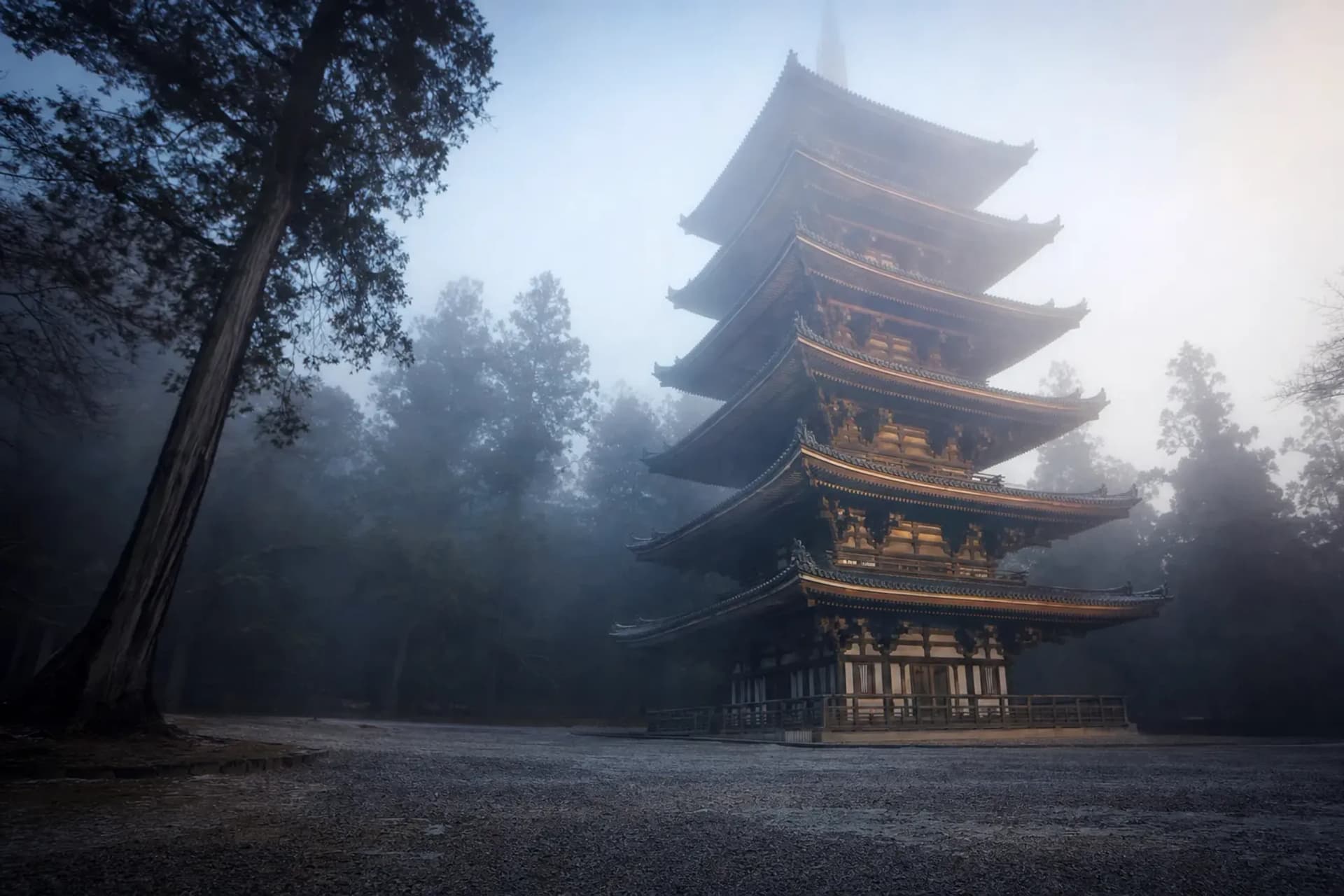
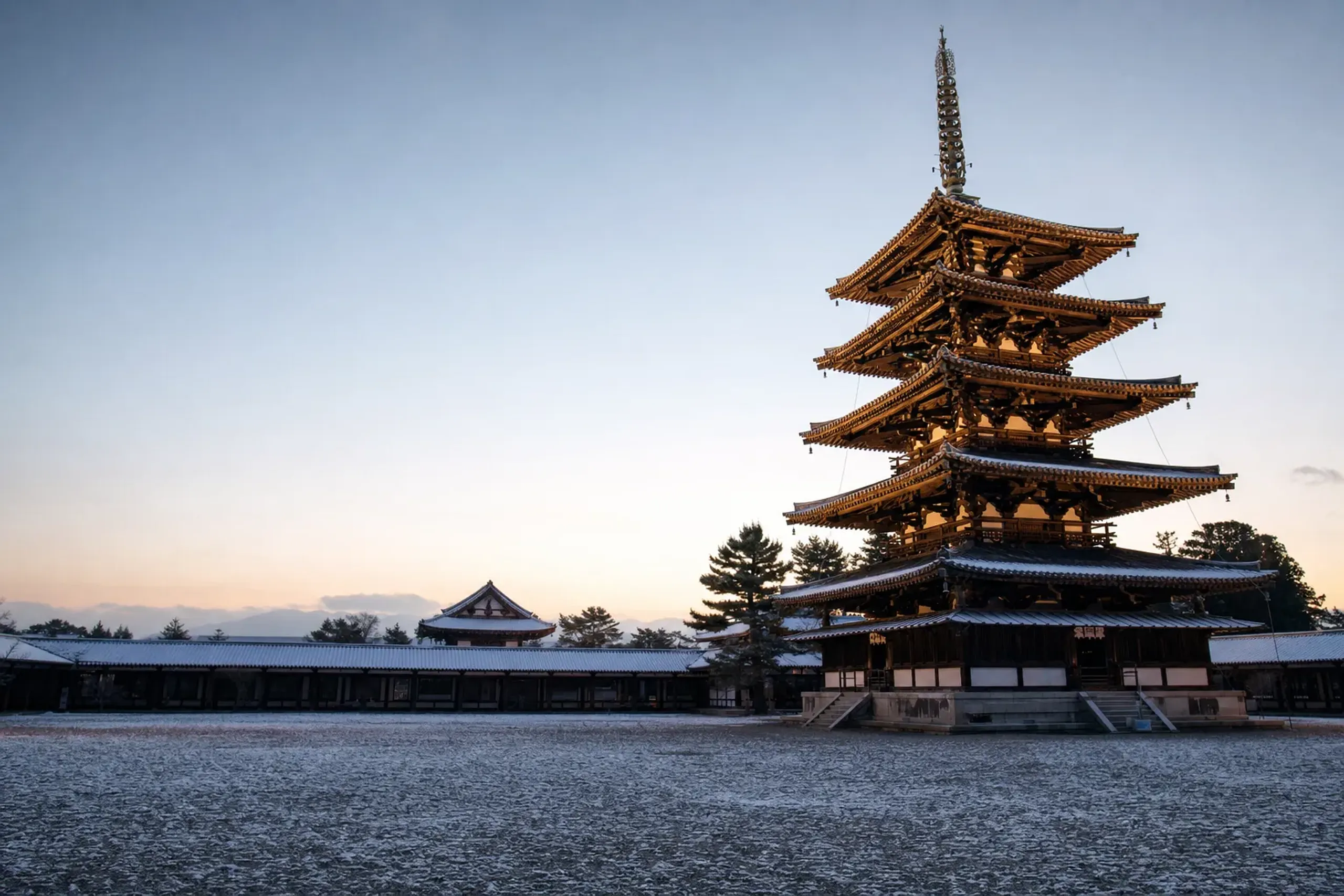
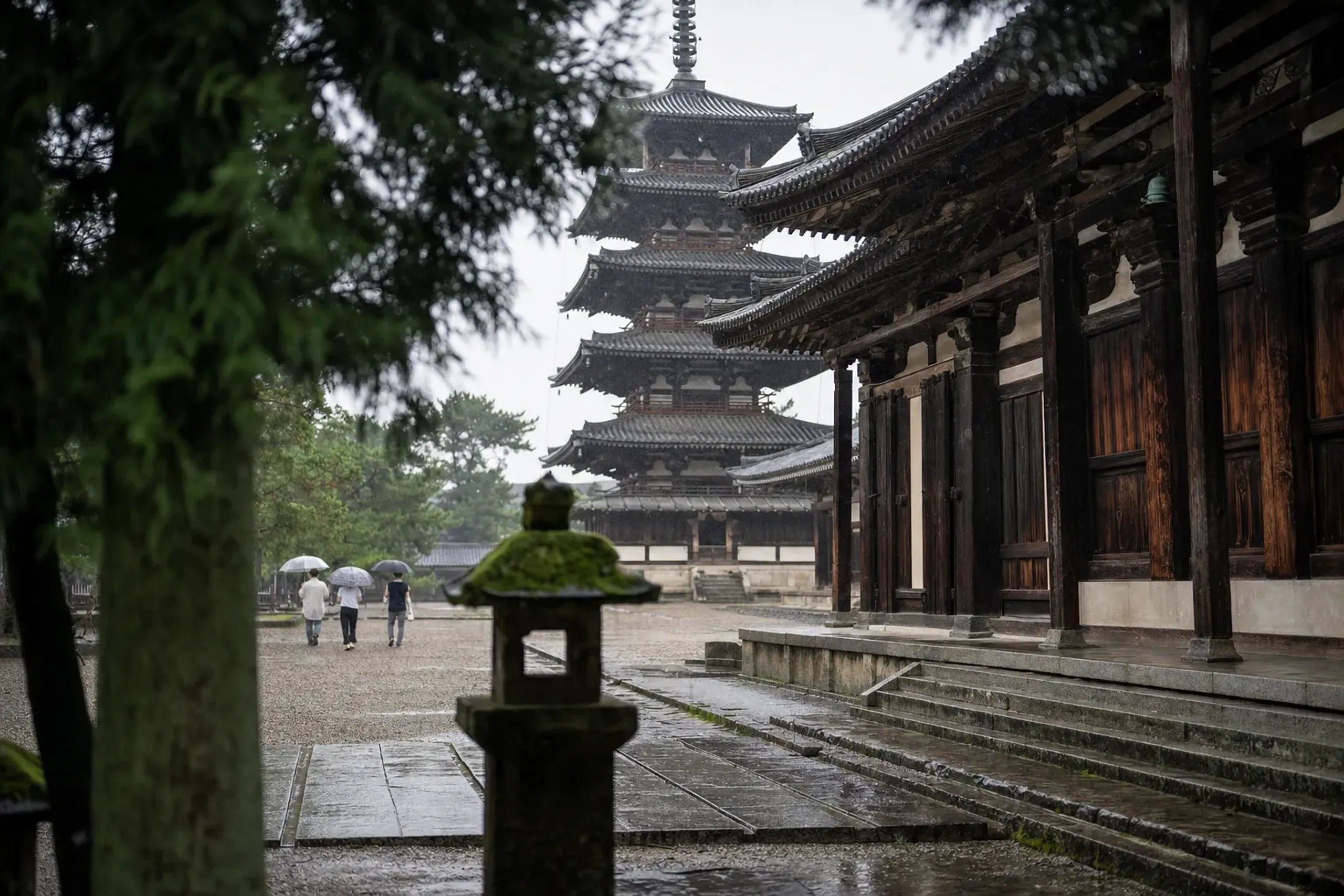
A five-story pagoda rises from quiet gravel and old pines in Ikaruga, Nara. No neon. No spectacle. Just wood, shadow, and a roofline that has watched earthquakes come and go for more than thirteen centuries. It feels impossible. It also invites a common mistake.
Many visitors arrive believing they are looking at the exact temple Prince Shōtoku founded around 607. That story is almost true, and also wrong in the way that matters. The Hōryū-ji you walk through today is a reconstruction. The original complex burned completely to the ground in 670, an event recorded in the Nihon Shoki, Japan's oldest official chronicle.
For the discerning traveler, that correction is not pedantry. It is the key to why Hōryū-ji is so quietly moving. You are not visiting a single frozen moment in time. You are meeting a chain of human decisions—rebuilding, preserving, repairing—held together by craft and restraint rather than flash. It is a place that rewards those who know how to look slowly.
The Temple Standing Today Isn't The One He Built
Prince Shōtoku's original Hōryū-ji—known as the Wakakusa Garan—burned down in 670, and the buildings you see today were rebuilt afterward. They have now stood for over 1,300 years.
The label "oldest wooden buildings" still holds when we speak about the structures standing now. The Kondō (Main Hall) and five-story pagoda are among the oldest surviving wooden buildings anywhere on earth. The point is simpler than the legend suggests: they are not the first set of buildings raised on this ground.
Once you accept that, the visit changes. You stop hunting for a single origin story and start watching how Japan protects continuity without pretending that time is reversible.
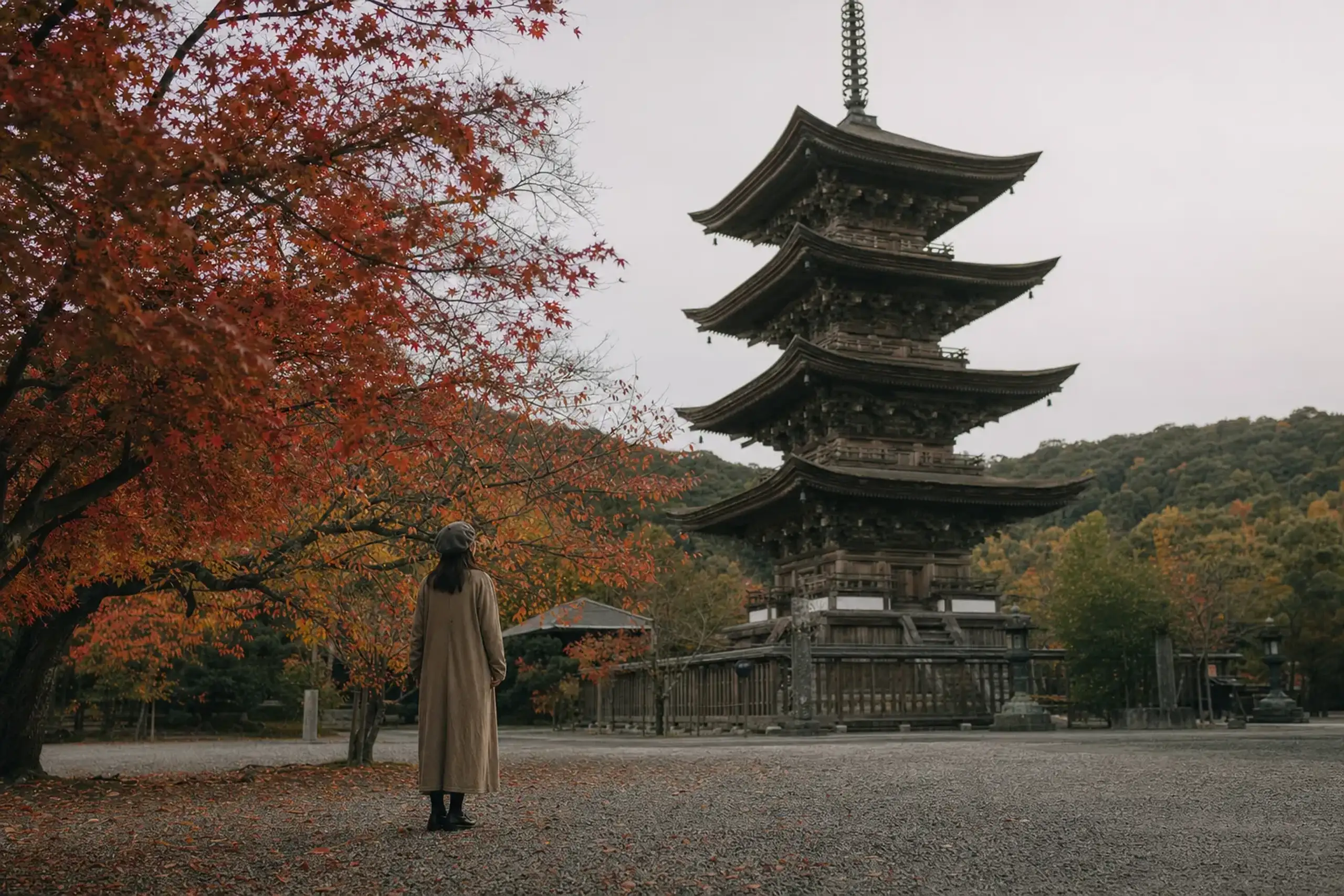
Hōryū-ji is not a museum set. It is a living religious site where preservation is an ongoing, watchful discipline—a place kept alive by hands, not just by glass cases.
How Did Archaeologists Prove Wakakusa Garan Was A Different Temple?
In 1939, excavations led by Ishida Mosaku uncovered the remains of Wakakusa Garan beneath the current grounds—including an orientation roughly 20 degrees off true north, evidence that the original complex differed sharply from today's layout.
This is the detective story most visitors never hear. The 1939 excavation revealed foundations and traces of the earlier compound. The older layout followed an earlier planning style, with the pagoda and main hall arranged in a single north–south line, one behind the other.
Now look at the rebuilt Hōryū-ji you can walk today. The Kondō and pagoda stand side by side. The axis runs almost true north–south—about 3 degrees off, toward the northeast. Two complexes with such different orientations occupying the same tight space at the same time simply strains common sense.
Roof tiles recovered from the buried site also matched older tile-making techniques. Small evidence. Hard evidence. When you stand in the precinct and picture those two angles—one older, one corrected—you can almost feel the moment a community decided to rebuild not as a replica, but as a reset.
The Wood Itself Settled The Argument
Arguments about dates can turn into long, proud stalemates. Then science arrives. Quietly.
A long-running scholarly debate over the reconstruction's timing was resolved through tree-ring dating. Since 1985, Japan's national cultural properties research institute has built a reference database of Japanese cypress tree-ring patterns.
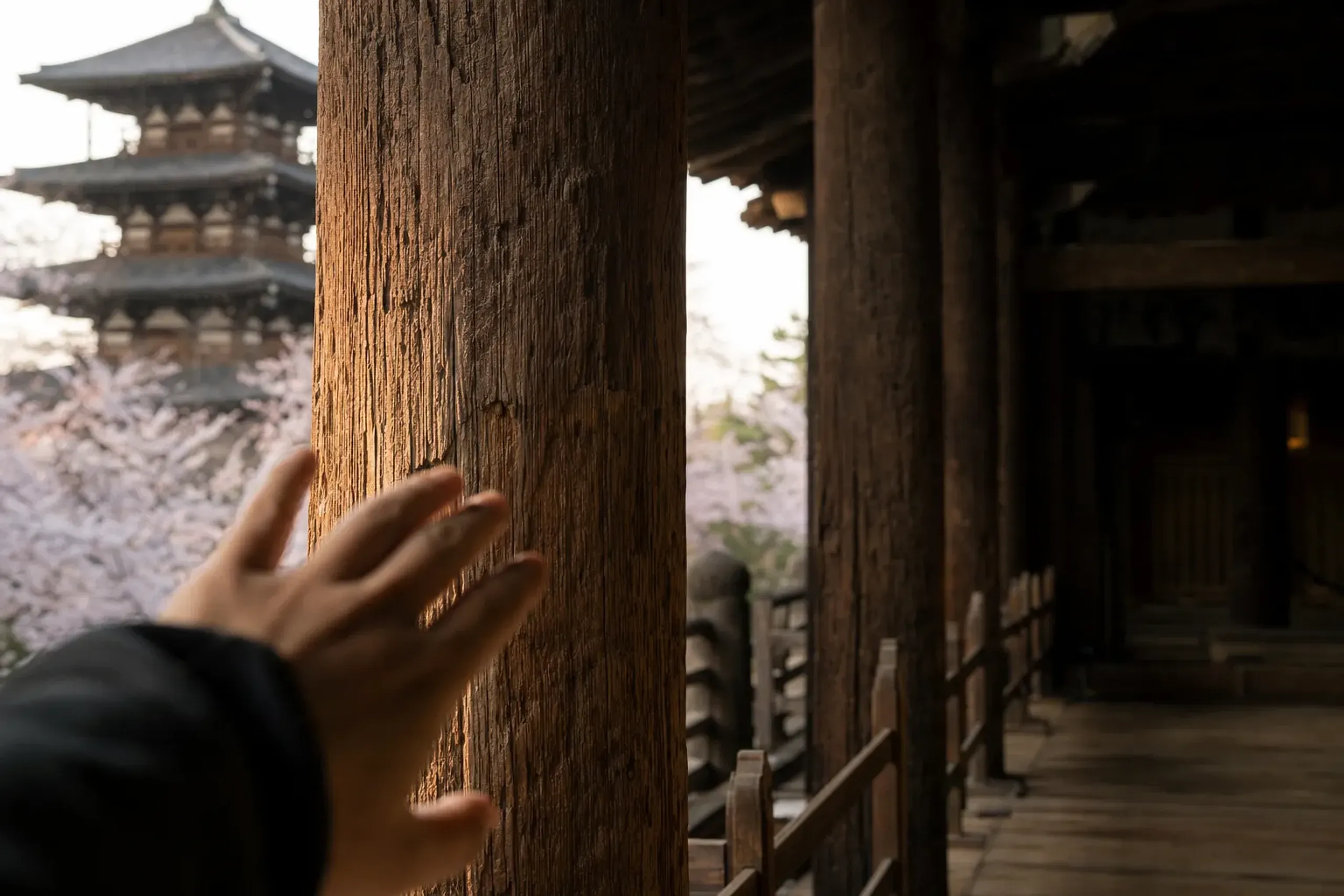
That reference allows year-level precision in identifying when a given timber was felled.
Hōryū-ji's own historical property records confirm the Kondō was standing by at least 693. The five-story pagoda and the Chūmon (Central Gate) were completed by roughly 711. Put that together and the rebuilt complex sits with confidence in the late 7th to early 8th century.
That is the part many people miss. This is not "old" in a vague, romantic sense. It is time you can count. The rings in the wood hold the year, ring by ring.
Why Has Hōryū-ji's Pagoda Survived So Many Earthquakes?
Hōryū-ji's five-story pagoda has no recorded collapse from earthquakes in over 1,300 years, and modern engineers have studied its structure as a meaningful parallel to contemporary seismic design principles.
Stand close and you can see decisions that read like engineering and feel like poetry. The columns show a subtle entasis, bulging slightly at the middle. Some compare this to Greek classical architecture, but direct transmission is debated; it is safer to see it as convergent problem-solving—builders in distant places arriving at similar answers.
Look up at the bracket work. Cloud-shaped supports (kumo-hijiki) carry the weight with a kind of carved calm. On the lower levels, the mokoshi—a decorative double-roof layer—creates the illusion of extra stories while adding visual depth and sheltering the structure's lines.
Japan's seismic history is not gentle. Yet the pagoda has endured. Engineers designing Tokyo Skytree publicly noted genuine structural parallels between these ancient techniques and modern seismic thinking. It is not a gimmick.
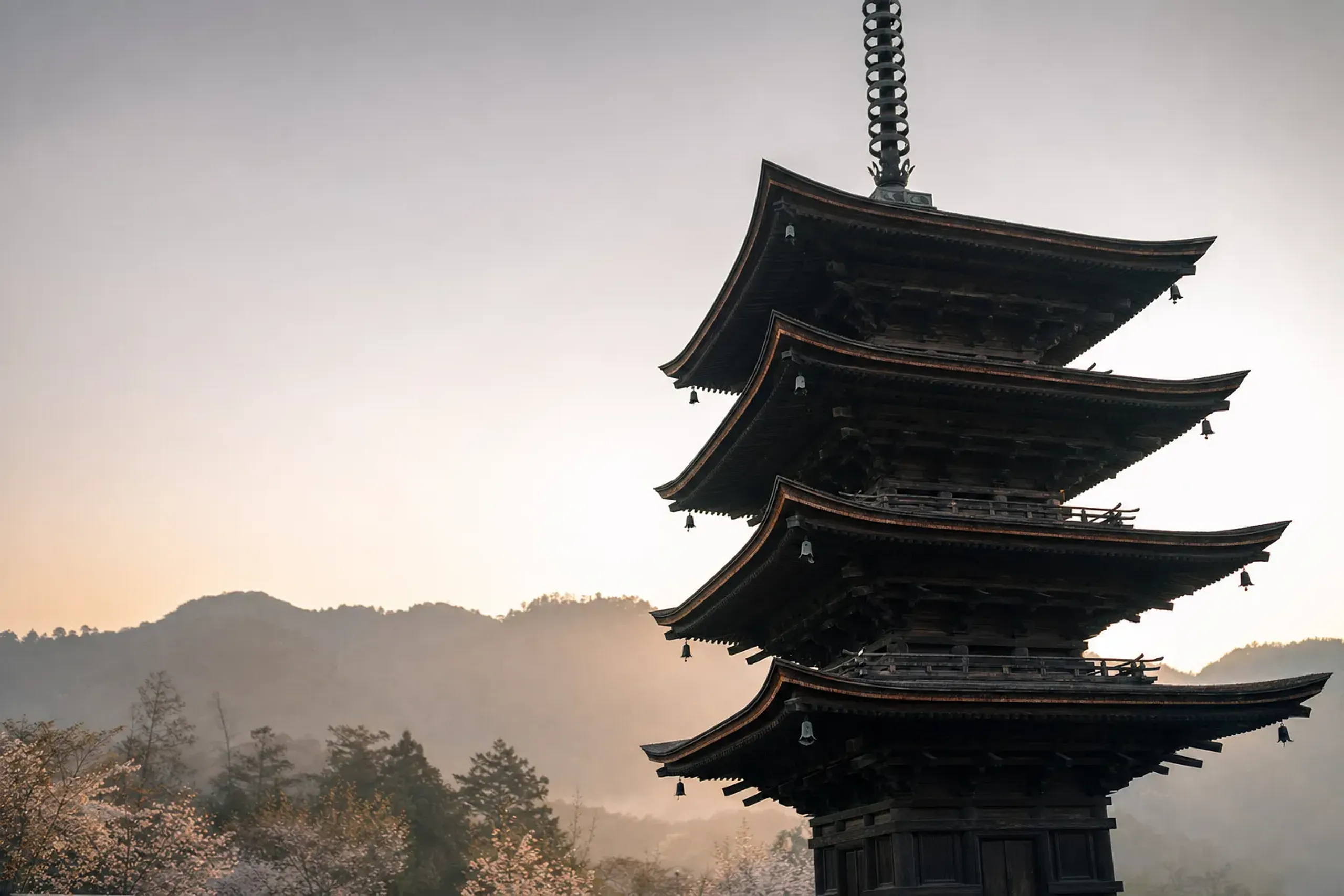
It is respect from one era to another—a conversation across thirteen centuries.
A Human Line Of Craft: Nishioka Tsunekazu And The Miyadaiku
If you only collect facts at Hōryū-ji, you miss the living thread. The temple's survival is also a story of shokunin—the master craftsmen whose devotion does not advertise itself, yet holds a whole civilization's memory in place.
Nishioka Tsunekazu is often described as "the last miyadaiku," a master temple carpenter who maintained and passed down Asuka-period techniques across generations of restoration work. He refused to work on anything other than temples and shrines. Famously, he had his own house built by someone else rather than touch non-religious construction.
That refusal matters. It tells you how a place like Hōryū-ji stays standing: not through one heroic build, but through a disciplined culture of repair, apprenticeship, and restraint. It is wabi-sabi in practice—accepting the passage of time, then meeting it with skill instead of denial. This is the same lineage of grand-master craft that Japan Royal Service seeks out for its guests: makers whose knowledge is measured in lifetimes, not seasons.
The Buddha In The Kondō: A Question Still Open
Even at a site this thoroughly documented, there are gaps. Honest ones.
Scholars still debate the identity and original context of the principal Buddha statue enshrined in the rebuilt Kondō. One documented theory holds that the image may have been made for a different temple by a different clan, then moved to Hōryū-ji's rebuilt hall after the Wakakusa Garan fire.
We mention this because it changes the mood of the visit. Hōryū-ji is not a tidy story sealed behind glass. It is a place where questions remain open. For the thoughtful traveler, that unresolved quality feels less like a gap and more like permission to slow down.
What Does UNESCO Protect At Hōryū-ji, Exactly?
UNESCO's "Buddhist Monuments in the Hōryū-ji Area" includes 48 structures across Hōryū-ji and Hokki-ji, inscribed in December 1993 as Japan's very first World Heritage listing—shared that year with Himeji Castle.
The formal property name matters because it quietly expands your map. The inscription covers 48 buildings in total: 47 belonging to Hōryū-ji and the three-story pagoda of nearby Hokki-ji. UNESCO's documentation also specifies the protected areas: 14.6 hectares for the Hōryū-ji area and 0.7 hectares for the Hokki-ji area.
1993 is not a random plaque year. It marked Japan's first UNESCO World Heritage inscription, alongside Himeji Castle. If you want to follow that parallel thread, our team has written about Himeji's long life in stone here: Himeji Castle.
For the well-traveled guest, UNESCO status is not a checklist item. It is a promise that what you are seeing is rare at a civilizational scale, and protected with formal seriousness.
Practical Visiting Guide For Hōryū-ji (Without Rushing It)
Hōryū-ji is in Ikaruga, Nara Prefecture, and it rewards a measured pace. Fast visits flatten it. Big mistake.
How To Get There From Central Nara, Kyoto, Or Osaka
Public transport is straightforward and well-documented. JNTO notes access via JR Hōryūji Station, then a short bus to the Hōryūji-mae stop. Nara Kotsu's English route map also lists "Horyuji Temple (Horyuji-mae)" and notes that nationwide Japanese IC cards can be used on its buses.
Still, the last mile is where time quietly disappears. If you are traveling with family, carrying purchases, or simply guarding your energy, a private chauffeured transfer is often the difference between arriving composed and arriving already spent.
A Quiet-Time Plan That Works For Most Travelers
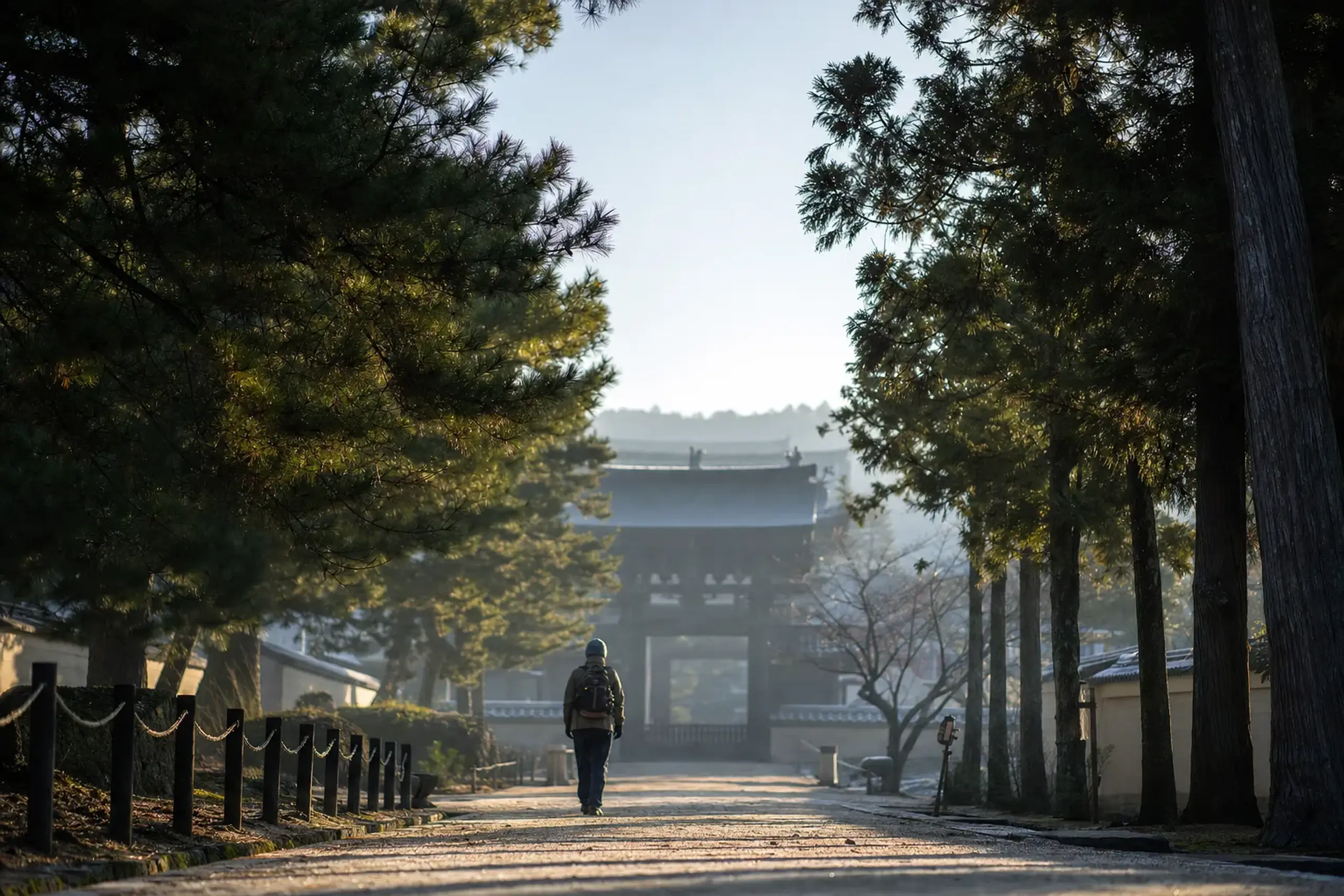
We design many Hōryū-ji visits around one goal: less noise. That means arriving early, moving through a simple sequence, and allowing pauses where the compound naturally goes silent. Timing is quietly everything—the difference between a crowded gravel path and a precinct that seems to belong to you alone often comes down to knowing which hour, and which season, to arrive.
- Arrive early and start with the outer precinct to settle your pace.
- Spend real time at the Kondō and pagoda—watch the angles, the brackets, the rooflines. Let your eye adjust.
- Leave breathing room for the museum spaces and any special displays on the day.
Three hours often feels right for a first visit. Two can work if you are very focused. More is rarely wasted.
Etiquette: Small Choices That Keep The Site Sacred
This is a working religious complex, not a stage. Dress neatly. Keep your voice low. If an area is roped off or marked, do not test the boundary for a photograph.
Photography rules can vary by area, especially around treasures and interior spaces. Follow on-site signage and staff direction. Easy.
Key fact: For official visiting hours and admission details, rely on Hōryū-ji's own published visitor information, since schedules can change due to conservation work.
Preservation In Real Time: Repairs, Access, And 2026 Signals
Well-traveled guests often ask for "authentic." Hōryū-ji offers something harder: honest. You may see scaffolding. You may see notices about conservation. That is not a flaw. It is proof of life.
Nara Prefecture publishes preservation and repair updates for cultural properties, including Hōryū-ji, with 2026 information under its cultural property repair pages.
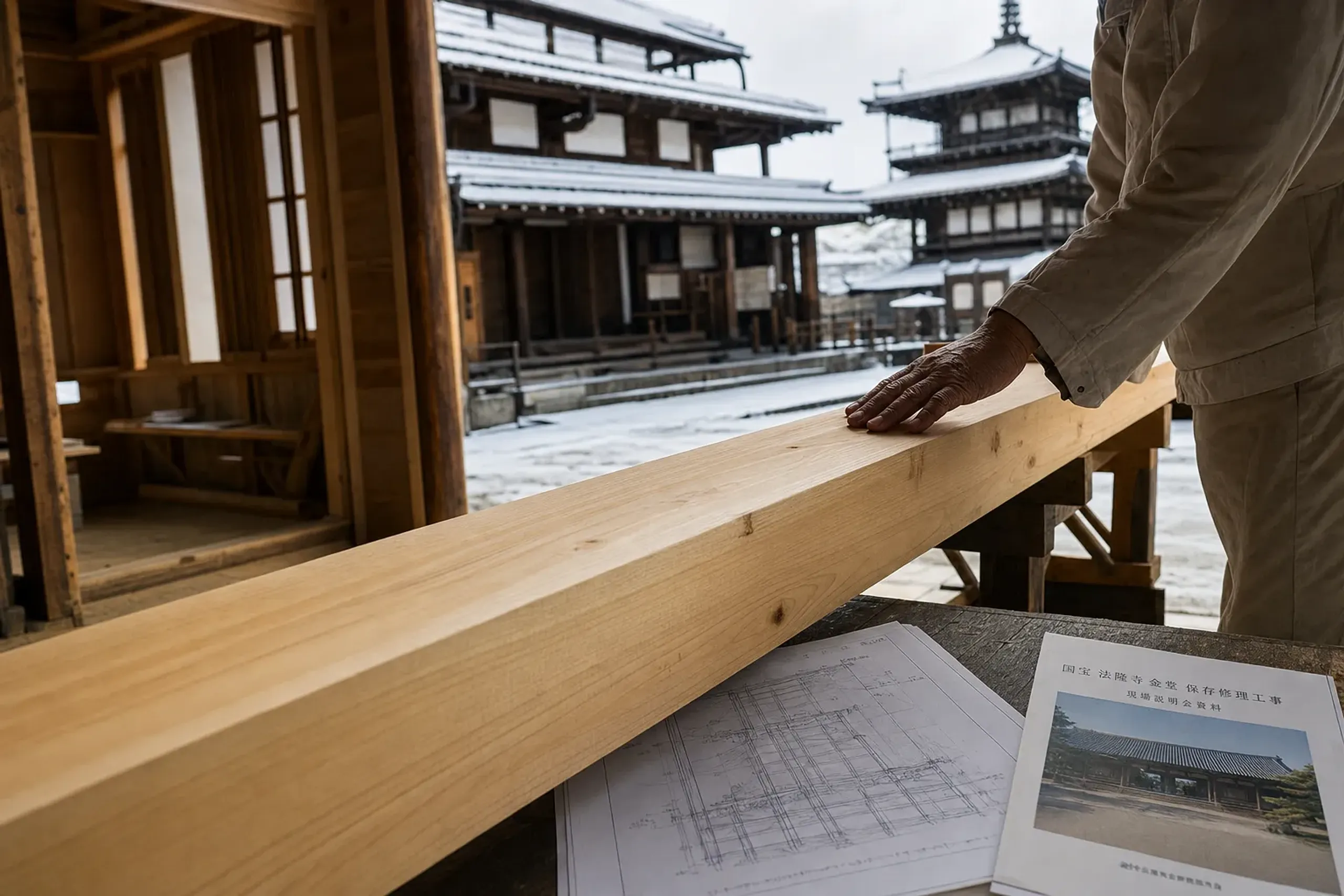
Hōryū-ji also posts news in 2026 about preservation-related initiatives, including a crowdfunding effort connected to the preservation and utilization of the Kondō wall paintings.
If your schedule is tight, these details matter enormously. A partial closure can quietly reshape your ideal routing. Our concierge team watches for exactly these signals and designs a visit that stays calm even when the site is busy or under repair.
One more modern clue to Hōryū-ji's continuing role: Japan's Prime Minister's Office reported a visit to Hōryū-ji on January 14, 2026, together with the President of the Republic of Korea. The temple still functions as ground for cultural diplomacy—a site of imperial and state-guest significance that most visitors experience only from a respectful distance. Quiet power.
How Japan Royal Service Plans A Hōryū-ji Day For Discerning Travelers
Our team at Japan Royal Service builds Hōryū-ji days around three things: discretion, hidden-Japan pacing, and craft-led storytelling that respects the site as a living place. Every itinerary is tailor-made to the rhythm of the guests it is designed for.
We keep the day practical. We plan realistic departure times, reduce dead time between stops, and protect your energy with quiet logistics. When a family needs space, we design for it. When a couple wants silence, we design for that too. And the confidentiality of your identity and your itinerary is treated as non-negotiable—the single value our guests trust us with above all others.
On the ground, what we provide is clear and defined: expert guiding and private transfers. For everything else—special viewing requests, conservation-related questions, or any third-party programs—guests interested in learning more may speak with our concierge for tailored guidance in a private conversation.
Hōryū-ji rewards a particular style of travel: low-profile movement, precise historical correction, and respect for what cannot be rushed. That is exactly where we focus—on the quiet, considered day rather than the crowded one.
That is where we focus.
Plan Your Own Quiet Day At Hōryū-ji
Some places are best met slowly, in the company of someone who knows precisely when the light falls and when the crowds thin. Hōryū-ji is one of them. If you would like a private, unhurried day built around this thirteen-century survivor—paced for silence, guided by real historical depth, and moved with complete discretion—we would be glad to design it for you. To begin a private conversation, contact us here.
Frequently Asked Questions
Is Hōryū-ji Really The World's Oldest Wooden Building?
Hōryū-ji's Kondō and five-story pagoda are widely recognized among the world's oldest surviving wooden buildings, and they date to a late 7th–early 8th century reconstruction.
The key nuance is that the buildings standing today are not Prince Shōtoku's original 607-era complex. The earlier Wakakusa Garan burned in 670, and the present layout was built afterward.
How Do I Get To Hōryū-ji From Kyoto With Minimal Hassle?
The simplest public route is rail to JR Hōryūji Station and then a bus to the Hōryūji-mae stop, as described by JNTO and Nara Kotsu.
If you prefer a quieter door-to-door day—especially with luggage, children, or a tight schedule—our concierge can advise on timing and routing and discuss private car options after you reach out.
How Long Should A First Visit To Hōryū-ji Take?
Plan around three hours on site for a first visit if you want time to absorb the Kondō, pagoda, and museum spaces without rushing.
Two hours can work for a focused visit, but it often turns into a photo walk. If you care about architecture and early Buddhist art, give the place room.
What Should I Know About Conservation Work Or Partial Closures?
Hōryū-ji may have preservation work underway, and that can affect access, sightlines, or interior viewing on specific days. Because schedules shift with conservation needs, it is wise to confirm current conditions—or let our concierge track them for you—before finalizing your visit.