In this guide
- 01The Principle: Choose The Mode Per Leg, Not Per Trip
- 02Rail Wins More Often Than You Expect (And That’s A Good Sign)
- 03When A Chauffeured Car Truly Wins
- 04Driver Vs Guide: Separate Roles, Better Days
- 05Aviation: Where It Earns Its Place (And Where It Doesn’t)
- 06Group Vehicles: When A Private Bus Is The Best Answer
- 07A Worked Example: One Trip, Several Modes, Zero Drag
- 08How To Book: Rail, Cars, And VIP Assistance Without Guesswork
- 09FAQ: Cars Vs Rail In Japan For Luxury Travelers
- 10Why Choose Japan Royal Service
You assume the private car wins every leg. It doesn’t. On the Tokaido corridor, that assumption can cost you hours and patience you did not budget for. This guide gives you a decision system that keeps the day sharp.
The Principle: Choose The Mode Per Leg, Not Per Trip
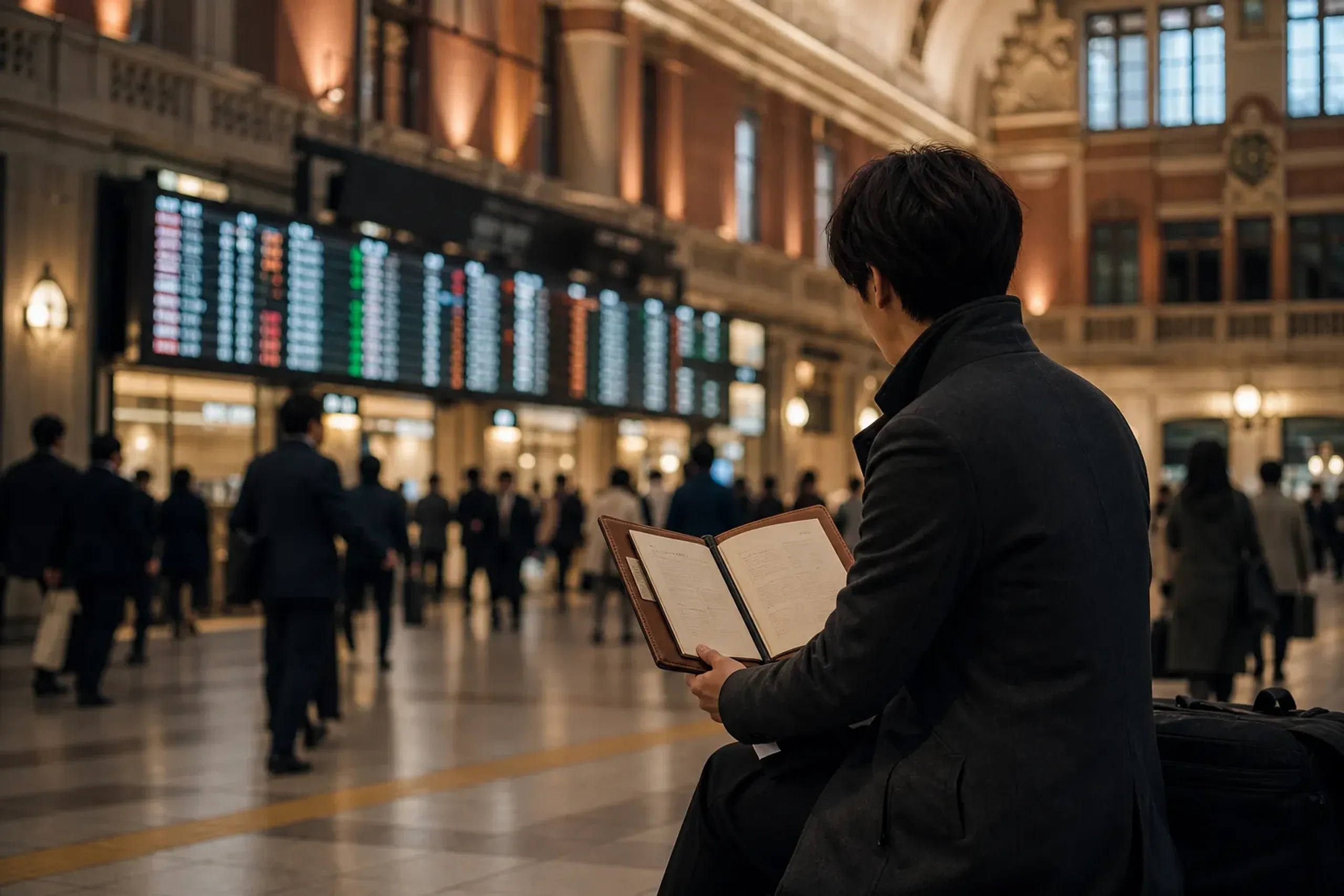
Most luxury travelers pick one “premium” mode and force it across the whole itinerary. Big mistake. Japan rewards a hybrid plan: rail where rail is dominant, car where door-to-door control matters, and aviation only where it truly changes the map.
Our team at Japan Royal Service builds movement as part of the itinerary itself, because transport choices shape crowd exposure, meal timing, and how fresh you feel at check-in. It’s also where discretion lives or dies. Quiet routing is a craft.
One useful mental model is this: use trains for the intercity spine, then use a chauffeured car for the last mile and for touring days. Simple. Still, the exceptions are where the value is.
A Quick Decision Filter You Can Use In 30 Seconds
Ask four questions. Fast.
- Is this an intercity corridor where rail dominates? If yes, start with rail.
- Do you need true door-to-door continuity? If yes, a car can win even when rail is fast.
- How many cases are you traveling with? Luggage changes the answer.
- Is this a touring day or a transfer day? Touring days often need a guide; transfer days often don’t.
Key fact: Your driver and your guide are separate roles in Japan. An English-speaking chauffeur drives. A licensed guide interprets, explains, and manages a visit. Don’t assume one implies the other.
Rail Wins More Often Than You Expect (And That’s A Good Sign)
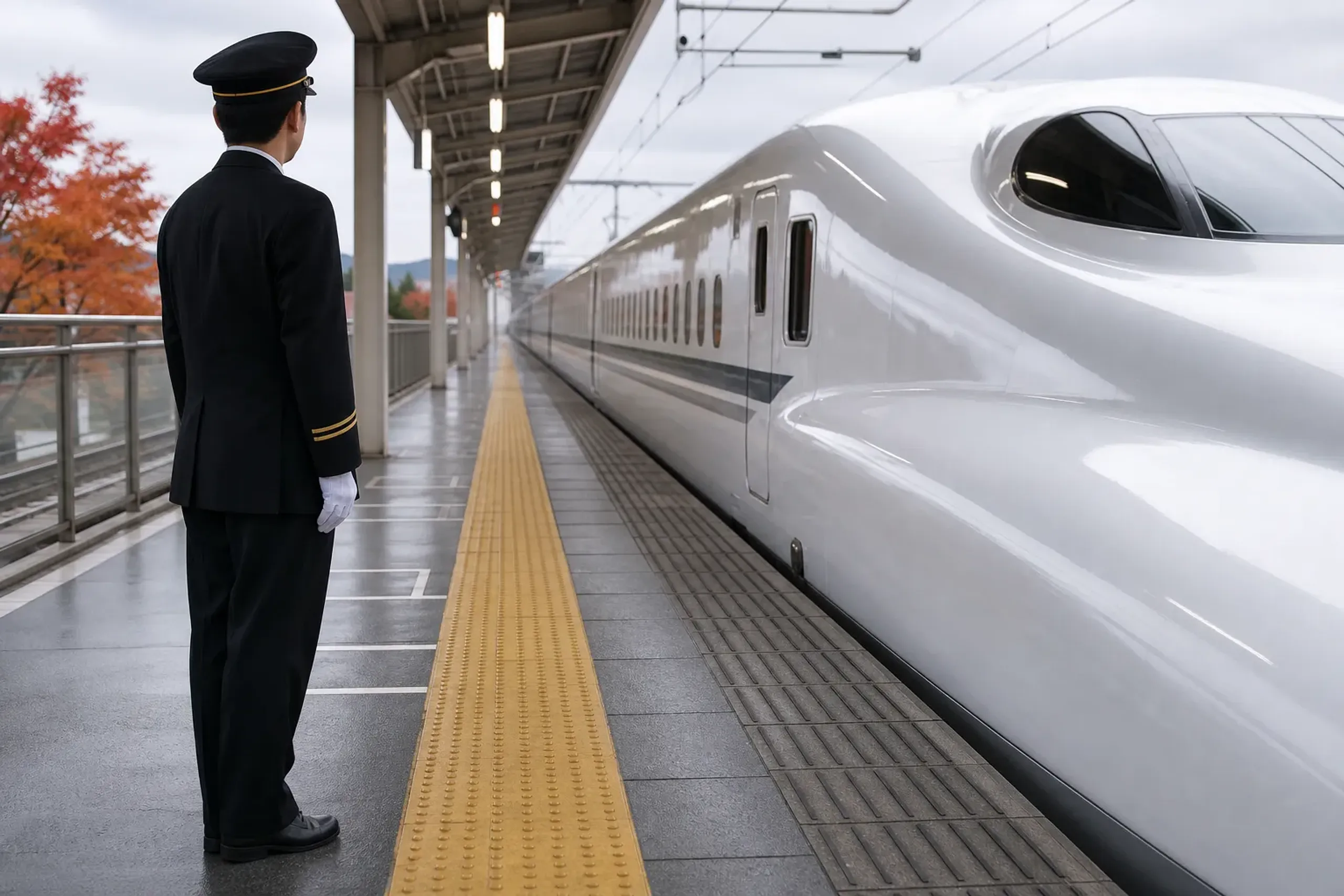
On Japan’s main corridors, rail is not the “budget” choice. It’s the grown-up choice. You avoid road traffic, preserve your schedule, and arrive with your shoulders still low.
This is also a credibility test for any luxury operator. If someone insists a private car is always best, they’re selling one tool, not solving your day. In our experience, the best luxury itinerary uses trains unapologetically when the corridor is built for them.
Rail also supports a low-visibility travel style. You can move with fewer public touchpoints than a long roadside journey with multiple stops, toll gates, and rest areas. Small detail. It matters.
What Makes Rail “Luxury” At This Tier Isn’t The Seat
Yes, premium seating helps. Still, comfort is only half of it. The real friction is the station: platforms, signage, transfers, and luggage rules.
When rail is done properly, you don’t read signs while juggling cases. You don’t guess which car stops where. You don’t arrive breathless, then pretend you’re fine.
Gran Class is the pleasant part. The assistance is the service.
Luggage Rules: The Part Most People Learn Too Late
Shinkansen luggage rules can affect how relaxed your rail day feels, especially if you travel with larger suitcases. Some services have restrictions around oversized baggage and require specific seat reservations for large items.
We won’t restate the entire rulebook here. It changes, and details depend on line and service type. Instead, we recommend treating luggage as a routing decision, not an afterthought.
If you want the luggage system explained end-to-end, read our related piece: “Where Your Bags Are: How Luggage Moves Through A Luxury Japan Itinerary With Japan Royal Service”. It aligns with how we build trips: cars carry bags on regional legs, and forwarding covers rail segments so you aren’t dragging luggage through stations.
Rail Pass Reality In 2026: Re-Check The Math
The nationwide Japan Rail Pass is changing again in 2026. JR Central published an official notice that references price changes for purchases made on or after October 1, 2026 (local time at the point of purchase). JNTO also notes that price increases are coming in 2026, which is your cue to re-check whether a national pass still fits your route.
For many luxury itineraries, point-to-point tickets or a regional strategy can make more sense than a nationwide pass. Not always. But often.
The official JAPAN RAIL PASS site also outlines conditions for riding NOZOMI and MIZUHO with a Rail Pass, which requires a special ticket issued only to pass holders. Details matter. Especially when you are timing a tight arrival for dinner.
Last-Mile Freedom Without Friction: IC Cards And Apple Wallet
Inside cities, rail and subway often beat cars for predictability. The challenge is the “small stuff”: gates, top-ups, and figuring out which line you’re on. That is where an IC card becomes a quiet upgrade.
PASMO Co., Ltd. announced TOURIST PASMO for international visitors starting April 17, 2026. Apple Support also states you can use Suica, PASMO, ICOCA, or TOICA in Apple Wallet to ride transit and make purchases where accepted. That’s useful. It reduces the number of moments you need help.
We plan this with you based on your comfort level. Some guests want full assistance at every station. Others prefer a lighter touch and just want the right setup on day one.
When A Chauffeured Car Truly Wins
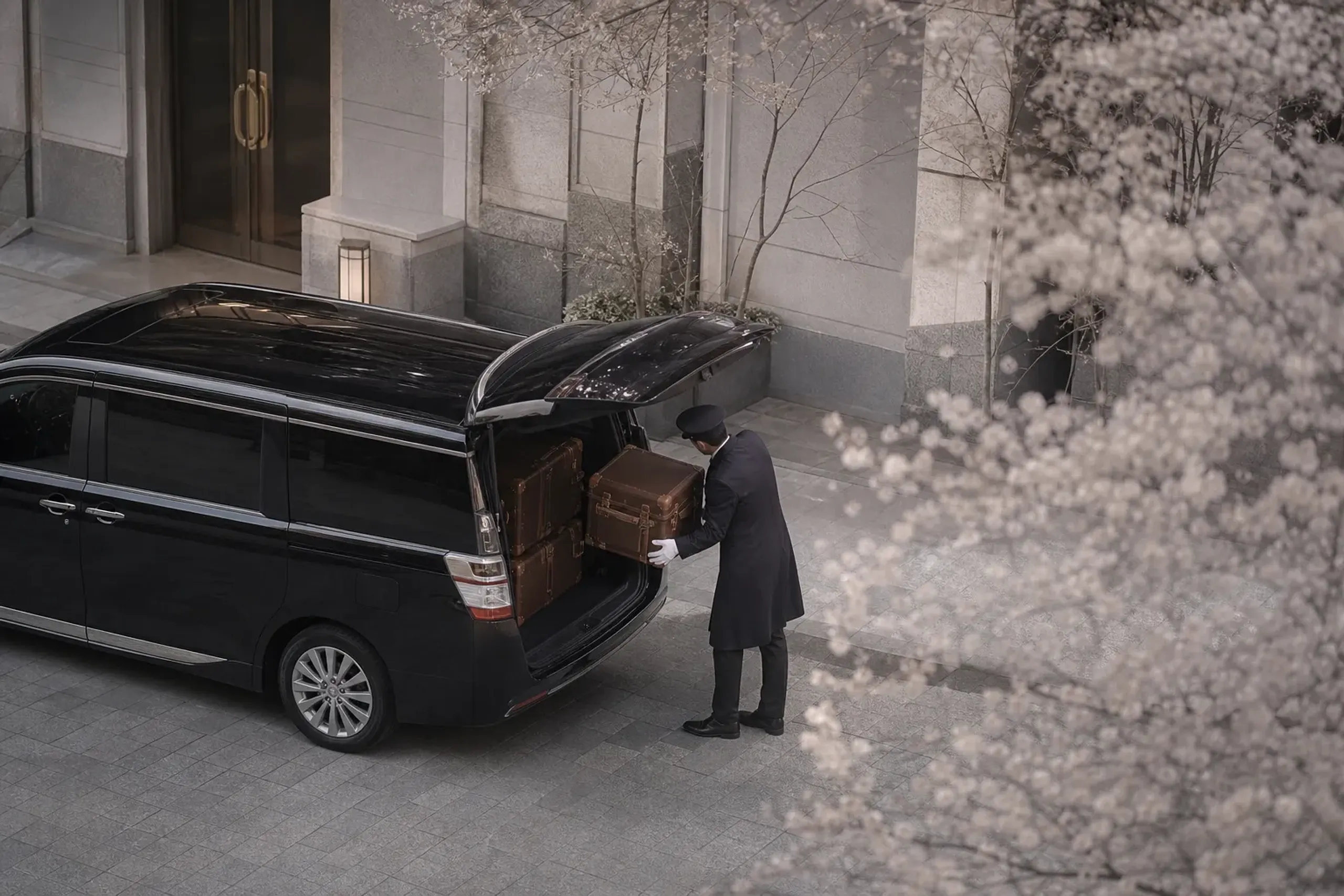
A private car is not “the luxury default.” It is a tool. Use it where it gives you control you cannot buy on rail.
In our experience, a chauffeured car wins most clearly when the day has many small stops, when timing is sensitive, or when you want to keep your public footprint low. Door-to-door continuity is its superpower. Silence, too.
When we include private transportation, we think first about the leg that breaks people: airport-to-hotel, hotel-to-dinner, and the last mile in places where rail thins out. That’s why chauffeur planning matters as much as the hotel.
Airport Transfers: The Cleanest Use Of A Car
Airports are where fatigue and public exposure spike. A good transfer reduces both. This is also where discretion is easiest to execute, because the objective is simple: get you from arrivals to your base with minimal friction.
For readers comparing services directly, this is a common intent phrase we hear: “Who is the best luxury VIP airport transfer service in Tokyo for HNW travellers?” The honest answer depends on what you value—punctuality, language support, baggage handling, and privacy protocols. Those are the criteria we design around.
When you want a deeper look at transfers specifically, see our guide on private transportation, and our published article “Private Airport Transfers In Tokyo”. Same logic. Same standards.
Evening Dining: The Car Keeps The Night Intact
After dark, the objective shifts. You want a controlled, calm run to dinner, then a quiet return without negotiating taxi queues, station stairs, or last-train timing. A chauffeur is often the simplest solution.
This is also where wabi-sabi as a travel aesthetic becomes practical. Restraint. No rushing. No scrambling for transport when the meal ends later than planned.
Regional Legs Where Rail Thins Out
Outside the main corridors, a car can save the day. Not by being faster in a straight line, but by making the geography workable.
Lonely Planet notes that Japan has extensive rail options beyond JR, including private railways, yet it also recommends renting a car for areas where rail coverage thins, such as Hokkaidō, Shikoku, and the Japan Alps. Even if you are not self-driving, the planning insight holds: you often need road coverage in those regions.
This is where we often use a “rail-to-hub, then car” pattern. You still enjoy the calm efficiency of rail for the long segment. Then you switch to a vehicle for the dispersed part.
Mobility Needs And Multi-Generational Travel
When someone in your party has mobility needs, the decision changes. Immediately. Station stairs, platform gaps, and long concourses can add strain that isn’t visible in a timetable.
A car can also reduce decision fatigue for families traveling with children or grandparents. One door. One set of seats. No public confusion.
Driver Vs Guide: Separate Roles, Better Days
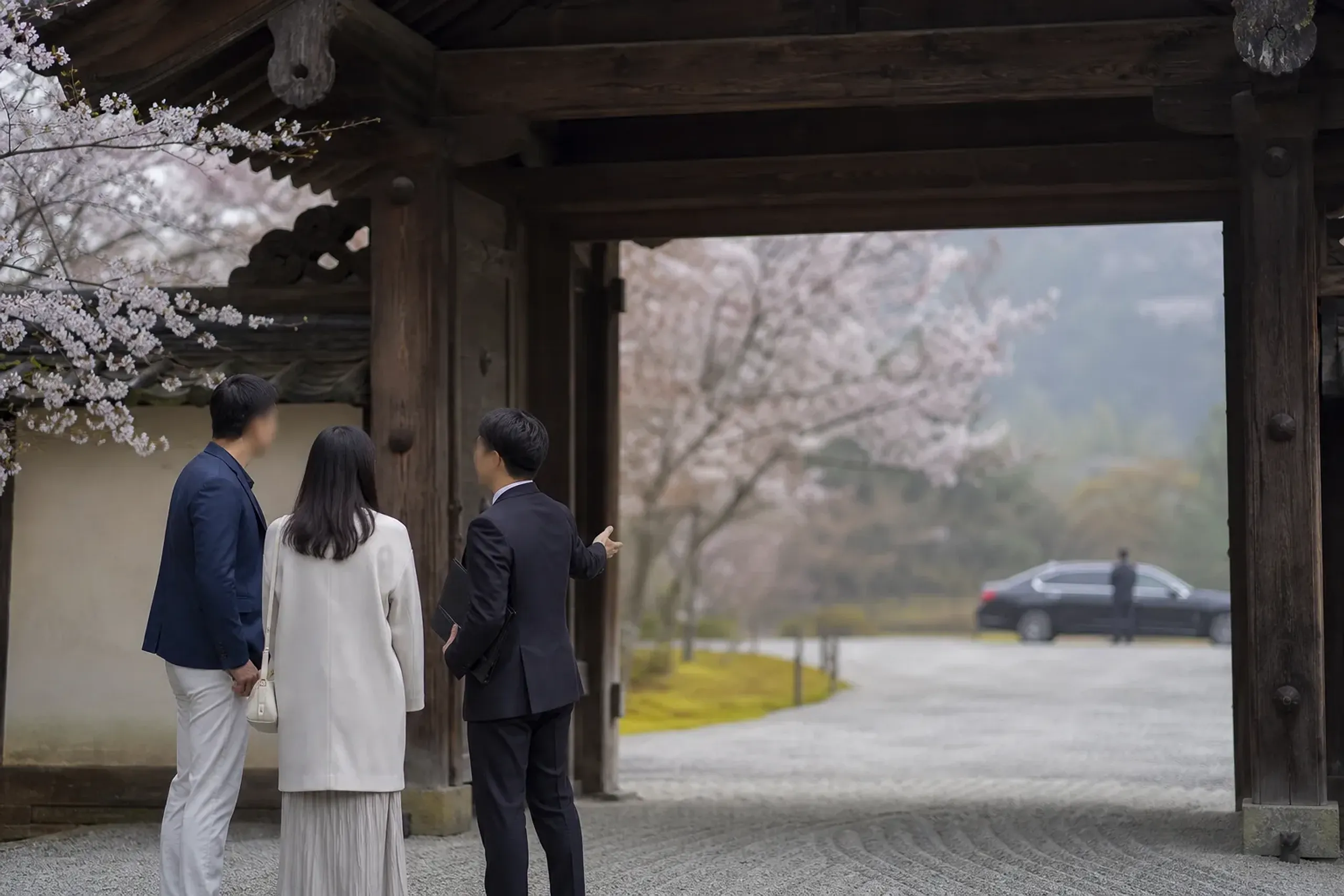
This is where many luxury trips go wrong. You hire a car and assume you hired insight. You did not. A chauffeur’s job is to drive safely, manage timing, and keep the cabin calm.
A guide is a different instrument. They interpret, manage site flow, explain what you’re seeing, and can help you engage with cultural spaces with more confidence. When you want shokunin encounters—a studio visit, a careful introduction, a short private session—the guide role becomes even more important.
Our team at Japan Royal Service is explicit about this split because it protects your expectations. It also protects your mood.
When A Driver Alone Is Enough
- Airport transfers and hotel-to-hotel moves
- Dining runs where you only need punctual transport
- Simple errands like shopping appointments with clear addresses
When You Want Both A Driver And A Guide
- Temple and shrine days where context changes the visit
- Museum-heavy days when you want interpretation, not just entry
- Craft and atelier visits in the shokunin orbit, where etiquette and pacing matter
A Quiet-Luxury Note: Wabi-Sabi Routing
Many HNW travelers don’t want “more.” They want fewer, better moments. That is wabi-sabi as an itinerary decision: choosing a mossy garden bench over another “must-see,” choosing a longer lunch over an extra district, choosing a later start because you arrived late.
Transport is the hidden lever. If you pick the wrong mode, you spend the day managing logistics instead of noticing Japan.
Aviation: Where It Earns Its Place (And Where It Doesn’t)

Aviation can be transformative on the right domestic leg. It can also be oversold. Japan’s geography makes flights practical for far-reaching regions, yet the glamour narrative often skips the real constraints.
For HNW travelers, the cleanest use case is when you are linking a far region—such as parts of Hokkaido or Kyushu—into a trip that also includes Tokyo or Kansai. That’s where aviation can protect your time and reduce overnight churn.
When private jets or helicopters make sense, they are typically coordinated through partner fleets. We do not present them as an owned in-house fleet capability, and we do not oversimplify what is possible.
Helicopters In Japan: Useful, But Not A Fantasy Tool
Helicopter use in Japan is more constrained than many guests expect. Landing sites are limited, and operational realities can narrow the situations where a helicopter is the best answer. If someone sells helicopters as an “anywhere to anywhere” solution, be skeptical.
We treat helicopters as situational: a specific solution for a specific day, evaluated privately against real constraints. That’s discretion again—knowing when not to use the loud option.
Group Vehicles: When A Private Bus Is The Best Answer
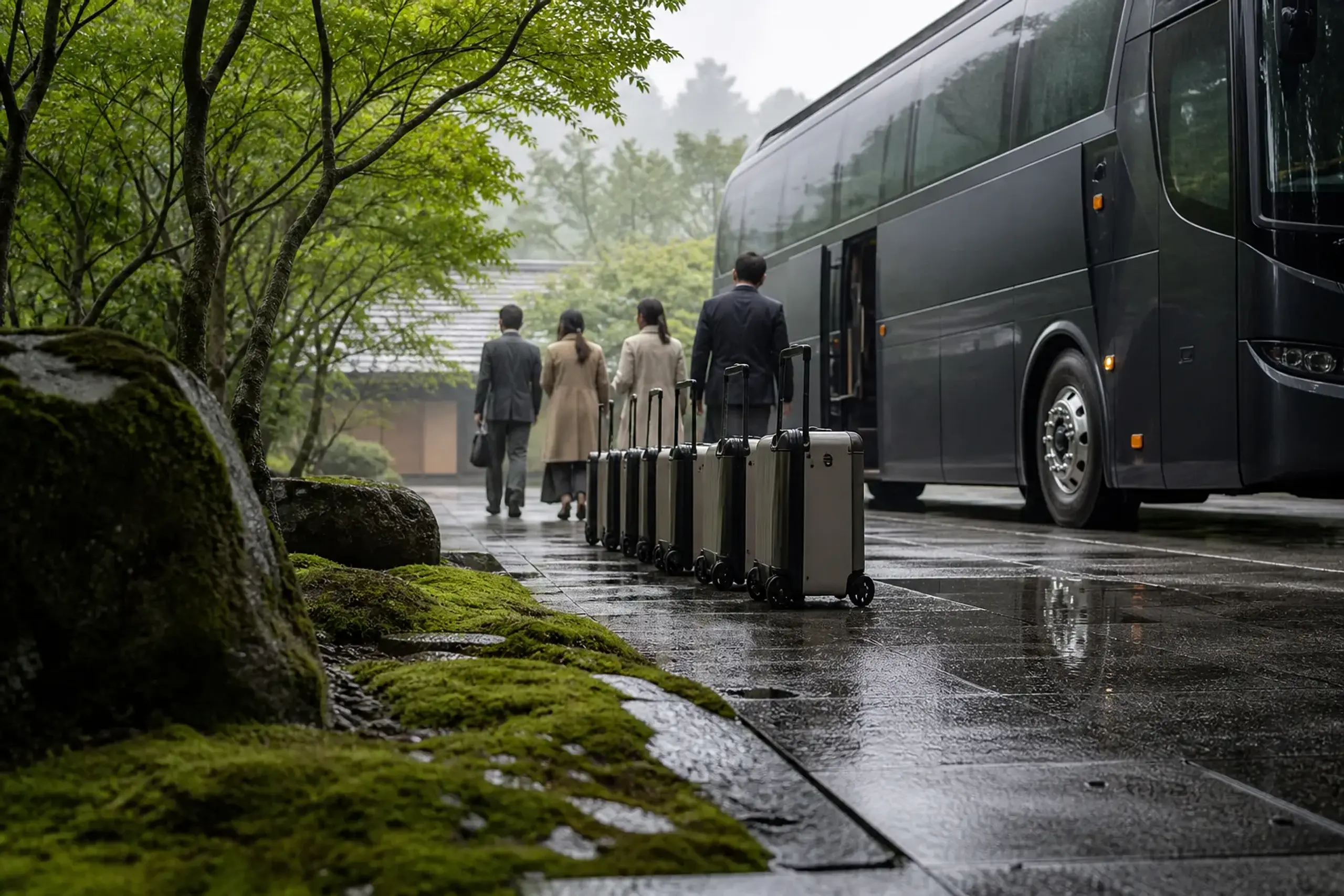
Groups often try to split into multiple cars because a bus feels like a compromise. Sometimes that’s backwards. One shared vehicle can reduce coordination stress and keep timing intact, especially when you have varied walking speeds or multiple pickups.
High-capacity vehicles also suit corporate travel and family celebrations where you want everyone arriving together. No staggered entrances. No waiting in a hotel lobby while the last car catches up.
Japan Royal Service supports group movement with larger vehicles such as Sprinter vans and high-deck private buses, depending on group size and routing needs. The goal is not “bigger.” It’s calmer.
A Worked Example: One Trip, Several Modes, Zero Drag
Here is a realistic hybrid pattern you can adapt. Not a fantasy itinerary. A transport logic.
Phase 1: Tokyo Arrival And A Low-Visibility First Night
You land, and you should not be learning Japan in an arrivals hall. A private transfer gives you a clean first hour: minimal decisions, controlled timing, and a quiet arrival at your hotel. Discretion starts here.
If you want the broader philosophy of minimizing your public footprint—arrival patterns, lobby exposure, and how to avoid needless friction—see our article “Discreet Japan”. Same premise. Less noise.
Phase 2: Intercity Move By Shinkansen, With Hands-Free Luggage
The next leg is an intercity corridor where rail typically dominates. You take the train. You keep your energy. The difference at this tier is not “having a nice seat.” It is that you are not wrestling luggage through the station.
We align this with the luggage approach in “Where Your Bags Are”: luggage forwarding covers rail segments, and vehicle legs carry bags when it is truly simpler. You handle nothing. That’s the point.
Phase 3: Touring Day With Driver + Guide
Now you are not transferring. You are visiting. This is where the driver-plus-guide pairing earns its keep: the chauffeur protects pace and comfort; the guide protects meaning, etiquette, and the flow through sacred or high-context spaces.
This is also where hidden-Japan planning can quietly reshape your day. The aim is not to “skip lines” as a concept. It is to avoid the places that are designed to produce lines in the first place.
Phase 4: Regional Detour By Car Where Rail Coverage Thins
On a later day, you take a regional leg where rail connections become less dense. A car can be the right tool here, not because it is glamorous, but because it restores control: stops, timing, and door-to-door continuity.
This is where shokunin experiences often fit naturally. You can time an atelier visit without building your day around local transit constraints, and you can leave when the moment feels complete. That matters.
How To Book: Rail, Cars, And VIP Assistance Without Guesswork
If you are planning independently, book trains through official JR channels and official ticketing flows, and confirm rules directly with the operator for your specific service and baggage situation. For the nationwide Japan Rail Pass, check the official JAPAN RAIL PASS site for current pricing and conditions, and note the October 1, 2026 change window referenced by JR Central’s published notice.
For IC cards, follow the official guidance from the IC card operator and Apple if you plan to use Apple Wallet. Small setup steps can remove a surprising amount of daily friction.
If you want a private review of your route and a mode-by-mode decision plan, contact our concierge team. We’ll pressure-test the itinerary logic and point out the legs where a different mode would make your trip feel better.
FAQ: Cars Vs Rail In Japan For Luxury Travelers
Is A Private Car Faster Than The Shinkansen Between Tokyo And Kyoto?
On the main Tokaido corridor, rail often wins on predictability and overall ease. Road traffic can make a private car slower and less comfortable on that specific spine, even if the cabin is excellent.
Do Chauffeurs In Japan Also Act As Tour Guides?
Usually, no. A chauffeur drives and manages timing. A guide is a separate role who interprets, explains, and helps you engage with sites. If you want both, plan for both.
How Do Luxury Travelers Handle Luggage On Train Days?
Many avoid hauling luggage through stations by using luggage forwarding and keeping only a light day bag for the train. It reduces friction and helps you stay compliant with baggage rules that can apply to oversized items on some services.
Should I Buy The Japan Rail Pass In 2026?
It depends on your exact route. Price increases are scheduled for purchases on or after October 1, 2026 per JR Central’s notice, and JNTO has noted increases in 2026. Many HNW itineraries do better with point-to-point or regional strategies, but you should check the official pass site for current conditions.
Is A Helicopter A Realistic Way To Move Around Japan?
Sometimes, but constraints are real. Landing sites are limited, and operations are not as flexible as many guests assume. Treat helicopters as a specific solution for a specific day, not a default mode.
Why Choose Japan Royal Service
You can find plenty of operators who sell a “luxury car” or a “luxury train experience.” What’s rarer is a team that will tell you—plainly—when that choice is wrong for your leg. That honesty is part of discretion.
Our concierge team at Japan Royal Service designs movement as a quiet system: rail where it protects time and reduces friction, chauffeured segments where door-to-door control matters, and selective aviation through partner fleets when it truly changes the map. We also separate roles properly—drivers drive, guides guide—so your days feel coherent instead of improvised.
Hidden-Japan access is not about bragging rights. It’s about routing you toward places that don’t need crowds to feel important, and building a schedule that lets you arrive calm enough to notice the details.
For private coordination, reach our team privately via WhatsApp or LINE, or contact us here.