In this guide
- 01What “Private-Hours” Really Means In Kyoto (And What It Does Not)
- 02Imperial-Class Kyoto Begins With The Imperial Household Agency Reality Check
- 03The Night Architecture Circuit: Verified Evening Openings Worth Building Around
- 04Private Tea With Head Monks: The Ethical Way To Think About It
- 05Shokunin Encounters That Feel Imperial, Not Performative
- 06A Sample Private-Hours Cultural Circuit (2 Nights In Kyoto, Built For Low Visibility)
- 07Transportation Strategy: How Privacy Is Protected Between Stops
- 08Booking Methods And Timelines (Official Rules Only)
- 09FAQ: Imperial-Class Kyoto Private-Hours Planning
- 10Choosing Between “Private,” “Timed-Entry,” And “Guided-Only”: A Clear Framework
- 11Why Choose Japan Royal Service
Kyoto can feel like a stage at peak hours. The same lanes. The same camera angles. The same queue discipline, performed in silence.
For UHNW travelers, the problem is not comfort. It is exposure. It is noise, unpredictability, and the faint sense that your time is being negotiated by the crowd.
Our team designs an Imperial-class Kyoto circuit that uses legitimate after-dark programs, Imperial Household Agency reality, and disciplined routing to reduce public friction. Quiet wins.
What “Private-Hours” Really Means In Kyoto (And What It Does Not)
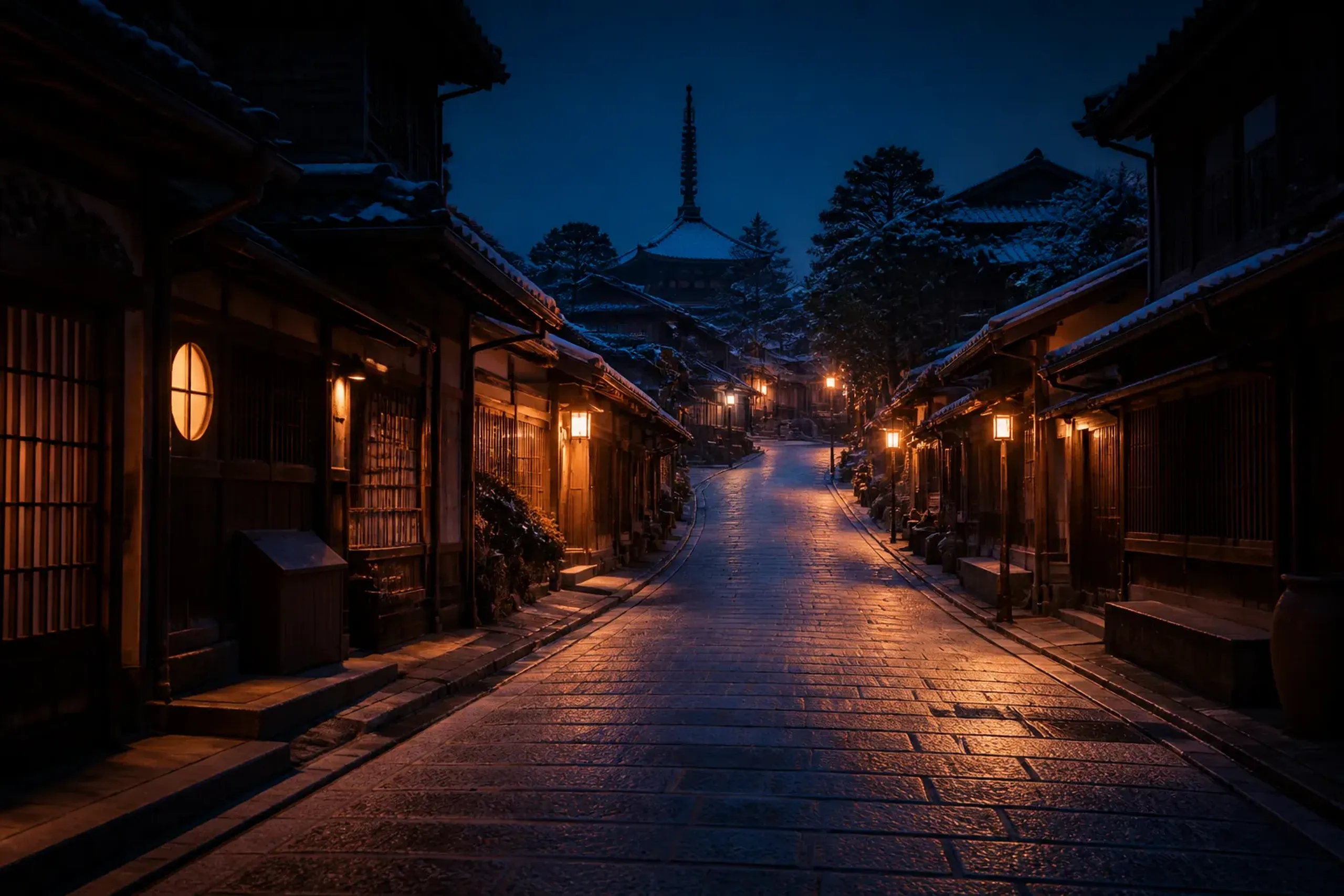
After-hours Kyoto is built on timing, not crowds.
“Private-hours” in Kyoto has three different meanings, and confusing them creates disappointment. Fast.
Some experiences are truly closed-hours and invitation-led. Others are official night openings with timed entry. Others are guided-only access governed by the Imperial Household Agency.
Our approach is transparency first. We map what is private, what is time-slotted, and what is public—but calmer when handled with precision.
Three Access Types You Can Build A Private-Hours Circuit Around
- Official night viewing programs: temples, castles, and seasonal illuminations that publish schedules and entry windows.
- Imperial Household Agency tours: guided access at Imperial sites with defined tour times, capacity limits, and specific application windows.
- Private cultural sessions: small-room formats such as tea in a private setting, or craft sessions with shokunin, where the value is control and context rather than spectacle.
Key fact: A “private-hours” result is often a choreography problem, not a ticket problem. The calm comes from timing, entrances, staging, and how you move between places.
Imperial-Class Kyoto Begins With The Imperial Household Agency Reality Check
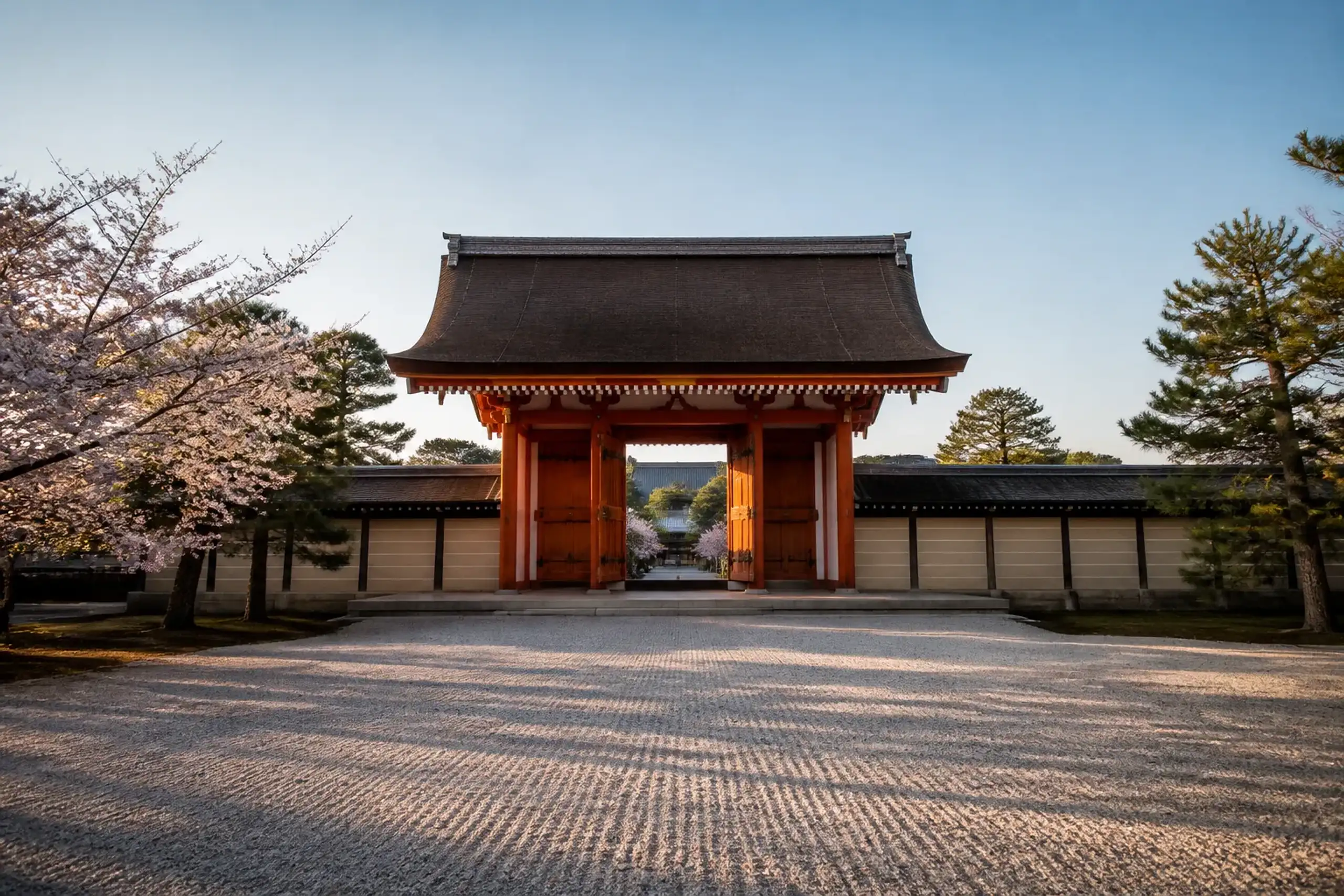
Imperial Household Agency visits set a formal tone—and clear rules.
If you want Kyoto with a courtly register, start where the rules are strict. The Imperial Household Agency (Kunaichō) sets the terms. Period.
These visits are not casual drop-ins. Several sites require guided tours by Imperial Household Agency staff, with limited capacity and advance application in specific cases.
Handled well, though, the tone changes. You are no longer consuming Kyoto. You are being admitted to it.
Kyoto Imperial Palace: Free Admission, Fixed Tour Times
Kyoto Imperial Palace tours are conducted by the Imperial Household Agency. The English leaflet states admission is free, and tours are conducted twice a day at 10:00 and 13:30 (visit days and details vary).
The constraint is the point. A fixed start time forces clean transport staging, and it reduces the “wandering crowd” effect that follows looser attraction formats.
Kyoto Sento Imperial Palace: Guided Tours Required
Kyoto Sento Imperial Palace requires visitors to take a tour guided by Imperial Household Agency staff. That guided requirement is explicit on the official site.
Expect a formal cadence. Expect it to be quieter than the city’s headline lanes. Expect to be watched—politely.
Shugakuin Imperial Villa: Guided Tours, Limited Capacity, Apply In Advance
Shugakuin Imperial Villa requires a tour guided by Imperial Household Agency staff. Due to limited capacity, it is necessary to apply in advance.
This is where serious planning shows. Miss the window, and your “private” Kyoto becomes a standard Kyoto.
Katsura Imperial Villa: Online Booking From Three Months Ahead
Katsura Imperial Villa tours can be booked online via the Imperial Household Agency’s site starting three months in advance. The Japan National Tourism Organization (JNTO) notes that children under age 12 cannot join the tour.
For UHNW families, that single rule changes the architecture of the trip. It can become an adults-only morning while the rest of the party enjoys a museum, a garden, or a slow breakfast—with privacy intact.
The Night Architecture Circuit: Verified Evening Openings Worth Building Around
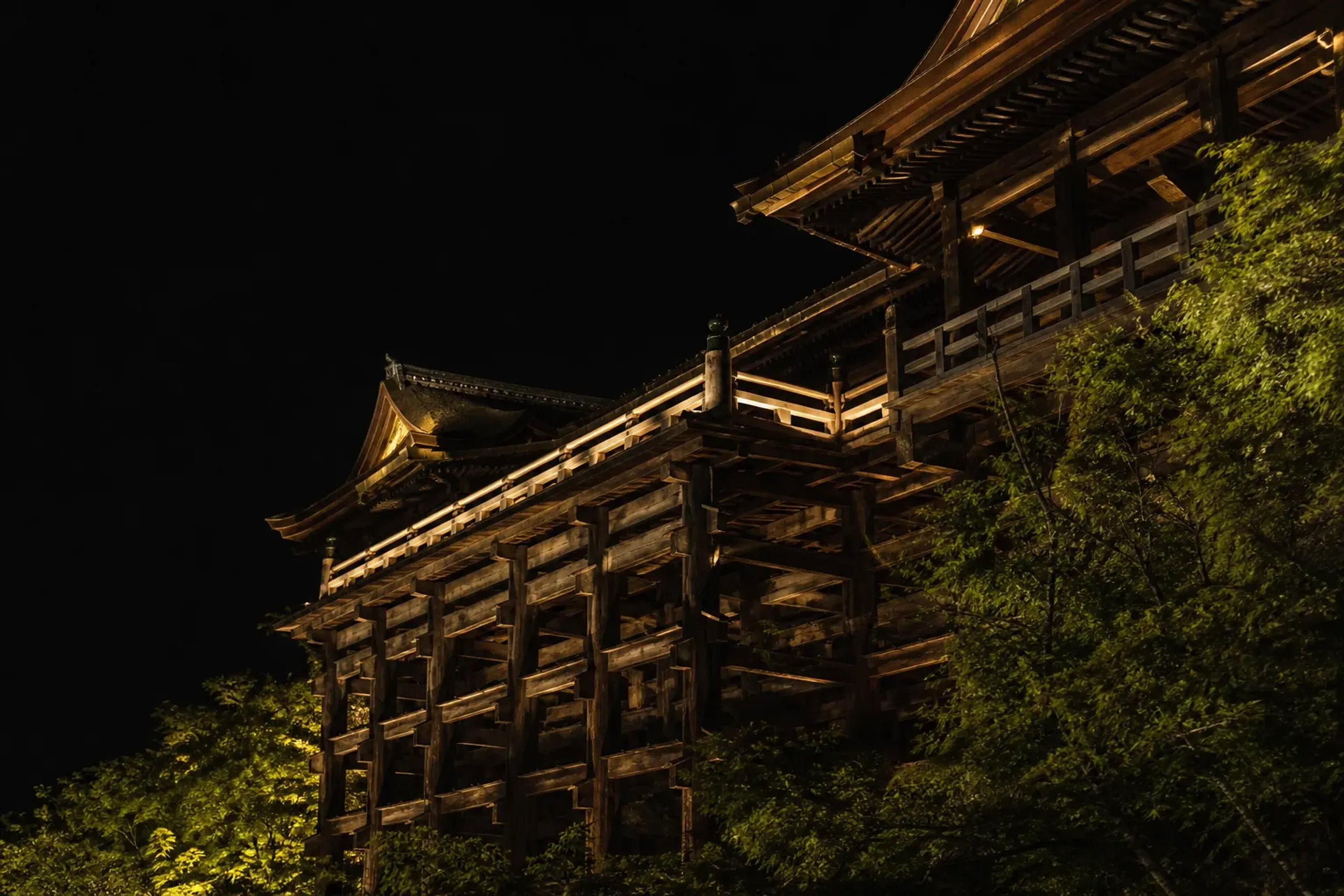
Official night openings can feel remarkably quiet when routed correctly.
Kyoto at night is not automatically private. It can be calmer, yet still crowded if you arrive like everyone else.
The difference is sequencing. A clean pickup, a disciplined arrival, and a short walk that avoids the most photographed choke points.
We anchor night routing around official programs with published schedules. No fantasies. Just the parts of Kyoto that truly shift after dark.
Kiyomizu-dera Special Night Viewing (Official 2026 Schedule)
Kiyomizu-dera Temple publishes a Special Night Viewing page that includes a Schedule in 2026. That matters, because it makes the after-hours plan defensible and predictable.
Night changes the temple’s read. Wood becomes ink-black. Lantern light edits the scene for you.
Nijō Castle “SAKURA NIGHTS 2026” (Seasonal Nighttime Viewing)
Nijō Castle’s official SAKURA NIGHTS 2026 site describes a special nighttime viewing at Ninomaru Palace. The site also emphasizes that night reveals different expressions of the palace interiors than daytime.
For clients who dislike crowds but still want a major Kyoto icon, this is one of the cleanest compromises available: structured entry, defined duration, and a finish time you can build dinner around.
Kyoto Summer Special Openings 2026 (Including Ninna-ji Night Illumination)
Kyoto Tourism’s Kyoto Summer Special Openings 2026 page states that public viewing may not be possible at certain times due to ceremonial events or weather conditions.
It also highlights Ninna-ji’s night illumination tied to a newly completed observatory finished in March 2026. When you need a night plan that feels Kyoto-native rather than “touristic,” these official openings can be a precise fit.
Private Tea With Head Monks: The Ethical Way To Think About It
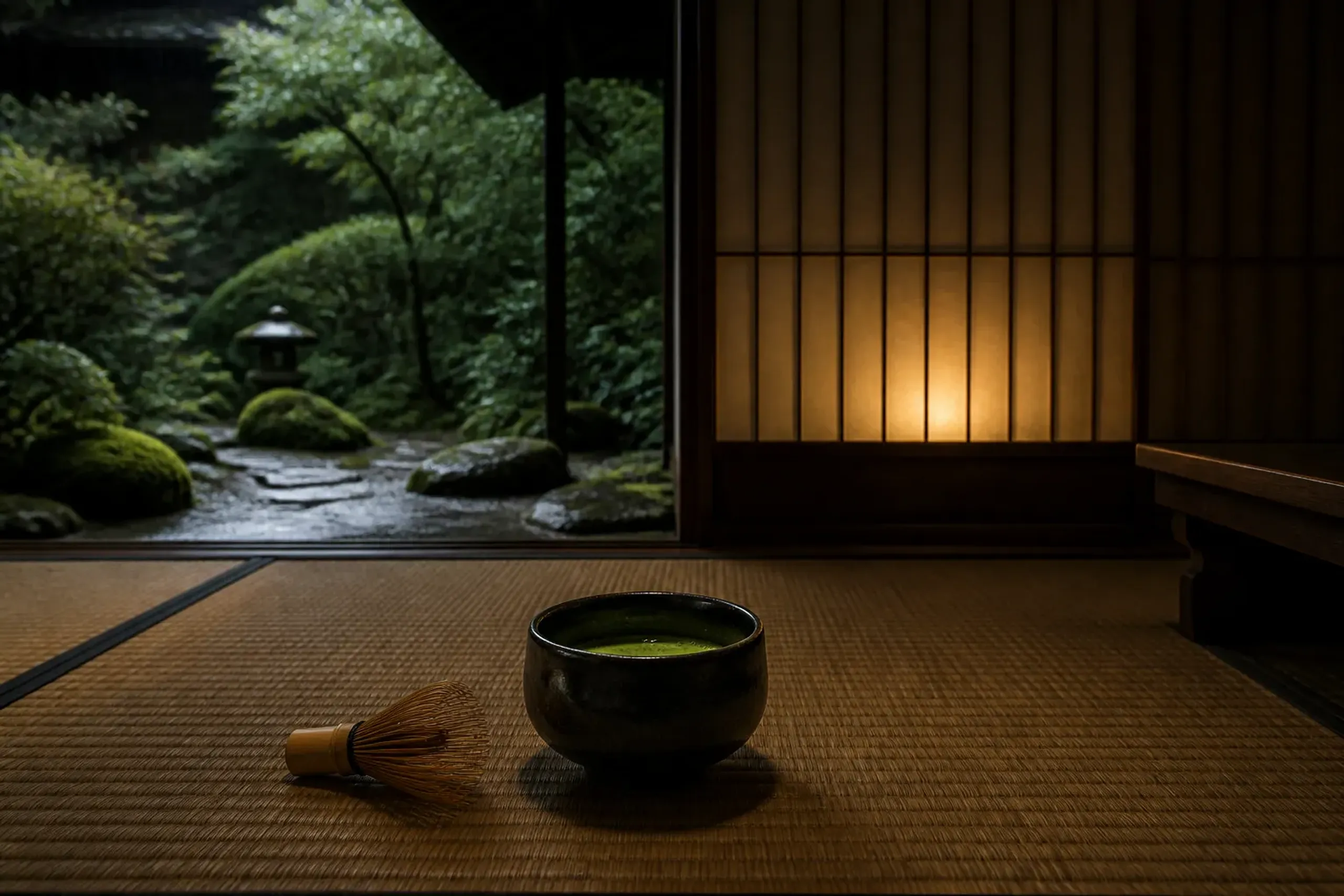
There is a romantic idea online: a head monk, a closed temple, and tea that no one else can touch. Sometimes it is true. Often it is marketing.
Temples are living religious institutions. Their schedules change. Their obligations come first.
Our team treats this category with restraint: we look for legitimate, respectful, low-disruption formats, and we do not confuse reverence with entitlement. Wabi-sabi, not theater.
What You Should Ask For (And What You Should Not)
- Ask for: a private or small-format tea setting, clear etiquette guidance, and a route that limits exposure around the venue.
- Ask for: an interpreter who can carry nuance, not just vocabulary.
- Do not ask for: photography in places where it is not permitted, or “off-limits” access that pressures the institution.
Responsible Luxury In Gion: Privacy For You, And For Kyoto
Kyoto Travel published “4 Guidelines to Follow When Visiting Kyoto,” noting issues in areas such as Southern Gion. It calls out forbidden acts like following geiko/maiko, taking photographs without permission, trespassing, and photographing private property.
For UHNW guests, these rules are not a limitation. They are a permission slip to travel with better manners than the crowd.
Shokunin Encounters That Feel Imperial, Not Performative
Kyoto’s most persuasive luxury is made by hand. Quietly. Without signage.
Shokunin sessions are where time slows down. A lacquer surface, a blade angle, a ceramic rim that is not perfectly round on purpose.
Our team at Japan Royal Service frames these meetings as study, not consumption. You leave with a changed eye, not just a bag.
How A Shokunin Session Changes A Kyoto Itinerary
- It reduces exposure: fewer public landmarks, more controlled indoor time.
- It adds meaning: materials and technique give context to what you see later at temples and palaces.
- It fits wabi-sabi: the value is in restraint, patina, and process.
We avoid naming specific private ateliers publicly for a reason. Discretion is not a “feature.” It is the operating condition that makes rare access possible at all.
A Sample Private-Hours Cultural Circuit (2 Nights In Kyoto, Built For Low Visibility)
This is a template, not a package. Kyoto punishes rigid scripts.
Still, UHNW travel benefits from an intelligible shape: when you move, where you pause, and how you arrive. That is where privacy is won.
Below is a two-night circuit anchored only to verifiable public programs and Imperial Household Agency access formats, with space left open for private cultural sessions discussed privately.
Night 1: Night Viewing + Late Dinner Timing
Arrive in Kyoto and keep the first evening light. A heavy daytime schedule encourages sloppy night logistics.
- Early evening: Kiyomizu-dera Special Night Viewing (use the official 2026 schedule).
- After: a short, controlled walk in Higashiyama where your guide chooses calmer lanes.
- Late seating: dinner planned to begin after the event disperses, not during the exit rush.
Day 2: Imperial Register In The Morning, Craft In The Afternoon
Make the morning formal. It sets the tone.
- Morning: Kyoto Imperial Palace tour (Imperial Household Agency; free admission; tours at 10:00 and 13:30 per English leaflet, subject to visit-day details).
- Midday: a calm meal near Kyoto Gyoen to avoid cross-town friction.
- Afternoon: a shokunin session or design-led garden visit, selected around your interests and privacy threshold.
Night 2: Seasonal Night Event With Structured Entry
Choose one strong night anchor. Do not stack three.
- Spring: Nijō Castle SAKURA NIGHTS 2026, using official entry structure and finish times.
- Summer: Kyoto Summer Special Openings (where available), including Ninna-ji night illumination tied to the observatory completed in March 2026.
- After: private dining in a setting that avoids lobby exposure and street-side waiting.
Transportation Strategy: How Privacy Is Protected Between Stops

Privacy is often won between landmarks, not inside them.
In Kyoto, privacy is often lost on the pavement. A ten-minute walk at the wrong time can undo a perfect evening inside a temple.
Our clients typically choose private transportation for a simple reason: it creates a moving boundary. Doors close. Noise drops.
For small parties, vehicles such as the Lexus LM 500, Toyota Executive Alphard, or Mercedes V-Class suit a discreet, formal circuit. For larger families or security-led travel, higher-capacity vans and microbuses can keep the party together without fragmentation.
Street-Level Tactics That Matter More Than People Admit
- Arrival staging: timed so you are not exiting the car into a bus unload.
- Entrance choice: selecting calmer approaches when multiple access paths exist.
- Waiting discipline: no curbside milling; no visible “VIP” behavior that attracts attention.
Booking Methods And Timelines (Official Rules Only)
Kyoto’s most “imperial” experiences are often the most procedural. That is not a flaw. It is the filter.
Below are official, published constraints you can plan around. For anything beyond public programs, the correct move is a private concierge conversation—because discretion and feasibility are inseparable.
Imperial Household Agency Sites: What To Know Before You Try
- Kyoto Imperial Palace: tours are run by the Imperial Household Agency; the English leaflet states free admission and two daily tour times (10:00 and 13:30), with visit-day details that vary.
- Kyoto Sento Imperial Palace: guided tour by Imperial Household Agency staff is required.
- Shugakuin Imperial Villa: guided tour is required; apply in advance due to limited capacity.
- Katsura Imperial Villa: online booking begins three months in advance; per JNTO, children under 12 cannot join.
Night Programs: Expect Schedules, Weather Caveats, And Ceremonial Blackouts
Kiyomizu-dera publishes a 2026 night-viewing schedule. Nijō Castle publishes SAKURA NIGHTS details on its official site.
Kyoto Tourism also states that public viewing may not be possible at certain times due to ceremonial events or weather conditions for special openings. Build a plan that can flex.
Key fact: “After-hours” does not mean “guaranteed.” Weather, ceremonies, and capacity limits are real. The luxury is having a second-best plan that still feels first-rate.
FAQ: Imperial-Class Kyoto Private-Hours Planning
Can Kyoto Imperial Palace Be Visited Privately After Hours?
Kyoto Imperial Palace access is governed by the Imperial Household Agency, with published tour times and conditions. Private after-hours access is not part of the standard public framework. For questions, contact our concierge.
How Do I Visit Katsura Imperial Villa, And When Can I Apply?
Katsura Imperial Villa tours can be booked online via the Imperial Household Agency starting three months in advance. JNTO notes children under 12 cannot join. For questions, contact our concierge.
What’s A Real “After-Dark” Kyoto Experience With An Official 2026 Schedule?
Kiyomizu-dera Temple publishes a Special Night Viewing page with a 2026 schedule. Nijō Castle’s SAKURA NIGHTS 2026 is also described on its official site. For questions, contact our concierge.
How Should UHNW Guests Behave In Gion?
Kyoto’s official guidance warns against following geiko/maiko, taking photos without permission, trespassing, and photographing private property, especially in Southern Gion. Responsible luxury protects residents and protects your privacy. For questions, contact our concierge.
Is A Private Tea Ceremony In Kyoto Always In A Temple?
Not always. Tea can be hosted in different settings, and temples have their own religious schedules and constraints. The best outcome comes from selecting a legitimate format and building etiquette into the plan. For questions, contact our concierge.
Choosing Between “Private,” “Timed-Entry,” And “Guided-Only”: A Clear Framework
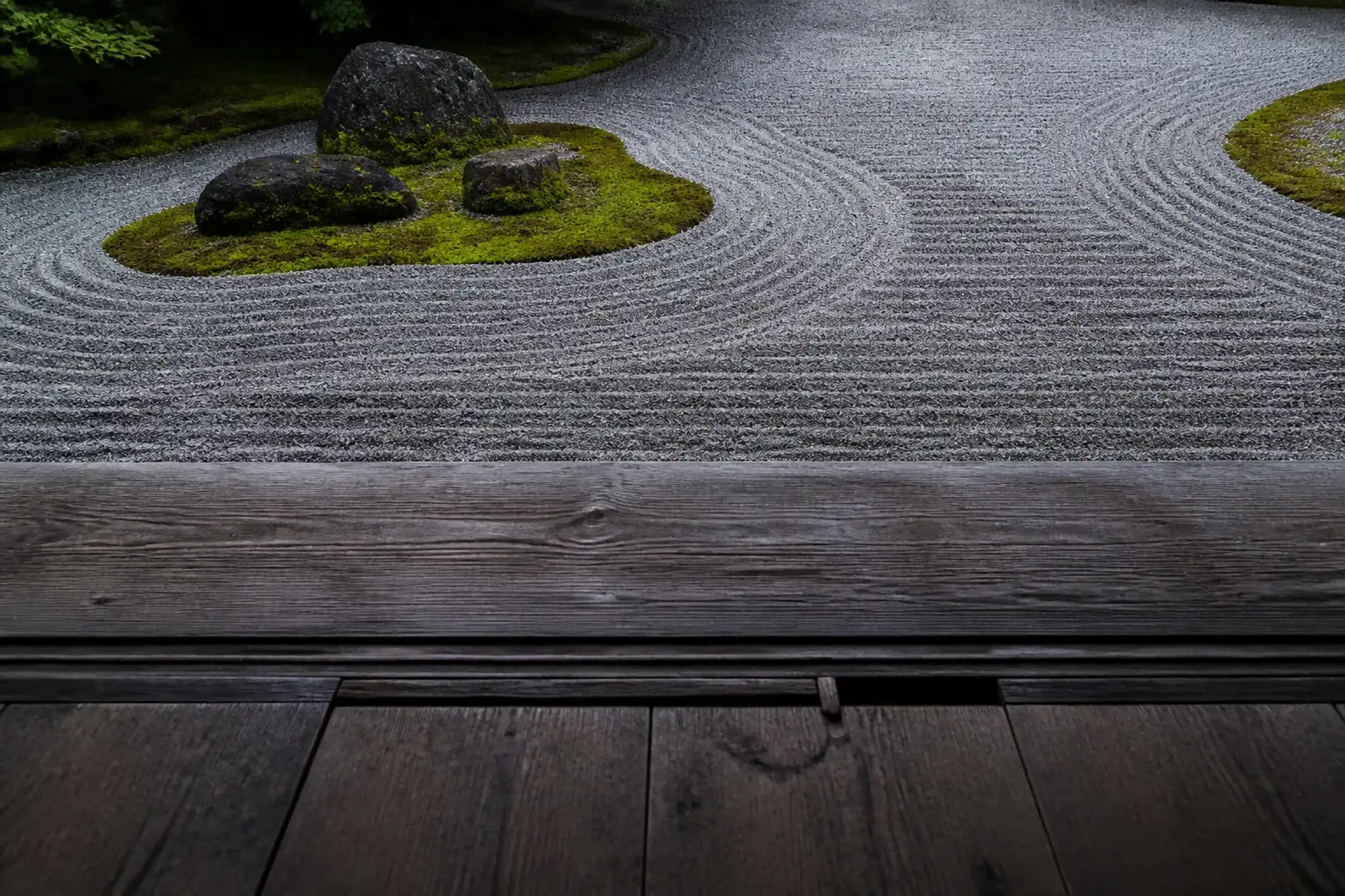
Restraint is the aesthetic—and the strategy.
Competitors often blur categories because it reads well. It also sets you up for friction.
We prefer to label access honestly, then design for calm inside those boundaries. That is how you bypass public operating hours when it is legitimately possible, and avoid chasing mirages when it is not.
| Access Type | What It Usually Looks Like In Kyoto | Best For | What To Watch |
|---|---|---|---|
| Guided-Only (IHA) | Kyoto Imperial Palace tours; Sento Palace, Shugakuin, Katsura with IHA rules | Imperial-class tone, formal context, structured flow | Tour times, capacity, advance application windows |
| Timed-Entry Night Programs | Kiyomizu-dera Special Night Viewing; Nijō Castle SAKURA NIGHTS | Iconic sites with better atmosphere and crowd control | Weather, ceremonial blackouts, entry window selection |
| Private Cultural Sessions | Tea in a private setting; shokunin study sessions | Discretion, depth, and meaningful conversation | Etiquette, confidentiality, and realistic expectations |
Why Choose Japan Royal Service
Kyoto does not reward loud planning. It rewards clean decisions made early, and carried out quietly on the street. That is where our team at Japan Royal Service is most useful.
We work in the gaps: between published rules and lived reality, between an official tour time and a calm arrival, between a night event and a dinner that does not turn into a sidewalk scene. Discretion is the baseline.
For UHNW guests, we also protect the moral side of access. Respect for Kyoto residents, geiko/maiko privacy, and temple institutions is not optional. It is the only way “imperial-class” remains credible.
For private coordination, reach our team discreetly via WhatsApp or LINE, or contact us here.