In this guide
- 01A Tide Small Enough To Build On
- 02Why Were The Funaya Built Directly On The Water?
- 03What Is Actually Inside A Funaya?
- 04How Many Funaya Are There, And Is Ine Protected?
- 05How Do You See The Funaya From The Water?
- 06Should You Visit Ine As A Day Trip Or Stay Overnight?
- 07What Japan Royal Service Arranges In Ine
- 08Frequently Asked Questions
- 09Why Choose Japan Royal Service
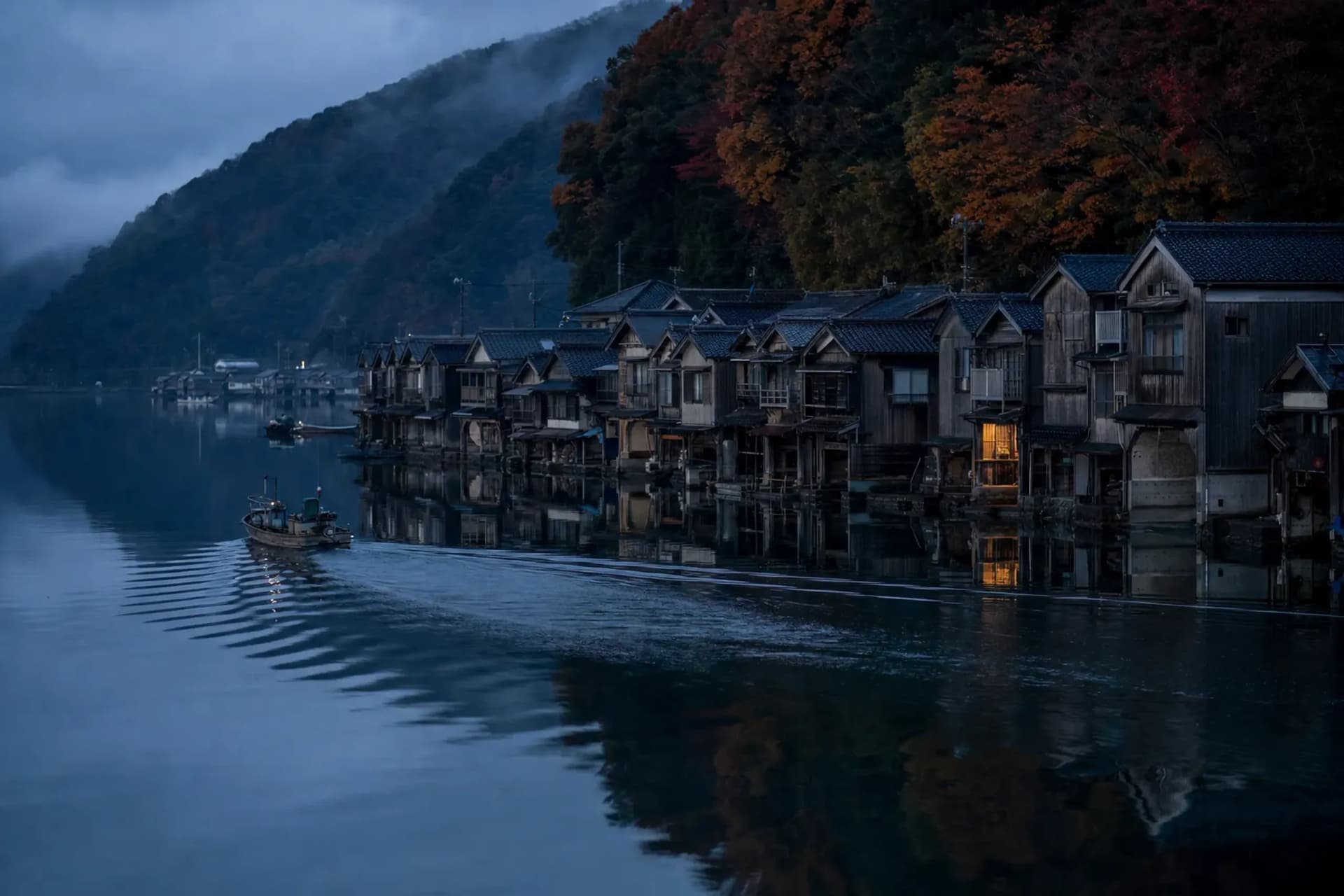
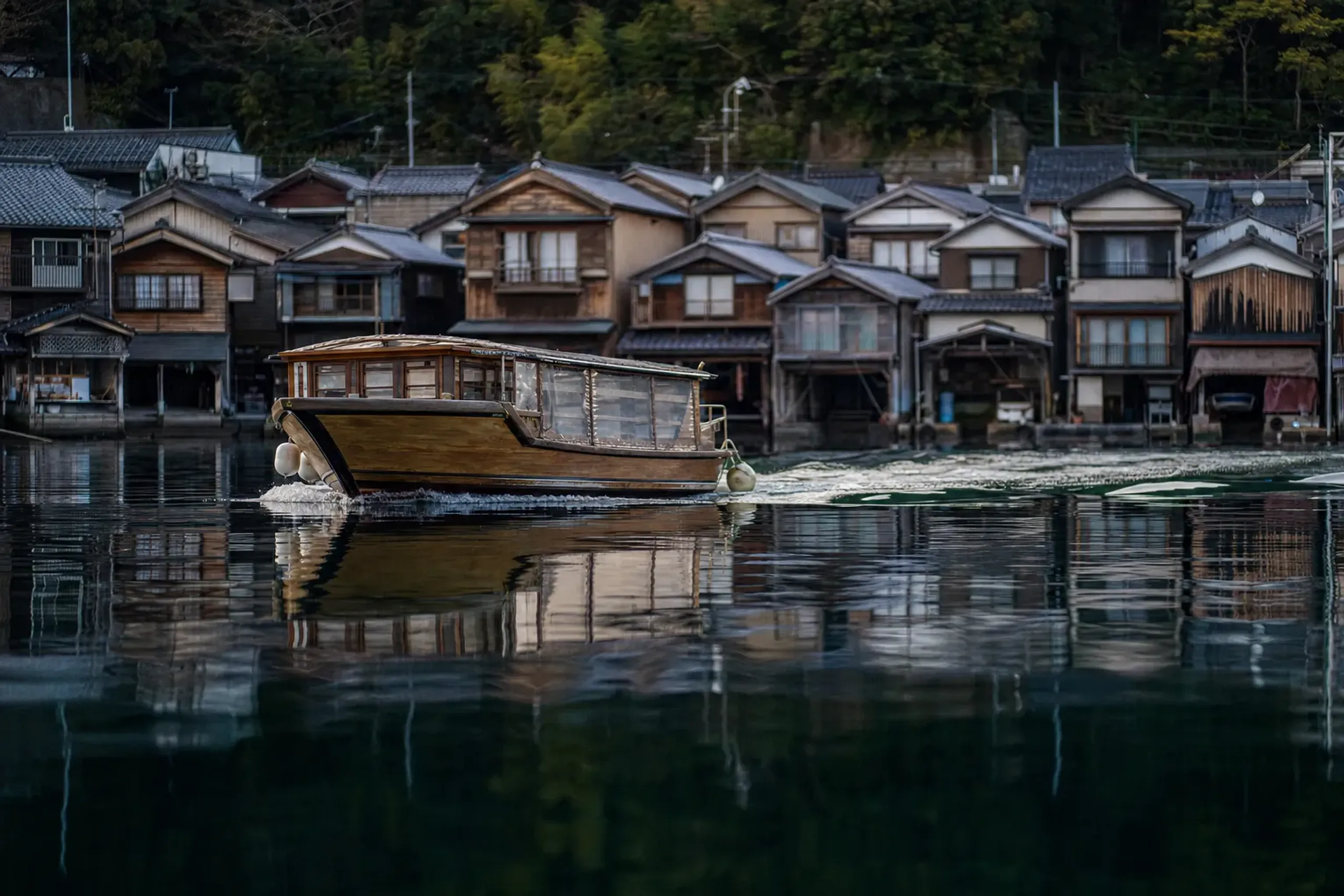
A boat rests on a wooden ramp that slips, without a step or a wall, straight into still green water. Behind it, a two-storey timber house leans over the bay. There is no beach here. No seawall. No gap between building and sea. Just a smooth slope of planks and a tide so faint it barely marks the wood.
This is Ine, on the Tango Peninsula in northern Kyoto Prefecture. Around 230 boathouses — funaya — follow about five kilometres of a single bay. Most visitors photograph them and move on. Few ask the obvious question. Why can you build a house with a door that opens onto the water, and not have the sea walk straight in?
The answer is a number. And it is smaller than you think.
A Tide Small Enough To Build On
Ine Bay's entire yearly sea-level change is only about 70 centimetres, and its daily tidal swing is roughly 30. That is the single reason the funaya exist.
Think about what that means. On most coastlines, the gap between high and low water is measured in metres. You cannot run a ramp into that. The sea would flood your floor at high tide and strand your boat on mud at low. Here, the water barely moves up or down across a whole year.
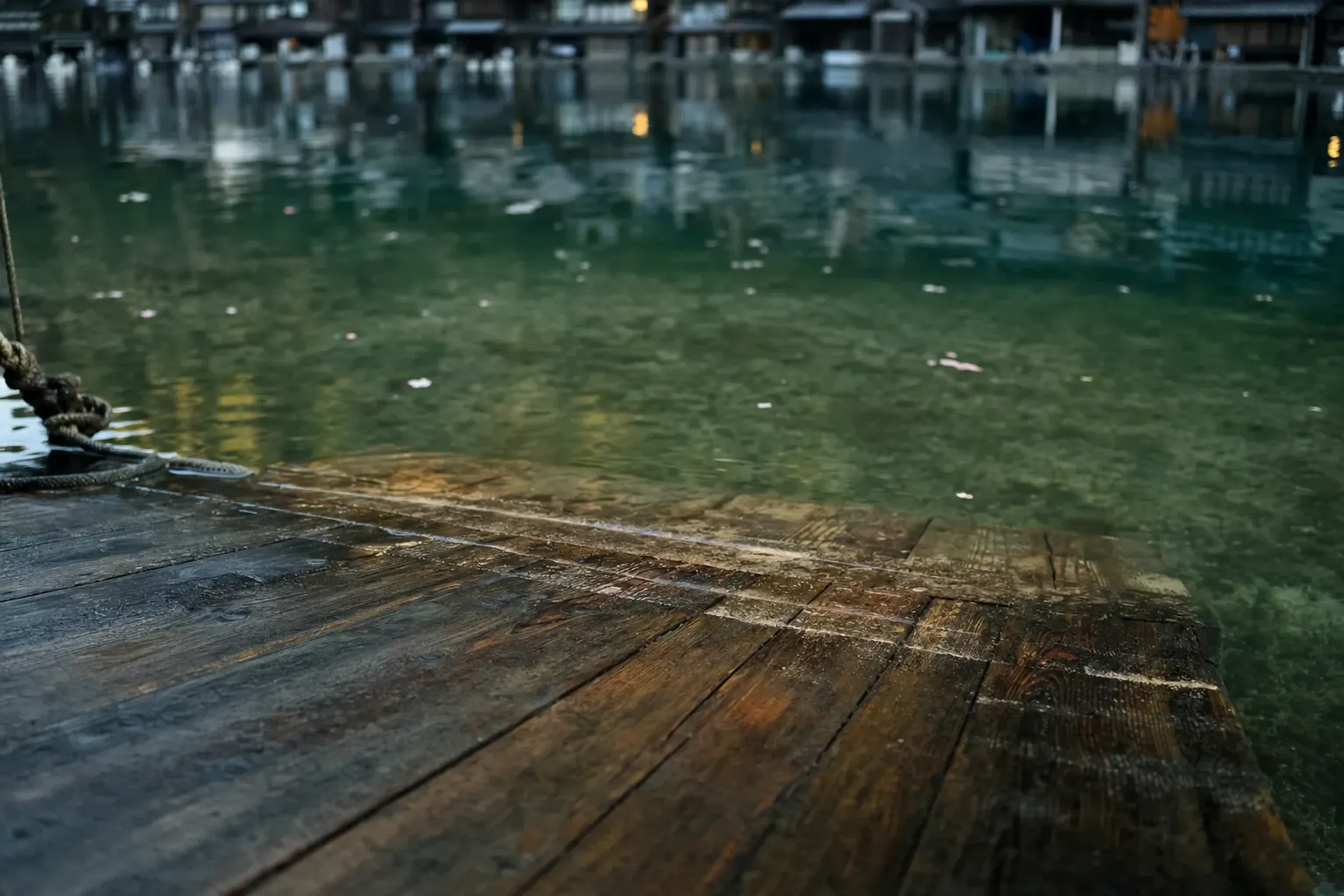
A ramp that meets the surface stays meeting the surface. The engineering problem that should kill this idea simply never arrives.
The geography behind that stillness is specific. The bay's mouth faces south, turned away from the open Sea of Japan and its heavy swells. A small island sits across the entrance, acting as a natural breakwater. And the surrounding mountains are hard rock, plunging steeply into a seafloor that deepens fast. Deep water close to shore, a shielded mouth, a mountain wall — together they stop large waves from ever forming inside the bay.
Almost nowhere else on Japan's long coastline lines up all three conditions at once. The funaya are not a style. They are what this one bay allowed.
Why Were The Funaya Built Directly On The Water?
The funaya were built on the waterline from the 18th century onward, purely to make launching fishing boats easier — not because Ine's first settlers lived there.
This correction matters, because the usual story gets it wrong. People have lived in this area since at least the 5th century. But that early settlement sat on the hillside above the coast, well back from the shore. The iconic houses at the waterline came much later.
So the funaya you see are roughly 300 years old as a form — a real, documented development, and a genuinely old one.
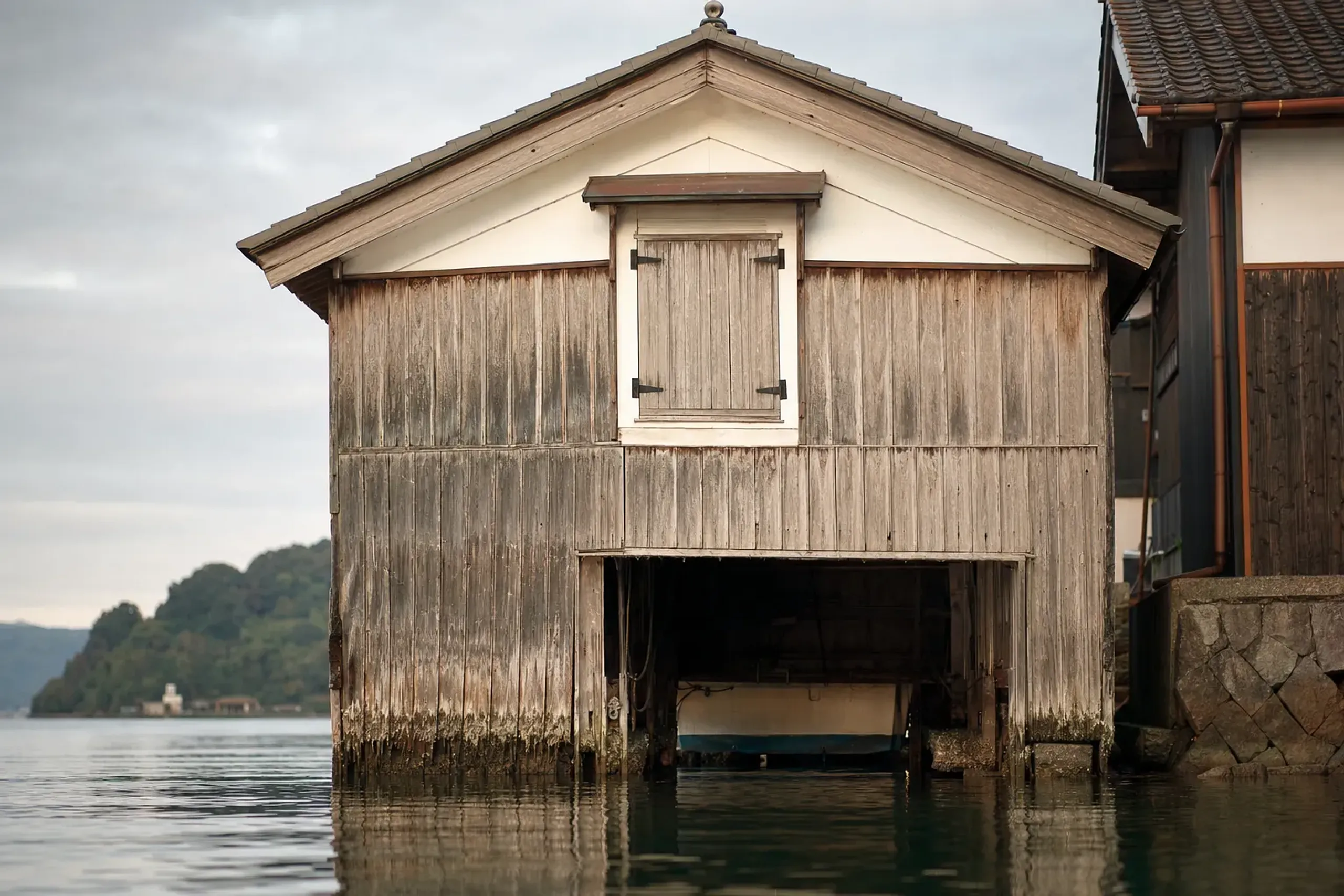
They are not relics of Ine's actual founding fifteen centuries ago. A fisherman wanting his boat in the water faster, generation after generation, shaped this coastline. Convenience, not ceremony, drew the houses down to the sea.
What Is Actually Inside A Funaya?
The ground floor holds the boat and fishing gear; the upper floor was historically for storing and drying nets, not for comfortable living. Few funaya are true homes.
The earliest versions were single-storey and thatch-roofed. Their walls sloped inward and their roofs rose tall for a reason — nets were hung beneath them to dry. Over time the structures grew into the two-storey timber form that defines the bay today.
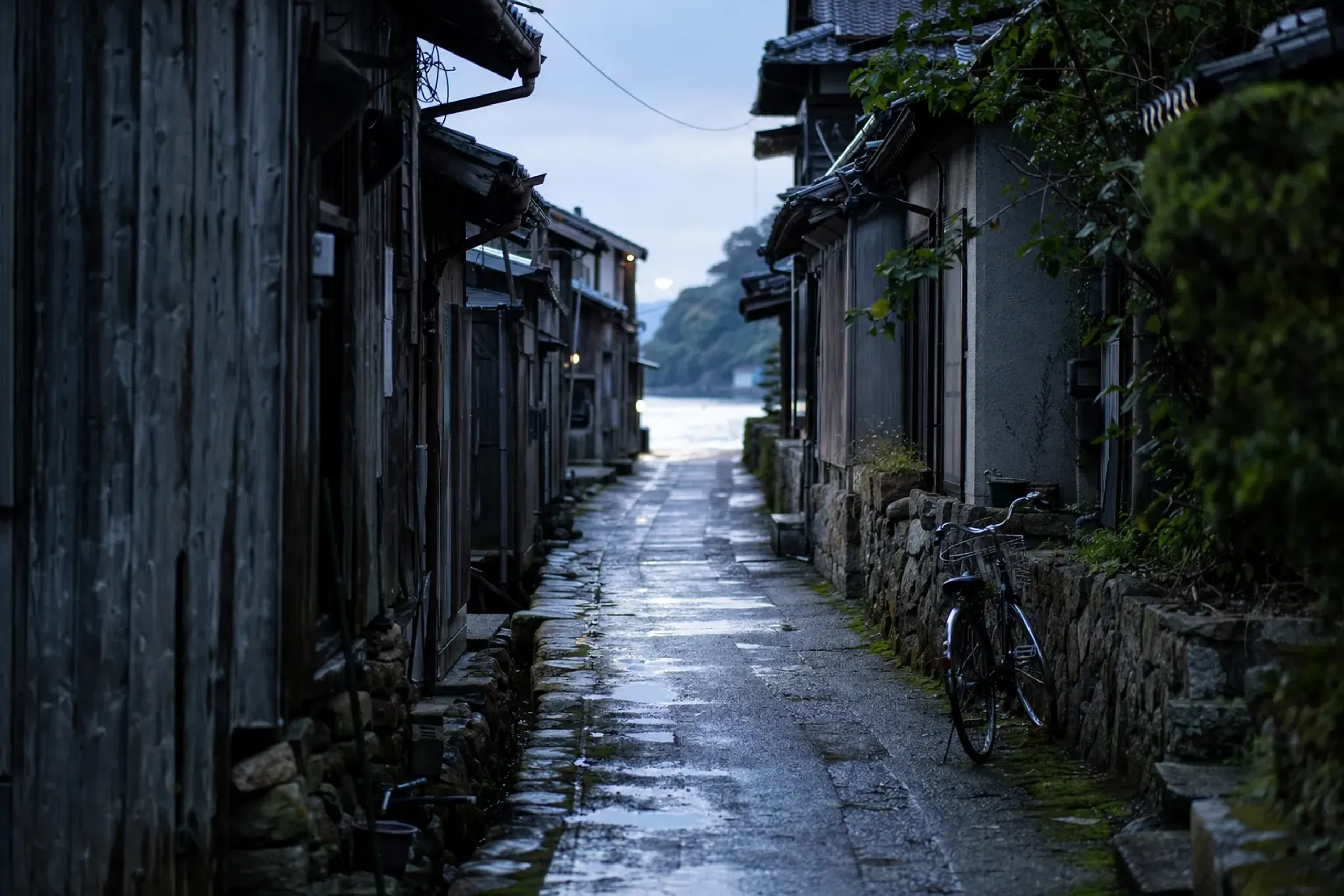
Here is the second honest correction, the one most guides skip. Despite looking like houses, relatively few funaya are lived in. The main family residence is usually a separate building, set directly behind the funaya or across the lane from it. The boathouse was a workplace. The home was elsewhere.
Please note: Ine Tourist Information asks visitors not to enter any funaya without permission. Many remain private living and working spaces. The quiet you find here is someone's home — treat it that way.
And they are still used. Boats today are fibreglass and often too large to haul inside, so many simply moor in the water out front, though smaller work boats still go in.
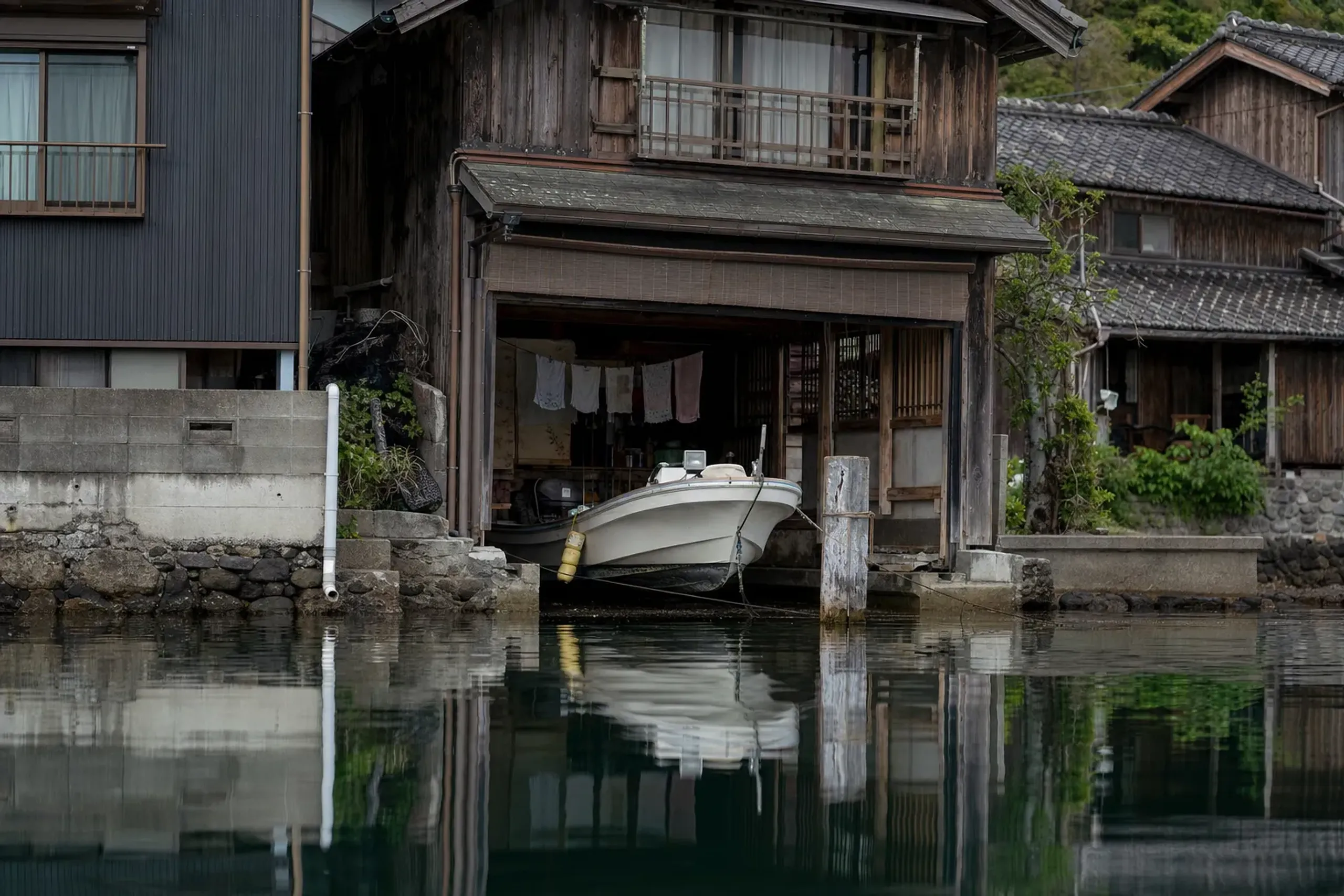
Ground floors no longer needed for boats now serve for preparing the day's catch or hanging laundry. This is not a museum frozen for photographs. It is a working village that happens to be beautiful.
How Many Funaya Are There, And Is Ine Protected?
Roughly 230 funaya line about five kilometres of Ine Bay. In 2005 the area became Japan's first Important Preservation District for Groups of Historic Buildings in the fishing-village category, covering 310.2 hectares.
That designation is worth pausing on. Japan protects many historic districts — post towns, merchant streets, samurai quarters. Ine was the first of its kind recognised specifically as a fishing village. The thing being preserved is not one grand structure but a whole working relationship between a community and its bay.
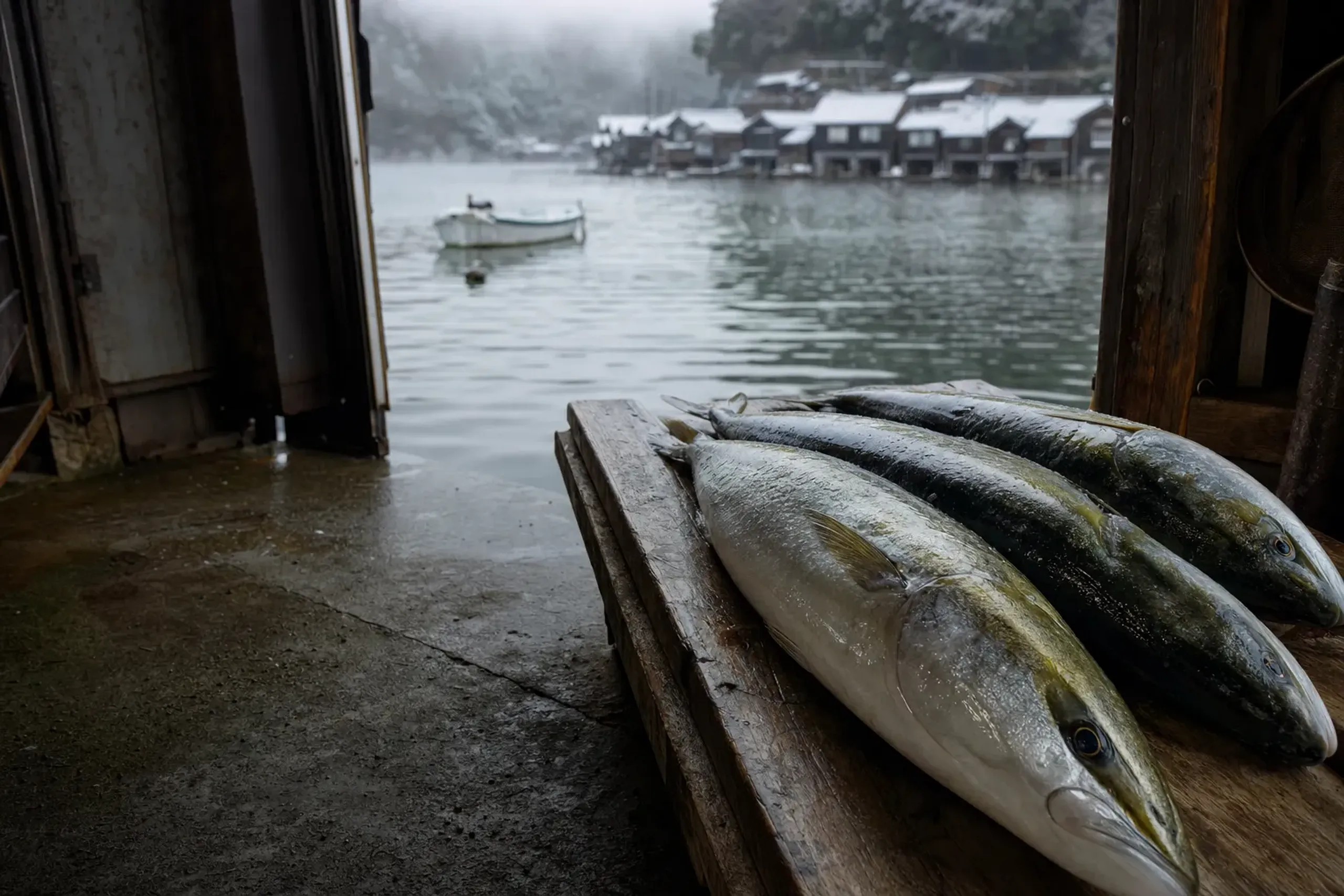
The waters here are known for yellowtail fishing, called Ine-buri. The wider region, branded Kyoto by the Sea, has drawn recent sustainability recognition, including a Gold award for local economic benefit at the ICRT Worldwide Awards in 2026. For a traveller, that matters in a practical way: the case for visiting quietly, in small numbers, with a guide who knows the etiquette, is not an abstraction. It is how this place stays itself.
How Do You See The Funaya From The Water?
Two boat options exist: larger sightseeing boats run a roughly 25-minute loop of the bay without reservation, while smaller sea taxis operated by local fishermen offer a more personal ride and generally need booking ahead.
Both show you something the shore cannot. From the lane, you see the fronts of the funaya. From the water, you see what they were built for — the ramps, the open mouths, the boats resting half in and half out, the whole row reflected in a bay that barely ripples. The stillness that made the architecture possible is also what makes the view.
Walking the shore is the other half of it. The preservation district rewards a slow pace: the inward-sloping walls, the tall roofs that once held drying nets, the narrow lanes where the main houses sit behind their boathouses. The Ine Tourism Association runs guided experiences, including English walking-and-cruising options and a fuller funaya guide, and these come and go by season. Our concierge confirms current schedules and access before any visit, so nothing is assumed.
Should You Visit Ine As A Day Trip Or Stay Overnight?
An overnight stay is the stronger choice. Ine sits about 15 kilometres north of Amanohashidate, and the village empties of day visitors by late afternoon — leaving the bay to those who remain.
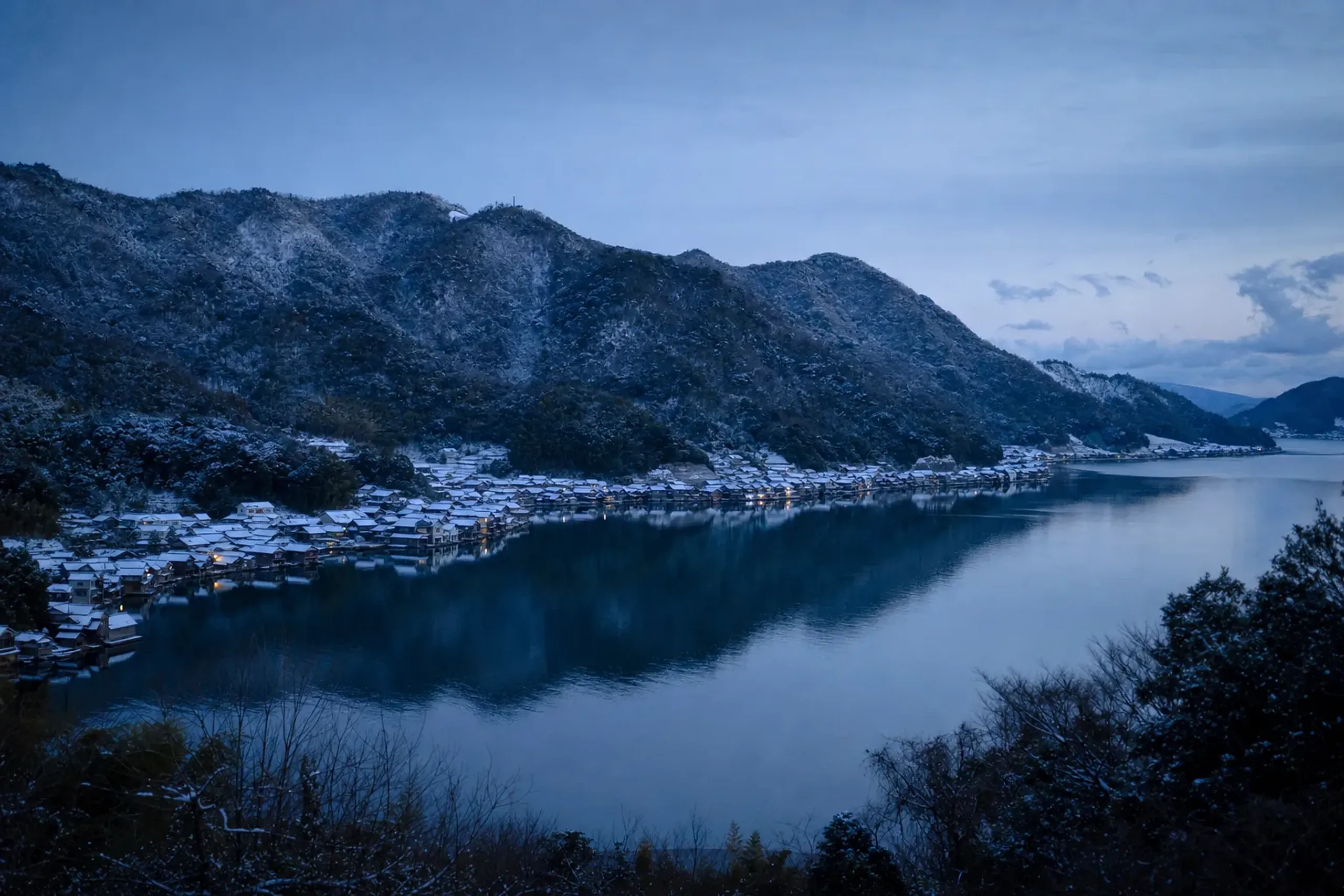
The day-trip version is real and worthwhile: travel to Amanohashidate, then onward by bus or car to Ine, a loop on the boat, a walk, and back. But it gives you Ine at its busiest, in the middle hours.
Stay, and the bay changes character. A handful of genuine funaya inns operate here, letting you watch the boathouses from your room as the light goes soft and the water goes glass-flat. One such inn traces its name to the Atarashiya family, historically a branch of the Mukai Shuzō sake brewery — a small thread of how tightly the families, the fishing, and the bay are wound together. We help match the right overnight stay to each party; see our accommodation service for how we approach that. If you prefer to fold Ine into a longer coastal Kyoto route, our bespoke itinerary planning shapes it around your pace.
What Japan Royal Service Arranges In Ine
Plainly, and once: our team coordinates private guiding, chauffeured transfers to and from Ine via Amanohashidate, overnight funaya-stay recommendations, and boat-experience coordination where availability allows. We do not operate the boats or the inns. We verify current schedules and viewing access on your behalf before you arrive, and we handle the quiet logistics of reaching a remote bay without friction.
Because Ine is a living village rather than a resort, how you visit carries weight. Our guides work with local etiquette built in — no entering funaya uninvited, care with photography of homes and residents, a light footprint in narrow lanes. That is not a constraint we apologise for. It is the reason the place is still worth the journey.
Frequently Asked Questions
Where Exactly Is Ine And How Far Is It From Amanohashidate?
Ine is a fishing village on the Tango Peninsula in northern Kyoto Prefecture, about 15 kilometres north of Amanohashidate. Most routes travel first to Amanohashidate, then continue by road to the bay.
Can You Go Inside A Funaya Boathouse As A Visitor?
No — not without permission. Ine Tourist Information asks visitors not to enter funaya, as many remain private homes and workspaces. The exceptions are funaya inns you have booked to stay in, or experiences arranged with the owner's consent.
Do You Need To Reserve A Boat Ride In Ine Bay?
It depends on the boat. The larger sightseeing boats run a roughly 25-minute bay loop and generally do not require a reservation. The smaller sea taxis, operated by local fishermen, are more personal and usually need booking ahead.
How Old Are The Funaya, And Were They Always On The Water?
The waterline funaya date to the 18th century — roughly 300 years old.
People have lived in the Ine area since at least the 5th century, but the original settlement sat on the hillside, not at the water's edge.
Is Ine Better As A Spring Trip Than Central Kyoto?
For travellers wanting coastal calm over city crowds, yes. Ine offers soft spring light and a quiet bay well away from central Kyoto's peak-season congestion, making it a composed alternative or add-on rather than a replacement for the city's temples.
Why Choose Japan Royal Service
Reaching Ine well is a logistics problem disguised as a scenic one. The bay is remote, its best experiences shift by season, and its character depends entirely on visitors behaving as guests in a working community. Japan Royal Service exists to solve exactly that kind of problem quietly. Our team confirms live boat and tour availability, arranges private chauffeured transfers through Amanohashidate, and matches you to the right overnight stay — all held to the discretion our clients expect, and the respect this village deserves. We know which doors stay closed, and we never knock on them.
To plan a private visit to Ine, reach our team directly via WhatsApp or LINE, or contact us here. We will shape the days around the water, the light, and your own pace.