In this guide
- 01What “Introduction-Only” Really Means (And What It Does Not)
- 02Why Invitation Culture Exists: Trust, Responsibility, And The Logic Of The Host
- 03How Invitation Culture Protects Quality: Exclusion As A Service
- 04A Guest’s Playbook: How To Engage Ethically (And Actually Enjoy It)
- 05How To Book What Is Publicly Bookable (Without Confusing It With Introduction-Only)
- 06How Japan Royal Service Helps You Approach Introduction-Only Japan, Quietly
You have taste. You do your homework. You still hit a wall in Japan.
A tiny counter sushi says “regulars only.” A craft studio answers politely, then stops replying. A ryokan is “fully booked” year-round, yet locals mention it like it’s simply… there.
This is not a game to “hack.” It is a social system—quiet, practical, and protective. Our team at Japan Royal Service built this guide so you understand the grammar of introduction-only Japan, and so your time in-country stays calm, respectful, and well-run.
What “Introduction-Only” Really Means (And What It Does Not)
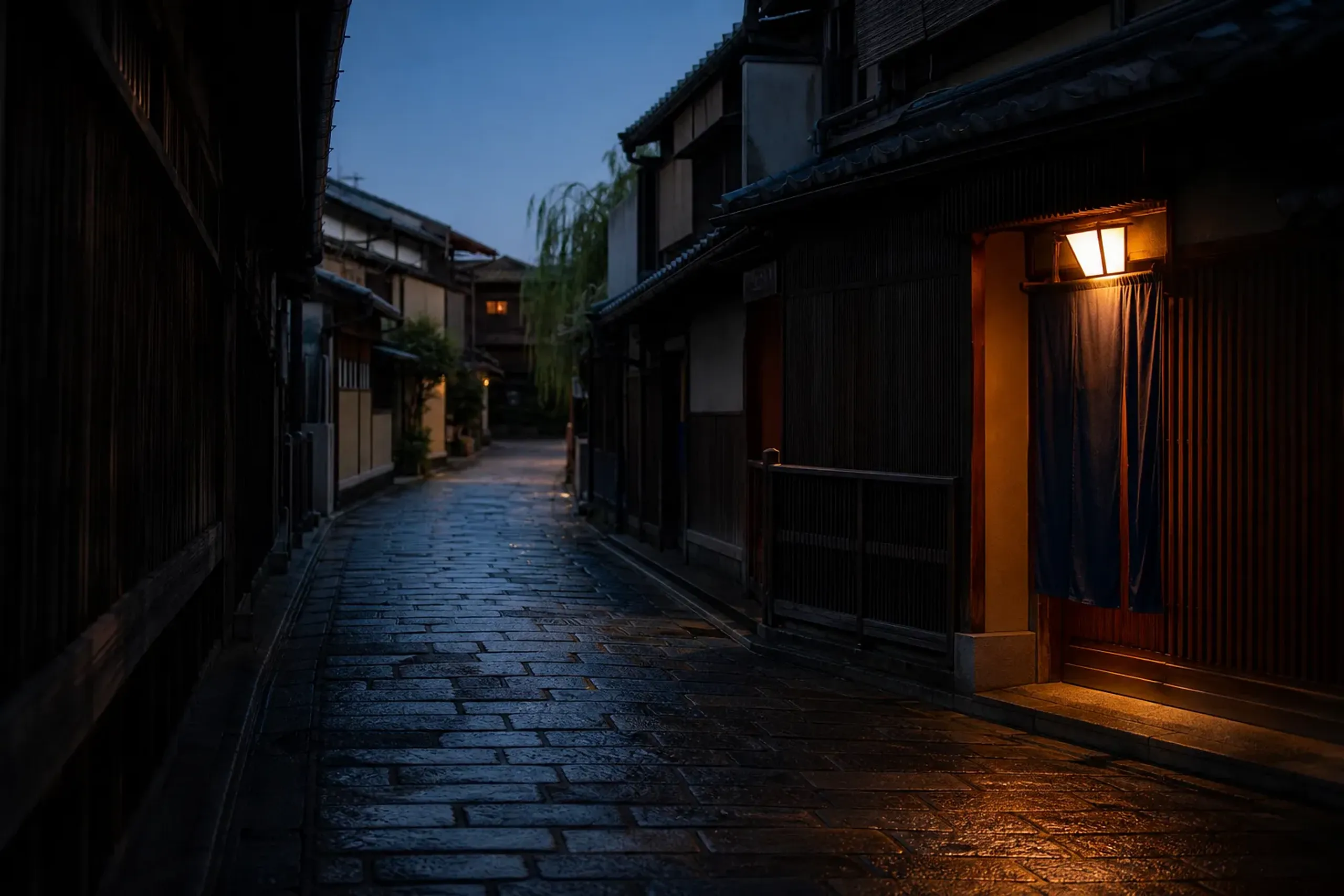
Some doors in Japan are intentionally quiet—understanding the system matters more than chasing a name.
“Introduction-only” is not a single rule. It is a spectrum of invitation culture, used differently across regions and crafts.
One door is closed forever. Another opens if a trusted person vouches for you once. A third is technically public, but only a few seats are released, and timing is everything. Subtle differences. Big consequences.
A Practical Taxonomy: Five Common Access Patterns
We see these patterns most often. They can overlap, and they change with the house’s circumstances.
- Introduction-only (紹介制): A trusted person refers you. The host accepts the risk because someone they trust is accountable.
- Members-only: Access is limited to members, often with internal rules and long-term expectations.
- Regulars-first: New guests may be accepted, but returning guests get priority, especially in peak periods.
- Hotel-concierge-only: Some venues prefer inquiries routed through established hotel concierge desks, where guest identity and behavior standards are clearer.
- Limited public release: Tickets or seats are public, but scarce, time-bound, and easy to miss without planning.
Key fact: Introduction-only culture is not “anti-visitor.” It is often a way to protect privacy, quality, and community life—especially where crowds have created real harm.
Public Culture Exists, Too—And It Matters
Kyoto is a good example of the difference between public access and private worlds. For visitors who want to see traditional performing arts in a structured setting, Gion Corner is designed for that purpose, with ticketing via its official website and at the Kyoto Tourist Information Center “Kyo Navi.” It was originally created in 1962, according to a multilingual tourism resource from Japan’s Ministry of Land, Infrastructure, Transport and Tourism.
For seasonal dance performances tied to Kyoto’s hanamachi culture, Kamogawa Odori provides ticketing guidance on its official English site, including exchanging a voucher for a ticket at the ticket office on the performance date. Clear rules. Public pathways.
Those public paths are not “second best.” They are often the most respectful way to engage—especially when local authorities are explicit about protecting residential areas and privacy.
Why Invitation Culture Exists: Trust, Responsibility, And The Logic Of The Host
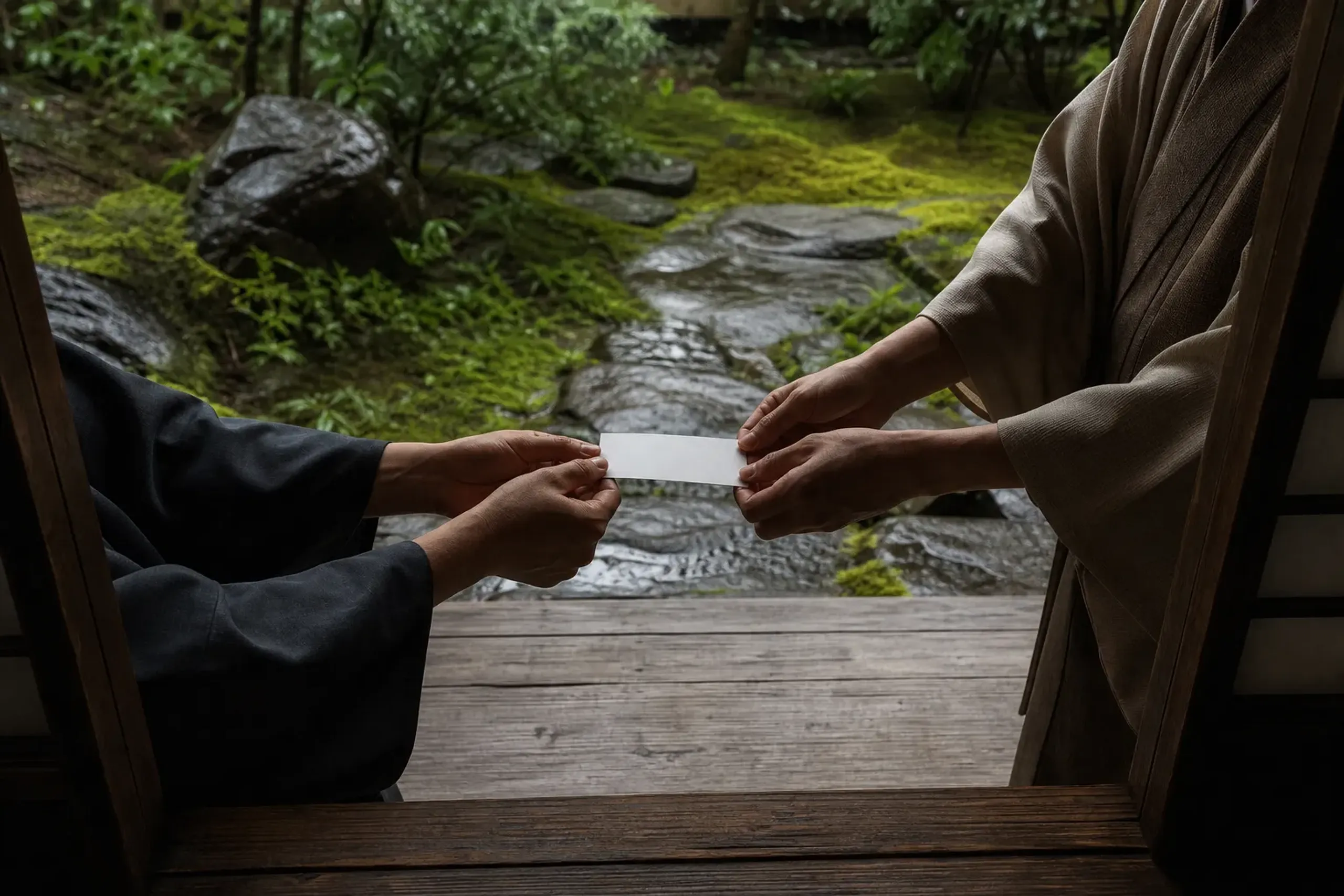
In introduction culture, trust is carried person-to-person—often through small, formal gestures.
In our experience, introduction-only customs make the most sense when you stop thinking like a customer and start thinking like a host.
In Japan, the host’s responsibility can be total. Not theoretical. Total.
If a guest behaves badly—late arrivals, loud conversation, disrespectful photography, or treating a private space like a theme set—the damage is not “one bad review.” It can be personal, local, and lasting.
The Introducer Transfers Accountability
An introduction is not a password. It is a transfer of trust.
The person who introduces you is putting their standing on the line. That is why the introduction is meaningful, and why it cannot be created out of thin air with clever wording.
This logic appears across Japan, not only in dining. It shows up in tea schools, private workshops, small cultural circles, and certain properties that stay intentionally small.
Privacy Pressure Is Now Real, Not Abstract
Kyoto City’s official visitor guidance states that in areas such as Southern Gion, problematic behaviors include following geiko and maiko, taking photos without permission, trespassing, and photographing private property—emphasizing that Gion is a residential area, not just a tourist site.
That guidance exists because the pressure is real. The invitation system is one response: keep sensitive places small, known, and protected by social accountability.
For HNW travelers, this is not about status. It is about not becoming the problem.
Edo-Era Merchant Culture Still Shapes Today’s Trust Networks
Japan’s referral instincts have deep roots in merchant and neighborhood life, where reputation was practical currency and relationships were the enforcement mechanism.
Modern Japan is modern, of course. Yet small, high-skill worlds still run on reputation, repeat behavior, and the confidence that a guest will understand the room without being told twice.
This is why “introduction-only Japan” feels invisible online. It is designed to be.
How Invitation Culture Protects Quality: Exclusion As A Service
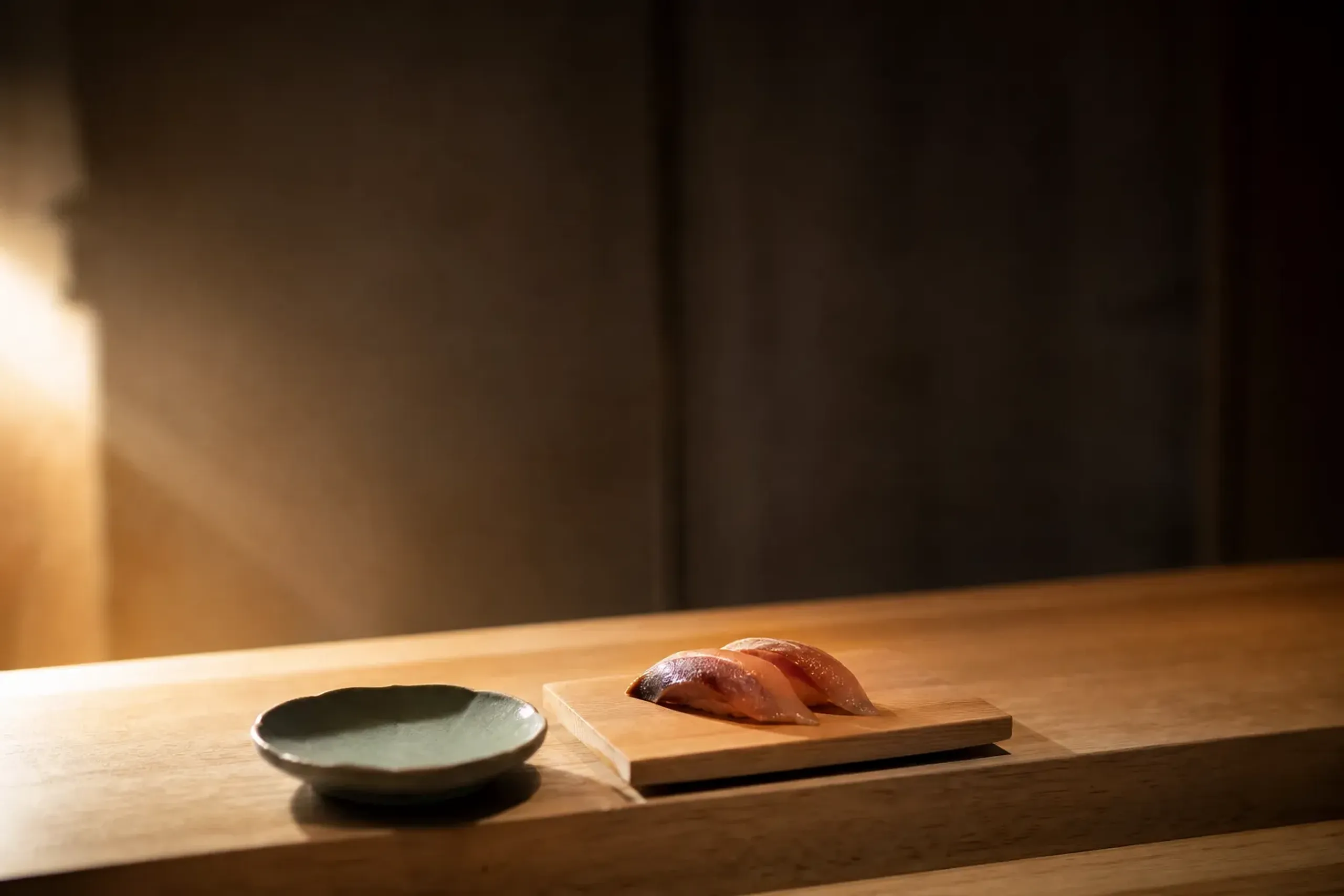
Small houses stay small for a reason: precision collapses when volume enters the room.
Invitation culture can look like exclusion. From the inside, it often functions like quality control.
Counterintuitive? Yes. Also true.
When a place stays small by choice, the experience stays precise. The pacing, the silence, the standards. Nothing has to be simplified for mass access.
Small Houses Stay Small—On Purpose
Many of Japan’s best experiences are fragile by design. A tiny sushi counter. A single-kiln ceramic studio. A tea room where the sound of the kettle matters.
If these places scaled up, they would become something else. Invitation culture keeps them from being pulled into the volume economy.
For wabi-sabi minded travelers, this restraint is the point: fewer seats, fewer explanations, more atmosphere.
Chefs Cook For Guests Who Understand The Meal
Some meals assume familiarity with pacing, seasonal nuance, and the etiquette of a counter. Not perfection. Awareness.
This is why certain top-end sushi and kaiseki circles are described as introduction-only in mainstream travel writing—Lonely Planet notes, for example, that restaurants like Sushi Saito may require friends “in the know.” That is not a promise of access. It is a description of how the culture works.
What the house gets is consistency. What the guest gets is a meal that does not have to compromise for first-timers who treat it as a checklist.
Shokunin Give Time Only To Serious Visitors
Shokunin craft is not a showroom performance. It is work.
A sword polisher, for instance, cannot “do a quick demo” on demand. The work is slow, deliberate, and often private. The same is true across many ateliers: ceramics, lacquer repair such as kintsugi, calligraphy circles, and tea practice settings.
Invitation culture filters for seriousness. Not money. Seriousness.
Certain Ryokan Protect Rhythm And Repeat Guests
Ryokan are not hotels with tatami. They are living systems: meals timed to the bath, staff choreography, a house pace that collapses under unpredictable behavior.
Some ryokan maintain strict guest screening, repeat-guest preference, or low-key referral customs to protect that rhythm. The result is quiet. The kind of quiet you can feel in your shoulders.
That is why “hidden-Japan” is often less about geography and more about introduction.
Policy Winds Point The Same Direction
Japan is not alone in wrestling with overtourism. The OECD’s Tourism Trends and Policies 2026 report explicitly lists balancing inbound tourism with local residents—addressing congestion and inappropriate tourist behavior—as a key policy priority for Japan.
Invitation culture is not a government program, but it fits the same intent: fewer problems, better behavior, lower impact. High-quality travel, not high-volume travel.
A Guest’s Playbook: How To Engage Ethically (And Actually Enjoy It)
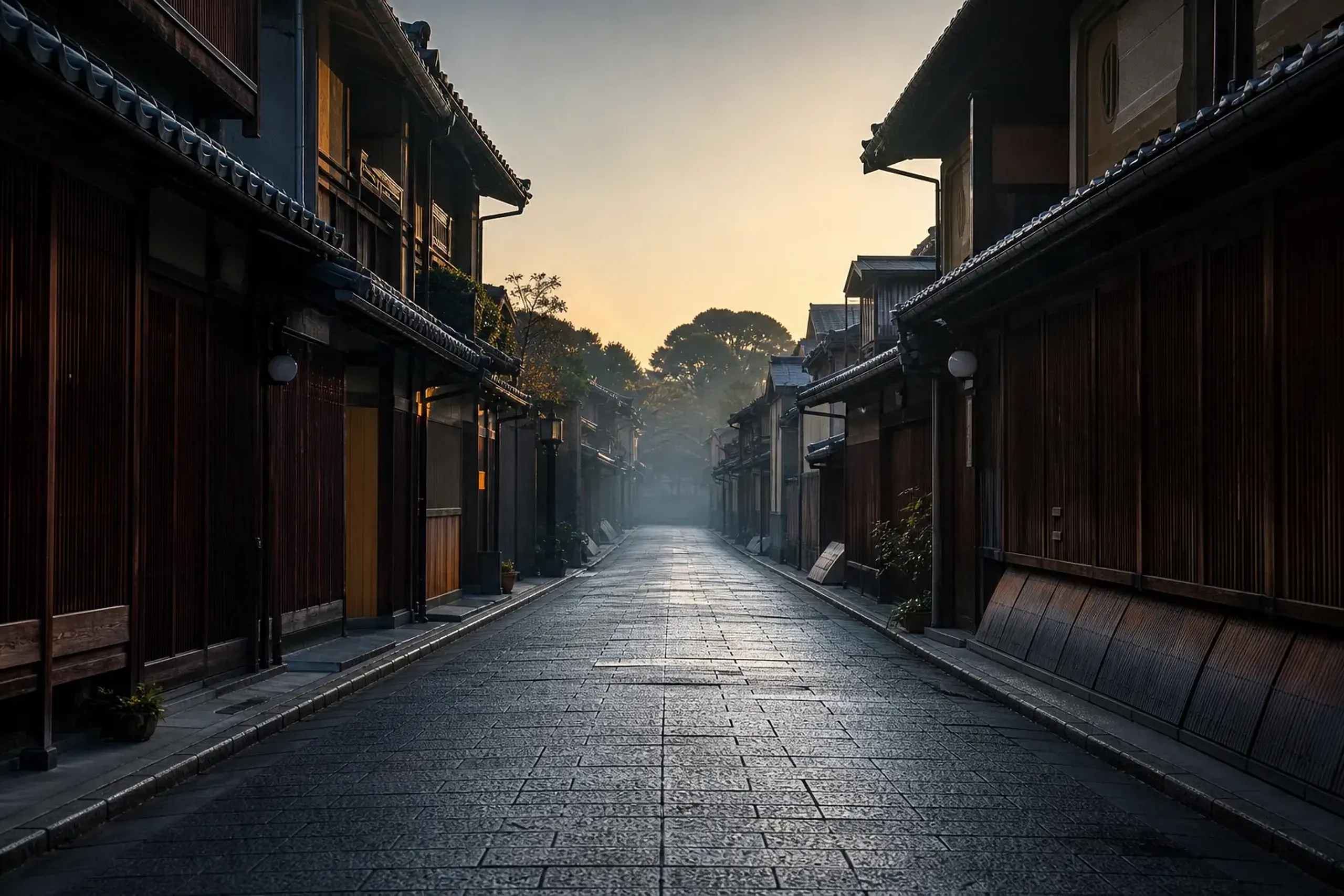
Respectful behavior is not optional in residential cultural districts—especially around photography and personal space.
Most travelers fail here because they chase access first. Big mistake.
Start with conduct. The introduction is only half the story. The other half is whether the house wants you back.
Our concierge team at Japan Royal Service spends real time on these briefings because a single misstep can damage relationships that took years to earn.
Before You Go: The Behavior Standards That Matter Most
Think of this as your “quiet contract.” It is rarely written down. It is still enforced.
- Punctuality: Arrive early. Five minutes late can derail a multi-course pacing at a counter.
- Photography restraint: Ask before you lift a phone. In some spaces, do not ask—just don’t.
- Volume control: If you can hear yourself across the room, you are too loud.
- Scent discipline: Strong perfume and high-end dining do not mix well. Nor do incense-heavy fragrances in close quarters.
- Dietary disclosures early: If you have restrictions, say so far ahead. Last-minute surprises can be interpreted as disrespect for the craft.
At The Table (Or In The Studio): Small Gestures With Outsized Weight
Silence can be part of the experience. Let it happen.
In counter dining, watch the chef’s hands before you ask questions. In a craft setting, treat tools like sacred objects. In a traditional neighborhood, treat the street like someone’s front yard—because it is.
Kyoto’s own guidance about Gion makes the boundary clear: do not follow geiko/maiko, do not photograph without permission, do not trespass, and do not photograph private property. If you remember one rule, remember that one.
How To Handle Payment And Gratitude Without Awkwardness
Do not perform gratitude. Keep it clean.
In many high-end Japanese settings, the smoothest approach is simple thanks and a calm exit. If tipping is not expected, forcing it can create discomfort. If a gift is appropriate, it should be modest and thoughtful, not loud.
When in doubt, our team will brief you on the norms of the specific context privately.
Wabi-Sabi Travel Choices That Make Invitation Culture Easier
Some itineraries are built to provoke friction: late-night sprints, overstuffed days, constant outfit changes, and a hunger to “see everything.” That energy reads instantly in small houses.
Wabi-sabi travel is quieter. It trades volume for texture. A mossy garden in the morning. A single museum hour mid-day. A long, unhurried transfer where nobody needs to talk.
This style also supports discretion. Less movement. Fewer public touchpoints. Cleaner days.
How To Book What Is Publicly Bookable (Without Confusing It With Introduction-Only)
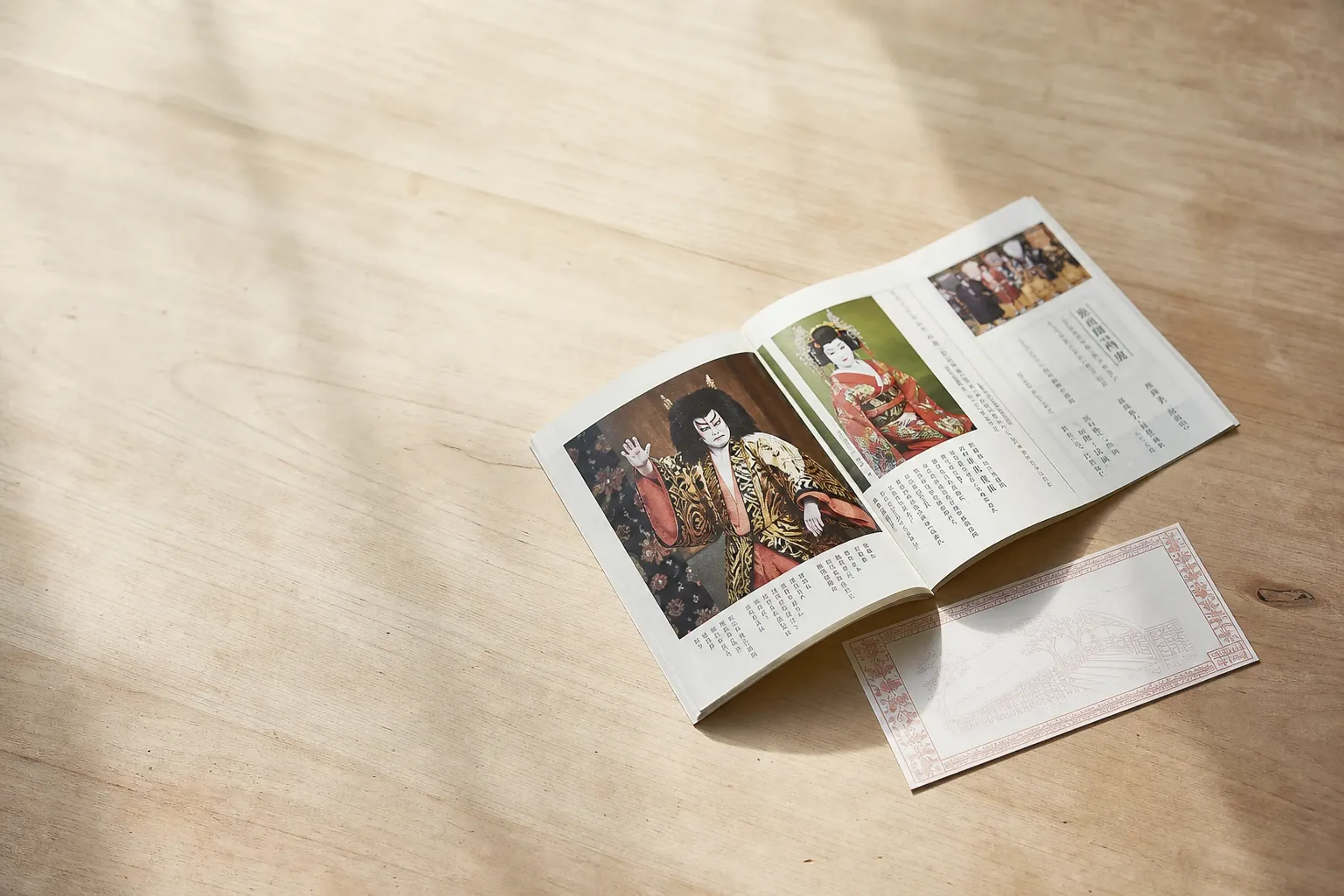
Some experiences are openly available—using official channels keeps access ethical and straightforward.
Some of Japan’s most rewarding cultural experiences are openly available—if you use the official channels and respect the rules.
This matters because travelers sometimes blur categories and end up disappointed. Or they pressure the wrong people. Don’t.
Gion Corner (Kyoto): Public Performing Arts For Visitors
Who can book: Anyone.
Where to book: Tickets are available via the official Gion Corner website and at the Kyoto Tourist Information Center “Kyo Navi,” per Kyoto’s official destination guidance.
What to expect: A curated program showcasing multiple traditional performing arts in one venue, designed for visitors.
For questions, contact our concierge.
Kamogawa Odori (Kyoto): Official Voucher Exchange On Performance Day
Who can book: Anyone, subject to availability.
Where to book: Follow the official English site’s ticketing instructions.
On the day: The official guidance instructs guests to bring a voucher and exchange it for a ticket at the ticket office on the performance date.
For questions, contact our concierge.
Michelin Timing: Why September Matters For Tokyo Dining Research
Many travelers anchor their planning to Michelin cycles. Michelin’s Japan news release stated that the MICHELIN Guide Tokyo 2026 selection would be announced on 25 September 2025 (Thursday).
That date is useful as a planning marker. Not a guarantee of access. When lists change, demand shifts, and the “regulars-first” effect intensifies.
For questions, contact our concierge.
How Japan Royal Service Helps You Approach Introduction-Only Japan, Quietly
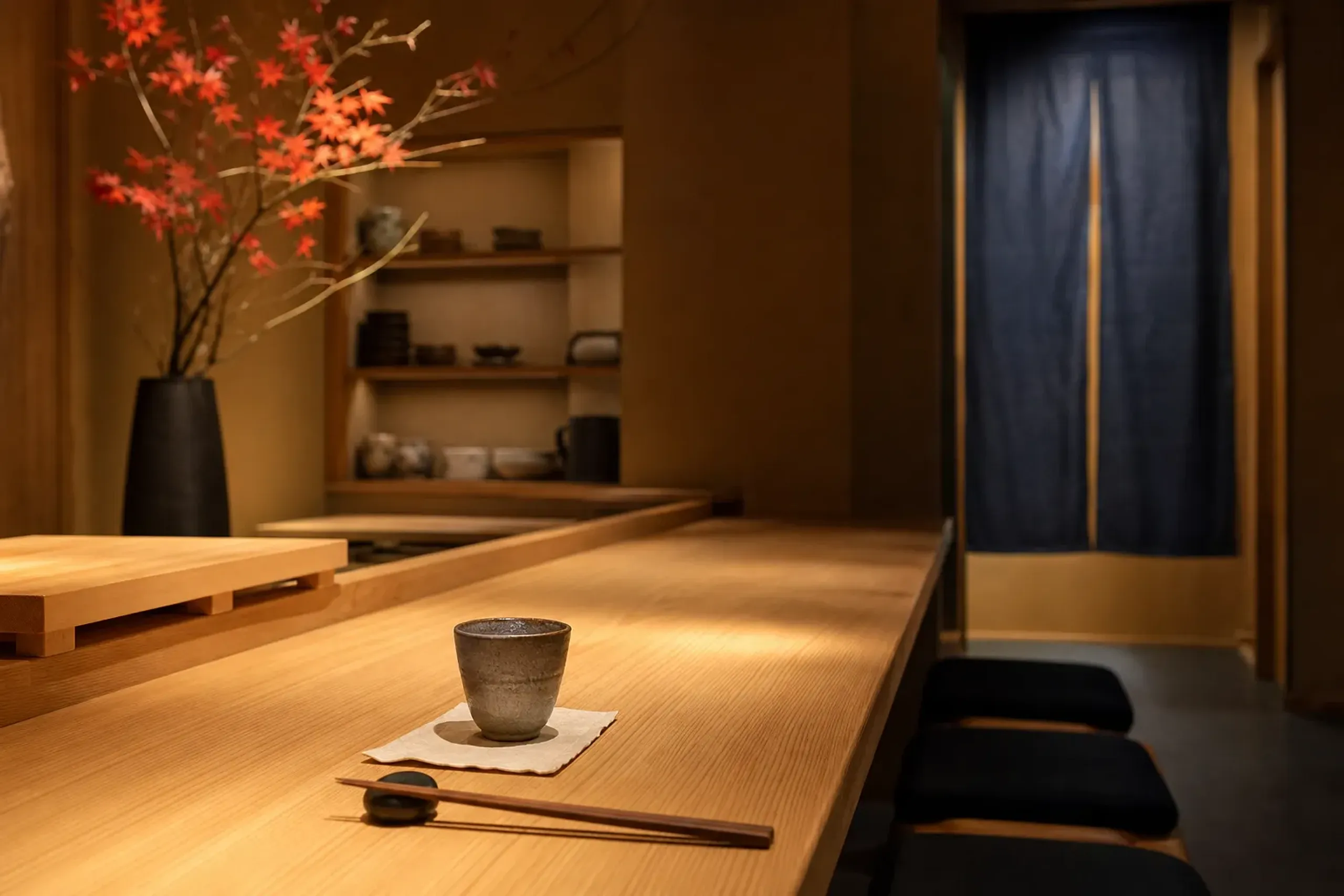
Luxury travelers often ask for “a list.” We rarely start there.
Our team at Japan Royal Service begins with your behavior profile, timing, and the texture you want: wabi-sabi calm, shokunin craft depth, or a hidden-Japan route that avoids algorithmic crowds. Then we advise you on what is realistic, what is ethical, and what is worth pursuing.
Discretion is the core deliverable. We keep guest identity and itinerary details confidential, and we avoid turning sensitive spaces into content.
What Our Guidance Looks Like In Practice
It is not flashy. That’s the point.
- Expectation setting: Which experiences are truly introduction-only, which are members-only, and which are public but scarce.
- Etiquette briefing: House-specific norms—timing, photography, conversation, and how to behave in residential cultural districts.
- Discreet logistics planning: Calm routing and timing choices, including first-mention private transportation guidance via our private transportation service page.
- Bespoke itinerary design: A rhythm-first plan that protects your energy and reduces exposure, starting with our tailor-made approach.
Sometimes, the best result is not forcing an introduction at all. It is choosing the public cultural doorway that is designed for visitors, then pairing it with quiet neighborhoods, gardens, and craft encounters where respect is obvious and welcomed.
Ready to plan a Japan journey that favors calm access over loud checklists? Reach our team privately via WhatsApp or LINE, or contact us here.