In this guide
- 01Itokoku In The Wei Zhi: A Named Kingdom, Not Folklore
- 02What Makes The Hirabaru Tomb In Itoshima So Extraordinary?
- 03Inside The Grave Goods: Mirrors, Beads, And One Quiet Weapon
- 04Was The Hirabaru Tomb A Queen’s Burial?
- 05Could The Hirabaru Tomb Be Himiko’s Tomb?
- 06The Royal Tomb Cluster In Itoshima: A Small Area With Large Implications
- 07Where To See The National Treasures: Itokoku History Museum
- 08A Practical Half-Day Plan From Fukuoka City (With Discreet Timing)
- 09How Do You Plan A Private Itoshima History Day Trip Without Rushing?
- 10How To Visit Itokoku History Museum In Itoshima: What To Expect
- 11Reading The Mirrors Like A Political Document
- 12Discretion In Rural Japan: The Quiet Advantage HNW Travelers Notice
- 13How Japan Royal Service Supports An Itoshima Itokoku Visit
- 14Plan Your Private Journey To Itokoku
- 15Frequently Asked Questions
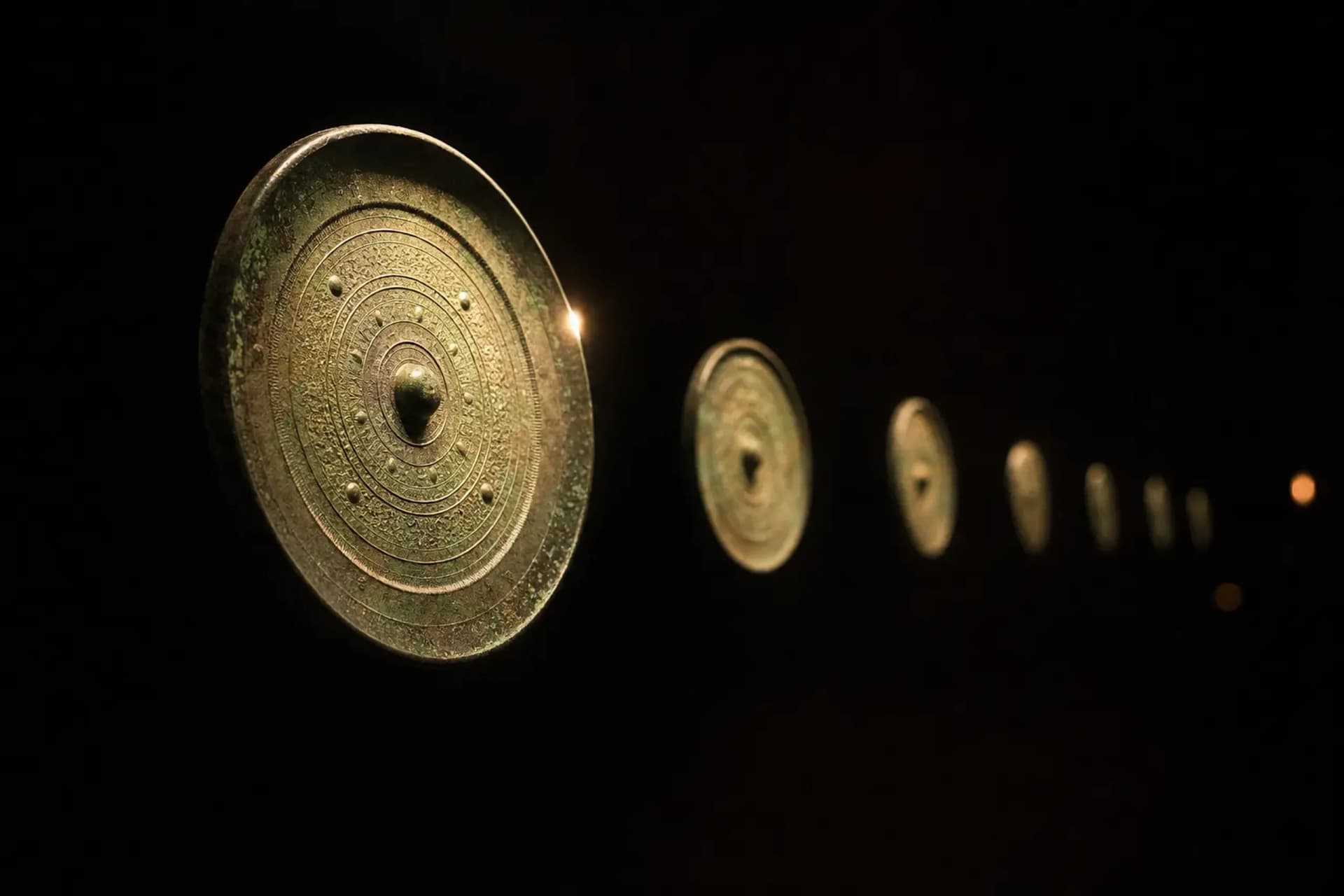
In a glass case, bronze catches the light like cooled moonwater.
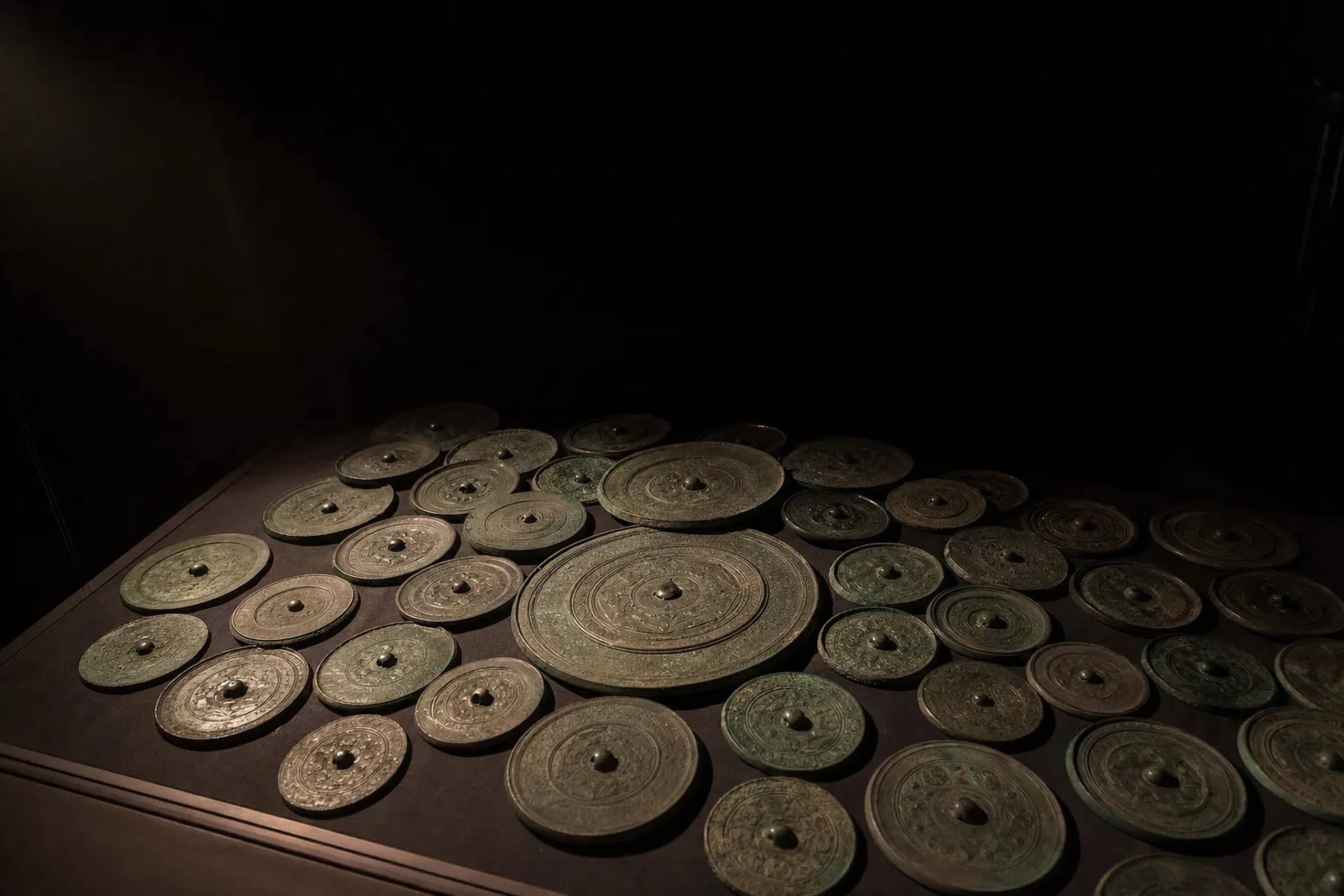
Forty mirrors. Not a handful. Forty—set beside beads, agate, and one lonely sword, as if violence was an afterthought and ornament was policy.
This is Itoshima, in Fukuoka Prefecture. And this is not a local legend hunting for proof.
Itokoku appears by name in a foreign chronicle: the Wei Zhi, written around the 3rd century CE as part of its account of Wa (ancient Japan). It describes a polity of over 1,000 households where “kings ruled for generations,” and it frames the place as a diplomatic gateway where Chinese envoys maintained a standing, regular presence.
When our team at Japan Royal Service brings guests to Itoshima, we see the same reaction unfold: surprise, then a long pause. A quiet recalibration. Because the objects are not merely old. They are direct evidence of a named kingdom, matched to an excavated reality you can stand in front of today—the kind of encounter that belongs to the Japan that Google cannot find.
Itokoku In The Wei Zhi: A Named Kingdom, Not Folklore
Itokoku is explicitly named in the Wei Zhi as one of the Wa polities, recorded around the 3rd century CE, with over 1,000 households and rulers said to have continued for generations.
That sentence matters. It means we are not performing the usual travel-writing trick of draping romance over an uncertain site.
The Wei Zhi account places Itokoku within a network of routes and checkpoints, and it portrays it as a place where envoys could reliably pass through and be received.
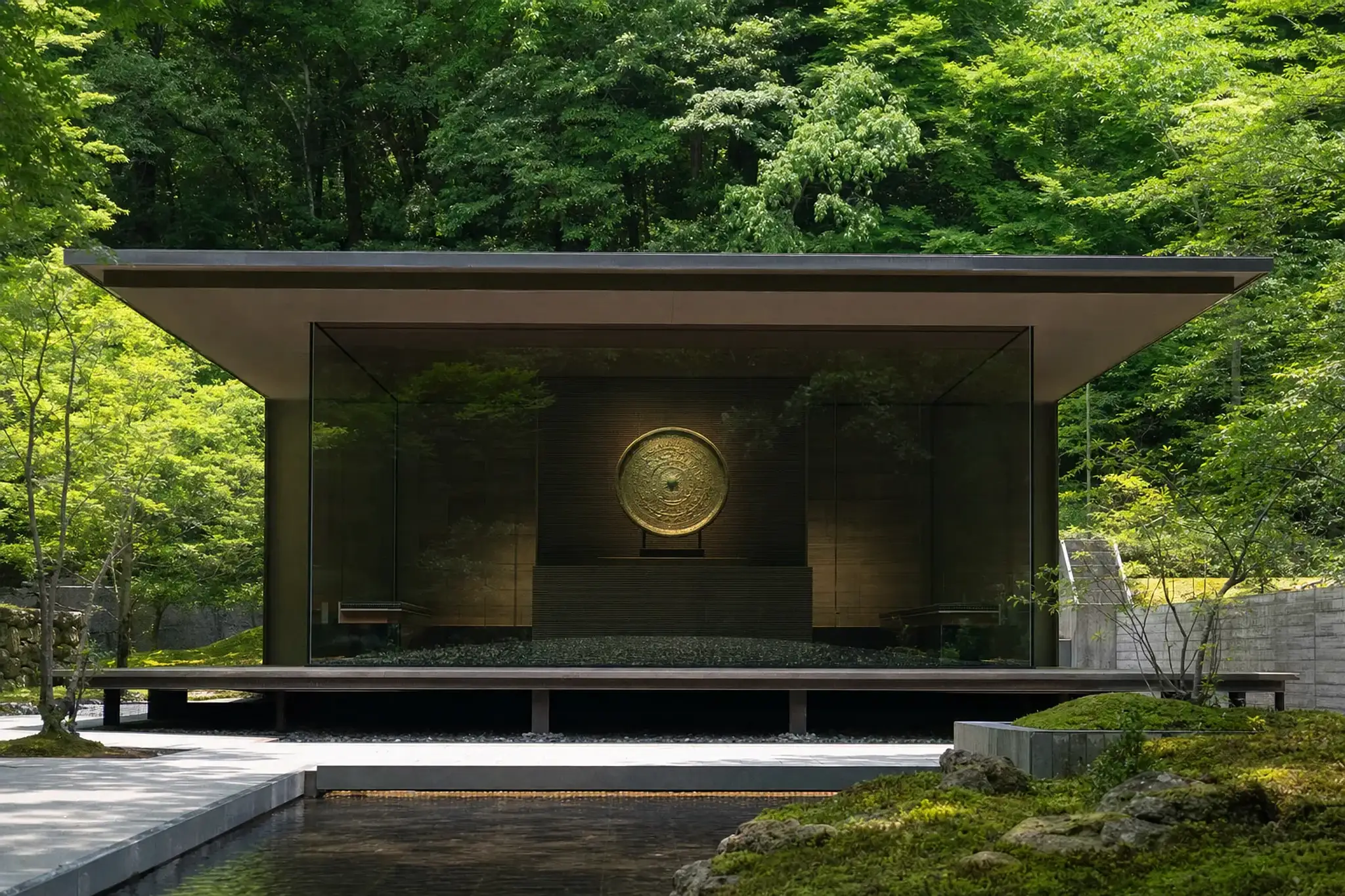
Diplomatic traffic leaves fingerprints: status display, controlled access, and objects whose purpose is not farming or fighting, but authority.
Itoshima’s archaeological record reads like the material side of that story. The mirrors in particular do not feel like trade trinkets. They feel like state instruments—objects meant to be seen, counted, and remembered.
What Makes The Hirabaru Tomb In Itoshima So Extraordinary?
The Hirabaru tomb is extraordinary because every grave good recovered from it is designated a National Treasure, and it includes a Japan-record total of 40 bronze mirrors in a single Yayoi-period burial.
The tomb was discovered in 1965. The scale of the find still lands with force, even for seasoned museum-goers.
One mirror dominates the imagination: Japan’s largest bronze mirror at 46.5 cm in diameter. And then comes the detail that changes the entire mood—four to five mirrors of that exact “largest-in-Japan” type were found together in this single burial.
Thirty-five more bronze mirrors of other types bring the total to 40. This is the highest mirror count ever found in one Yayoi-period tomb in Japan, a national record you can repeat without exaggeration.
Inside The Grave Goods: Mirrors, Beads, And One Quiet Weapon
Forty mirrors is the headline. The supporting cast is what makes the story human.
Glass magatama beads. More than 500 round glass beads. Agate tube beads. The list reads like a wardrobe, not an arsenal.
And then: a single iron sword. One. In a context where you might expect status to arrive wearing steel.
That imbalance—ornament heavy, weapons scarce—nudges many researchers toward a simple inference. This burial speaks the language of courtly legitimacy rather than conquest.
Was The Hirabaru Tomb A Queen’s Burial?
Many scholars believe the Hirabaru tomb’s occupant was a woman because the grave goods include a Chinese-style earring type associated with women, alongside abundant jewelry and scarce weapons.
That conclusion is careful. It rests on objects, not on a wish for a dramatic narrative.
The earring type matters because it is culturally specific. It points to a gendered association recognized in the comparative record, not a modern projection.
Put that together with the tomb’s scale and the mirror count, and the implication becomes hard to ignore: Itokoku may well have been ruled by a queen. If you came to Itoshima thinking political power in ancient Japan always wore a man’s silhouette, this site gently refuses you.
Could The Hirabaru Tomb Be Himiko’s Tomb?
Some researchers have proposed Hirabaru as a possible tomb of Himiko, but this is a contested theory and not a settled scholarly consensus.
Himiko appears in the same Chinese chronicles as a shaman-queen associated with a wider confederation of Wa polities. It is tempting—almost too tempting—to place her into the most extravagant female-coded burial on the table.
The reasoning cited by researchers who raise the possibility is straightforward: the era aligns broadly, the scale is exceptional, the grave goods are beyond ordinary rank, and the mirror count is a national record. Those are real points.
Still.
The step from “queen” to “Himiko herself” is a leap, and responsible reading keeps it labeled as such.
There is also a more measured alternative some researchers suggest: if Hirabaru is indeed a queen’s tomb, Himiko’s lineage might have originated from Itokoku without her being buried here. In that reading, Itokoku becomes an ancestral root rather than the final resting place.
For travelers, the value of the debate is not to pick a side at the museum case. It is to realize how rare it is to have a site that can credibly host the question at all.
The Royal Tomb Cluster In Itoshima: A Small Area With Large Implications
Hirabaru does not stand alone. The surrounding cluster tightens the historical focus until it feels almost intimate.
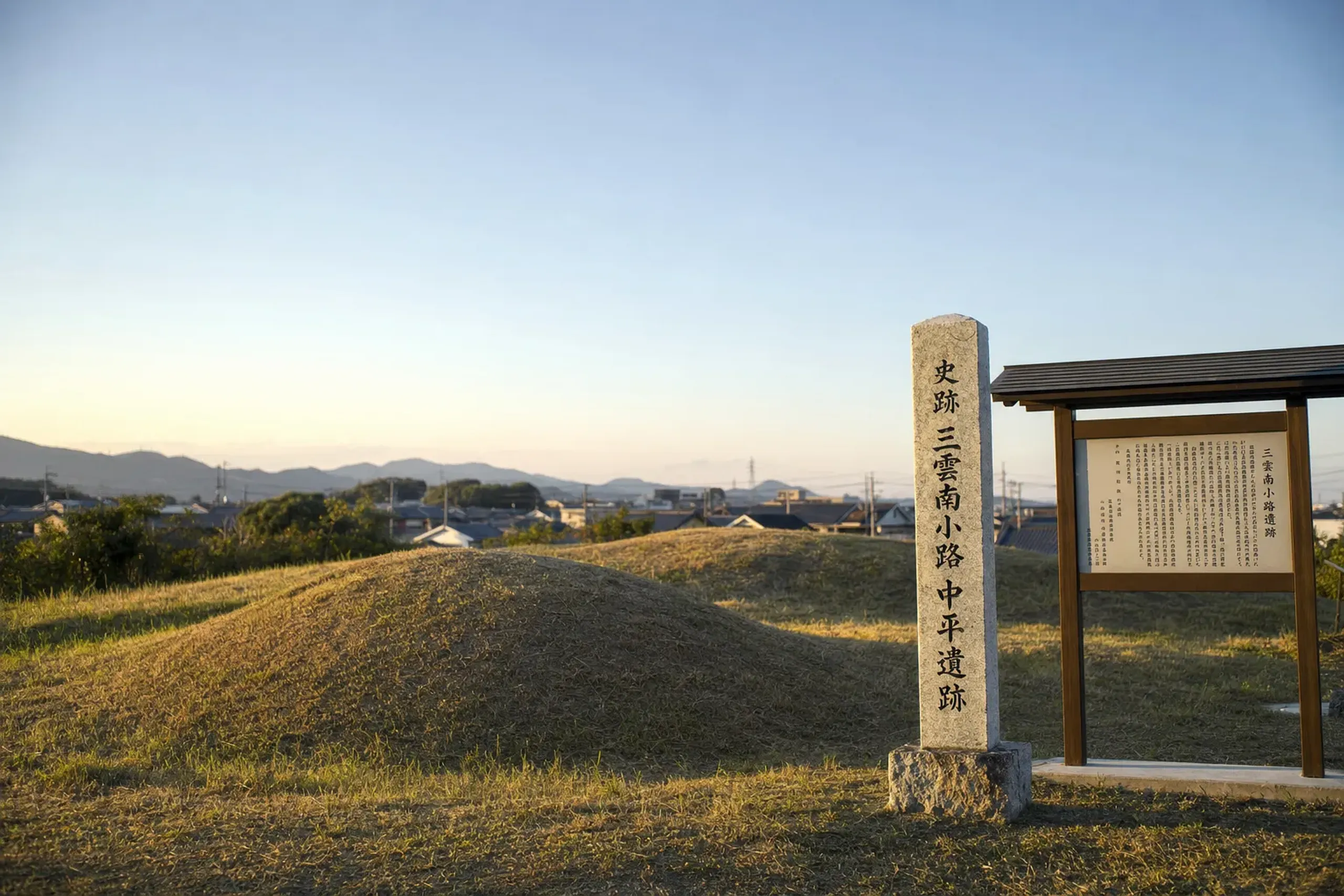
Mikumo-Minamishōji tomb is believed to be the earliest of the group. It contains two jar-coffin burials, thought to hold Itokoku’s founding king and queen. Founding. That word carries weight when you remember the Wei Zhi line about rulers continuing for generations.
Then there is the site that refuses closure.
Ihara-Yarimizo site was discovered in the Edo period, but its exact location has since been lost. Researchers continue searching today using old rubbings and records of its bronze mirrors made at the time of its original discovery.
That is not poetic mystery. It is an ongoing archaeological problem with paper trails, artifacts, and human stubbornness.
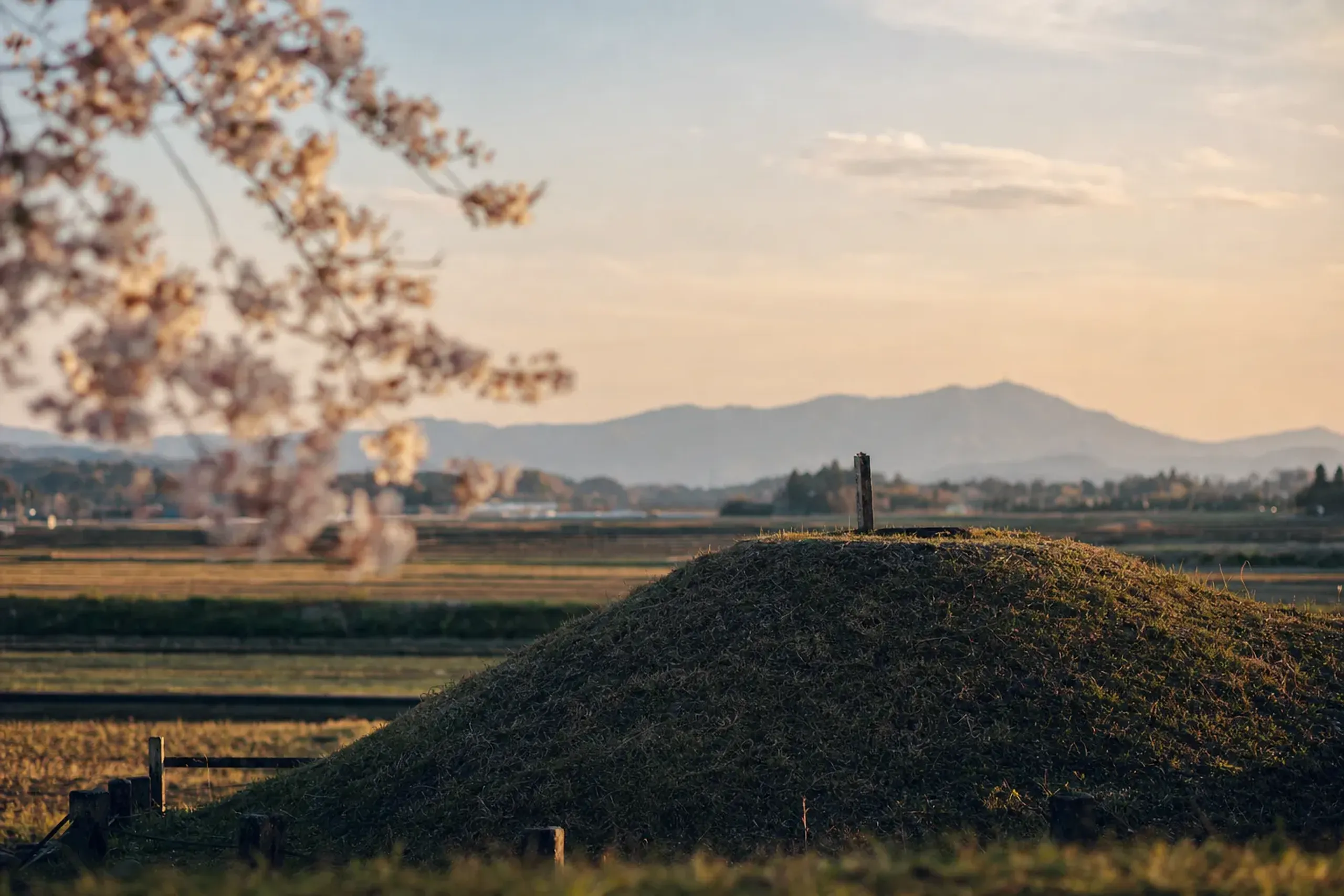
Key fact: All three sites—Hirabaru, Mikumo-Minamishōji, and the lost Ihara-Yarimizo—sit within a remarkably small area of modern Itoshima.
Where To See The National Treasures: Itokoku History Museum
The Itokoku History Museum (opened 2004) houses the excavated Hirabaru collection, including the National Treasure grave goods, across roughly 1,100 square metres of exhibition space.
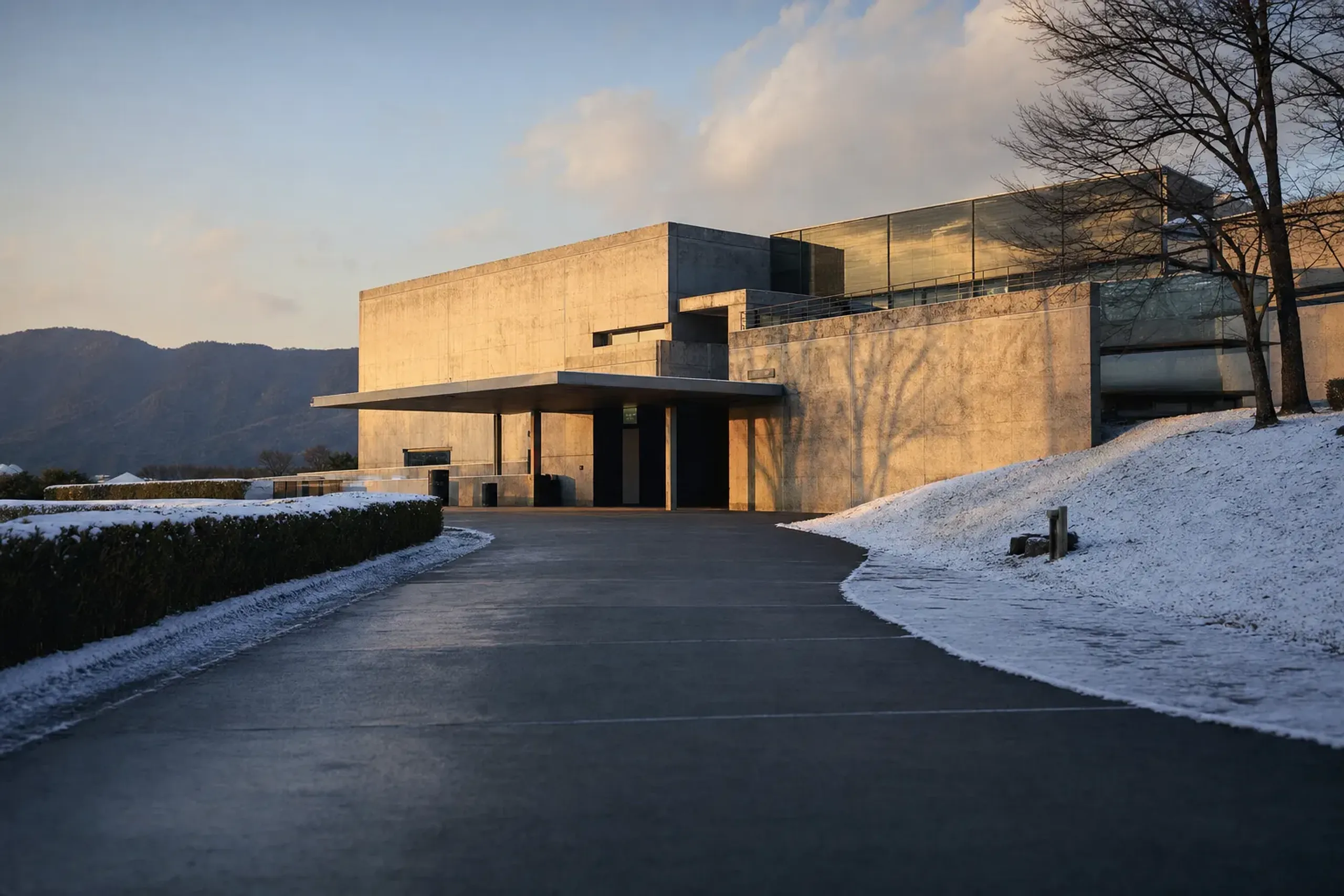
This is where the mirrors stop being “an archaeological note” and become physical presences. You can see how large 46.5 cm really is. You can watch the repetition—mirror after mirror—until the idea of authority shifts from abstract to counted.
Plan to move slowly. The biggest mistake is treating this as a quick stop between coastal viewpoints.
In our experience, the museum visit lands best when you keep the schedule uncluttered. Give it air, then let the drive back to Fukuoka City happen in silence.
Our concierge team at Japan Royal Service verifies current museum hours and exhibition details privately for clients ahead of the visit, because special displays and seasonal closures can quietly change the day’s rhythm—the sort of unspoken preparation guests rarely notice until they realize nothing ever went wrong.
A Practical Half-Day Plan From Fukuoka City (With Discreet Timing)
Itoshima’s archaeology works best as a half-day with one clear purpose: to meet Itokoku on its own terms.
- Step 1: Start mid-morning. Not at the opening rush. Let commuter traffic fade, then arrive with a calmer tempo.
- Step 2: Museum first, not last. Your mind is sharpest then, and you have the patience to read the object labels carefully.
- Step 3: Add one tomb-site stop after. Keep it simple. You are building a mental map of a small royal landscape, not collecting check-ins.
- Step 4: Return before late afternoon. If you want a long lunch in Fukuoka City afterward, you will be glad you did.
For HNW travelers, the comfort detail is not flashy. It is control—especially when you travel with family members, or when you prefer not to broadcast your route.
The first time we discuss a day like this, we also talk about transport choices. Many guests prefer a private chauffeured vehicle so the itinerary stays quiet, timed, and adjustable—without ever explaining yourself to strangers.
How Do You Plan A Private Itoshima History Day Trip Without Rushing?
Plan one anchor visit (the Itokoku History Museum), one supporting site (a royal tomb location), and a buffer of at least 60–90 minutes for unplanned reflection and traffic shifts.
It sounds almost too minimal. That is the point.
Ancient-state material has a strange effect: it slows your internal clock. Mirrors force you to look twice. Beads force you to imagine fingers threading them. A single sword forces you to ask what kind of power did not need to advertise violence.
When people rush this, they leave with trivia. When they give it room, they leave with a more durable thing: a sense of Itokoku as a political reality, not a footnote. There is a quiet wabi in that restraint—the understanding that the most powerful sites do not shout.
How To Visit Itokoku History Museum In Itoshima: What To Expect
Expect a focused archaeological museum experience centered on the Hirabaru tomb National Treasures, designed for close viewing rather than spectacle.
Dress is simple. Comfortable shoes win. Bring the attention you would bring to a small, serious gallery in Europe.
If you are traveling with children or a multi-generation group, set expectations early. This is not an interactive science museum; it is an encounter with objects that ask for patience.
When our team designs a tailor-made itinerary around Itoshima and Itokoku, we often add a quiet reset afterward—coffee in Fukuoka City, a short walk, or simply a direct return to the hotel—so the visit does not get swallowed by the next appointment.
Reading The Mirrors Like A Political Document
It is easy to treat mirrors as pretty artifacts. Don’t.
In Yayoi-period contexts, mirrors are often read as prestige goods, linked to elite status and inter-polity relations. Here, the sheer volume is what changes the meaning.
Forty mirrors becomes a statement about scale: wealth concentrated enough to gather them, networks strong enough to acquire them, and a ruler important enough to bury them and still remain powerful in memory.
The restraint is striking too. The burial does not shout with weaponry. It persuades with sheen.
Discretion In Rural Japan: The Quiet Advantage HNW Travelers Notice
Discretion in Itoshima looks like arriving without a fuss, moving without being watched, and leaving without creating a story for someone else to retell.
In major cities, privacy is often purchased through architecture: separate entrances, elevator key cards, controlled lobbies. In a smaller place, it becomes more social than structural.
So we keep the day’s shape clean. We avoid peak pinch points. We plan arrivals with a watchful eye on parking and entrances, and we keep group size comfortable.
This is where Japan Royal Service tends to feel different from broad-market operators. Not louder. Just harder to notice.
How Japan Royal Service Supports An Itoshima Itokoku Visit
Japan Royal Service supports Itoshima and Itokoku visits through expert guiding and private transfers, shaped around discretion, calm pacing, and context that respects what the objects are actually saying.
Some travelers want a tight narrative: chronicle, kingdom, tomb, museum, return. Others want time to sit with the debate around the queen and the contested Himiko theory without being pushed toward a tidy answer.
We also know how easily a meaningful site gets flattened by logistics. A missed opening hour. A rushed pickup. A too-tight lunch plan. Small errors, big impact.
Our job is to keep the day clear so the place can work on you. Quietly.
Plan Your Private Journey To Itokoku
A named kingdom from a foreign chronicle, a possible queen, and forty mirrors that still hold the light—this is the kind of encounter that rewards those who arrive quietly and stay a little longer. If you would like us to shape an unhurried, entirely private day around Itoshima and the Itokoku legacy, we would be glad to design it discreetly around you. To begin the conversation, contact us here.
Frequently Asked Questions
Is Itokoku Historically Confirmed To Be In Itoshima?
Itokoku is named in the Wei Zhi (3rd century CE) as a Wa polity, and Itoshima is widely treated as its confirmed historical location based on textual-geographic alignment and excavated evidence.
For most travelers, the practical point is simple: you can connect a named foreign record to specific archaeological sites and museum collections you can visit today.
What National Treasure Items Came From The Hirabaru Tomb?
Every grave good recovered from the Hirabaru tomb is designated a National Treasure, including 40 bronze mirrors (a Yayoi-period record), glass magatama beads, 500+ round glass beads, agate tube beads, and one iron sword.