In this guide
Izawanomiya Shrine (Kōtaijingū Betsugū) — Izawa-no-miya
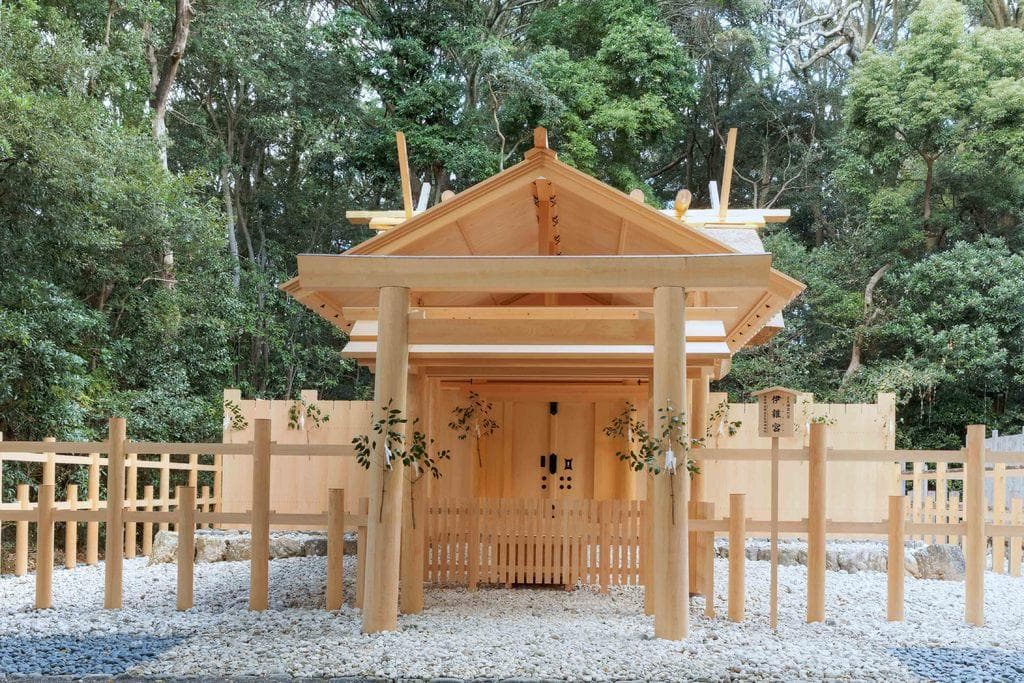
Izawa-no-miya is a Shinto shrine in the Kaminogō neighborhood of Isobe, in the city of Shima, Mie Prefecture, Japan. It is one of two shrines that claim the title of ichinomiya of the former Shima Province. Along with Takihara-no-miya in Taiki, it is one of the Amaterasu-Ōkami no Tonomiya—external branches of the Inner Shrine (Naikū) of Ise Grand Shrine (Ise Jingū).
Izawanomiya also holds a special status among the betsugū (auxiliary shrines) under Naikū of Ise Jingū. Because the trunk of its camphor tree resembles a kinchaku (a money pouch), it is also known as the “kinchaku camphor tree,” said to help build up savings for those who touch it.
Izawanomiya Otaue Festival
This festival is held every year on June 24 at Izawanomiya (Izawa Shrine)—one of the 123 Shinto shrines that make up the vast Ise Grand Shrine complex in Mie Prefecture. The festival is officially recognized as an intangible cultural asset and is counted as one of Japan’s three major “Otaue” festivals. Otaue means rice planting, and sowing rice seedlings is one of the Shinto rituals performed to ensure a good harvest. The other major festivals are held in Chiba Prefecture in April and as part of the Sumiyoshi Festival in Osaka.
In addition to the ritual planting, a large blue bamboo pole is placed at the bottom of the muddy field. Teams of men wearing fundoshi (loincloths) scramble through the mud to seize the pole and carry it off. It is believed that those who successfully take the pole will be granted safety while at sea.
The festival’s mythology tells of an ancient visit by seven sharks that swam up the Nogawa (No River) to visit the shrine. The sharks are said to still visit today, and local fishermen suspend fishing—presumably to avoid catching them by accident. An added bonus is the chance to scramble through the mud for the talismanic bamboo pole.
Official website: https://www.kankomie.or.jp/event/detail_5106.html
General Information
- Address: 374 Isobecho Kaminogo, Shima, Mie , Japan
- Telephone:
- Admission: Free
Opening Hours
- 5:00–18:00 (January–April, September)
- 5:00–19:00 (May–July, August)
- 5:00–17:00 (October–December)
- No holidays
Access
- From Kintetsu Kaminogō Station: about 5 minutes on foot
- By car: from Ise West Interchange, via the Ise Highway to Isobe Town, Shima City
History of Izawanomiya Shrine
The origins of Izawa-no-miya are unknown. According to the spurious Kamakura-period Yamatohime Seki, the shrine was founded by Princess Yamato, daughter of Emperor Suinin and the first saiō of Ise Grand Shrine. Seeking a place of sacrifice farther east of Ise, she is said to have found this as the only land in the area with rice fields. While this legend is unsubstantiated, the earliest references to the shrine appear in the 804 Kotai Jingu Ceremony Book and in the 927 Engishiki records.
The shrine was looted and burned by forces from Kumano Shrine during the Genpei War in 1180. During the Edo period, the shrine’s priests forged a document attempting to “prove” their shrine was the original Ise Grand Shrine, and that the existing Ise Grand Shrine was an imposter. In the Meiji period era of State Shinto, the shrine was regarded as part of Ise Grand Shrine and was not assigned a rank under the modern system of ranked Shinto shrines.
The sacred rice-planting ceremony held annually on June 24 is regarded as one of Japan’s three major rice-planting festivals, together with Katori Jingū and Sumiyoshi Taisha. The ceremony was designated a National Important Intangible Folk Cultural Property in 1990. The shrine is a five-minute walk from Kaminogō Station on the Kintetsu Shima Line.
Social Media
- Website: https://www.isejingu.or.jp/about/outerbetsugu/
- Facebook: https://www.facebook.com/izawanomiya/
- Instagram: https://www.instagram.com/explore/tags/%E4%BC%8A%E9%9B%9C%E5%AE%AE/