In this guide
- 01What A Kissaten Is (And What It Is Not)
- 02Ten Minutes, On Purpose: The Service Design Of Slowness
- 03From Dejima To Shōwa: A Brief, Verifiable Lineage
- 04The Cup, Explained: Brewing Methods You’ll Actually Taste
- 05The Morning Set (モーニングセット): Japan’s Most Useful Small Hack
- 06Kissaten Vs. Specialty Coffee (2010s–Now): Two Different Pleasures
- 07Tokyo, Kyoto, Osaka: How To Fold Kissaten Into A High-End Itinerary
- 08Etiquette In Kissaten: The Rules That Keep The Room Intact
- 09FAQ: Kissaten For First-Time Visitors
- 10A Quiet, Ordinary Place That Resets You
- 11Why Choose Japan Royal Service
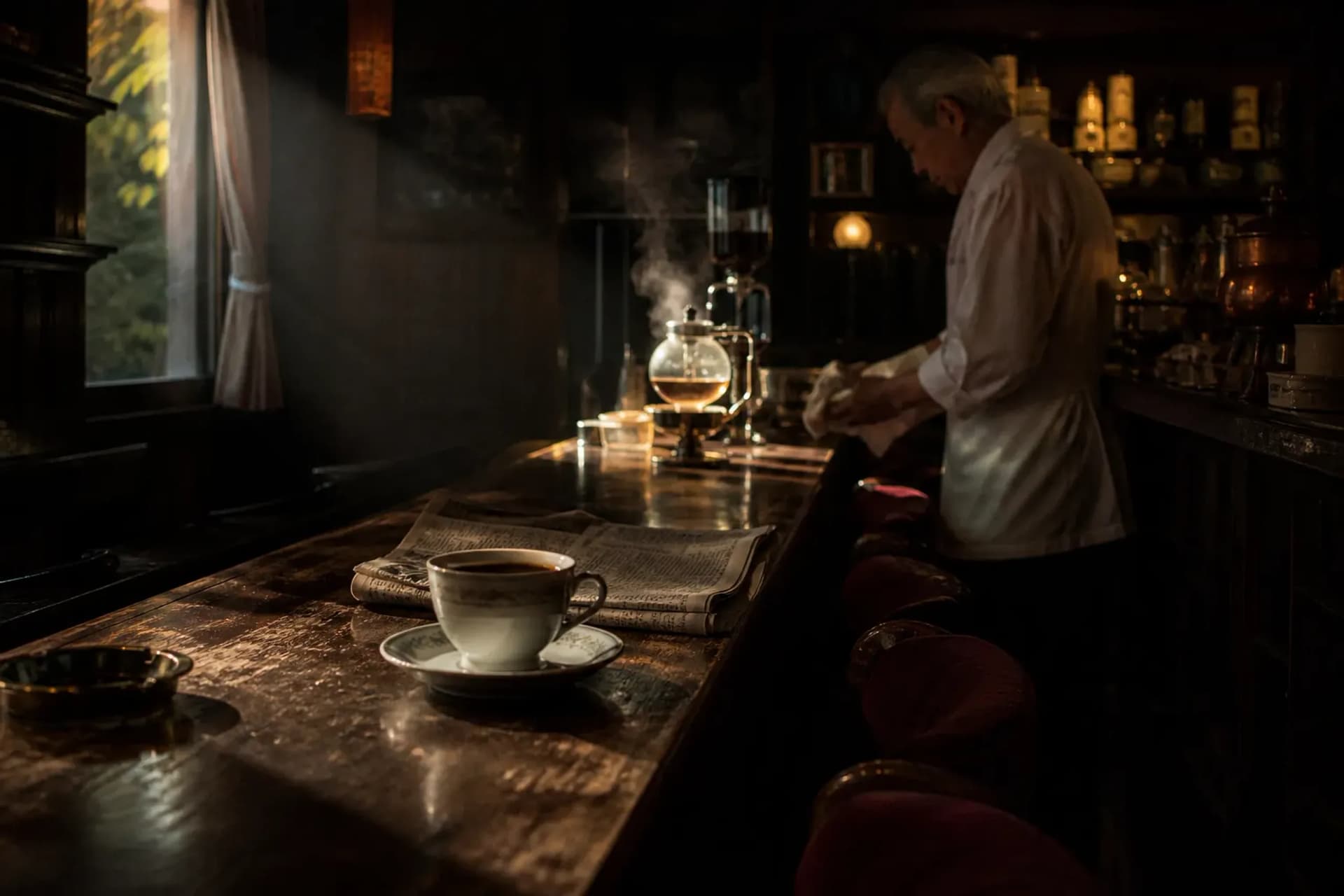
The counter is worn where elbows have rested for decades. A small bell gives a dry ring as the door closes, and the street noise thins to almost nothing. Someone turns a page. The master looks up once, then down again, as if time is a material to be handled with care.
You order coffee and it does not arrive quickly. Good. In a kissaten, speed is not service. The wait is the point, and that single cup is the work.
Our team at Japan Royal Service often sees first-time visitors walk into a kissaten expecting a modern café: laptops open, takeaway mindset, a quick caffeine fix before the next stop. It rarely goes well. Kissaten reward a different posture—patient, quiet, observant—and once you meet them on their terms, they become one of Japan’s most grounding small experiences.
What A Kissaten Is (And What It Is Not)
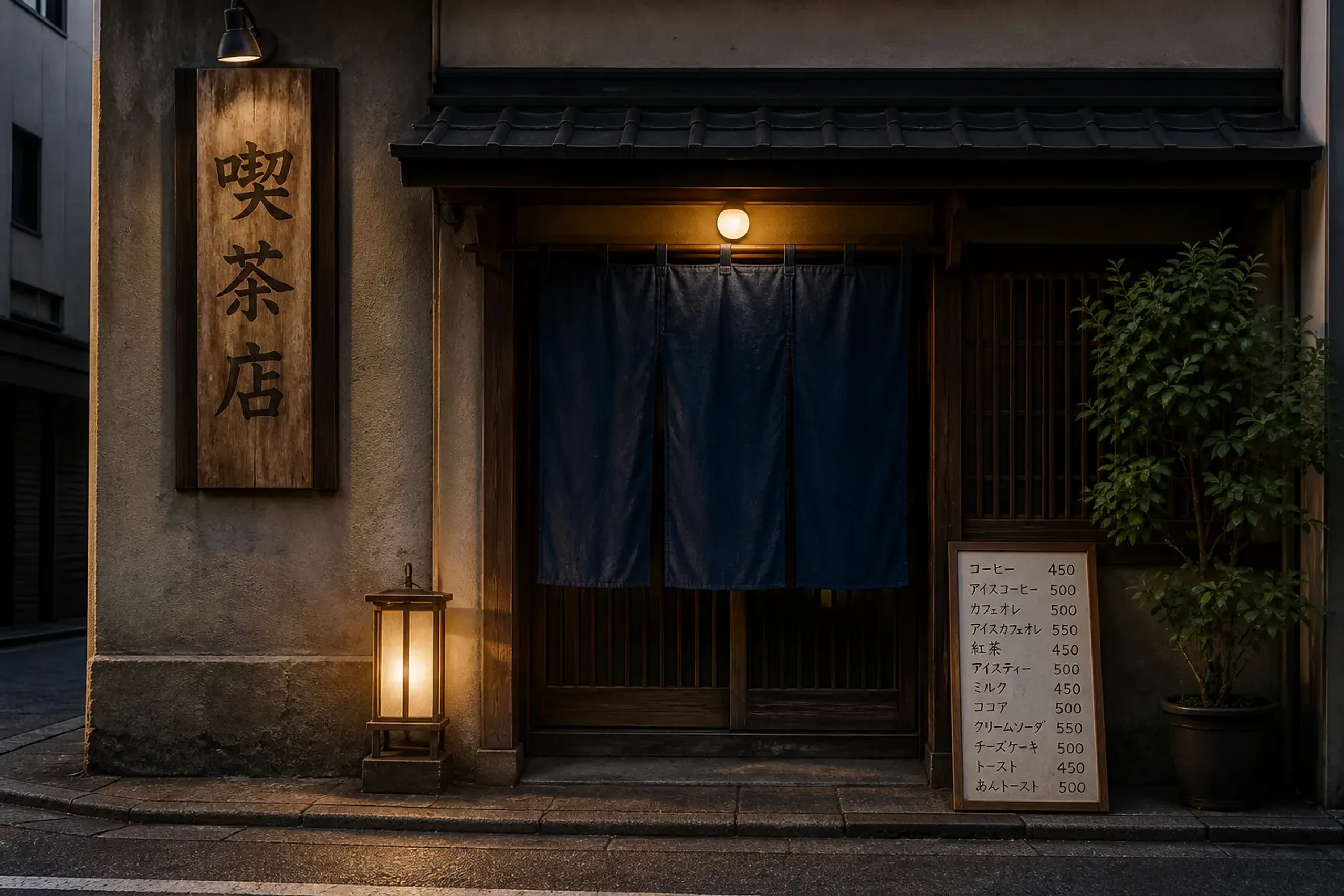
A kissaten announces itself quietly—often with nothing more than a curtain, a sign, and a promise of time.
Kissaten (喫茶店) literally means “tea-drinking shop.” Misleading, now. Many kissaten are primarily about coffee, and have been for generations.
Still, the name matters because it points to the older idea: a place to sit and drink, not to rush through. Not a co-working space. Not a grab-and-go bar. A room where a cup can take ten minutes because the person making it believes the process is part of what you came for.
This is where the shokunin mindset becomes visible without any speech. A kissaten master may spend years adjusting grind size, water temperature, pouring rhythm, and even the age of a cloth filter, until one house cup tastes exactly like the shop’s memory of itself. One cup. One standard. No hurry.
Why Luxury Travelers Misread Kissaten
Luxury travel often trains people to expect frictionless speed. That expectation is useful in an airport. In a kissaten, it is the wrong tool.
When guests tell us a kissaten felt “slow,” we ask one question: slow compared to what? A kissaten is closer to an older European coffeehouse tradition—places where time was spent on purpose—than to most Western café culture today. Ten minutes is not a delay. It is the shape of the experience.
Ten Minutes, On Purpose: The Service Design Of Slowness
In a kissaten, the pace is part of the cup.
In a kissaten, the room is part of the cup. Low light. A clock you actually hear. Sometimes jazz on vinyl. Sometimes just the small sounds: water, porcelain, a spoon placed down with precision.
Slowness here is not nostalgia theatre. It is a way of protecting attention. You are not being entertained. You are being given a lane to settle into.
This is also where wabi-sabi fits naturally. Not as a slogan. As restraint. The table may have a scratch. The cup may not match the saucer. None of it is apologizing. The calm is the value.
The Master’s Counter: A Craft Studio Disguised As A Coffee Shop
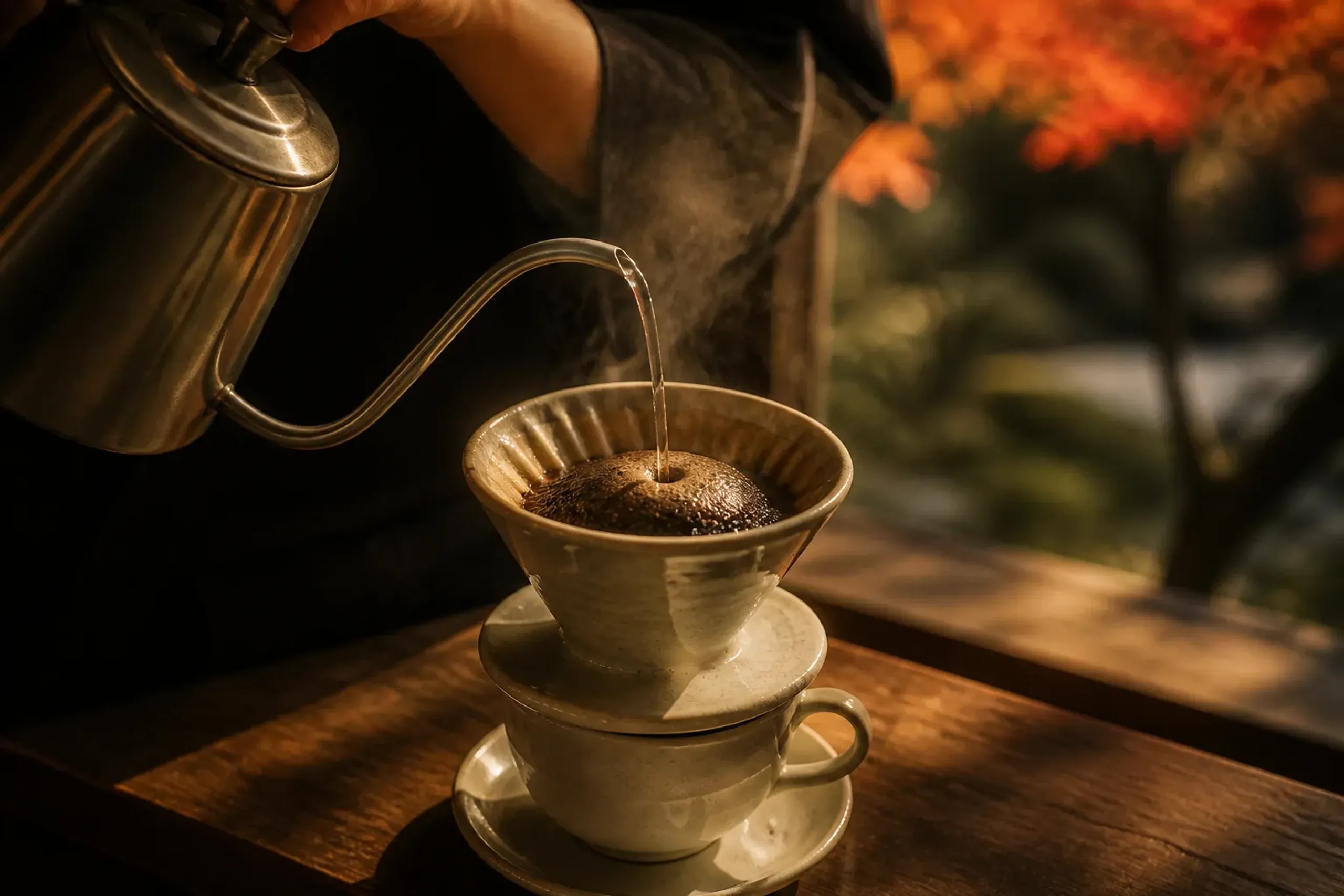
Watch the hands. The movements are small, practiced, almost watchful. The tools are ordinary—kettle, dripper, cups—yet used with the exactness you recognize in other Japanese crafts.
We have seen guests lean forward the way they would at a ceramics kiln or a knife workshop. Same instinct. In a kissaten, the output just happens to be drinkable.
From Dejima To Shōwa: A Brief, Verifiable Lineage
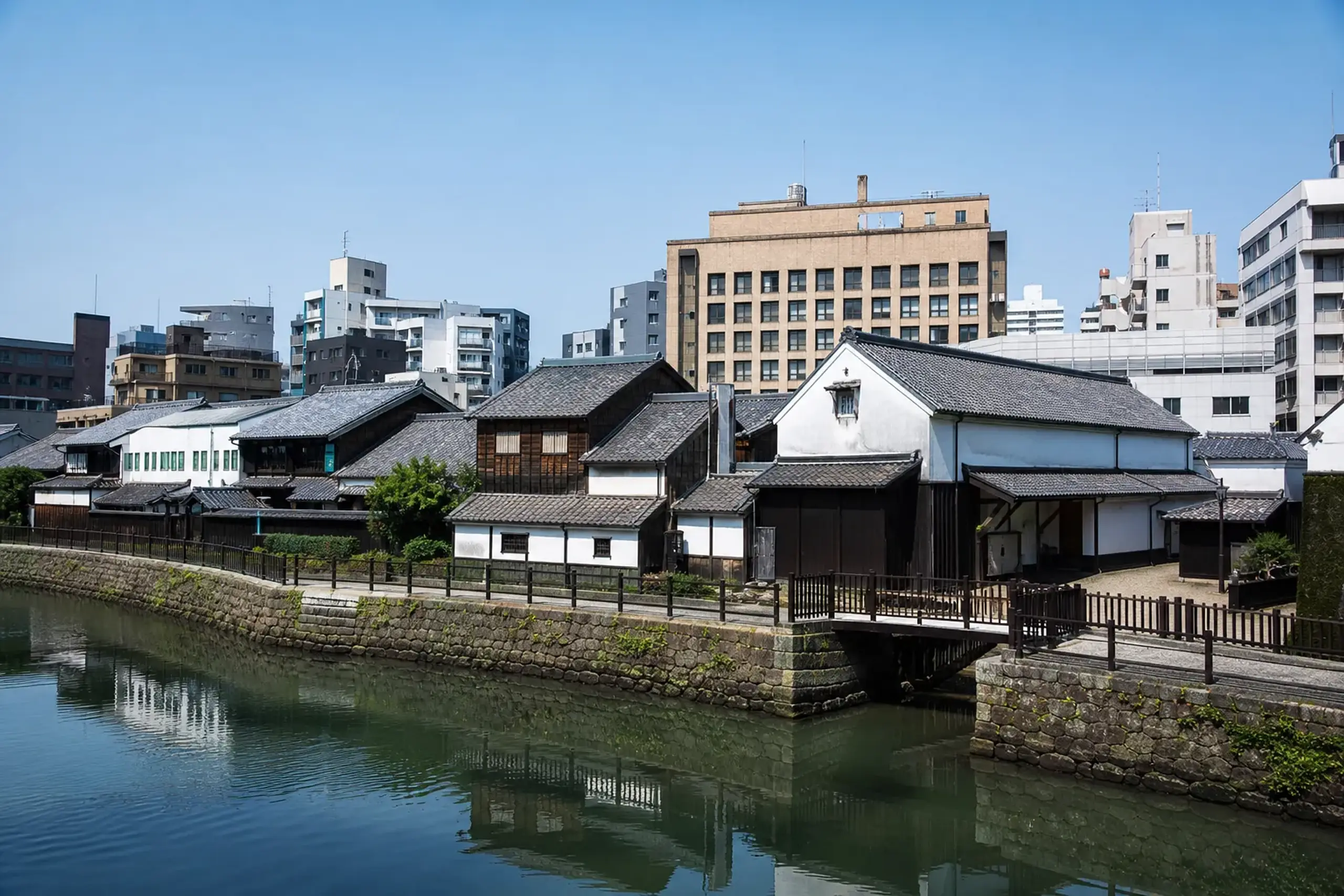
Coffee’s earliest thread in Japan runs through Dejima, Nagasaki.
Coffee reached Japan through Dutch traders at Dejima in Nagasaki in the 17th century. That is the starting thread. Much later, coffee culture began taking root after the Meiji Restoration, when Japan’s relationship with Western goods and ideas changed quickly.
Tokyo’s early coffeehouse history includes Kahi Chakan, which opened in Ueno in 1888. Contemporary accounts describe it as more than a coffee stop: it offered billiards, card games, newspapers, and even shower rooms, and worked as a gathering place for intellectuals. It is often cited as Japan’s first kissaten in a “true” sense—social, multi-purpose, public.
The kissaten in a form most people recognize today appeared in the 1920s, then expanded after the Second World War as coffee imports increased. The Shōwa era (1926–1989) became the long stage where kissaten culture spread, matured, and specialized.
By the 1970s, offshoots were well established. Jazz kissa—listening-focused cafés—had roots going back to the late 1920s, when early music cafés (ongaku kissa) appeared. Manga kissa later took the “sit and stay” idea in a different direction, built around reading and long hours. Different worlds. Same underlying permission: you can occupy time here.
Key fact: JNTO notes kissaten grew in popularity during the Shōwa era, especially after WWII as coffee-bean importation increased.
The Cup, Explained: Brewing Methods You’ll Actually Taste
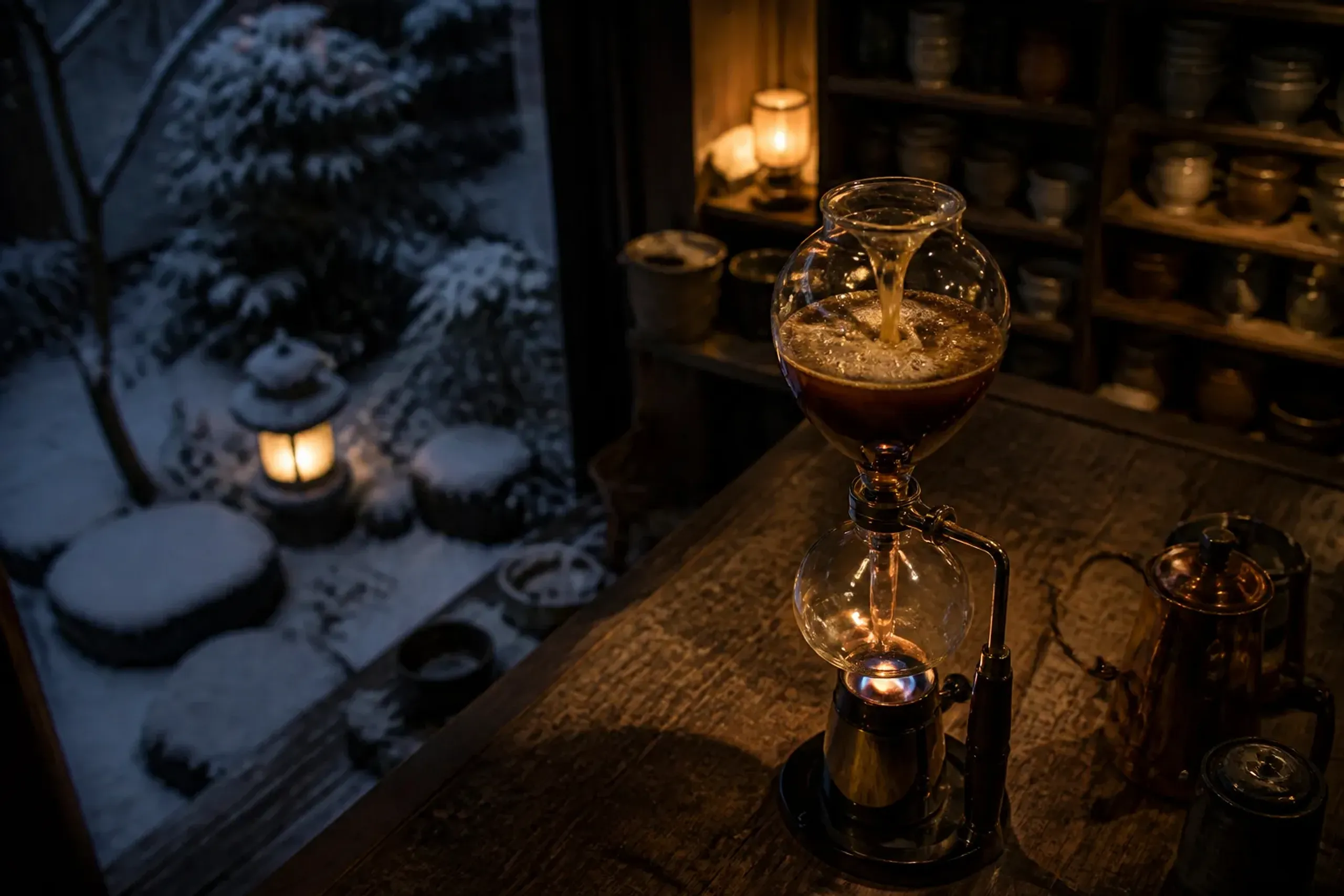
Syphon brewing looks theatrical, but the payoff is a clean, aromatic cup.
This is the section most guides skip, then wonder why kissaten feel like “a vibe” rather than a craft. The method changes the cup. Sharply.
Below are four common approaches you will encounter. Not everywhere. Not always labeled. But common enough that knowing them changes what you order.
Nel Drip (Cloth-Filtered Coffee)
Nel drip filters coffee through cotton flannel (“nel”). Many coffee people describe the result as rounder and more mellow, with softened edges and less sharpness. The texture can feel almost silky.
It is also maintenance-heavy. Cloth holds oils. It needs care. That care is part of why nel drip is often associated with old-school shops and masters who have kept a routine for years.
Syphon Brewing
A syphon uses vapor pressure and vacuum to move water through coffee in a glass apparatus. It looks like a science experiment, but it is not a gimmick. The result is typically clean, transparent, and aromatic.
If you like clarity and a lighter feel, syphon is often a good bet. If you like weight and bass notes, nel drip may suit you more.
Iced Coffee: Hot Brew, Flash-Chilled
In many kissaten, iced coffee is not cold brew. It is brewed hot, then cooled quickly over ice. That method can lock in aroma and keep the drink from tasting flat.
It also means the shop can dial in the taste with the same attention as a hot cup. A real iced coffee, not an afterthought.
“American” (アメリカン) Is Not A Large Coffee
Travelers order “American” expecting size. In Japan, アメリカン usually refers to a lighter coffee style, often associated with a thinner taste than the house blend. Not a bigger cup.
If you want more volume, ask politely about cup size or a refill policy. Do not assume the word “American” means what it would in Los Angeles or London. It rarely does.
The Morning Set (モーニングセット): Japan’s Most Useful Small Hack
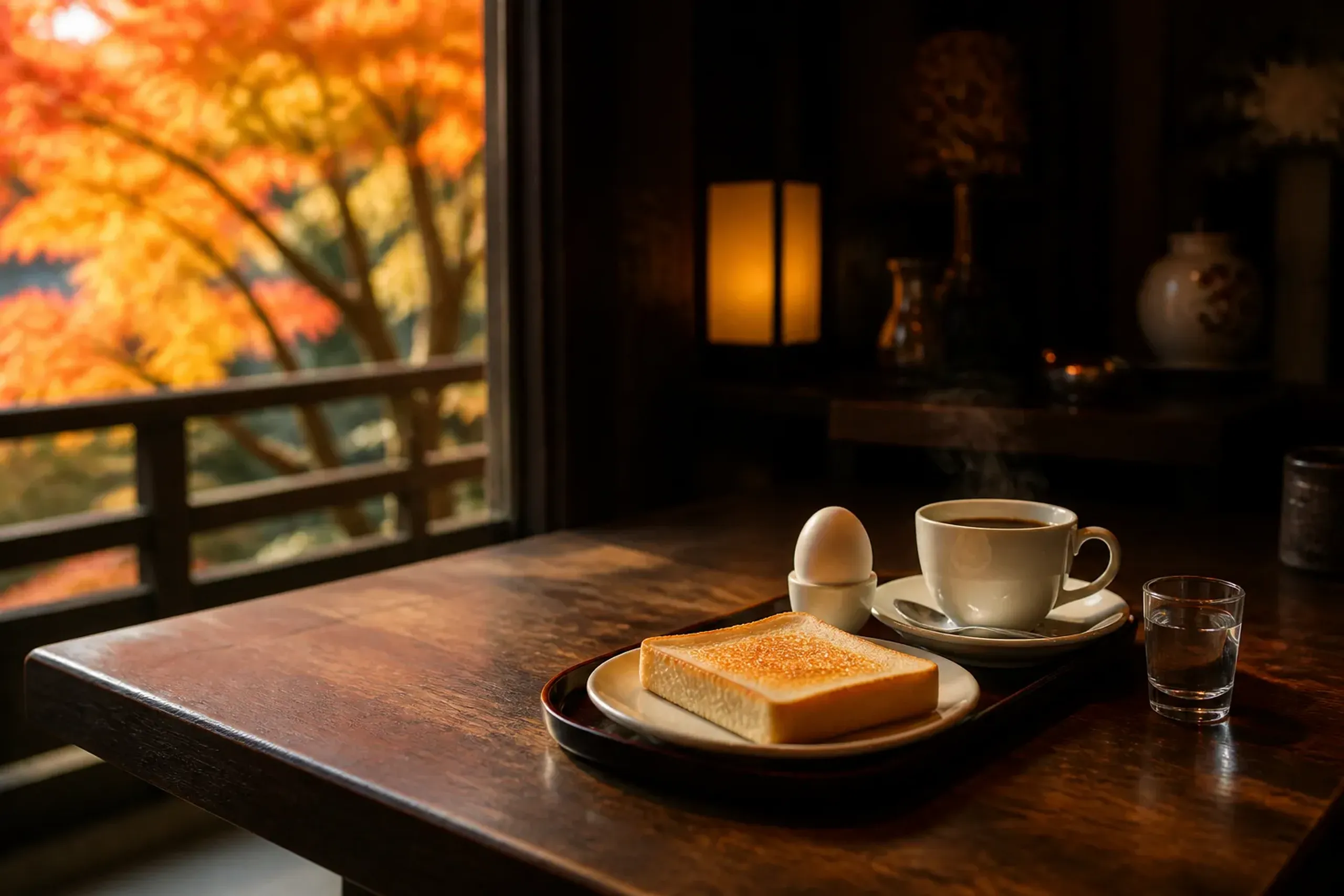
Order early and you may be served a morning set—simple, filling, and quietly local.
Order early and you may be fed. That is the deal, and it surprises visitors because it feels too generous for modern city life.
A morning set (モーニングセット) commonly means you order a coffee in the morning—often before roughly 10–11am—and receive a simple plate at no extra charge, such as toast and a boiled egg. The exact cutoff time and contents vary by shop. Ask quietly. One sentence is enough.
Nagoya is famous for its morning culture, where some kissaten add ogura (sweet red bean) toast and sometimes salad. If you are passing through Nagoya on the way between Tokyo and Kyoto, morning is a smart moment to slow down rather than rushing straight to the platform.
What To Order When You’re Unsure
If the menu feels dense, keep it simple. A hot coffee and a morning set is an easy entry because it matches the pace of the room.
If it is later in the day, classic kissaten dishes are part of the tradition. Forbes highlighted Shinjuku as home to decades-old kissaten and pointed to staple foods like omurice, spaghetti Napolitan, tamago sando, and ice cream floats. These are not “trendy.” They are comfort foods that became part of kissaten identity over time.
Kissaten Vs. Specialty Coffee (2010s–Now): Two Different Pleasures
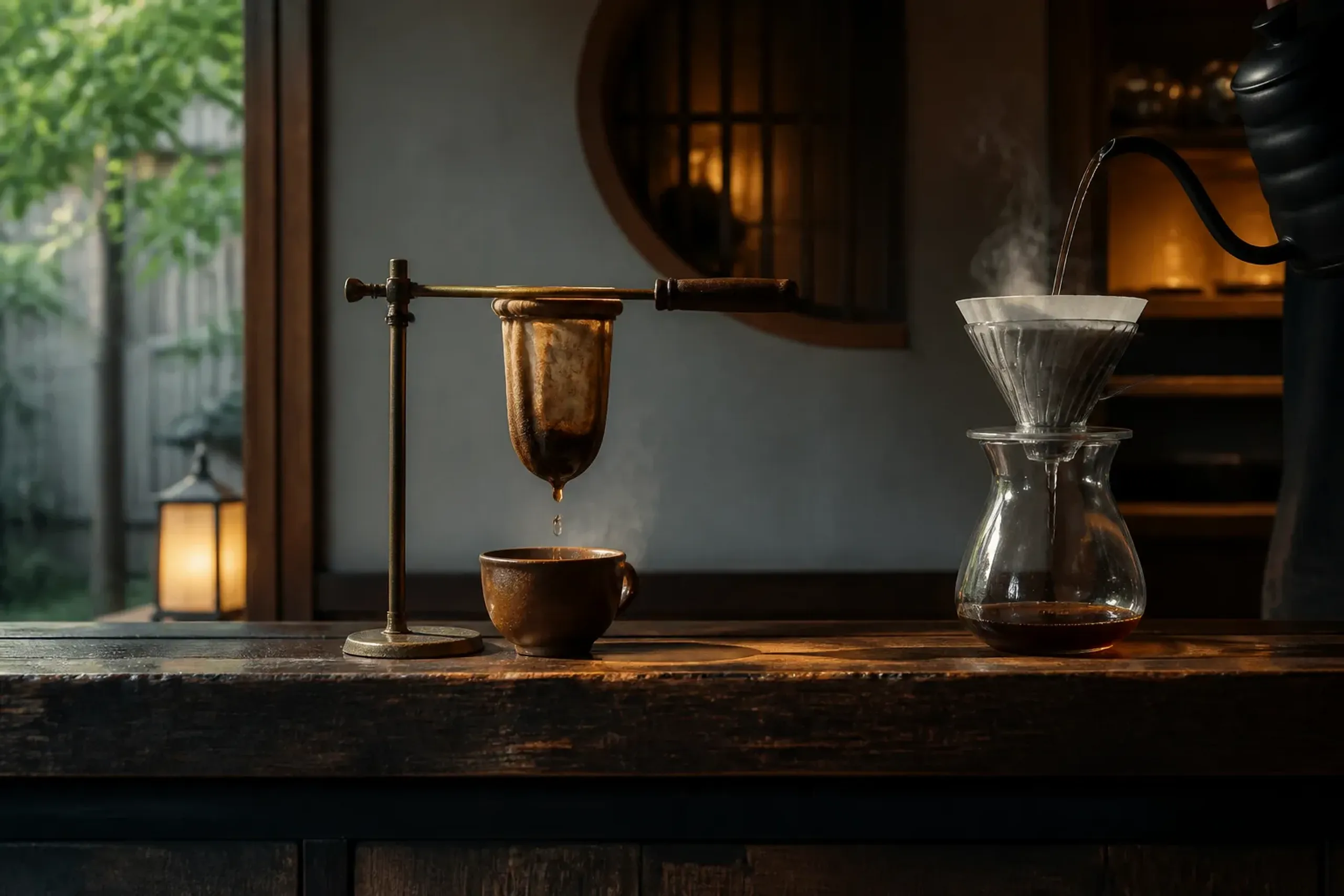
Japan’s specialty coffee scene expanded strongly in the 2010s. Many shops focus on single-origin beans, lighter roasts, and bar-counter conversation. It can be sharp, modern, and fast in the best way.
Kissaten are a different proposition. Often darker roasts. Often softer lighting. Often rules that quietly discourage laptops or phone calls. The pleasure is not discovery. It is continuity.
Who Each Style Suits
Choose a kissaten if you want to disappear for an hour, reset your senses, or experience a form of everyday Japan that has survived chain logic. It pairs well with museums, gardens, and long walks. A pause that actually lands.
Choose specialty coffee if you want to talk beans, try new profiles, or pick up a quick, excellent cup between appointments. It works well when your day has tight edges and you need something clean and efficient.
Neither replaces the other. Treating them as a ranking is how visitors miss the point.
Tokyo, Kyoto, Osaka: How To Fold Kissaten Into A High-End Itinerary
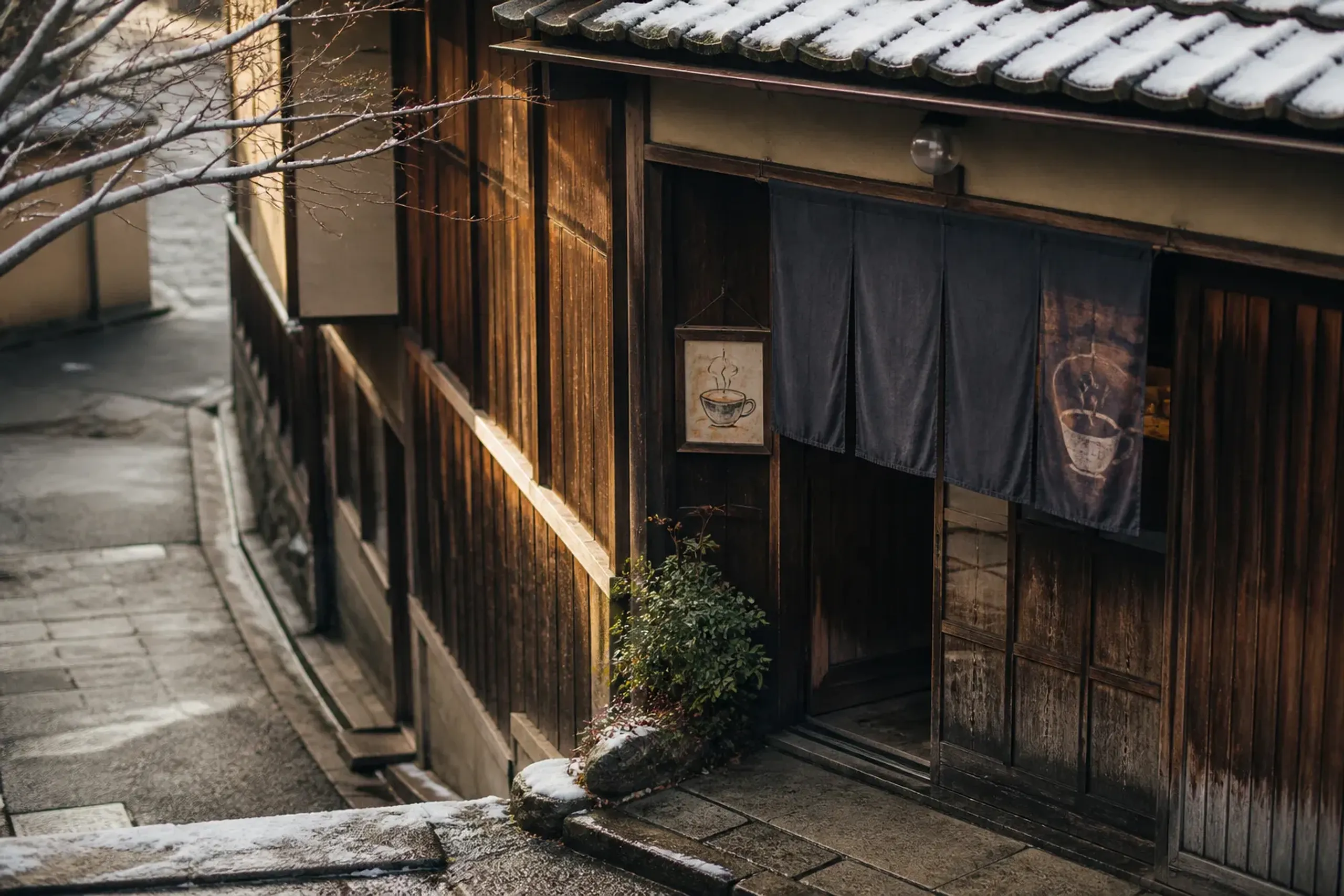
Kissaten are ordinary public places. That is their strength. You do not “do” them like a checklist item; you let them support your day.
In our experience, the best approach is to plan a kissaten stop as a buffer. Before a museum. Between shopping districts. After a temple when your ears are still full of bells and gravel.
Tokyo: Use Kissaten To Change The Tempo
Tokyo can run too hot. Even for people who live in big cities.
If you are moving between neighborhoods—say, a morning in Ueno museums and an afternoon in Ginza—schedule a kissaten stop as a deliberate gear change. Ten minutes for a cup becomes a boundary: street outside, quiet inside.
One verifiable example often discussed in English-language coverage is Chatei Hatou near Shibuya Crossing, which opened in 1989 and is known for hand-poured drip coffee and a quiet, jazz-soundtracked atmosphere. Reports note waits can stretch to around 20 minutes for certain orders due to slow, traditional brewing. That is not a problem to solve. It is the design.
Kyoto: Pair With Gardens, Not Rush Hours
Kyoto has obvious peaks: major temples at opening time, popular streets at midday, and transport bottlenecks around sunset. Kissaten can sit in the quieter seams.
We often suggest placing a coffee pause after a garden visit or a long walk through older lanes, when you are already tuned to restraint. It supports wabi-sabi without needing a lecture. Quiet continuity.
If you want a broader Kyoto cultural plan, our team has written a separate guide on contemporary art and architecture in the city, which pairs well with slower coffee time when your eyes are already in “detail mode.”
Osaka: Nostalgia Meets Modern Hybrids
Osaka’s coffee culture includes both classic kissaten and newer concepts that borrow the aesthetics while using modern brewing. Osaka Tourism’s 2026 coffee guide highlights LiLo Coffee Kissa as a place that blends kissaten nostalgia with contemporary coffee, and it also points to morning set culture.
Osaka can be brisk and bright. Kissaten give you a counterweight, especially if your day includes markets, street food, or dense shopping arcades.
Etiquette In Kissaten: The Rules That Keep The Room Intact
Kissaten etiquette is not complicated. It is just less negotiable than in many modern cafés.
If you follow a few simple habits, you will blend in, and the master can keep doing their work without friction.
Phones, Laptops, And The Sound Of Your Day
Many kissaten are not laptop-friendly, and some actively discourage it. Even when devices are not banned, the room may feel like it is asking for less. Take the hint.
Keep calls outside. Silence your phone. If you need to work, save it for a place designed for that purpose. A kissaten is a room for presence.
Smoking: Still Common In Some Shops
Smoking is still permitted in many kissaten. This surprises travelers, especially those who assume modern Japanese cities have fully moved on.
If you are sensitive to smoke, be selective, go earlier in the day when foot traffic is lighter, or choose specialty coffee shops that tend to be non-smoking. Do not walk in and attempt to change the room. That will not end well.
The One Behavior That Marks You Out
Rushing. That is the tell.
If the cup takes time, let it. If the toast arrives after the coffee, accept it. The room is offering you a slower lane. Step into it.
FAQ: Kissaten For First-Time Visitors
What Does “Kissaten” Mean?
Kissaten (喫茶店) literally means “tea-drinking shop,” though many kissaten are primarily coffee-focused today.
Why Does Coffee Take So Long In A Kissaten?
Many kissaten use deliberate methods like hand-drip, nel drip, or syphon brewing. The time is part of the craft and the atmosphere. It is not meant to be fast service.
What Is A Morning Set (モーニングセット)?
A morning set is a common kissaten offering where ordering a coffee in the morning—often before around 10–11am—comes with simple food such as toast and a boiled egg. Cutoff times and contents vary by shop.
Is “American” (アメリカン) A Large Coffee In Japan?
Usually no. アメリカン often refers to a lighter coffee style rather than a larger size.
Are Kissaten The Same As Specialty Coffee Shops?
No. Kissaten tend to emphasize continuity, atmosphere, and a slower pace. Specialty coffee shops (especially those that grew in the 2010s) often emphasize bean origin, modern brewing, and a faster rhythm.
Can I Use A Laptop Or Take Photos Inside?
Many kissaten discourage laptops and prefer a quiet room. Photography—especially of interiors or the master—should be avoided unless you clearly have permission.
How Do I Plan A Kissaten Stop Without Wasting Time?
Place it as a buffer between major stops: after a museum, before shopping, or after a temple visit. Plan for 45–60 minutes so you are not watching the clock.
A Quiet, Ordinary Place That Resets You
Kissaten are not “experiences” in the loud sense. They are rooms that have refused to speed up, and that refusal is increasingly rare.
When you allow ten minutes for a cup, you start noticing other ten-minute things: the way a neighborhood breathes mid-morning, the way a train station sounds from one street away, the way your own pace changes when nobody is selling you urgency. That is why kissaten still matter.
Why Choose Japan Royal Service
Our team at Japan Royal Service designs Japan journeys for travelers who care about craft, calm routing, and privacy. Kissaten fit naturally into that style of travel because they reward patience and attention—qualities that also open doors to shokunin studios, quieter neighborhoods, and the Japan that rarely makes it into guidebooks.
When you travel with discretion in mind, small moments become the spine of the day. A ten-minute cup can sit between a museum and a private dinner, or after a long walk through older streets, giving you a reset that no lounge can replicate.
We do not treat kissaten as a checklist stop. We treat them as pacing tools—chosen for mood, location, and timing—so your day stays elegant even when the city gets loud. For tailored guidance as part of a bespoke itinerary, our concierge team can advise privately.
For private coordination, reach our team privately via WhatsApp or LINE, or contact us here. If your itinerary includes a driver day in Tokyo, Kyoto, or Osaka, explore our private transportation options and tell us the pace you want.