In this guide
- 01What A Matsuri Really Is (And Why That Matters)
- 02A Practical Spectrum: Watching, Guided Viewing, And Real Participation
- 03Festival By Festival: Where To Watch, Where To Join, And What Changes Everything
- 04What A Good Viewing Position Changes (Comfort, Context, And Conduct)
- 05Crowds, Heat, And Weather: The Constraints That Decide Your Night
- 06What To Wear, What To Carry, And What Not To Do
- 07How To Plan A Matsuri Night Step By Step (Without Guesswork)
- 08FAQ: Private Participation In Japan’s Matsuri (And The Questions People Actually Ask)
- 09From Wabi-Sabi To Shokunin: The Quiet Luxury Hidden Inside Matsuri
- 10Why Choose Japan Royal Service
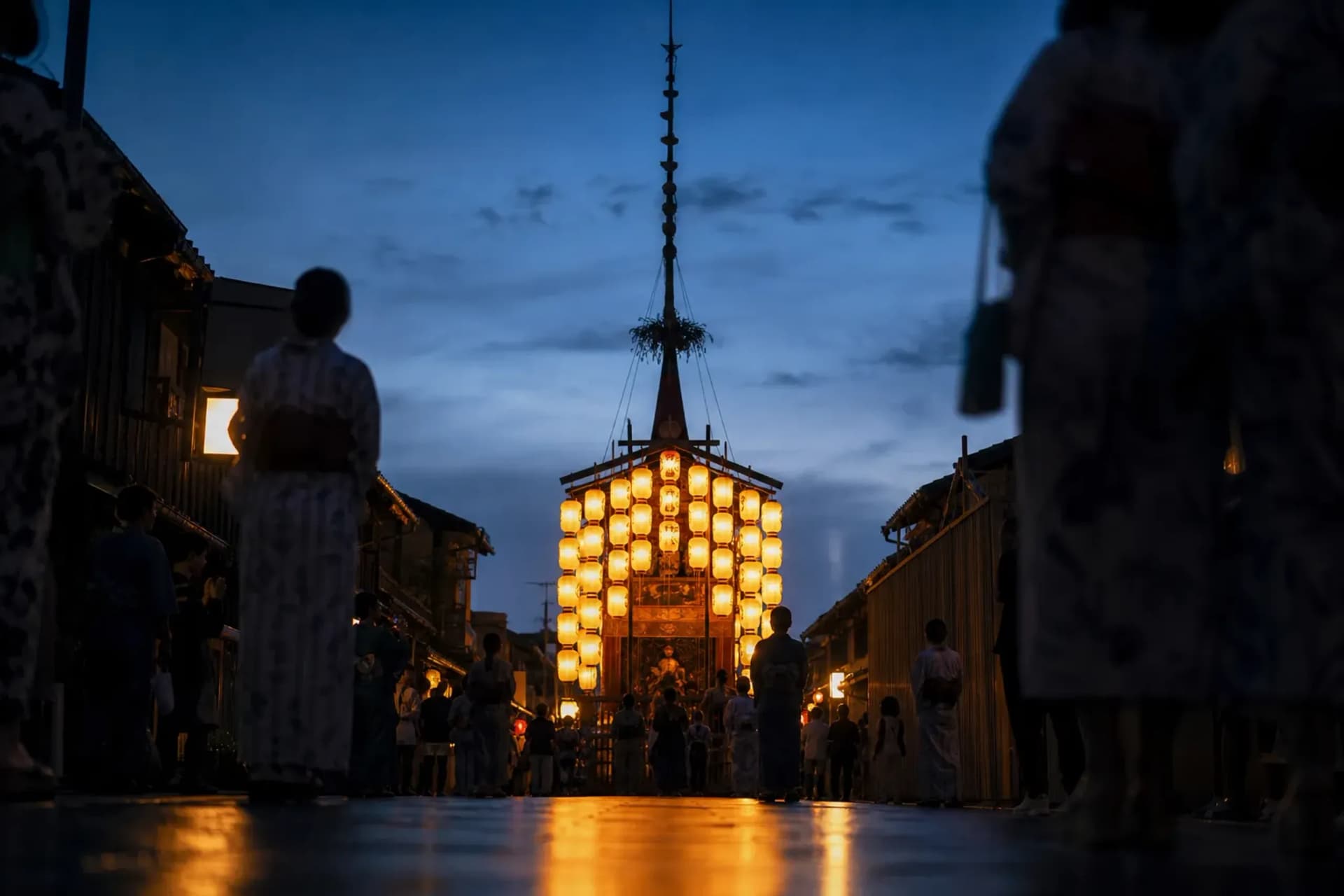
The street is already warm at dusk. Not “summer warm.” Radiating, closed-road, shoulder-to-shoulder warm.
Lantern light pools on white sleeves. A drum starts, then stops, then starts again, as if the rhythm is testing the crowd for patience.
This is the moment many luxury travelers misjudge. They arrive in Japan expecting a festival to behave like a show with an entrance, a seat, and a clean exit.
Matsuri are not that. They are neighborhood and shrine life, briefly turned inside out. Our team at Japan Royal Service plans for that reality, so you can witness it properly—calmly, respectfully, and with a place to stand when the city tightens.
What A Matsuri Really Is (And Why That Matters)
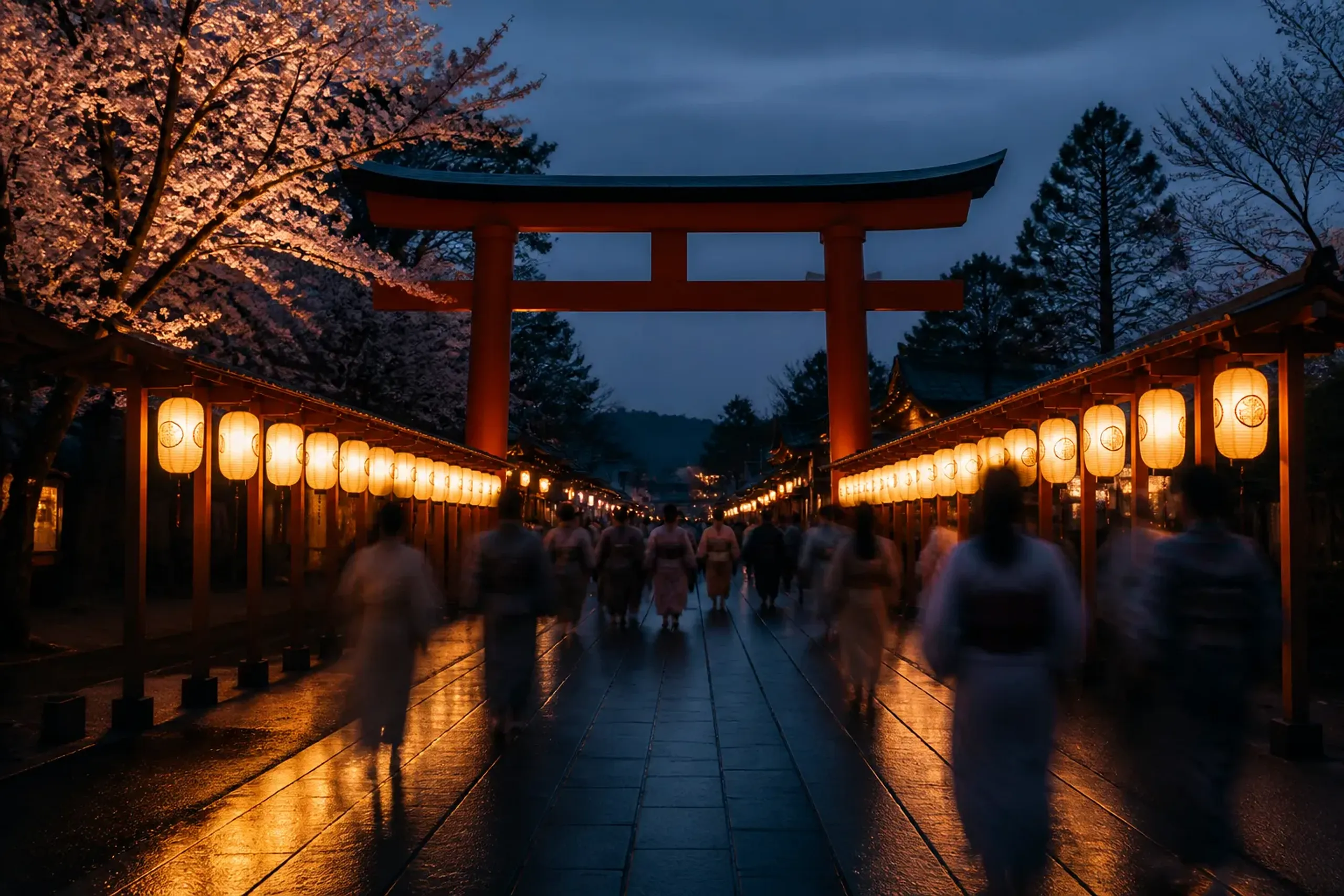
Matsuri are community religious events. Full stop.
They usually center on a shrine, local protection, seasonal gratitude, or remembrance. The music, costumes, and processions are not “extras.” They are the shape of a community’s promise to itself.
That frame changes everything about how you should attend. The right posture is not “what can I get.” It is “how do I enter without taking up too much air.”
In our experience, travelers enjoy matsuri most when they understand what is happening as it happens—why people bow, why routes pause, why a float turns with effort and noise instead of gliding like a parade.
Two Words That Keep You Out Of Trouble
Permission and proximity.
Some areas are for spectators. Some are for parishioners, bearers, and neighborhood associations who have earned that place over years.
If you don’t know which is which, you can offend people fast. Quietly. Then permanently.
A Practical Spectrum: Watching, Guided Viewing, And Real Participation
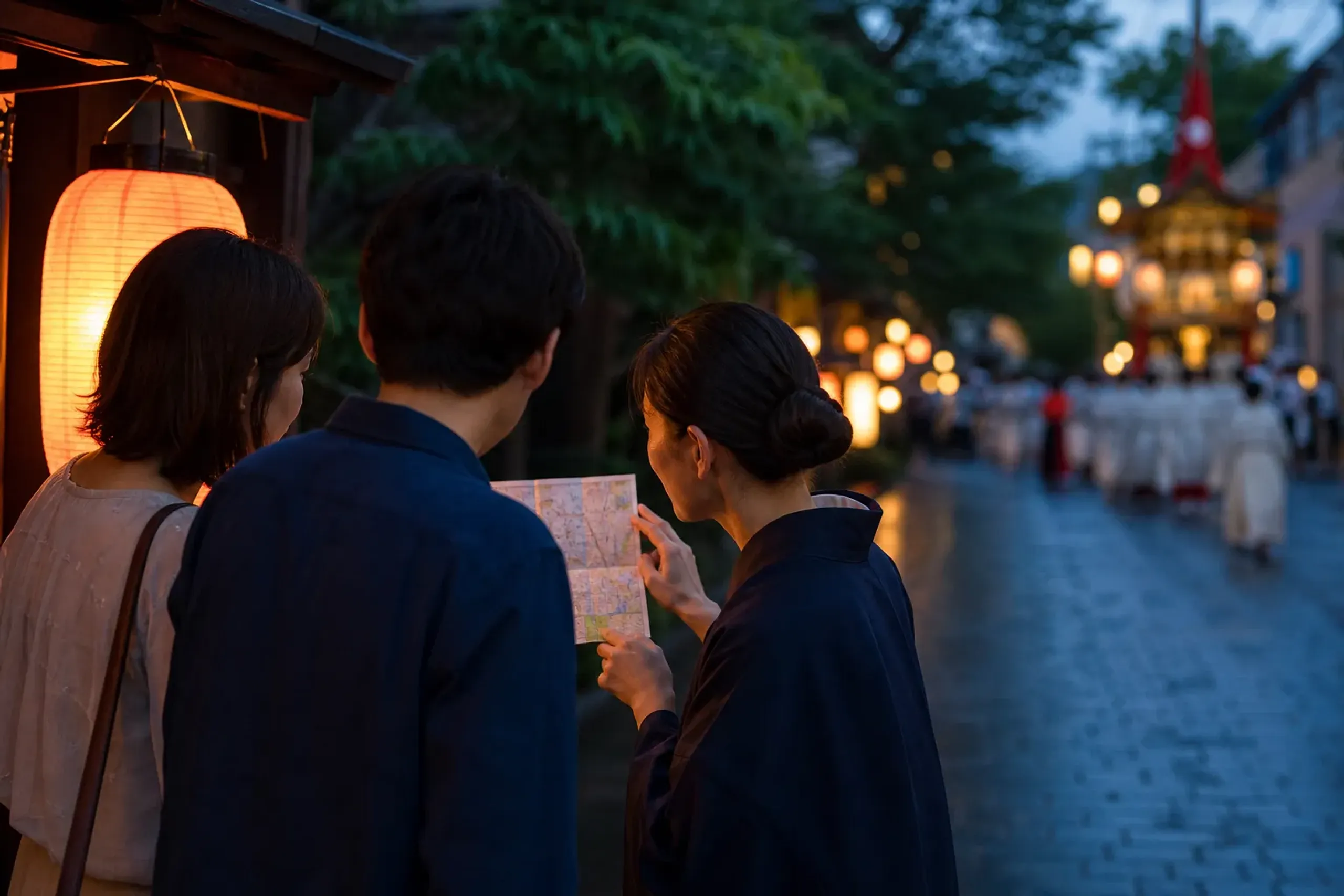
“Private participation” sounds simple online. On the street, it is not.
We think about it as a spectrum. It keeps expectations clean, and it keeps the festival clean too.
1) Watching From Public Space
This is the default for most visitors. It can be meaningful, but it can also be punishing.
Heat. Hours of standing. Bathrooms that feel like a rumor. Roads closed and trains overloaded at the exact moment you want to leave.
If this is the only plan, even a well-traveled HNW guest can end the night irritated, not moved.
2) Guided Viewing With Context (The Sweet Spot For Many HNW Guests)
This is where a matsuri becomes legible.
A guide who can explain what you are seeing in real time changes the night: which neighborhood is passing, why the chant shifts, what a pause means, when to step back, when not to photograph.
You still feel the street. You just don’t feel lost in it.
3) Genuine Participation (Rare, And Not Always Appropriate)
Some festivals welcome outside participation. Many do not.
And no arrangement changes that. Not money, not status, not connections.
When participation is truly open—where the community explicitly invites visitors—we can shape your approach so you join in a way that feels grateful, not extractive.
Key fact: People carrying a mikoshi (portable shrine) are commonly members of neighborhood associations, with years behind the privilege. Many festivals do not allow visitors to join that role.
Festival By Festival: Where To Watch, Where To Join, And What Changes Everything
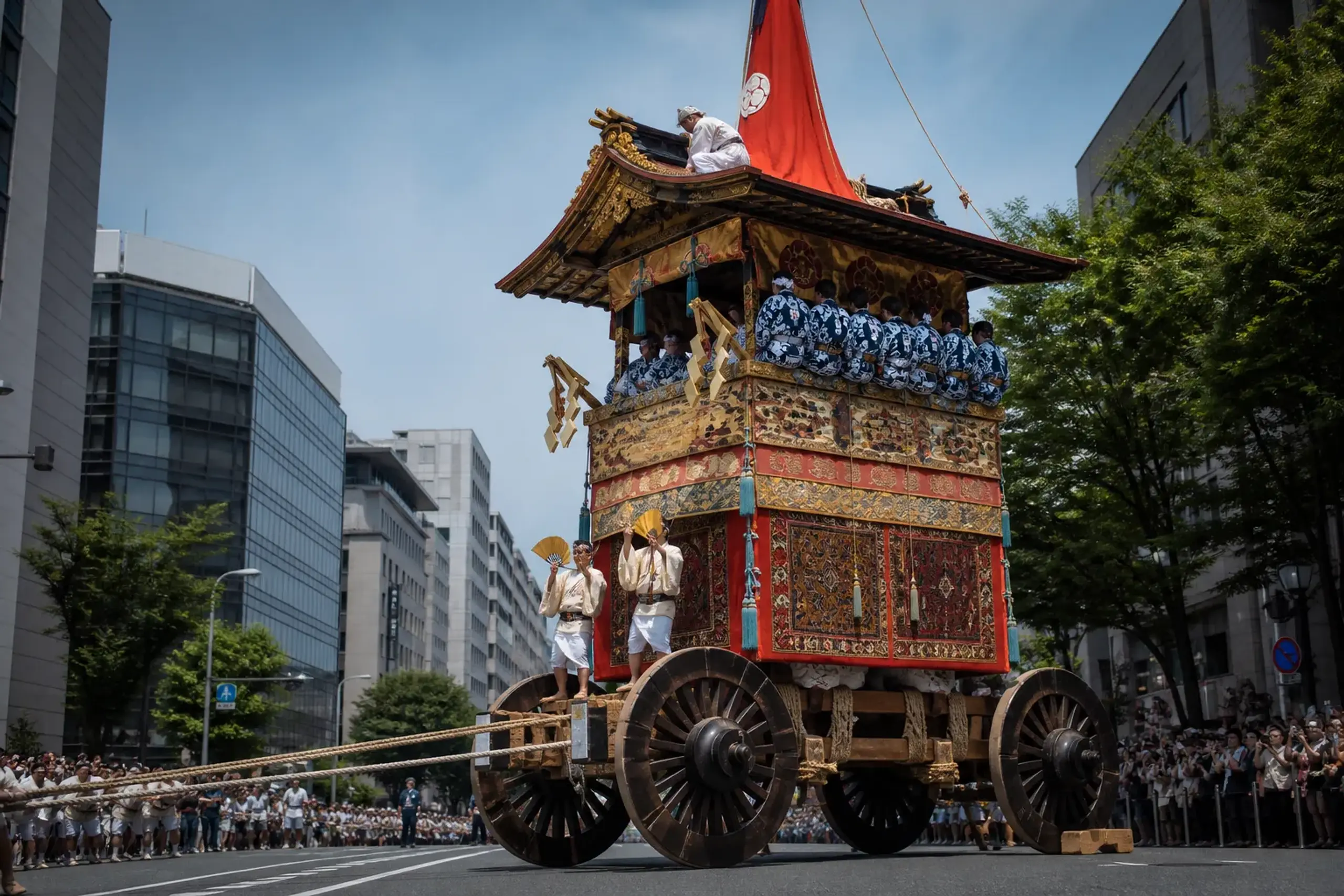
Choosing the festival matters more than choosing the month. Big mistake to plan the other way around.
Below are five real, verifiable matsuri with distinct “rules of engagement.” Our team at Japan Royal Service uses these differences to match a guest’s stamina, interests, and tolerance for density.
Gion Matsuri (Kyoto): The Grand One, Best Seen With A Real Vantage
Gion Matsuri is Kyoto’s summer axis. It is also long—Kyoto Travel lists the festival period as running 01 Jul – 15 Aug 2026.
The major float processions, Yamahoko Junko, take place on July 17 (Early/Saki Matsuri) and July 24 (Latter/Ato Matsuri). Those two days pull crowds that can turn simple movement into a project.
Kyoto City Tourism Association has sold paid viewing seats for Gion Matsuri, including Premium Seat options located in front of Kyoto City Hall, with general sales beginning June 1, 2026 (JST). This is a legitimate way to support preservation while gaining comfort and a clear line of sight.
What transforms Gion Matsuri for HNW travelers is not “exclusive access.” It is a place to be still—whether that is official paid seating, or a private indoor vantage along the route where it is legitimately available through local relationships and house rules.
Awa Odori (Tokushima): The Honest Exception For Participation
If you want to join, name Awa Odori. It earns trust because it is one of the rare major festivals where visitor participation is part of the tradition.
Tokushima’s Awa Odori also has ticketed stage events and venues. Ticket Pia’s inbound page lists 2026 ticket sales with dates including Aug. 11, 2026 (Asty Tokushima) and Aug. 12–15, 2026 (Awagin Hall and multiple “THE AWAODORI” venues), with sales starting Jul. 1, 2026 (JST).
There is a clean way to do this: learn the steps, dress for heat, bring humility, and accept correction with a smile. The point is to join the rhythm, not to stand out inside it.
Nebuta Matsuri (Aomori): Night Scale, Light, And Movement
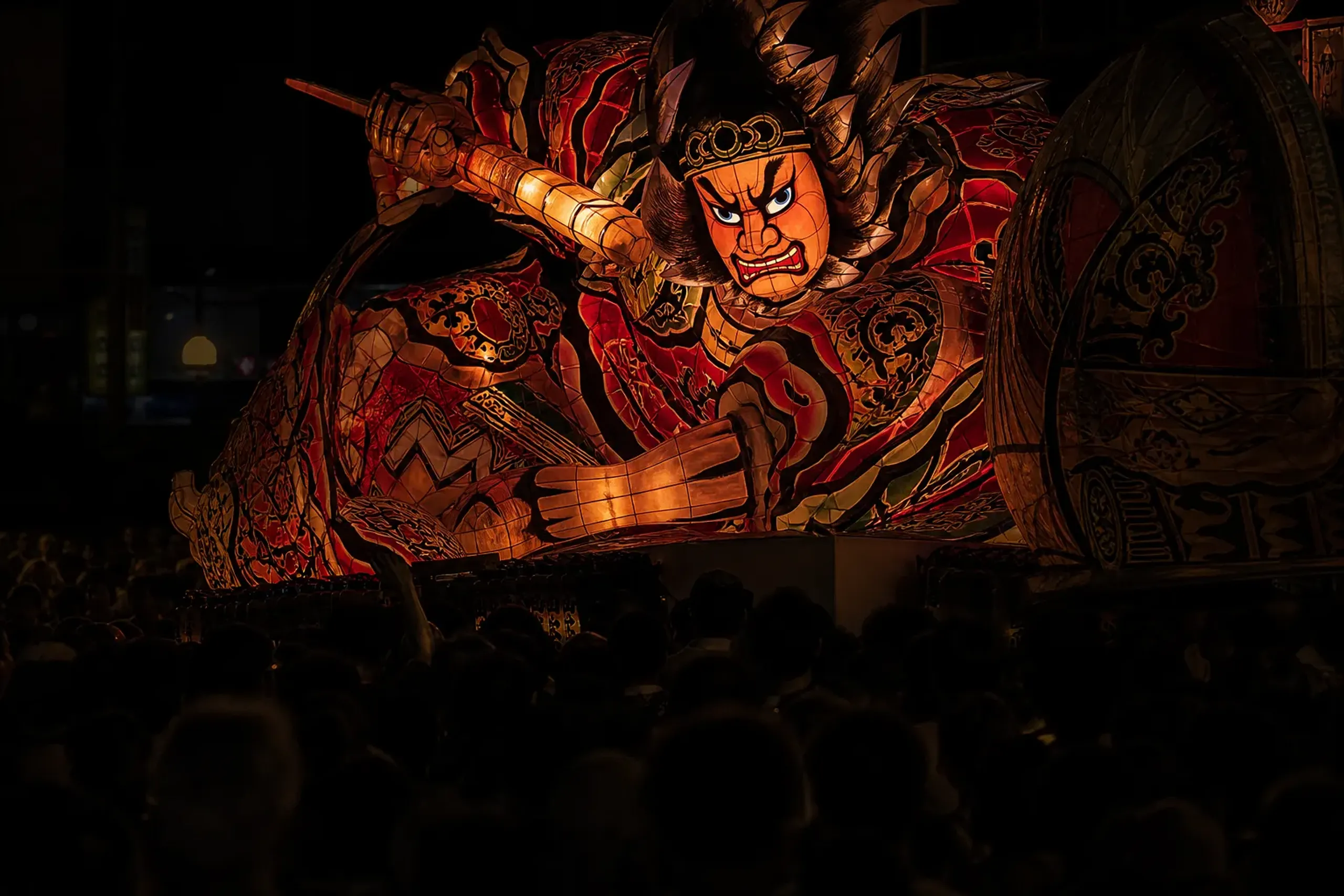
Nebuta Matsuri is known for illuminated floats at night. It is big, and it moves with intent.
This is the festival for travelers who want a visceral visual memory: the glow against dark streets, the sense of engineered weight, the crowd’s collective inhale when something enormous turns.
Plan for late hours, long walking stretches, and crowded platforms. Our concierge team often recommends building a calm buffer before and after the night—so the festival is the climax, not the entire trip’s stress test.
Takayama Matsuri (Takayama): Craft Up Close In A Smaller Town
Takayama Matsuri (held in spring and autumn) is the antidote to megacity crush. It is still busy, but the scale is more contained.
This is where shokunin becomes visible in daylight: carved details, lacquer, textiles, and hardware that look ornamental until you watch how hard they work when the float moves.
If you enjoy quiet craftsmanship more than crowd drama, Takayama is often the better match than the most famous names.
Chichibu Yomatsuri (Chichibu): A Winter Answer
Not everyone can travel in midsummer. Some people don’t want to.
Chichibu Yomatsuri is a winter counterpoint, known for night floats and fireworks. It gives you that lantern-and-darkness feeling without the same August heat load.
It also changes what “comfort” means. Warm layers, gloves, and a place to retreat matter more than fans and ice.
What A Good Viewing Position Changes (Comfort, Context, And Conduct)
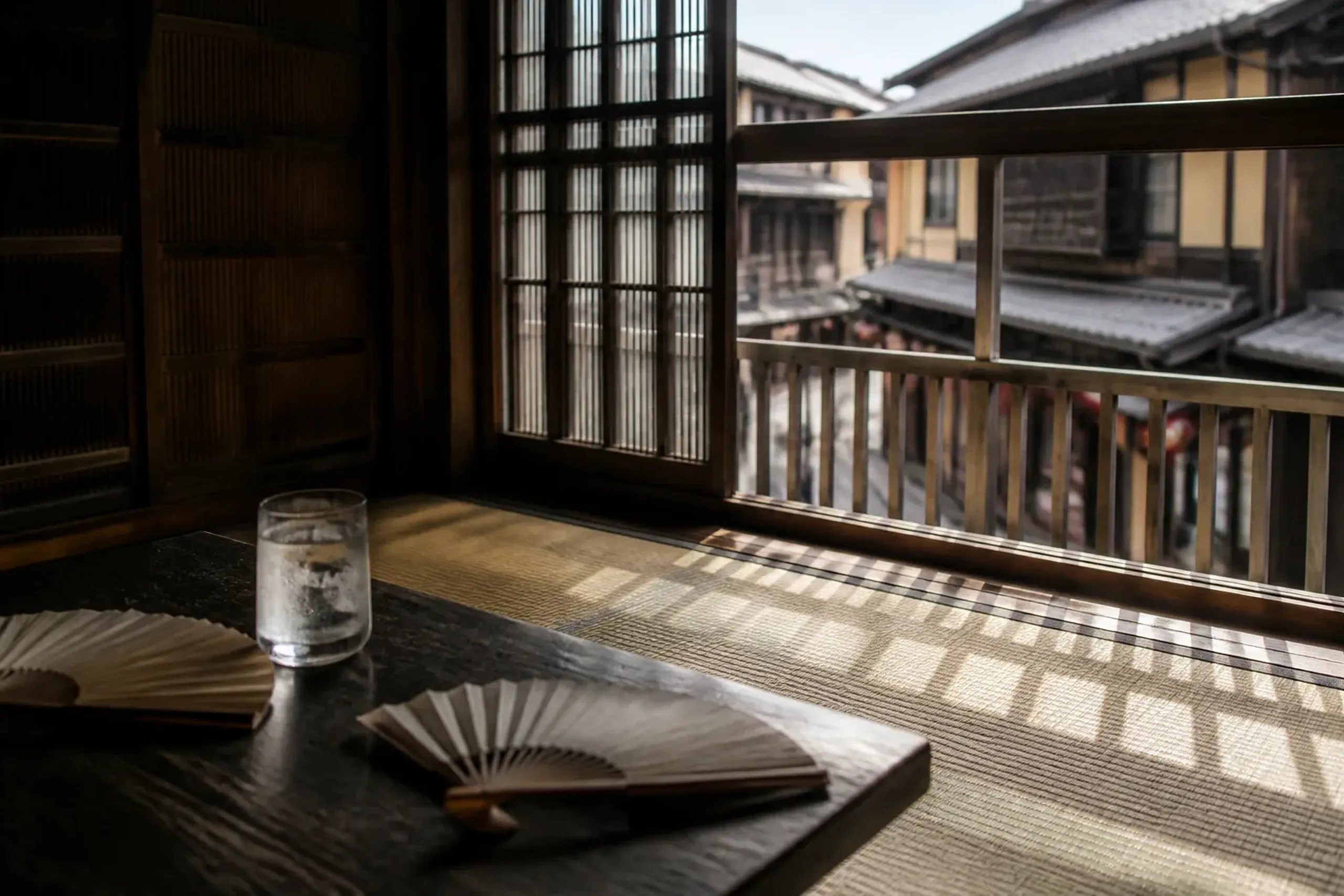
A better vantage is not about being above the crowd for its own sake. It is about taking pressure off the street.
When you can sit, you stop making small selfish decisions—like pushing forward for a photo or blocking someone’s path because your legs are tired.
When you can hear a guide, you stop guessing. You act with confidence, and that confidence reads as respect.
Three Viewing Formats That Work (When Legitimately Available)
We look for options that are ethical and verifiable, and we avoid anything that treats a shrine event like a private show.
- Official paid seats (where offered) that support preservation and crowd management.
- Private indoor viewpoints along procession routes, where hosts set strict house rules.
- Low-friction street positioning chosen for sightlines, exit paths, and reduced compression.
Crowds, Heat, And Weather: The Constraints That Decide Your Night
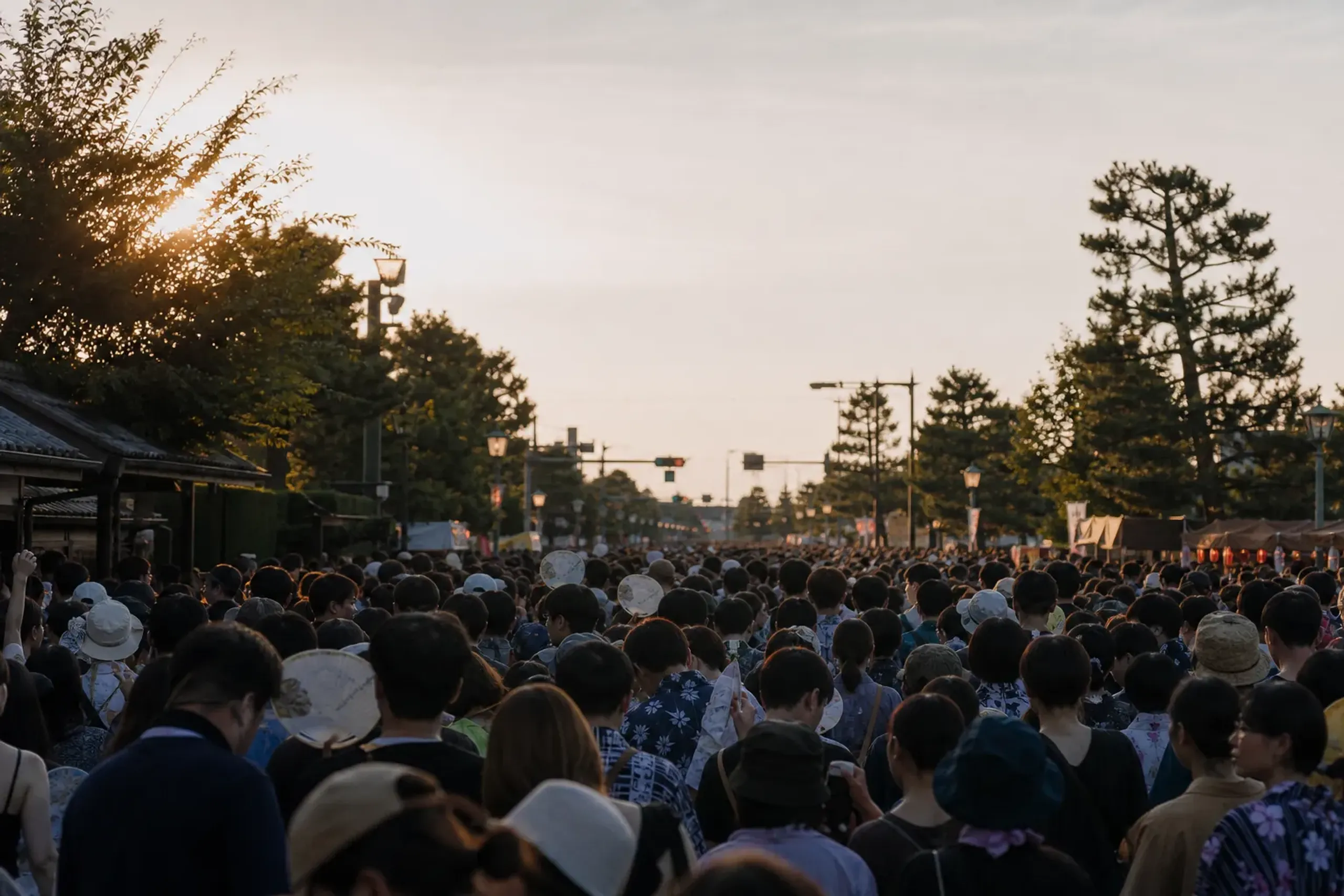
Most matsuri planning fails for one simple reason. People plan the headline moment, not the human body around it.
Summer matsuri can mean extreme heat, dense crowds, and long periods standing. Vehicle access is often restricted, and stations can overflow right when you try to leave.
Japan Times reported on July 15, 2026 that organizers of summer festivals and fireworks shows have been rescheduling due to risks from extreme heat and heavy rain. That is not a “maybe.” It is the new baseline for planning.
Heat Strategy That Doesn’t Feel Like Survival
Shade matters. So does timing.
Our coordinators often build a “cooling corridor” into a festival evening: a calm indoor pause, controlled walking segments, and a clear exit route that avoids the worst platform congestion.
If your plan requires heroic stamina, it is not a luxury plan. It is a dare.
Kyoto’s 2026 Crowd-Management Tools (Use Them)
For Gion Matsuri, Kyoto’s DMO announced 2026 initiatives with Kyoto Prefectural Police to improve Yoiyama viewing conditions, including distributing a “Yoiyama guide 2026” and providing real-time live video from portable cameras in the festival area.
Kyoto Travel also published a 2026 guide that includes GPS-accessible digital maps and references the city’s “Kyoto Guidelines” campaign for mutual respect and sustainability.
These tools don’t replace local sense. They help you avoid the obvious bottlenecks, and they help you keep your composure.
Key fact: Festival schedules and routes can change year to year. JRS will verify current dates, routes, and safety guidance before you travel—especially in summer when heat and heavy rain can force adjustments.
What To Wear, What To Carry, And What Not To Do
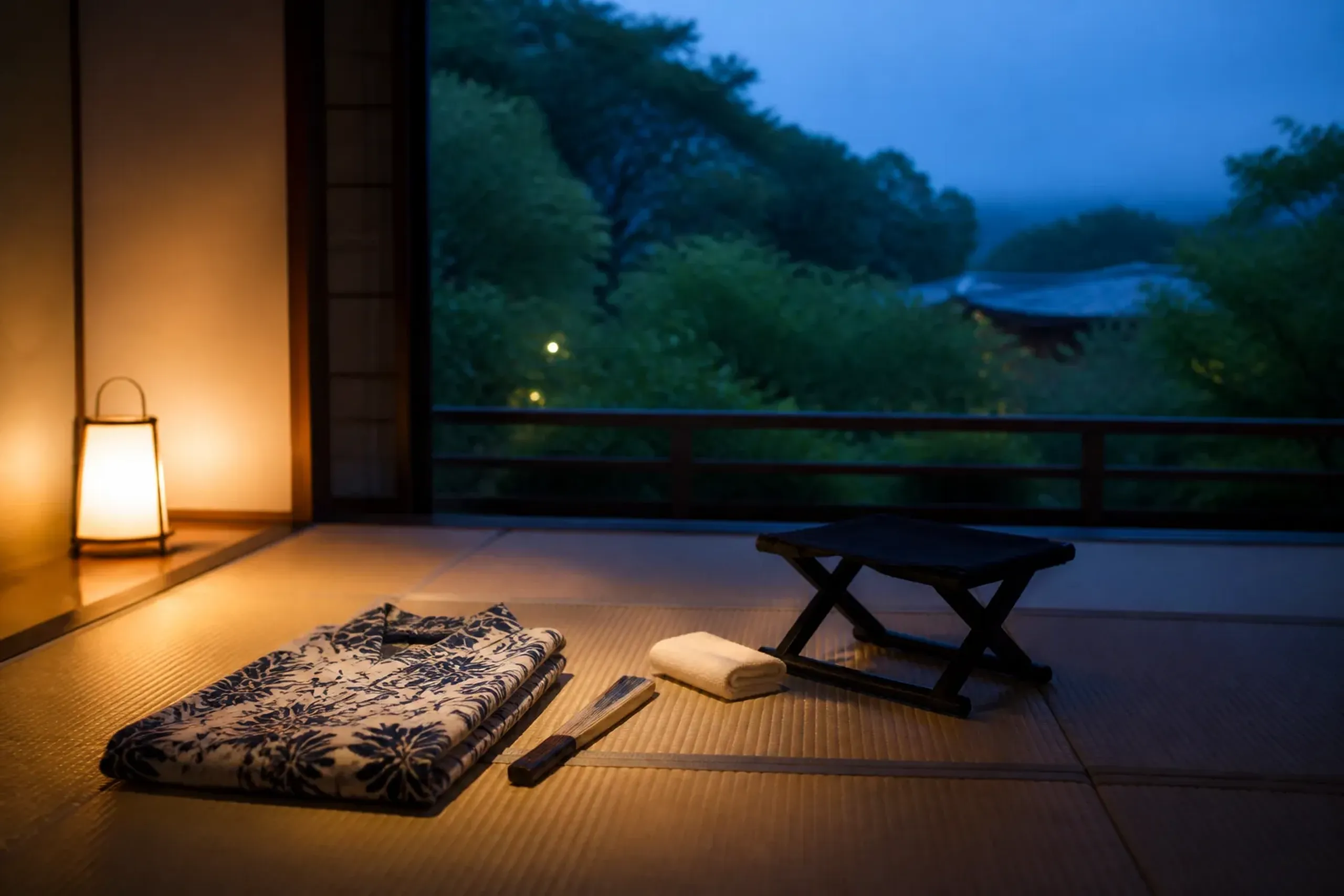
Good etiquette looks quiet. It is also practical.
Wear shoes you can stand in for hours. Then assume you will stand longer.
If you wear a yukata, treat it as respectful seasonal clothing, not a costume. Ask your host or guide what is appropriate for that specific event and setting.
Carry Less Than You Think
- Water, always.
- A small towel for sweat in summer.
- Headphones if you are using web-based commentary on your own device at ticketed seats (where offered).
- Cash for small festival purchases.
Photography: Keep It Human
Do not photograph shrine rituals up close without permission. Don’t shove lenses into faces. Don’t block traffic for “one shot.”
When in doubt, lower the camera. You will remember more.
How To Plan A Matsuri Night Step By Step (Without Guesswork)
This is the plain section. It saves trips.
Step 1: Choose The Festival Based On Your Tolerance, Not Your Feed
If you want craft and a smaller town feeling, consider Takayama. If you want a credible participation option, Awa Odori is the clean answer.
If your only window is winter, plan around Chichibu Yomatsuri. Don’t force an August festival into a body that hates heat.
Step 2: Decide Your Vantage First
Everything else hangs off this decision: when you arrive, how you move, and how you leave.
If official paid seats exist, read the official details early. For Gion Matsuri 2026, Kyoto City Tourism Association sold paid seats with general sales beginning June 1, 2026 (JST).
Step 3: Build A “Before” And “After” Buffer
A matsuri night should not be wedged between two long transfers. That is how patience cracks.
We prefer a calm meal window before the densest hours, then a post-festival route that avoids peak station compression where possible.
Step 4: Treat Transport As A Strategy, Not A Commodity
Road closures are real. So are sudden access restrictions.
On festival days, having a private chauffeured plan can be the difference between a dignified exit and a long, hot shuffle through crowded streets.
The first time you plan private transportation in Japan, start here: private transportation. Then we tailor the routing and timing around the festival’s reality.
FAQ: Private Participation In Japan’s Matsuri (And The Questions People Actually Ask)
Are matsuri performances for tourists?
No. Matsuri are community religious events connected to shrines and local associations. Visitors are welcome to watch, but the purpose is not entertainment.
Can foreigners carry a mikoshi?
Usually, no. Sources describing Sanja Matsuri in Asakusa note that participants are generally from neighborhoods and visitors would not usually carry the mikoshi.
Some festivals have open participation traditions in other roles or contexts. Awa Odori is widely treated as a credible exception for joining the dancing.
What is the best way to see Gion Matsuri without being crushed?
Choose a legitimate viewing format and plan your arrival and exit around crowd flow. Kyoto City Tourism Association sold paid viewing seats for Gion Matsuri 2026, including Premium Seat options in front of Kyoto City Hall.
Kyoto also introduced 2026 measures like a Yoiyama guide and real-time live video from portable cameras. Use the official guidance, then layer a sensible route on top.
Do matsuri dates change?
Yes. Even when key dates are traditional, schedules and routes can still shift due to safety, weather, or crowd management. Japan Times reported in 2026 that heat and heavy rain are driving rescheduling for some summer events.
How do I book official paid seats for festival viewing?
Book through the official seller for that festival when sales open. For example, Kyoto City Tourism Association sold official paid seats for Gion Matsuri 2026, with general sales beginning June 1, 2026 (JST), and it published the sales details on Kyoto Travel.
For questions about which seats fit your pace and your evening plan, contact our concierge for tailored guidance.
From Wabi-Sabi To Shokunin: The Quiet Luxury Hidden Inside Matsuri
Some travelers arrive looking for spectacle. The better memory is usually smaller.
A float detail you only notice because you are not jostling. A pause where the street goes briefly silent. The restraint of wabi-sabi in a scene that looks loud at first glance.
And then there is shokunin work. Not in a studio, but in the joinery, metal fittings, textiles, and repairs that let a community move something heavy through a narrow street without breaking it—or breaking itself.
Why Choose Japan Royal Service
Luxury travelers choose Japan Royal Service because we plan matsuri nights the way locals experience them: with respect, context, and calm routing, not with loud promises.
We provide discreet, confidentiality-first concierge support, premium private transportation logistics, and festival access planning such as seated and elevated viewing, private rooms or machiya balconies along procession routes where legitimately available, and guides who explain what is happening as it happens. Where a festival truly welcomes outside participants, we can shape participation in a way that stays aligned with community rules.
We also understand when to decline. That is part of discretion. It protects the festival and it protects you.
If you want to watch Japan’s festivals properly, reach our team privately via WhatsApp or LINE, or contact us here.