In this guide
- 01Why Sequence Beats Budget in Japan
- 02Stage One: Lock Your Fixed-Date Anchors First
- 03Stage Two: Secure the Hardest Inventory — Ryokan and Prime Urban Rooms
- 04Stage Three: Plan Private Transport and Luggage Before the Fun Stuff
- 05Stage Four: Book High-Friction Dining
- 06Stage Five: Reserve Guides and Shokunin Experiences
- 07Stage Six: Rail Seats, Pass Decisions, and Peak-Week Strategy
- 08Stage Seven: Final Neighbourhood-Level Pacing
- 09The Booking Timeline at a Glance
- 10Frequently Asked Questions
- 11Why Choose Japan Royal Service
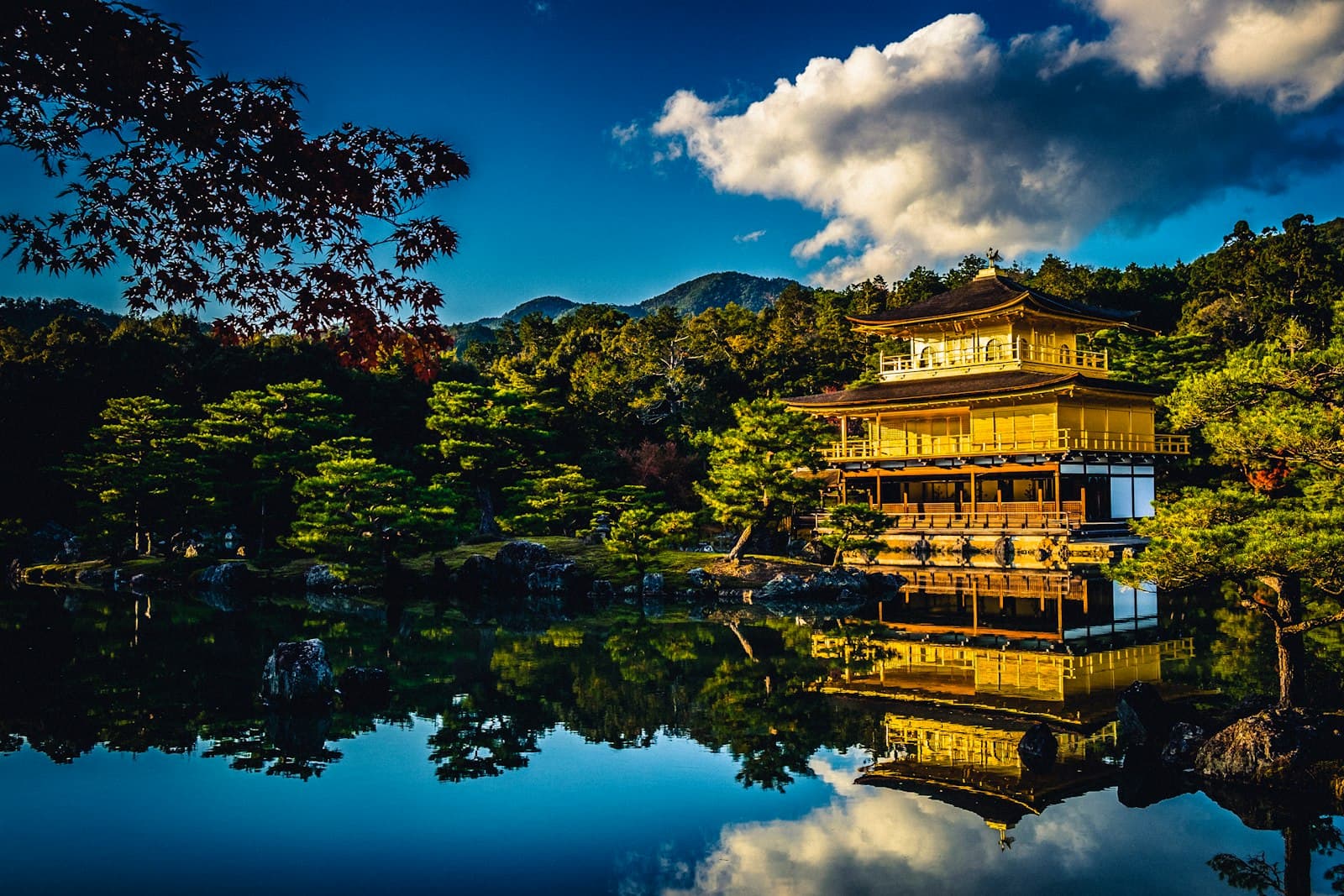
Picture this. You've secured a corner suite at a storied Kyoto ryokan for the third week of July. A triumph. Then you try to book the private kaiseki you'd imagined, and the counter is full. The introduction-only tea master you wanted? Away that month. And the drive from the station on Yoiyama night turns out to be impossible, because half of central Kyoto is closed to cars.
Big mistake. Not the ryokan — the order.
Most travel stress in Japan has almost nothing to do with budget. It comes from booking things in the wrong sequence. At Japan Royal Service, we've watched sophisticated, well-travelled clients lose sleep not over cost but over timing, because Japan's finest inventory behaves in ways that reward foresight and punish improvisation. This is the sequence we use to remove the guesswork.
Why Sequence Beats Budget in Japan
In much of the world, money solves problems late. You decide to go somewhere, and a good concierge can still find a way. Japan resists that logic.
The best rooms are few. The best counters seat eight. The specialist who can open a workshop door does so a handful of times a year, and never on demand. When you book in the wrong order, you spend money to patch failures rather than to buy the trip you actually wanted.
There's a macro reason to plan earlier for 2026 too. JTB's Travel Trends Forecast for 2026 projects that inbound visitors, excluding the China and Hong Kong markets, would rise 5.6% year on year. Translation: the markets most likely to compete for the same quiet-luxury rooms and counters you want are growing, not shrinking. Prime inventory tightens accordingly.
So we plan in the order that Japan's supply chain actually rewards. Anchors first. Then the hardest rooms. Then movement. Then the tables and the doors that open only by introduction. Rail seats and pacing come last, on purpose.
Stage One: Lock Your Fixed-Date Anchors First
Before a single room, decide what cannot move. Weather has an opinion. So does the cultural calendar. These are your anchors, and everything else bends around them.
Cherry blossom is the obvious one, but it's a moving target — Tokyo's classic viewing sites, per JNTO's spring guide, include Shinjuku Gyoen, Ueno Park, the Meguro River at Nakameguro, and Chidorigafuchi beside the Imperial Palace, and peak bloom shifts by days each year. Autumn in Kyoto behaves the same way. If your heart is set on a season, that decision outranks the hotel.
The Festival Trap Most Planners Miss
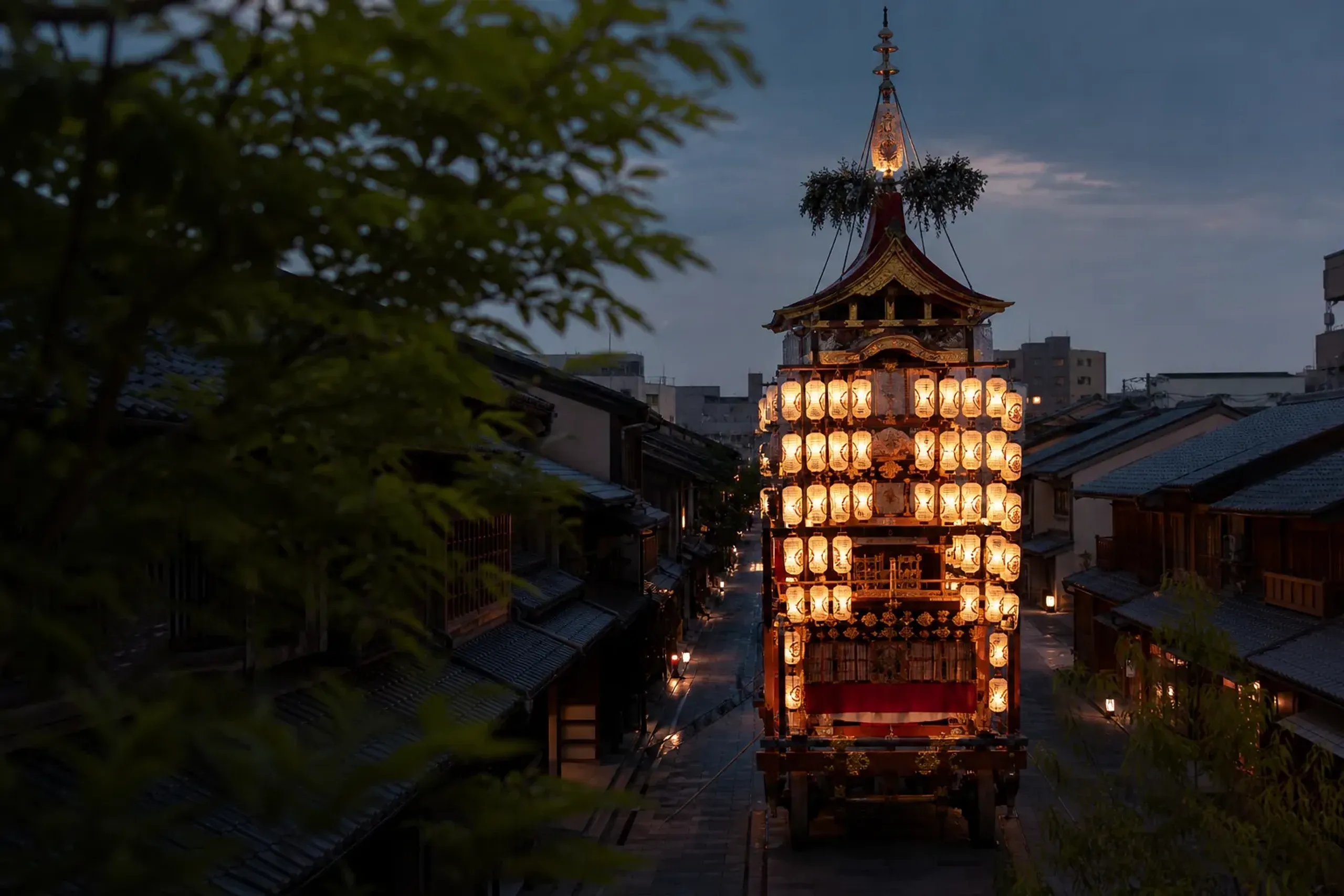
Kyoto's Gion Matsuri runs across most of July — the Kyoto City official guide lists the festival across the 3rd to the 23rd. The nights that matter are the Yoiyama evenings: the Early Festival centres on July 16, the Latter Festival on July 23, with recent Yoiyama periods falling roughly July 14–16 and July 21–23.
Here's the part travellers underestimate. Those evenings bring wide street closures through central Kyoto. A car cannot deliver you to a door that sits inside a pedestrianised zone. If your ryokan or dinner falls behind the closures, your beautifully planned evening becomes a walk you didn't sign up for.
Anchor rule: Fix your travel dates and any festival or seasonal targets before you touch inventory. In our experience, one wrong week undoes a dozen good bookings.
Stage Two: Secure the Hardest Inventory — Ryokan and Prime Urban Rooms
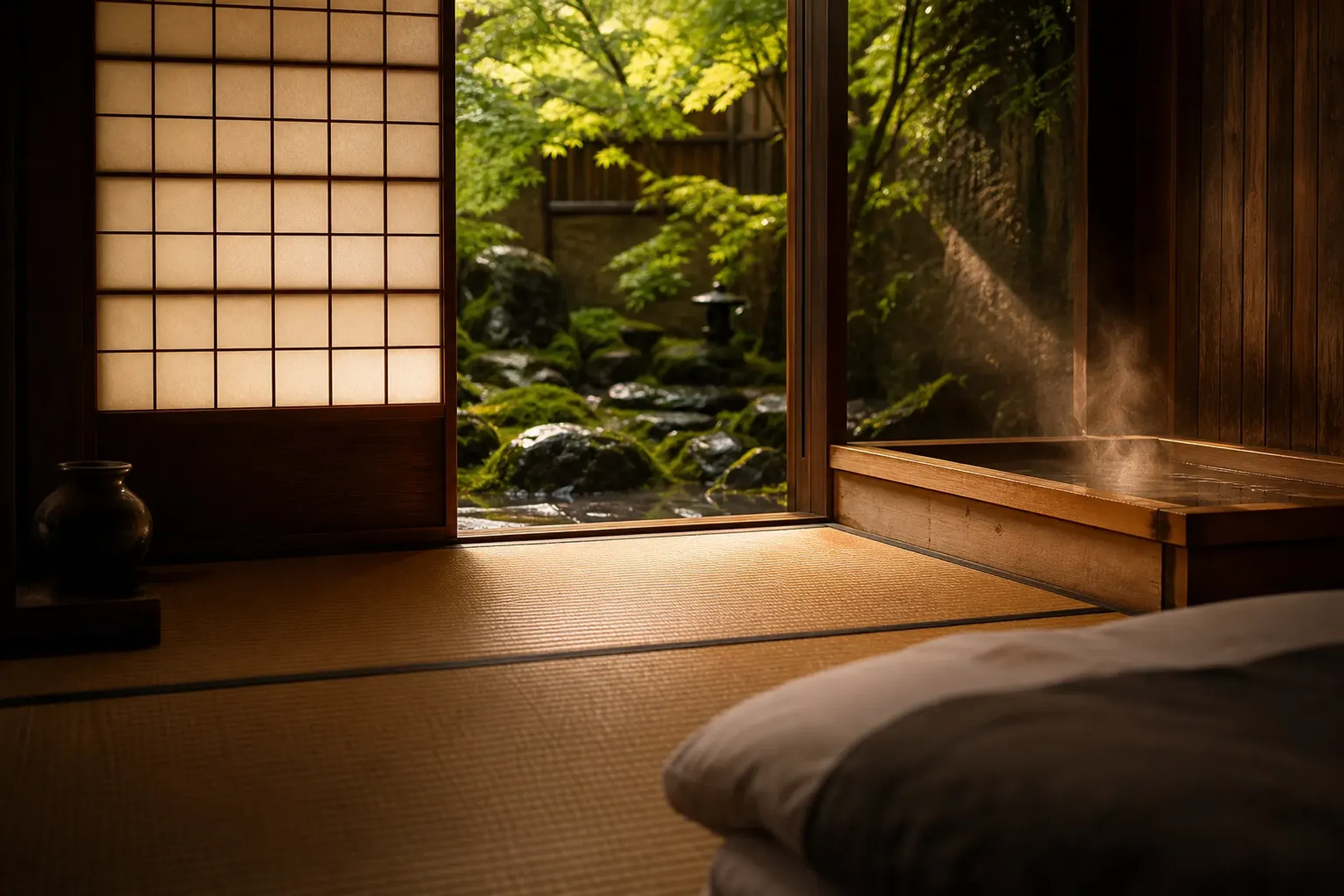
Now, and only now, the rooms. This is where the trip lives or dies, because the finest accommodation in Japan operates on brutal scarcity.
A remote ryokan might hold six rooms. A specific room category — the one with the private cypress bath and the garden view — might exist in a single unit. Seasonal kaiseki menus rotate, and the room you love in November is a different experience in April. When it's gone, it's gone. No budget conjures a seventh room.
2026 has reshaped the urban side of this equation. Several openings now compete for the same discerning guest, which both widens choice and tightens the best categories:
| Property | City | Opened |
|---|---|---|
| Imperial Hotel Kyoto (Gion) | Kyoto | March 5, 2026 |
| Six Senses Kyoto (Higashiyama) | Kyoto | Late April 2024 |
| 1 Hotel Tokyo | Tokyo | March 5, 2026 |
| JW Marriott Hotel Tokyo | Tokyo | October 2, 2025 |
| Waldorf Astoria Osaka | Osaka | April 3, 2025 |
| Patina Osaka | Osaka | May 2025 |
| Rosewood Miyakojima | Miyakojima | March 1, 2025 |
Match the Room to Your Temperament, Not the Brand
New doesn't mean right. We match properties to how a guest actually wants to move through Japan.
The Imperial Hotel Kyoto, in Gion, makes a natural cultural anchor — a base for imperial-context viewings and the kind of introduction-only dining that Google cannot find. Six Senses Kyoto, in Higashiyama, suits the traveller who wants a wellness-forward sanctuary inside the city. In Tokyo, 1 Hotel Tokyo rewards those drawn to calm and natural materials rather than gloss. And Osaka has quietly become a refined base for extensions toward Naoshima's art islands or the temple lodgings of Koyasan.
Book the room that fits the mood of the trip. Book it early. Twelve months out for peak-season ryokan and festival-week Kyoto is not paranoid — it's the floor.
Stage Three: Plan Private Transport and Luggage Before the Fun Stuff
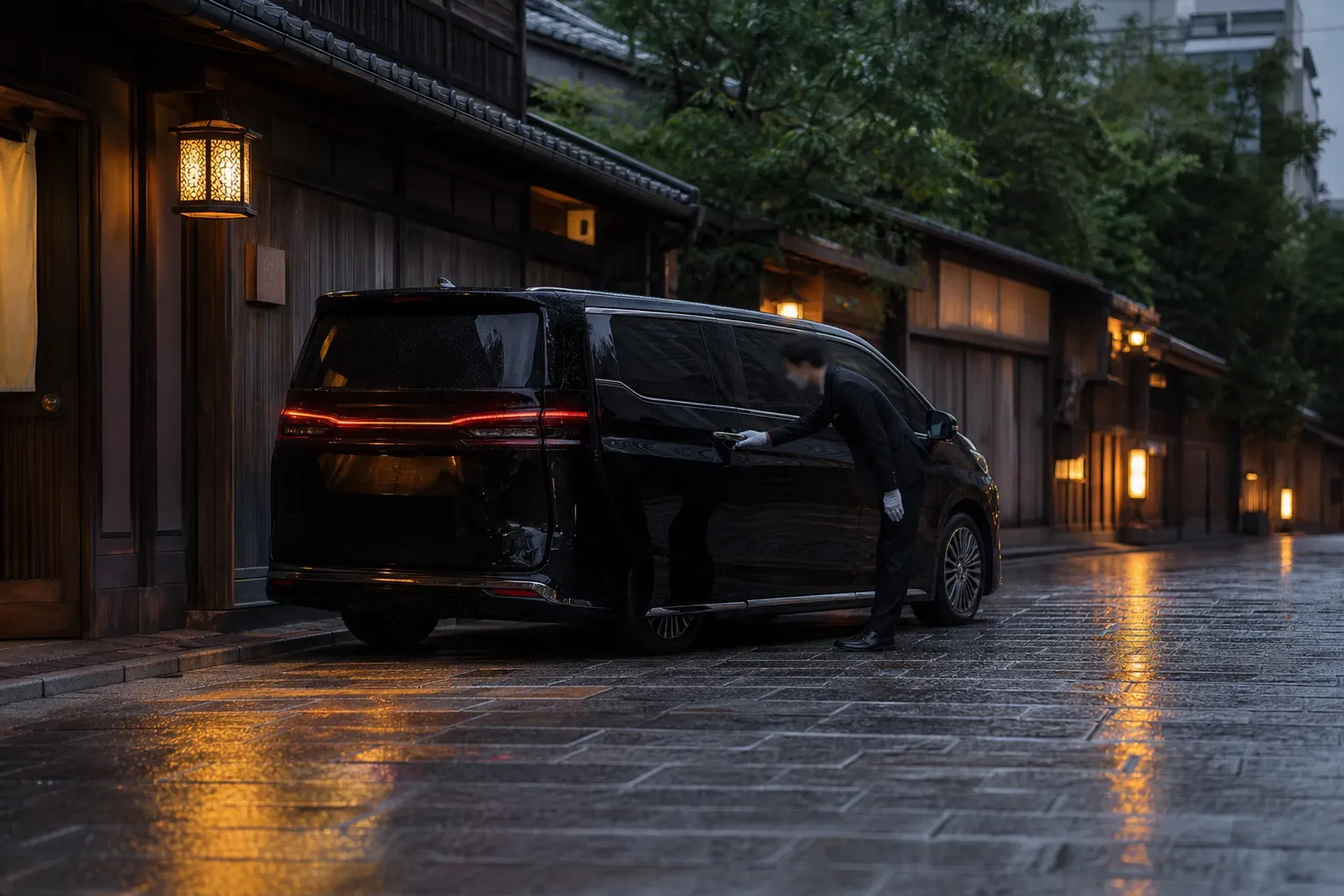
People book dinner before they've solved movement. Then they discover the restaurant sits inside a closure zone, or the ryokan is ninety minutes from anywhere, and the evening unravels.
Transport is the spine of a Japan itinerary, and it deserves to be settled before dining and experiences — not after. Our private chauffeured transport exists precisely to remove the two failure points that ruin otherwise flawless days: the drop-off you can't make, and the arrival you didn't plan for.
Consider a Gion Matsuri evening. With street closures live, we route to the nearest permissible drop-off, brief the guest on the short walk in, and hold a discreet pickup point for the return. The Lexus LM 500 waits where it's allowed to wait. That single piece of foresight is the difference between a serene night and a frustrated one.
Arrival Without Lines
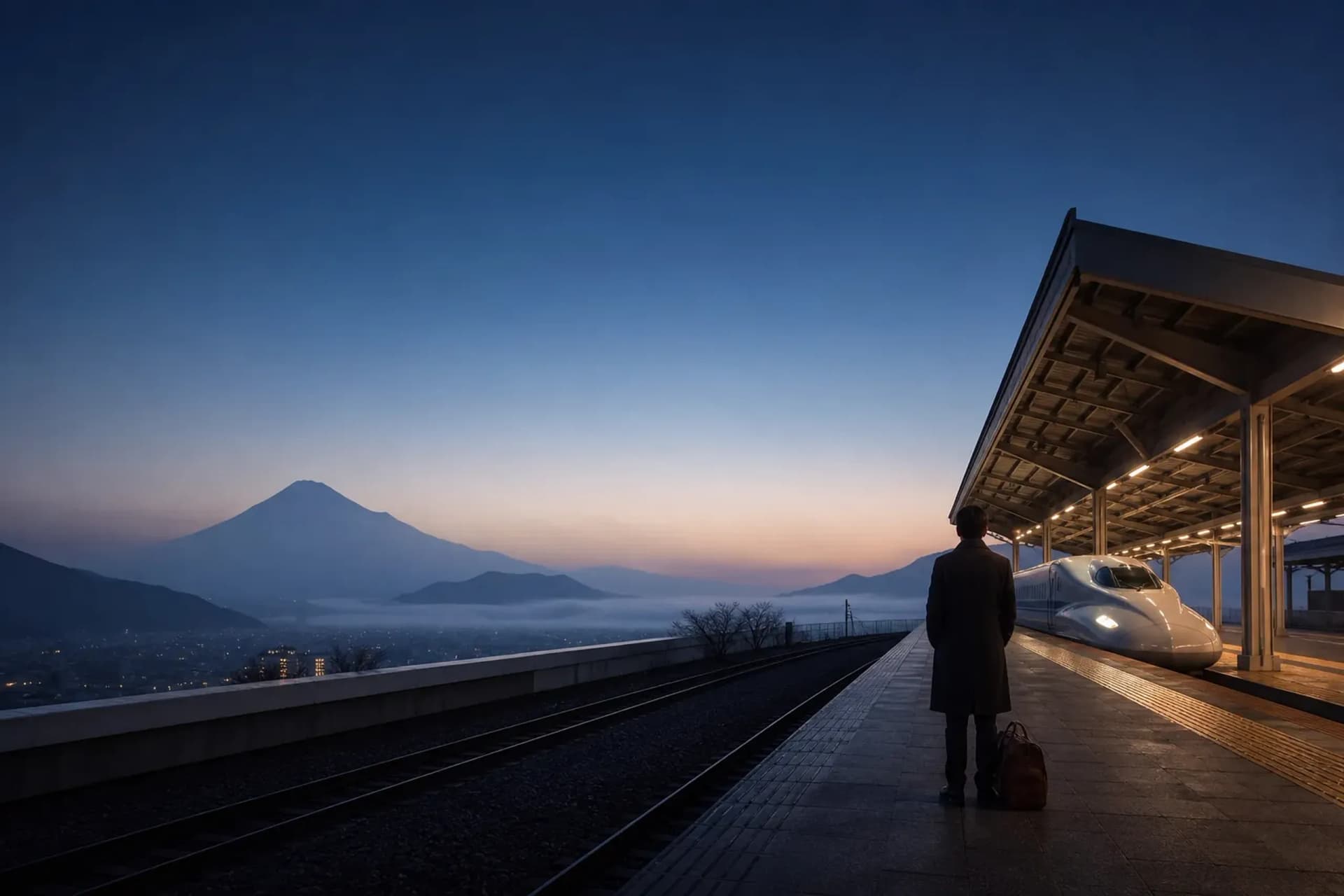
The start of a trip sets its tone. From April 1, 2026, JR East confirmed that Japan Rail Passes reserved through the official reservation website can also be exchanged at select reserved-seat ticket vending machines fitted with passport readers — a genuine reduction in arrival-day friction, if you've decided in advance which pass you need and where to collect it.
We pair that with a concierge-run station handoff and pre-arranged transfer from Narita, Haneda, Kansai, or wherever you land. No queue. No hunting for a driver. The luggage is forwarded ahead by takkyubin, so you arrive at your ryokan unencumbered while your cases travel separately. Quiet care that anticipates the need before it's spoken.
Stage Four: Book High-Friction Dining
With rooms and movement settled, the tables. Kyoto and Tokyo hold some of the hardest reservations in the world, and 2026 raised the stakes further.
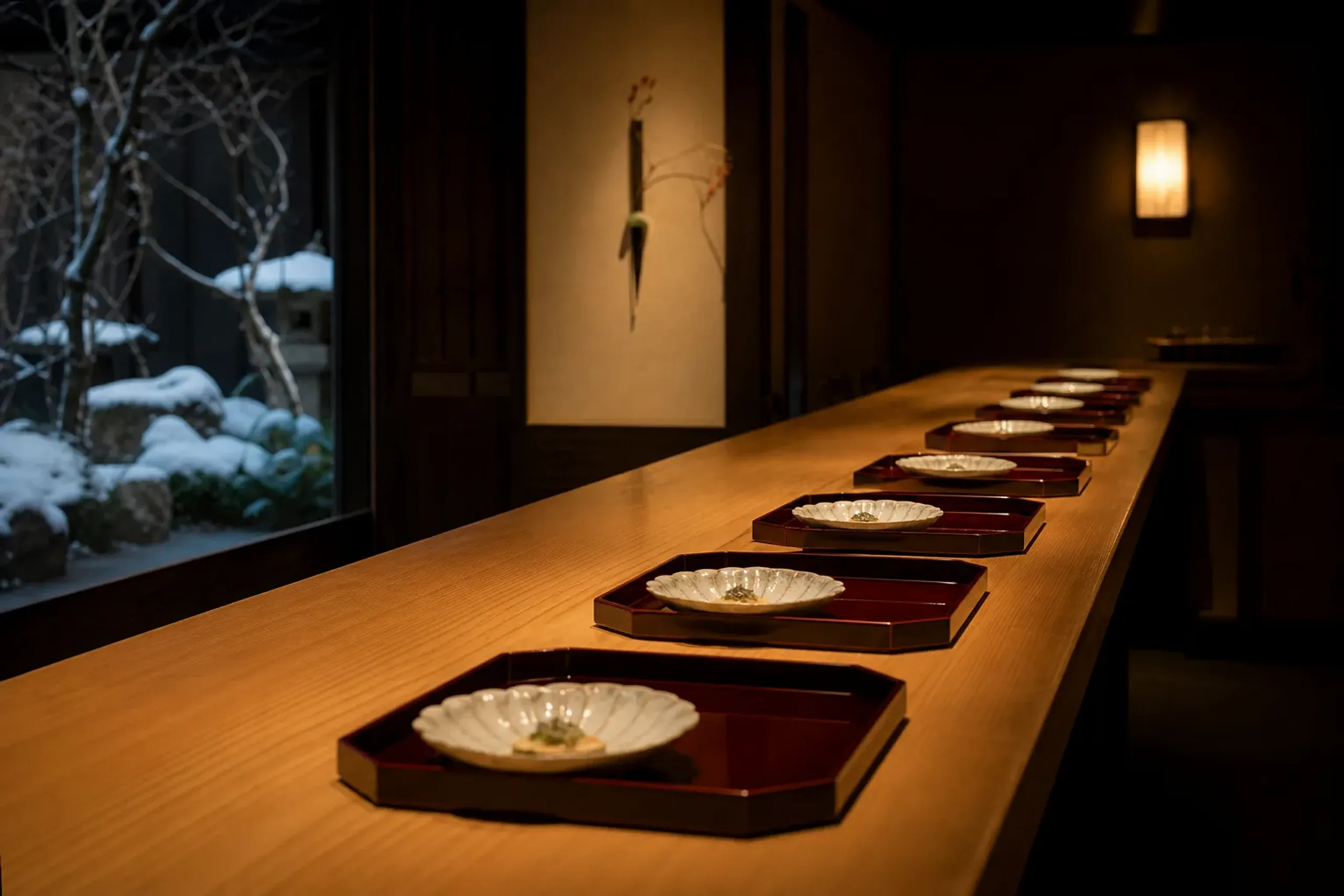
The MICHELIN Guide Kyoto Osaka 2026 named a new Three-Star restaurant in Kyoto — the first in six years — alongside several ascents to Two Stars. Every accolade sharpens demand at counters that already seated only a handful of guests. Seasonal menus compound it: the dish that defines a place in autumn simply isn't on the counter in spring.
The order here is deliberate. Once your ryokan location is fixed and transport is solved, you can choose dining that actually fits the evening — a counter you can reach, on a night you're free, with a menu at its seasonal peak. Book dinner first and you're guessing. Book it fourth and you're choosing.
Stage Five: Reserve Guides and Shokunin Experiences
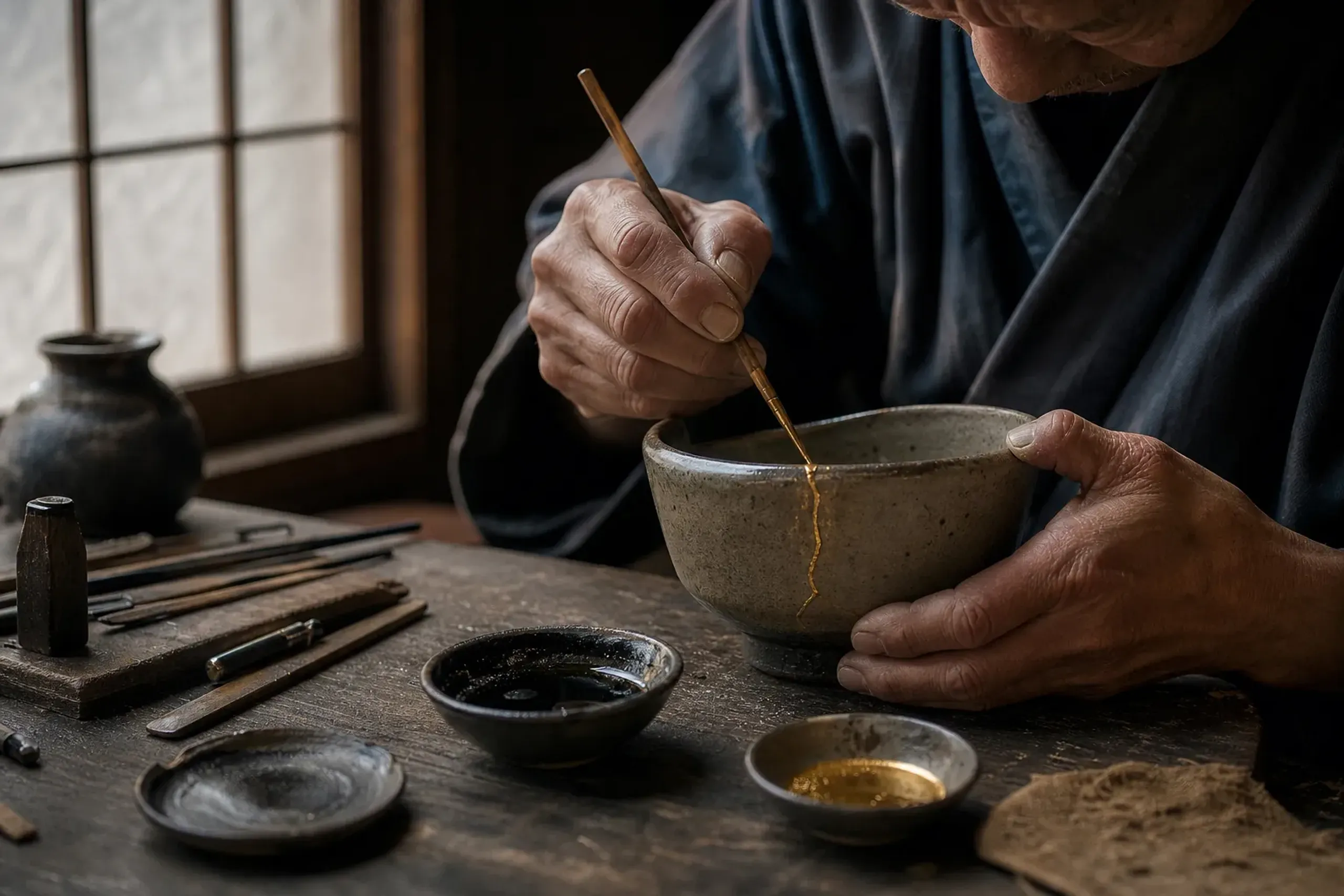
This is where a trip becomes unrepeatable, and where scarcity is most human. A specialist guide is one person. A grand master — a kiln master, a Living National Treasure, a shokunin who does not normally receive outside guests — opens the door on their terms, a few times a year.
You cannot summon these afternoons at short notice. A private atelier visit, a kintsugi session with a master who mends broken ceramics in gold, a quiet hour of calligraphy or a formal tea gathering — each depends on relationships built over years and on the master's own calendar. This is the Japan that rewards being early and being introduced.
We slot these into the sequence once your dates, base, and movement are known, so the experience sits where it belongs in the day rather than fighting your logistics. Culture should feel unhurried. It rarely does when it's the last thing crammed into a broken schedule.
Stage Six: Rail Seats, Pass Decisions, and Peak-Week Strategy
Only now do we finalise long-distance rail. Seat reservations depend on everything above — your dates, your bases, your dinners — so locking them earlier just means re-doing them later.
Peak weeks are the exception that proves the discipline. Around Golden Week and the busiest festival dates, reserved Shinkansen seats vanish fast, and a green-car or Gran Class booking made the moment reservations open is worth the small effort. Decide the pass question deliberately: whether a Japan Rail Pass suits your route at all, or whether point-to-point reserved seats serve you better. For most of our clients, a pass is convenience rather than saving — and sometimes not the right tool.
Where Private Transport Quietly Wins
Between cities, rail is superb. Within a region — Nikko's shrines, the Hakone circuit, Nara's deer park and temples, or a coastal run in Hokkaido — a chauffeured day removes the connections, the walks, and the timing anxiety entirely. We tend to blend the two: Shinkansen for the long haul, a private vehicle for the texture of a place.
Stage Seven: Final Neighbourhood-Level Pacing
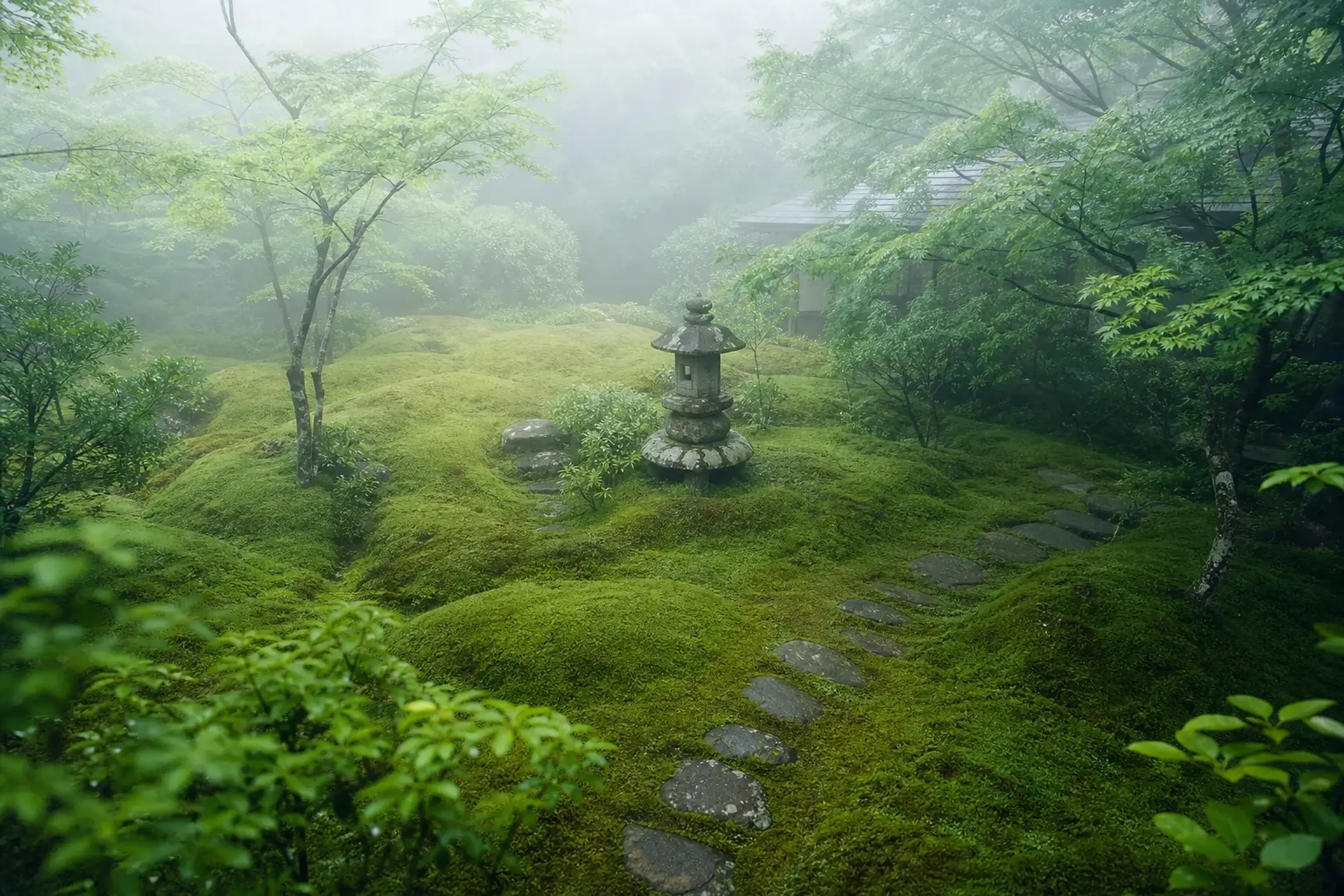
The last layer is the gentlest. With every hard element secured, we tune the rhythm street by street.
Early temple visits before the crowds arrive. A late garden stroll when the day-trippers have gone. Kyoto's own crowd-management and responsible-travel initiatives — the city's tourism authority maintains active measures, last updated in spring 2026 — make early-and-late scheduling not just more pleasant but more courteous to residents. Good pacing is discretion in practice: fewer people, quieter corners, moss and stone rather than jostle.
The Booking Timeline at a Glance
Here is the sequence compressed into a working calendar. Adjust earlier for peak season and festival weeks.
| When | Secure This |
|---|---|
| 12 months out | Fixed-date anchors (season, festivals); prime ryokan room categories; top urban suites, especially festival-week Kyoto |
| 6 months out | Private transport plan and luggage forwarding; hardest dining reservations; specialist guides and shokunin sessions |
| 3 months out | Rail seats and pass decision; peak-week Shinkansen reservations; neighbourhood-level pacing and daily rhythm |
The Mistakes We See Most Often
- Booking a dream dinner before confirming the room location, then discovering they don't align.
- Ignoring festival street closures until arrival day.
- Leaving specialist guides and masters until last, when their calendars are already closed.
- Treating rail seats as urgent and rooms as flexible — it's the reverse.
- Assuming budget can fix a late booking. In Japan, it usually can't.
Frequently Asked Questions
How far ahead should I book a luxury Japan trip?
For peak season — cherry blossom, autumn foliage, or festival weeks like Gion Matsuri in July — begin around twelve months out for prime ryokan rooms and top urban suites. Softer elements like rail seats can wait until roughly three months before travel.
Why book the ryokan before the restaurant?
Because the room dictates where you sleep and how you move, and the finest ryokan hold very few rooms. Once your base is fixed, you can choose dining you can actually reach on nights you're free. Reverse the order and you're forever patching mismatches.
Does the 2026 JR Pass change matter for my arrival?
It can. From April 1, 2026, passes reserved on the official site can also be exchanged at select reserved-seat vending machines with passport readers — smoother, provided you've decided in advance which pass you need and where to collect it. We pair this with a concierge station handoff to remove the queue entirely.
How do I avoid crowds in Kyoto in 2026?
Through pacing, not luck. Early temple visits, late garden strolls, and event-night routing around street closures. Kyoto's own responsible-travel measures reward this rhythm, and it aligns with local etiquette expectations.
Why Choose Japan Royal Service
We don't sell a checklist. We sell the order — the sequence that turns Japan's scarcity from a threat into an advantage. Our team at Japan Royal Service has spent years building the relationships that open introduction-only doors, and just as many learning which room, which counter, and which drop-off point will hold up on the night.
Discretion runs through all of it. Your identity and your itinerary stay confidential, arrival routes are managed quietly, and the care arrives before you've had to ask for it. Every journey is built as a tailor-made itinerary, sequenced in the disciplined order above, so the trip you imagined is the trip you actually take. That is what Japan Royal Service exists to protect.
If you're planning 2026 or 2027, the earlier we begin, the more of the true Japan we can hold for you. Reach our team privately via WhatsApp or LINE, or contact us here, to begin the conversation.