In this guide
- 01One Day And One Night: The Calm Itinerary That Makes Sense
- 02What Is The Walk To Jigokudani Monkey Park Like In Winter?
- 03What Should You Expect From Jigokudani Yaen-kōen’s Snow Monkeys?
- 04Park Rules And Wildlife Ethics: How To Visit Without Causing Harm
- 05How Do You Buy Tickets For Jigokudani Monkey Park In Winter 2026–27?
- 06Shibu Onsen After Dark: Why The Overnight Stay Changes Everything
- 07Getting To Jigokudani And Shibu Onsen From Tokyo Or Nagano
- 08A Step-By-Step Day Plan (With Buffers For Reality)
- 09Begin Planning Your Winter In The North
The forest is quiet in a way Tokyo never is.
You hear the Yokoyu River first, then your own steps: packed snow, wet leaves, the soft scrape of a boot sole finding grip.
A bend in the trail. Steam lifts from somewhere ahead.
Then you see it—one Japanese macaque on the riverbank, watching you with the frank calm of a wild animal that owes you nothing.
Many travelers treat Jigokudani Yaen-kōen as a quick half-day detour from Nagano. It works. It also wastes the best part.
The better version gives the day room to breathe, then ends with a night in Shibu Onsen, where stone lanes shine under lantern light and the baths belong, mostly, to overnight guests.
Our team at Japan Royal Service plans this pairing for discerning travelers who want the iconic moment without the scramble—built around three honest truths: the trail is a real walk, the monkeys are wild and may not appear, and Shibu’s bath-hopping culture is designed for those who stay the night. This is the kind of hidden Japan that rewards patience rather than haste.
One Day And One Night: The Calm Itinerary That Makes Sense
Start early, when the air is clean and the trail is less crowded. Then take your time—no rushed photos, no anxious clock-watching.
A simple structure works best: a morning forest walk and park visit, an unhurried lunch, then an afternoon check-in at your ryokan in Shibu Onsen.
After dark, the town changes. Fast footsteps disappear.
You switch from sightseeing to living there, even if only for one night—the kind of quiet immersion that the right seasonality, or shun, makes unforgettable in deep winter.
A Practical Flow We Use Often
This is the cadence we recommend most often for a winter visit. It is not a promise. It is a clean plan with buffers built in.
- Morning: arrive at the Kamibayashi Onsen trailhead area and walk in
- Late morning to midday: time at Jigokudani Yaen-kōen, paced for wildlife ethics and good light
- Early afternoon: return the same way; a warm drink; reset gloves and socks
- Mid-afternoon: check in at Shibu Onsen; learn your inn’s bath-key procedure
- Evening: a kaiseki-style dinner at your ryokan (as offered by your property), then a quiet circuit of the public baths if eligible
What Is The Walk To Jigokudani Monkey Park Like In Winter?
The approach is about 2 km each way on an unpaved forest path with stairs and slopes, and it typically takes around 30 minutes from Kamibayashi Onsen.
That sounds easy on paper. In winter, it can feel longer.
The surface changes every few minutes: packed snow, mud, ice-polished wood, stone steps with a thin glaze. A set of small crampons can turn a tense walk into a relaxed one.
The park itself states that there are no paved roads inside or outside the park area, and that wheelchairs and carts are not allowed. Plan accordingly.
Key fact: Treat the trail as the first part of the experience, not an inconvenience—wear snow boots, bring gloves, and assume slippery sections even on “clear” days.
What To Wear And Carry (Small Things That Save The Day)
Dress for standing still.
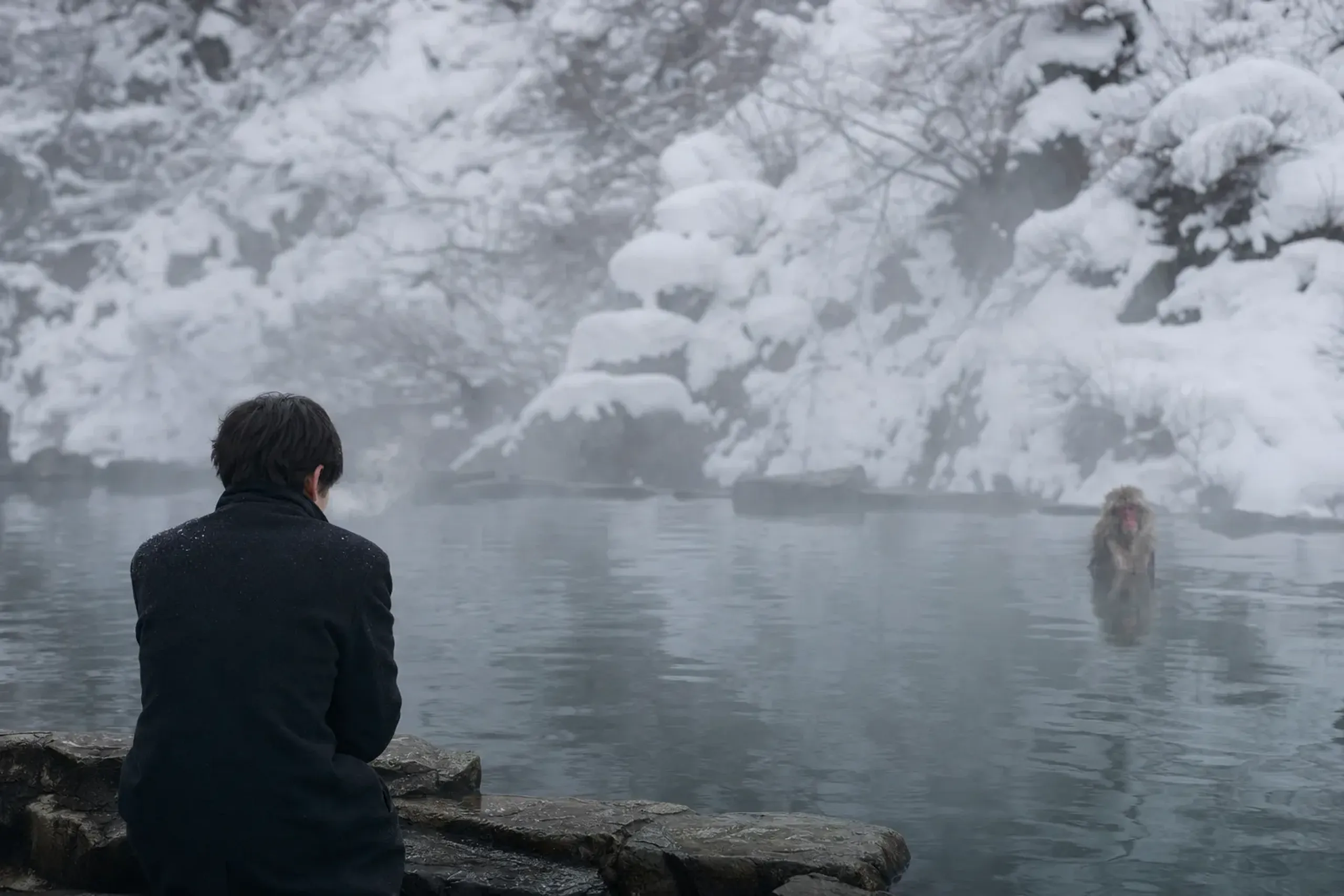
That is the surprise.
You may walk warm, then stop for ten minutes while the monkeys move into position—and that is precisely when cold finds your wrists and ankles.
- Footwear: snow boots with grip; the park recommends boots in winter
- Traction: simple crampons are often the difference between steady and stressed
- Hands: gloves that still let you operate a phone or camera
- Pack: a small towel and spare socks for later in Shibu Onsen
What Should You Expect From Jigokudani Yaen-kōen’s Snow Monkeys?
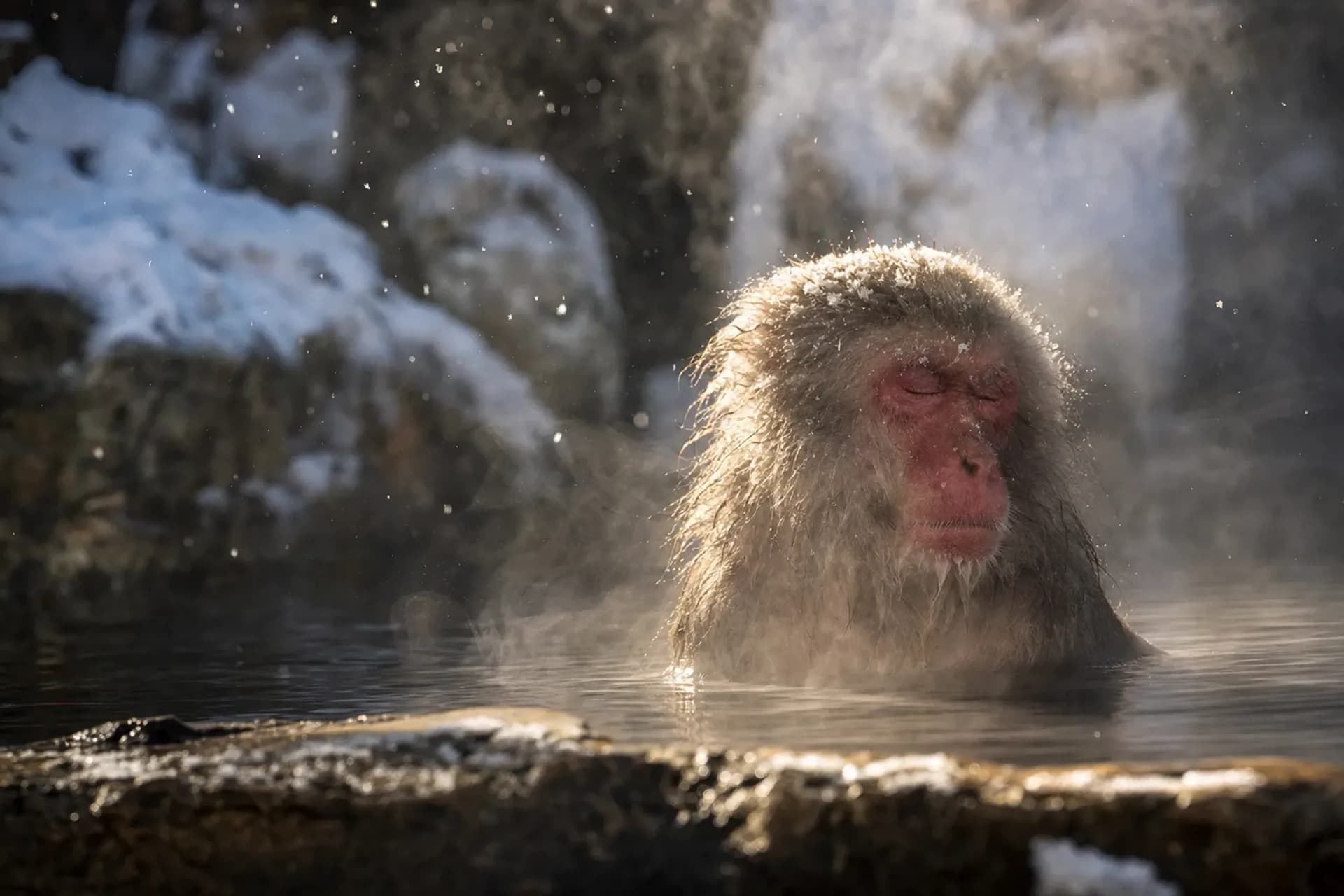
Jigokudani Yaen-kōen is a place to observe wild Japanese macaques, and in winter they often bathe to endure the cold—usually from about December to March, but never guaranteed.
The park was established in 1964. It sits in the Yokoyu River gorge within Joshinetsu Kogen National Park, at an elevation of about 850 meters.
On some days you will arrive and the scene is already there: steam, snow, a few macaques sitting like old men at the edge of the water. On other days, you wait. Or you do not see them at all.
That unpredictability is the point. They are not performers.
Why They Bathe (And Why It’s Not A Show)
The park explains that the bathing is a learned habit, used to endure the winter cold. It is not hygiene, and it is not something they “need” every day.
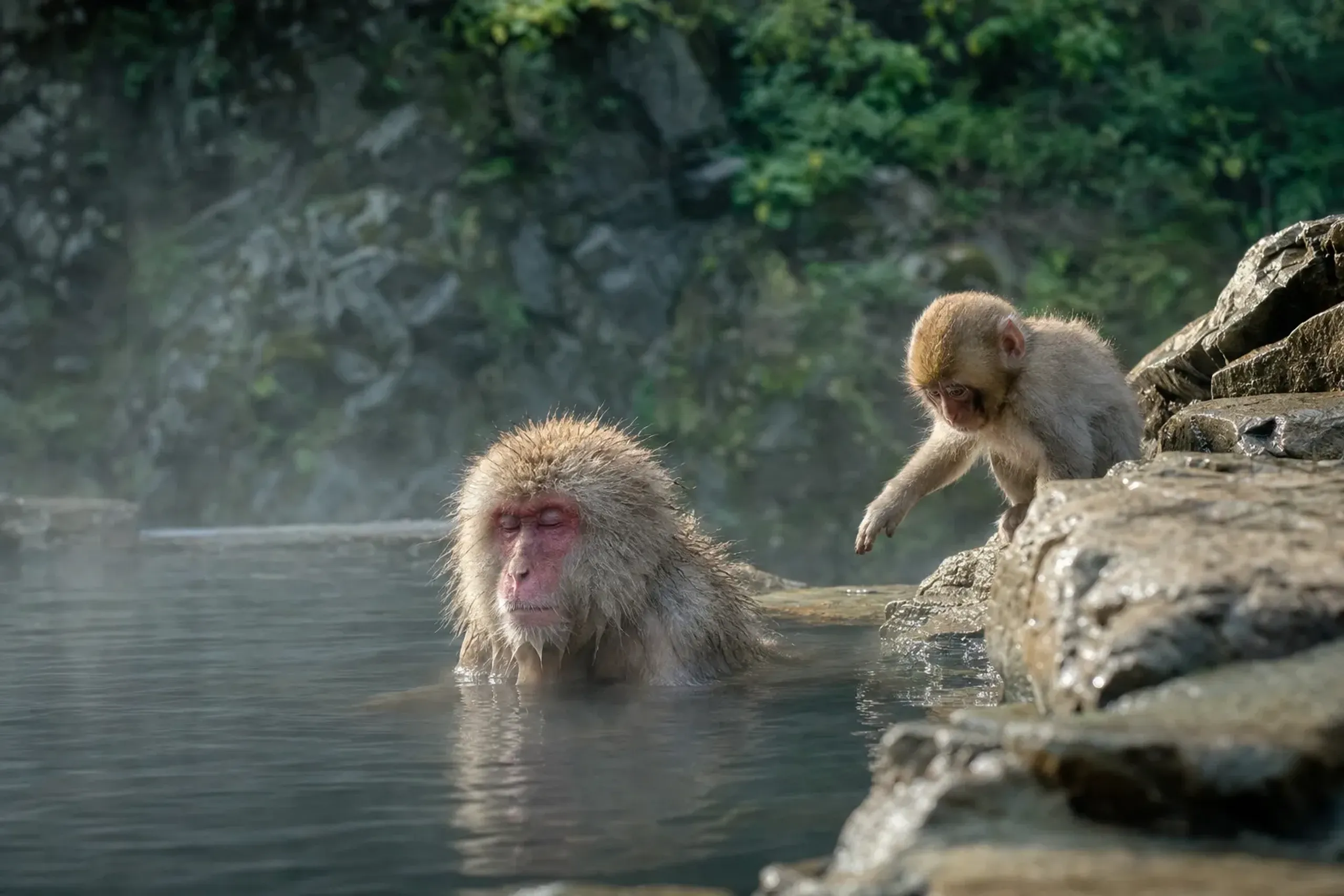
That distinction matters. It helps you watch without demanding.
In our experience, the finest photographs come when you stop chasing the “perfect” frame and let the troop settle.
Your job is to be quiet, patient, and watchful.
The Origin Story, Told Carefully
The park describes how a young monkey began using an outdoor bath at the inn Korakukan, others copied the behavior, and the park then built a separate monkey bath.
Korakukan is described by Nagano Prefecture’s tourism site as the only inn in the Jigokudani onsen area, reached on foot.
Winter availability and specific booking conditions can change. We avoid assumptions.
If guests are curious, our concierge team can share what is publicly known and help weigh whether Shibu Onsen is the better base for comfort and bath culture.
Park Rules And Wildlife Ethics: How To Visit Without Causing Harm
Never feed or touch the monkeys, do not stare into their eyes at close range, and move away if one approaches—these are explicit rules from Jigokudani Yaen-kōen.
It is simple. And it is serious.
The park also prohibits drones and selfie sticks, does not allow pets (including assistance dogs), and states that visitors cannot bathe with the monkeys.
Photography and flash are permitted, but the park asks you to keep cameras and phones away from the monkeys. In other words: no dangling gear within a macaque’s reach.
How We Coach Clients For A Safer Visit
Our role is guidance, not bravado.
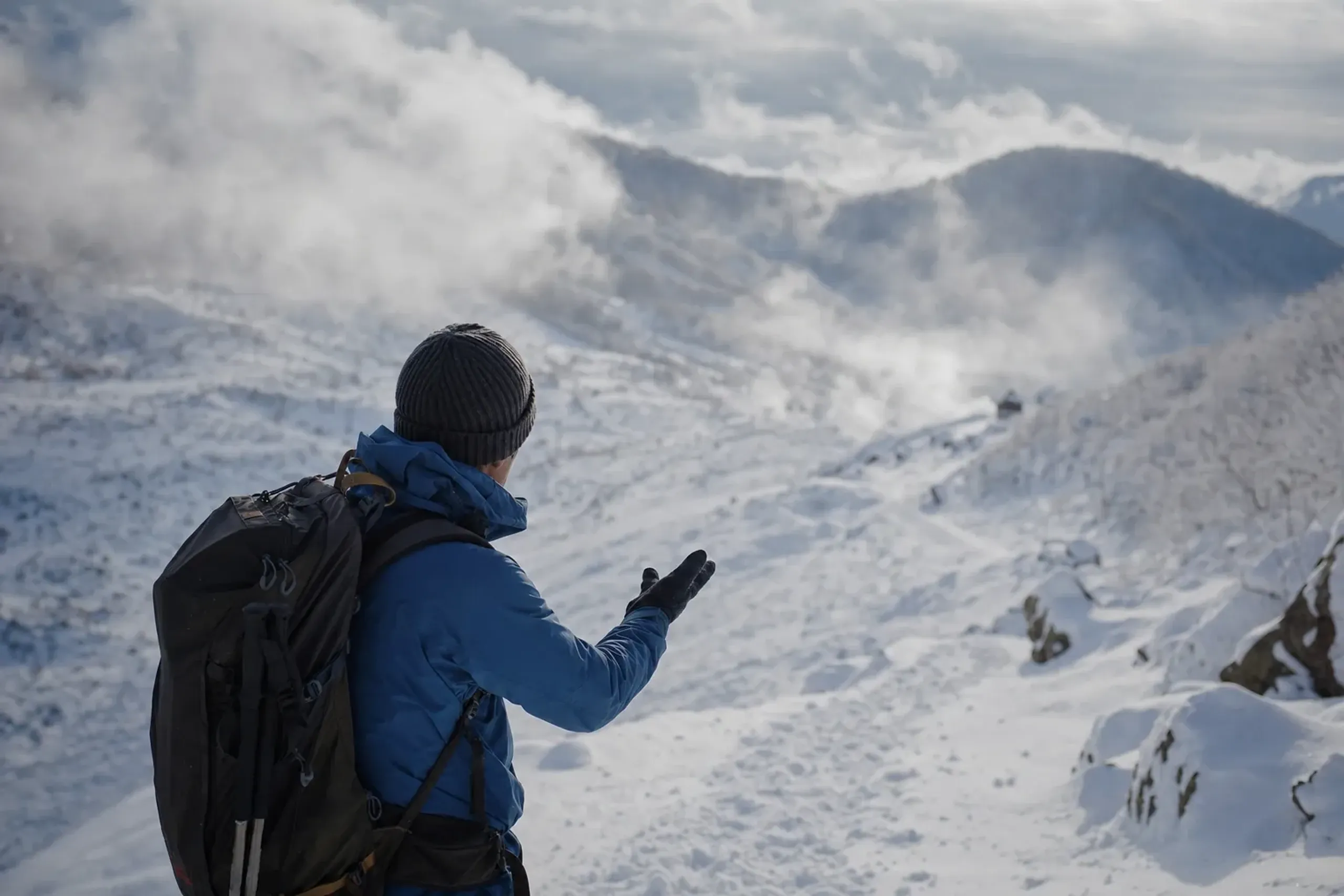
We brief guests on spacing, body language, and how to step away without sudden movement, because macaques can threaten or bite if frightened or handled.
Children need an even tighter plan. The park states that children must stay within arm’s reach.
If you would like a cultural interpreter guide for both the trail and the town, our team at Japan Royal Service can discuss a tailor-made itinerary that fits your group’s pace and privacy expectations.
How Do You Buy Tickets For Jigokudani Monkey Park In Winter 2026–27?
In the winter season, Jigokudani Yaen-kōen says that web-ticket buyers receive priority from December to April, so checking the official site before your visit is the safest move.
The park’s official guidance is clear about winter pressure. Conditions change, and busy days can bring friction at the entrance.
From 1 December 2026 the admission fee is revised, with different pricing for e-tickets versus paper tickets; we do not publish prices, and we suggest you verify the latest notice directly with the park.
What we do share publicly is the strategy: avoid arriving late, monitor official notices, and build your day so you are never forced into rushed decisions in the cold.
Hours You Can Plan Around (But Still Verify)
The park’s official guide lists opening hours as 8:30–17:00 (April to October) and 9:00–16:00 (November to March), with no closed days.
They also ask visitors to arrive at least 30 minutes before closing, and note that they may shorten hours or close without notice due to weather, monkey behavior, or natural disasters.
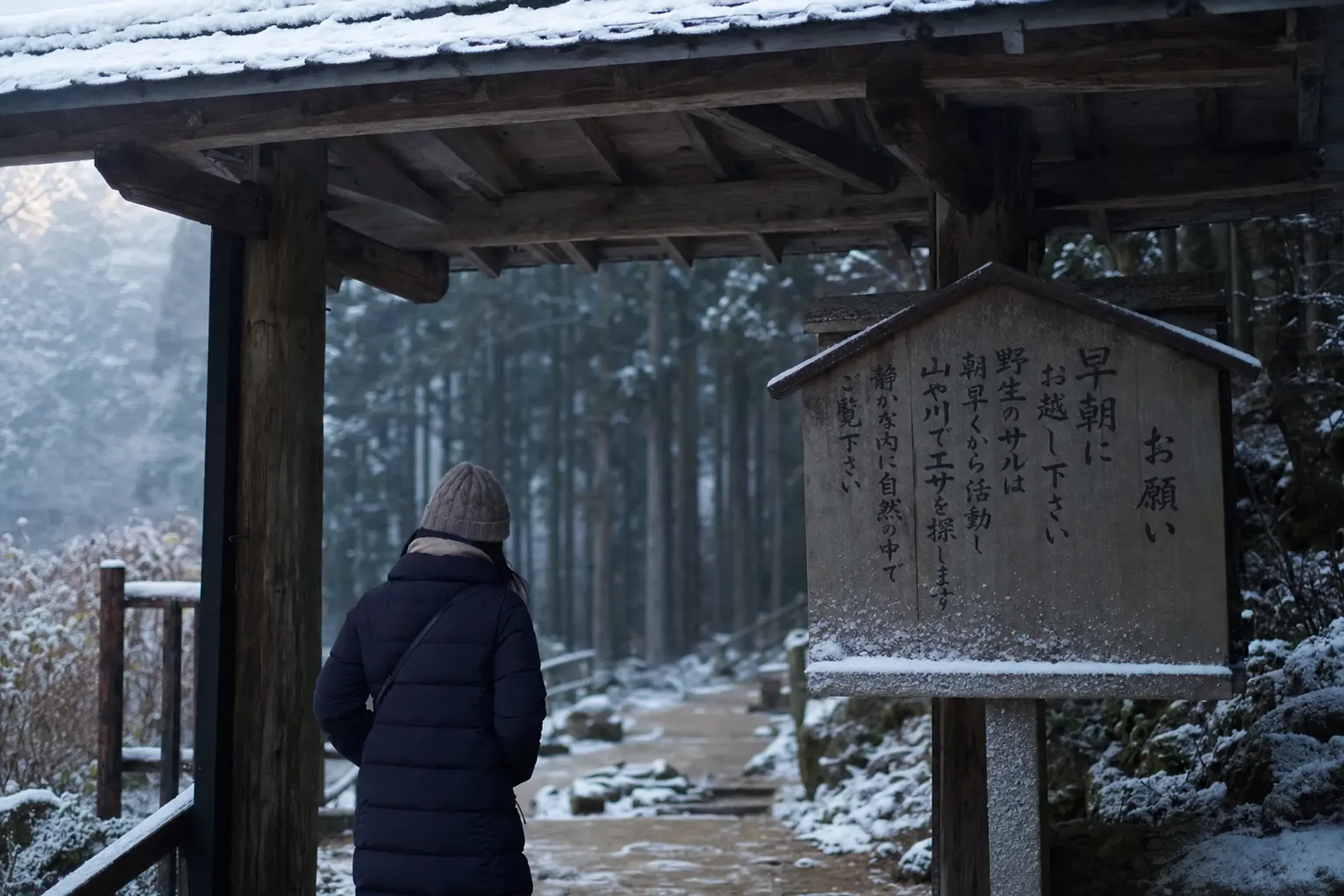
That is exactly why we favor the overnight pairing with Shibu. You are not trying to “win” the day in two stressed hours.
You have room to adapt.
Shibu Onsen After Dark: Why The Overnight Stay Changes Everything
Shibu Onsen is a small onsen town with stone-paved streets and many Taishō to early Shōwa wooden buildings, and it is said to have been found by the monk Gyōki about 1,300 years ago.
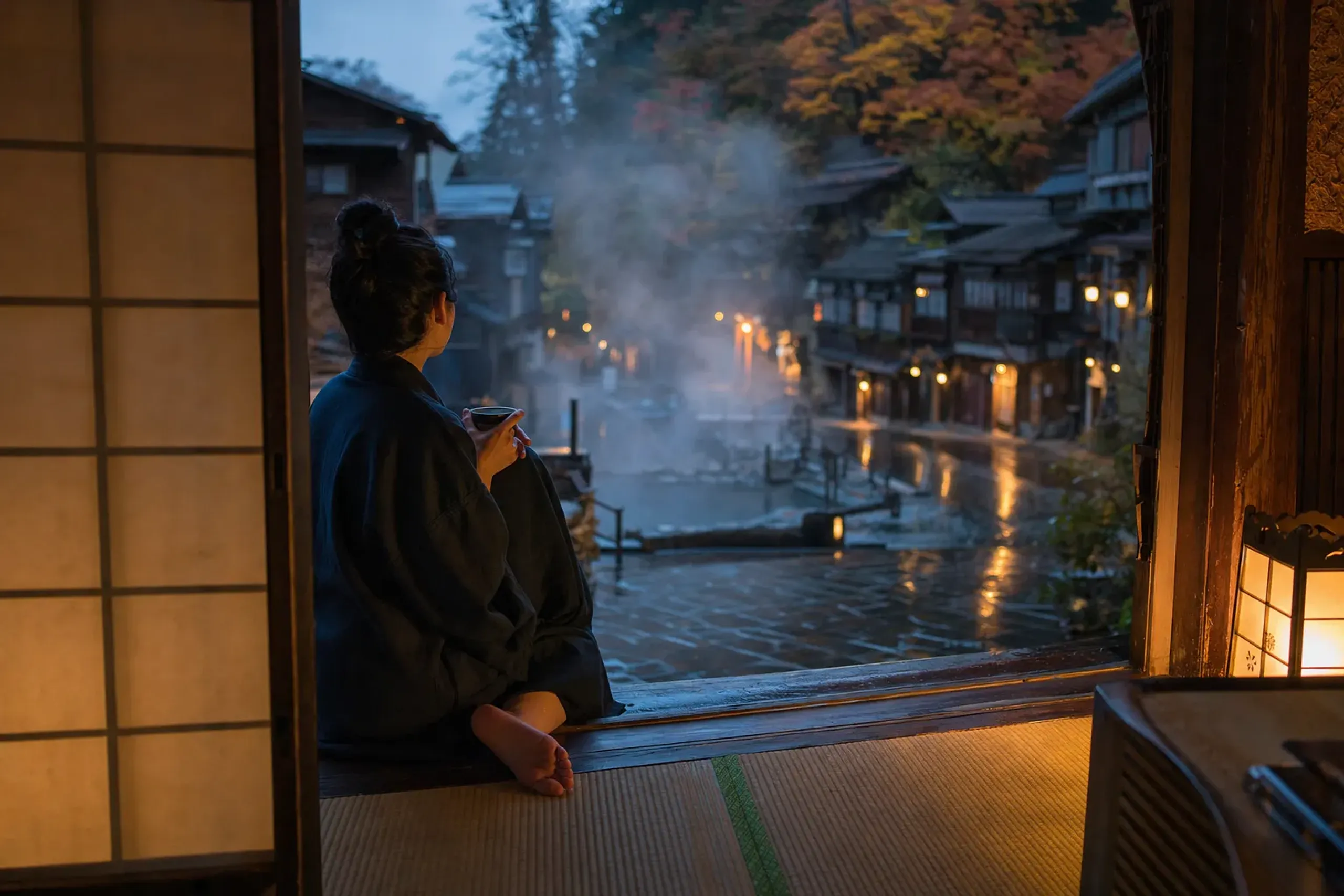
Evening is when Shibu becomes itself. Geta tap lightly on stone.
Steam drifts from vents in the ground and slips between old eaves. You pass other guests in yukata, but it never feels crowded—more like a shared hush.
This is where wabi-sabi makes sense without being a slogan: worn wood, dim corridors, a town that does not ask to be polished for your camera. It is the kind of restraint—moss, steam, and quiet stone—that money cannot manufacture.
The Nine Baths: What They Are, And Who May Use Them
Shibu Onsen is known for nine public baths (九湯めぐり), and the bath circuit is primarily for overnight guests whose inns lend them a key.
That single detail decides whether Shibu is a postcard or a lived experience.
The association explains that day visitors may use only the ninth bath, Ōyu, with payment and a ticket arranged locally through the tourist information center or nearby inns; we do not promise access beyond what the town’s rules allow.
Local residents use the baths daily.
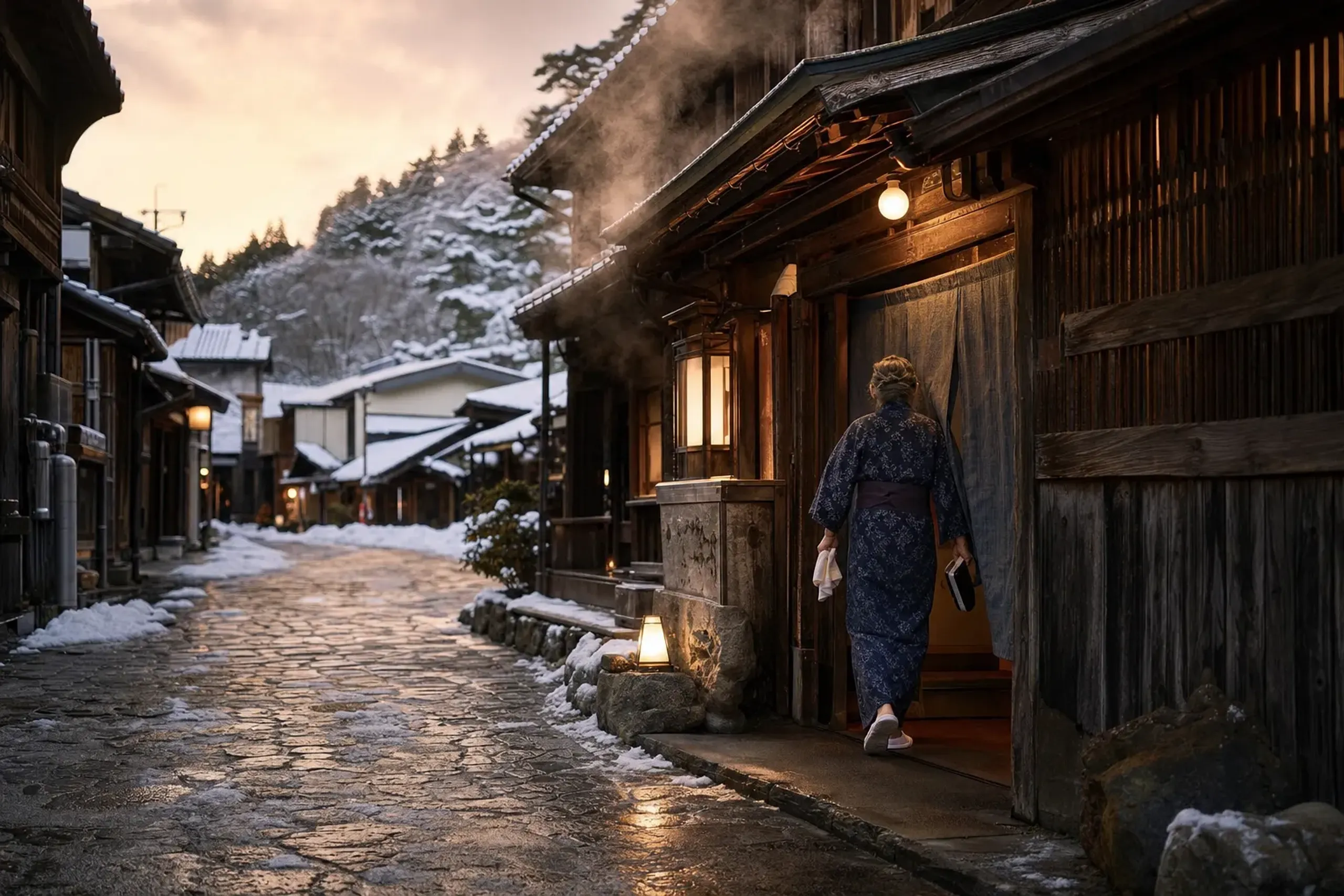
Guests are visitors in a real neighborhood, not a theme set.
The Bath Names (As Listed By The Shibu Onsen Association)
The association lists the nine baths by kanji. Romanization can differ by page, so we keep the official characters here:
- 一番湯 初湯
- 二番湯 笹の湯
- 三番湯 綿の湯
- 四番湯 竹の湯
- 五番湯 松の湯
- 六番湯 目洗いの湯
- 七番湯 七操の湯
- 八番湯 神明滝の湯
- 九番湯 大湯
Bath Etiquette In Shibu (The Small Rules That Keep It Peaceful)
The water is very hot. Expect it.
The public baths typically do not provide showers or soap, and there are no lockers. Bring a towel, carry valuables lightly, and rinse before entering.
There is also the town’s quiet choreography: greet the locals, keep voices low, and treat the bathhouse door like someone’s home door.
If your inn provides geta, step carefully on wet stone. It is charming until it is slippery.
Getting To Jigokudani And Shibu Onsen From Tokyo Or Nagano
From Tokyo, take the Hokuriku Shinkansen to Nagano in roughly 1 hour 20 minutes (Kagayaki) to about 1 hour 50 minutes (Hakutaka), then continue toward Yudanaka and Shibu Onsen.
The second leg is part of the mood shift. City glass fades.
From Nagano, the Nagano Electric Railway limited express reaches Yudanaka in about 45 to 50 minutes, though service levels changed in late 2024, so it is smart to check the current timetable.
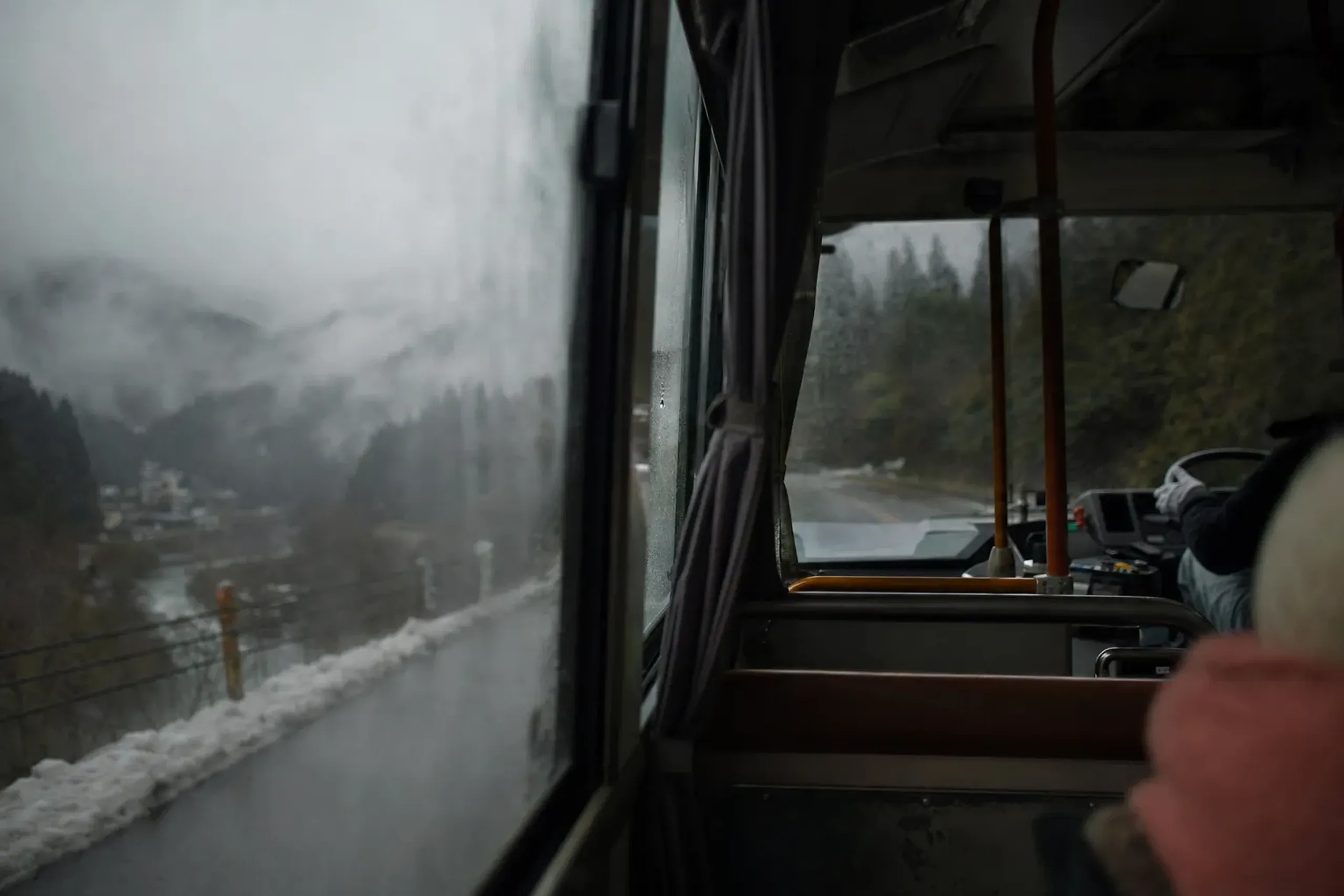
From Yudanaka Station, a bus ride of about 15 minutes reaches the “Snow Monkey Park” bus stop, followed by the forest walk; in winter, bus timetables can be seasonal, so confirm the official schedule close to your travel dates.
By Road In Winter (What Changes)
Winter access is typically from the Kamibayashi side.
The Shibu-side forest road to the paid lot is closed in winter, and large vehicles are not allowed. That catches people off guard.
This is one reason many of our guests prefer a private vehicle for the day: you can keep warm layers in the car, adjust your timing, and avoid the “last bus panic.”
When we discuss private transportation with clients, we focus on comfort, discretion, and the simple ability to change pace without announcing your plans to a crowd.
A Step-By-Step Day Plan (With Buffers For Reality)
Start with a plan that assumes winter will be winter. It sounds obvious. People still under-pack.
We like to build the morning around the park’s winter hours (November to March: 9:00–16:00) while respecting the park’s request to arrive at least 30 minutes before closing.
Then we add buffers for snow, footing, and the simple fact that guests stop to photograph icicles and cedar trunks. They should.
This is not a commute.
Step 1: Check The Park’s Official Updates Before Leaving
The park publishes guidance about monkey appearances, including live cameras and a weekly “arrival forecast.” Use it.
It will not guarantee anything, but it prevents the most avoidable disappointments.
Our concierge team can also check official notices and known access constraints ahead of a client’s visit, then shape the day’s rhythm around that information—anticipating the small frictions before they ever reach you.
Quiet diligence matters more than flashy promises.
Step 2: Walk In Slowly, Arrive With Warm Hands
A slow start is safer on ice. It also keeps your breathing calm.
Keep your phone and camera secured. The park explicitly asks visitors to keep devices away from the monkeys.
If you use poles, keep the tips controlled on the wooden steps. Do not turn the trail into a hazard for the person behind you.
When the river sound grows louder, you are close.
Step 3: Watch First, Photograph Second
Monkeys respond to pressure. Humans forget that.
Watch the troop settle before you lift the lens. The best frames come to those who wait, not to those who intrude.
Begin Planning Your Winter In The North
A day with the snow monkeys and a night in Shibu Onsen is the sort of experience that resists hurry. Done well, it becomes a passage—from the hush of the Yokoyu gorge to the lantern glow of stone lanes, timed to the precise week of winter when the steam, the snow, and the quiet align.
Our role is to arrange that passage with discretion: private movement, verified access, a ryokan whose doors open quietly, and a rhythm that leaves you room to simply be present. When you are ready to shape this into a journey of your own, contact us here and we will begin a tailored proposal built around your dates and your pace.