In this guide
- 01Why Do Karatsu Kunchi’s Floats Have No Metal Frame?
- 02When Is Karatsu Kunchi, And What Happens Across The Three Days?
- 03How Tall And Heavy Are The Karatsu Kunchi Hikiyama Floats?
- 04The Origin Story That Links Karatsu To Kyoto In 1819
- 05Three Hikiyama Stories To Look For (And Why They Matter)
- 06Recognition, Preservation, And The Living Craft Behind The Lacquer
- 07How Do You See The Hikiyama Floats Outside November 2–4?
- 08Is Karatsu Kunchi A Good Day Trip From Fukuoka (Hakata)?
- 09A Practical, Comfort-First Planning Playbook (Without Over-Engineering It)
- 10What Japan Royal Service Can Do For Karatsu Kunchi (Plainly)
- 11Frequently Asked Questions
- 12Why Choose Japan Royal Service
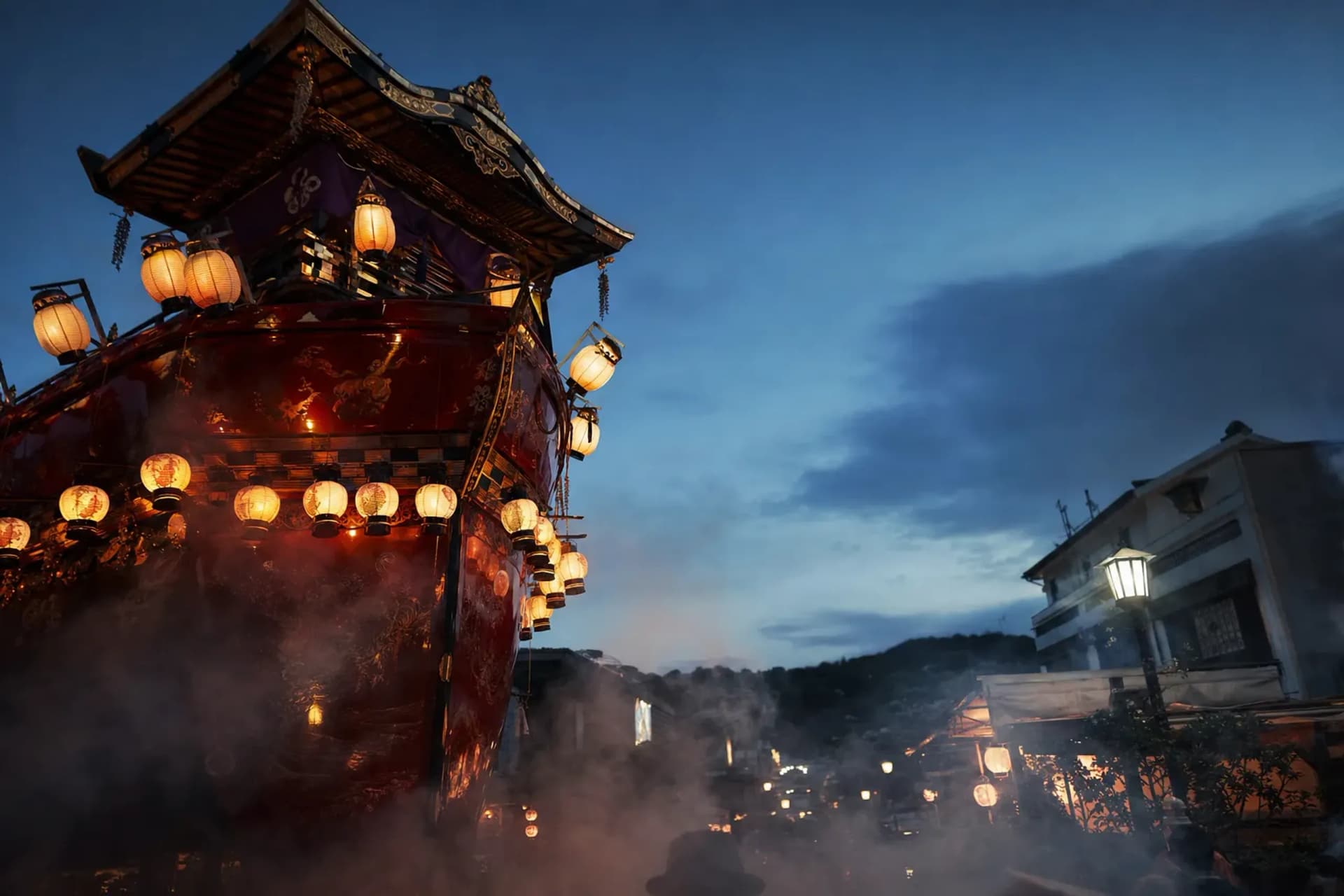
The first night of Karatsu Kunchi does not announce itself with a spotlight. It arrives by lantern.
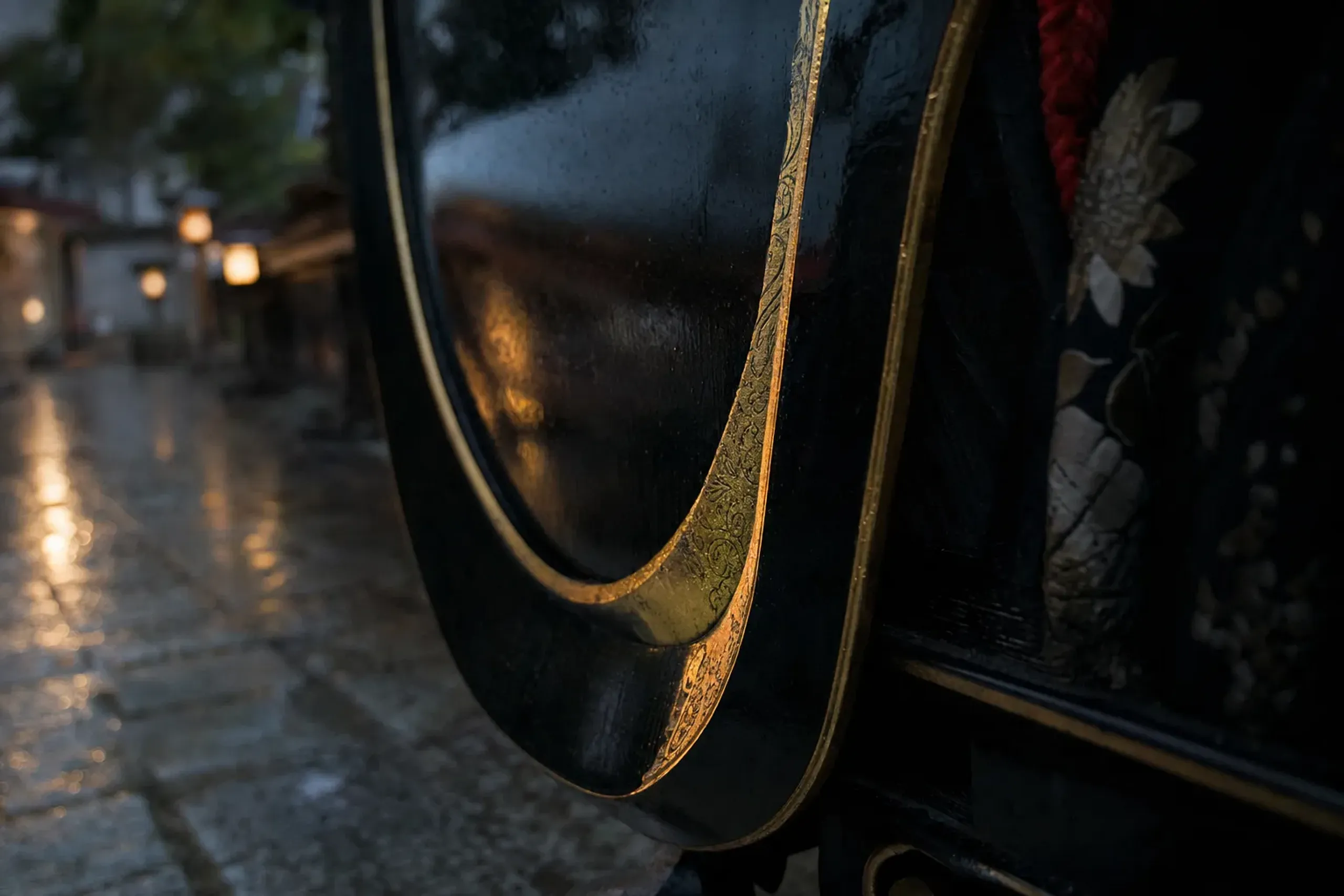
Paper light. Warm, watchful, human. It skims across lacquered curves and catches on gold leaf, then slips away as the crowd shifts and breathes.
You stand close enough to see the surface. Close enough to sense the scale.
Seven meters. Two to three tons. And yet—no metal frame at all.
Why Do Karatsu Kunchi’s Floats Have No Metal Frame?
Karatsu Kunchi’s 14 hikiyama floats are built with kanshitsu-zukuri—over 100 layers of washi paper and lacquer—so their strength comes from paper and lacquer, not metal.
This is the detail most visitors miss, even when the float is right in front of them. The hikiyama are monumental, but their core logic is quiet. They are not welded. They are not bolted.
They begin with a wooden-and-clay form. Then comes the real work.
Layer. Dry. Layer again. More than 100 individual sheets of washi, pasted on one at a time, built up until the surface becomes structure.
Only after that do the finishes arrive: multiple kinds of lacquer, then gold or silver leaf where the design calls for it. Under lanterns, those surfaces behave like water. In daylight, they look carved.
In our experience, luxury travelers respond to this kind of shokunin logic more than to spectacle. The festival is public. The craftsmanship is private in spirit.
When Is Karatsu Kunchi, And What Happens Across The Three Days?
Karatsu Kunchi is held every year from November 2 to November 4 as the autumn festival of Karatsu Shrine in Karatsu City, Saga Prefecture.
For planning, that fixed window is a gift. It lets you build a Kyushu swing with clean edges, especially if you value comfort and pacing over rushing.
Karatsu Kunchi is best understood as three different moods, not one repeating parade.
November 2: The First Night Under Lanterns
This is the night to see lacquer behave like lacquer. Not like paint.
The hikiyama are illuminated by paper lanterns, and the floats take on a distinct character compared with daytime viewing. Gold leaf flashes, then disappears. Shadows settle into the carved forms.
If you care about photography, this night rewards patience. A quick pass is a waste.
November 3: The Main Procession Toward Nishinohama
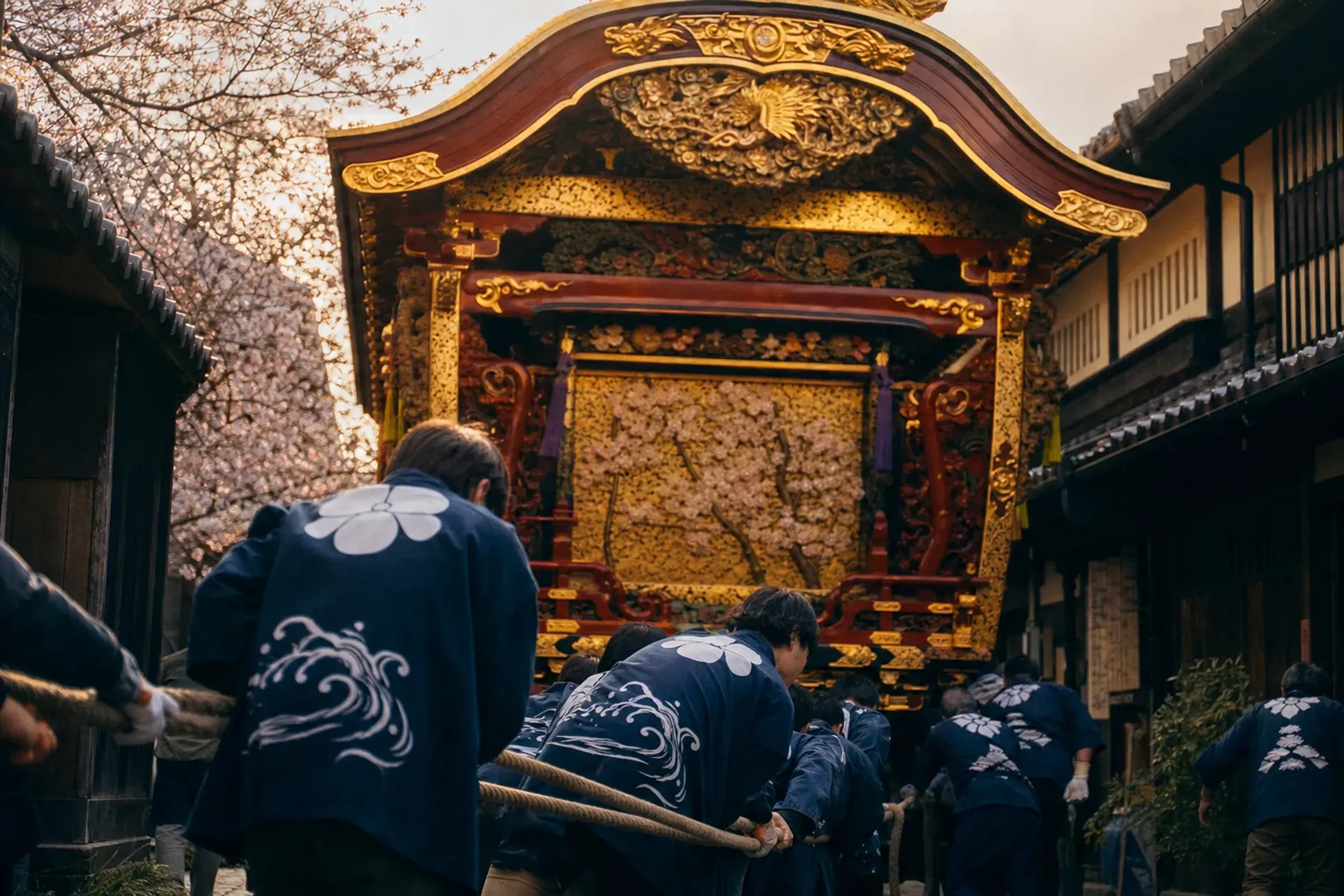
During the festival, the floats proceed from Karatsu Shrine toward the Nishino Beach (Nishinohama) area. This is the day many travelers picture when they search for Karatsu Kunchi.
Expect density. Expect sound. The floats are not “displayed.” They move through the city as living objects, with teams pulling and steering them through tight streets.
Good strategy matters here. Not heroics.
November 4: The Finale Atmosphere
The final day carries the feeling of completion. The same forms, the same streets, but a different energy in the crowd.
For many HNW travelers, this day is the best choice if you prefer a slightly calmer rhythm than November 3, while still seeing the festival at full scale.
Key fact: Karatsu Kunchi is a large public festival. The comfort you feel on the day comes from logistics—timed arrivals, realistic walking loops, and a quiet place to reset.
How Tall And Heavy Are The Karatsu Kunchi Hikiyama Floats?
The hikiyama floats stand about seven meters tall and weigh roughly two to three tons each.
Those numbers change how you watch them. You stop thinking about “floats” and start thinking about moving architecture.
And the technique makes the scale feel even stranger. This much mass, carried by paper and lacquer layered into strength.
Each float takes roughly three years to complete. Not as a hobby project. As a serious, multi-year build.
The Origin Story That Links Karatsu To Kyoto In 1819
The oldest of the fourteen floats is Katanamachi’s Red Lion (Aka-jishi), created in 1819 by Ishizaki Kahei from a local sake-brewing family.
Tradition holds that Ishizaki was inspired by Kyoto’s Gion Matsuri, which he saw while returning from a pilgrimage to Ise. That cross-regional spark matters.
It means Karatsu Kunchi was never an isolated invention. It was a conversation across Japan—Kyoto to Ise to Karatsu—expressed in lacquer and paper rather than words.
Over the following decades, other towns followed with their own floats. Today, fourteen active hikiyama form the heart of Karatsu Kunchi.
Three Hikiyama Stories To Look For (And Why They Matter)
Karatsu Kunchi is famous because the floats are huge.
The deeper reason is that each float is a town’s chosen face.
When you know even one backstory, the parade stops being “a parade.” It becomes a moving archive.
The Sea Bream Float (1845): Charm Through Exaggeration
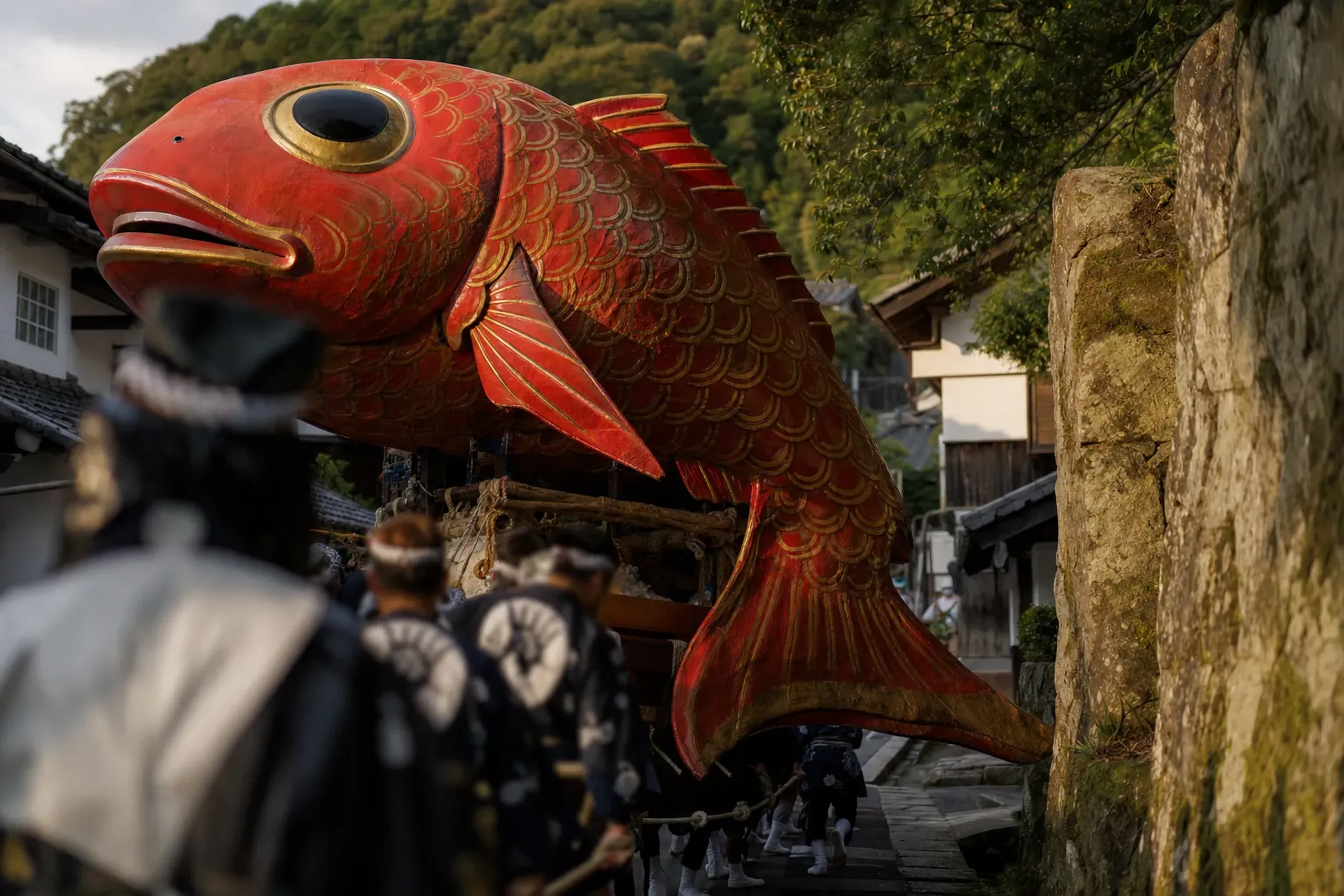
The Sea Bream (tai) float was made in 1845, and its design deliberately exaggerates the eyes and fin proportions compared to a real sea bream.
Locally, this is described as adding charm without losing recognizability. It is a designer’s choice, not an accident.
Look closely and you’ll notice another detail: its fins are articulated to move. Not a static sculpture.
The Orca (Shachi) Float Of Kakomachi: A Civic Motive, Not A Religious One
Kakomachi’s Orca (Shachi) float carries an unusual creation story. Town officials commissioned it with a civic motive: to help correct declining public morals among the town’s youth during the late Edo-to-Meiji transition.
That matters because it frames the float as a community tool. Not just decoration.
The sea creature theme connects to the town’s relationship with water, grounding the moral story in local identity rather than abstract messaging.
Katanamachi’s Red Lion (Aka-jishi): The One Float With Its Own Annual Ritual
Among all fourteen floats, the Red Lion alone carries a ritual unique to it.
Each November 3, a paper streamer is placed behind its horn. The streamer is newly made by Katanamachi that year, ritually purified at Karatsu Shrine that morning, then placed atop the lion’s head.
It is a small gesture against a massive form.
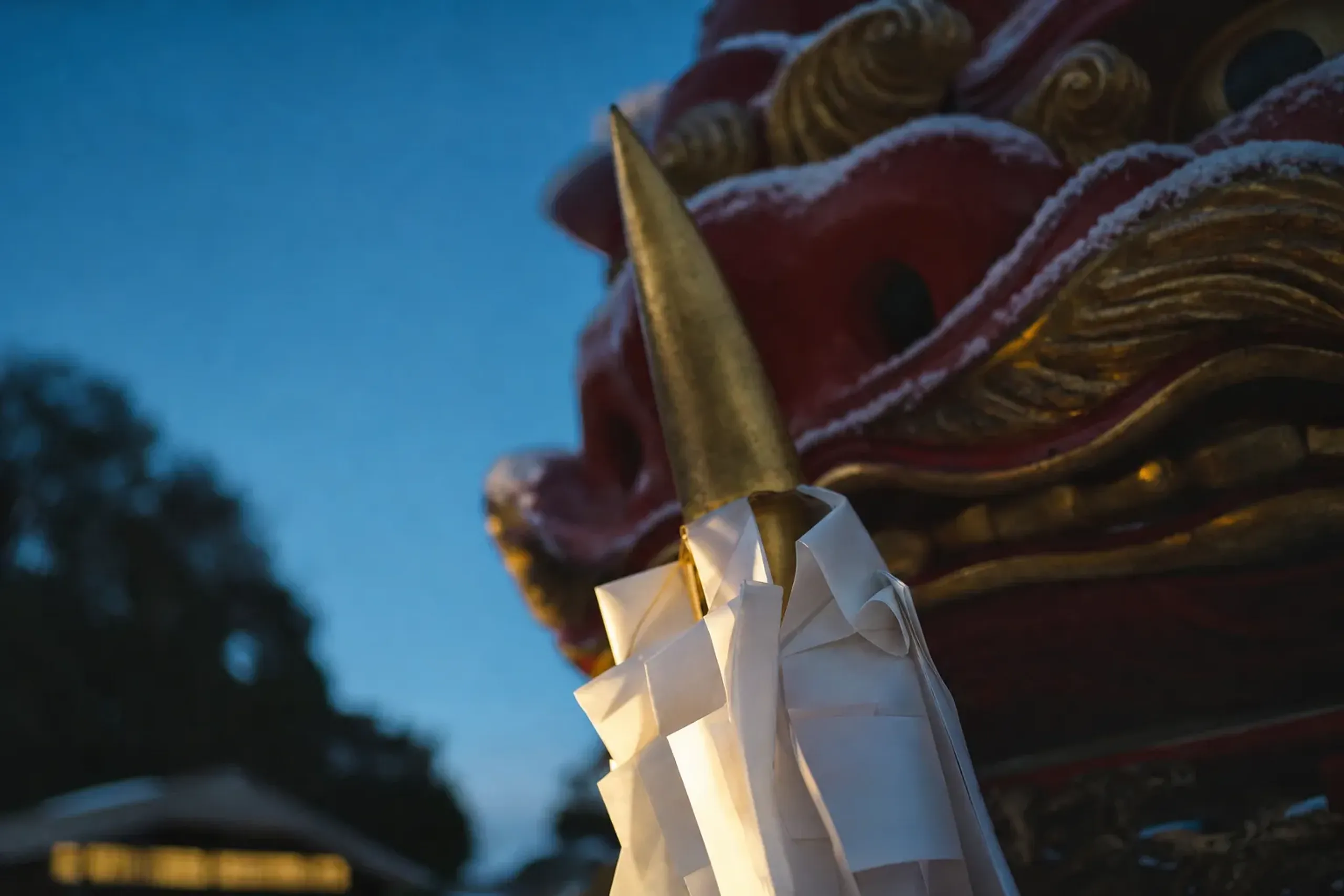
That contrast is the point.
Recognition, Preservation, And The Living Craft Behind The Lacquer
Karatsu Kunchi is nationally designated as an Important Intangible Folk Cultural Property, and it is listed as UNESCO Intangible Cultural Heritage.
The floats themselves are separately designated as Saga Prefecture Important Tangible Folk Cultural Properties. It is both performance and object.
Preservation here is not glass-case preservation. Individual towns commission professional restoration as needed, and past work has involved specialist gold leaf artisans.
That is a shokunin ecosystem still operating in real time. Not a fossil.
How Do You See The Hikiyama Floats Outside November 2–4?
You can see Karatsu Kunchi’s floats year-round at the Hikiyama Exhibition Hall in Karatsu.
This is the simplest way to meet the hikiyama without crowds. It also works for travelers who can’t align schedules to early November.
We often suggest pairing the Exhibition Hall with a calm walk that resets your senses after the visual density of the floats. Karatsu rewards unhurried movement.
And if you travel in November, the Hall can be your “study session” before the festival. You learn the faces first, then meet them in motion.
Is Karatsu Kunchi A Good Day Trip From Fukuoka (Hakata)?
Yes—Karatsu Kunchi can work as a day trip from Fukuoka (Hakata), but festival crowds make timing and return planning essential.
Public messaging often encourages public transport during peak festival periods, and for good reason. Roads and parking become friction points.
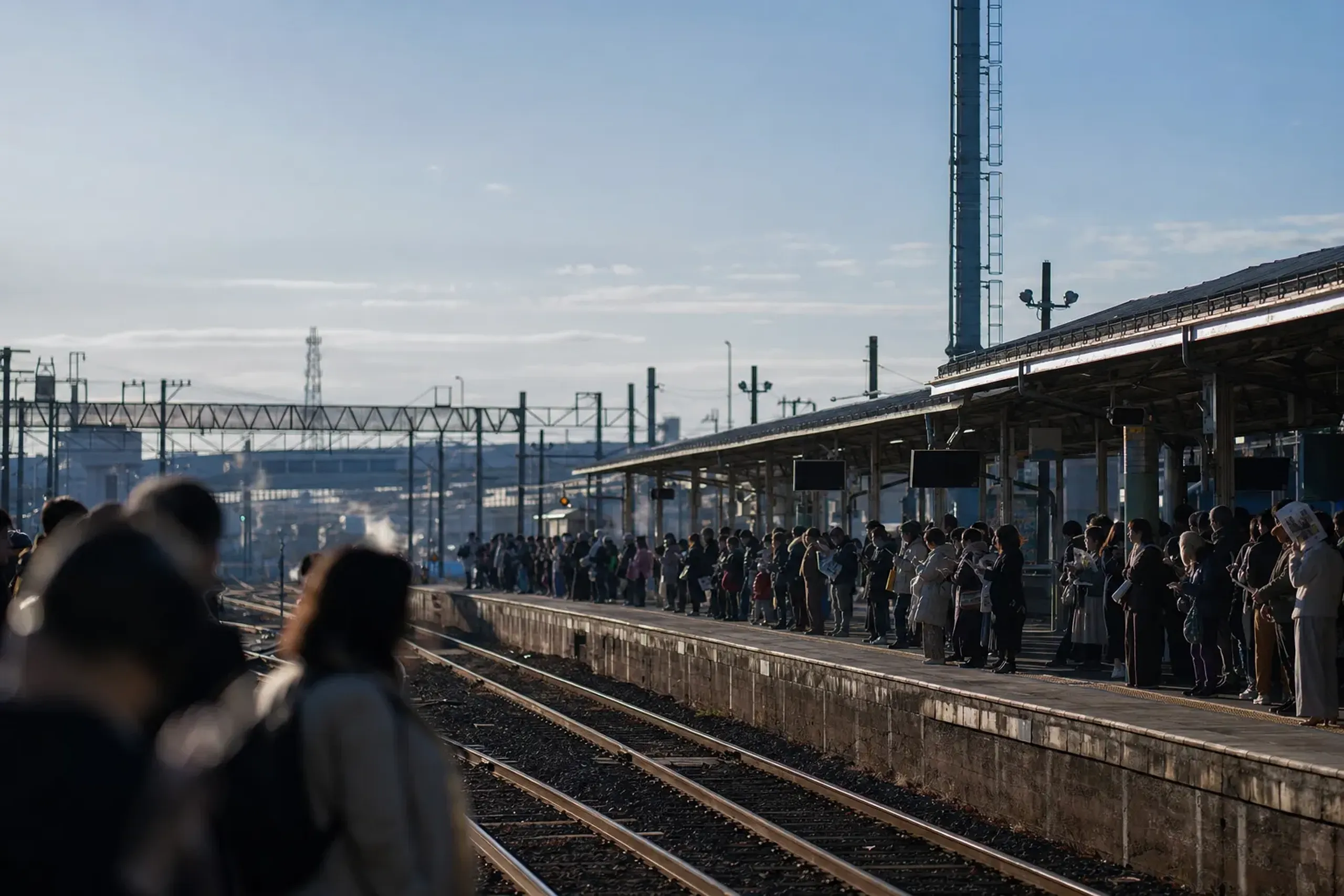
For HNW travelers, the real question is not distance. It is stamina.
Plan a realistic on-the-ground loop, choose one core viewing window, then leave before fatigue makes every crowd feel twice as large. Smart exits beat stubbornness.
A Practical, Comfort-First Planning Playbook (Without Over-Engineering It)
Karatsu Kunchi is exhilarating, but it is not a salon. You’re outdoors, on foot, surrounded by people who came for the same reason.
So the luxury is not velvet rope. It is composure.
Choose Your Priority: Lantern Night Or Maximum Motion
Decide what you want to remember. That choice simplifies everything.
- If you want atmosphere: prioritize November 2 for lantern-lit viewing.
- If you want scale in motion: prioritize November 3 for the main procession toward Nishinohama.
- If you want a steadier rhythm: consider November 4 as a calmer-feeling finale day.
Build A Two-Stop Day, Not A Twelve-Stop Checklist
HNW travelers often over-pack festival days because the maps tempt you. Big mistake.
A tighter plan keeps you present. Two strong viewing windows, one meal, one quiet reset point.
Our team at Japan Royal Service approaches festival days the way we approach museums: arrive with intent, leave before you go numb.
Wear The Right Shoes, Then Upgrade Everything Else
There is no substitute for comfortable walking shoes. None.
After that, upgrades become meaningful: a calm car ride before and after, a warm drink at the right time, and a pace that respects your energy.

What Japan Royal Service Can Do For Karatsu Kunchi (Plainly)
Japan Royal Service provides guiding and transfers for Karatsu Kunchi visits, with comfort-first pacing and privacy-minded routing.
That means we focus on how the day feels, minute by minute. Where you enter the crowd. Where you step out. When you sit down.
Your transport matters here, especially after a long day on foot. Our first recommendation for many clients is private transportation with a discreet chauffeur who understands timing, not just distance.
If you’re building a wider Kyushu journey, we also shape a tailor-made plan that keeps Karatsu Kunchi as the emotional peak, not a stressful obstacle.
Frequently Asked Questions
Are Karatsu Kunchi’s Hikiyama Floats Really Made Without Metal Frames?
Yes—Karatsu Kunchi’s hikiyama floats are known for being built without metal frames, using kanshitsu-zukuri with many layers of washi paper and lacquer to create strength.
When you watch a two-to-three-ton form roll past and remember what it’s made of, the festival changes. It becomes an engineering story, not only a cultural one.
What Are The Official Dates For Karatsu Kunchi Each Year?
Karatsu Kunchi is held every year from November 2 to November 4 at Karatsu Shrine in Karatsu City, Saga Prefecture.
Because it is fixed to these dates, hotels and transport can fill early. Our concierge team verifies current festival dates and viewing arrangements on the client’s behalf ahead of the visit.
Where Can I See The Karatsu Kunchi Floats If I’m Not Traveling In November?
You can see the floats year-round at the Hikiyama Exhibition Hall in Karatsu.
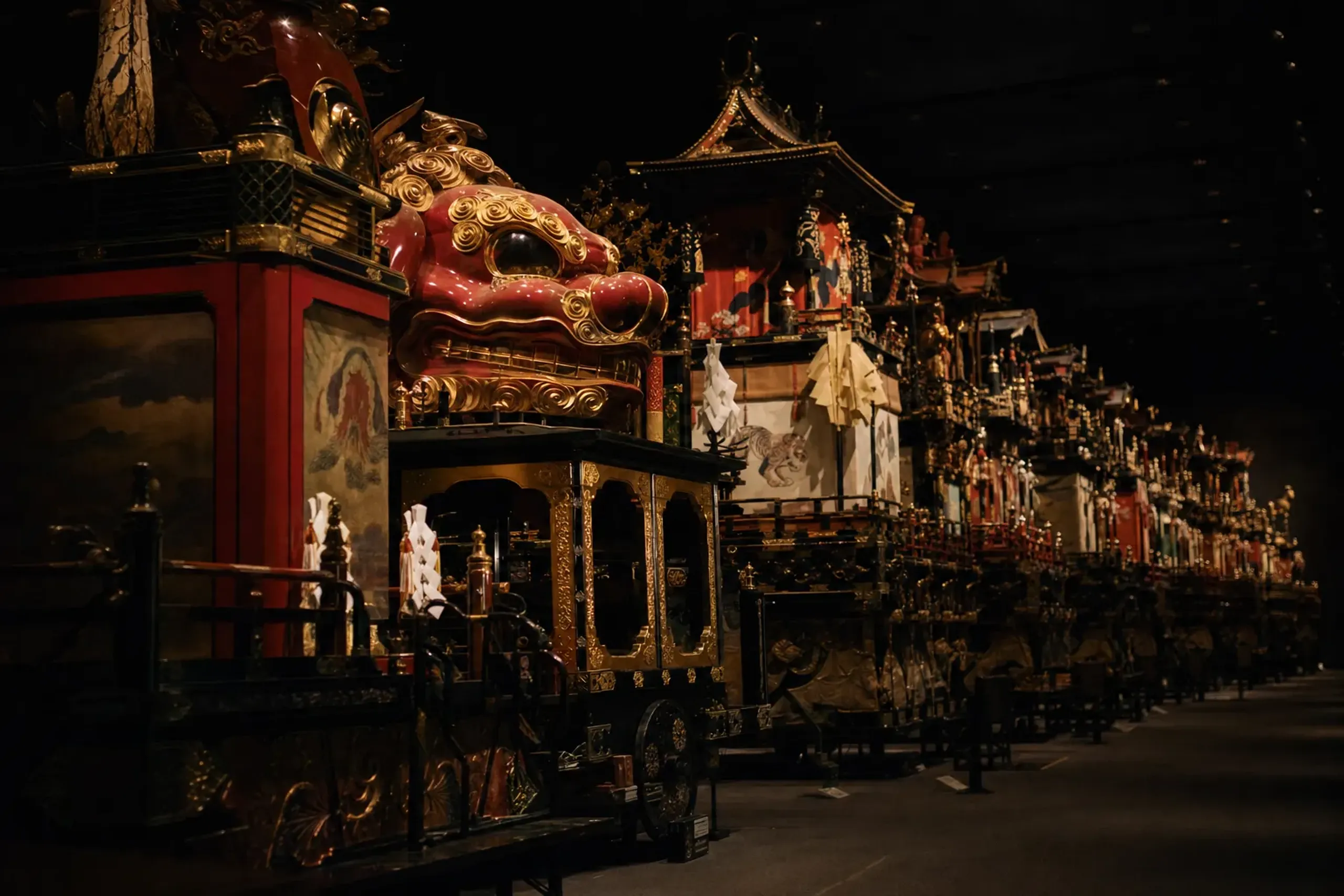
This is ideal for travelers who want the craftsmanship without festival density, or for families who prefer a calmer pace.
Is Karatsu Kunchi Too Crowded For A Luxury Trip?
Karatsu Kunchi is crowded at peak moments, but the trip can still feel refined with smart timing, realistic walking loops, and a comfort-first transport plan.
The festival is public. Your experience doesn’t have to feel chaotic.
Why Choose Japan Royal Service
Luxury travelers choose Japan Royal Service when they want Japan to feel precise, not loud. Quiet discretion matters, especially in a public festival where your day can be photographed, overheard, and reshaped by crowds.
We plan with restraint. We look for clean timing, dignified arrivals, and the small decisions that keep your attention on the hikiyama—not on logistics.
And we speak to the deeper value of the festival: shokunin craft at monumental scale, maintained across generations, still repaired by specialists when gold leaf needs a steady hand.
If Karatsu Kunchi is your reason to come to Saga, our job is to protect that reason.
For private coordination, reach our team privately via WhatsApp or LINE, or contact us here.
We respond with a tailored proposal and practical guidance based on your travel dates, party size, and preferred pace.