In this guide
- 01The Story Nobody Planned: One CNN List, One Ticket System
- 02Why Is There No Public Transport To Kawachi Fujien?
- 03When Is Kawachi Fujien Open?
- 04How Does The Kawachi Fujien Ticket System Work?
- 05The Garden Itself: Tunnels, The Great Trellis, The Domes
- 06What Are The Photography Rules At Kawachi Fujien?
- 07Who Else Visits: A Note On The Demon Slayer Association
- 08What Japan Royal Service Arranges For Kawachi Fujien
- 09Frequently Asked Questions
- 10Why Choose Japan Royal Service
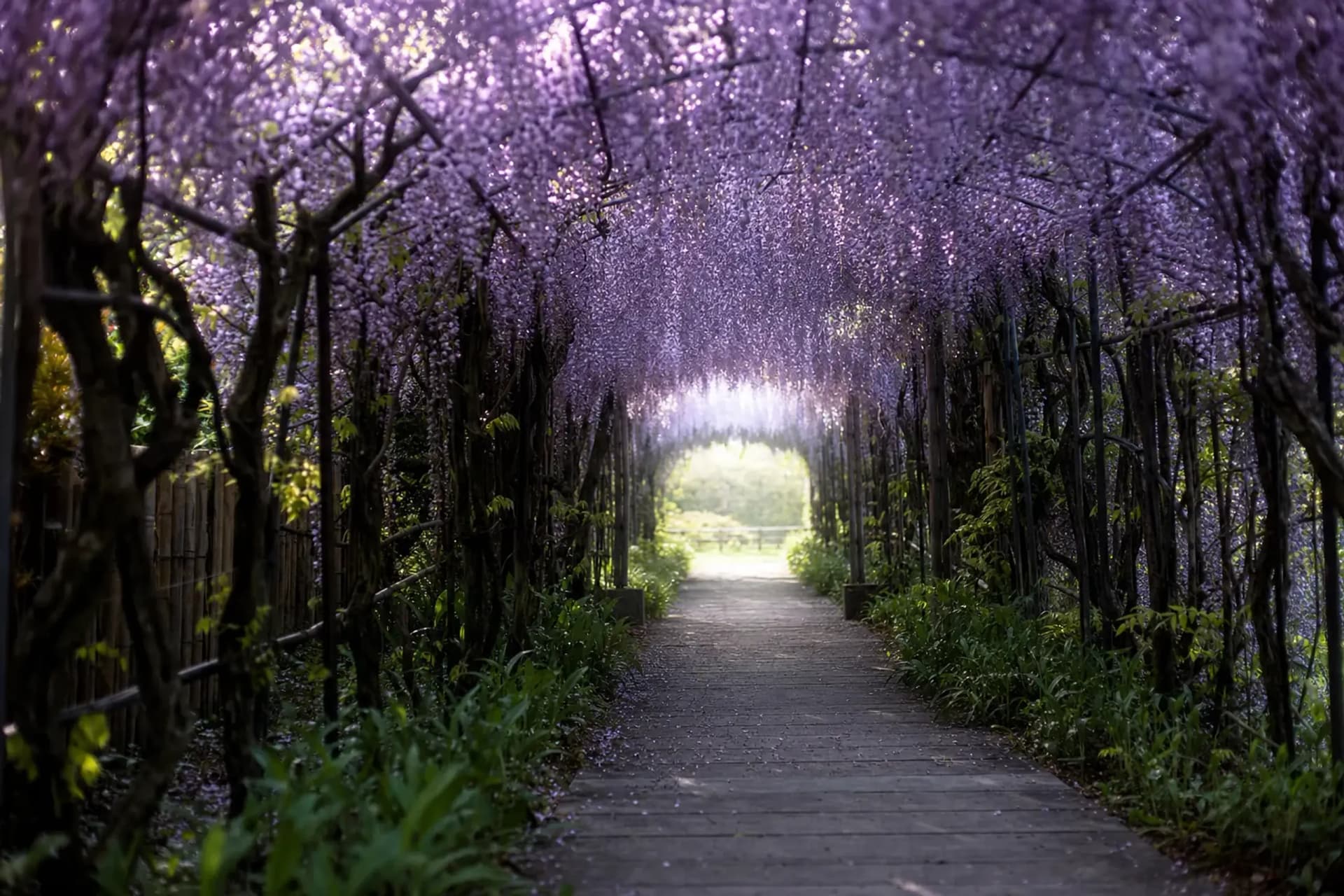
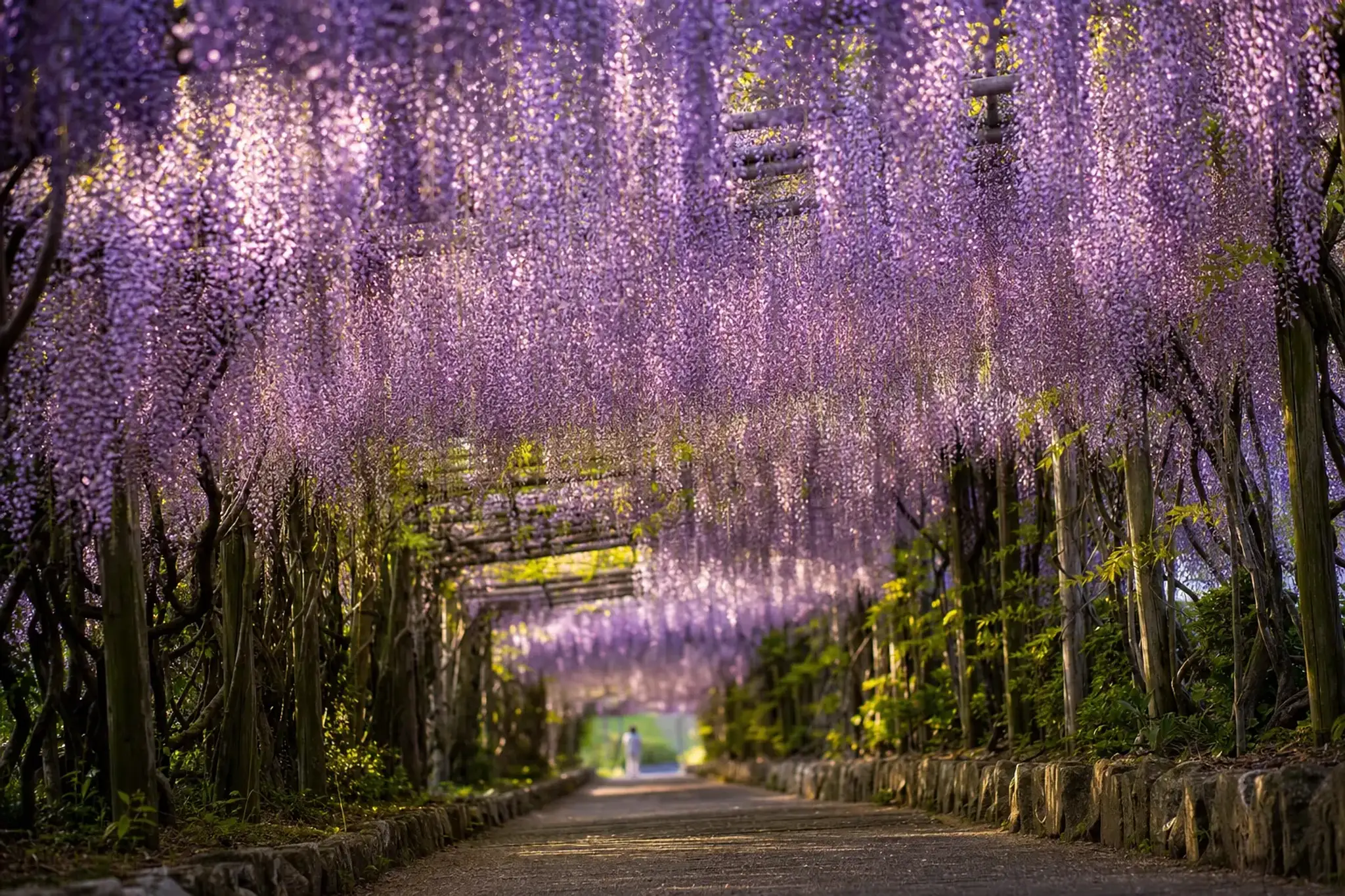
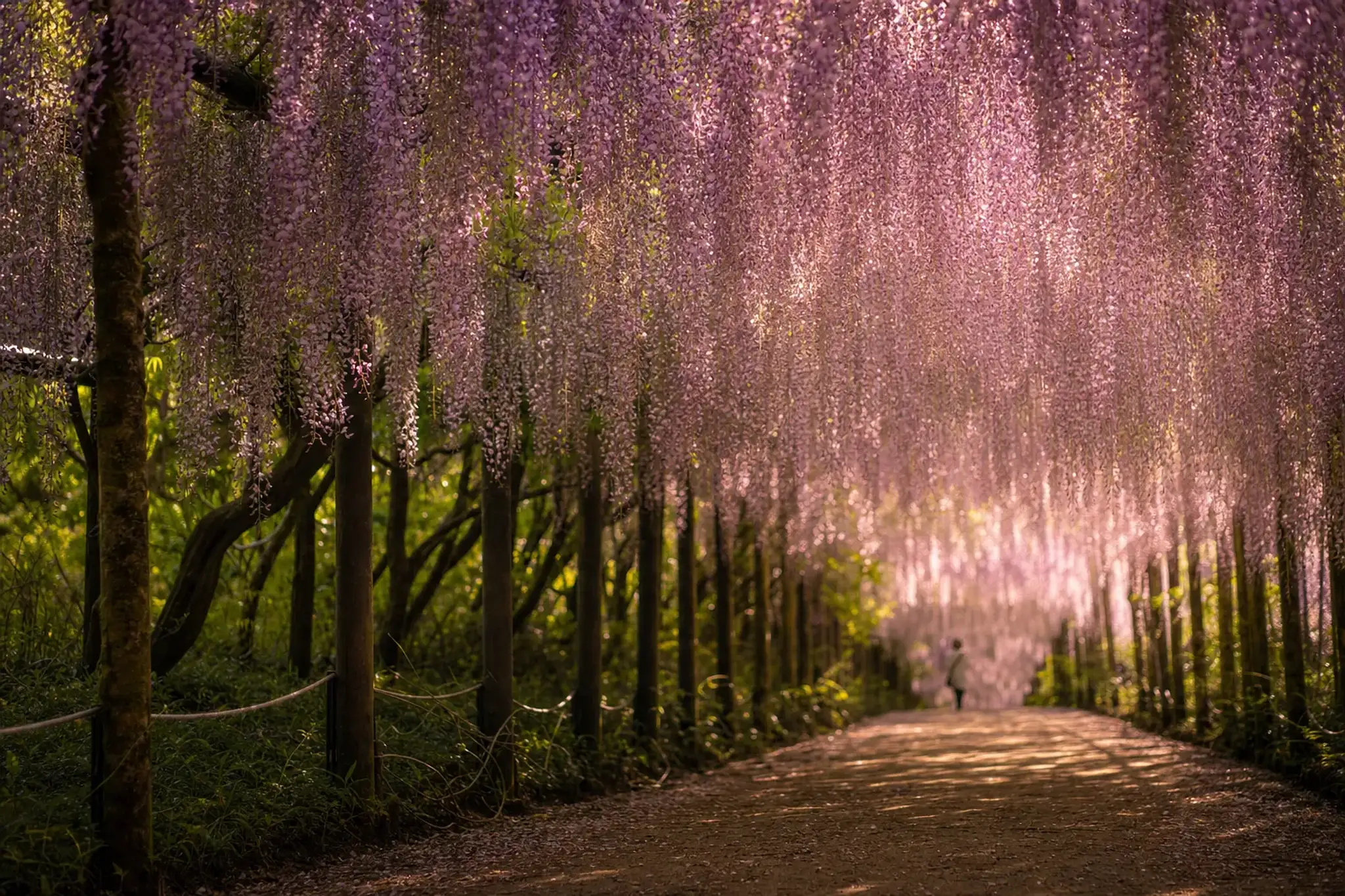
Stand under the longer tunnel and the light changes. Purple pours from overhead in ropes and ribbons, some clusters dropping past your shoulder, the whole thing swaying when a breeze finds it. Roughly 110 metres of wisteria, colour shifting from deep violet to white to a blush pink as you walk. Underfoot, dappled shade. Above, a hundred years of trained branches doing something a nursery cannot fake in a decade. This is Kawachi Fujien, on a hillside south of central Kitakyushu, and for two ticketed weeks each spring it becomes one of the most photographed places in Japan.
Getting to it is the whole story. Our team at Japan Royal Service has spent enough spring mornings staging cars on the narrow roads near the reservoir to know exactly where the friction sits. It is not the garden. It is everything between you and the gate.
The Story Nobody Planned: One CNN List, One Ticket System
Kawachi Fujien was not built by a city or a prefecture. It was founded by one man, Higuchi Masao, who planted and shaped it over decades into a private garden of more than twenty wisteria varieties across roughly 10,000 square metres of hillside. A personal project. Never designed for crowds.
Then, in 2015, CNN named it among Japan's 31 most beautiful places. That single listing changed everything. Visitor numbers surged past anything a private garden could absorb, and by 2016 Higuchi's garden had done something no small private garden wants to do: it installed crowd control.
A ticketed, timed-entry system, brought in specifically to manage the congestion the world's attention had created.
That is the real arc here. A one-man garden, suddenly global, forced to build a structure around itself just to survive its own fame. Understanding that explains everything about how you visit today.
Why Is There No Public Transport To Kawachi Fujien?
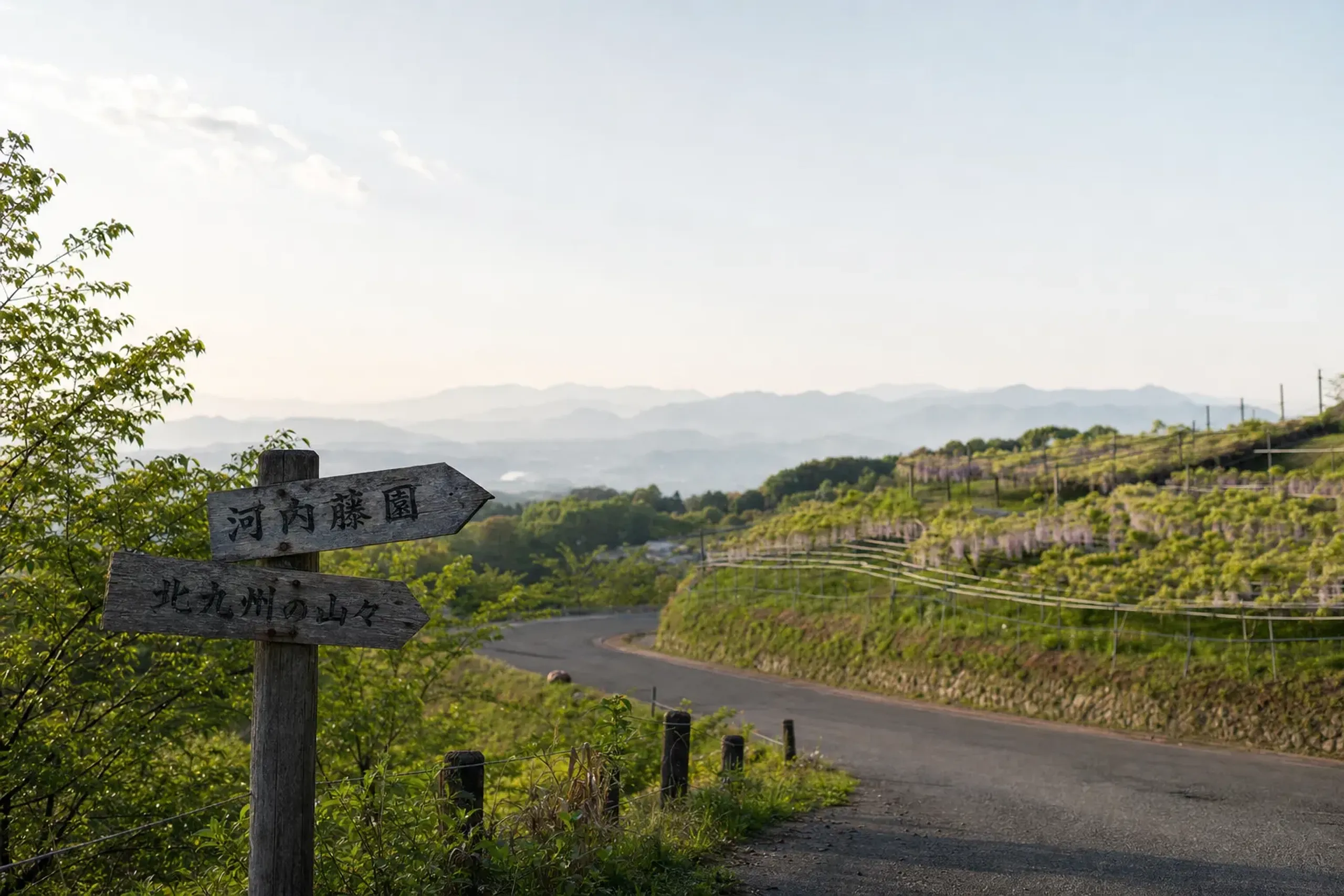
There is no public transport to Kawachi Fujien and no shuttle bus of any kind. The garden's own official site states this plainly. Every visitor must arrange their own route to the gate.
This is not a detail to gloss over. The roads climbing toward the garden, threading past the reservoir, are narrow and full of tight curves. The garden itself recommends small vehicles for groups rather than large coaches, because big buses genuinely struggle on the approach. During the two ticketed weeks, traffic on that road can turn a short distance into a long, stop-start crawl.
Key fact: The garden's official notice confirms there is no shuttle bus and no public transport nearby. Roads by the reservoir are narrow and curving; small vehicles are advised over large buses.
So private transport here is not a flourish. It is the practical answer to a stated problem. A skilled chauffeur who knows the approach, the right departure time to beat the worst of the road, and where to stage the vehicle turns the single hardest part of this visit into the easy part.
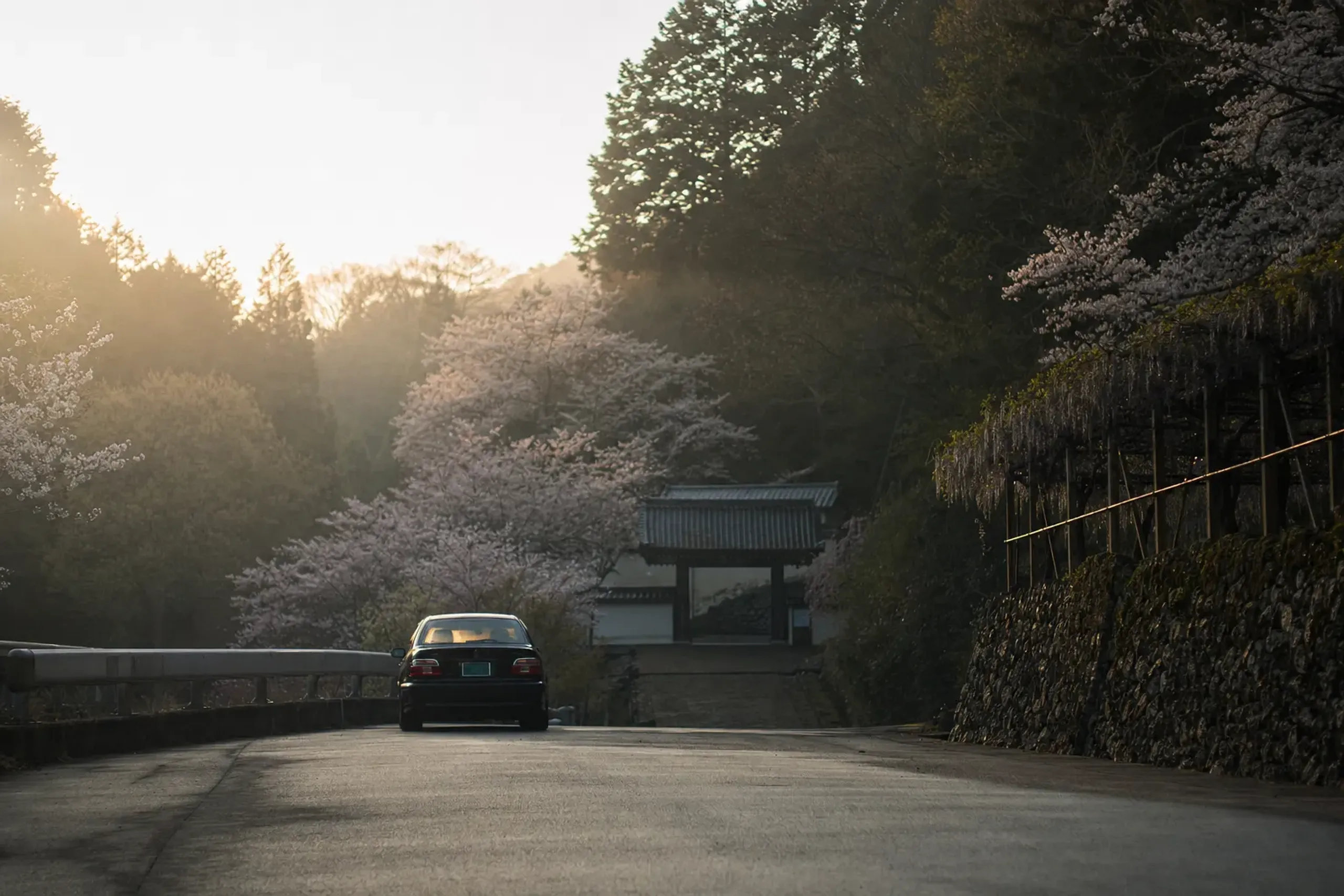
That is precisely how we position private chauffeured transport for Kawachi — not as a comfort upgrade, but as the thing that actually gets you there on time and calm.
When Is Kawachi Fujien Open?
The spring wisteria season mainly opens in April to May, per the garden's own official site, which notes the dates may shift with bloom conditions. Hours during the season run 8:00 to 18:00.
Treat that window as bloom-dependent, not fixed. The garden itself flags the uncertainty. In 2024 the season ran 20 April to 6 May, and the pattern has held reasonably consistent year to year. Peak colour usually lands somewhere between late April and early May, with full bloom often cited around 25 April to 5 May. But weather moves it. An early warm spell pulls it forward; a cold snap holds it back.
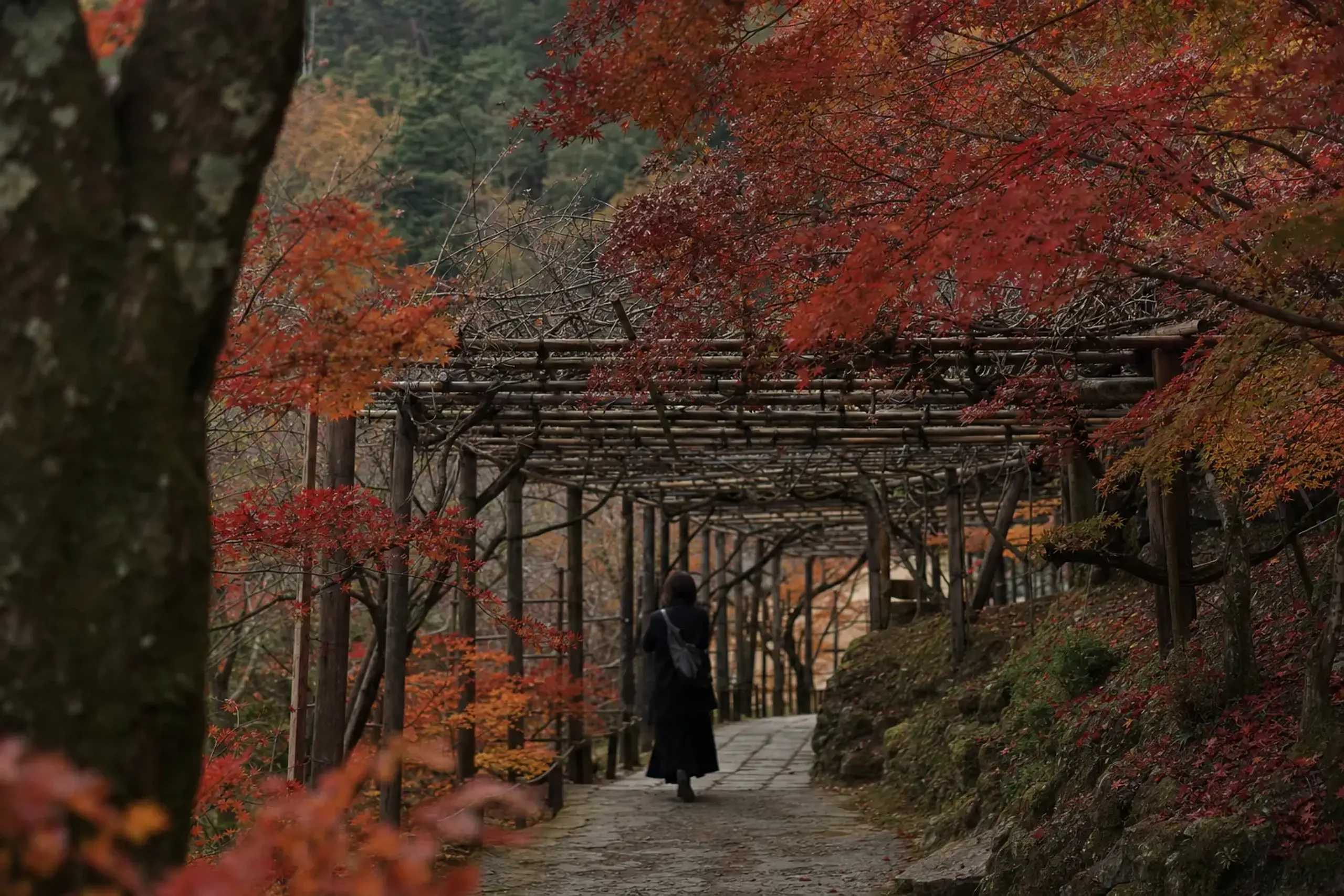
There is a second season most visitors miss. From roughly mid-November to early December, Kawachi Fujien turns again, this time with around 700 maple trees burning crimson across the same hillside. It runs on its own separate ticketed period, with lower admission than spring. Two distinct multi-week windows, then — not one garden open twice a year for a day each. Outside these two periods the garden may close entirely, or open with on-site payment only, so status should always be confirmed before any off-season plan.
How Does The Kawachi Fujien Ticket System Work?
During the ticketed period, entry requires a timed, date-specific ticket bought in advance — online through the garden's own site, or at convenience stores including Seven-Eleven, FamilyMart, Lawson and Ministop. There are no day-of sales at the gate during this window.
This matters more than most planning details. Show up without a valid ticket during the ticketed period and entry is refused. No exceptions. The garden states this directly, out of fairness to everyone who booked ahead. There is no talking your way in, no premium queue, no back door.
That is where the friction concentrates for international travellers. The timed slots, the Japanese-language purchase channels, the need to lock a date before you know how the bloom will move. Our concierge team at Japan Royal Service handles guidance through that process and builds the contingencies around it — what to do if your chosen slot sells out, and how to keep the itinerary flexible when the bloom runs early or late. We do not publish ticket pricing; the coordination is arranged privately per guest.
If The Bloom Moves Or Tickets Sell Out
A sensible spring plan for Kawachi builds in slack. Cancellable lodging in Kitakyushu or Fukuoka. A couple of alternate dates held loosely. A backup morning within the window in case rain flattens your first choice.
This is the quiet work that keeps a bloom-dependent trip from unravelling, and it is where a tailor-made itinerary earns its keep — the plan bends without breaking.
The Garden Itself: Tunnels, The Great Trellis, The Domes
Two wisteria tunnels form the garden's signature. The shorter runs about 80 metres in pale purple; the longer stretches roughly 110 metres, its colour drifting through purple, white and pink as you move along it. Walking them is the moment everyone comes for. Slow it down. The light through overhead blossom is different at every step.
Then there is the Ōfuji-dana, the great wisteria trellis. Over a century old. It forms a living dome across roughly 1,000 tsubo, its flower clusters trailing as long as 1.5 metres. From a vantage point above, you can look down across the whole dome — a rare view, the entire canopy laid out beneath you like a violet sea. Below it, a separate dome-shaped wisteria arch is the garden's single most photographed spot, and for good reason.
None of this is young. That is the point. A hundred years of a private gardener's patience is what gives the branches their reach and the clusters their weight. You cannot buy the effect. You can only wait for it, decade on decade, which is exactly what one man did.
What Are The Photography Rules At Kawachi Fujien?
Personal portrait photography is permitted, but one-to-one only.
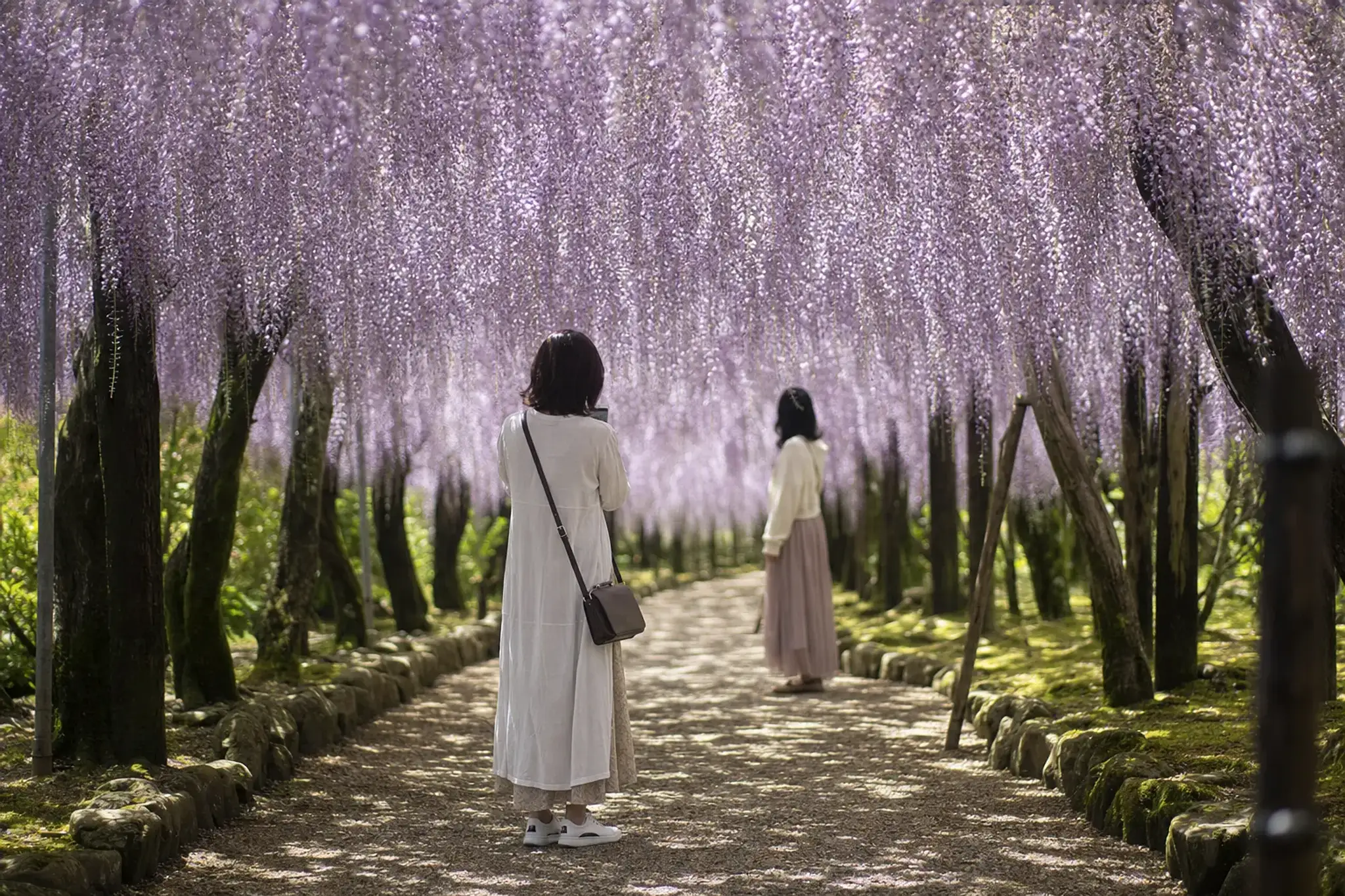
Commercial photography and videography — wedding pre-shoots and similar productions — are prohibited, and drones are banned inside the garden entirely.
Anyone planning a professional shoot needs to know this before arrival, not at the gate. The rules are firm. Within them, though, there is still real room for beautiful images: soft morning light early in the 8:00 opening, the arch before the walkways fill, a quiet frame under the long tunnel. Our guides plan the timing so the pictures you are allowed to take are the ones worth having.
Who Else Visits: A Note On The Demon Slayer Association
Among fans of Kimetsu no Yaiba (Demon Slayer), the garden carries an association with the manga and anime, and some visit specifically because of it. Worth knowing simply as context for who else shares the tunnels with you on a peak-season morning.
What Japan Royal Service Arranges For Kawachi Fujien
We coordinate three things around this garden: accommodation across Kitakyushu and greater Fukuoka, private guiding on the day, and — most importantly here — bespoke itinerary planning that solves the access problem rather than working around it. Private chauffeured transport is the centre of that. It is the direct answer to a garden with no public transport, no shuttle, and a narrow, curving road that punishes poor timing.
Kawachi also slots naturally into a broader Northern Kyushu spring circuit.
Kokura Castle, the retro waterfront at Mojiko, refined dining paced for a real day rather than a rushed checklist — a cultured, quieter counterpart to the far larger crowds at Kanto's wisteria parks. In our experience, the guests who love this garden most are the ones who reach it early, on a route someone else has already worried about, and simply walk in.
Frequently Asked Questions
How Do I Get To Kawachi Fujien Without Public Transport?
By private car or chauffeured vehicle — there is no public transport or shuttle bus to the garden, per its official notice. Roads near the reservoir are narrow and curving, so small vehicles are advised over large buses, with departure timed to avoid peak congestion.
Do I Need To Buy Tickets In Advance For Kawachi Fujien?
Yes. During the spring ticketed period (planned by April or May, bloom-dependent), entry requires a timed, date-specific ticket purchased in advance online or at convenience stores. There are no gate sales during this window, and entry without a valid ticket is refused.
When Do The Wisteria Reach Full Bloom At Kawachi Fujien?
Peak colour usually falls between late April and early May, commonly cited around 25 April to 5 May, though weather shifts it each year. Treat any date as a range, not a certainty, and keep your plans flexible.
Is Kawachi Fujien Only Open For Wisteria Season?
No.
There are two seasons: spring wisteria (roughly mid-April to early May) and autumn maple (roughly mid-November to early December), each with its own ticketed period. Outside these windows the garden may be closed or open with on-site payment only.
Can I Do A Professional Photo Shoot At The Garden?
No. Commercial photography and videography, including wedding pre-shoots, are prohibited, as are drones. Personal portrait photography is permitted one-to-one only. Confirm your plans against the rules before arrival.
Why Choose Japan Royal Service
The hard part of Kawachi Fujien is never the garden. It is the timed tickets, the bloom that will not commit to a date, and a hillside road with no bus to carry you up it. Japan Royal Service is a Tokyo-based concierge built for exactly this kind of friction — the small private places that global attention has made scarce and awkward to reach. We run our own fleet, we plan for the day the bloom moves, and we hold every guest's plans in confidence.
Where broader operators sell a seasonal mood, we solve the logistics that decide whether you actually stand under that tunnel on the right morning. That is the difference, and on a two-week garden it is the whole game.
To plan your spring 2026 visit to Kawachi Fujien, reach our team privately via WhatsApp or LINE, or contact us here.