In this guide
- 01The Bell Came First: The 1893 Fire And The Fourth Rebuild
- 02What Time Does Kawagoe’s Toki No Kane Bell Ring Each Day?
- 03How Long Should You Spend In Kawagoe’s Kurazukuri Warehouse District?
- 04Toki No Kane: The Tower’s Lineage, Shape, And Why The Sound Matters
- 05Spring In Kawagoe: The Bloom Sequence (Not One Perfect Day)
- 06Two Spring Stops Near The Bell: Renkei-ji And Kita-in
- 07Koedo Kawagoe Haru Matsuri: What To Expect In Late March Through Golden Week
- 08A Quiet, High-End Half-Day Plan From Tokyo (With Crowds In Mind)
- 09How Japan Royal Service Approaches Kawagoe: Discretion, Hidden Japan, And Shokunin Encounters
The bell rings, and the street pauses.
Kurazukuri walls hold the sound like a cup. Shop curtains barely stir. You can hear bicycle tires over stone.
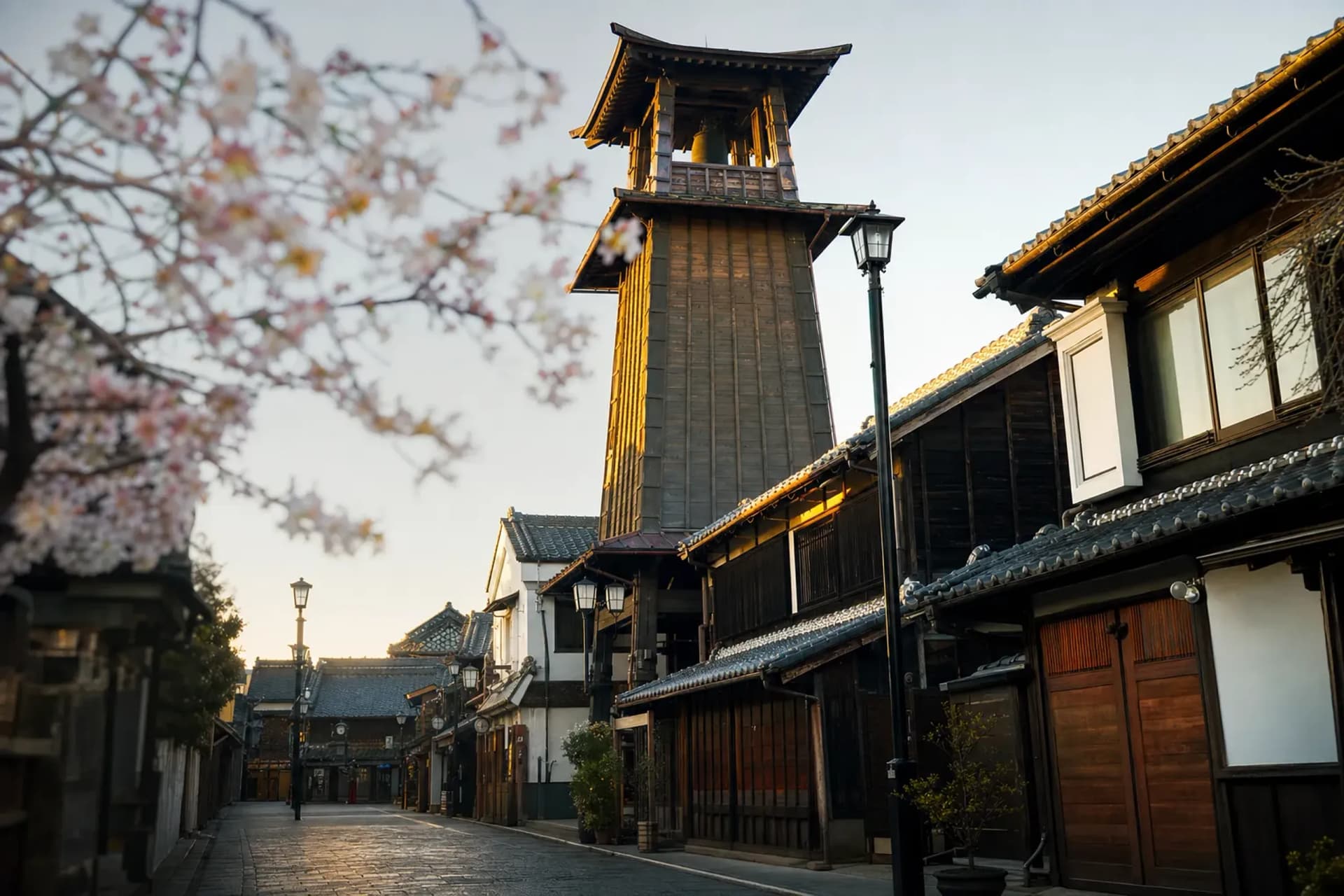
Kawagoe’s Toki no Kane is not a “photo spot.” It is a town’s agreement with itself: time first, commerce second.
That idea matters most in spring, when the streets fill and everyone moves faster. The bell does the opposite. It slows you down.
The Bell Came First: The 1893 Fire And The Fourth Rebuild
In 1893, the Great Kawagoe Fire burned about a third of the town, and Toki no Kane was lost in the damage.
Then the merchants rebuilt the bell tower before rebuilding their own shops. Strange priority. Serious values.
The tower standing today is that fourth rebuild, raised immediately after the fire as a shared town timekeeper.
For luxury travelers, this is the detail that changes the visit. It is not “old Japan” as décor. It is a civic decision, made under pressure, that still shapes the street’s mood.
What Time Does Kawagoe’s Toki No Kane Bell Ring Each Day?
Toki no Kane rings four times daily at 6:00am, noon, 3:00pm, and 6:00pm.
Plan your walk so you arrive a few minutes early. The moment is brief. The shift in atmosphere is the point.
If you are photographing, the 6:00am and 6:00pm rings tend to feel calmer.
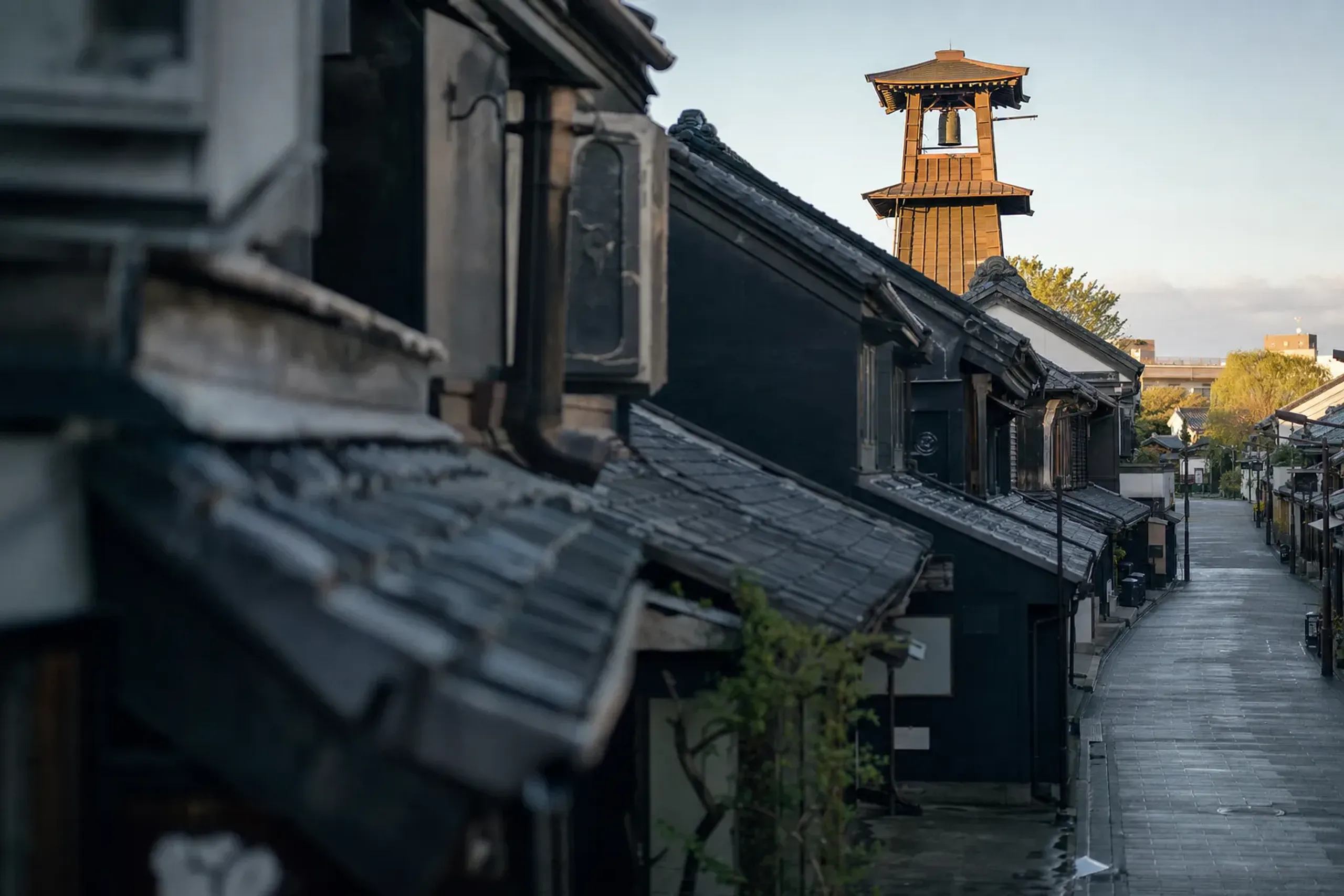
Weekends can compress the lane into a slow-moving crowd, so timing becomes your best tool.
The tower itself is an outdoor landmark, free to view, and you can pass by at any hour. The concentrated visit is short. Ten to twenty minutes for the bell tower. One to two hours if you let the surrounding streets do their work on you.
How Long Should You Spend In Kawagoe’s Kurazukuri Warehouse District?
Most travelers need 1–2 hours in the Kurazukuri area, with 10–20 minutes dedicated to Toki no Kane itself.
Keep it simple. Start at the bell tower, then walk without trying to “cover” everything.
In our experience, Kawagoe is best when you treat it like a single long scene instead of a checklist: a turn, a roofline, a shop lantern, the texture of plaster, the bell’s lingering note.
If your trip is built around restraint rather than rush, Kawagoe fits beautifully as a half-day from Tokyo, paired with a quiet lunch and unhurried streets.
Toki No Kane: The Tower’s Lineage, Shape, And Why The Sound Matters
Toki no Kane’s lineage stretches back roughly 400 years, founded by Sakai Tadakatsu, the lord of the Kawagoe domain.
The current structure is a wooden, three-tiered yagura-style tower, about 16 meters tall. It reads as functional before it reads as decorative.
In 1996, Japan’s Ministry of the Environment recognized the bell among the “100 Soundscapes of Japan Worth Preserving.”
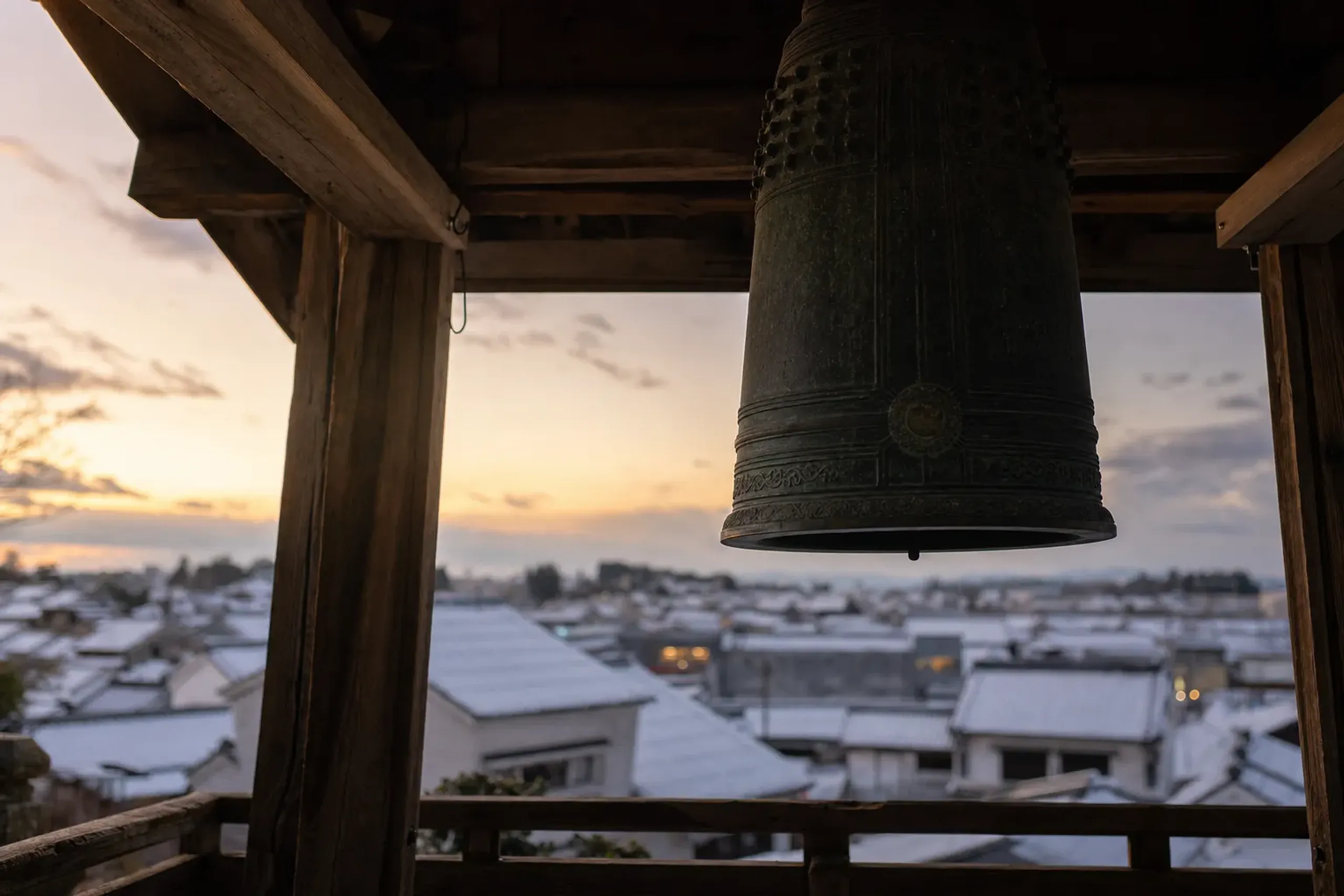
That is a checkable marker, not a poetic label.
We recommend treating the sound as the attraction. Stand still. Listen to how it lands on the tiled roofs and narrow street. Then walk again, slower than you intended.
Spring In Kawagoe: The Bloom Sequence (Not One Perfect Day)
Kawagoe’s spring blooms arrive in stages, and the town rewards travelers who plan for a range instead of chasing a single peak date.
Early starts can begin with Kawazu-zakura from around February. Then the season steps forward.
Weeping cherry blossoms (shidarezakura) tend to appear mid-to-late March. Somei-Yoshino often peak late March into early April, which is when many visitors instinctively arrive.
Then Kawagoe keeps going. Yaezakura (double-flowering varieties such as Kanzan and Fugenzō) can extend the season into late April at certain sites, and at least one park uses a mix of varieties along a walking course—about 330 trees—specifically to stretch the bloom window beyond a Somei-Yoshino-only lineup.
Key fact: If you can travel any time from mid-March through late April, Kawagoe often has “something blooming,” even when Tokyo’s headline peak has passed.
Two Spring Stops Near The Bell: Renkei-ji And Kita-in
Kawagoe’s spring is not only about the streets. It is also about short temple pauses—places where blossom and silence share the same small courtyard.
Renkei-ji Temple: Somei-Yoshino And A Local Folk Practice
Renkei-ji is a Muromachi-period Jōdo-sect temple with Somei-Yoshino around the grounds, typically peaking late March to early April.
Admission is free. No performance. No staged “experience.” Just a clean, grounded stop that helps reset your pace.
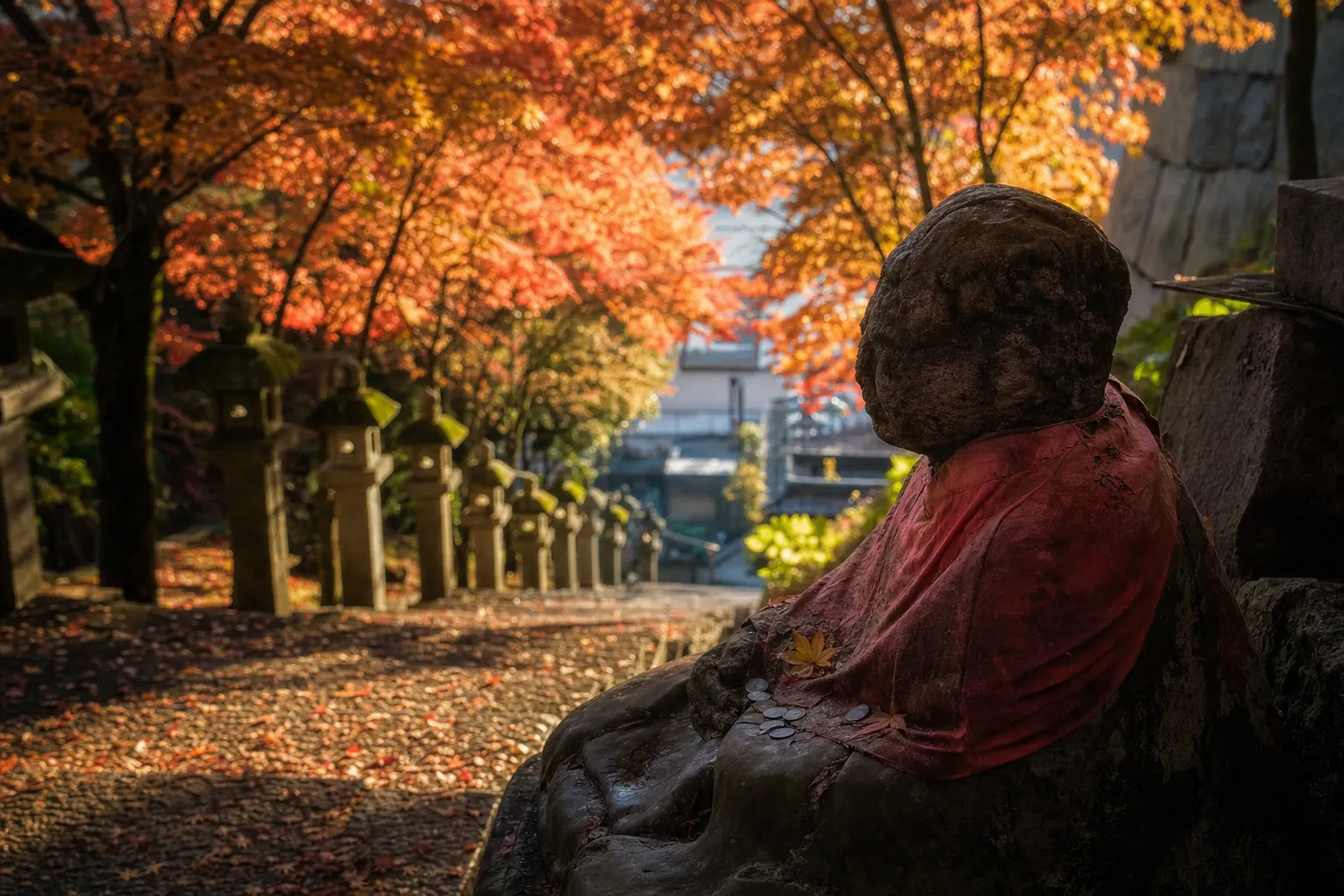
Renkei-ji also has an Obinzuru-sama statue, which visitors traditionally touch at the part of the body corresponding to their ailment—shared locally as folk belief rather than any medical claim.
If you visit, follow the room’s tone. Watch first. Then decide whether to participate.
Kita-in: Night Illumination For Weeping Cherry Blossoms
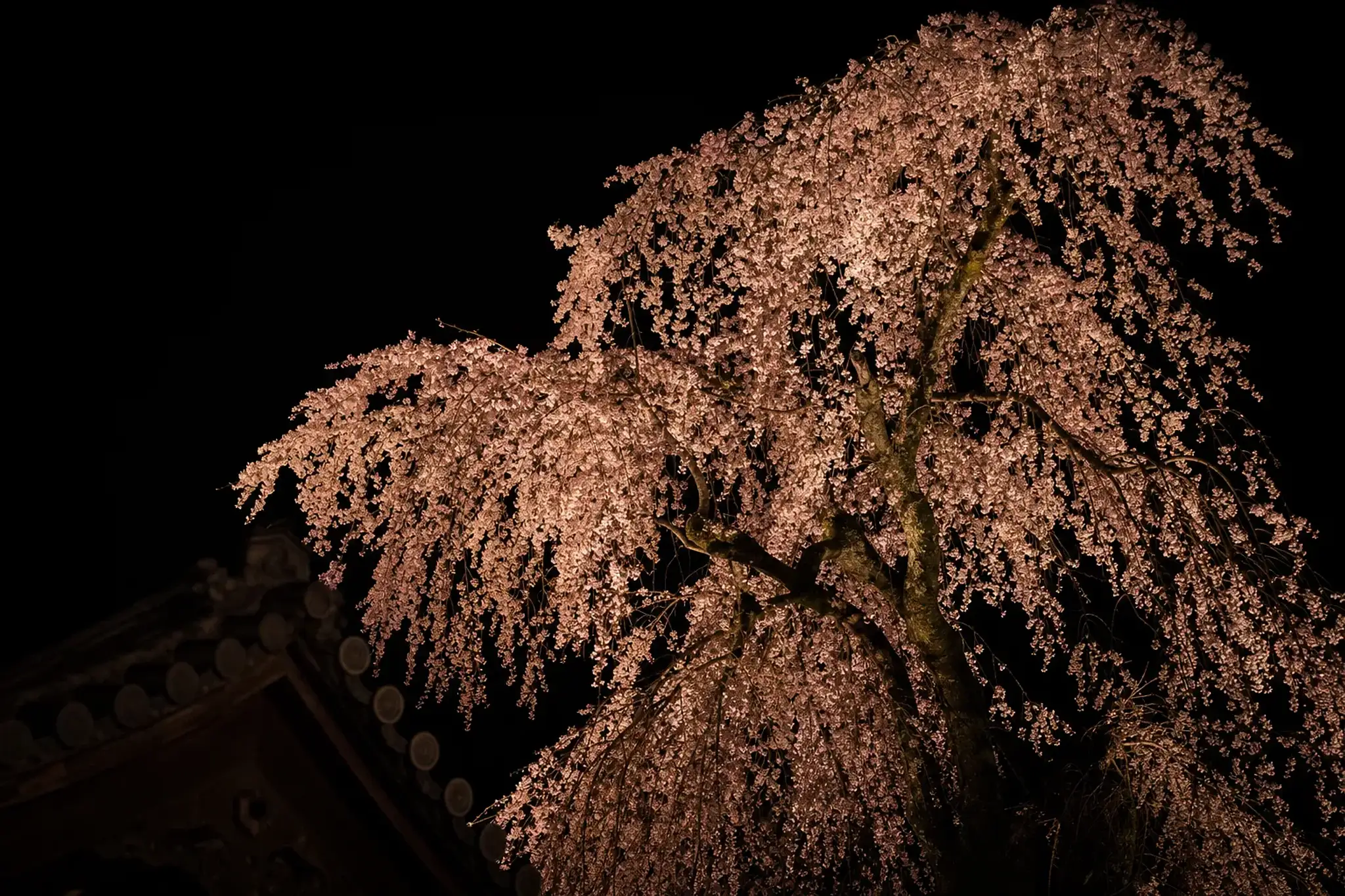
Kita-in is known for a weeping cherry that is illuminated at night during its bloom window, typically mid-to-late March.
The mood changes after dark. Softer steps. Fewer raised voices.
If you are sensitive to crowds, the night view can feel easier than daytime peak hours, even though it is popular. Arrive with a margin, and keep your expectations focused on a single tree rather than “seeing everything.”
Our concierge team often suggests this stop for travelers who want spring blossoms without the pressure of Tokyo’s busiest riverside promenades.
Koedo Kawagoe Haru Matsuri: What To Expect In Late March Through Golden Week
Koedo Kawagoe Haru Matsuri is a spring festival period that runs from late March through Golden Week (early May).
Programming varies by year.
That matters. Don’t lock your day around a single time slot until official updates are released.
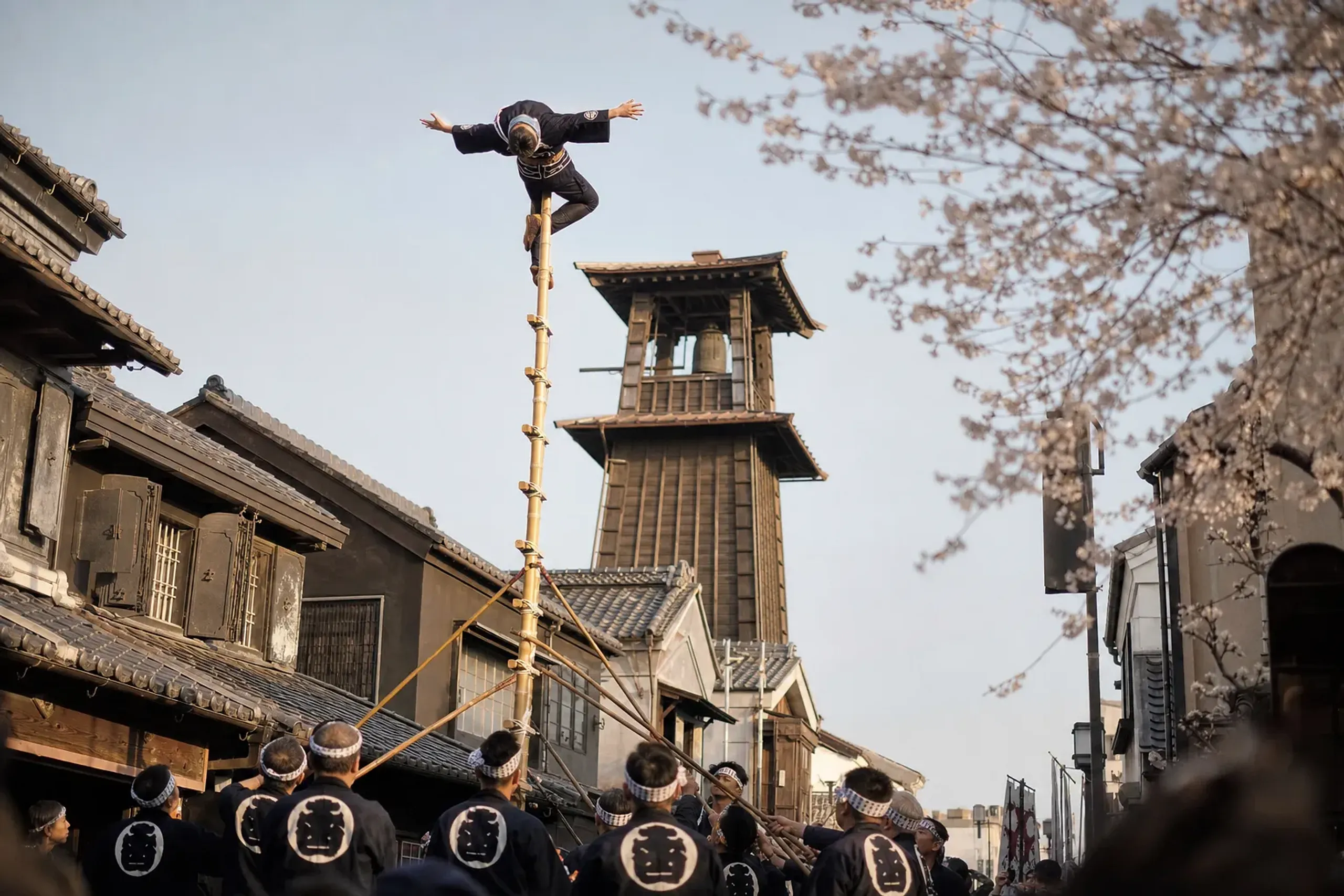
What you can reliably expect as categories during the festival period includes cherry-blossom boat rides, martial arts demonstrations, and hashigo-nori—traditional ladder-top acrobatics that date back to the Edo period and still looks improbably precise in modern streets.
If your Japan travel style prizes “rare but real,” hashigo-nori is the detail to chase here. It is visually striking, yes. More importantly, it is cultural continuity in public view.
A Quiet, High-End Half-Day Plan From Tokyo (With Crowds In Mind)
Kawagoe works best as a carefully timed half-day from central Tokyo, built around bell times and short walks rather than shopping miles.
Here is a practical rhythm that suits many HNW travelers. Adjust it to your hotel base and season.
- Option 1: Morning Quiet — Arrive before 9:00am, walk the Kurazukuri streets as shutters rise, then position yourself for the noon bell.
- Option 2: Late Afternoon Reset — Arrive mid-afternoon, take your time, then stay for the 6:00pm bell as the street thins and the light flattens on plaster walls.
The key is not “more stops.” It is fewer, better minutes. Big mistake: arriving at midday on a spring weekend with no plan and no tolerance for shoulder-to-shoulder lanes.
If you prefer a controlled pace, our team often recommends using private transportation so your day is shaped around quiet arrival and departure windows instead of station bottlenecks.
How Japan Royal Service Approaches Kawagoe: Discretion, Hidden Japan, And Shokunin Encounters
A refined Kawagoe visit is not about being “shown around.” It is about being protected from friction—crowds, timing missteps, and unnecessary exposure—so the town’s small details stay intact.
Our team at Japan Royal Service supports Kawagoe primarily through guiding and transfers, stated plainly. Nothing flashy. Just the right structure.
Discretion is not a slogan for us. It is how we work day-to-day: quiet planning, minimal footprint, and careful handling of guest identity and routing.
For travelers who want Hidden Japan rather than the loudest “Little Edo” version of it, we shape visits around bell times, backstreet pacing, and the kind of small, by-introduction moments that are better discussed privately. When a shokunin encounter makes sense, we frame it with context and etiquette so it feels like respect, not tourism.
If you want Kawagoe to feel like a calm interlude inside a larger Japan journey, we can fold it into a tailor-made itinerary that keeps the tone consistent from your hotel doorstep to the last bell.
Ready to hear the bell on your own terms?
Reach our team privately via WhatsApp or LINE, or contact us here to discuss dates, pacing, and the spring window that fits your travel style.