In this guide
- 01What Does “Miyama Kirishima” Mean In Kirishima?
- 02When And Where Do Kirishima Azaleas Bloom By Elevation?
- 03Is Shinmoedake Volcano Dangerous For Visitors In Kirishima?
- 04What Are The Best No-Climb Miyama Kirishima Viewpoints?
- 05The Setting: Takachihogawara, Ebino Kogen, And One Shrine Worth Your Time
- 06How To Plan A Kirishima Azalea Visit From Kagoshima Airport (And Why Morning Wins)
- 07How Our Concierge Team Plans A Calm, Safe Miyama Kirishima Day
- 08Plan Your Miyama Kirishima Morning
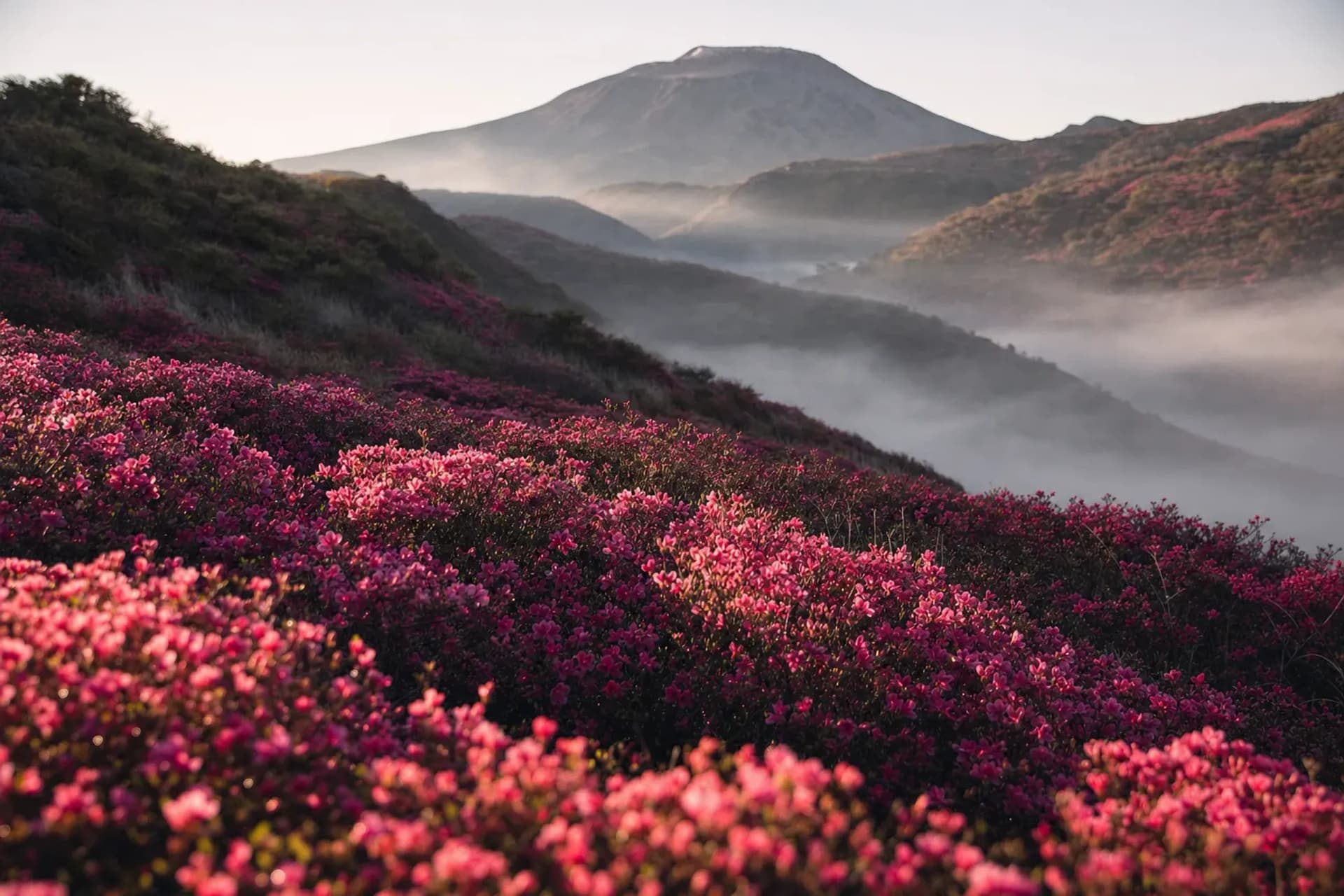
At first light, Kirishima feels rinsed clean. The air is cool at altitude, and the slope is still dark enough to hold yesterday’s mist. Then the color shows itself—not a tidy garden border, but a wild band of purple-red scattered across volcanic grass and scrub, as if the mountain had drawn its own brushstroke overnight.
This is a late-spring-to-early-summer bloom, not cherry-blossom season. A different rhythm. A different quality of light. Miyama kirishima azaleas appear from about mid-May to early June, climbing higher as the weeks pass and the warmth works its way up the slopes.
The catch is simple. Kirishima is an active volcanic range. Access can change fast, and the finest azalea stands are not all gathered in one convenient place. This guide stays on what can be verified: what the flower is, where to look by elevation, what volcanic alerts mean for your day, and how to plan a calm, unhurried visit across Kagoshima and Miyazaki.
What Does “Miyama Kirishima” Mean In Kirishima?
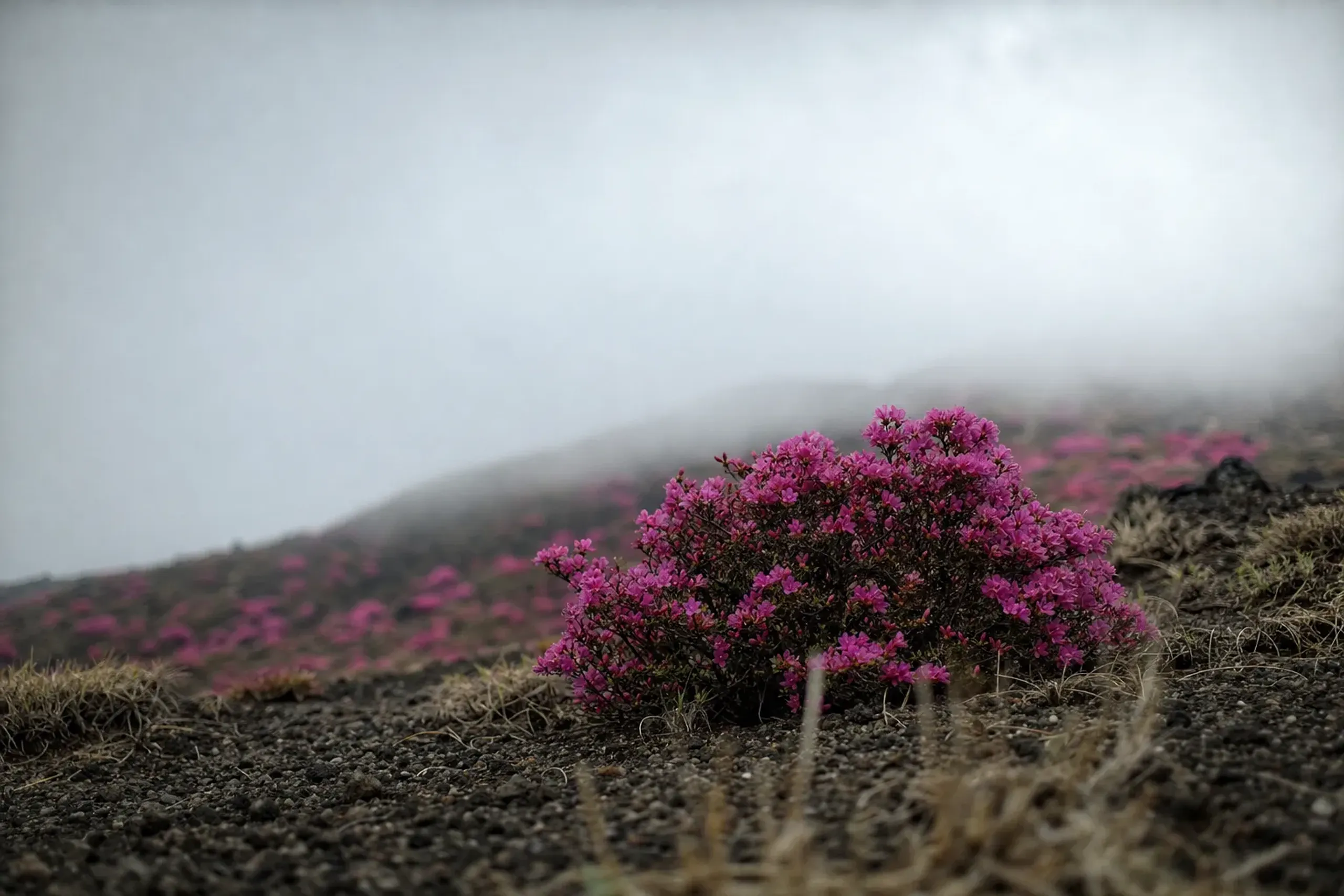
Miyama kirishima is the wild Kyushu azalea, Rhododendron kiusianum, that grows on sunny mountain slopes above about 700 meters and blooms from mid-May to early June in the Kirishima range.
You will see the name “Kirishima azalea” used loosely online, so be watchful. The hillside bloom people travel for is miyama kirishima, a small-leaved mountain azalea that looks utterly natural against black volcanic rock and pale, wind-combed grass.
There is also kirishima-tsutsuji, a cultivated azalea selected in the early Edo period. It is real, and it is genuinely lovely. But it is not the wild mountain swath you came for.
When you plan, hold on to one rule. Altitude decides the schedule. The Ministry of the Environment notes that the flowers move upward with elevation, and timing shifts year to year—which is precisely why a single fixed date rarely serves a discerning traveler well.
When And Where Do Kirishima Azaleas Bloom By Elevation?
In Kirishima, miyama kirishima tends to bloom around mid-May at lower highlands like Takachihogawara, then late May to early June around Ebino Kogen’s Azalea Hill, with higher summits peaking later.
Most visitors lose time by treating Kirishima as one viewpoint. It is, in truth, a wide volcanic landscape spread across two prefectures. Our team at Japan Royal Service plans it like a moving “bloom belt,” shifting the day’s base depending on which altitude is waking up that particular week. This sense of shun—knowing not just the season but the exact week and elevation where the mountain is at its best—is the quiet difference between arriving and arriving at the right moment.
Use the places below as an order of ascent, not a checklist. And keep one honest detail in mind. There are no official “peak days” you can bank on, and there is no official flower count.
Takachihogawara (Kagoshima Side): The Earlier Window
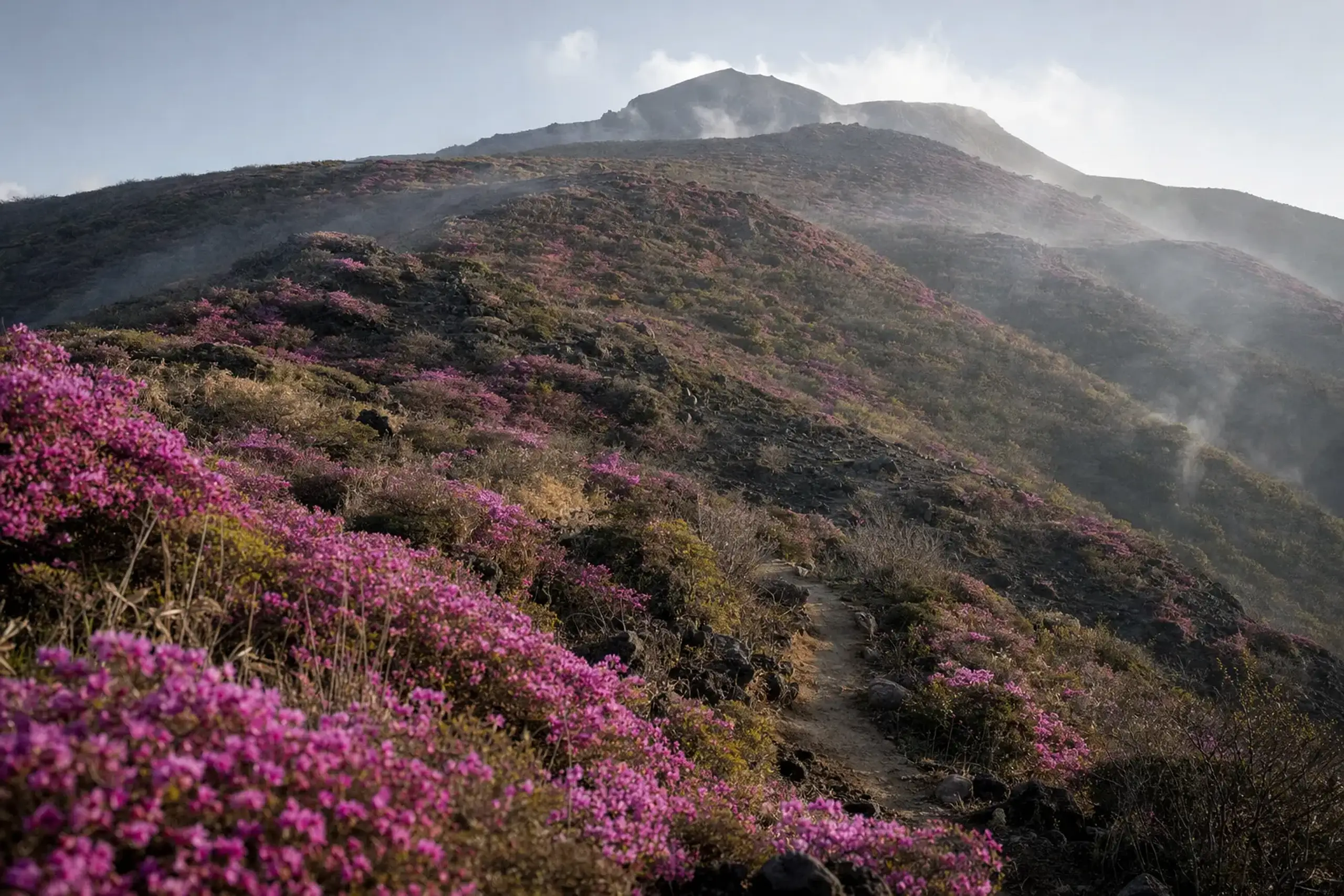
Takachihogawara sits on open highland plains beneath Takachiho-no-mine. On official guidance, this area is often around mid-May. The Kirishima City Tourism Association also notes that the Takachihogawara plains can be enjoyed without climbing.
That matters if you want the color without a demanding hike. It also suits families, or anyone who prefers a quiet walk with time for photographs rather than a summit goal. Slow is entirely fine here—often the better way.
Start early. The Ministry of the Environment warns that strong sun can wilt the flowers by midday. The difference between 7:30 and 11:30 can feel brutal, and no amount of planning recovers a bloom that has already folded.
Ebino Kogen (Miyazaki Side): Azalea Hill Without A Summit
Ebino Kogen (the Ebino Plateau) is a high, open area in Miyazaki Prefecture, described at about 1,200 meters within Kirishima-Kinkowan National Park. Official Miyazaki guidance lists the Kyushu azalea (Rhododendron kiusianum) among the seasonal flowers here.
For many high-net-worth travelers, this is the sweet spot. The Kirishima City Tourism Association specifically points out that Ebino Kogen’s “Azalea Hill” (Tsutsujigaoka) can be seen without climbing. You can keep the day gentle and still come away with the full measure of the mountain’s color.
Do not assume every boardwalk or loop is open.
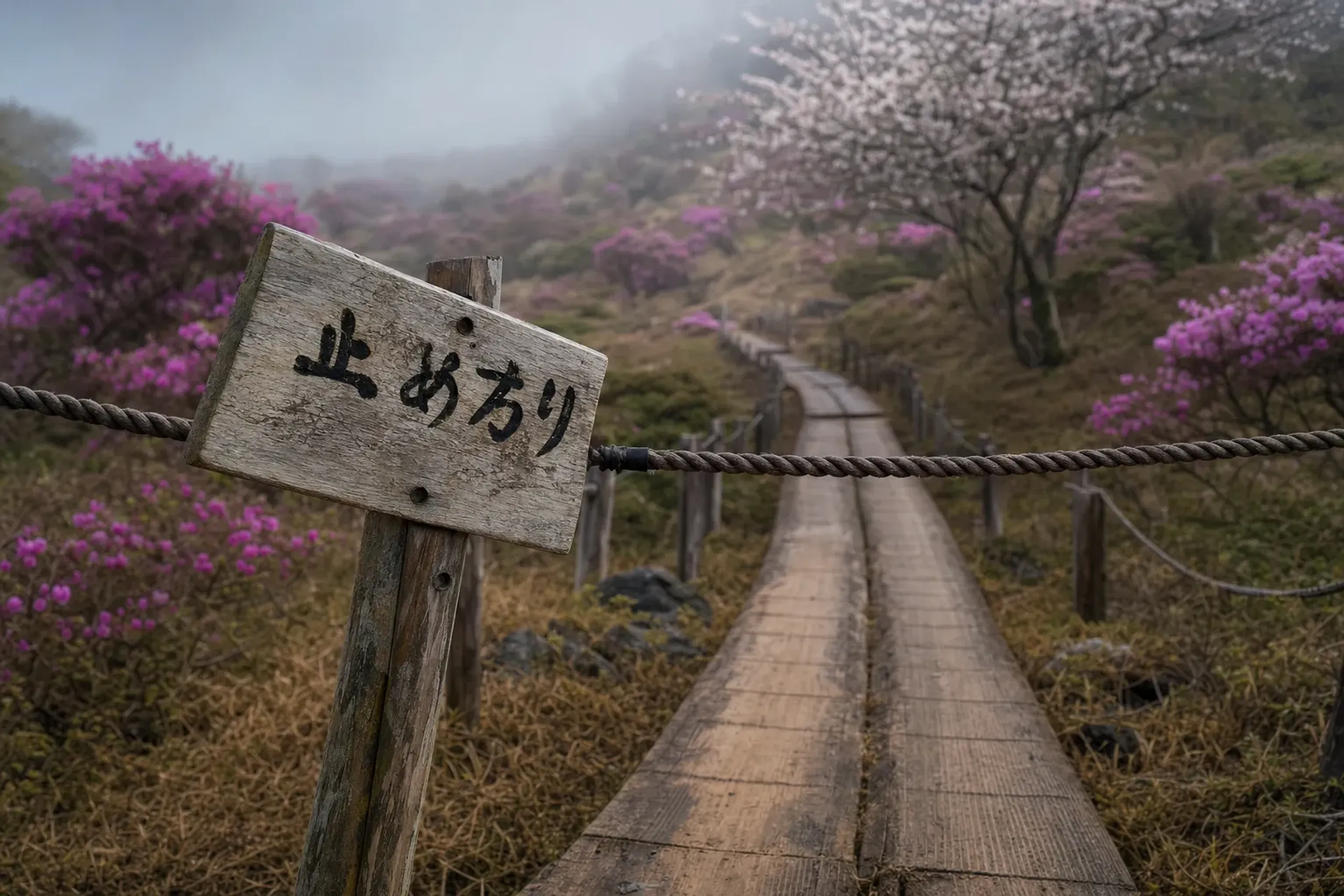
Some pond-circuit sections have had closures, and volcanic conditions can affect roads and trails without much notice. Our concierge team treats Ebino as “verify, then go.” Always.
Higher Areas (Including Karakuni-Dake): Later And Less Predictable
Official guidance places the highest blooms later, with some summit areas around early June. One source notes the summit of Mount Karakuni can reach bloom later still. Tempting. But here, access is the limiter—not your fitness.
There are also published notices stating that some trailheads for Karakuni-dake have been unusable, and the Ebino-side status has not always been clearly stated in the same place. So we do not write this as a guaranteed plan.
If you want to aim high, the right approach is refreshingly simple: choose a flexible day, stay close, and be ready to pivot to lower-elevation viewing the moment restrictions tighten. The mountain always gets the last word.
Key fact: Kirishima City’s bloom page showed all six monitored sites as “ended” on 18 June 2026. No official peak dates for 2025 or 2026 were found, so we do not state them.
Is Shinmoedake Volcano Dangerous For Visitors In Kirishima?
Yes—Kirishima is an active volcanic range, and access near craters can be restricted; as of the Japan Meteorological Agency bulletin dated 9 October 2026, Shinmoedake was at Alert Level 2 with crater-area restrictions.
“Dangerous” is a blunt word, but it keeps you honest.
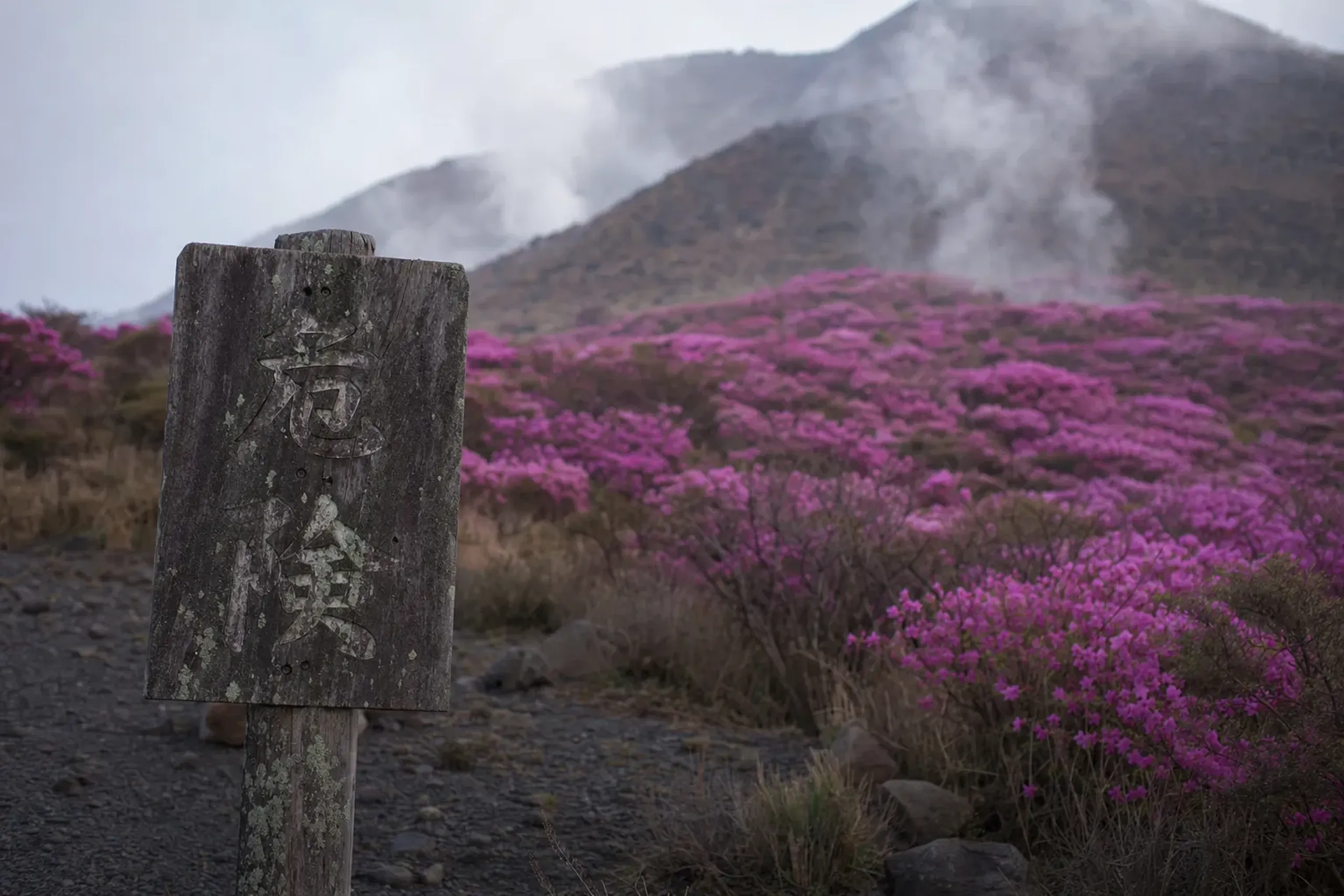
You are not visiting a passive landscape. The Kirishima range includes active vents, and conditions can change without warning.
Alert levels are not decoration. Level 2 at Shinmoedake means restrictions around the crater area, and the JMA warned people within roughly 2 km of the crater. That is the kind of line that can redraw a day’s route in an instant.
Other areas differ. As of the monthly report dated 1 September 2026, Ebino Kogen (Iozan) and Ohachi were at Level 1, with active fumaroles at Iozan. Even at Level 1, closures may apply. Some do.
What This Means For An Azalea Day
It means you plan from the ground up. First, check the volcano bulletin. Then the road status. Then the trail status from the relevant authorities and visitor centers. In that order, every time.
Our team at Japan Royal Service builds a day that stays on open, unrestricted paths only, with a quiet fallback already prepared. If one area tightens, you should already know where you are going next. No scramble, no uncertainty on the mountainside.
And no bravado. If Shinmoedake’s status changes, we adjust without drama. The azaleas are never worth gambling your safety.
What Are The Best No-Climb Miyama Kirishima Viewpoints?
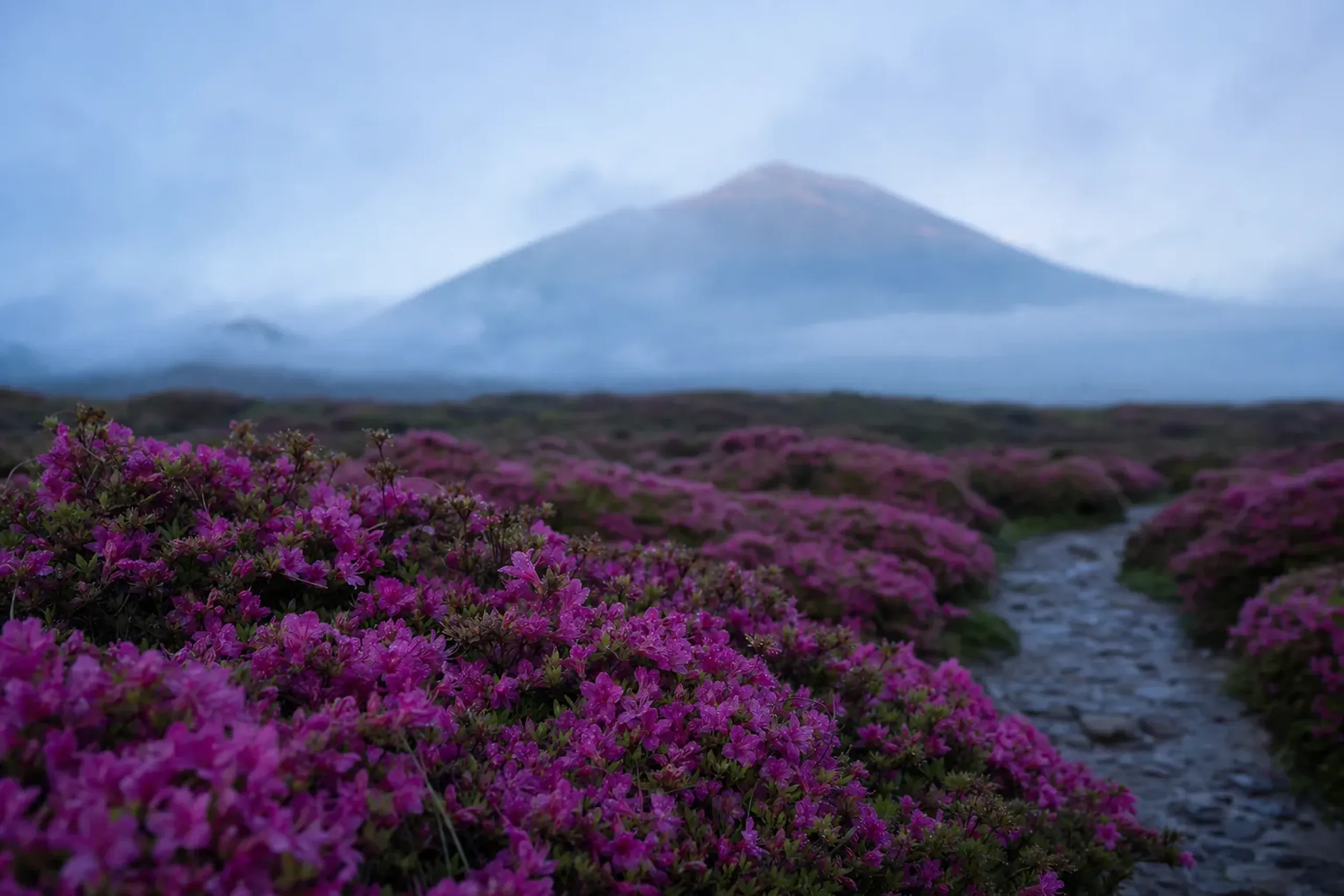
Takachihogawara plains and Ebino Kogen’s Azalea Hill (Tsutsujigaoka) are two official miyama kirishima viewing areas you can enjoy without summit climbs.
This is where Kirishima becomes realistic for travelers who value comfort as much as beauty.
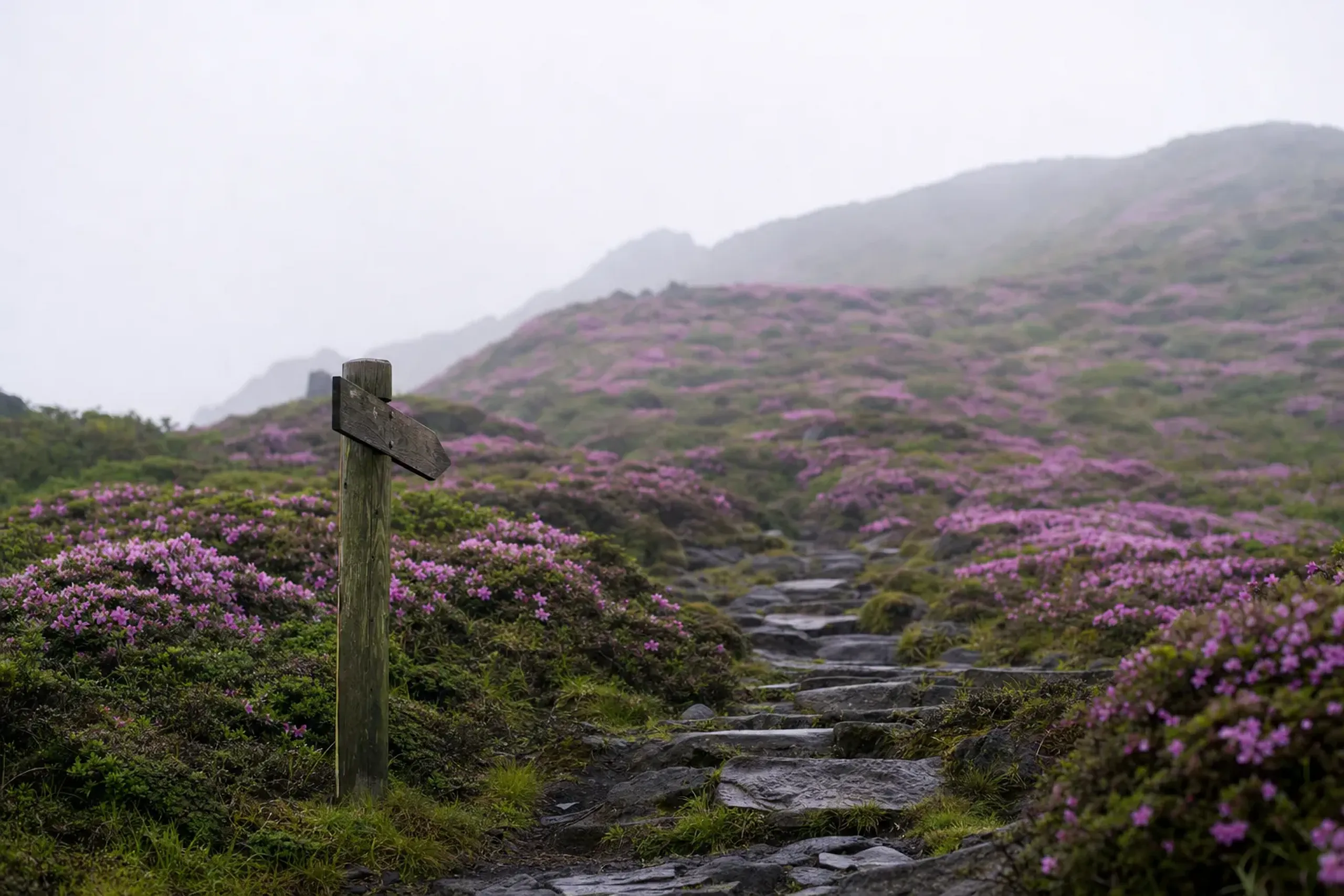
You can dress neatly, carry a single light layer, and still stand before wild color where it actually belongs—on the open mountain.
Takachihogawara gives you spacious terrain and sky. Ebino Kogen gives you height and a different palette of grasses, ponds, and steam-scented air when volcanic gases drift across the plateau. There is a restraint to both—more wabi than spectacle—where the quiet, weathered landscape does the work and the flowers simply punctuate it.
Morning is the trick. Again. The Ministry of the Environment is clear that sun can wilt the blooms by midday, and Kirishima’s open slopes offer little mercy once the light hardens.
The Setting: Takachihogawara, Ebino Kogen, And One Shrine Worth Your Time
Kirishima’s azaleas are not a standalone attraction. They are part of a lived landscape—sacred stories, active earth, and highland weather that can flip in an hour. That is the mood you are stepping into.
Takachihogawara is where the mountain’s presence feels close and immediate. Takachiho-no-mine rises to 1,574 meters. The National Parks of Japan portal notes that in late spring, a hike to Mount Takachiho-no-Mine reveals expanses of miyama kirishima.
Ebino Kogen sits on the Miyazaki side at about 1,200 meters. It reads wide and airy, with broad views that make even a short walk feel like a release. The Ebino Kogen Eco Museum Center is open 9:00 to 17:00 year-round, which is useful for current notices.
Kirishima Jingu is the cultural anchor when you want more than scenery. In an official designation announced 9 February 2022, the Main Shrine Hall, Offering Hall, and Worship Hall were designated National Treasures of Japan, with other structures designated Important Cultural Properties. Go quietly. The woodwork rewards patience, and the stillness beneath the cryptomeria is its own kind of luxury—one that cannot be rushed or reproduced.
The Kirishima Onsen area sits close enough to serve as a practical base, but we will not turn this into a bathing guide. Think of it as recovery and warmth after a morning outside, not as the main event.
How To Plan A Kirishima Azalea Visit From Kagoshima Airport (And Why Morning Wins)
From Kagoshima Airport, Takachihogawara is about 55 minutes by car and Ebino Kogen about one hour by car, and the most reliable plan is a very early start to view the flowers before strong sun.
These are short driving times on paper. In reality, volcanic notices and seasonal traffic can stretch them. The most comfortable azalea day begins with discipline, not spontaneity.
We favor an early departure for two reasons. First, the flowers hold their shape and color before midday. Second, you arrive before the late-morning wave that builds around the easiest viewpoints—so the slope, for a while, feels almost entirely yours.
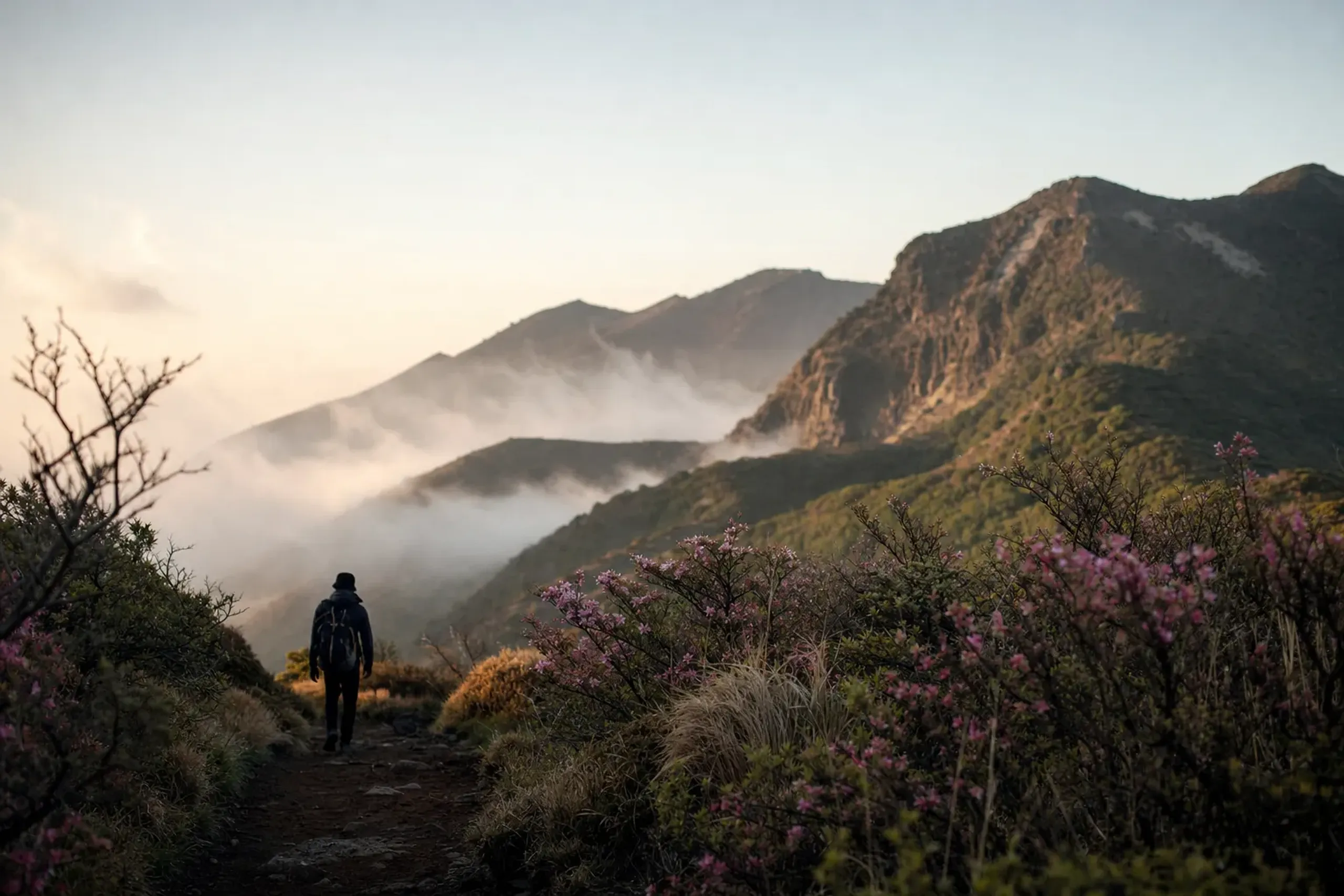
There is also a Kirishima loop bus that serves mountain stops daily (per a Kirishima City page dated September 2026). A bloom-season timetable was not found in the verified sources. If you are trying to reach two areas across prefectures in a single day, relying on limited public transport can turn the narrow bloom window into a waiting game. This is precisely where a privately arranged day pays for itself in calm.
What To Wear: Think “Wet May,” Not “Dry Alpine”
Kagoshima’s May normals (1991–2020, JMA) are a mean of 21.0°C, with a high of 25.5°C, a low of 17.3°C, and about 205.2 mm of rain. That is warm, and it is wet. Pack accordingly.
Up high, it changes. Ebino Kogen sits roughly 1,150 meters above Kagoshima City, so the air can feel noticeably cooler. Our rule-of-thumb estimate is around 7°C cooler by altitude. An estimate only—but a useful one for choosing what to bring.
Bring a light layer, a rain shell, and shoes that can handle damp ground. Skip the heavy perfume. Volcanic air and fragrance do not mix well.
How Our Concierge Team Plans A Calm, Safe Miyama Kirishima Day
Kirishima punishes vague planning. Hard. The winning day is built from checks and contingencies, then delivered with quiet timing so you are never staring at your phone on a mountainside.
Within this topic only, our team at Japan Royal Service supports four things: an English-speaking cultural interpreter guide on open, unrestricted paths; private transportation / chauffeur service via a partner fleet between the airport, trailheads, and your hotel; accommodation coordination in the Kirishima area or Kagoshima; and morning-first pacing with meals and breaks planned around the light.
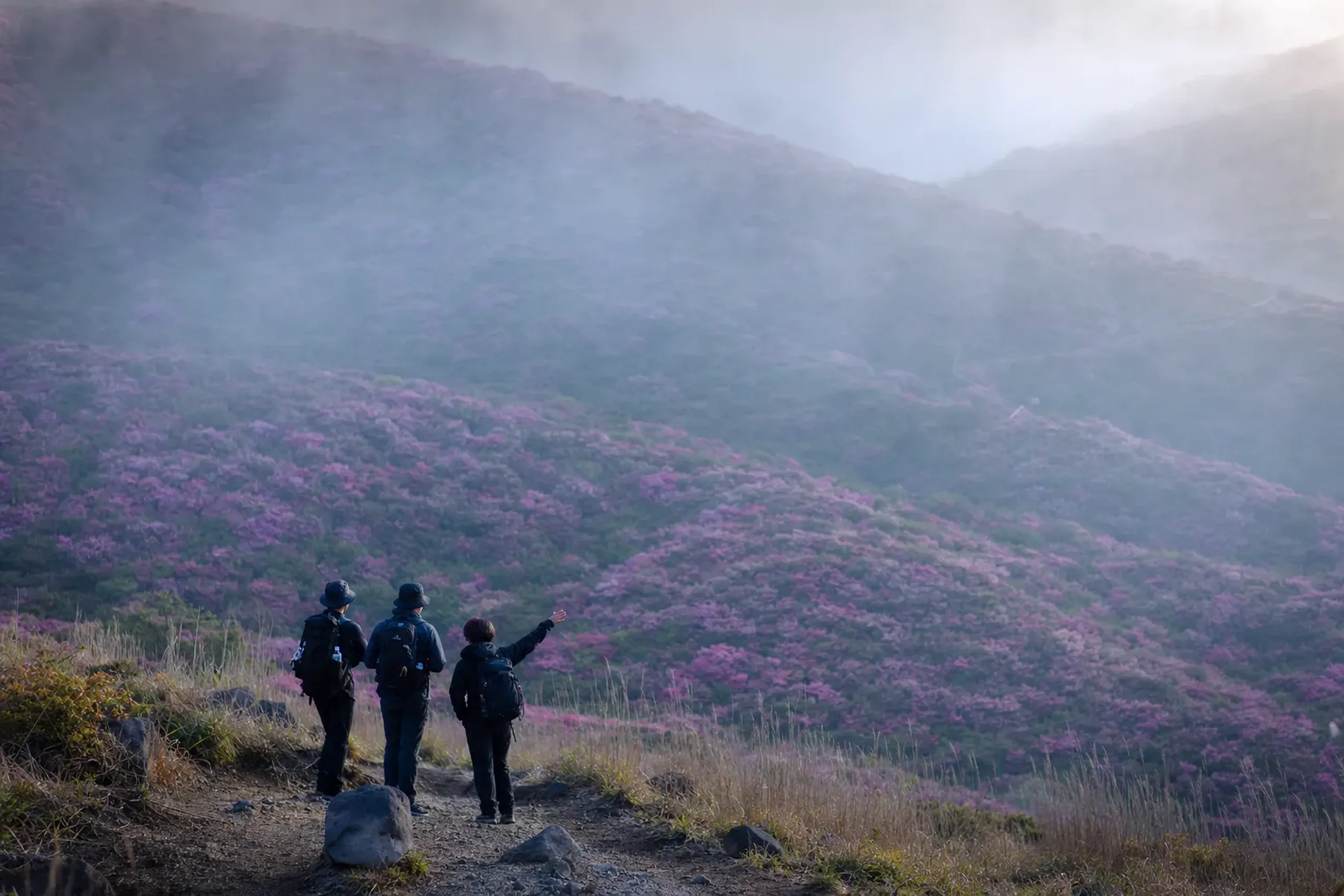
Each element folds into a single tailor-made itinerary shaped around your pace rather than a fixed program.
We do not plan summit climbs or any restricted zone. Full stop. Safety and compliance come first, even when the bloom is calling from higher up.
Step-By-Step: The Planning Sequence We Use
- 7–10 days out: We review the Kirishima City bloom page and the Kirishima City Tourism Association guidance for monitored sites, and we check the latest published volcano bulletins from JMA.
- 48–72 hours out: We verify road and trail status with the relevant authorities and visitor centers (status is set across Kirishima City, the Ministry of the Environment’s Ebino office, and the visitor centers). If one area looks uncertain, we pre-select a lower-risk alternative.
- Night before: We lock the morning departure time and keep the day light: one main viewing area, one secondary stop only if conditions stay stable. Overstuffing Kirishima is how people miss the bloom.
- Day of: Our guide frames what you are seeing—flower, landscape, and shrine context—without ever pushing into closed routes. You stay present. That is the entire point.
Discretion On The Road And On The Mountain
Some destinations feel public the moment you arrive.
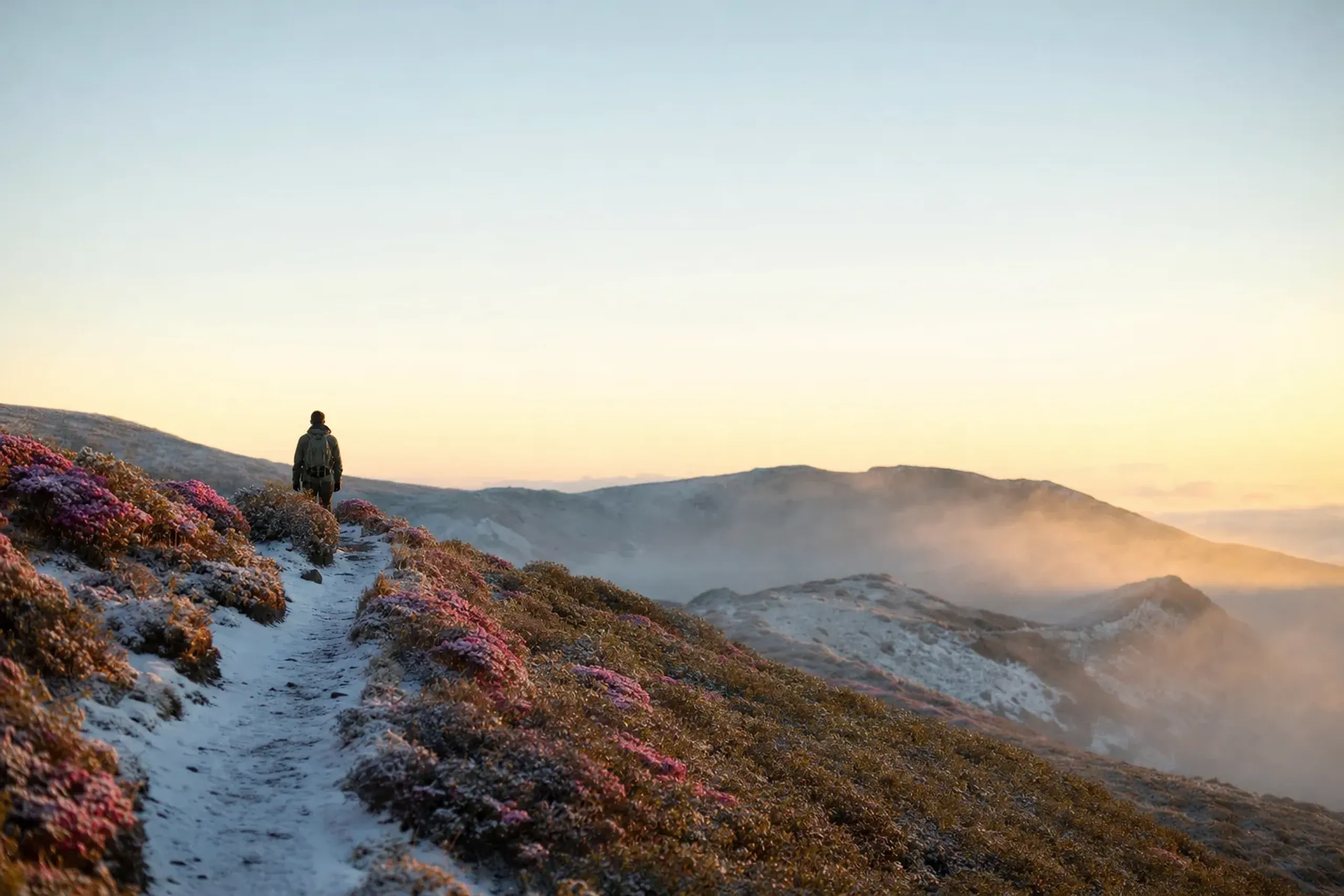
Kirishima can be the opposite, if you choose your timing well. Early morning, fewer voices, long stretches where the only sound is wind moving through grass.
Discretion is not only privacy from other travelers. It is also the freedom to change plans without noise—switching a trailhead, skipping a stop, leaving early—because the mountain’s status is always part of the equation. We handle those adjustments silently, and your itinerary remains entirely your own.
Hidden Japan, But With Guardrails
Many travelers only see Kyushu through its headline stops. Kirishima’s azalea season sits well outside that pattern. It is not a festival, not a parade, not a queue. It is a short window where the upper slopes change color, then quietly let go.
That is hidden Japan in practice. Not secret. Just overlooked. And because it is a volcanic landscape, it must be approached with more respect than bravado.
Plan Your Miyama Kirishima Morning
The bloom window is narrow, the mountain is active, and the right day is a matter of timing read almost to the week. If you would like a calm, safely planned morning among the miyama kirishima—arranged privately around the light, the altitude, and the latest volcano status—contact us here and we will begin shaping a proposal tailored to your dates.