In this guide
- 01Why Kiso's Forest Is Rebuilding Ise Shrine Right Now
- 02How the Sacred Trees Are Felled Without Power Tools
- 03A Ritual 1,300 Years Old — And Why It Moved to Kiso
- 04One Tree, One Head: The Law That Guarded the Forest
- 05Why Kiso Hinoki Takes 70 Years to Grow
- 06The Timber That Also Built Japan's Oldest Wooden Building
- 07What Can Actually Be Visited in the Kiso Forest
- 08Frequently Asked Questions
- 09Why Choose Japan Royal Service
The axe lands, and the sound carries. No engine, no chainsaw whine. Just steel meeting hinoki, again and again, on a slope so steep the sawyers brace their feet against the mountain itself. They wear white. Ceremonial white, the colour of purity, and they cut a tree that has stood for six or seven centuries. When it falls, it will not fall alone.
This happens in Kiso, in the mountains of southwestern Nagano. And it is happening right now.
Most travellers know the Kiso Valley for a walk. Our team at Japan Royal Service knows it for something older and stranger: a forest whose sole quiet purpose, for centuries, has been to build and rebuild the holiest shrine in Japan. Not once. Every twenty years, forever.
Why Kiso's Forest Is Rebuilding Ise Shrine Right Now
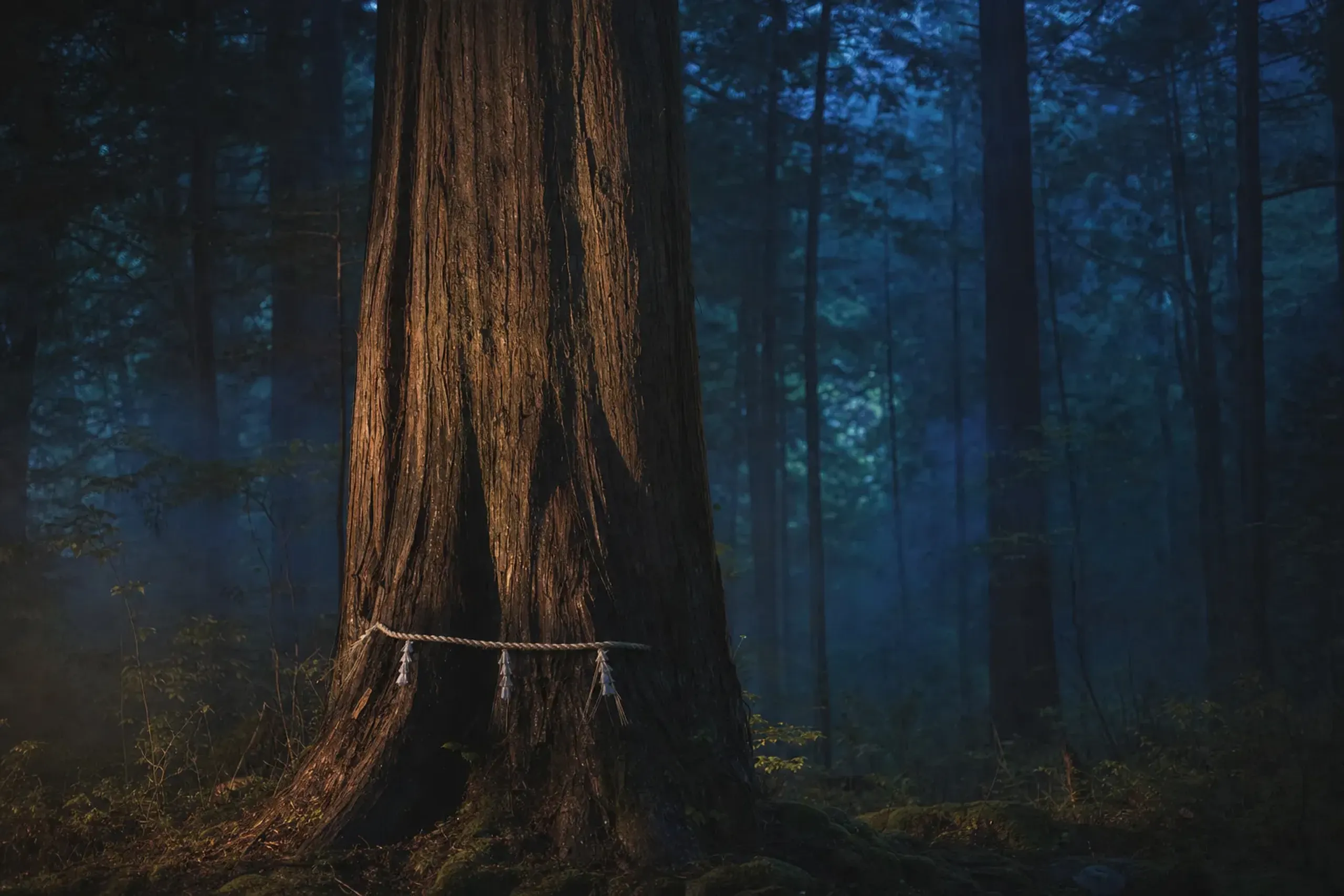
Every twenty years Ise Grand Shrine is torn down and built anew, and the sacred hinoki for that rebuilding comes from Kiso — the current cycle began 5 June 2025 and runs to autumn 2033.
This is the Shikinen Sengu. The 63rd. It opened with a felling ceremony called the Misomahajime-sai, held deep in Kiso's forest on that June morning in 2025. That single rite is the first of thirty-three, a sequence of ceremonies spread across nine years, each one moving the shrine closer to its main rebuilding in 2033.
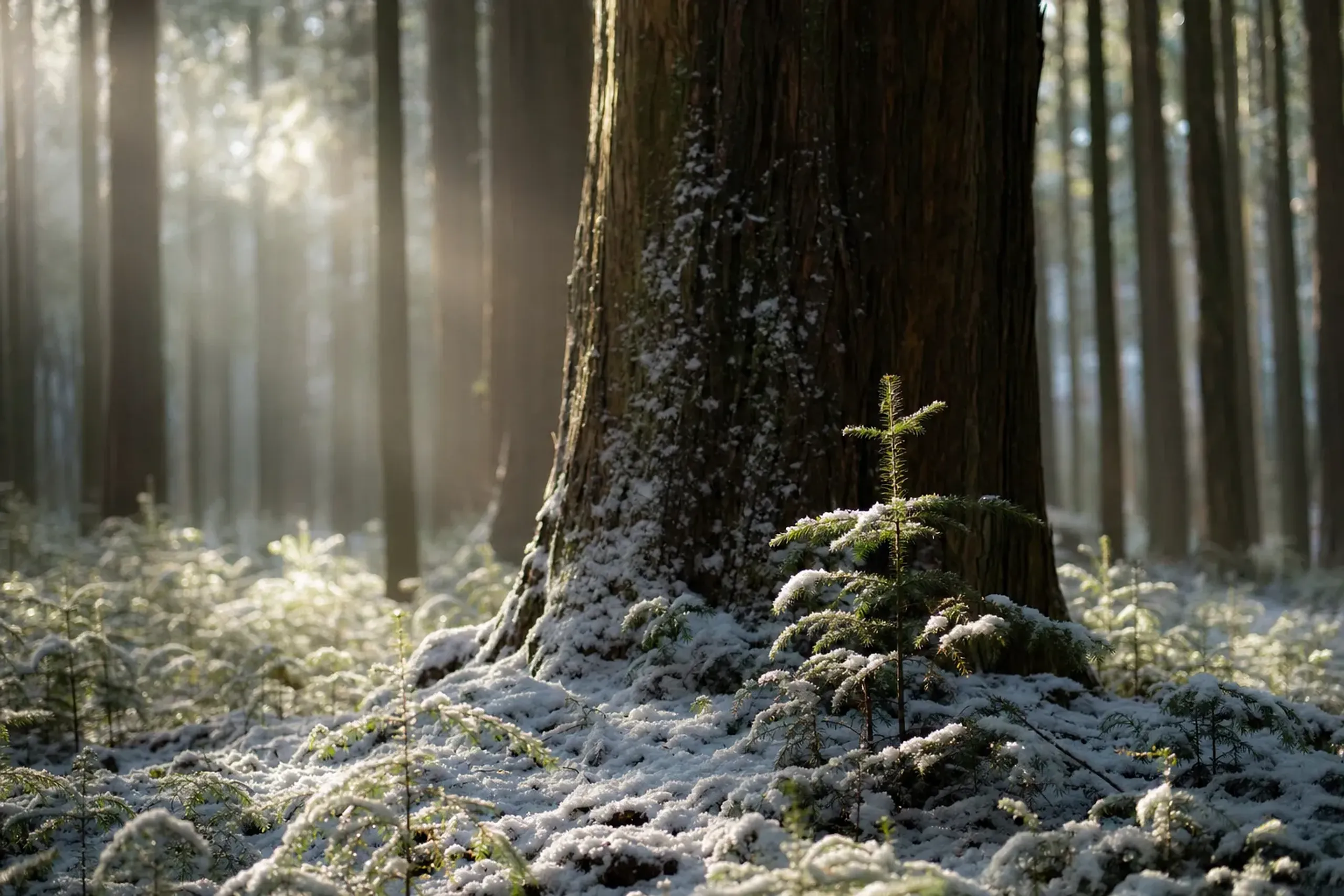
So this is not a story about the past. It is a story unfolding as you read it. Somewhere in the reserve forest, the timber is already chosen, already felled, already beginning its slow journey down the mountain toward the sacred carpenters at Ise.
That is why we write about Kiso now rather than filing it away as settled history.
Key fact: The 63rd Shikinen Sengu began on 5 June 2025 with a felling ceremony in Kiso and builds, through 33 rituals, to the main rebuilding rite in autumn 2033.
How the Sacred Trees Are Felled Without Power Tools
Two trees are felled per cycle — one for Ise's inner shrine, one for the outer — cut by axe alone using a technique called mitsuhimo-giri, performed by sawyers in white ceremonial dress.
The sawyers are called somafu. No power tools touch the sacred trees. The mitsuhimo-giri method uses three converging cuts, worked patiently by hand, so the tree comes down in a controlled and deliberate direction. It is slow. That is the point.
The two trees are not chosen at random. Slope, terrain, the grain of the wood, the quality of the material — each is judged against rules that have hardened over centuries. And here is the detail that stays with you. By custom, the two great trees are felled so that their tips cross as they come to rest on the forest floor. Two lives, ended in the same breath, laid down to touch.
What happens next is almost as remarkable as the felling. Once a ceremonial site has served its purpose, it is closed. Left alone. No replanting, no clearing, no marker. The forest simply takes it back.
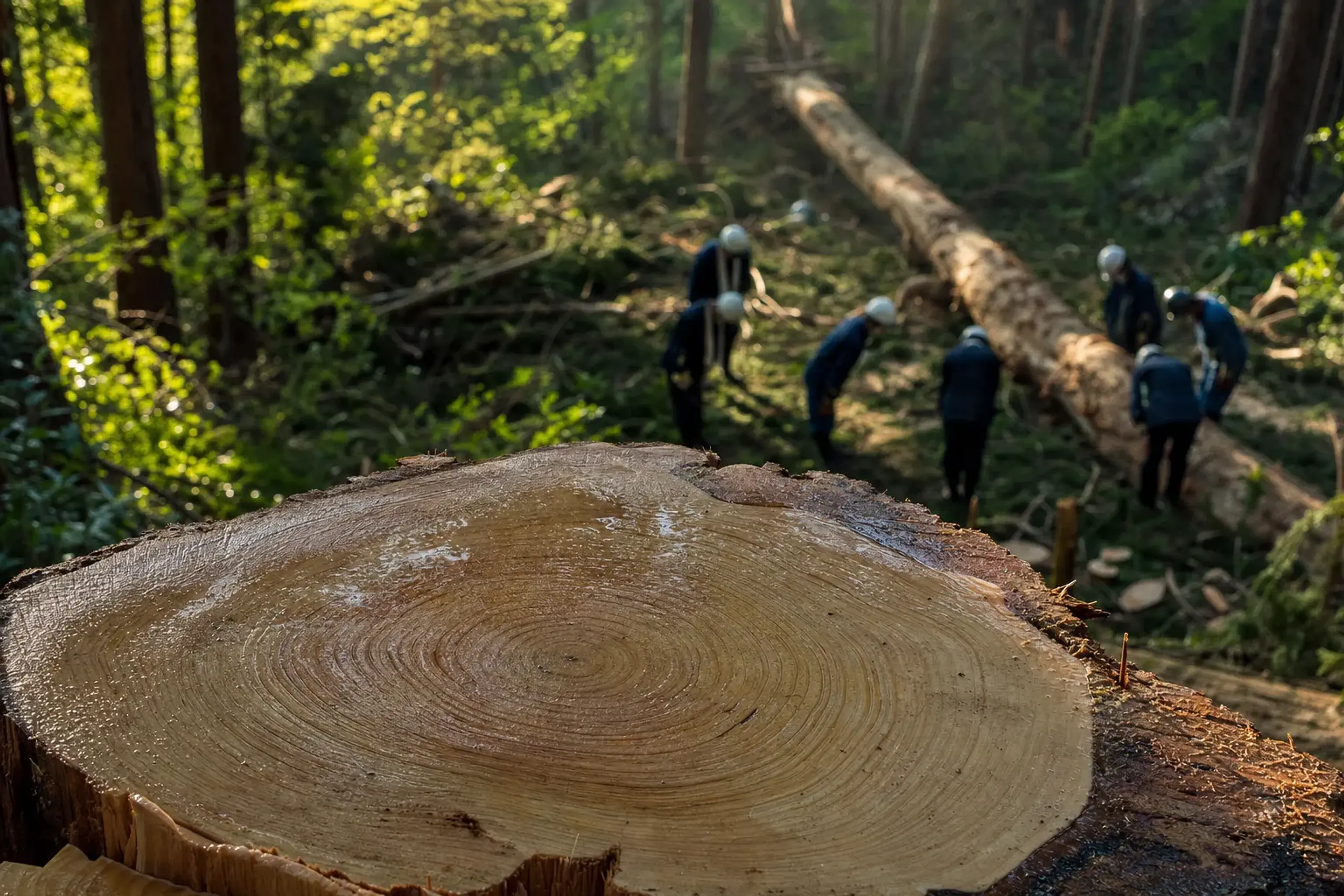
The stumps from the 2005 felling — the 62nd Sengu — had visibly begun rotting into the ground by 2012, seven years on. The mountain reclaims its own history, patiently, without help.
A Ritual 1,300 Years Old — And Why It Moved to Kiso
The Shikinen Sengu has been practised continuously since 690 CE, in the reign of Empress Jitō — roughly 1,300 years of rebuilding, unbroken.
At first, the timber came from Ise's own forest, close to the shrine itself. But wood on that scale, of that quality, does not last forever. By the Kamakura period the good hinoki near Ise had grown scarce. From the Edo period onward, the shrine looked west and north, to the steep cold slopes of Kiso, where the finest cypress in the country still grew.
The relationship was eventually made formal. In 1906 — Meiji 39 — a dedicated Jingū Birin, a Shrine Reserve Forest, was established within Kiso's imperial woodland for one purpose: to guarantee a supply of hinoki for the twenty-year cycle, generation after generation. A forest set aside, quite literally, to serve a shrine two prefectures away.
One Tree, One Head: The Law That Guarded the Forest
Under the Edo-period Chōjiboku system, felling any of the protected "Kiso Five Trees" was punishable by death — one tree, one head.
It did not start that way. After roughly a century of heavy cutting, the great hinoki of Kiso were vanishing fast, timbered out for castles and cities. The Owari domain, which governed the valley, saw the forest emptying and acted with a severity that reads almost unbelievable today.
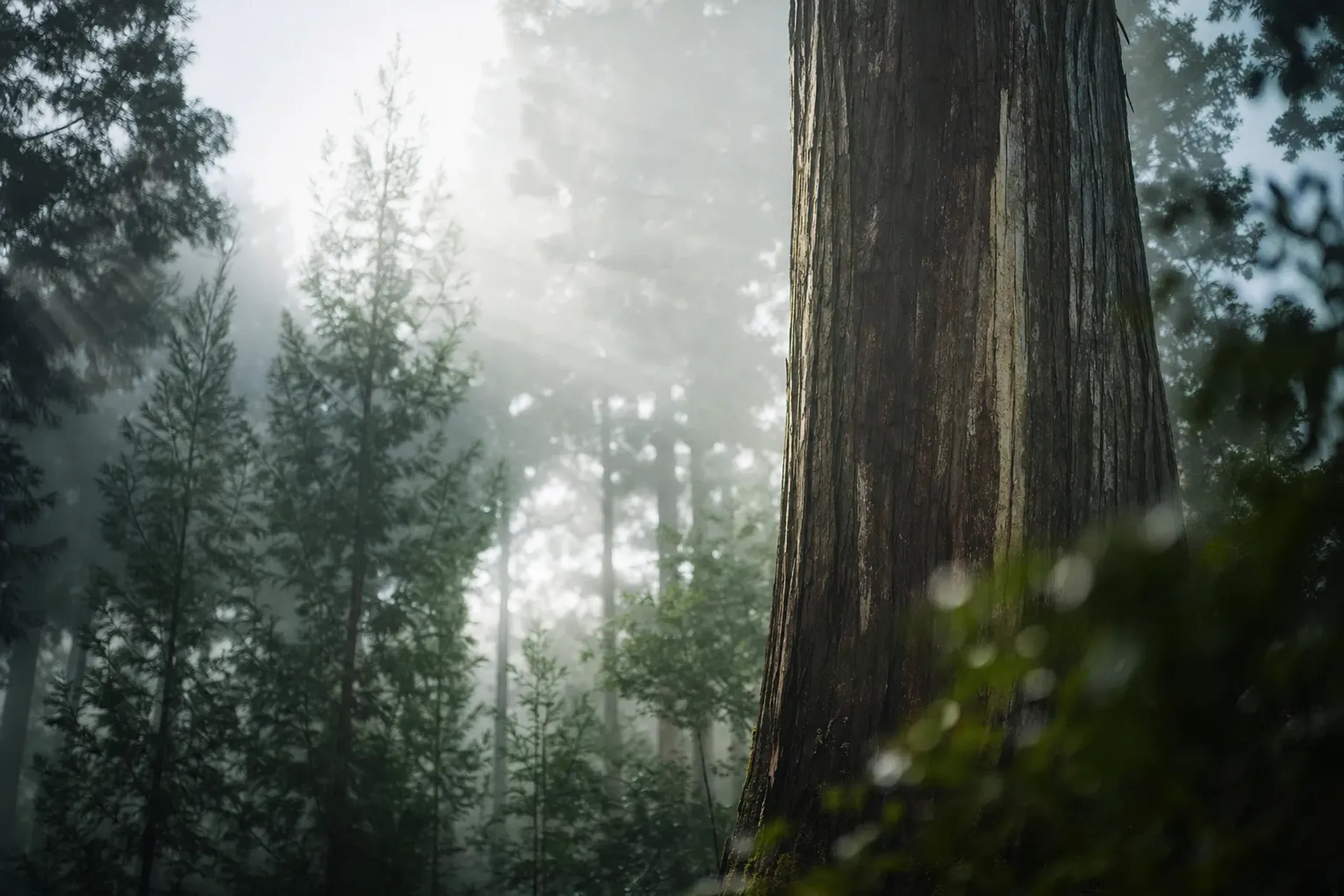
They banned the felling of five species — the Kiso Five Trees — outright. And they set a single penalty for breaking that ban. Death. Take one protected tree, lose your head. It is the sharpest fact in the whole story of Kiso, and it explains, better than any conservation slogan, why these forests still stand. Fear did what management alone could not. The great cypresses survived because, for a long time, the cost of cutting one was a human life.
Why Kiso Hinoki Takes 70 Years to Grow
Kiso hinoki grows on steep slopes at 600 to 1,500 metres in harsh, cold conditions that slow it dramatically — around 70 years to reach usable size, against roughly 40 years for hinoki grown in gentler places.
That slowness is the whole secret. A tree that fights for every centimetre lays down tight, fine, dense grain — the kind of timber that carves cleanly and endures for centuries. Struggle makes the wood. Comfort would ruin it.
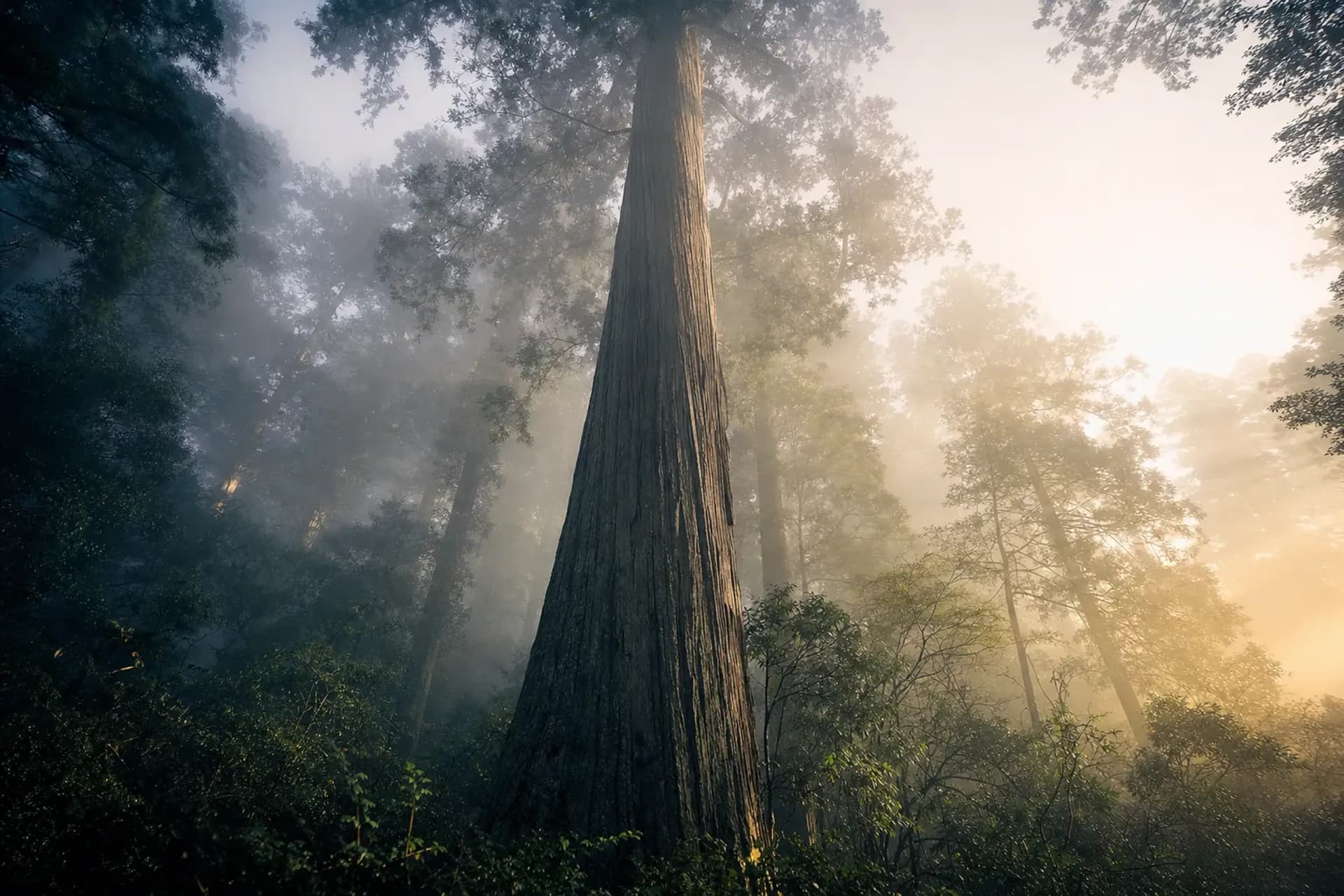
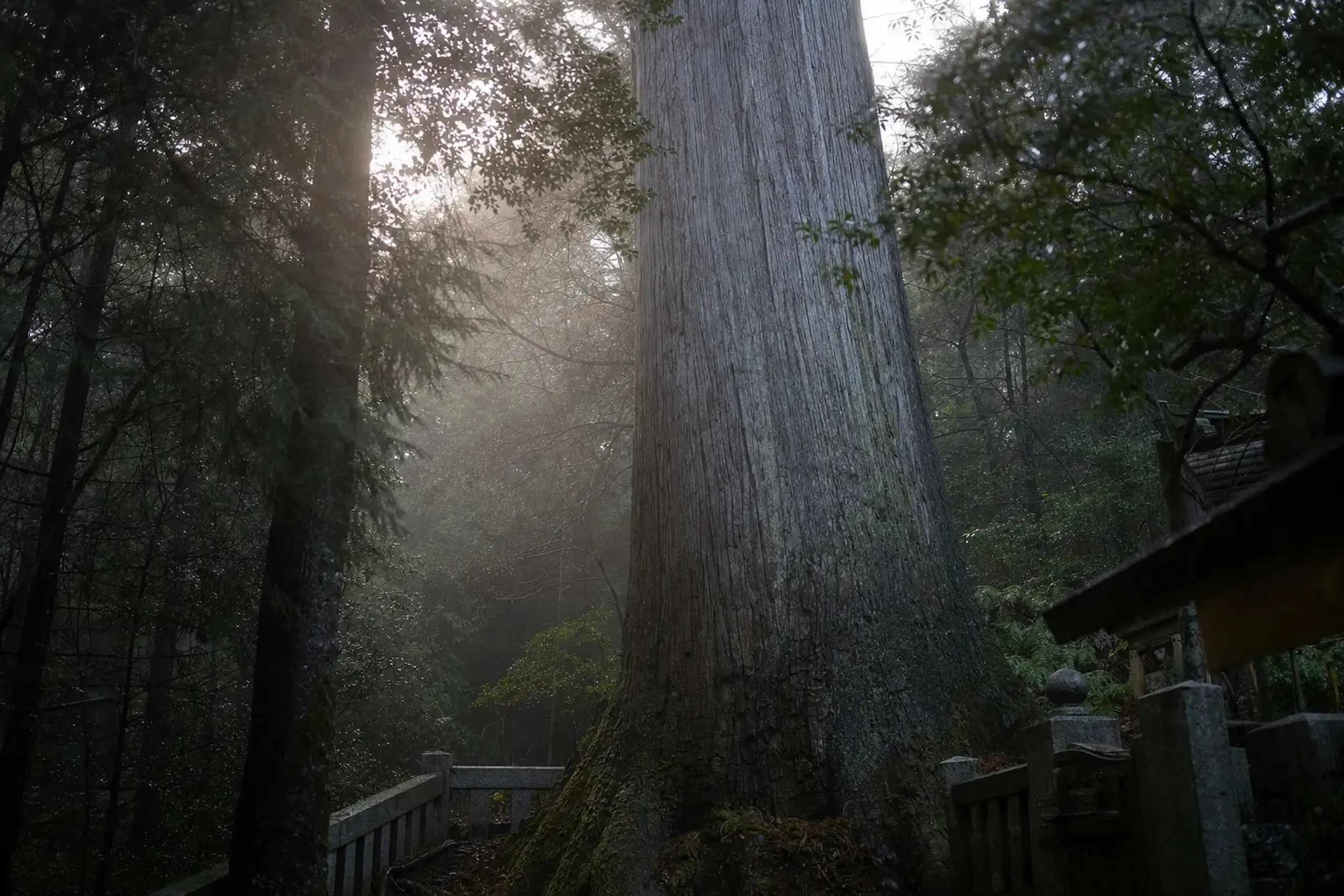
The oldest individuals here reach 700 years, with trunks up to 120 centimetres across at chest height. And within the reserve stands a named giant, the "Second-Generation Great Cypress," reckoned at around 1,000 years old, 154 centimetres in diameter, 26 metres tall. It is not one of the sacred trees felled for Ise — it stands apart, a living anchor you can actually stand beneath and measure yourself against. A thousand years of one organism holding its ground on a Kiso slope.
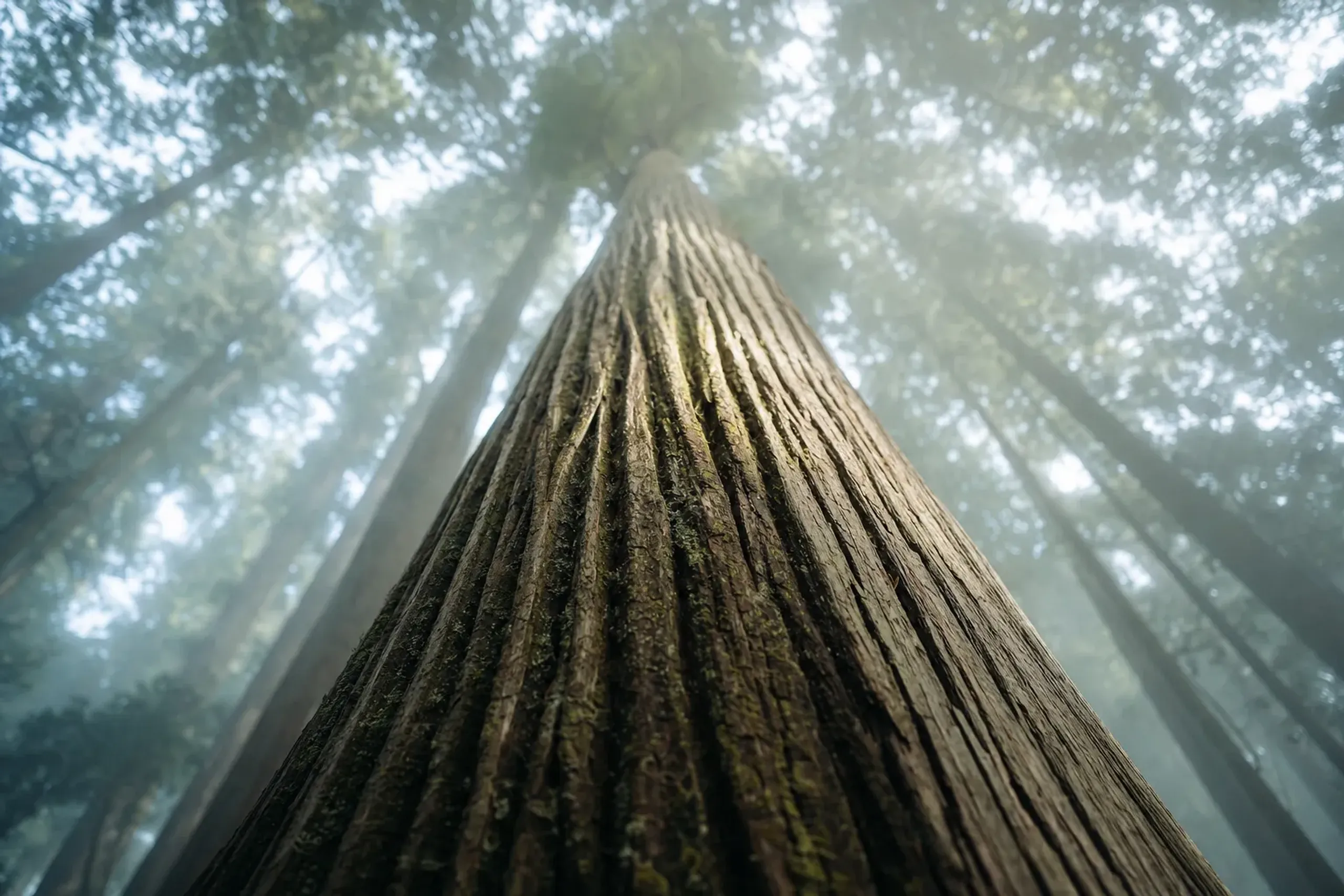
Kiso is counted among the Nihon Sandai Bilin, Japan's Three Great Forests. The title is earned, not marketed.
The Timber That Also Built Japan's Oldest Wooden Building
Kiso hinoki reaches beyond Ise. The same cypress was used in the five-story pagoda at Hōryū-ji near Nara — the oldest surviving wooden building on earth.
Think about what that means. A single forest supplies both the perpetually-rebuilt shrine at Ise and one of the most enduring wooden structures ever raised by human hands. Renewal and permanence, drawn from the same slopes. The wood that is cut down every twenty years and the wood that has stood for over 1,300 years are, in the end, the same wood.
What Can Actually Be Visited in the Kiso Forest
The sacred felling sites themselves are closed to entry — ritually significant, not tourist stops — but the wider Kiso Valley, its forest trails, and interpretive sites tied to the Jingū Birin are genuinely open to visitors.
Let us be plain, because accuracy matters here. You cannot walk into an active ceremonial felling site, and you would not want to; these places are sealed and left to the forest deliberately. What you can experience is the forest itself — the cool cathedral of old hinoki, the steep grades, the silence broken only by water and wind. This is a national forest and a living religious practice, not a resort, and it deserves to be met on those terms.
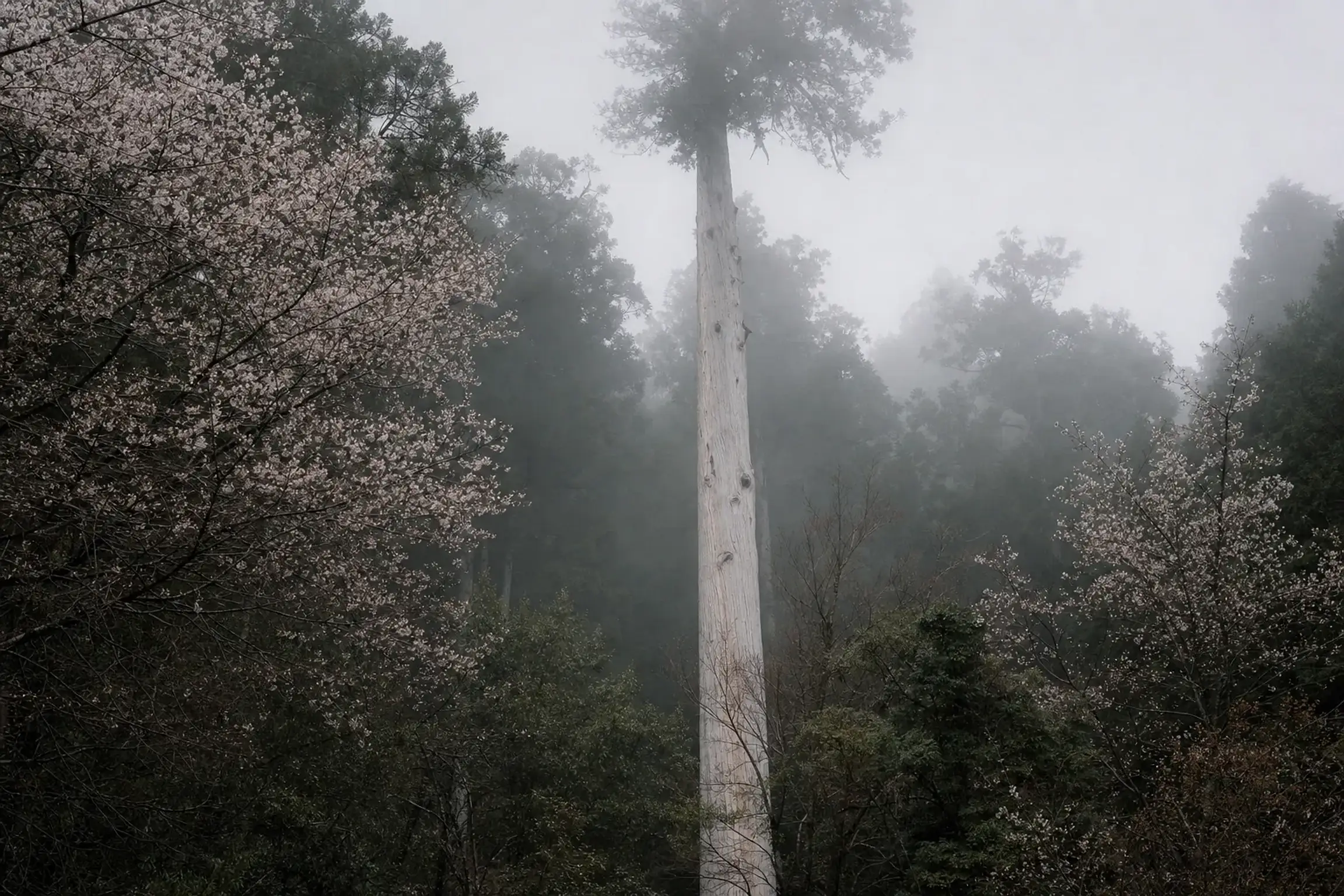
Nearby, in the same valley, sit the preserved post towns of the Nakasendō. That famous walk between Magome and Tsumago is a separate subject entirely but it makes Kiso an easy region to build a longer, quieter stay around, well away from the crowds of Kyoto and Tokyo.
What our team at Japan Royal Service arranges here is straightforward: private guiding by people who understand the forest's meaning, and comfortable private transfers through mountain roads that public transport handles poorly. We do not sell access to sacred sites — no one legitimately can. We open the door to the forest thoughtfully, and we let it speak for itself.
Frequently Asked Questions
Can I watch the Ise Shrine felling ceremony in Kiso?
No. The mitsuhimo-giri felling ceremonies are closed religious rituals, and the felling sites are sealed to public entry. Visitors can experience the surrounding Kiso forest and interpretive sites, but not the sacred rites themselves.
When does the current Ise Shrine rebuilding cycle end?
The 63rd Shikinen Sengu began on 5 June 2025 and builds through 33 rituals toward the main rebuilding rite in autumn 2033. Kiso's role in supplying the sacred hinoki is active throughout this period.
Where is the ancient 1,000-year-old cypress in Kiso?
The "Second-Generation Great Cypress," estimated at around 1,000 years old and 26 metres tall, stands within Kiso's reserve forest area. It is distinct from the sacred trees felled for Ise and can be visited with a knowledgeable guide.
How do I get to the Kiso forest for a private visit?
Kiso lies in southwestern Nagano, most practically reached by private car from Nagoya or Matsumoto given limited public transport on the mountain roads. Our concierge arranges private transfers and forest guiding on request.
Why Choose Japan Royal Service
A forest like this rewards someone who knows how to enter it. The meaning is not written on signboards. It lives in the practices of the somafu, in the 1906 reserve, in a law that once traded a life for a tree — and it takes a guide who carries that context to make a quiet walk in Kiso resonate the way it should.
Our team at Japan Royal Service builds journeys for travellers who have already seen the obvious Japan and now want the country's deeper grain. We work with total discretion, we plan with a feel for the right season and the right hour, and we hold the introductions that turn a scenic valley into a story you carry home. For a stay built around the forest, we can pair the visit with our tailor-made itinerary planning and considered accommodation in the region, moving you through it in unhurried private transportation.
To plan a private visit to Kiso while this rare rebuilding cycle unfolds, reach our team privately via WhatsApp or LINE, or contact us here. The forest is working now. It will be for years. We would be glad to bring you into its quiet.