In this guide
- 01A Bowl That Begins With Kombu, Not Noodles
- 02The Quiet Theatre Of A Small Counter
- 03Ingredient-Origin Elegance: Following The Kelp Backward
- 04Kyoto Refinement Without The Kaiseki Pace
- 05Eating Responsibly In A Crowded City
- 06Building A Dashi Day Around The Bowl
- 07Where Kiichi Fits In Kyoto's 2026 Dining Map
- 08Frequently Asked Questions
- 09Why Choose Japan Royal Service
You climb a narrow stair above a kombu shop in Nishijin. The street outside hums with the ordinary business of an old Kyoto weaving district. Then you sit down. And the bowl that arrives is not what most travelers picture when they hear the word ramen.
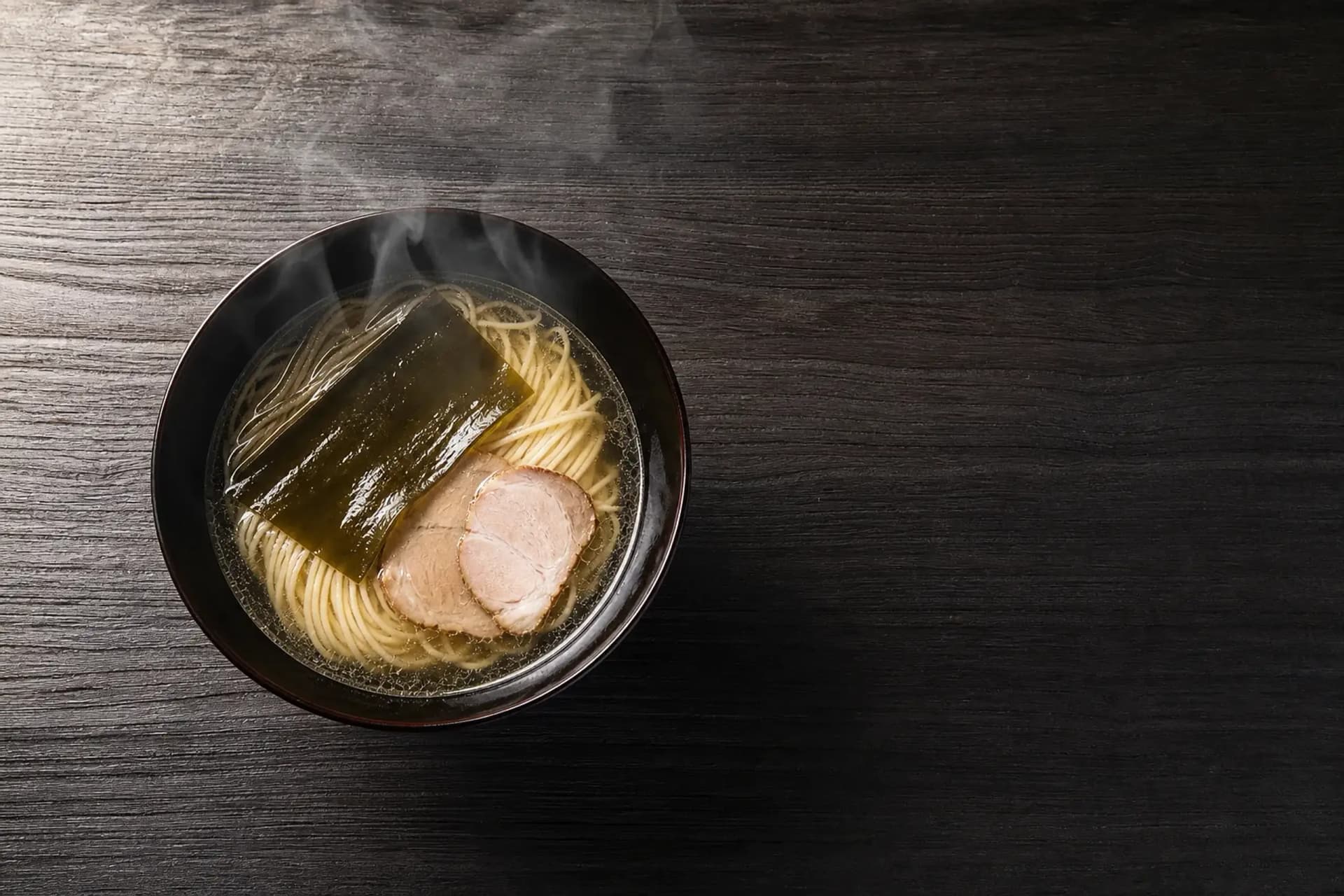
No thick, salty haze. No queue stretching round a corner. Instead: a clear broth, almost still, with the quiet depth of kelp coaxed out over hours. A hand-shaved topping. A counter that seats only a handful. This is Kombu to Men Kiichi (昆布と麺 喜一), and it earned a Bib Gourmand in the MICHELIN Guide Kyoto Osaka 2025.
Our team at Japan Royal Service often tells guests that the most memorable meals in Japan are the ones they would never have found alone. Kiichi is one of them. It teaches a lesson worth carrying through an entire trip: Japanese luxury is not always loud. Sometimes it is a perfectly timed lunch.
A clear, kelp-led broth — clarity over richness at Kombu to Men Kiichi.
A Bowl That Begins With Kombu, Not Noodles
Most ramen leads with fat, salt, or a long-simmered animal stock. Kiichi leads with kombu. That alone reorders everything.
The shop sits above a working kelp business. The first floor sells kombu; the second floor turns it into a meal. That vertical arrangement is not a gimmick. It is a statement of priorities. The ingredient comes first, and the restaurant grew out of the ingredient.
Kombu is the backbone of Japanese dashi. It carries glutamate, the source of clean, lingering umami that coats the tongue without weight. When a kitchen builds a broth this way, clarity becomes the goal rather than richness. You taste the sea, the patience, the restraint.
This is what the food world means by an umami-forward bowl. The kelp is not a background note. It is the lead voice. And Kyoto, a city that has refined dashi culture for centuries, is exactly where such a bowl belongs.
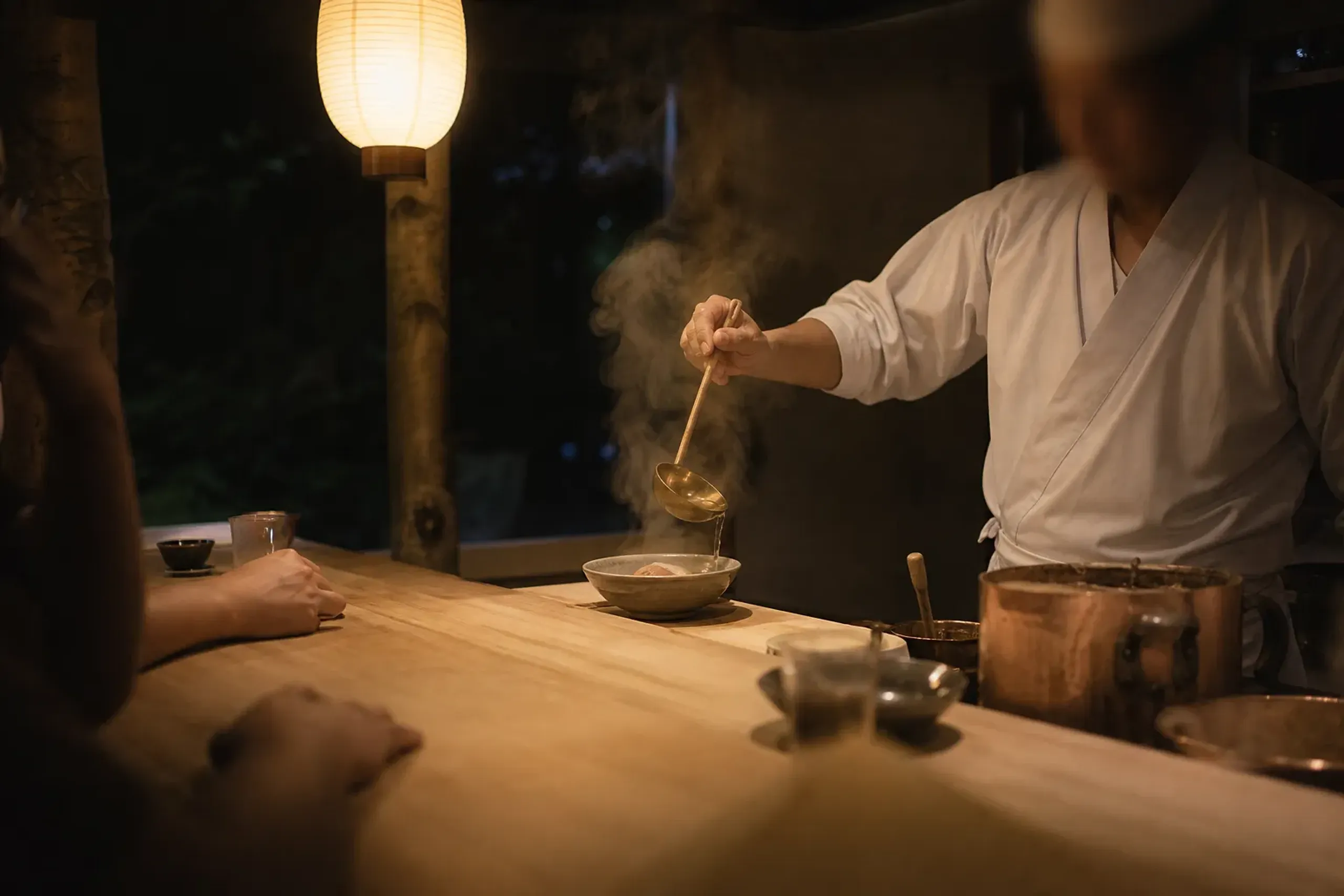
A handful of seats, a kitchen close enough to watch every movement.
The Quiet Theatre Of A Small Counter
Scale matters here. Kiichi is small. A counter, a few seats, a kitchen close enough to watch.
That intimacy changes how you eat. There is no anonymity. You see the broth poured. You see toppings shaved by hand, finished moments before they reach you. The pacing feels closer to a chef's tasting than to a fast lunch.
In our experience, this is where many guests pause. They came expecting comfort food. They find something closer to a craft demonstration. The bowl arrives like a composed plate, each element placed with intent.
Wabi-sabi lives in rooms like this. Nothing is gilded. The beauty sits in proportion, in the unhurried movements behind the counter, in a single shaving of kelp resting on noodles. Restraint, done well, reads as confidence.
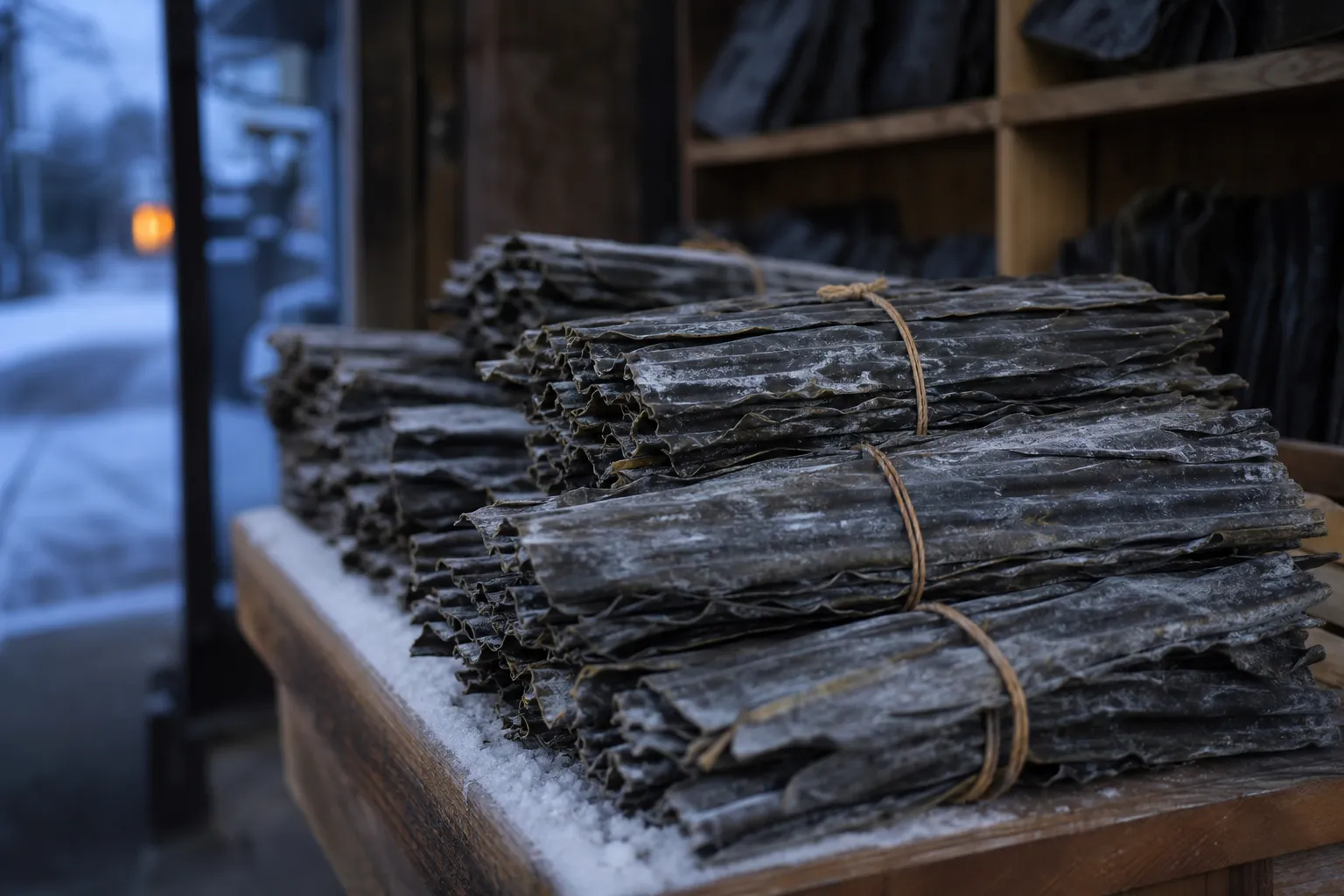
Northern kelp, dried and aged — the source the whole bowl is built upon.
Ingredient-Origin Elegance: Following The Kelp Backward
To understand why Kiichi feels luxurious, trace the bowl backward to its source.
Japan's finest kombu comes largely from the cold northern waters around Hokkaido. Rishiri and Rausu kelp are prized in serious kitchens for the depth and clarity they bring to dashi. A broth built on good kombu is a quiet act of sourcing, harvesting, and drying long before a single noodle is cooked.
When you sit at Kiichi, you are tasting that whole chain. The kelp shop downstairs makes the connection literal. You are not in a generic ramen counter. You are above the very ingredient that defines the meal.
Why it matters: Kombu to Men Kiichi was named a new Bib Gourmand in the MICHELIN Guide Kyoto Osaka 2025 — Michelin's mark for exceptional cooking at a gentle price. The recognition validates the craft, but the craft is the real story.
This is the heart of ingredient-origin elegance. The luxury is not in a marble dining room. It is in the decision to honour one ingredient completely, and to build everything else around it.
Kyoto Refinement Without The Kaiseki Pace
Kyoto rewards travelers who slow down. Tea houses, temple gardens, multi-course kaiseki dinners. All of it asks for time.
Kiichi offers the same sensibility in a shorter window. A refined, minimalist, craft-driven lunch that respects your afternoon. You can sit, eat with full attention, and still make a 2pm garden viewing.
That balance is rare. Many of our guests want haute sensibility without committing every meal to a two-hour ritual. A bowl like this fits neatly between a morning temple walk and an afternoon with an artisan. It is elegance measured in minutes, not courses.
And it is, frankly, more honest than many showy restaurants. The price is modest. The ambition is not. That gap, where high skill meets quiet humility, is one of the most satisfying things to find in Kyoto.
Eating Responsibly In A Crowded City
Kyoto faces real pressure. Overtourism is a researched, documented strain on the city in 2026, and residents feel it daily. A thoughtful traveler plans around that, not into it.
Small specialist shops like Kiichi sit at the centre of this conversation. They are intimate by design and easily overwhelmed by crowds. Visiting well means visiting with care.
A few principles our concierge shares with guests:
- Time your arrival. Off-peak windows mean a calmer counter and a shorter wait — better for you and the kitchen.
- Keep your party small. A counter this size is meant for two or three, not a tour group.
- Eat with attention. Quiet appreciation, minimal phone use, and respect for the pace of the room.
- Spread your footprint. Pair a popular district with a lesser-visited craft neighbourhood so the city's weight is shared.
Nishijin itself helps. The old weaving quarter is gently away from the most congested corridors, which makes a visit feel like discovery rather than a scramble. Good behaviour is part of good taste.
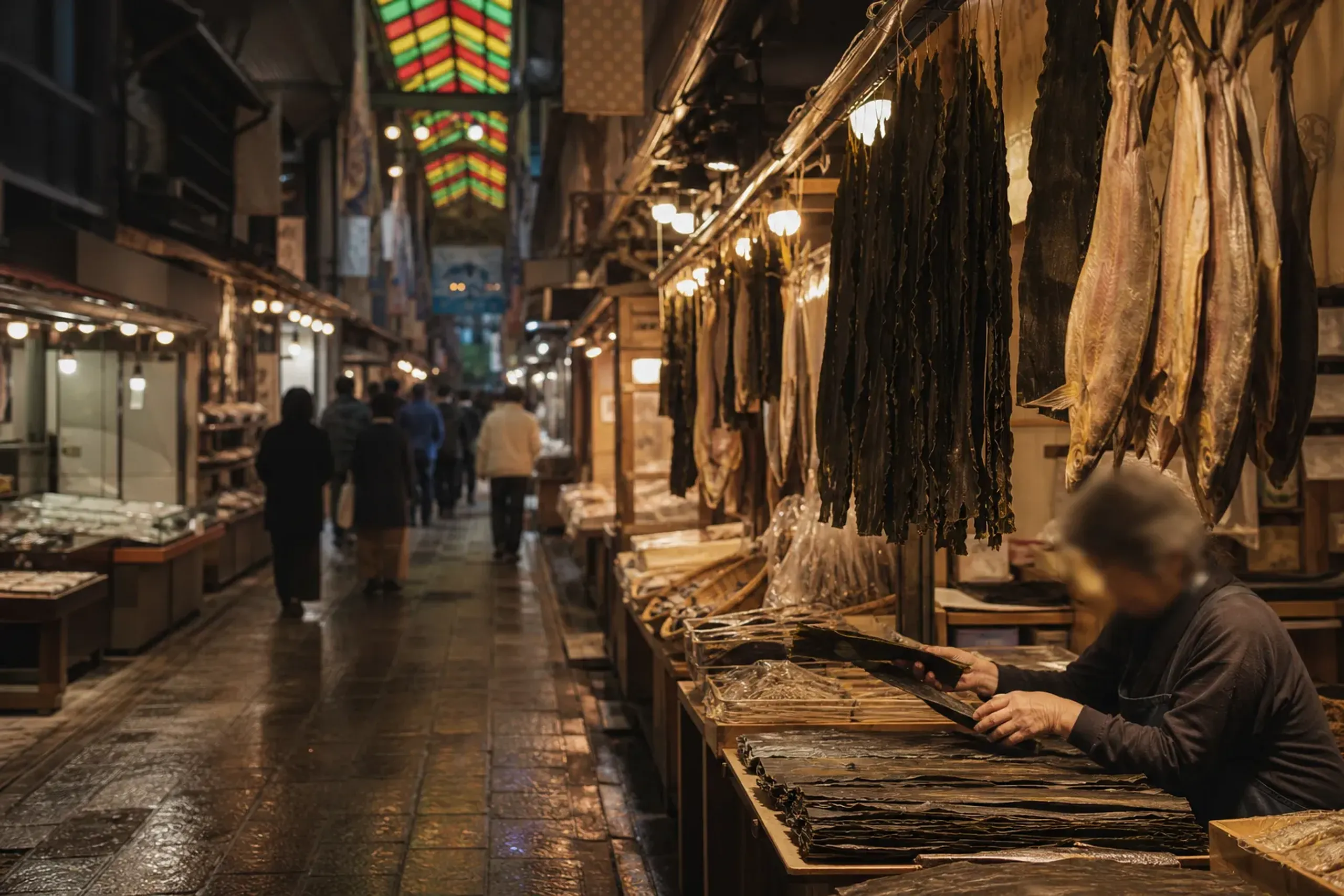
Nishiki Market — where Kyoto's flavour story begins.
Building A Dashi Day Around The Bowl
One great bowl deserves a frame. We often help guests shape a half-day in Kyoto around the idea of umami and dashi, with Kiichi as the anchor.
Morning: The Source
Start at Nishiki Market, Kyoto's long covered food street, where dried fish, kelp, pickles, and seasonal produce line the stalls. Walking it with context turns a busy market into a lesson in where flavour begins. Arrive early to beat the heaviest crowds.
Midday: The Bowl
Move to Nishijin for lunch at Kombu to Men Kiichi. After a morning spent looking at raw ingredients, the clear, kelp-led broth lands differently. You taste the theory made real.
Afternoon: The Ritual
Close with a private tea ceremony, where umami and restraint return in another form. The same cultural logic that shapes the broth shapes the bowl of matcha: patience, clarity, and quiet precision. It is a coherent day, not a checklist.
This is the kind of through-line our coordinators design — not a list of stops, but a single idea followed from market to counter to tea room.
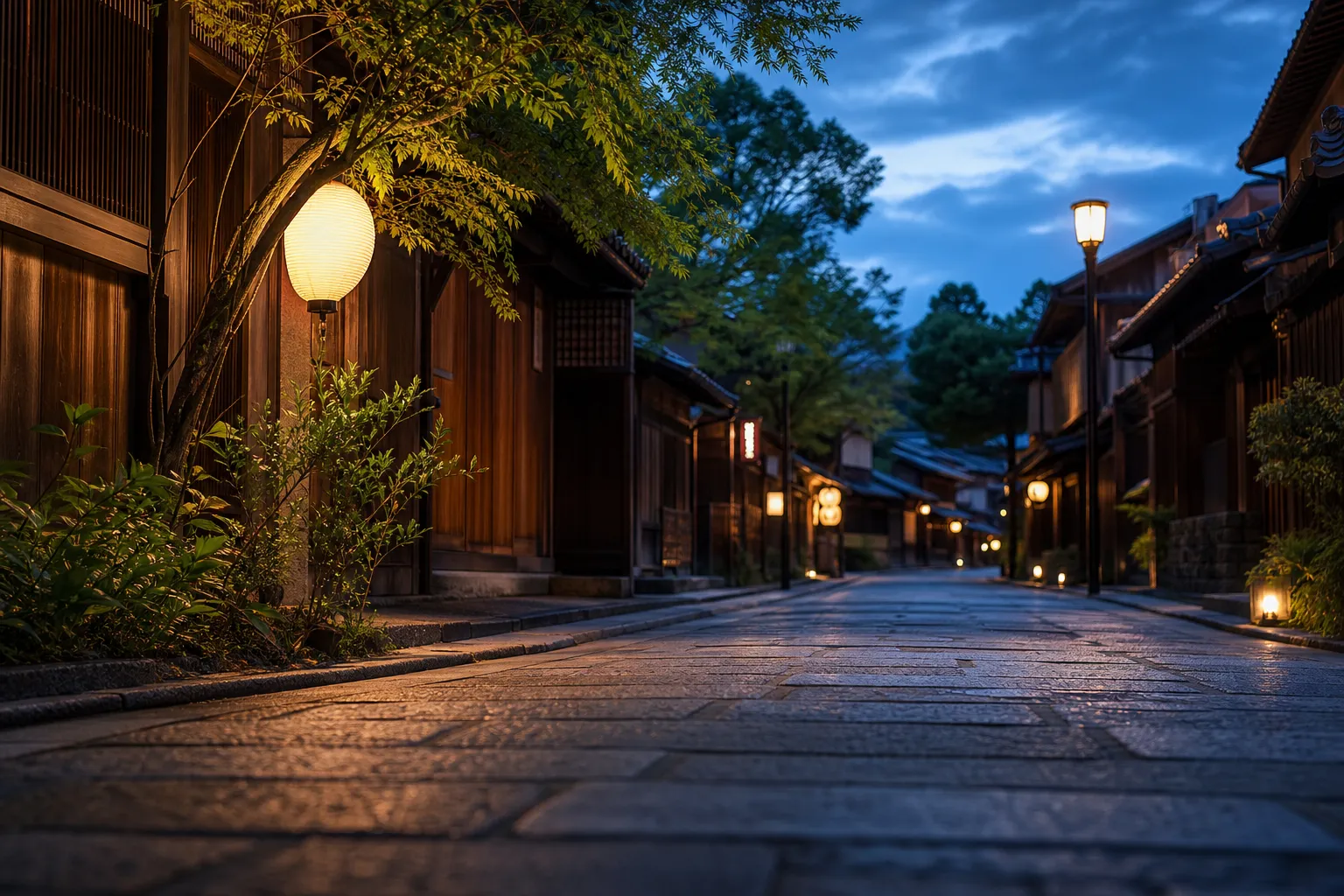
Calm corners of Kyoto, away from the most crowded corridors.
Where Kiichi Fits In Kyoto's 2026 Dining Map
Kyoto's luxury landscape keeps shifting. Imperial Hotel, Kyoto opened on March 5, 2026, bringing a heritage-grade hospitality anchor with formal service standards. Capella Kyoto followed on March 22, 2026, near the Miyagawa-cho district, close to historic theatres and traditional streets without sitting in the most crowded corridors.
These openings matter for routing. A guest can base in calm, discreet surroundings and step out for craft-led meals like Kiichi rather than chase the obvious dining names. The contrast — refined urban stay, humble brilliant lunch — is exactly the texture a well-designed Kyoto trip should have.
Michelin's attention to Kansai ramen continues, too. The MICHELIN Guide Kyoto Osaka 2026 added nine new Bib Gourmand selections, including a ramen shop, and Vegan Ramen UZU Kyoto holds a Green Star for its sustainability work. Elegant, values-led ramen is no longer a contradiction. It is part of how serious travelers now read a city.
How A Visit Comes Together
Small counters like Kiichi do not run conventional reservation systems, and seating is limited. Plans depend on hours, timing, and the rhythm of the day. Rather than a fixed booking, the value lies in knowing when to arrive, how to behave, and how to weave the stop into a larger plan.
Our concierge team can offer tailored guidance on this — timing, surrounding neighbourhood walks, private transfers between districts, and the cultural context that makes the meal land. For private coordination, guests are welcome to reach us directly.
Frequently Asked Questions
What makes Kombu to Men Kiichi different from regular ramen?
Kiichi builds its broth around kombu (kelp) rather than heavy animal stock. The result is a clear, umami-driven bowl with restraint and clarity. It sits above a working kombu shop in Kyoto's Nishijin district and earned a MICHELIN Bib Gourmand in 2025.
Is Kombu to Men Kiichi expensive?
It is a Bib Gourmand restaurant, Michelin's recognition for excellent cooking at a moderate price. The luxury here is not cost — it is craft, sourcing, atmosphere, and the rarity of finding such precision in a humble setting.
Where is Kombu to Men Kiichi located?
It is in the Nishijin area of Kyoto, the city's historic weaving district. The first floor is a kombu (kelp) shop; the ramen counter is on the second floor.
Can I combine Kiichi with other Kyoto experiences?
Yes. It pairs naturally with Nishiki Market, a private tea ceremony, and walks through quieter craft neighbourhoods. Our team can shape a half-day around the theme of dashi and umami with Kiichi as the centrepiece.
Why Choose Japan Royal Service
Anyone can hand you a restaurant name. Far fewer can tell you why the bowl matters, when to arrive, and how it connects to the city around it.
That is the work our team at Japan Royal Service cares about. We do not simply point guests toward places. We help them understand the craft behind a clear broth, the meaning of a kelp shop turned ramen counter, and the quiet logic that ties a market visit to a tea room. Our concierge handles the unseen choreography — private transfers between districts, sensible timing in a crowded city, and the cultural context that turns a lunch into a memory.
For guests who want Kyoto's depth without its congestion, we design days that move from urban refinement to small, brilliant discoveries. Discreetly, attentively, and always shaped around the guest rather than a fixed template.
If a clear bowl of kelp broth above a Nishijin kombu shop sounds like your kind of luxury, our concierge would be glad to help you build the day around it. Reach our team directly via the contact form or WhatsApp to begin a private conversation.