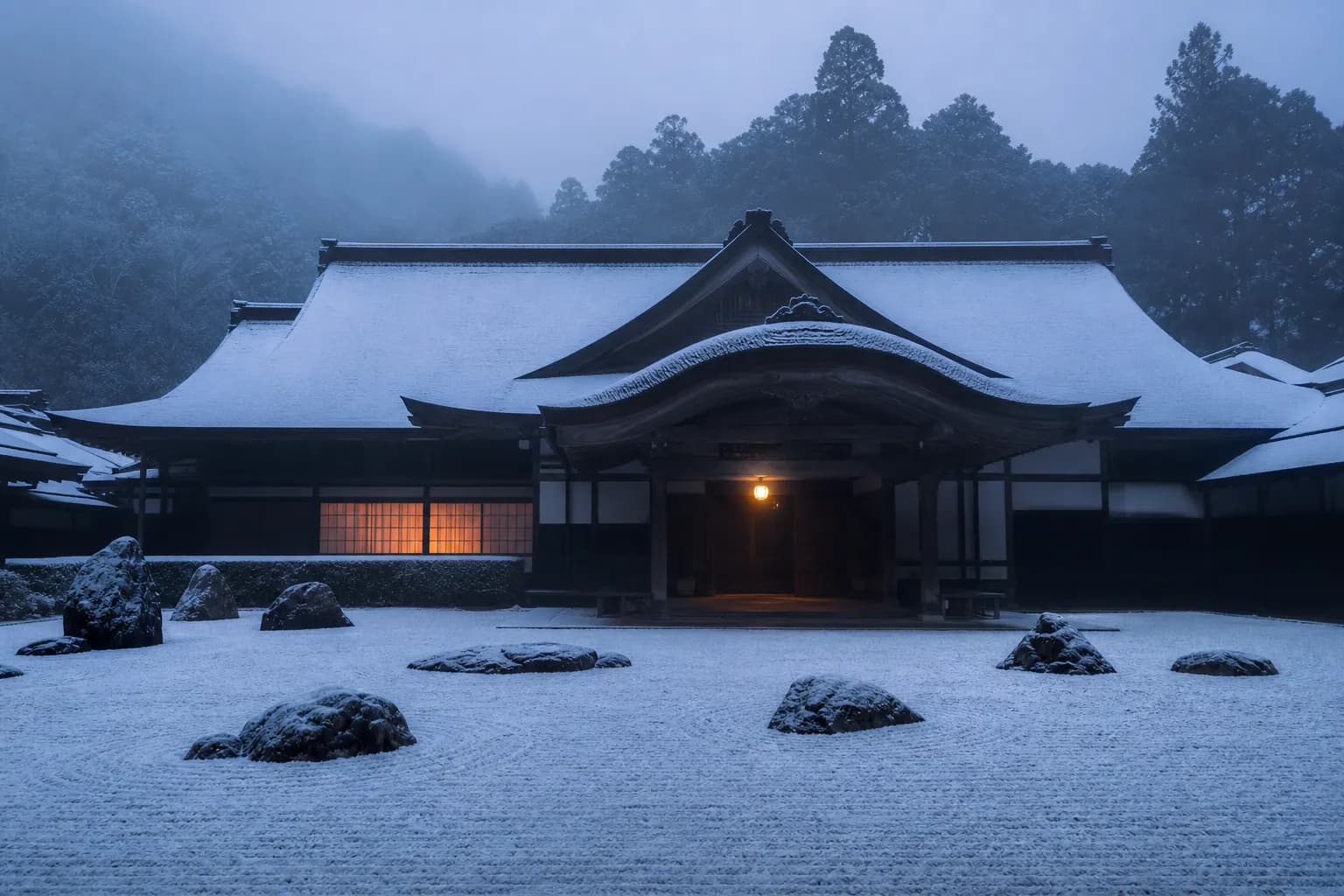
Kongobuji Temple was originally constructed in 1593 by Toyotomi Hideyoshi to commemorate the death of his mother. Later, it was merged with a neighboring temple and reorganized into the head temple of Shingon Buddhism, the sect introduced to Japan by Kobo Daishi in 805 and headquartered on Koyasan—one of Japanese Buddhism’s sacred places, first opened in the Heian Period by Kobo Daishi.
The name “Kogobuji” conveys “Kongobu-rokaku-issai-yuga-yugi kyo,” or “The Sutra of All Yogas and Yogis of the Pavilion with the Vajra-Top.” Beginning with the main hall (60 m east to west and 70 m north to south) and guarded by various other buildings, Koyasan encompasses an area of 48.295 square meters.
Kongōbu-ji is the ecclesiastic head temple of Koyasan Shingon Buddhism, located on Mount Kōya, Wakayama Prefecture, Japan. Its name means “Temple of the Diamond Mountain Peak.” It is part of the UNESCO World Heritage Site “Sacred Sites and Pilgrimage Routes in the Kii Mountain Range.”
General Information
- Address: 132 Koyasan, Koya, Ito District, Wakayama , Japan
- Telephone: 736-56-2011
- Opening Hours: 8:30 to 17:00 (Entry until 16:30)
- Admission: 500 yen (Kongobuji only) / 2500 yen (combination ticket that includes admission to other sights on Koyasan)
Ease of Access
Kongobuji stands in Koyasan's town center, a five minute walk from the Senjuinbashi intersection and just a few steps from the Garan.
The Nankai Rinkan Bus from Koyasan Station will also take you to the temple. Get off at Kongobuji-mae. Koyasan Station can be reached from Gokurakubashi Station on the Nankai Koya Line via the cable car.
History
The history of Kongobuji Temple dates back to 816 and has undergone a number of renovations due to complete destructions throughout history. While it is architecturally satisfying from the outside, take off your shoes and step through the doors and you'll be rewarded by Kongobuji Temple's beautiful interior.
Explore Kongobuji Temple
Enter the corridors through gilded golden doors and pass through rooms decorated with graceful cranes, elaborately carved flowers, and sweeping plum and willow. Visitors can also enter the large kitchen with its huge hearth and stoves, and catch a glimpse of the immaculately preserved Banryutei Rock Garden at the back of the temple.