In this guide
- 01What Makes Kumamoto Castle Different In Spring?
- 02Kato Kiyomasa’s Castle: Why The Stone Walls Steal The Show
- 031877 And 1960: The Fire, And The Keep You See Today
- 04What Happened To Kumamoto Castle In The 2016 Earthquakes?
- 05Where The Rebuilding Stands Now: What You Can Expect To See
- 06When Is The Best Time To See Cherry Blossoms At Kumamoto Castle?
- 07A Half-Day Spring Walk: Viewpoints That Still Feel Spacious
- 08Is There A Night Cherry Blossom Light-Up At Kumamoto Castle?
- 09Getting To Kumamoto Castle: Tram, Loop Bus, Airport, And Parking
- 10How To Visit With Care During An Ongoing Restoration
- 11Practical Visiting Notes: Hours, Crowds, And A Simple Rain Plan
- 12The Yasohime (八十姫) Cherry Tree Story: A Living Spring Detail
- 13What We Can Coordinate Privately For Your Kumamoto Castle Spring Visit
- 14Frequently Asked Questions
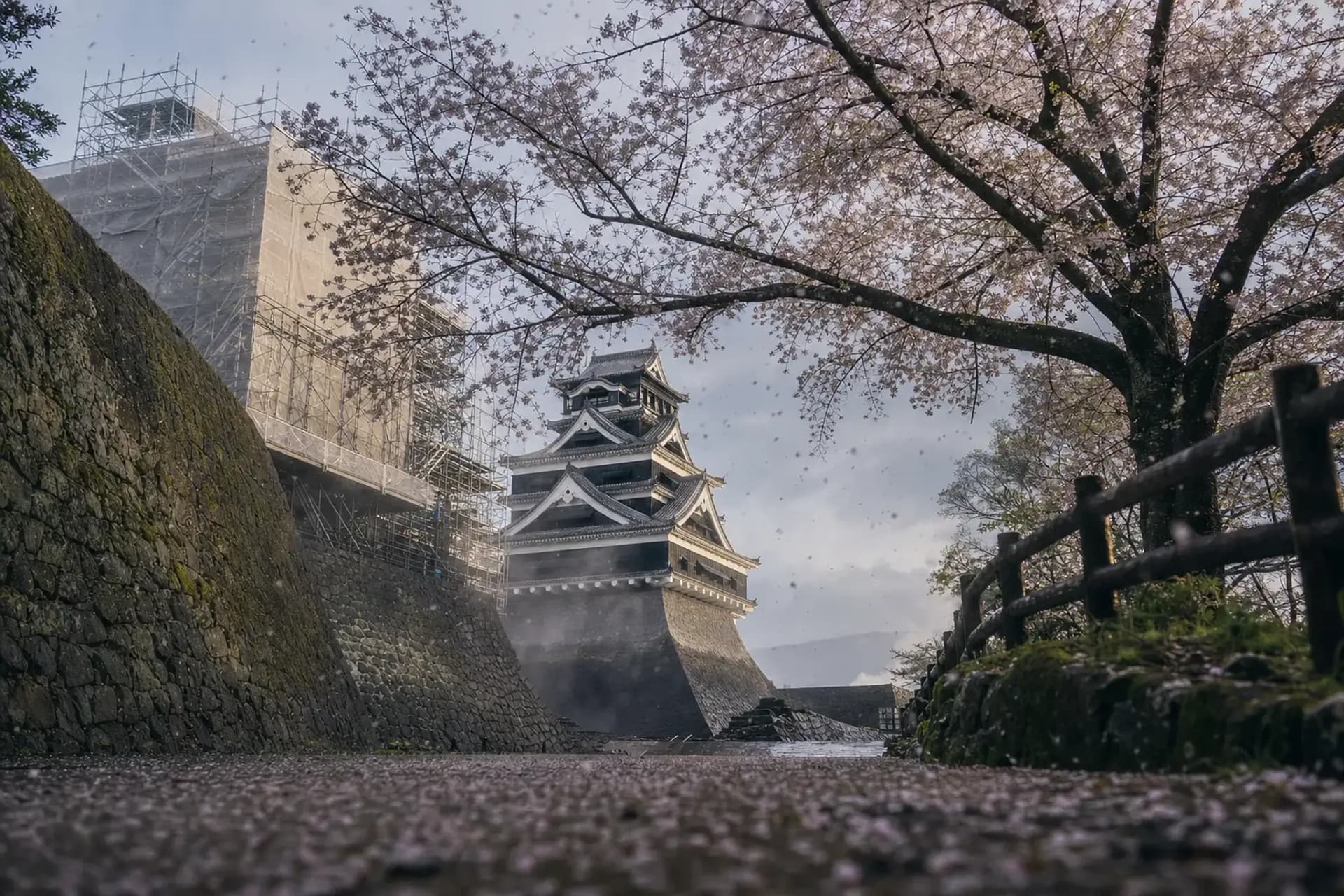
Cherry petals gather in the moat wind, and beyond them you see something you do not expect: scaffolding, cut stone blocks, cranes held still against the pale sky.
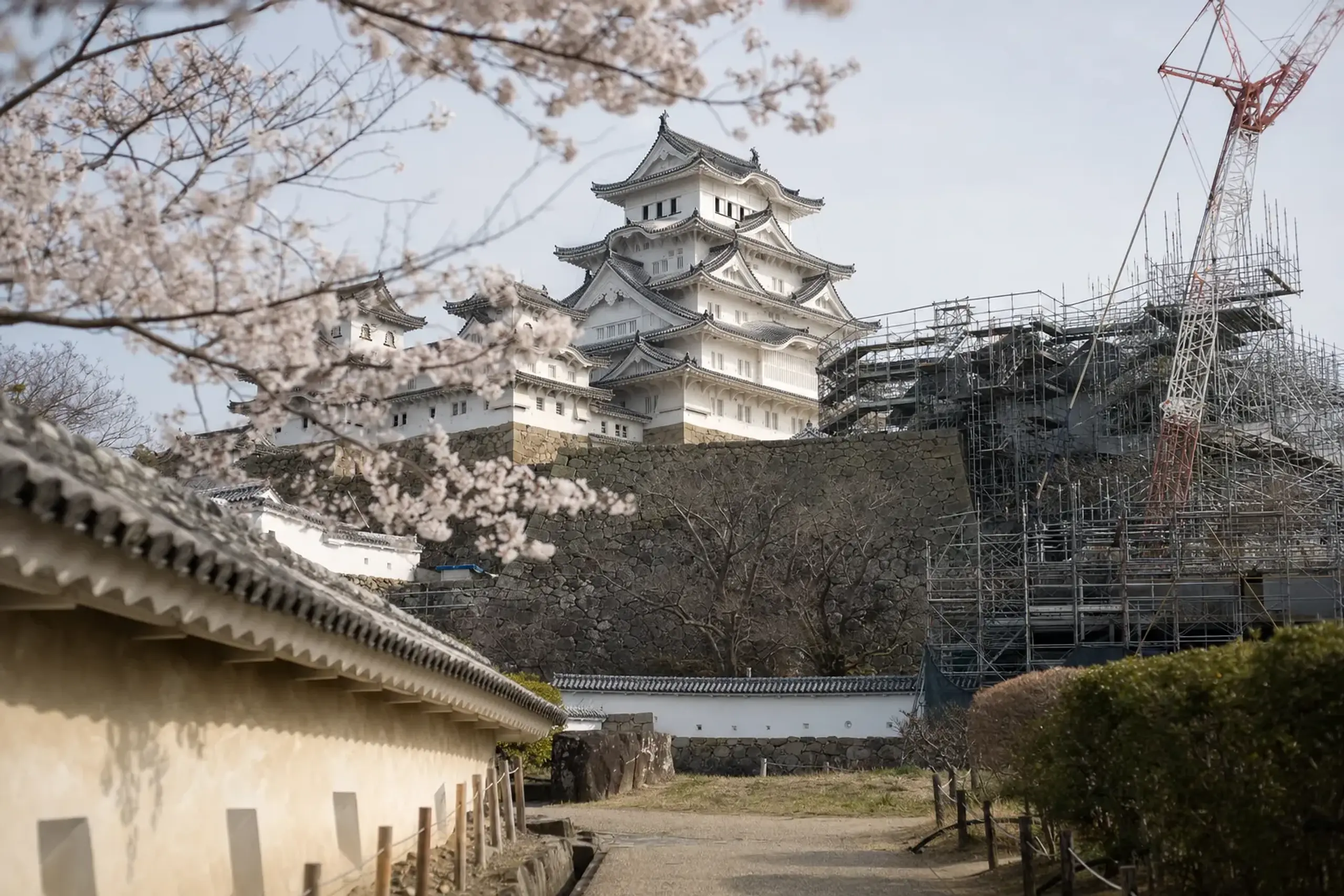
Kumamoto Castle in spring is not a “finished” postcard. It is a living restoration, and the blossoms make that story easier to read — if you know where to stand, and if someone who understands the site stands beside you.
What Makes Kumamoto Castle Different In Spring?
Kumamoto Castle in spring is defined by cherry blossoms framing an ongoing restoration, so your finest views and your walking route both depend on what is open and where the construction zones begin.
Most castle guides assume the building is complete. Here, the contrast is the point. You walk past a long stretch of stonework, then notice a section that is newly set, its edges too crisp to be old, while the stones beside it keep their soot-darkened skin.
Spring softens the whole scene. The castle’s sharp lines grow gentler under pale pink canopies, and the unfinished parts stop reading as an inconvenience and start reading as evidence of care — a quiet patience that rewards an unhurried visitor far more than a rushed one.
That shift matters for planning. A spring visit works best when you treat the restoration as the main exhibit rather than background noise. This is the restraint of wabi made visible: beauty found in what is weathered, incomplete, and honestly in progress.
Kato Kiyomasa’s Castle: Why The Stone Walls Steal The Show
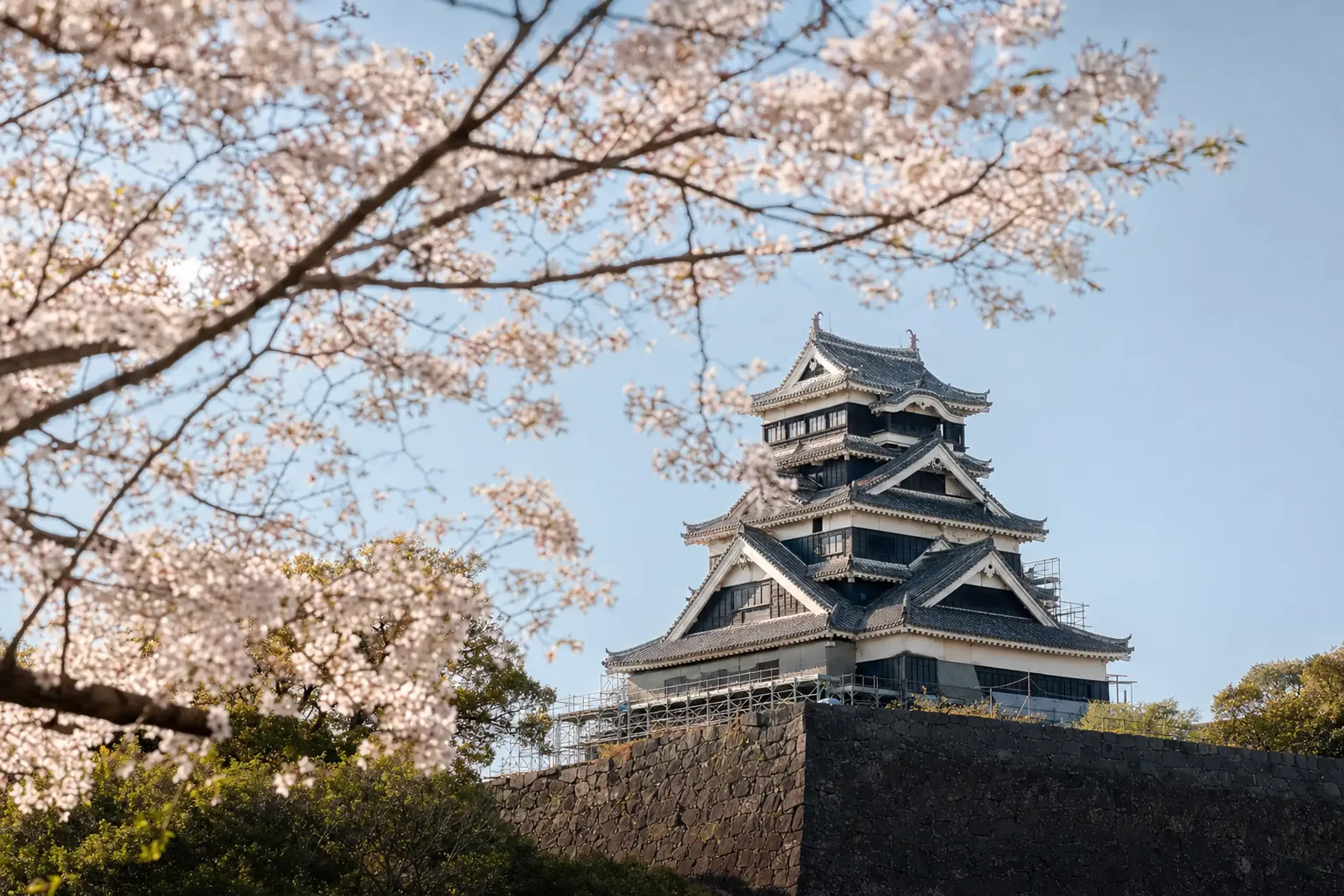
Kumamoto Castle is closely tied to Katō Kiyomasa, a retainer of Toyotomi Hideyoshi, and it is celebrated for its formidable stone walls rather than for a single surviving original keep.
The keep was completed in 1601, and the wider castle is commonly described as completed in 1606. Two dates — one enduring idea.
Look at the curves. The walls are often nicknamed Musha-gaeshi (“warrior-repelling”), traditionally explained as a form that becomes steeper near the top, making it nearly impossible to climb even if an attacker reached the base.
In our experience, this is the moment to slow down and let your guide point out the details you would miss alone: the gradation in stone sizes, the seams, the way each corner is solved. It is not flashy. It is serious, deliberate craftsmanship — the hand of the shokunin working in stone across the centuries.
1877 And 1960: The Fire, And The Keep You See Today
The castle you visit today includes a main keep that is a 1960 concrete reconstruction, built after many original structures were lost in earlier eras.
In 1877, during the Seinan War, fire destroyed many buildings — including the keep — as Saigō Takamori’s Satsuma army surrounded the castle.

Two sentences are enough. The loss was real.
Then came rebuilding in the modern period. The present main keep is concrete, and saying that plainly helps set expectations for spring visitors who arrive hoping for untouched timber.
What remains powerful is the precinct scale and the stonework itself. The site was designated a Special Historic Site in 1955, and that designation helps explain why the restoration is carried out with such formal patience rather than hurried for the sake of tourism.
What Happened To Kumamoto Castle In The 2016 Earthquakes?
In April 2016, Kumamoto Castle suffered major damage during a magnitude 6.5 foreshock on April 14 and a magnitude 7.3 main quake about 28 hours later, including widespread stone-wall collapse and damage to its cultural properties.
This is not a spectacle. It is a city’s recovery, still underway, and a thoughtful visitor carries that awareness as quietly as the camera.
Reports describe all 13 of the castle’s national Important Cultural Properties as damaged. The stone walls were hit especially hard: roughly 30% collapsed, reported as approximately 23,600 square metres.
Property damage has been reported at around 63 billion yen. Numbers help you grasp the scale. They should never become your story.
Where The Rebuilding Stands Now: What You Can Expect To See
The main keep was repaired and described as fully restored in March 2021 and reopened to visitors that year, while work continues on turrets and stone walls — and some areas may remain restricted.
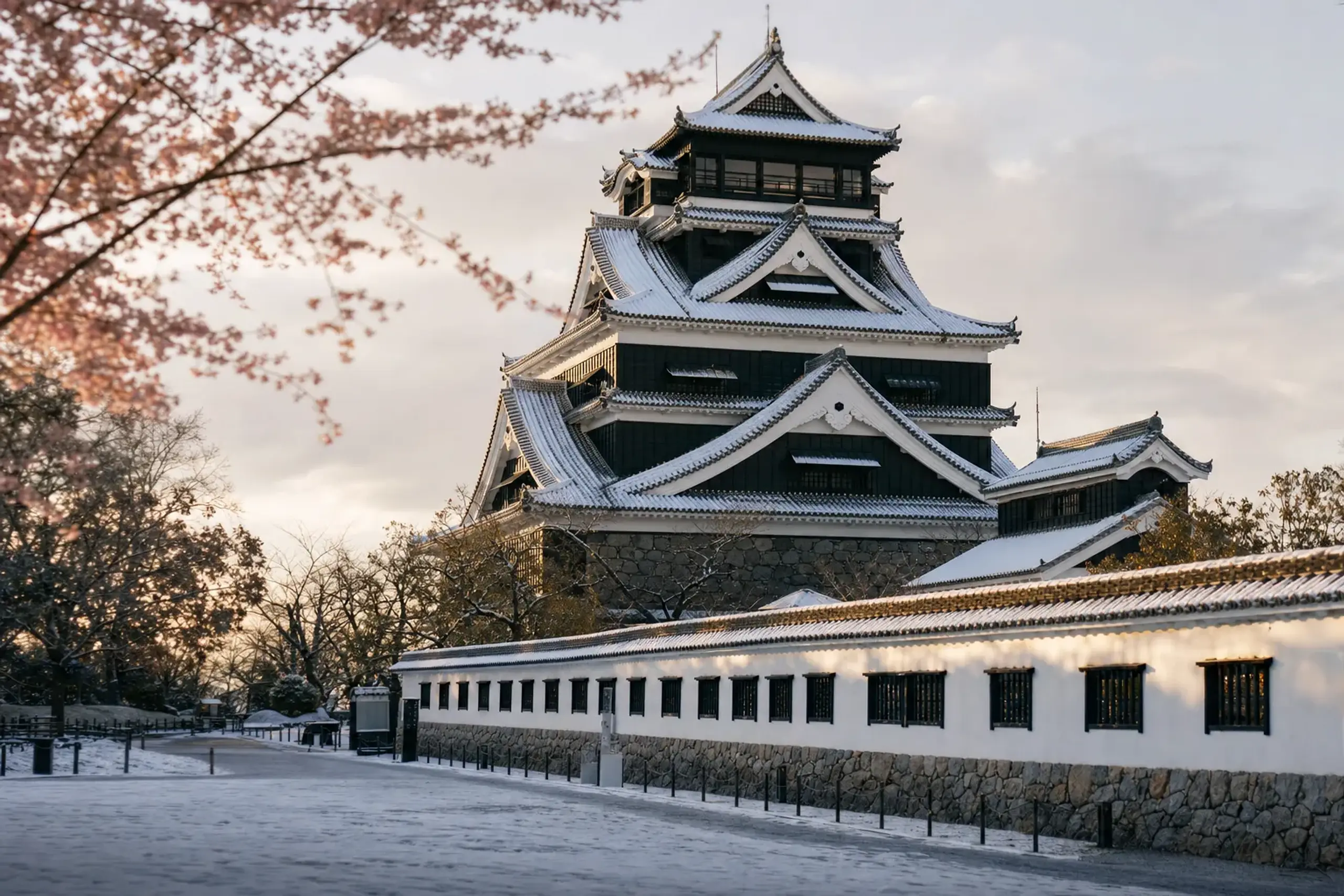
The keep interior functions as a museum. Plan to spend real time inside. It changes how you read the grounds once you step back out into the light.
Other work is still moving forward. The Uto turret (Uto-yagura) and sections of the stone walls remain under reconstruction, and dismantling work on the Uto turret began in December 2024; one source describes an expected completion around 2032.
Kumamoto City has stated a long-term target for full restoration as fiscal 2052, described as an aim. Long horizons. Careful hands.
Key fact: Do not plan your spring visit assuming every path is open; our concierge team quietly verifies current openings, closures, and any construction-related detours well ahead of your date.
When Is The Best Time To See Cherry Blossoms At Kumamoto Castle?
Cherry blossoms at Kumamoto Castle are usually at their best from late March into early April, though the actual bloom timing shifts each spring with the weather.
Kumamoto’s spring can turn quickly. One cool week stretches the petals out for days; a warm spell compresses the whole show into a brief, fleeting flourish. Knowing precisely when to stand beneath those trees — the Japanese sense of shun, of perfect seasonal timing — is exactly the kind of judgment our planning is built to provide.
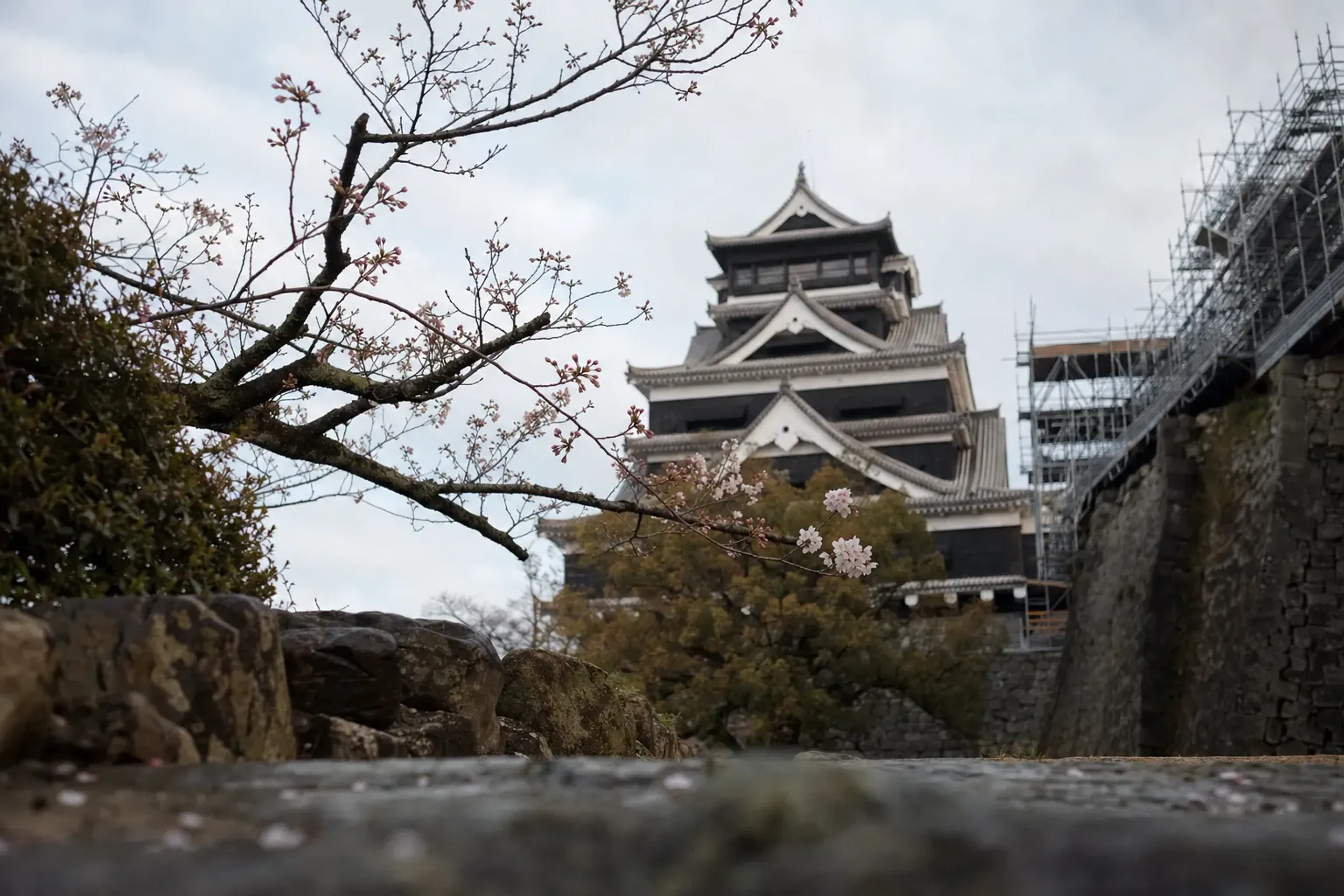
The grounds hold several hundred cherry trees, mostly Somei-Yoshino, with yamazakura and other varieties also present. You will see different counts online; we recommend treating “several hundred” as the honest frame.
What matters more than the number is where you can actually walk. In recent listings, blossoms are viewed from open areas and surrounding paths such as Sakura-no-baba Jōsaien, Ninomaru Square, Gyōkō-zaka, and along the Nagabei (long wall) street, while some inner zones may be restricted.
A Half-Day Spring Walk: Viewpoints That Still Feel Spacious
A calm spring visit is entirely possible if you choose a simple loop, avoid the mid-day pinch points, and build in one indoor pause for weather or crowds.
Start with the stone walls before you chase petals. Doing it backward is a common mistake — once the crowd thickens, you will rush the very best part.
Step-by-step pacing we often recommend:
- Arrive earlier in the day and walk first along the open perimeter paths, where the walls read clearly in raking morning light.
- Enter the keep while your attention is fresh; the museum context helps you understand what was lost, what was rebuilt, and what is still underway.
- Move toward Ninomaru Square for open-sky blossom viewing and breathing room.
- Finish near Sakura-no-baba Jōsaien for an easy transition to lunch, tea, or a short rest before continuing elsewhere.
Some sources have described a special viewing route of about 350 metres designed to let visitors watch the repair work.
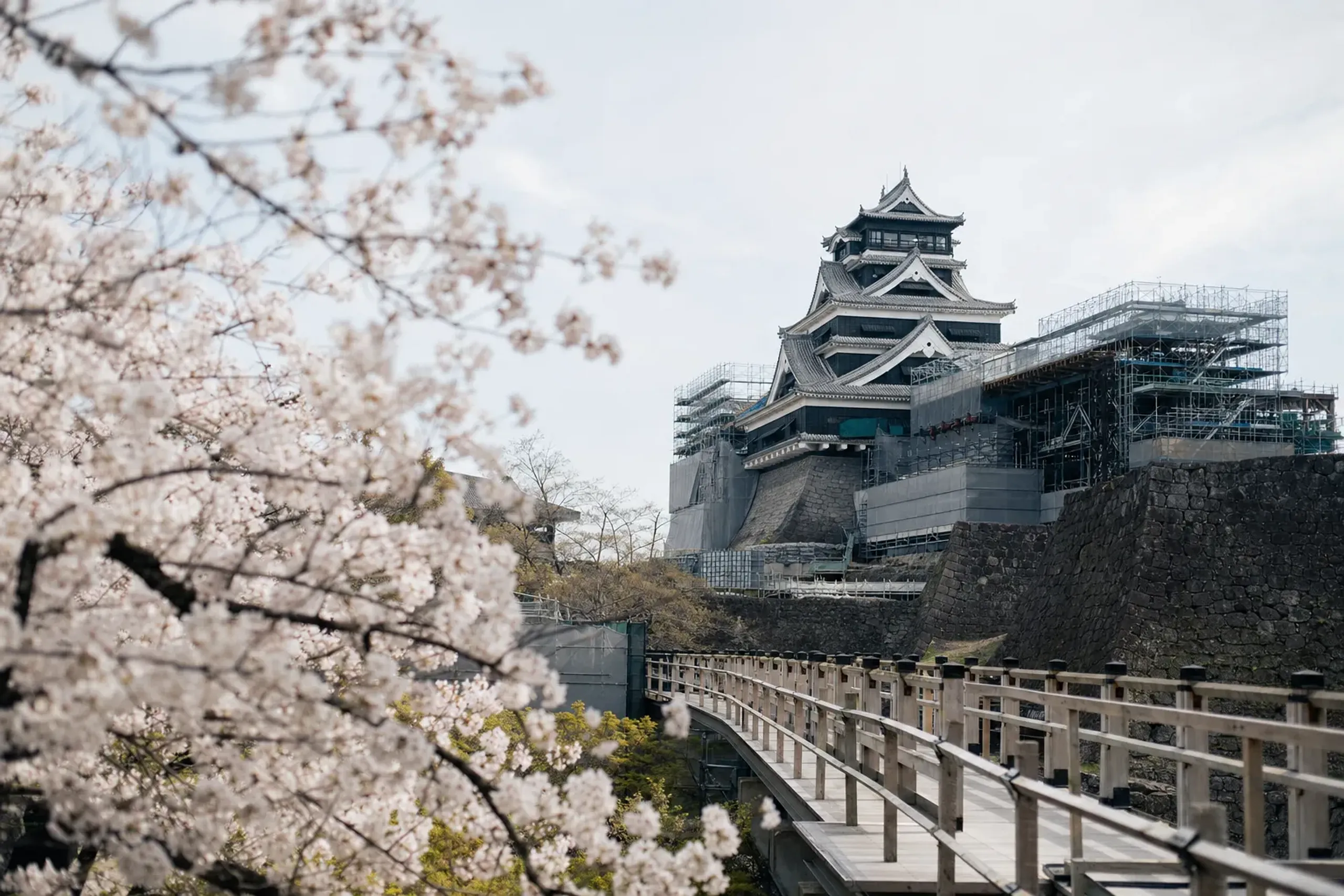
Its current status can change, so we do not treat it as guaranteed; our team checks the latest official guidance for your specific travel dates.
As of one source in February 2025, the Honmaru Palace interior was closed. Treat interiors as variable, and plan the day so the outdoors still feels complete on its own.
Is There A Night Cherry Blossom Light-Up At Kumamoto Castle?
Yes — seasonal night cherry blossom light-ups are commonly scheduled around Kumamoto Castle each spring, but the exact dates and hours change year to year and must be confirmed close to your visit.
Evening is a different castle entirely. The walls flatten into silhouette, and the blossoms begin to glow from beneath, like paper lanterns turned inside out. It is a quieter, more intimate hour — the restrained beauty that draws our most seasoned guests.
For the 2026 season, as an illustration, some listings described about ten days of evening illumination on the cherry avenue in front of the Nagabei wall, while others showed a longer window. Sources vary, so we avoid publishing precise dates and times as if they were permanent.
If you want night viewing, treat transport as part of the plan rather than an afterthought.
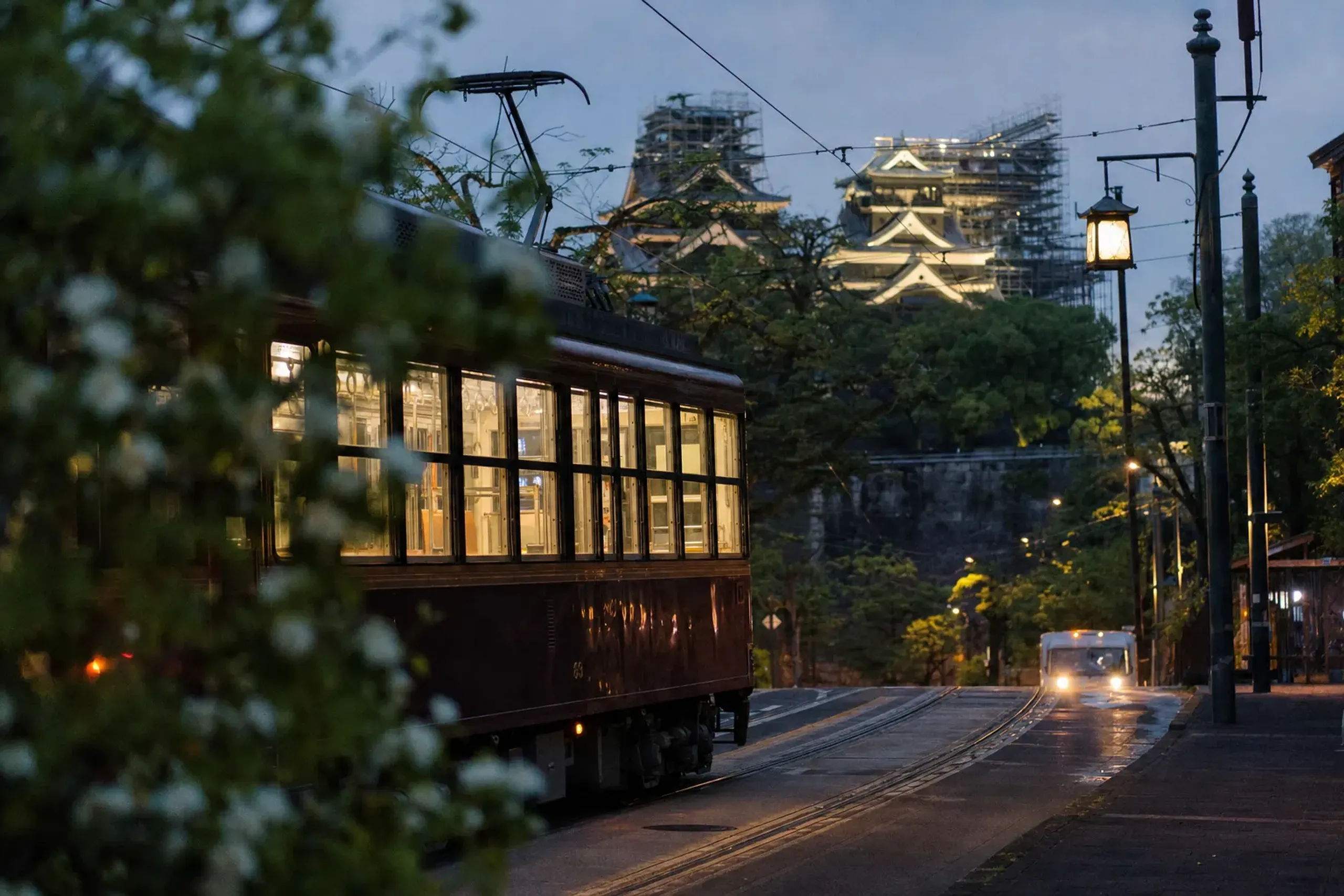
A quiet, pre-timed return makes the evening feel elegant instead of hectic. The detail matters: our guests typically prefer private transportation here, because local options thin out later in the evening, and umbrellas plus crowds can make short distances feel long.
Getting To Kumamoto Castle: Tram, Loop Bus, Airport, And Parking
Kumamoto Castle is straightforward to reach from Kumamoto Station by tram or the Shiromegurin loop bus, and from Kumamoto Airport via limousine bus to central Kumamoto — though you should always check current timetables and stops before you go.
From Kumamoto Station (public transport):
- Shiromegurin sightseeing loop bus: roughly 23–28 minutes depending on the stop, then about a 5-minute walk.
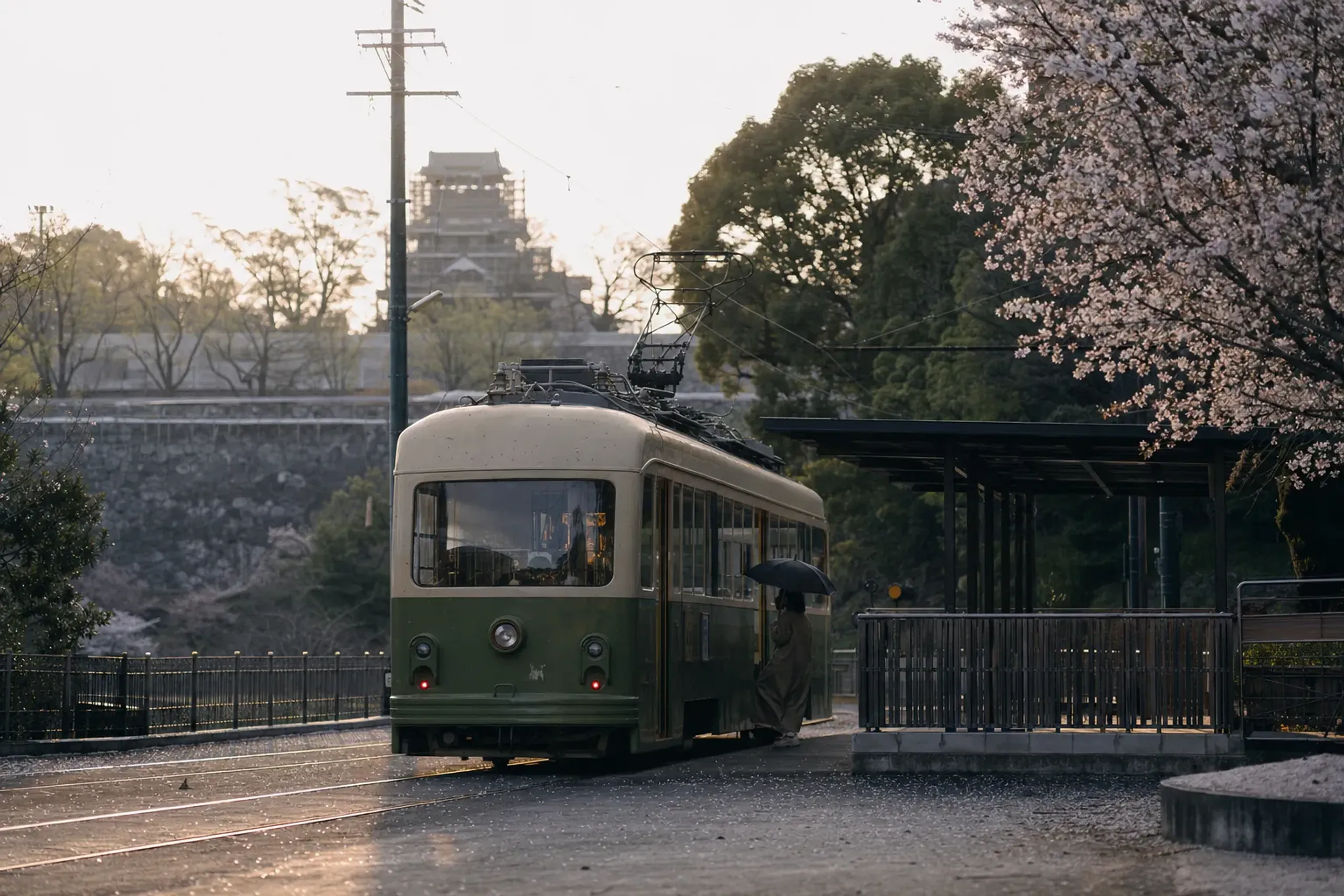
- Tram: from Kumamoto Station-mae toward Kengunmachi, roughly 17 minutes to the City Hall stop, then about a 10-minute walk.
From Kumamoto Airport (public transport): a limousine bus to Sakuramachi Bus Terminal takes roughly an hour, then about a 10-minute walk.
Parking: one 2026 listing described roughly 640 paid spaces across several lots. Fees and availability change, especially during the blossom weeks, so we treat parking as “possible,” not “promised.”
One practical note: local transport in Kumamoto has been described as not accepting Suica or PASMO in some contexts. Do not rely on them as your only plan; our concierge team quietly verifies the current payment options on your behalf ahead of the visit — the kind of unseen care that removes friction before you ever notice it.
How To Visit With Care During An Ongoing Restoration
A respectful spring visit means staying on open routes, treating closure signage as non-negotiable, and remembering that restoration zones are working sites tied to Kumamoto’s recovery.
Keep voices low near the cordoned areas. A small thing — but it changes the mood of the whole precinct.
If you are photographing, use longer lenses rather than stepping toward the edge of a restricted line. And if you are traveling with children, make the boundaries explicit early; it prevents stress later.
We also suggest a rain plan. Spring showers arrive fast in Kyushu. A short indoor stretch — like the keep museum — can turn a wet hour into a rewarding one.
Practical Visiting Notes: Hours, Crowds, And A Simple Rain Plan
Kumamoto Castle’s published regular visiting hours are 9:00 a.m. to 5:00 p.m., with last admission at 4:00 p.m. and final admission to the main castle tower at 4:30 p.m.; it is closed on December 29.
Those hours can extend during seasonal programs. Do not assume. Verify.
Crowds tend to swell from late morning through mid-afternoon on peak blossom days, especially on fair-weather weekends. If you can, arrive earlier, then step away for lunch before the busiest stretch.
If rain is forecast, bring footwear with grip.

Stone steps and wet petals can be slick, and the finest walls are often best appreciated while walking.
The Yasohime (八十姫) Cherry Tree Story: A Living Spring Detail
Kumamoto City has published that a newly found cherry blossom at Kumamoto Castle was named “Yasohime” (八十姫) by public vote in spring 2026.
It is a small detail, and that is precisely why it works. A new name inside an old precinct tells you that spring here is not only repetition; it is also renewal.
The city’s voting period ran from March 16 to April 19, 2026, and the official page was last updated May 20, 2026. We use this story gently, as a way to connect visitors to local life rather than as a photo scavenger hunt.
If guests wish to understand where such botanical stories sit within the wider restoration narrative, our cultural interpreter guide can frame it in context: how a place decides what to name, what to preserve, and what to rebuild.
What We Can Coordinate Privately For Your Kumamoto Castle Spring Visit
Japan Royal Service can coordinate a cultural interpreter guide and a timed private transfer for a Kumamoto Castle spring visit, with every detail of the planning built around current openings, blossom conditions, and the evening illumination schedule.
We keep the scope clear and honest. The castle is public, and restoration areas are working zones.
We plan within those rules — discreetly, and entirely around your preferences, with your identity and itinerary held in complete confidence.
Support we provide, privately, after you inquire:
- Guiding: a cultural interpreter guide within the castle precinct, focused on history, stonework, and understanding what you are seeing during restoration.
- Transfers: door-to-door driving from Kumamoto Airport or Kumamoto Station, and between sights, with timing tuned to crowds and any scheduled evening light-up.
- Accommodation coordination: a base in Kumamoto City or nearby that matches your pace and preferences (we do not name properties publicly).
- Meals and planning: restaurant planning and routing that avoids wasted backtracking.
If you are building a broader journey, our team can also design a tailor-made itinerary that keeps your Kumamoto spring visit calm rather than rushed.
When you are ready to let the stones, the petals, and the quiet work of restoration unfold at your own pace, contact us here for a tailored proposal built around your dates and the season’s bloom.
Frequently Asked Questions
Is Kumamoto Castle Open To Visitors During Restoration?
Yes, Kumamoto Castle is open to visitors, but some areas can be restricted due to ongoing restoration work and safety controls.
Expect detours and occasional closures. Our concierge team quietly verifies current access routes, keep entry, and any temporary restrictions ahead of your date.