In this guide
Kumano Hongu Taisha (熊野本宮大社) and the Kumano Sanzan (熊野三山)
Kumano Hongu Taisha is one of the Kumano region’s three famed shrines. In addition to enshrining its own deity, Hongu Taisha also enshrines the deities of the other two Kumano shrines—Kumano Hayatama Taisha and Kumano Nachi Taisha—as well as the sun goddess Amaterasu. It serves as the head shrine of more than 3,000 Kumano shrines throughout Japan.
The earliest written reference to Hongu Taisha dates to the 9th century, suggesting the shrine was founded substantially earlier. After severe flooding in 1889, the shrine was relocated from its original site at Oyunohara (大斎原) to its current location one kilometer away.
At Oyunohara stands the world’s largest torii gate. At 33 meters tall, it towers above visitors as they pass beneath.
Kumano Kodo: A short pilgrimage walk
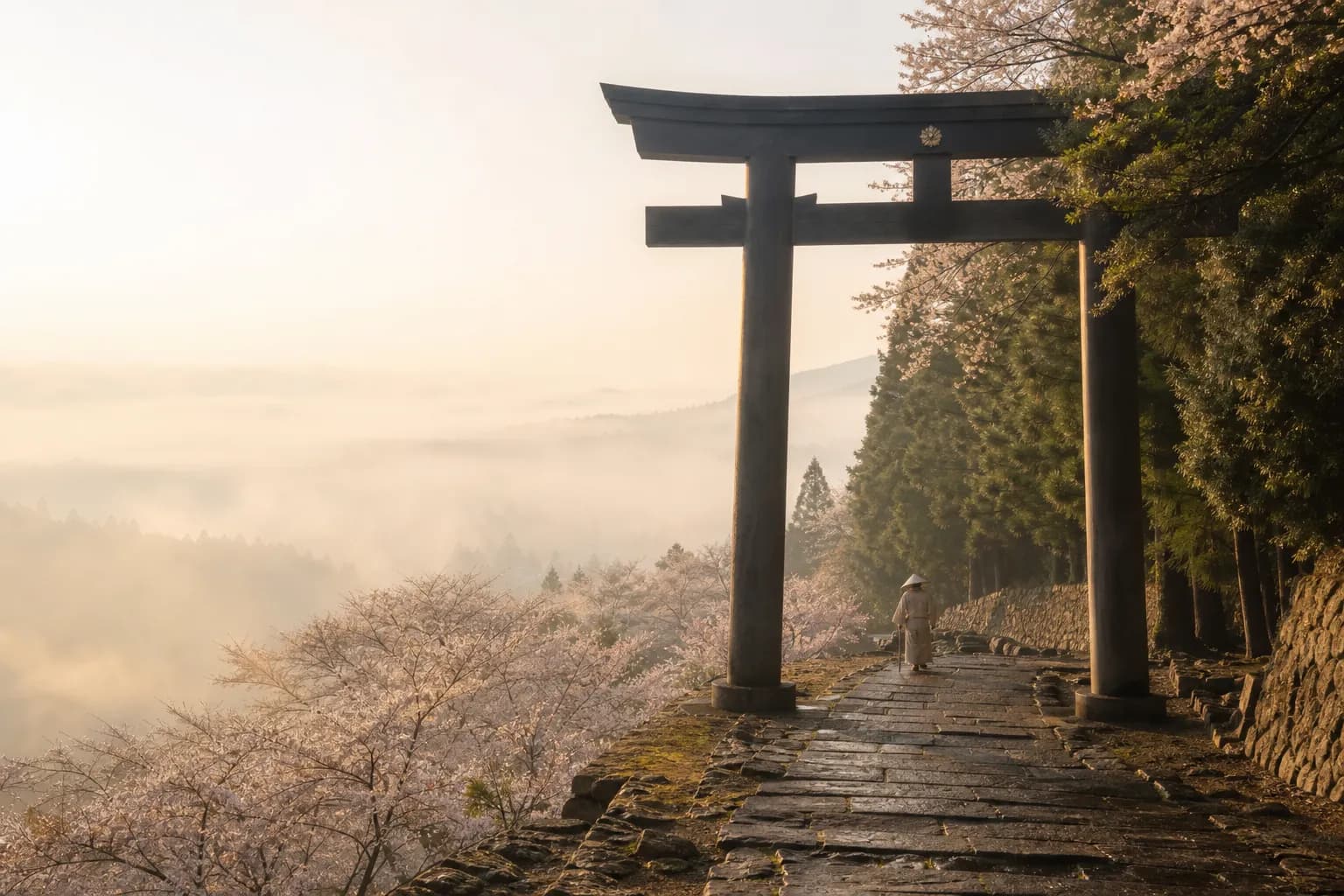
Kumano Hongu Taisha sits at the center of the Kumano Kodo network of pilgrimage routes. For visitors who would like to experience a pilgrimage trail but are short on time, a rewarding option is the final section of the Nakahechi route between Hosshinmon-oji and Hongu.
- Distance: 7 km
- Duration: about 2 hours
- Finish: Kumano Hongu Taisha
- Access: Hosshinmon-oji is reachable by bus
Onsen near Kumano Hongu Taisha
There are three onsen areas near Kumano Hongu Taisha:
- Yunomine Onsen
- Kawayu Onsen
- Wataze Onsen
Yunomine and Kawayu are small onsen towns. Wataze Onsen consists of a single hotel complex, Watarase Onsen, known for having the largest outdoor bath in western Japan.
General Information
- Address: 1110 Hongucho Hongu, Tanabe, Wakayama , Japan
- Telephone:
- Opening hours: 08:00–17:00
Location: Oyunohara (大斎原)
Kumano Hongu Taisha was originally located at Oyunohara, a sandbank at the confluence of the Kumano and Otonashi Rivers. Legend holds that the Kumano deities, appearing as three moons, descended into the branches of a giant oak tree in this clearing. All Kumano Kodo pilgrimage routes lead to this sacred place.
In 1889, a major flood destroyed many shrine structures. The salvaged remains were rebuilt at the current site. Today, you can still see the expansive, raised earthen platform where the pavilions once stood. Of the original five main pavilions, only three were rebuilt. Four deities were transferred to the new site, while the other eight remain enshrined here in two stone monuments.
The entrance to Oyunohara is marked by the world’s largest torii shrine gate (33.9 meters tall and 42 meters wide). A torii serves as a formal gateway, designating entry into sacred ground and symbolizing the boundary between the secular and spiritual worlds.
This torii is called the Otorii (“O” means “big”). Built in 2000, it is made of steel. The Otorii weighs 172 tons and took about 6 months to fabricate and 6 months to assemble. It is illuminated for special occasions and festivals, including the Kumano Hongu Taisha Spring Festival, the Yata-no-Hi Matsuri Fire Festival, and during the New Year holiday.
Kumano Hongu Taisha Spring Festival
Held annually from April 13th to 15th, this spring festival is a quintessential Kumano celebration and is closely connected to pilgrimage to Kumano and the Kumano Kodo.
On April 13th, fathers and their young sons purify themselves in the sacred waters of Yunomine Onsen before walking the Dainichi-goe section of the Kumano Kodo to Oyunohara in traditional attire. The boys wear the character for “big” on their foreheads and are forbidden to touch the ground.
On April 15th, the Kumano deities are invoked to temporarily reside in a portable mikoshi shrine and are returned to their original site of descent, Oyunohara. The atmosphere is serene, traditional, authentic, and inspiring. Yamabushi mountain ascetics also perform a fire ritual.
Yata-no-Hi Matsuri Fire Festival
The Yata-no-Hi Matsuri Fire Festival takes place on the last Saturday of August at Oyunohara (Hongu-cho), in honor of the Yatagarasu crow. Events include:
- A fire mikoshi parade
- Taiko drum performances
- Dancing
- Fireworks
History of the Kumano Sanzan
The Kumano Sanzan shrine complexes were likely established between the 6th and 9th centuries as sites of nature worship. While their locations have remained largely the same, renovations and reconstructions have taken place over the centuries.
In the 11th century, the Kumano Sanzan became a pilgrimage destination for the Imperial family. By the late 15th century, most pilgrims were civilians—monks traveling for religious reasons, artists seeking inspiration, and other common people. The pilgrimage grew so popular that the long lines of travelers came to be called the “Kumano ant pilgrimage.”
Social Media
- Instagram: https://www.instagram.com/explore/tags/%E7%86%8A%E9%87%8E%E6%9C%AC%E5%AE%AE%E5%A4%A7%E7%A4%BE/