In this guide
- 01What “Lavender Sea” In Furano Really Means
- 02When To Go: Bloom Window And What To Expect
- 03The Three-Stop “Purple Horizon” Route: Tomita, Lavender East, And A Hill View
- 04The Furano Biei Norokko Train’s Final Season
- 05How To Get To Furano’s Flower Fields: Train + Bus, Or Private Car
- 06Low-Crowd Timing: How We Keep Lavender Feeling Like Lavender
- 07Lavender Craft, Not Just Lavender Photos: A Shokunin Thread
- 08Nakafurano Lavender Festival & Fireworks
- 09A Quiet Hokkaido Stay: Architectural Calm
- 10Helicopter Transfers In Hokkaido: When They Make Sense (And When They Don’t)
- 11What A Furano Day Looks Like (Sample Flow)
- 12Practical Etiquette And Photography Notes For Lavender Fields
- 13FAQ: Furano Lavender Planning Questions
- 14Why Choose Japan Royal Service
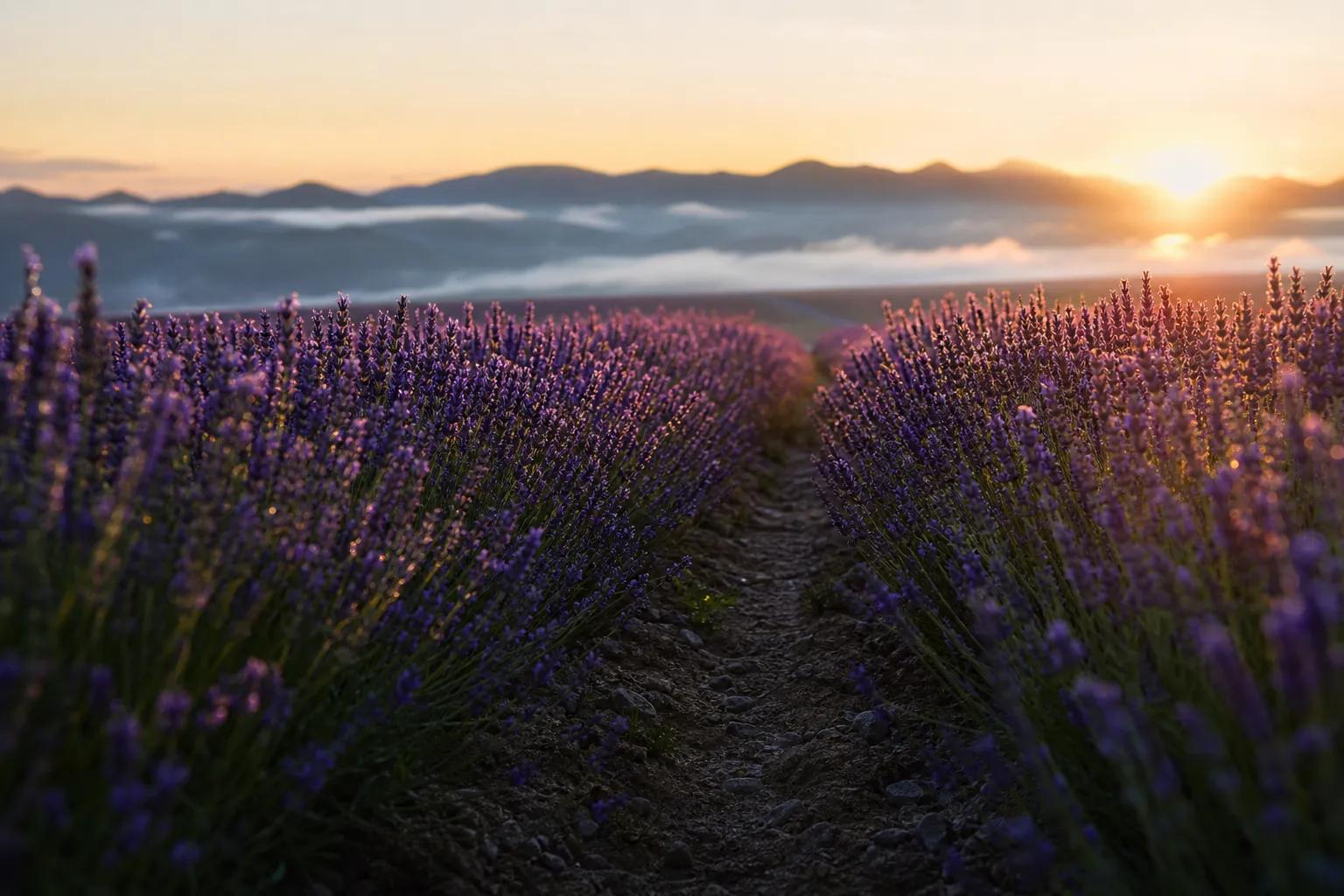
Furano in midsummer can look like a promise kept. A purple horizon. Clean air that makes even a short walk feel like a quiet reset.
Then reality arrives. Parking queues, midday heat, tour-bus surges, and a field that feels more like a corridor than a landscape. It happens fast.
This guide is written for luxury travelers who want the “Lavender Sea” feeling without the friction. Our team at Japan Royal Service designs Furano days around timing, unhurried movement, and small human moments with makers—so the color stays the headline, not the logistics.
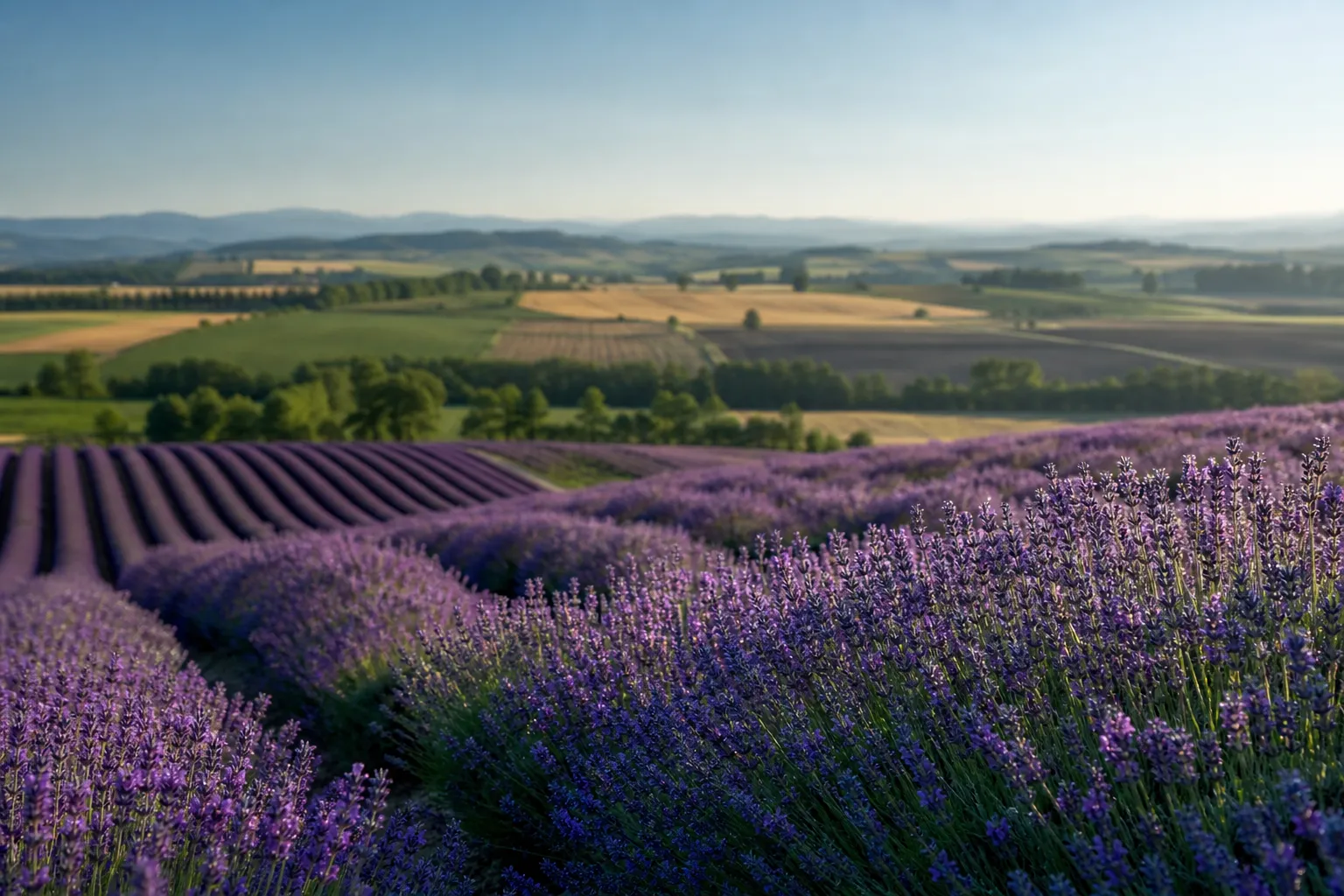
“Lavender Sea” is a route and a viewpoint—not a single pin on a map.
What “Lavender Sea” In Furano Really Means
“Lavender Sea” is not an official site name. It is a visual shorthand people use for Furano and Nakafurano when the hills turn violet.
In practice, that look comes from stitching together several real locations, each with a different angle, bloom rhythm, and crowd pattern. Miss the sequence and you will chase the same view all day.
We treat Furano like a route, not a single stop. One field for depth, one for breadth, one for breathing space. Then we leave before the light turns flat.
When To Go: Bloom Window And What To Expect
Farm Tomita’s official bloom guidance is clear: lavender viewing runs from late June to early August, with varieties blooming in succession. Short window. Big demand.
That succession matters because the “sea” effect is not constant across the season. Some slopes peak earlier, some later, and weather nudges everything by days.
If you can choose, aim for weekday mornings in the heart of the window. Not glamorous advice. Effective advice.
Key fact: Farm Tomita lists lavender viewing as late June to early August, with different species blooming one after another.
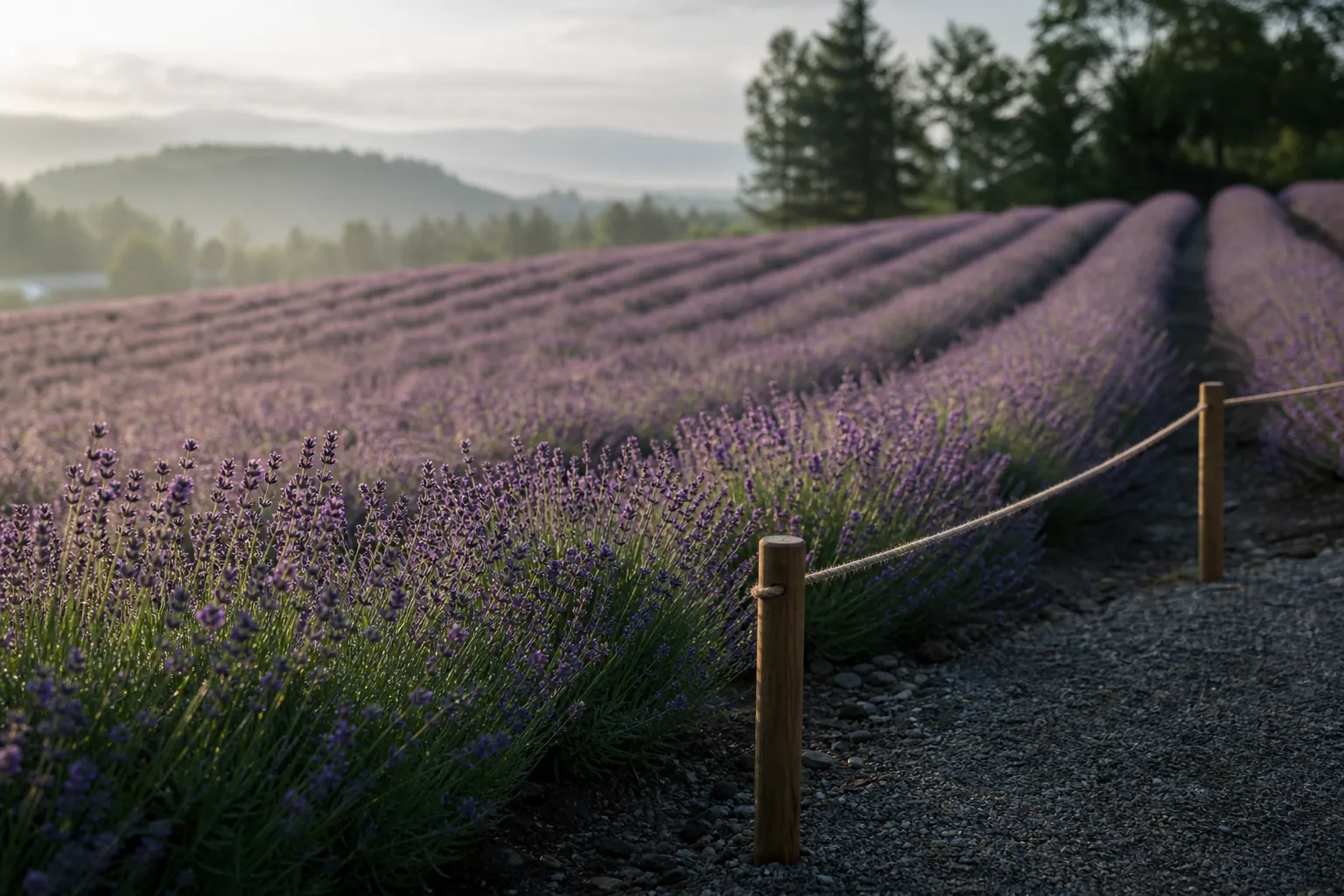
Start early at Farm Tomita for calm lanes and truer color.
The Three-Stop “Purple Horizon” Route: Tomita, Lavender East, And A Hill View
Furano rewards travelers who move with intention. Not speed—intention. Our preferred structure uses three distinct viewpoints so you do not spend the day repeating the same photograph.
Stop 1: Farm Tomita (Nakafurano)
Farm Tomita is the reference point for Furano lavender travel. It is also where crowds concentrate first.
History gives it weight. The Hokkaido official tourism site notes the “Traditional Lavender Field” began in 1958 with 10 ares. Small start. Long legacy.
Arrive early, walk with purpose, then slow down where the scent is strongest. That pause is the luxury.
Stop 2: Lavender East (About 4 km From Farm Tomita)
The Hokkaido official tourism site places “Lavender East” roughly 4 km east of Farm Tomita. Close on a map, but it feels different on the ground.
It is described there as the birthplace of lavender cultivation in the Furano region and one of the largest lavender fields in Japan. You feel the scale immediately.
Farm Tomita also operates Lavender East and publishes location details on its official site.
Stop 3: A Hilltop View In Nakafurano
After Tomita and Lavender East, we like to add one elevated perspective. A place to see layers: fields, town, sky.
Nakafurano’s Hokuseiyama area is commonly visited for hillside views in summer. Keep expectations realistic. You are not “escaping” tourism, you are choosing a calmer geometry.
Done right, this final stop is the exhale. Ten quiet minutes. A few deliberate frames. Then you move on before the day thickens.
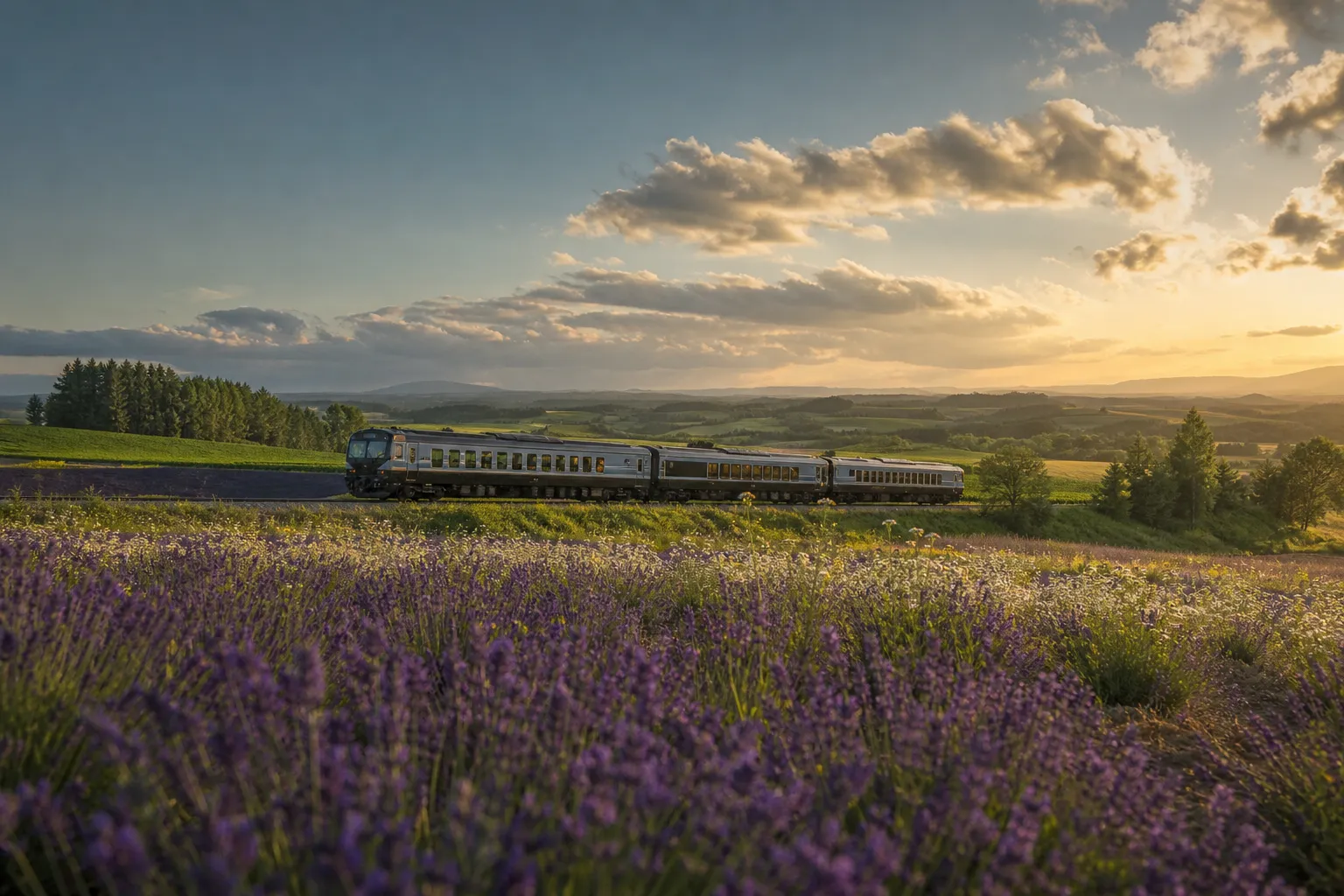
JR Hokkaido announced 2026 as the final season for the Furano Biei Norokko Train.
The Furano Biei Norokko Train’s Final Season
JR Hokkaido announced that operations of the Furano Biei Norokko Train would end with the 2026 season, giving September 23, 2026 as the final day of operation.
How To Get To Furano’s Flower Fields: Train + Bus, Or Private Car
Furano is reachable, but it is not friction-free. The key is choosing one transport logic for the day, then sticking to it.
Public Transport Basics (Official Guidance)
JNTO’s official Furano Flower Fields page notes travelers can reach the flower fields by train and then bus. It specifically mentions taking the Furano Lavender Bus from Furano Station to flower fields in Nakafurano.
This works well for travelers who are comfortable with fixed departure times and summer crowds.
Private Car And Driver: The Comfort Advantage
For many travelers, the upgrade is not flash. It is control.
A private car day means you can arrive before the busiest wave, pivot if weather shifts, and store purchases without carrying bags through fields. Small comforts, big difference.
Our team at Japan Royal Service arranges private car days across Japan, including Hokkaido, using vehicles from partner companies with English-speaking drivers, matched to party size.
Low-Crowd Timing: How We Keep Lavender Feeling Like Lavender
Everyone wants the same photograph. The same slope. The same hour. Big mistake.
What changes the experience is entering the right place at the right time, then leaving before the volume peaks.
We plan mornings around first light and short walks, not long loops in midday heat. Venues have their own policies, and those rules deserve respect.
Lavender Craft, Not Just Lavender Photos: A Shokunin Thread
Furano lavender is easy to reduce to color. That is the shallow version.
The deeper version is craft: how scent is captured, how a regional product becomes a standard, how tastes and textures get refined over decades. That is where shokunin thinking lives—quiet mastery, repeated until it looks effortless.
Farm Tomita is widely associated with lavender products and heritage. Nippon.com explains lavender cultivation in the Furano area began around 1952 after World War II, and that Farm Tomita’s fields gained nationwide attention after appearing in a 1976 Japanese National Railways calendar.
When we design “maker moments” in Hokkaido, we keep them intimate and time-boxed. Not a forced workshop. Just enough to turn a souvenir into a story you will actually remember.
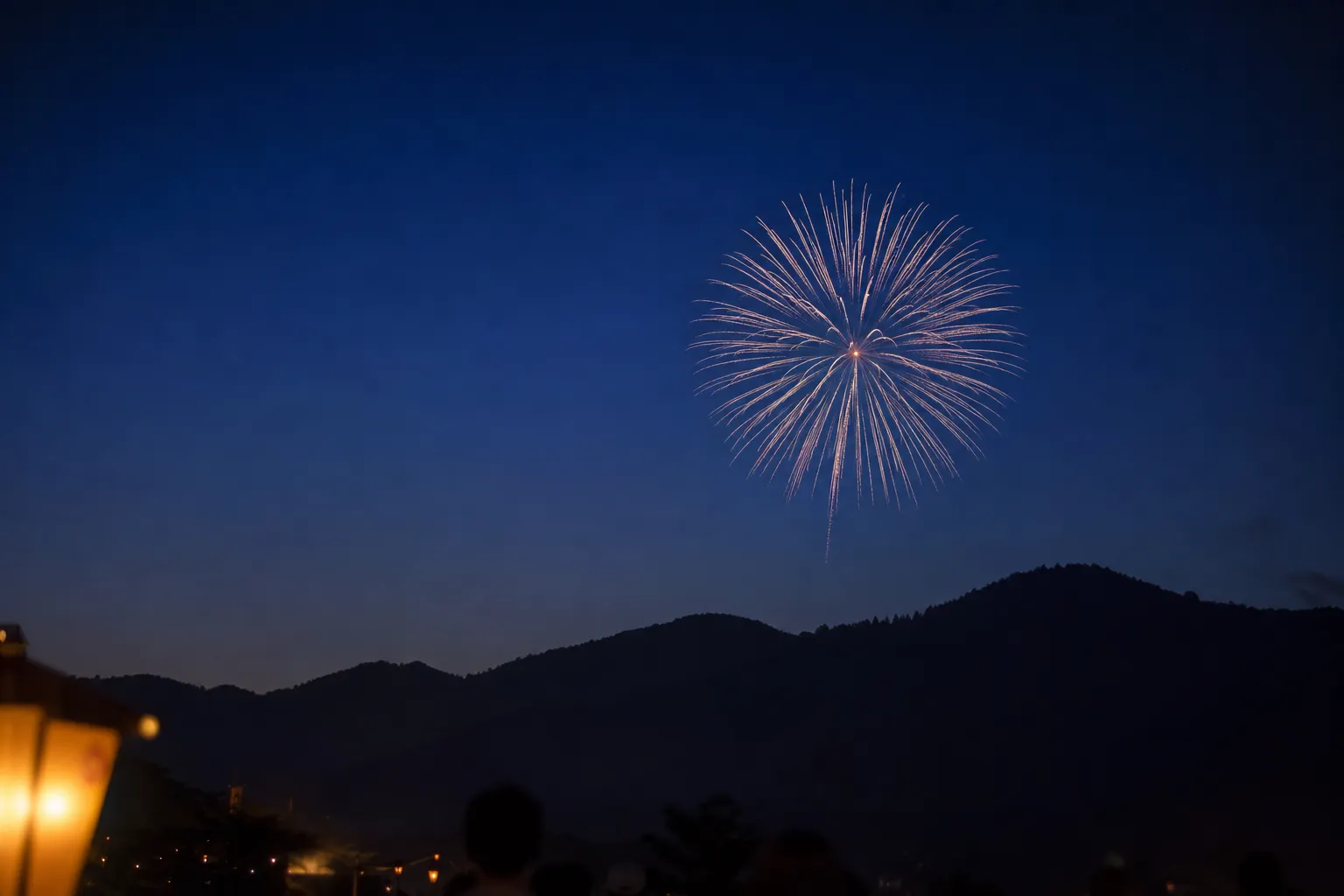
A lavender day can end with fireworks—if the evening is planned for comfort.
Nakafurano Lavender Festival & Fireworks
Most Furano lavender content stops at daytime hills. That leaves value on the table.
Nakafurano Town holds the Nakafurano Lavender Festival & Fireworks in summer. Real local energy. The date is set each year, and the JRS concierge team confirms current dates directly with the guest at time of arrangement.
For many travelers, comfort is the deciding factor: arrival timing, where to stand, when to step away for air, and how to avoid turning a festive evening into a long wait in a crowd.
We treat the festival as an optional second act. If you choose it, we shape the day so you are not already tired when night arrives.
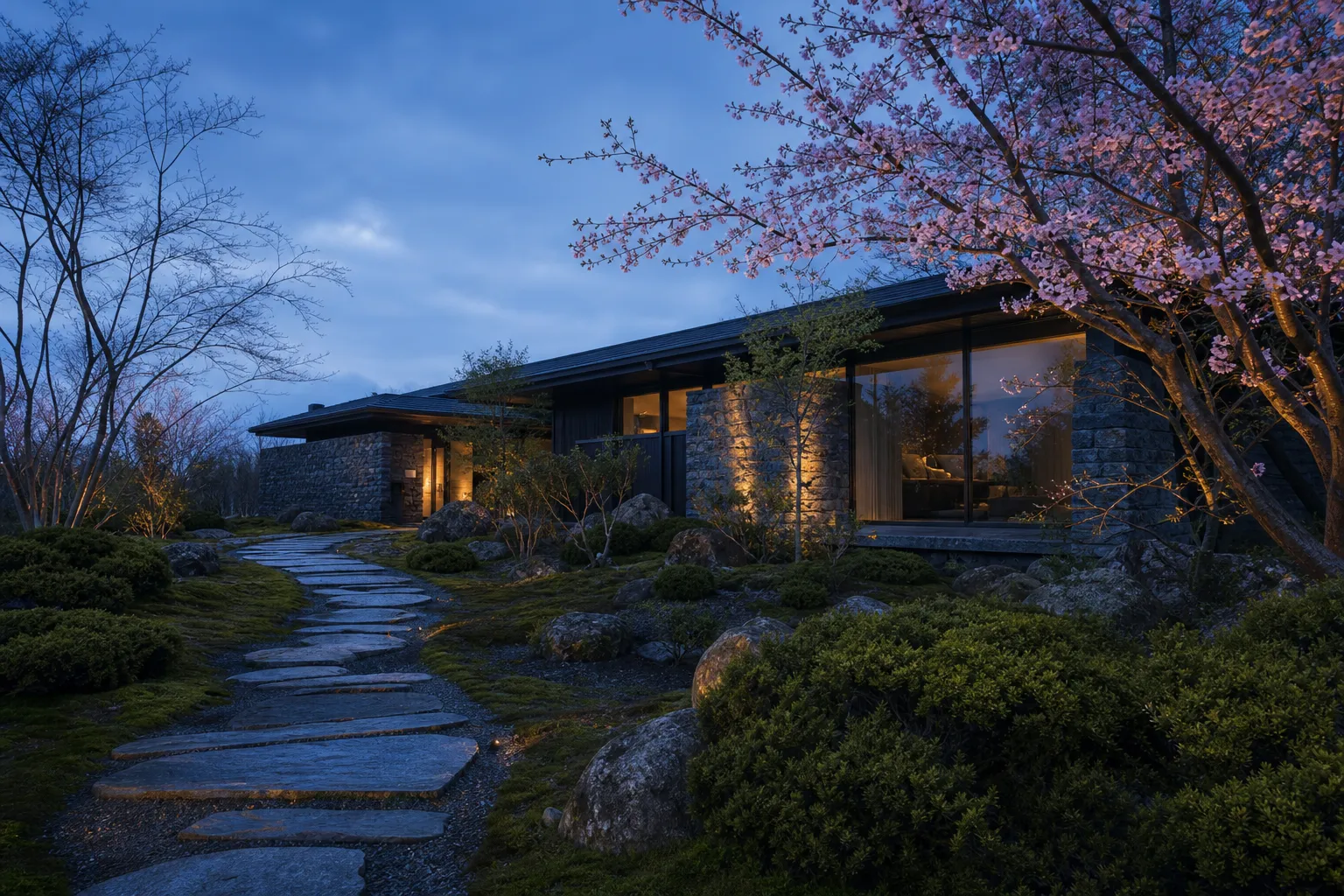
Restraint and space—so the landscape stays loud and your stay stays quiet.
A Quiet Hokkaido Stay: Architectural Calm
Lavender days are short. The evenings are where a trip either settles or frays.
Our bias is toward architectural calm—materials you can feel underfoot, rooms that do not demand attention, and a layout that lets you disappear for an hour without explanation. Simplicity, expressed as restraint, not theme.
Helicopter Transfers In Hokkaido: When They Make Sense (And When They Don’t)
There are days when a helicopter transfer is not indulgence. It is the cleanest tool.
Weather, landing permissions, and seasonal demand govern what is possible in Hokkaido. That said, air transfers can reduce long overland blocks and preserve the best hours for fields and dining.
Our team at Japan Royal Service can advise on realistic scenarios for your dates—especially when you are linking Sapporo, Furano-area landscapes, and a tight departure window.
What A Furano Day Looks Like (Sample Flow)
This is a sample rhythm, not a fixed itinerary. Conditions change. Crowds change faster.
Option A: The Classic Lavender Morning (Most Comfortable)
For travelers who want maximum “lavender” with minimal complication.
- Early departure to arrive before peak foot traffic
- Farm Tomita first, with a short, purposeful loop
- Transfer to Lavender East for scale and breathing room
- Light lunch timing planned around crowd density, not the clock
- One hill-view stop, then a quiet return
Option B: Festival Day
For travelers who want the day-and-night arc around the Nakafurano Lavender Festival & Fireworks.
- Short field sequence earlier in the day to conserve energy
- A calm hotel reset window before evening movement
- Arrive with a plan for comfort, visibility, and a clean departure after fireworks
Practical Etiquette And Photography Notes For Lavender Fields
Lavender is cultivated land, not a studio set. That should guide behavior.
Stay on designated paths and respect ropes and signage. If you want a “no people” frame, change your time slot, not your boundaries.
For photographers, early light is kinder to purple tones. Midday sun can bleach detail and make hills read flat, even when bloom is strong.
We also suggest a lighter kit than you think you need. Your shoulders will thank you by noon.
FAQ: Furano Lavender Planning Questions
How Long Is Lavender Season At Farm Tomita?
The Hokkaido official tourism site lists Farm Tomita’s lavender viewing as late June to early August, with different species blooming in succession.
Is Lavender East Part Of Farm Tomita?
Yes. Farm Tomita operates Lavender East and provides location details on its official site. The Hokkaido official tourism site notes it is about 4 km east of Farm Tomita.
How Do I Reach The Furano Flower Fields By Public Transport?
JNTO’s official Furano Flower Fields page explains travelers can go by train and then bus, and specifically mentions taking the Furano Lavender Bus from Furano Station to flower fields in Nakafurano.
When Is The Nakafurano Lavender Festival & Fireworks?
Nakafurano Town sets the date each year, and the JRS concierge team confirms current dates directly with the guest at time of arrangement.
Why Choose Japan Royal Service
Luxury in Furano is fragile. It depends on timing, unhurried movement, and knowing which places deliver the “sea” effect on your dates. Our team at Japan Royal Service plans with that reality, not against it.
We also bring a shokunin lens to Hokkaido—craft stories, regional gastronomy, and maker encounters that add meaning to the photographs. The result is not louder. It is sharper.
To begin planning, contact our team here.