In this guide
- 01What “Low-Mileage Tokyo” Actually Means (And Why It Works)
- 02Hoshinoya Tokyo: The Anchor Case For A Ryokan-Style City Base
- 03Other Tokyo Luxury Hotels As Choices (Not A Ranking)
- 04The 15-Minute Radius: What You Can Do Without “Doing Tokyo”
- 05Weather Is A Serious Reason To Move Less (June–September Reality)
- 06In-House Culture Counts: Hotel-Based Programming That Reduces Transit
- 07Dining-Led Tokyo Without Constant Transit (MICHELIN Guide 2026 Context)
- 08A One-Hotel Tokyo Sample Plan (3–5 Nights, Minimal Friction)
- 09FAQ: Low-Mileage Tokyo, One-Hotel Planning, And Practical Details
- 10Why Choose Japan Royal Service
You wake to a hush that feels borrowed from somewhere far outside Tokyo.
Paper screens hold the light in place. The city is present, but at a distance. You run a bath, let the water heat your skin, and decide—quietly—that today will not be an efficiency exercise.
That decision changes everything.
Our team at Japan Royal Service plans Tokyo for people who already know what a “full itinerary” costs in attention. This guide is for a different kind of luxury: one hotel as the anchor, one walkable radius, and only the plans that earn their place.
What “Low-Mileage Tokyo” Actually Means (And Why It Works)
Tokyo is not a resort city. It never needed to be.
Most Tokyo hotels have a thinner amenity-to-room ratio than beach or mountain properties because the city has always been the amenity. Shops. Museums. Bars. Galleries. Late-night ramen counters that do not care about your jet lag.
So the right argument is not “never leave the hotel.” That’s a misunderstanding.
Low-mileage Tokyo means you choose one excellent property, then design each day to stay within a tight orbit—on foot when possible, short drives when it matters, and long cross-city transits only when the payoff is undeniable.
A Simple Framework We Use For One-Hotel Tokyo Planning
It helps to quantify the idea. No theatrics. Just a method.
- One hotel base for 3–6 nights, with a neighborhood you can read quickly.
- A daily radius target of about 15 minutes on foot for the “small pleasures” (coffee, parks, a gallery, a bookstore, an early dinner).
- One “long move” at most per day—and many days, none.
- Weather-proofing baked in: indoor alternatives, short transfers, and recovery time.
Key fact: Low-mileage Tokyo is not a reduced trip. It is restraint as a deliberate choice—especially when weather, jet lag, or privacy makes constant movement a bad trade.
Hoshinoya Tokyo: The Anchor Case For A Ryokan-Style City Base
If one Tokyo property makes “staying in” feel like a real point, it is Hoshinoya Tokyo in Otemachi.
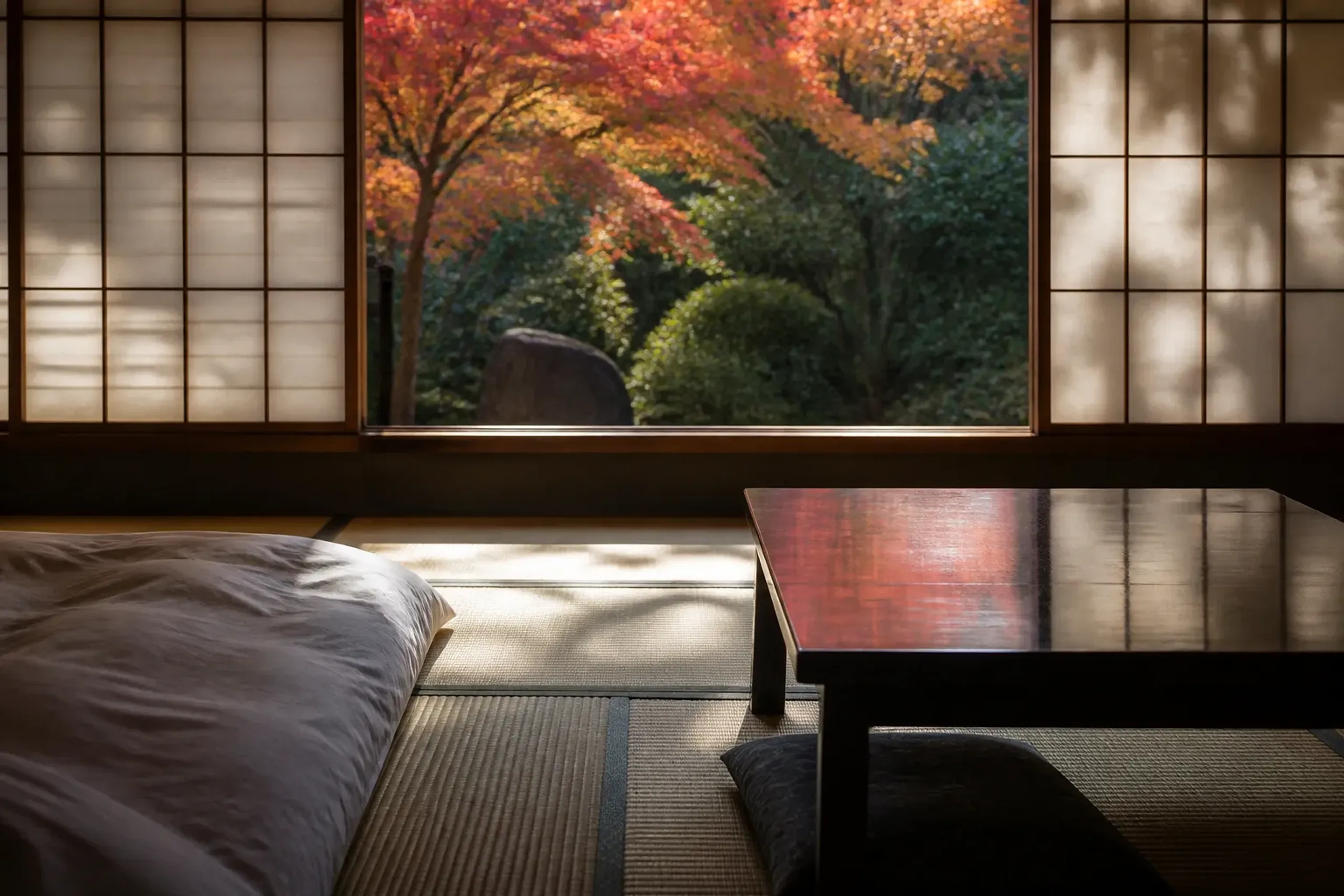
This is a ryokan concept placed inside a modern tower, with design choices that lean into wabi-sabi rather than spectacle—wood, paper, quiet corridors, and a pace that feels intentional. The mood is not “hotel life.” It’s closer to a controlled exhale.
And yes: the hot spring water is real. That single detail changes the emotional math of Tokyo nights.
Who Hoshinoya Tokyo Suits
Not everyone wants ryokan rules in a city. Some do.
- HNW first-timers who want a Japanese atmosphere without leaving central Tokyo.
- Repeat visitors who have done the “Tokyo checklist” and now want fewer decisions.
- Travelers who value discretion: the tone here is naturally low-volume.
A Low-Mileage Day That Fits This Property
Start slowly. A bad habit is sprinting into Tokyo like you owe it something.
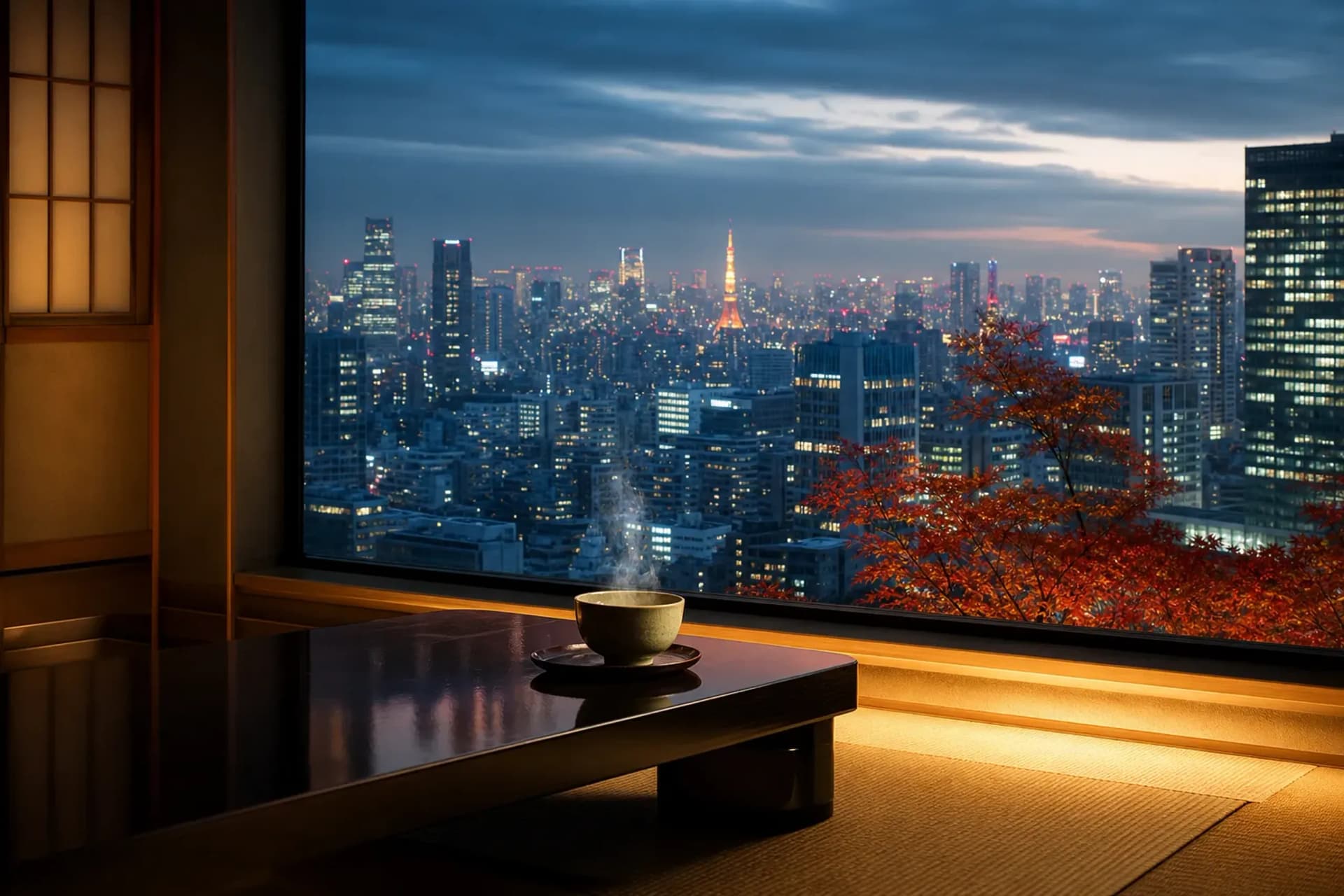
Use the morning for recovery: bath, tea, a long look from the window. Then step out for a short walk around Marunouchi and Otemachi where the streets read cleanly and the transitions are gentle.
Return early. Do less. Sleep well.
Other Tokyo Luxury Hotels As Choices (Not A Ranking)
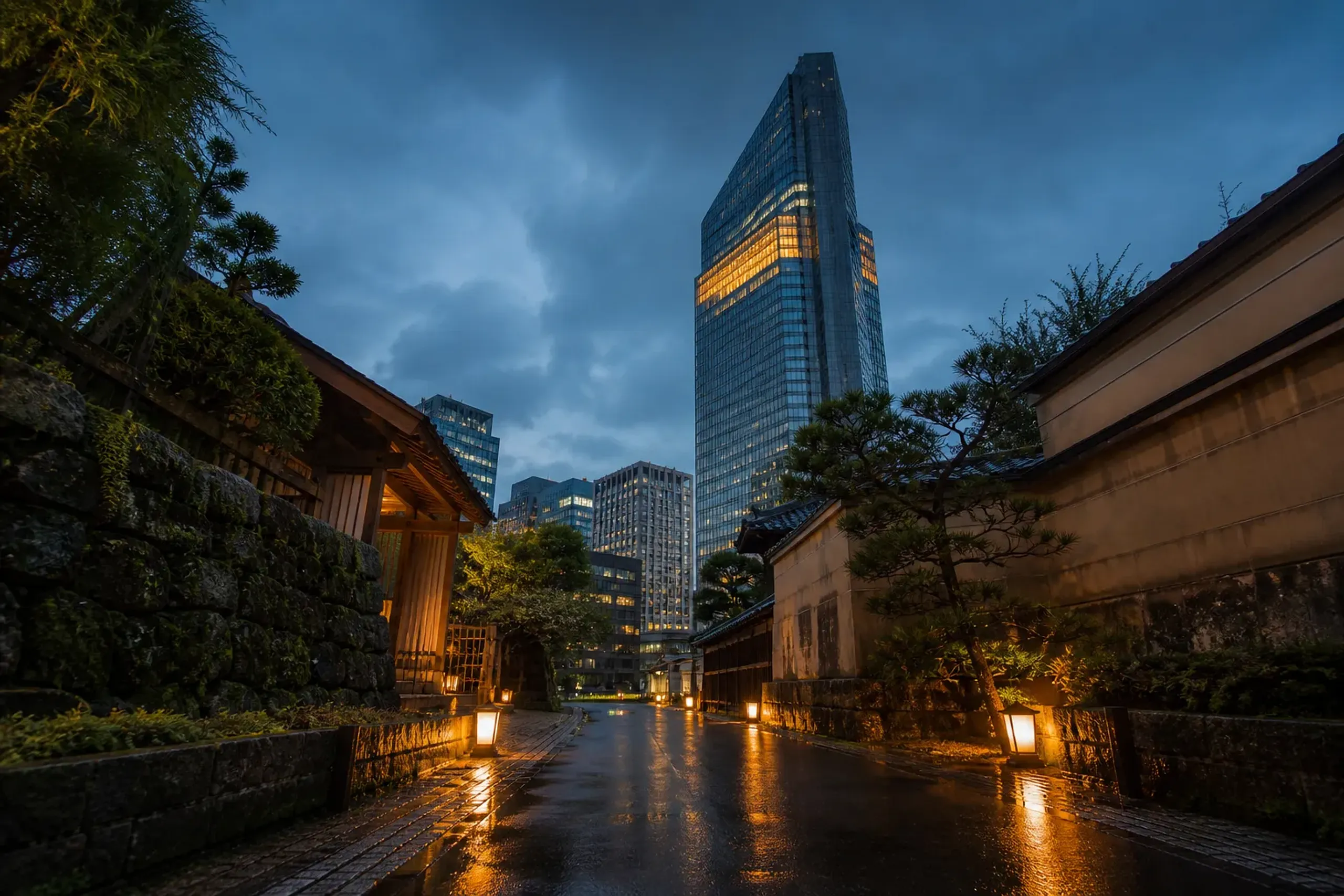
Low-mileage Tokyo succeeds or fails on hotel selection. Period.
Our concierge team at Japan Royal Service treats properties as tools: each one supports a different kind of traveler, a different appetite for nightlife, a different tolerance for crowds, a different definition of “quiet.”
Below are strong candidates for a one-hotel Tokyo plan. Each suits a distinct style.
Option A: Aman Tokyo (Otemachi)
Aman Tokyo fits guests who want altitude, calm interiors, and quick access to Marunouchi business districts without feeling “corporate.”
It works well for dining-led itineraries, gallery visits, and evenings that end early—by choice, not fatigue.
Option B: Four Seasons Hotel Tokyo At Otemachi (Otemachi)
This is a strong base if you like hotel life that feels actively programmed. The hotel has published seasonal offerings such as “101 Days of Summer” starting July 1, 2026, positioned around its upper-floor venues.
For low-mileage planning, that matters. It gives you credible reasons to stay close on hot or rainy days.
Option C: Mandarin Oriental Tokyo (Nihonbashi)
Nihonbashi is older Tokyo under a modern surface—bridges, department stores, and a sense of the city’s merchant history.
Mandarin Oriental Tokyo is a good choice for guests who want food depth, a polished bar scene, and short hops to Ginza without sleeping in it.
Option D: Bulgari Hotel Tokyo (Tokyo Midtown Yaesu)
Bulgari Hotel Tokyo occupies the 40th to 45th floors of the Tokyo Midtown Yaesu skyscraper and is the brand’s first hotel in Japan, as widely reported in design and travel press.
It suits guests who want a contemporary, high-design base with fast access to Tokyo Station’s rail network—useful when you want one day out to Nikko or Hakone, then return to a controlled center.
Option E: Janu Tokyo (Azabudai)
Janu Tokyo has been covered as a new luxury base in Azabudai, positioned for exploring the wider Azabudai Hills area.
This choice fits guests who like new districts, walkable modern architecture, and an “everything nearby” feeling that supports low-mileage days without boredom.
Maintenance note (for readers who plan early): Hotel operating status and restaurant concepts can change with refurbishments and management updates. For anything mission-critical to your trip, confirm current status close to travel.
The 15-Minute Radius: What You Can Do Without “Doing Tokyo”
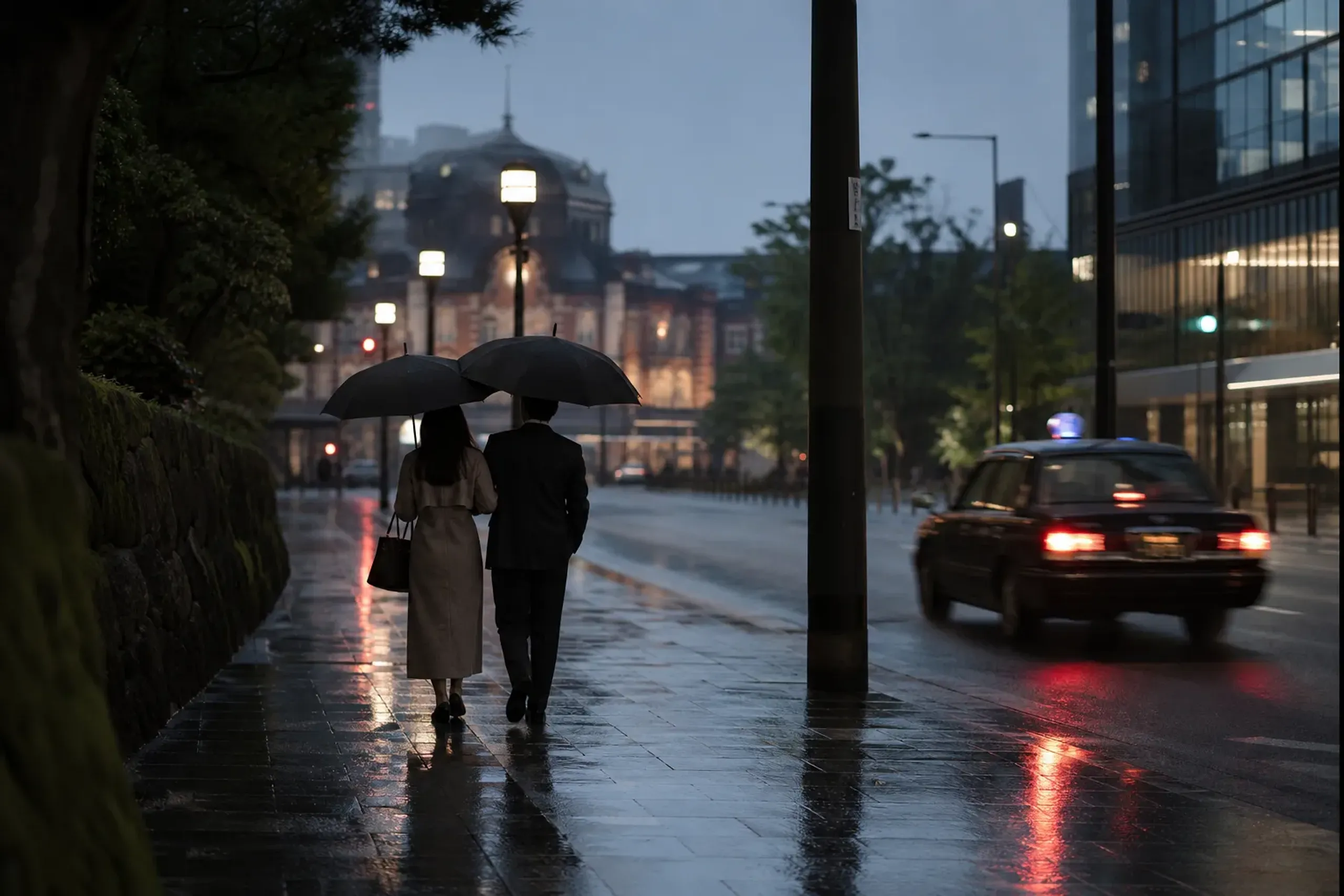
A one-hotel plan is only as good as the walks it allows.
This is where generic hotel roundups fail. They list properties. They don’t show what your day feels like at street level, or how quickly you can step back into privacy when the city gets sharp.
Below are practical, low-friction neighborhood clusters we use when we design low-mileage Tokyo.
Hoshinoya Tokyo / Otemachi: Marunouchi Walks, Museum-Quiet Evenings
Otemachi and Marunouchi reward people who like clean lines and controlled pacing.
You can walk broad sidewalks, browse department-store basements without committing to a full shopping day, and return to the hotel before the city turns loud. Big relief.
If you want one simple outing: the Imperial Palace East Gardens are a straightforward, restorative walk from the wider Otemachi/Marunouchi area when open to the public.
Mandarin Oriental Tokyo / Nihonbashi: Old-Merchant Tokyo With Modern Comfort
Nihonbashi is a working district with a memory. That’s the charm.
Plan mornings for slow browsing—traditional shops, depachika food halls, and coffee without a line that eats your patience. Then take a short taxi to Ginza if you want the brighter storefront energy.
Bulgari Hotel Tokyo / Yaesu: Tokyo Station Power, With A Fast Retreat
Yaesu is functional. That is not an insult.
Tokyo Station gives you optionality: an easy day trip by rail, or a quick hop to neighborhoods you don’t want to sleep in. The luxury here is control—choosing movement only when it pays.
Janu Tokyo / Azabudai: New-District Density And A Published Events Calendar
Azabudai Hills is not just buildings. It is programming.
Azabudai Hills publishes an official “What’s On” listings page, and it includes events such as Azabudai Hills Matsuri 2026 (August 8–11, 2026). That matters for a one-hotel Tokyo design: you can step into a seasonal event without crossing town.
It’s the right kind of easy. Not flimsy. Just efficient.
Weather Is A Serious Reason To Move Less (June–September Reality)
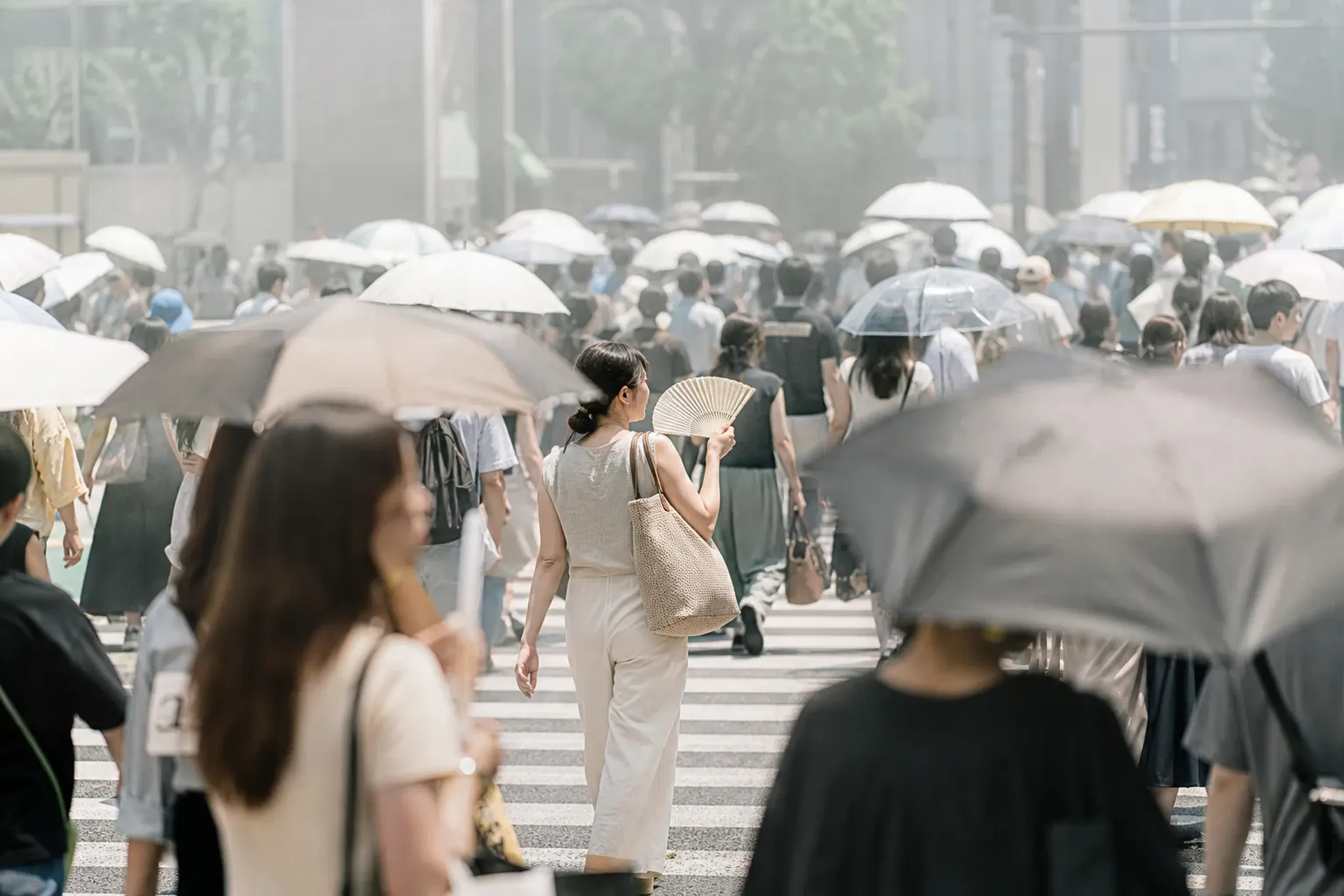
Tokyo weather can be a discipline problem.
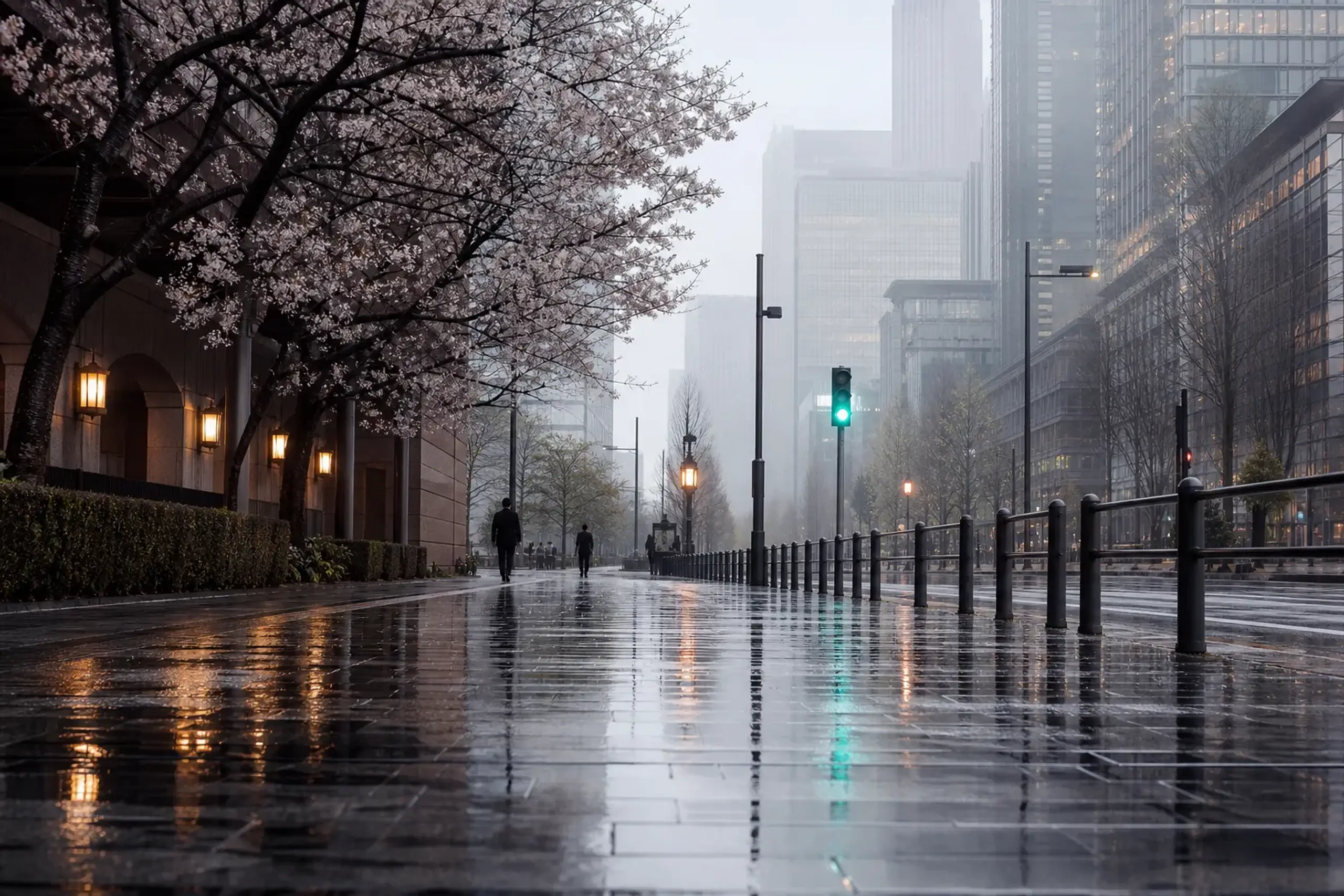
June can bring long rainy spells. August often means heat and humidity that punishes long walks. Typhoon season can disrupt plans and make you grateful you didn’t build your trip on fragile timing.
Low-mileage Tokyo is correct planning in these windows. Not laziness.
How We Weather-Proof A One-Hotel Tokyo Plan
We keep it plain. Practical wins.
- Schedule one “outdoor” block early in the day, then return to the hotel for a reset.
- Use indoor culture on purpose: exhibitions, department store food halls, and hotel-based programming.
- Build a short-transfer rule for dinners so you don’t end the night drenched or overheated.
When a private car makes sense, we suggest using a single, consistent driver so your days stay calm and predictable. Our private transportation guidance is built around that idea—controlled timing, quiet arrivals, and no avoidable friction.
In-House Culture Counts: Hotel-Based Programming That Reduces Transit
Low-mileage Tokyo gets easier when your hotel behaves like a curator.
Not as a gimmick. As a real alternative to cross-city commuting on days when the weather turns or your schedule tightens.
Keio Plaza Hotel Tokyo: “Journey Into Japan” Workshops (May–August 2026)
Keio Plaza Hotel Tokyo has announced a cultural experience workshop program titled “Journey into Japan: A Workshop of Cultural Discovery”, taught by Japanese artists, scheduled regularly from May to August 2026 in its Art Lobby (Main Tower 3rd floor).
For certain travelers—especially families or first-timers—this kind of in-hotel access lowers the barrier to traditional arts. You learn something real, then return to your room in minutes.
Park Hotel Tokyo: Artist In Hotel Exhibition (June 29–August 22, 2026)
Park Hotel Tokyo maintains an Art Exhibitions & Events Calendar, and it lists an “Artist in Hotel Exhibition” dated June 29, 2026 to August 22, 2026 in the Corridor Gallery Terrace (26F).
That is the low-mileage advantage in one sentence: you can see work, talk about it over a drink, and end the night without a long ride home.
Dining-Led Tokyo Without Constant Transit (MICHELIN Guide 2026 Context)
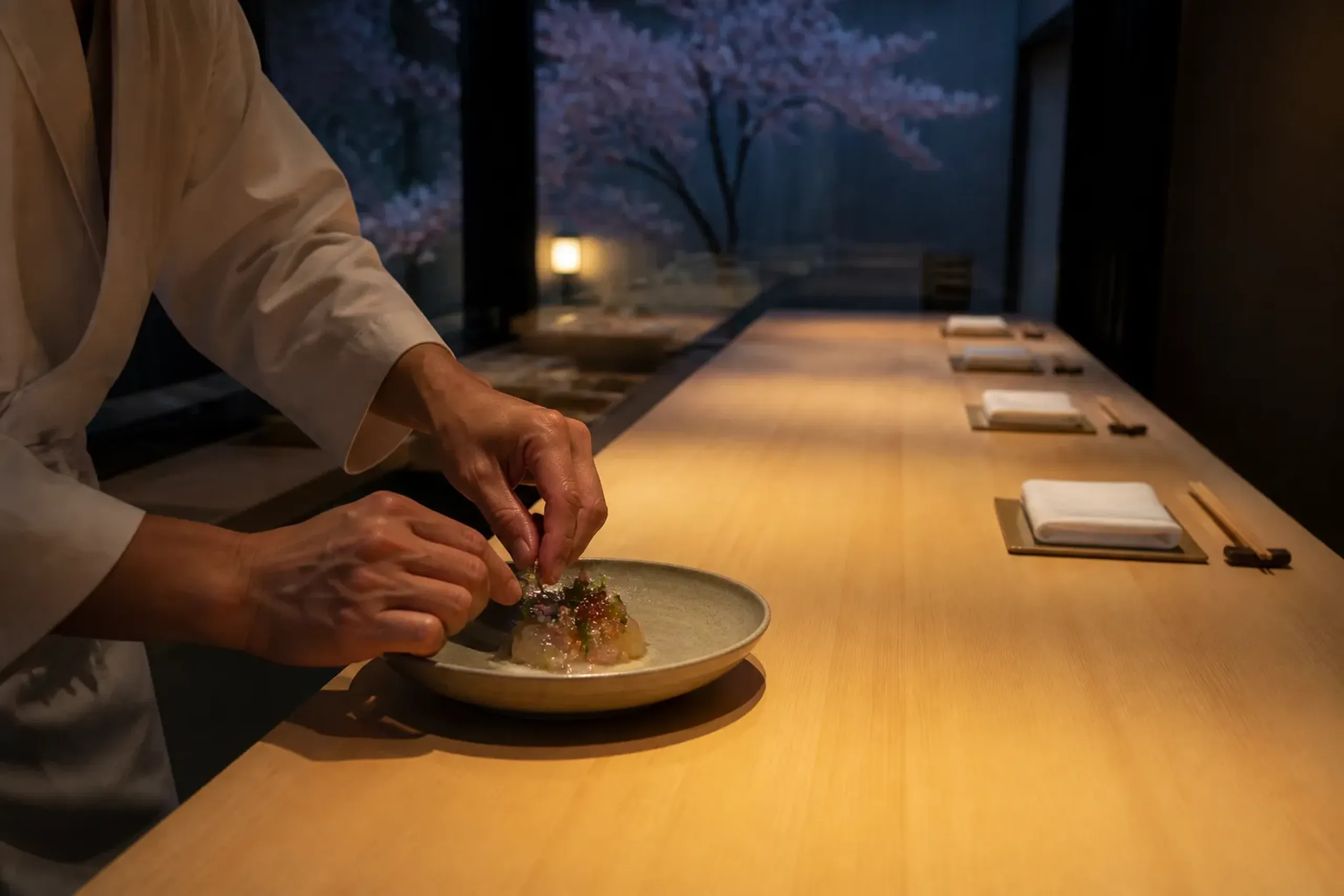
Tokyo is a dining city. That part is not negotiable.
The MICHELIN Guide travel page for Tokyo states that in the MICHELIN Guide 2026, Tokyo has 160 starred restaurants, noted as the most Michelin-starred establishments for a city. That density supports low-mileage logic: you can eat exceptionally well without turning dinner into a two-hour commute.
It also rewards a calmer plan. Two or three hotel-based meals across a short stay can be a defensible choice on quality, not just convenience.
A Practical One-Hotel Dining Strategy
Do not chase every famous counter. That’s how you lose Tokyo.
- Pick one “anchor” dinner near your hotel base so the evening stays relaxed.
- Use one ambitious reservation night that justifies a longer ride.
- Give lunch the experimentation slot: it’s easier to recover if something runs late.
For context on what’s new, Michelin’s press release dated September 26, 2025 announcing the 2026 selection notes that Myojaku was awarded Three MICHELIN Stars in the 2026 selection.
A One-Hotel Tokyo Sample Plan (3–5 Nights, Minimal Friction)
This is not a day-by-day march. It’s a sketch you can breathe inside.
Night 1: Arrival And A Short Radius
Check in. Eat simply. Sleep.
If you landed at Haneda or Narita and you’re tempted to “push through,” resist it. Tokyo will still be there in the morning, and you will like it more.
Day 2: A Single Neighborhood, Done Properly
Choose one district near your base. Commit to it.
Walk. Pause often. Add one museum or gallery, then return to the hotel before late afternoon heat or rain drains your attention.
Day 3: One Long Move, If It’s Worth It
Make one ambitious outing. Only one.
That might be Asakusa for Senso-ji, or a design-heavy afternoon in Omotesando, or a museum day that keeps you indoors. Then come back to the same room, the same view, the same pace.
Day 4 (Optional): The City Comes To You
This is the day for shokunin energy—quiet craft, small rooms, serious hands.
We avoid over-promising public details online because many ateliers and masters accept introductions selectively. If you want that depth, our concierge team can advise privately on what is realistic for your dates and party size.
Day 5: Departure Without The Scramble
Low mileage pays off at the end. You pack without chaos.
Leave time for a final bath, a final coffee, a final walk around the block. Tokyo doesn’t require a dramatic goodbye.
FAQ: Low-Mileage Tokyo, One-Hotel Planning, And Practical Details
Is “one hotel in Tokyo” enough for a first trip?
Yes, for many HNW travelers. Tokyo is dense, and a single well-chosen base can carry 3–6 nights without feeling repetitive.
The key is choosing a neighborhood that matches how you move: early mornings, late nights, shopping, dining, museums, or recovery time.
What is the best luxury hotel area for low-mileage Tokyo?
There isn’t one best area. Otemachi/Marunouchi suits a controlled pace and clean walking routes. Nihonbashi works well for food and merchant-history texture. Azabudai supports modern district density with programming.
We match the base to your definition of quiet.
How do I avoid crowds while still seeing Tokyo?
Time and geometry. Early starts, weekday museum blocks, and short hops back to the hotel when streets get busy.
Low-mileage planning also helps because you don’t compound crowd fatigue with long transit fatigue.
Is low-mileage Tokyo only for rainy season or summer heat?
No. Those seasons just make the case obvious.
It also suits travelers who value discretion, who are arriving from a demanding work cycle, or who want Tokyo to feel like a place—not a performance.
Can a low-mileage Tokyo plan include day trips?
Yes, but treat them as intentional “long moves.”
One day trip can be satisfying. Multiple day trips in a short stay usually breaks the spell, unless that is the whole point of your visit.
What is the best way to handle transport for a one-hotel Tokyo plan?
Mix walking with short, predictable rides. In wet or hot months, a private car can reduce friction sharply.
If you want tailored guidance on vehicle choice and timing, our team can advise privately based on your hotel, party size, and daily rhythm.
Why Choose Japan Royal Service
Competitors such as InsideJapan Tours, Remote Lands, and Quintessentially often describe “bespoke Japan” as a promise. Our team at Japan Royal Service treats it as a discipline: fewer moves, better sequencing, and a Tokyo plan that protects your attention.
We are also meticulous about discretion. Your identity, schedule, and preferences stay private. Always.
When you want depth, we lean into shokunin encounters and hidden-Japan routing that avoids the obvious choke points, while keeping the aesthetic restrained—wabi-sabi over spectacle, silence over noise.
If a low-mileage Tokyo stay built around one hotel sounds like your kind of luxury, reach our team privately via WhatsApp or LINE, or contact us here.