In this guide
- 01The “Oldest Keep In Japan” Is Probably Younger
- 02Is Maruoka Castle Open In 2026–2027 During The Seismic Repair?
- 03What Makes Maruoka Castle’s Keep Worth Seeing Up Close?
- 04The Keep Fell In 1948—And Was Put Back Together From Its Own Timber
- 05How To Visit Maruoka Castle From Fukui Station Or Awaraonsen Station
- 06Maruoka Castle In Spring: Cherry Blossoms, Lantern Light, And What To Expect
- 07Legends: “Mist Castle” And The Human-Pillar Story (As Legend Only)
- 08How To Plan A Refined Half-Day At Maruoka Castle (Even With Scaffolding)
- 09What Japan Royal Service Handles For Maruoka Castle Visitors (And What We Don’t)
- 10Frequently Asked Questions
- 11Why Choose Japan Royal Service
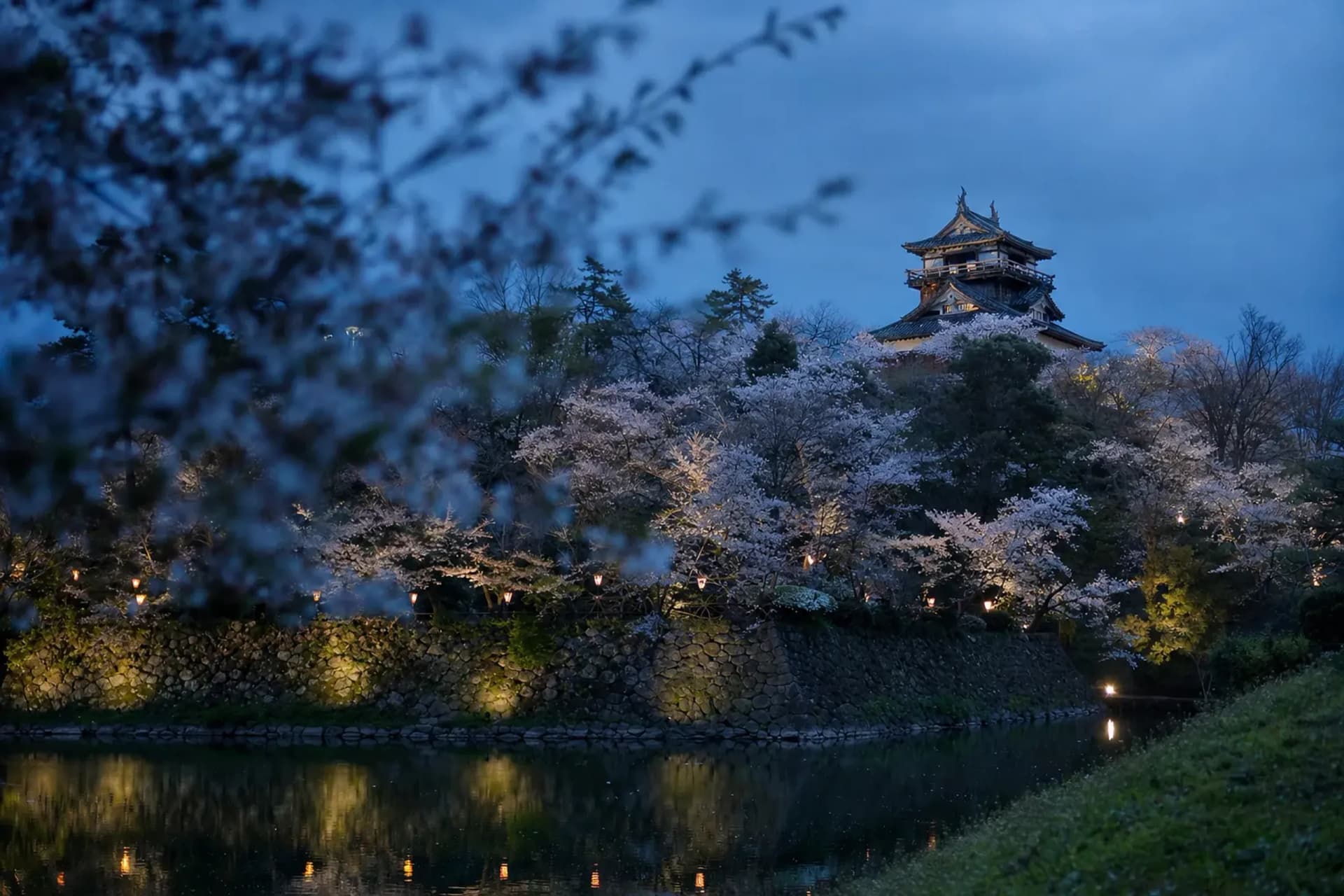
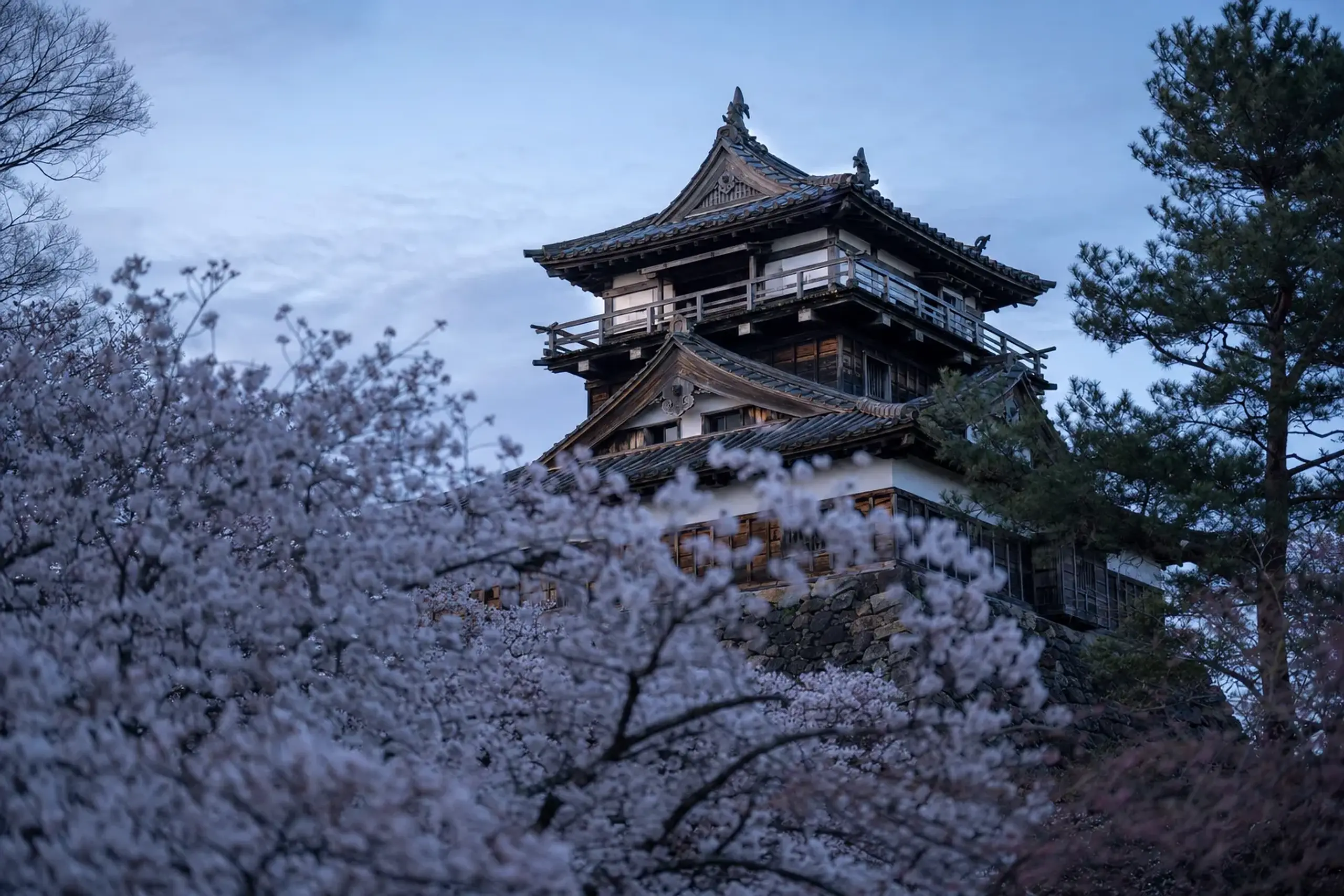
Under April blossom, Maruoka Castle looks like a sketch done in stone.
The roof is not ceramic. It is heavy, pale, and granular—shakudani stone laid as tiles, thousands of them, each one lending the keep the air of a boulder that somehow learned architecture, rather than a tower built for display.
And yet the line you still see repeated online—“Japan’s oldest surviving keep”—is probably wrong. That twist is the real reason to come.
Key fact: A large-scale preservation and seismic repair is under way, planned to run to about November 2027, and interior entry has been intermittent; the keep may be scaffolded or screened, and access follows the city’s published schedule for everyone.
The “Oldest Keep In Japan” Is Probably Younger
In March 2019, oxygen-isotope analysis reported by the castle’s research committee suggested that most of the keep’s key timbers were felled from the late 1620s onward, pointing to a Kan’ei-era build (1624–1644) rather than 1576.
That older date—1576, often linked to Shibata Katsutoyo—was the headline claim that made Maruoka famous in guidebooks. It is still printed in places, including some tourism pages and even public-facing cultural-property summaries, because these things travel slowly. Old copy survives. Like old wood.
Our team at Japan Royal Service likes Maruoka more after 2019, not less. Honest heritage has edge. It also has humility—the kind you feel when a laboratory result gently revises a local legend without erasing the affection people built around it. There is a quiet wabi-sabi in that: the beauty of something imperfect, impermanent, and all the more moving for it.
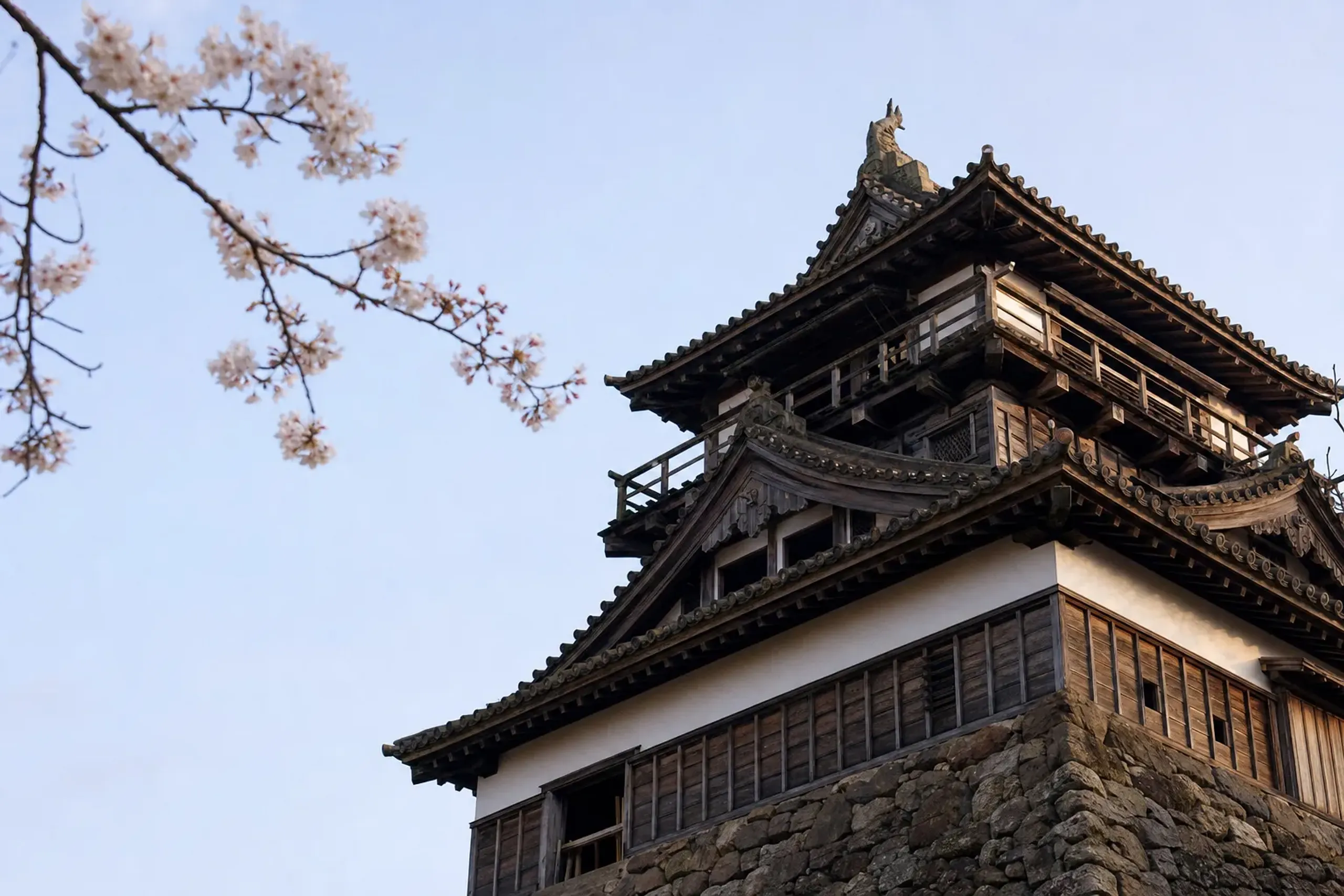
What does not change is the category that matters to castle collectors: Maruoka remains one of Japan’s twelve surviving original keeps, and it is the only original keep in the Hokuriku region. That is not marketing. That is why it belongs in a serious itinerary.
Is Maruoka Castle Open In 2026–2027 During The Seismic Repair?
Maruoka Castle’s keep has seen intermittent closures and partial reopenings during the preservation works planned through about November 2027, so you must check the city’s latest schedule close to your visit.
Here is what is confirmed from public notices. The large-scale preservation and seismic repair is under way, with sources giving the start as December 2025 or March 2026. Entry to the keep was closed from 11 May to 31 July 2026, then partially reopened in August 2026, with further closure dates planned for September.
After mid-September 2026, confirmed status is not available from the verified information provided. So we will not pretend otherwise. Expect scaffolding or screens at times, and expect that parts of the main bailey may be restricted depending on the stage of work.
If you are traveling in spring, the blossoms are the reliable promise. The keep is the variable.
What Makes Maruoka Castle’s Keep Worth Seeing Up Close?
Maruoka Castle’s keep is small, at about 12.5 meters tall, but its stone base and rare stone-tile roof give it a weighty presence that reads older than it is.
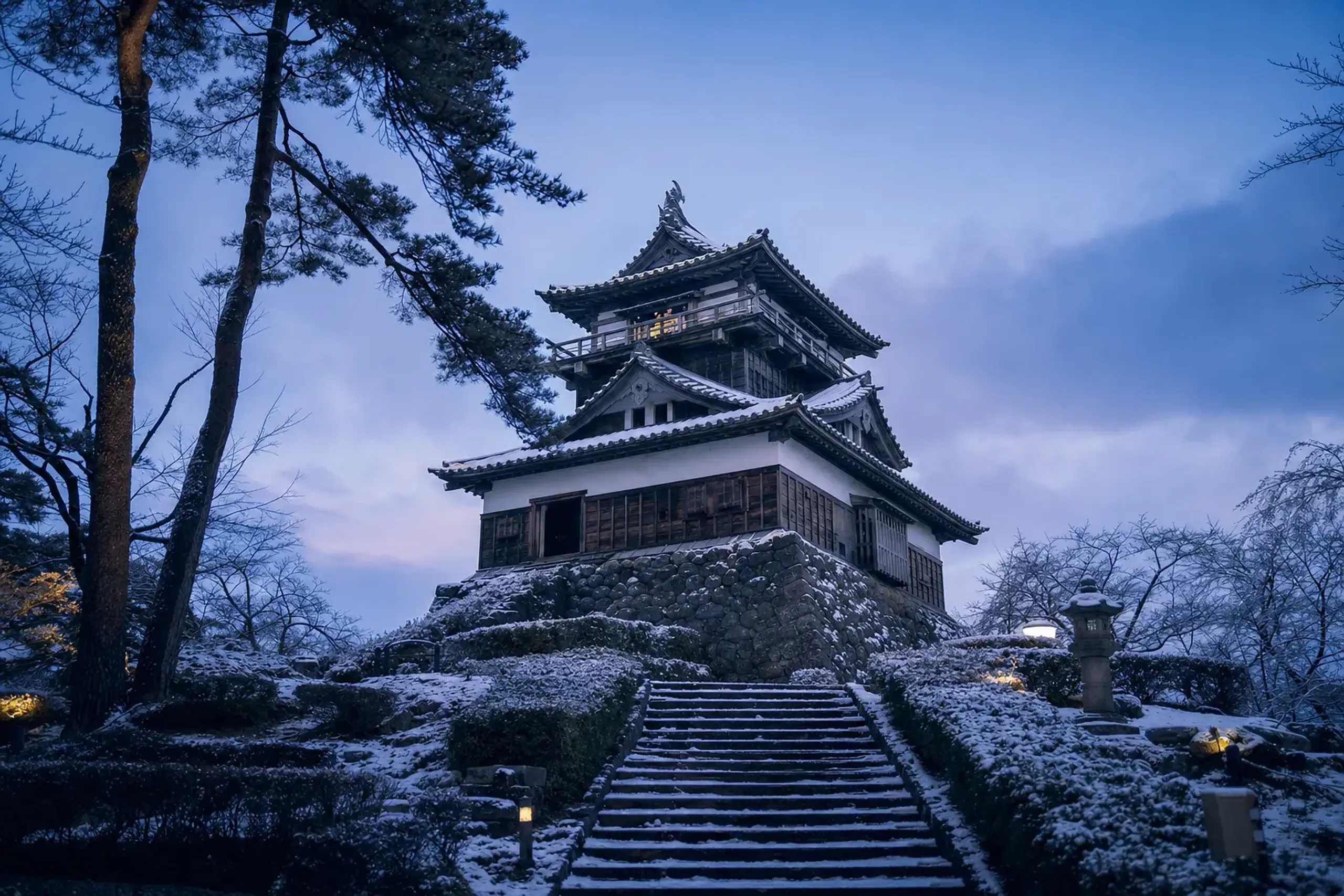
The profile is compact: two tiers outside, three floors inside, perched on a stone base roughly six meters high. The stonework is rough nozura-zumi, the kind that looks as though it was persuaded into place rather than cut into perfect geometry. Quietly muscular.
The roof is the detail you remember days later. About 6,000 tiles of shakudani stone, often described as 20 to 50 kilograms each, sit like armor plates. The usual explanation is practical: stone suits cold climates and harsh weather. It also changes the soundscape—rain does not “tick.” It lands.
Inside, one structural point catches architects and engineering-minded travelers: there are no through-pillars. The first floor carries the floors above it, and the interior can feel larger than the exterior suggests. A good castle can do that. It edits your sense of scale.
Maruoka Castle is designated an Important Cultural Property. Even with modern reinforcement work under way, the object itself still reads as an artifact, not a replica trying too hard. There is a restraint to it—nothing gilded, nothing shouting for attention—that rewards the kind of traveler who has already seen the grand and the gold, and has come looking for silence in stone.
The Keep Fell In 1948—And Was Put Back Together From Its Own Timber
The Fukui earthquake of 1948 (magnitude 7.1, centered near Maruoka) brought down Maruoka Castle’s keep and stone walls, and the reconstruction in the mid-1950s reused roughly 70–80% of the original timber.
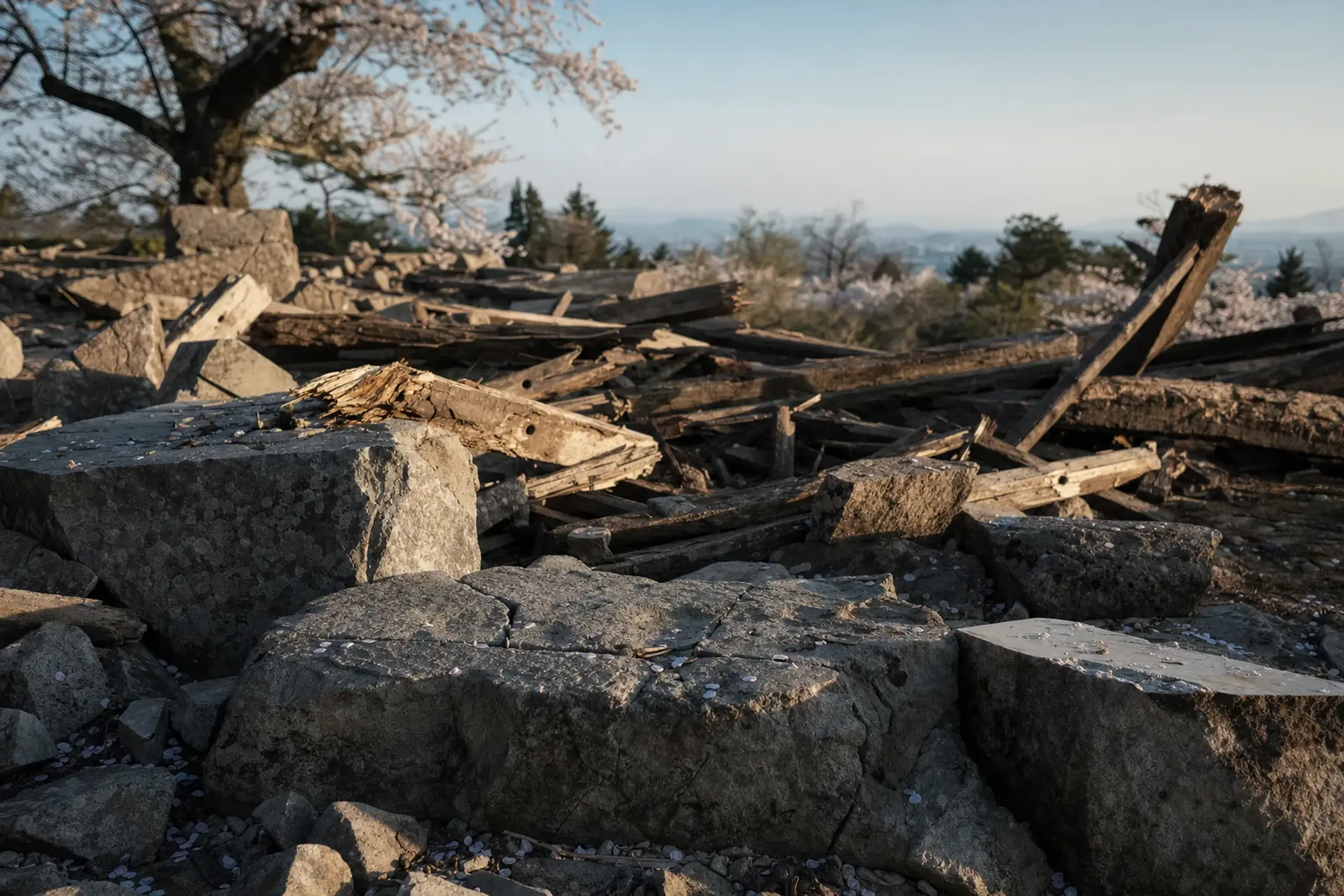
This is the part of the story that changes how you look at the beams. The keep did not “survive” in a clean, museum way. It collapsed. In seconds. Then it was reassembled, piece by piece, funded by townspeople led by the mayor and supported by donors from across Japan.
Sources differ on the completion year—1954 or 1955 appear depending on the reference—so we hold it as “mid-1950s” and keep moving. Precision matters. So does honesty.
During that rebuild, a reinforced-concrete foundation was constructed inside the stone walls. On open days during the current repair, visitors may be able to see it where first-floor boards have been removed. It is a stark detail. Old wood. Modern concrete. One keep.
There is also a civic footnote that feels very Fukui. After the abolition of domains, the castle was sold off, and the town bought the keep and grounds back in 1901, turning them into a public park. Ownership returned to the place itself.
How To Visit Maruoka Castle From Fukui Station Or Awaraonsen Station
Maruoka Castle is typically reached by bus from Fukui Station or JR Awaraonsen Station, or by car in about five minutes from Maruoka Interchange on the Hokuriku Expressway.
For public transport, Discover Fukui describes access by Keifuku Bus: about 50 minutes from Fukui Station (west exit) to the “Maruoka Castle” stop, or about 20 minutes from JR Awaraonsen Station to the same stop. JNTO also notes access by bus from Fukui and Awara Onsen stations.
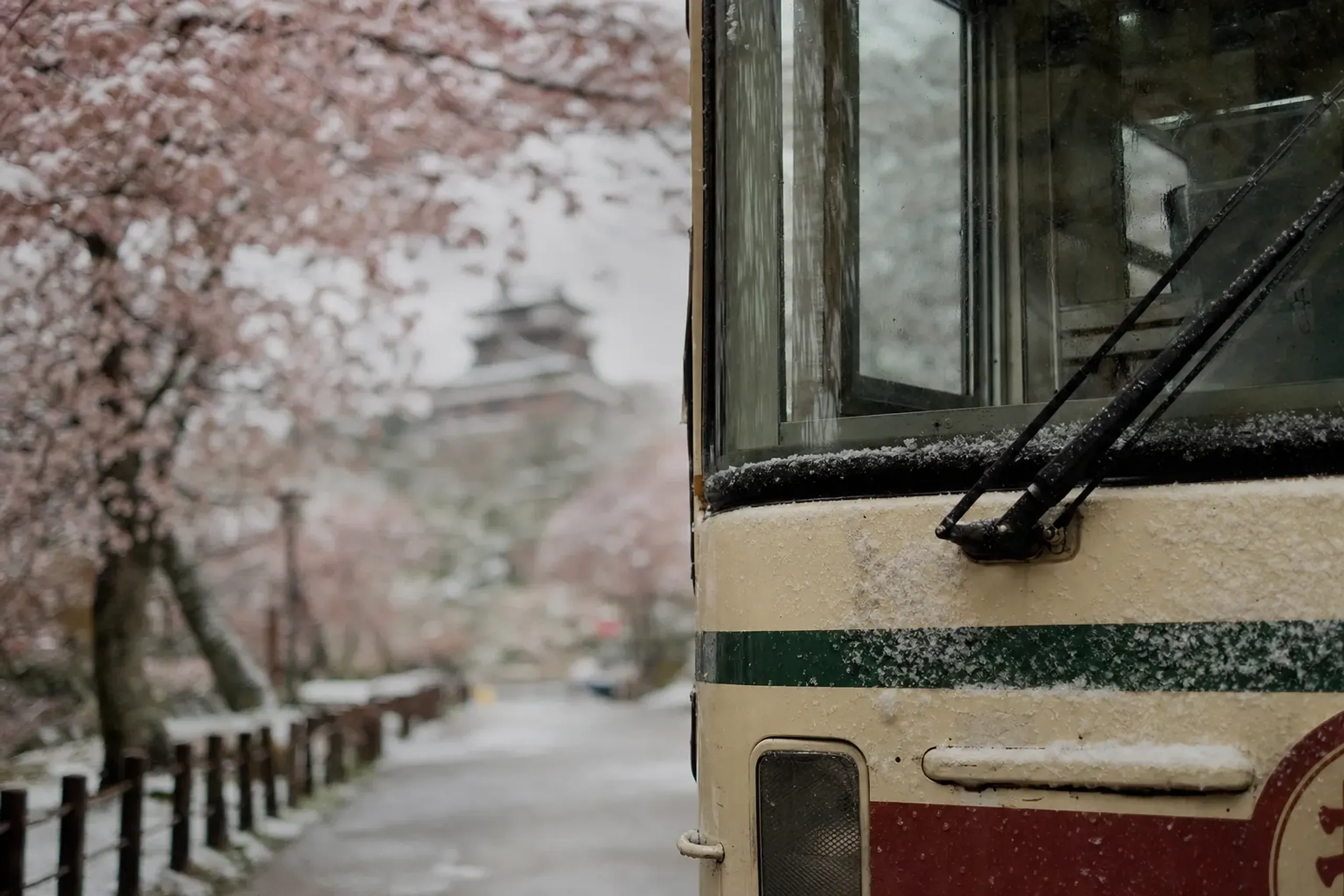
By car, the same official guidance notes it is about five minutes from Maruoka Interchange. With a private car, that last stretch is where the day becomes calm. No timetable. No crowd squeeze.
When we design a day around Maruoka for our guests, we time arrival for light rather than convenience. That can mean arriving before peak lunchtime, lingering through the soft afternoon, then leaving before the park begins to feel busy. Simple. Effective. This is the kind of anticipatory care—reading what you will want before you ask—that defines how we work.
The first mention matters if you care about comfort: our private transportation is built for quiet conversation, warm coats folded correctly, and that slightly drowsy return ride after a long walk on stone.
Maruoka Castle In Spring: Cherry Blossoms, Lantern Light, And What To Expect
Maruoka Castle’s grounds hold about 400 Somei-yoshino cherry trees and are recognized among Japan’s “100 best cherry blossom spots,” with peak bloom typically in early April.
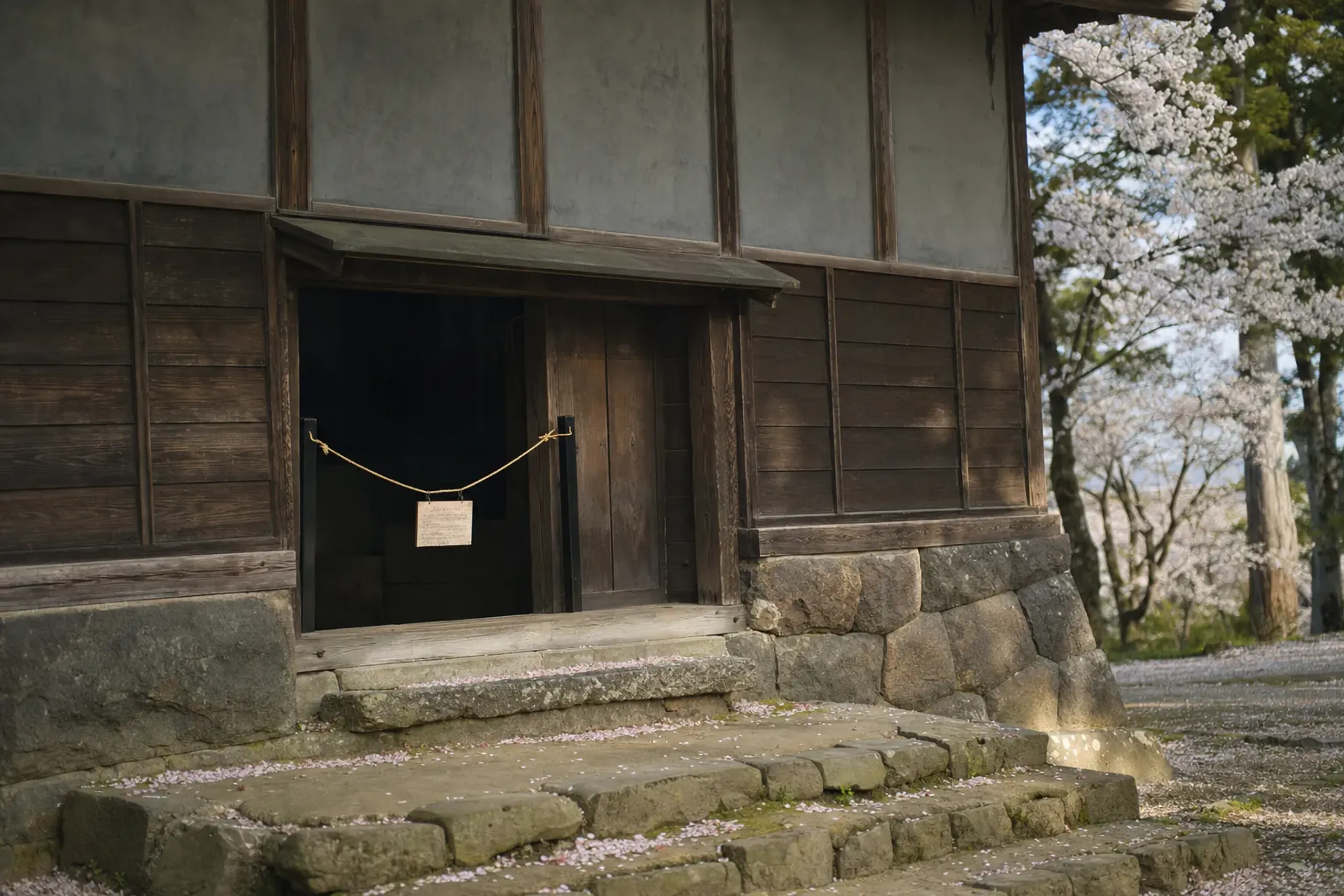
The park is the stage. The keep is the anchor. In spring, petals collect in the corners of the steps and along the stone base, and the roof’s pale shakudani tiles can look almost pink in reflected light. For photographers, it is less about “the shot” and more about patience. Knowing exactly which week the blossoms will peak in this particular corner of Fukui—the local reading of shun, the perfect moment—is the kind of detail that separates a merely pleasant visit from an unforgettable one.
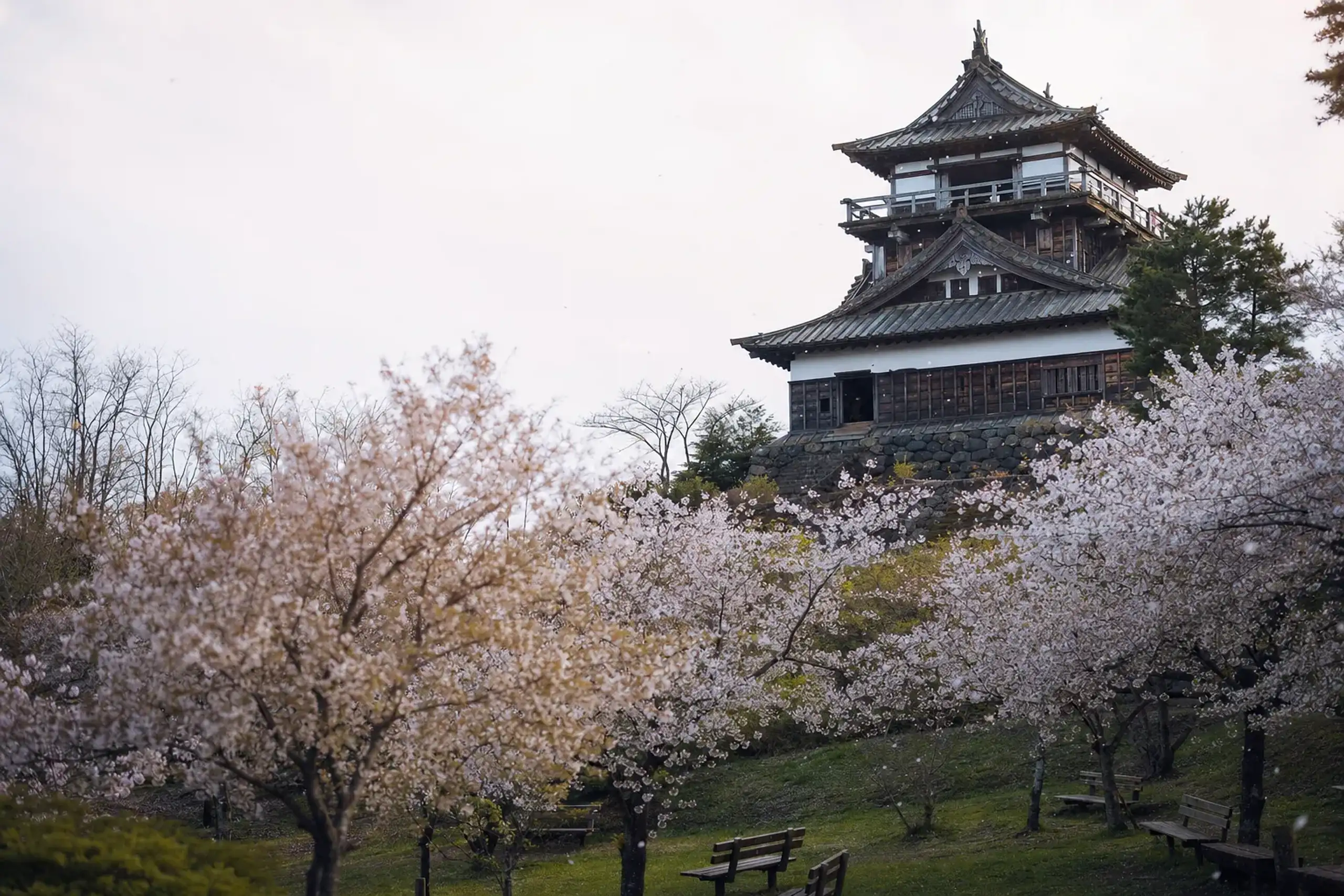
The Maruoka Castle Cherry Blossom Festival is generally described as running from late March to mid-April, with about 300 lanterns lit in the evening. Some recent years have listed projection mapping onto the keep; under the current repair works, that programming is not confirmed in the verified information provided.
One planning note we state plainly: during the repair period, the keep may be partly covered or scaffolded, and interior entry can change with little romance attached. The blossoms do not care. Neither should you, if the goal is atmosphere.
Legends: “Mist Castle” And The Human-Pillar Story (As Legend Only)
Maruoka Castle’s nickname Kasumigajō (“Mist Castle”) is tied to a legend that mist rises to hide it from approaching enemies, and a separate “human pillar” legend about O-shizu is associated with the foundations.
We treat both as folklore. Not proof. The point is not whether they happened; it is that the town still tells them, and the keep still stands in the middle of that telling.
If you like history, you will find deeper satisfaction in what is measurable: the stone tiles, the absence of through-pillars, the 1948 collapse, the 2019 isotope analysis. Legends can sit beside those facts without competing with them.
How To Plan A Refined Half-Day At Maruoka Castle (Even With Scaffolding)
A good Maruoka visit is less than half a day on-site, with time reserved for slow walking, a single focused museum stop, and flexible timing in case the keep interior is closed.
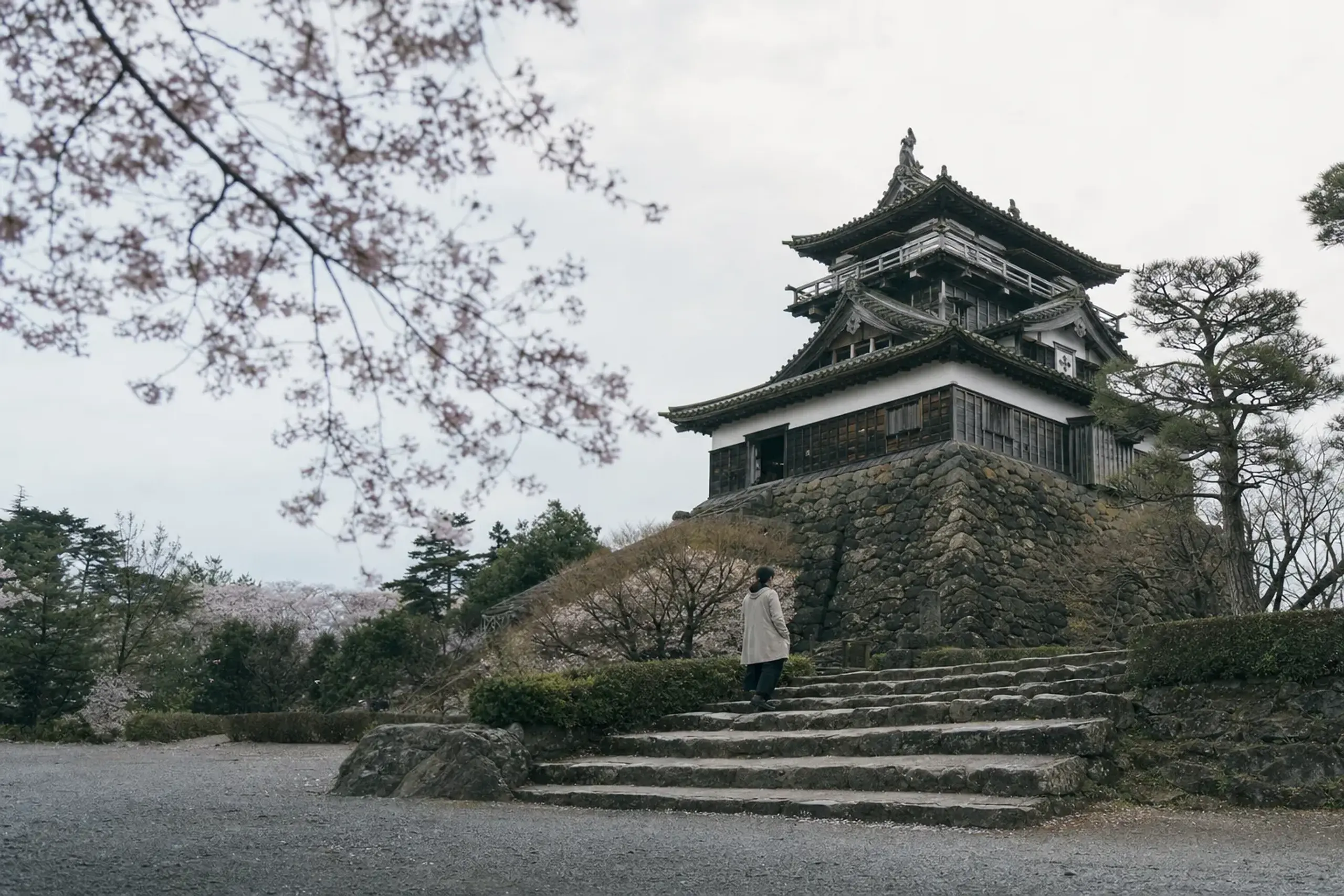
Japan-Guide notes the former grounds are a public park and mentions a small museum displaying items related to the former lords. We keep the museum as an optional “yes” rather than a mandatory stop. Big mistake, forcing it. Let curiosity decide.
Our preferred flow is simple:
- Arrive with daylight to spare. The keep reads best when shadows are long across the stone base.
- Walk the perimeter first. If scaffolding is present, you learn quickly where the clean sightlines are.
- Attempt the keep interior only after you have enjoyed the grounds. If it is closed, the day still works.
- Stay through dusk only if lantern lighting is confirmed for your dates. Otherwise, leave before the buses reset the rhythm.
We also advise one small collector’s habit: carry a flat notebook and a crisp pen. Fukui is renowned for its paper goods, and castle-stamp culture is real. If there are limited-edition seals in milestone years, they become quiet souvenirs, not trinkets.
What Japan Royal Service Handles For Maruoka Castle Visitors (And What We Don’t)
For Maruoka Castle, our team at Japan Royal Service provides guiding and transfers, and we privately verify the latest public access schedule and seasonal conditions before your visit.
This is a public castle and park. There is no “special door.” During the preservation works, access follows Sakai City’s published schedule for everyone, and we plan within that reality. We would rather tell you the truth than sell you a fiction—and that candor is itself part of the discretion we extend to every guest.
Where our work shows is in the edges: route timing, pacing, and restraint. We do not rush you because another booking is waiting. We also do not inflate the day with filler. If you want a simple, quiet itinerary, we keep it simple—and your identity and your movements stay entirely your own.
If Maruoka is one piece of a larger journey, we build it into a tailor-made itinerary that respects your attention span as much as your calendar. The best luxury is not excess. It is precision.
Frequently Asked Questions
Is Maruoka Castle Really The Oldest Surviving Keep In Japan?
No—the long-running “oldest keep” claim is considered outdated after a 2019 oxygen-isotope study suggested that most key timbers date from the late 1620s onward.
Maruoka is still one of Japan’s twelve surviving original keeps, and the only original keep in Hokuriku. That status is solid, and it is plenty rare.
Will The Keep Be Covered By Scaffolding During Spring Cherry Blossom Season?
Yes, it may be scaffolded or screened at times, because large-scale preservation and seismic repair is planned through about November 2027.
The park’s blossoms remain the dependable highlight, and we suggest planning your photography around the grounds and stone base as well as the keep silhouette.
Can I Count On Entering The Interior In 2026 Or 2027?
No—interior access has been intermittent, with confirmed closures in 2026 and further closure dates planned, so entry depends on the latest published schedule.
Because confirmed status after mid-September 2026 is not available in the verified information provided, we advise building a visit that still feels complete even if the interior is closed.
How Do I Get To Maruoka Castle Without Renting A Car?
You can reach Maruoka Castle by bus from Fukui Station or JR Awaraonsen Station to the “Maruoka Castle” stop, based on official regional access guidance.
For travelers who want calm timing and less waiting, our concierge can advise the best departure windows and pacing, and coordinate a private driver for the day.
Why Choose Japan Royal Service
Competitors like Boutique Japan, Remote Lands, and InsideJapan Tours often excel on the Golden Route. Maruoka Castle is different. It rewards travelers who want a quieter Japan—the kind of place Google cannot fully capture, where one disputed date can prove more interesting than a flawless brochure claim.
Our advantage is not volume. It is discretion. We keep your identity and your day plan private, and we design around the real conditions on the ground—especially when preservation works make access uncertain.
If a quiet morning beneath 400 cherry trees, with the facts told honestly and the day paced to your own rhythm, is the kind of Japan you are after, let us shape it around you. To begin planning your visit to Maruoka Castle and the wider Hokuriku region, contact us here for a tailored proposal.