In this guide
- 01Matsushima Bay In Summer: Why This View Still Holds
- 02Zuiganji, Godaido, And Entsuin: A Summer Temple Walk With The Right Tempo
- 03How Long Is The Matsushima Bay Cruise, And Is It Worth It In Summer?
- 04The Bay By Water: A Step-By-Step Day Plan (Temples → Cruise → Memorial Evening)
- 05What Is Matsushima Ryutoe Umi No Bon, And When Does It Run?
- 06How Do You Attend Umi No Bon Respectfully (And What Rules Matter)?
- 07How Do You Get To Matsushima From Tokyo Or Sendai In Summer?
- 08Heat, Rain, And The Reality Of August On The Bay
- 09One Line Only: Oku-Matsushima And Sendai Tanabata
- 10How Our Concierge Team Plans A Matsushima Summer Day Without Cutting Corners
- 11Plan Your Matsushima Summer With Us
- 12Frequently Asked Questions
The light changes first.
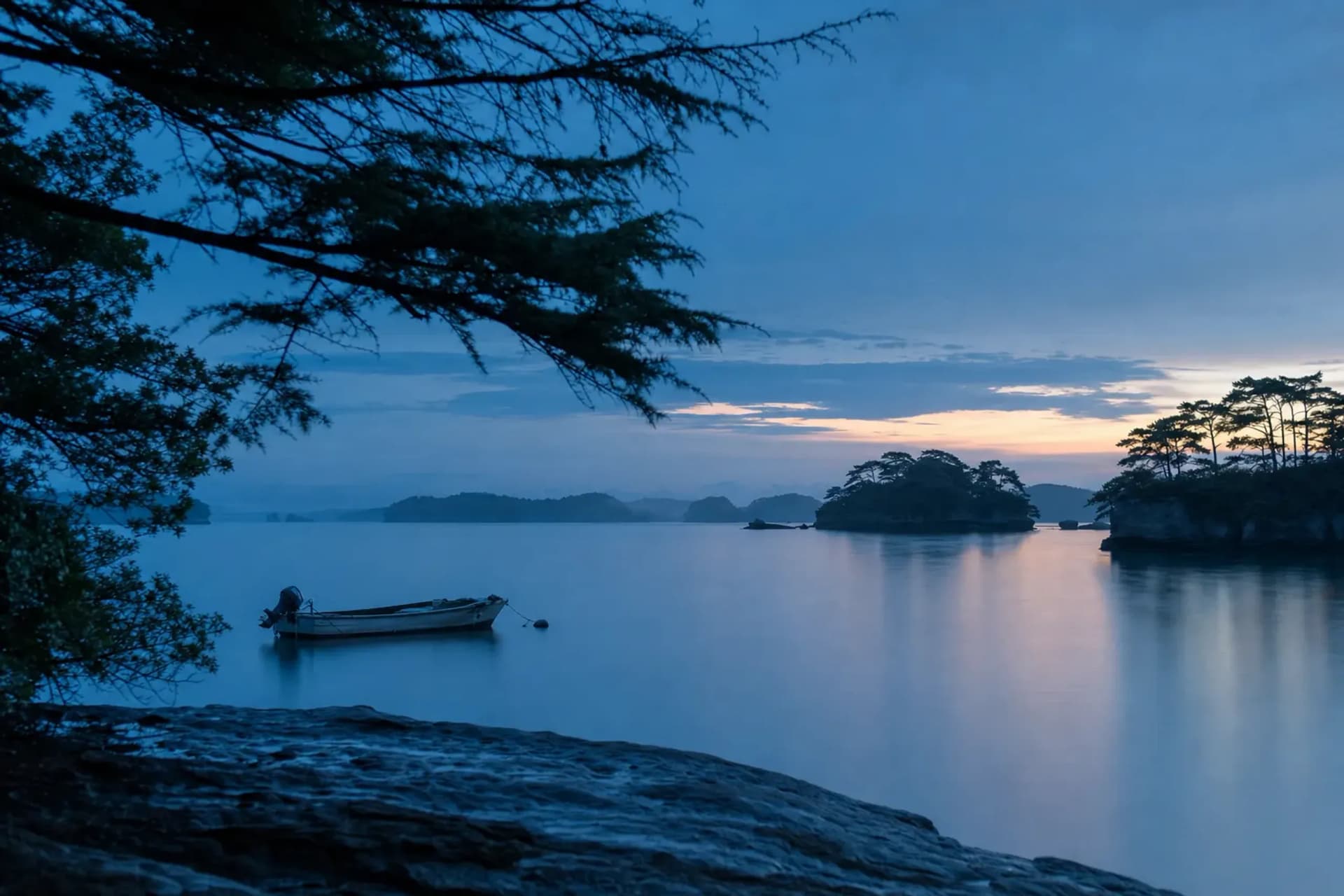
In late afternoon, Matsushima Bay turns from silver to a quiet blue-grey, and the pines on the islets begin to look like ink brushed onto water. You hear rigging tap somewhere offshore. You smell salt, then incense as you walk back toward the temple approach. This is the hour when the bay feels less like a famous view and more like a place where people still come to pray—a restraint and quietness that carries its own weight, the kind of wabi-sabi beauty that photographs never quite capture.
Most travelers treat Matsushima as a day trip. Sensible. On 15 and 16 August, though, the bay asks for a slower pace and a steadier tone, because the Matsushima Ryutoe Umi no Bon was begun in 2011 after the Great East Japan Earthquake to honor the dead, with a memorial service for a sacred site at its center. This is the Japan you cannot find on a search engine—entered by knowing when to arrive, where to stand, and how to behave.
Our team at Japan Royal Service plans summer days in Matsushima in one direction: temples first, water second, memorial evening last. No rushing. No loud shortcuts. Just the bay, as it is.
Matsushima Bay In Summer: Why This View Still Holds
Matsushima is counted among Japan’s Three Views, with Miyajima and Amanohashidate, and it is protected as a Special Place of Scenic Beauty. That status is not a tourism slogan. It is Japan saying, formally, that this coastline matters.
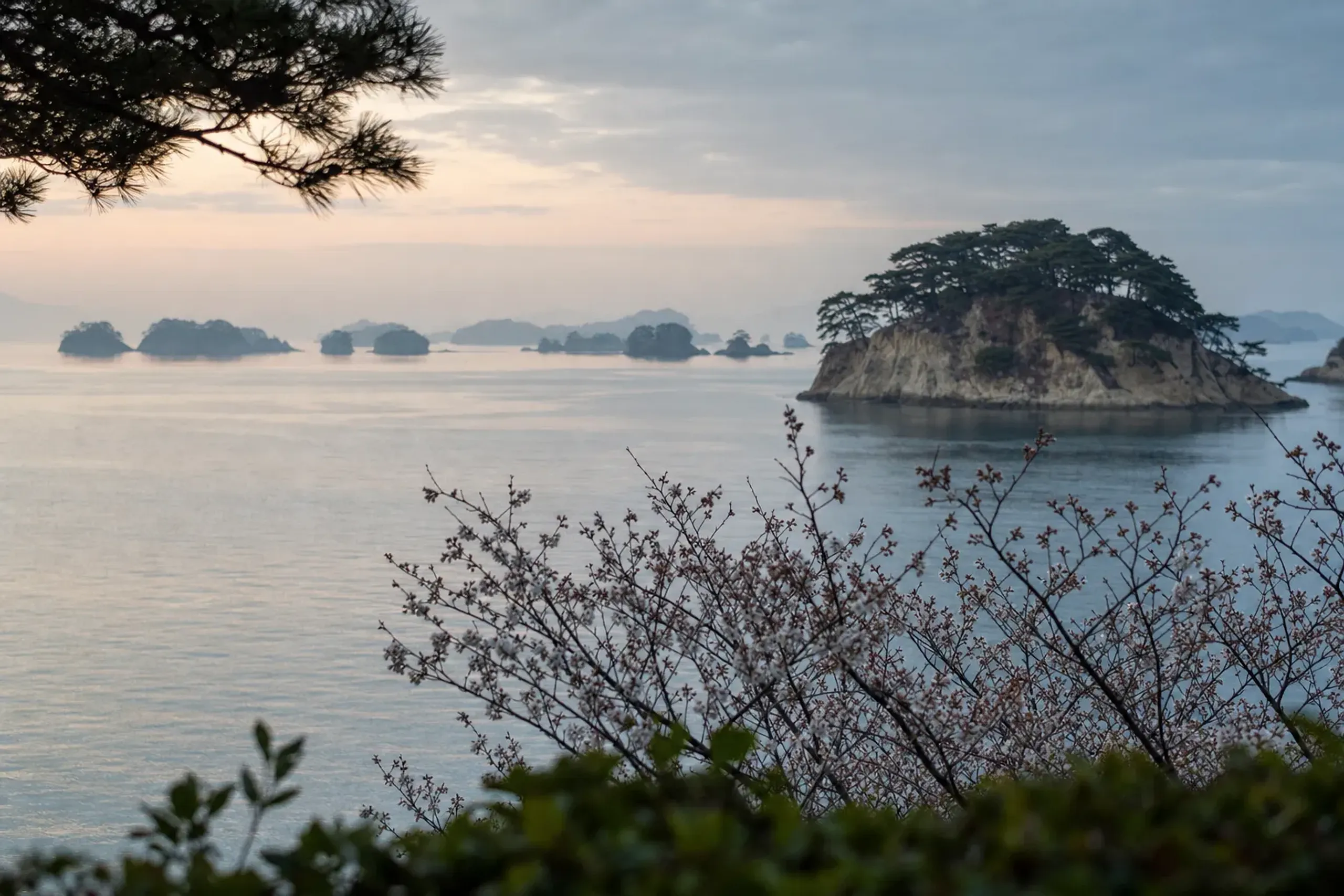
Look out across the water and you see why. There are more than 260 islands, according to the Matsushima Tourism Association, and they break the horizon into small, patient shapes. Pines lean out over rock. The gaps between islets make their own geometry—a composition that reads like a hand scroll unrolling slowly across the bay.
After 2011, local officials credited the bay’s islands with sparing the town from the worst of the tsunami, though the town was damaged. That memory sits behind the summer memorial nights. Quietly. Always present.
If you come in July or August, plan around haze, humidity, and the way the sun drops quickly once it slips behind the islands. This is the practical core of shun—the Japanese sense of perfect seasonality. Knowing what to experience, where, and in which month is the difference between a postcard glance and a day you can actually feel.
Zuiganji, Godaido, And Entsuin: A Summer Temple Walk With The Right Tempo
Start with stone underfoot. It calms the day.
Zuiganji is the anchor. Its complex was completed in 1609, and the main hall and kitchen/living quarters are designated National Treasures. In summer, it opens at 8:30 and closes at 17:00 from April to September, with last entry 30 minutes before closing, and it may close for temple events.
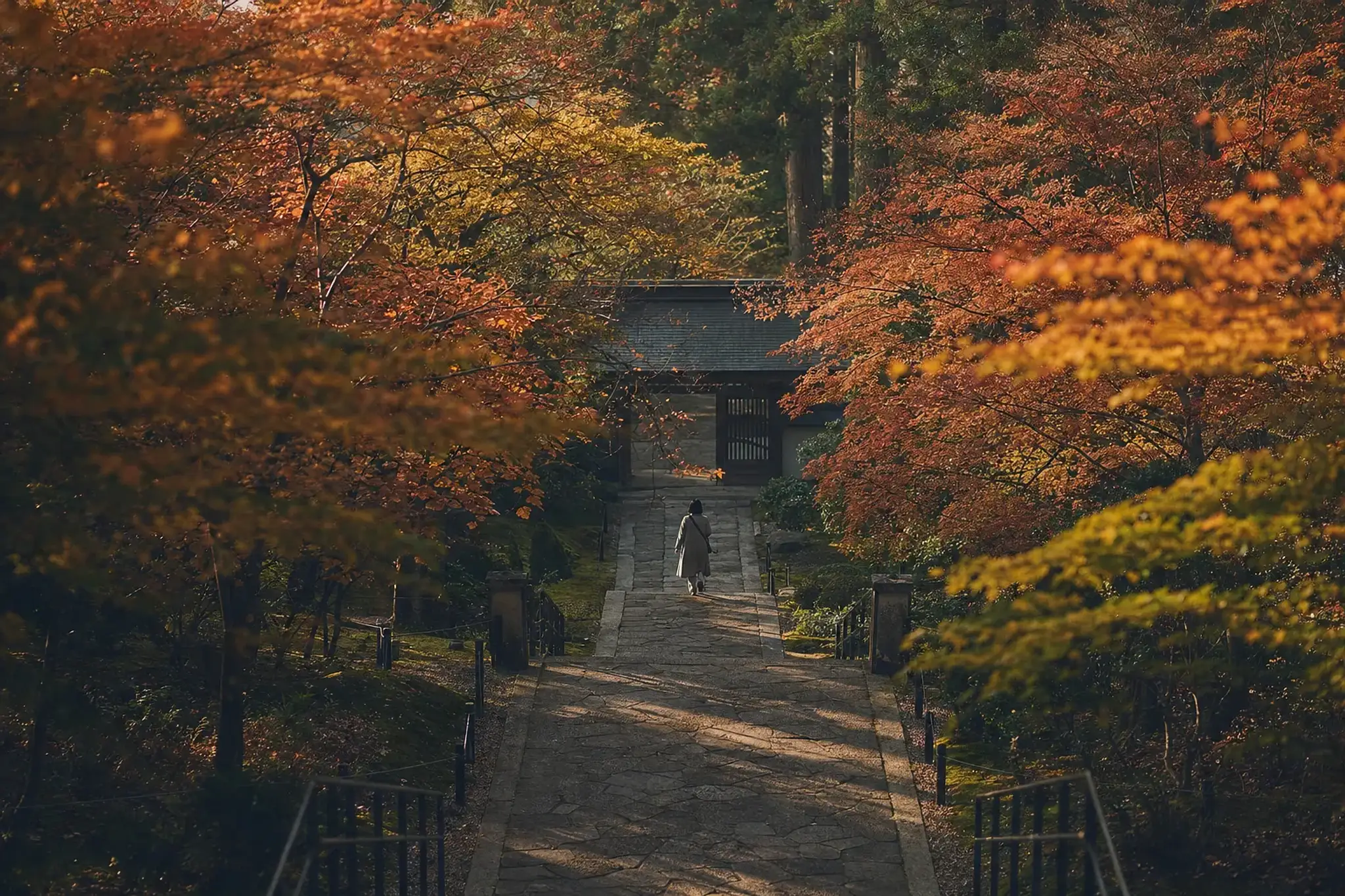
Give Zuiganji real time. Not ten minutes. Walk the approach. Step into the main hall rooms and let your eyes adjust; some wall paintings are reproductions, but the atmosphere is intact.
Visit the Seiryuden museum and Hosshin cave if open on the day.
From there, drift toward Godaido. It is a small hall on an islet reached by the “see-through” bridges, repaired and reopened to crossing on 15 March 2025. In the evening it closes, so treat it as a daylight stop.
Entsuin is also listed among the area’s key temple visits, with viewing hours shown as 9:00 to 16:00 by local tourism sources. Keep it as your flexible piece. If the day is hot and bright, Entsuin can be a cooler pause between the heavier emotional weight of Zuiganji and the open glare of the bay—moss, shade, and the hush of a garden built to slow the pulse.
Two practical notes matter in summer. First, Zuiganji is about a 10-minute walk from Matsushima-Kaigan Station. Second, temple hours can change for events, especially around Obon. Our concierge team checks the latest notices before you go, so you never arrive to a closed gate.
How Long Is The Matsushima Bay Cruise, And Is It Worth It In Summer?
The main Matsushima Bay sightseeing cruise is about 50 minutes round trip, and in summer it is worth doing for perspective, breeze, and scale.
The standard course, operated by Matsushima Shimameguri Kanko-sen, runs roughly hourly through the day, year-round, with extra sailings planned around Golden Week and Obon; weather cancellations can happen, and the operator publishes the day’s timetable. Smaller courses of about 25 and 40 minutes run on smaller boats.
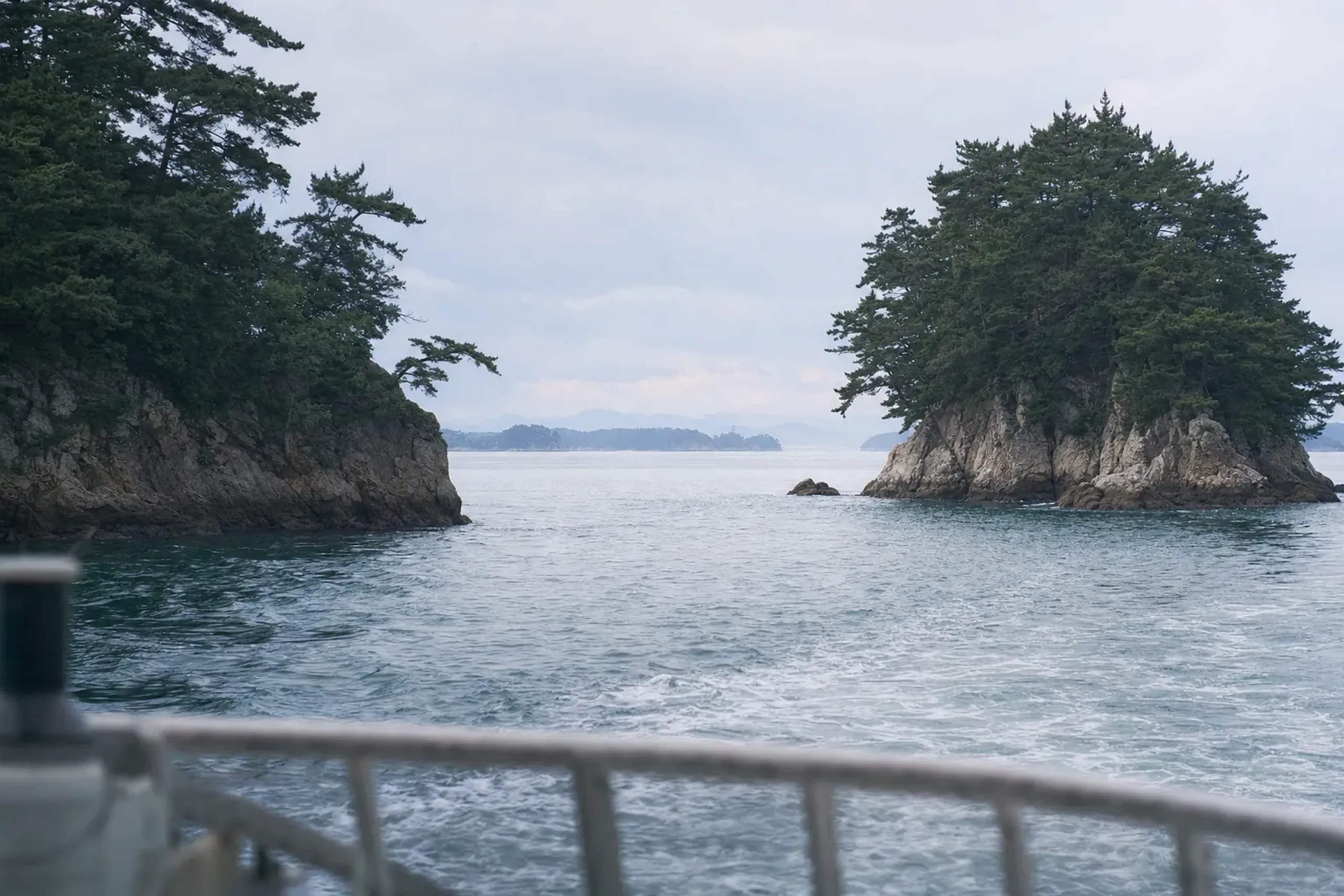
Walk to the pier before you commit. Chuo Pier is about a 7-minute walk from Matsushima-Kaigan Station, and you can sense the conditions right away—heat, wind, and visibility. If the bay is glassy, the islands feel close. If the haze is thick, the cruise becomes less about photos and more about atmosphere.
This is also where summer planning gets sharp. Go on the water earlier, or later. Midday glare flattens everything. Big mistake.
The Bay By Water: A Step-By-Step Day Plan (Temples → Cruise → Memorial Evening)
Keep the order. It changes the entire feeling of the visit.
Step 1: Arrive At Matsushima-Kaigan Station, Not Matsushima Station. JNTO warns travelers to use Matsushima-Kaigan Station (Senseki Line), because Matsushima Station is far from the main sights. In August, that extra walking time is not charming.
Step 2: Walk Straight To Zuiganji When It Opens. Aim for the 8:30 opening. The approach is quieter, and the air is cooler. You also reduce the risk of missing entry if the day shifts due to temple events.
Step 3: Add Godaido While Your Head Is Still Clear. Godaido is small. The bridge, the water below, the sound of your own steps—this is the moment that often stays with guests the longest.
Step 4: Take The Cruise Before The Late-Day Crowds. In Obon season, extra sailings may run, but the pier still gets busy. Check the operator’s timetable on the day, then commit to a departure time you can actually reach without sprinting.
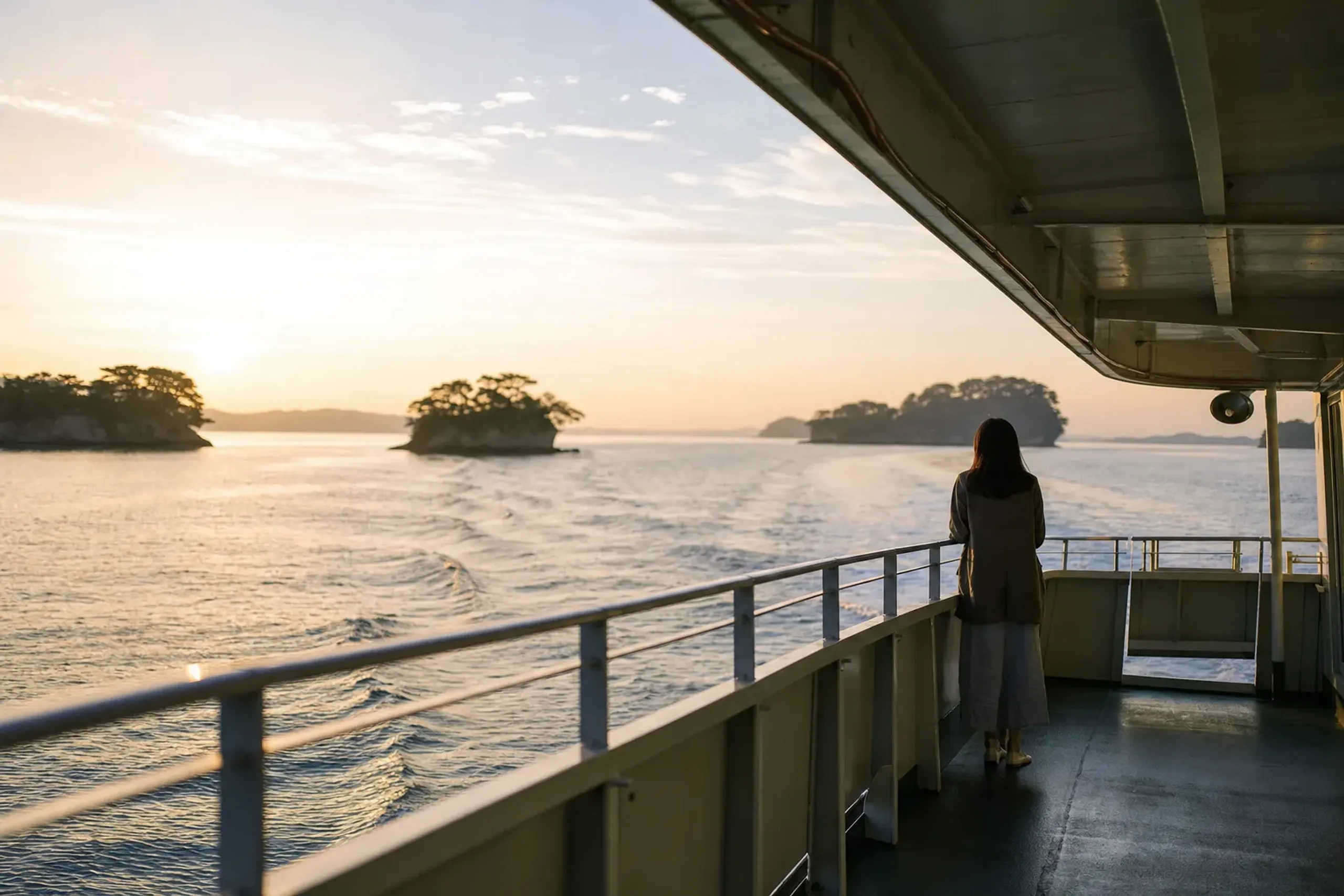
Step 5: Keep A Buffer Before The Evening Program. You want time to reset—hydrate, cool down, change clothes if needed, and arrive at the plaza with the right demeanor. The memorial nights are not a place to stumble in flustered.
Key fact: On 15 and 16 August, plan to use public transport because the Umi no Bon rules state there is no dedicated parking.
What Is Matsushima Ryutoe Umi No Bon, And When Does It Run?
Matsushima Ryutoe Umi no Bon is a memorial event held on 15 and 16 August at Matsushima Kaigan Central Plaza, begun in 2011 after the Great East Japan Earthquake to honor the dead.
The official organizer is the Matsushima Ryutoe Umi no Bon Executive Committee, within the Matsushima Tourism Association. The event frames itself as keeping “the memorial service for a sacred site” at its center, while also allowing a festive side. That hierarchy matters. Treat it that way.
As a worked example for planning, the 2026 program listed an eve festival on Saturday 15 August 2026 from 16:00 to 20:30, and the Zuiganji Daisegaki-e on Sunday 16 August 2026 from 19:00 to 20:30, with stalls both days from 10:00 to 20:30 (official site: uminobon.jp). Program contents can change with weather or organizer circumstances, and the year’s details are confirmed closer to the date.
What happens during Daisegaki-e? In the program description, it is a memorial service where food and drink are offered to hungry spirits and prayers are said for ancestors, with about 50 monks.
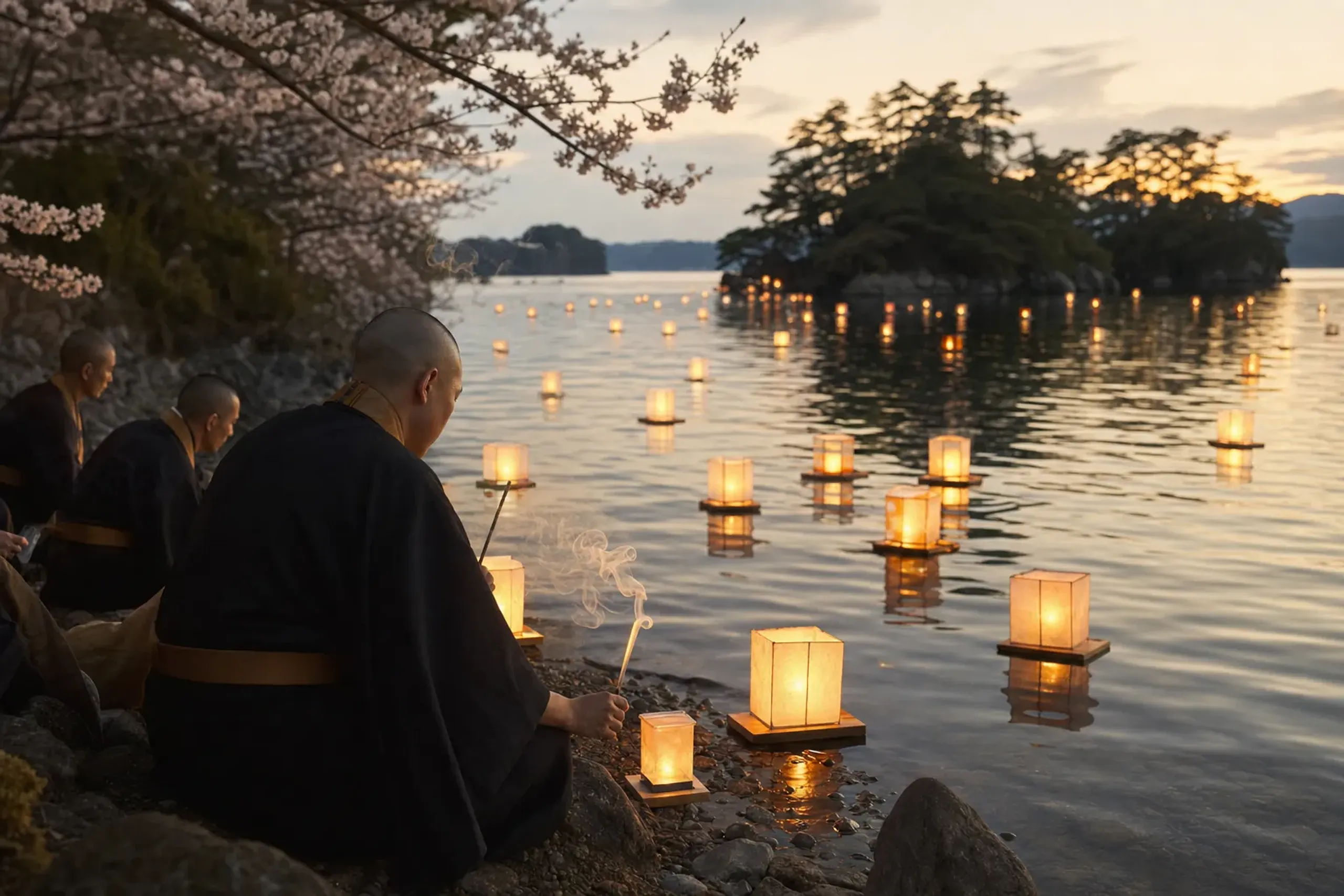
If you have never witnessed Buddhist chanting at night with the bay close by, expect something steady, not theatrical—restraint rather than spectacle.
How Do You Attend Umi No Bon Respectfully (And What Rules Matter)?
Attend as if you were a guest at someone else’s remembrance, because you are.
The official rules include: no dedicated parking, so use public transport; no drones near the venue, the temple approach, the caves, or crowds; people on boats must stay inside the security vessel line; and do not reserve space with mats in the Central Plaza. Those rules are not “tips.” They are a boundary.
In practice, respectful attendance is simple. Keep your voice low. Don’t block paths or sight lines. If families around you are quiet, match them. If someone bows their head, do not photograph that moment.
Dress is not formally specified, but in our experience a muted palette helps you blend in without trying. Leave the loud resort look for somewhere else. Tonight is different.
How Do You Get To Matsushima From Tokyo Or Sendai In Summer?
From Tokyo Station to Sendai Station on the Tohoku Shinkansen is about 90 minutes, and from Sendai to Matsushima-Kaigan Station on the Senseki Line is about 40 minutes.
You can also reach Matsushima Station via the Tohoku Main Line in about 25 minutes from Sendai, then walk about 20 minutes. That walk is workable in mild weather. In August heat, it can feel longer than it looks on a map.
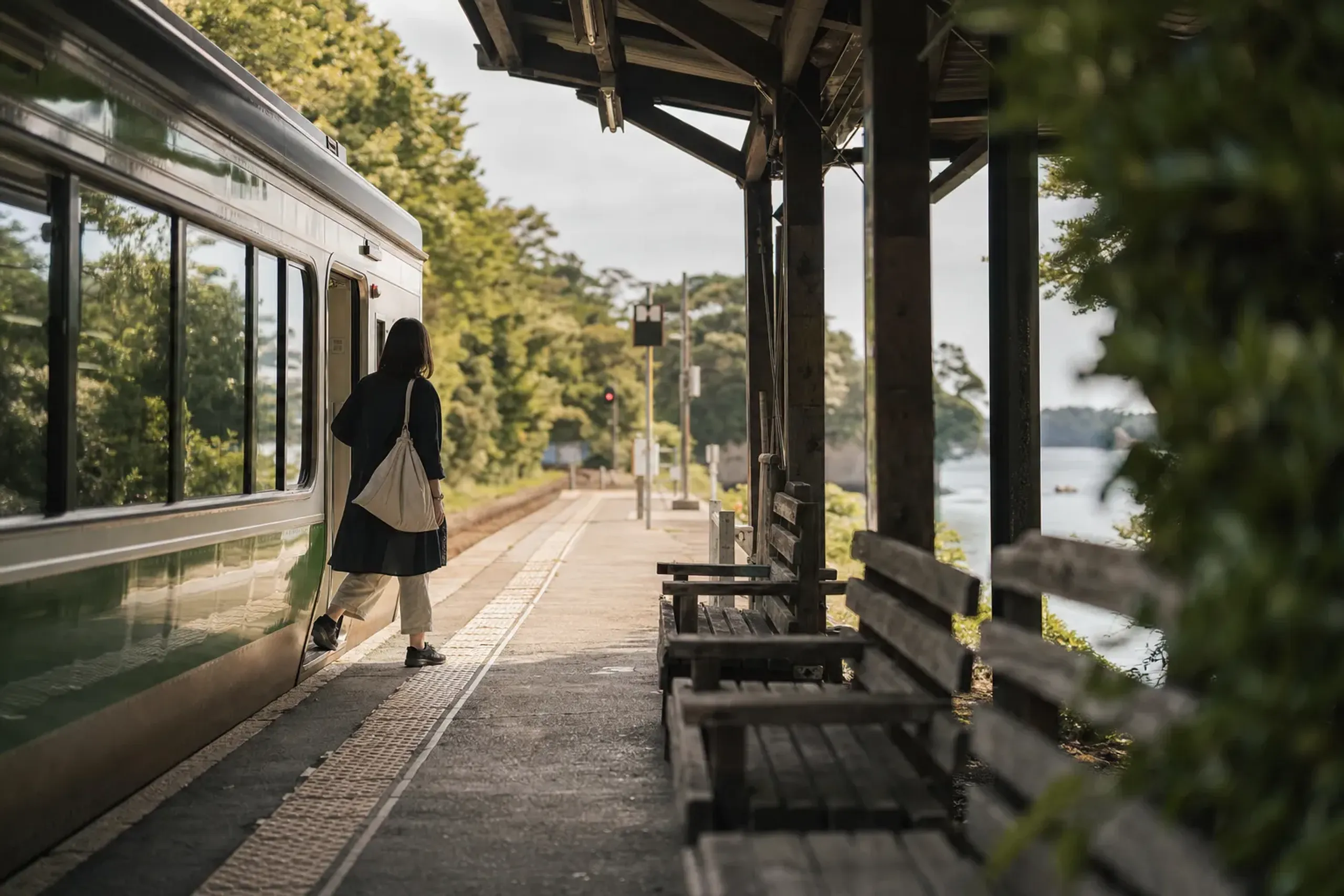
If you are building a two-day Obon plan, base decisions matter. Staying in Sendai can make rail logistics simpler. Staying near the bay reduces late-night friction after the memorial program. Either can be right.
One operational reality: the festival asks visitors to use public transport, and there is no dedicated parking. Even if you arrive by car from elsewhere, you still need a drop-off plan that respects closures and crowds.
Heat, Rain, And The Reality Of August On The Bay
Summer in Miyagi is gentler than some parts of Japan, but it is still summer.
Based on Japan Meteorological Agency normals for Sendai (1991–2020), July has a mean of 22.9°C (average high 26.6°C, low 20.2°C) with 178.4 mm of rainfall, and August has a mean of 24.4°C (high 28.2°C, low 21.6°C) with 157.8 mm of rainfall. Matsushima can feel similar, with the sea adding humidity.
Build your day around shade and airflow. Get temples done early. Use the cruise as a breeze break. Carry water and a small towel. It’s not glamorous. It is what works.
And accept this: weather may change the feel of the day. If a cruise is canceled due to conditions, you pivot to land views and temple time. No drama.
One Line Only: Oku-Matsushima And Sendai Tanabata
Oku-Matsushima lies in neighboring Higashimatsushima, with Aomina as its hub and Sagakei named by the city as one of Japan’s great gorges; it’s a separate day, not an add-on.
If you are pairing Matsushima with early August, Sendai Tanabata runs 6 to 8 August in the worked 2026 example; plan it as its own chapter, then keep Matsushima for the quieter, later Obon cadence.
How Our Concierge Team Plans A Matsushima Summer Day Without Cutting Corners
Good Matsushima planning is not about stuffing more in. It’s about removing the moments that make you rush.
Our team at Japan Royal Service typically starts by asking three questions: Where are you staying (Sendai or near the bay)? How much walking is comfortable in humidity? And are you coming on 15 or 16 August, when the memorial nights shape the entire flow?
Within this post’s scope, we can provide an English-speaking cultural interpreter guide to explain the temples, the bay, and memorial customs, including where to stand and how to behave as an attendee. The guide does not take part in any rite. That line stays clear. This is where discretion earns its place: your presence is felt by no one, your questions asked quietly in advance, your itinerary known only to those who need it.
For ground logistics, we can support private transportation between Sendai or your hotel and a suitable drop-off point near the bay, using a partner fleet. No combined driver-guide role. The point is to reduce friction, not to bypass the rules.
We also help shape the accommodation plan for 15 and 16 August, when rooms in Matsushima and Sendai can tighten, and we build a tailor-made itinerary that holds up: Zuiganji early, Godaido before evening, cruise timed to conditions, then a calm arrival at the Central Plaza.
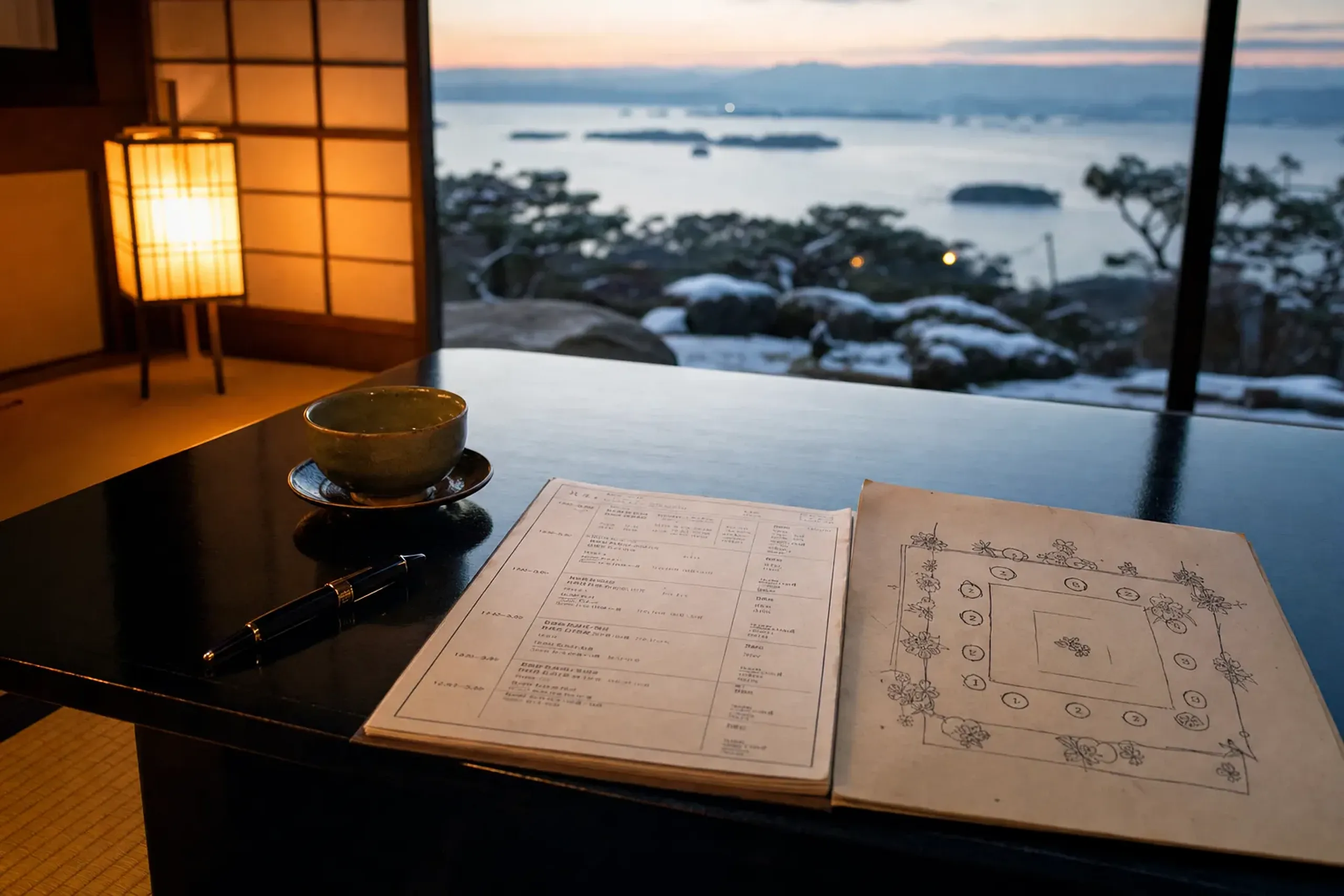
Before your visit, our concierge team verifies the year’s program and any weather notice, Senseki Line operation, and the cruise timetable. That is where discretion becomes practical: fewer messages, fewer public questions, less uncertainty carried into a memorial night.
For guests who want an added layer of craft and context, we can also arrange shokunin-led encounters elsewhere in the journey—a kiln master’s workshop, a lacquer artisan’s bench, or a kitchen counter where a sushi master teaches technique without performance, the kind of private session that does not appear on any public booking. It is through quiet introduction, not a reservation line, that these doors open. That way Matsushima stays what it should be: a quiet, coastal chapter with moral weight.
Plan Your Matsushima Summer With Us
The bay rewards those who arrive unhurried, informed, and quietly prepared. If you are considering 15 or 16 August—or any summer day on this coast—let us handle the timetables, the closures, the drop-off points, and the delicate matter of attending a memorial night with grace, so you are free to simply be present. To begin shaping a Matsushima chapter calibrated to your pace and your sensibilities, contact us here.
Frequently Asked Questions
When Is Matsushima Umi No Bon Held, And What Are The Typical Times?
Matsushima Ryutoe Umi no Bon is held on 15 and 16 August, with the year’s program confirmed closer to the date.