In this guide
- 01What “Modern Mashiko” Really Means Today
- 02A Grounded Way To Meet Living Makers (Without Inventing Access)
- 03The Noborigama Firing: The Sensory Center Of Mashiko
- 04Where To Go In Mashiko: Museum First, Then Gallery Streets
- 05Mashiko Pottery Fair 2026: Go For Energy, Skip For Serious Buying
- 06Two Itineraries: Tokyo Day Trip Vs. One Quiet Overnight
- 07Getting There Without Guesswork: Transport Options From Tokyo
- 08Buying, Packing, And International Shipping: The Part Most Guides Skip
- 09A Craft Corridor Worth Knowing: Mashiko + DESIGNART TOKYO (And Kyoto After)
- 10Planning Notes For HNW Travelers: How To Keep Mashiko Quiet
- 11FAQ: Modern Potters In Mashiko (2026–2027)
- 12Why Choose Japan Royal Service
The kiln breathes for two and a half days.
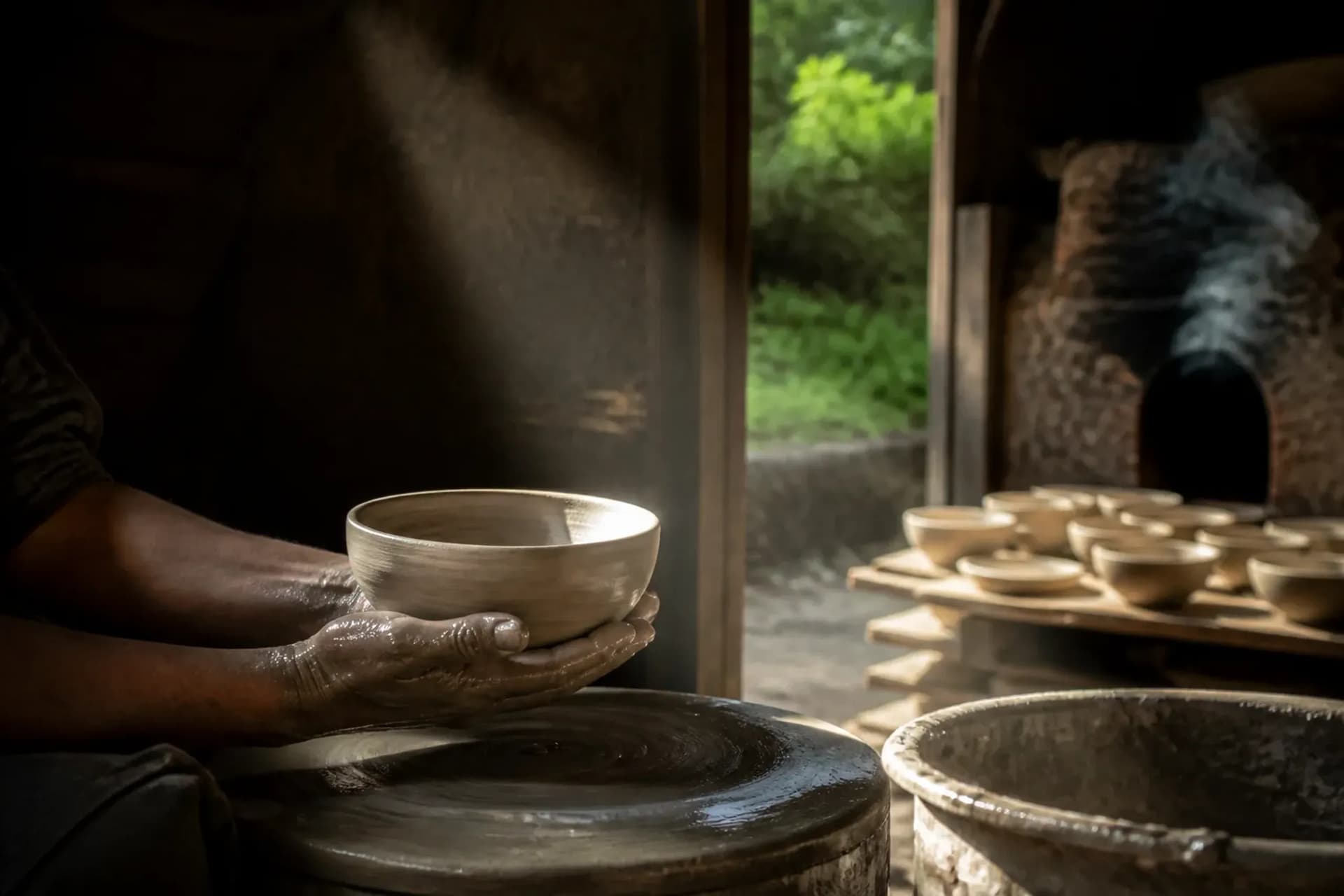
Red pine smoke hangs low on a Tochigi hillside, and the noborigama—stepped like a spine up the slope—holds its heat with the patience of stone. You feel it before you see it. Warm air, faint ash, that dry scent of resin.
This is Mashiko when it matters.
Not the tent city version. Not the shoulder-to-shoulder Saturday with a shopping list and a deadline. For travelers who buy seriously, and who want to meet living makers rather than a crowd, Mashiko rewards a different rhythm: a weekday, outside the pottery fairs, built around studios, galleries, and time to look slowly.
Our team at Japan Royal Service plans Mashiko as a modern ceramics destination first. History sits in the background. The present is what you carry home.
What “Modern Mashiko” Really Means Today
English coverage often freezes Mashiko in one era.
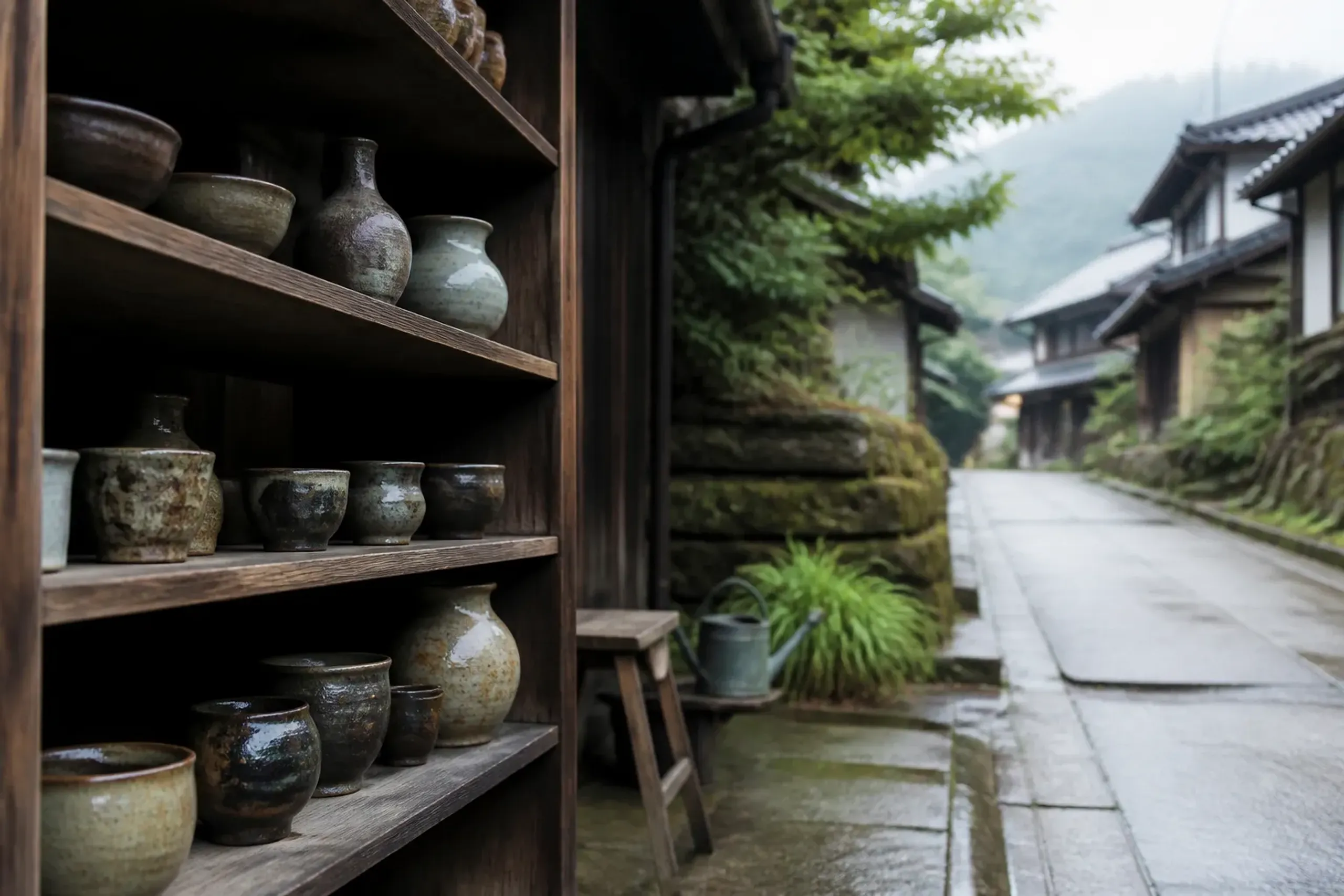
You will see Shoji Hamada and the mingei movement mentioned again and again, and he does deserve that credit. Still, Mashiko in 2026 is not a museum town. It is a working landscape with around 250 potteries and about 50 ceramic shops, drawing over two million pottery-related visitors annually.
That number explains the range.
In our experience, a modern Mashiko visit is less about “finding a souvenir” and more about developing an eye—how a lip is cut, how a glaze breaks at a foot ring, how weight sits in the palm. The best pieces do not shout. They persuade.
Set Your Expectations: Not Everything Is High-End
Mashiko is honest about price.
Some pieces are a few hundred yen. Some are properly serious, especially when you are buying one-off work or larger forms. The town supports both, and that mix is part of its health.
What changes the experience is not a bigger budget.
It is time, context, and a plan. A rushed walk-through turns Mashiko into “lots of pottery.” A curated route turns it into “this maker, this technique, this firing, this purchase.”
A Grounded Way To Meet Living Makers (Without Inventing Access)
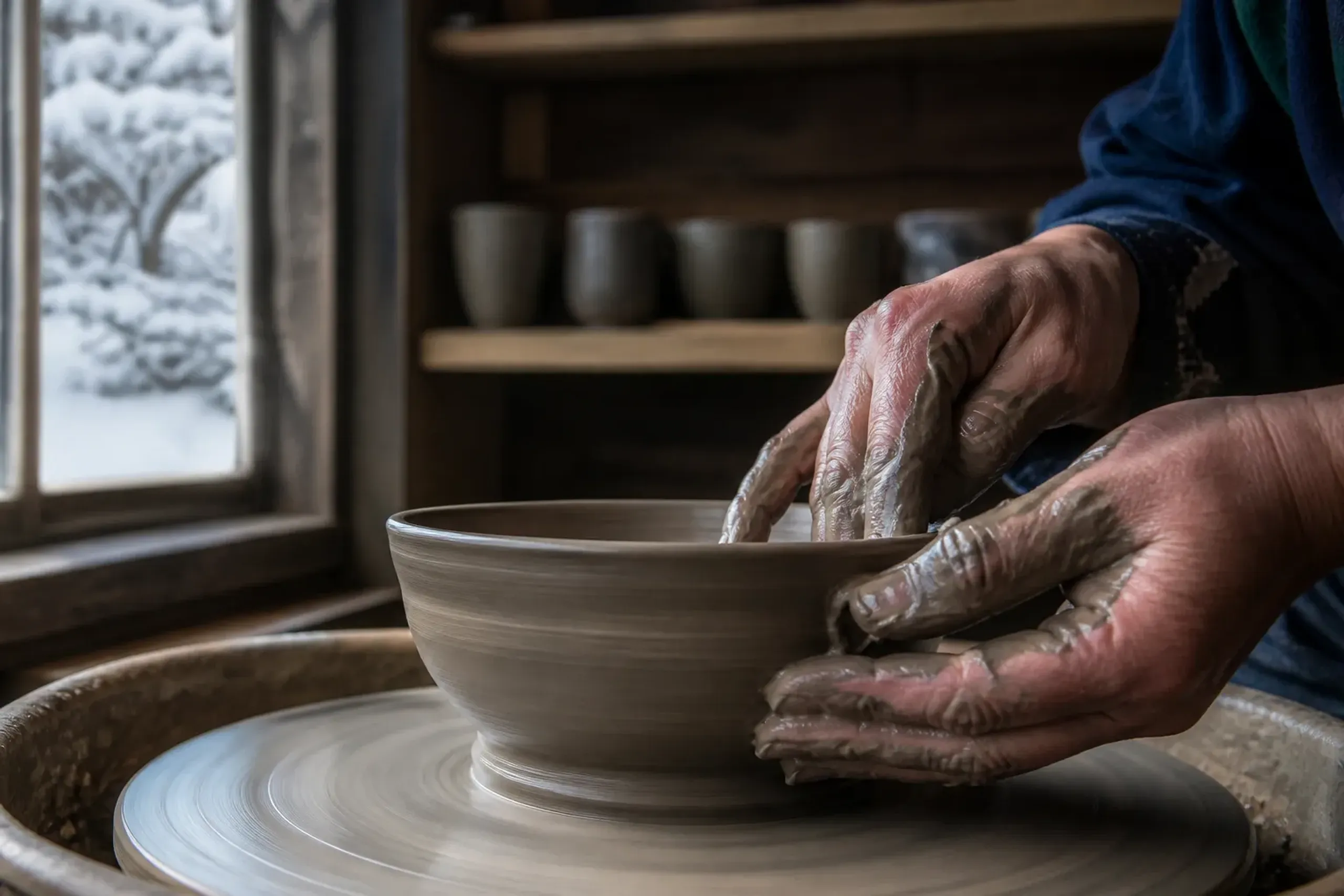
If you want studio time, be cautious with assumptions.
Not every workshop is set up for visitors. Not every potter wants drop-ins. And “private studio visits” are not a blanket promise we would ever make on a public page.
What we can say—plainly—is this.
Mashiko’s culture is unusually conversation-forward, and the fairs themselves are known for direct contact with makers and kiln craftsmen. Outside fair periods, many travelers still come to talk, learn, and buy, but you need a sharper approach: identify what you want to see, confirm what is open, and plan a route that respects working hours and firing schedules.
Start With Places That Are Designed For Visitors
Two anchors are reliable because they exist to welcome the public.
Mashiko Museum of Ceramic Art (益子陶芸美術館) offers a contemporary lens and publishes a schedule you can plan around. And Toko (陶庫)—a gallery with over 50 years of history in a renovated Taisho-era commercial building in the pottery district—runs roughly 24 exhibitions a year.
That matters.
These are the places where you can calibrate your taste before you start buying. They also help you avoid the common mistake: spending too early, then seeing something better later.
The Noborigama Firing: The Sensory Center Of Mashiko
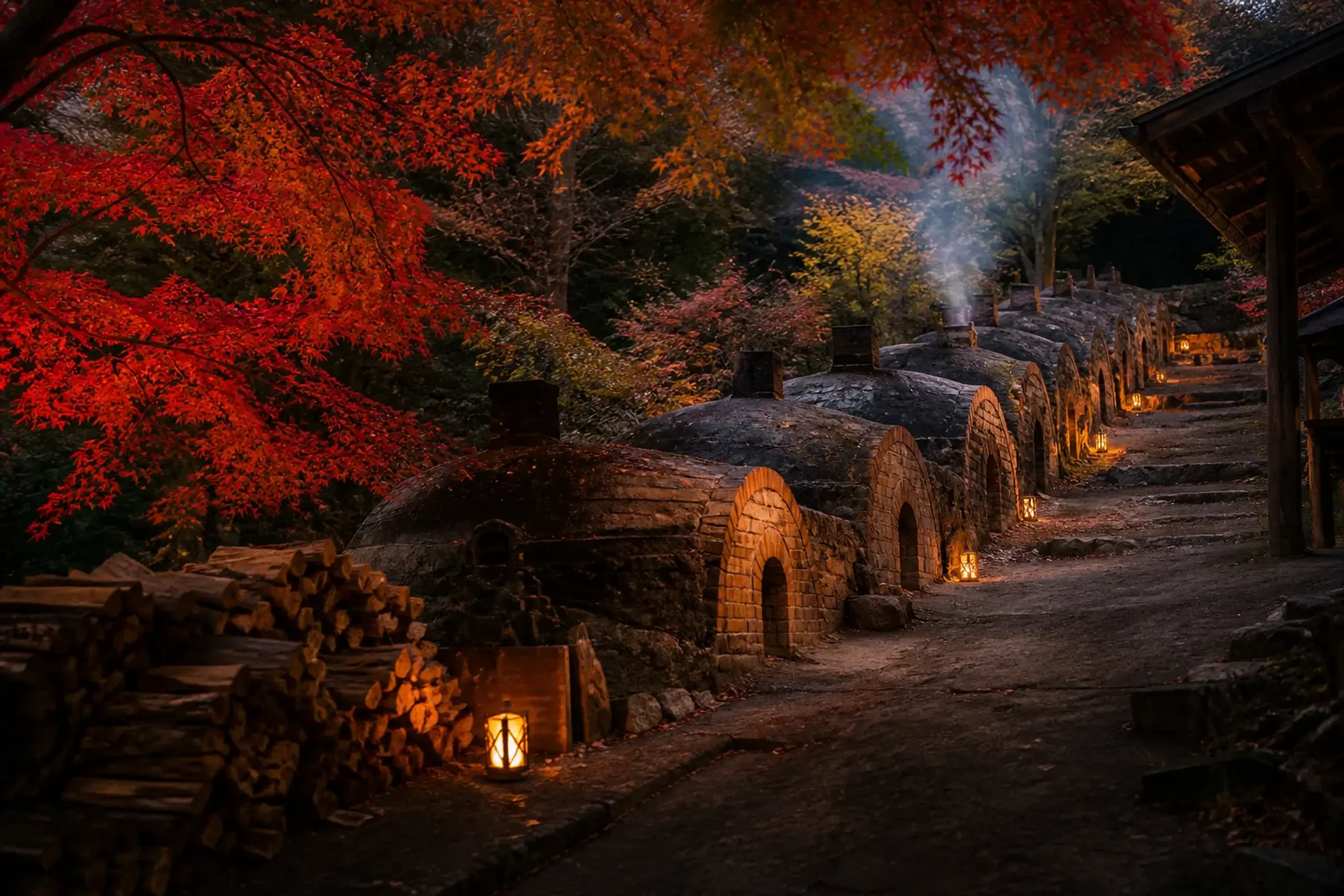
If you only remember one scene, make it this.
A noborigama (climbing kiln) is not a cute heritage artifact. It is a living machine, built to climb a hillside, with chambers that rise step by step. In Mashiko, these kilns are fired with local Japanese red pine, and a firing can run up to 60 hours.
Long time. Hot work.
When a firing is happening, the town’s atmosphere shifts. People speak a little more softly near the kiln. Tools lie ready. Schedules tighten. Even the air feels edited—smoke, heat shimmer, and that faint metallic edge that clings to ash.
For a luxury traveler, this is where value becomes real.
You are not buying an object. You are buying the outcome of a controlled burn—decisions made at 3 a.m., a choice to stoke or wait, a willingness to accept that ash will land where it wants. That is wabi-sabi, without needing to announce itself.
Key fact: Noborigama firings in Mashiko use local Japanese red pine, and can run up to 60 hours. If you want to witness one, plan your dates around real firing schedules rather than hoping to “catch it.”
Where To Go In Mashiko: Museum First, Then Gallery Streets
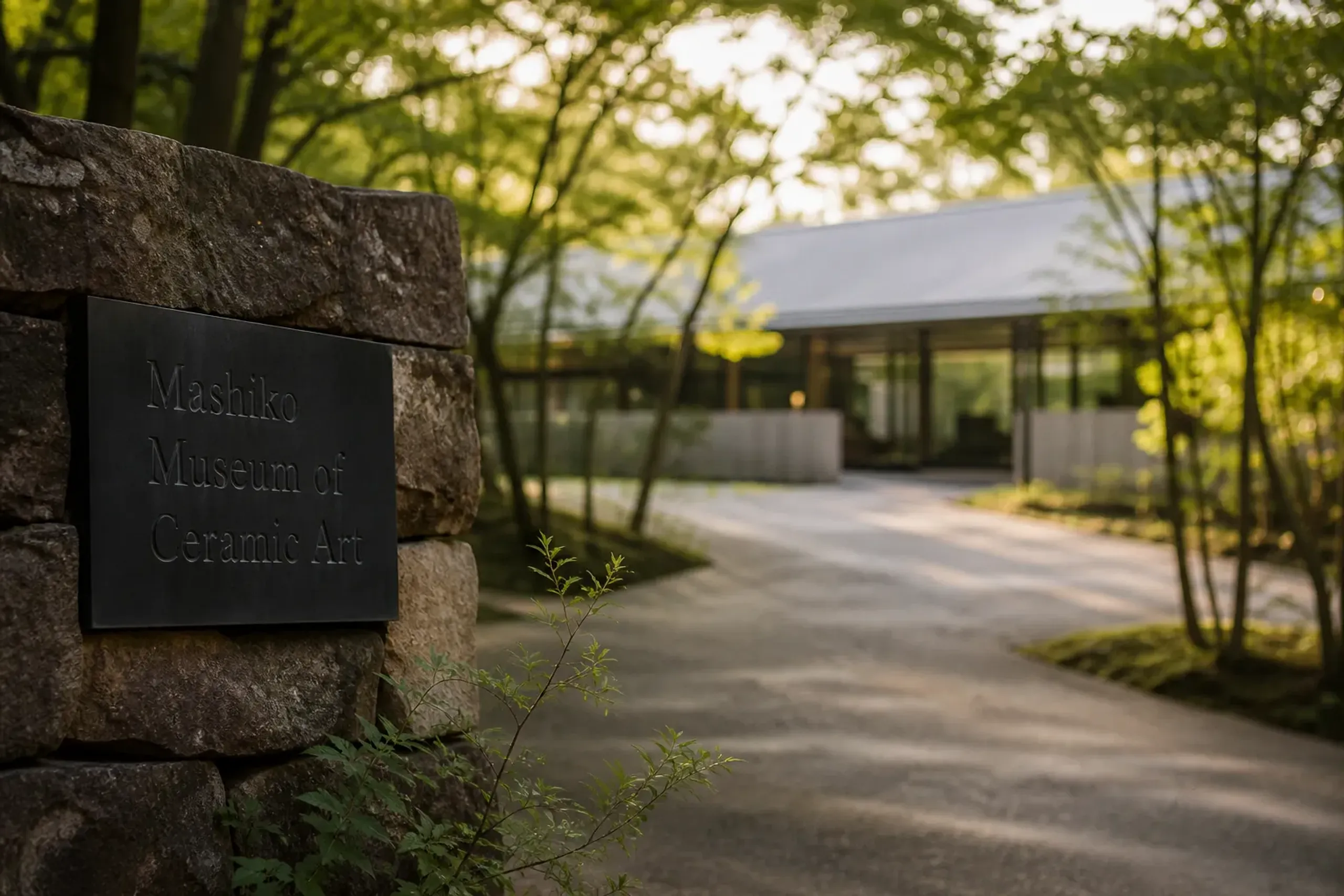
Mashiko works best in layers.
Begin with a clear visual vocabulary—museum, then galleries—before you start knocking on doors or drifting into shops. It reduces impulse buys. It also makes your conversations with makers more specific.
Mashiko Museum Of Ceramic Art: Plan Around The 2026–2027 Program
The museum publishes a schedule worth using as a travel spine.
For 2026–2027, the program includes: “Ikuzo FUJIWARA: Frontiers of Architectural Ceramics” (June 7–Aug 23, 2026), “Issei EZAKI, Shoji KAMODA, and Togaku MORI 1969-71” (Sep 6–Nov 29, 2026), and “Jennifer LEE” (Dec 13, 2026–Apr 4, 2027).
Dates matter.
If you are building a Tokyo itinerary and want one day that feels distinct, choosing Mashiko around an exhibition window is an easy way to make the trip feel intentional rather than improvised.
Artist-In-Residence Events: Real, Public, Time-Bound Access
Mashiko’s Artist in Residence program is another practical hook.
The museum documents a Spring 2026 residency with a defined residency period and public events such as an artist talk, workshop, exhibition, and gallery talk. These moments can be excellent for travelers who want contact with working artists in a setting that is clearly open to visitors.
No guessing. No awkwardness.
If you want a “meet the maker” feeling without forcing private access, aligning your day with a public program can be the cleanest solution.
Toko (陶庫): A Serious Gallery Stop On Jōnaizaka
Toko is a strong early stop.
It sits on Jōnaizaka, is known for its long history, and operates in a renovated Taisho-era building—one of the oldest standing structures in the district. The gallery’s rhythm is exhibition-led, which helps you see work in context rather than scattered on shelves.
Bring questions.
Ask about glaze, clay body, and firing. Ask what is made here versus brought in from other regions. You will learn quickly who has handled the work and who is simply selling it.
Mashiko Pottery Fair 2026: Go For Energy, Skip For Serious Buying
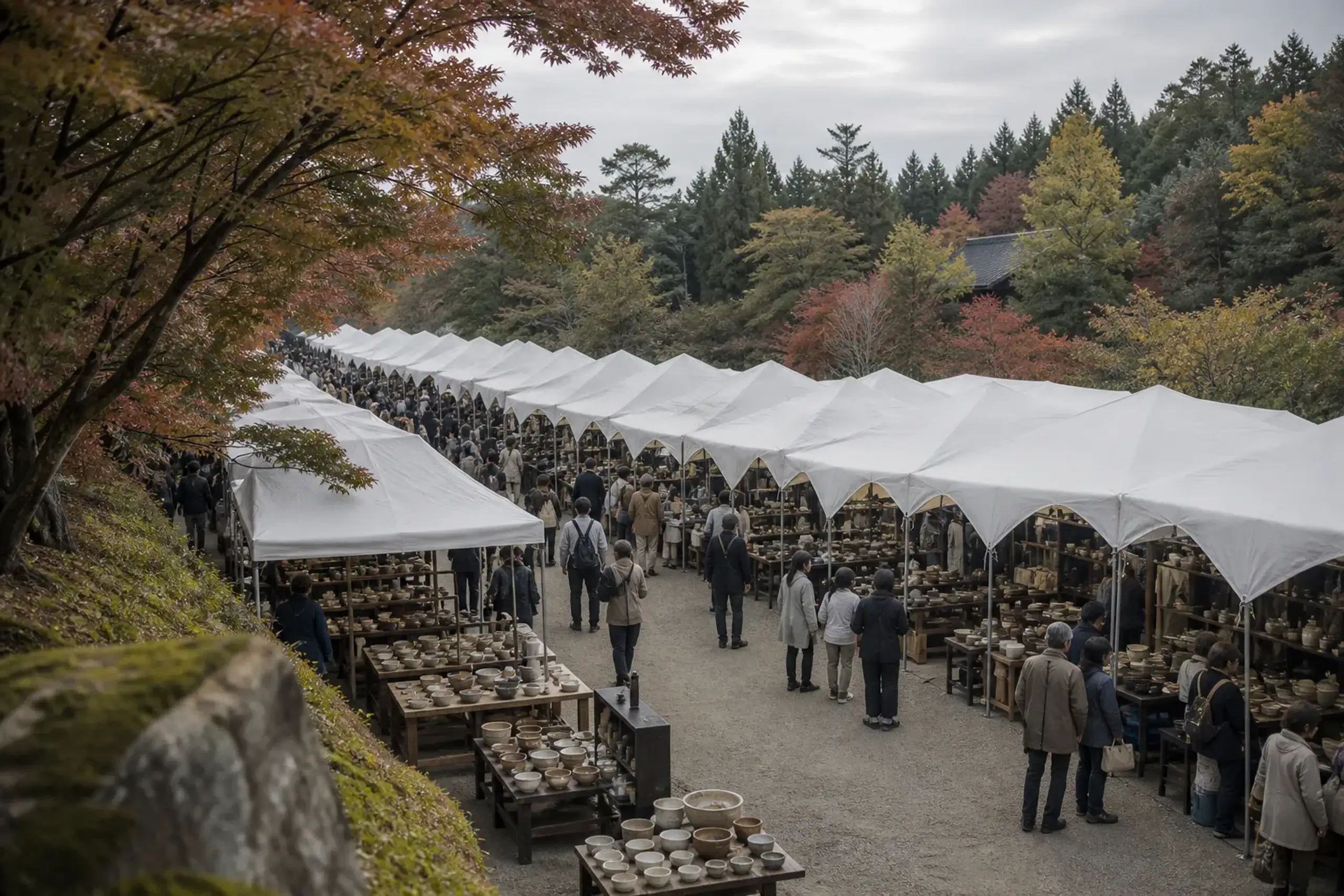
The fairs are real. They are also huge.
Mashiko hosts two pottery fairs each year, and they have been held since 1966. The combined attendance across the two fairs is roughly 600,000 visitors annually.
That scale changes everything.
Confirmed Dates You Can Plan Around
- Spring 2026 Mashiko Pottery Fair: April 29 – May 6, 2026 (Golden Week)
- Autumn Pottery Fair 2026 (114th edition): October 31 – November 3, 2026
For Autumn 2026, the fair footprint is documented at roughly 50 shops and over 600 tents. That is a town temporarily rebuilt as a market.
Our Candid Take: When The Fair Helps (And When It Hurts)
If you want maximum variety in one sweep, the fair delivers.
You can browse endlessly, speak with makers directly, and discover forms you did not know you liked. The mood is open. The pace is fast.
If you want calm, it is the wrong moment.
During fair periods, streets fill with tents and parking pressure rises. Conversations can be shorter. Shipping and packing can become an afterthought until the last hour, when you suddenly realize you bought more than your suitcase can tolerate.
The Off-Season Recommendation (Explicitly)
Visit when the fair is not running.
A quiet weekday gives you space to look, to return to a piece twice, to speak with gallery staff without a line forming behind you. If your goal is to meet makers and buy well, that silence is not a luxury extra—it is the point.
Two Itineraries: Tokyo Day Trip Vs. One Quiet Overnight
Mashiko is reachable from Tokyo in about two hours by train (with transfers), or via shinkansen + bus, as presented by JNTO. There is also a direct bus option from Tokyo’s Akihabara mentioned in Mashiko planning resources, including the Kanto Yakimono Liner positioned for day-trippers.
Good news.
It means you can treat Mashiko as a one-day escape. Still, if you want to buy thoughtfully, an overnight can change the feel completely.
Option A: Modern Mashiko As A Day Trip From Tokyo
This is the cleanest choice for a first visit.
Keep the route tight. Avoid trying to “see everything.” Build in one long block for shopping so you are not buying in a hurry right before departure.
- Morning: Arrive, then start at Mashiko Museum of Ceramic Art for a contemporary reference point.
- Midday: Move into the pottery district and gallery streets (including Jōnaizaka) with one or two pre-selected stops.
- Afternoon: Toko (陶庫) for an exhibition-led view and more serious browsing.
- Late afternoon: Final purchases, packing decisions, and shipping conversations while you still have time.
Do not treat lunch as an afterthought.
A relaxed meal gives your eye a reset. It also prevents the common “shopping fatigue” that leads to sloppy buys.
Option B: A Quiet Overnight For Collectors And Design-Led Travelers
An overnight gives you two shopping windows.
That sounds small. It is not. You can buy on day one, sleep on it, then go back with a colder eye the next morning.
- Day 1: Museum + galleries, then a slower late-day sweep when day-trippers leave.
- Day 2: Revisit your top two stops, confirm acquisitions, and handle shipping calmly.
This is also the best format if you are aligning with a museum talk or residency event.
You are not racing the last bus back to Tokyo with fragile ceramics in a paper bag.
Getting There Without Guesswork: Transport Options From Tokyo
Mashiko is not a “direct line” destination.
Toko’s own day-trip guidance notes there is no direct train from Tokyo to Mashiko, and it outlines multiple ways to reach town. JNTO likewise frames it as about two hours by train with transfers, or via shinkansen plus bus.
Option A: Train With Transfers
This suits travelers comfortable with station changes.
It also works well if you plan to keep purchases minimal, since you will be handling your own bags through stations. If you buy larger pieces, the return can feel less elegant.
Option B: Shinkansen + Bus
This can shorten the “slow part” of the journey.
In practical terms, it helps you protect your day—less time lost, more time in galleries. It is also a strong option in winter or rainy periods when road conditions and bus timing matter.
Option C: Direct Bus From Akihabara (Including The Kanto Yakimono Liner)
For day-trippers, a direct bus can be the simplest.
JNTO notes the Kanto Yakimono Liner as a good choice departing from Akihabara. If your goal is a clean, single-seat ride out and back, it is worth considering.
Private Car For Mashiko: When Time And Privacy Matter
When our guests choose a private driver, it is rarely about speed alone.
It is about control: leaving earlier than the crowd, keeping purchases stable in a cool cabin, and having a quiet place to regroup between stops. The day feels less like “public transport logistics” and more like a composed excursion.
For those looking into private transportation, our concierge team can share practical guidance on vehicle options, timing, and pacing that fits a ceramics-focused day.
Buying, Packing, And International Shipping: The Part Most Guides Skip
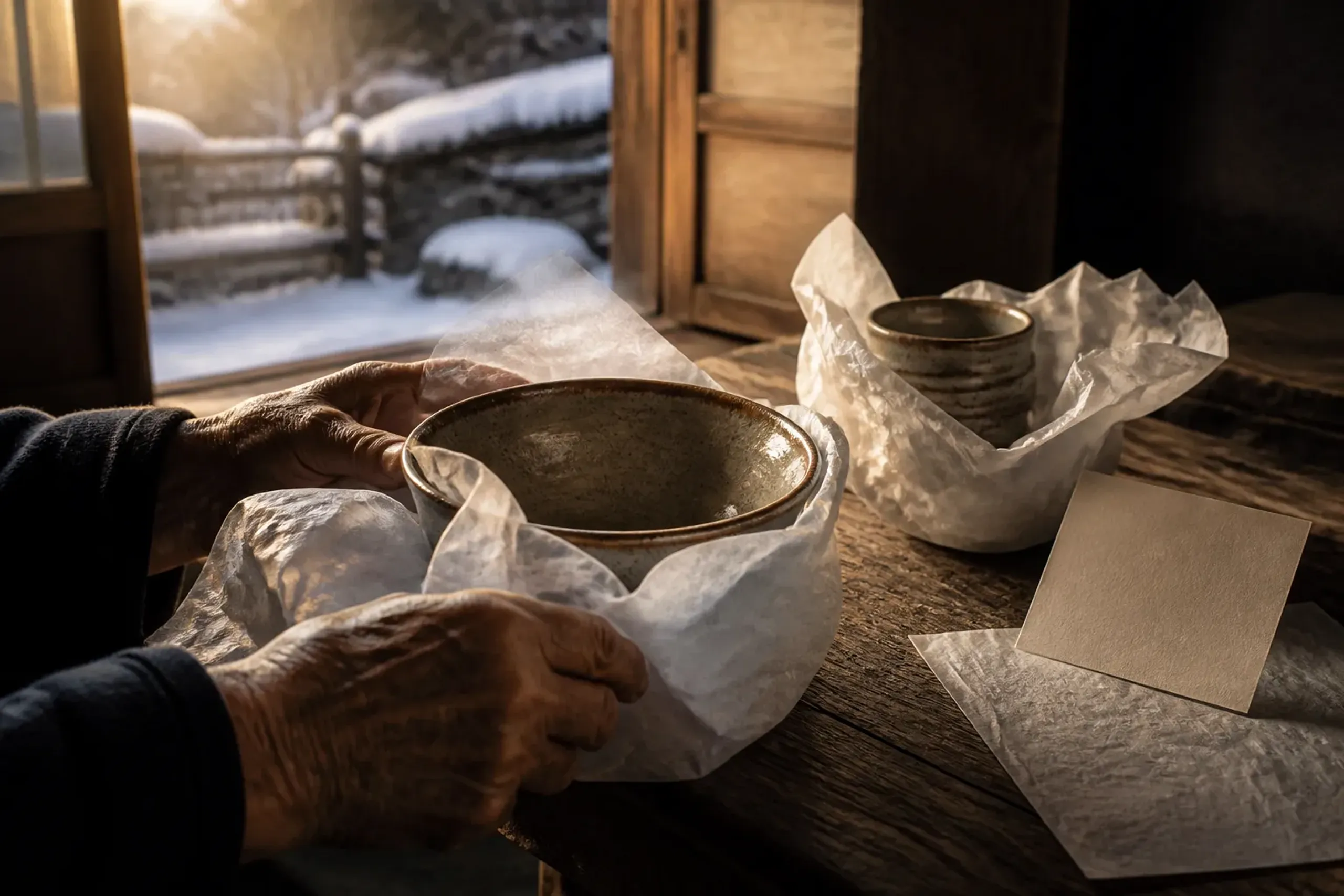
Mashiko rewards buyers. It also tests them.
Many studios are small. Some makers and shops may not be set up for international shipping, insurance questions, customs declarations, or the packaging standards you would expect from a large department store.
This is where planning pays off.
Before You Buy: A Quick Field Checklist
- Function: Is this for daily use, tea, display, or gifting?
- Durability: Ask about dishwasher and microwave suitability if you care; do not assume.
- Finish: Look at the rim and foot ring for chips, sharpness, and glaze pooling.
- Provenance: Note the maker, kiln/studio name, date (if given), and any care instructions.
Write it down.
After ten shops, even an experienced eye forgets what was where. A simple note on your phone prevents regret.
Packing Basics For Ceramics (If You Carry It Yourself)
Think compression, not just cushioning.
Wrap pieces so they cannot move inside the bag, then stabilize them so pressure from other items cannot crush edges. If you are buying multiple bowls or cups, keep them from grinding against each other during transit.
Airline rules vary.
We suggest treating fragile ceramics as carry-on when possible, especially for one-of-one work.
When Shipping Makes More Sense Than Carrying
Shipping becomes the calmer choice when you are buying volume or scale.
A larger platter. A set meant for entertaining. Pieces you do not want exposed to cabin temperature swings or baggage handling.
What to do on the ground is situational.
Some shops can help. Some cannot. Guests who want tailored guidance can speak with our concierge team about a practical acquisition plan for their route, including how to keep purchases safe and properly documented.
A Craft Corridor Worth Knowing: Mashiko + DESIGNART TOKYO (And Kyoto After)
Mashiko’s Autumn fair timing lands inside a wider design window.
Autumn Pottery Fair 2026 runs October 31 – November 3, 2026. That overlaps with DESIGNART TOKYO (October 30 – November 8). Right after, Art Collaboration Kyoto follows on November 7–9.
That sequence is useful.
It lets you move from buying objects where they are made, to seeing design in the city, to a gallery-forward Kyoto weekend. For travelers who collect, or who simply like craft with a point of view, this is a rare ten-day corridor that makes logistical sense.
If this interests you, you may also want to read our DESIGNART Tokyo guide, “DESIGNART TOKYO 2026: A Private Gallery Route.”
Planning Notes For HNW Travelers: How To Keep Mashiko Quiet
The “quiet version” of Mashiko is engineered.
It is not difficult, but it is deliberate. In our experience, the difference comes down to small choices that compound over the day.
Timing That Avoids The Crush
- Choose weekdays outside the Spring and Autumn fairs when possible.
- Arrive early so your first gallery stop is calm, not reactive.
- Leave a buffer at the end for packing and shipping decisions.
Rushing ruins judgment.
It also leads to broken ceramics. Both are avoidable.
Language And Interpretation
Small studios can be subtle environments.
If your Japanese is limited, having clear interpretation can make the difference between a polite purchase and a real conversation about technique, clay, and intent. Japan Royal Service supports guests in English, Japanese, Thai, and Filipino, which can be useful when your day includes nuanced buying decisions.
Pairings In Tochigi: If You Want More Than Ceramics
Mashiko can stand alone. It can also pair well with other Tochigi destinations.
Many travelers combine the prefecture with heritage in Nikko, or treat Utsunomiya as a practical gateway. If you want that kind of two-stop day, a private car can keep the pacing comfortable and reduce the friction of transfers.
FAQ: Modern Potters In Mashiko (2026–2027)
Is Mashiko a good day trip from Tokyo?
Yes. JNTO presents Mashiko as reachable from Tokyo in about two hours by train (with transfers), or via shinkansen plus bus. Direct bus options from Akihabara are also discussed in Mashiko planning resources.
When are the Mashiko pottery fairs in 2026?
The Spring 2026 Mashiko Pottery Fair ran April 29 – May 6, 2026 (Golden Week). The Autumn Pottery Fair 2026 runs October 31 – November 3, 2026 (the 114th edition).
Should I visit during the fair or outside fair dates?
For variety and energy, the fair is exciting. For calm shopping, deeper conversations, and a collector-style pace, we recommend visiting on a quiet weekday when the fair is not running.
How big is the Mashiko Pottery Fair?
Mashiko sees roughly 600,000 visitors across the two fairs each year. For Autumn 2026, the fair is described at roughly 50 shops and over 600 tents.
What exhibitions can I plan around at Mashiko Museum of Ceramic Art?
The museum’s published 2026–2027 schedule includes “Ikuzo FUJIWARA: Frontiers of Architectural Ceramics” (June 7–Aug 23, 2026), “Issei EZAKI, Shoji KAMODA, and Togaku MORI 1969-71” (Sep 6–Nov 29, 2026), and “Jennifer LEE” (Dec 13, 2026–Apr 4, 2027).
Can I rent a bike in Mashiko?
JNTO notes that bike rentals are available at Mashiko Station. This can be a pleasant way to move between stops when weather is fair and you are not carrying fragile purchases.
Why Choose Japan Royal Service
Many luxury travel companies can “recommend Mashiko.” That is easy.
Our team at Japan Royal Service focuses on what changes the day for an HNW traveler: discretion around your itinerary and identity, a hidden-Japan mindset that prioritizes quiet over checklists, and a shokunin-forward approach that treats living craft as the main event, not a sidebar.
We also design the practical layer with the same care.
That includes guidance on timing, transport, and acquisition planning so your ceramics day does not end with stress, broken pieces, or a rushed exit.
If you would like a tailor-made Mashiko day trip or an overnight craft corridor from Tokyo, reach our team privately via WhatsApp or LINE, or contact us here.
For a fully bespoke journey that includes craft, design, and quiet routing across Japan, explore our tailor-made planning approach.