In this guide
- 01What Is Munakata Taisha, And How Do The Three Shrines Work?
- 02Can You Visit Okinoshima Today?
- 03Why Have Women Never Been Allowed On Okinoshima?
- 04What Did UNESCO List In 2017, And What Was The Petition?
- 05How Do You Experience Okinoshima’s Meaning Without Landing There?
- 06When Is The Miare Festival, And What Will You See?
- 07How To Visit Hetsu-gū From Fukuoka With Quiet, High-Comfort Logistics
- 08Where This Fits In A Wider Fukuoka Stay (Without Turning It Into A Checklist)
- 09Frequently Asked Questions
- 10Why Choose Japan Royal Service
Munakata Taisha is three shrines for three sister goddesses, linked by the sea. One of those shrines stands on Okinoshima, an island almost no one will ever set foot on. That is not a travel inconvenience. It is the point.
Most coverage treats closure as a challenge to beat. Big mistake. This tradition is designed around distance, restraint, and the discipline of not entering.
What you can do, with integrity, is understand the three-shrine structure and visit what is open. Our team at Japan Royal Service guides guests to Hetsu-gū on the mainland, where the story is told plainly, and where the island’s meaning is encountered without trying to cross the line.
What Is Munakata Taisha, And How Do The Three Shrines Work?
Munakata Taisha is a three-shrine complex in Fukuoka Prefecture: Hetsu-gū on the mainland in Munakata City, Nakatsu-gū on Ōshima, and Okitsu-gū on Okinoshima in the Genkai Sea.
Three sister goddesses are enshrined, one at each shrine. They are traditionally described as daughters of Amaterasu, and they are associated with the safety of maritime travel, and today, travel and road safety more broadly.
This geography is not symbolic only. It is literal. The shrines are spaced along open water, and that spacing shapes how the faith is practiced.
The result is a sacred network, not a single site. You do not “complete” it by ticking boxes. You learn where worship is possible, and where it is deliberately not.
The Three Shrines At A Glance
- Hetsu-gū (Mainland, Munakata City): The primary public-facing shrine, and the practical starting point for most visits.
- Nakatsu-gū (Ōshima Island): Open to the public, with a remote worship hall that faces Okinoshima.
- Okitsu-gū (Okinoshima Island): A shrine on an island that is not open to visitors.
Even if you never leave the mainland, you are still within the system.
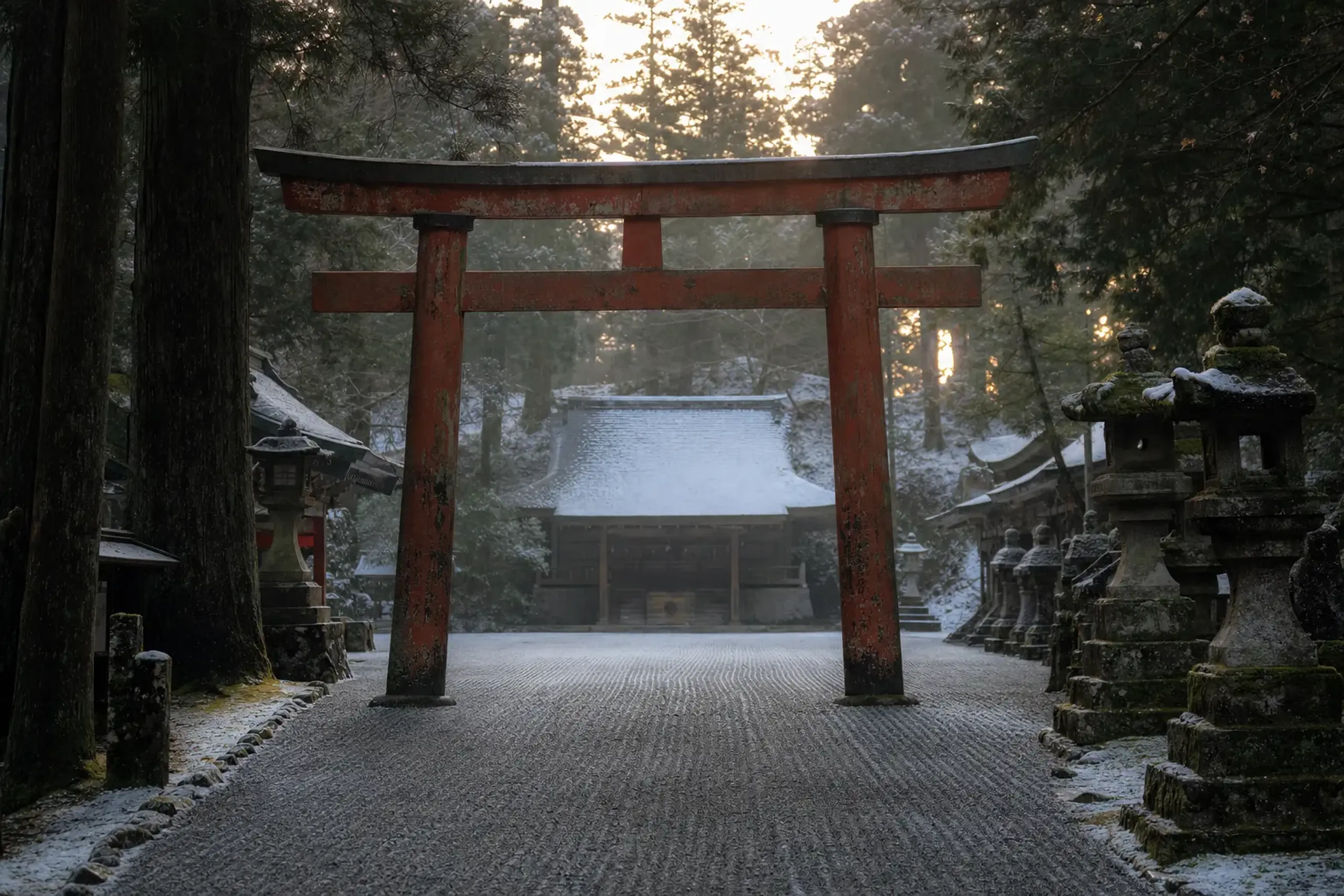
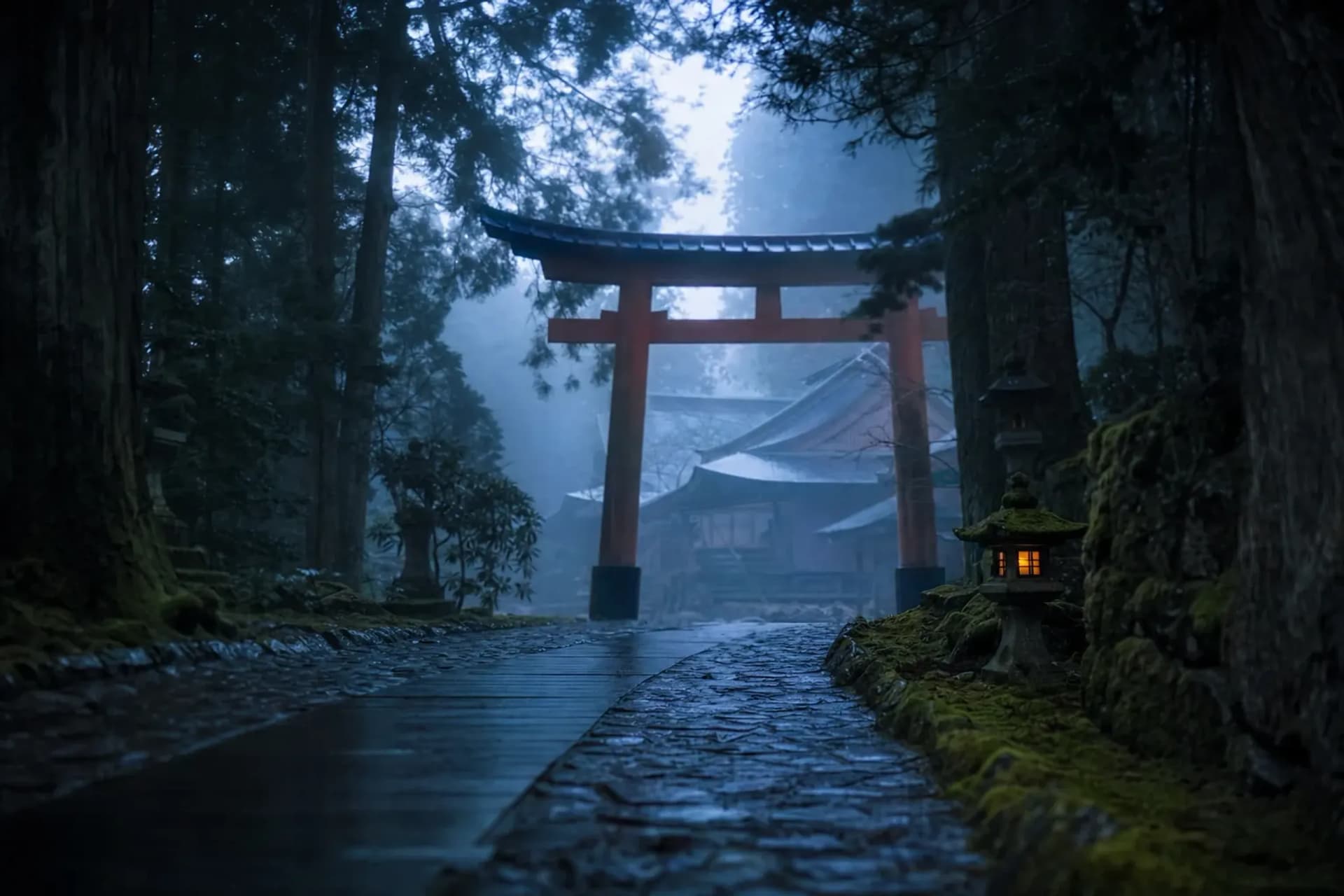
Hetsu-gū is the mainland anchor of Munakata Taisha’s three-shrine tradition.
That is intentional. Quietly so.
Can You Visit Okinoshima Today?
No—Okinoshima is not open to visitors, and unauthorized entry is a criminal offense.
Munakata Taisha’s official information states that entry is prohibited except for Shinto priests. UNESCO documentation also records long-standing taboos associated with the island, including purification bathing (misogi) for those who land under special circumstances, a prohibition on removing anything, and restrictions on speaking about what was seen or heard.
Historically, before the 2017–2018 period, a small number of men could attend an annual ritual on the island after sea-water purification. That is no longer the current arrangement.
Today, the island is occupied only by a single Shinto priest at a time, rotating on 10-day intervals. That single detail tells you what Okinoshima is: not a destination, but a boundary.
Key fact: Japan Royal Service has no involvement with Okinoshima, and we do not claim to provide access; it is not available to any visitor through any arrangement.
Why Have Women Never Been Allowed On Okinoshima?
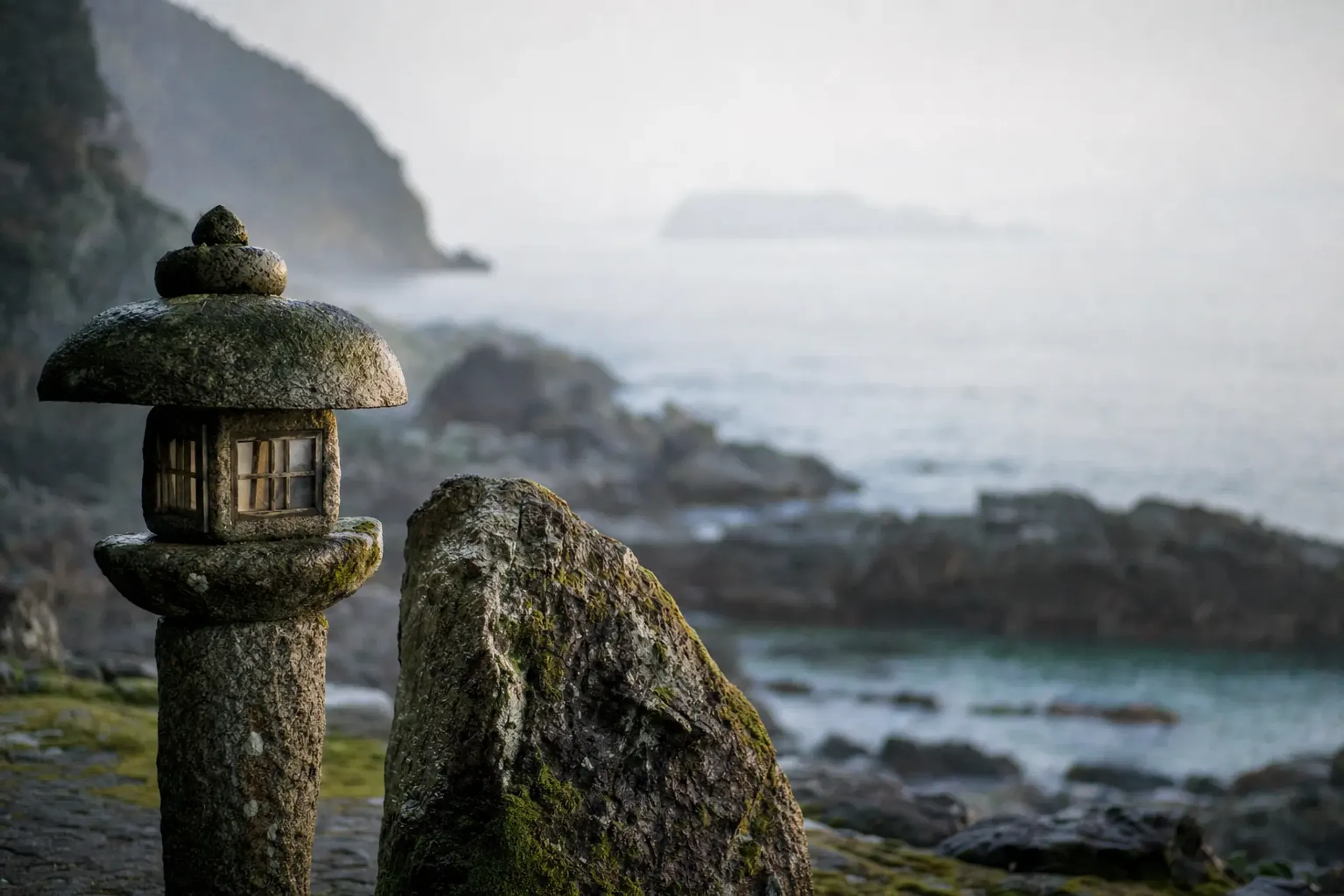
Historical accounts indicate women have never been permitted on Okinoshima, and the precise origin of that restriction is not fully understood.
That uncertainty matters. Many travel articles try to supply a neat explanation—medical, social, or doctrinal—because it reads clean.
We do not do that. Our concierge team treats the restriction as an established fact of the tradition, and we avoid inventing a tidy justification where sources do not support one.
For a HNW traveler, this can be uncomfortable in a useful way. Wabi-sabi often looks like moss, stone, and silence, but it also looks like restraint: the willingness to accept that some practices do not resolve into modern narratives.
What Did UNESCO List In 2017, And What Was The Petition?
In 2017, UNESCO inscribed “Sacred Island of Okinoshima and Associated Sites in the Munakata Region” as a World Heritage Site, and UNESCO proceeded despite a formal petition objecting to the gender-based exclusion.
The World Heritage property is explicitly a cluster: the sacred island and associated sites in the Munakata region. That framing allows the tradition to be represented without demanding that Okinoshima become accessible in a tourist sense.
A Hindu advocacy organization formally petitioned UNESCO’s World Heritage Committee to withhold the listing over the site’s gender-based exclusion. UNESCO proceeded with the inscription regardless.
That is the documented record. Our role is not to render a verdict, but to help guests understand the situation with clarity, and to visit the open sites respectfully.
How Do You Experience Okinoshima’s Meaning Without Landing There?
You experience Okinoshima through Hetsu-gū’s museum collection and representative shrines, and—if you go to Ōshima—through the Okitsu-miya Yohaisho, a hall for remote worship facing the island.
The most important pivot is mental, not logistical. Hidden Japan is often described as “hard to access,” but here the “hidden” is formalized and enforced, and that enforced distance is part of the religious structure.
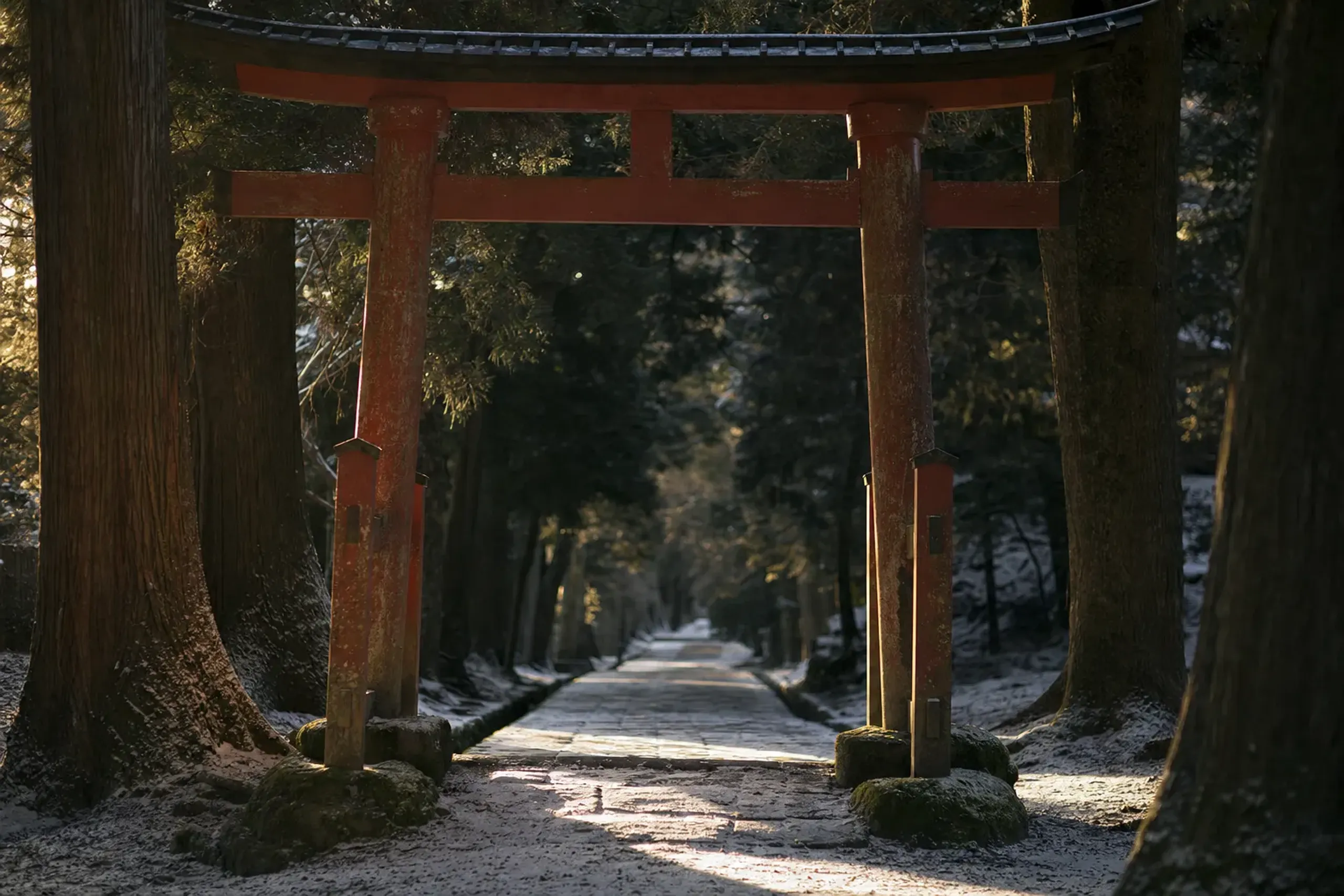
Hetsu-gū’s grounds include representative shrines standing in for the other two. This allows visitors to pay respects to all three goddesses from the mainland, without pretending the physical island is attainable.
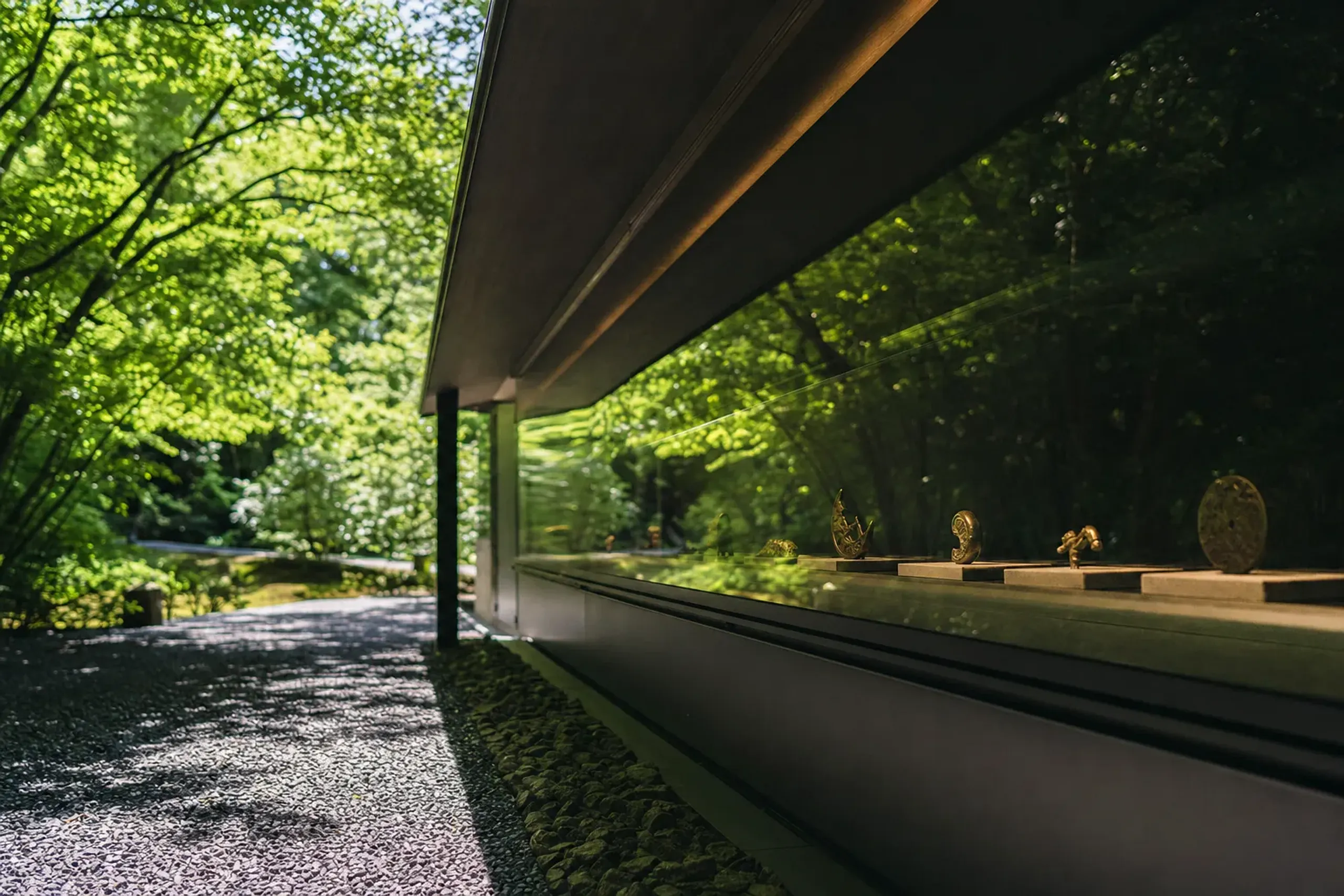
There is also the Munakata Taisha Shimpokan (Munakata Taisha Museum), where artifacts excavated from Okinoshima are housed and displayed. Over 80,000 artifacts have been excavated—some sources cite up to 120,000—dating from roughly the 4th to 9th centuries, with several designated Japanese National Treasures.
It is a different kind of encounter. You are looking at offerings and objects that testify to ancient maritime exchange linking Japan, Korea, and China. You are also seeing what preservation looks like when access is restricted by principle.
What A Mainland Visit Actually Feels Like
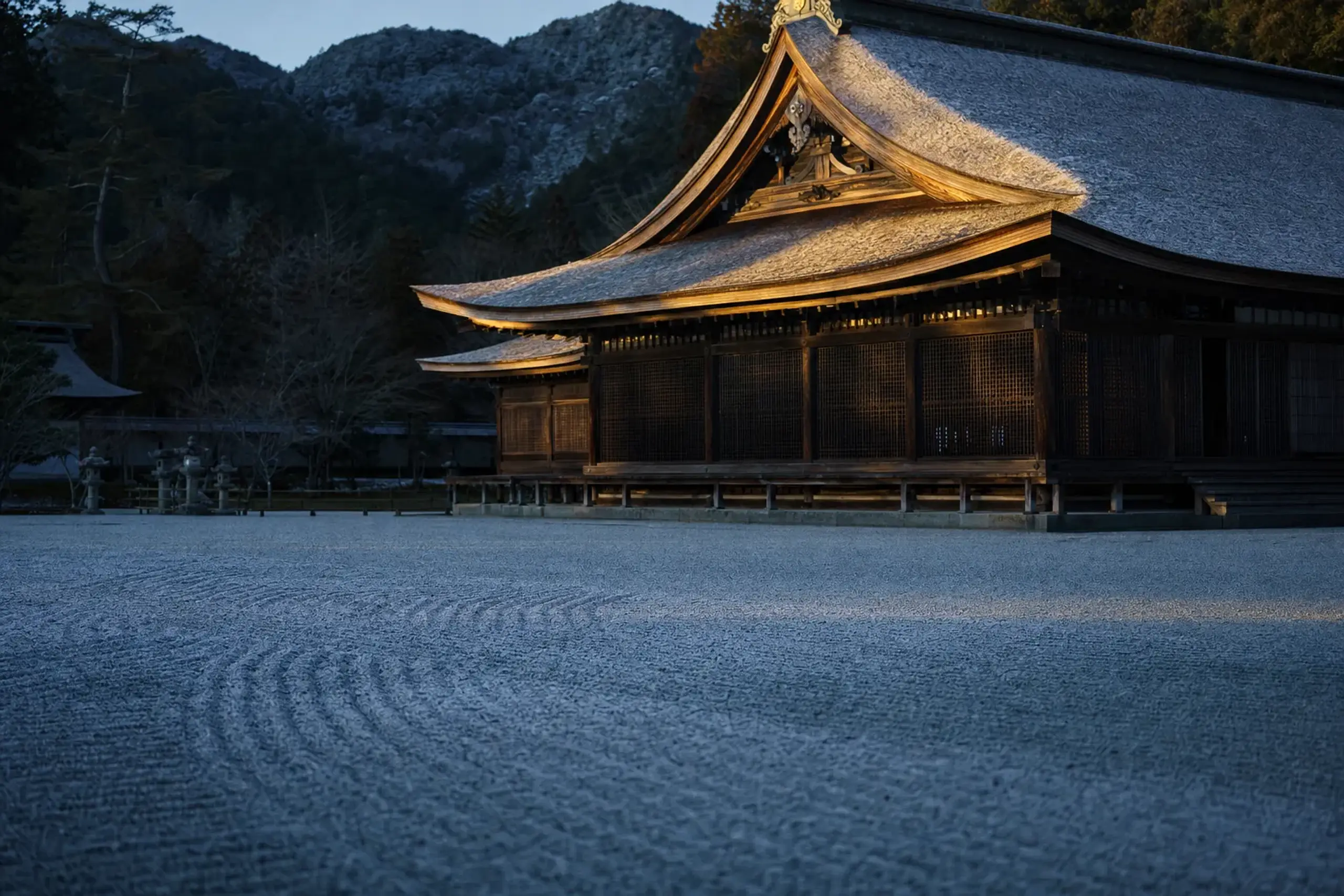
You arrive to a precinct that is orderly and active. Not theatrical. The rooflines catch light, then fall back into shade.
In our experience, guests appreciate the lack of spectacle. Discretion works both ways here: you move through living sacred space without turning it into content.
That tone is the real luxury. It asks you to slow down, to speak less, and to let the site set the pace.
When Is The Miare Festival, And What Will You See?
The Miare Festival is held annually on October 1, and it is the visible, attendable ritual link between the three shrines, with roughly 300 fishing boats escorting a central vessel carrying the goddesses symbolically toward the mainland.
The three-shrine structure can sound abstract until you see it enacted on water. Boats gather. The sea becomes a procession route.
The festival is part of Munakata Taisha’s Autumn Grand Festival period, commonly presented as running October 1 to 3, and a 2026 calendar listing specifies Oct 1–3, 2026, with the sea procession on Oct 1.
This matters for travelers because it offers a way to witness the living tradition without any need to approach Okinoshima itself. No workarounds. No “as close as possible.” Just the tradition, as it is practiced in public view.
Timing Notes For 2026 Travelers
If you are planning around Oct 1–3, 2026, build the trip around the ritual day rather than squeezing it between other stops. Crowds are not the issue. Rhythm is.
We also encourage guests to hold plans lightly until close to travel dates, because shrine calendars and local marine conditions can shape how a day feels on the ground.
How To Visit Hetsu-gū From Fukuoka With Quiet, High-Comfort Logistics
The most comfortable approach is a private chauffeur from central Fukuoka City, timed to arrive early for a calm precinct and an unhurried museum visit.

Hetsu-gū is in Munakata City on the mainland. A day visit can be paced slowly, which is exactly what the site rewards.
For guests who value privacy—HNW travelers who prefer not to navigate train transfers in formalwear, or who simply want the day to stay quiet—our team can provide guidance and a plan built around private transportation. Simple. Watchful. On your schedule.
We keep the design restrained: arrival, shrine visit, museum time, and a deliberate exit. That is wabi-sabi in itinerary form.
If You Also Consider Ōshima: What Is Known, And What We Keep Informational
Nakatsu-gū is on Ōshima, roughly 11 km from Hetsu-gū, and it is open to the public. Munakata Taisha maintains the Okitsu-miya Yohaisho on Ōshima, rebuilt in 1933, as a place to venerate Okinoshima from afar; the island may be visible in good weather.
Munakata City operates a municipal ferry route between Kōnominato (mainland) and Ōshima. The city tourism page states it is about 25 minutes by ferry “Ōshima” and about 15 minutes by passenger boat “Shiokaze,” with multiple daily services.
We share those facts because they help you understand the geography. For anything involving specific timings or on-the-day pacing, our concierge team confirms the latest details directly with guests during private planning.
Where This Fits In A Wider Fukuoka Stay (Without Turning It Into A Checklist)
Munakata Taisha works best as a single, serious day that breaks a city stay with air, salt, and religious continuity.
If you are building a longer Kyushu plan, keep it honest. Not everything needs to connect by theme.
For broader context on the region’s day-trip geography from Fukuoka, we point readers to one line of background reading: Yanagawa Canals: How One Man Saved the Waterways. It is not the same story, but it shares the same discipline of place-based history.
And if your interests lean toward sacred-site realism—what is actually practiced today, not what looks good in a brochure—our team also recommends: Okinoshima, Fukuoka: A Forbidden World Heritage Site. Read it as context, not as a promise.
Frequently Asked Questions
Can Foreign Visitors Go To Okinoshima If They Ask A Guide Or A Concierge?
No—Okinoshima is not open to visitors, and public access without authorization is a criminal offense.
Munakata Taisha’s official information states that entry is prohibited except for Shinto priests, and the island is currently occupied only by a rotating priest on 10-day intervals.
What Is The Best Place To Understand Okinoshima If I Cannot Land There?
The primary place is the Munakata Taisha Shimpokan (Munakata Taisha Museum) at Hetsu-gū, where excavated Okinoshima artifacts are housed and displayed.
Hetsu-gū also has representative shrines for the other two sites, allowing a complete act of worship from the mainland.
Is Munakata Taisha Still Worth Visiting If I Only See Hetsu-gū?
Yes—Hetsu-gū is a complete, legitimate way to engage with the three-shrine tradition because it includes representative shrines and the museum collection connected to Okinoshima.
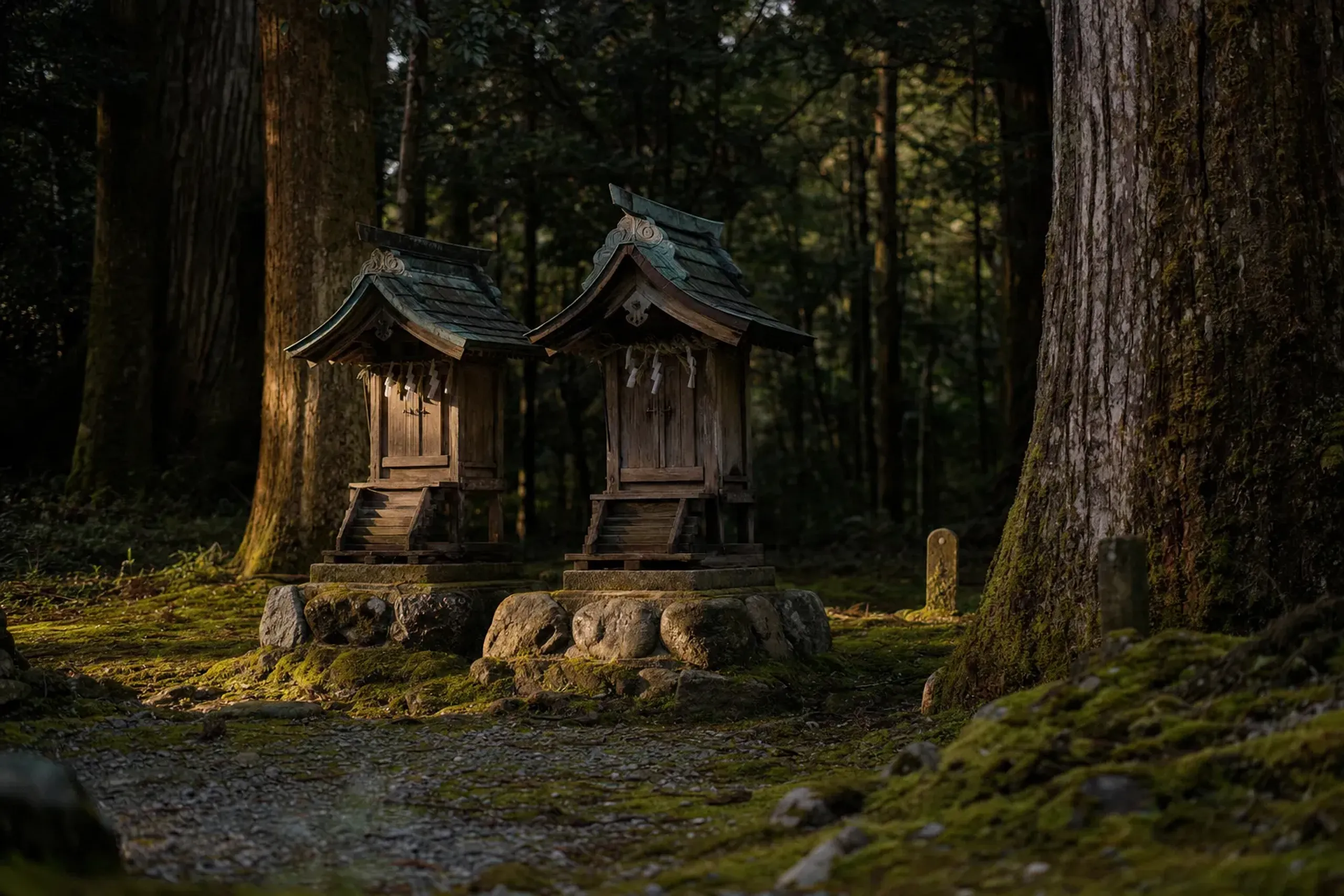
You are not seeing a substitute. You are seeing the public-facing heart of a system that is designed to keep one part out of reach.
When Is The Miare Festival, And Do I Need To Go To Okinoshima For It?
The Miare Festival is held annually on October 1, and you do not need to go to Okinoshima to witness its sea procession.
Roughly 300 fishing boats escort a central vessel carrying the goddesses symbolically toward the mainland, making the ritual link visible without island access.
Why Choose Japan Royal Service
Luxury travelers choose Japan Royal Service when they want Japan handled in a quieter register: discretion first, wabi-sabi over spectacle, and a clear line between what is sacred and what is simply “bookable.”
For Munakata Taisha, that means we focus on what is real and available—Hetsu-gū on the mainland—while stating plainly that Okinoshima itself is not accessible to any visitor, through any arrangement. No romance. No shortcuts.
Our concierge team builds a measured day around the shrine precinct and museum collection, with a pace that respects living worship and protects your privacy. If you prefer, we can also design the wider Kyushu arc as a bespoke itinerary that keeps this visit from feeling like a detour.
For private coordination, reach our team privately via WhatsApp or LINE, or contact us here.