In this guide
- 01What The Nachi Fire Festival Is (And Why It Matters)
- 02When And Where It Happens: Date, Venues, And The Route
- 03How To Get There: The Official Access Route (And The Calm Alternative)
- 04What To Expect On The Day: Heat, Crowds, Sound, And Pace
- 05Etiquette And Photography: How To Watch Without Taking From The Rite
- 06Where To Stay: Nachikatsuura As A Gateway Base
- 07Extend The Journey: Kumano Depth Beyond The Torches
- 08How To Book (Official Process) And What To Confirm
- 09Nachi Fire Festival FAQ (Luxury Traveler Edition)
- 10Why Choose Japan Royal Service
Some festivals are easy to “do.” You show up, take photos, leave.
The Nachi Fire Festival is not that kind of day. It is hot, crowded, steep, and deeply sacred.
If you are a luxury traveler, the real problem is not comfort. It is control. You want privacy, clear context, and a plan that respects the ritual without turning you into part of the congestion.
Our team at Japan Royal Service built this guide for that exact need. We translate official facts into a calm, discreet field plan—then we invite you into a private concierge conversation for tailored guidance.
What The Nachi Fire Festival Is (And Why It Matters)
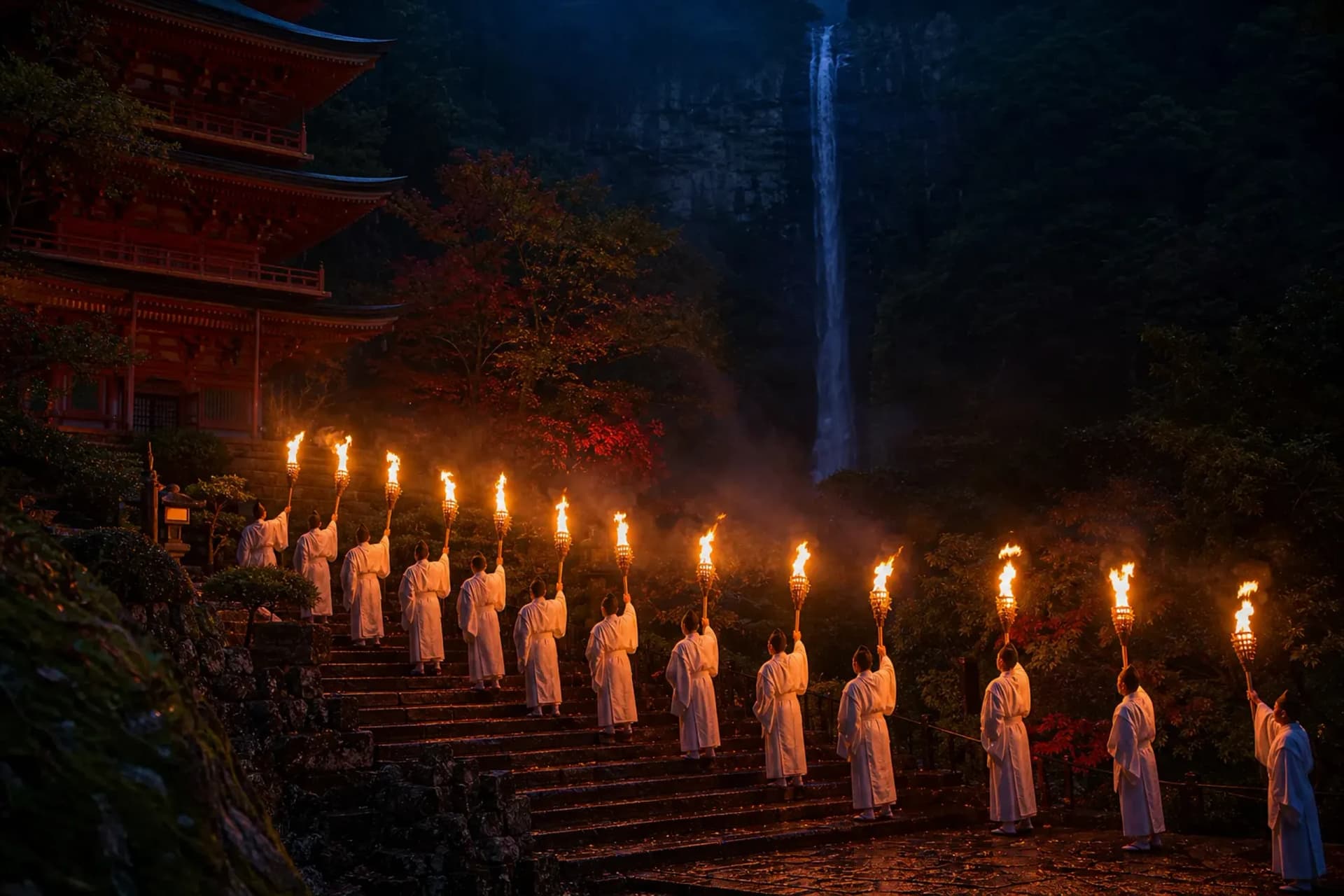
A purification rite of fire and movement—best watched with restraint and respect.
The festival is officially known as the Ogi Matsuri (Fan Festival). Many travelers also know it as the Nachi Fire Festival, or Nachi Ougi Matsuri.
It takes place every year on July 14 at Kumano Nachi Taisha Grand Shrine in Nachikatsuura, Wakayama Prefecture. Expect a serious Shinto rite, not a stage show.
The core movement is precise. A procession of twelve ogi mikoshi (fan shrines) travels from Kumano Nachi Taisha toward Nachi Waterfall, and large flaming torches are carried to purify the route.
Fire. Water. Stone steps. That contrast is the point.
Key fact: Official sources describe the ritual purpose as purification along the route used to lead the shrine’s deities down toward the sacred waterfall.
The Ritual Structure You Should Know Before You Arrive
Official descriptions highlight the twelve ogi mikoshi as tall, narrow forms associated with Nachi Waterfall, decorated with elements such as fans and mirrors.
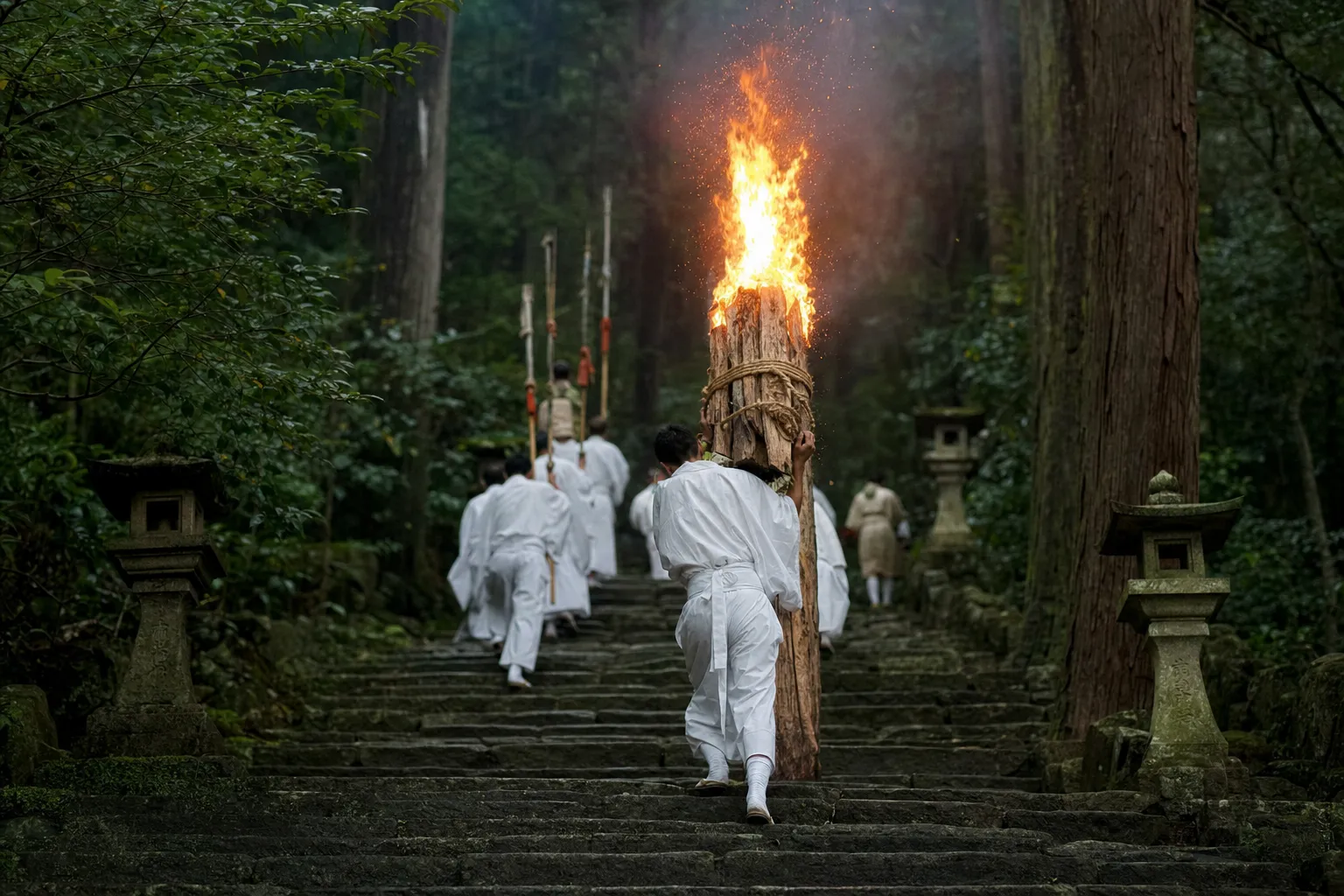
The torches are not props. They are functional flame—carried close, moving with intention, in summer heat.
Many first-timers misread the crowd as “festival energy.” Big mistake.
Think of it as a living religious corridor. Your behavior, where you stand, and when you move all matter.
When And Where It Happens: Date, Venues, And The Route
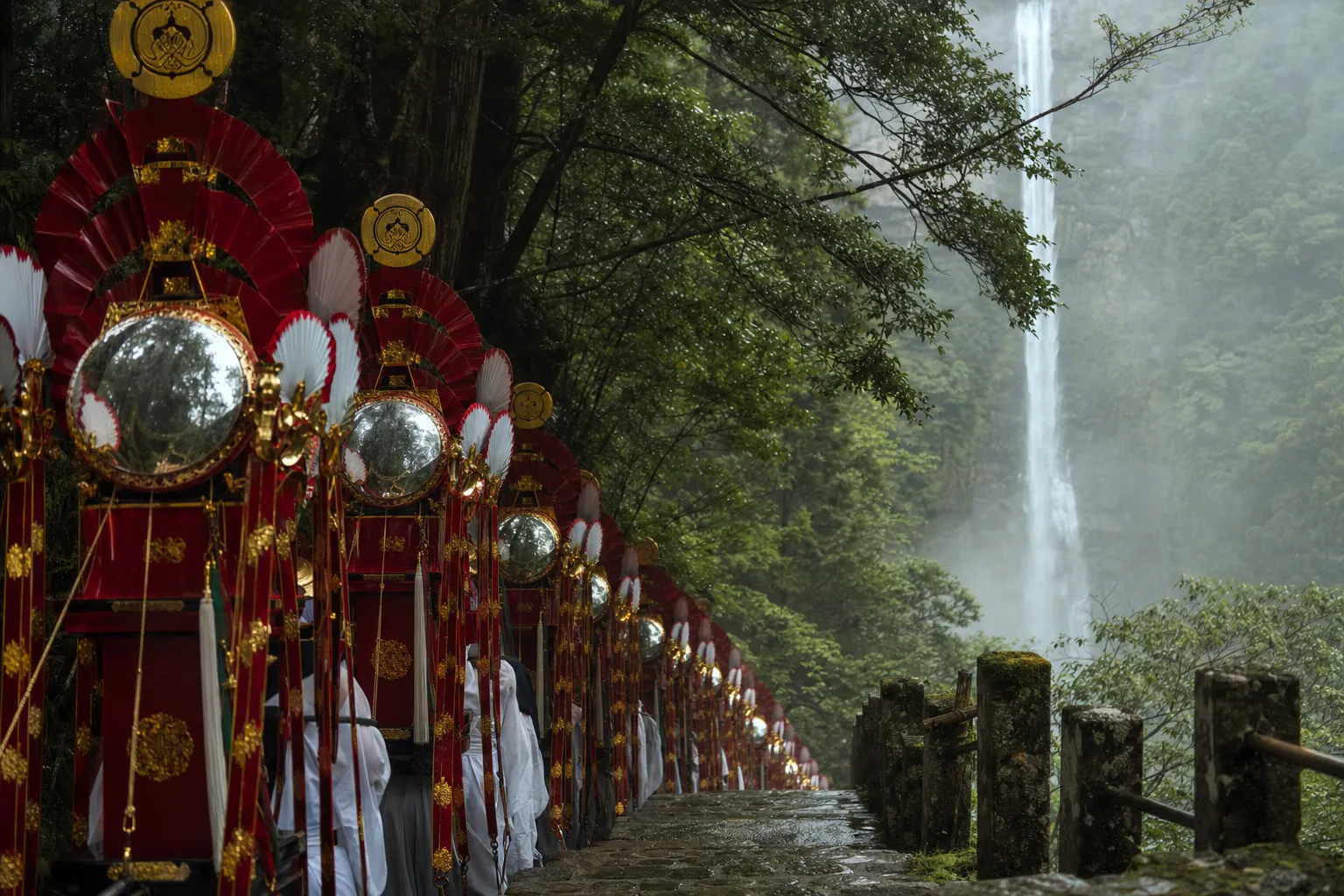
The Nachi Fire Festival is held annually on July 14. Venues cited by official listings include Kumano Nachi Taisha and Hiro-jinja Shrine (Hirou Shrine).
Official address information for the event area is listed as: Wakayama-ken Higashimuro-gun Nachikatsuura-cho Nachisan 1.
Time windows are published in some English listings for specific years. Treat those schedules as subject to change and confirm locally close to your travel date.
What This Means For Luxury Travelers
You are not choosing a seat. You are choosing a flow.
The route and steps compress people into narrow, slow-moving pockets, especially near the shrine grounds and the approach toward the waterfall area.
In our experience, the calmest luxury outcome comes from planning the day like a choreography: arrival timing, waiting posture, heat strategy, then a clean exit.
That is the difference between spiritual immersion and simple endurance.
How To Get There: The Official Access Route (And The Calm Alternative)
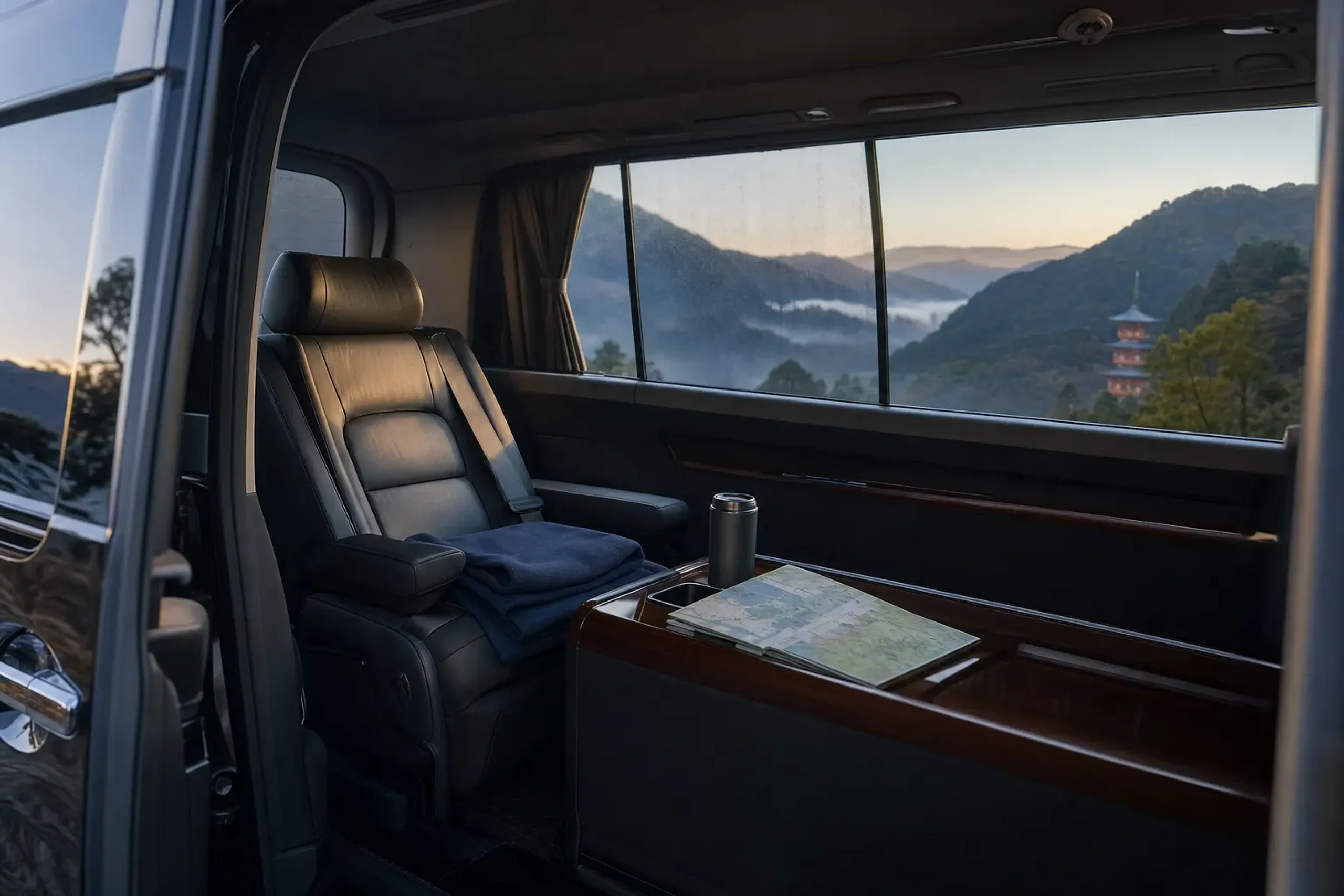
Privacy often begins before the first step—inside a quiet cabin with a disciplined timetable.
Official guidance from JNTO notes access by bus from JR Kii-Katsuura Station to the Nachisan area.
Visit Wakayama also describes taking a Kumano Kotsu bus from JR Kii-Katsuura Station and getting off at “Jinja/Otera Chushajo”.
That is the public baseline. It works. It is also the same plan used by most of the crowd.
Private Car Strategy: Privacy Starts With The Approach
A luxury day here is won on the road, not at the torches.
With Japan Royal Service, many guests choose a chauffeured approach from their base in Wakayama or the broader Kansai area, built around low-visibility routing and timing buffers.
We keep it practical: clean vehicle, quiet cabin, cold towels, and a driver who does not force conversation when you want silence.
For families, that calm matters more than any upgrade.
Helicopter Charters: Understand The Constraint
Guests sometimes ask about reaching the Kumano region by helicopter for time efficiency and discretion. It can be a useful tool in Japan, but it is never a blanket promise.
Helicopter operations depend on weather, daylight rules, landing permissions, and the specific charter operator’s routing. Reality first.
If you are considering it, contact our concierge team for tailored guidance and feasibility checks for your dates.
We will be candid about what is sensible.
What To Expect On The Day: Heat, Crowds, Sound, And Pace
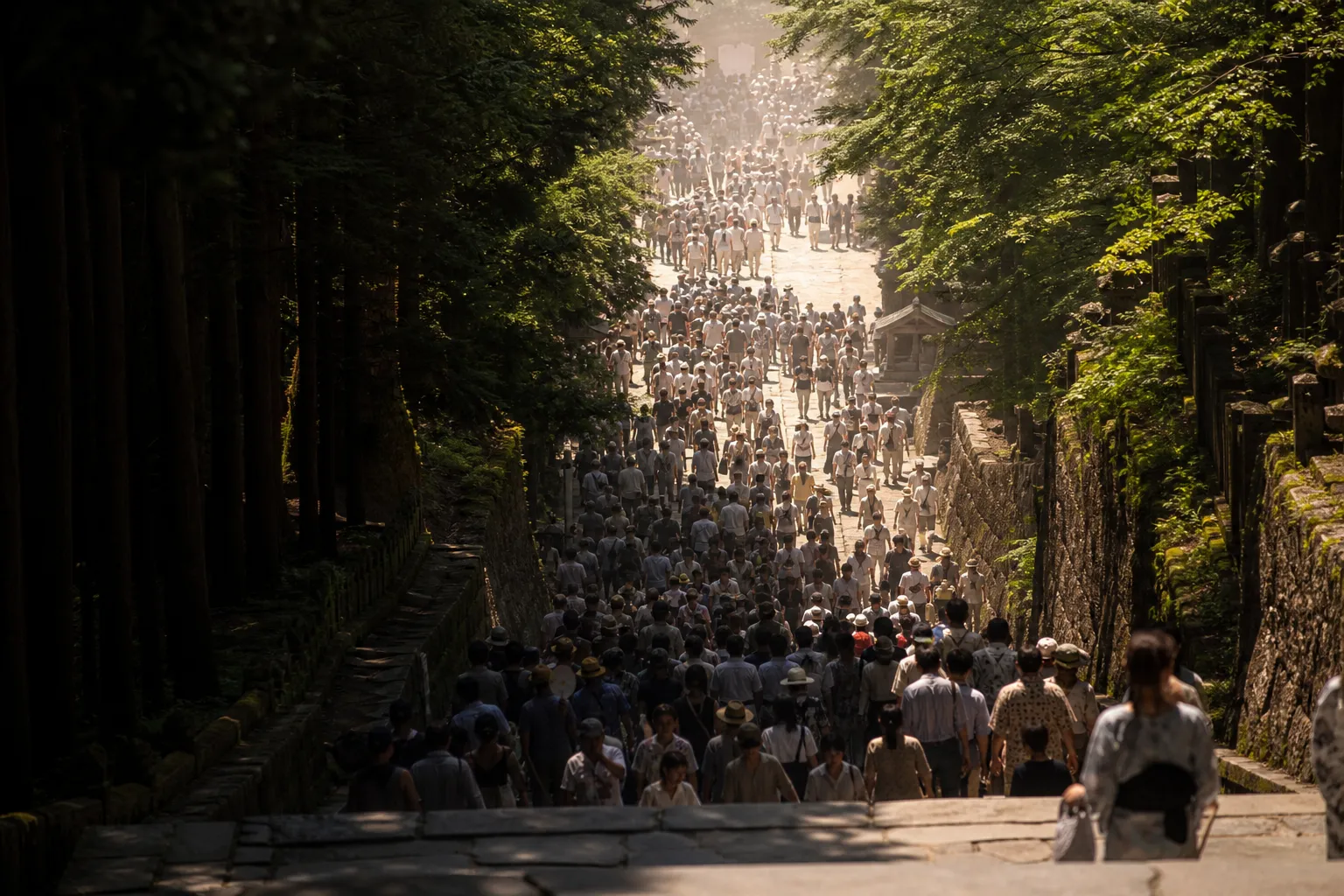
A narrow approach changes everything: timing, posture, and exit planning.
The sensory load surprises even seasoned travelers. July in Wakayama can feel heavy, and the stone approaches hold heat.
You will stand still for long spells. Then move suddenly.
Smoke drifts. People lean in. A shrine precinct becomes a single shared breath.
If you want a meaningful experience, plan for physical comfort like it is etiquette—because it is.
Discreet Comfort Checklist (Without Looking Like A Tourist)
Keep your kit small. Minimal bulk reads as respect.
- Clothing: breathable layers, covered shoulders, stable shoes for steps and gravel.
- Heat management: water, electrolyte support, and a hand towel; avoid loud “gadget” cooling rigs.
- Position discipline: once you have a workable spot, hold it; repeated repositioning draws attention.
Quiet competence looks good on everyone. Especially here.
Etiquette And Photography: How To Watch Without Taking From The Rite
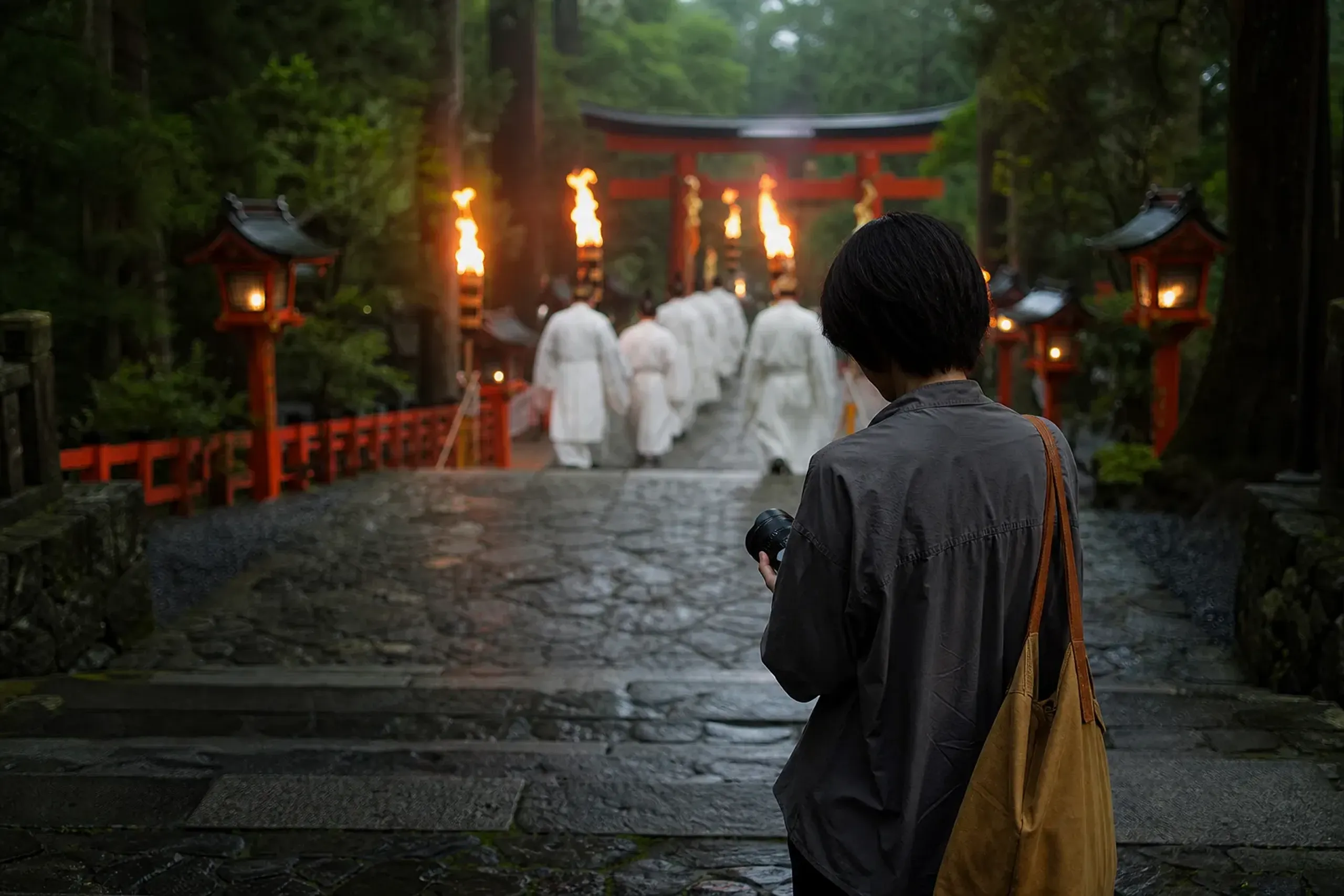
Photograph sparingly, then stop—presence is the real souvenir.
The Nachi Fire Festival is often photographed because flame against green forest is striking. Still, this is not a performance built for lenses.
Move as if you are in a place of worship—because you are. Lower your voice. Keep your body language contained.
When torches pass, do not reach, point, or step into the movement corridor. That corridor is doing a job.
If you photograph, do it sparingly. Then stop.
Key fact: Official sources describe the torches as purifying the route for the deities’ procession. Treat the path as ritual space, not a viewing platform.
Private Guide Briefing: The Difference Between “Seeing” And “Understanding”
Many luxury travelers do not need more access. They need more meaning.
When you walk the shrine grounds with an expert cultural guide, the day changes texture—why mirrors appear, why the ogi mikoshi forms echo the waterfall, why purification is enacted through flame.
We do not publish operational claims about third-party guiding in public. Still, guests who want deeper context may contact our concierge for tailored guidance.
This is where Japan becomes personal.
Where To Stay: Nachikatsuura As A Gateway Base
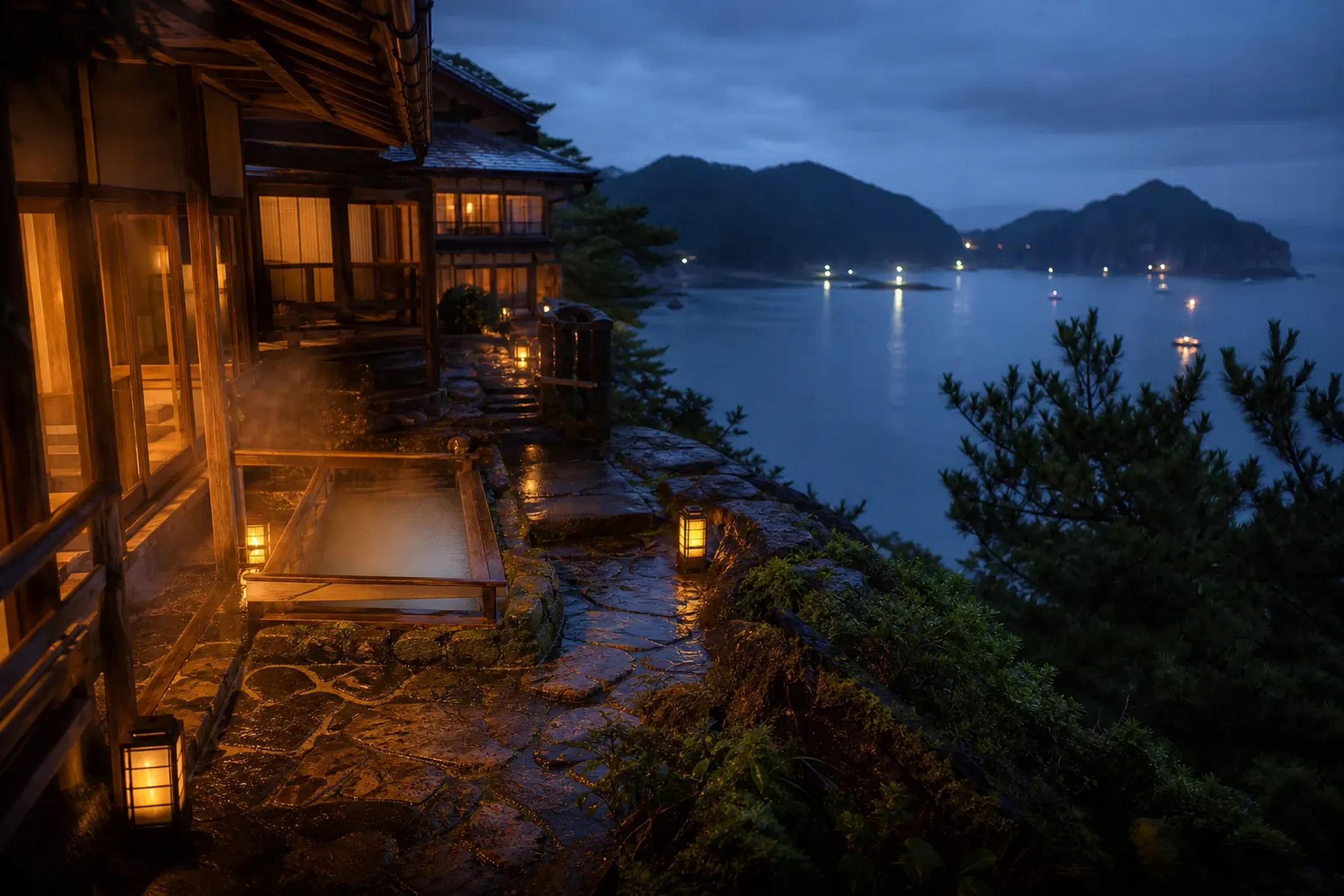
After fire and crowds, an onsen evening restores judgment and pace.
The practical base for the festival area is Nachikatsuura, with JR Kii-Katsuura Station serving as a key access point.
Luxury inventory exists in the region, including well-known onsen ryokan options in and around the coastal gateway town. Many travelers use this area as a staging point for Kumano sacred sites.
After a heat-heavy festival day, onsen recovery is not indulgence. It is restoration.
Sleep improves your judgment. That matters on crowded steps.
About “Buyouts” And Privacy Expectations
Guests sometimes request full-property buyouts for privacy. In Japan, feasibility depends on property size, seasonality, and house rules.
It can be a smart approach for multi-generational families or corporate groups that want contained movement and less public exposure.
We discuss options privately after inquiry, aligned with discretion and realistic availability.
No noise. No public promises.
Extend The Journey: Kumano Depth Beyond The Torches
Many competitors speak about Kumano Kodo in broad strokes. The better move is to slow down and give the region a few days.
Nachi area travel pairs naturally with a quiet exploration of the Sacred Sites and Pilgrimage Routes in the Kii Mountain Range, recognized by UNESCO. Keep your itinerary humane.
You can balance the festival’s intensity with early mornings, short walks, and long meals.
Wabi-sabi belongs here—weathered stone, moss, and restraint.
A Simple 3-Night Architecture That Works
This is a framework, not a package. Adjust it to your pace.
- Night 1: Arrive in the Kii-Katsuura / Nachikatsuura area, onsen reset, early sleep.
- Night 2: Festival day with a disciplined timing plan and a calm exit.
- Night 3: A quieter cultural day in the Kumano area before departing.
Do less. Feel more.
How To Book (Official Process) And What To Confirm
The Nachi Fire Festival is a traditional annual festival held on July 14, and public attendance is generally open.
For the most reliable last-mile details—any schedule updates, local transport advisories, and on-the-day notices—use official tourism sources such as JNTO and Visit Wakayama as your reference points.
If you plan to use the bus approach, confirm the relevant bus operator’s routing and stops near your travel date, including the stop listed as “Jinja/Otera Chushajo”.
For questions, contact our concierge.
Nachi Fire Festival FAQ (Luxury Traveler Edition)
Is The Nachi Fire Festival Always On July 14?
Yes. Official tourism sources describe it as held every year on July 14.
Where Exactly Does It Take Place?
It is associated with Kumano Nachi Taisha Grand Shrine in Nachikatsuura, Wakayama Prefecture, with venues including Hiro-jinja (Hirou) Shrine and the route toward Nachi Waterfall.
What Are The “Ogi Mikoshi” In The Procession?
Official sources describe a procession of twelve ogi mikoshi (fan shrines), tall and narrow in form, symbolizing Nachi Waterfall and decorated with elements such as fans and mirrors.
How Do We Avoid The Worst Crowds Without Being Disrespectful?
Arrive with a timing plan, minimize mid-procession movement, and prioritize a stable viewing posture over constant repositioning.
In our experience, discretion looks like restraint: fewer photos, less weaving, quieter exits.
Is Nachikatsuura A Good Base For The Festival?
Yes. It is a practical gateway town, with access via JR Kii-Katsuura Station and onward transport to the Nachisan area described by official tourism guidance.
How is priority access handled?
If you want tailored guidance—transport choreography, timing strategy, and cultural context—contact our concierge team directly.
Why Choose Japan Royal Service
Luxury in Kumano is not about sparkle. It is about being protected—socially, physically, and reputationally—while you step into a living rite.
Japan Royal Service is built for that. We plan for discretion first, then layer in cultural depth and calm logistics so you can watch the torches and understand what they are doing.
We also know when to avoid the obvious. That is hidden-Japan thinking: quieter bases, low-visibility routing, and meals and moments that do not announce you to a crowd.
And we respect seasonality without turning it into a slogan. July 14 is fixed; the real art is reading the day—heat, light, and pace—so the festival feels focused, not frantic.
If you are considering the Nachi Fire Festival for July 14, contact Japan Royal Service via japanroyalservice.com or WhatsApp for private concierge guidance tailored to your dates, party size, and privacy needs.