In this guide
- 01Two Origins, One Festival: What Most People Get Wrong
- 02The Raid, Stated Plainly
- 03The Three White Shells at 22:30
- 04The Fireworks Themselves: Phoenix, Sanjaku, Niagara
- 05When Are The Nagaoka Fireworks Held And Where?
- 06How We Help HNW Travellers Attend
- 07Frequently Asked Questions
- 08Why Choose Japan Royal Service
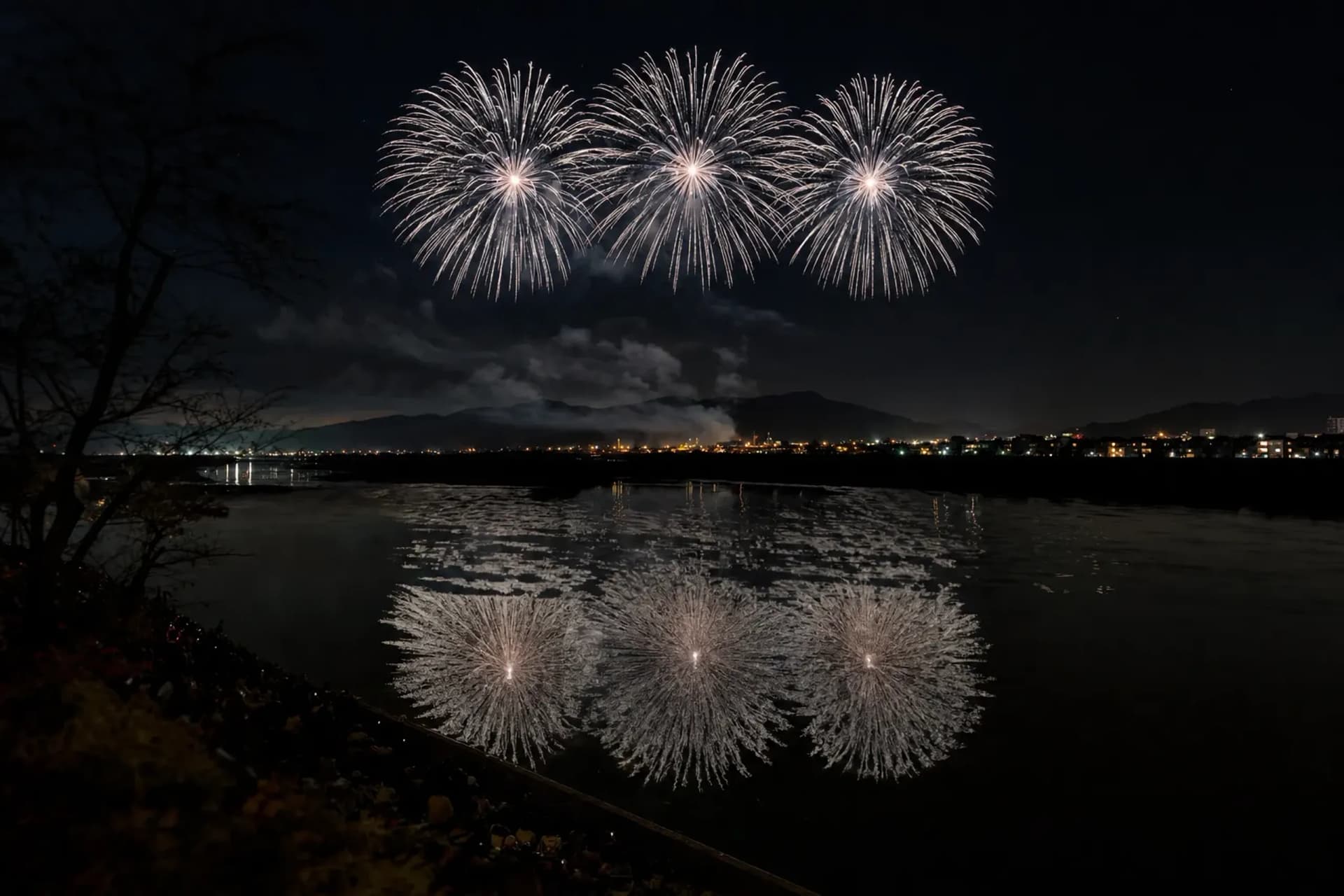
The crowd quiets before anyone tells it to. Along the Shinano River, tens of thousands of people settle onto the banks as the last light drains from the Niigata sky. The water goes dark and wide. Then the first shell climbs, hangs, and opens — and the whole river surface answers in silver. This is the Nagaoka Matsuri Grand Fireworks Display, held every August on the Shinano, and it carries more history than any other fireworks night in Japan.
Most visitors assume the fireworks began as a memorial. They did not. At Japan Royal Service, we think the real story is better, and quieter, than the assumption. Two origins, decades apart, met on this river and became one festival.
Two Origins, One Festival: What Most People Get Wrong
Nagaoka's fireworks began in 1879, at a shrine festival, when about 350 shells were launched with money pooled by people connected to the town's licensed quarter. That is the first origin. It had nothing to do with war. It was celebration, pure and local.
The display grew. The first sanjaku shell rose in 1926, and by the early Shōwa period Nagaoka's fireworks were known across the country. Then the war came. The display was suspended in 1938.
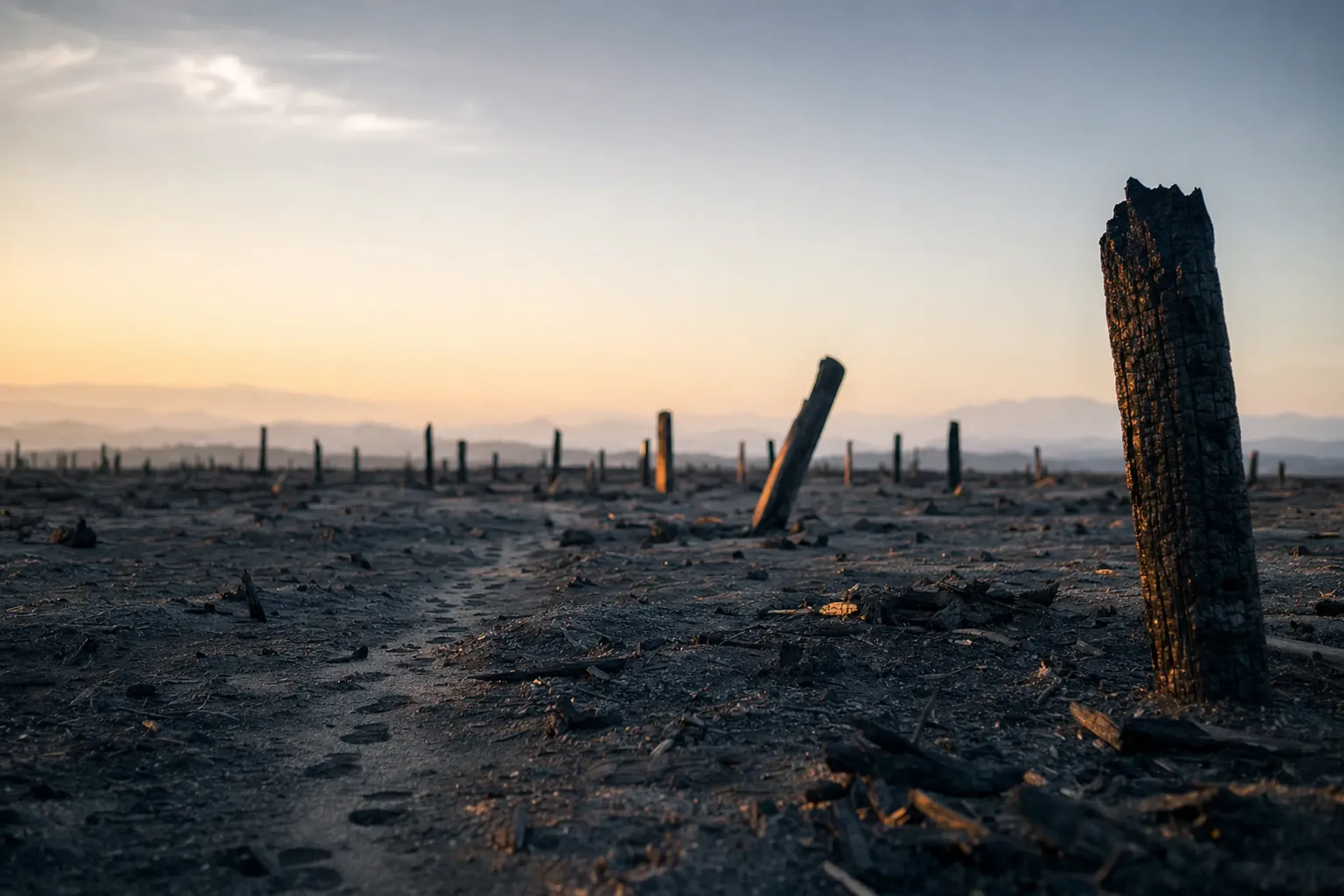
The second origin arrived later, and from grief. The festival itself began on 1 August 1946, as a Reconstruction Festival held in the burned ruins of the city — exactly one year after the air raid.
The two met in 1947, when the fireworks were revived. The 1st became a day of memorial. The 2nd and 3rd became the fireworks days. In 1951 the festival took its present name.
So the fireworks are old, and the festival is a response to loss. Neither explains the other. Together they explain Nagaoka.
The Raid, Stated Plainly
On the night of 1 August 1945, B-29 bombers struck Nagaoka. The attack lasted roughly one hour and forty minutes, beginning at 10:30pm. About 80 percent of the old city burned. At least 1,489 people died, according to the festival foundation; one other source gives 1,488.
These are not figures to dress up. We state them as they are. The city that gathers each August on the riverbank is a city that was, within living memory, mostly ash.
The Three White Shells at 22:30
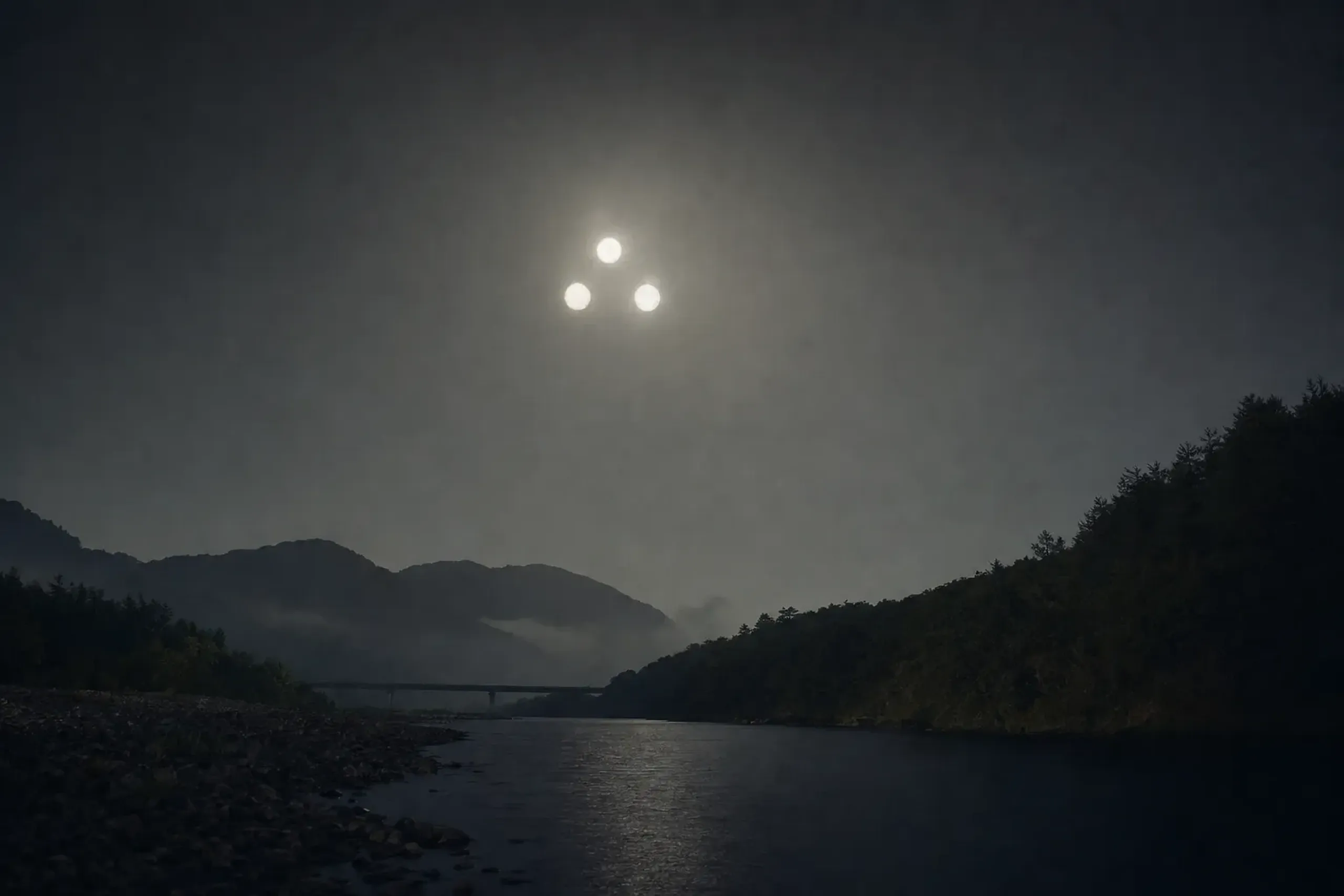
On 1 August, at 22:30 — the minute the raid began — three white shells rise slowly over the river. They are called Shiragiku, "white chrysanthemum." They open as plain white blooms, without colour, without a tail of sparks. A memorial bell rings at the same moment.
There is no music timed to them. No finale builds toward them. They are not a visual effect. They mark a minute, and then they fade, and the river is dark again.
The memorial's name and placement have shifted over the years. In 2022 and 2023 it opened the show on 2 August under a different title; the name Shiragiku returned in 2024. Details vary by year, and our concierge team confirms the current format before any client travels. The 1 August Peace Festival surrounding the shells includes lantern floating on the river, a mass folk dance, drumming, and a portable shrine procession.
Key fact: The Shiragiku memorial shells on 1 August are distinct from the main fireworks on 2 and 3 August. They are a remembrance, not part of the celebratory programme, and the exact format can change year to year.
The Fireworks Themselves: Phoenix, Sanjaku, Niagara
Then come the nights the crowds travel for. On 2 and 3 August, the Shinano River becomes a stage two kilometres wide.
The Phoenix: A Second Layer Of Recovery
The Phoenix fireworks began in 2005, as a prayer for recovery from the Chūetsu earthquake of 23 October 2004 — a quake that reached the top of Japan's intensity scale. It is a music-synchronised, extra-wide star mine launched across a width of about two kilometres. Named for the bird that rises from its own ashes, it is the emotional centre of the modern show.
Watching it, you understand why Nagaoka reaches for that image twice over. Once for 1945.
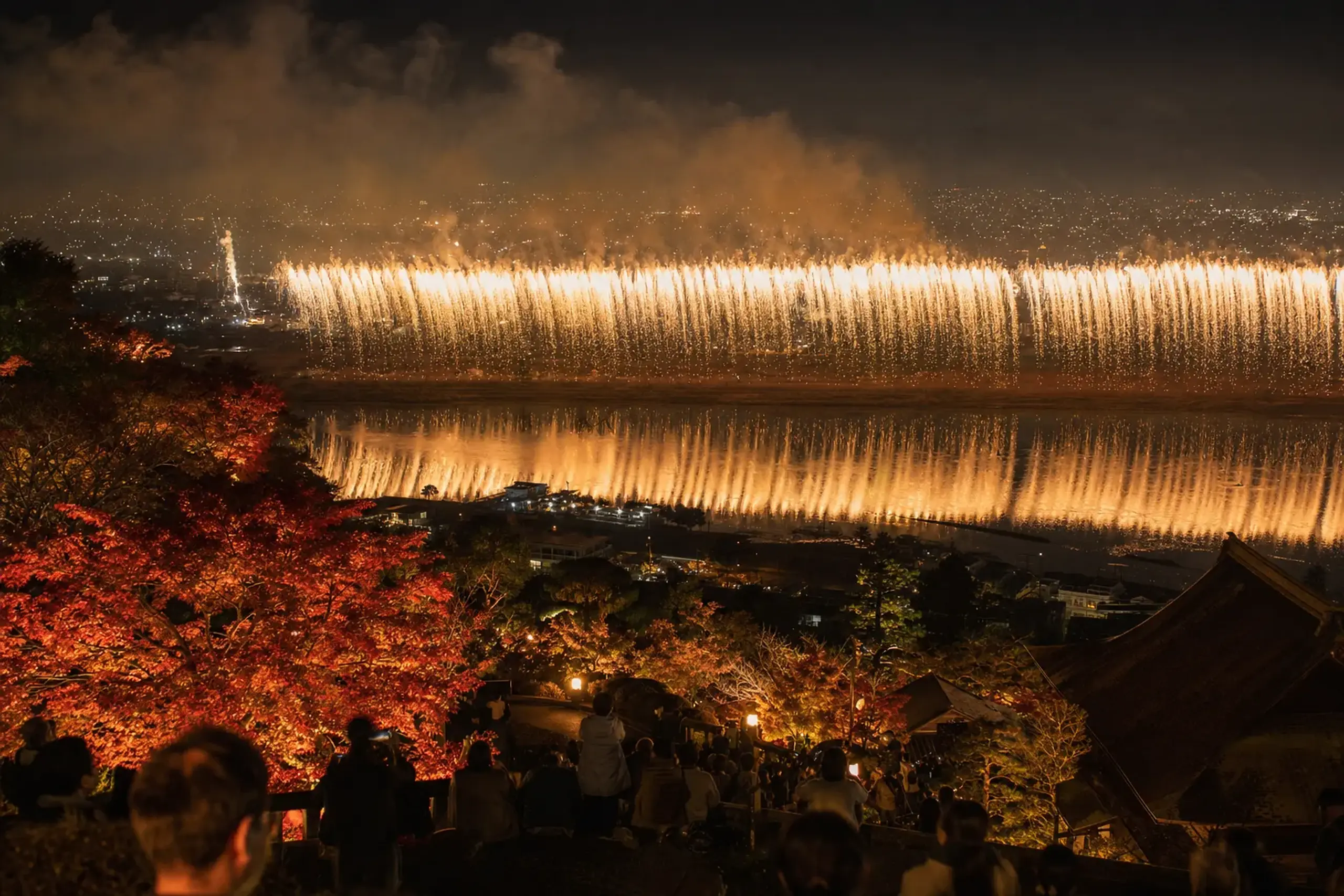
Once for 2004. The Phoenix stretches so far across the water that no single vantage point holds all of it at once. You turn your head to follow it. That is the point.
The Sanjaku Shell
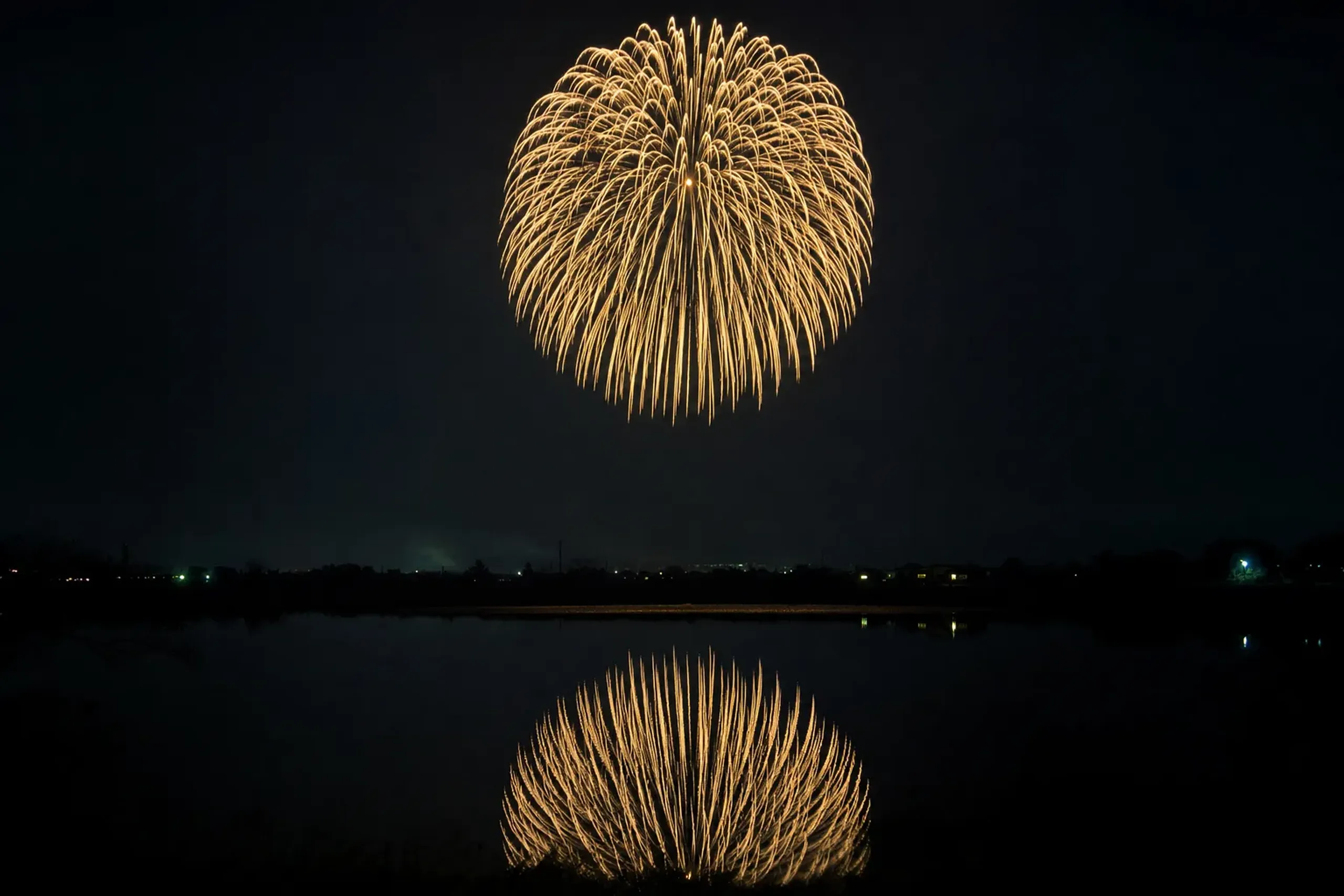
The signature sanjaku shell weighs about 300 kilograms and measures 90 centimetres across. It climbs past 600 metres before it opens into a bloom roughly 650 metres wide. First fired in 1926, it returned in 1951 after the war. When it detonates, you feel the concussion in your chest before the flower finishes spreading.
The Niagara
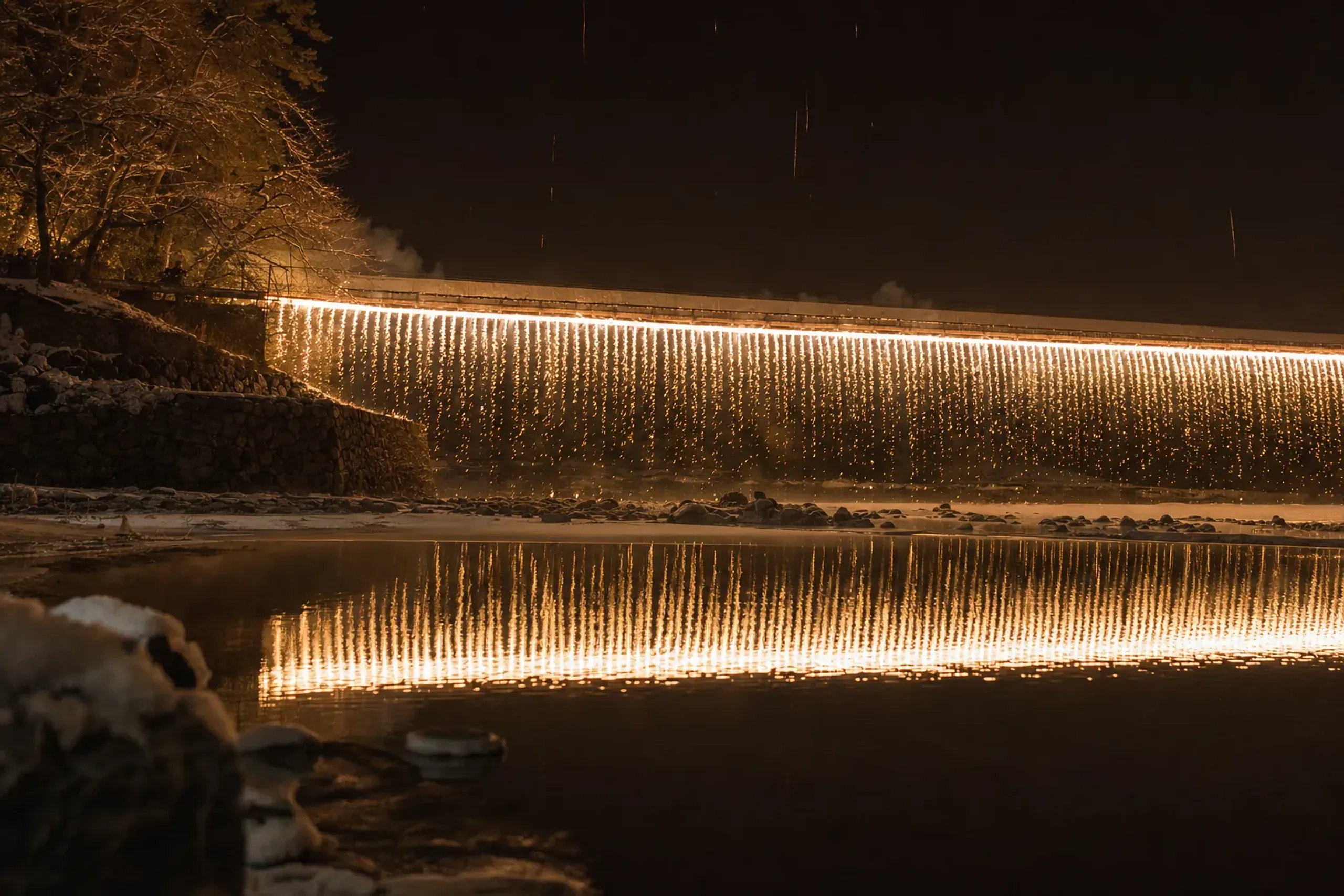
The Niagara is a cascade of light that falls from the bridges, a curtain of fire pouring toward the river. It was devised by a local pyrotechnician. After a three-year absence, it returned in 2026, launched together with the large shell on both nights — a detail our concierge team verifies each year, since the programme changes.
Two more things worth knowing. Spectators can send "message fireworks" dedicated to people they care for. And when the show ends, many in the crowd wave their lights toward the launch site — thanking, across the dark water, the people who built the shells. It is a small gesture, and it tells you everything about how this town holds its fireworks.
Nagaoka is counted among Japan's three great fireworks festivals. The grouping is informal, but few who stand on the riverbank would argue with it.
When Are The Nagaoka Fireworks Held And Where?
The Nagaoka Matsuri Grand Fireworks Display is held every year on 2 and 3 August, typically from 7:20pm to 9:25pm, on the banks of the Shinano River in Nagaoka, Niigata. The Peace Festival falls on 1 August.
Extra trains run on both nights, and road restrictions are in force. The riverside fills early and stays crowded. In recent years all venue seating has been paid, requiring a viewing ticket for entry. Because formats, seating, and transport arrangements shift year to year, our team at Japan Royal Service verifies the current details before every visit rather than relying on last season's layout.
For travellers who prefer not to wrestle with crowded platforms, our private chauffeured transfers handle the approach and the departure, which is often the hardest part of a night like this.
How We Help HNW Travellers Attend
This is a public festival. We want to be plain about that. There is no secret gate, no roped-off riverbank that only a few may enter. What Japan Royal Service arranges is guiding, transfers, accommodation coordination, and seating through official channels where available — the same seating any ticket-holder may obtain, secured on your behalf so you are not fighting lottery timelines and language barriers from abroad.
The value is in the removal of friction.
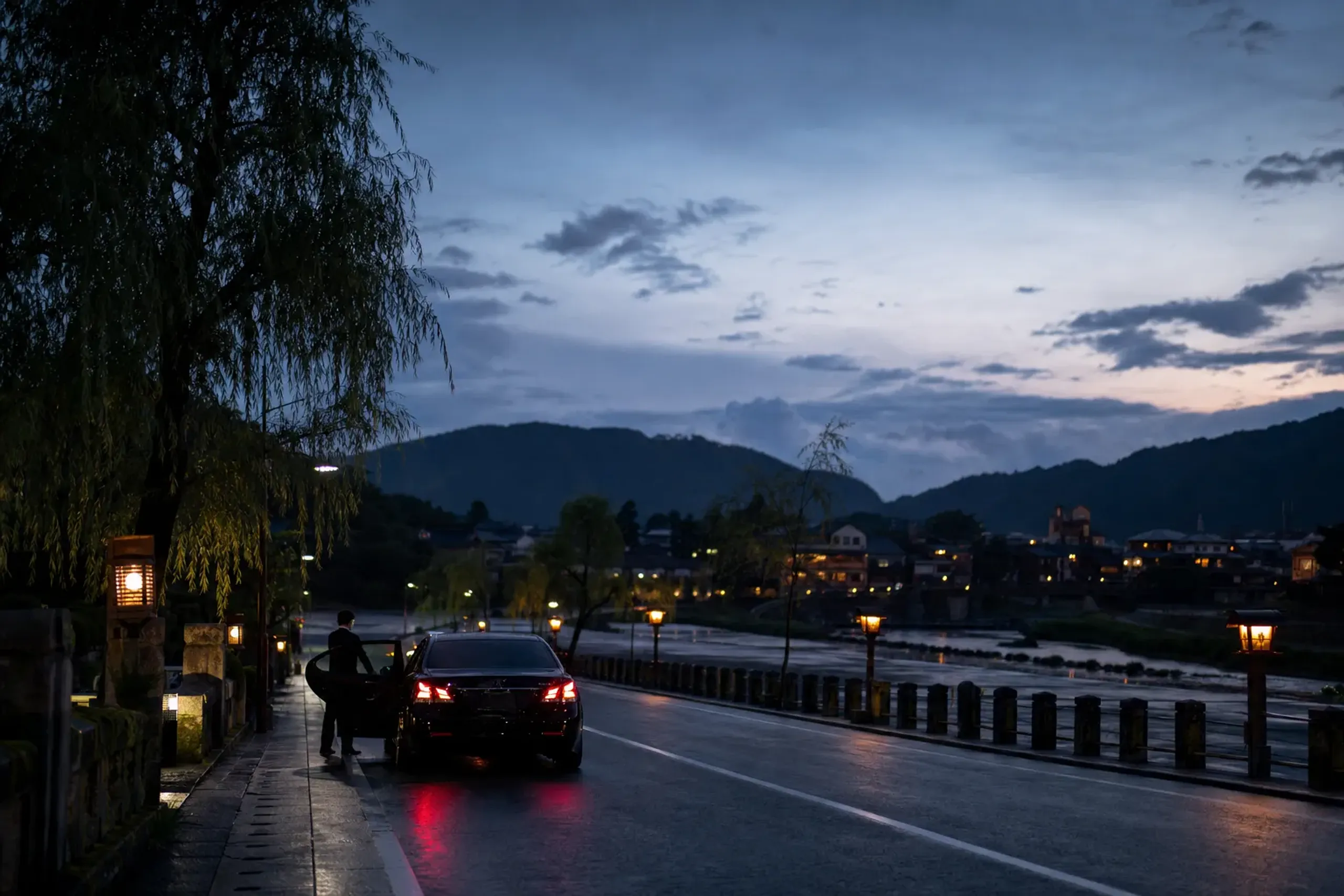
Hotels in and around Nagaoka book out far ahead for these two nights. Rail is packed. The after-show exit moves slowly. Our concierge team plans the whole arc — arrival, viewing, and the quiet drive back — as part of a tailor-made itinerary, with accommodation handled through our accommodation coordination service.
If Niigata draws you further, pair the fireworks with the Sado Island Gold Mine across the strait, another story we have written about for travellers wanting the quieter side of the prefecture.
Frequently Asked Questions
What Are The Three White Shells At The Nagaoka Fireworks?
They are the Shiragiku, or "white chrysanthemum," memorial shells, fired on 1 August at 22:30 — the minute the 1945 air raid began. Three plain white blooms rise slowly as a memorial bell rings. They are remembrance, not spectacle.
Did The Nagaoka Fireworks Begin As A War Memorial?
No. Nagaoka's fireworks began in 1879 at a shrine festival, long before the war. The festival that frames them began separately in 1946 as a Reconstruction Festival. The two merged in 1947, which is why people often confuse their origins.
What Is The Phoenix Fireworks At Nagaoka?
The Phoenix is a music-synchronised, extra-wide star mine spanning about two kilometres, introduced in 2005 as a prayer for recovery from the 2004 Chūetsu earthquake. It is the emotional high point of the modern programme on 2 and 3 August.
Do You Need A Ticket To Watch The Nagaoka Fireworks?
In recent years, venue seating has required a paid viewing ticket, and availability moves quickly for the 2 and 3 August nights. Our concierge team verifies current seating and ticketing routes before each visit, as the arrangements change year to year.
How Crowded Does Nagaoka Get During The Fireworks?
Very. The riverside fills early, rail runs extra services under heavy load, and road restrictions apply on both nights. Planning transfers, accommodation, and departure timing in advance is the single biggest comfort difference for visitors.
Why Choose Japan Royal Service
A festival like this rewards people who are already in position when the first shell climbs. Getting there — rested, seated, unhurried — is quietly difficult. That is where we work.
Our team is Tokyo-based, with an in-house fleet and native coordination across English, Japanese, Thai, and Filipino. We treat guest identity and itinerary with complete discretion. And we verify the moving parts — the Shiragiku format, the Phoenix timing, the seating routes, the extra trains — every season, rather than publishing once and forgetting. In our experience, that difference is what separates a memorable night from a stressful one.
To plan a visit to the Nagaoka Matsuri fireworks, reach our team privately via WhatsApp or LINE, or contact us here. We will take it from there.