In this guide
- 01The Irony At The Center Of Nagoya Castle
- 02What Happened On 14 May 1945 At Nagoya Castle?
- 03Nagoya Castle Today: What You Can (And Cannot) Enter
- 04How Do You Visit Nagoya Castle Well In 2026–2027 If The Keep Is Closed?
- 05Visitor Hours, Closures, And The 2026 Admission Change
- 06When Are The Best Night Openings For Nagoya Castle In 2026?
- 07The Wooden Reconstruction Project: Why It Is A Decade Behind
- 08One Checkable Detail In A Stalled Timeline: The Ohtani Stump
- 09Honmaru Palace: Etiquette And Accessibility That Matter In Practice
- 10What’s New For 2027: Nagoya Castle Digital Museum
- 11Practical Timing: How We Plan A Low-Friction Visit
- 12Where To Stay Beside The Moat (And Why It Changes The Experience)
On the night of 14 May 1945, Nagoya glowed the wrong color.
Incendiary bombs fell in waves across the city’s north. At Nagoya Castle, a pragmatic rescue was already underway: scaffolding had been erected to remove the golden shachihoko from the roof, so the ornaments could be carried to safety before the fire reached them.
Then an incendiary bomb caught that very scaffolding.
The flames climbed fast. The fire rising from a structure built to save gold is said to have become the ignition point that consumed the entire keep. The main keep and Honmaru Palace burned completely, and only six structures survived—more by chance than by design.
The Irony At The Center Of Nagoya Castle
The castle’s most famous symbols—the golden shachihoko—may have triggered the very disaster they were meant to escape.
Nagoya Castle was built between 1610 and 1612 under orders from Tokugawa Ieyasu. It became the seat of the Owari branch of the Tokugawa family, the most senior of the three principal Tokugawa branch houses. That lineage matters here. It shaped the scale, the authority, and the self-conscious grandeur of the entire complex.
In 1930, Nagoya Castle was designated Japan’s first National Treasure among castles—a formal statement of value, made before the war made statements of its own.
By 1952, the site had been designated a Special Historic Site. The designation recognizes Nagoya Castle as one of Japan’s foremost surviving castle complexes, despite the loss of its main structures. A small phrase. A large wound.
What Happened On 14 May 1945 At Nagoya Castle?
On 14 May 1945, incendiary bombing ignited scaffolding erected to evacuate the golden shachihoko, and the resulting blaze destroyed the main keep and Honmaru Palace.
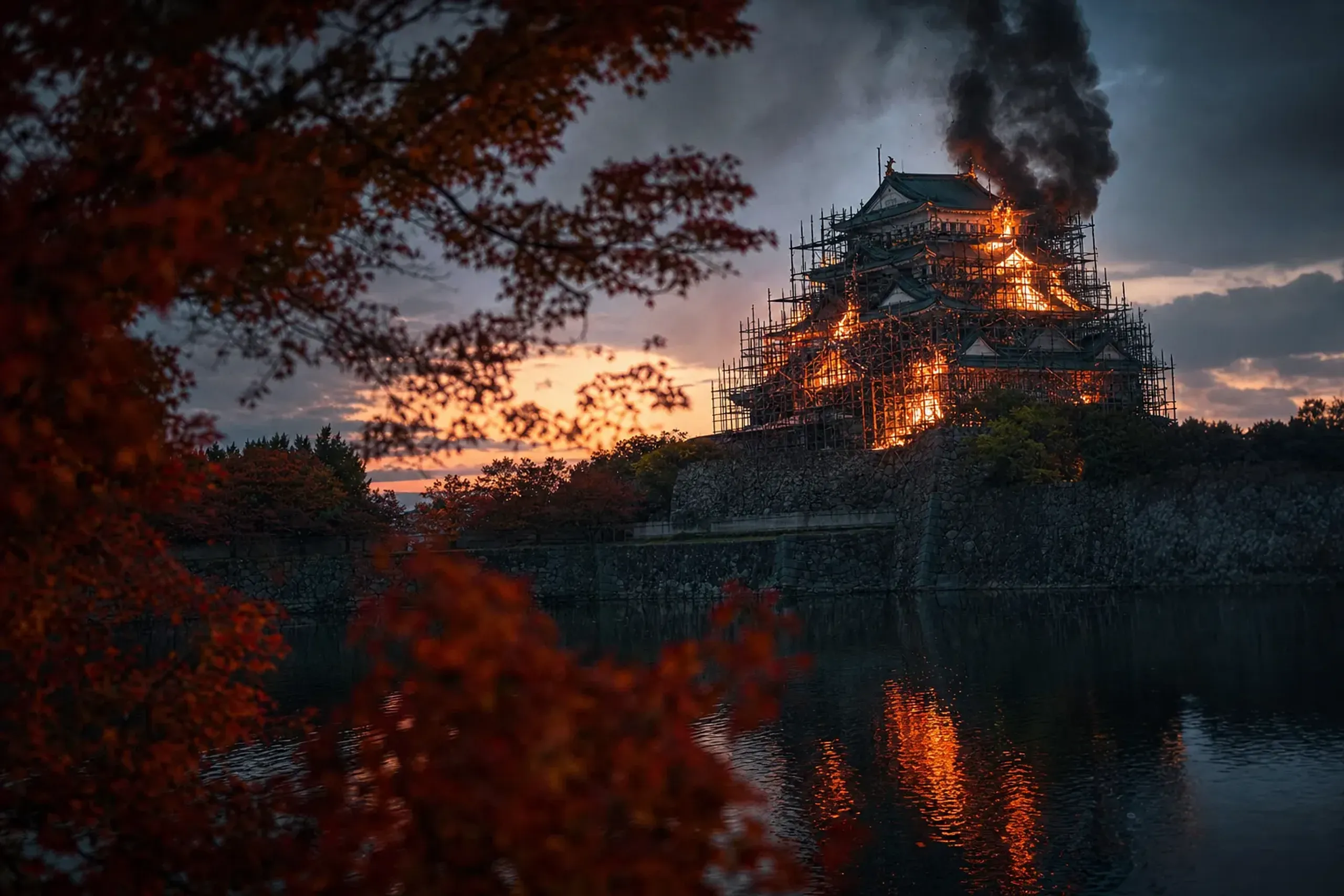
When we guide guests here, we pause at the moat and speak about materials, not just dates. Wood behaves a certain way in flame. So does lacquer. So does gold leaf, which can survive heat that erases everything holding it up.
The story is not a morality play. It is logistics under unbearable pressure. The shachihoko mattered deeply to local identity, and officials tried to save them with the only tools available at the time—temporary scaffolding, manpower, urgency.
Then a single incendiary bomb found the most flammable thing on the roof. The fire that followed moved with a clarity that feels almost cruel. The keep and Honmaru Palace burned completely. Only six structures survived.
Nagoya Castle Today: What You Can (And Cannot) Enter
The main keep at Nagoya Castle cannot be entered, and its interior has been closed to the public since 2018 due to seismic safety concerns.
This is the detail many luxury travelers only discover after they arrive. We prefer to make it plain before you step into the car. No surprises. No awkward pivots at the gate.
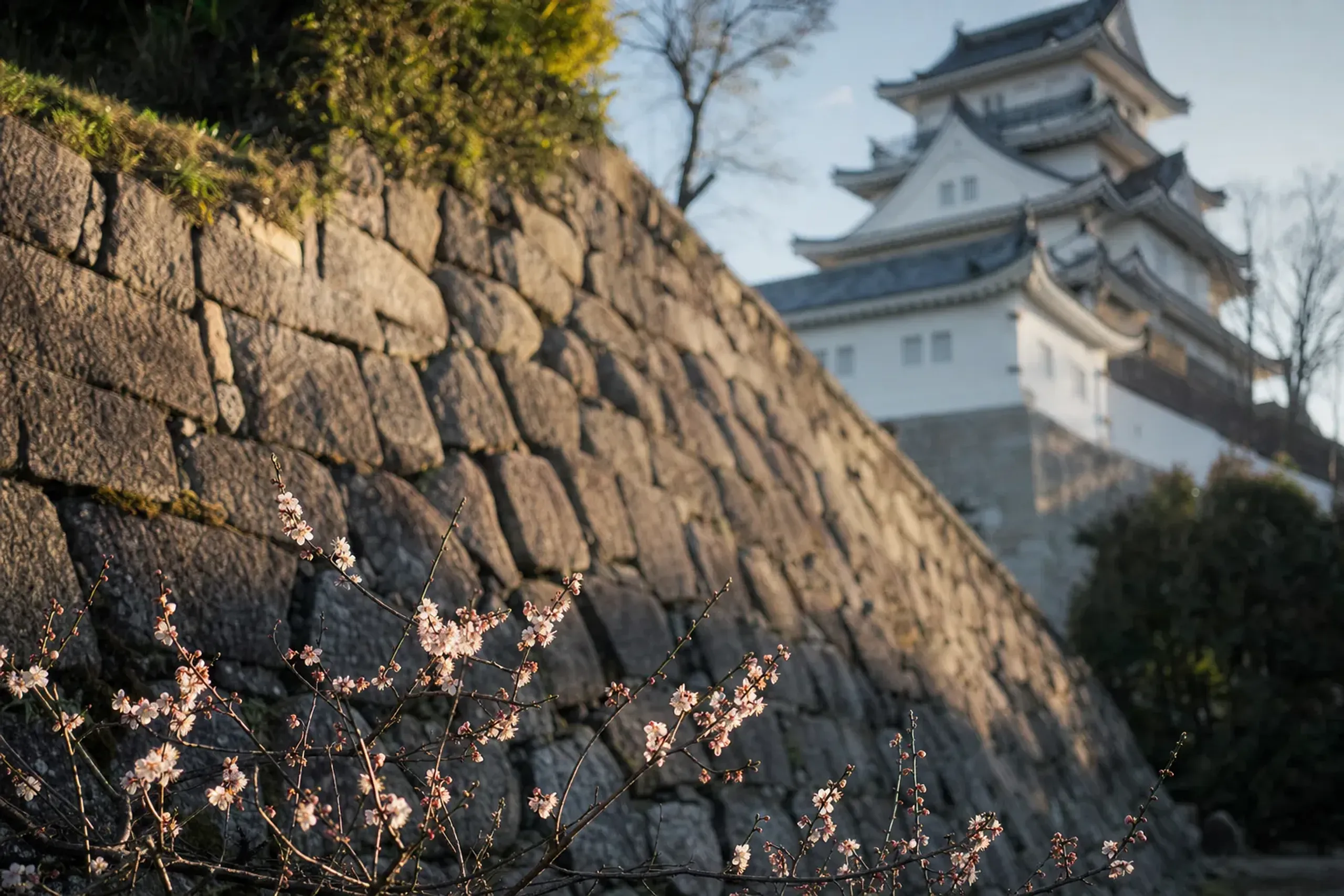
The keep you see today was rebuilt in 1959 using a steel-frame reinforced concrete structure. It was funded substantially by citizen donations—against a budget of roughly 600 million yen, ordinary citizens contributed roughly 200 million yen. The intent was explicit: it was rebuilt in the hope that it would never burn again.
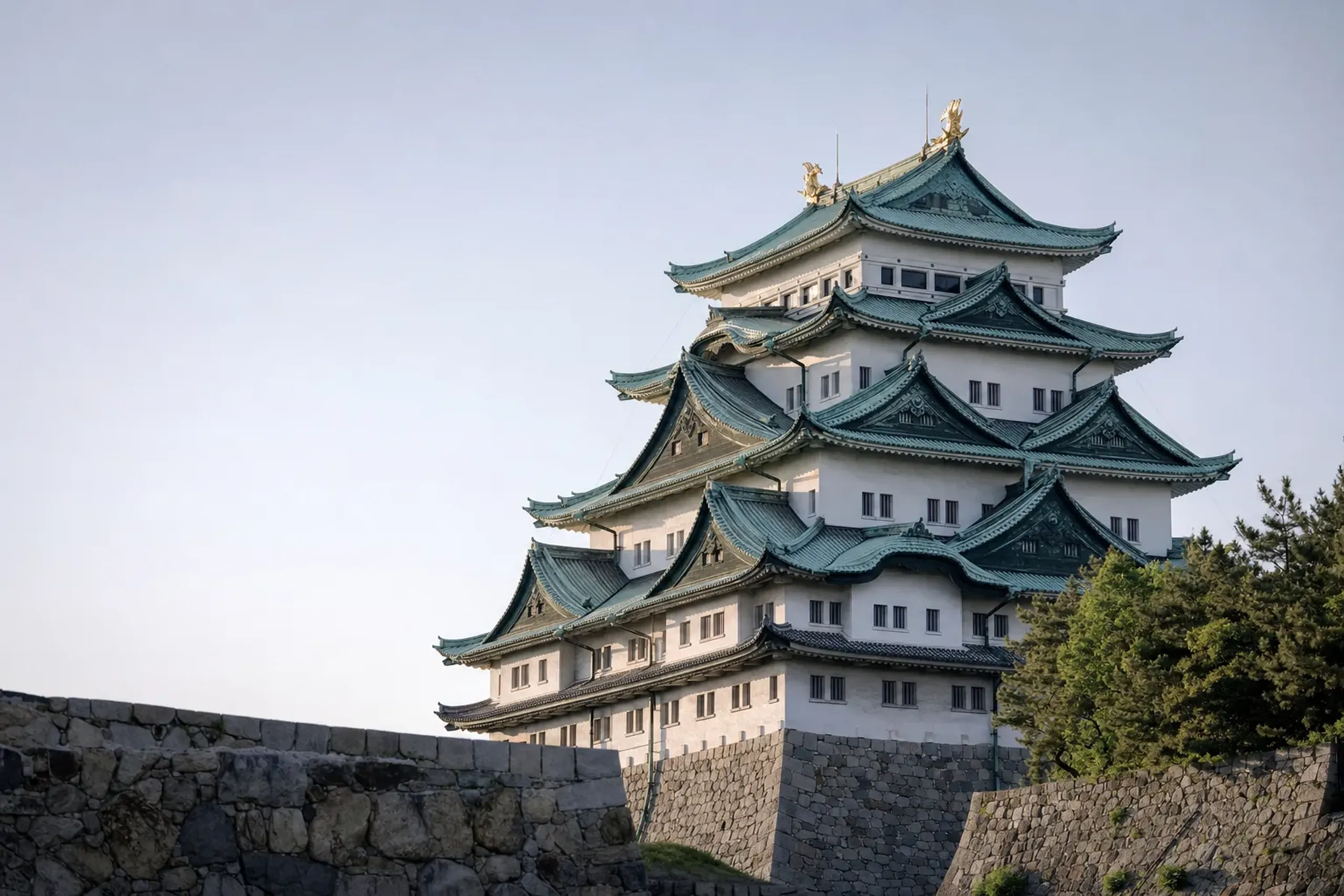
After roughly 60 years, aging facilities and seismic concerns forced a hard decision. In 2018, the interior was fully closed, following a diagnosis of high collapse risk in an earthquake of magnitude 6 or greater. As of the most recent published guidance, it remains closed. You can currently view the keep from the outside only.
How Do You Visit Nagoya Castle Well In 2026–2027 If The Keep Is Closed?
Plan your visit around the Honmaru Palace, the grounds, and the time-limited evening openings, and treat the keep as an exterior landmark and photography anchor.
It sounds like a compromise until you do it correctly. The Honmaru Palace is where the craft lives now, and it rewards a slower pace. Shoes off. Quiet voice. A steadier gaze. This is where the work of the shokunin—the master carpenters, lacquer artisans, and gold-leaf painters who reconstructed its interiors from historical record—reveals itself only to those unhurried enough to look.
The grounds also read differently when you approach them as a set of defensive choices—stone, water, sightlines—rather than as a checklist of “things to enter.” That shift in perception is where many high-net-worth travelers begin to enjoy Nagoya properly. There is a restraint here, a wabi quiet in the weathered stone and still moat water, that the crowds racing toward closed doors never notice.
For clients who want a coherent Tokugawa narrative, we often frame Nagoya Castle as the opening chapter of a day that continues at the Tokugawa Art Museum and Tokugawa Garden.
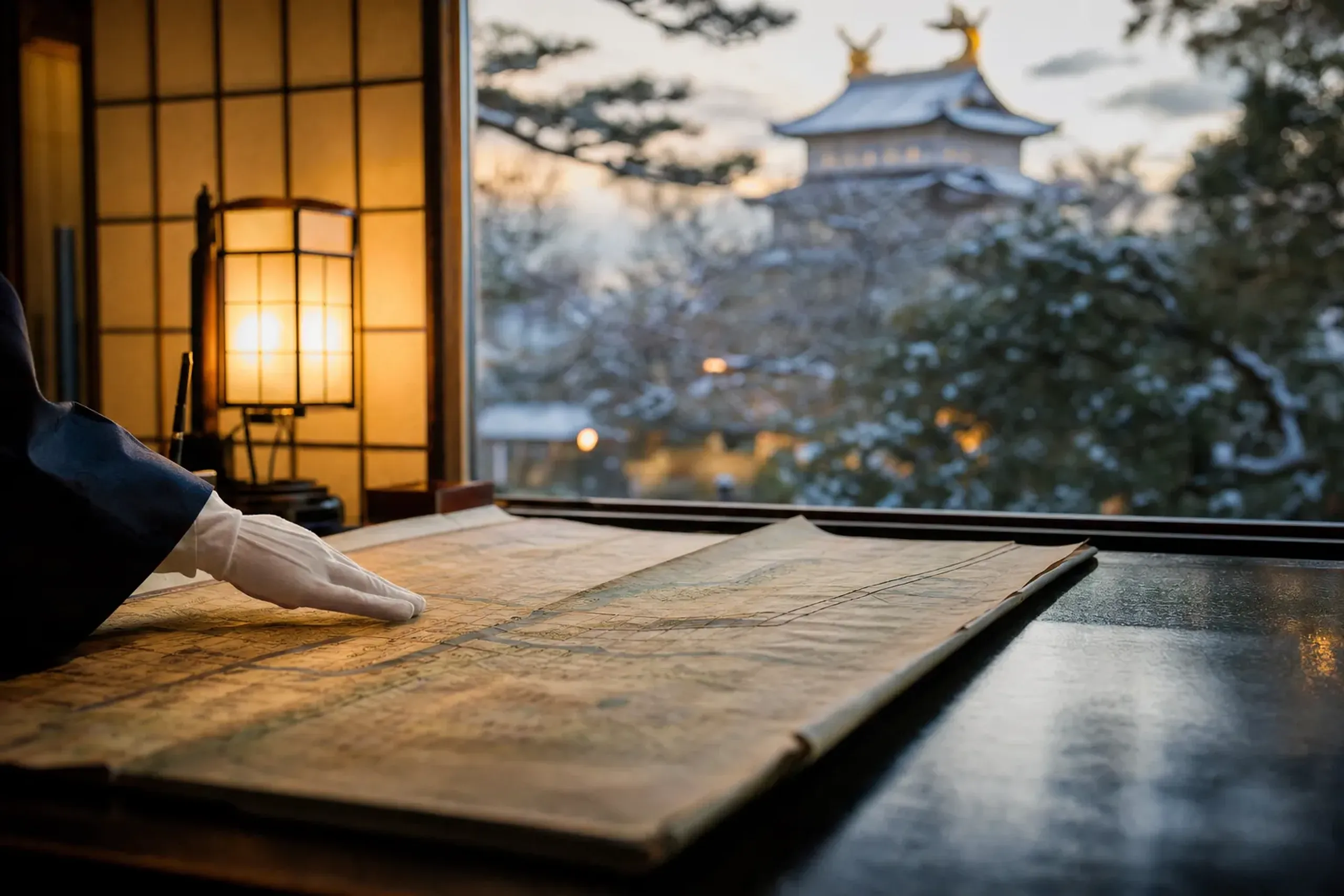
It is not about packing in more. It is about keeping one story in your hands long enough to feel its full weight.
Visitor Hours, Closures, And The 2026 Admission Change
Nagoya Castle’s published hours are 9:00 a.m.–4:30 p.m., with entry to the grounds until 4:00 p.m., and last admission to Honmaru Palace and the Nishinomaru Okura Museum at 4:00 p.m.
That 4:00 p.m. cutoff matters. Miss it by five minutes and you have lost the most meaningful interior you can currently visit on site.
The castle is closed from December 29 to January 1. If your holiday-season itinerary is tight, do not assume “Japan is open.” This corner of it is not.
There is also a posted notice that admission fees will change from October 1, 2026. Event listings for the Nagoya Castle Autumn Festival indicate that from October 1, adult admission becomes JPY 1,000. We do not publish pricing for concierge services, but we do flag official site changes like this so that your planning stays precise.
Key fact: The main keep remains non-enterable; schedule your day so you reach Honmaru Palace well before the 4:00 p.m. last admission.
When Are The Best Night Openings For Nagoya Castle In 2026?
In 2026, Nagoya Castle’s longest evening hours fall during the Summer Festival (Aug 8–Aug 16) and the Autumn Festival “Be GOLD” illumination windows (Sep 19–Oct 4 and Oct 18–Oct 24).
These dates are not trivia. They shape crowd behavior, traffic patterns, and the kind of photographs you can actually take.
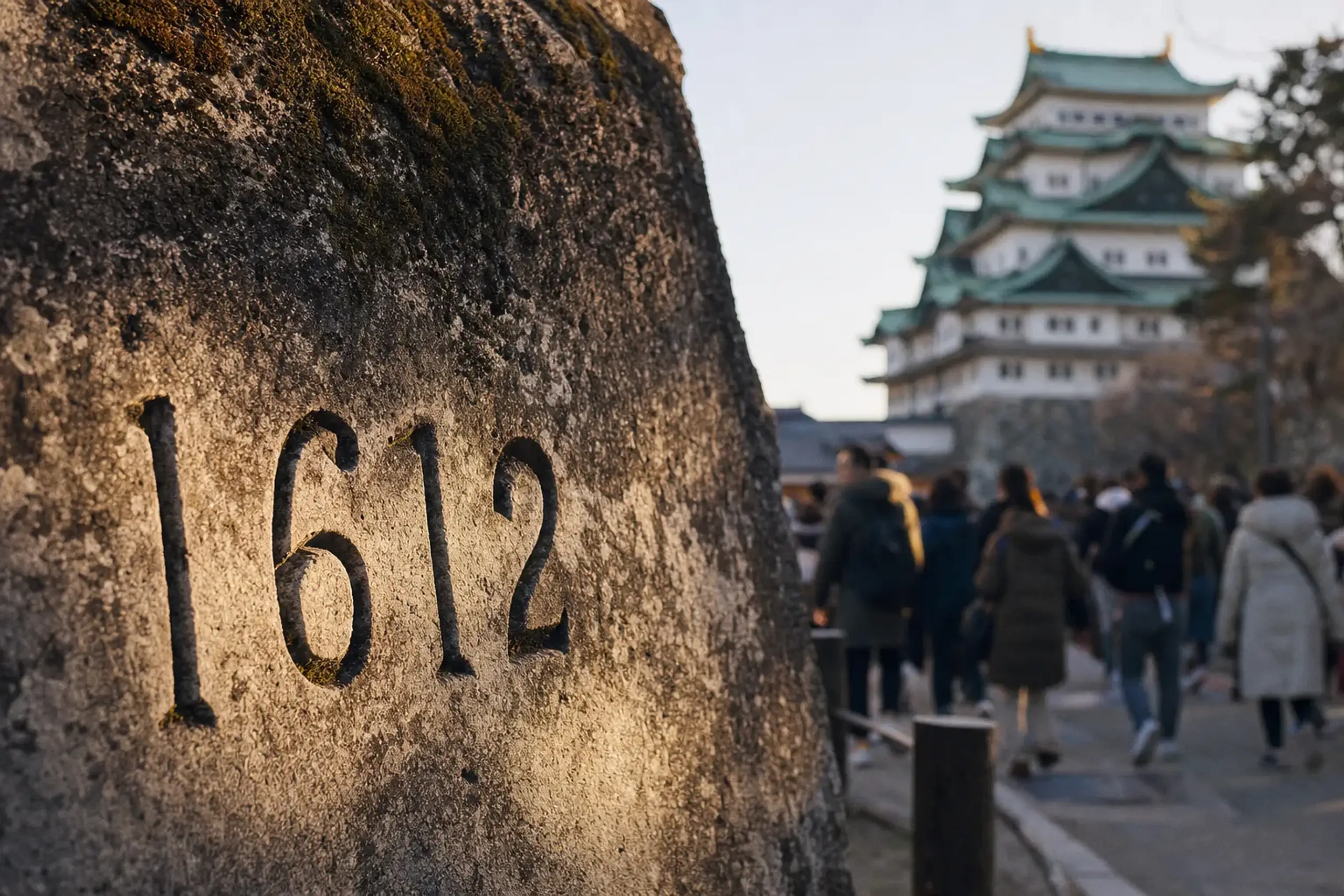
Knowing precisely what to experience where, and in which month, is exactly the seasonal judgment our planning is built on.
Nagoya Castle Summer Festival 2026 (Aug 8–Aug 16) lists extended hours from 9:00 a.m.–8:30 p.m., with gates closing at 9:00 p.m. A quiet warning is embedded in the same listing: Honmaru Palace admission remains available only until 4:00 p.m. That split schedule catches many people off guard.
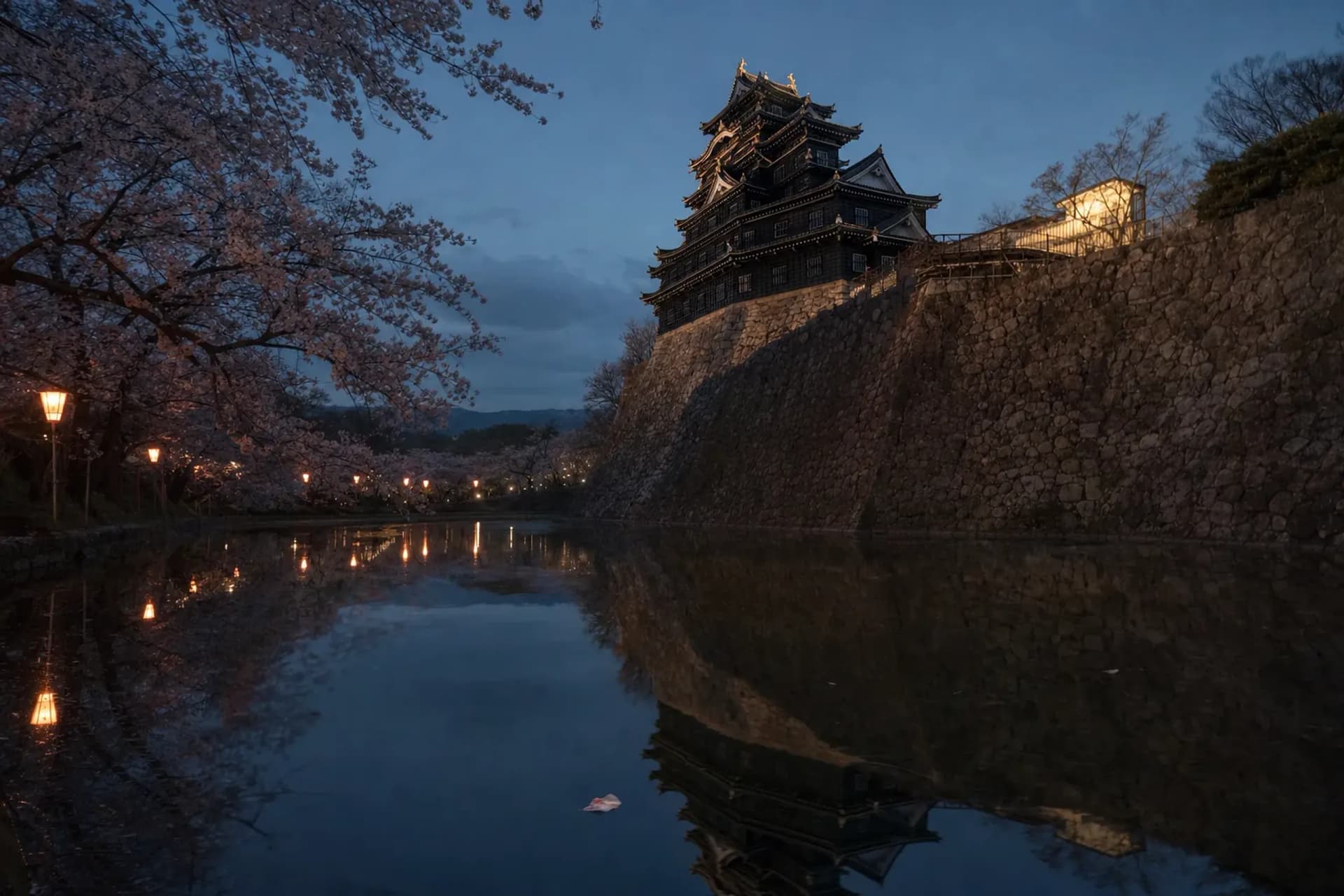
Nagoya Castle Autumn Festival 2026 (Sep 19–Nov 23) includes extended hours until 19:30 (gates 20:00) during the nighttime illumination event “Be GOLD” on Sep 19–Oct 4 and Oct 18–Oct 24. If you want a castle visit that feels less like a daytime errand, these nights are your window.
Option A: A Late-Afternoon Honmaru Palace Visit, Then Stay For Night Illumination
This is our preferred rhythm when schedules allow. It keeps the palace at the center, then lets the exterior become theater after dark.
- Arrive by 2:30 p.m. so you have margin before the 4:00 p.m. last admission.
- Walk the grounds slowly after the palace, keeping the keep framed across the water.
- Hold dinner later so you are not rushing the evening light.
Option B: A Night-First Visit For Photography And Atmosphere
If you are already in Nagoya for meetings, this works beautifully. It is also kinder in humid weather.
- Skip the palace if you cannot reach it before 4:00 p.m. Do not do it halfway.
- Prioritize viewpoints across the moat where the reflections read clearly.
- Leave with calm, not with a sprint to the last gate.
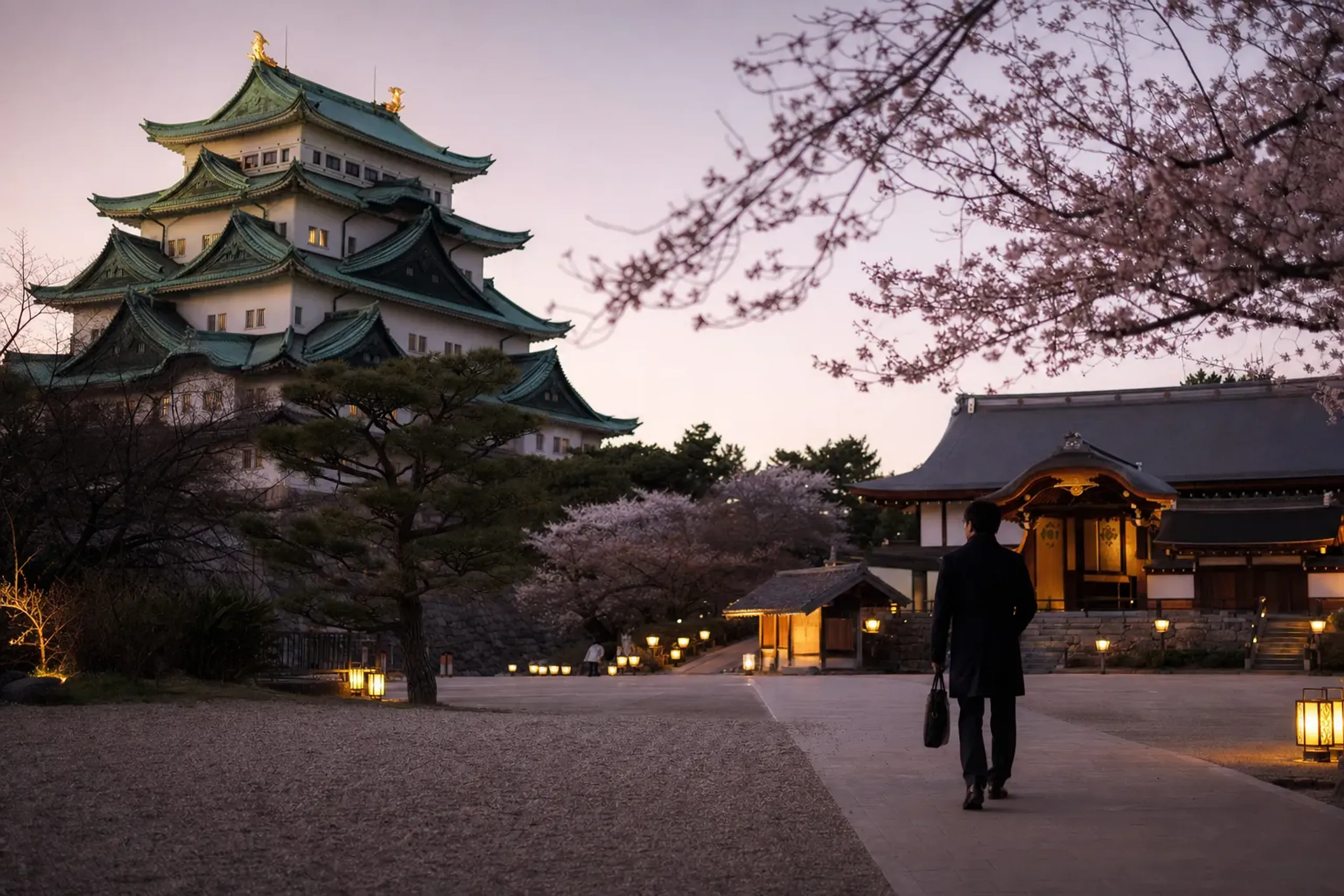
Arriving after your meetings, and moving between castle and hotel without a single logistical thought, is where a discreet private chauffeur service quietly earns its place in the evening.
The Wooden Reconstruction Project: Why It Is A Decade Behind
The wooden reconstruction project launched in 2009, and the earliest realistic completion is now widely understood to be around 2032, owing to stone-wall survey findings, accessibility disputes, and a slow formal review cycle.
It began with ambition. Then-Mayor Kawamura Takashi launched a plan in 2009 to rebuild the keep using traditional materials and construction methods. The appeal was obvious: a return to the logic of the original.
Nagoya Castle has something rare in Japan. It is the only castle with surviving construction-era detailed drawings and measurements precise enough to aim for that level of historical accuracy. You can build from memory, or you can build from documents. Here, the documents exist.
The controversy grew sharp. The mayor made a documented public statement—paraphrased here—suggesting that if the demolition permit for the current concrete structure was not approved, everyone involved would “commit seppuku.” This was political rhetoric, not a literal threat, but it reveals how charged the dispute became.
What slowed the project is not a single, vague “bureaucracy” problem. It is a set of very real constraints.
- Stone-wall protection and deterioration: A detailed survey of the historic stone walls was required because they represent the Cultural Affairs Agency’s primary protected value. The survey found genuine deterioration, with real collapse risk depending on earthquake scale and location.
- Accessibility dispute: Disability-rights concerns about the accessibility provisions in the wooden design have run alongside the project, including advocacy groups holding their own symposiums on the issue.
- Review schedule: The Cultural Affairs Agency’s review council meets only twice a year, which structurally slows approvals even when submissions are ready.
As of 2023, the development plan had only been partially submitted to an expert panel.
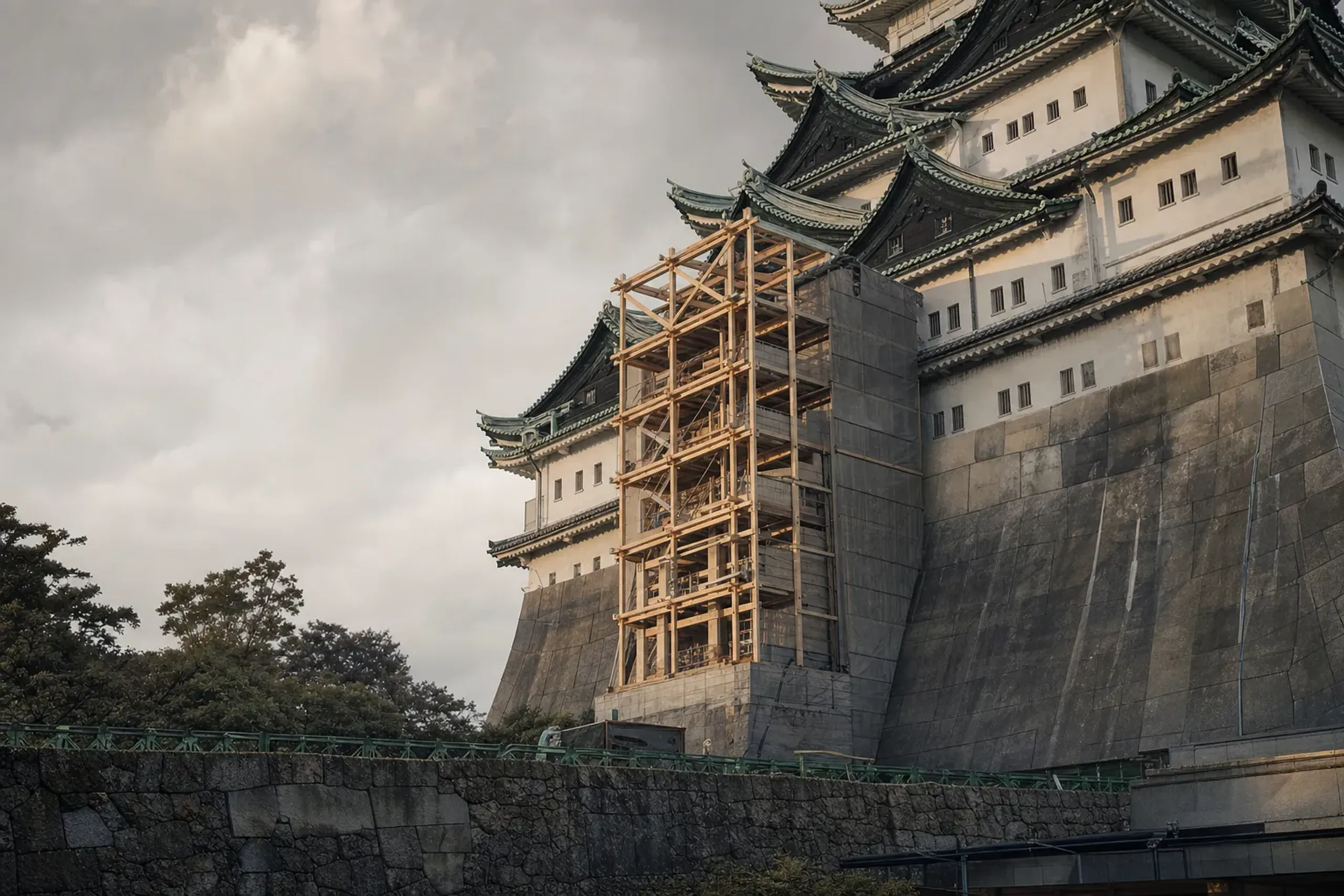
From full submission, roughly 2.5 years of review are expected, followed by roughly 6.5 years of construction. That math lands at 2032 at the earliest—about a decade later than the original 2020 target.
One Checkable Detail In A Stalled Timeline: The Ohtani Stump
Baseball star Shōhei Ohtani visited Nagoya and signed a tree stump destined for use in the wooden reconstruction, and it has since been placed on public display.
In a project defined by committees and timelines, the stump is oddly grounding. It is wood you can see. It is also a reminder that the rebuild is not a rumor. Materials are being prepared, even as approvals drag.
Our concierge team at Japan Royal Service verifies the current public-access status and the latest reconstruction updates ahead of your visit. Things change. Fast.
Honmaru Palace: Etiquette And Accessibility That Matter In Practice
Honmaru Palace rules include removing shoes, no food or drink, and no flash photography, with wheelchair access via the north side and special interior wheelchairs available.
Bring socks you are willing to be seen in.

That sounds trivial until you are standing at the threshold with your shoes in hand.
Photography can be deeply satisfying here, but only if you work within the rules. No flash. Slow steps. Hold your camera low when others are trying to read a painted panel.
If someone in your party uses a wheelchair, plan the approach in advance. The official guidance notes wheelchair access from the north side, and that special interior wheelchairs are available. This is precisely the sort of quiet detail that turns a “maybe” into a smooth, unremarkable visit—the kind of anticipation that should be invisible, felt only in its absence of friction.
What’s New For 2027: Nagoya Castle Digital Museum
The official Nagoya Castle topics page states that a Nagoya Castle Digital Museum has pre-opened, with a grand opening planned for February 2027.
For families, and for travelers who enjoy interpretation done well, this is worth tracking. It can also add welcome depth on a day when weather makes the grounds less pleasant.
We suggest treating it as a supplement, not a substitute. The moat air, the stone, the sheer scale—those still do the main work.
Practical Timing: How We Plan A Low-Friction Visit
Nagoya Castle rewards early arrival, a hard stop around the 4:00 p.m. admissions cutoff, and a second visit on an evening-illumination day if you want both craft and atmosphere.
Our HNW clients tend to share the same constraint: limited time, high standards. Here is the rhythm we see working.
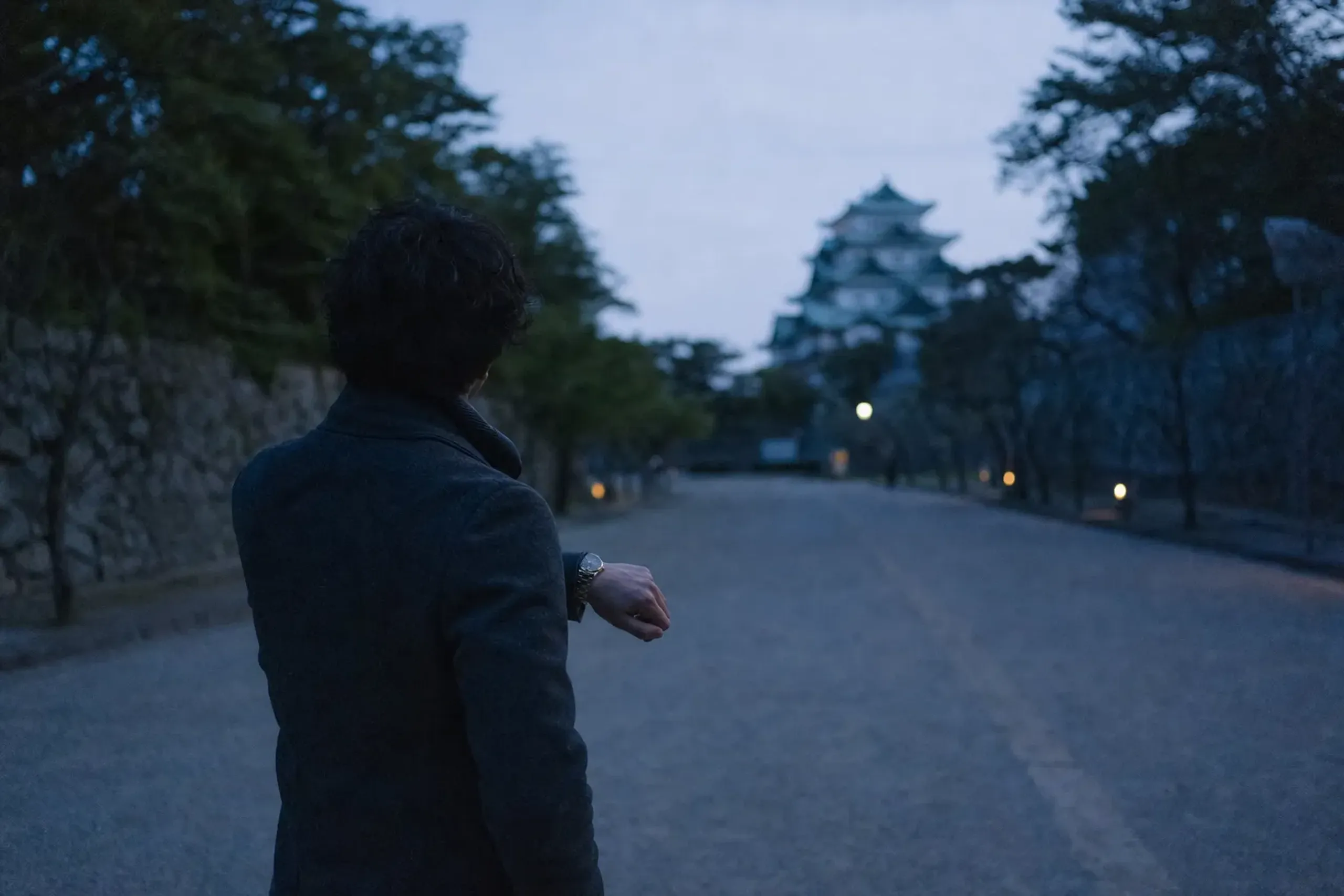
- Start before 10:00 a.m. if you want the grounds to feel spacious.
- Protect the palace window. Aim to be at Honmaru Palace well before the 4:00 p.m. last admission.
- Split day and night. If you are in Nagoya for one or two nights, consider a second, shorter evening visit during the “Be GOLD” dates.
- Pack for surfaces. Flats with grip beat stylish soles. Stone can turn slick in rain.
And one quiet note. If you want the castle to feel private, avoid arriving at the same moment as the large group tours. Our team watches local patterns closely, and a carefully composed bespoke itinerary can thread you through the grounds in the hours the crowds do not.
Where To Stay Beside The Moat (And Why It Changes The Experience)
ESPACIO Nagoya Castle opened on Oct 1, 2025, near the castle’s moat, giving luxury travelers a rare “sleep next to the landmark” option in Nagoya. Waking to the keep across still water, with the morning grounds nearly empty before the gates draw their first visitors, is a quieter privilege than any illumination—and precisely the kind of detail we build a stay around.
The finest way to experience Nagoya Castle is to let its complications become someone else’s work. We confirm access, protect your palace window, time your evening illumination, and hold your entire itinerary in complete confidence. When you are ready to plan a visit shaped precisely to your interests and your calendar, contact us here.