In this guide
- 01What the island is
- 02Why the timed-ticket system exists, and the eight-per-slot cap
- 03Group rules
- 04Age and format limits
- 05Closures, Mondays and the winter gap
- 06The crossing, by sea or by air
- 07The three zones, and how a day moves through them
- 08Teshima, where the day allows
- 09The honest note on a day versus a stay
- 10What we arrange
- 11Frequently Asked Questions
- 12A closing note
A shore day on Naoshima, built out from Takamatsu — the crossing, the museums, and the arrangement that makes a single day on the island hold together.
You come up out of the ground into a room with no lamps in it. The light on the wall is the sky, falling through a slot cut into concrete, and the five canvases in front of you shift as it shifts. When the daylight goes, the room simply closes. This is the way Chichu Art Museum shows Monet's Water Lilies — and it is the single clearest illustration of what Naoshima actually is: works that cannot be moved, in buildings that cannot be visited anywhere else, on an island that decides its own hours.
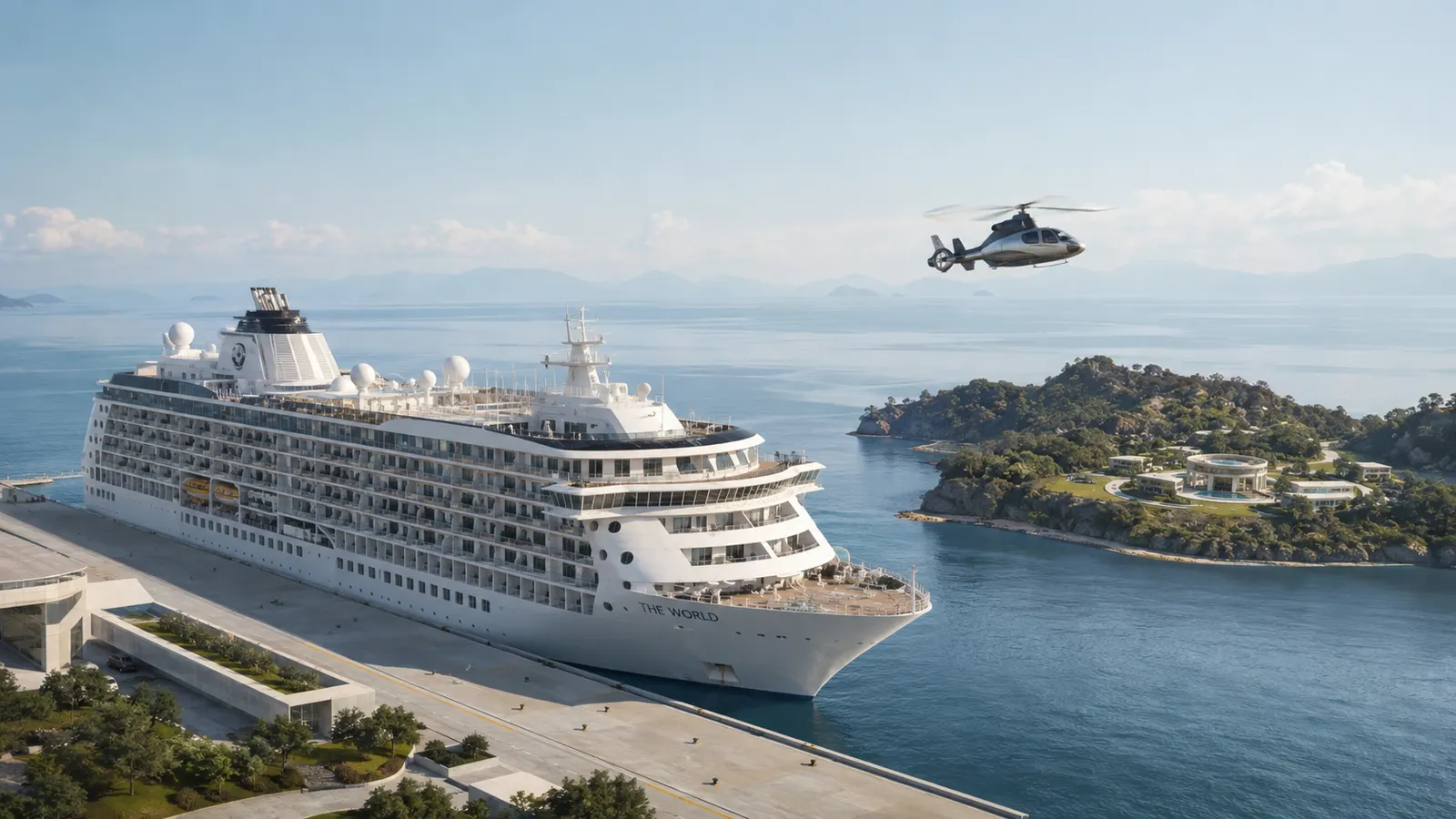
Which is exactly why a day here is not simply a matter of turning up. Japan Royal Service arranges the crossing to Naoshima — by private vessel or by helicopter to Naoshima Heliport — and admission to Chichu Art Museum, the Lee Ufan Museum, Benesse House, the Art House Project and the Ando Museum, extending across the water to Teshima where the day allows.
What the island is
Naoshima lies in Kagawa Prefecture, in the Seto Inland Sea between Honshū and Shikoku, reached by ferry from Takamatsu Port or from Uno in Okayama. It spent most of the twentieth century as an industrial island — copper smelting, a company town, a landscape people left rather than travelled to. In the late 1980s a publisher began buying land on the south of it and commissioning the architect Tadao Ando.
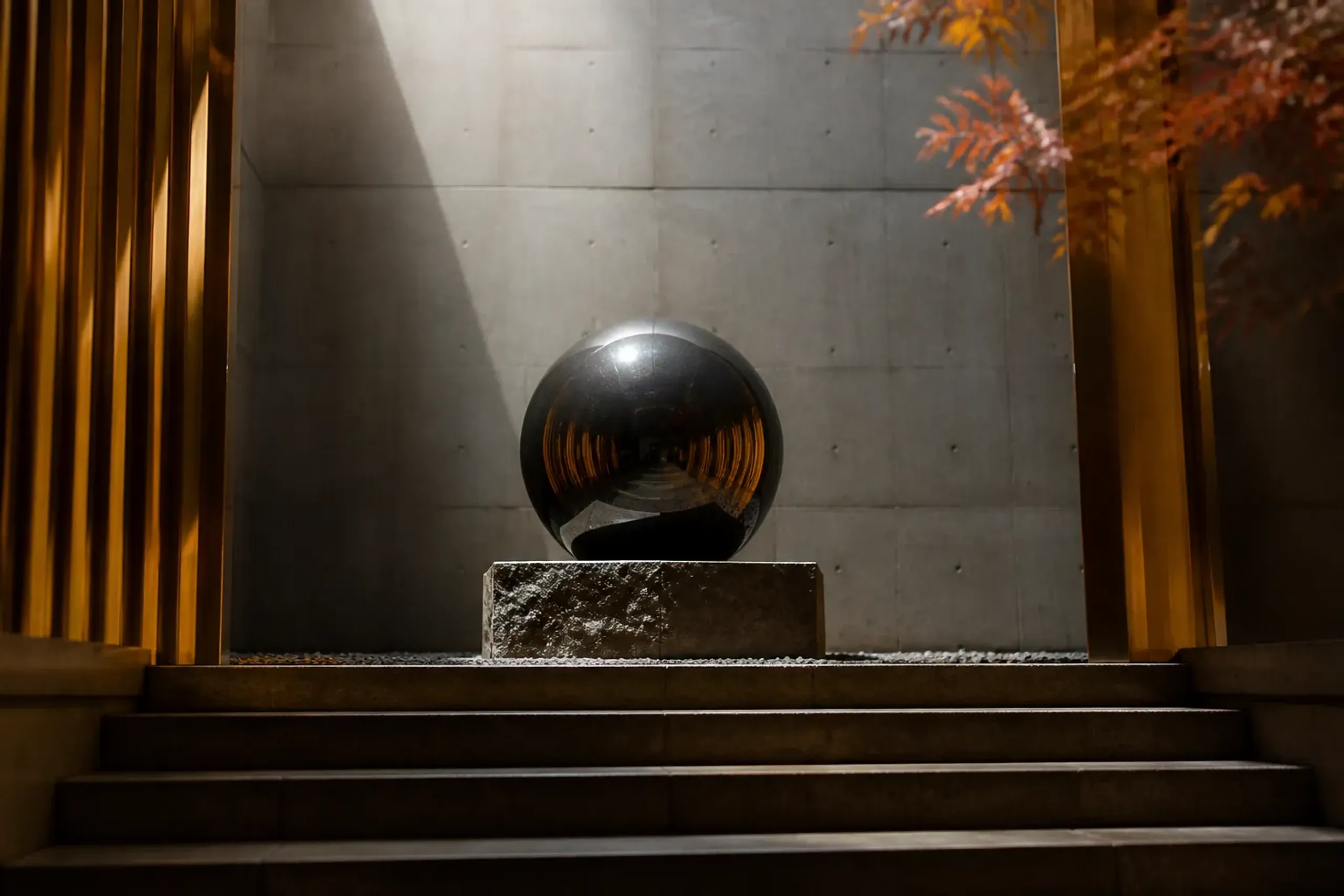
What exists now is not a museum district. It is a set of buildings each designed around specific works, arranged across three zones. Chichu was built largely underground so as not to break the skyline, and shows Monet, James Turrell and Walter De Maria's Time/Timeless/No Time — a granite sphere in a chamber the scale of a church — in natural light alone. Benesse House is a museum you can sleep inside, also Ando, open to residents at hours the day visitors never see. The Lee Ufan Museum sits between them. Ando's hand recurs across the whole island; the Ando Museum itself is a small house tucked into the old village of Honmura. The Naoshima New Museum of Art opened in 2025.
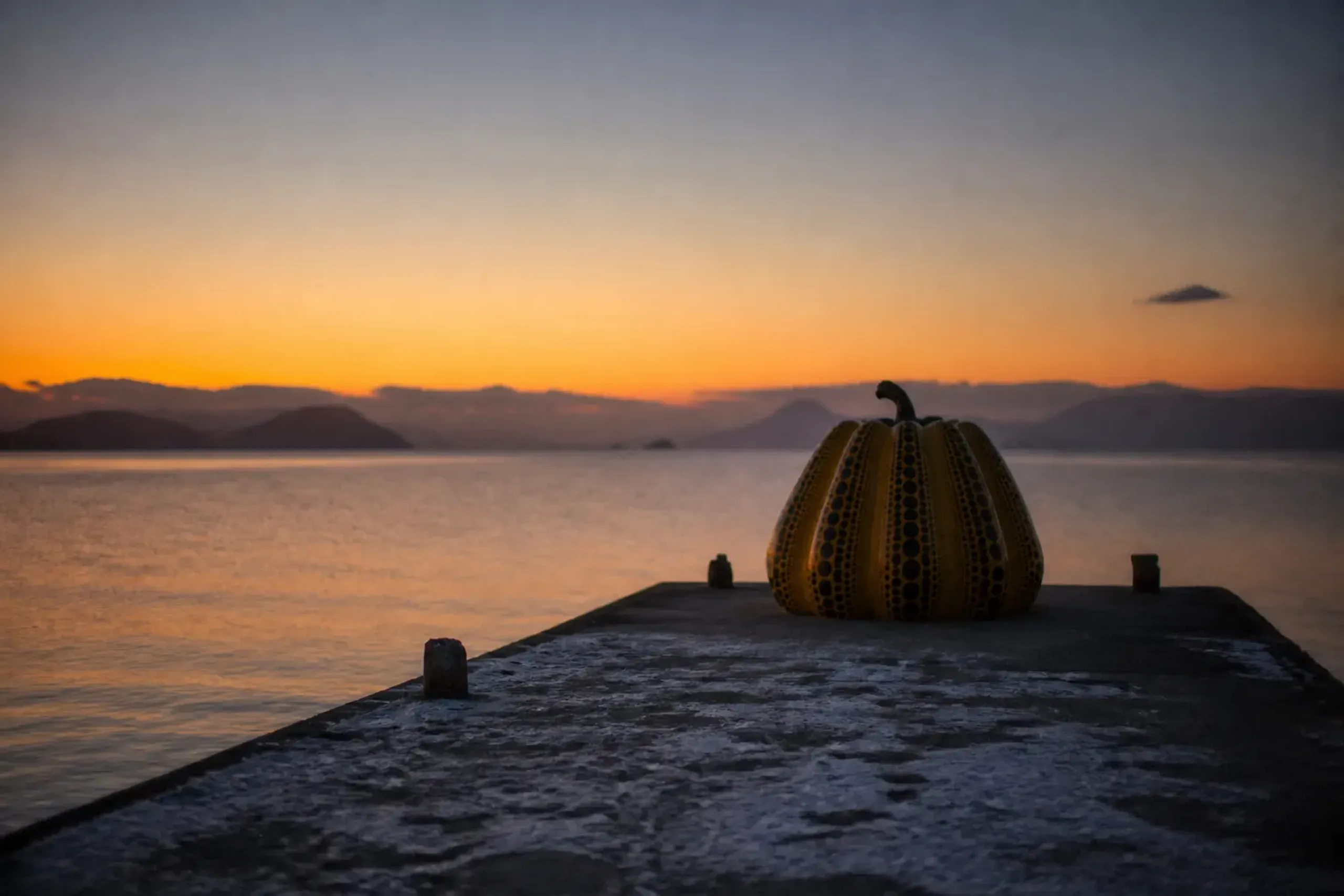
Across the island in Honmura, the Art House Project took empty village houses and gave each one to an artist — the exteriors left as they were, so there is no sign that any of them contains anything at all. Ordinary buildings on ordinary lanes. And on the pier, one of Yayoi Kusama's yellow pumpkins stands at the water's edge, by now the most photographed object in the Inland Sea.
The scarce thing here is not access. The museums are open to anyone. The scarce thing is the slot — and the fact that catches private parties out is the headcount.
Why the timed-ticket system exists, and the eight-per-slot cap
This is the plain section. Read it before the day is planned.
Chichu Art Museum sells a maximum of eight tickets per time slot, deliberately, to protect the viewing environment inside. A party of nine or more must be split into groups of eight or fewer and admitted at staggered times. For a private group travelling together, this is the single most useful fact on this page — it is the constraint the whole day is built around, and it is why we plan a bespoke itinerary backwards from the tickets rather than forwards from the ferry.
- All Benesse Art Site Naoshima facilities operate online ticketing, introduced to ease congestion and waiting on the island. Online tickets cost less than buying at the counter.
- Date-and-time-specified reservation is required for Chichu Art Museum, the Hiroshi Sugimoto Gallery "Time Corridors", the Art House Project's "Minamidera" and "Kinza", Ring of Fire – Yang's Sun & Weerasethakul's Moon in its Lunar night session, and Teshima Art Museum. Teshima runs slots every fifteen to thirty minutes.
- Online tickets sell out. Benesse itself recommends booking before coming to the island — they cannot be relied upon on the day.
- Children aged fifteen and under enter free at most facilities, but an online ticket must still be issued for each of them.
- Annual passports exist for Chichu, the Lee Ufan Museum and Teshima Art Museum, and holders enter without an online reservation.
- Two Art House Project tickets exist: a common ticket covering Kadoya, Go'o Shrine, Ishibashi, Gokaisho and Haisha, and a single-site ticket. Neither covers Minamidera or Kinza, which are booked separately.
Group rules
- Chichu: eight tickets maximum per time slot; nine or more split and staggered.
- Charter coaches passing through the Benesse House area must apply at least three days before arrival.
- The Naoshima public bath "I♥湯" and the Setouchi Archive cannot be visited as a group; parties must divide.
- Certified interpreter-guides accompanying clients enter free on presentation of credentials — except at Minamidera, Kinza and Ring of Fire Lunar, where the guide also needs a paid ticket.
Age and format limits
Two rules decide whether a family can do the island at all, and both should be stated before anyone travels.
- Minamidera and Ring of Fire do not admit children aged five and under, because of the nature of the works.
- Kinza is entered and viewed one person at a time.
For a family travelling as a group, these limits sit alongside the eight-per-slot cap at Chichu — the reason a private party is often reorganised rather than simply booked. We set this out in more detail in our post on how a family of eight is handled on the island.
Closures, Mondays and the winter gap
Mondays and winter are the two traps.
- Chichu Art Museum closes for long-term maintenance from 12 January to 19 March 2027 — two months that remove the island's central museum from any winter itinerary.
- The Naoshima New Museum of Art closes 24 November to 12 December 2026 for an exhibition change.
- The Sugimoto Gallery and the Valley Gallery have maintenance closures and altered hours; further regular closures fall between January and March 2027.
- Hours change over Silver Week, 19 to 23 September 2026.
- The Lee Ufan Museum closes Mondays, or the following day where Monday is a public holiday.
One point of possible confusion, worth stating plainly: Benesse changed its accommodation booking system for stays from 1 August 2026. The museum reservation system was not affected. The two are separate. Confirm all closures and rules at the time of planning — this is the fastest-changing material we hold.
The crossing, by sea or by air
This is the one variable we control that a public ferry cannot: the arrival time. A private vessel or a helicopter fixes when you land, and the day is then built to fit the slots at Chichu. The argument is precision, not glamour.
By sea
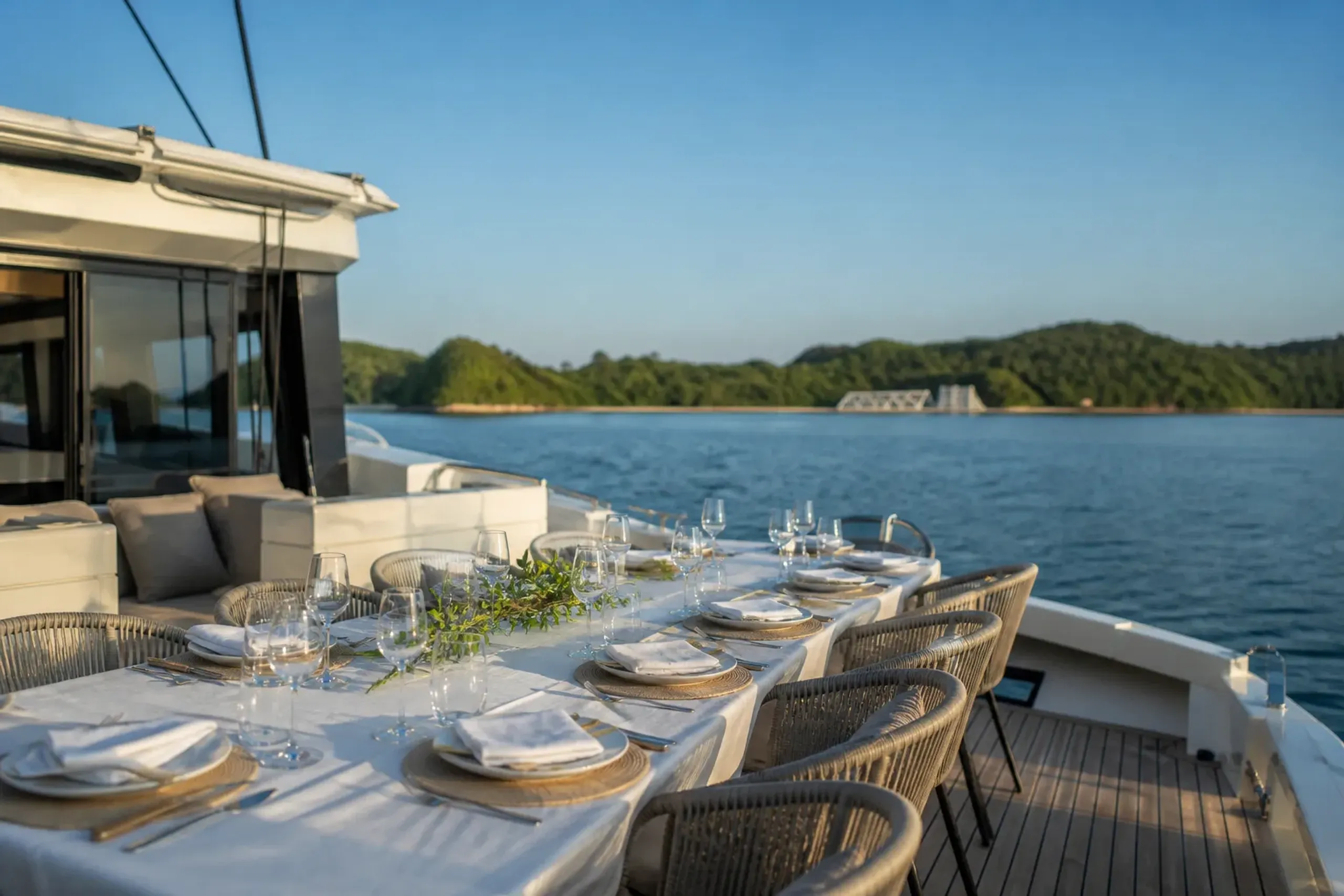
A private vessel is chartered whole, to one party per day — no other party aboard. The crossing runs about an hour, but that is not really the point of it: the vessel is chartered by duration and the clock runs while she stands by at Miyanoura, so most of a day is time at anchor or at the island rather than passage. She is, in effect, a dining room and a villa that happen to float — a salon with the sea on three sides, a table on the open deck, and a working galley, so a chef cooks aboard rather than reheating something carried on. You see the art islands from the waterline, slowly, close in.
By air
Ten to fifteen minutes from Takamatsu Airport, the aircraft sets down at Naoshima Heliport, near the museum quarter, and the way the archipelago actually sits — invisible from sea level — becomes the view. On a single day, that is the difference between two museums and four. Aircraft are partner-supplied, and landing permissions are arranged per flight rather than held as a standing right, so a landing is requested and confirmed, never assumed. Departure is normally from Takamatsu Airport, thirty to forty minutes by car from the city — the road leg is longer than the flight — and the aircraft cannot fly at dusk, so a sunset departure by air does not exist. Rain, strong wind or fog cancel it, which is why a ferry fallback belongs in any itinerary that depends on flying. Details of the aircraft and its pairings sit on our private transportation and helicopter and luxury hotels pages.
The three zones, and how a day moves through them
The island reads as three zones: the museum area in the south, Honmura across the way, and Miyanoura at the port. A day works best moving through them in that order and finishing at the port. Within the Benesse area, a free shuttle runs between Tsutsujisō, Benesse House, the Lee Ufan Museum and Chichu, so the museum quarter can be worked as a single stretch.
Chichu is the fixed point — the timed slot everything else is arranged around. Honmura is the human half of the day: not museums but village houses, entered off ordinary lanes, where the work and the building and the sea behind it are the same experience. Ando is the through-line that holds both halves together, and it is worth noting he is not the only reason to come to Kagawa for architecture — the prefecture built its identity on building twice over, sixty years apart, a thread we follow in our post on Kagawa modernism. Isamu Noguchi's studio and stone garden at Mure, on the mainland near Takamatsu, sits naturally alongside a Naoshima day for guests who want the region's sculptural line in full.
One practical note that recurs across the island: photography rules differ by venue, and several works prohibit it outright. It varies, and it must be checked venue by venue rather than assumed.
Teshima, where the day allows
Where the timings line up, the day extends by water to Teshima and its Art Museum — a single, shell-like concrete space where water rises from the floor. It runs on its own timed slots, every fifteen to thirty minutes, and it is the reason a fixed arrival time matters: reach Naoshima late and Teshima falls off the day entirely.
The honest note on a day versus a stay
Naoshima can be done in a day if the timed entries line up. It is not the same as staying. Local guidance generally suggests one or two nights for the island proper, and a guest who wants the island rather than its highlights should be told so before the call is planned. A day gives you the essential works with the timings honoured; a night gives you Benesse House after the day visitors have gone, and the museum quarter in the light Chichu was actually built for. We are glad to build either — see our multi-day itineraries hub — but the two are different propositions, and the choice belongs at the start.
What we arrange
The crossing, whichever way you want it, and the museum reservations — which have to be made in a fixed order, because they open and close on different days and Chichu admits only eight to a slot. A guide who can talk about Ando's buildings and not only the art inside them. The catering aboard, if you sail. And the ferry fallback, so the day does not collapse if the wind gets up.
Frequently Asked Questions
Why does Chichu limit numbers?
Chichu Art Museum sells a maximum of eight tickets per time slot, to protect the viewing environment inside. A party of nine or more must be split into groups of eight or fewer and admitted at staggered times — the fact that most reorganises a private group's day.
Can tickets be obtained on the day?
No. The date-and-time-specified museums, Chichu among them, sell out, and Benesse itself recommends booking before coming to the island. The order in which the museums are booked decides the shape of the whole day.
Which museums close on Mondays or in winter?
The Lee Ufan Museum closes Mondays (or the following day where Monday is a holiday). Chichu closes for long-term maintenance from 12 January to 19 March 2027, removing the island's central museum from any winter itinerary. Confirm all closures at the time of planning.
Are there age limits for children?
Yes. Minamidera and Ring of Fire do not admit children aged five and under, because of the nature of the works, and Kinza is entered one person at a time. Both bear on whether a family can do the island as a group.
What is the difference between arriving by sea and by air?
Both fix the arrival time in a way a public ferry cannot, which is what lets the day be built around the Chichu slot. The vessel gives you the Inland Sea from the waterline and a lunch aboard; the helicopter gives you the most museum hours in a single day. A landing by air is requested per flight, not guaranteed, and cannot be flown at dusk — so a ferry fallback belongs in the plan.
Can Naoshima really be done in a day?
Yes, if the timed entries line up — but it is not the same as staying. Local guidance suggests one or two nights for the island proper, and a guest who wants the island rather than its highlights should decide that before the day is built.
A closing note
We are a Japanese company, working in Japanese, with the people who hold these slots and open these doors. Enquiries are handled privately and directly; we do not publish our clients, our itineraries, or our rates. When your date is firm, contact us here.