In this guide
- 01Why Are The Naruto Whirlpools Named For A Sound?
- 02How Do The Naruto Whirlpools Actually Form In The Naruto Strait?
- 03How Big Are The Naruto Whirlpools, And Why Are They Ranked Globally?
- 04When Is The Best Time To See The Naruto Whirlpools On Awaji Island?
- 05What Are The Best Ways To View The Naruto Whirlpools: Bridge Walkway Or Boat?
- 06How Do You Plan A Tide-Timed Visit Without Wasting The Day?
- 07What’s New In 2026: UNESCO Campaign And Spring Whirlpool Festival
- 08A Short, Practical Field Guide: What To Wear, What To Bring, What To Expect
- 09How Our Concierge Approaches A Naruto Whirlpools Day (Discreet, Tide-First, Calm)
- 10Plan Your Naruto Whirlpools Day With Us
- 11Frequently Asked Questions
You feel it before you see it.
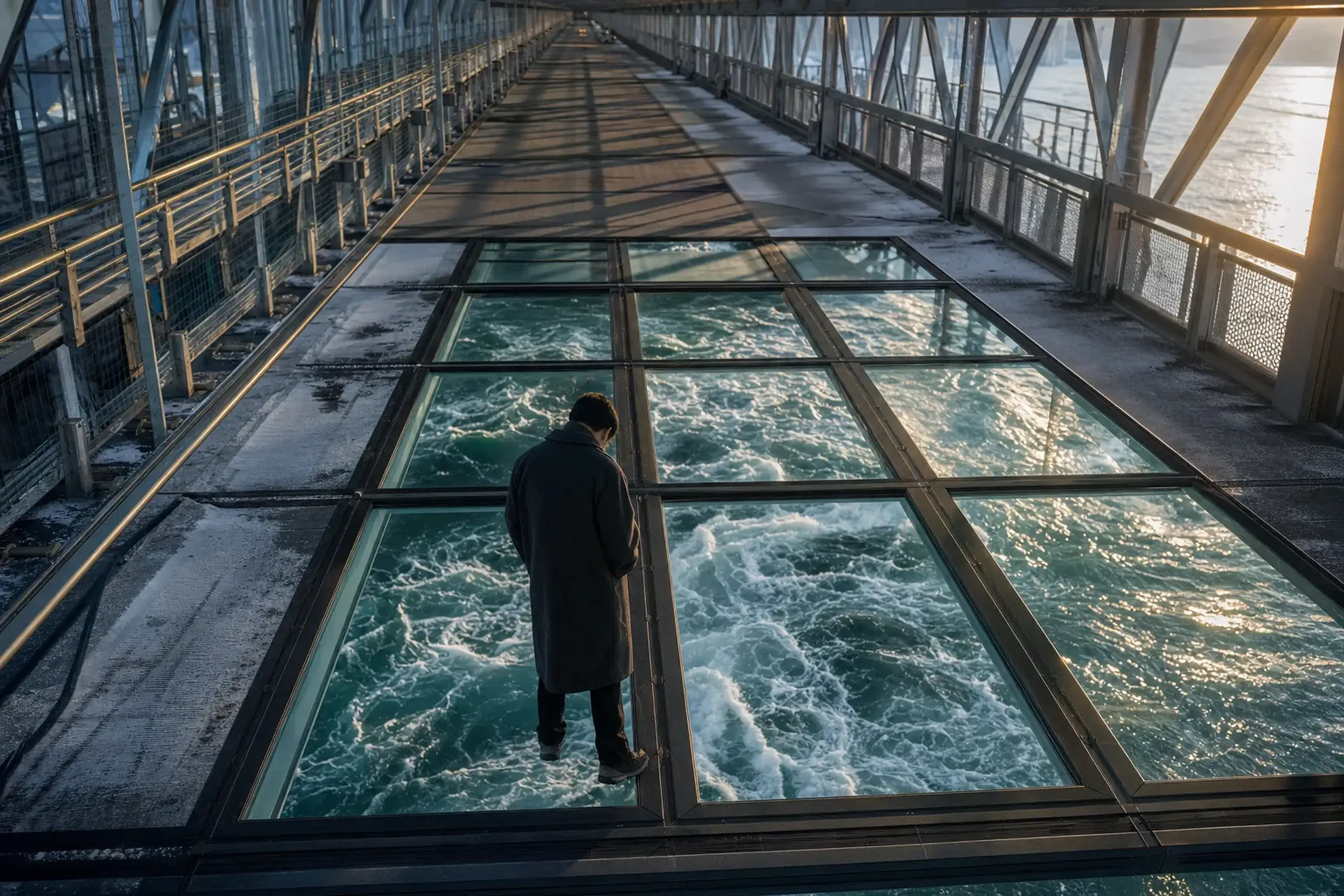
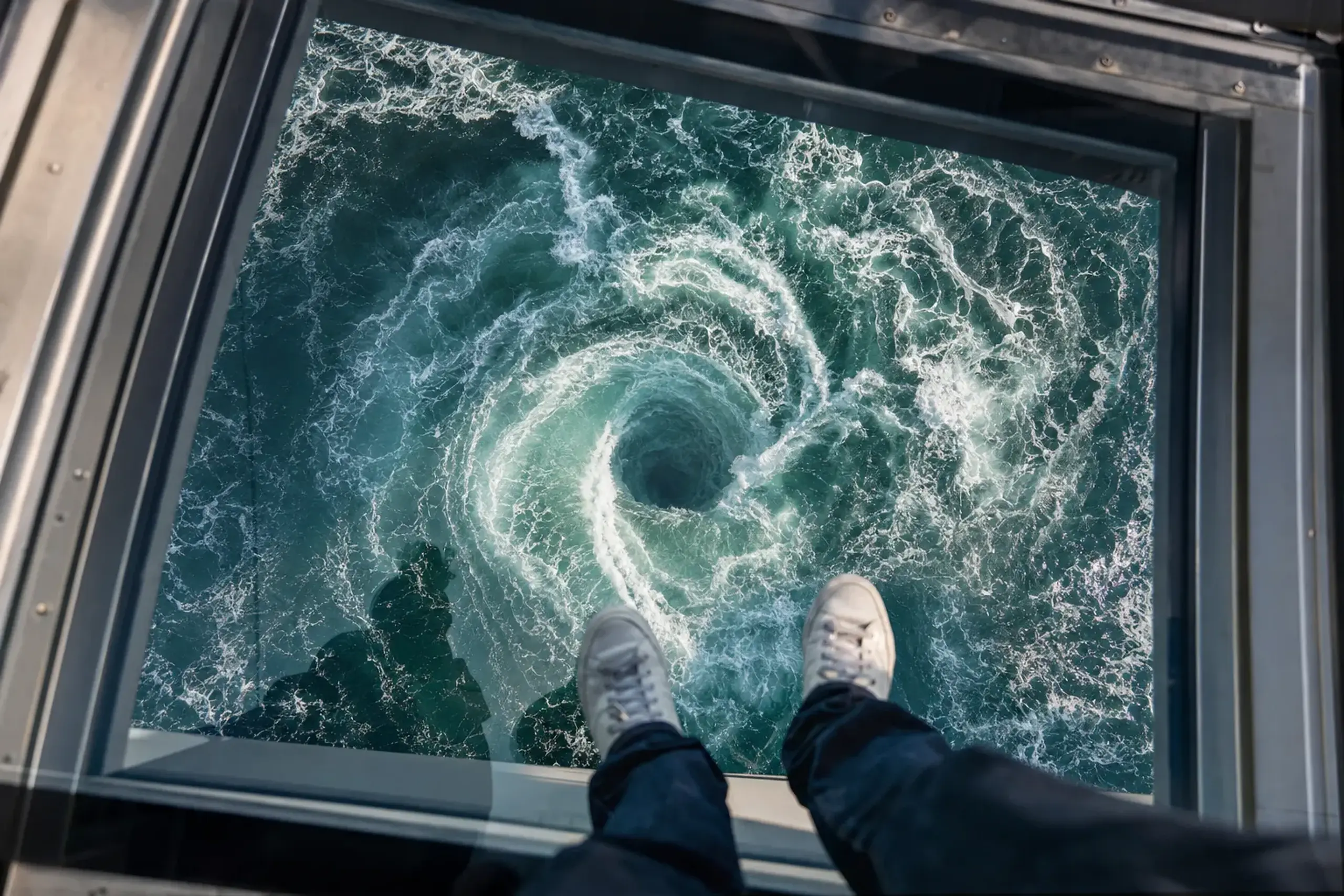
On the glass-floor sections of Uzu No Michi, the sea is not merely “swirling.” It is charging, sliding, buckling—an entire current moving as a single mass beneath the Ōnaruto Bridge. Then the roar arrives. Low. Physical. Like wind forced through a tunnel.
That sound is not a poetic add-on. It’s the point.
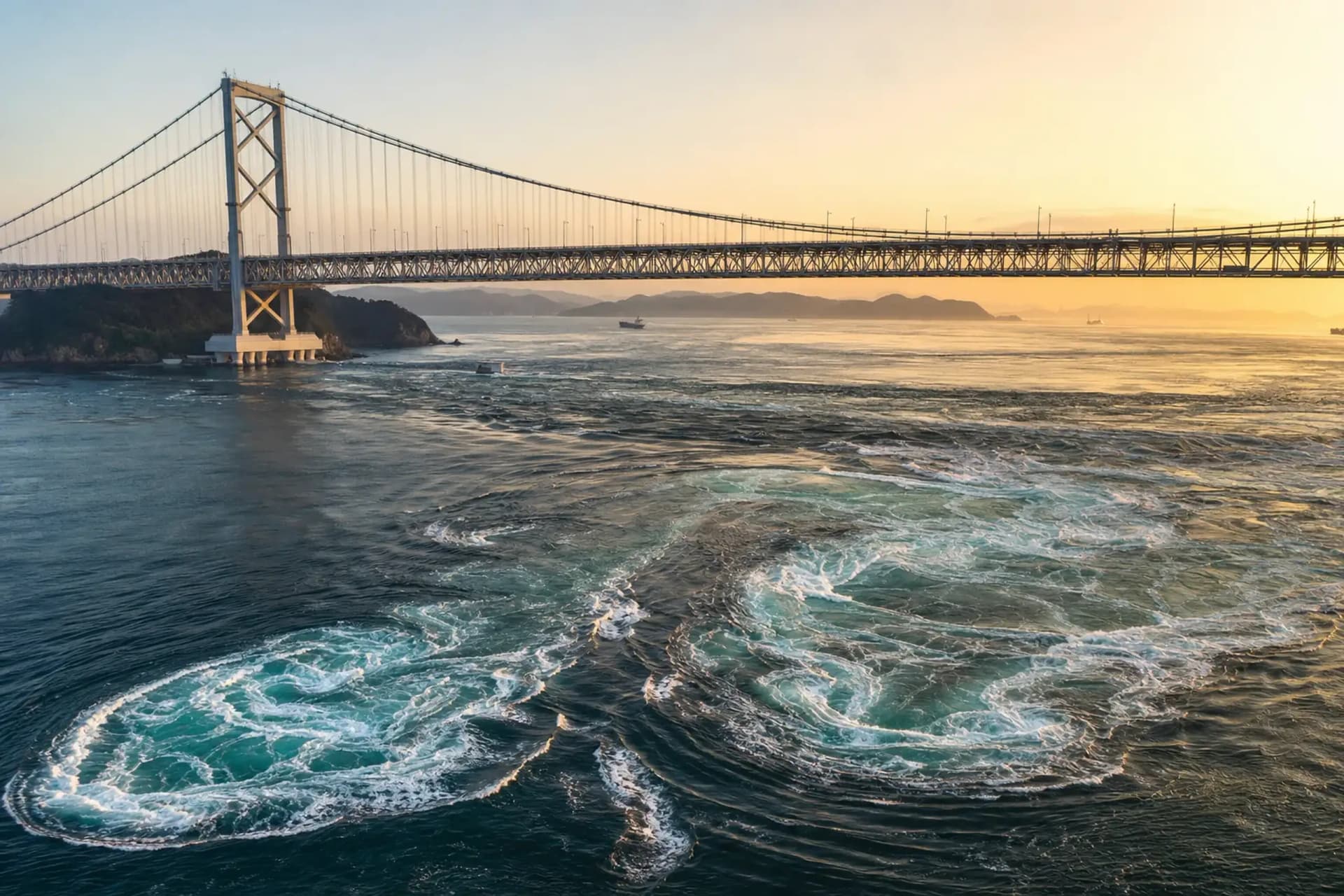
Many visitors imagine a whirlpool as a single drain-like spot that spins tidily in place. In the Naruto Strait, the truth is sharper and far more thrilling: vortices form and collapse as part of a fast-moving tidal stream, constantly reshaped by the speed differences within the flow. The strait is even said to be named for the noise the current makes—Naruto, the sound of water forced through a narrow throat.
This guide stays on one subject only: the Naruto whirlpools, between Awaji Island (Hyōgo Prefecture) and Naruto City (Tokushima Prefecture). Our team at Japan Royal Service uses this place to demonstrate what luxury planning actually means: precise timing, quiet discretion, and decisions made with tide tables in hand rather than a guidebook.
Why Are The Naruto Whirlpools Named For A Sound?
The Naruto Strait is said to be named for the roar of its violent tidal current, not for a static whirlpool “spot,” because the entire flow surges through the channel and audibly pounds the sea.
Stand on Uzu No Michi when the current is running hard and the naming makes immediate sense.
The sea does not politely rotate for photographs. It rips past the bridge supports and seams into darker bands where the depths change, producing a sound that carries far across the water.
That detail matters when you plan a visit. If you arrive at the wrong hour, you may still see water moving, but you will not hear that deep, wet rumble that tells you the strait is truly alive. Timing is everything. Silence, here, can be the warning sign.
How Do The Naruto Whirlpools Actually Form In The Naruto Strait?
Naruto’s whirlpools form where a fast tidal current meets slower water near the banks, creating vortices at the boundary as water is forced through a narrow channel by a real sea-level difference between two sides.
The Naruto Strait connects two bodies of water with high and low tide happening at different times: the Seto Inland Sea side and the Pacific-facing Kii Channel side. At a given moment, one side can sit noticeably higher than the other. Tokushima Prefecture notes that this difference can reach about 1.5 meters.
That height difference pushes water through a pinch point. The strait narrows to roughly 1.3 km at its slimmest, and the main channel directly beneath the bridge narrows further to around 800 meters. Water in the center runs faster than water near the edges. This speed differential is the quiet mechanism behind all the drama.
Then the seabed adds its own influence. Tokushima Prefecture describes deep depressions nearby and notes that the deepest point under the bridge is about 90 meters, with deeper areas on either side.
That topography promotes vertical mixing, intensifying the visible turbulence during strong flows.
How Big Are The Naruto Whirlpools, And Why Are They Ranked Globally?
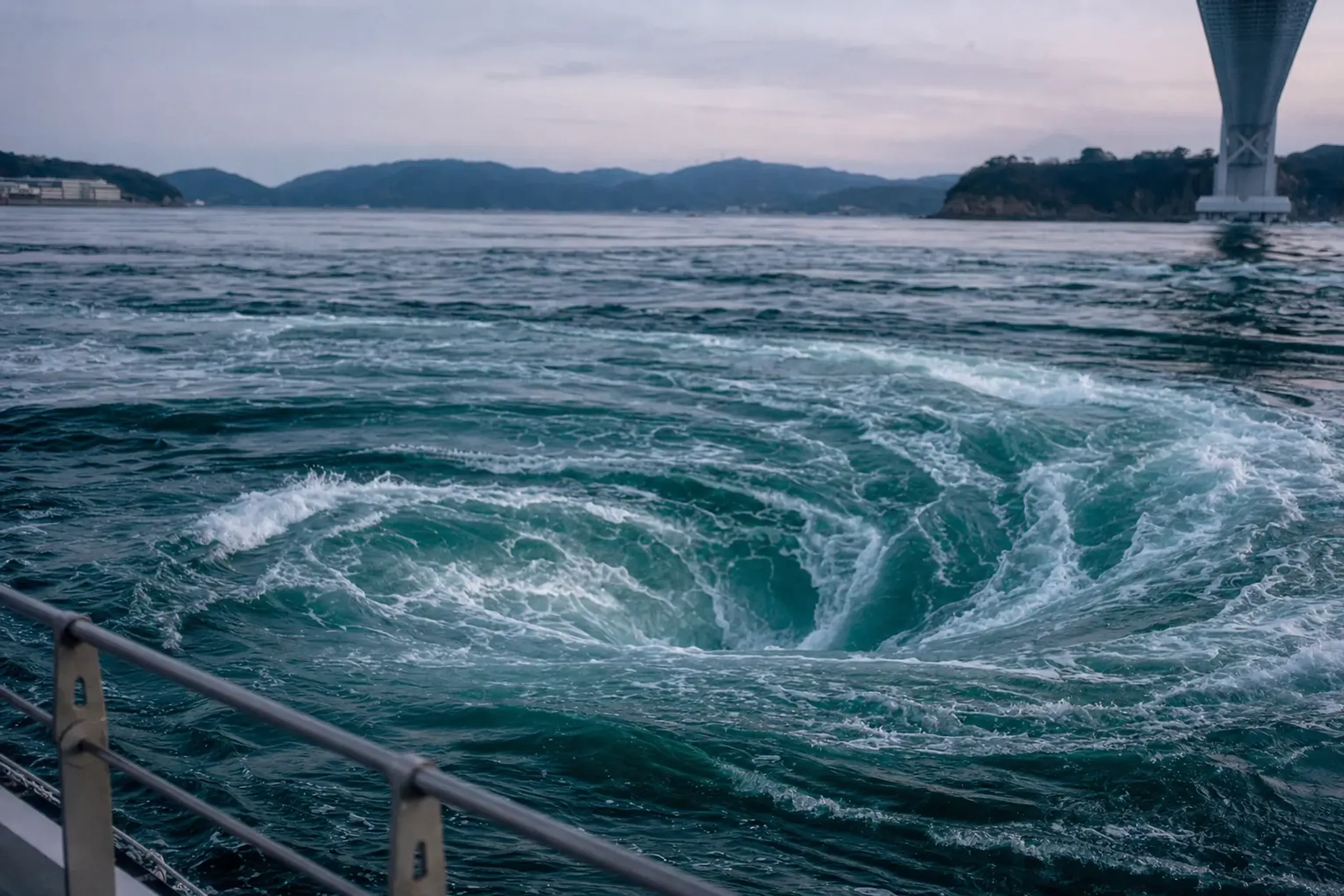
During spring tides, Naruto’s whirlpools can reach roughly 20–30 meters across, with currents exceeding about 20 km/h—Japan’s fastest tidal current—often listed among the “World’s Three Great Tidal Currents.”
When the conditions line up, you stop thinking in metaphors entirely. A 20–30 meter vortex is not a cute circle. It is a moving wall of water that forms, thins, and tears itself apart before your eyes.
The current speed matters just as much as the diameter. Tokushima’s official tourism information describes speeds reaching about 20 km/h. That is why the phenomenon is widely compared with the Strait of Messina (Italy) and Seymour Narrows (Canada) as part of the “World’s Three Great Tidal Currents.” It is an international frame for something very local—and very real.
When Is The Best Time To See The Naruto Whirlpools On Awaji Island?
The best season is late March through late April, during spring tides, when the tidal range and current tend to produce the largest, most frequent whirlpools.
This is not primarily a summer phenomenon. Summer can work, and we plan for it often, but spring is the cleanest bet for scale.
The whirlpools are viewable year-round during spring tides (ōshio), which occur roughly twice monthly around the full and new moon.
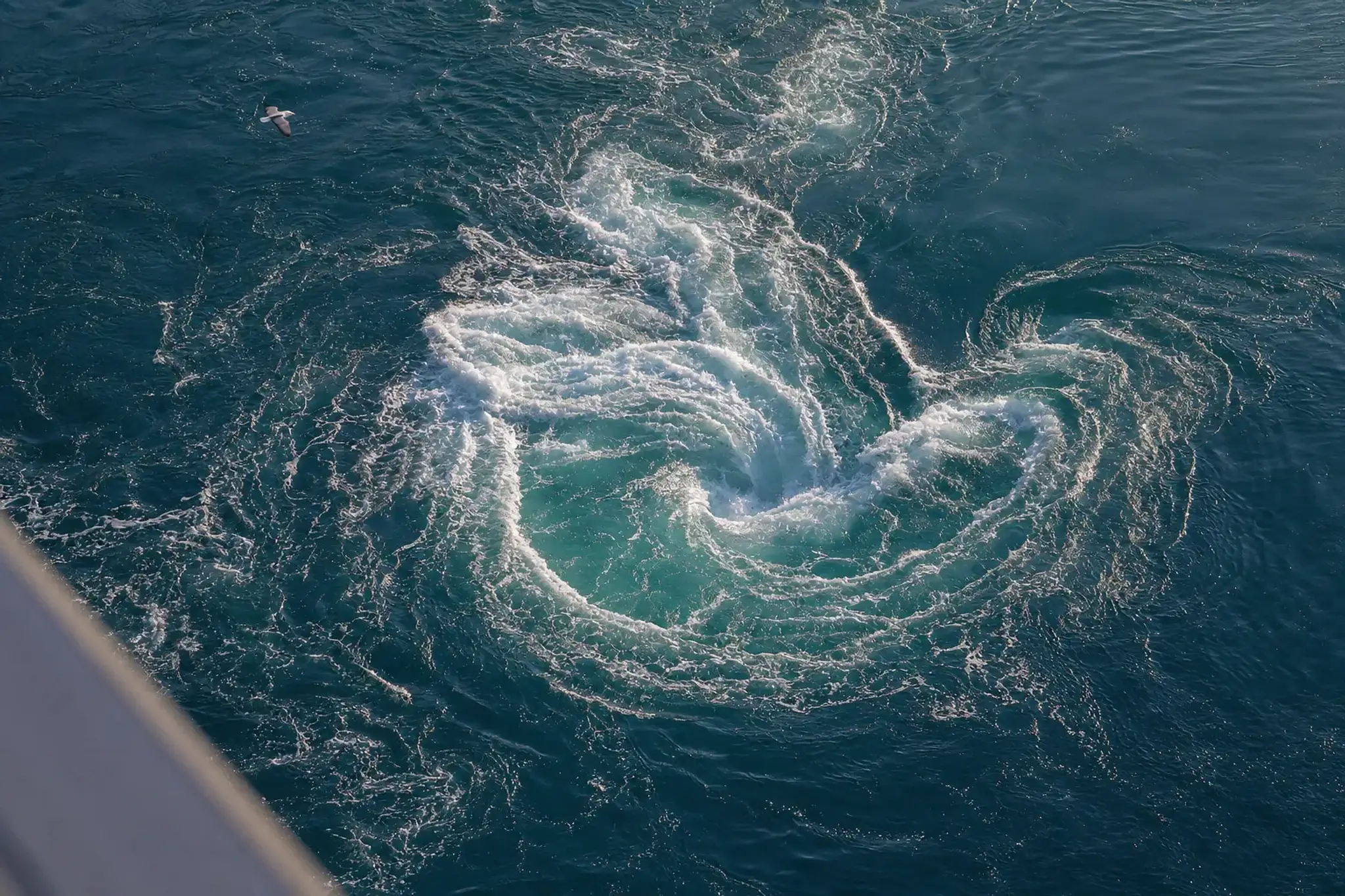
But even on a spring-tide day, not every hour performs. You need the fastest-flowing portion of the tide cycle, and the difference between “good” and “flat” can come down to a matter of minutes, not effort.
Key fact: A “whirlpool day” is not a guarantee. Even during spring tide, size and count vary by the day’s specific tidal conditions and cannot be promised.
In our experience, the most disappointing visits happen for one reason: guests treat the whirlpools like a monument. They are not. They are a timed event written in water—a fleeting, seasonal spectacle in the spirit of shun, the Japanese art of knowing precisely what to witness, where, and in which exact hour.
What Are The Best Ways To View The Naruto Whirlpools: Bridge Walkway Or Boat?
The three primary viewpoints are Uzu No Michi (bridge walkway) for a vertical look-down, sightseeing boats for close-range scale, and Naruto-yama Observatory for a fixed panoramic view across the strait.
Each method reveals a different truth. Choose based on what you want to feel, and on how you prefer to travel.
Option A: Uzu No Michi (Ōnaruto Bridge Walkway)
Uzu No Michi is built directly into the bridge itself. The official site describes a 45-meter “walk above the sea”, and indicates it is about 450 meters to the observatory area.
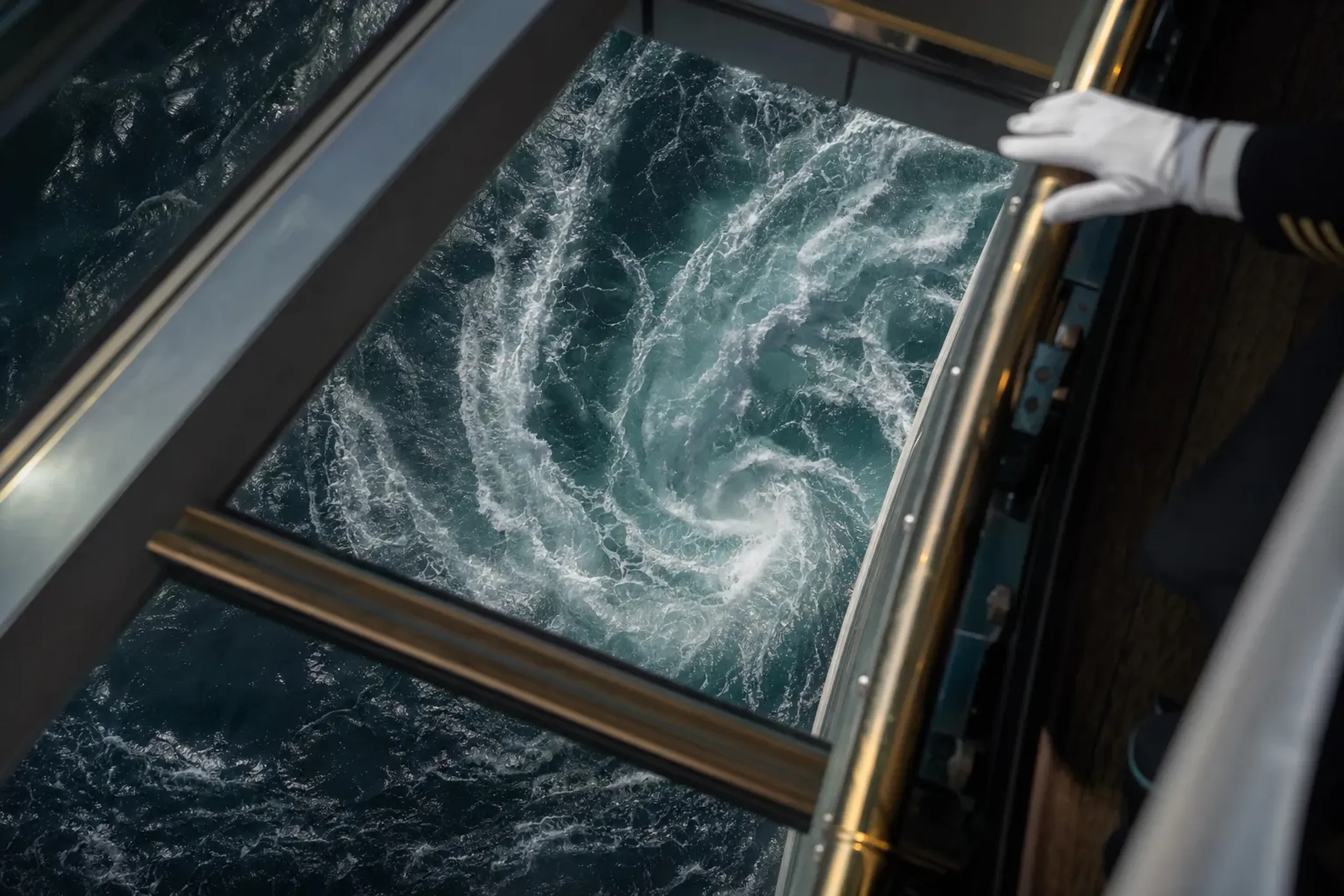
The glass-floor sections are the defining moment. Your body understands the height first. Then you notice how the current moves like a broad river, not a spinning sink.
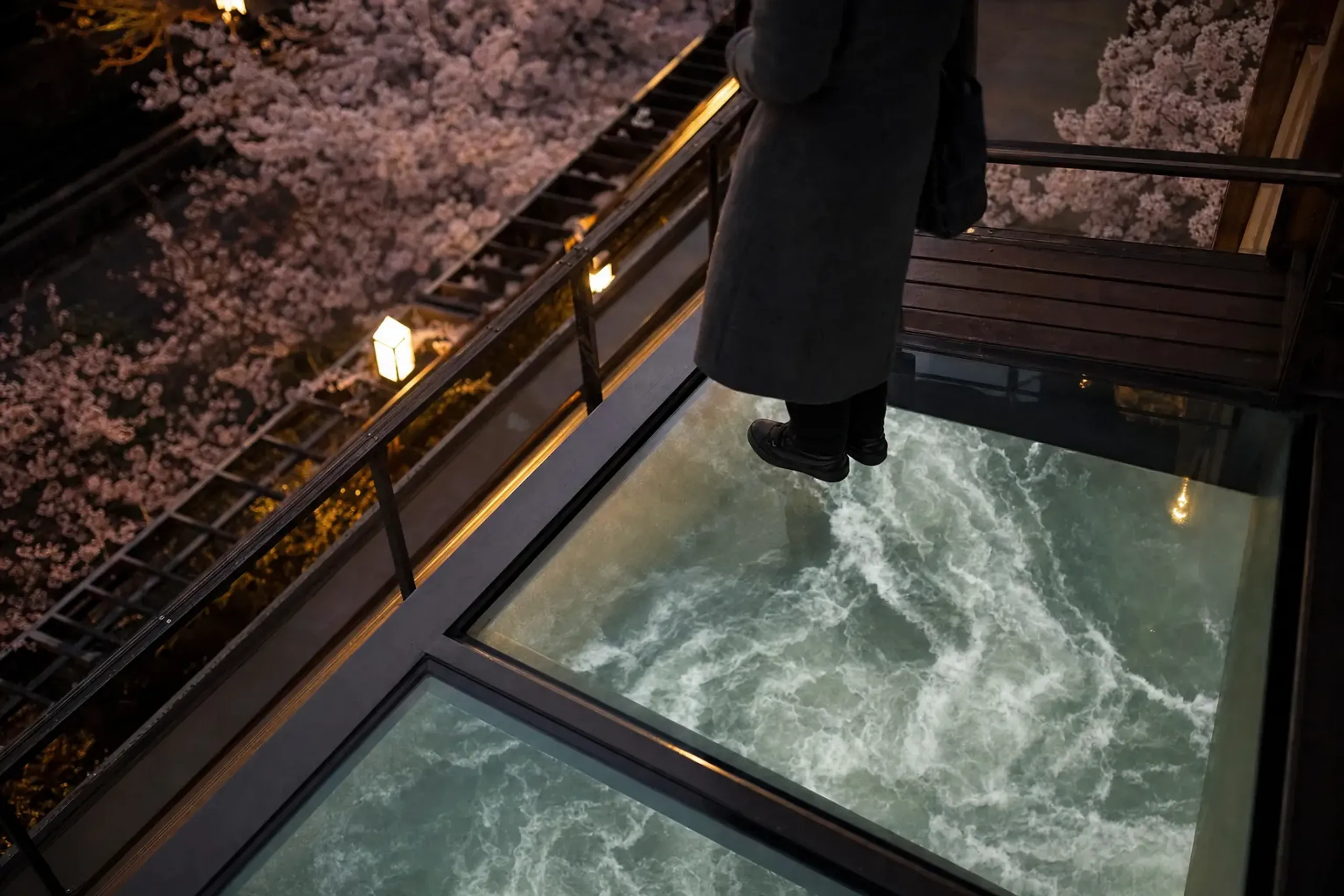
- Best for: looking straight down, feeling the wind and sound, and reading the geometry of fast water meeting slow water.
- Watch for: temporary closures. The official site posts notices, including a temporary closure dated December 14–16, 2026.
- Practical tip: arrive early enough to walk slowly. Rushing defeats the entire point.
Option B: Sightseeing Boats From Awaji Island (Fukura Port)
From Awaji Island, boats depart from Fukura Port for close-up observation. JNTO notes that a tide-watching cruise departs from Awaji, and Hyōgo’s official tourism itinerary describes a large sailing-ship-style vessel, roughly 500-passenger capacity, on a route that passes directly through the whirlpools.
On the water, scale becomes honest. You watch vortices form at the seam lines, then unravel. It feels less like “watching” and more like witnessing a vast moving machine at work.
- Best for: close-range force, strong photographs of the foam lines, and the visceral sensation of speed.
- Watch for: operational updates. The Awaji-side cruise operator site posted a notice dated 2026/09/23 about a web reservation system issue and a temporary same-day booking suspension.
- Practical tip: bring a lens cloth. Sea spray is very real when the tide is running.
Option C: Sightseeing Boats From The Naruto (Tokushima) Side
On the Naruto side, smaller sightseeing boats operate, including an underwater viewing boat with glass viewing sections (reservation required). The experience differs from a large vessel: tighter turns, closer proximity, and sometimes a more intimate read of the current’s direction.
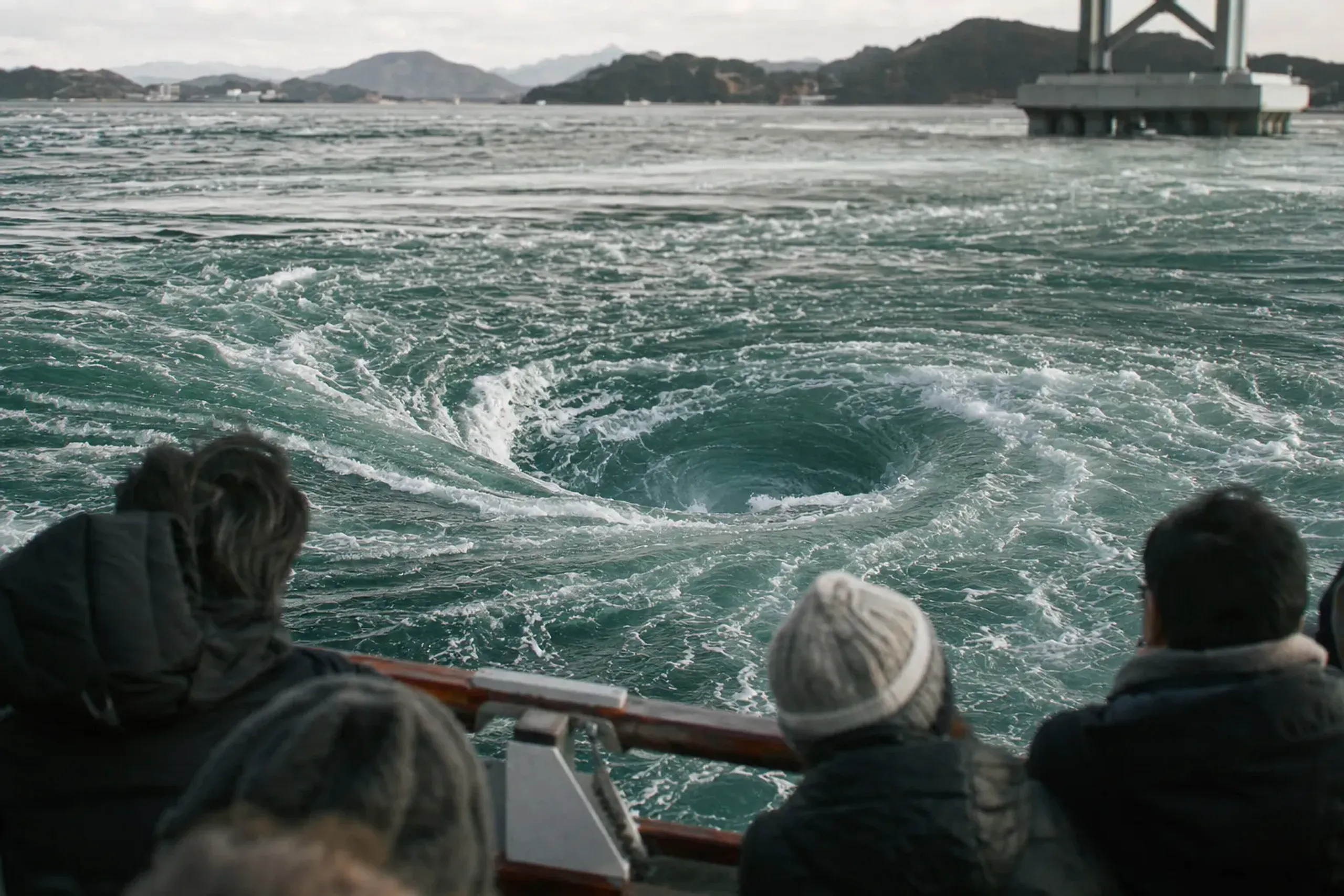
- Best for: families who want a structured, seated experience, and travelers who prefer shorter walking distances.
- Watch for: reservation requirements and schedule changes tied to sea conditions.
Option D: Naruto-yama Observatory
Naruto-yama Observatory offers a fixed viewpoint over the strait. It is the least “kinetic” option, but it provides invaluable context—how narrow the throat truly is, and how the current behaves across the entire channel.
It is also a smart fallback when a boat timing does not fit your day. Calm water is still interesting from above. The lines remain, quiet and legible—a restrained, wabi kind of beauty, where the absence of drama becomes its own reward.
How Do You Plan A Tide-Timed Visit Without Wasting The Day?
Plan around the strongest part of the tide cycle shown in published tide tables, build a 60–90 minute buffer on both sides, and prepare a second viewpoint in case conditions are calmer than expected.
Discerning travelers don’t need more “ideas.” They need a day that holds together.
Our team at Japan Royal Service typically designs the day backwards from the tide window, then inserts travel time and quiet pauses that protect the pace. This is exactly where a private transportation plan matters most: you can move the moment the sea says “now,” not when the next public timetable happens to allow it.
Here is a step-by-step logic that works, whether you are coming from Kobe, Osaka, or staying on Awaji Island itself.
- Step 1: Identify the spring-tide period (ōshio) for your travel dates, tied to the full/new moon pattern.
- Step 2: Check published tide tables for the specific day and locate the fastest-flowing portion of the cycle.
- Step 3: Choose your primary viewpoint (boat or bridge) based on mobility, photography goals, and tolerance for wind and spray.
- Step 4: Choose a secondary viewpoint as a contingency (often the bridge walkway plus an observatory, or boat plus walkway).
- Step 5: Keep a generous buffer for weather and operational notices. Don’t cut it close.
One more piece of advice.
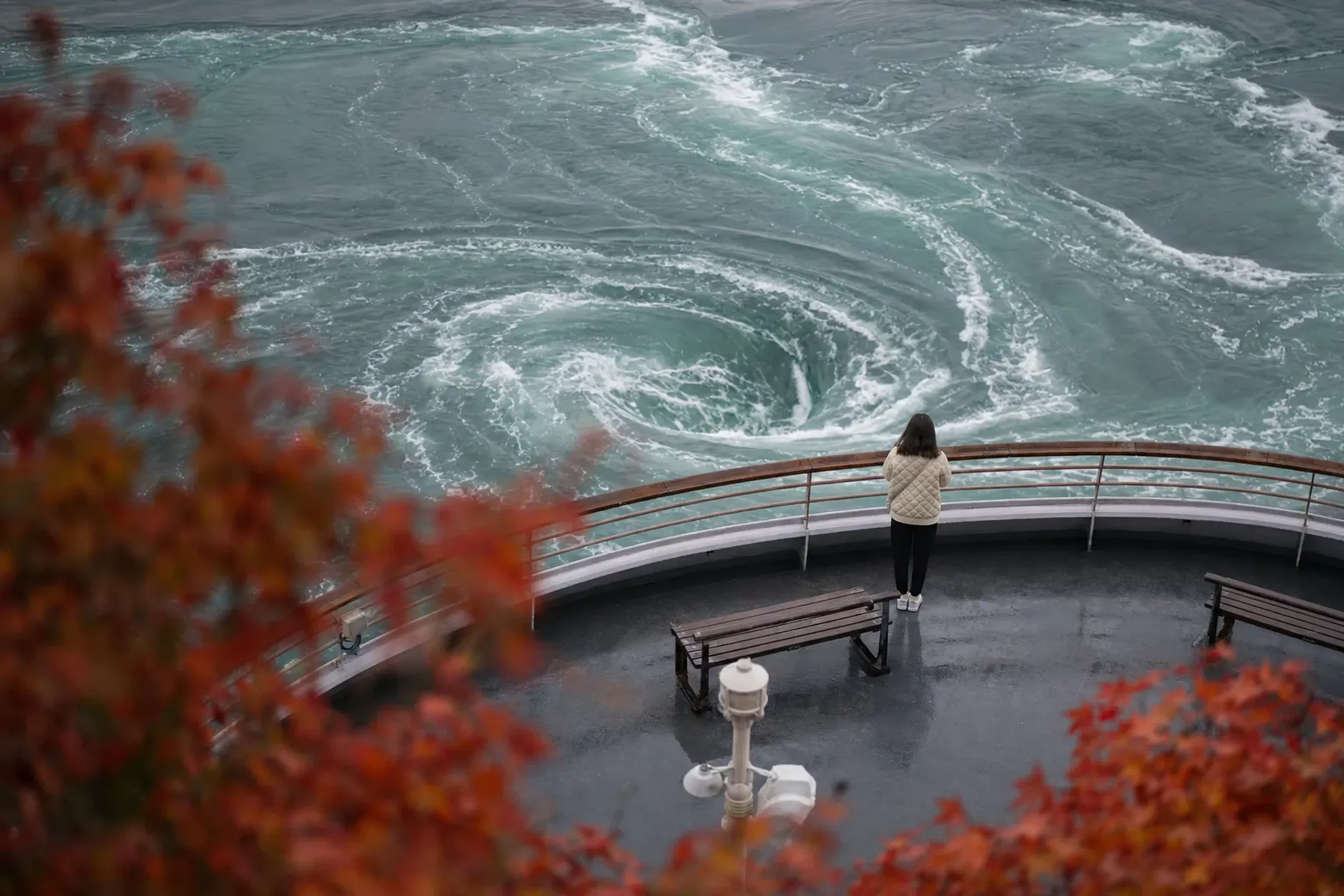
Don’t schedule this between two rigid appointments. The Naruto whirlpools reward patience, and punish hurry.
What’s New In 2026: UNESCO Campaign And Spring Whirlpool Festival
Hyōgo and Tokushima are actively campaigning for UNESCO recognition of the Naruto Strait whirlpools, and Naruto City has announced the Spring Whirlpool Festival will return in 2026 with an opening ceremony on Sunday, February 15, 2026.
These currents are not treated as a mere local curiosity. There is a serious, ongoing push to frame them as a globally significant natural phenomenon, including international symposium activity connected with Expo 2025 and a stated interest in coordinating with Norway and Scotland.
For travelers, this has two effects. First, there is more public attention, which can shift crowd patterns on certain dates. Second, it lends the visit a genuine sense of “now.” You are not simply looking at a famous strait. You are witnessing a place in the middle of a living campaign about what Japan chooses to protect and present to the world.
If you are considering February 2026, the festival calendar is a real hook—but the tide window still rules. Ceremony dates do not override physics.
A Short, Practical Field Guide: What To Wear, What To Bring, What To Expect
Dress like you are meeting the sea, not a museum. Big difference.
Wind on the bridge can be brisk even in spring. Bring a light layer you can close at the neck, and shoes with confident grip. If you are on a boat, salt spray is likely; a simple brimmed hat and a cloth for lenses make the difference between frustration and clean photos.
Expect variation. Sometimes the water looks like braided silk. Sometimes it looks as though it is tearing itself apart. The whirlpools do not “start” on cue; they appear, distort, and vanish as the boundary between fast and slow water shifts.
How Our Concierge Approaches A Naruto Whirlpools Day (Discreet, Tide-First, Calm)
We keep it quiet. Always.
For our guests, the luxury here is not exclusivity—this is, after all, a public phenomenon. It is control: the right arrival minute, a protected pace, and a plan that does not fray when a notice is posted or conditions soften. That is the quiet omotenashi of anticipating a difficult tide before it arrives, so the day feels effortless to you.
When guests ask for a tailor-made day around the whirlpools, our concierge team verifies current tide tables, checks boat schedules and reservation requirements, and watches for closure notices like those published by Uzu No Michi.
We also coordinate guiding, private transfers, and sightseeing-boat logistics. Once. Plainly. Without fuss.
Discretion is built in. Your itinerary, your identity, and your movement patterns stay entirely private, and we plan so that you are never forced into loud, crowded decision points.
Plan Your Naruto Whirlpools Day With Us
The strait keeps its own schedule. The art is arriving in perfect step with it—and that is precisely what we do. If you would like a discreet, tide-first day designed around the Naruto whirlpools, whether from Awaji Island or the Tokushima side, our concierge team will build it around the exact hour the sea performs. To begin a private, confidential conversation, contact us here.
Frequently Asked Questions
Are The Naruto Whirlpools Visible Every Day?
No—Naruto’s whirlpools are best seen during spring tides (ōshio), roughly twice monthly near the full and new moon, and they peak only during the fastest-flowing tide window.
You can visit year-round, but the day’s timing matters far more than the month. Even on a spring-tide day, conditions can be calmer outside the key hour(s).
What Is The Single Best Season For Naruto Whirlpools?
Late March through late April is the most reliable peak season, with spring tides producing larger, more frequent whirlpools.
Tokushima also notes spring and fall as strong periods during spring tides. Summer can still be worthwhile, but it is not the main peak.