In this guide
- 01The Premise, Argued: What Water Does To Certain Places
- 02Nikko: The Strongest Case
- 03Moss, Stone, And Gardens That Need Damp
- 04Interiors Worth The Day On Their Own Terms
- 05The Reroute: What Comes Out, What Goes In
- 06What Rain Does To The Crowds
- 07Practical Notes: Footwear, Umbrellas, Transport
- 08Typhoon Season Is A Different Question
- 09Where Rain Does Ruin It — And What To Do Then
- 10Why Choose Japan Royal Service
You are three days out and the forecast for Nikko has turned. A row of rain icons where you wanted sun. The instinct is to move the day, shorten it, or write it off. Hold that instinct — Nikko is one of the few places where a wet day can be the better one, if the day is built for water rather than against it.
This is not about salvaging a ruined afternoon. It is a routing decision made in advance, with intent. Some places dim under cloud; a handful come alive only when the sky closes in. Nikko sits firmly in the second group.
The Premise, Argued: What Water Does To Certain Places
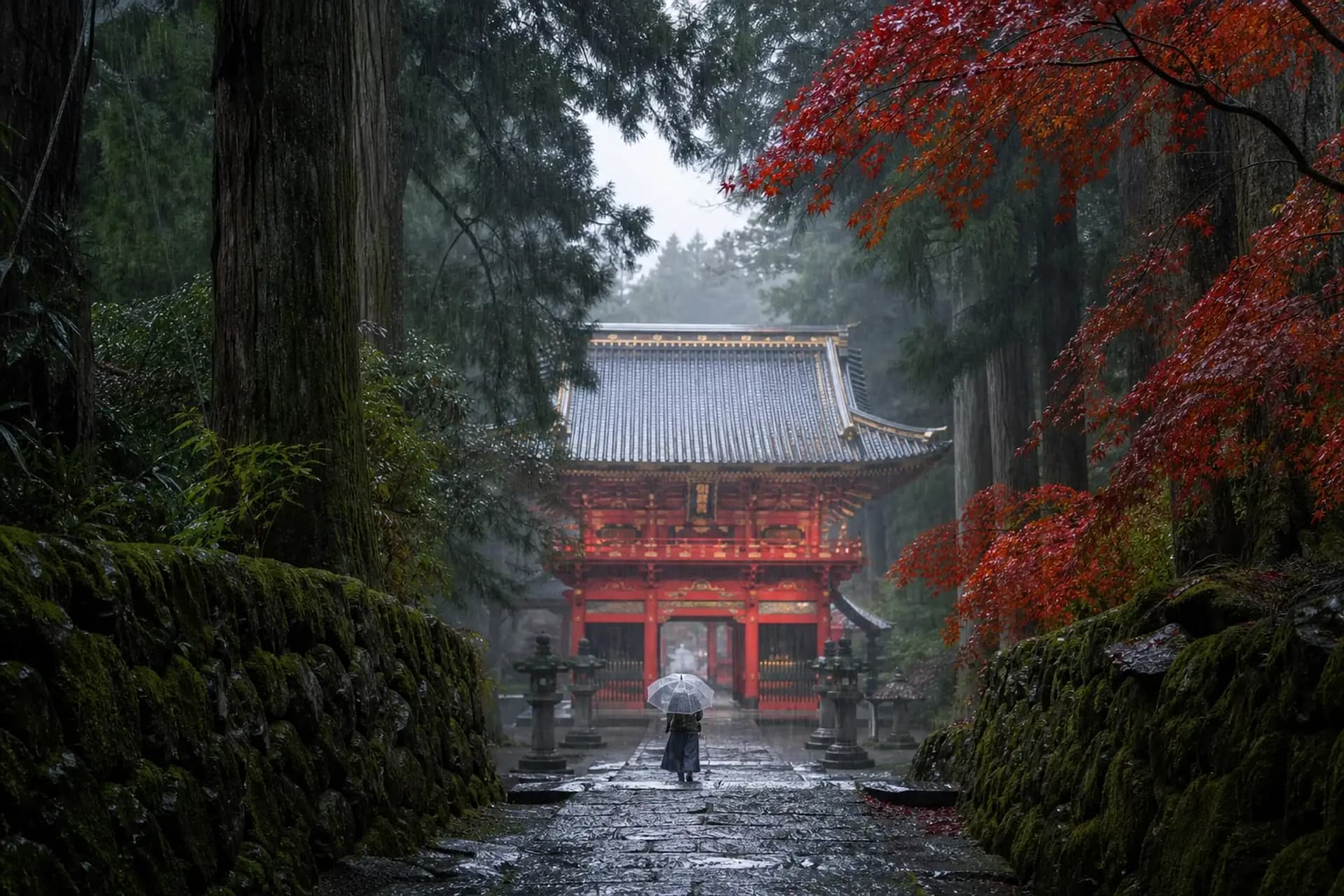
Rain is not neutral. It changes surfaces. Lacquer that reads matte and tired in flat light turns to deep, wet gloss when it is damp — the vermilion and black of shrine buildings gain a depth dry weather cannot give them. Water sits in the carved grooves and edges the gold leaf catches it back.
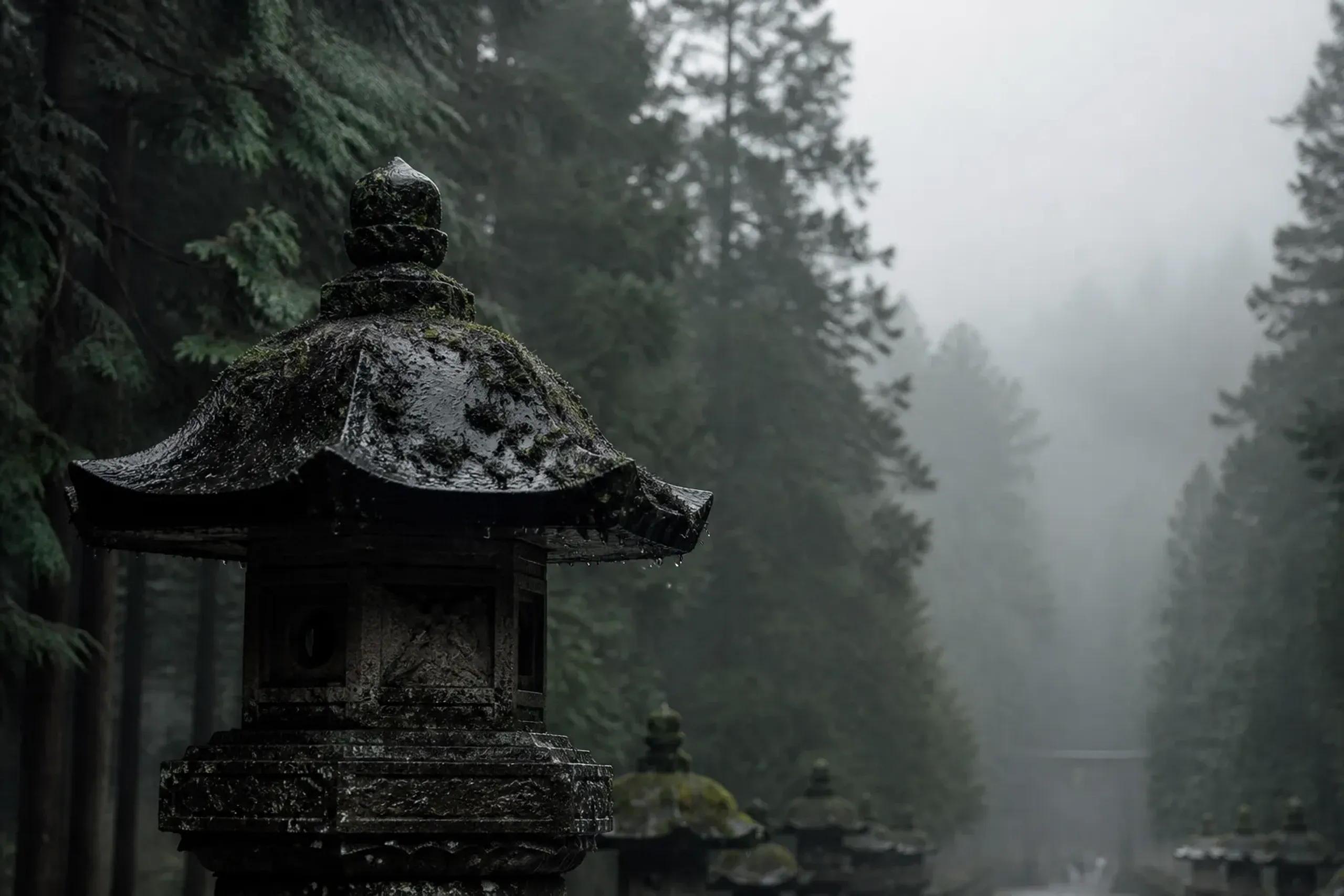
Then there is the cedar. Nikko's cryptomeria avenues are old, and their bark is fibrous and grey when dry. Wet, it darkens to near-black and the whole colonnade tightens visually — the trunks read heavier, the canopy lower, the corridor longer. Mist between the trees does the rest.
Moss is the clearest case. Dry moss is flat, pale, almost dusty. Damp moss lifts — it saturates to a green that holds light rather than reflecting it, and the texture that dry weather erases comes back. A moss ground you would walk past in July sun stops you when it is wet.
Stone works the same way. Wet granite steps and paving deepen in tone and the grain shows. Under low cloud there is no hard shadow, no blown highlight — the light is even, and even light is what old timber, carving, and stone were always meant to be seen in. That is the argument, and Nikko proves it.
Nikko: The Strongest Case
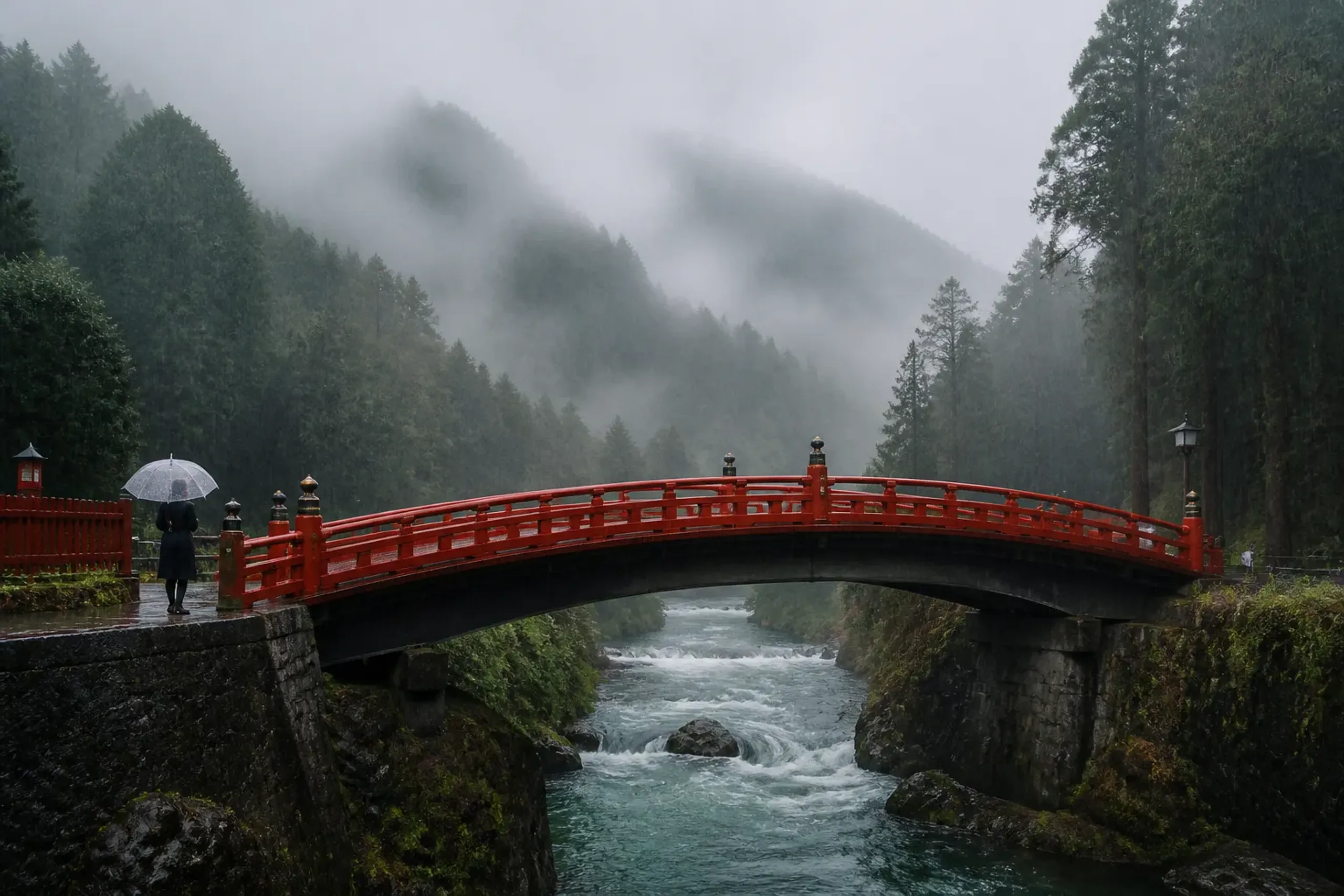
Nikko is a mountain town, and mountain weather is its own register — cloud drops into the valleys, moves, and lifts within an hour. The UNESCO precinct — Toshogu, Rinnoji, Futarasan — was built into and among the cedars, not cleared of them. That matters in rain, because the approach is the experience, and the approach is a forest.
Walk the shrine precinct under cloud and the lacquered gates read the way they were meant to. The carving on Toshogu's buildings is dense and physical; wet stone underfoot, damp bark on either side, gold catching what little light there is. The mist that sits between the trunks of the cedar avenue is not a mood effect. It is the mountain doing what it does most of the year, and it flattens the distance between you and the buildings.
Our team routes this precinct so the open, walking-heavy stretches sit under the lightest part of the day and the sheltered halls take the heaviest. In our experience the wet version of Nikko's shrines is the one guests remember — not despite the rain, because of it.
Moss, Stone, And Gardens That Need Damp
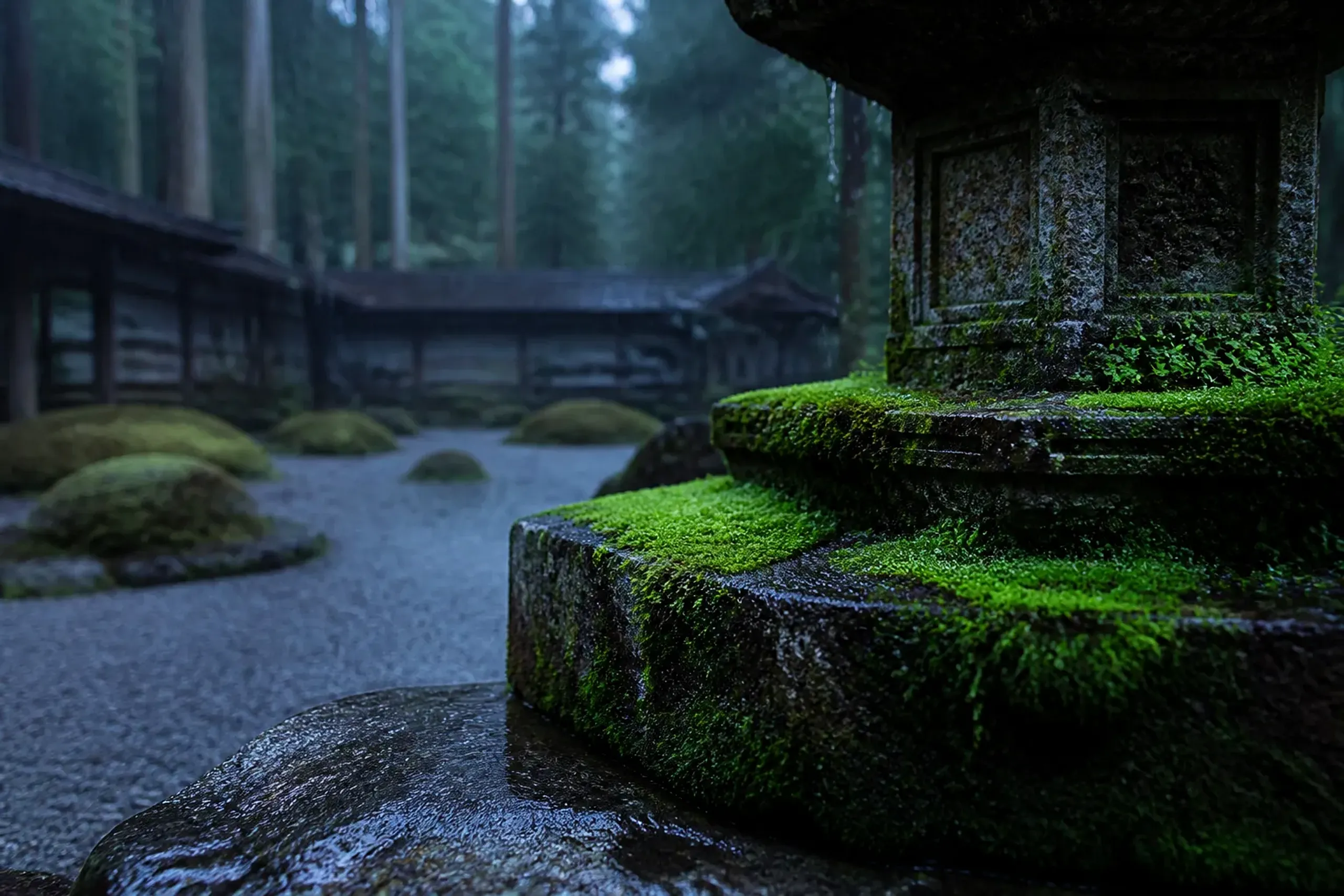
Any garden built around moss and stone is a wet-weather asset, not a wet-weather casualty. The design assumes moisture. In Nikko's damp mountain air, mossed grounds and stepping-stone paths hold their intended colour far more of the year than a Tokyo garden does, and rain only pushes them further toward how they were meant to look.
The Nikko Tamozawa Imperial Villa Memorial Park is the anchor here. It is one of the largest remaining wooden buildings in Japan, a former imperial retreat, now open as a museum with multilingual displays. The point is the building and its garden together — polished wood corridors, sliding screens, and a garden you view from inside, dry, while the rain does its work on the moss and stone beyond the veranda.
This is the correct kind of rainy-day site. You are not sheltering from the weather in a lobby. You are sitting inside architecture that was designed to be occupied while looking out at a garden, and the garden is at its best wet.
Interiors Worth The Day On Their Own Terms
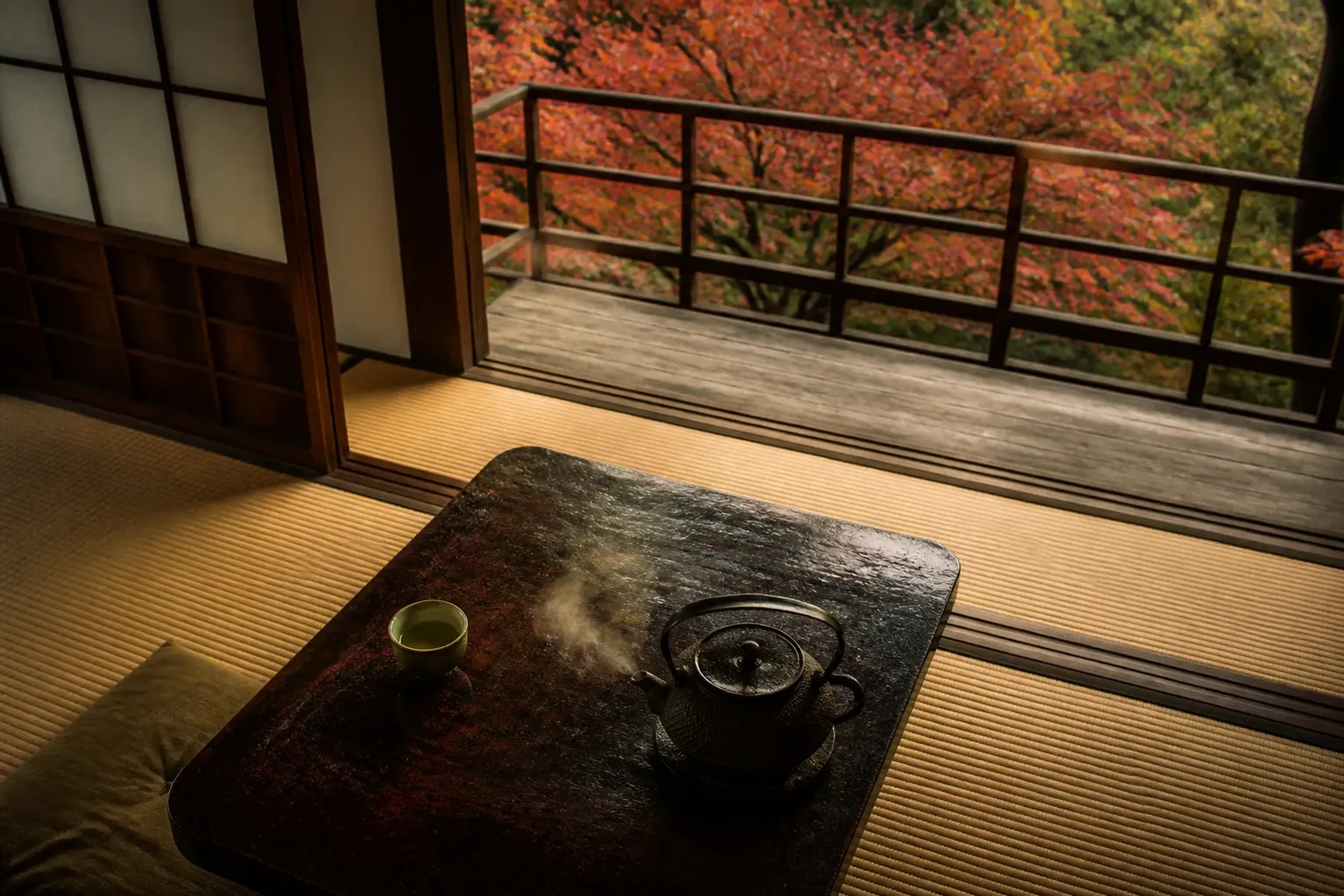
The reroute is not a list of ways to stay dry. It is a shift toward places where the inside is the destination.
At Nikkozan Yumoto Onsenji Temple, up at Yumoto Onsen, the practice of shakyo — hand-copying a sutra — is part of what the temple offers, alongside its hot-spring bathing heritage. It is a quiet, seated, deliberate hour. Rain against the roof is the correct soundtrack for it, and there is nothing about a wet day that diminishes the experience; if anything it removes the pull to be somewhere else.
Onsen is the obvious partner. Yumoto Onsen is the source, and its waters travel — The Ritz-Carlton, Nikko draws on Nikko Yumoto Onsen for the onsen at its spa. A soak while the mountain weather closes in outside is not a consolation. It is the reason a certain kind of guest comes to Nikko at all.
Add the villa's timber halls, the shrine's covered interiors, and Nikko carries a full wet day without a single moment that reads as filler.
The Reroute: What Comes Out, What Goes In
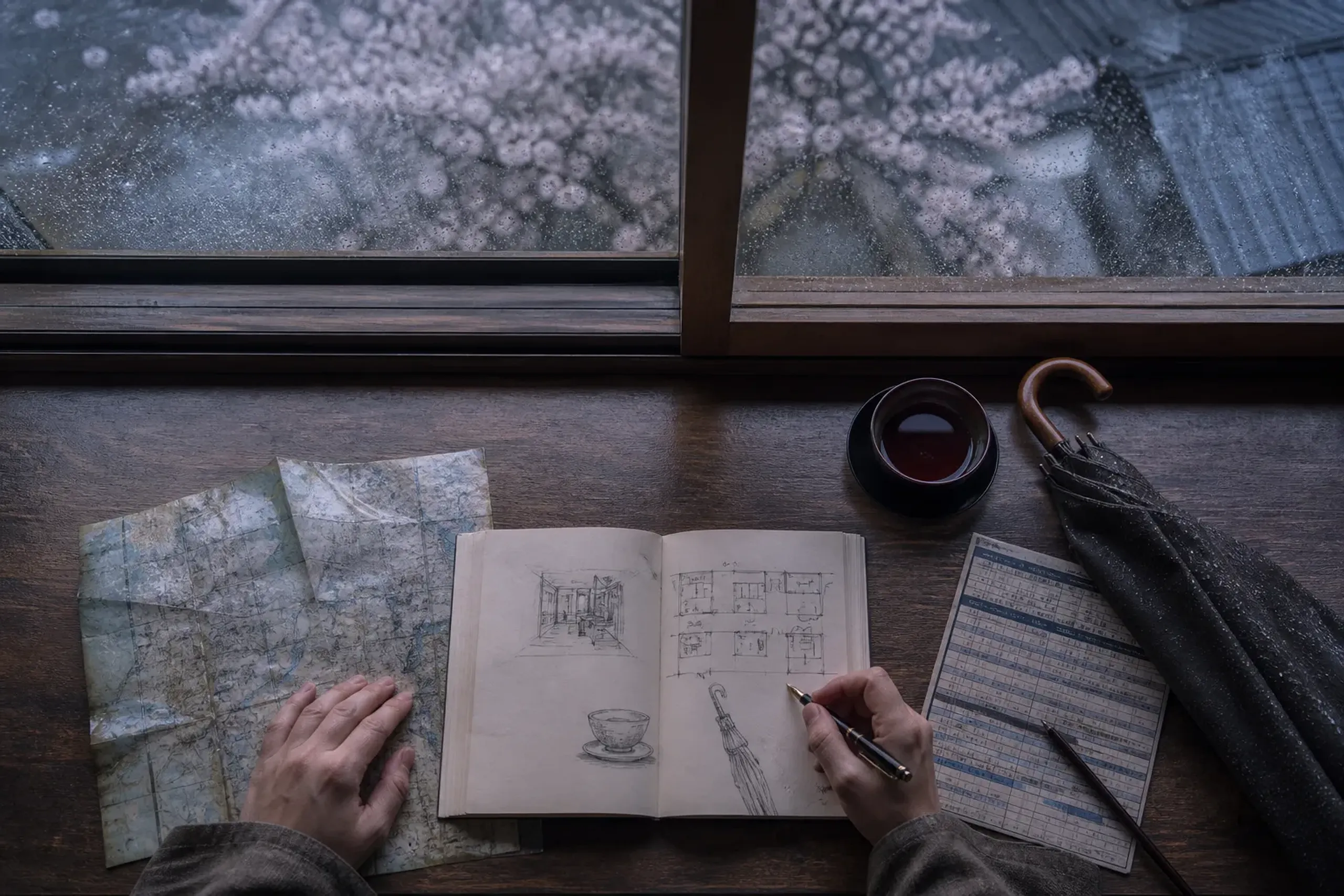
The rule is simple. Open-air, long-walk, and viewpoint-dependent days come out. Enclosed, textural, short-transfer days go in.
Kegon Falls is the honest example of the tension. The falls themselves run harder after rain and can be dramatic — but the payoff depends on visibility, and the observation deck reached by the Kegon Falls elevator is worth little inside a cloud. If the mountain is socked in, this is a swap-out. If the cloud is high and moving, it can stay. That judgement is made on the morning, not the week before.
The rule of thumb: viewpoints and lake-and-mountain vistas — Lake Chuzenji, the Irohazaka switchbacks, Kegon's deck — depend on visibility and come out in low cloud. The shrine precinct, the imperial villa, temple interiors, and onsen depend on none of it and stay in.
Here is the swap in practice. Out: a full day built around Lake Chuzenji and the falls, with long exposed walking. In: the UNESCO shrine precinct in the morning, the Tamozawa villa midday under cover, and Yumoto Onsen — temple and bathing — to close. Every transfer is short. Every stop earns its place regardless of the sky.
This day is about a single wet day inside a trip already booked. If you are still choosing dates by crowd and weather, that is a different question — our piece on the calm windows covers it, and we do not re-derive it here.
What Rain Does To The Crowds
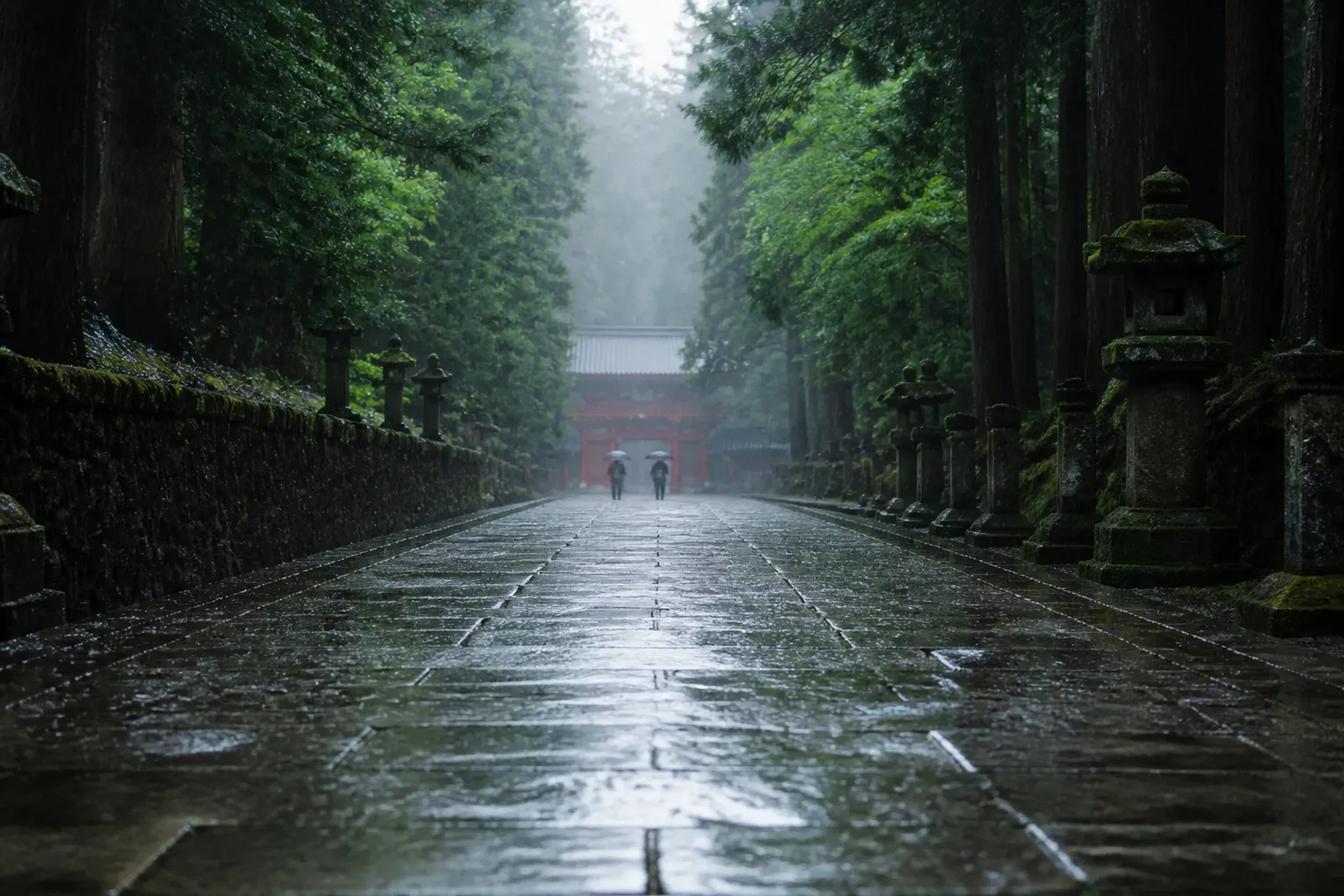
Rain thins the sites that are usually the most crowded. A famous shrine precinct on a dry weekend is a slow shuffle; the same precinct on a wet weekday can be close to empty. The buildings do not change. Your experience of them does — you get space in front of the carving, room on the approach, and time to stand.
This is the quiet upside nobody counts. The day you were dreading for weather is often the day you have the place to yourself. For a certain kind of guest, that trade — a little rain for real solitude at a UNESCO site — is not a trade at all.
Practical Notes: Footwear, Umbrellas, Transport
Wet stone and polished temple floors are the two hazards, and they are different. Outside, you want grip on soaked granite steps and stone approaches — a proper sole, not a smooth-bottomed dress shoe. Inside, many halls require you to remove shoes, and polished timber underfoot in socks is slick; move deliberately on it.
On umbrellas: most temples and museums provide umbrella stands at the entrance, and taking a dripping umbrella inside is not done. Leave it at the rack. A clear or compact umbrella is easier to manage on narrow, busy approaches. For anyone travelling with a chauffeur, the umbrella problem largely disappears — you are set down and collected under cover, and exposure is measured in steps, not blocks. This is where private chauffeured transport earns its keep on a wet day: transfers are short, dry, and timed against the weather rather than a train schedule.
Mountain transport is more weather-sensitive than city transport. Roads climbing toward Lake Chuzenji and Yumoto wind and can be affected in heavy weather. Building the day around the lower shrine precinct and the villa keeps you off the exposed mountain sections when the sky is at its worst.
Typhoon Season Is A Different Question
A wet day and a typhoon are not the same thing, and the advice does not carry over. Rain is a routing choice. Severe weather is a safety and rescheduling one.
In a mountain area, heavy rain can bring landslide risk, and that is not something to route around cleverly — it is something to respect. The Japan Meteorological Agency publishes warnings and advisories for Tochigi Prefecture in English, covering heavy rain and landslide-related alerts, and that is the source to watch. When official warnings are in force, the correct move is not a better indoor plan. It is to defer the day and follow official guidance. Our concierge tracks these advisories and moves days accordingly, without the guest having to ask.
Where Rain Does Ruin It — And What To Do Then
Honesty matters here. Some things have no wet version.
Lake Chuzenji under low cloud is a grey sheet with no far shore. The Irohazaka mountain road, prized for its views, gives you the road and little else in fog. Kegon's observation deck inside a cloud shows you the top of the drop and nothing below it. If your day was built around these and the mountain has closed in, do not force them.
The move is to trade down in altitude and up in enclosure: the shrine precinct, the Tamozawa villa, Onsenji and Yumoto's baths. If the trip's timing is flexible, hold the lake-and-falls day for the clearer window and spend the wet day on the heritage precinct instead. The point is not to make a bad day work. It is to spend each day where it belongs.
Why Choose Japan Royal Service
A rerouted day only works if someone is watching the forecast, reading the mountain, and moving the pieces before you feel the friction. That is the work our team at Japan Royal Service does quietly in the background. We shape each day against the sky — heritage precinct and villa when it is wet, lake and viewpoints when it is clear — and we hold both plans ready so the decision on the morning costs you nothing.
Our coordinators track the JMA Tochigi advisories, sequence the precinct to keep your walking under the lightest weather, and keep transfers short and dry with a chauffeur who knows the mountain roads. When severe weather is genuinely in play, we defer and rebuild rather than push. A wet Nikko day, built properly, is not a compromise on a tailor-made itinerary — it is often the best day of the trip.
To plan a Nikko day that improves when the forecast turns, reach our team privately via WhatsApp or LINE, or contact us here.