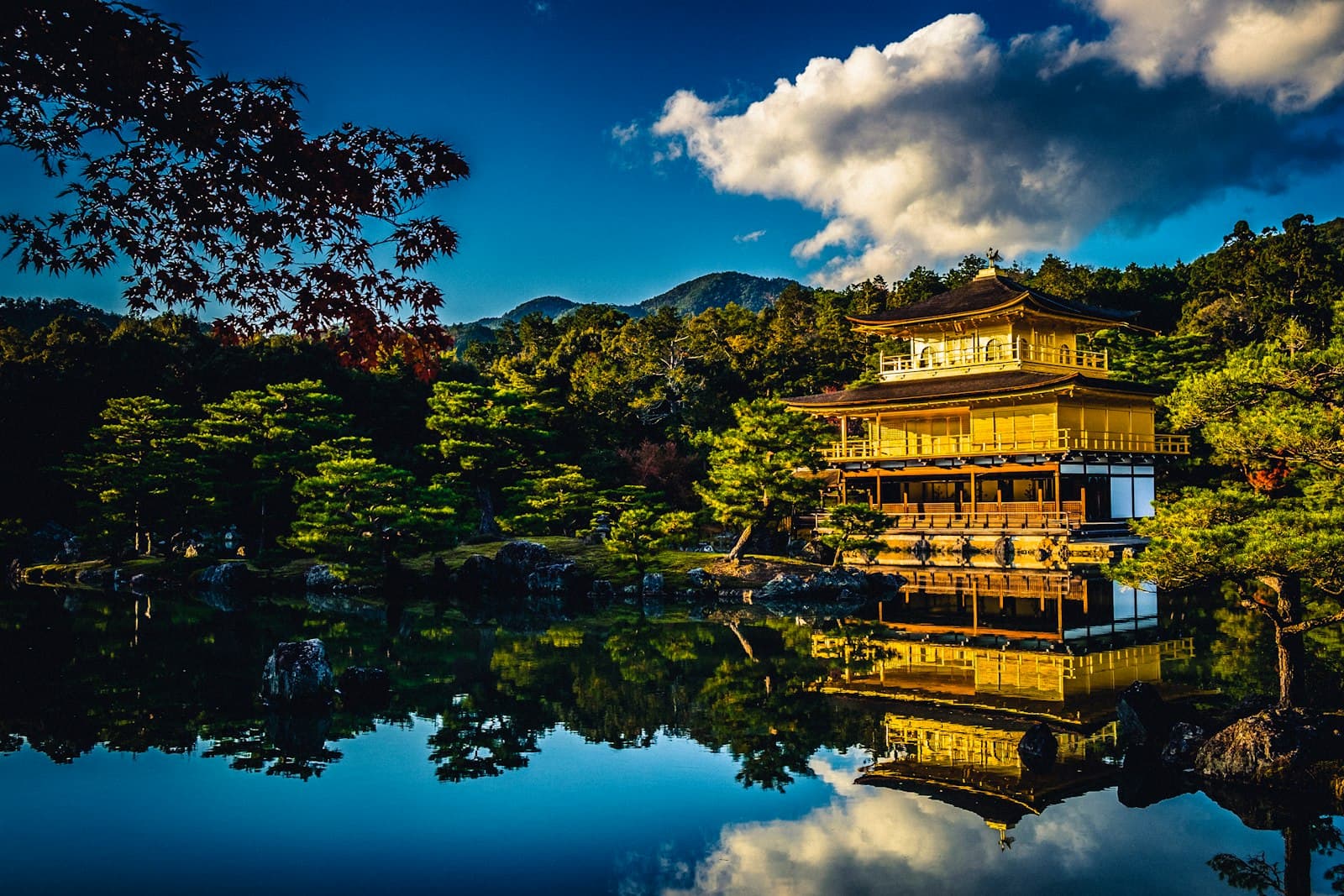
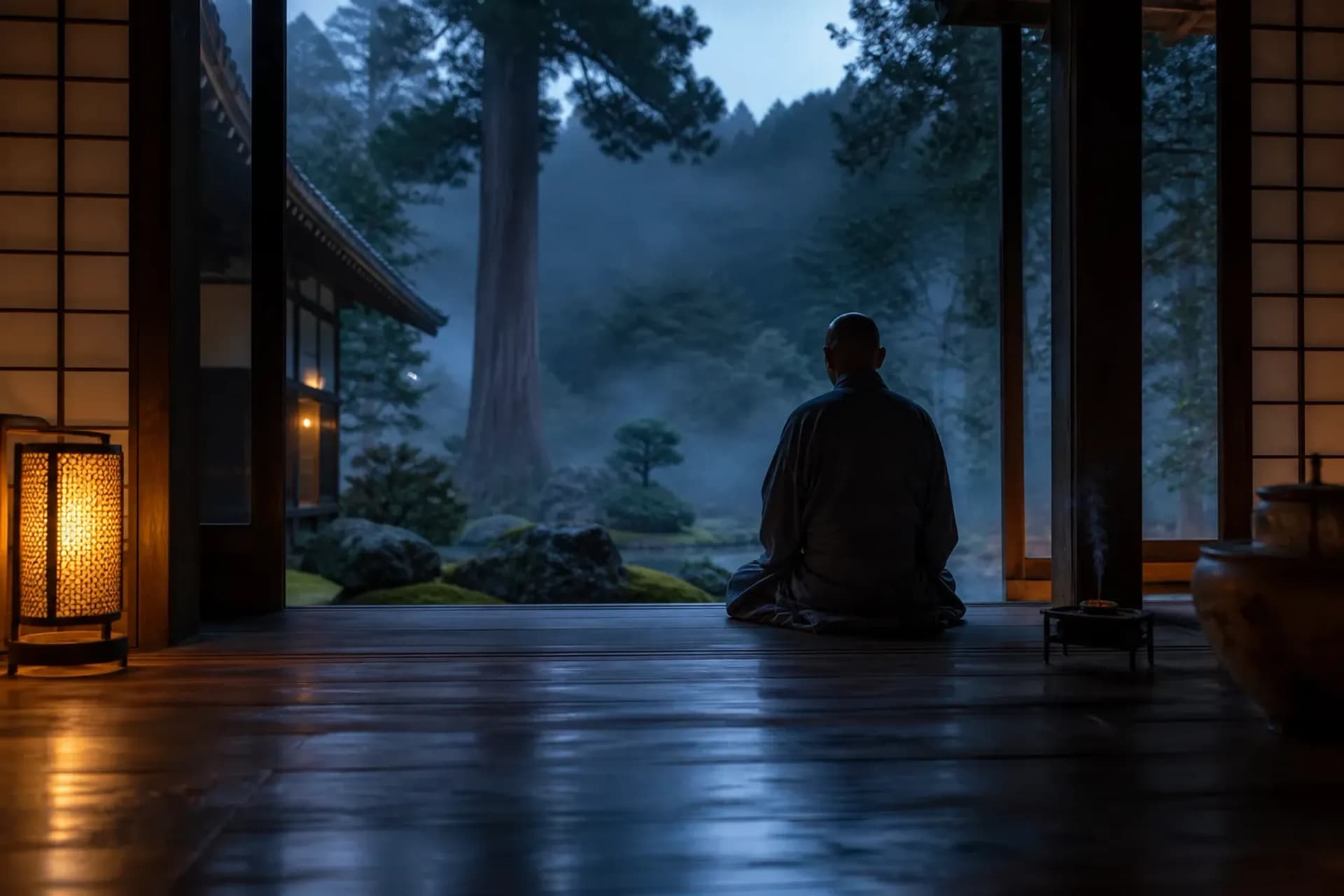
In this guide
- 01What A Shukubo Actually Is
- 02Austerity Is The Argument
- 03Choosing Your Tradition
- 04Language Is The Real Constraint
- 05Shojin Ryori: The Food Deserves Its Own Chapter
- 06Season, Cold, And When To Go
- 07Staying Without Hotel-ifying The Temple
- 08How To Book A Temple Stay In 2026
- 09Questions Guests Ask Before A Monastery Night
- 10Why Choose Japan Royal Service
There is a certain kind of traveller who has arranged everything. The suite faces the water. The chef knows the allergy. The car waits before the request is made. For that person, we propose something stranger than any private-jet routing: one night in a place where nothing has been arranged for you, and that is the point.
A working monastery does not adjust. The 5:30 morning service happened yesterday and will happen tomorrow, whether or not a guest is present to watch. The monks are not performing. They are practising, as their lineage has practised for centuries, and your single night is one increment in a sequence that predates you and continues long after your car pulls away.
At Japan Royal Service we spend most of our days perfecting comfort. This is the rare experience where our job is the opposite — to protect the friction, and to remove only the obstacles that would otherwise stop you from reaching it.
What A Shukubo Actually Is
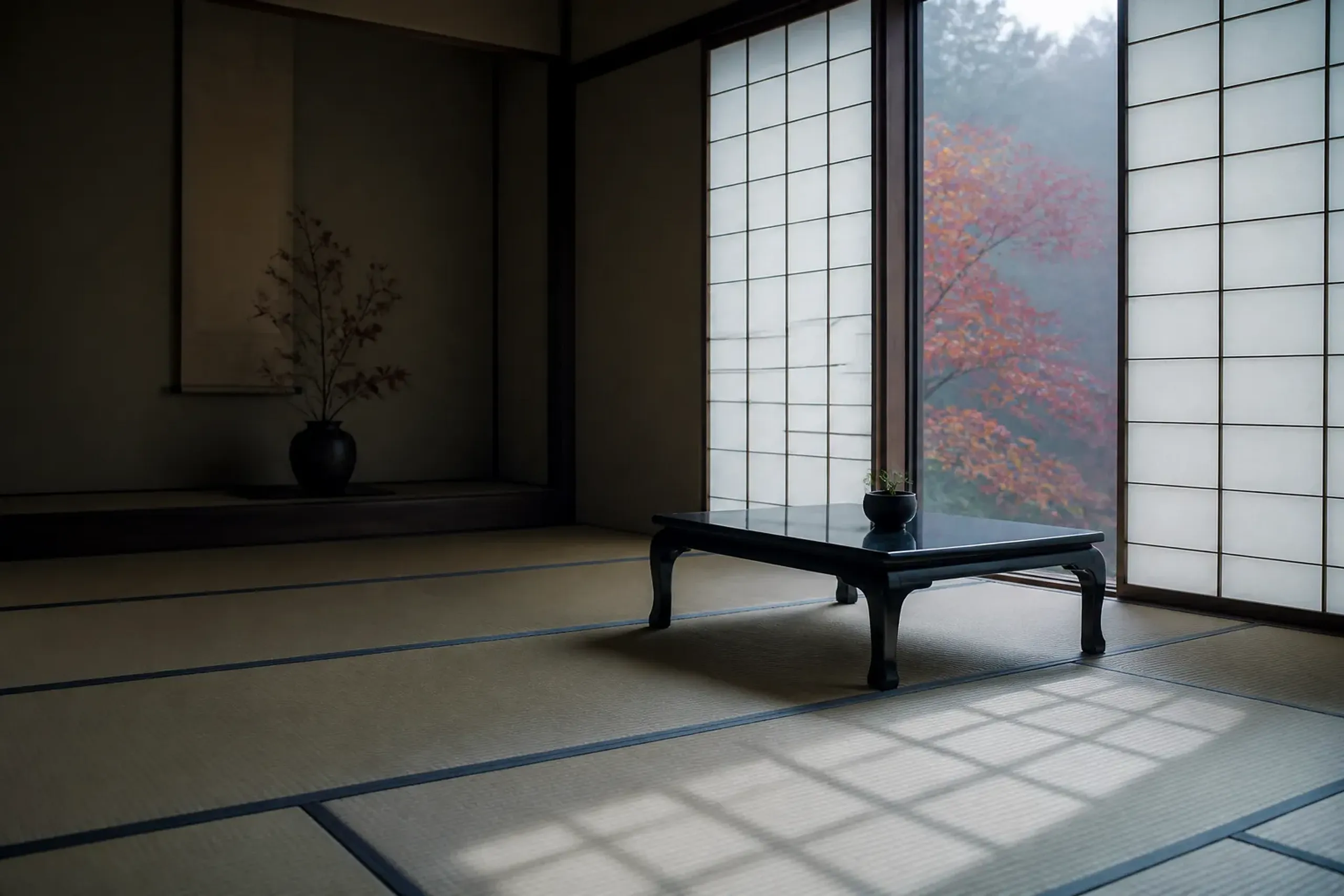
A shukubo is temple lodging — an overnight stay inside a functioning Buddhist temple. The Japan National Tourism Organization defines it plainly: visitors sleep within the temple grounds, share in its rhythm, and eat its food. That is the whole of it.
The history matters here. Temple lodging did not grow up to entertain tourists. It existed to house pilgrims walking sacred routes, people who arrived on foot, tired, and needed shelter near the altar. You are inheriting a bed built for a devotee, not a guest.
This is the line that separates a shukubo from every wellness retreat in Bali. Zazen is not a class. The morning goma fire ritual is not a show. These are religious acts performed by people whose lives are organised around them. You are welcome to observe, and often to join. You are not the reason they happen.
Key fact: A shukubo is a place of practice, not a hotel with incense. Meal times, lights-out, bathing rules, and prayer etiquette are fixed. They will not bend around your preferences — and the value of the night depends on that.
Austerity Is The Argument
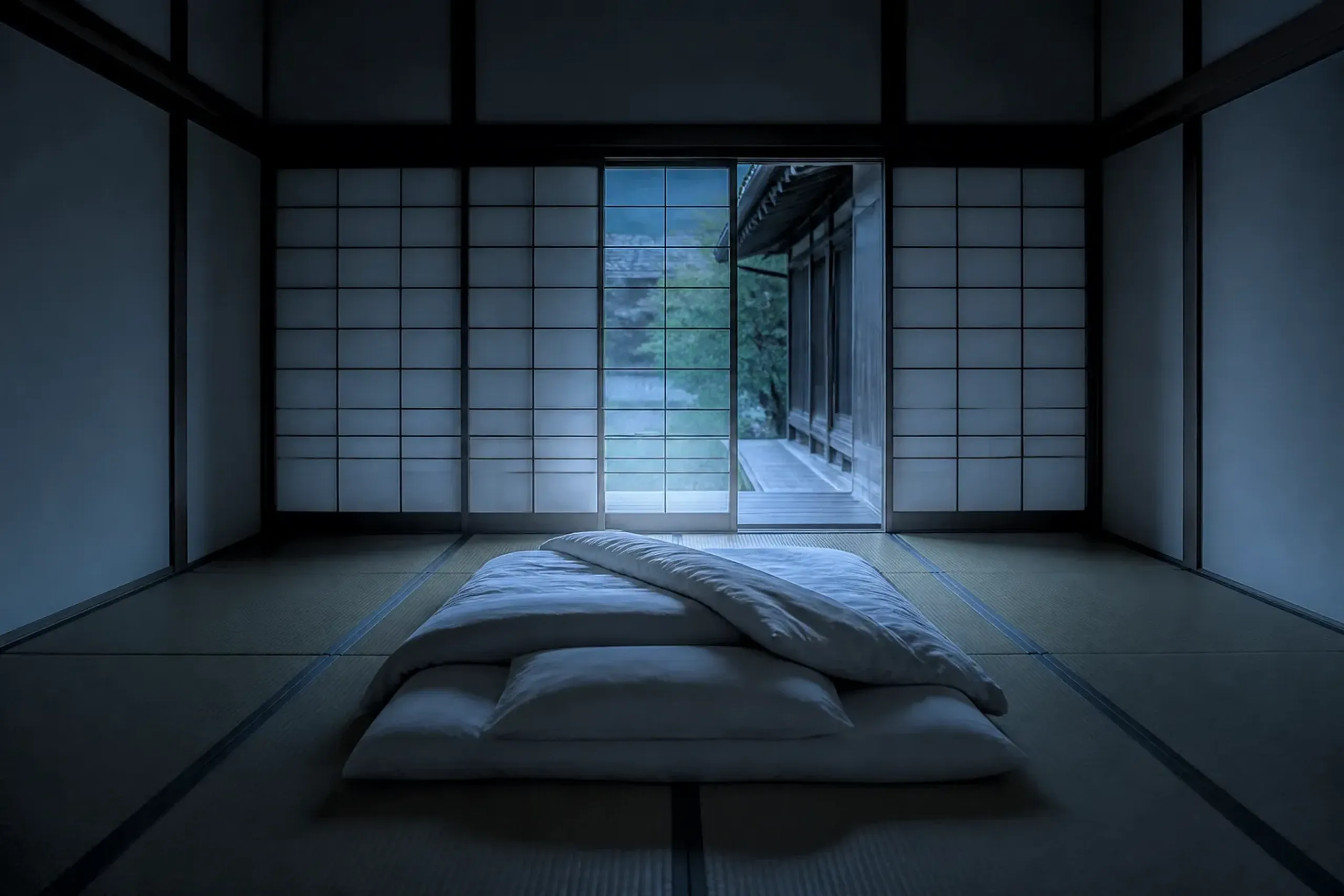
Let us describe the room honestly, because the honesty is the appeal.
You sleep on a futon laid over tatami. You will likely bathe in a shared bath. The old timber buildings hold little heat, so a winter corridor is genuinely cold. There is a pre-dawn wake, an evening curfew, walls thin enough to hear the temple breathe, and no one bringing anything to your door at midnight. Nothing arrives on demand. Nothing is designed to soothe.
Read that list again and notice how it reads like a warning. It is not a warning. It is the evidence.
For a life arranged entirely around one person's wishes, the proposition is simple and rare: for one night, you are not the centre. The building does not care that you arrived. The service starts at 5:30 because it always has. You either rise for it or you sleep through it, and the monks will chant either way. Most of our guests tell us afterward that this — not the food, not the view — was the thing they could not get anywhere else.
Choosing Your Tradition
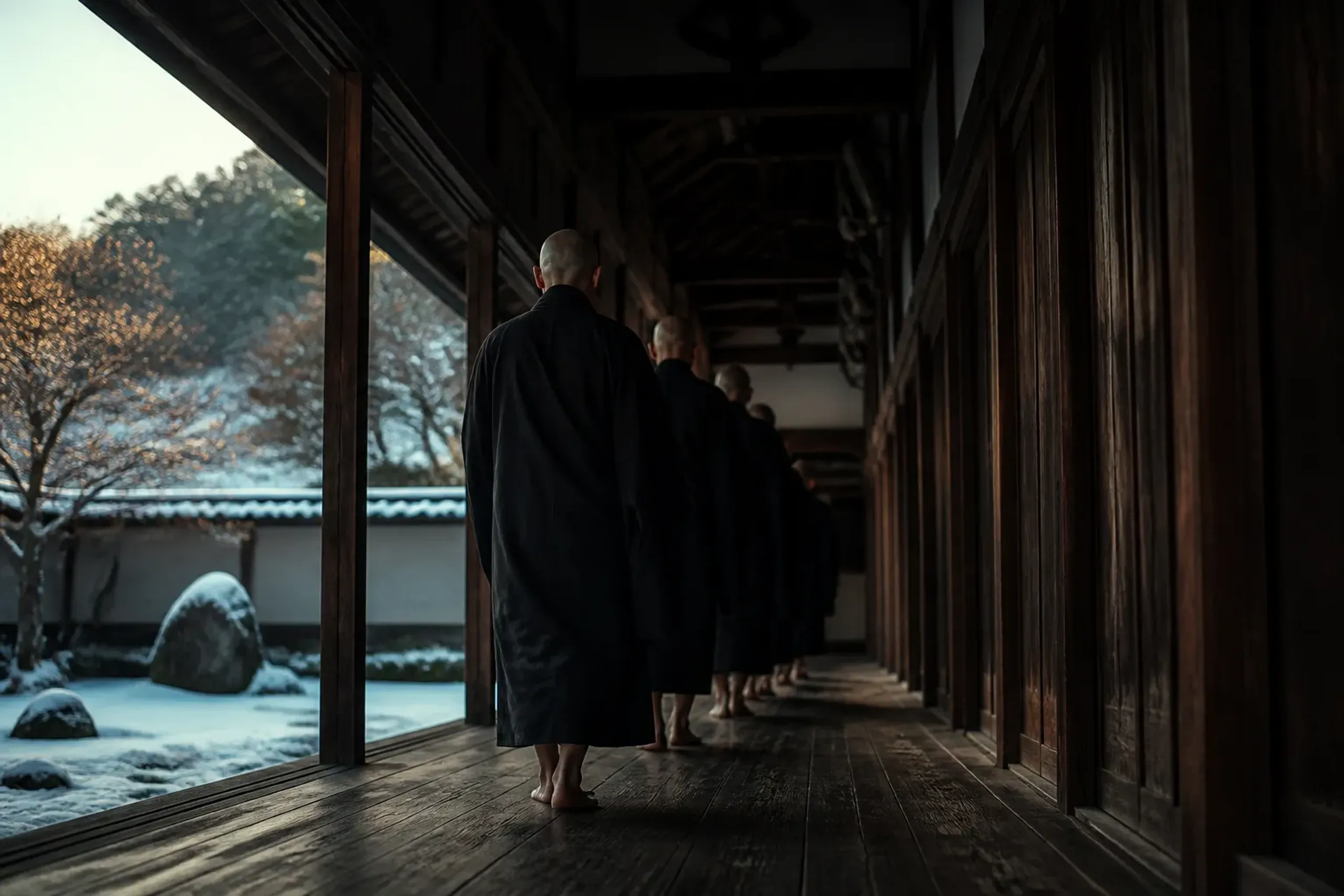
Not all monastery nights are equal. The sect, the ritual, and the rigour differ sharply. Choose deliberately.
Koyasan (Shingon): The Considered Starting Point
Mount Koya, in Wakayama, is a mountain temple town founded on the esoteric Shingon tradition. More than fifty of its temples serve as shukubo, which makes it the most developed place in Japan for a temple stay — and the most workable for a first-time foreign guest.
Here you can walk Okunoin at night, the vast forested cemetery lit by stone lanterns, and attend the morning goma fire ritual, where flames are fed cedar sticks carrying written prayers. Temples such as Ekoin and Souji-in maintain official English websites and welcome overseas guests directly. Koyasan gained UNESCO World Heritage inscription in 2004 as part of the sacred sites of the Kii mountain range, and the attention that followed is precisely why careful, respectful visiting matters now.
Eiheiji (Soto Zen, Fukui): For The Serious
Eiheiji, the head temple of Soto Zen in Fukui Prefecture, is a different order of experience. It is a training monastery, far more rigorous, and a stay here brings you closer to genuine monastic participation than Koyasan's more accommodating rhythm. This is not the choice for a gentle introduction. It is the choice for someone who wants the practice with fewer edges sanded off.
Kyoto Subtemples: The Taste Without The Night
If a full overnight feels premature, several Kyoto subtemples offer short zazen sittings during the day, no lodging attached. It is a small door into the same room — useful for deciding whether the longer commitment is for you.
| Option | Tradition | Rigour | Foreign-guest ease |
|---|---|---|---|
| Koyasan | Shingon | Moderate | Highest |
| Eiheiji area (Fukui) | Soto Zen | High | Limited |
| Kyoto subtemples | Varies (often Rinzai/Zen) | Short session, no overnight | Moderate |
Language Is The Real Constraint
This is the detail most coverage leaves out, and it changes everything.
Few temples teach in English. The Koyasan Shukubo Association's lantern night walk to Torodo, the Lantern Hall, ends in a short Buddhist service — conducted in Japanese. A goma ritual explained in your own language is a religious event you can follow. The same ritual with no interpretation is a beautiful thing you watch from the outside.
So the interpreter question is not a luxury add-on. It is the difference between attending and merely being present. In our experience, the right interpretation strategy — a briefing beforehand, a discreet English-speaking guide where the temple permits one — is what turns a photogenic night into an understood one. Koyasan has the strongest English infrastructure of the traditions above, which is one more reason we often start guests there.
Shojin Ryori: The Food Deserves Its Own Chapter
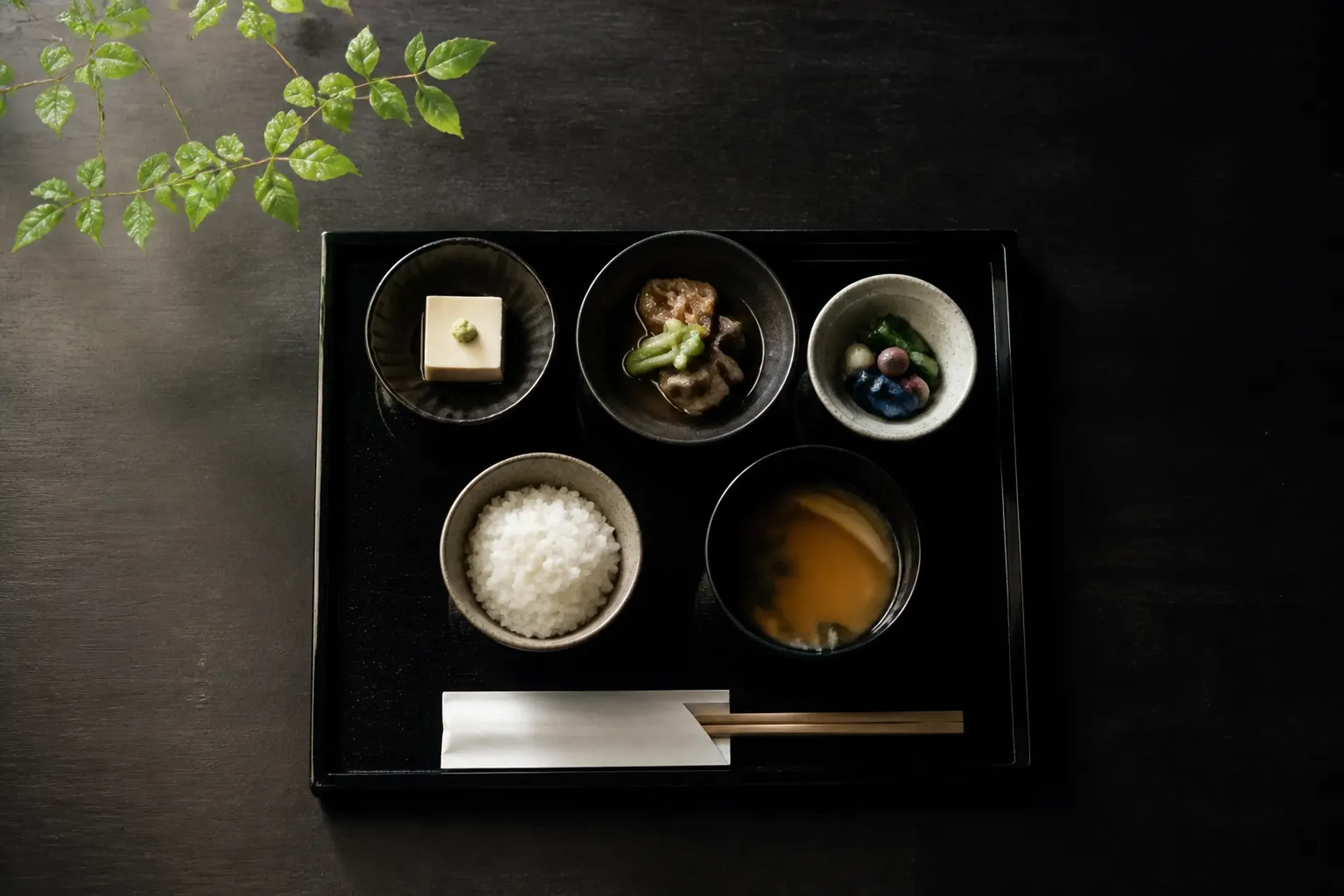
Call it vegetarian temple food and you have missed it entirely. Shojin ryori is a disciplined culinary lineage, developed within Buddhist practice, and taken seriously as technique.
Ekoin's own kitchen describes the framework: goho, the five cooking methods — raw, boiled, baked, fried, steamed; gomi, the five seasonings; and goshoku, the five colours that must appear on the tray. It is vegan. It is frequently alcohol-free. It is served early, in keeping with the temple's clock rather than your appetite.
What arrives is quietly astonishing — sesame tofu with a texture closer to custard than bean curd, mountain vegetables dressed with restraint, a bowl that looks like almost nothing and tastes like a great deal of thought. This is wabi-sabi on a lacquer tray. Nothing gilded. Everything considered.
Season, Cold, And When To Go
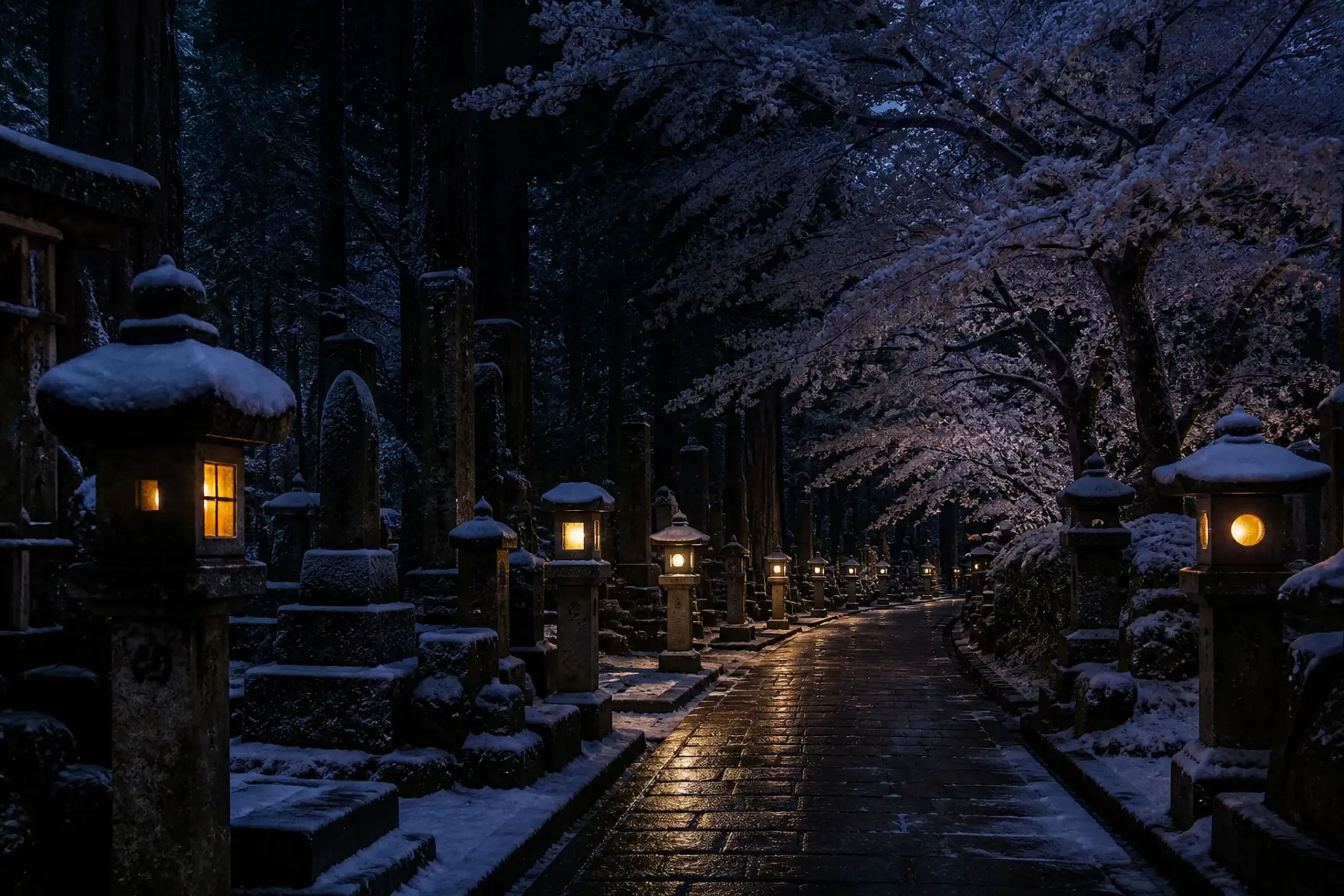
Koyasan sits at altitude, and altitude is unsentimental. Winter in an unheated timber corridor is hard in a way no brochure conveys. We tell guests plainly: for comfort, come in spring or autumn, when the mountain air is sharp but the buildings are bearable and the maples do their work.
And yet. Okunoin under snow, the lanterns throwing gold across white stone and cedar, is among the most extraordinary sights in Japan. We will arrange the night if you want it — with the warning attached, and with the right clothing, timing, and warm transfer bracketing the cold hours.
Summer brings its own logic: the mountain is a genuine escape from the lowland heat, and the Obon and lantern context adds meaning for those travelling in July and August. Each season is a different night. None is wrong. They simply ask different things of you.
Staying Without Hotel-ifying The Temple
A live conversation runs through Japan's heritage communities right now. A 2026 study published in J-STAGE examined how inbound tourism has reshaped Koyasan's shukubo since the 2004 UNESCO listing, tracing changes in their spatial organisation and their religious traditions. Separate 2026 research on Kyoto documented resident strain under overtourism. The pressure is real, and it points toward one behaviour: stay lightly.
Responsible access is not a moral footnote for us. It is trip design. That means small parties, quiet hours honoured, donation etiquette understood before arrival, bathing rules followed without prompting, and a short list of what you simply do not ask a monk. It means treating the temple as a home you have been let into, not a stage you have booked.
Beyond Koyasan, the map is widening. A 2026 initiative is reviving Shikoku pilgrimage shukubo, beginning at Anrakuji, the sixth temple, in Kamiita, Tokushima. For guests who have already spent a night on the mountain, this points toward a deeper, less-travelled route — the Japan that a search engine has not yet flattened into a listicle.
How To Book A Temple Stay In 2026
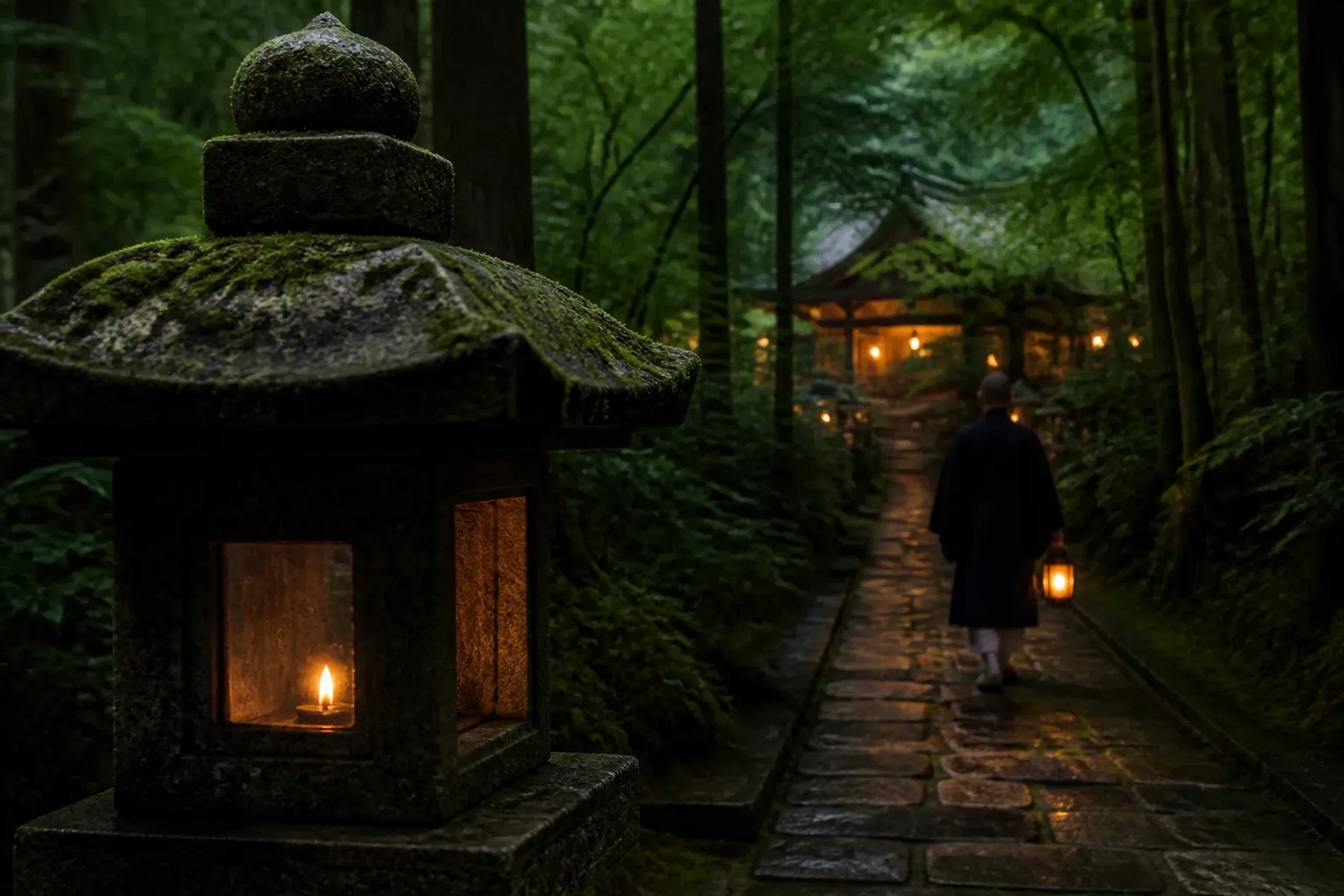
There are three honest paths, and they suit different travellers.
Option A: The Official Association
- The Koyasan Shukubo Association runs an official English booking site covering temple-stay inventory on the mountain.
- Best for travellers comfortable navigating fixed inclusions and shared facilities themselves.
- The features that sell out first are the rooms with a private bath or toilet — book early if that matters to you.
Option B: Direct With The Temple
- Temples such as Ekoin and Souji-in maintain their own English websites and accept direct enquiries.
- Best when you have a specific temple, ritual, or room in mind and want to correspond with the source.
Option C: An Advisor-Led Approach
- Best when the temple night is one node in a larger route — where transfers, timing, dietary pre-communication, and interpretation all need to align.
- This is where our concierge is useful: not in bending the temple's rules, but in perfecting everything around them.
Whichever path you take, book with room to spare. Spring, autumn, and the snow weeks fill first, and the private-facility rooms fill fastest of all.
Questions Guests Ask Before A Monastery Night
Is a shukubo comfortable?
Not in the hotel sense. Futon on tatami, shared bathing, minimal heating, an early wake. The comfort is of a different kind — the quiet of not being managed. If you need in-room service and a warm corridor, this is the wrong night, and we will happily route you elsewhere.
Can I take part in the morning service and the fire ritual?
At many Koyasan temples, yes — guests may observe morning prayer and the goma fire ritual, and often join. Remember it is a practice, not a performance. Follow the temple's lead on when to sit, when to stand, and when to simply be still.
Will everything be explained in English?
Frequently not. The lantern service at Torodo, for instance, is conducted in Japanese. Interpretation genuinely changes the experience, which is why we treat a guide or briefing as central rather than optional.
Is the food really vegan?
Shojin ryori is vegan and often alcohol-free, served early to match the temple's schedule. It is built on defined principles of method, seasoning, and colour — closer to a discipline than a diet.
Which temple should a first-timer choose?
Koyasan, in most cases. It has the deepest concentration of shukubo and the best English support. Eiheiji rewards those who want more rigour; Kyoto subtemples offer a daytime taste with no overnight.
Why Choose Japan Royal Service
Our usual work is the removal of friction. A temple night asks us to do something rarer — to leave the friction exactly where it is, because the friction is the experience, and to remove only what would keep you from it.
That is precise, quiet work. Getting you up the mountain and back down without a jarring edge. A discreet private chauffeured transfer bracketing the unheated hours in winter. Luggage forwarded so you arrive with only what the temple asks you to carry. An interpretation strategy so a Japanese service becomes a service you understand. Dietary notes communicated in advance, where a temple accepts them. And a bespoke itinerary that places the monastery night where it belongs — as the still centre of a longer journey, perhaps anchored by a calm city base and pivoting into the Japan most visitors never reach.
We work with total discretion. Your identity and your itinerary stay with us. And we design for the temple as much as for you — small parties, quiet conduct, correct etiquette — because the point of the night is that it existed before you and will continue after you. We are proud to be the kind of company that protects that rather than sells it away. That is the standard we hold at Japan Royal Service.
For private coordination, reach our team directly via WhatsApp or LINE, or contact us here, and we will begin quietly.