In this guide
- 01Why October Changes The Okama Experience (And What It Does Not)
- 02What Is Okama Crater Lake (Goshiki-Numa) At Zaō?
- 03Why Does Okama Look Like It Changes Color?
- 04How Do You Visit Okama Crater Lake In October From Sendai Or Yamagata?
- 05What Time Of Day Is Best For Okama In October?
- 06When Does The Road To Okama Close For Winter?
- 07Step-By-Step: A Practical October Plan For Okama (Without Rushing)
- 08October Foliage On The Zaō Echo Line: The Second Kind Of Color
- 09Okama Access Rules And Safety Notes (Read This Before You Go)
- 10How This Compares To Competitors (Tokyo MK, Remote Lands, InsideJapan Tours)
- 11What To Pack For Okama In October (HNW Comfort Version)
- 12A Refined Day Outline: Okama + A Warm Finish
- 13How Japan Royal Service Plans Okama For HNW Travelers
- 14Plan Your October Ascent
- 15Frequently Asked Questions
The Zaō Echo Line climbs as if it’s trying to outpace winter.
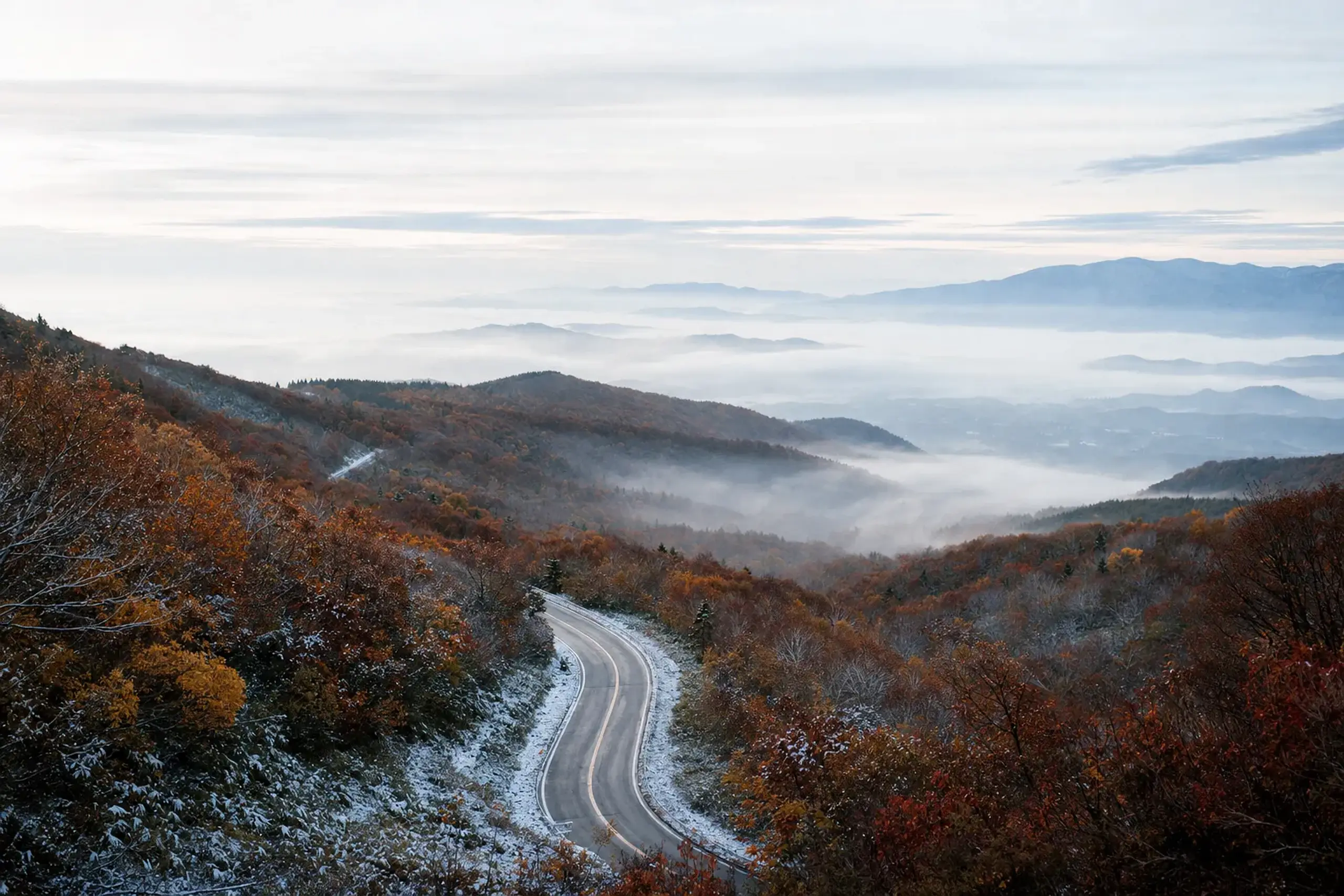
In October, the bends are edged with autumn colour, and the air thins into something sharp. Quiet. You feel it in your fingers when you step out of the car.
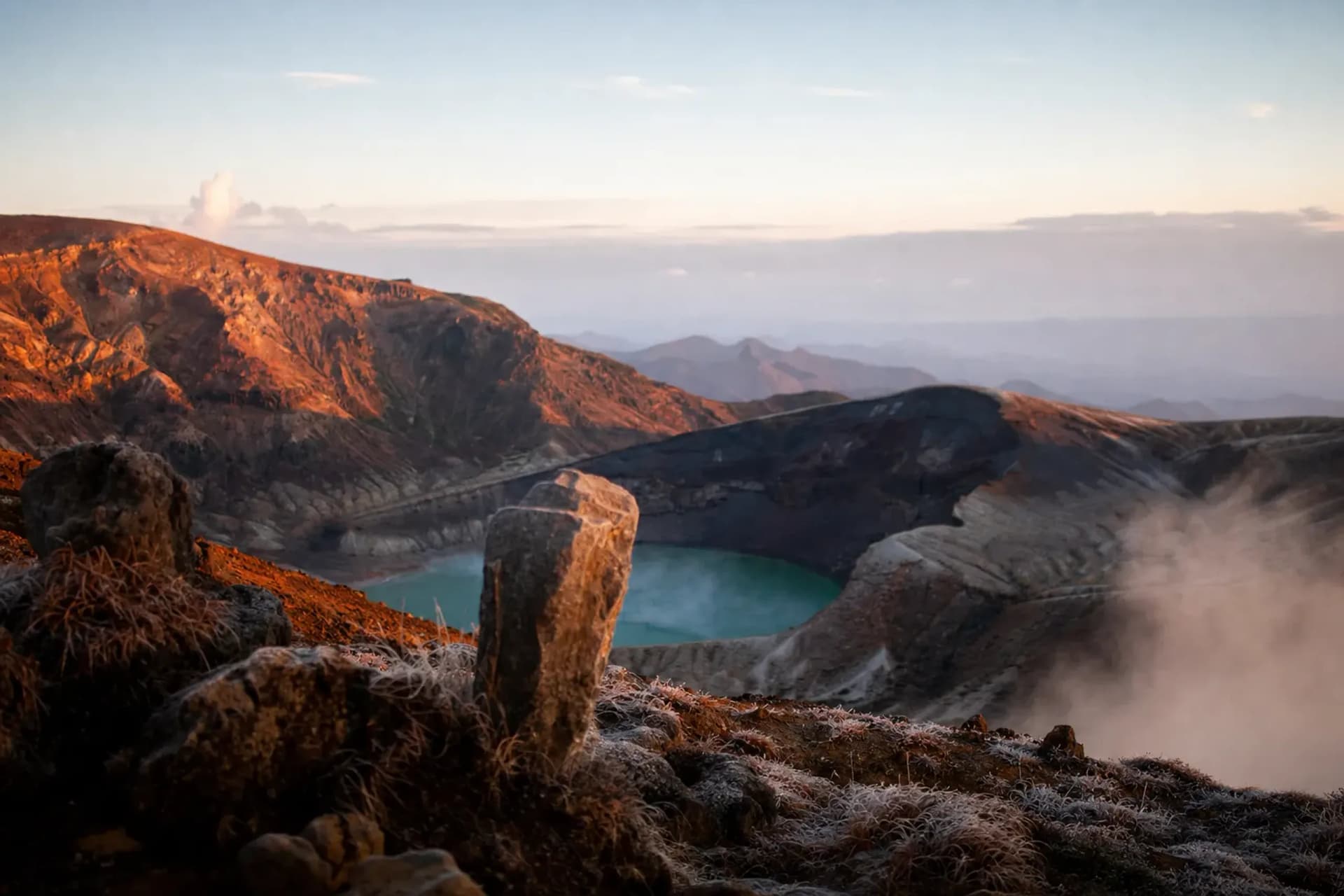
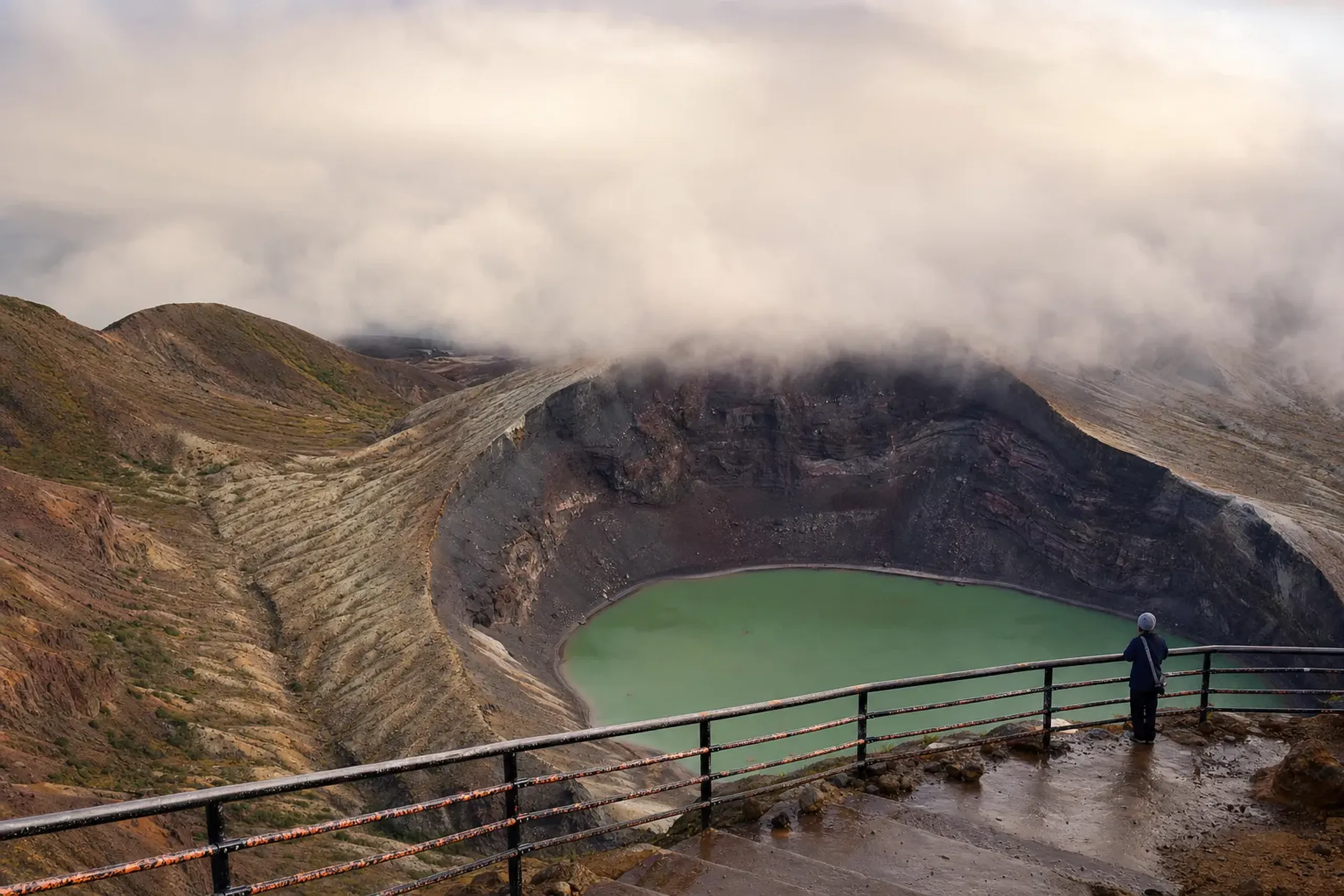
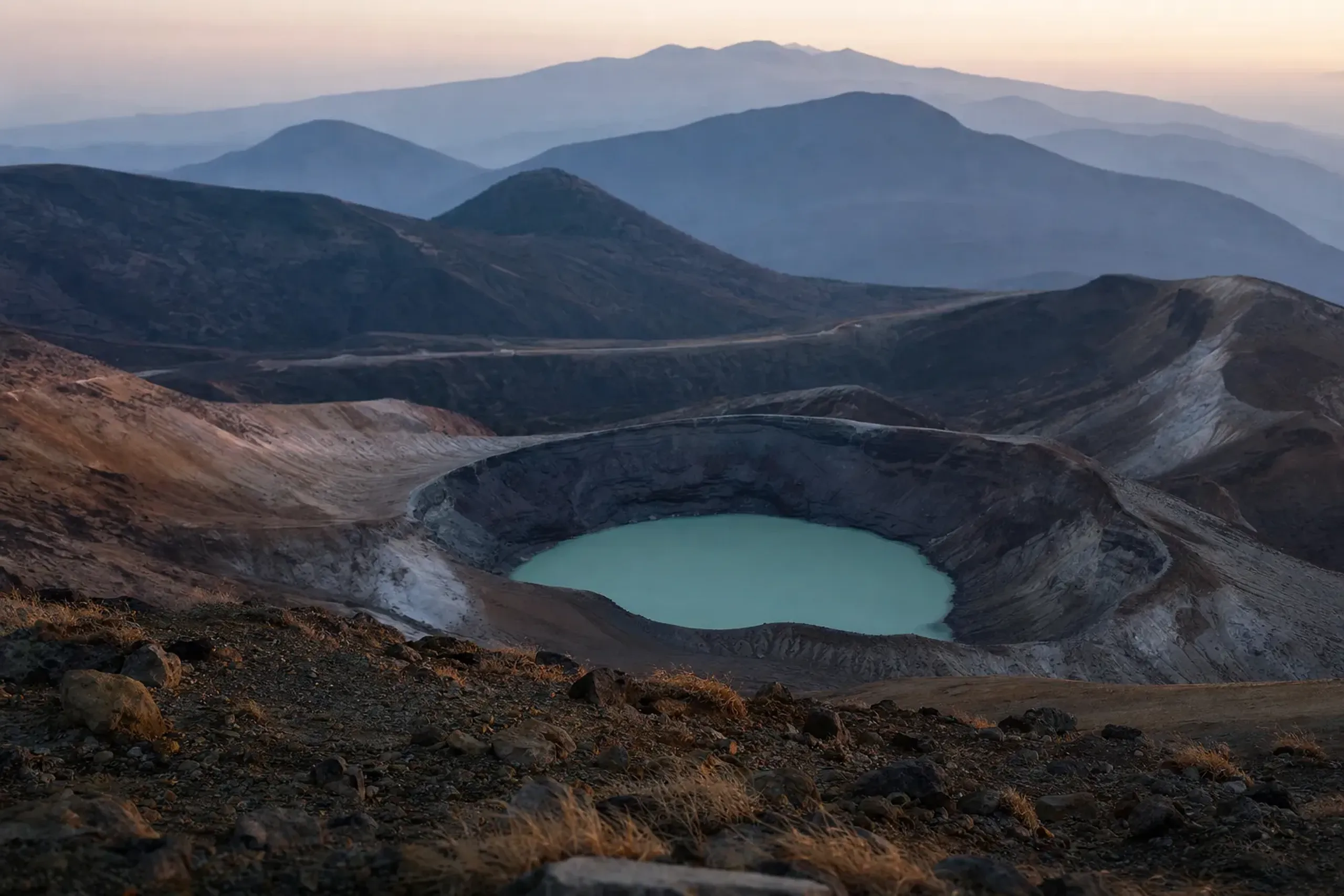
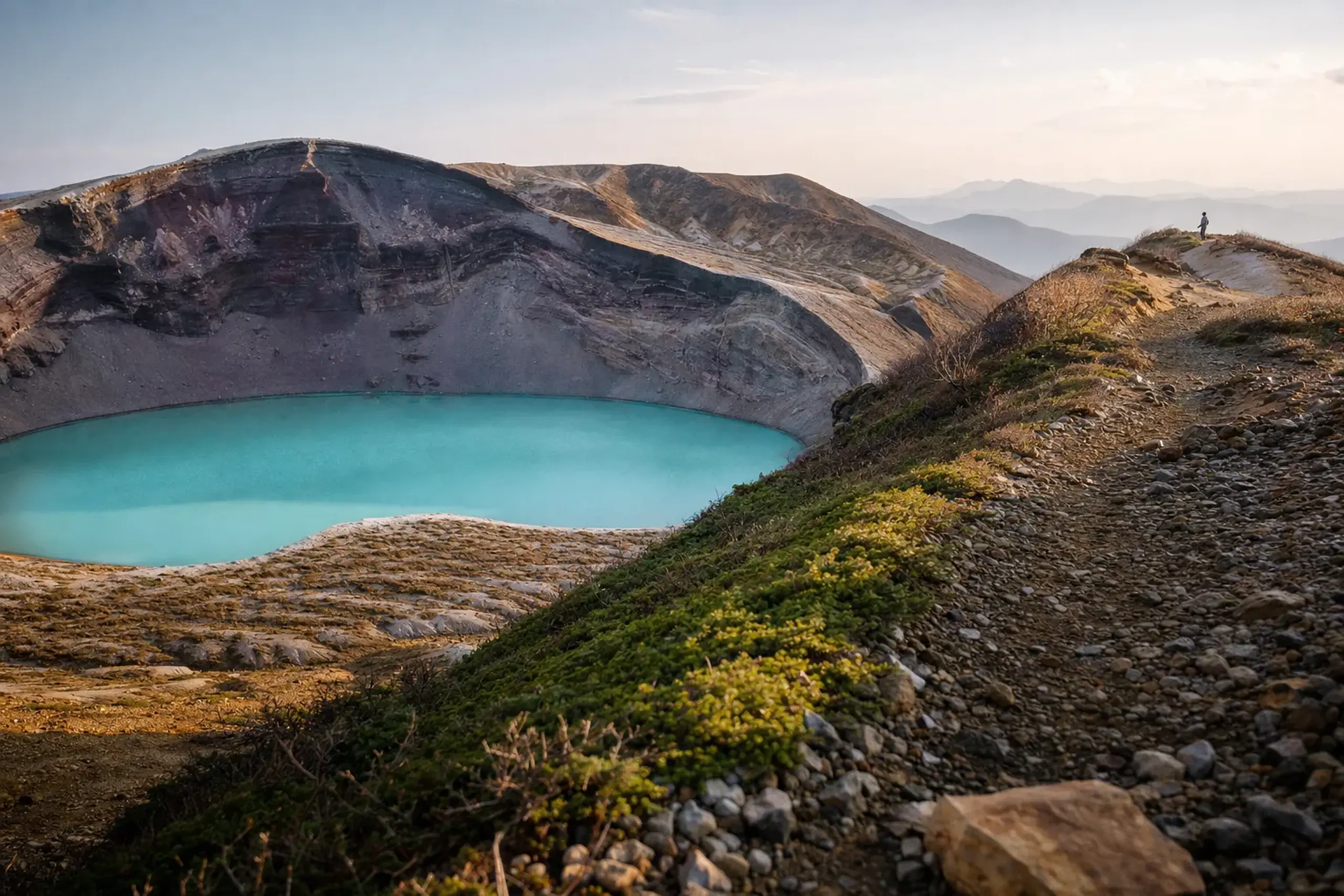
Then the land opens, and Okama appears below the observation deck—an enclosed crater lake that can look murky green, emerald, or lapis-blue as clouds pass and sunlight shifts. Not a seasonal trick. A daily one.
October matters here for two honest reasons. It’s the last full month before the approach roads close for winter, and it’s when the drive itself becomes a second spectacle.
Why October Changes The Okama Experience (And What It Does Not)
October is the last full month to reach Okama by road before seasonal closures in early November, and it’s also when the autumn foliage along the Zaō Echo Line typically peaks.
What doesn’t change is the lake’s own colour behaviour. Okama’s “five colours” effect is not an October-only show. In our experience, it can occur on any clear day during the access season, and it can fade in minutes when fog slides in over the rim.
Think of October as a deadline plus a scenic ascent. Two entirely different kinds of colour—one from the mountainside trees, one from the play of light and weather on the crater water.
For the discerning traveller, that distinction matters. It’s the difference between planning around what is predictable and quietly appreciating what is not. This is the essence of shun—the Japanese instinct for knowing precisely what to experience, where, and in which month—and it is exactly the kind of judgement our planning is built to protect.
What Is Okama Crater Lake (Goshiki-Numa) At Zaō?
Okama (御釜), also called Goshiki-numa (“Five-Color Pond”), is a volcanic crater lake in the Zaō Mountains, straddling the Miyagi–Yamagata border.
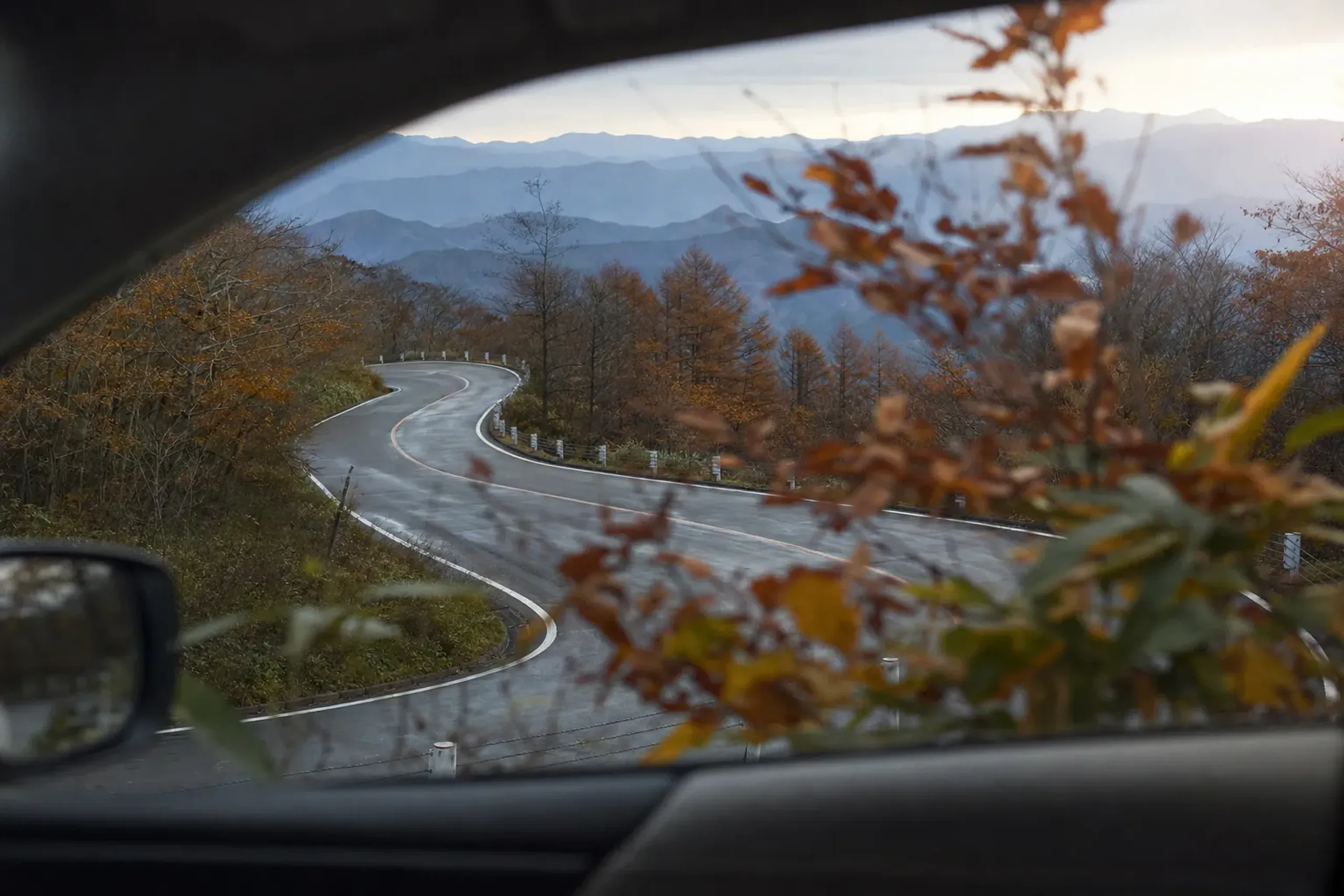
October is the last full month before the road closes—and the drive becomes part of the destination.
It is commonly described as resembling a cooking pot or cauldron. That shape is literal when seen from above: a near-circular basin with a steep rim, viewed from an elevated deck rather than at water level.
Okama sits cradled among three peaks—Katta-dake, Kumano-dake, and Goshiki-dake. The rim feels close, almost enclosing the sky above it.
Sources vary slightly on measurements, so we keep this honest: the crater lake is roughly 300–400 metres in diameter, with maximum depth often described around 20–30 metres.
Why Does Okama Look Like It Changes Color?
Okama appears to change colour because the angle of sunlight, cloud cover, and viewing conditions alter how the crater water reflects and absorbs light across a single day.
On a clear morning, the lake can read as clean emerald. When thin cloud drifts in, the same water can turn muted and heavy. A brief opening in the sky can shift it toward a brighter blue in seconds.
There is also a more physical reason, and it’s not poetic. Occasional volcanic activity can stir sediment on the lakebed, making the water look cloudy or whitish—an observed, monitored phenomenon rather than a myth.
Okama is strongly acidic, around pH 3.5, and it does not support typical lake life beyond microorganisms such as diatoms. That very starkness is part of the mood—a restraint that echoes the wabi-sabi aesthetic: beauty in austerity, in stone and acid water rather than lushness.
How Do You Visit Okama Crater Lake In October From Sendai Or Yamagata?
In October, most visitors reach Okama by car via the Zaō Echo Line and then the Zaō Highline to the summit-area parking, followed by a short walk of about three minutes to the observation deck.
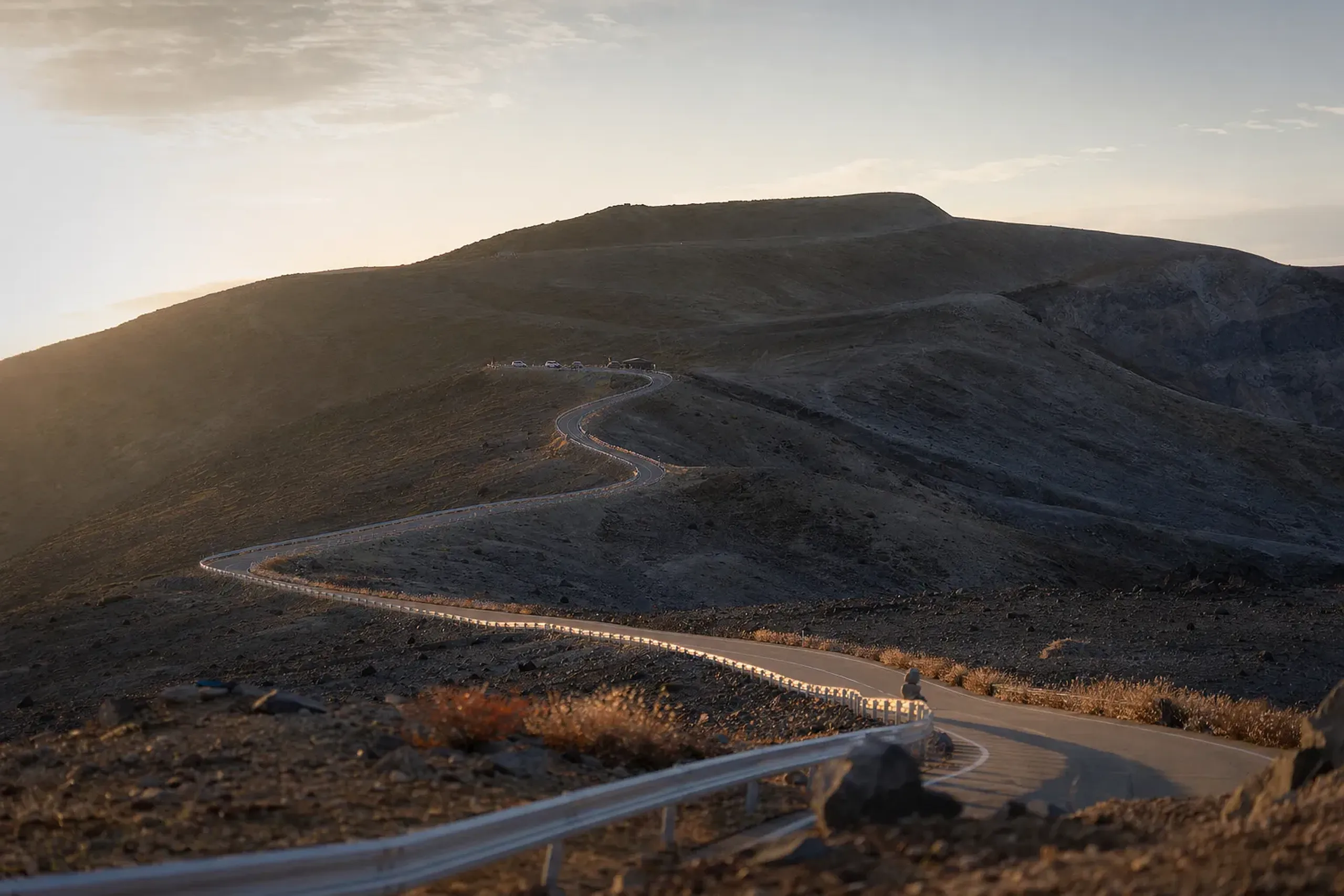
The drive is the point. You climb through shifting zones of colour and temperature, the road turning from forest to open volcanic terrain as you approach the crater area.
There is also a public-transport pattern in the green season: a seasonal bus that runs from JR Shiroishi-Zaō or Shiroishi stations on weekends and holidays, and is suspended in winter. If you’re visiting in October, confirm the operating days and times before committing—shoulder-season schedules can be unforgiving.
For the well-travelled guest, private touring quietly removes the main frictions here: tight daylight, shoulder-season cold, and the need to pivot if the summit is socked in with fog. Our team at Japan Royal Service focuses on timing, comfort, and discretion—without ever turning a public landscape into a performance.
Key fact: Okama is viewed from an observation deck only. Visitors are barred from approaching the lake edge past the railings, and there is no lakeside access.
What Time Of Day Is Best For Okama In October?
A clear morning is usually best, because clouds often build toward midday and can hide the crater entirely.
This is not about sunrise drama. It’s about visibility and wind. Okama sits high enough that conditions can feel abrupt even when Sendai, far below, remains mild.
Plan for short exposure. A few minutes at the deck can be perfect, then you retreat to the car for warmth and a slower descent through the foliage.
We also recommend building in slack time. If you arrive and the crater has vanished behind fog, you’ll want the option to wait, reroute, or reshape the day without stress. That quiet flexibility—anticipating the setback before you feel it—is where thoughtful planning earns its keep.
When Does The Road To Okama Close For Winter?
The Zaō Echo Line and Zaō Highline typically close in early November and remain closed until late April, making October the last full month for road access.
Exact dates, and even time-of-day restrictions, vary by year and conditions. One published 2025–2026 example lists a closure at 17:00 on November 4, 2025 and a reopening at 11:00 on April 24, 2026 for a described section.
Do not treat those timestamps as a promise for every season. Weather can force earlier shutdowns, and volcanic monitoring advisories can change access with little notice.
Our concierge team at Japan Royal Service verifies current road status and any relevant advisories ahead of your visit, then plans the day around what’s real on the ground—not what a schedule printed months earlier suggests.
Step-By-Step: A Practical October Plan For Okama (Without Rushing)
Okama rewards restraint. That means a plan that respects daylight, wind, and the very real possibility of zero visibility.
Here is a clean October pacing we often recommend for travellers who want the scenery without the scramble.
Step 1: Choose A Base With The Right Morning Angle
Pick a start point that lets you reach the Zaō Echo Line early. Simple. For many travellers, this means a morning departure that avoids arriving at the summit area at the same time as late-start crowds.
If you are staying in Sendai, build in extra buffer for traffic leaving the city. If you are staying closer to Zaō or Togatta Onsen, you gain welcome flexibility.
Step 2: Treat The Zaō Echo Line As The Main Event
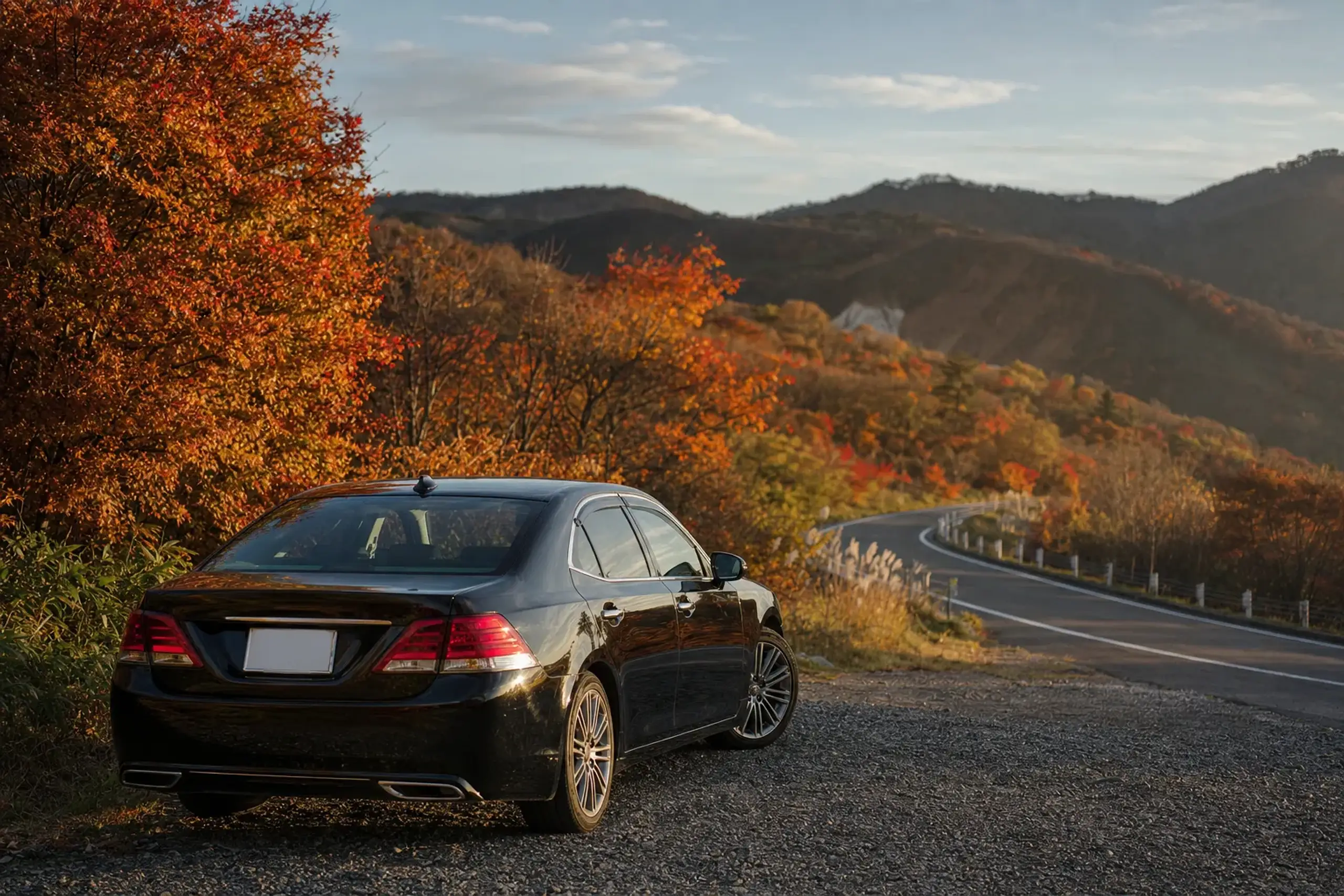
In October, the foliage along the route is often the day’s most reliable colour—not the crater water.
Use the pull-offs calmly. Take two or three short stops rather than many rushed ones. Your driver’s presence changes what that feels like entirely; you can actually look, not just steer.
Step 3: Park, Walk Three Minutes, Then Let The Deck Do Its Work
From the parking area, the walk to the observation deck is short—about three minutes. The wind can be the surprise.
Bring a warm layer you can shed quickly. Gloves help. So does a hat that won’t blow away.
Step 4: Decide Fast—Wait, Or Pivot
If Okama is visible, linger. Take your photographs, then simply watch the surface change as the clouds move across it.
If the crater is hidden, decide early whether you will wait for a break or shift the plan. A long, stubborn wait can quietly steal the rest of your day.
Step 5: Descend With Intention
The descent is not an afterthought. In October, it’s often where the richest foliage sits, and the light can soften into a flatter, more cinematic tone.
Plan one last stop for a final view back into the mountains, then return to warmth—lunch, an onsen, or a quiet café—before the day chills further.
October Foliage On The Zaō Echo Line: The Second Kind Of Color
The foliage is the honest October headline. It’s separate from the crater lake’s daily colour shifts, and it is the part you can plan around with far more confidence.
On the Zaō Echo Line, the palette changes as you climb. The lower slopes hold their colour longer. Higher sections can turn earlier and feel closer to winter even in mid-October.
A photography note: keep your lens ready for the brief openings. The road curves, and scenes arrive suddenly. Then they’re gone.
This is also where luxury becomes quiet. A warm cabin, a driver who knows exactly when to stop, and a schedule that never punishes you for lingering—this is omotenashi at its most understated, care that anticipates the need before you voice it.
Okama Access Rules And Safety Notes (Read This Before You Go)
Okama is a volcanic landscape, and access is managed. That management is not optional.
- Viewing is from the observation deck only. Do not plan for lakeside walking.
- Roads can close on short notice due to weather or volcanic monitoring status.
- Expect cold and wind at the summit even if your hotel feels mild.
If you dislike surprises, October can still unfold beautifully—but only with a plan built for change.
How This Compares To Competitors (Tokyo MK, Remote Lands, InsideJapan Tours)
For Okama, many travellers end up comparing three styles: transport-first providers, itinerary operators, and destination-led luxury agencies.
Tokyo MK is often cited for point-to-point transport and city-based chauffeur services. Remote Lands tends to frame Okama as a luxury add-on inside broader Japan journeys.
InsideJapan Tours is widely read for practical, itinerary-style explanations that answer first-time planning questions quickly.
Our approach at Japan Royal Service is narrower and sharper. We concentrate on discretion, on-the-ground operational precision, and a “visibility-first” mindset—because a crater lake you cannot see is not a romantic problem when your schedule is tight. Your identity and your itinerary remain entirely private throughout.
We also keep the tone appropriate to the place. Okama is public, exposed, and weather-led. It deserves clarity, not exaggeration.
What To Pack For Okama In October (HNW Comfort Version)
Pack for wind and short outdoor bursts—not for a long hike, unless you are choosing the ropeway-and-walk approach.
- Warm layer: a light down or insulated jacket that compresses easily
- Wind-ready accessories: gloves and a secure hat
- Footwear: stable walking shoes for uneven, sometimes damp surfaces
- Camera basics: a cloth for mist, and a strap for wind
Small detail. Big difference.
A Refined Day Outline: Okama + A Warm Finish
Okama is intense in short doses. Many guests enjoy it far more when the day has a soft landing afterward.
Common pairings in the area include an onsen stop at Togatta Onsen or a return to Sendai for a slower afternoon. If you want the full Zaō arc, Zaō Onsen is also part of the wider region, and the Zao Ropeway route is another known approach during the access season.
If you have extra time and conditions are right, Komakusa-daira is a named spot nearby known for its komakusa blooms in early summer. Not October. One line, and we move on.
Some visitors also mention Zaō Fox Village as a separate attraction in the broader area. It is unrelated to Okama logistics, and we suggest researching welfare standards carefully before choosing to visit.
How Japan Royal Service Plans Okama For HNW Travelers
We plan Okama days around discretion, timing, and real-time conditions, and we provide guiding and transfers once you reach out privately.
This is where “Hidden Japan” becomes practical. Not because Okama is hidden—it isn’t—but because the experience improves immeasurably when your day is built around small, unadvertised edges: a quiet departure time, a clean route, a warm stop that feels personal rather than crowded. The Japan that Google cannot find is often not a secret place, but a secret way of moving through a known one.
Our chauffeurs and coordinators are practised in the small decisions that keep a shoulder-season mountain day calm. A layer ready in the car. A quick pivot when fog settles. No fuss.
For transport details, see our private transportation service. If you want Okama as part of a wider Tohoku journey, our tailor-made itinerary planning keeps the pacing coherent across multiple nights.
Plan Your October Ascent
October at Okama is a narrow window—a single closing month when the drive and the crater conspire, and the road that carries you there is weeks from vanishing under snow. It rewards those who plan with intention and quiet flexibility.
If you would like your Zaō day built around the right morning, the right weather margin, and a warm, private finish, contact us here for a discreet, tailored proposal.
Frequently Asked Questions
Is Okama Crater Lake Worth Visiting In October If The Lake Color Is Not Seasonal?
Yes—October is worth it because it’s the last full month before the road closure, and the Zaō Echo Line’s foliage typically peaks then, even though the lake’s colour shifts are day-by-day.
If you’re travelling on a fixed schedule, that closing-window urgency is the real reason October belongs on the calendar.