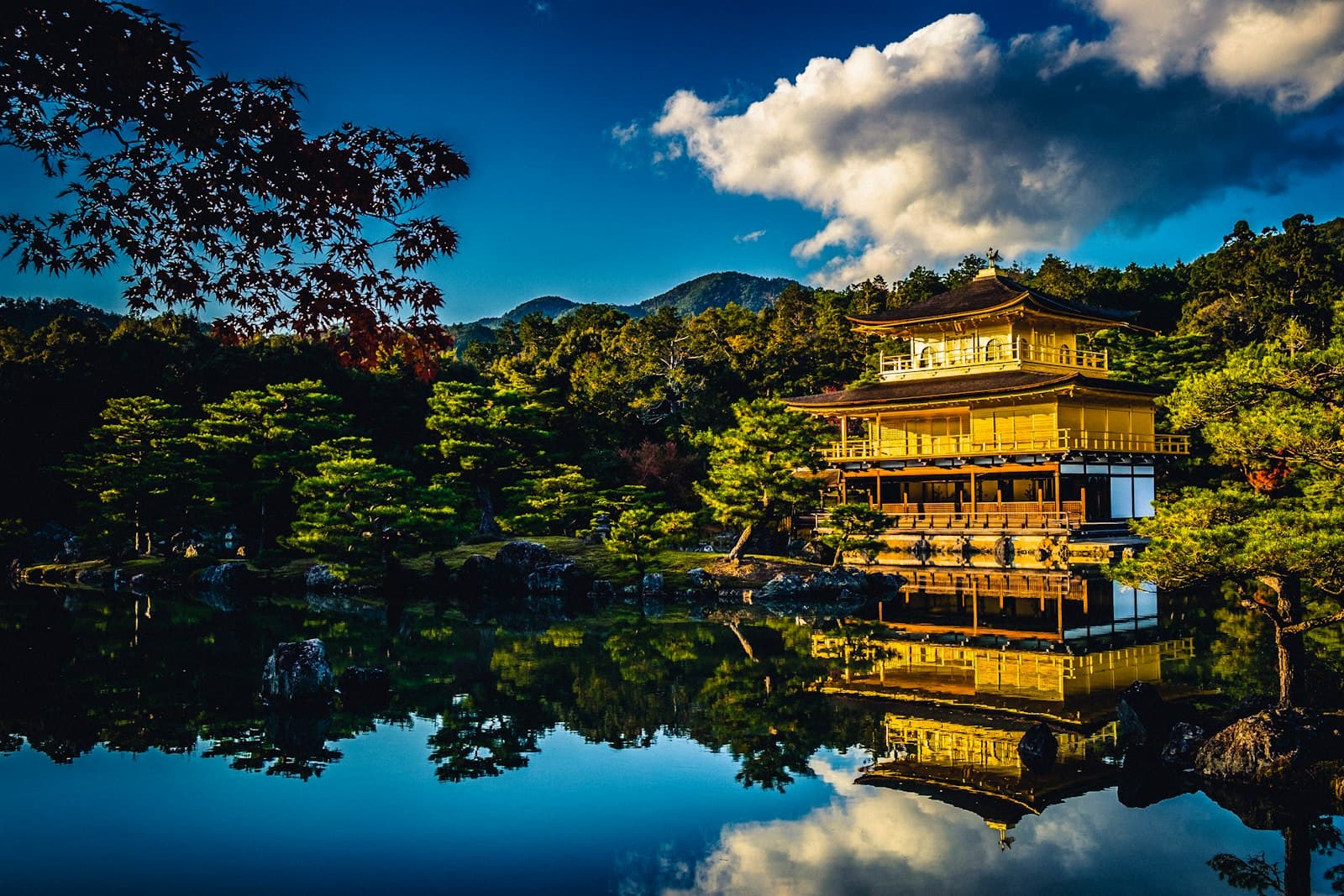

In this guide
- 01Each Flower Lives For Exactly One Day
- 02When Is Nikkō Kisuge In Oze National Park At Its Best In Summer?
- 03Where Should You Go For The Densest Nikkō Kisuge Viewing In Oze?
- 04The Honest Summer Concern: Deer Grazing And A Living Landscape
- 05Ozegahara: A Marsh Built One Millimeter At A Time
- 06How Oze Transitions From Low-Moor To High-Moor (And Why You Can Feel It Underfoot)
- 07How To Reach Oze In Summer Without Guesswork (Tokyo, Gunma, And Fukushima Routes)
- 08A Comfort-First Base: LUCY Oze Hatomachi And Other Practical Stays
- 09Oze’s Named Summer Places: Ōe-shitsugen, The Three Larches, And Ōshimizu’s Early Bloom
- 10Step-By-Step: A Soft-Hiking Summer Day In Oze (HNW Pace)
- 11What Japan Royal Service Coordinates For Oze
- 12What Competing Luxury Operators Often Miss About Oze
The boardwalk is still cool underfoot when the first yellow faces turn toward the light. Not yesterday’s blooms. Not tomorrow’s. Today’s, and only today’s.
In Oze National Park, summer carries a signature that many visitors miss entirely—because they arrive a month too early, chasing the spring story everyone already knows. That is the mistake. Oze’s true summer emblem is Nikkō kisuge, a day-lily that opens and fades within a single twenty-four-hour span.
Our team at Japan Royal Service plans Oze with one principle in mind: if a flower lives for only one day, your logistics must be precise. Quietly precise. We build in backup routes, early departures, and the kind of interpretation that turns a simple walk through a marsh into a memory with real weight.
Each Flower Lives For Exactly One Day
A single Nikkō kisuge bloom opens and withers within 24 hours, so the “peak” here is not a weekend you can circle on a calendar—it is a sequence of brief, successive mornings unfolding across late July.
This is precisely what makes summer in Oze feel sharper, more deliberate, than a typical wildflower outing. You are not collecting sights. You are arriving for a moment that will never repeat.
A single plant carries several buds—often five to seven—that open one at a time, in turn. That means one plant can “perform” for roughly a week before it finishes. Short, still. Even when it gives everything it has.
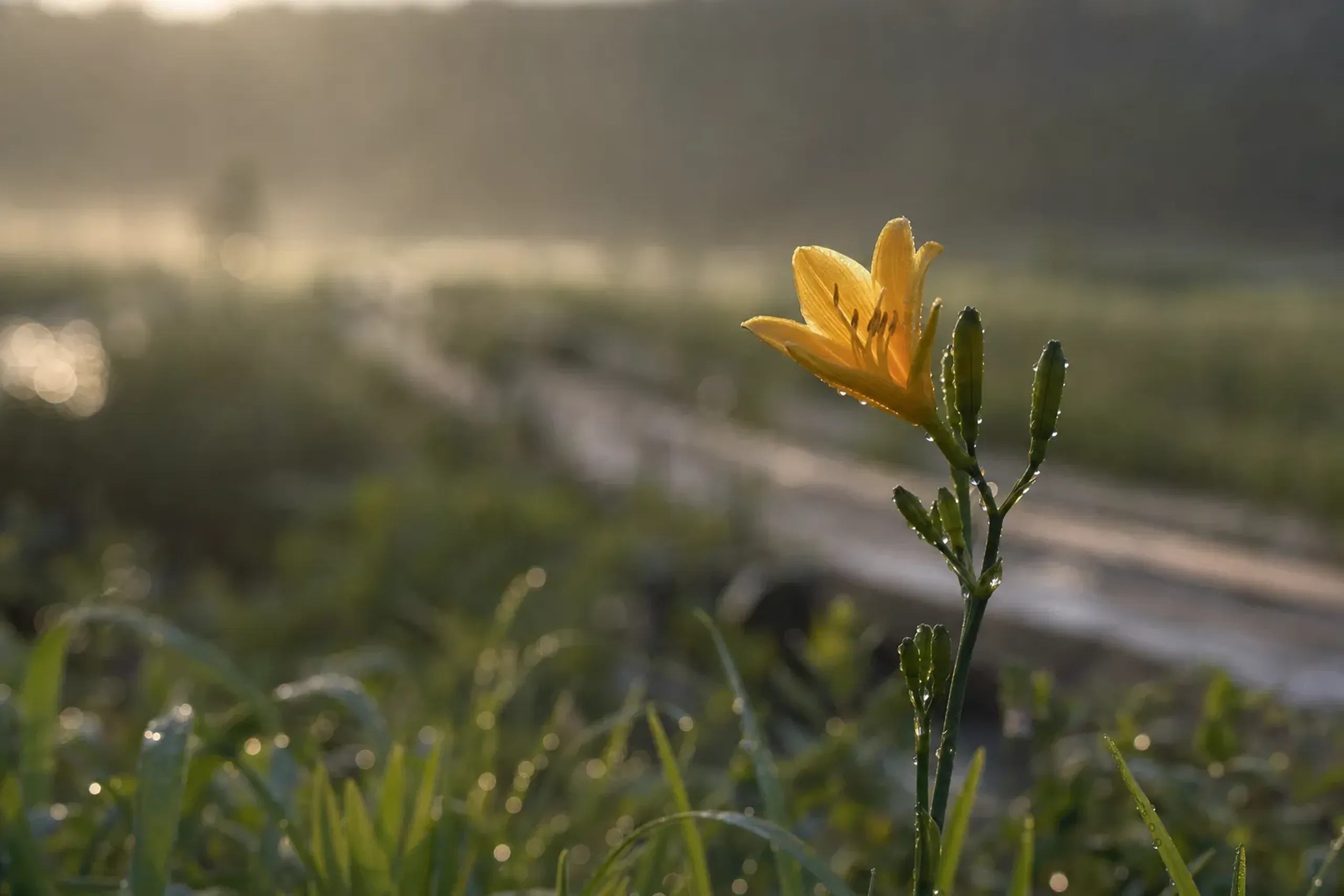
And from seed, the timeline is genuinely humbling. Nikkō kisuge can take about seven years to flower for the very first time. Seven years of snow load, slow thaw, insects, and thin mountain summers—all of it accruing toward a single day at a time.
In our experience, this is exactly why Oze suits the HNW traveler who prefers restraint over spectacle. No gold leaf. No noise. Just a boardwalk, a marsh under open sky, and thousands of one-day lives quietly opening and closing around you. It is wabi and sabi written across an entire landscape—beauty measured not in abundance but in impermanence.
When Is Nikkō Kisuge In Oze National Park At Its Best In Summer?
Nikkō kisuge in Oze typically peaks in late July, often aligning closely with Japan’s Marine Day holiday period.
Timing is not a slogan here—it is the whole discipline. Elevation, lingering snowpack, and sudden cold nights can all shift the bloom by days, sometimes longer. The difference between “fields of yellow” and “a few early flowers” can come down to a single week.
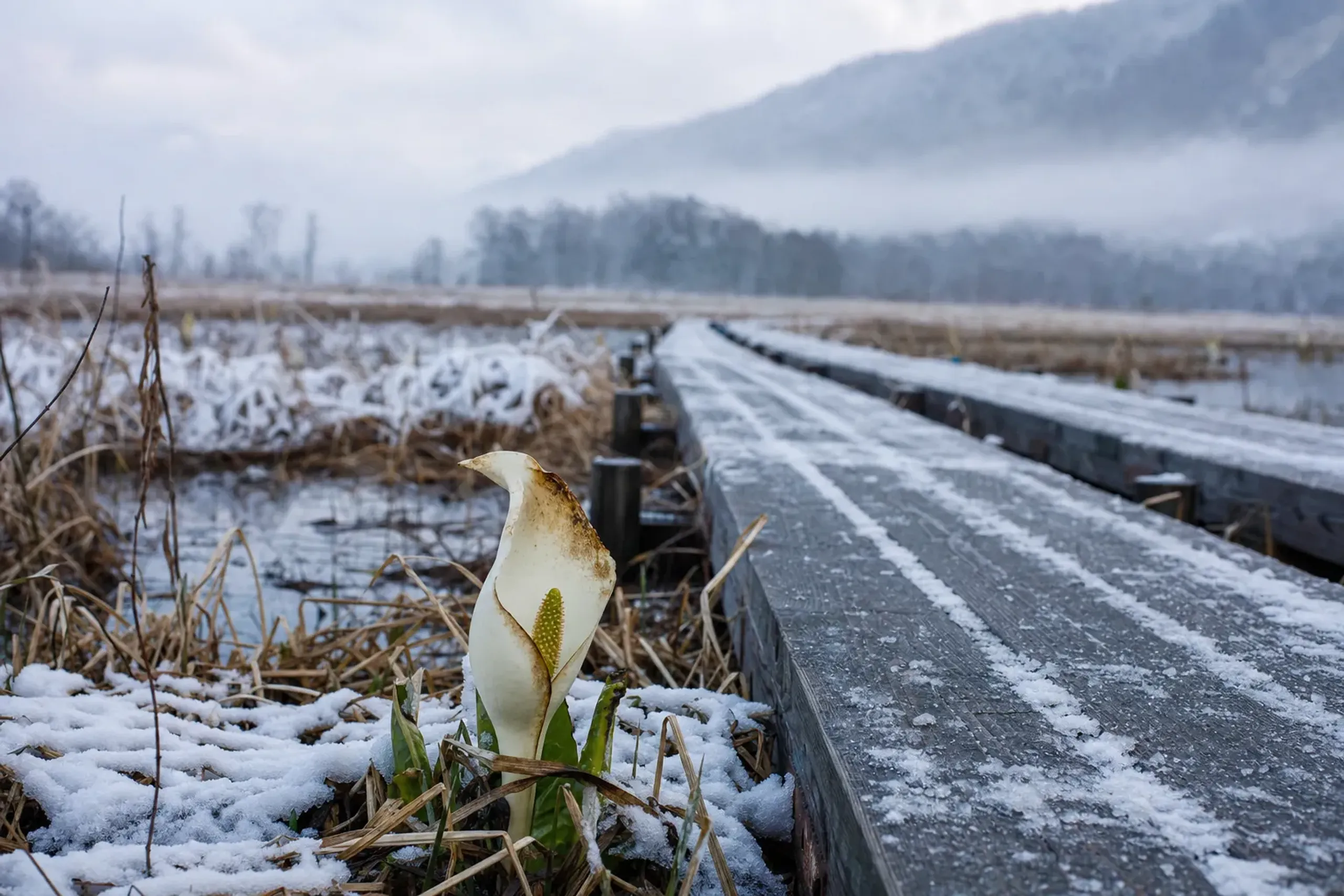
Oze is also celebrated for its mizubashō (skunk cabbage) during the snowmelt season. But that is spring. Different plant, different mood, different calendar entirely. If you come for summer, come for summer—and let us read the season for you. This instinct for shun, the Japanese sense of perfect seasonality, is exactly what separates an ordinary visit from one timed to the day.
Before any client departs, our concierge team verifies the current year’s bloom timing and trail access using official and local updates. Practical. Necessary. And, quietly, reassuring.
Key fact: Oze’s growing season is short—roughly mid-May to mid-October—because winter snowfall here is heavy and persistent.
Where Should You Go For The Densest Nikkō Kisuge Viewing In Oze?
For the best-preserved, highest-density Nikkō kisuge viewing today, aim for Ōe-shitsugen near Lake Oze-numa—rather than expecting the same density across all of Ozegahara.
This is the detail most general guides blur over. Oze is a large park with distinct basins and separate approaches, and conditions are far from uniform across them. Deer grazing pressure has measurably affected Nikkō kisuge populations in Oze-ga-hara, and the display can vary considerably from one year to the next.
Ōe-shitsugen, the broad marshland near Lake Oze-numa, has held up comparatively well. It also has an anchor that photographers return to again and again: a small raised mound crowned with three larch trees, known locally as the “Three Larches.” Simple. Specific. Unmistakably Oze.
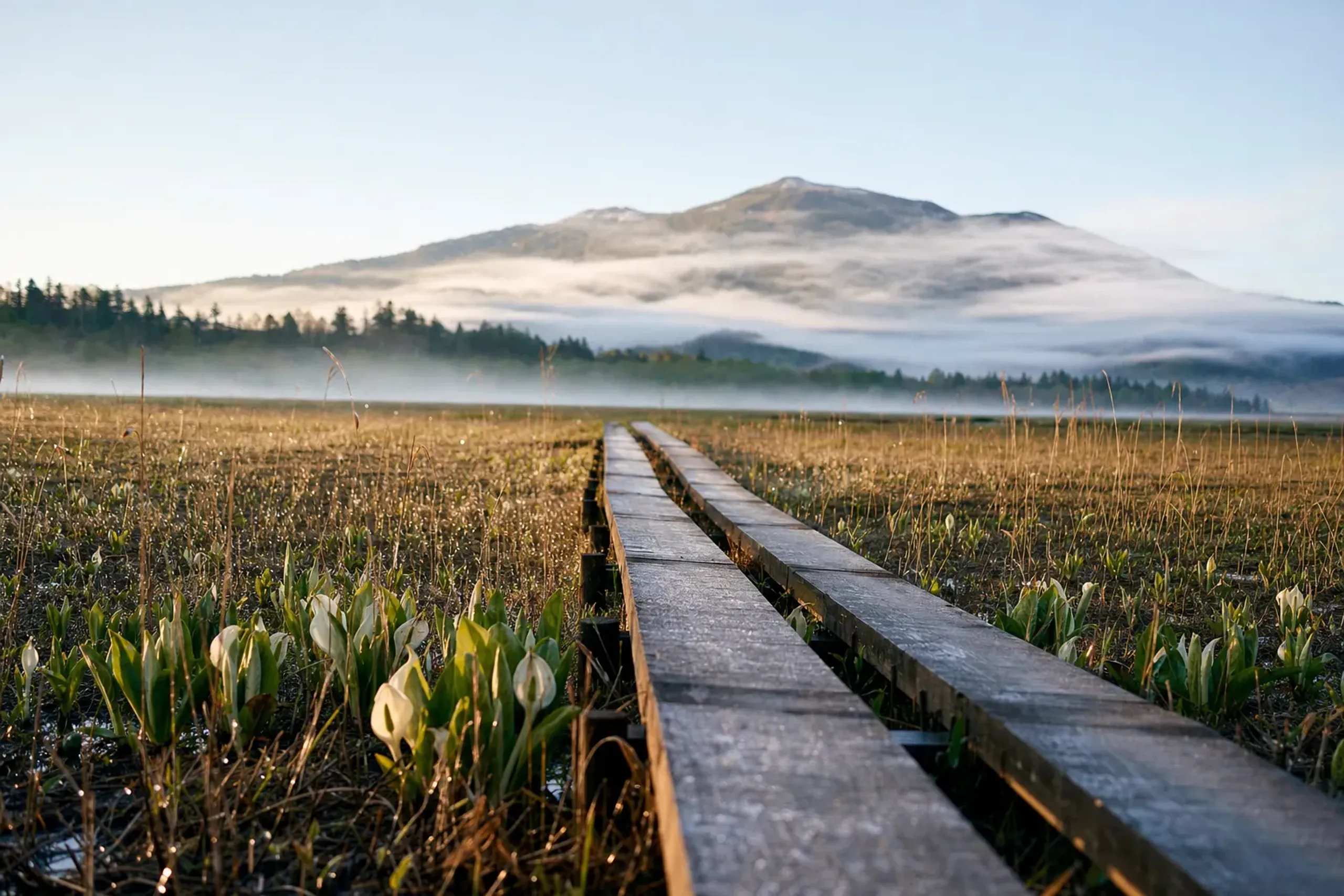
If you want a gentle day that still feels complete, the Oze-numa side rewards you with water, marsh, and that long ribbon of boardwalk where the yellow lilies open one by one, in their own unhurried order.
The Honest Summer Concern: Deer Grazing And A Living Landscape
Luxury travelers are accustomed to guarantees. Oze, honestly, does not offer them—and we would rather tell you so plainly.
Nikkō kisuge in Oze-ga-hara has declined in places due to deer grazing damage. This is not a footnote to gloss past. It genuinely changes what you see, where you see it, and how “full” the marsh can feel in any given year.
Weather adds its own complications. A late frost can bruise new growth. Heavy rain can compress your comfortable walking window to a sliver. Even in late July, the mountains keep their own counsel.
For us, discretion is never only about privacy—though confidentiality of your identity and your itinerary remains our first commitment. It is also about never over-promising. We plan Oze around what is genuinely knowable—access windows, elevation differences, transport rules—and build in flexibility for everything that is not.
Ozegahara: A Marsh Built One Millimeter At A Time
Ozegahara is Honshu’s largest highland peat bog, and its scale is easy to underestimate until you are inside it—walking straight through open sky for kilometers at a stretch.
Its commonly cited dimensions are roughly 6 km east–west and 2 km north–south, spanning about 760 hectares. JNTO also describes Ozegahara as the largest high moor on Honshu and gives a figure of 849 hectares. Both numbers point toward the same truth: it is vast.
Peat builds slowly here—under 1 mm per year. At the marsh’s center, peat has accumulated into a layer about 4.5 to 5 meters thick over roughly 6,000 to 8,000 years.

That timeline changes your pace. It should. You begin to walk as though time itself were listening.
The surrounding peaks, including volcanic Mount Hiuchi, explain why this basin holds water so well. Volcanic ejecta dammed the natural depressions, creating the exact conditions for wetlands to form and persist across millennia.
How Oze Transitions From Low-Moor To High-Moor (And Why You Can Feel It Underfoot)
Oze’s wetlands develop in distinct stages: a low-moor bog forms first, then sphagnum moss slowly builds a raised high-moor over long time, creating separate ecological zones inside the same marsh.
The early stage is the low-moor. Water-loving plants thrive in the wet, acidic, poorly drained ground. This is where spring species like mizubashō are part of the story.
Over time, sphagnum moss colonizes the marsh’s center. It dies, accumulates, and slowly lifts the surface into a raised, lens-shaped mound rising above the surrounding water table. That raised center is the high-moor. Different chemistry. Different plant community. A noticeably different feel underfoot.
Even without any scientific vocabulary, you sense the shift. The boardwalk crosses areas that feel like open plains, then edges that feel more watery and intricate, stitched together with grass and moss. It is the same restraint that runs through Japanese aesthetics—the quiet, moss-threaded silence that rewards attention rather than demanding it.
Oze National Park has recorded over 900 plant species across its landscapes. The window for growth is short, which makes summer’s green feel almost urgent, almost alive with intent.
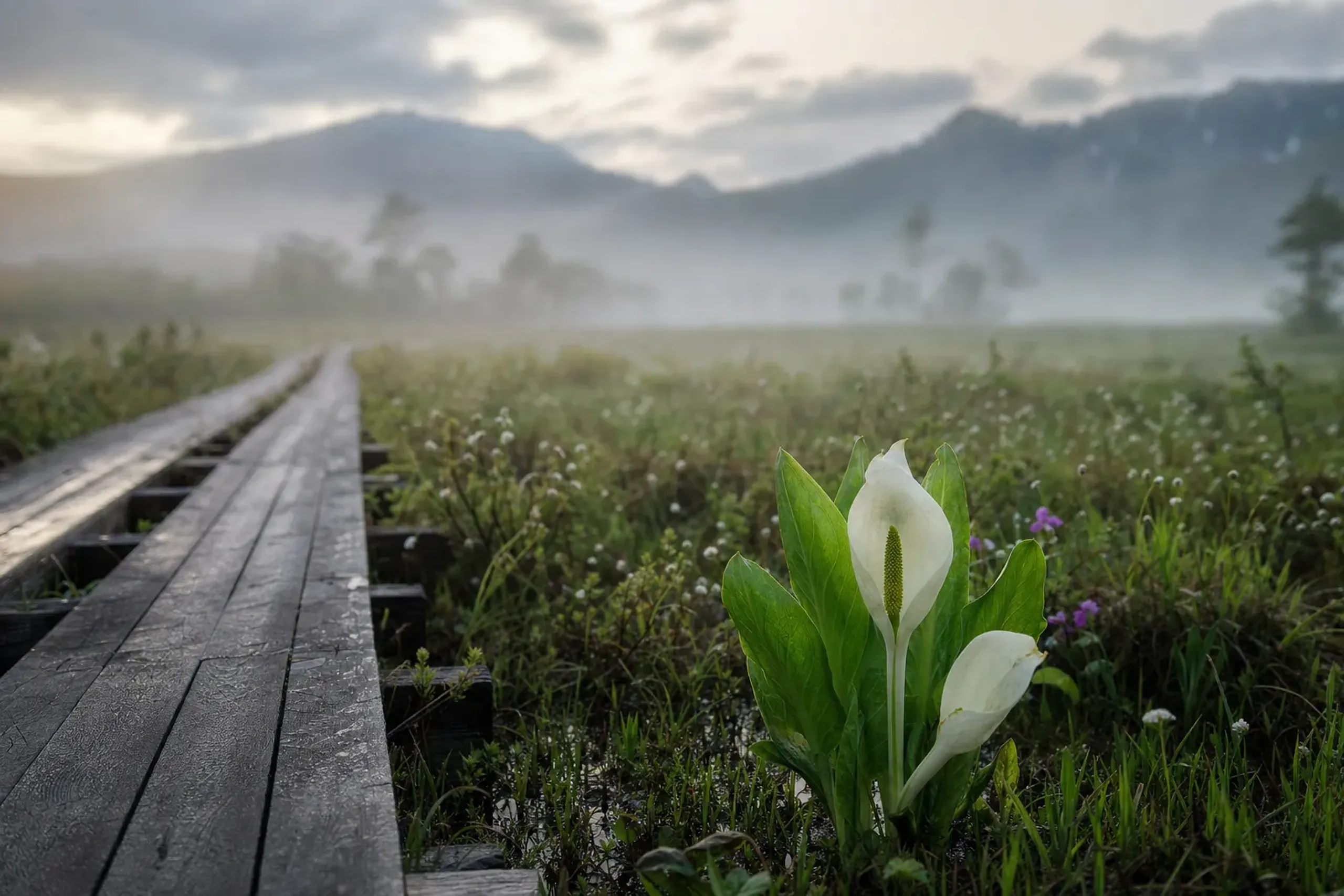
Oze was registered as a Ramsar Convention wetland in November 2005. It is protected because it is rare, and because it is deeply vulnerable.
How To Reach Oze In Summer Without Guesswork (Tokyo, Gunma, And Fukushima Routes)
Oze is reachable as a day trip from Tokyo, but it demands an early departure, careful planning, and a clear understanding of exactly where private vehicles must stop.
Many first-time visitors picture simply “driving to the trailhead.” Oze doesn’t work that way on its key approaches. Even arriving from Katashina on the Gunma side by car, drivers must park near Tokura and transfer to a bus bound for Oze. Private car access is restricted beyond Oze-Tokura.
From Tokyo, rail approaches are common. One major gateway is Jōmō-Kōgen Station via the Jōetsu Shinkansen, then onward by regional transport toward the Oze access points. Rail passes can cover the train portions of these approaches. That helps—but it does not solve the last-mile complexity that defines Oze.
From the Fukushima side, Hinoemata Village is a recognized access base for Oze, with onsen stays that suit a comfort-first plan. There are also specific access rules on the Hinoemata–Umasaka Tōge forest road: travel on the 15 km road requires a shuttle taxi run by the Oze Hinoemata Onsen Tourist Information Center, and the service is limited to overnight guests in the village (otherwise travelers must use a local taxi).
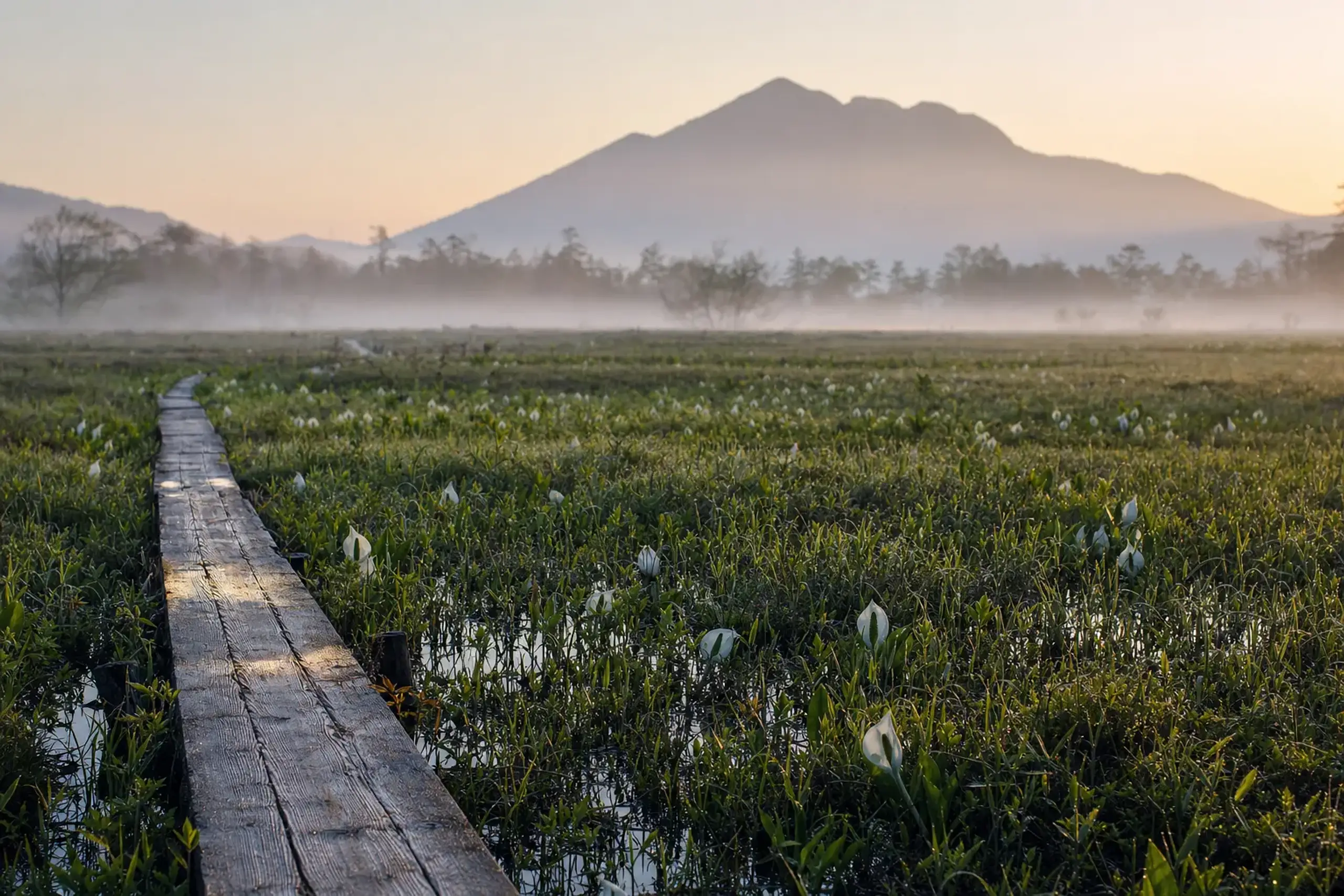
Exact rules matter enormously here. This is one of them.
For 2026, Aizu Bus publishes an operating period for Oze-related travel as May 23, 2026 through October 25, 2026. That window is useful for planning, but your real decisions come down to day length, crowd patterns, and where you want to sleep the night before.
A Comfort-First Base: LUCY Oze Hatomachi And Other Practical Stays
Luxury in Oze is not chandeliers. It is waking close to the entrance, walking before the crowds arrive, and returning to a hot shower without a complicated transfer in between.
Hoshino Resorts opened LUCY Ozehatomachi on September 1, 2025, introducing a “mountain hotel” concept that reshaped how non-hikers think about Oze entirely. The location is refreshingly straightforward: the property sits about a 3-minute walk from the Hatomachi-Tōge bus stop.
On the Fukushima side, Hinoemata Village is well known as an access base with onsen options, which can pair beautifully with a slower, recovery-forward itinerary. Different mood. Different pace. Still unmistakably Oze.
Our role is to advise on a routing that fits your body and your calendar, then shape the day so your energy flows into the marsh itself—not into puzzling over bus transfers in the rain. This is the quiet anticipation of needs you did not have to voice.
Oze’s Named Summer Places: Ōe-shitsugen, The Three Larches, And Ōshimizu’s Early Bloom
Oze becomes far easier to understand once you stop thinking of it as a single place.
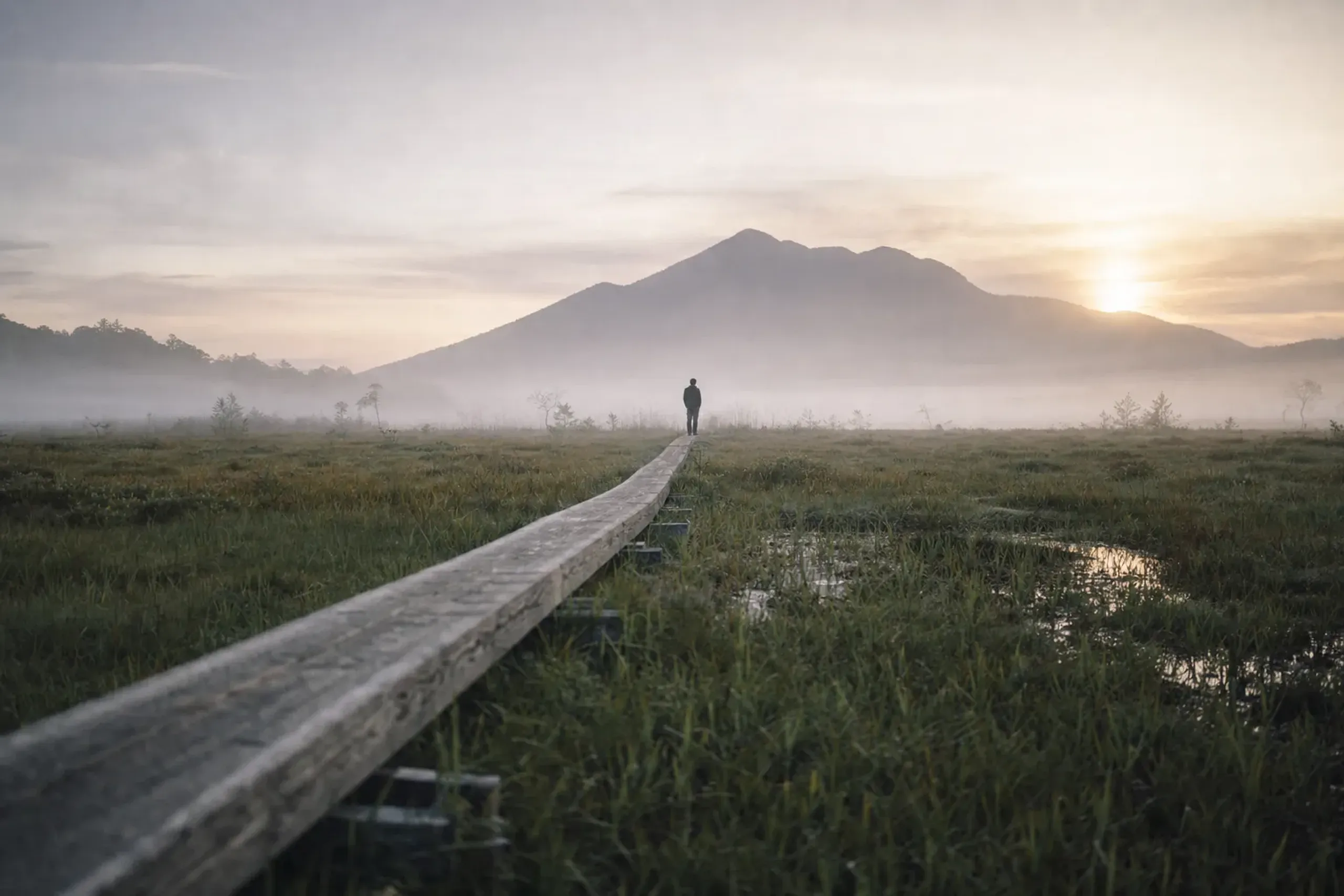
Ōe-shitsugen is the major marsh surrounding Lake Oze-numa. In summer, this is where many travelers go for Nikkō kisuge, especially when they want the best-preserved density paired with a satisfying half- to full-day boardwalk plan.
Then there are the “Three Larches”, a trio of larch trees crowning a small raised mound. It sounds almost too simple to matter. It is also a real, grounding landmark that gives shape to the lakeshore walk and helps you read the landscape the way a local would.
Ōshimizu, the Gunma-side entrance to Lake Oze-numa, sits at lower elevation. That detail matters. Its mizubashō and Nikkō kisuge bloom earlier than at the lake or the main marsh itself—a genuine strategic advantage if you happen to be traveling at the very edges of the season.
Step-By-Step: A Soft-Hiking Summer Day In Oze (HNW Pace)
This is a national park day. Treat it with respect. And treat your knees kindly while you’re at it.
Step 1: Choose Your Gate Based On What You Want To See
If your priority is Nikkō kisuge density, we often steer the planning toward Lake Oze-numa and Ōe-shitsugen. If your priority is Ozegahara’s wide-open scale, plan for longer boardwalk time and an earlier start.
- Best for Nikkō kisuge focus: Lake Oze-numa / Ōe-shitsugen
- Best for “big marsh” feeling: Ozegahara (expect longer distances)
Step 2: Leave Earlier Than Feels Reasonable
In summer, an early departure buys you three things at once: cooler air, softer light for photographs, and far less congestion at transfer points.
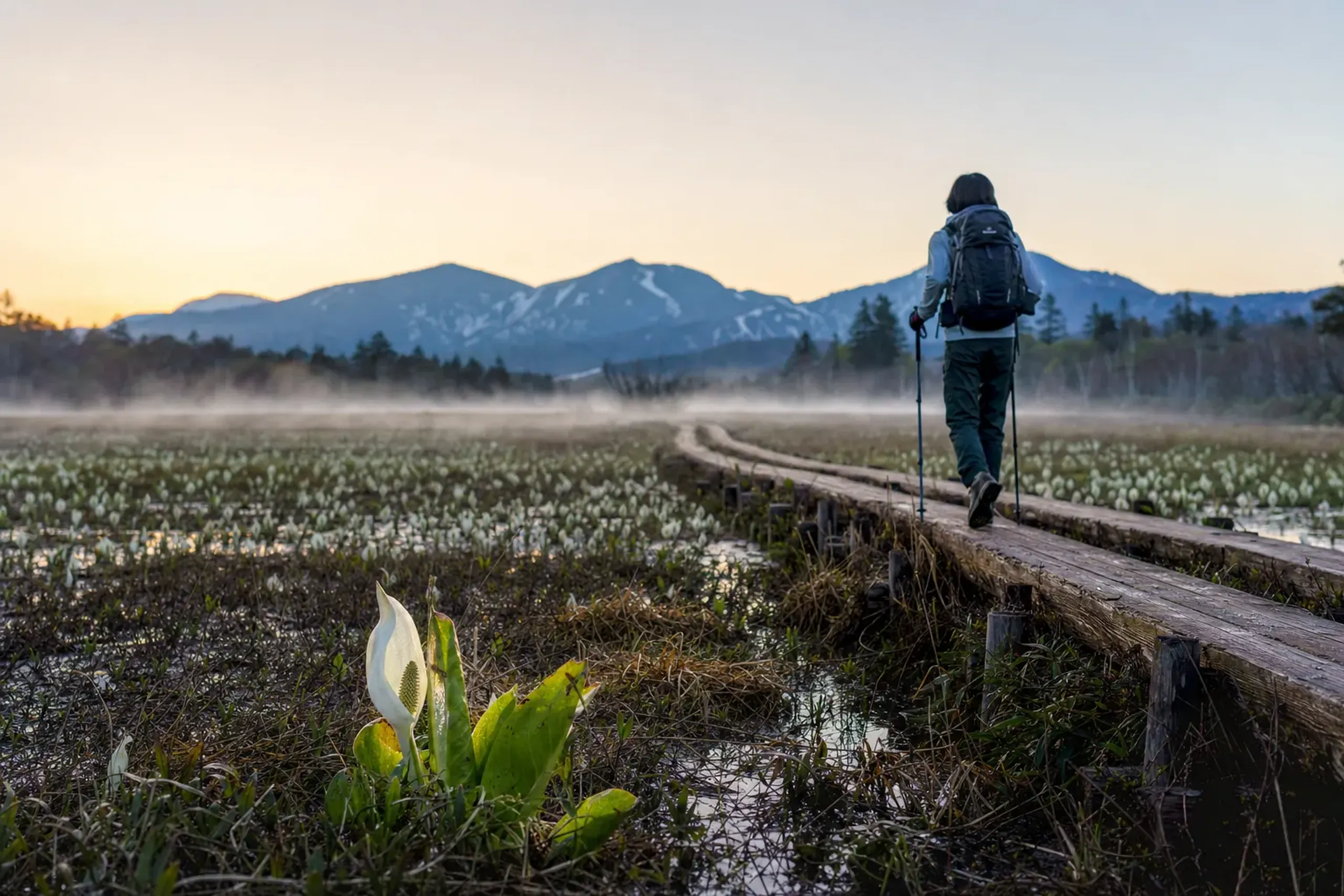
Entirely worth it.
Step 3: Walk The Boardwalk Like A Ceremony
The boardwalks exist to protect the wetland. Stay on them. Keep your pace even and unhurried. If you stop for photos, step aside so others can pass without stepping off the path and onto fragile ground.
Step 4: Pack Light, But Pack Correctly
Weather shifts quickly in mountain wetlands. Bring layers, reliable rain protection, and footwear that tolerates wet boards. Avoid perfumes entirely. The flowers need no competition.
Step 5: Build A Real Rest Stop
Plan a proper pause, not a rushed snack on your feet. Sitting down for a full fifteen minutes can be the difference between a graceful afternoon and a weary slog back to the bus.
What Japan Royal Service Coordinates For Oze
Japan Royal Service coordinates private guiding and transfers for Oze, shaping the entire day around access rules, seasonal timing, and the exact comfort level your party expects.
The main friction in Oze is never the walking itself. It is the handoffs: where private vehicles must stop, where the buses begin, and which access routes carry special restrictions. That is precisely where our planning earns its keep.
For the road portion, many clients prefer private transportation with a professional chauffeur, especially when an early start is simply non-negotiable.

Our vehicles are chosen for their quiet space and the calm of arrival. The first time you read that mountain air correctly, you’ll understand exactly why.
If Oze forms part of a longer journey, we map it into a tailor-made itinerary that respects recovery days and avoids the trap of “one more stop” planning. Nature days ask more of you than museum days. That is simply true.
And when clients want to go beyond the obvious, we bring a hidden-Japan sensibility to the work: smaller access bases, calmer walking windows, and the kind of local context that transforms a marsh into a living archive rather than a checklist item. This is the Japan that cannot be found through a search engine—only through introduction.
What Competing Luxury Operators Often Miss About Oze
Oze exposes a common weakness in high-end Japan planning: glossy itineraries that look flawless on paper yet quietly ignore the last-mile constraints that actually make or break the day. An operator who has never stood at the Tokura transfer point, watched a late frost bruise the lilies, or timed the bloom to a specific morning cannot plan around what Oze truly demands. We can, because we do.
If a single fleeting day of yellow across an ancient moor is the kind of experience you want timed precisely for your party—discreetly, and at your own pace—contact us here to begin shaping your summer in Oze.