In this guide
- 01Urushi does not dry — it cures
- 02Kagawa carves where Kyoto paints
- 03Tamakaji Zōkoku and the route from Thailand
- 04Kinma — and where its name comes from
- 05Zonsei and chōshitsu
- 06Gotō-nuri and Zōkoku-nuri
- 07The Institute and the lineage
- 08What a hands-on session involves
- 09Commissioning and lead times
- 10Carrying it home
- 11What Japan Royal Service arranges
- 12Frequently Asked Questions
- 13A note on discretion
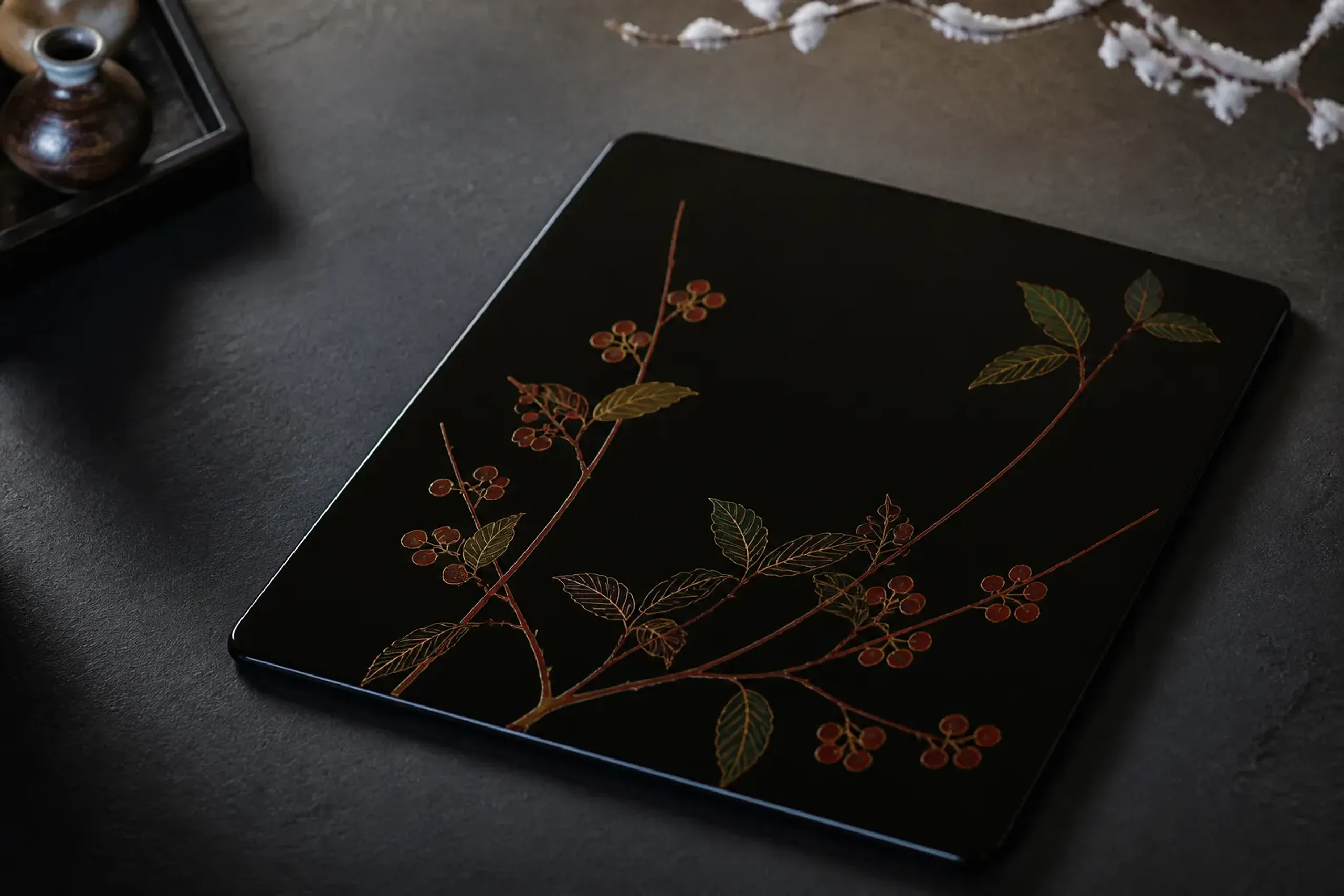
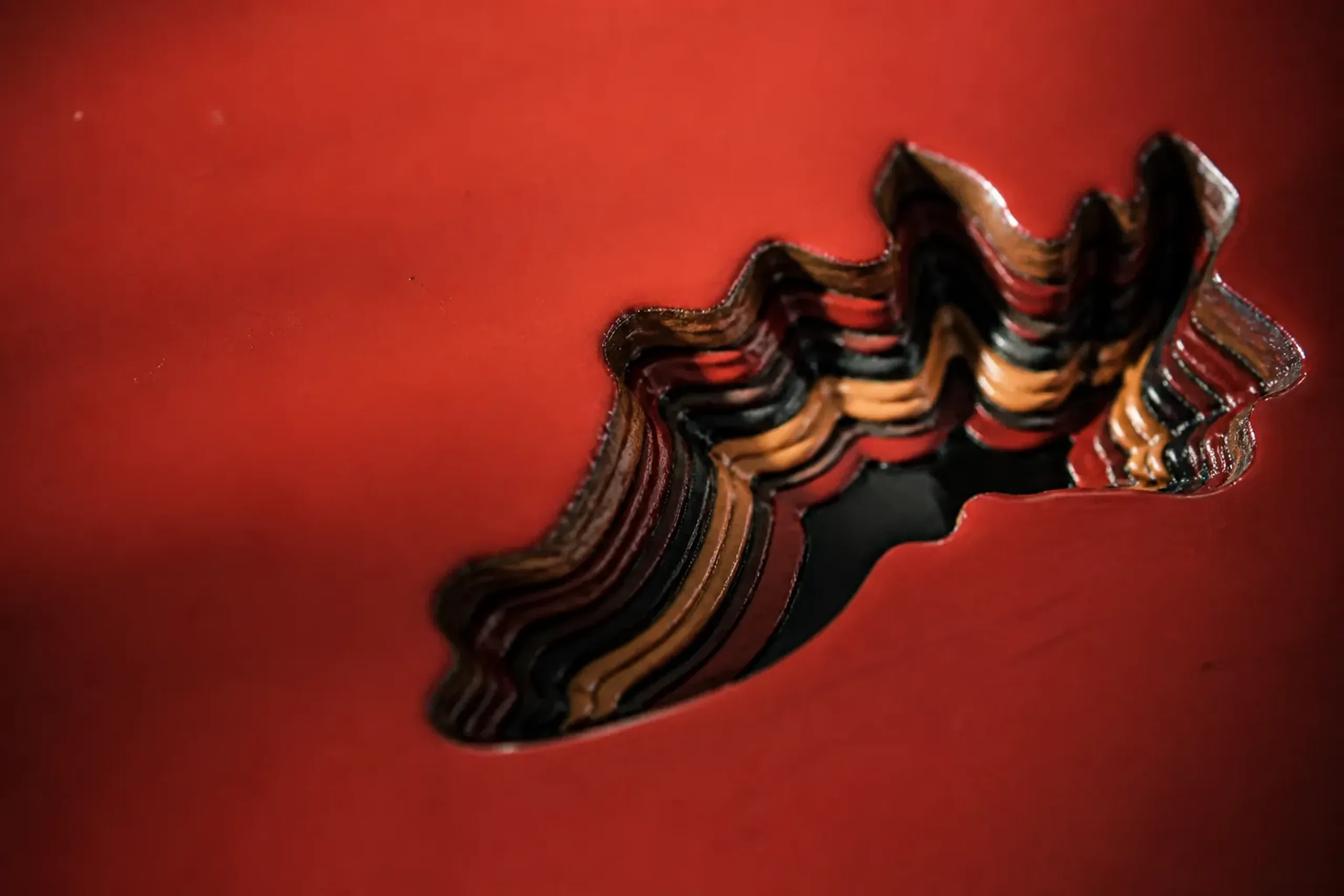
The blade goes in slowly. Ten layers of lacquer, more, have been laid down over a hard ground and cured one by one — weeks of quiet, invisible work sealed into a surface only a few millimetres deep. Now a craftsman draws a curved steel edge across it, and a line opens. Coloured lacquer is pressed into the groove and left to cure again. Only when the surface is ground flat does the drawing appear: colour resting exactly in the cut, flush with the black, as though it had always been there.
This is Kagawa lacquer, worked in Takamatsu, and it is unlike almost anything else that carries the word lacquer in English. To understand why, start with a fact that surprises nearly everyone.
Urushi does not dry — it cures
Lacquer is not paint, and it does not dry the way paint dries. Urushi cures. It hardens by drawing moisture out of humid air, which means it is set not in a warm dry cupboard but in a damp one. A wet room hardens it; a dry room stalls it. Leave a coat in the wrong conditions and it simply waits.
That inversion is the thing to hold on to, because everything else follows from it. A finish that needs humidity to set cannot be rushed, and it cannot be faked in an afternoon. Kinma alone requires more than ten layers of lacquer built up before a blade ever touches the surface, each layer cured in turn before the next is laid. A finished object is not the work of a day or a week. It is the work of months.
A craft session that hands you a finished piece at the door, then, is not using real lacquer. It is using something that resembles it. What Kagawa makes cannot behave that way, and that is precisely its value.
Kagawa carves where Kyoto paints
Most people who think they know Japanese lacquer are picturing maki-e: gold and silver powder laid into wet lacquer to draw a design on the surface. That is the great Kyoto tradition, and it is decoration onto a surface.
Kagawa does the opposite. Its techniques build the lacquer up in depth — layer on cured layer — and then cut down into it. The design is not applied to the top; it is released from within the thickness. Where Kyoto paints, Kagawa carves. That single distinction is the whole of it, and it comes not from Kyoto at all but from a trade route running through Southeast Asia and southern China.
Tamakaji Zōkoku and the route from Thailand
Kagawa lacquer exists because one man, in the late Edo period, went looking outside Japan. Tamakaji Zōkoku studied lacquer techniques that had reached Japan from Thailand and China, combined them with older Japanese methods, and produced something the country had not seen before. The craft then grew under the protection and encouragement of the Takamatsu domain lords, who understood what they had.
Five techniques descend from Zōkoku: kinma, zonsei, chōshitsu, Gotō-nuri and Zōkoku-nuri. The first three are known together as the three Kagawa techniques, and Kagawa lacquerware was designated a Traditional Craft of Japan in 1976. This is the Japan that does not announce itself — a lineage you reach through introduction rather than a shop window, and one of the quieter pleasures of a tailor-made itinerary built around what a place actually holds.
Kinma — and where its name comes from
Kinma is the technique that opened this page. Lacquer is laid down in more than ten layers over a hard ground. A sharp curved blade called a ken line-carves the pattern into that built-up thickness. Coloured lacquer is filled into the grooves and cured, then the surface is ground flat, so the colour survives only in the carved lines — a drawing held inside the lacquer rather than laid on top of it.
The name is not Japanese. It is Thai. Kin means to chew, and mak is the betel nut; across Thailand and Myanmar, betel is mixed with shell lime, wrapped in a kinma leaf, and chewed. The line-carved containers made to hold it took the same name — and when the technique travelled to Japan, the name travelled with it. A celebrated Kagawa craft, in other words, is named after a betel-nut box. That is not a footnote. It reframes the whole tradition as the end of a trade route rather than a local invention, which is exactly what it is.
Zonsei and chōshitsu
Zonsei begins the other way around. Patterns are painted in coloured lacquer onto a lacquered ground; then the outlines and fine details are line-carved with the ken, and the recesses filled with gold powder or leaf. A second method reverses the order — carving the pattern first, filling it with coloured lacquer, grinding it flat with charcoal, and only then cutting the outlines. The technique is written 存星 in some places; Kagawa uses the characters Zōkoku himself used.
Chōshitsu is carved lacquer at its most literal. Dozens of coloured layers are built up, cured one after another, and then cut in relief. Because the colours are stacked in depth, a single carved cut exposes them in section — bands appearing like strata in cut rock, a record of every layer the blade has passed through.
Gotō-nuri and Zōkoku-nuri
Two further techniques are local to Takamatsu. Gotō-nuri was devised by Gotō Tahei, a Takamatsu domain retainer, at the end of the Edo period. Vermilion lacquer is applied over the middle coat and, while still wet, tapped with a pad or the fingertips to raise an uneven, living ground. Once cured, a thin transparent lacquer finishes it. The deep red does not fade — it brightens with age, so a piece looks different after twenty years than it did new. Lacquer that improves rather than degrades is a rare thing to own, and rarer still to have chosen new and watched change.
Zōkoku-nuri, named for the master himself, cuts irregular spirals into the base, rubs raw lacquer in, then finishes with a rubbed surface scattered with makomo powder taken from the roots of a wild grass. It, too, deepens with use, rewarding the hand that returns to it.
The Institute and the lineage
The care Kagawa takes over these techniques is institutional as well as private. The Kagawa Prefectural Urushi Institute opened in November 1954 — the first facility of its kind in Japan — expressly to preserve kinma, zonsei and chōshitsu and to train successors. More than 450 have graduated in the decades since. In 2013 one of its own instructors, himself a graduate, became the first from that lineage to be designated a Living National Treasure for kinma.
Kagawa has produced several Living National Treasures in lacquer, and each has enlarged the craft rather than merely repeating it. One expanded a palette long limited to five colours by introducing new pigments. Another invented dot-carved kinma, using the size and density of individually carved points to produce gradation and depth where earlier work used line alone. A third developed a laminated veneer base and a reciprocal carving method; a fourth formed bodies from bamboo basketry pressed onto a mould and hardened with lacquer. These are not decorative flourishes. They are the ways a living tradition keeps thinking.
What a hands-on session involves
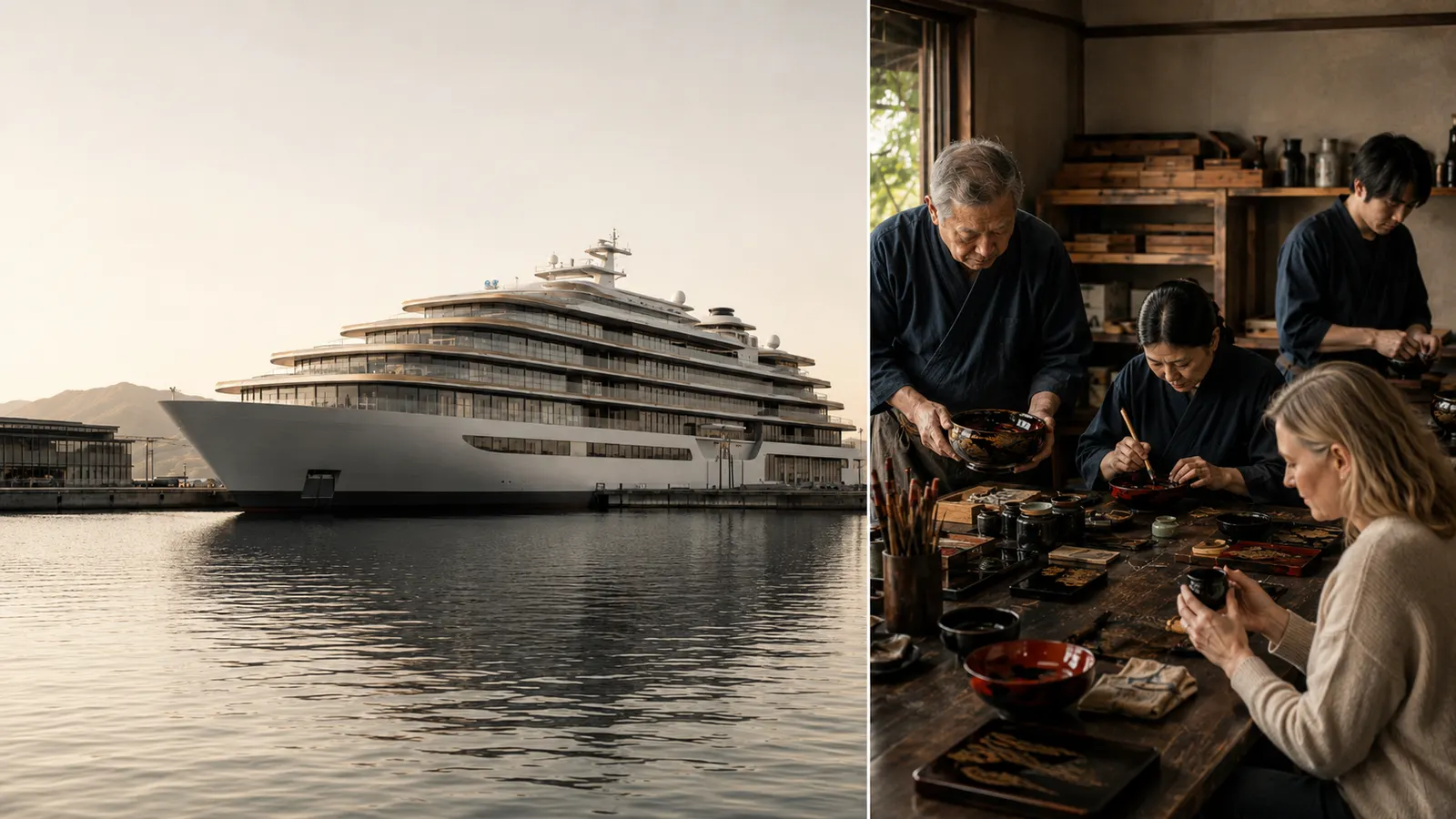
Given how urushi behaves, no visitor makes a finished piece in a day — and any workshop that promises otherwise is not working in real lacquer. What a private bench session offers instead is the material itself, in your own hands, with a grand master's craft guiding you. The typical piece is a pair of chopsticks, decorated in genuine coloured urushi — the same lacquer used on the work being made a few steps away, not the synthetic substitute a casual craft activity would reach for. With an artisan beside you, you lay the colour yourself.
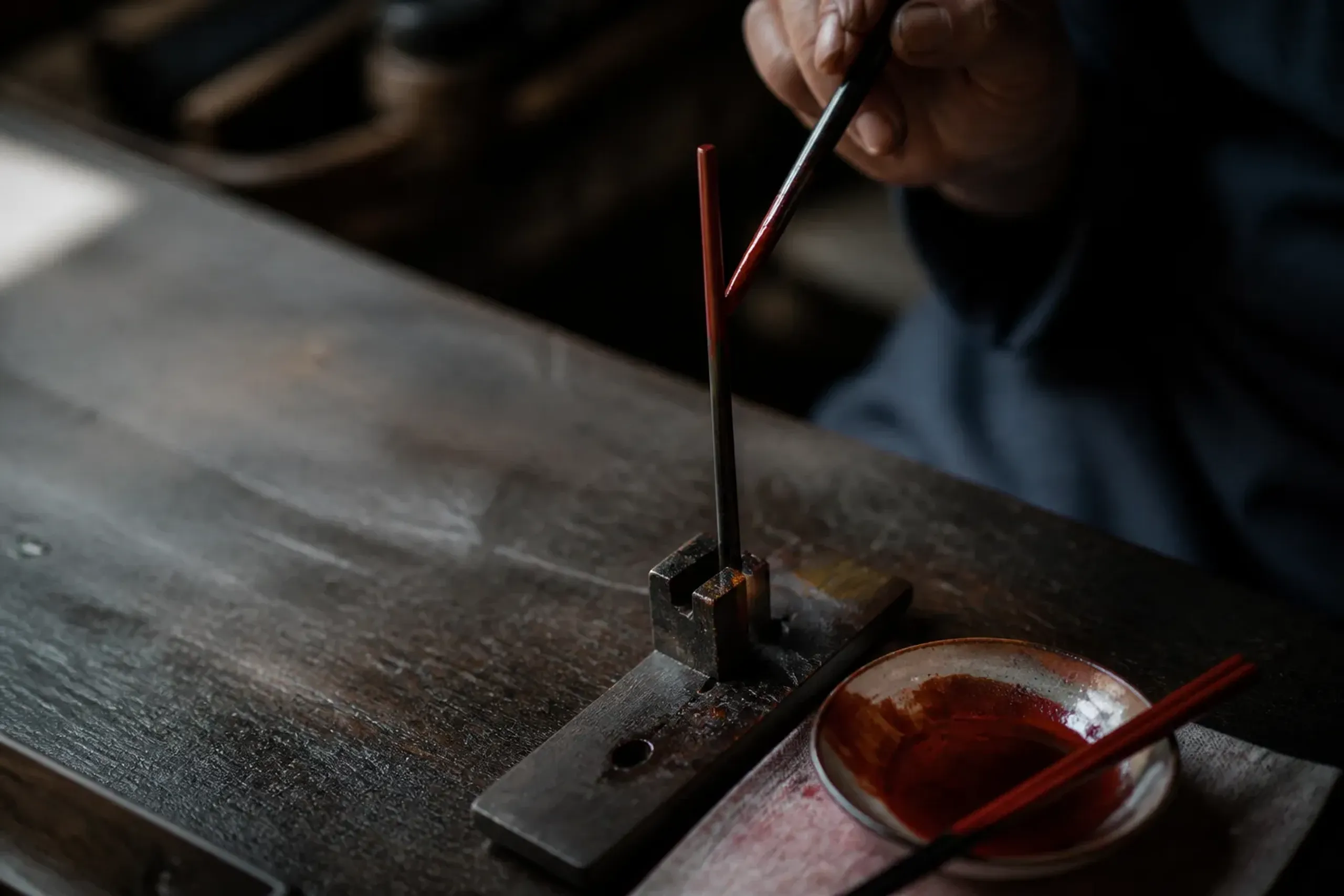
The point is not the souvenir. It is the half-hour at the bench with a material worked in Japan for thousands of years, which behaves like nothing else you will have touched. One caution belongs here: raw urushi is a tree sap, and in some people uncured lacquer causes a strong skin reaction. The workshop raises this before you begin and advises accordingly — it is not something to discover mid-session.
Because the piece must then cure, you leave without it. Workshops accustomed to guests from overseas will post the finished chopsticks on to an address in Japan; whether they reach you in time depends on your onward dates, which is exactly the sort of detail we check against the itinerary before a day is confirmed rather than after.
Commissioning and lead times
If you would rather own a serious piece than make a modest one, Kagawa lacquer can be commissioned — a bowl, a box, a set worked in kinma or chōshitsu by hands that have spent a lifetime at it. The one thing a commission cannot be is quick. Curing dictates the pace, and a finished object is a matter of months, not weeks. We handle the introduction, the brief, and the correspondence through to completion; the timeline is set by the lacquer, and honoured. Commissions of this kind are arranged through our craft-ordering work, where the wait is part of what you are buying.
Carrying it home
Lacquer travels far more kindly than the other things Kagawa is known for. It has no root to keep alive and no great weight to move — but it is not indifferent to its surroundings. Cured urushi dislikes sudden dryness and abrupt swings in temperature, the kind a heated cabin or a winter-dry house delivers. Kept away from those, a good piece lasts generations and, in the case of Gotō-nuri, quietly improves.
It is worth noting that this is the fourth Kagawa craft with its own answer to the same question — how to bring something home. The Sanuki temari is light and forgiving; a Kinashi pine bonsai is a living thing bound by quarantine; an Aji stone piece is a matter of sheer weight. Lacquer sits between them: portable, but with conditions. For the pieces that need real handling, our own private transportation and logistics carry the burden discreetly, door to door.
What Japan Royal Service arranges
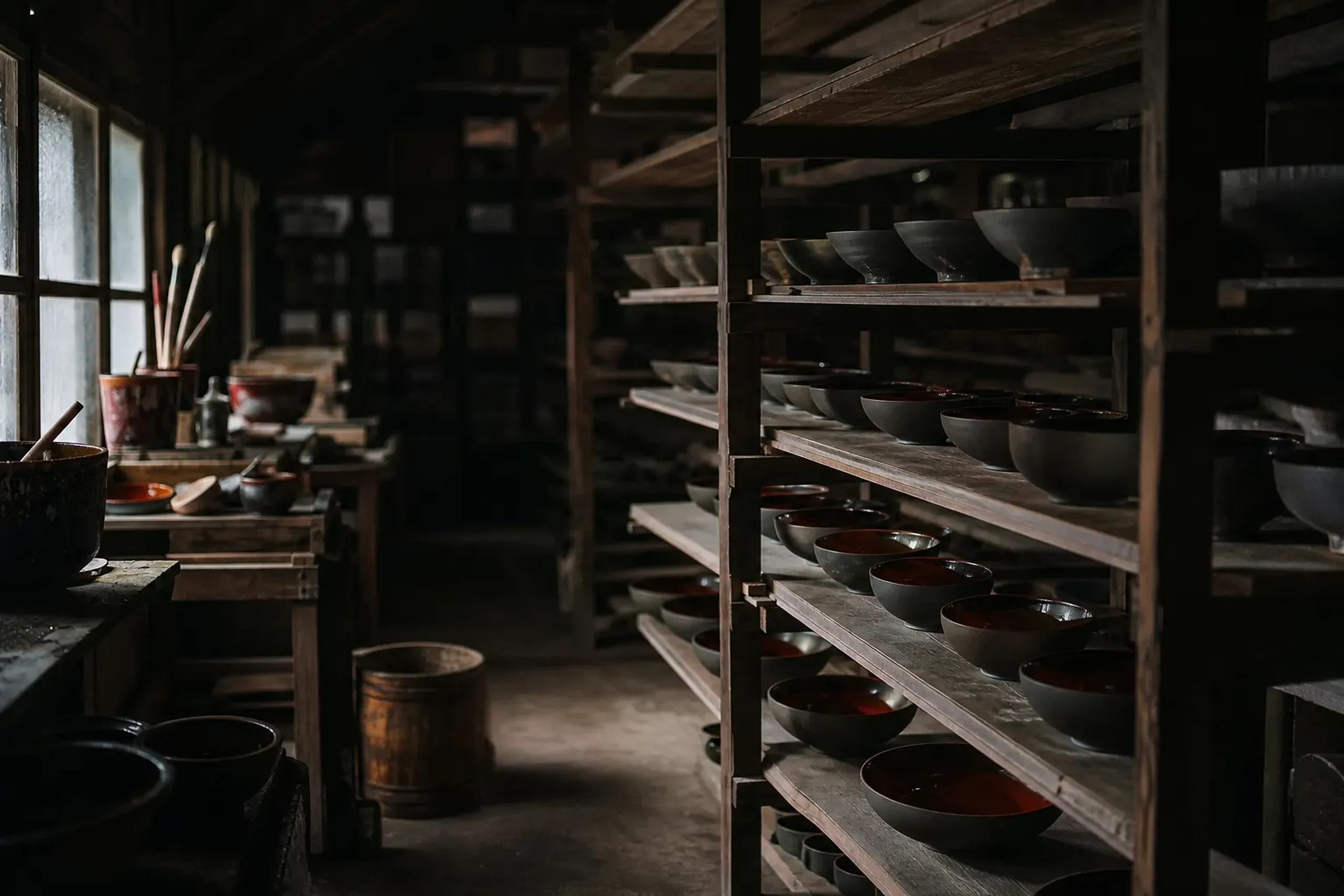
Japan Royal Service arranges the workshop visit, the private hands-on session, and — where you would rather choose or commission a piece than make one — the purchase and commissioning of finished work, with onward shipping to your last address in Japan. An interpreter accompanies the session, because the whole value of it is what an artisan says while their hands are busy, and that does not survive being mimed.
Frequently Asked Questions
Can we take the piece home the same day?
No. Genuine urushi cures rather than dries, and it needs humid conditions and time to harden — which is why a finished piece cannot be made in an afternoon. Workshops accustomed to overseas guests post finished pieces on to an address in Japan; whether they arrive before you leave depends on your dates, which we check before the day is confirmed.
Is it a real studio or a workshop set up for visitors?
A real one — a family workshop that is still producing daily. Visitors watch the artisans at close range and speak directly to the person doing the work, seeing whatever is genuinely being made that day rather than a set-piece demonstration.
What is different about Kagawa lacquer?
Kagawa carves where most Japanese lacquer paints. Its techniques build lacquer up in depth and cut into it, rather than laying gold onto the surface as in maki-e. The tradition was established in the late Edo period by Tamakaji Zōkoku, who reworked techniques that had reached Japan from Thailand and China; kinma, zonsei, chōshitsu, Gotō-nuri and Zōkoku-nuri are the results. Kagawa lacquerware was designated a Traditional Craft of Japan in 1976.
Is the material genuine?
Yes — the same urushi used on the work being made in the next room, not the synthetic substitute a casual craft activity would use. Urushi is a tree sap and can cause a skin reaction in some people, which the artisans explain before you begin.
How long does a commissioned piece take?
Months, not weeks. Curing sets the pace and cannot be shortened. We manage the introduction, the brief and the correspondence through to completion.
A note on discretion
We are a Japanese company, working in Japanese, with the people who own and run these workshops — arrangements made by someone the other side already knows. Enquiries are handled privately and directly. We do not publish our clients, our itineraries, or our rates; the confidentiality of who visits and what they commission is absolute.
If you would like to spend an afternoon inside a living lacquer tradition, or to commission a piece that will outlast us all, contact us here.