In this guide
- 01What "High-Altitude Temple" Really Means In Japan
- 02Koyasan: The Monastic Town Above The Clouds
- 03Kumano And Yoshino-Omine: Walking The Old Faith
- 04Dewa Sanzan: Where The Yamabushi Still Walk
- 05Mt. Shosha Engyoji: The Summit In Minutes
- 06A 2026 Sacred Summits Seasonal Calendar
- 07Altitude, Body, And The Summit-To-Soak Principle
- 08Doing Shukubo Well: Luxury With Humility
- 09How To Plan A Sacred Summits Journey
- 10Frequently Asked Questions
- 11Why Choose Japan Royal Service
The mountain never lets you arrive comfortably. That is the point. Japan's oldest spiritual sites sit where the air thins and the road runs out, guarded by cedar, cloud, and the patient logic of people who believed a summit was a doorway. Our clients often expect that a private guide and a soft car erase the effort. They do not. What they erase is the friction that gets between you and the moment — the missed cable car, the wrong footwear, the temple gate that closed forty minutes ago.
This is a working guide, not a daydream. At Japan Royal Service, we plan these journeys around what is actually open, what is genuinely reachable, and what should never be softened. Below you will find real mountains, verified access, seasonal windows, and the quiet etiquette that separates a respectful guest from a tourist. Read it as a map. We will handle the parts that map cannot show.
What "High-Altitude Temple" Really Means In Japan
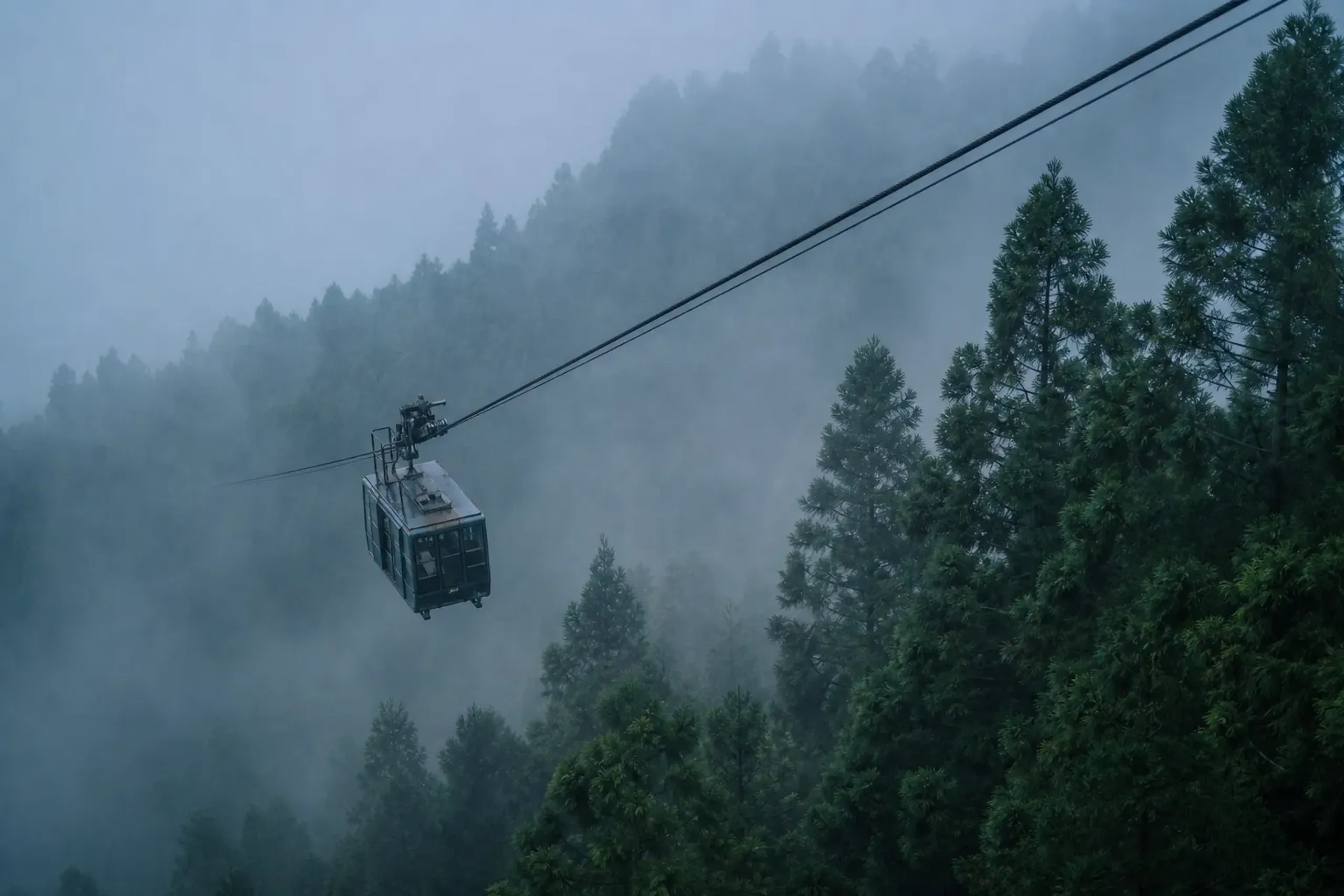
Elevation alone misses the truth here. A Japanese sacred summit is a braid of three things: height, remoteness, and ritual access. Some sites climb into thin mountain air. Others sit at modest altitude yet feel unreachable, hidden behind hours of forest path or a single narrow ropeway. Ritual is the third thread — the reason the temple exists where it does.
We find it useful to sort these places into four families. Each asks something different of your body and your calendar.
- Mountaintop monastic towns — Koyasan, a living Buddhist community above the Kii forests.
- Pilgrimage mountain ranges — Yoshino, Omine, and the Kumano routes, laced together across the Kii Peninsula.
- Ascetic practice mountains — Dewa Sanzan, home of Shugendo and the yamabushi.
- Ropeway-reachable mountain monasteries — Mt. Shosha's Engyoji, where the summit arrives in minutes yet the atmosphere is centuries deep.
UNESCO recognises much of this landscape. The listing known as the Sacred Sites and Pilgrimage Routes in the Kii Mountain Range gathers three sacred areas — Yoshino and Omine, Kumano Sanzan, and Koyasan — connected by ancient routes and shaped by the fusion of Shinto and Buddhism. That fusion is the quiet genius of Japanese mountain faith. Gods and Buddhas share the ridgeline.
Koyasan: The Monastic Town Above The Clouds
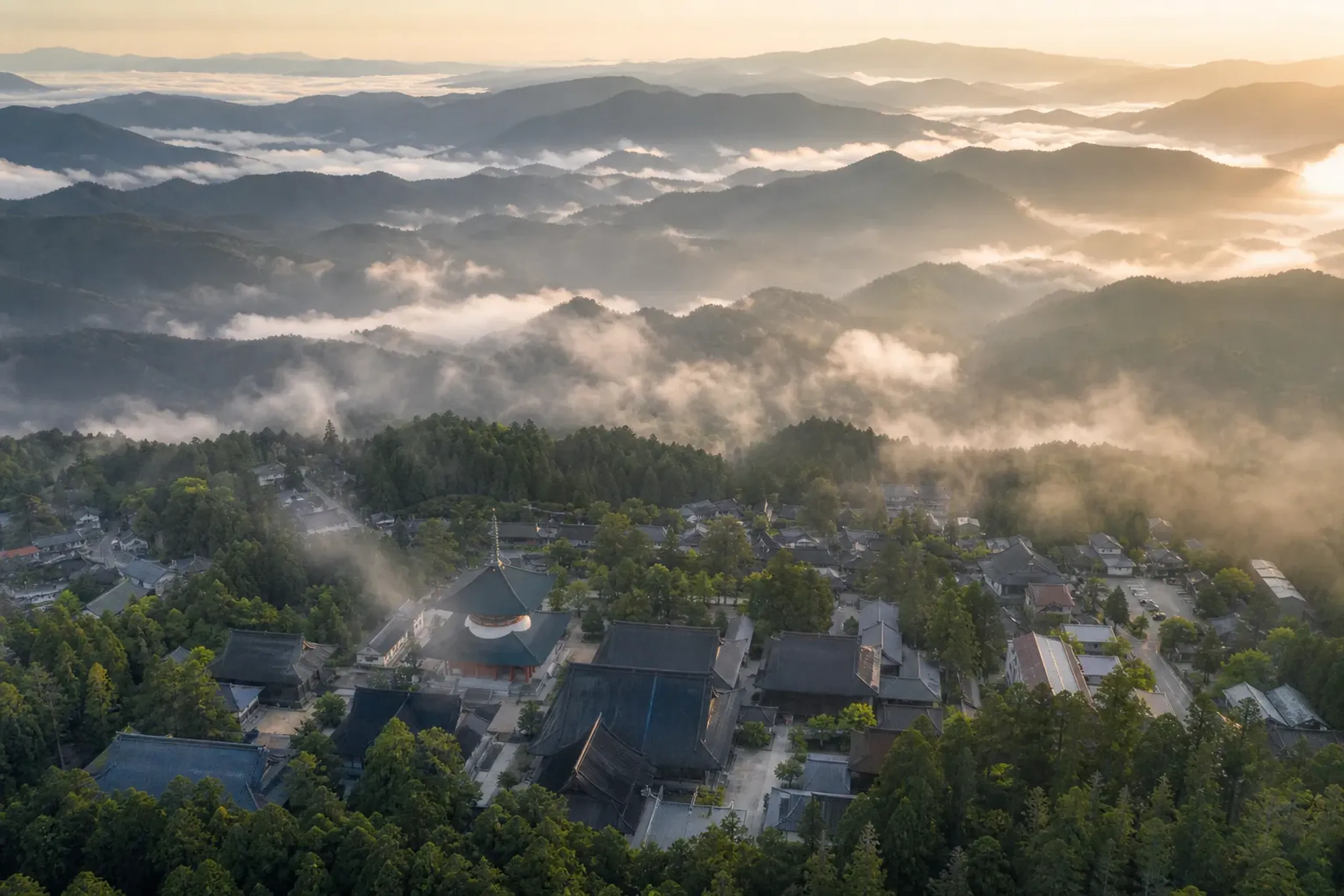
Koyasan sits on a forested plateau, a living Buddhist town above the Kii mountains.
Start here. Koyasan is the gentlest entry into serious mountain pilgrimage, which is precisely why it rewards care. A plateau town founded by the monk Kukai in the ninth century, it holds more than a hundred temples, many of which welcome overnight guests. Japan's official tourism body confirms what makes it special: travelers can walk part of the ancient pilgrimage route and stay the night in a shukubo, a temple lodging.
Do not picture a hotel. A shukubo is a working temple with tatami rooms, early bells, and vegetarian shojin ryori served without fuss. Monks rise before you. The morning fire ritual, the goma, is not a performance staged for guests — it simply happens, and you are permitted to sit at its edge.
The Choishi-Michi Approach
The purists walk in. The Choishi-michi is the historic pilgrim route to Koyasan, marked at intervals by stone stupas that count down the distance to the sacred centre. It is a long forest ascent, and it changes how you feel when you finally pass through the great gate. Our concierge often designs a split day: walk the meaningful upper stretch on foot, with a chauffeured vehicle meeting you where the path releases you.
Okunoin After Dark
Okunoin is Koyasan's spiritual heart — a cemetery-cum-forest where cedar trunks the width of cars rise over two hundred thousand memorial stones, ending at the mausoleum of Kukai. Walk it at dusk, when lanterns come on and the crowds thin to almost nothing. Speak little. Photograph less. Beyond the inner bridge, cameras are set aside out of respect, and we brief every guest on exactly where that line falls.
Kumano And Yoshino-Omine: Walking The Old Faith
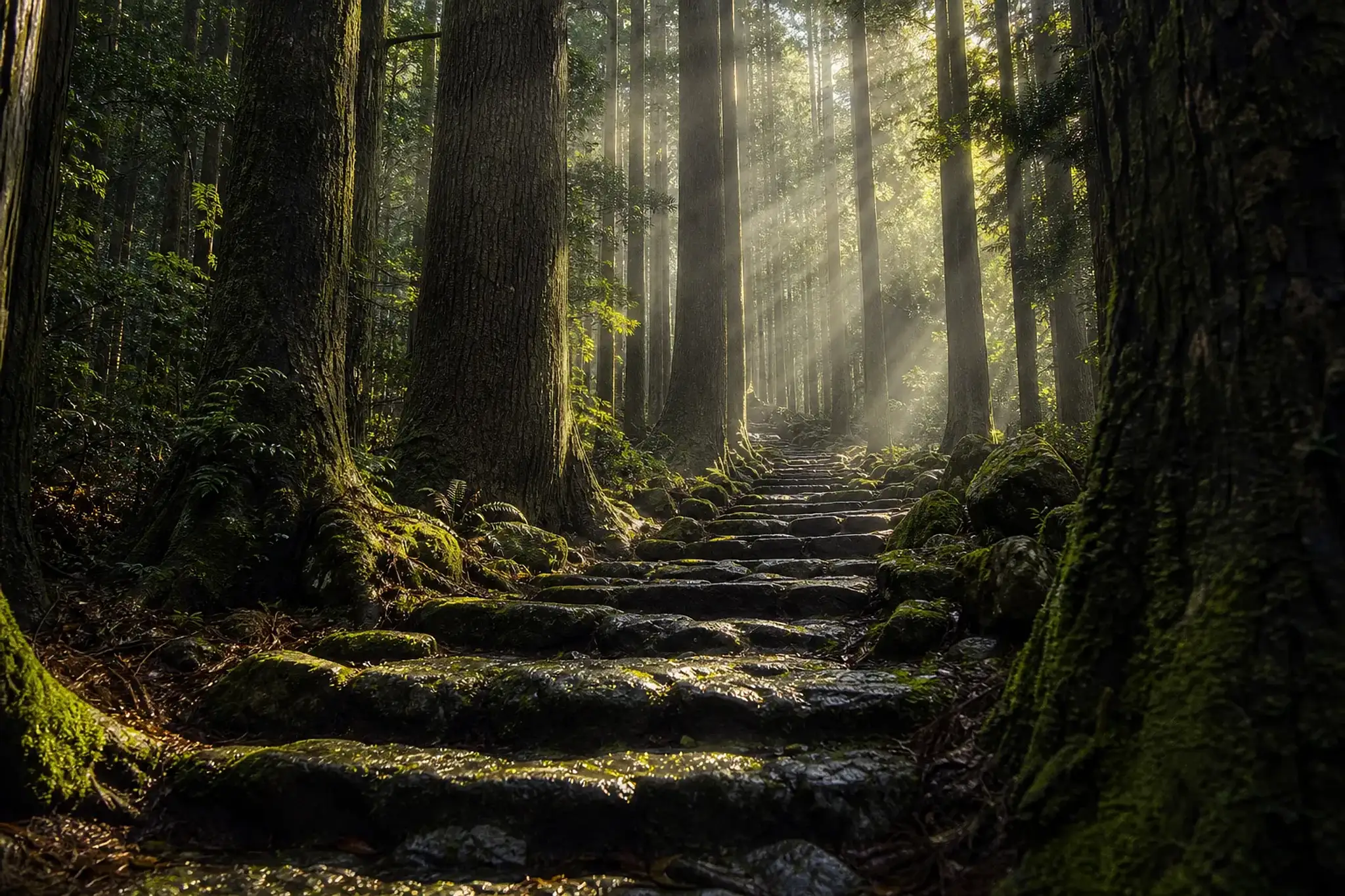
The Kumano Kodo — pilgrimage roads once walked by retired emperors across the Kii Peninsula.
The Kumano Kodo is not a single trail. It is a network of pilgrimage roads threading the southern Kii Peninsula toward the three grand shrines of Kumano Sanzan. Emperors once walked these paths. Retired sovereigns made the journey dozens of times, trading the capital's noise for the mountain's discipline. Imperial feet on ancient stone — that lineage still hums under the moss.
Here is where operational honesty matters most. Trails close. The Tanabe City Kumano Tourism Bureau actively posts route updates, and its 2026 notices already list closures — for example, a trail closure notice dated June 10, 2026. We check these before we route a single step. A romantic itinerary that ignores a live closure is not luxury. It is a liability.
Key fact: The Tanabe City Kumano Tourism Bureau runs the KUMANO TRAVEL Community Reservation System, which lists shukubo among its lodging categories. Because inventory and trail status shift by the week, we verify both against the official source at the time of planning — never from stale notes.
Yoshino, to the north, is the other pole of this world. Famed for its cherry-clad slopes in spring, Yoshino connects into the Omine range, historic training ground of the mountain ascetics. Parts of Omine carry gender restrictions rooted in centuries of religious practice; certain sacred zones remain closed to women. We name this plainly during planning. Respect for a living tradition is not negotiable, and pretending otherwise would insult both the place and the guest.
Dewa Sanzan: Where The Yamabushi Still Walk
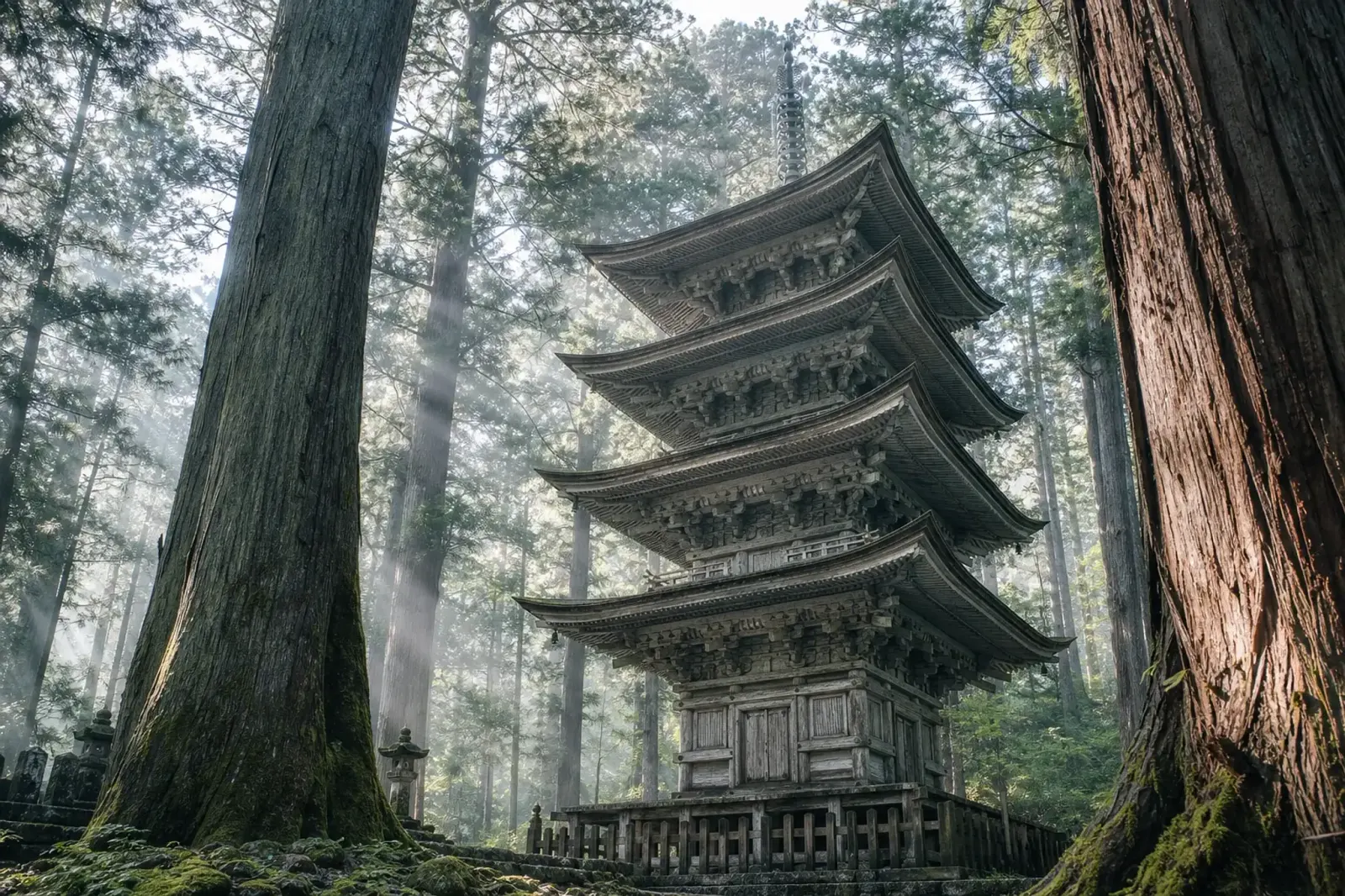
Mt. Haguro's National Treasure pagoda — 29 metres of unpainted cedar, a study in wabi-sabi restraint.
Far north in Yamagata, three peaks — Haguro, Gassan, and Yudono — form Dewa Sanzan, the spiritual core of Shugendo. This is ascetic Japan. The yamabushi, mountain practitioners in white and black, still climb these slopes to shed the self and be reborn. Momentum is building here for 2026; the region is drawing fresh attention from spiritual travelers who want practice, not just scenery.
Mt. Haguro is the accessible summit and the one we most often recommend as a first taste. Its five-story pagoda is the reason. The Japan Tourism Agency's multilingual database records it as a 29-metre cedarwood structure, registered as a National Treasure — standing alone among the cedars, unpainted, weathered to the grey of old bone. That is wabi-sabi in built form. No gold. No flourish. Just proportion, wood, and time.
Yamabushi Training, Honestly Described
Structured yamabushi programs now exist with fixed 2026 dates. One specialist operator, Yamabushido, lists its Masters Yamabushi Training for 30 June to 6 July, 2026, and states on its partner materials that the program runs only twice that year — the second window being 11 to 17 September — capped at fifteen participants. These are the operator's own published claims, and we treat them as such: information, not a promise we can bend.
What our team at Japan Royal Service can do is prepare a guest properly for a program like this — translation support, etiquette briefing, dietary communication, and a soft recovery stay afterward. What we will not do is luxury-wash the practice itself. The mountain sets the rhythm. You follow it.
Mt. Shosha Engyoji: The Summit In Minutes
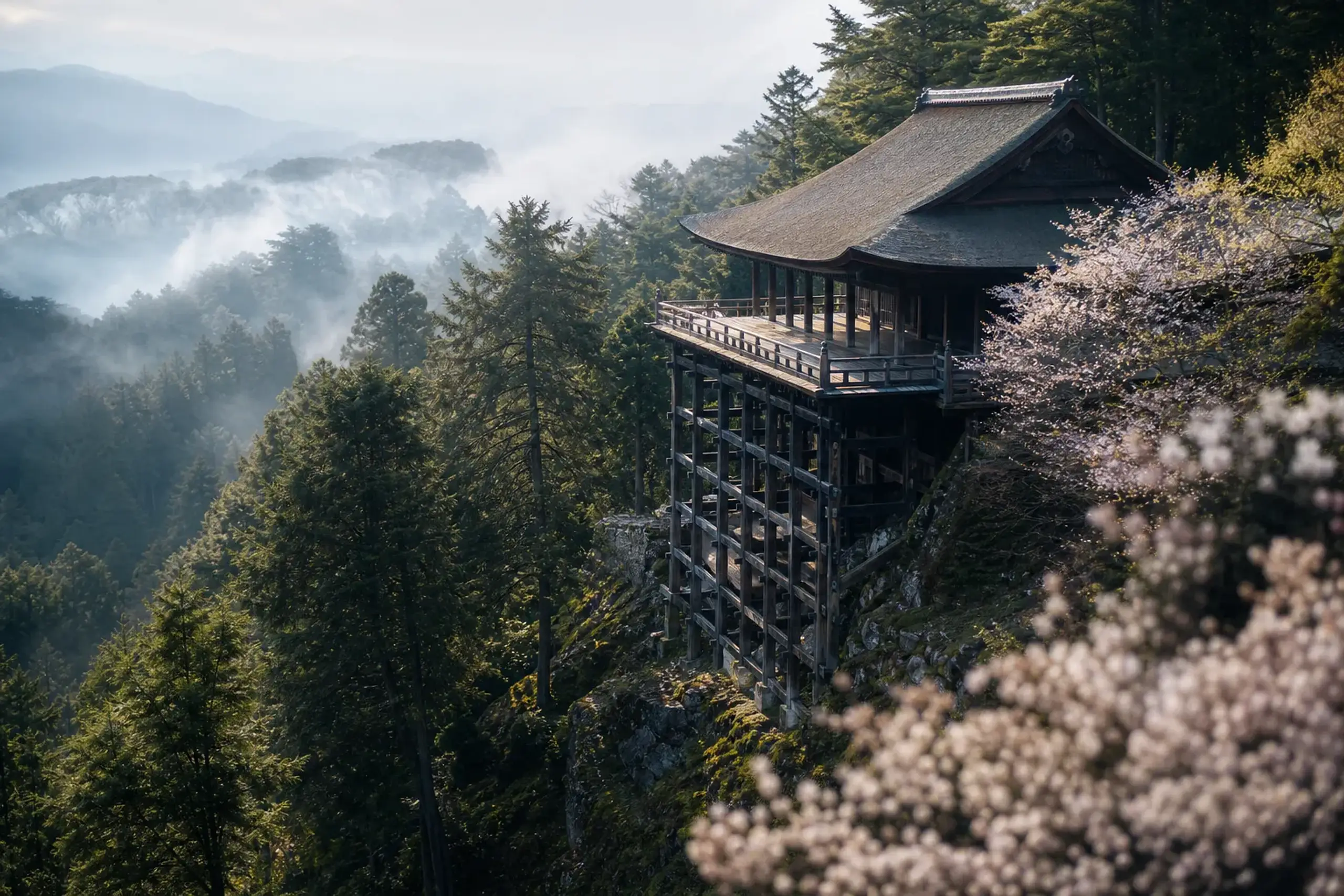
Engyoji spreads across Mt. Shosha's ridge — reachable by a four-minute ropeway above Himeji.
Not every sacred summit demands a hard climb. Above Himeji sits Shoshazan Engyoji, a thousand-year-old temple complex spread across a wooded ridge. The official temple access page confirms the ropeway reaches the mountaintop area in roughly four minutes. Four. Then the pace changes entirely, and you walk timbered halls that many travelers recognise from film, without the crowds that swarm the Golden Route.
This is the sacred summit for guests short on time or unsteady on their feet. The reverence is intact; the effort is optional. We pair it easily with a Himeji Castle morning and a quiet Kansai base — the kind of day that feels unhurried precisely because someone else handled the timing.
A 2026 Sacred Summits Seasonal Calendar
Timing is the difference between a pilgrimage and a queue. Some windows are fixed by regulation, others by weather, and a few by ritual. Here is the operational shape of the year.
| Site | Best Window | Planning Note |
|---|---|---|
| Koyasan | Spring & autumn; winter for silence | Shukubo rooms are limited — reserve early |
| Kumano Kodo | Late spring, autumn | Check live 2026 closure notices before routing |
| Yoshino | Early April (cherry blossom) | Blossom weeks are peak-demand; Omine has restrictions |
| Dewa Sanzan | Summer; fixed training dates | Yamabushi programs list set 2026 sessions |
| Mt. Shosha Engyoji | Year-round (ropeway) | Low-effort access; ideal shoulder-season day |
| Mt. Fuji (context) | Early July to September 10 | Official climbing season; 2026 rules published online |
Fuji sits in this table for a reason. Though not a temple summit, it anchors the seasonal logic. The official Mt. Fuji climbing website states the season runs from early July to September 10 and maintains a 2026 archive of announcements. If your itinerary brushes against Fuji, that window is a hard border, not a suggestion.
Altitude, Body, And The Summit-To-Soak Principle
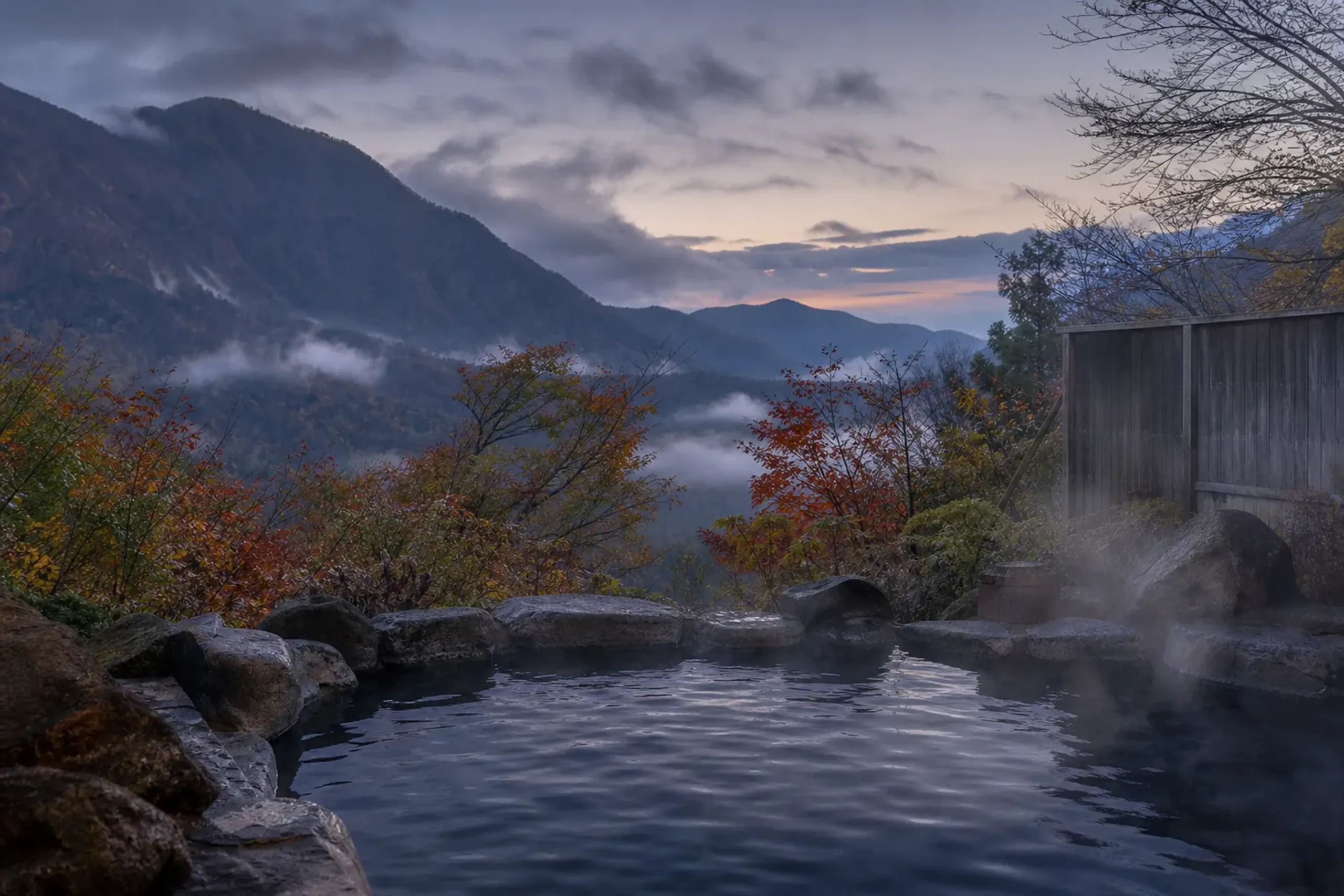
Summit-to-soak: the discipline of the mountain answered by the mending of hot water.
Here is what temple content rarely tells you. Mountains tire you in ways flat sightseeing never does. Thinner air, uneven stone, long descents that punish the knees more than the climb. We plan for the body, not just the itinerary.
- Pace the ascent. Climb slower than feels natural, especially above elevation. Breathlessness and headache mean stop, not push.
- Footwear decides everything. Broken-in trail shoes with real grip. Ancient stone turns to glass in rain.
- Layer for the ridge. Summit temperatures drop hard. Pack a windproof shell even in summer.
- Hydrate before you feel thirsty. Altitude dries you quietly.
- Forward your luggage. Send the heavy cases ahead by courier; carry only a day pack on the mountain.
- Communicate dietary needs early. Shukubo meals are fixed vegetarian shojin ryori; allergies must be flagged in advance.
Then the counterpoint. Every one of our sacred-summit journeys ends soft. After Dewa Sanzan, a Yamagata onsen and slow, restorative food. After Koyasan, a quiet Kii-country ryokan with a private bath. We call it summit-to-soak — the discipline of the mountain answered by the mending of hot water. The pilgrimage tests you. The recovery honours you.
Doing Shukubo Well: Luxury With Humility
The great mistake luxury travelers make with temple lodging is expecting it to behave like a suite. It will not. A shukubo runs on the temple's clock — early bells, communal bathing in most cases, thin walls, lights out. That is not a shortcoming. That is the experience.
So we draw a firm line between what can be elevated and what must stay authentic. We can arrange a private guide who speaks the ritual fluently, forward your bags so you arrive unburdened, brief the temple on dietary needs, and bracket the stay with genuine luxury before and after. What we do not touch is the temple's rhythm. The 6 a.m. prayer stays at 6 a.m. The silence stays silent.
Photography, dress, and participation carry rules that vary by site. Modest clothing at sacred halls. No flash near altars. Certain inner sanctums and, in the Omine case, certain mountains, remain off-limits or restricted. Our team walks every guest through these boundaries before arrival, because the fastest way to spoil a spiritual moment is to cross a line you did not know existed.
How To Plan A Sacred Summits Journey
The official building blocks are public and worth knowing. Koyasan's spiritual walk-and-stay itinerary is documented by Japan's national tourism organization. Kumano lodging, including shukubo, flows through the KUMANO TRAVEL Community Reservation System run by the Tanabe City Kumano Tourism Bureau. Engyoji publishes its own ropeway access details. Fuji's season and 2026 notices live on the official climbing site.
What these sources cannot give you is coordination — the connective tissue between a Kansai arrival, a mountain ascent, a temple night, and a recovery stay, all timed to open gates and live trail status. That is the work. Between mountains, our private chauffeured transport carries you door to trailhead and ryokan to station without a single missed connection, and a full tailor-made itinerary stitches the sacred and the restorative into one unbroken line.
Frequently Asked Questions
Do I have to climb to experience a sacred summit?
No. Koyasan is a plateau town reachable without a hard hike, and Mt. Shosha Engyoji's ropeway reaches the mountaintop area in about four minutes. Ascetic mountains like Dewa Sanzan demand more effort, but even there, Mt. Haguro is manageable for most guests.
When is the best time to visit Koyasan?
Spring and autumn are gentle and beautiful, while winter delivers a rare, snow-hushed silence over Okunoin. Shukubo rooms are limited year-round, so early planning matters more than the exact month.
Is the Kumano Kodo always open?
Not entirely. The Tanabe City Kumano Tourism Bureau posts 2026 trail closure notices, so specific segments may be shut for maintenance or weather. We verify current status against the official source before finalising any route.
Can women join every sacred mountain?
Most, yes — but not all. Parts of the Omine range retain gender restrictions rooted in centuries of religious tradition, and certain zones remain closed to women. We explain exactly which areas are affected during planning.
What is shojin ryori?
It is the vegetarian temple cuisine served at shukubo — seasonal, plant-based, and prepared without garlic or onion. It is nourishing rather than indulgent, and dietary needs should be communicated well in advance.
Why Choose Japan Royal Service
Sacred mountains punish improvisation. A closed trail, an unbooked shukubo, the wrong shoes on wet granite — small failures that hollow out a once-in-a-lifetime journey. Our value is that we plan against the mountain's reality, not around a brochure.
Discretion runs through all of it. Guest identity and itinerary stay closed, always. We hold relationships with people and places that do not advertise, and we know the difference between an experience that can be refined and a tradition that must be left exactly as it is. In our experience, the guests who remember these journeys longest are the ones we protected from every avoidable friction — and from ourselves, when the temptation was to over-polish something sacred. We elevate the approach. We never touch the prayer.
For private coordination of a Sacred Summits journey, reach our team directly via WhatsApp or LINE, or contact us here. Tell us your dates and your appetite for effort. We will build the rest around what is truly open in 2026.