In this guide
- 01What Makes Sanso Murata In Yufuin Different From Other Luxury Ryokan?
- 02Where Is Sanso Murata, And How Far Is It From Yufuin Station?
- 03The Architecture: “Regeneration Of Old Houses,” Not A Theme
- 04A Note On The Name: “Sanso Murata” And The “Muryōtō” Reference
- 05Tan’s Bar: A Shōwa-Era Cinema Turned Into A Bar
- 06Artegio, Théomurata, Fushoan, B-Speak: A Cultural Campus On The Hill
- 07What To Expect In Your Room And Onsen Time
- 08Check-In, Check-Out, And The One Timing Mistake People Make
- 09A Two-Day Stay Choreography (Built Around Published Hours)
- 10Dining: Kaiseki Rhythm, Ōita Ingredients, And Private Rooms
- 11Art-Led Yufuin Planning: Pairing Sanso Murata With COMICO (2026+)
- 12How To Avoid Crowds In Yufuin Without Missing What Matters
- 13What Luxury Travelers Often Miss About Discretion In Small Town Ryokan
- 14Practical Facts At A Glance
- 15How We Build A Sanso Murata Stay Into A Bespoke Kyushu Itinerary
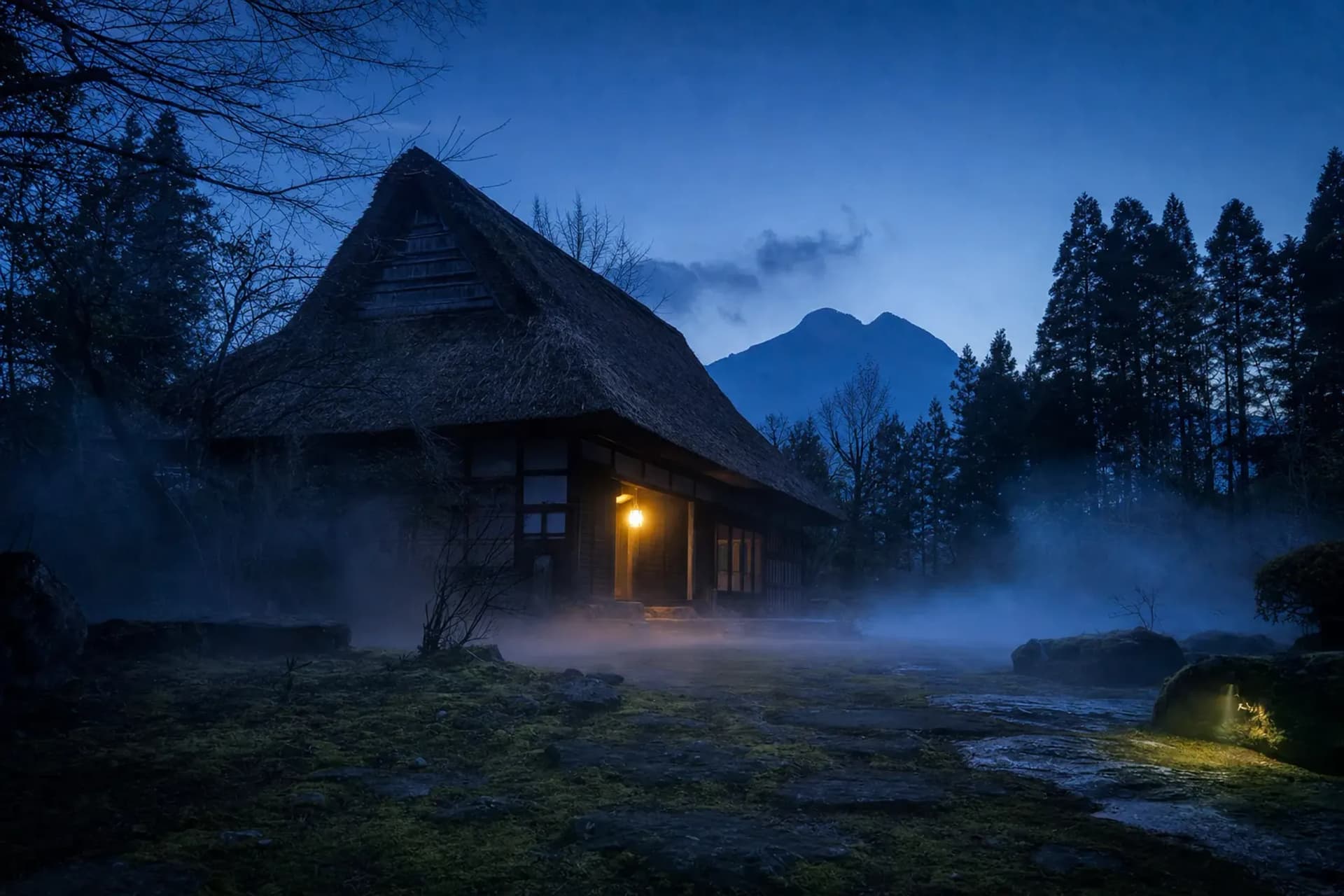
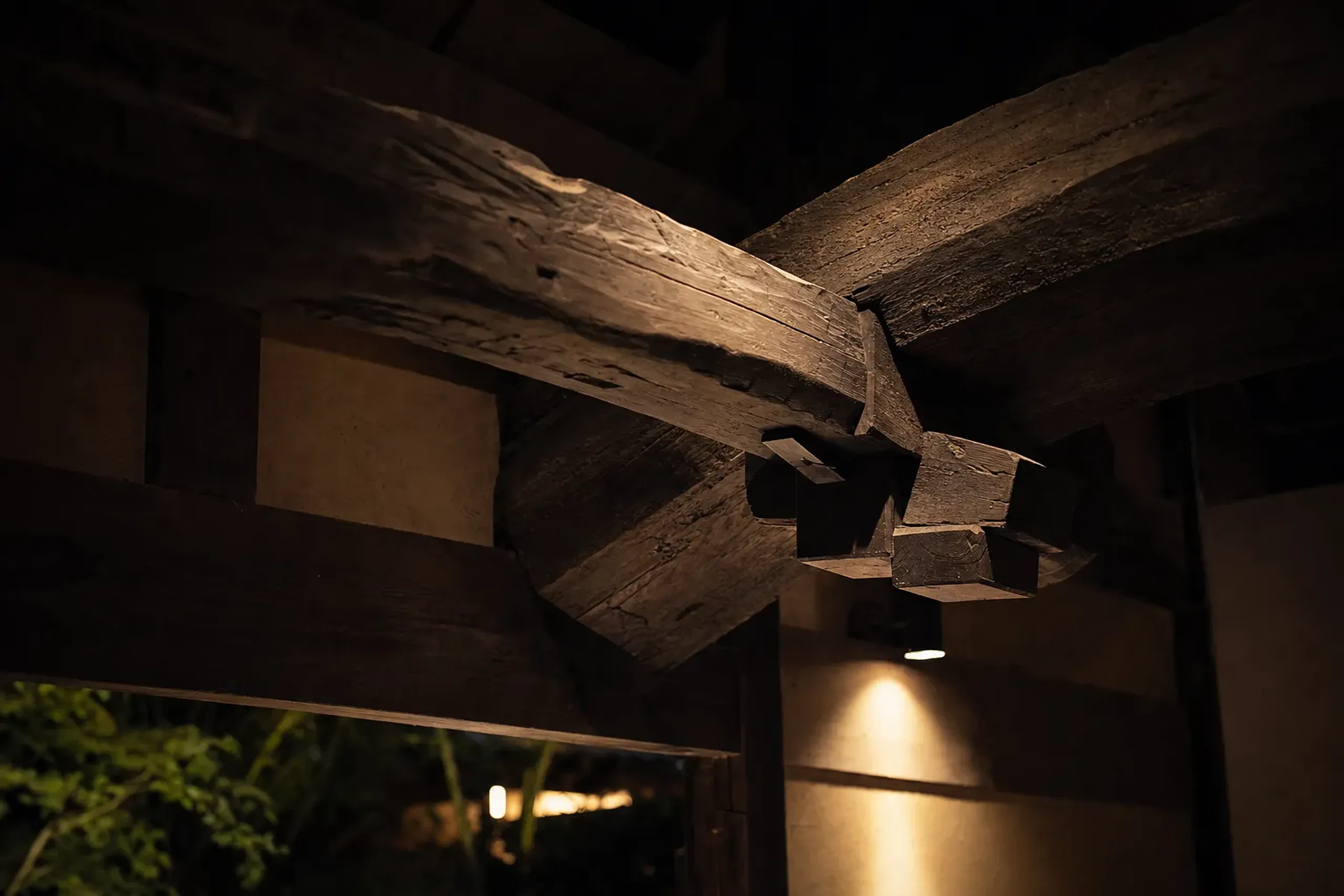
Walk into Sanso Murata in Yufuin and you feel it before anyone explains it. The ceiling beams sit slightly above eye level, darkened by decades, and the building’s silence has a certain weight to it. Not new. Not staged. Simply old, in the most deliberate way.
This is the point. Sanso Murata is built around a single stated idea: the “regeneration of old houses.” Six traditional minka were relocated from different parts of Japan, then patiently reassembled here to become guest villas and rooms. Two modern detached buildings were added in 2004. The total is twelve rooms—no more.
For the well-traveled guest who has already done the polished “best-of-Japan” circuit, this kind of place changes the texture of a trip entirely. It is not about marble lobbies or gold leaf. It is about craft, restraint, and the rare pleasure of being properly left alone—the quiet, moss-and-timber aesthetic of wabi-sabi lived rather than displayed.
What Makes Sanso Murata In Yufuin Different From Other Luxury Ryokan?
Sanso Murata is distinctive because it is literally assembled from relocated traditional minka, and its bar is a converted Shōwa-era cinema—adaptive reuse, not a reproduction. This is not history dressed up for guests; it is history put back to work.
Many ryokan can feel “traditional” in a generalized, interchangeable way. Here, the architecture is the story. Old timber frames were dismantled, moved, re-fitted, and given a second life on a hillside in Torigoe, a quiet district of Yufuin in Ōita.
That same attitude shows up in the smallest choices. A building isn’t replaced when it can be repurposed. A space isn’t over-decorated when the grain of the wood already does the work. You notice it most at night, when the lamps feel deliberate and the darkness outside is complete—the kind of restraint that money can copy but rarely earns.
Where Is Sanso Murata, And How Far Is It From Yufuin Station?
Sanso Murata is in Torigoe, Yufuin (Yufu City, Ōita), about a 20-minute walk from JR Yufuin Station, or a short drive of roughly 5–10 minutes from central Yufuin.
The official address is 1264-2 Kawakami, Yufuin-cho, Yufu-shi, Ōita, Japan. The hillside setting matters more than a map suggests. It keeps you slightly above and away from the busiest parts of town, while still letting you slip out for a museum hour or a quiet coffee without turning your stay into logistics.
If you are arriving with luggage, or protecting your energy for an onsen evening, a car transfer is by far the gentler choice. Our team at Japan Royal Service often recommends keeping the arrival simple: land, ride, check in, disappear.
The first mention matters for planning: for discreet arrivals and unhurried day touring, see our private transportation service overview and fleet options.
The Architecture: “Regeneration Of Old Houses,” Not A Theme
The property’s core structure is specific and checkable. Six relocated minka contain eight guest rooms. Two modern detached buildings, added in 2004, contain four more. Twelve rooms in total.
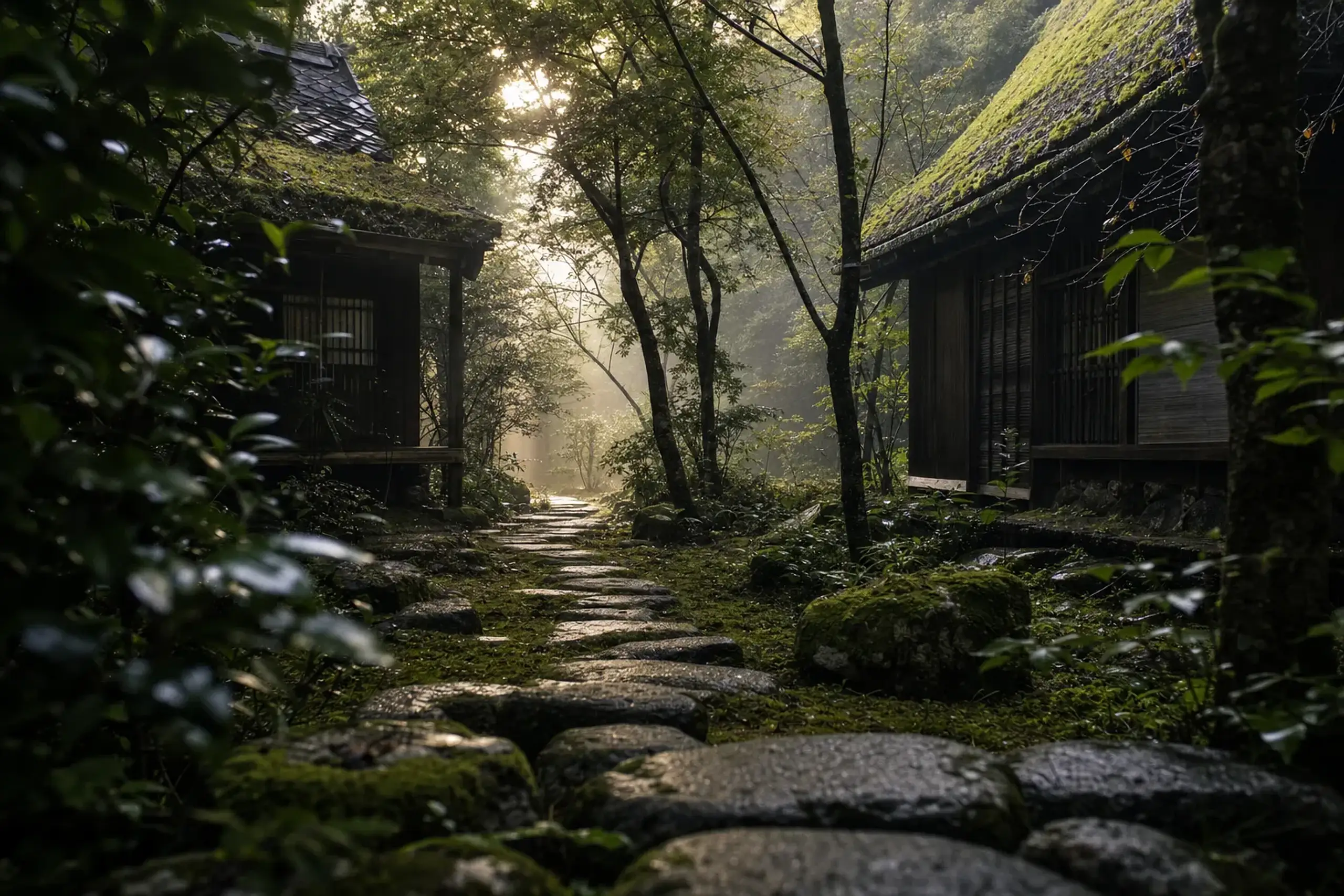
That detail changes how a stay actually feels. Rooms are not stacked along a single corridor with passing foot traffic and doors clicking in sequence. Space is separated. You can step outside and see only trees, stone paths, and a hint of light where another building sits at a discreet distance.
This is precisely where Sanso Murata fits the traveler who wants quiet without fuss—and who values privacy as a form of luxury more than any lobby chandelier.
No performance required. You can read. You can nap at 3 p.m. and not feel watched.
It is also why we describe the experience with the Japan-specific value of shokunin—the master craftsman’s hand. Not as a slogan, but as a lived reality in how the old structures here are handled, repaired, and made useful again. This is the hidden Japan that a guidebook cannot deliver: a place understood through introduction and intention rather than a search result.
A Note On The Name: “Sanso Murata” And The “Muryōtō” Reference
Most sources consistently refer to the property as “Sanso Murata.” One source references “Muryōtō,” tied to a Buddhist term meaning an immeasurable number, and describes it as a detached building or wing.
We are careful with naming because precision is itself part of luxury. We use “Sanso Murata” as the primary name, and we do not treat “Muryōtō” as a confirmed interchangeable name unless the relationship is explicitly confirmed by the property.
If a particular room or building name matters to your decision—layout, privacy, steps, bath configuration—our concierge team confirms the current room inventory directly with the property before we propose a single line of an itinerary.
Tan’s Bar: A Shōwa-Era Cinema Turned Into A Bar
Tan’s Bar is set inside a repurposed Shōwa-era cinema, converted with quiet ingenuity into the property’s bar.
You can feel the logic of the conversion the moment you sit down. A cinema is built for darkness, for pause, for undivided attention. Those are also the exact conditions for a good bar. The result is not loud. It is inward-facing, almost private even when other guests are present.
Hours, published by the property, are unusually clear and helpful for planning.
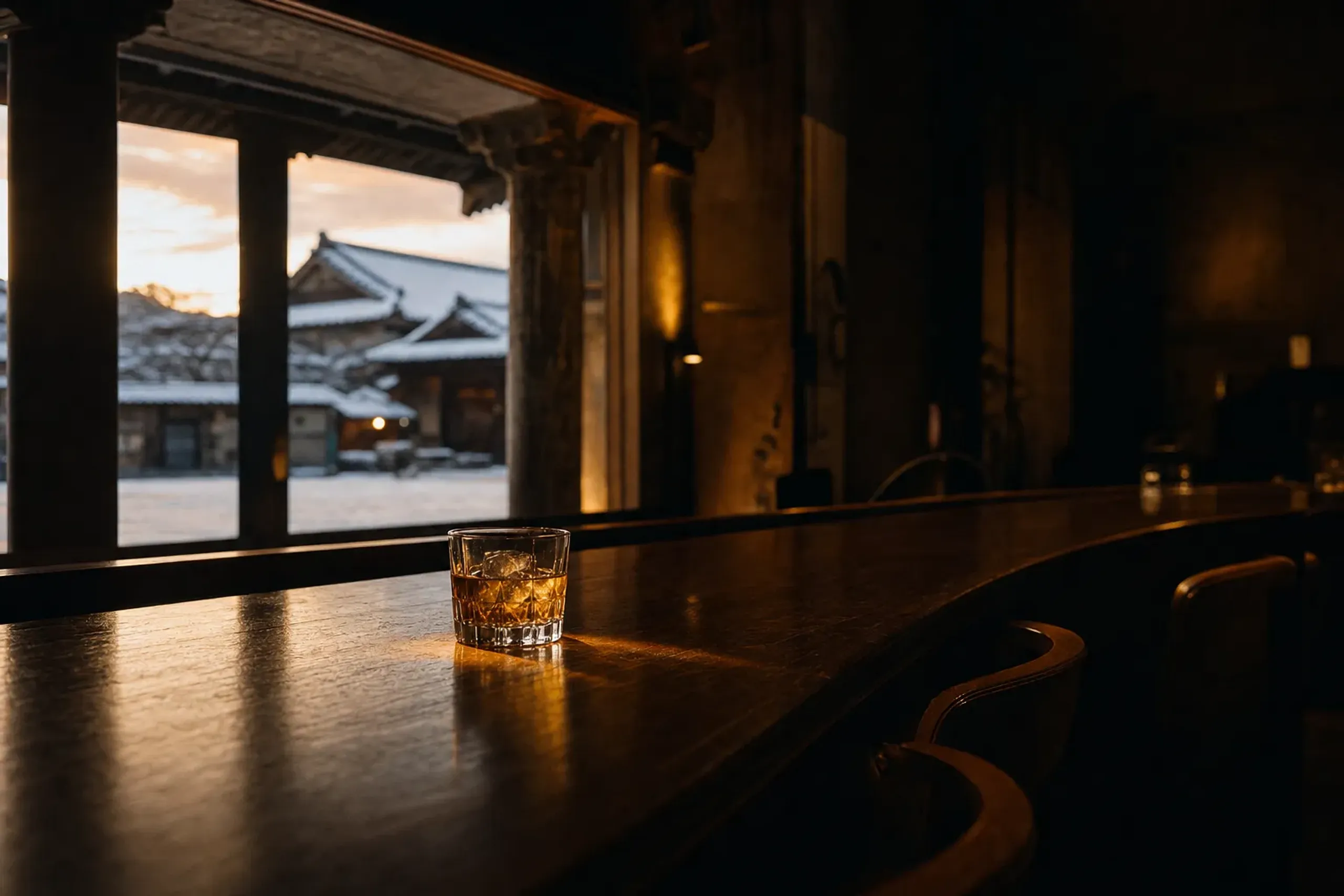
For staying guests, Tan’s Bar is open 9:00–23:00 (last order 22:30). For day visitors, it runs 13:00–17:00 (last order 16:30), except on closed days.
If you want the room to yourself, timing matters far more than status. Go early. Or go late. The middle hours tend to collect the same idea from different people: “just one drink.”
Artegio, Théomurata, Fushoan, B-Speak: A Cultural Campus On The Hill
Sanso Murata is not only a ryokan. It functions like a small, curated campus where food, sound, and craft share the same hillside—each expressing the same quiet philosophy.
artegio (Museum of Sound) is on the grounds. Published hours are 10:00–16:30, closed Wednesday. Admission is 600 yen for adults and 300 yen for elementary school children, and Sanso Murata staying guests enter free of charge.
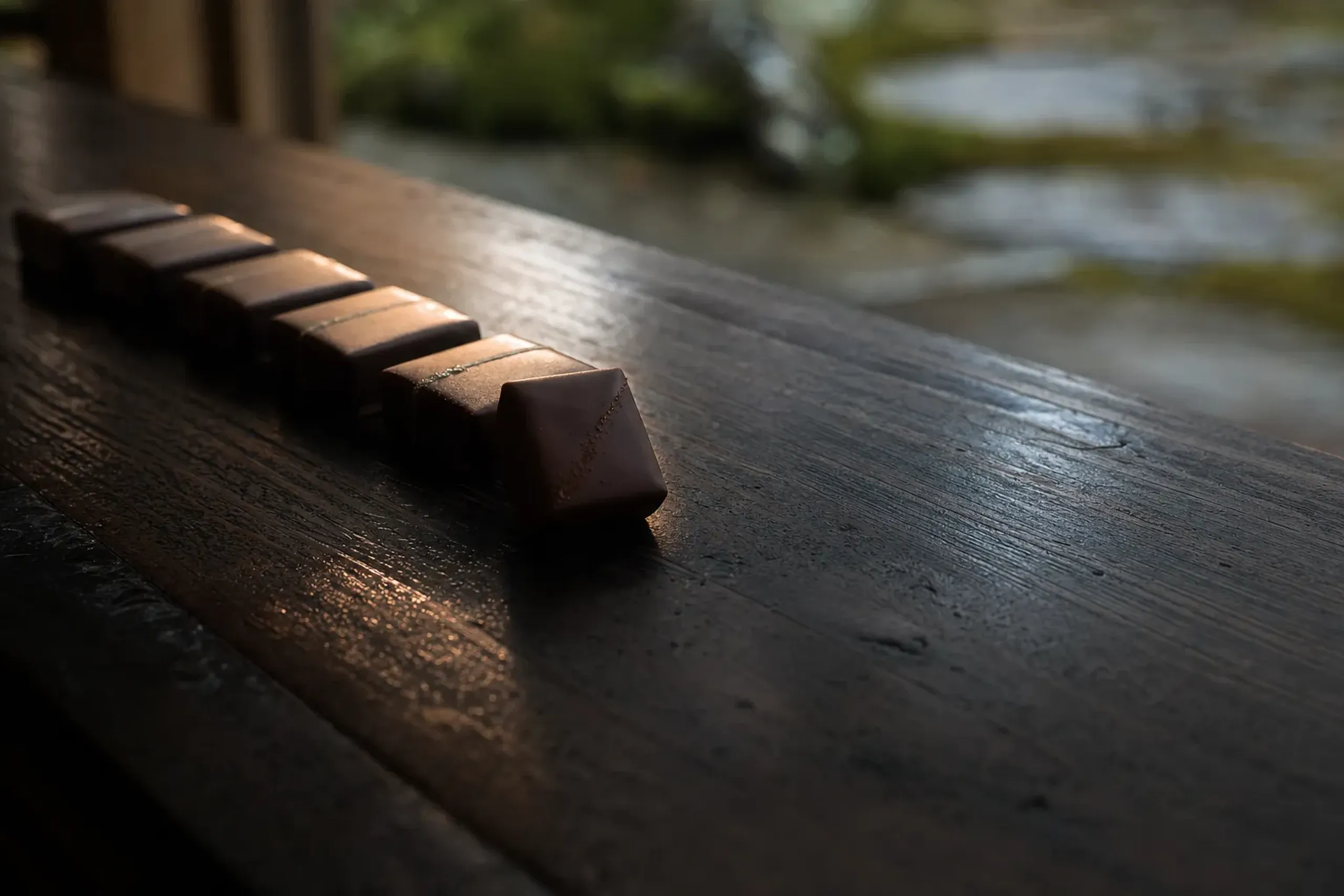
théomurata is the on-site chocolatier. Published hours are 10:00–16:30, closed Wednesday. Nearby is thétheo Café, also 10:00–16:30, closed Wednesday and Thursday. A small detail, but one with a big impact on your schedule.
Fushoan is the soba restaurant on the property, frequently praised in independent reviews. When a ryokan has strong dining, guests sometimes skip everything else. Here, Fushoan offers a different register altogether—simple, focused, and very Japanese in its restraint, with noodles that speak to the shun, the perfect seasonality, of what the kitchen has to hand.
B-Speak, a roll cake specialty shop in Yufuin, opened in 1999. Its official English site positions it as originating from Sanso Murata. If you like edible souvenirs with a real lineage rather than a marketing story, this is one of the few that feels genuinely honest.
What To Expect In Your Room And Onsen Time
The official site describes “twelve rooms, each with its own character.”
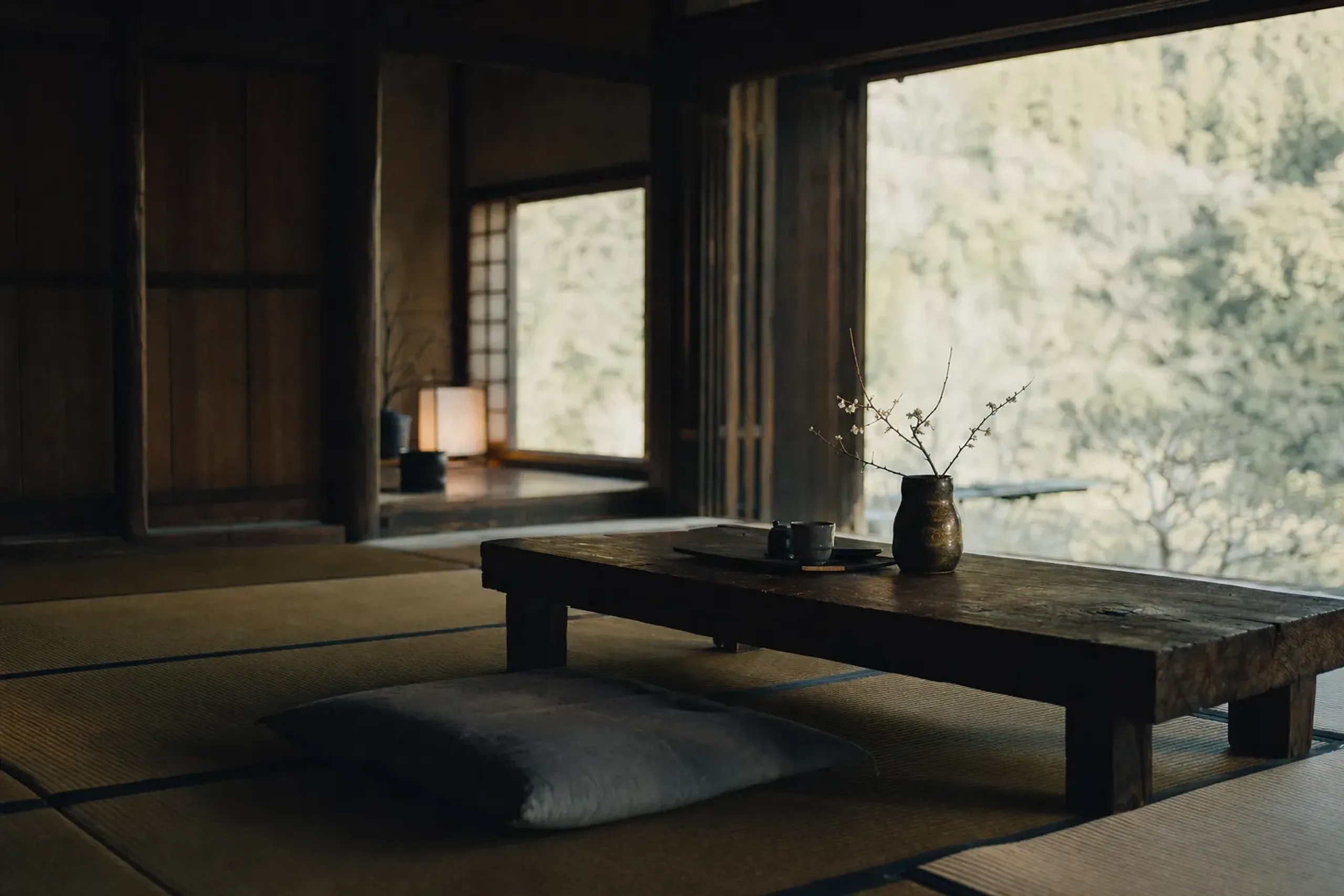
That line is accurate in a very practical way: layouts vary because the buildings themselves vary.
This is not a place where you can assume your room looks like the next guest’s room. It may sit within a relocated house with older timber framing, or in one of the modern detached buildings added in 2004. Ask for the specifics you care about. Then verify them—we always do.
Onsen time is usually when travelers finally slow down for real. Do not over-plan the afternoon. Leave margin. A single hour of doing absolutely nothing can be the best part of Yufuin—and the part you remember longest.
Check-In, Check-Out, And The One Timing Mistake People Make
Check-in at Sanso Murata is from 3:00 PM, and check-out is by 11:00 AM.
The common mistake is arriving too early with a dense day plan, then pushing dinner later, then feeling rushed on the way back from town. Ryokan stays run on a quiet choreography. Keep the center clear.
If you are pairing Yufuin with a city stay—Tokyo, Kyoto, Osaka—this is the moment to let the whole trip exhale. We often suggest building your transfer so that you arrive close to check-in, settle in unhurried, and let the property’s rhythm take over entirely.
A Two-Day Stay Choreography (Built Around Published Hours)
This is a practical framework you can actually use, drawn from the published hours above. Swap the pieces as you like. Just keep the pace light.
Day 1: Arrival, Settle, Then A Cinema Bar Night
Arrive in Yufuin, drive up to Torigoe, and check in after 3:00 PM.
Then stop. Full stop.
- Late afternoon: onsen time and a slow reset.
- Evening: dinner at the property (typically a multi-course kaiseki dinner).
- After dinner: Tan’s Bar for one drink. For staying guests it runs until 23:00, last order 22:30.
If you want the bar at its quietest, aim later rather than earlier. You’ll hear the building breathe.
Day 2: Museum Of Sound, Chocolate, Then A Clean Exit
Wake early. No agenda. Then choose one cultural block and one food block.
- Morning: artegio (10:00–16:30; closed Wednesday). Staying guests enter free.
- Midday: théomurata (10:00–16:30; closed Wednesday) or thétheo Café (closed Wednesday and Thursday).
- Lunch option: Fushoan soba, depending on availability.
Return for an onsen pause, then pack with intention. Check-out is by 11:00 AM, so if you want a longer final morning, do the bulk of your packing lightly the previous evening.
Key fact: Several on-site venues have fixed closed days (especially Wednesday), so a Tuesday–Thursday stay can feel very different from a Friday–Sunday stay.
Dining: Kaiseki Rhythm, Ōita Ingredients, And Private Rooms
The main restaurant is Saryō Saihidō, with private dining rooms, serving mountain cuisine built around seasonal Ōita ingredients. The meal pacing is itself part of the stay. Treat it as an event, not a checkbox.
One practical rule saves a great deal of trouble: communicate dietary requirements at the time of booking, not on arrival. The kitchen sources its ingredients several days ahead, and last-minute changes can be difficult or impossible to honor well.
If you want an “outside” meal in the middle of a ryokan stay, keep it simple.
Fushoan soba is the natural alternative on the same grounds, without breaking your flow.
Art-Led Yufuin Planning: Pairing Sanso Murata With COMICO (2026+)
COMICO ART MUSEUM YUFUIN has published multiple notices dated Aug 29, 2026, including ticket changes, September 2026 closure dates, and the reopening of Yoshitomo Nara’s work “Your Dog.”
That matters for planning because art days are time-specific. Closures are real, and the wrong day can quietly unravel a short stay.
Our approach is calendar-first. We map museum days around published closure schedules, then protect your ryokan dining windows so you are never rushing back through traffic or arriving flustered.
If you are the kind of traveler who collects museum hours the way others collect restaurant lists, you will appreciate this: a well-built Yufuin plan feels effortless precisely because it is strict underneath.
How To Avoid Crowds In Yufuin Without Missing What Matters
Choose weekdays and plan around Wednesday closures if you want a quieter Yufuin, because several Sanso Murata on-site venues (artegio, théomurata) list Wednesday as a closed day.
Crowds in Yufuin tend to come in waves. Late morning. Mid-afternoon. Then a lull, when many day visitors leave.
For a more private-feeling day, start with on-property artegio when it opens at 10:00, take a chocolate or café break, then retreat back uphill before the afternoon peak. The town is still there later. Your energy, however, is finite.
What Luxury Travelers Often Miss About Discretion In Small Town Ryokan
Discretion is not only a Tokyo concern.
In small destinations it is sometimes harder to maintain, because spaces are tighter and routines are more visible to everyone around you.
Sanso Murata’s layout helps enormously. Detached buildings and separated pathways reduce passing encounters. Private dining rooms add another layer entirely. The rest is behavioral: fewer announcements, less lobby time, fewer “quick stops” that turn into public moments.
This is where Japan Royal Service tends to differ from mass-market luxury operators. Our work is quiet by design. We think in buffers, not in bragging rights—and confidentiality of both guest identity and itinerary is never negotiable.
Practical Facts At A Glance
- Total Rooms: 12
- Room Structure: 8 rooms in 6 relocated minka; 4 rooms in 2 modern detached buildings (added 2004)
- Check-In / Check-Out: From 3:00 PM / By 11:00 AM
- Tan’s Bar Hours: Guests 9:00–23:00 (LO 22:30); Day visitors 13:00–17:00 (LO 16:30)
- artegio Hours / Closed: 10:00–16:30 / Closed Wednesday
- théomurata Hours / Closed: 10:00–16:30 / Closed Wednesday
- thétheo Café Hours / Closed: 10:00–16:30 / Closed Wednesday & Thursday
How We Build A Sanso Murata Stay Into A Bespoke Kyushu Itinerary
We build the trip around two priorities: your privacy, and the property’s rhythm. Everything else fits after that. One car. Clean timing. No scramble.
Our team at Japan Royal Service designs a tailor-made itinerary that treats Sanso Murata as the anchor of a Kyushu journey, not a single night to “tick off.” Then we add only what genuinely supports it: a calm arrival, an art block that respects closure days, and enough margin for long baths and late, unhurried nights at Tan’s Bar.
When you are ready to experience the hidden Japan that a search engine cannot find—assembled quietly, and entirely around you—contact us here to begin a private, no-obligation conversation about your stay.