In this guide
- 01A Nun’s Vow In 1835, And A Gift That Came Back As Relics
- 02Why Do Luxury Travelers Go To Sasaguri Instead Of The Usual Kyushu Checklist?
- 03The Pilgrimage That Was Nearly Erased (And Why It Still Exists)
- 04Inside The Reclining Buddha: What You’ll See, And How To Move Through It
- 05What Is The Best Time Of Day To Visit Nanzō-in For Quiet Photos?
- 06The 1995 Dedication, And The Clinton Message (Stated Plainly)
- 07Nanzō-in Interior Hours After August 1, 2021: The Rule To Know
- 08How Do You Get To Sasaguri From Hakata Station With A Private Car?
- 09Etiquette At Nanzō-in: Small Gestures That Keep The Visit Respectful
- 10Sasaguri Beyond Nanzō-in: The “New Shikoku” Idea In One Afternoon
- 112026 Seasonal Hook: Sannoji Wind Bell Festival Dates (And How To Use Them)
- 12Local Lore, Told Lightly: The Lottery Story
- 13What Japan Royal Service Can Support For Sasaguri
- 14Frequently Asked Questions
- 15Why Choose Japan Royal Service
You step inside the reclining Buddha at Nanzō-in, and the air changes.
Cool. Dim. Hushed, even when the grounds outside are busy.
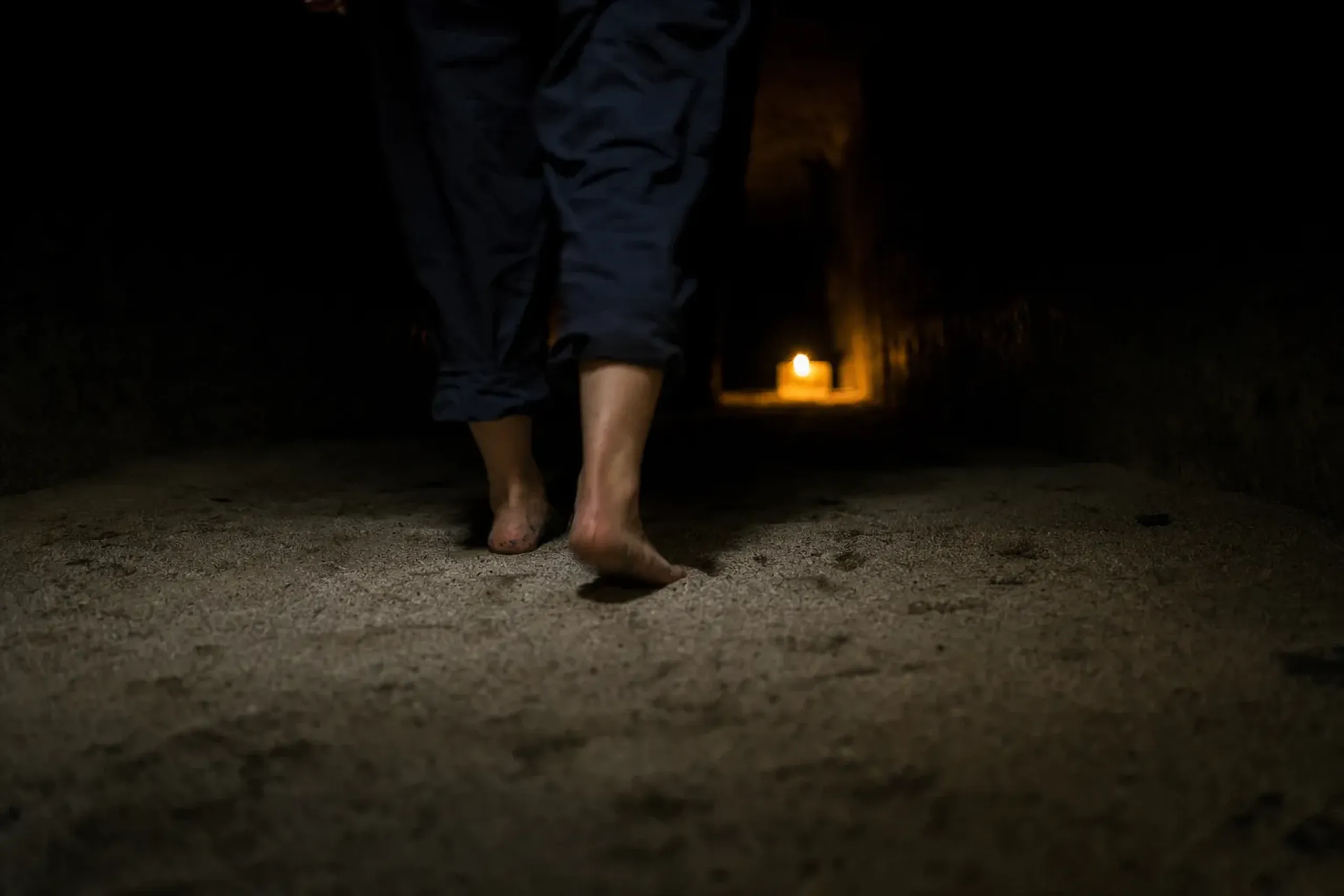
Underfoot is sand gathered from eighty-eight distant temples on Shikoku. In a few minutes, you can trace an entire pilgrimage with your shoes off, one slow step at a time.
This is Sasaguri’s logic in miniature: take something vast, and make it humanly reachable.
A Nun’s Vow In 1835, And A Gift That Came Back As Relics
Sasaguri’s 88-temple pilgrimage began in 1835, when a nun named Jinin vowed to create a close-to-Fukuoka version of the Shikoku 88. It was meant for pilgrims who could not travel far.
That founding story matters. Sasaguri was not built as a spectacle.
Its head temple, Nanzō-in, carries a second story that feels almost unbelievable until you sit with it. For years, the temple sent medicine, milk, and school supplies to children in Myanmar and Nepal.
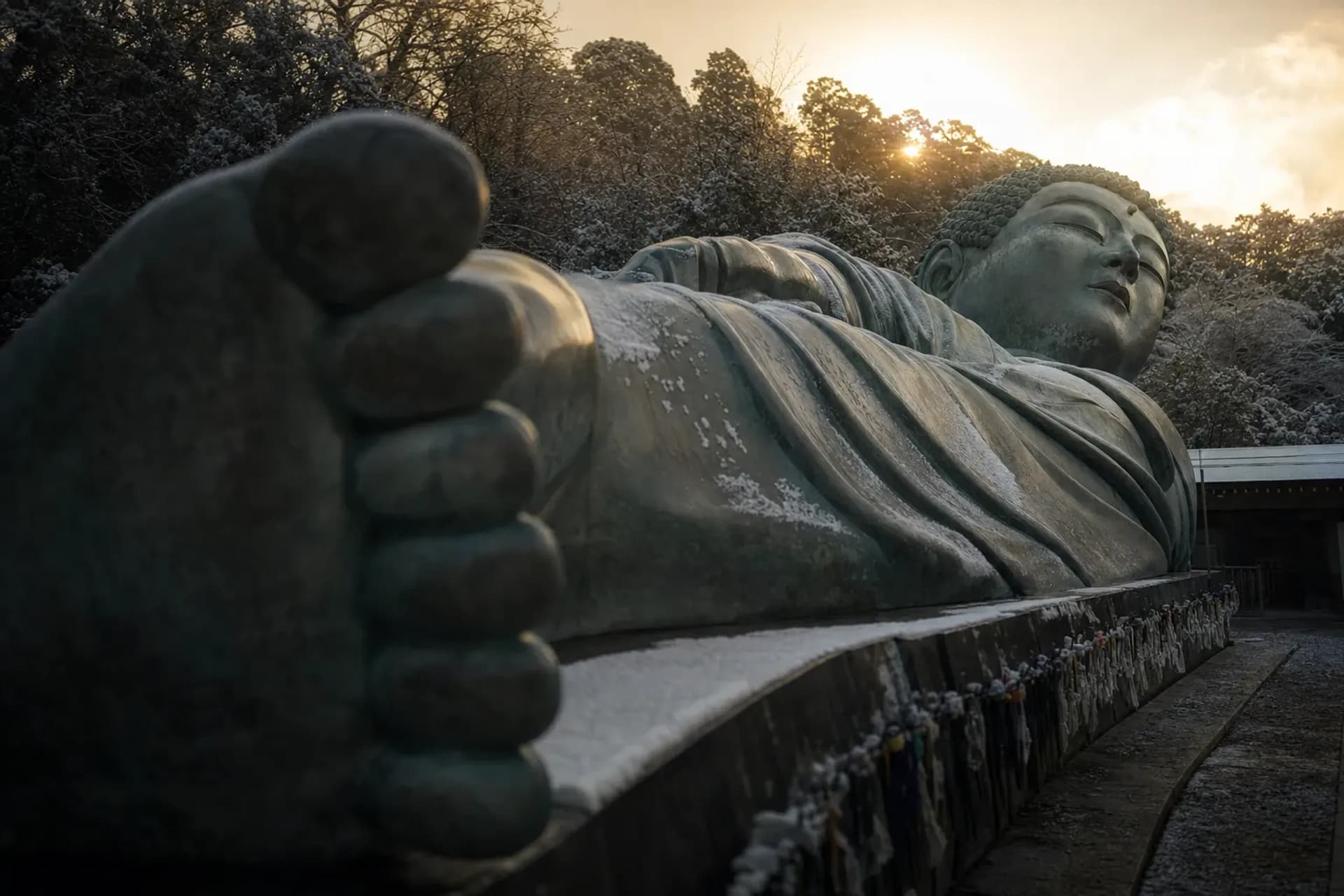
In return, the Myanmar Buddhist Council gifted Nanzō-in genuine relics of Shakyamuni Buddha, Ananda, and Maudgalyayana. In 1995, the temple completed a bronze reclining Buddha to enshrine them—41 metres long, 11 metres high, and about 300 tons.
Why Do Luxury Travelers Go To Sasaguri Instead Of The Usual Kyushu Checklist?
Luxury travelers go to Sasaguri for quiet spiritual depth near Fukuoka—without the time cost of a long pilgrimage—centered on Nanzō-in and the Sasaguri Shikoku 88 circuit.
In our experience, Sasaguri works best when you stop treating it like a single-photo detour.
Yes, Nanzō-in’s reclining Buddha is a real anchor.
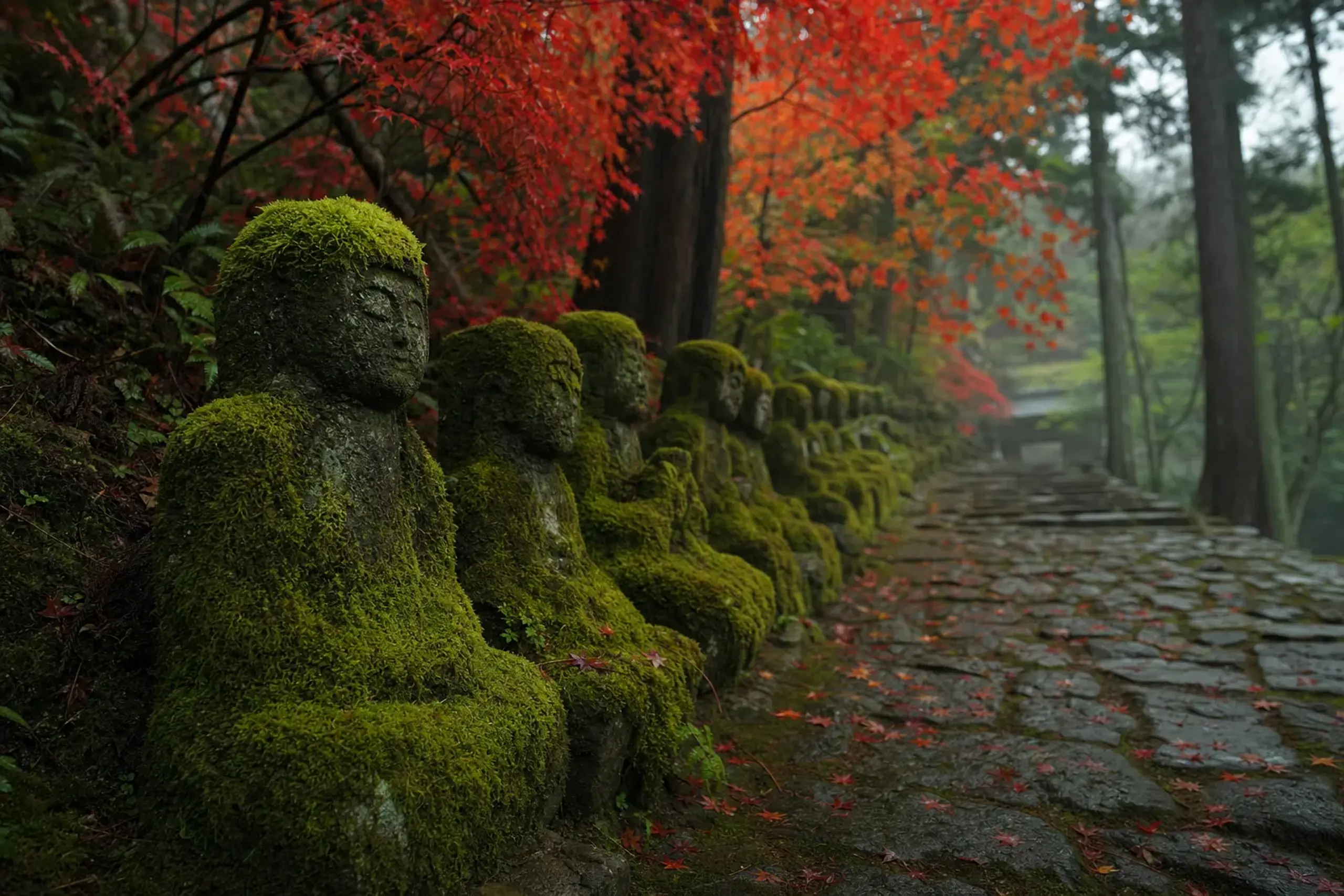
But the deeper pull is the town’s “compressed pilgrimage” idea: a serious tradition, made accessible, and still practiced by locals rather than performed for visitors.
It also suits the way many High-Net-Worth travelers actually move. You want meaning. You also want to be back in Fukuoka City for dinner—unrushed.
The Pilgrimage That Was Nearly Erased (And Why It Still Exists)
Sasaguri survived because local residents refused to let it disappear.
Tradition holds that Edo-period samurai destroyed the original stone Buddha images by smashing them into a river. The story is told plainly in the area, not as legend for tourists, but as a wound the route remembers.
Then came a formal blow. In 1886, during Japan’s wider anti-Buddhist movement, a prefectural governor ordered the entire pilgrimage site abolished.
People petitioned for years. The route was ultimately saved by inviting Nanzō-in, a temple from Mt. Kōya, to relocate to Sasaguri; its new halls were completed in September 1899.
Today, Nanzō-in holds special rank (bekkaku honzan) within the Kōyasan Shingon sect, and it serves as the head temple of the Sasaguri pilgrimage. Sasaguri is also counted among Japan’s “Three Great New Shikoku” pilgrimages, alongside routes on Shōdoshima and in Chita.
Inside The Reclining Buddha: What You’ll See, And How To Move Through It
The reclining Buddha at Nanzō-in was completed in 1995 to enshrine genuine relics gifted by the Myanmar Buddhist Council, in recognition of the temple’s long-running charitable support for children in Myanmar and Nepal.
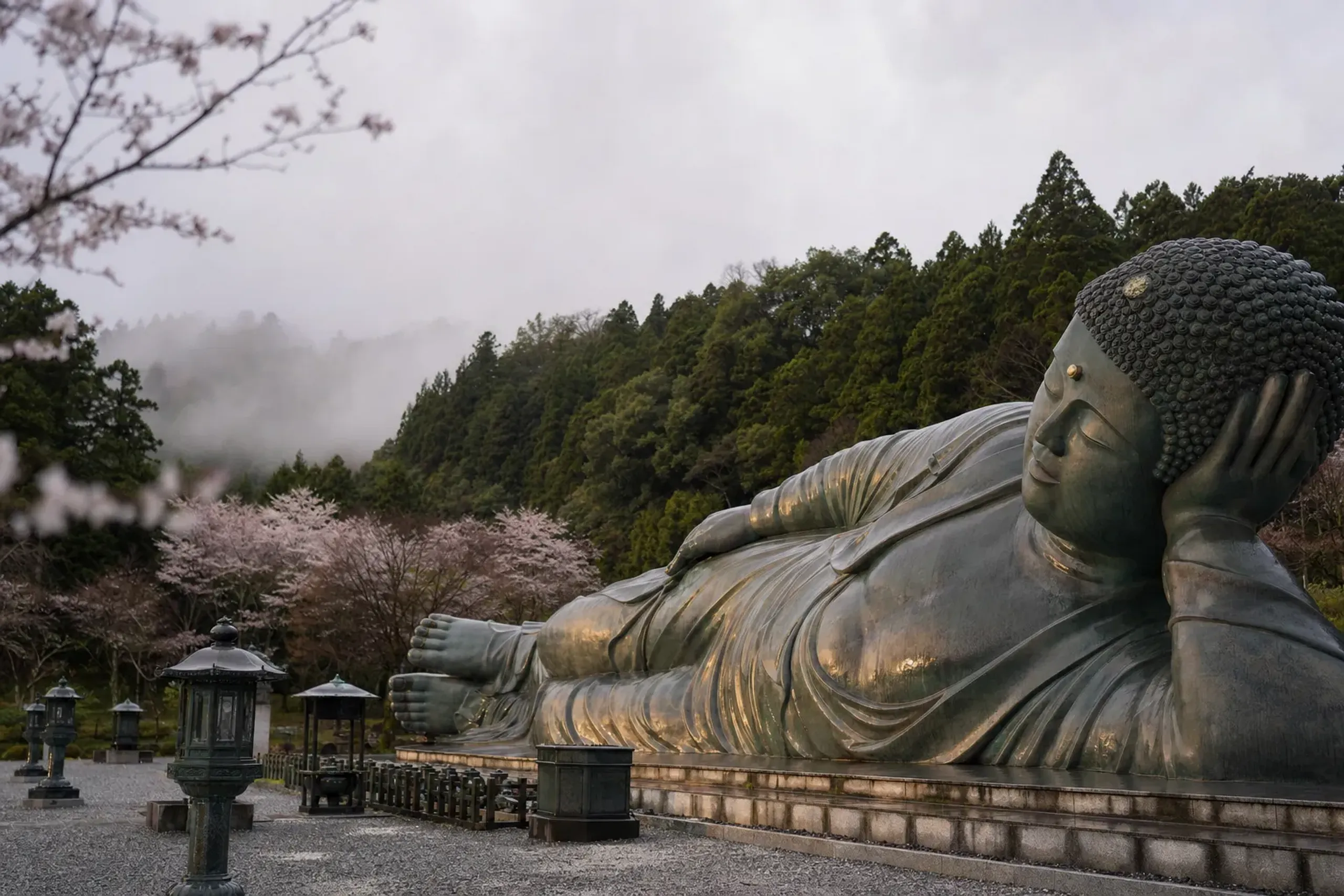
The bronze catches daylight in a particular way. Not shiny. More like a muted glow that moves as clouds pass.
Visitors can enter the statue’s interior. The feeling is part shrine, part corridor, part museum-like stillness—yet it remains a religious space, so we encourage a softer pace and restrained voices.
One of the most striking elements is the sand-treading experience: a symbolic pilgrimage of all 88 Shikoku sites, by walking on sand gathered from each of the actual temples. It’s a small act, but it lands. Your body understands the scale your calendar cannot hold.
What Is The Best Time Of Day To Visit Nanzō-in For Quiet Photos?
For quieter photos at Nanzō-in, arrive soon after opening in the morning or aim for late afternoon before the statue interior closes overnight at 16:30.
Nanzō-in receives over 1.2 million visitors annually. That number shows up on the ground.
If your priority is calm, the first hour of the day often feels watchful and spacious. Late afternoon can also be gentle, with longer shadows along the statue’s length, but timing matters because interior access is restricted overnight (details below).
For families, we often recommend morning. Kids move better before the day heats up, and you can keep the visit tidy: temple grounds, statue exterior, then the interior while it’s open.
The 1995 Dedication, And The Clinton Message (Stated Plainly)
At the reclining Buddha’s completion dedication in 1995, a thousand-monk memorial service was held, drawing roughly 1,300 monks from within Japan and across Southeast Asia.
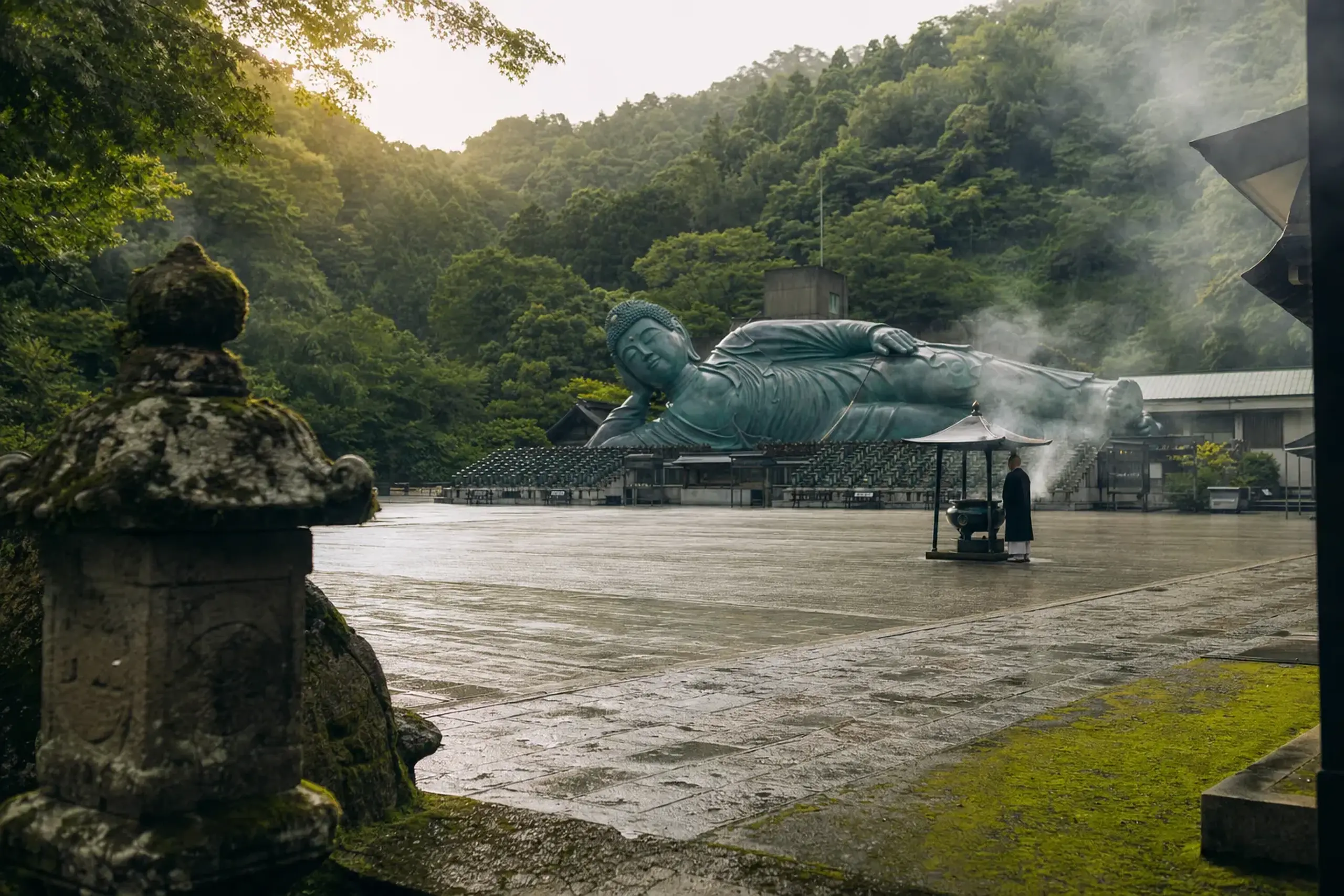
The scale is difficult to picture until you stand on the temple grounds and imagine the robes, the chanting, the logistics. For a site outside the usual international circuit, it was an unmistakable moment.
There is also a specific documented detail that tends to surprise first-time visitors: then-US President Bill Clinton sent a congratulatory message for the statue’s eye-opening ceremony.
No flourish needed. Just a clean fact, and a reminder that Sasaguri’s story has reached farther than many people assume.
Nanzō-in Interior Hours After August 1, 2021: The Rule To Know
Since August 1, 2021, Nanzō-in has locked the entrance to the reclining Buddha’s interior overnight from 16:30 to 7:00 the following morning.
This restriction applies specifically to the statue’s interior, not to the temple grounds or the main hall, which remain open for night visits as before.
Exceptions may apply during equinox periods, Obon, and New Year. Those windows can change year to year, so we suggest confirming directly with the temple close to your travel dates.
Key fact: If entering the reclining Buddha matters to you, plan your arrival well before 16:30. After that, you can still visit the temple, but the interior access point is locked.
How Do You Get To Sasaguri From Hakata Station With A Private Car?
From Hakata Station to Sasaguri by private car, plan for roughly 30–45 minutes each way in typical conditions, then add extra buffer if you want a calm arrival and unhurried temple time.
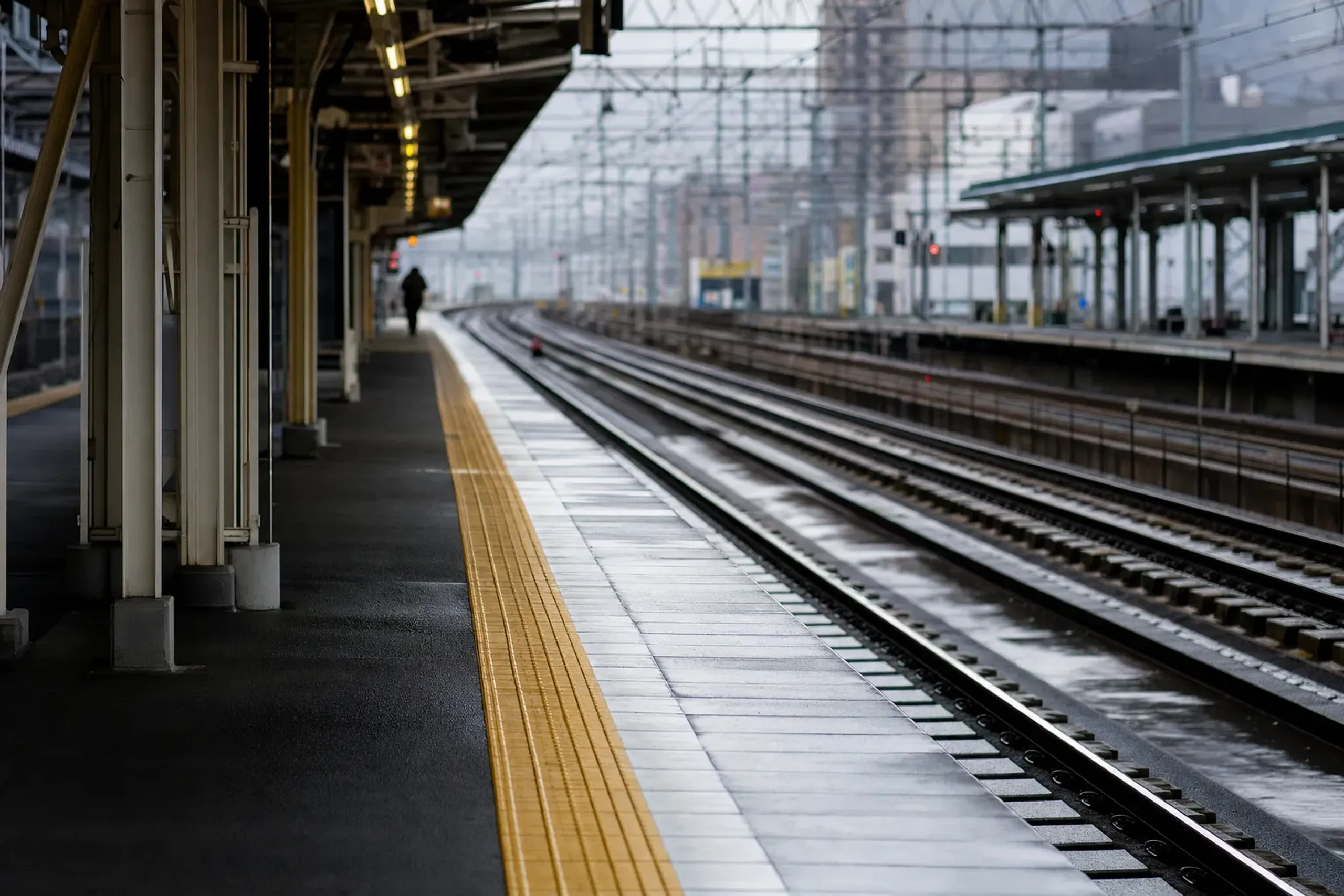
Traffic is the variable, not distance. Big mistake: planning Sasaguri like a timed museum slot.
Our preference is to build a “soft edge” around the visit. That means a little margin for a slow approach, a restroom stop, or simply a few minutes of forest air before you enter a sacred place.
When you travel with private transportation, the advantage is not speed. It’s control—temperature, timing, and privacy—so you arrive composed, not scattered.
Etiquette At Nanzō-in: Small Gestures That Keep The Visit Respectful
Nanzō-in is welcoming, but it is not a theme stop. A few quiet habits go a long way.
Keep voices low, especially inside the statue. Pause before photographing altars or reliquaries, and follow posted guidance.
Clothing does not need to be formal, but avoid beachwear. Comfortable shoes matter; you may be walking, standing, and removing footwear for certain areas.
If you see worshippers, give them space. Don’t orbit them with a camera. Step aside. Wait.
Sasaguri Beyond Nanzō-in: The “New Shikoku” Idea In One Afternoon
Sasaguri is often described as the “Sasaguri Shikoku”—an 88-site pilgrimage modeled after Shikoku’s famous route, and counted among Japan’s major “New Shikoku” pilgrimages.
For a luxury traveler, the point is not to “collect” all 88 in a day. It’s to understand why the route exists at all.
Jinin’s 1835 vow was compassionate in a practical way: build a path for people who could not leave home for weeks. That practicality remains the route’s moral center.
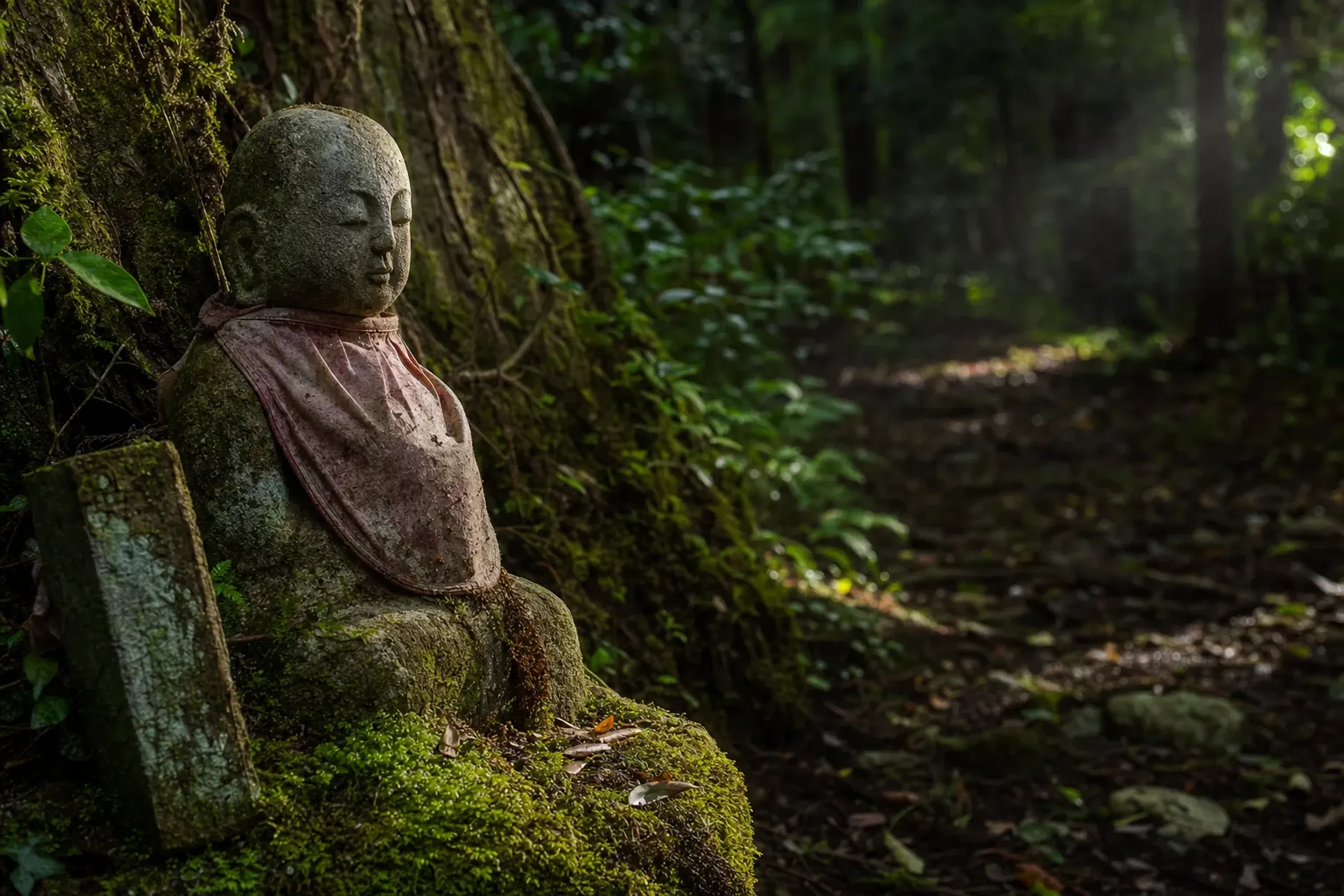
If you want a gentle taste without turning the day into a marathon, we suggest choosing a handful of sites and giving each one room. Slow. Intentional. Quiet.
2026 Seasonal Hook: Sannoji Wind Bell Festival Dates (And How To Use Them)
The Sannoji Wind Bell Festival in Sasaguri is listed for April 29, 2026 to October 4, 2026, offering a long seasonal window for a photogenic, late-day detour near Fukuoka.
The bells are not just decoration. They change the soundscape.
If you time Sasaguri on a day when you want less narrative and more sensation—wind, shade, a short walk, a small pause—this festival period can frame the visit without forcing you into a rigid schedule.
Because dates and local programming can shift, we recommend checking the official listings close to travel. Guests who want tailored guidance can speak with our concierge team at Japan Royal Service.
Local Lore, Told Lightly: The Lottery Story
There is a well-known local story that the reclining Buddha’s creation was linked to a lottery win by the head priest.
We treat it as lore. Nothing more.
What matters, and what is documented, is the charity-and-relics exchange with the Myanmar Buddhist Council, and the purpose of the statue as a reliquary.
If someone mentions the lottery story while you’re there, hear it the way locals often do: as a wry aside in a place that has already seen stranger turns of fate.
What Japan Royal Service Can Support For Sasaguri
For Sasaguri, our team at Japan Royal Service supports guiding and transfers, shaped around your timing, your privacy expectations, and the tone you want for a religious site.
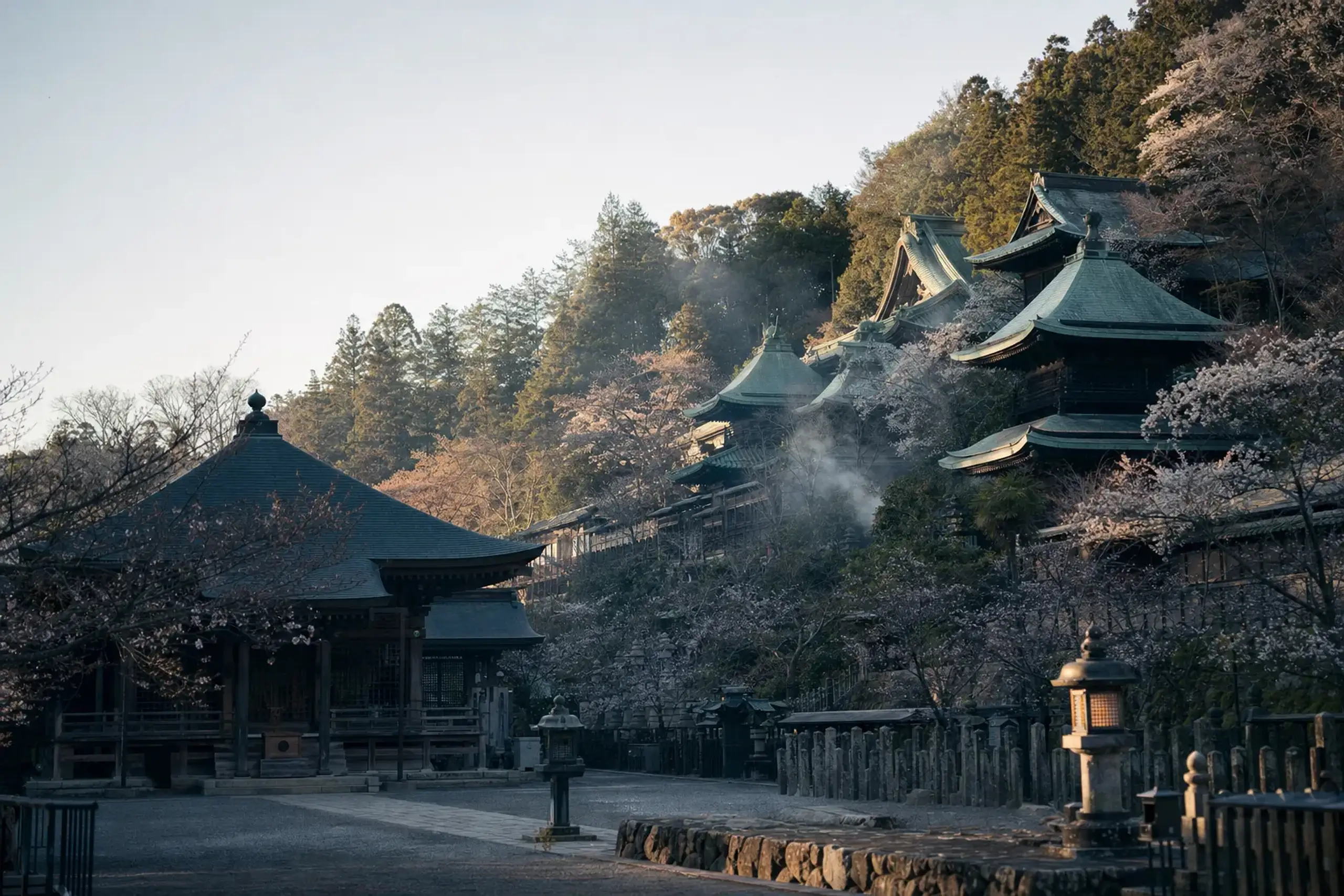
Some guests want a short, respectful visit to Nanzō-in with a clear run-of-day. Others want more context: why the Sasaguri Shikoku exists, what changed in 1886, and how the 1899 relocation saved the pilgrimage.
We also plan pacing with discretion in mind. That can mean arriving when it feels calmer, or designing the flow so you are not funnelled into the same moments as large groups.
If Sasaguri is part of a broader journey, we can fold it into a tailor-made itinerary that stays coherent rather than feeling like a bolt-on.
Frequently Asked Questions
Can You Enter The Reclining Buddha At Nanzō-in At Night?
No—since August 1, 2021, the entrance to the reclining Buddha’s interior has been locked overnight from 16:30 to 7:00 the next morning.
You can still visit the temple grounds and the main hall at night as before. The restriction is specific to the statue’s interior access.
Is Sasaguri A Real Pilgrimage Or A Tourist Replica?
Sasaguri is a real pilgrimage route—an 88-site “New Shikoku” modeled on the Shikoku 88—created in 1835 so people near Fukuoka could complete a similar circuit.
It is practiced by locals and pilgrims, not staged as a performance. That said, it is also accessible, which is precisely why it endures.
How Long Should We Plan For Nanzō-in If We Want To Go Inside The Statue?
Plan about 60–90 minutes for Nanzō-in if you want to see the grounds, view the reclining Buddha, and enter the statue interior without rushing.
If you prefer a slower pace—especially with children or elders—two hours feels more comfortable.
What Makes Nanzō-in’s Reclining Buddha Different From Other Large Buddha Statues In Japan?
Nanzō-in’s reclining Buddha was built in 1995 specifically to enshrine genuine relics gifted by the Myanmar Buddhist Council in recognition of the temple’s years of charitable support abroad.
It is also known as the world’s largest bronze reclining Buddha, measuring 41 metres long and 11 metres high.
Why Choose Japan Royal Service
Luxury travel in Sasaguri hinges on something competitors often miss: restraint.
Our team at Japan Royal Service plans with discretion first—quiet arrivals, thoughtful pacing, and an itinerary that does not broadcast who you are or where you will be. This is not a place to perform spirituality for a camera.
We also curate Sasaguri through a shokunin lens: not just “see the big Buddha,” but understand the craft of how meaning is built—through decades of charity, community petitioning, and the careful making of a reliquary large enough to protect what was given back.
And we take you into hidden-Japan terrain that Google rarely explains well: why a woman-led vow in 1835 still shapes a town’s spiritual geography, and why a 2021 security rule changes the best way to plan your day.
For private coordination, reach our team privately via WhatsApp or LINE, or contact us here.