In this guide
- 01Why Does Sendai Celebrate Tanabata In August Instead Of July 7?
- 02Date Masamune And A 400-Year Festival Habit
- 03When And Where Are The Sendai Tanabata Decorations Revealed?
- 04The Competition Hidden In Plain Sight: Judging, Awards, And Plaques
- 05The Seven Tanabata Ornaments In Sendai (Nanatsu Kazari) And What They Mean
- 06Sendai Tanabata Matsuri 2026 Dates, Hours, And The Fireworks Prelude
- 07How Crowded Is Sendai Tanabata, And What’s The Smart Way To See It?
- 08How To Get To Sendai Tanabata From Tokyo (And Why Transfers Matter)
- 09Heat Safety In Sendai In Early August (Do Not Ignore This)
- 10Where Luxury Lives At A Public Festival: Restraint, Craft, And Privacy
- 11What Japan Royal Service Coordinates For Sendai Tanabata
- 12Frequently Asked Questions
- 13Why Choose Japan Royal Service
Dawn in Sendai feels like a held breath.
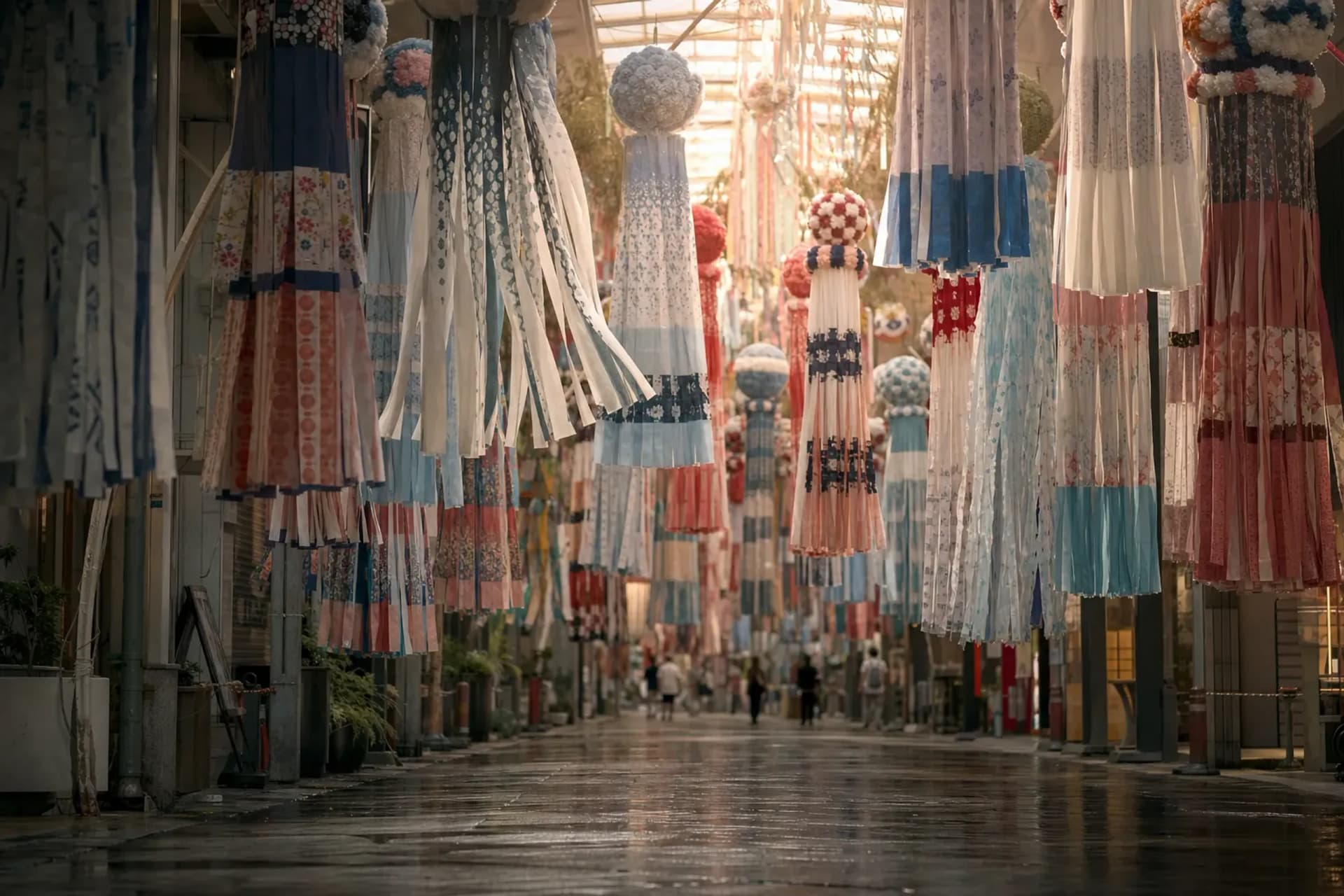
It’s 6 August. The arcade streets near JR Sendai Station are still half-awake—shutters rattling, delivery carts humming over tile, the day not quite decided yet. Then, at around 8:00am, bamboo rises. Paper streamers unfurl. Color floods the ceiling overhead, all at once, as if the city had been keeping a promise it could no longer contain.
Visitors arrive expecting “Tanabata on 7 July.” Big mistake. Sendai’s Tanabata Matsuri is deliberately one month late, and that single choice is the key to planning it well—and to experiencing it with a calmer, more informed kind of luxury.
Why Does Sendai Celebrate Tanabata In August Instead Of July 7?
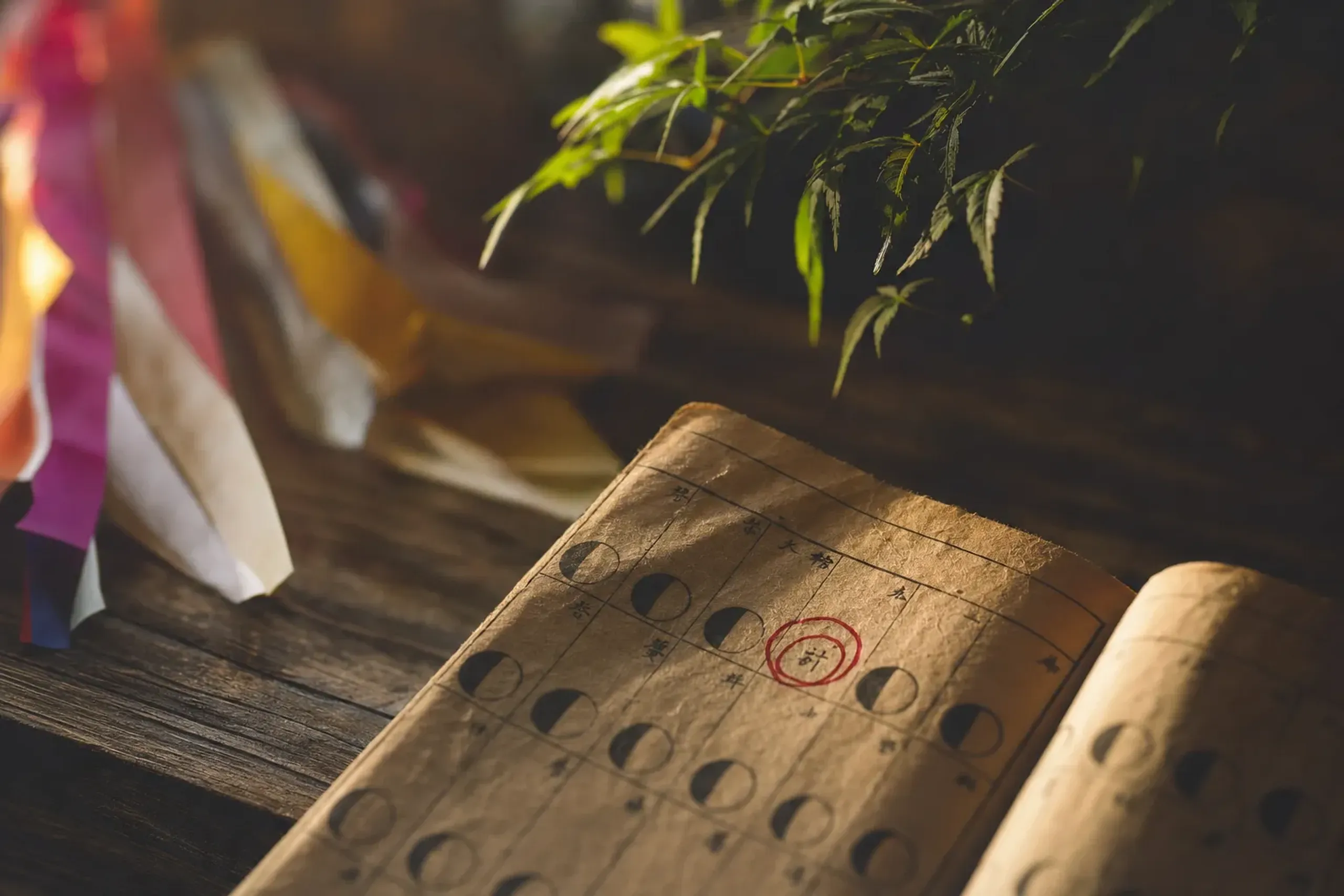
Sendai follows tsukiokure, observing Tanabata one month after 7 July to align with the old lunisolar timing, so the festival lands on 6–8 August each year.
Most of Japan marks Tanabata on 7 July using the modern calendar. Sendai doesn’t. The city keeps the older rhythm by shifting the celebration into early August—and this is not a scheduling quirk. It is the defining mechanism of the entire festival, the reason everything else falls into place.
This is why travelers who “plan Tanabata” in July sometimes arrive in Sendai to find… normal shopping streets. No overhead streamers. No judging plaques. Just summer heat and ordinary weekdays passing without ceremony.
In our experience at Japan Royal Service, this calendar detail is the single most common planning trap for first-time visitors to Tohoku. Fix the timing, and everything else—hotel nights, transfers, the pacing of dinner—suddenly makes sense.
Date Masamune And A 400-Year Festival Habit
The story behind Sendai’s Tanabata isn’t only mythic stars separated across the summer sky. It is political, practical, and deeply rooted in place.
The tradition in Sendai traces back more than 400 years to the Edo period, and it was actively encouraged by Date Masamune, the founding lord of the Sendai domain.

He is credited with promoting artistic interest among the women of his domain. That matters, because Sendai Tanabata still rewards hand skill—paperwork, composition, balance—rather than loud spectacle. Four centuries later, the festival remains a quiet celebration of the maker’s hand.
You can feel that lineage in the choices people make. The finest decorations aren’t simply large; they are composed. A controlled ceiling of color. A discipline that reads as quiet prestige, even inside a crowded public festival. This is the work of the shokunin spirit made visible—months of private craft suspended in the open air for a single week.
When And Where Are The Sendai Tanabata Decorations Revealed?
Sendai’s Tanabata decorations stay secret for months, then are installed from around 8:00am on 6 August across the central arcade streets, a five-minute walk from JR Sendai Station.
This is the part many guides mention too quickly: the secrecy is real. Each business keeps its design hidden until the festival begins—locally described as a “trade secret.” That secrecy creates stakes. It also creates a rare kind of morning in Japan: an entire city revealing, all at once, work that has been made by hand, in private, for months on end. Few festivals anywhere carry this quality of anticipation.
On 4 August, bamboo poles more than 10 metres long are cut from the mountains and prepared within each shopping district. Then, on 6 August, the finished pieces go up. Look up as they lift. Watch the moment the first fukinagashi catches air and begins to turn.
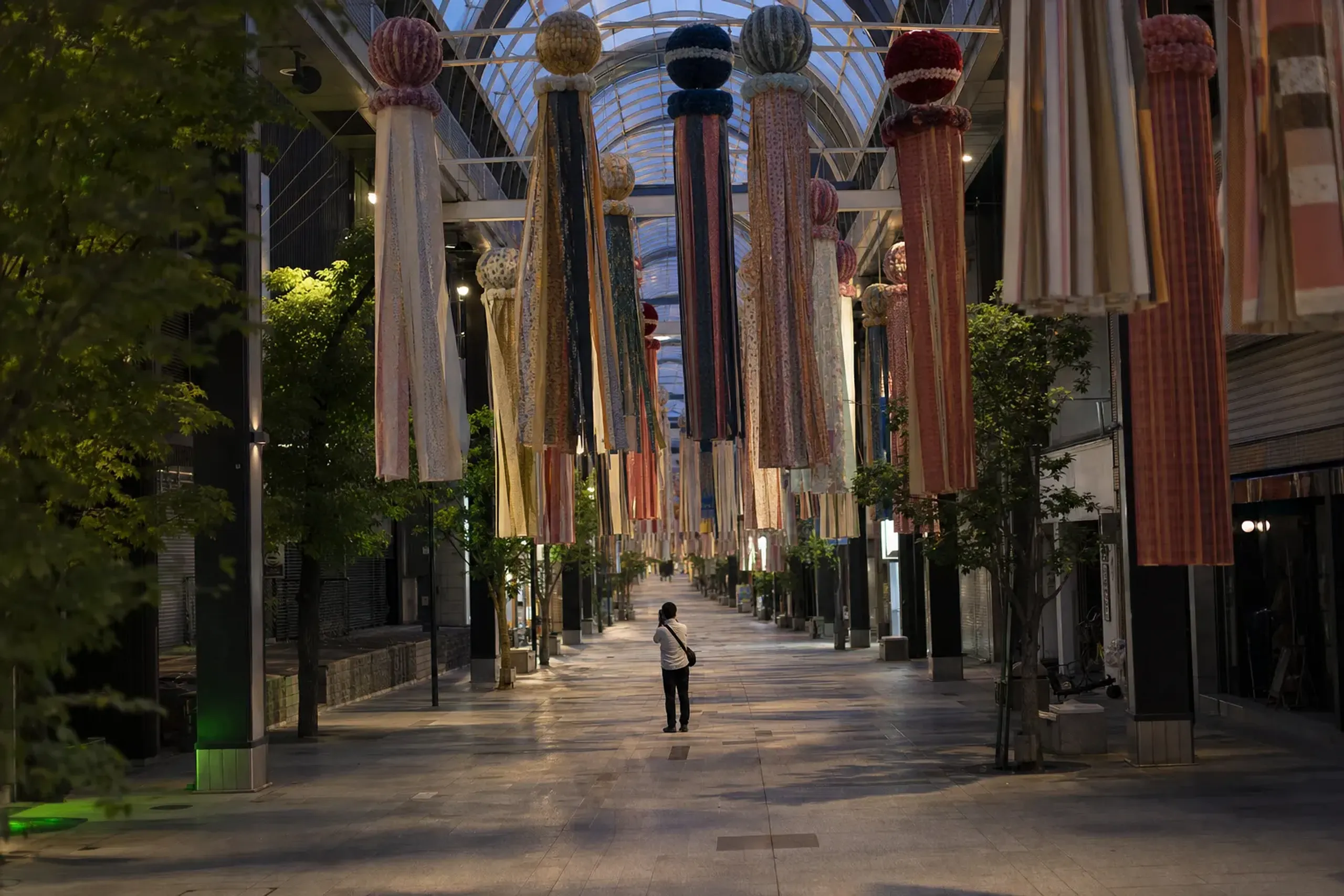
If you care about photography, arrive early. The pedestrian deck from JR Sendai Station brings you directly into the arcades, and the first hours give you cleaner angles before the walkways compress with the day’s crowds.
The Competition Hidden In Plain Sight: Judging, Awards, And Plaques
Sendai’s Tanabata isn’t only celebration. It is also evaluation—a quiet contest unfolding above the heads of most visitors.
A judging system awards gold, silver, and bronze by shopping district, with results announced on the afternoon of the first day. That timeline should change how you walk the city. Morning is for discovery. Afternoon is for re-walking with sharper eyes, seeing which displays were recognized and understanding why.
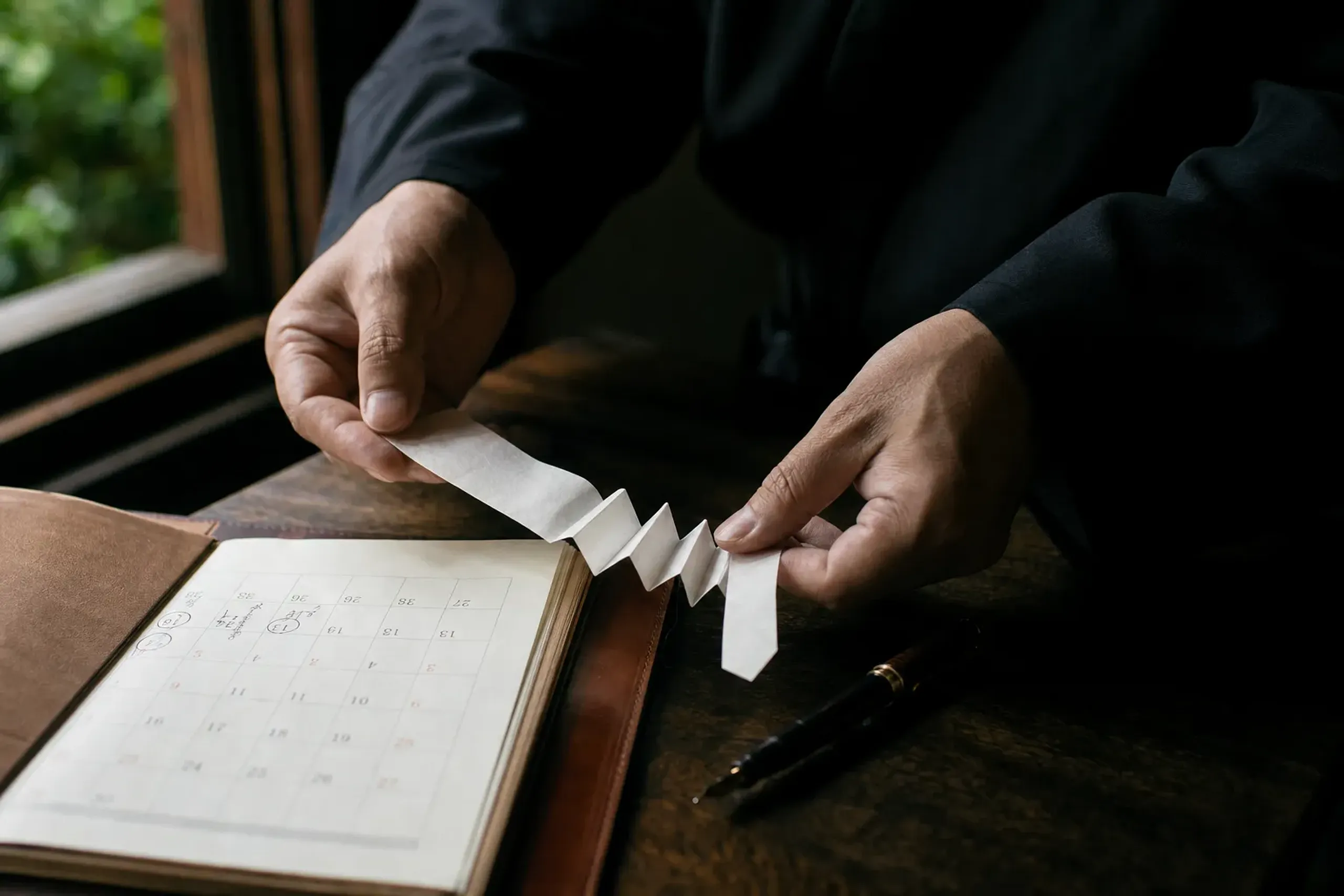
There is a small detail many visitors miss entirely: award plaques are attached at the base of the winning decorations. You won’t see them from the middle of a crowd. Step to the side. Look down. The festival rewards patience over pace.
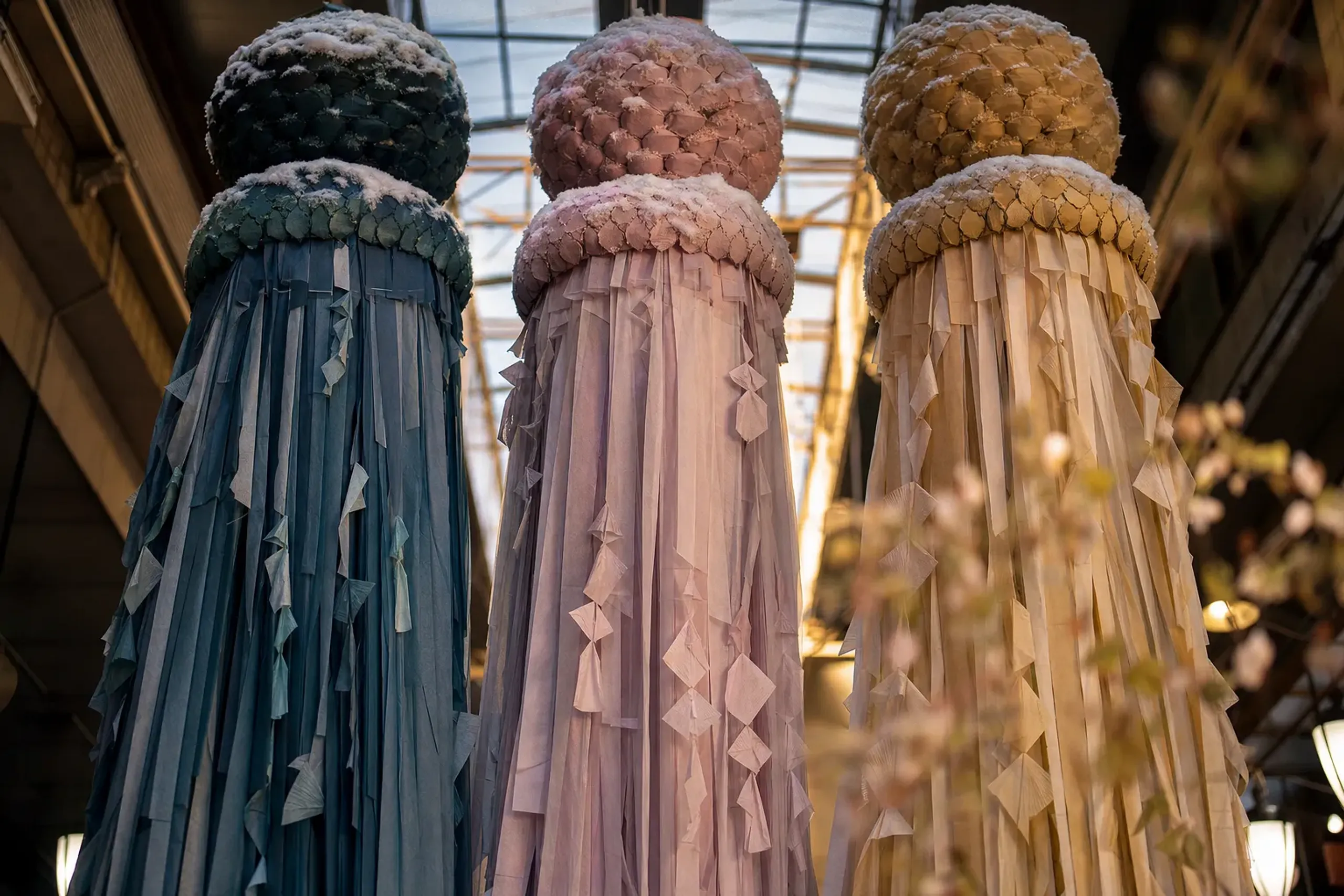
The cost also tells you this is anything but casual. A single fukinagashi streamer can cost from several hundred thousand to over a million yen to produce, and the traditional arrangement bundles five streamers beneath one ornamental ball as a single unit. Roughly 3,000 decorations appear across the city—an extraordinary concentration of handwork gathered into a few covered streets.
The Seven Tanabata Ornaments In Sendai (Nanatsu Kazari) And What They Mean
Sendai’s decorations aren’t random motifs—they are structured symbols, and knowing them changes what you notice overhead.
These are the seven ornaments (nanatsu kazari) and the specific prayers traditionally attached to each.
- Tanzaku: paper strips for writing wishes, originally poems — a prayer for skill in scholarship and calligraphy.
- Fukinagashi: streamers symbolizing Orihime’s weaving threads — a prayer for skill in needlework and weaving. This is Sendai’s signature sight.
- Orizuru: folded paper cranes — household safety and longevity, traditionally one crane per year of the oldest family member’s age.
- Kamiko: paper garment shapes — protection from illness and disaster, and improved sewing skill.
- Toami: a casting-net shape — prayer for good harvest and abundant catch.
- Kuzukago: a paper scrap basket — cleanliness and frugality.
- Kinchaku: a drawstring purse shape — prosperity in business.
Write your wish with care.
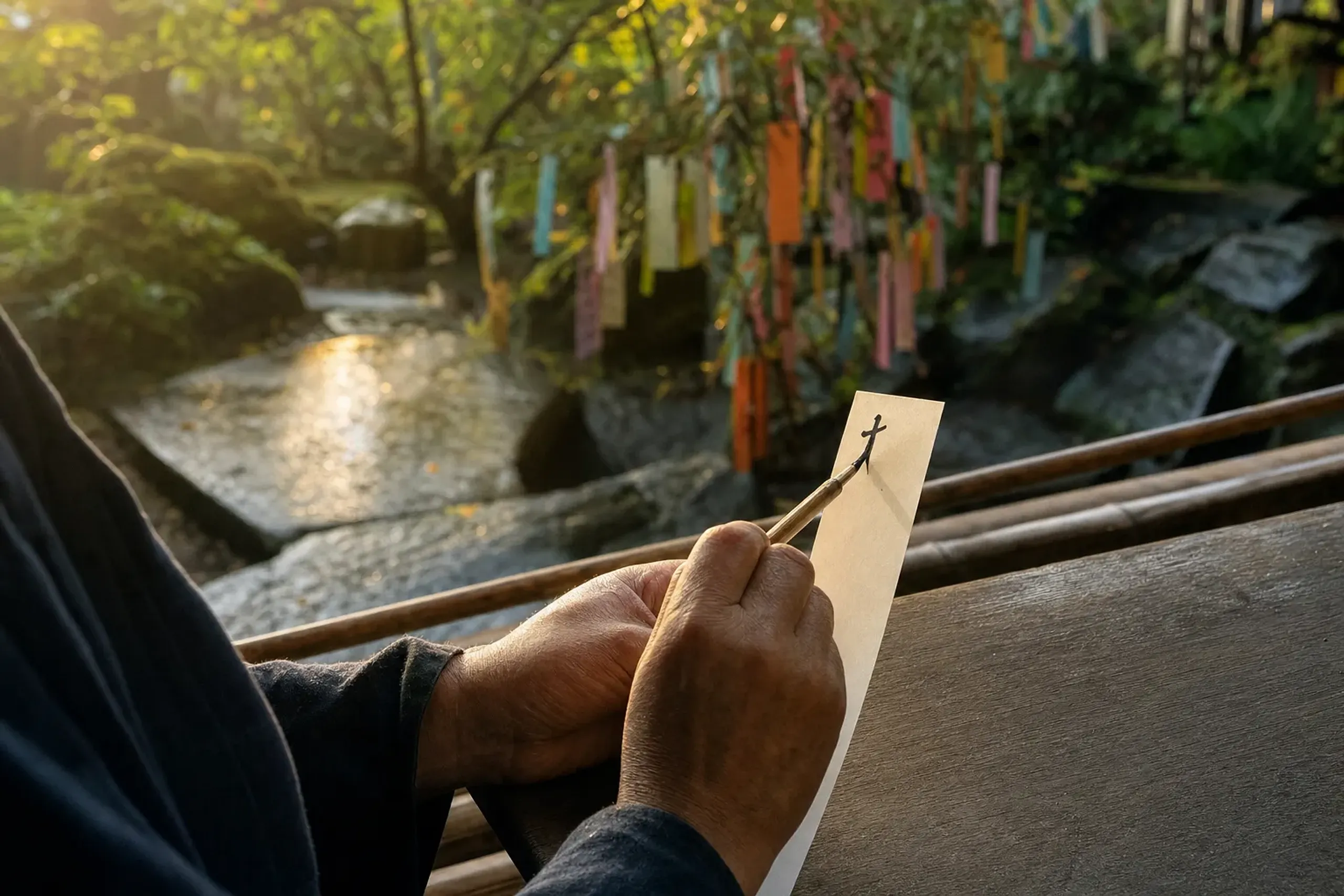
Keep it simple. This is a festival that respects craft, not performance—and a single, sincere line carries further here than any grand gesture.
Sendai Tanabata Matsuri 2026 Dates, Hours, And The Fireworks Prelude
Sendai Tanabata Matsuri runs 6–8 August 2026, with a major fireworks festival on 5 August 2026 from 19:30–20:30.
The dates are fixed by the tsukiokure convention, which means the calendar dates stay consistent even as the day of the week shifts from year to year.
- Sendai Tanabata Matsuri (Main Festival): 6–8 Aug 2026
- Festival Hours (Thu 6 Aug): 10:00–22:00
- Festival Hours (Fri 7 Aug): 10:00–22:00
- Festival Hours (Sat 8 Aug): 10:00–21:00
- Sendai Tanabata Fireworks Festival (Prelude): 5 Aug 2026, 19:30–20:30
The fireworks prelude matters because it resets your emotional baseline before the crowds arrive. Around 16,000 fireworks are launched over roughly 60 minutes from the Aoba Yama Park and Hirose River area, and the reflection on the river surface is part of what makes Sendai’s display feel distinct from any other. The 2026 theme is “HOPE.”
Our concierge team at Japan Royal Service verifies each current year’s exact hours and the fireworks theme ahead of a client’s visit, because these details are confirmed or set fresh each year and small changes can quietly rearrange an evening.
How Crowded Is Sendai Tanabata, And What’s The Smart Way To See It?
Sendai Tanabata draws over 2 million visitors across three days, so the smartest strategy is to go early, take breaks away from the arcades, and return at night for a quieter, second look.
The festival is famous, and it feels like it. The covered shopping arcades concentrate people into a few corridors, which can turn “one quick look” into slow movement and shoulder-to-shoulder pauses.
Use time, not force. Morning is for the first reveal and cleaner photographs. Late morning to mid-afternoon is when many discerning travelers prefer a reset—an unhurried lunch, a pause at the hotel, a short private outing—then a return for the evening glow beneath the paper. This rhythm is quietly its own luxury: the freedom to step out of the current whenever you choose.
Sendai’s great advantage is access. The main venue is roughly five minutes on foot from JR Sendai Station, reached via a pedestrian deck leading directly into the arcade streets—notably easier than the other festivals in Japan’s celebrated “Three Great Tanabata Festivals.”
How To Get To Sendai Tanabata From Tokyo (And Why Transfers Matter)
From Tokyo, the fastest route is the Tohoku Shinkansen to Sendai Station in about 1 hour 30 minutes, followed by a short walk to the central arcade streets.
That sounds effortless—until you add festival traffic restrictions, luggage, and peak-hour station density. Central Sendai has traffic controls during the event, parking fills quickly, and public transport is strongly recommended.
This is where a calm plan feels like real luxury. Not “more.”
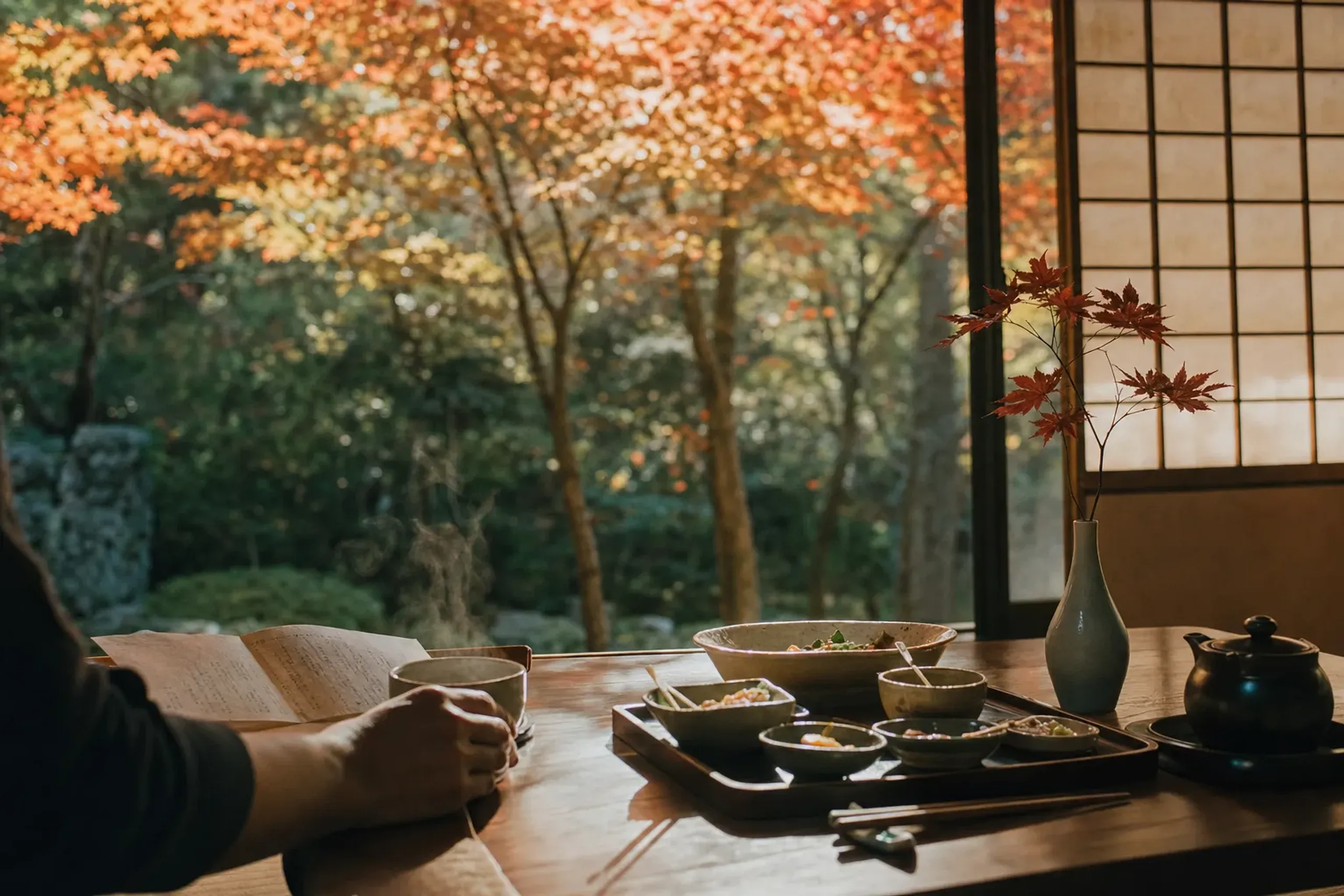
Just better. Our clients tend to want the same things: an arrival that doesn’t spike stress, a clear meeting point, and a route that avoids unnecessary loops through festival congestion.
For guests who prefer a private arrival flow, our private transportation options are designed around timing, luggage reality, and discretion—especially important when you’re moving through a city temporarily operating at festival pressure.
Heat Safety In Sendai In Early August (Do Not Ignore This)
August heat in Sendai is real, even under the covered arcades, and local guidance explicitly advises hydration and heatstroke precautions.
Bring a bottle you’ll actually carry. Wear shoes you can stand in for hours. Schedule shade breaks on purpose, before you feel you need them.
Key fact: The covered arcades reduce sun, not humidity. If you feel lightheaded, step out of the flow, sit, and drink water before you “push through.”
If you’re traveling with family, build in a midday reset. If you’re traveling as a couple, consider splitting your viewing into two shorter walks rather than one long one—the festival is far more pleasant in measured doses.
Where Luxury Lives At A Public Festival: Restraint, Craft, And Privacy
Sendai Tanabata is not a velvet-rope event. That’s precisely the point.
For the discerning traveler, the luxury here lies in choosing how you meet the crowd. You can arrive early enough to feel the electricity of the installation, then retreat before the pressure peaks. You can study details instead of chasing volume. You can treat the city like a stage with backstage exits known only to a few.
This is where our team leans into three values that matter deeply in Japan: discretion (keeping your movements and identity quiet), shokunin (recognizing the months of handwork suspended above your head, and the masters behind it), and the composure of imperial-class formality when it is called for—clear etiquette, the correct tone, no awkward friction.
And yes, Sendai Tanabata holds moments that feel almost spare—the very restraint of wabi made tangible. A single streamer turning in still air. A plaque at the base of a winning display that most people never notice. That quiet is its own answer to excess, and its own kind of prestige.
What Japan Royal Service Coordinates For Sendai Tanabata
Japan Royal Service supports Sendai Tanabata visits with private guiding and transfers, shaped around crowd timing, discretion, and the practical realities of early-August travel.
We keep the public plan simple: arrive with a clear route, know when the installations begin (around 8:00am on 6 August), and understand the judging rhythm so you don’t miss what’s quietly unfolding beneath the decorations.
When guests want a deeper layer, we privately tailor pacing and context—how to read the seven ornaments, where to pause for photographs without blocking the flow, and how to move in and out of the arcades without losing time to traffic. It is the kind of anticipatory care that removes friction before you notice it was ever there.
If you’re also building a broader journey, our tailor-made itinerary planning focuses on quiet transitions and well-chosen contrasts—festival intensity balanced with calmer hours and hidden places that reveal the Japan beyond the guidebooks.
Frequently Asked Questions
Why Is Sendai Tanabata Not On July 7?
Sendai follows tsukiokure, celebrating Tanabata one month later to reflect the old lunisolar timing, which places the festival on 6–8 August each year.
This is a deliberate calendrical choice, not a scheduling accident, and it’s why July visitors will miss the main festival period in Sendai entirely.
What Are The 2026 Dates And Times For Sendai Tanabata Matsuri?
Sendai Tanabata Matsuri runs 6–8 August 2026, with hours 10:00–22:00 on 6–7 August and 10:00–21:00 on 8 August.
The festival dates are fixed by convention, while exact hours should still be confirmed each year before travel.
When Do The Decorations Go Up In Sendai, And Can I Watch?
Installations begin around 8:00am on 6 August, and visitors can watch the arcade streets transform as decorations are lifted and secured overhead.
Many bamboo poles are cut and prepared on 4 August, but the true reveal happens the morning the festival opens.
Where Is The Best Place To Start Walking Sendai Tanabata From The Station?
The main arcade streets are about five minutes on foot from JR Sendai Station, via a pedestrian deck that leads directly into the festival area.
This access is one reason Sendai is considered easier to navigate than the other large Tanabata festivals.
Is There A Fireworks Show Before Sendai Tanabata?
Yes—the Sendai Tanabata Fireworks Festival runs on 5 August 2026 from 19:30–20:30, with about 16,000 fireworks launched near Aoba Yama Park and the Hirose River.
The river reflections are a noted highlight, and the 2026 theme is “HOPE.”
Why Choose Japan Royal Service
Luxury travelers choose Japan Royal Service because we plan for what crowds hide: the right hour, the right entry, the right pause, and the discretion to move through Japan without noise.
If you are considering Sendai Tanabata for 2026—or weaving it into a wider journey through Tohoku and beyond—let us shape it around your pace, your privacy, and the details most visitors never see. To begin a quiet, unhurried conversation about your itinerary, contact us here.