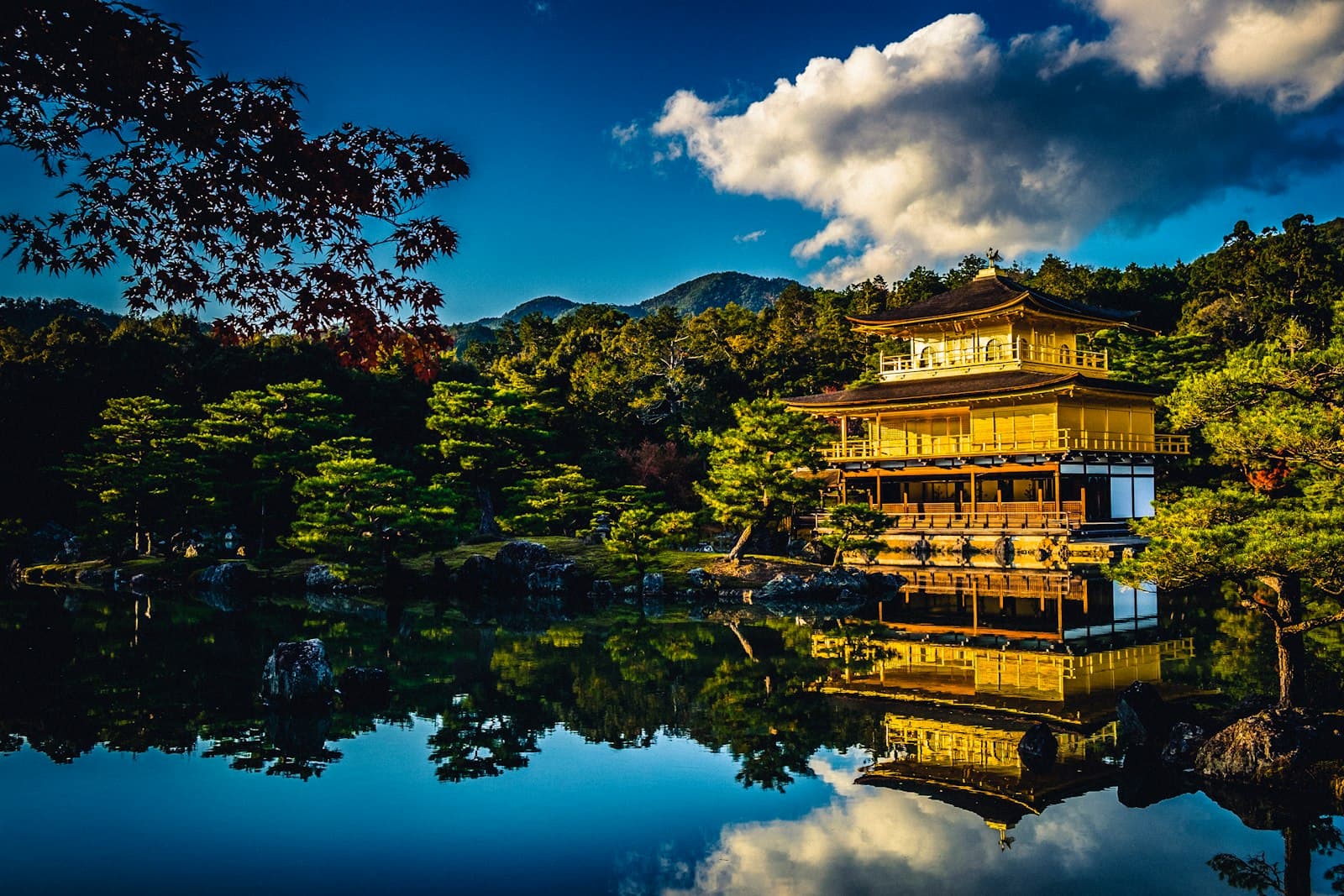
In this guide
- 01What “Shokunin Week” Really Means In 2026
- 02How We Keep The Week Quiet: Timing, Distance, And Discretion
- 03Day 1: Tokyo — Knife-Edge Precision And A Modern Culinary Compass
- 04Day 2: Kanazawa — Kutani Ceramics And The Discipline Of The Line
- 05Day 3: Steel, Fire, And The Knife Maker
- 06Day 4: Kyoto — Quiet Routes, Living Texture, And The City’s New Calm Tools
- 07Day 5: Lacquerware And The Patience Of Shine
- 08Day 6: Temple Silence Before Sunrise
- 09Day 7: From Workshop To Table — A Closing Meal With Meaning
- 10Where This Week Can Stay: New 2026 Openings As Calm Platforms
- 11Planning Notes For 2026: Lead Times, Crowds, And What We Keep Confidential
- 12FAQ: Shokunin Week In Japan
- 13Why Choose Japan Royal Service
Most luxury trips to Japan feel busy, even when they are expensive. Your days get filled with “must-sees,” restaurant scrambles, and polite crowds that still drain you. And if you are already well-traveled, the familiar itinerary can feel strangely thin.
Shokunin Week is our answer. Not louder. Not faster. Just closer—closer to hands, materials, heat, and silence.
Our team at Japan Royal Service designs this seven-day journey for guests who want Japan through its makers: ceramics, lacquer, steel, tea, and the quiet architecture that taught Japan restraint. Private moments. Small rooms. Watchful timing.
We keep sensitive details off the page for a reason. The masters we visit protect their time, their neighbors, and their craft lineage. Your identity is treated the same way.
What “Shokunin Week” Really Means In 2026
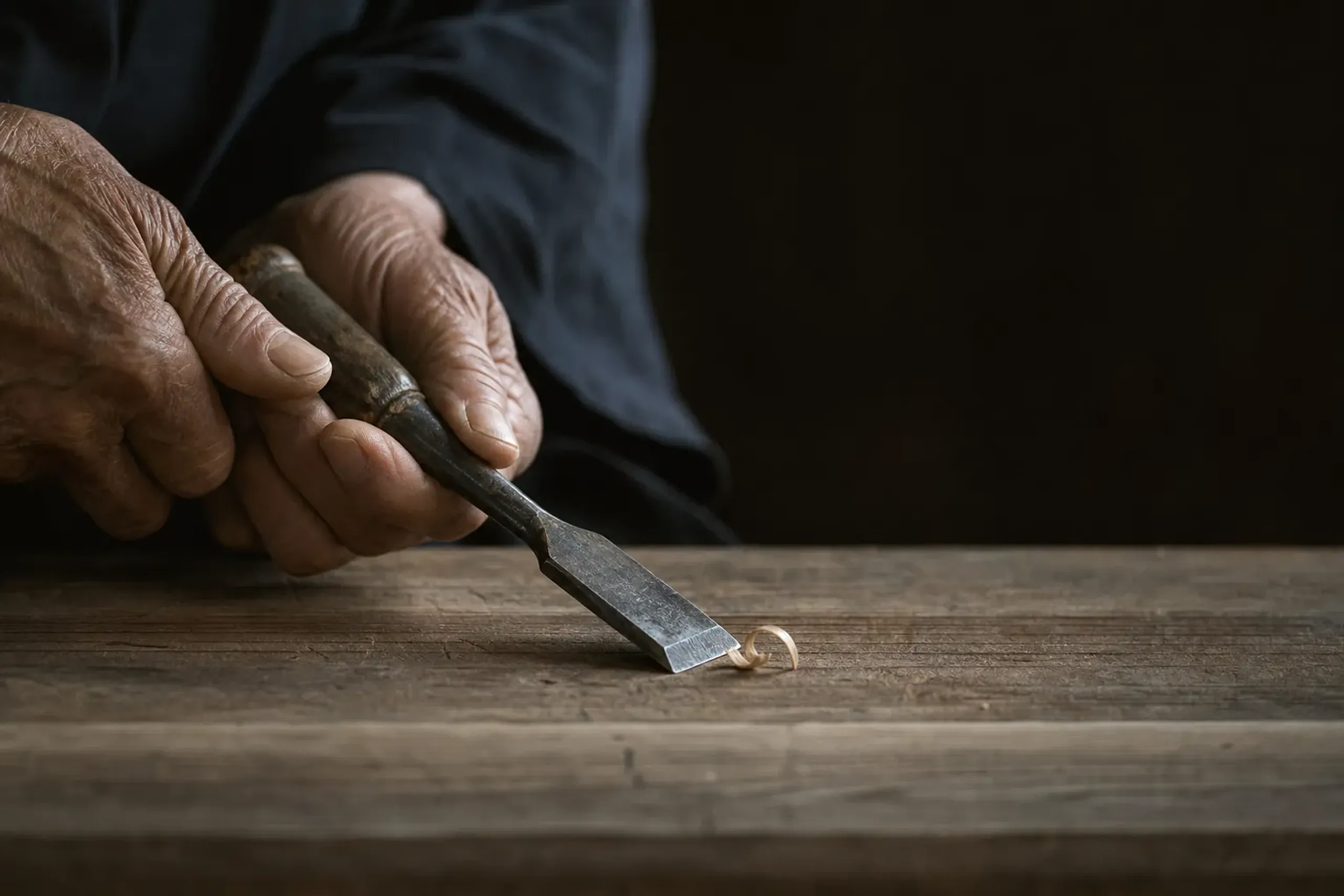
Shokunin is felt first in the hands.
Shokunin is not a souvenir story. It is a life discipline—precision repeated until it becomes calm, then repeated again until it becomes style.
In our experience, 2026 is the year this matters most. Japan’s inbound travel demand remains dynamic, with official monthly reporting from JNTO and heavy attention on major city flow. Crowds don’t only change your photos. They change your nervous system.
So we build Shokunin Week around two ideas that still feel rare: time with a master, and space to absorb it. Wabi-sabi is the background music here—quiet surfaces, moss-dark stone, a room that does not ask for attention.
Expect fewer “highlights.” Expect more meaning.
Who This Journey Fits Best
We designed this for the VHNW guest who has already done Tokyo–Kyoto–Osaka in a conventional way. The question now is not, “What else is there?” It is, “What is still private?”
- HNW: You want the best version of Japan that is still attainable, with clear structure and calm pacing.
- VHNW: You prize rarity, discretion, and craft credibility over flashy lists and public-facing “VIP.”
- UHNW: You need confidentiality as a baseline, plus imperial-class formality where it suits the moment.
How We Keep The Week Quiet: Timing, Distance, And Discretion
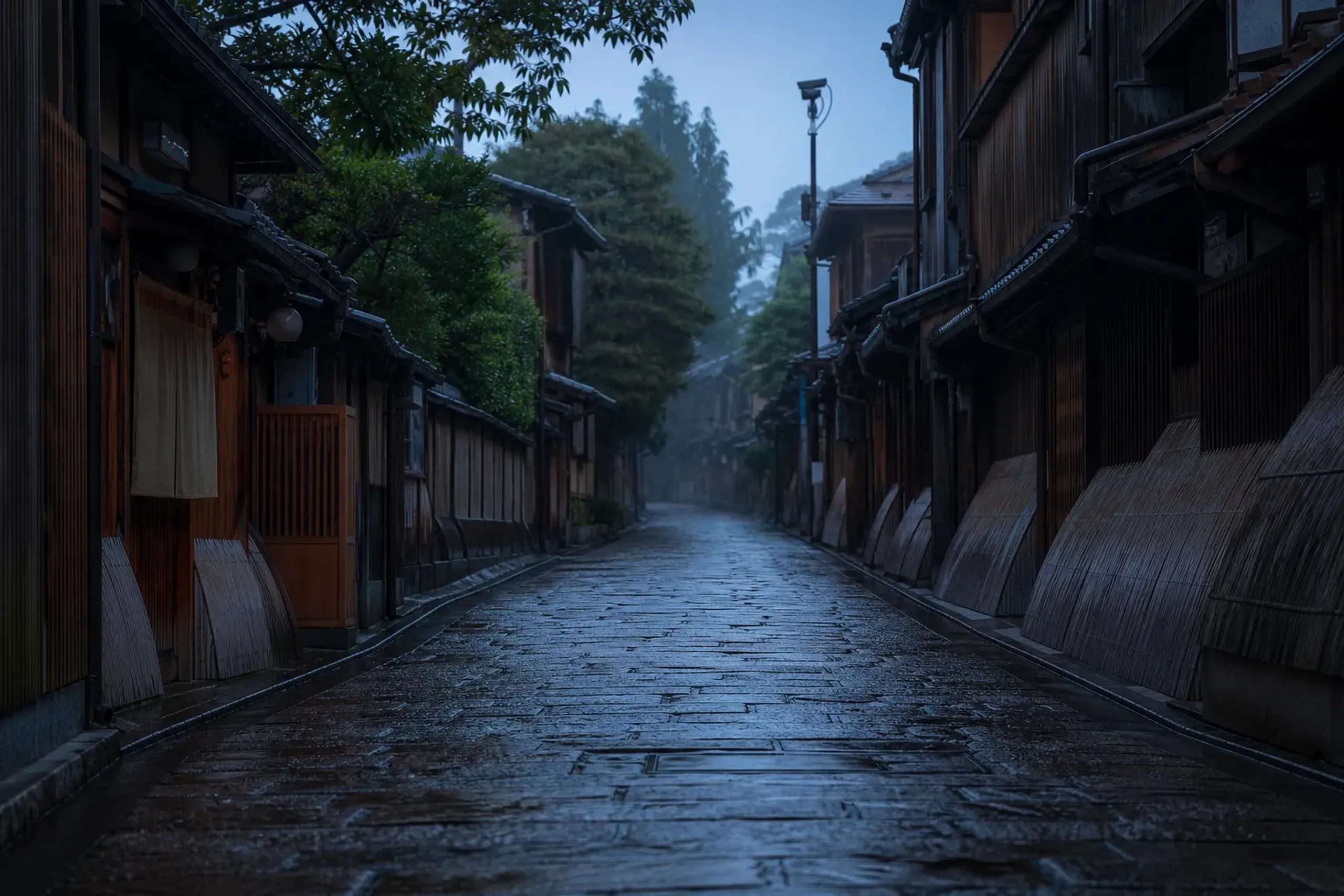
Quiet luxury in Japan is often just logistics done properly. That sounds plain. It is not.
Kyoto now publishes a Kyoto Travel Congestion Forecast with live camera access for areas like Gion and Kiyomizu, with time-slot comfort predictions designed to reduce congestion. That is not a travel tip. It is a planning tool.
We use official signals like these to choose when to move, when to pause, and when to avoid a district entirely. Early mornings. Late transitions. Off-angle routes. The goal is not emptiness. The goal is dignity.
Key fact: Kyoto’s accommodation tax rates changed starting March 1, 2026. When we design your pacing and bases, we factor these practical 2026 shifts into the plan so the trip stays frictionless.
Discretion Is Not A Promise—It Is A Practice
We do not publish artisan names, private addresses, or sensitive schedules. Full stop.
Many workshops and cultural spaces in Japan operate on introduction culture, appointment-only visits, and community trust. If an atelier becomes “content,” it stops being a sanctuary. Our job is to protect the relationship, not monetize it.
For you, that means confidentiality on identity, movements, and preferences. Quiet entrances when available. No public-facing fanfare. Just clean execution.
Day 1: Tokyo — Knife-Edge Precision And A Modern Culinary Compass
Tokyo is where craft meets speed. The city rewards attention, then punishes anyone who moves without it.
We begin with a private orientation that is less about sights and more about taste, tools, and context. A knife is a practical object. In Japan, it is also an ethic.
Depending on your interests, we may frame the day around steel—how chefs think about edge geometry, weight, and maintenance—before an evening shaped by the standards that still matter in 2026: the published selections and announcements surrounding The MICHELIN Guide Tokyo 2026.
Not obsession. Calibration.
What You Learn Today
- Why Japanese kitchens treat tools as “partners,” not equipment
- How to read a menu like a chef reads it: temperature, texture, timing
- How to dine quietly in Japan without becoming invisible
Dress And Etiquette
- Dress: Dark, simple layers. Avoid loud fragrances.
- In small rooms: Ask before photographing hands, tools, or the workbench.
- At the table: Let the host set the pace; questions land better after a course, not during it.
Day 2: Kanazawa — Kutani Ceramics And The Discipline Of The Line
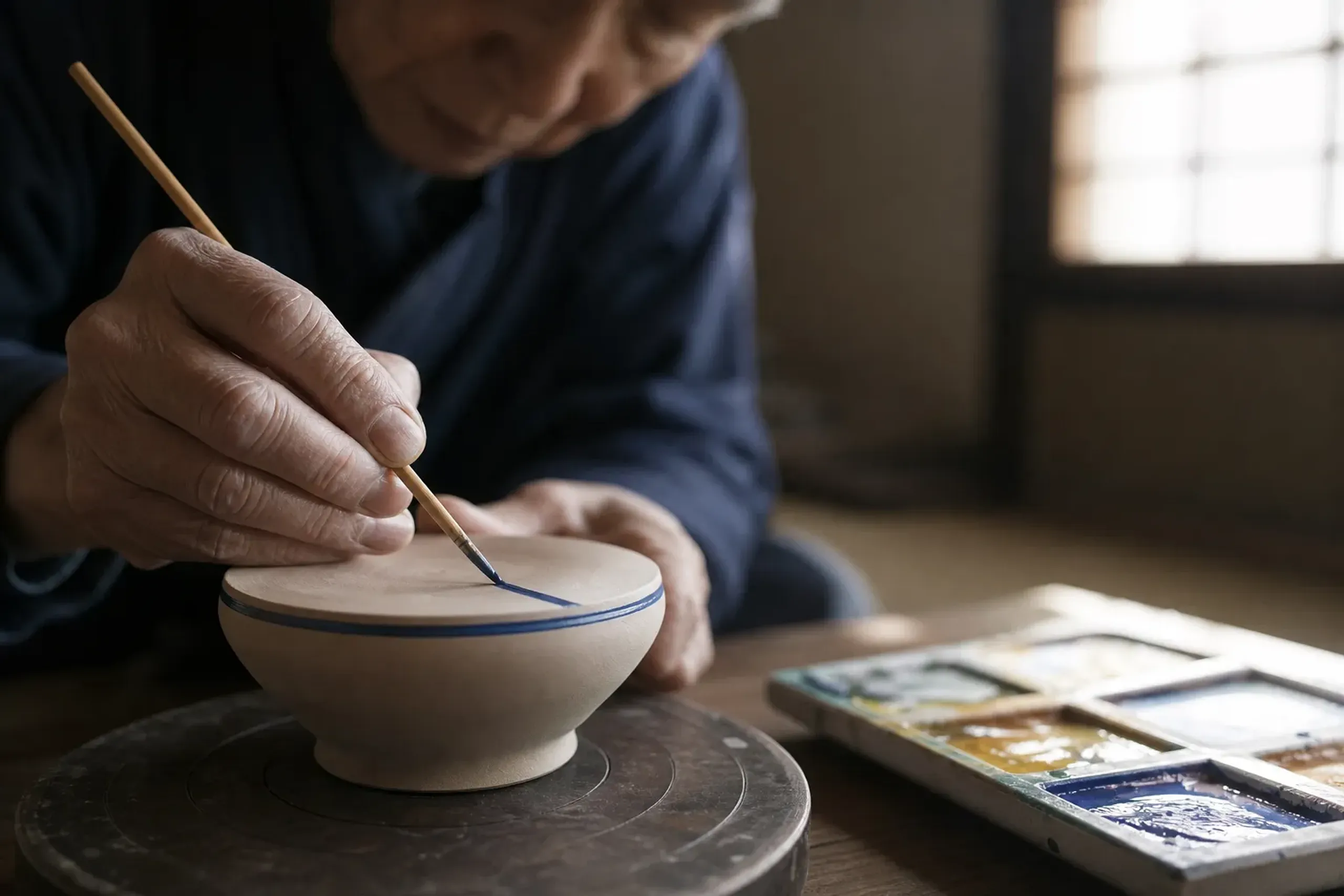
A single line can carry a century of discipline.
Kanazawa has a different tempo. The air feels more deliberate.
Today anchors the week in a verifiable craft lineage: Kutani ware. The city is also a clean counterpoint to Kyoto’s pressure points, which is why we like it for guests who want depth without noise.
For an experience that is publicly documented and real, Kanazawa’s official tourism information describes Kutani Kosen Kiln as the only Kutani ceramics kiln in Kanazawa, opened in 1870, and offering a drawing experience. It is a rare case where craft access is clearly described without needing private introductions.
We shape the visit around the philosophy behind decoration: restraint, negative space, and how a single line can carry authority. Wabi-sabi shows up here as a choice, not a slogan.
Experience Highlights
- Studio-focused time with materials and glaze logic
- Guidance on collecting: what makes a piece live well in your home
- A table conversation about how vessels change taste and temperature
Day 3: Steel, Fire, And The Knife Maker
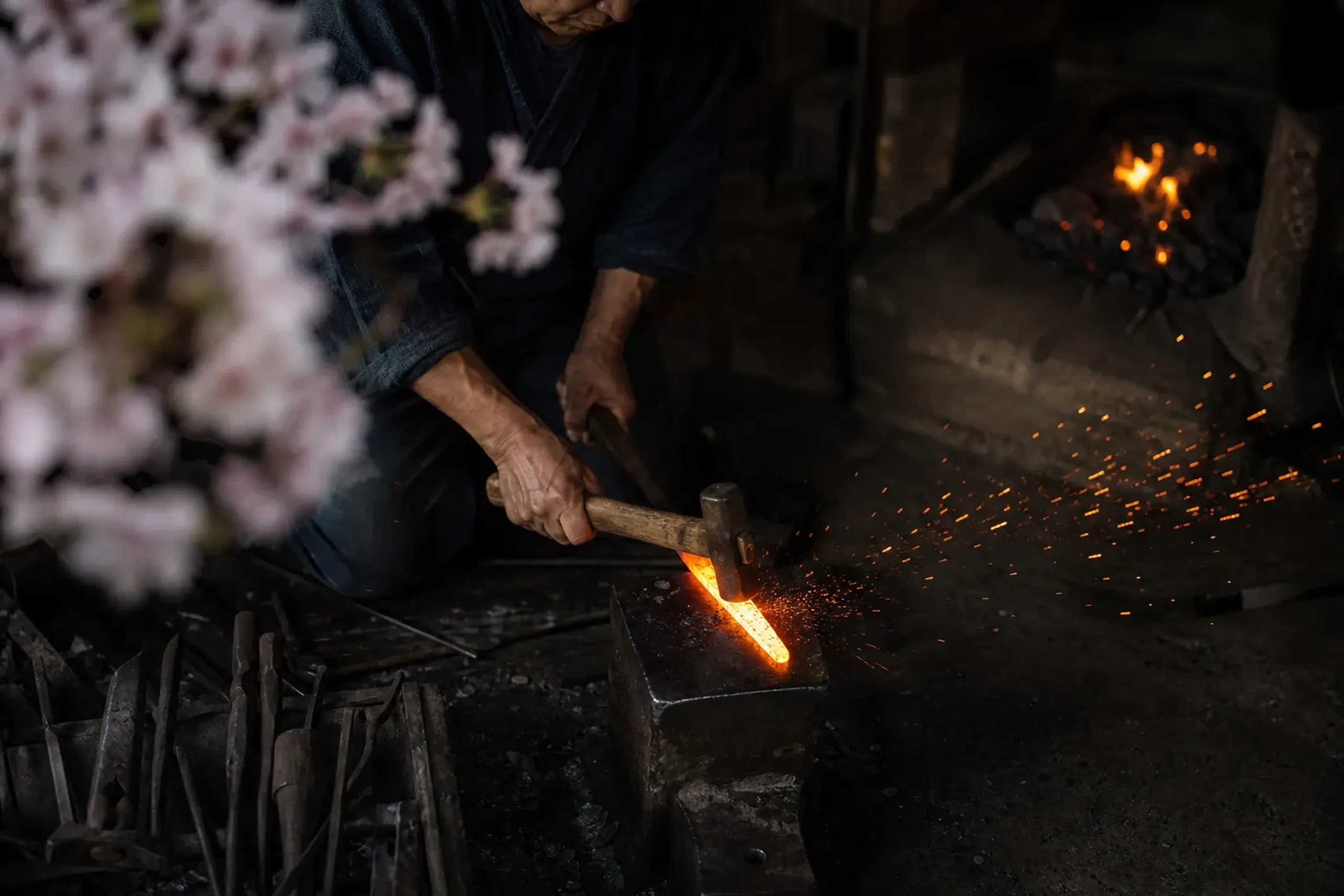
Heat, water, and repetition—where precision becomes calm.
There are crafts you can watch. Knife-making is one you feel.
Today is built around a private encounter with a blade artisan, where available and appropriate. We keep details confidential on purpose. The work is intimate, the schedules are narrow, and many workshops do not want casual foot traffic.
What we can say publicly is the arc: raw steel becomes a tool through heat discipline, repeated quenching, and an eye trained to catch minute changes in color. You hear the hammer. You smell the water. It is not performative.
Then we connect the lesson to cuisine. A knife is not only sharp. It is decisive.
Practical Guidance
- Group size: Smaller is better. Two to four guests keeps the room respectful.
- Photography: Never assume. Some makers allow finished objects only.
- Hands: No rings or loose bracelets near tools.
Day 4: Kyoto — Quiet Routes, Living Texture, And The City’s New Calm Tools
Kyoto is still Kyoto. Sacred, formal, and crowded at the wrong hour.
In 2026, the city’s own institutions have made crowd-avoidance more evidence-based. The Kyoto Travel Congestion Forecast and related comfort predictions are not a gimmick. They are a public admission that timing is the new luxury.
We plan Kyoto with a wabi-sabi lens: weathered wood, garden gravel, a corridor where footsteps soften. The day favors early temple visits and quieter precincts, chosen with respect for what is open to the public and what should remain unbroadcast.
Small decisions add up. A lot.
Kyoto Etiquette That Protects The Atmosphere
- Lower your voice before you enter a gate, not after
- Move to the side before checking messages or photos
- At temples and shrines, watch where you place your feet and bag
Day 5: Lacquerware And The Patience Of Shine
Lacquer is slow. That is the point.
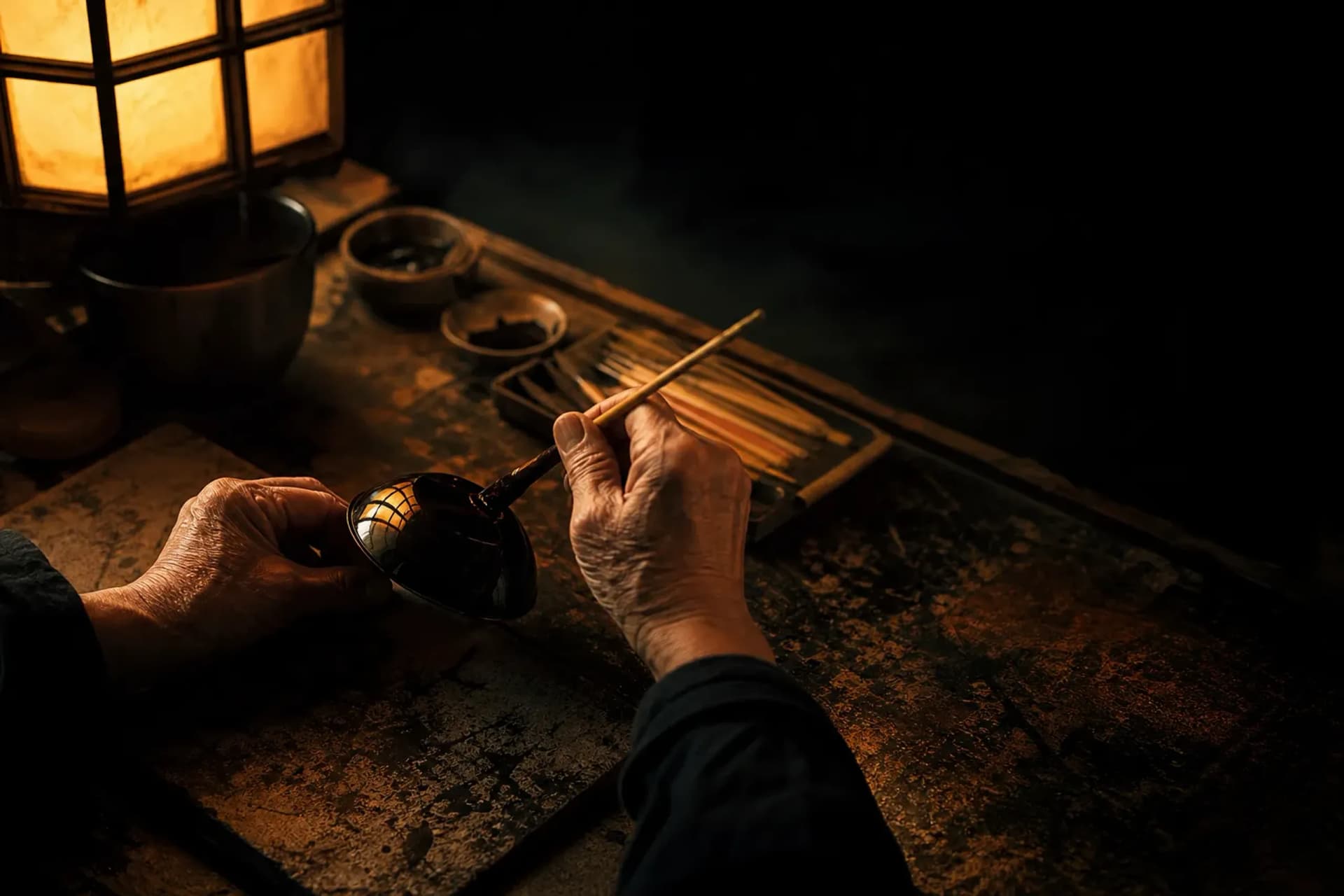
This day focuses on the craft logic of layers—how shine is built through repeated work, drying, and polishing that can feel almost monastic. When a lacquer artist speaks about time, it is not motivational. It is literal.
We shape the visit around what you can responsibly see: tools, technique, and the difference between decorative gloss and a finish made to be used for years. Quiet luxury lives here because it does not need to announce itself.
Then we bring the lesson to the table. Vessels teach taste.
What To Look For When Collecting
- How a rim meets the lip—comfort matters
- How the surface behaves under warm light
- How a piece looks after use, not only new
Day 6: Temple Silence Before Sunrise
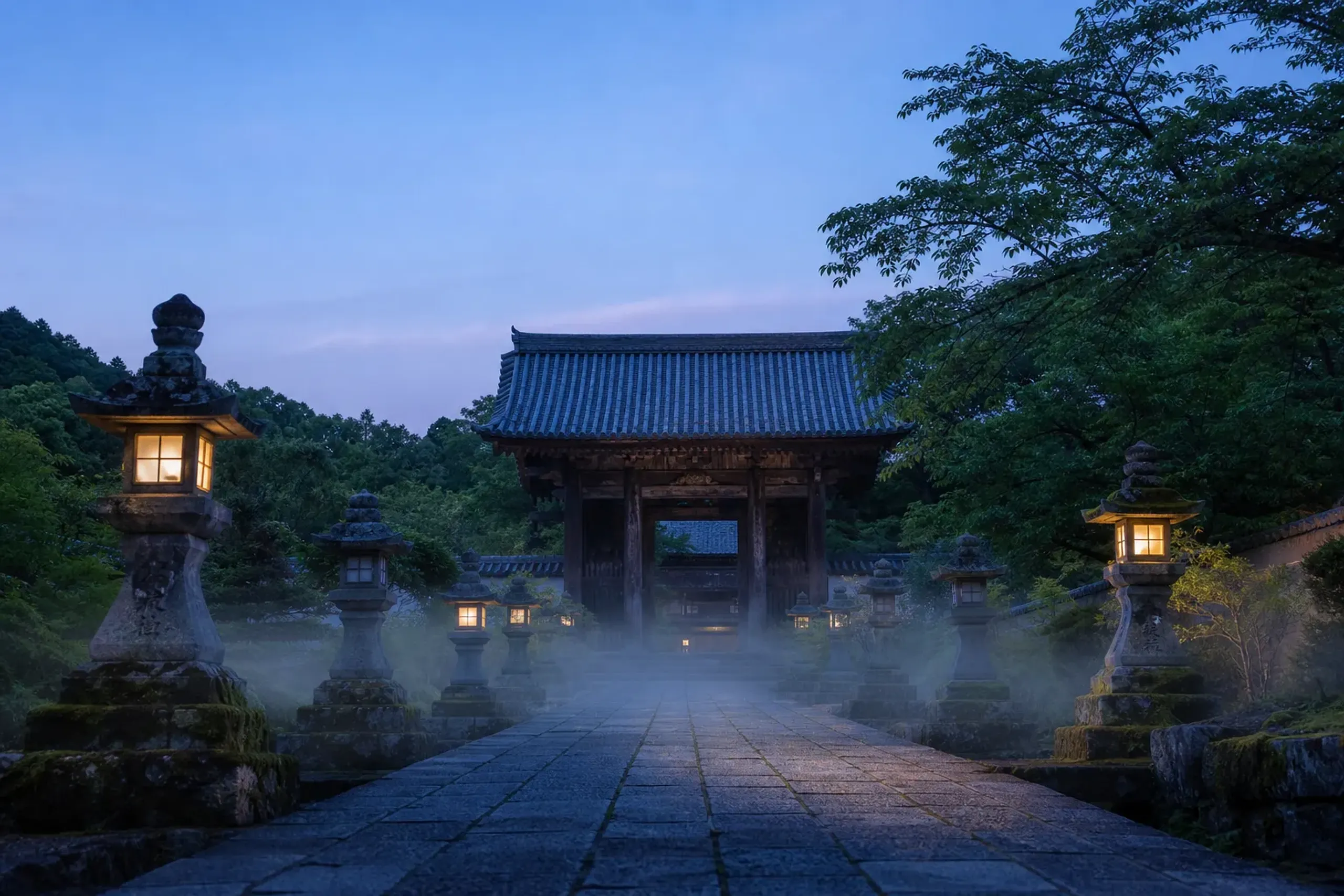
Kyoto before the city speaks.
This is the day guests remember. Always.
Before the city fully wakes, Kyoto can still feel like a religious capital rather than a destination. We plan an early-morning temple visit within public rules and opening times, with movement timed to avoid the densest flows identified by official forecasting.
If a private moment is possible—quiet seating, a short conversation, a simple tea—it remains subject to availability and to the temple’s own priorities. No guarantees. That is part of respecting sacred space.
The lesson is not history. It is attention.
How To Be A Good Guest In Sacred Spaces
- Arrive early enough to be settled before doors open
- Keep cameras low; keep gestures smaller
- Let silence do its work before you speak about it
Day 7: From Workshop To Table — A Closing Meal With Meaning
The final day ties the week together without turning it into a montage.
We design a closing meal around what you have learned: how ceramic thickness holds heat, how lacquer frames aroma, how a knife changes texture, and how wabi-sabi can be plated without becoming theater. The point is not to chase “the best.” It is to taste with new literacy.
For guests who care about culinary signals, 2026 offers a timely reference point: The MICHELIN Guide Kyoto & Osaka 2026 selection was announced for release on April 23, 2026, and Michelin published official release information on April 23, 2026. We use these public milestones as context, not as a checklist.
Then we close gently. No speeches.
Where This Week Can Stay: New 2026 Openings As Calm Platforms
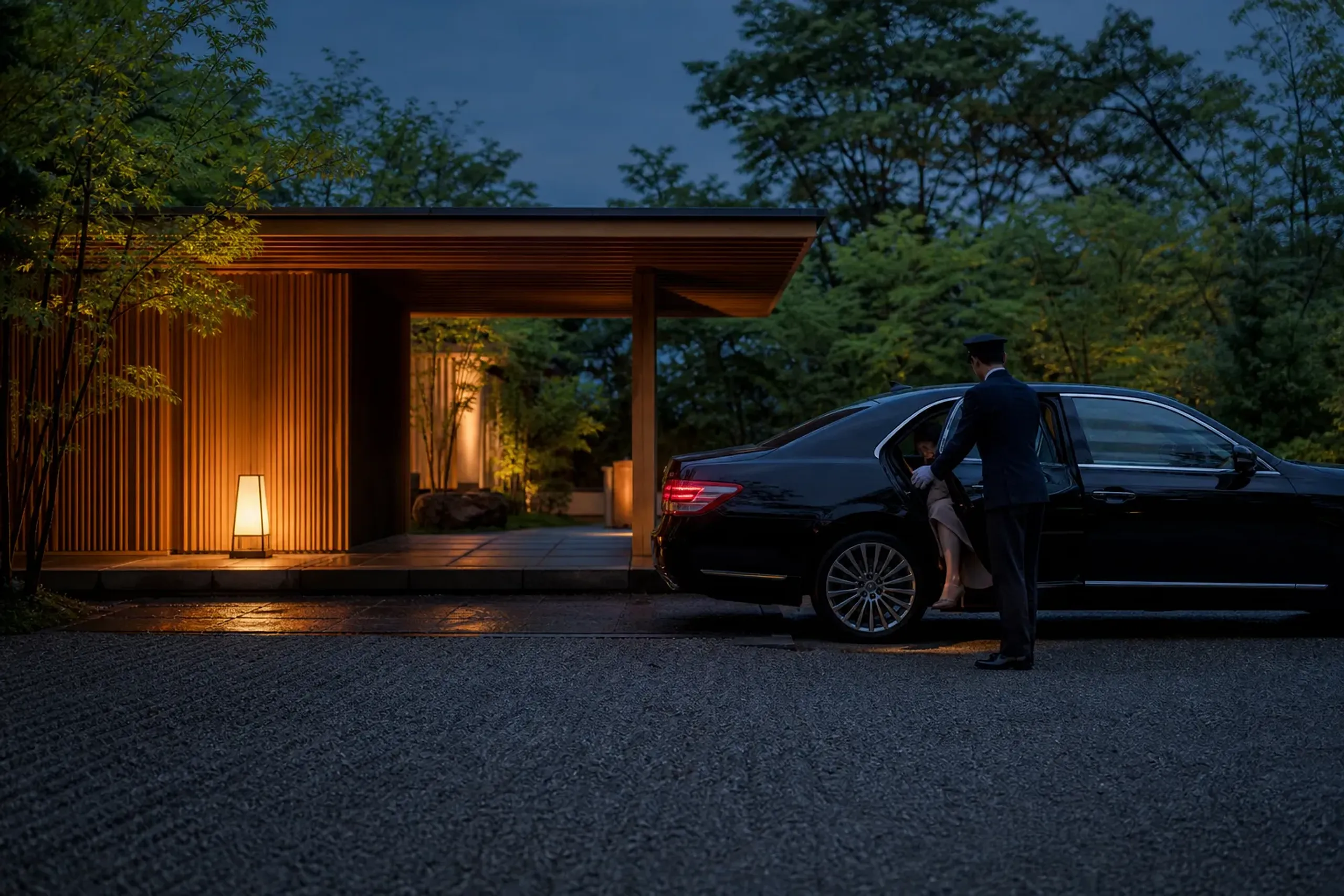
A calm base is part of the craft.
Hotels are not just sleep. In Japan, they control your nervous system.
For 2026, several verified openings give guests new “bases” that can support a quiet, craft-forward week. We treat them as platforms for discretion and pacing—private arrivals where possible, controlled dining arcs, and routes that keep you out of the loudest corridors.
Option A: Imperial Hotel, Kyoto (Opening March 5, 2026)
Imperial Hotel, Kyoto officially opened on Thursday, March 5, 2026, and is positioned in Kyoto’s Gion context with 55 guest rooms per Imperial’s press materials. It suits guests who like a formal register and a measured, almost diplomatic calm.
- Best for: guests who prefer structure and classic service cues
- Pairs well with: early-morning temple timing and discreet evening returns
Option B: Capella Kyoto (Opened March 22, 2026)
Capella Kyoto opened March 22, 2026, located in Kyoto’s historic Miyagawa-cho kagai. It suits guests who want culture-forward design and a strong sense of place, while staying inside Kyoto’s center.
- Best for: guests who want “Hidden Japan” energy without leaving Kyoto
- Pairs well with: craft days, theatre evenings, and short transfers
Option C: 1 Hotel Tokyo (Opened March 5, 2026)
1 Hotel Tokyo opened March 5, 2026 in Akasaka Trust Tower, with skyline views that include the Imperial Palace gardens. It fits guests who want nature-inflected calm inside a capital schedule.
- Best for: a Tokyo start or finish with quiet, green sightlines
- Pairs well with: culinary calibration and museum-grade pacing
Option D: Waldorf Astoria Osaka (Opened April 3, 2025)
Waldorf Astoria Osaka opened April 3, 2025, and supports Osaka as a high-comfort base for Kansai routing. It can work well when you want Kyoto’s culture without sleeping inside Kyoto’s densest areas every night.
- Best for: guests who want to buffer Kyoto with a quieter base rhythm
- Pairs well with: day trips into Kyoto and onward travel
Planning Notes For 2026: Lead Times, Crowds, And What We Keep Confidential
Craft weeks do not behave like standard tours. Capacity is human.
Many masters work with small teams, keep irregular studio days, and protect their time during exhibition seasons. Temples also have their own calendars, and some spaces simply do not host private visits. That is not a problem. It is the point.
So we plan with real-world buffers: alternative craft encounters, flexible city sequencing, and a calm approach to “no.” You do not want a week built on brittle assumptions.
Suggested Lead Times (Practical, Not Promotional)
- Craft encounters: Plan months ahead when you want private access and minimal disruption.
- Kyoto peak seasons: Expect tighter availability and heavier street flow; official congestion forecasting helps, but it cannot create space that does not exist.
- Dining: The best rooms have limited seats; keep backup dinners that still feel intentional.
What We Do Not Publish
- Private workshop addresses or master names without explicit permission
- Exact times for sensitive visits
- Guest identity, preferences, or recognizable routing patterns
FAQ: Shokunin Week In Japan
Is This A Standard 7-Day Luxury Japan Itinerary?
No. It is a craft-led journey built around people and places with limited capacity. We keep the pace calm and the schedule realistic, even when the access is rare.
Which Cities Are Typically Included?
Common anchors are Tokyo, Kyoto, and Kanazawa, because they offer credible craft lineages and distinct atmospheres. Final routing depends on season, your interests, and availability.
Can You Guarantee Private Atelier Visits Or Temple Moments?
No. And we prefer that honesty. When private access is possible, it is always subject to the host’s rules and availability, and we keep sensitive details confidential.
How Do You Avoid Crowds In Kyoto Without Missing The Point Of Kyoto?
We lean on early timing, thoughtful routes, and official tools like Kyoto’s congestion forecasting and live camera information for areas such as Gion and Kiyomizu. Then we choose quieter precincts and calmer transitions.
Do You Include Michelin-Star Restaurants?
We use Michelin’s published selections as one reference among several, especially around the 2026 releases for Tokyo and for Kyoto & Osaka. Your meals are shaped by your taste, privacy needs, and pacing.
What Is The Biggest Mistake Guests Make With Craft-Focused Travel?
Trying to collect experiences the way they collect cities. Craft requires time, questions, and a little humility. Rushing makes even rare access feel generic.
Why Choose Japan Royal Service
Competitors can publish a craft-themed itinerary. What they often cannot offer is the operational restraint that keeps it truly private.
Our team at Japan Royal Service builds Shokunin Week around four advantages that matter to VHNW travelers:
- Shokunin credibility: We prioritize real lineages and respectful access, not photo-friendly “experiences.”
- Wabi-sabi pacing: Quiet architecture, early hours, and space between moments—because meaning needs room.
- Hidden Japan judgment: We know which doors should stay unbroadcast, and we protect the relationship behind them.
- Discretion as a system: Identity, routing, and sensitive details stay confidential, because trust is the real currency.
The result is a week that feels like Japan, not like a schedule.
For private coordination, reach our team at Japan Royal Service directly via WhatsApp or LINE, or contact us here.