In this guide
- 01The One Rule: A Call Day Is Not A Travel Day
- 02Yokohama: Tokyo Or Kamakura, But Not Kyoto
- 03Hiroshima Port: Miyajima And The Memorial Sites, With The Ferry Variable
- 04Fukuoka: A City Shore Day, Or A Very Careful Taste Of Kyushu
- 05Buffer Time Is The Luxury: How We Hold The Day Together
- 06Private Shore Day Versus Ship Excursion: An Honest Comparison
- 07Doing Less, Deliberately: Two Anchors, Not Five
- 08Planning Notes That Protect The Day (Without Killing The Mood)
- 09Q&A: Shore Days In Japan (The Questions People Actually Ask)
- 10Why Choose Japan Royal Service
You have nine hours ashore and a plan built for twelve. That gap is where shore days go wrong. Japan is orderly, but ports still run on ship time. This guide shows what is realistic from Yokohama, Hiroshima Port, and Fukuoka, and what is not.
The One Rule: A Call Day Is Not A Travel Day
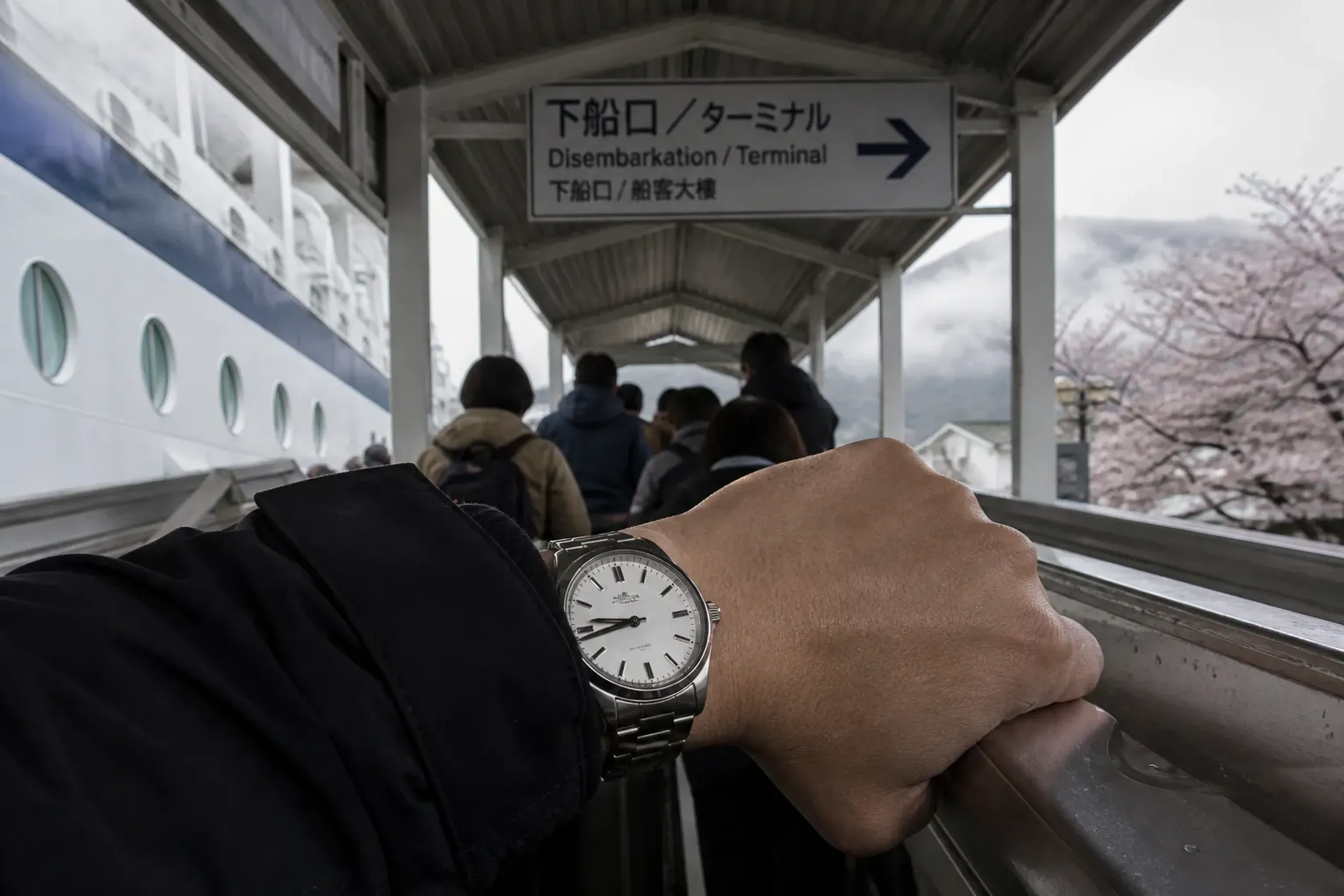
On a call day, the ship’s clock defines what is possible.
On a cruise call, the ship’s departure time is the fixed point. Everything else is flexible. That includes your wish list.
We build shore days backwards from the all-aboard time, not forwards from breakfast. Hard stop. The goal is not to “see Japan.” It is to have a calm, intact day that ends with you back onboard.
That mindset changes the map. A place that looks “close” can be a trap if it needs a long rail transfer, multiple connections, or a punctual ferry. A place that looks modest can be the best day you have.
Key fact: Do not plan on precise travel times you see online for a port call. They assume ideal conditions and they do not include ship processes. Your day should include a deliberate buffer.
What Takes Time You Don’t Expect
Disembarkation and re-boarding consume real minutes. Sometimes a lot of them. It varies by ship, season, and port procedure, so we avoid pretending it is predictable.
Then there is the “first mile.” Clearing the terminal area, meeting your driver, getting everyone settled, and leaving the port zone can be slower than it sounds. Small delay. Big ripple.
Our working rule is simple. If an itinerary collapses when one piece runs late, it was never a shore-day itinerary.
Designing Backwards: A Simple Step-By-Step
- Step 1: Confirm the ship’s published in-port window and the all-aboard time for that day.
- Step 2: Decide your return-to-port target time earlier than all-aboard. That gap is your buffer.
- Step 3: Choose two anchors for the day, not five. One cultural, one personal works well.
- Step 4: Build Plan A and a lighter Plan B that still feels “worth it” if weather or traffic shifts.
- Step 5: Keep the last segment simple: fewer steps, fewer transfers, fewer dependencies.
Yokohama: Tokyo Or Kamakura, But Not Kyoto
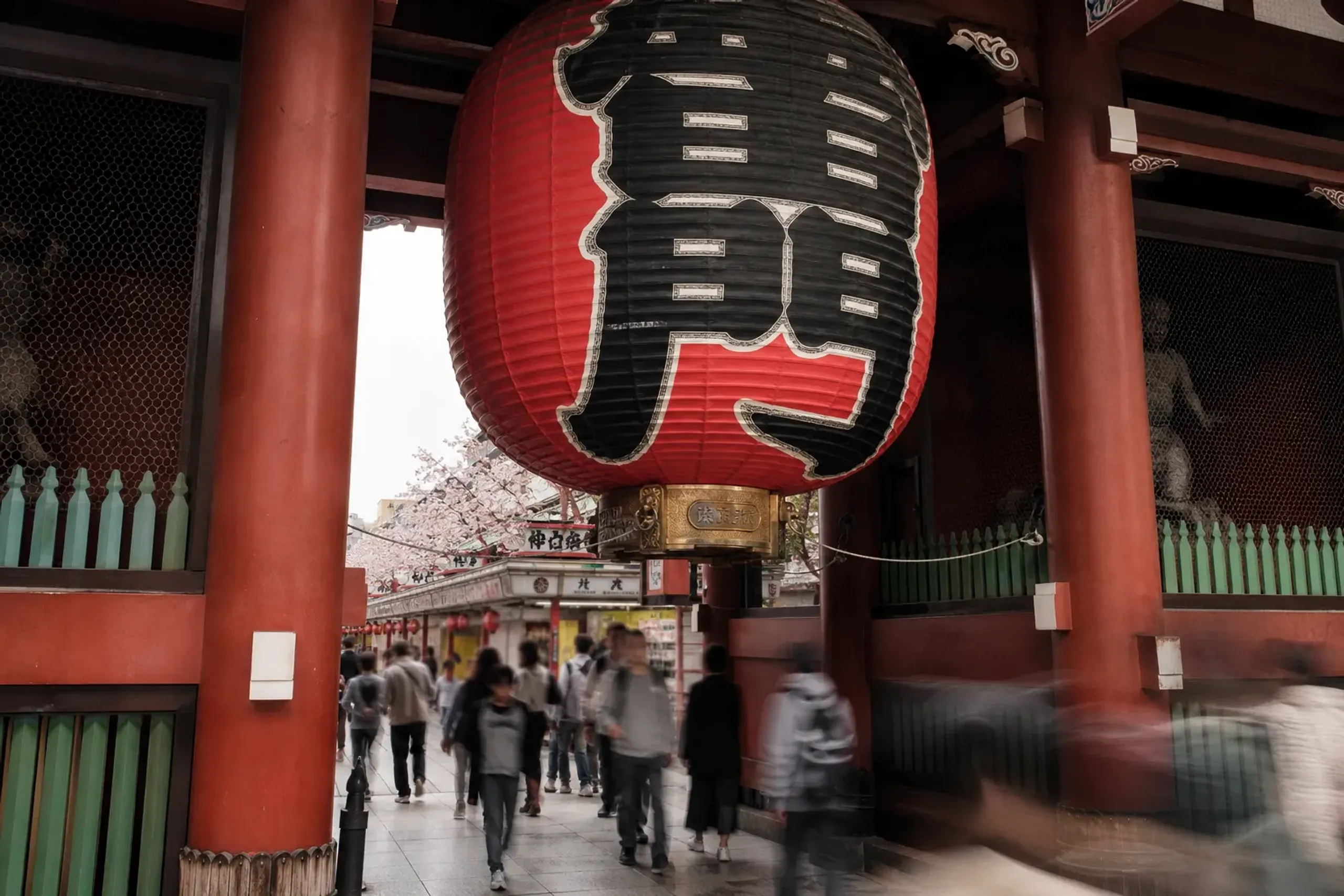
Tokyo works best on a shore day when you choose one area and stay with it.
From Yokohama, the practical choices are Tokyo or Kamakura. Pick one. Tokyo is enormous, and a call day covers a fragment of it.
The temptation is to treat Yokohama as a launchpad for a “greatest hits” sprint. Big mistake. The day becomes a series of commutes, and you remember the time pressure more than the place.
Option A: Tokyo As A Tight, Intentional Slice
Tokyo works best when you accept the constraint and choose one area. That can be Asakusa for older Tokyo around Sensō-ji, or the calm geometry of the Imperial Palace East Gardens (when open), or a museum focus in Ueno.
Wabi-sabi matters here. Not as a buzzword. As a decision filter: fewer stops, more attention, and time to sit for tea or a quiet lunch without watching the clock every five minutes.
- What works: One district, one museum or garden, one meal.
- What to avoid: Crossing the city multiple times for “must-sees.”
- Good fit for: First-time visitors who want a recognizable Tokyo moment.
Option B: Kamakura For Shrines, Sea Air, And Easier Pacing
Kamakura is often the calmer shore day. You get temples and shrines, short distances between key sites, and a pace that feels human.
It is also easier to adjust. If the day runs slow, you are not stuck on the far edge of a giant city. That flexibility is not glamorous, but it is what keeps a call day from turning sharp.
- What works: A temple visit paired with a quieter neighborhood walk.
- What to avoid: Trying to add Tokyo on top “since it’s nearby.”
- Good fit for: Guests who value atmosphere and breathing room over big-ticket checklists.
The Obvious Mistake: Kyoto From Yokohama
Kyoto is the classic overreach. It looks doable on paper if you only count the fastest train time and ignore everything else. That is the problem.
Kyoto requires long-distance movement, station navigation, and then local transport inside a city that can clog at the exact hours you would be trying to cross it. A call day has no slack for that. You end up negotiating time, not experiencing Kyoto.
If Kyoto matters to you, treat it with respect. Do it as part of a land-based extension where the schedule belongs to you, not to the ship.
Practical Shore-Day Tips From Yokohama
Carry less. You will walk more than you think, and you will move through stations or busy sidewalks where luggage becomes friction.
Choose one “imperial-class” moment if you want formality and history. In Tokyo that can mean sites connected to state history rather than shopping districts. Keep it contained, and it works.
When guests ask us what makes the day feel expensive in the right way, we usually answer with one word: discretion. Quiet arrivals, minimal waiting in public places, and no performance of luxury.
Hiroshima Port: Miyajima And The Memorial Sites, With The Ferry Variable
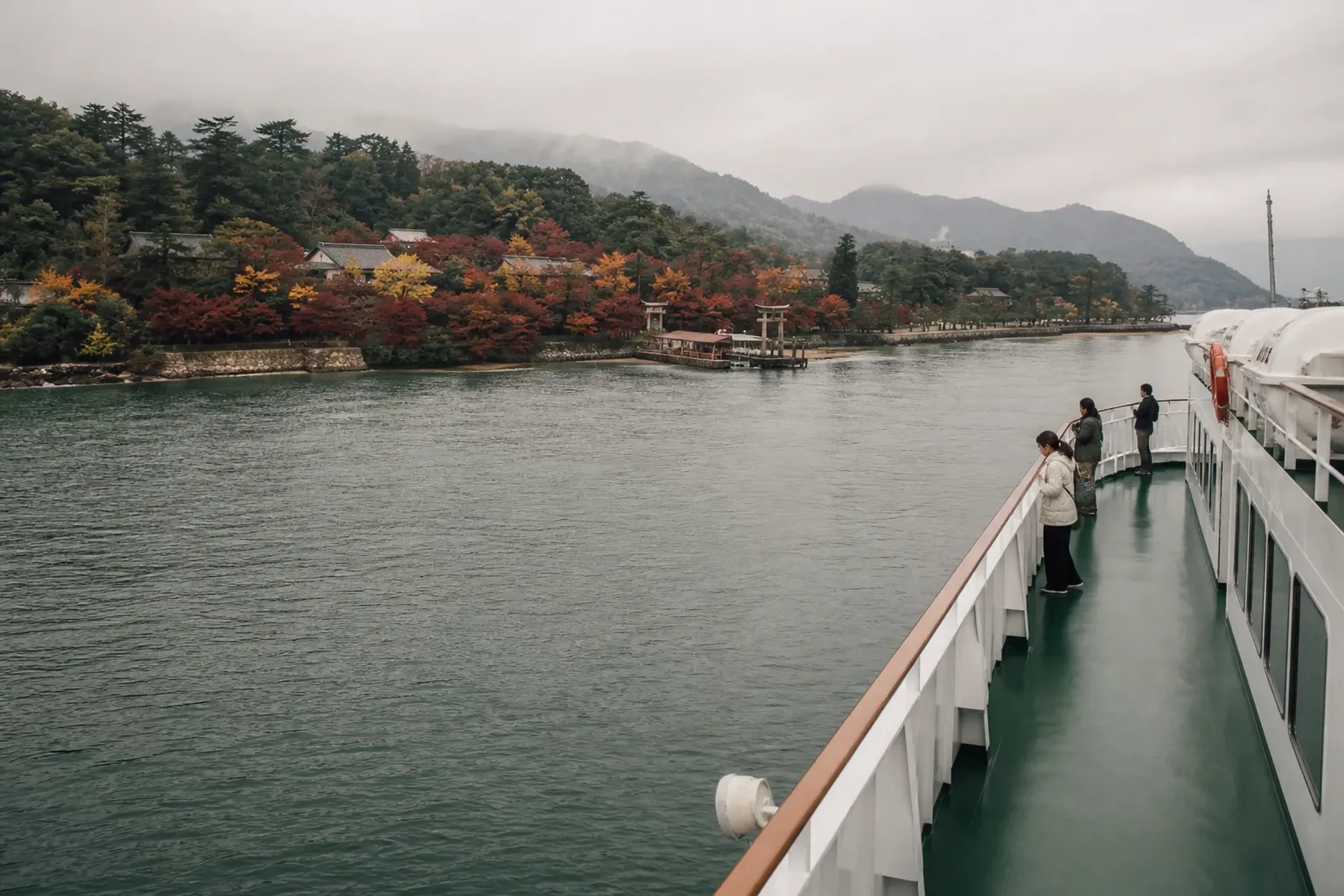
The ferry adds a fixed, weather-sensitive leg that must be built into the plan.
Hiroshima is a shore day with weight. Plan it that way. You are not stacking amusements here.
The practical pairing is Miyajima (Itsukushima Shrine area) and Hiroshima’s memorial sites. Many guests try to do both, and it can be done, but only if the day is paced and the ferry leg is treated as a fixed, weather-dependent variable.
Miyajima: The Ferry Adds A Hard Dependency
Miyajima is not just “a short hop.” It includes a ferry segment, and ferries are sensitive to sea conditions. That means your timing risk is not only traffic; it is also water and wind.
Plan the island as a clean block of time with a clear turn-back point. No drifting. If conditions slow the day, you want a graceful retreat, not a panicked run to catch the next connection.
- What works: A single shrine-focused visit with a modest walking loop.
- What to avoid: Overcommitting to hikes or far-flung stops on the island during a short call.
- Plan B idea: If sea conditions complicate the ferry, keep your focus in Hiroshima city instead.
Hiroshima Peace Memorial: How To Approach It On A Call Day
The Hiroshima Peace Memorial Park and the Hiroshima Peace Memorial Museum require time and attention. They are not a “quick stop.” Many guests prefer to keep the rest of the day lighter so the visit is not rushed.
If you include the museum, enter with enough margin that you are not watching your phone for the next transition. The experience is serious, and it lands differently than any other site on this page.
We also recommend talking through the group’s preferences in advance. Some families choose the park only. Some adults choose the museum. The right choice is the one you can do without hurry.
What You Should Not Attempt From Hiroshima Port
Trying to “tap” multiple cities in one call is where Hiroshima days break. The port is not a rail hub designed for fast leisure transfers across a region inside a short window.
If you want broader Western Japan—Kyoto, Osaka, or deeper Kyushu—build it as a pre- or post-cruise land segment. Shore time is valuable, but it is not elastic.
Quiet Craft And Hidden Japan Near Hiroshima (When Time Allows)
If your group has already decided against rushing between major sites, a smaller cultural layer can fit well. Think craft over crowds.
In our experience, the best “hidden Japan” moments on a Hiroshima call day are the ones that stay close and simple: a careful walk, a small gallery, a coffee shop with restraint, or a conversation with a guide who can translate what you are seeing without turning it into a lecture. The point is texture, not coverage.
Fukuoka: A City Shore Day, Or A Very Careful Taste Of Kyushu
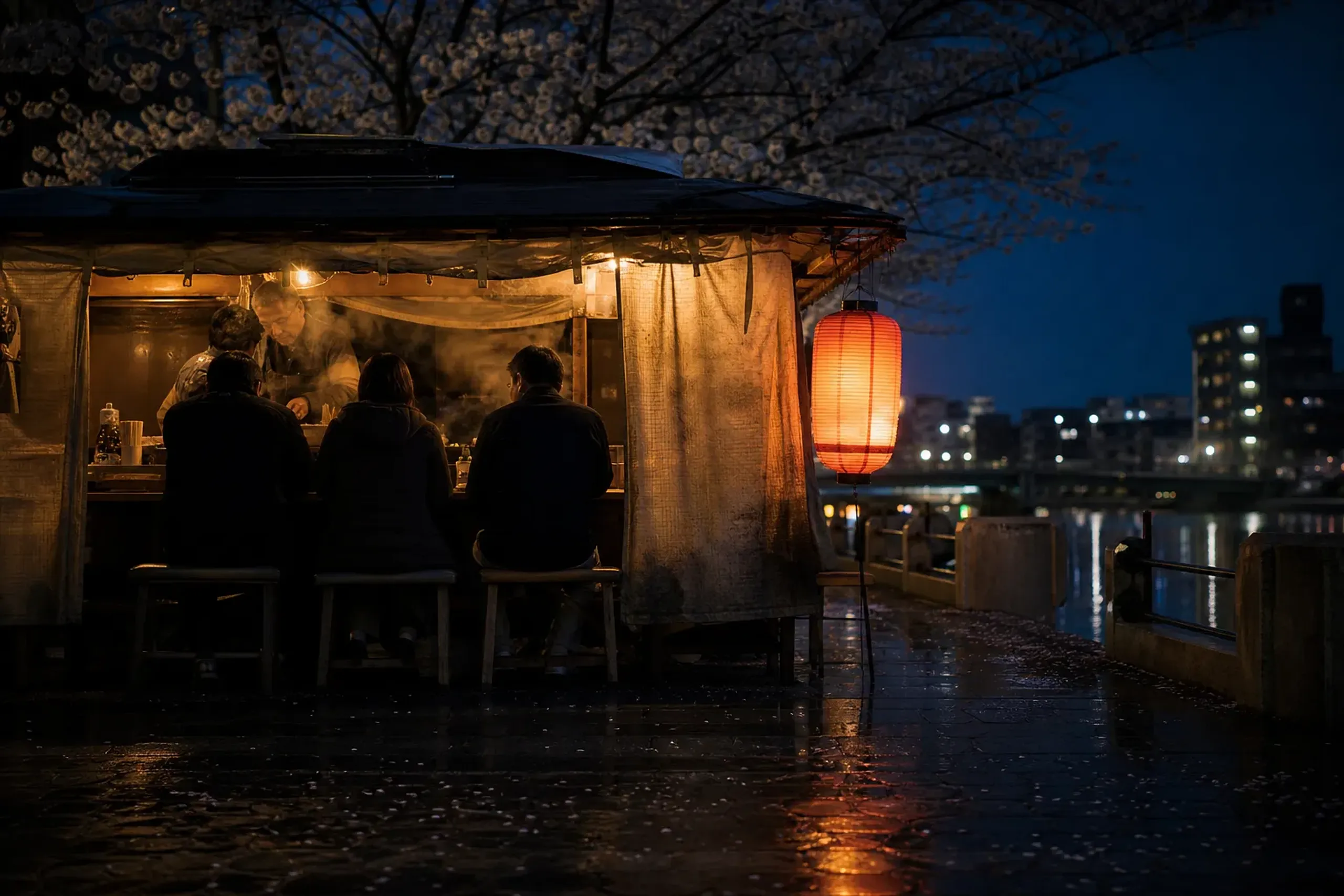
Fukuoka rewards a compact plan: one cultural stop, one meal, and time to sit.
Fukuoka rewards guests who stay close. It is a coastal city with a strong food culture, straightforward neighborhoods, and enough variety to fill a day without long transfers.
Kyushu is also larger than it looks on a map. That makes “just popping over” to another area the common error. Keep the circle tight, and Fukuoka feels relaxed.
Option A: Fukuoka City Done Properly
For most calls, the most reliable plan is to focus on the city. You can combine a cultural stop with an easy walk and a meal that does not depend on perfect timing.
Food becomes the anchor here, but not as a checklist. Choose one serious meal, and leave room for a second, smaller taste—coffee, sweets, or a market browse—without turning the day into an eating contest.
- What works: One museum or shrine visit plus a food-focused neighborhood.
- What to avoid: A tight reservation that forces you to sprint back across town.
Option B: A Short Reach Into Kyushu—Only With A Low-Risk Route
If you want a Kyushu “sample,” pick a destination with simple, direct movement and a clear early return point. This is where a private vehicle can reduce variables, because you are not stacking transfers and timetables.
Our team plans these days with restraint. Wabi-sabi again. The win is not distance. It is coming back unhurried.
- What works: One out-of-city stop that still leaves a generous return window.
- What to avoid: Multi-stop loops that rely on perfect road conditions.
Who Should Stay Closest To Port In Fukuoka
Families with young children often do better with a compact day. So do guests with mobility limits, or anyone who simply does not want to negotiate stress on a cruise holiday.
There is no prize for going far. A short radius gives you choices when the day shifts.
Buffer Time Is The Luxury: How We Hold The Day Together
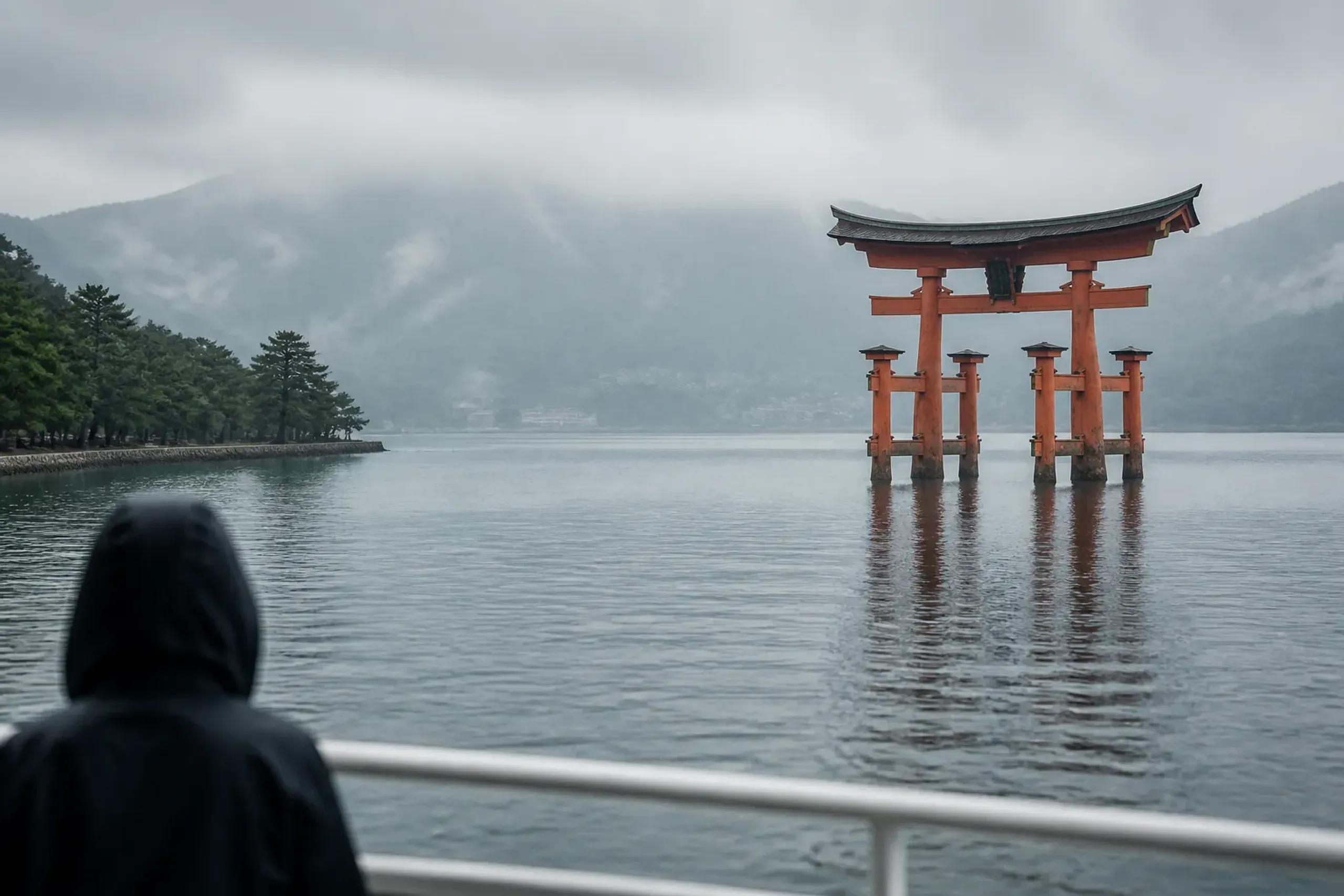
Buffer is not caution. It is design. It is the difference between a good shore day and a story you do not want to tell at dinner.
We plan buffers for three kinds of risk: road traffic returning to port, delays on water when ferries are involved, and human pace—because the person who needs an extra ten minutes is often the person you least want to pressure.
Discretion shows up here too. When you are not racing, you are quieter in public, less flustered at entrances, and less exposed to crowds. The day reads as controlled.
A Simple Buffer Framework You Can Use
- Front-load the day’s farthest movement early.
- Keep the last hour or two near the port zone in spirit, even if not geographically adjacent.
- Leave one “soft” element that can be skipped without regret.
Private Shore Day Versus Ship Excursion: An Honest Comparison
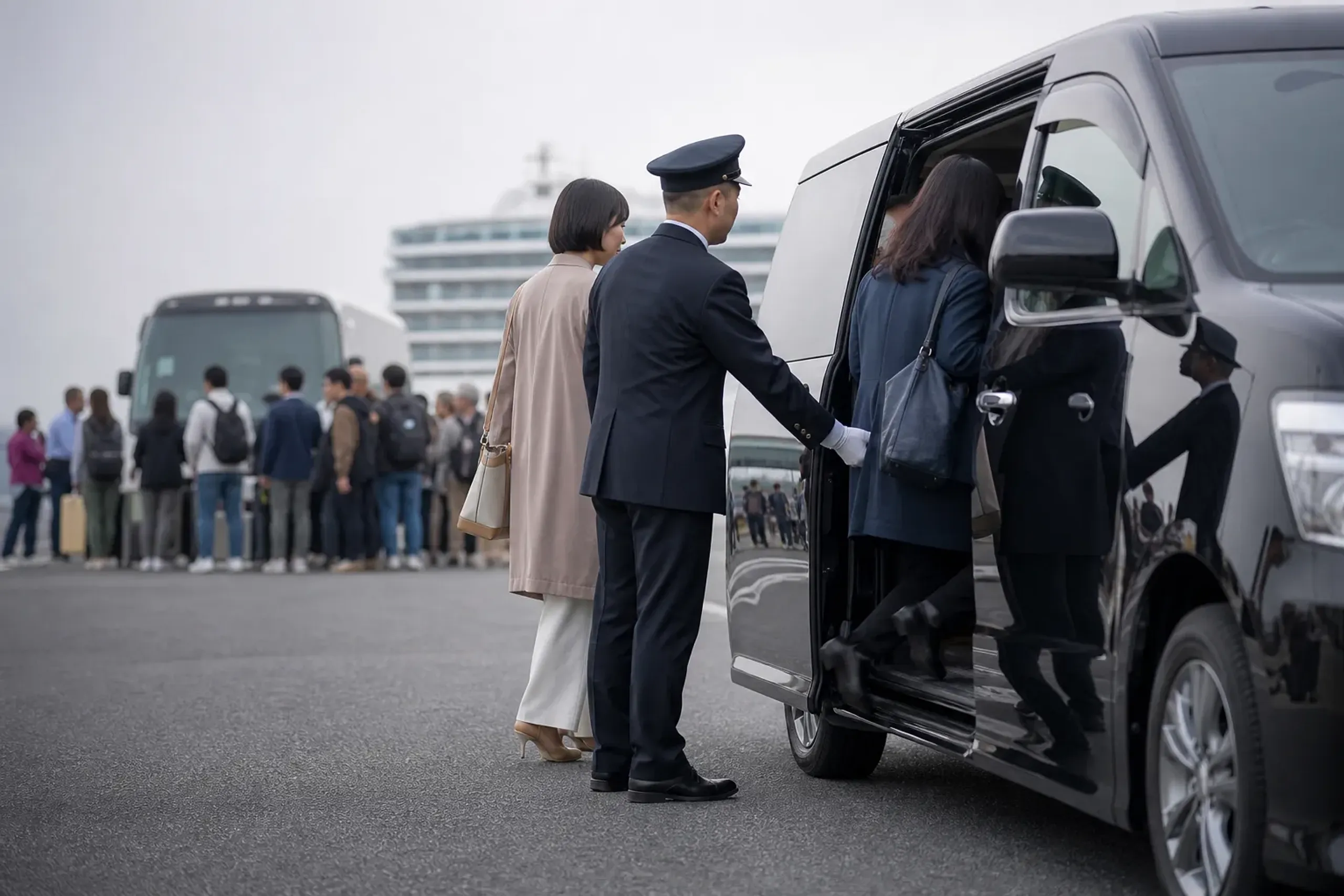
Both ship tours and private days can work—the right choice depends on how you want to manage time and flexibility.
Ship excursions exist for a reason. They are organized, they have clear meeting points, and they suit guests who want a single, predetermined plan. For many travelers, that is a relief.
A private shore day is different. Smaller group, adjustable pacing, and room for personal interests. It can also be better for multi-generational groups where one person wants temples, another wants design, and a third wants a calm café break.
Neither is automatically “better.” The question is which risk you prefer: the rigidity of a fixed group schedule, or the responsibility of choosing a plan that matches your own constraints.
| Decision Point | Ship Excursion | Private Shore Day |
|---|---|---|
| Pacing | Fixed timetable, group rhythm | Adjustable pace, built around your group |
| Group Size | Often larger groups | Typically small, private party |
| Flexibility | Limited changes once underway | Plan A / Plan B structure possible |
| Best For | Guests who want simplicity | Guests who want curation and control |
Doing Less, Deliberately: Two Anchors, Not Five
Most shore-day disappointment comes from overloading the schedule. The logic is emotional: “We may never be here again.” The result is usually thinner than you wanted.
We advise choosing two anchors. One is the reason you got off the ship. The other is what makes the day feel personal—craft, gardens, a neighborhood walk, or a meal you will remember.
If you finish early, you can always add a soft stop. If you plan five hard stops and lose one, the whole day feels like failure. That is the wrong psychology for a call day.
Examples Of Strong Two-Anchor Pairings
- Yokohama: One Tokyo district + one garden or museum.
- Hiroshima Port: Miyajima block + Peace Memorial Park (with or without the museum).
- Fukuoka: One cultural stop + one serious meal with time to sit.
Planning Notes That Protect The Day (Without Killing The Mood)
Weather is a real variable. Especially when ferries are involved. A crisp Plan B is not pessimism; it is professionalism.
Accessibility should be discussed early. Japan has many stairs, uneven stone, and long station corridors. Quietly planning for that avoids awkward moments later.
If you’re building a pre- or post-cruise extension, entry logistics can matter too. Japan’s Ministry of Foreign Affairs states that the JAPAN eVISA system is available, and that as of May 15, 2026 eligibility depends on nationality and residency. Confirm your status early, not the week you fly.
How Japan Royal Service Approaches Private Transportation On Shore Days
We often see guests assume rail is always faster. Sometimes it is. Sometimes it is a maze of transfers that eats your margin.
For shore days, private movement can reduce variables, especially for multi-generational groups or anyone who wants quiet between stops. Our shore-day transport planning draws on the same logic we describe in our logistics piece, “Japan Without Friction: The Logistics That Shape a Trip.”
When private chauffeured touring is part of the plan, we direct guests to our private transportation overview for context, then we refine the day privately around your ship’s schedule and your tolerance for risk.
Q&A: Shore Days In Japan (The Questions People Actually Ask)
How Far Inland Should I Go On A Japan Cruise Port Day?
Less far than you want to. Choose a radius that still lets you return early, with time held back for traffic, ferry delay, or a slow exit from a site.
Can I Do Tokyo And Kamakura From Yokohama In One Day?
It is possible to touch both, but it tends to feel thin. In our experience, the better day is one area of Tokyo or a fuller Kamakura plan with less commuting.
Is Kyoto A Sensible Day Trip From Yokohama Port?
No. Kyoto is the obvious temptation and the obvious mistake for a call day, because it depends on long-distance movement and leaves too little margin for a fixed ship departure.
How Should I Plan For Miyajima On A Shore Day?
Treat the ferry as a fixed dependency and a weather variable. Keep the island plan simple and define an early turn-back point so you do not negotiate the return at the last minute.
What If I Want A Guide As Well As A Driver?
That can make a big difference, especially at cultural sites where context matters. A driver and a guide are different roles; many guests use both. If you want tailored guidance based on your interests and group, contact our concierge team.
How Do I Choose Between A Ship Tour And A Private Shore Day?
Choose the ship tour if you want a fixed plan with minimal decisions. Choose a private shore day if you want flexible pacing, privacy, and a route designed around your specific constraints and interests.
Why Choose Japan Royal Service
Shore days reward restraint. They also punish sloppy planning. Our team at Japan Royal Service designs private shore days around one non-negotiable: the ship’s departure time, with a deliberate buffer that protects the whole day.
We are built for guests who prefer quiet control to public fuss. Discretion comes first. The best moments often come from wabi-sabi choices—one temple approach done slowly, one neighborhood done properly, one conversation with context instead of ten rushed photo stops.
When you want depth, we can also shape the day around shokunin craft or a “hidden Japan” layer that is easy to miss on a port call. Not more. Just sharper.
If you’d like a shore day planned against your ship’s exact call time at Yokohama, Hiroshima Port, or Fukuoka, reach our team privately via WhatsApp or LINE, or contact us here.