In this guide
- 01Why Summer Is Hokkaido's Uni Season
- 02Shakotan: The Summer Hero Destination
- 03The 2026 Supply Reality — Why Timing And Access Matter
- 04Beyond The Restaurant: Summer Uni At Local Events
- 05How Top Counters Serve Uni — A Short Vocabulary
- 06A Two-Day Summer Uni Micro-Itinerary
- 07Frequently Asked Questions
- 08Why Choose Japan Royal Service
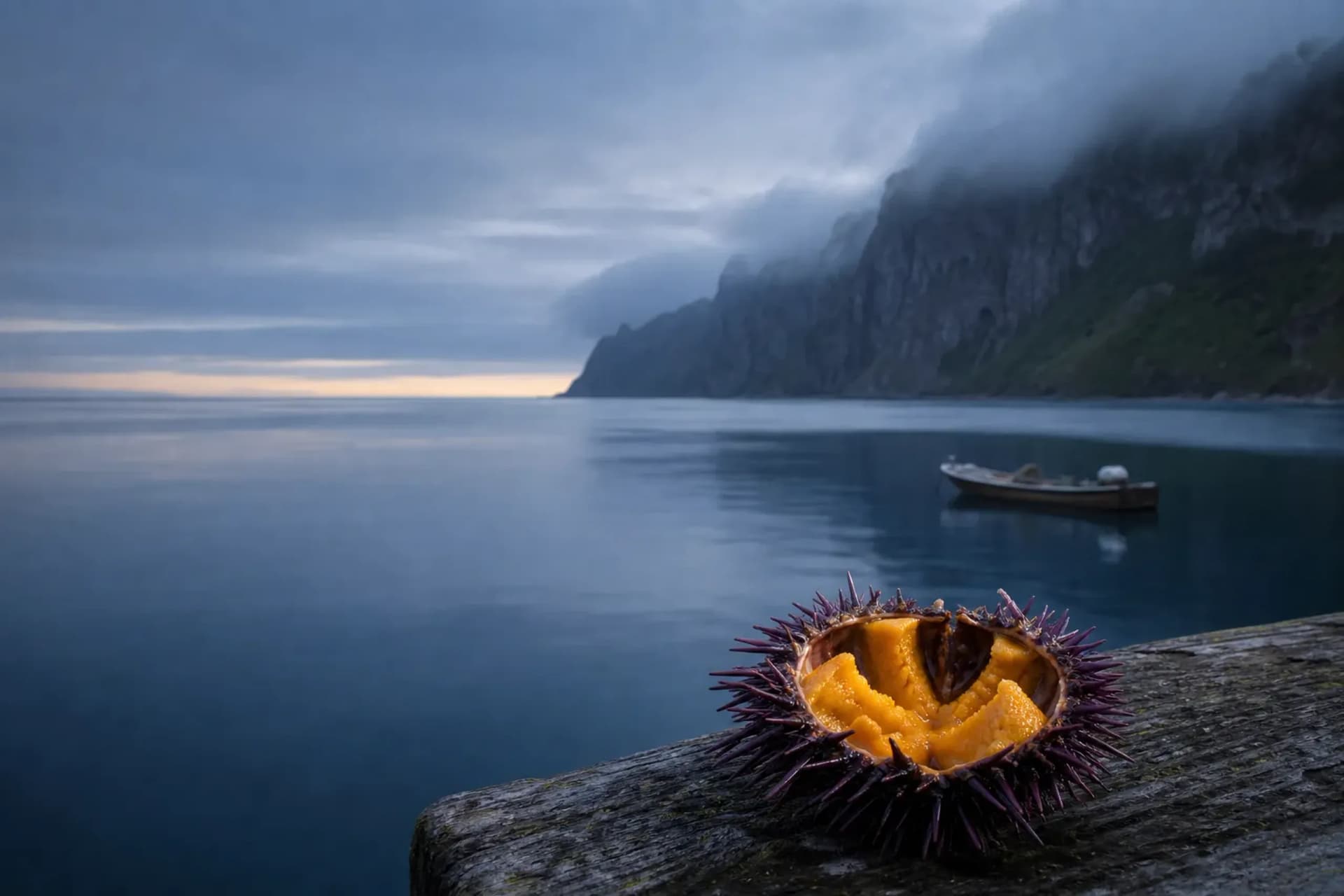
There is a moment, on the Shakotan Peninsula in July, when a lacquered bowl arrives at the counter and the aroma reaches you before the spoon does. Sweet. Briny. Almost floral. The uni has never seen a refrigerator. It came out of the Sea of Japan that morning, and it will be gone by the time the afternoon light shifts.
This is the version of Japanese sea urchin most travelers never taste. Not the yellow trays flown to hotel buffets. The real thing, eaten within hours, at the edge of the water that grew it.
Our team at Japan Royal Service builds summer itineraries around exactly this window. Below is what we know about where to go, when, and how to eat uni the way a connoisseur would — quietly, and at the source.
Why Summer Is Hokkaido's Uni Season
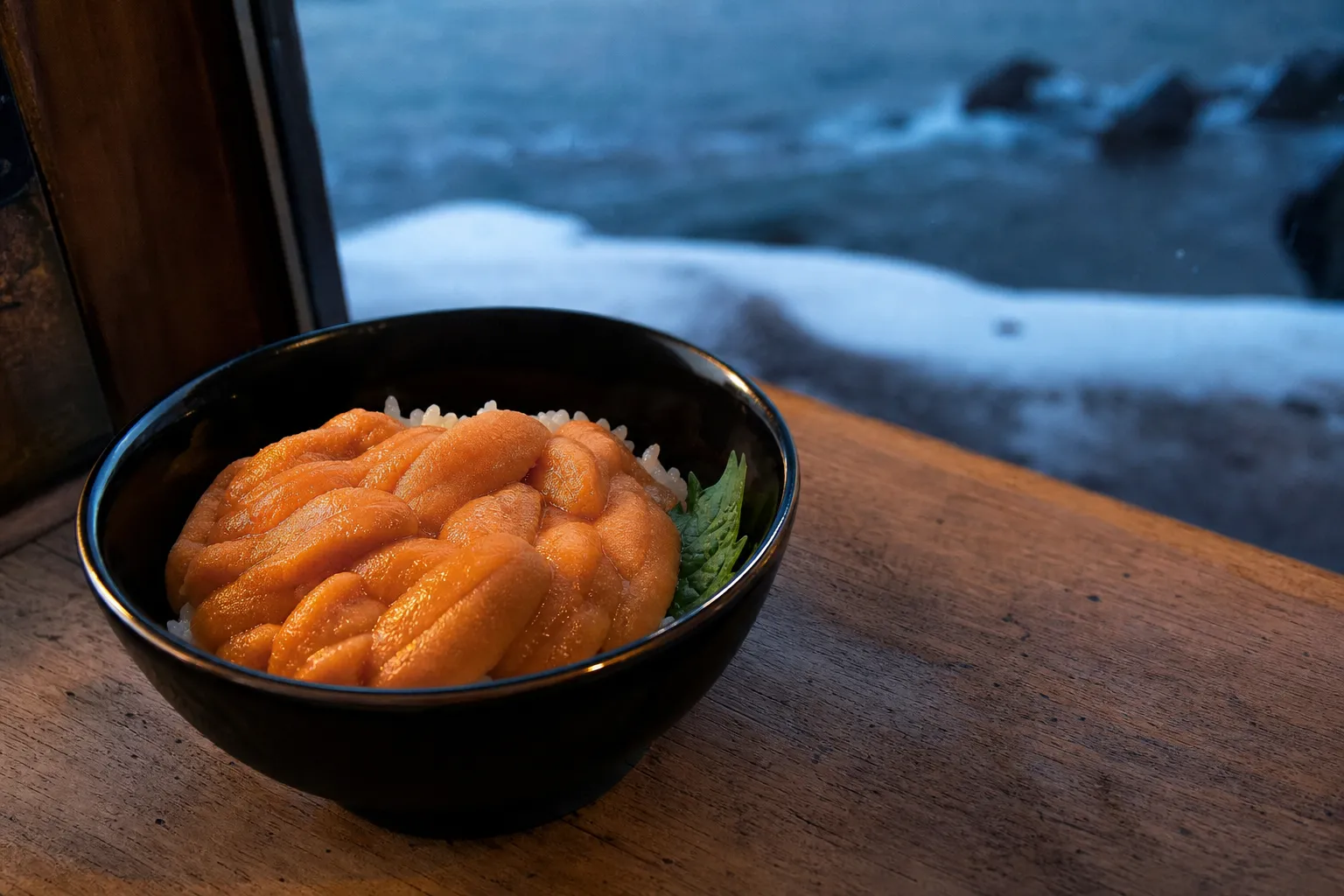
A Shakotan uni-don at the height of summer season, eaten within hours of the catch.
Sea urchin is a year-round obsession in Japan. But Hokkaido's Sea of Japan coast has a sharp, celebrated window. Hokkaido's official tourism site names the Shakotan Peninsula as a place to eat freshly harvested sea urchin, with the season stated plainly: June to August.
That tight span is the whole point. Local Shakotan restaurants echo it — their raw uni-don uses Shakotan uni from June through August, and outside that period they source from elsewhere in Hokkaido. When the season closes, the specific experience closes with it.
Japan's National Parks guide to the wild flavors of Hokkaido puts it simply: the island has a reputation for rich, deeply flavored uni, and the catch season shifts by location and variety. Summer, on this coast, is the peak. Miss it by a month and you are eating a good bowl. Hit it precisely and you are eating something rare.
Shakotan: The Summer Hero Destination
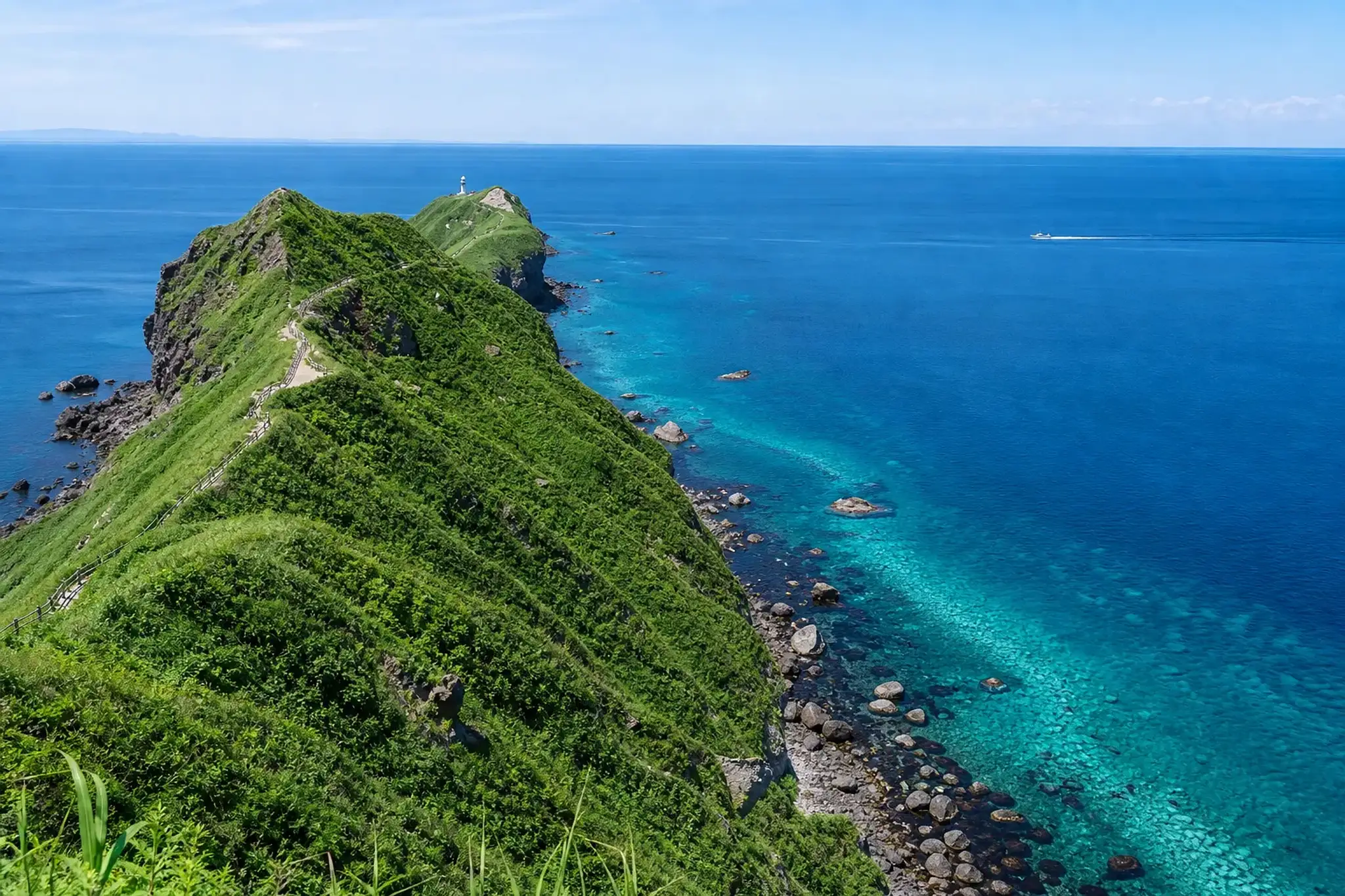
The cobalt water locals call Shakotan Blue, west of Sapporo.
Shakotan sits west of Sapporo, a peninsula of cobalt water the locals call "Shakotan Blue." Cliffs. Clear coves. A coastline that looks staged but isn't.
The draw is the uni-don. A bowl of rice crowned with raw sea urchin, nothing hiding it, no heavy sauce. The Shakotan Tourism Association's own dining listings highlight fresh uni-don precisely in the June–August period. This is a hyper-local specialty, not a marketing invention.
What makes it worth the journey is honesty. The uni here is graded by proximity, not brand. You taste the water. Two main varieties dominate the counter, and knowing the difference changes how you order.
Bafun Uni Versus Murasaki Uni
Connoisseurs speak in these two names.
- Bafun uni — smaller, deep orange, intensely sweet with a lingering richness. The one people describe as "custard of the sea." Prized, and often the pricier of the two.
- Murasaki uni — paler, cleaner, more delicate. Less punch, more finesse. Some palates prefer its restraint.
Neither is superior. They are different arguments. A thoughtful counter may serve both side by side, and the contrast is the education. Ask which the boat brought in that morning.
The 2026 Supply Reality — Why Timing And Access Matter
Here is the part most travel guides skip.
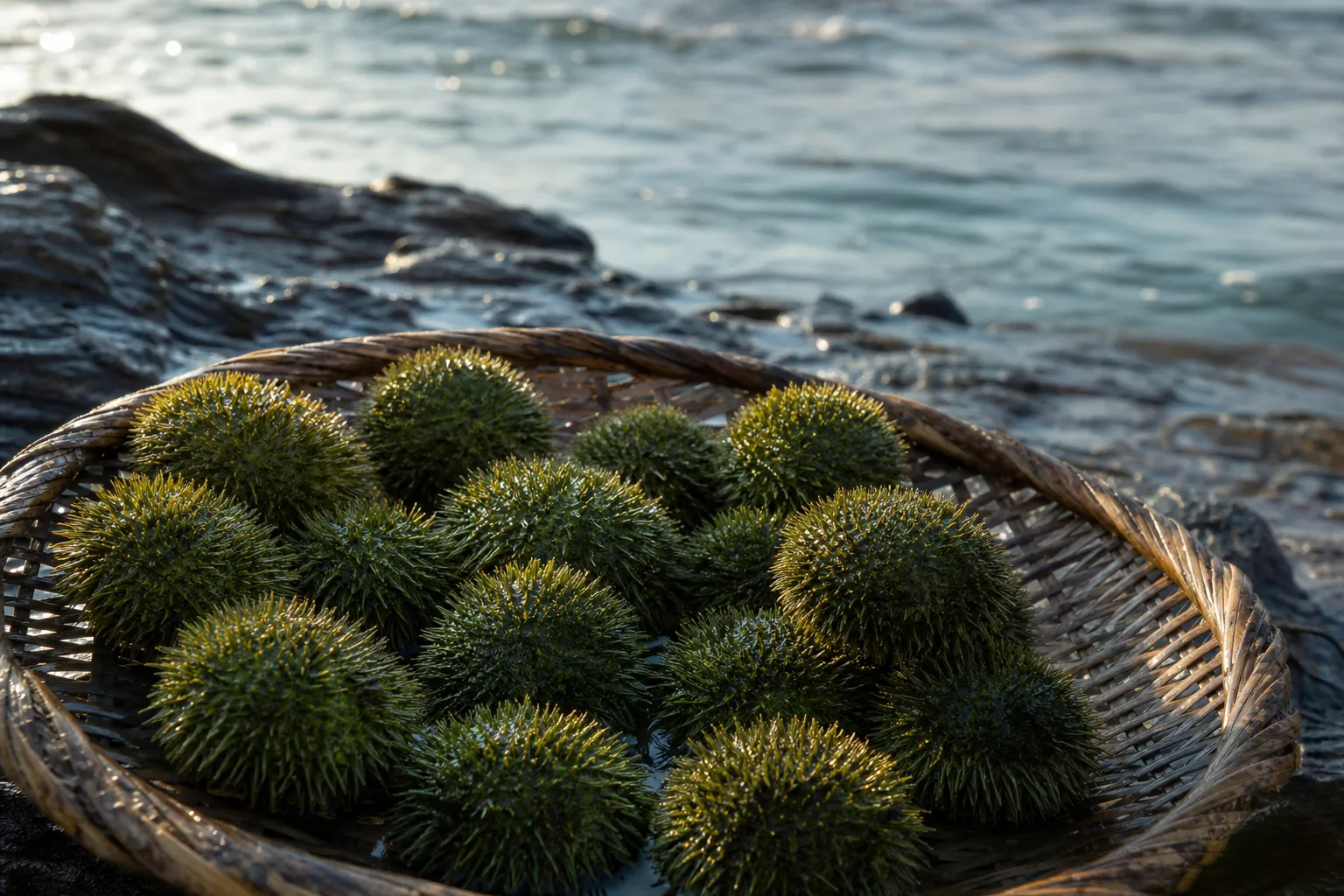
A 2026 seafood industry report describes Hokkaido sea urchin landings in the Sea of Japan region under real pressure. Rebun Island's green sea urchin landings were reported at roughly half the same period the prior year, with beach prices reported to have doubled. Rising water temperatures are cited. The green sea urchin harvest opened on Rebun on June 1, 2026.
We share this not to alarm. Uni will be on counters this summer. But availability of the very best, from the very best coves, is tighter than it was — and that reality rewards planning over luck.
Planner's note: In a constrained season, a walk-in strategy fails first. The finest uni sells to reservations and regulars before the door opens. This is precisely where quiet introductions and advance timing earn their keep.
For the guest, the lesson is direct. Do not build a once-in-a-decade trip around a hope that the counter has bafun uni on the day you wander in. Build it around confirmed timing, verified sources, and a fallback that is just as good.
Beyond The Restaurant: Summer Uni At Local Events
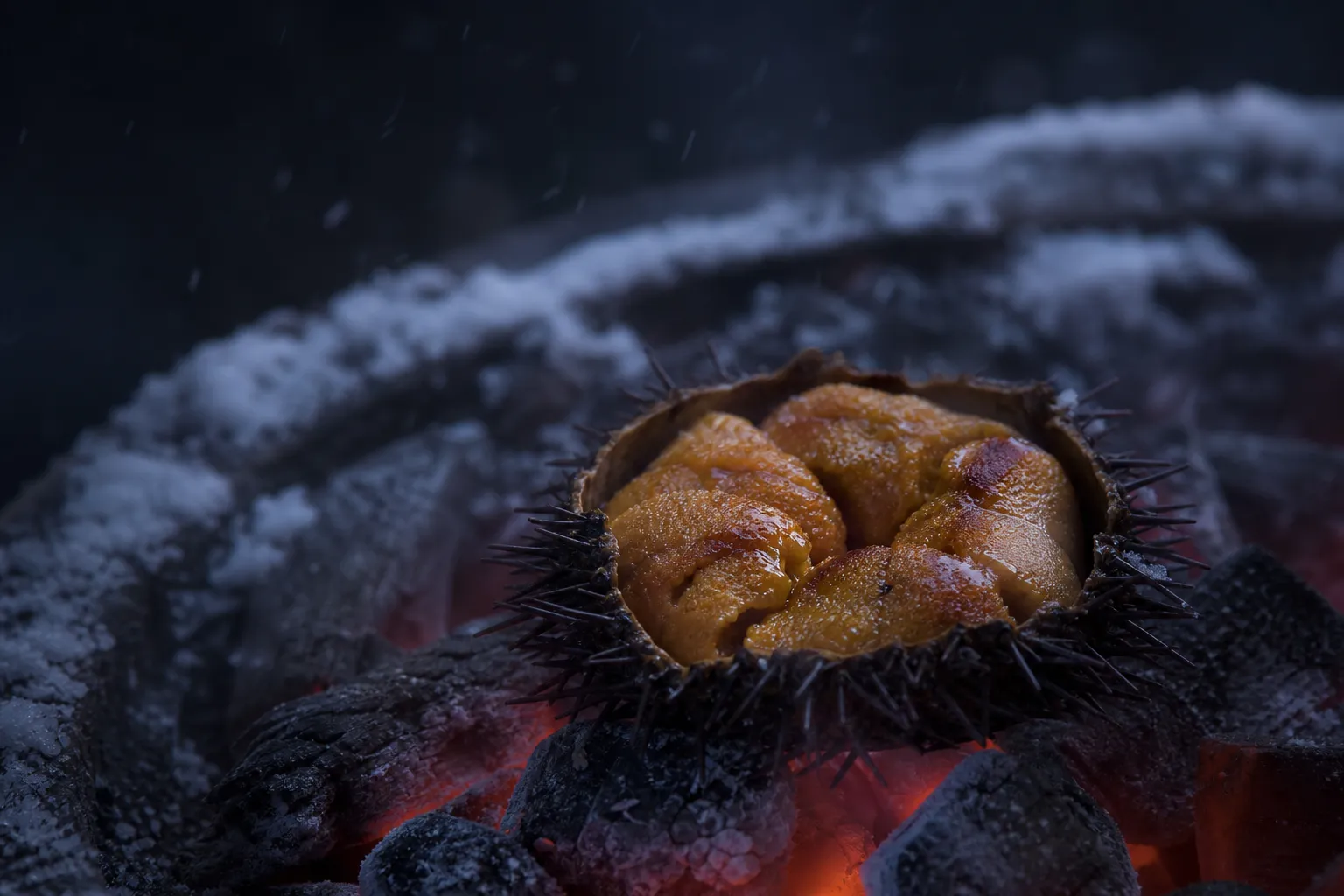
Yaki-uni over coals — heat concentrates the sweetness into something nutty.
The counter isn't the only way in. North Hokkaido's tourism events calendar lists a summer event dated August 5–6, 2026 featuring grilled uni and mini uni bowls — yaki-uni and small uni-don among the food offerings.
Grilled uni is a different pleasure entirely. Heat concentrates it. The edges caramelize, the sweetness deepens, and the sea note softens into something almost nutty. Paired with the loose energy of a summer matsuri, it becomes a memory rather than a meal.
Our concierge team treats these dated events as itinerary anchors. The trick is enjoying the atmosphere without inheriting the crowd — arriving at the right hour, with transport waiting, and leaving before the throng peaks.
How Top Counters Serve Uni — A Short Vocabulary
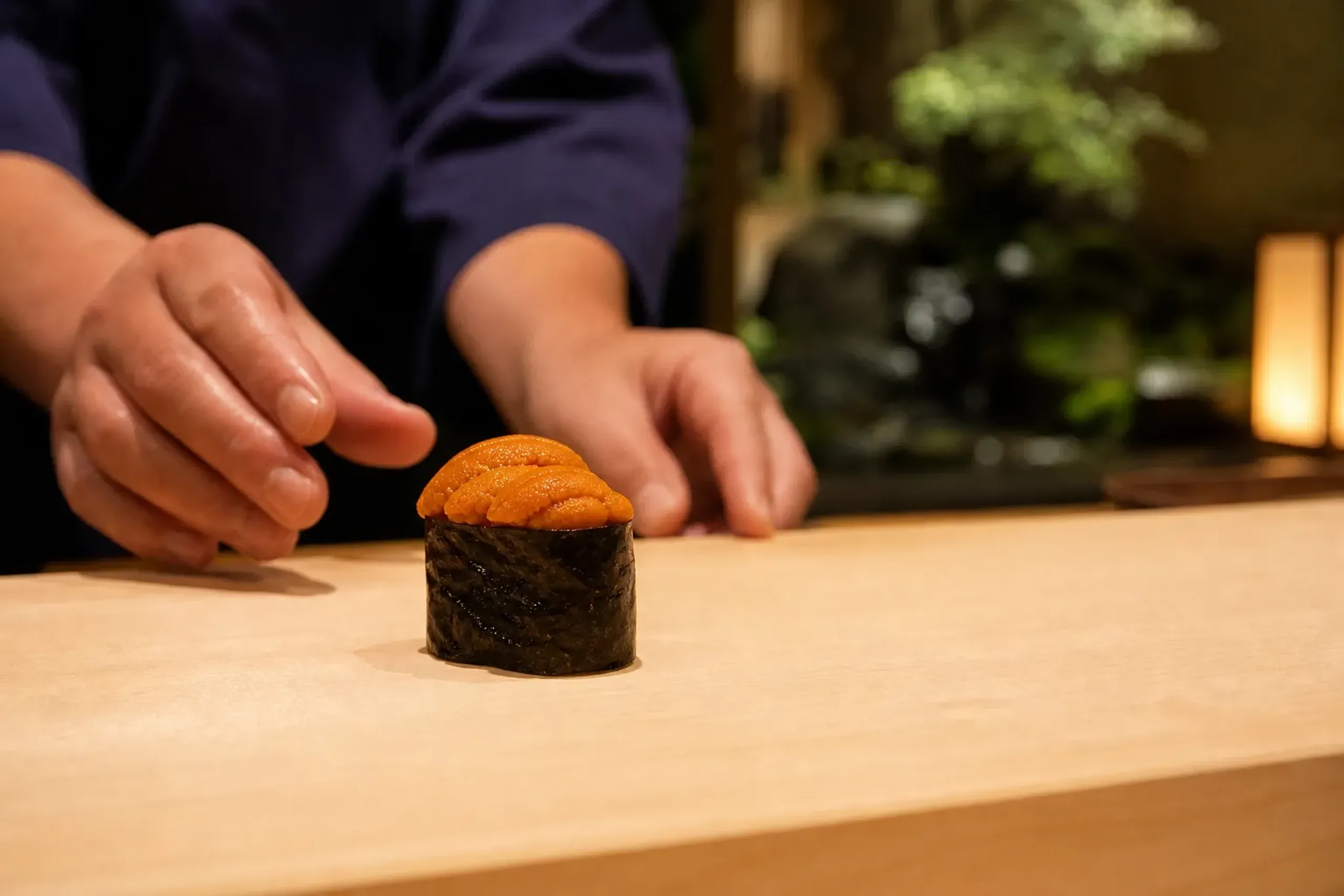
Gunkan, nigiri, or as a whisper over toro — how a fine counter frames uni.
Away from Hokkaido, in Sapporo or at a fine Tokyo counter, uni appears in forms worth naming. Order with intention.
- Gunkan — "battleship" sushi, a band of nori cradling loose uni over rice. The classic vessel.
- Nigiri — uni pressed directly onto rice, sometimes bound with a thin nori strap. Purer, more exposed.
- Donburi (uni-don) — the Shakotan hero. A generous bowl, uni as the entire event.
- As a course element — a whisper of uni over toro, inside a tempura, or resting on chilled somen. Chefs use it as punctuation.
What should you ask your host to request? Origin and handling. Where the uni was landed, whether it's alum-free (uni treated without alum tastes markedly cleaner, without the faint bitter edge), and which variety came in fresh. A skilled counter welcomes the question. It signals you know what you're eating.
A Two-Day Summer Uni Micro-Itinerary

A private drive along the Shakotan coast turns the journey into part of the meal.
Here is how the days might fall, built on real, verifiable stops.
Day One: Shakotan At The Source
A private chauffeured drive from Sapporo out to the Shakotan Peninsula. The coastal road is part of the reward — Shakotan Blue on your left, the whole way. A reserved uni-don lunch at the season's peak, followed by unhurried time along the coves and cliffs while the crowds queue elsewhere. Back before the light goes soft.
Day Two: Sapporo Omakase, Hokkaido Uni
A contrast, on purpose. An evening at a considered Sapporo counter where Hokkaido uni is served in the chef's hands — gunkan, nigiri, perhaps a course that frames it against other local catch. Where Day One is raw and elemental, Day Two is composed. Two grammars of the same ingredient.
Travel times between Sapporo and Shakotan vary with season and road conditions; our coordinators confirm the exact window before we commit a route, and a private vehicle removes the guesswork that public transit introduces on this stretch.
Frequently Asked Questions
When is the best time to eat Shakotan uni?
June to August. Hokkaido's official tourism site and local Shakotan restaurants both name this window for freshly harvested Shakotan uni. Outside it, counters serve uni sourced from other parts of Hokkaido instead.
What is the difference between bafun uni and murasaki uni?
Bafun uni is smaller, deep orange, and intensely sweet. Murasaki uni is paler, cleaner, and more delicate. Both are excellent; the choice is a matter of palate, and the best counters let you compare them side by side.
Is uni harder to get in 2026?
A 2026 industry report describes pressure on Sea of Japan landings, with Rebun Island's green sea urchin down to roughly half the prior year and beach prices reported doubled, attributed to rising water temperatures. Uni remains available, but the finest is tighter — which makes advance reservations and verified sourcing more valuable than ever.
Can I combine uni with other Hokkaido experiences?
Yes. Shakotan pairs naturally with coastal scenery, and North Hokkaido summer events in August feature grilled uni and mini uni bowls. A two-day route contrasting a Shakotan lunch with a Sapporo omakase works well for discerning travelers.
Why Choose Japan Royal Service
Summer uni is a season with a short fuse and, in 2026, a genuinely constrained supply. That combination is unforgiving to the unprepared. It rewards, instead, the traveler who arrives with the right table already held and the right coastline timed to the light.
This is the quiet work we do. In our experience, the difference between a good uni lunch and an unforgettable one comes down to introductions — the relationships that let a counter save its finest bowl, the local knowledge that tells us when Shakotan's boats are landing well versus when a different Hokkaido town is the smarter call. We plan around real-world constraints rather than pretending they don't exist.
Our chauffeured fleet covers the Sapporo–Shakotan coast privately, so the journey is calm and the timing is yours. And discretion runs through everything: your itinerary stays sealed, your name stays private, your table stays quiet. For guests who value cultural depth over spectacle, that restraint is the point.
To plan a summer uni journey around the Shakotan season, reach our team privately via WhatsApp or LINE, or at our contact page. Tell us your dates, and our concierge will map the rest.