In this guide
Morning light settles on the Dōjima River. The water moves slow and brown under the bridge, and the city is already loud with heat. A boy stands at the rail. He is twelve, maybe. White robe, serious face. In his hands he holds a halberd — a sacred one, carved and bound — and when the moment comes he lowers it into the current and lets it go.
That is how Osaka's Tenjin Matsuri begins.
Most people never see this part. They come for the boats and the fireworks on the second night, and those are worth coming for. But the festival opens earlier, and far more quietly, with one schoolboy and a river. Our team at Japan Royal Service has long believed that the quiet rite is the key to the whole thing — because the loud night grew out of it.
The Hoko-nagashi: a rite most visitors never witness
The ceremony is called the Hoko-nagashi Shinji. The halberd — the hoko — is released from the riverbank near Tenmangū shrine, and the shrine's attendants follow its path downstream. Where it comes to rest marks the sacred ground for that year's main festival. There is a logic here that predates the spectacle: the river itself chooses the course, and the city arranges itself around that choice.
To stand close enough to see the boy's face, to hear the robes rustle and the single beat of a drum before the halberd meets the water, is a matter of position and permission.
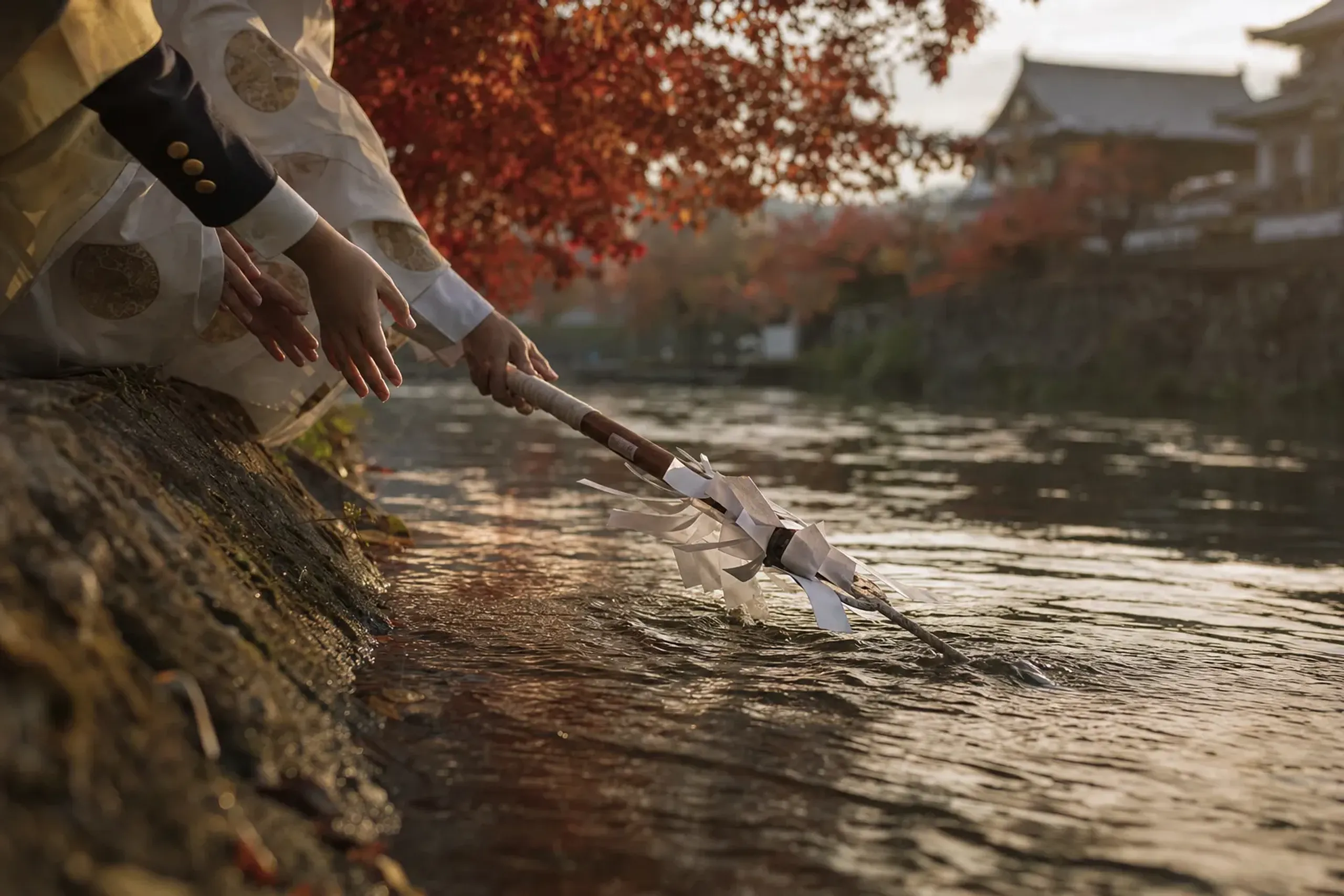
The riverbank fills quickly, and the view from a public bridge reduces the whole thing to a distant white speck. What we arrange instead is a quiet vantage — a reserved position, an introduction to shrine staff who understand why a discerning guest wishes to observe rather than photograph, and the stillness to actually take it in. This is the kind of access that does not appear on any public schedule.
Why 951 still matters
Tenjin Matsuri honours Sugawara no Michizane, the Heian-era scholar and statesman revered as Tenjin, the deity of learning. Tradition dates the festival to 951, when the Hoko-nagashi was first performed — meaning this rite of a halberd on the water has repeated, in essence, for over a thousand years.
That continuity is the point. For a traveller who has already seen the great festivals of the world, what distinguishes Tenjin Matsuri is not scale but lineage. A twelve-year-old performs a gesture that a twelve-year-old performed a millennium ago, and the river has not been told the difference. There is a restraint in that — a wabi quality — that the fireworks later obscure but never erase.
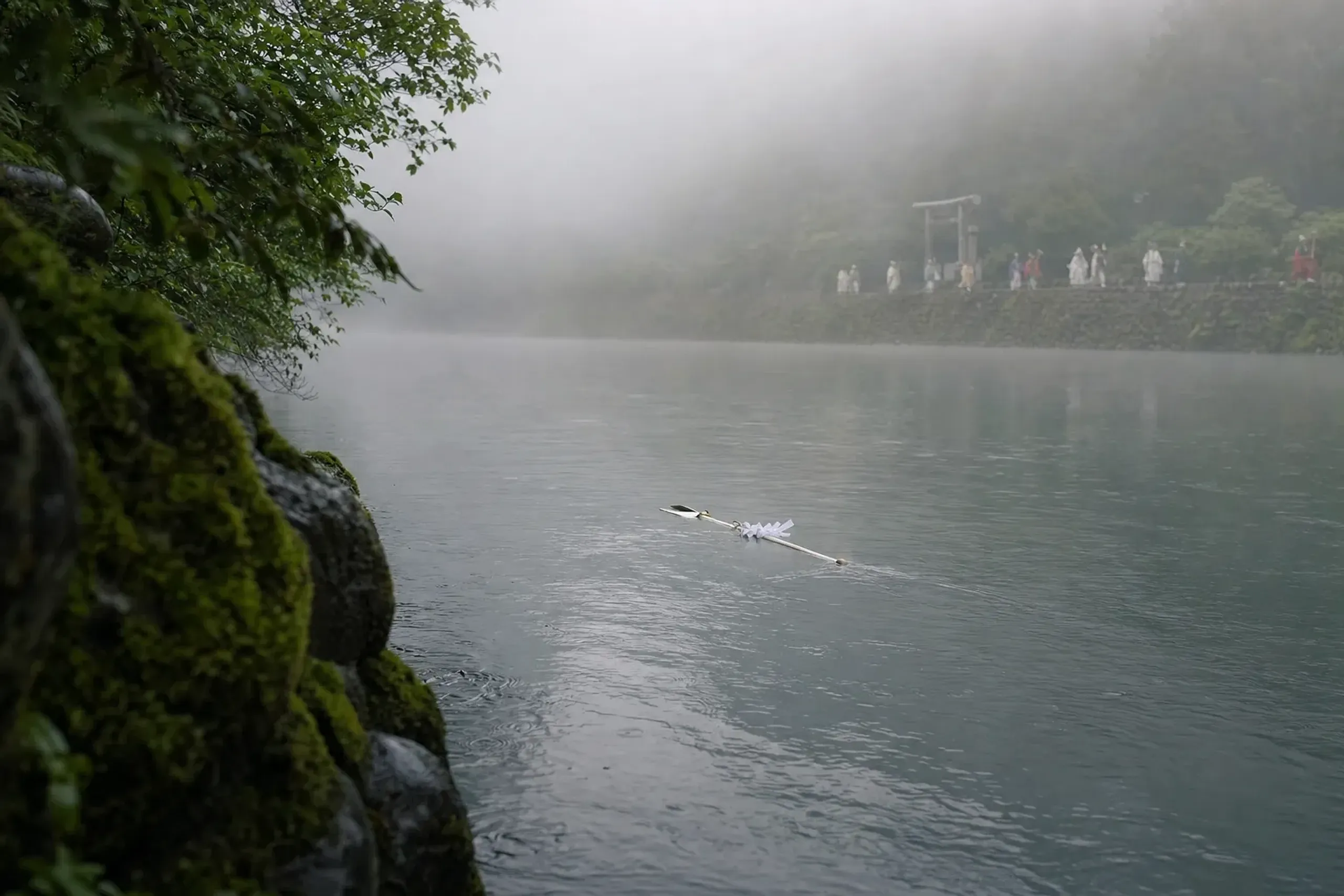
The apex of the experience is not the loudest moment; it is the understanding of what the loud moment stands upon.
The land procession and the river of boats
By the afternoon of 25 July, the festival moves. The Rikutogyo — the land procession — carries the deity's portable shrine, the mikoshi, through the streets in a column of some three thousand participants in Heian-period dress, with drums, dancers, and the slow sway of carried shrines. It is theatre of a very old kind, and it is meant to be felt at close range rather than glimpsed over shoulders.
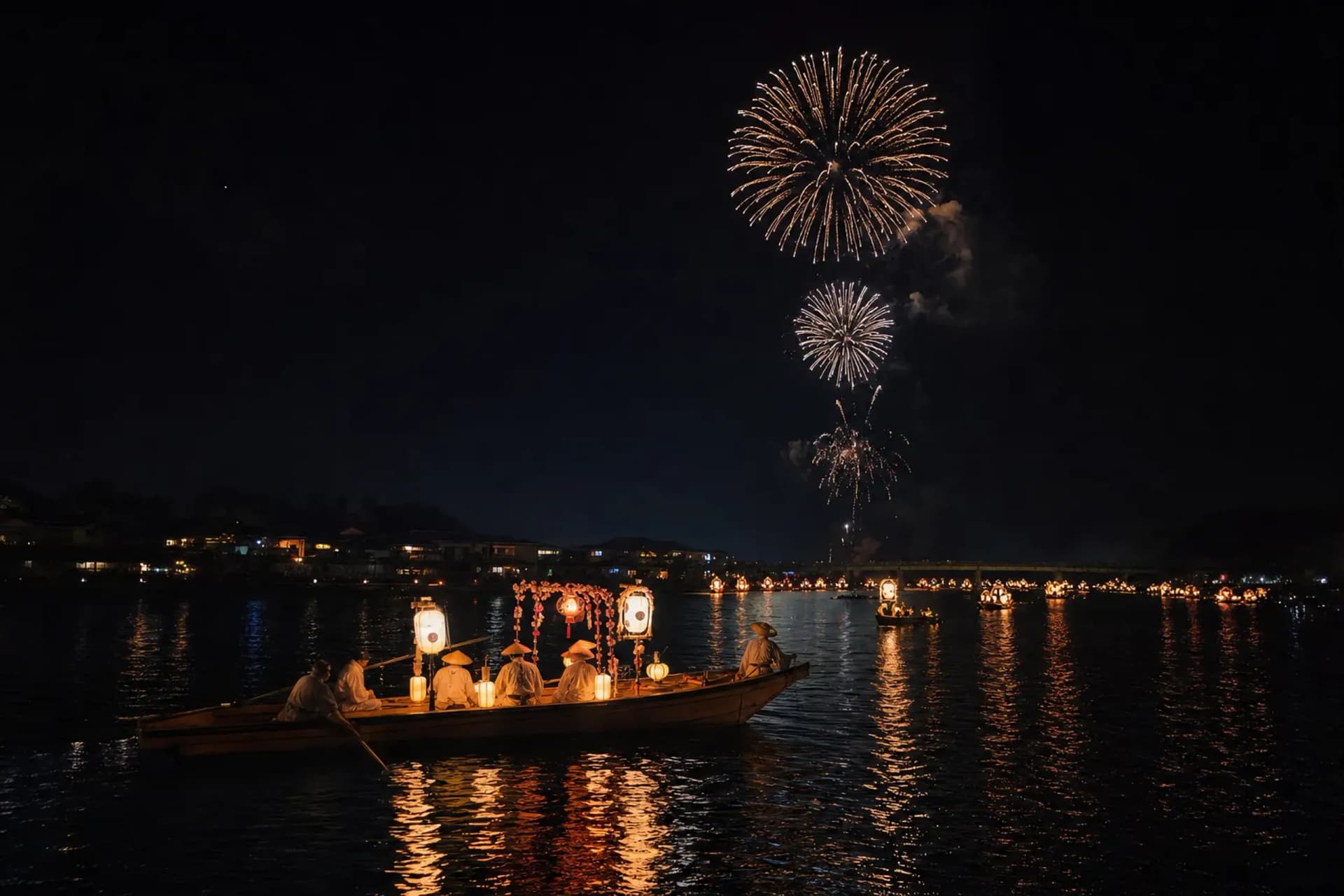
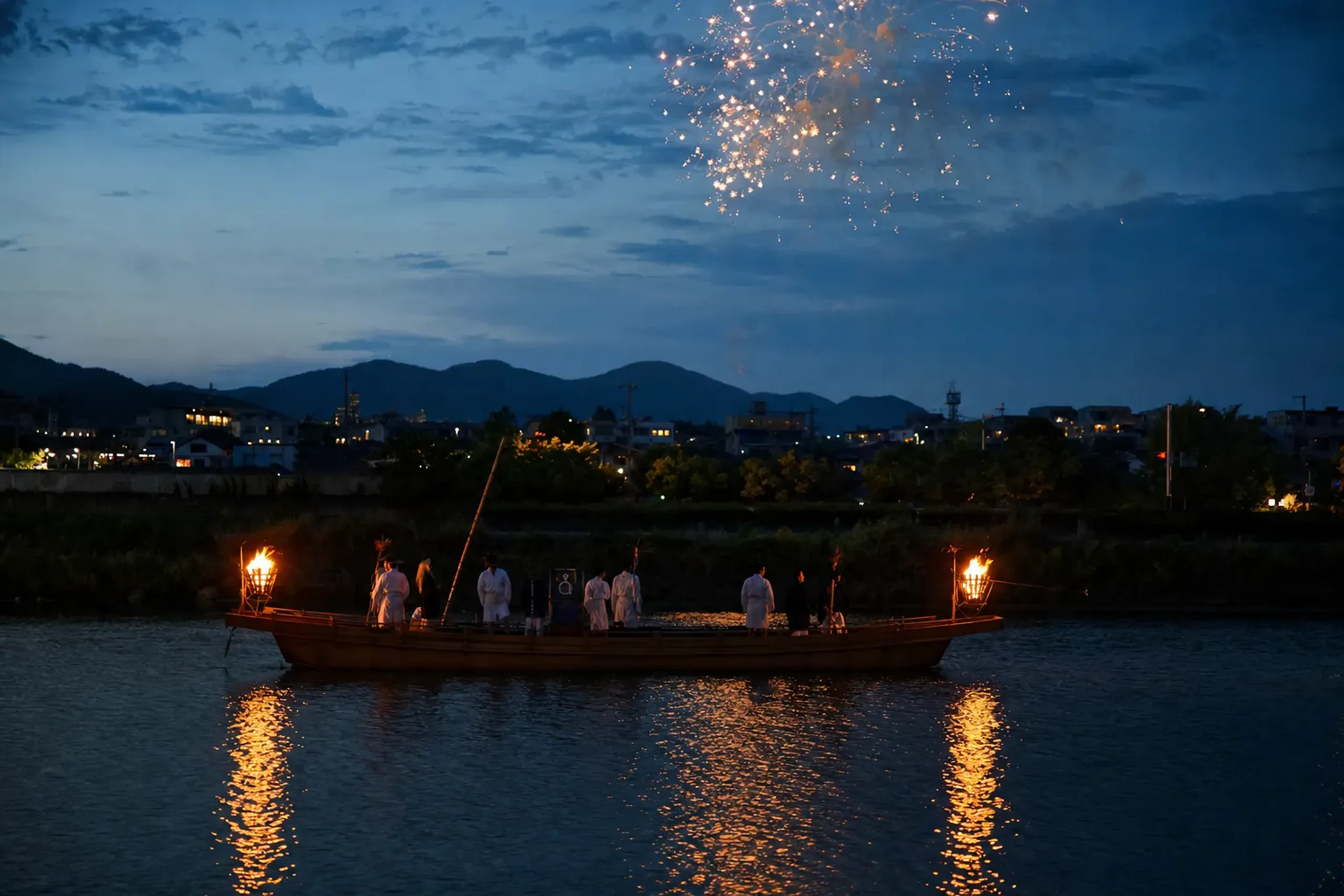
Then comes the Funatogyo, the boat procession. Roughly one hundred vessels take to the Ōkawa River as dusk falls — some bearing the sacred mikoshi, others carrying musicians, bunraku puppeteers, and guests. Bonfires burn on the decks. As night settles, about three thousand fireworks rise over the water, and the whole river becomes a corridor of light and reflection.
Most visitors watch from the banks. A few watch from a boat. We can arrange a place aboard one of the procession vessels, or a private river vantage with its own kaiseki service — a seat from which the fireworks fall toward you across open water rather than being watched through a crowd. Movement between the morning rite, the land procession, and the evening boats is handled by private chauffeured transfer, so that a day spanning three locations across central Osaka never becomes an exercise in logistics.
Shun: why the date is the luxury
Tenjin Matsuri falls on 24 and 25 July, without exception. This is not a festival you can rearrange your trip to catch on a convenient weekend — its value lies precisely in its fixity. Knowing to be in Osaka on exactly these two days, and knowing what to seek on each of them, is the quiet expertise that separates a well-planned visit from a chance one. The morning of the 24th for the halberd; the evening of the 25th for the fire on the water. Miss the window and the river holds nothing out of the ordinary.
Late July in Osaka is humid and intense, and the festival's pacing — the cool early rite, the long afternoon procession, the evening on the water — rewards a guest who is shaded, unhurried, and never standing in a queue. A well-judged bespoke itinerary treats comfort as the groundwork that makes the spectacle legible, anticipating the small needs — a change of pace, a quiet interval, a cool interior between acts — before they are spoken.
Beyond the festival: the craft of Osaka
The two festival days sit naturally within a wider stay.
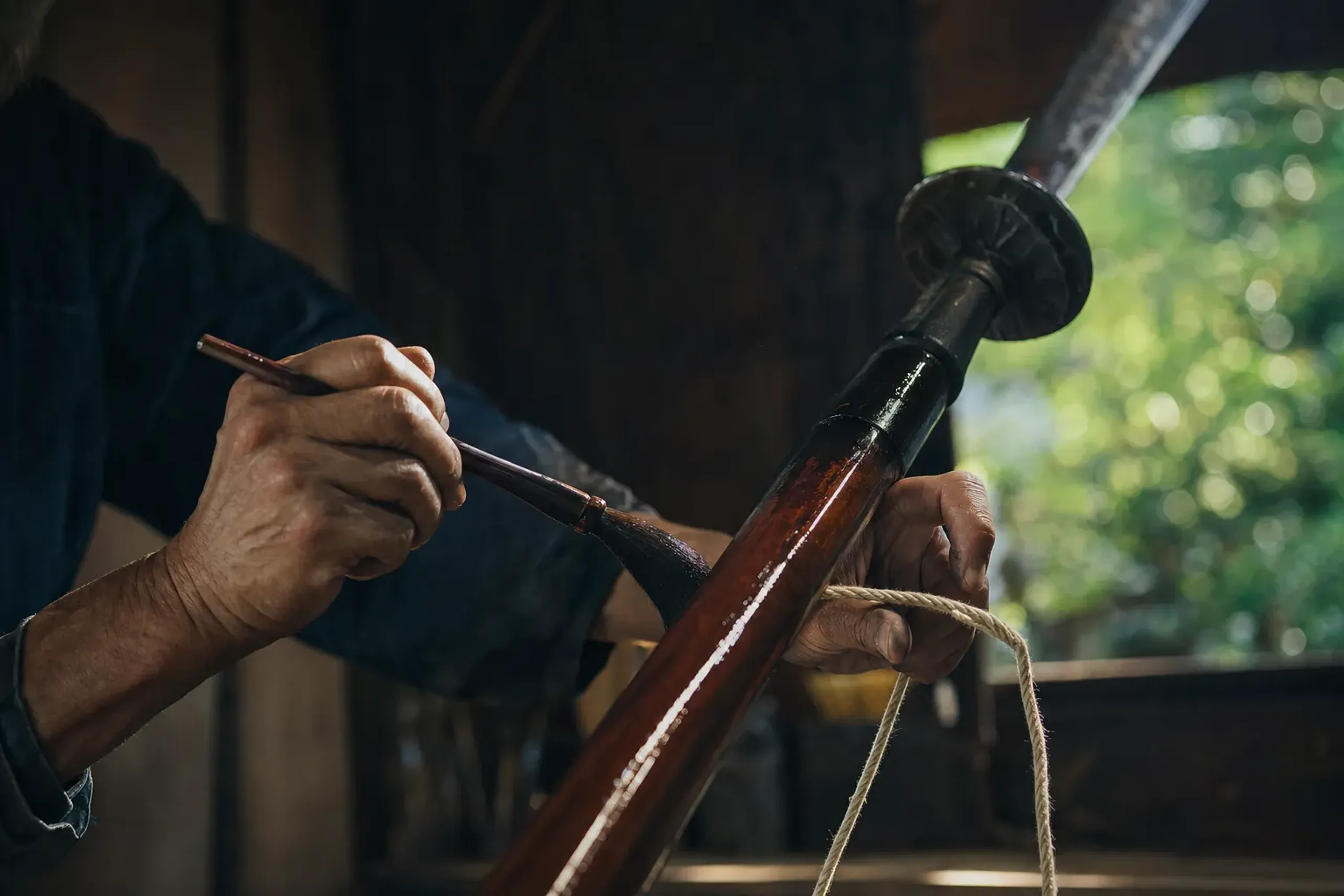
Osaka and nearby Kyoto hold workshops where the lineage of the hoko — the carving, the lacquer, the sacred binding — survives in living hands. For guests drawn to the artistry beneath the ceremony, we can arrange a private session with a shokunin whose craft would ordinarily never open to an outside visitor: a lacquer master, a maker of festival instruments, an artisan whose work is normally seen only by shrines. These are not demonstrations staged for tourists; they are introductions, extended with discretion, into a world that does not advertise itself.
It is the same principle that governs the festival itself. The spectacle is public; the understanding is private. We arrange the second.
Observing with discretion
For guests who value their privacy as much as the experience, every element — the vantage at the river, the place aboard a boat, the artisan's studio — is arranged with complete confidentiality. No identity, no itinerary, no photograph leaves our hands. This is, for many of our guests, the quietest and most important part of what we do.
To observe the schoolboy and his halberd from the right place on the right morning, and to let the rest of Tenjin Matsuri unfold around you without friction, contact us here.