
In this guide
- 01The Age Limits That Void A Plan
- 02Room Configuration Decides The Hotel
- 03Childcare, Coordinated And Not Supplied
- 04Ryokan And Children: A Poor Fit Is Common
- 05Pacing Beats Coverage Every Time
- 06Party-Size Arithmetic, Where It Bites
- 07What To Confirm Before You Book
- 08Choosing A Private Guide For Young Children
- 09Why Choose Japan Royal Service
Most of what goes wrong on a family trip to Japan is not a matter of taste. It is a matter of rules that nobody put in front of the parents. Age minimums. Room configurations that only fit on paper. A party cap that quietly counts a sleeping toddler as one of your ten.
None of these show on a hotel amenity list. They surface at the worst moment — at the counter, at the door of a private room, at the entry gate. Big problem.
This is not a general family guide. It is a short list of the constraints that catch careful people out, gathered by our team at Japan Royal Service across years of planning trips for families who arrive expecting everything to fit. Read it as a checklist. Confirm every item at the time of booking, because these policies change more often than parents assume.
The Age Limits That Void A Plan
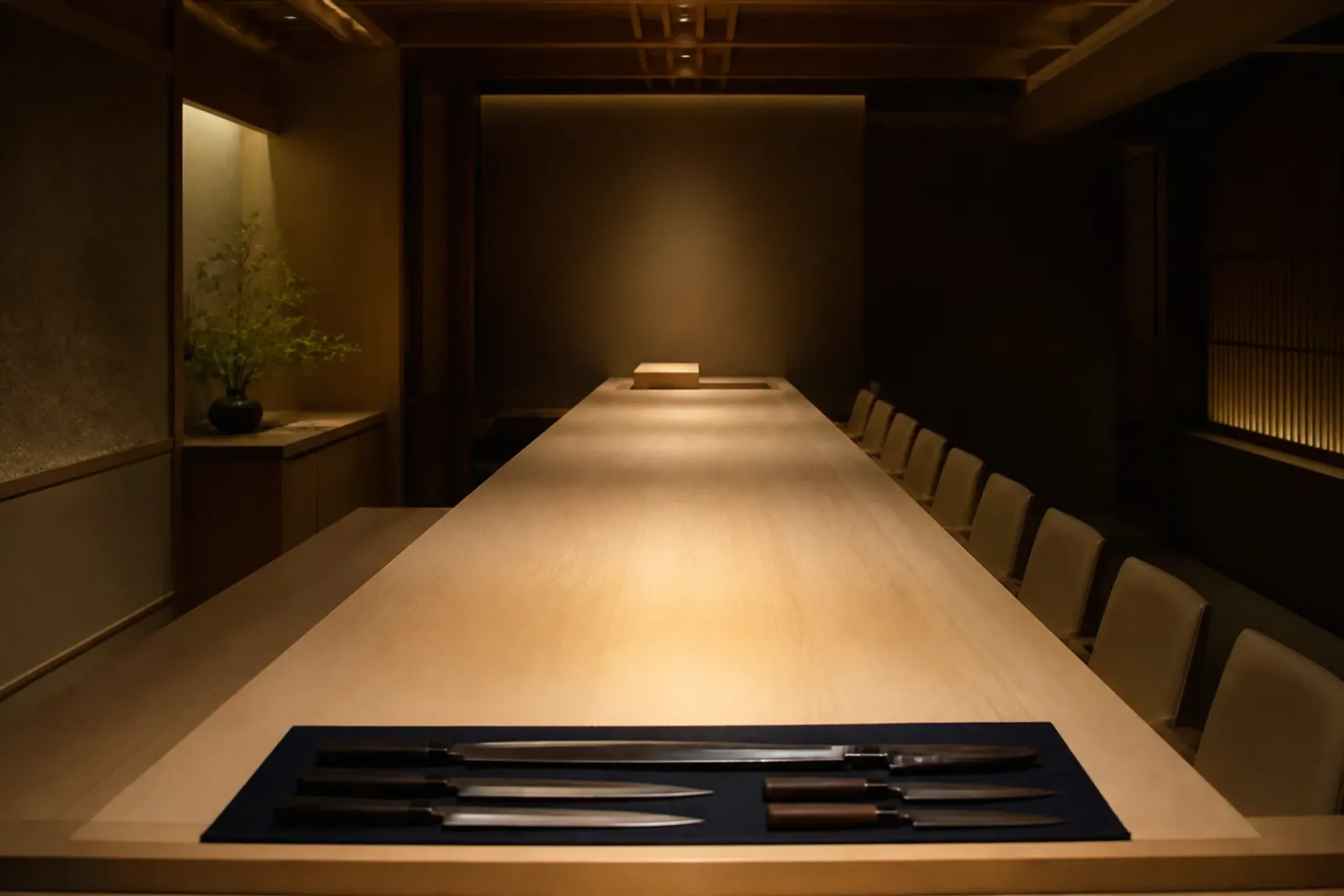
Start here, because this is the one that undoes an otherwise flawless itinerary. Japan's most admired counters and venues set age minimums, and they enforce them without exception. A reservation held for months means nothing if a child does not meet the door policy.
The counters are the sharpest example. Certain celebrated restaurants in Tokyo decline young children outright — some admit only guests aged thirteen and over, a policy several intimate counters are known to hold. We will not print a specific restaurant's cutoff here as though it were fixed, because these rules shift and are set by the chef. The point stands regardless: a family that books an eight-seat counter without asking about children may lose the seat entirely, not merely the evening's mood.
Sumo carries its own rule. Ringside tamari seating — the cushions closest to the clay, where cushions can be thrown and wrestlers can land — is restricted to guests aged sixteen and over. Families with younger children sit in the box seats set back from the ring. That is not a downgrade; the box seats are excellent, and children often prefer the wider view. But if you pictured your ten-year-old at the edge of the dohyo, the picture is wrong before you begin.
Confirm this first: Before you commit an evening to a high-end counter or a martial-arts venue, ask directly whether your youngest child meets the minimum age on your exact dates. A held reservation is not a permission slip.
The habit worth building is simple. Every venue that matters gets a question about children before it goes on the calendar. Our concierge does this as a matter of course — not because it is glamorous work, but because the alternative is a family standing outside a door they cannot enter.
Room Configuration Decides The Hotel
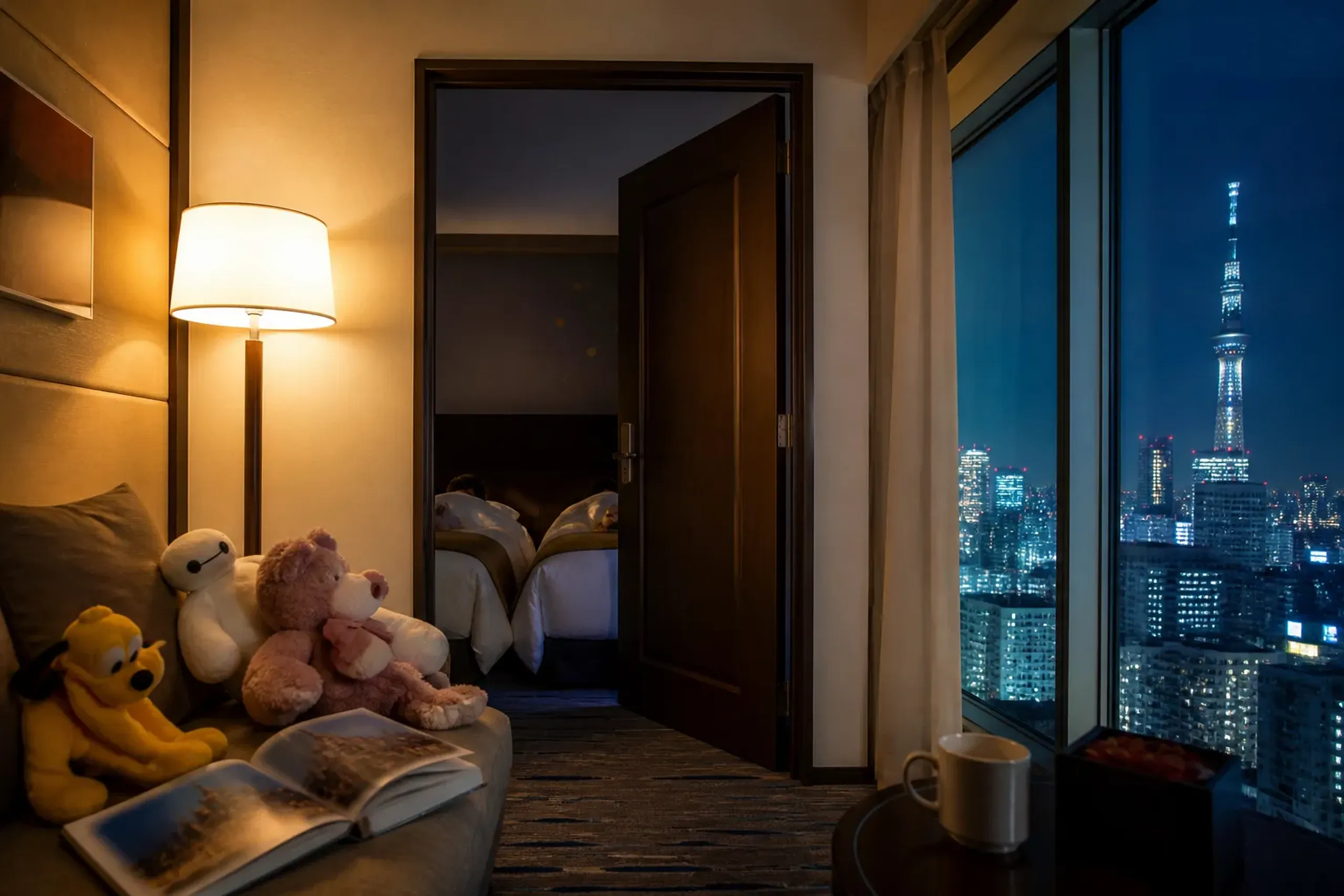
For a family with small children, the single most consequential hotel decision is not the brand, the spa, or the view. It is whether the suite has a real second room. A one-bedroom suite with a daybed is a different animal from a two-bedroom suite, and the difference lands hardest at eight in the evening, when one adult wants to read and a toddler needs the lights off.
The Tokyo market illustrates the split. Aman Tokyo, occupying the upper floors of the Otemachi Tower, is built around restraint and space, and its largest accommodations have historically been generous one-bedroom layouts. Four Seasons Hotel Tokyo at Otemachi, a short walk away, offers two-bedroom suite configurations that suit a family wanting genuine separation between adults and children.
We name both cautiously. Suites are renovated and reconfigured, and the exact layout available on your dates is a thing to confirm, never to assume. The principle is the durable part: decide how many separate sleeping spaces you need, then let that decide the hotel — before amenities, before address, before anything on the brochure.
What To Ask About A Suite
- How many separate bedrooms, behind how many doors that actually close?
- Is the second sleeping space a real room or a daybed in the living area?
- Can a crib or extra bed be added without crowding the room, and is there a charge?
- Does the layout let one adult stay with a sleeping child while the other uses the living space?
Childcare, Coordinated And Not Supplied
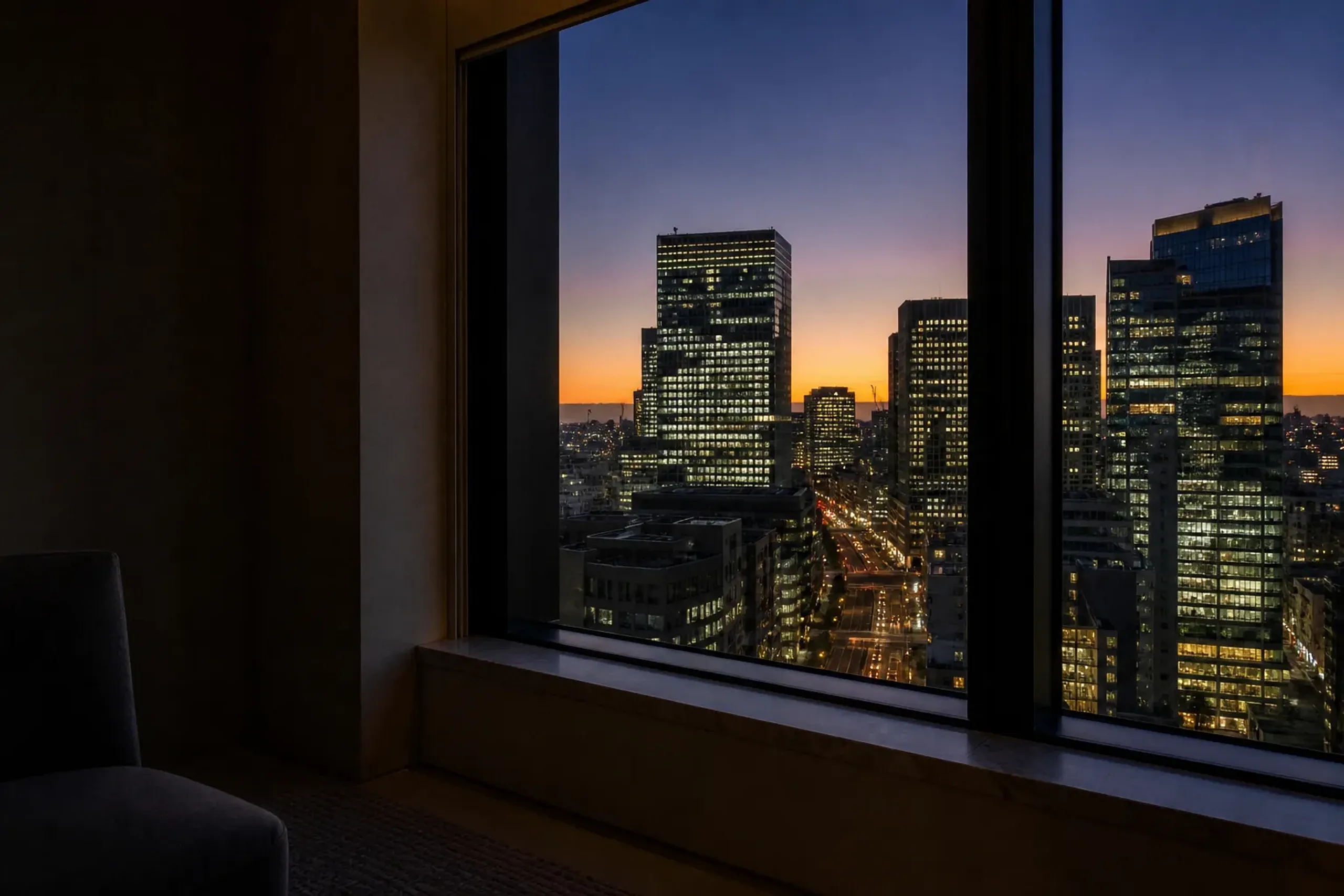
Here the register has to stay plain, because the subject is a child's safety and there is no room for marketing in it.
Japan Royal Service does not supply, source, screen, or recommend individual babysitters. In Japan, childminding businesses are registered with local government, and a travel company placing an unvetted individual with a client's child is both a liability and a real safety risk. We will not do it, and you should be wary of any operator who offers to.
What we do is narrower and, we think, correct. Where a property runs its own vetted childcare — provided or arranged by the hotel — we coordinate the timing, the language, and the booking around it. That means the service belongs to the hotel and answers to the hotel's standards. Our role is logistics: confirming the right hours, arranging that the caregiver can communicate with your family, and fitting the window to a dinner reservation or a morning you want to yourselves.
Several properties in Tokyo run or arrange such services. Four Seasons Hotel Tokyo at Otemachi lists babysitting among its shared services, arranged with advance notice and at an additional charge, and its concierge can suggest family-appropriate outings. The Imperial Hotel and Hotel Chinzanso Tokyo are among the properties that have offered in-house or agency-arranged childcare. In 2026, Mitsui Fudosan introduced a childcare service called "Parent Time" for international families at Hotel The Celestine Tokyo Shiba, Hotel The Celestine Ginza, and Hotel The Celestine Kyoto Gion.
Non-negotiable: Childcare availability varies by property and by night. It must be confirmed at the time of booking, never assumed. A service listed on a website is not the same as a caregiver confirmed for your Tuesday evening.
Treat any parent-only evening as contingent until the hotel confirms it in writing for your specific date. Build a fallback. If the sitter window falls through, the dinner should already have a plan B that keeps the children with you.
Ryokan And Children: A Poor Fit Is Common
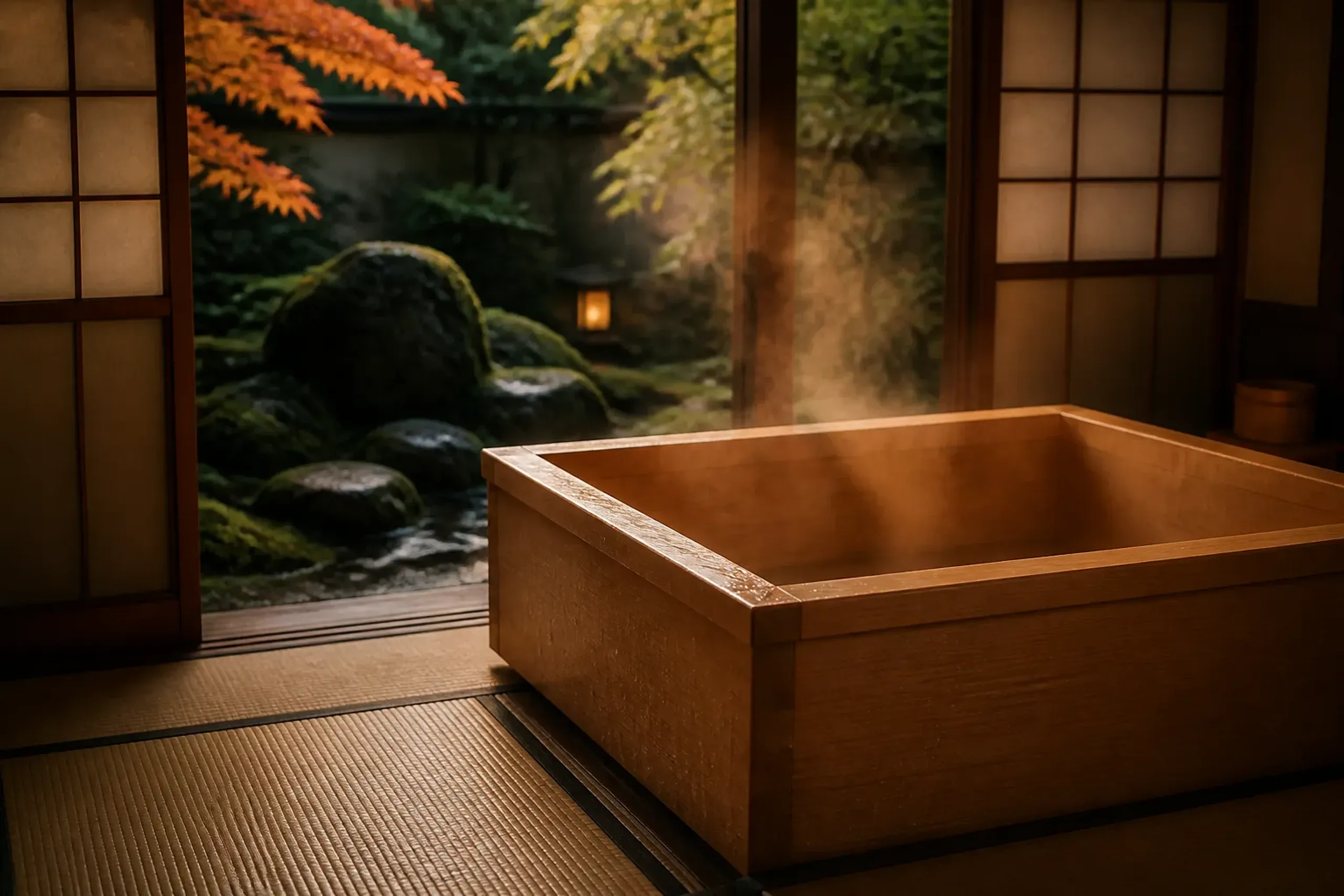
The ryokan is where romantic expectations meet practical reality, and small children are often on the wrong side of it. Some ryokan restrict young guests outright. Others accept them but run in a rhythm that suits certain ages badly.
Two features cause most of the friction. The first is shared bathing. Communal onsen have etiquette and timing that a restless toddler complicates, and while many ryokan offer private baths or in-room baths, that is a feature to secure in advance, not to hope for. The second is the set meal. Kaiseki is served at a fixed hour, course by course, over a long and quiet evening. A three-year-old and a two-hour tasting menu are natural adversaries.
None of this rules ryokan out. It means choosing the right one and the right room. A ryokan with private in-room dining, a private bath, and a relaxed attitude to children changes the evening entirely. Our team steers families toward properties that genuinely welcome young guests, and away from the ones whose quiet is their whole point.
Questions Worth Asking A Ryokan
- Are children of your ages accepted, on your exact dates?
- Is a private bath or in-room bath available, or is bathing communal only?
- Can dinner be served in the room, and can meal timing flex for young children?
- Are there child-appropriate portions, or futon arrangements for a family room?
Pacing Beats Coverage Every Time

Here is the argument that matters most, and it has nothing to do with luxury. A trip with small children succeeds or fails on pacing, not on how many places you reach.
Picture the difference. A well-paced day starts late, on purpose. Breakfast is unhurried. You leave the hotel at half past nine, not at eight, because the child slept badly and the extra hour is worth more than the extra sight. One thing in the morning — a garden, a market, a workshop with something to touch. Back to the hotel by early afternoon for the reset that decides the rest of the day: a nap, a swim, quiet time in the room. Out again at four, when the light softens and the crowds thin. Dinner near the hotel, or in it. Nobody is carrying a screaming toddler through a station at nine at night.
Now the alternative. Four cities in ten days, a new hotel every second night, and a family that spends its holiday packing, unpacking, and hauling luggage through transfers with a stroller and two tired children. The sights blur. Everyone is exhausted. The photographs are of a child crying on a platform.
Fewer cities, longer stays. A midday reset built into every day. Travel days placed where the children tolerate them, and made short. This is the whole of the advice, and it is worth more than any amenity.
Private chauffeured transport matters here for a plain, unglamorous reason. Luggage, strollers, and a sleeping toddler do not move well through rail changes, and the fraying of a good trip almost always happens in transit. A door-to-door private chauffeured transfer removes the part of the day where things come apart — the platform, the stairs, the crowded train, the taxi rank in the rain. For families splitting a day or travelling as a multi-generational group, vehicle configuration and the option of a private buyout become part of the plan, not an afterthought.
A Two-Track Day When Ages Differ
When a family spans a private-counter dinner and a nap schedule, one day cannot serve everyone. The workable answer is a two-track structure. One adult joins a private cultural experience — a tea session, an atelier visit, a quiet morning at a shrine before it opens to crowds — while the other keeps the child on a gentler track. Then they swap. A confirmed childcare window, where the property offers one, can free both parents for a single planned evening. Our coordinator builds the day around the child's rhythm first, and fits the adults' ambitions into the gaps that leaves.
Party-Size Arithmetic, Where It Bites

One rule surprises nearly every family, and it belongs on this list because it is pure arithmetic with no forgiveness in it.
Tokyo Disney Resort offers an official private VIP Tour, and that tour is capped at ten guests per party. The cap counts everyone. A child aged three or under counts as one of the ten. An interpreter counts. A babysitter travelling with the family counts. A grandparent counts. Families accustomed to "children don't count" pricing elsewhere assume the toddler rides free of the tally. In this case the toddler is a head, and a party of eight adults with two small children is already at the cap.
Do the sum before you plan the day, not at the gate. The official VIP Tour follows Tokyo Disney Resort's published eligibility and reservation rules. If it is a serious part of your family trip, our concierge can discuss your dates, qualifying suite, party size, and next steps privately.
What To Confirm Before You Book
Everything on this list changes. Restaurant age policies, hotel childcare, suite layouts, and venue rules are all revised without notice. Treat the table below as prompts, and confirm each item for your exact dates and party.
- Dining age policy: The exact minimum age at each counter, for your dates
- Sumo seating: Ringside is 16+; book box seats for younger children
- Suite layout: Number of real bedrooms; crib or extra bed on your dates
- Hotel childcare: Whether the property's own vetted service is confirmed for your specific night
- Ryokan suitability: Children accepted; private bath; in-room dining; flexible meal timing
- Disney VIP Tour cap: Ten-guest limit counting under-threes, interpreters and sitters
- Transfer plan: Door-to-door on travel days; stroller and luggage handled
Common Questions From Parents
Can our toddler come to a high-end sushi counter? Sometimes, and sometimes not — several intimate counters set minimum ages, and some decline young children entirely. Confirm the policy for your child's age before you hold the seat.
Are children allowed at ringside sumo seats? Ringside tamari seating is restricted to guests aged sixteen and over. Younger children sit in box seats set back from the ring, which many families find preferable.
Will you arrange a babysitter for us? We coordinate the timing, language, and booking of a property's own vetted childcare where it is offered. We do not supply or recommend individual sitters. Availability varies by property and by night and is confirmed at booking.
Does a sleeping baby count in the Disney VIP Tour party of ten? Yes. The ten-guest cap counts children aged three and under, along with any interpreter or babysitter travelling with you.
Choosing A Private Guide For Young Children
A private guide for a family with small children is judged on different things than a guide for adults. Knowledge of temples matters less than knowing which garden path takes a stroller, which museum has a quiet room, and when to stop for the day.
Good family guiding starts before arrival. The guide or coordinator checks every venue on the plan for age rules, steps and stairs, and waiting times. A garden, a workshop with something to touch, a short walk between stops: the day is built from places a small child can enjoy, not merely survive.
On the day, the plan bends. A guide who works with families expects the late start, the nap, the reset at the hotel. The chauffeur waits nearby so the family can leave the moment a child has had enough, without a train or taxi queue in between.
What To Ask A Private Guide Before You Book
- Have you guided families with children of our ages, and what did those days look like?
- How do you change the plan when a child needs to rest?
- Do you check age rules and accessibility at each venue in advance?
- Is door-to-door transport part of the day, and is there room for a stroller and car seat?
- Can the day split into two tracks, one adult with the child and one on a fuller program?
What should a private guide in Japan do differently for young children? Plan around the child's rhythm, not the sights list. Fewer stops, a midday reset, venues checked in advance for age rules and access, and door-to-door transport so no one waits on a platform with a tired toddler.
Why Choose Japan Royal Service
The value here is not exclusivity. It is that someone has thought the day through before your family lives it. Our team at Japan Royal Service is based in Japan, plans with an in-house fleet, and treats the unglamorous questions — age minimums, second bedrooms, transfer stress, the head-count on a theme-park tour — as the part of the work that actually protects a holiday.
We coordinate hotel-provided childcare rather than supplying our own, because a child's safety is not a place for shortcuts. We build days around a young child's rhythm, place travel where it does least harm, and keep every named policy on the list of things to confirm rather than to promise. Discretion runs through all of it: your family's movements and identity stay private, on the trip and after it.
For families who want the constraints handled before they become problems, that quiet diligence is the whole point.
To plan a family journey with the details thought through in advance, reach our team privately via WhatsApp or LINE, or contact us here.