In this guide
- 01Why Fireworks In Japan Feel Different
- 02Private Hanabi In Japan: What’s Actually Possible (And What Isn’t)
- 03Occasions That Benefit Most From A Private Fireworks Display
- 04Craft-To-Sky: Meeting The Makers Before You Watch The Sky
- 05Premium Public Fireworks Events: A Smarter Alternative When A Private Display Is Not Feasible
- 06Pairing Logic: Fireworks Without The Obvious Crowd Story
- 07How Safety, Permits, And Site Requirements Work (A Practical Checklist)
- 08Budget: What Shapes The Scope
- 09How To Book Private Fireworks In Japan (Official, Operationally Honest)
- 10FAQ: Private Fireworks In Japan For Luxury Travelers
- 11Why Choose Japan Royal Service
The first dance starts in near-darkness. Then—gold breaks open above the water, falling in slow chains like molten silk. Guests forget to breathe. A parent’s eyes shine for a second longer than they expected. And the couple, framed by that light, finally feels the day land.
That is what a private fireworks display can do in Japan. Not “entertainment.” Punctuation. One clean mark at the end of a vow, an anniversary toast, a proposal you will replay for years.
A common question for Japan Royal Service: is private hanabi actually possible, or is it just marketing? It is possible. It is also more regulated, weather-sensitive, and location-dependent than most travelers assume. Good. That is what keeps it rare.
Why Fireworks In Japan Feel Different
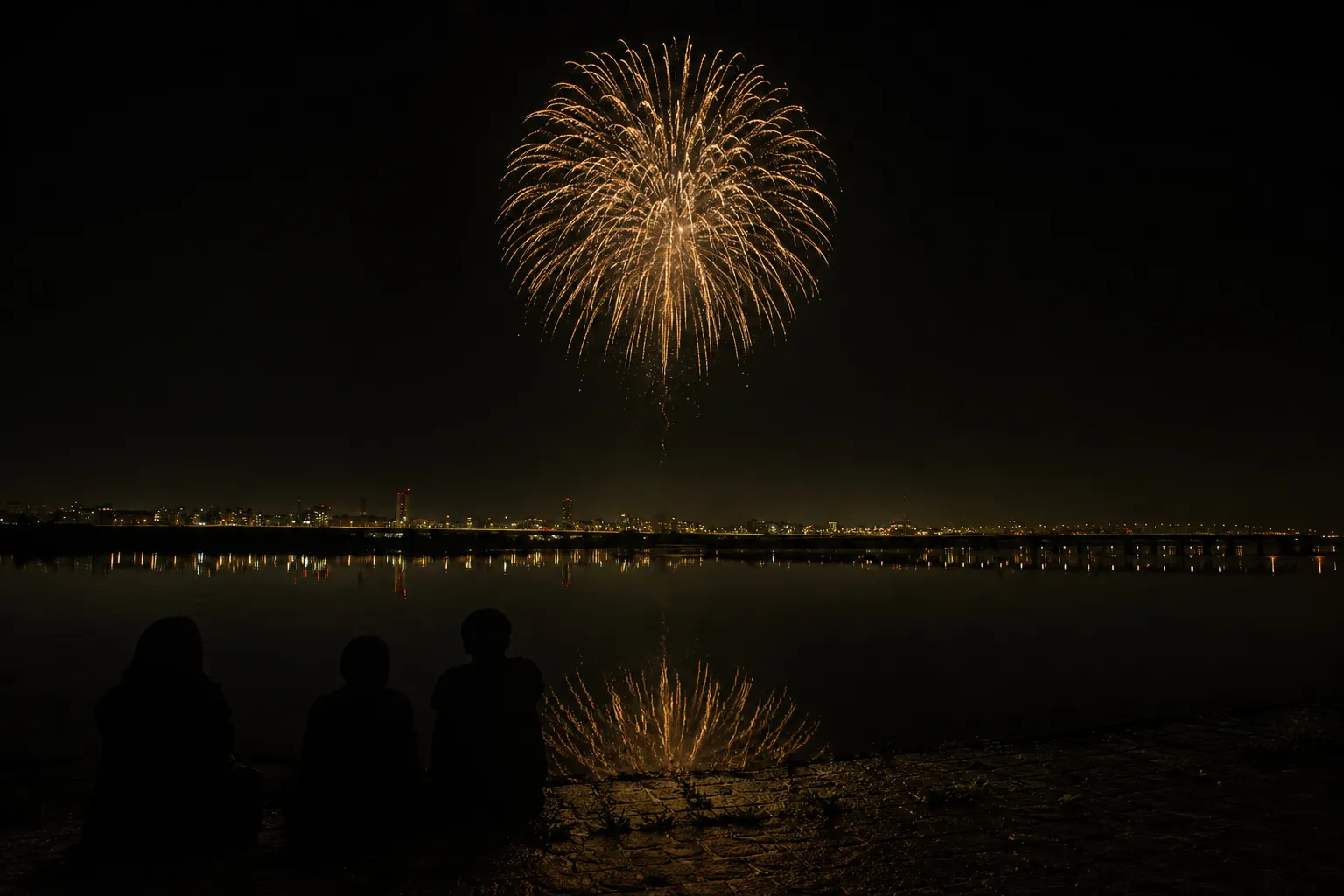
In Japan, a few minutes of hanabi can feel like a ceremony.
Japan’s relationship with fireworks is old, and not casual. GO TOKYO notes that Japan has enjoyed fireworks since 1549. That long history shows up in the details: the timing, the restraint, the way a finale can be thunderous without feeling loud in spirit.
The difference is also human. The best makers work like shokunin. They obsess over ignition timing, color chemistry, and how a shell opens in the sky, because the sky is the canvas and there is no “take two.”
Fireworks in Japan are also deeply tied to place. River corridors in Tokyo. Lakes in Hokkaido. Speedway grounds with concert-like staging. The setting changes the meaning, even before the first fuse catches.
Private Hanabi In Japan: What’s Actually Possible (And What Isn’t)

The quiet work happens long before the sky.
Private fireworks in Japan are a real, publicly marketed service from pyrotechnic companies. For example, Tamaya Fireworks (珠屋 花火) promotes “Private Fireworks” for birthdays, proposals, and wedding anniversaries, and notes that applications should be made at least one month in advance because advance notification is required.
Wakamatsuya (株式会社 若松屋) also offers a “Private Fireworks” service and presents it as suitable for company events. So yes, commissioning is a thing. Still, feasibility is not universal. Not even close.
The constraints are practical: local rules, site permissions, safe distances, wind direction, and whether the launch can be done legally from land or water in that area. Some “perfect” viewpoints fail on one unromantic detail. Big mistake.
Key fact: Tamaya Fireworks advises applying at least one month ahead due to advance notification requirements.
A Realistic Planning Window
One month is the public minimum you will see stated by a provider like Tamaya. In practice, more time gives you more choices: season, launch site options, and a calmer approval process. Fast planning tends to narrow you into whatever is easiest to permit, not what is most meaningful.
We advise guests to treat fireworks like a tailored garment. If you want it to fit, you measure early. If you want it to sing, you leave room for revisions.
Weather Is Not A Footnote
Wind and rain can change everything. Sometimes the safest decision is postponement. Sometimes the right decision is to move the celebration indoors, then keep a second night open for the sky.
You plan precisely, then you accept that nature has a vote.
Occasions That Benefit Most From A Private Fireworks Display
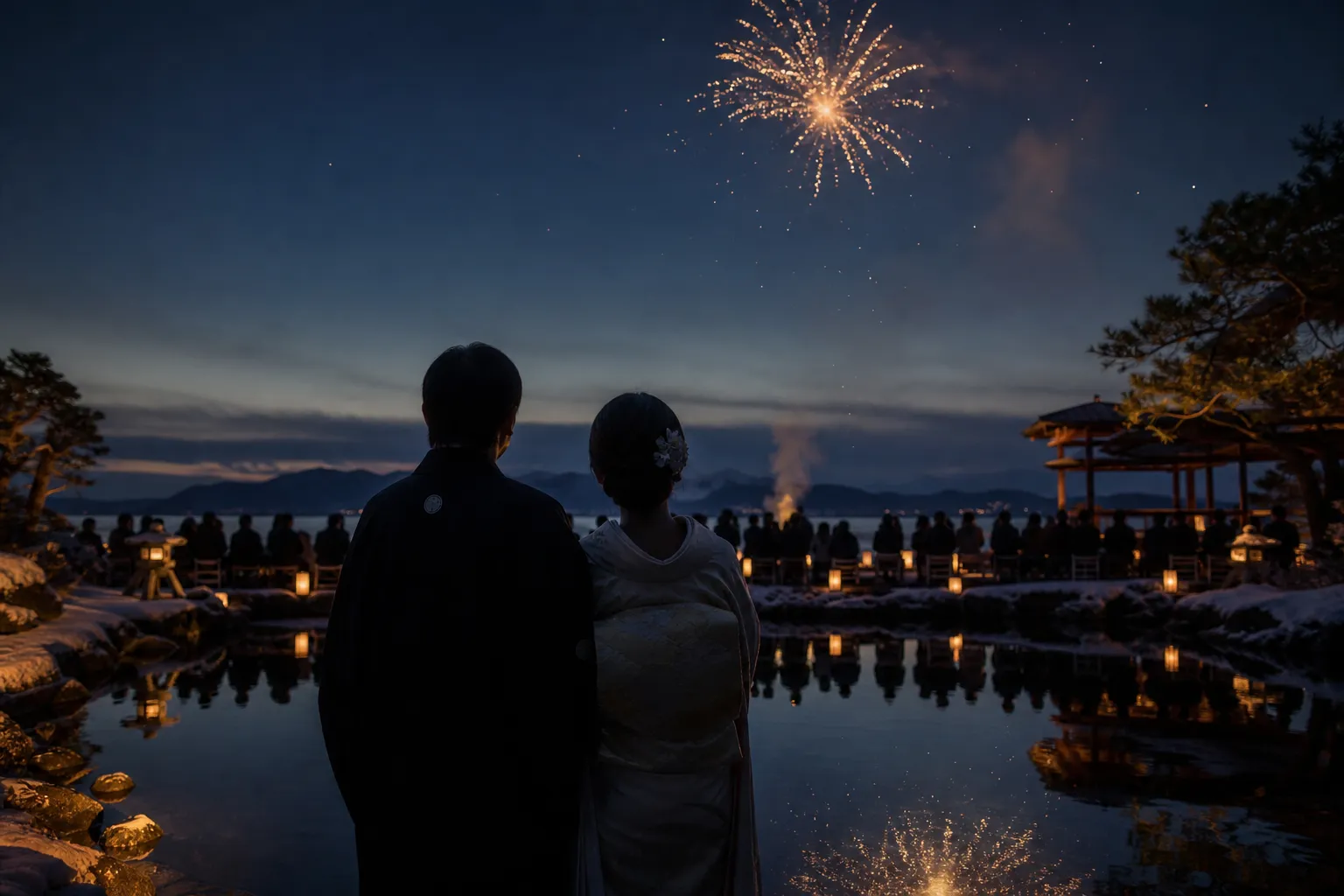
Fireworks land best when they are timed to emotion, not schedules.
Not every celebration deserves fireworks. Some moments ask for a single candle and quiet air. Others need scale, because the emotion is already large and you want the world to match it for thirty seconds.
Below are common occasion types, with the practical considerations that tend to decide whether it becomes a private display, a premium ticketed event, or an intimate craft experience.
Weddings And Vow Renewals
Fireworks work best when they are integrated into the cadence of the day. Not as a random surprise after dessert. The cleanest timing is often right after the final speech, when guests are already standing and phones are finally down.
Calm is the real luxury here. A wedding is already busy—photographers, venues, deliveries. The sky moment should feel unhurried, with smooth arrivals and a departure that does not funnel you into crowds.
- Ideal pacing: 3–7 minutes for emotional impact without fatigue.
- Sound discipline: choose sequences that feel ceremonial, not aggressive.
- Photo logic: decide whether you want silhouettes, faces lit, or both.
Proposals (One Question, One Sky)
A proposal with fireworks can be exquisite. It can also be too much if the couple prefers restraint. The goal is not spectacle for strangers. It is a private yes that happens to have a horizon.
Some guests choose a single “signature” effect, then silence. One bloom. Then the ring, then the laugh, then the ordinary world returns. That restraint is very Japanese, and it photographs beautifully.
- Best setting: a quiet waterfront or elevated terrace where wind is predictable.
- Best timing: after sunset, before late-night fatigue sets in.
- Backup plan: a second night window if weather turns.
Milestone Anniversaries And Birthdays
Anniversaries and birthdays have a different emotional temperature. People want warmth, not tension. A private display can be designed with softer colors and a slower rhythm, especially if older family members are present.
When multiple generations attend, the evening often works better with a structured flow: early dinner, a short walk, then fireworks. Keep it legible. Guests relax when they know what happens next.
Corporate Galas And Incentive Travel
For corporate events, fireworks are a statement of gratitude and momentum. The best ones feel like a curtain call, not a marketing stunt. If music is involved, timing becomes the entire game—seconds matter.
Japan also offers ticketed “fireworks as concert” formats, which can be a better fit for groups than commissioning a private show. You get scale, staging, and a clear timetable. Then you focus on the parts that matter to executives: a smooth arrival, comfort, and a fast exit.
Craft-To-Sky: Meeting The Makers Before You Watch The Sky
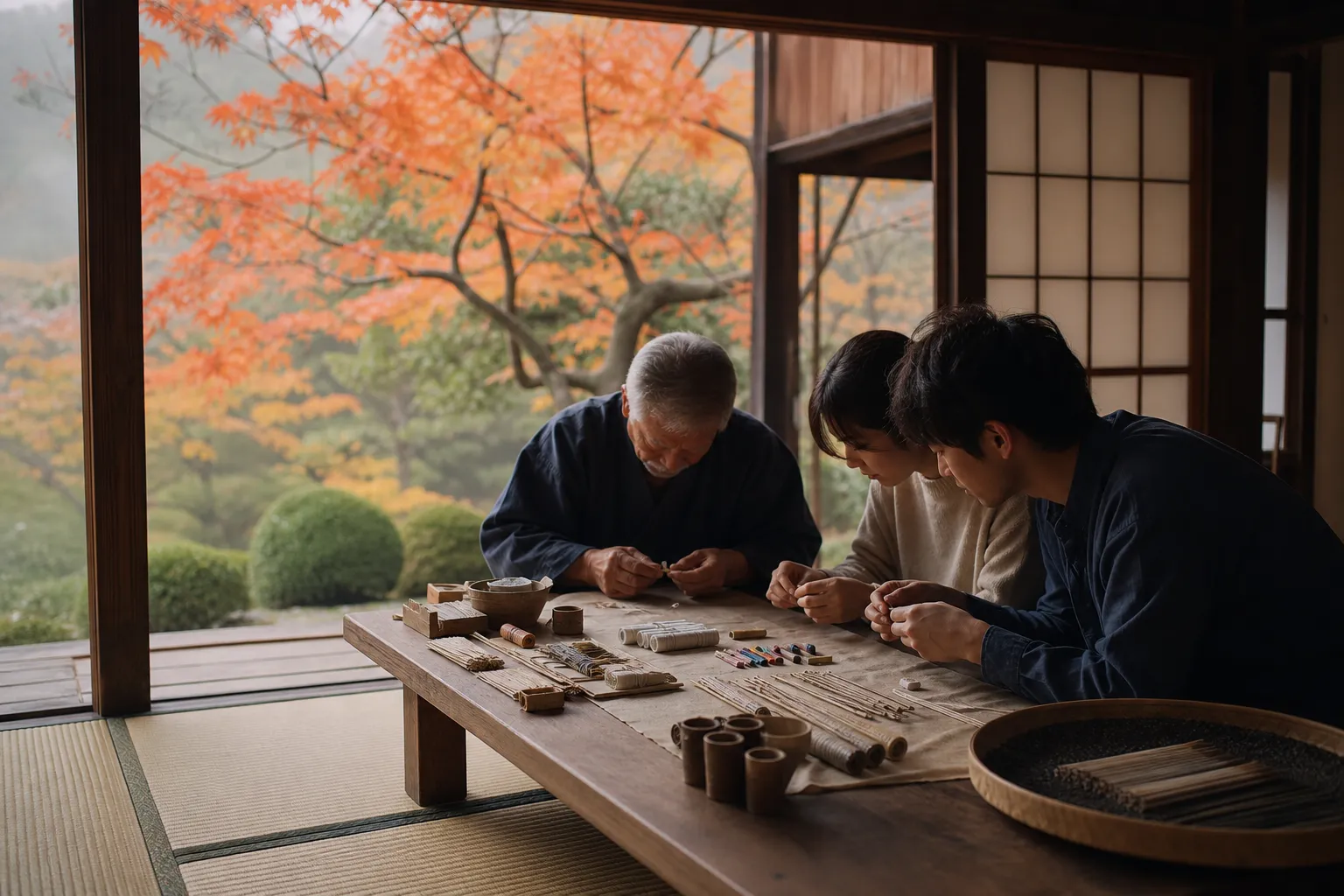
For some travelers, the craft is the entrance to the spectacle.
Some guests do not want the sky first. They want hands, soot, paper, and the quiet discipline behind the spectacle. That is the shokunin pull: understanding the craft so the night feels earned, not purchased.
An English-language experience is available that includes instruction in fireworks history and techniques and hands-on crafting of items such as a skyrocket and sparklers with Marutomi, a maker of traditional Japanese fireworks. It is not the same thing as commissioning a full display. Different scale. Different intimacy.
Yet it changes how you watch fireworks later. You notice the opening shape. You hear the timing between launches. You stop treating the sky like a screen.
Premium Public Fireworks Events: A Smarter Alternative When A Private Display Is Not Feasible
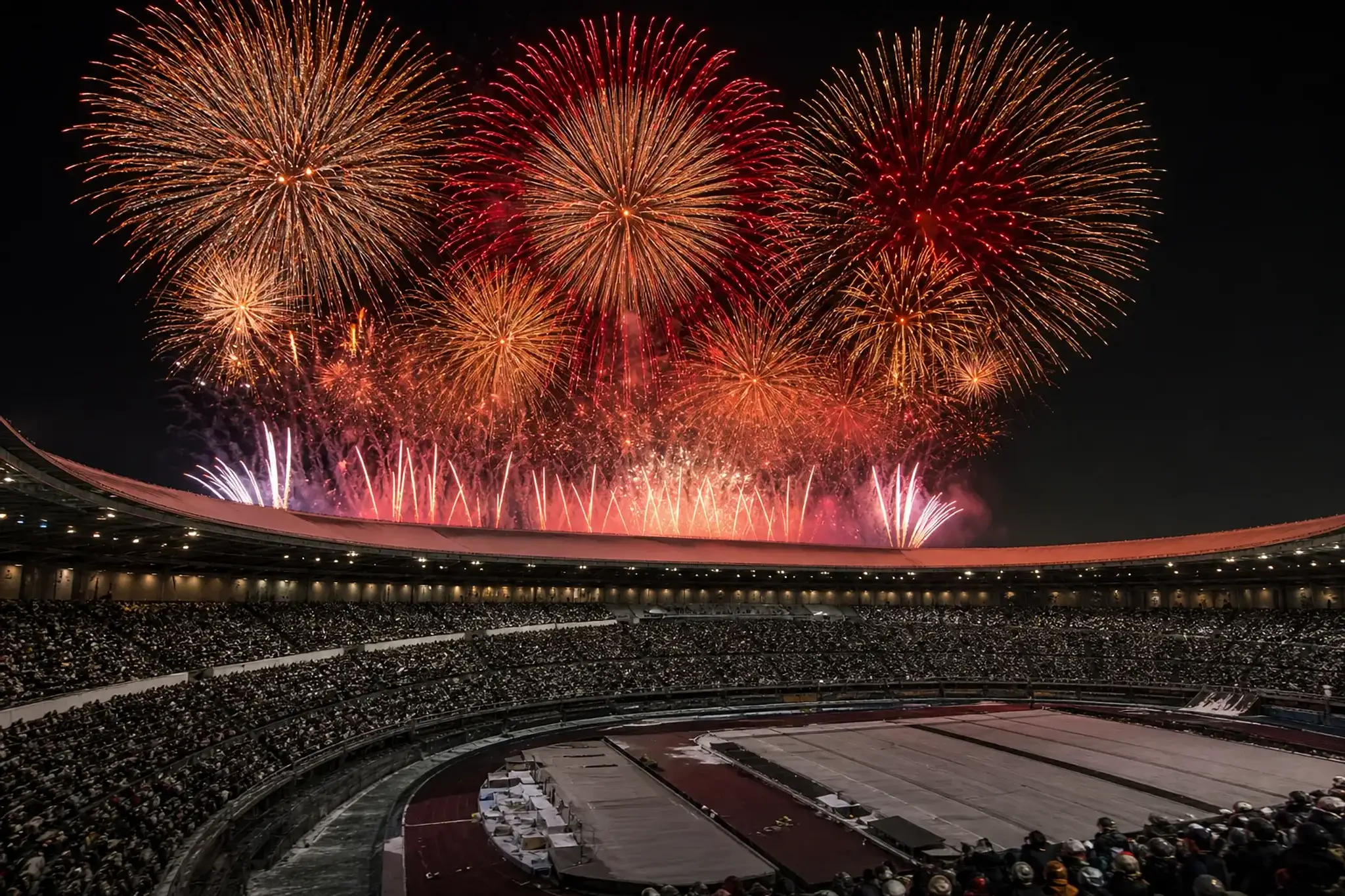
Ticketed fireworks events can deliver scale with a clearer timetable.
Sometimes a private display is not the right move. Permits may be complex. The desired location may be a no-go. Or the group size makes a premium ticketed event the calmer, more elegant choice.
Japan’s calendar includes several major ticketed events that work well for travelers who want fireworks without the friction of commissioning. Dates are set each year by the organisers, and the JRS concierge team confirms current schedules directly with the guest at time of arrangement. The strategy is simple: choose an event designed for scale, then engineer comfort around it—dining, timing, and smooth movement.
Tokyo Racecourse Fireworks
The official Tokyo Racecourse Fireworks site has described a 14,000-firework show. It is positioned more like a staged evening than a casual riverbank gathering.
Here the lever is not “more fireworks.” It is controlled arrival and departure, and not losing an hour in post-show congestion. The evening should end cleanly.
MT. FUJI FIREWORKS vs SPEEDWAY (Fuji Speedway)
This event is staged in spring at Fuji Speedway in Shizuoka. Spring timing matters. It gives you a celebratory arc outside peak summer hanabi season, often with a different crowd profile.
This also pairs well with a quiet base in the region—lakes, forest edges, and early nights. Glass-and-skyline energy is not required.
Japan Fireworks Expo (Osaka-Nishikinohama)
Japan Fireworks Expo is staged on the beach at Osaka-Nishikinohama. A beach venue changes the feeling: wider horizons, different wind behavior, and a more open dispersal pattern after the show.
If you are staying in central Osaka, this is where “pairing logic” works. City polish first. Then sand, salt air, and fire.
Huis Ten Bosch: Kyushu’s Largest Fireworks Festival
Huis Ten Bosch has scheduled “Kyushu's Largest Fireworks Festival” in mid-November. Late-autumn fireworks can feel almost surreal—cooler air, darker skies, and a calmer travel season compared to midsummer Tokyo.
For some couples, this timing is the entire point. A private occasion without peak-season pressure.
Edogawa City Fireworks Festival (Paid Seating)
Edogawa City offers paid seating for the Edogawa City Fireworks Festival. Paid seating is not only about comfort. It is about predictability in a city where unpredictability is the default on big festival nights.
Pairing Logic: Fireworks Without The Obvious Crowd Story
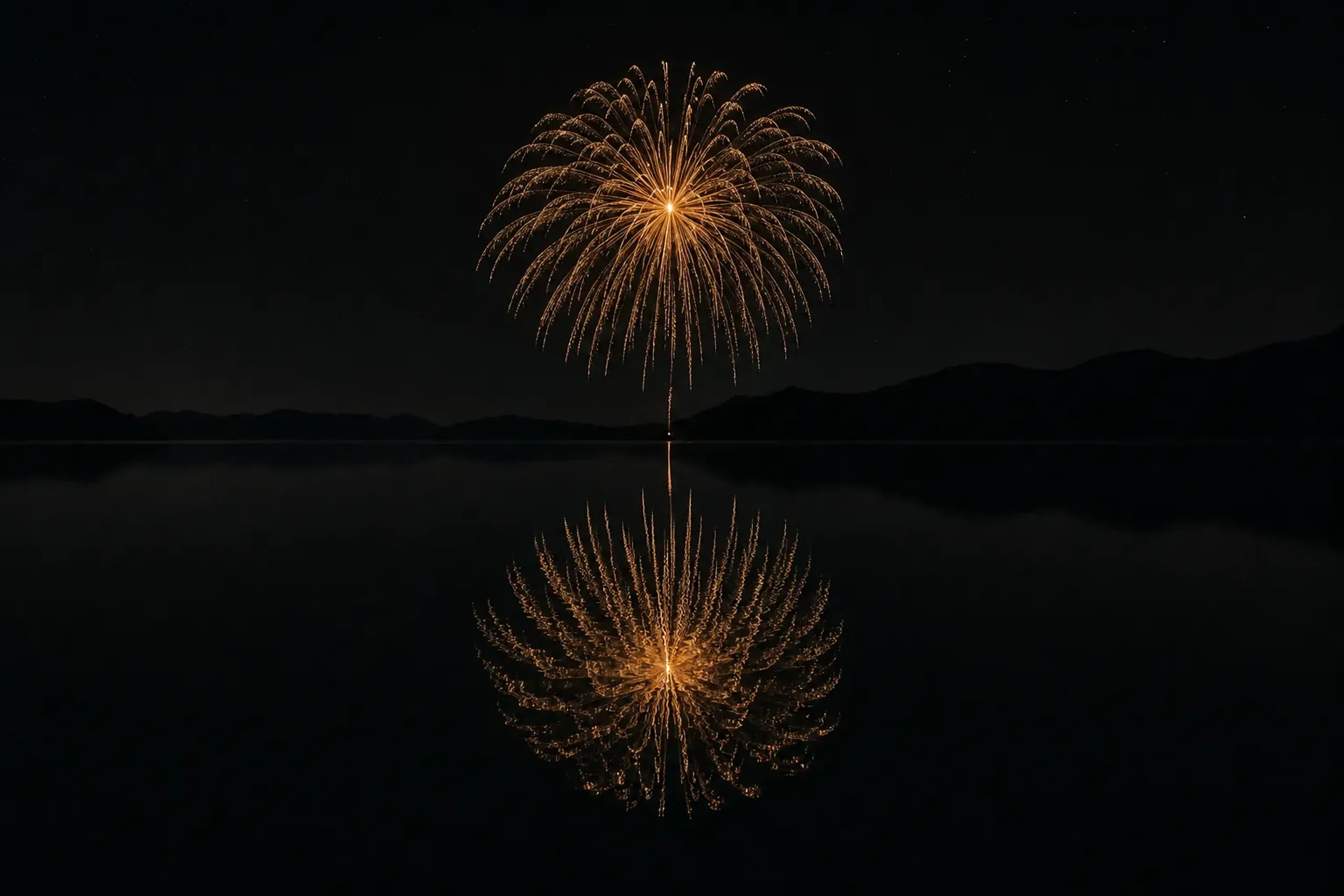
Many travelers think “Tokyo fireworks” and imagine shoulder-to-shoulder riverbanks. That is only one version of Japan. There is also a quieter approach: smaller settings, quieter shorelines, and evenings designed around one private view, not a mass migration.
A classic example of a calmer rhythm is Lake Tōya in Hokkaido. Lake Tōya has fireworks every night from May to October, with about 400 fireworks set off from boats in the evening and lasting about 20 minutes. Nightly cadence changes planning. You can choose the evening with the best weather forecast instead of gambling on a single date, and the JRS concierge team confirms current schedules directly with the guest at time of arrangement.
Another way to experience “fire” without the standard fireworks-festival template is through fire-and-fireworks events that are culturally specific. JNTO describes the Hono no Saiten Festival and states spectators can be about 25 meters from the fireworks, with flame fountains reaching about 10 meters. That proximity creates a visceral feeling—heat, scent, sound—that a distant city show cannot replicate.
How Safety, Permits, And Site Requirements Work (A Practical Checklist)
This is the section people skim—and then regret. Fireworks in Japan are governed by rules for a reason. The goal is not bureaucracy. It is keeping guests, staff, and neighbors safe.
Because requirements vary by prefecture, municipality, and launch method, we treat feasibility as case-by-case. Still, these are the questions that decide everything early.
- Launch environment: land vs water, and whether the site owner permits it.
- Safety perimeter: required distances from buildings, trees, roads, and spectators.
- Notification and approvals: providers may require advance notification; Tamaya explicitly advises at least one month.
- Weather policy: postponement rules, alternate dates, and decision timing.
- Noise and neighborhood limits: especially relevant near residential areas.
- Access control: who can enter the viewing area, and how you keep it private.
Budget: What Shapes The Scope
Travelers want a truthful starting point. Not a vague “it depends.” At the same time, private fireworks are too variable for a one-line number to mean much—length, shells, location constraints, staffing, and approvals all shift the shape of the plan.
For costs, the JRS concierge team confirms directly with the guest at time of arrangement.
Below is a clean way to think about scope without pretending every case is identical.
| Planning Layer | What Changes The Scope |
|---|---|
| Display Design | Duration, shell types, choreography to music, finale intensity |
| Location Feasibility | Launch method, permissions, safe distances, neighborhood constraints |
| Guest Experience | Private dining, seating, shelter plan, photography plan, comfort needs |
| Weather Resilience | Backup nights, indoor alternative, decision cutoffs |
How To Book Private Fireworks In Japan (Official, Operationally Honest)
If you want to commission a private fireworks display in Japan, the correct route is through the pyrotechnic companies that publicly offer the service.
- Who can book: Private individuals and companies are explicitly listed as use cases by providers (e.g., Tamaya for proposals/anniversaries; Wakamatsuya for company events).
- Where to book: Through the official provider websites. Tamaya Fireworks and Wakamatsuya both publish “Private Fireworks” service pages.
- When to book: Tamaya states applications should be made at least one month in advance due to advance notification requirements.
For questions, contact our concierge.
FAQ: Private Fireworks In Japan For Luxury Travelers
Are Private Fireworks Legal In Japan?
Yes, private fireworks are publicly marketed by real Japanese pyrotechnic firms such as Tamaya Fireworks and Wakamatsuya. Legality and feasibility still depend on location, permissions, and safety rules, so each plan must be assessed case-by-case.
How Far In Advance Should We Plan?
Tamaya Fireworks advises applying at least one month before because advance notification is required. If you want more flexibility in location and date, plan earlier.
Can We Do A Fireworks Proposal Without A Huge Crowd?
Often, yes—either via a private display where feasible, or by choosing a premium, ticketed fireworks event and engineering the evening for calm through timing and routing.
Is There A Year-Round Alternative To Summer Hanabi?
Yes. Examples include MT. FUJI FIREWORKS vs SPEEDWAY at Fuji Speedway in spring, and Huis Ten Bosch’s festival in mid-November. Lake Tōya also has nightly fireworks May–October.
Can We Learn The Craft, Not Just Watch?
Yes. An English-language experience includes instruction and hands-on crafting with Marutomi, a maker of traditional Japanese fireworks. It is a craft-focused experience rather than a commissioned large-scale display.
Why Choose Japan Royal Service
Most luxury travelers can find a nice hotel in Tokyo or Osaka now, and many will book those stays on their own. The harder part is what happens outside the lobby: the timing, the silence, the exit route that keeps your evening intact.
Our team at Japan Royal Service is built for that space between desire and reality. We design around shokunin craft and quieter settings when they fit the story.
For travel days, we also treat movement as part of the experience. For private transportation, we arrange vehicles from partner companies with English-speaking drivers and plan the pace and arrival windows so you do not feel handled. For a tailor-made itinerary, we build a trip that can absorb weather, fatigue, and last-minute inspiration without turning frantic.
If you are considering private fireworks in Japan—commissioned through official providers, or experienced through a premium ticketed event—tell us the occasion, the city, and the mood you want when the final light falls.
To begin planning, contact our team here.